Login

Alexander Brothers Each Sentenced to 30 Years in Prison for Sex Trafficking
Judge Valerie Caproni rejected prosecutors’ request for life sentences, calling it “draconian,” as 11 victims addressed the court.

As famílias brasileiras viram seus gastos com juros subirem quase 10% no primeiro semestre de 2026 – em comparação com o mesmo período do ano anterior -, totalizando despesa da ordem de R$ 515,4 bilhões, segundo levantamento da FecomercioSP (Federação do Comércio de Bens, Serviços e Turismo do Estado de São Paulo).
Já as empresas tiveram de desembolsar R$ 158,6 bilhões com juros nos primeiros seis meses do ano. Somados os valores, pessoas físicas e jurídicas perderam R$ 674 bilhões nesse sentido, alta de 7,4% ante o primeiro semestre de 2025.
Apesar do crédito ficar cada vez mais caro – a taxa nominal ponderada acumulada passou de 24,3% para 25,3% -, o consumidor segue buscando empréstimos – o saldo real do crédito livre às pessoas físicas subiu 6,1%, a R$ 2,353 trilhões, enquanto as concessões avançaram 5,1%.
Não obstante, a FecomercioSP apurou que a inadimplência cresce, com os atrasos acima de 90 dias atingindo 7,37% dos consumidores, após piora de 1,78 ponto percentual do indicador.
“Em apenas dois anos, houve uma deterioração expressiva da capacidade de pagamento. […] Os lares com dívidas permanecem em patamar elevado”, aponta a entidade em nota de pesquisa.
A FecomercioSP afirma que 3,4 milhões de lares registram dívidas, o maior patamar desde 2022.
Já olhando para as empresas, o levantamento nota outro comportamento alarmante: o gasto total com juros se manteve quase o mesmo entre 2025 e 2026, enquanto as operações de crédito recuaram; com menor saldo de crédito, o que manteve a despesa elevada é o fato do encarecimento das concessões.
Juros altos desencorajam consumo e podem frear economia; entenda

"The long-term goal is to achieve statehood and autonomy," says Kymone Freeman, the Green Party candidate for Washington, D.C.'s nonvoting delegate seat in the U.S. House of Representatives. "The short-term leverage to achieve that is tax resistance."
Like many D.C. locals, Freeman believes it's unfair that residents of the nation's capital pay federal income taxes without a voting representative in Congress. Freeman has made it a key plank in his policy platform that D.C. residents should be exempt from paying federal income tax until the district is granted statehood. "We're celebrating the 250th anniversary of America's resistance to taxation without representation, so I think it's time," says Freeman. The nation's capital is a federal district, not a U.S. territory like Guam, Puerto Rico, and the U.S. Virgin Islands, so D.C. residents are still subject to federal income tax requirements.
Federal district or not, imposing income taxes on D.C. residents without representation would likely offend America's Founders, who met in New York in October 1765 and proclaimed that it is "inseparably essential to the freedom of a people…that no taxes be imposed on them, but with their own consent, given personally, or by their representatives." Taxation is a form of theft. Compounding the issue, D.C. residents have little recourse to challenge their tax burden.
The U.S. is the only democratically governed nation to withhold voting representation from citizens living in its capital. Worse, local officials—such as the city's mayor and the D.C. Council—must solicit congressional approval for the district's budget and laws with little more than a figurehead serving as their lone representative in the federal legislature. Reason's analysis of the Internal Revenue Service's latest available adjusted gross income data shows that D.C. tax filers paid more federal income tax per return than residents in any other state, about $26,900, compared to a national average of roughly $14,300.
While that's partly because the city has many high-income earners, data show that excluding those in the city earning over $1 million, D.C. residents still paid more in income tax per return than filers in any state, about $16,500 compared to $8,900 nationally.
"We don't have a system where public policy is determined by public input because of the status quo," says Freeman. But challenging that status quo has proven difficult, as Congress resists attempts to make D.C. the 51st state. In 2021, the House of Representatives passed a party-line bill sponsored by Del. Eleanor Holmes Norton (D–D.C.) to establish D.C. as the 51st state. It later died in the (barely) Democratically controlled Senate.
Democrats once opposed D.C. becoming the 51st state; however, they've since warmed to the idea, unlike Republican lawmakers at the federal level, who have been reluctant to support statehood for D.C., viewing it as a move that would give Democrats an electoral stronghold. That argument has some truth: No elected Republicans serve on the D.C. Council. The city hasn't had a Republican mayor since its local government was established, and the district has reliably voted for a Democrat in every presidential election since 1964.
Even though Republicans at the national level do not support statehood for D.C., the District's local GOP does support ending taxation without representation. Denise Rosado—the Republican candidate for D.C.'s delegate seat—thinks statehood for the district is "unlikely" and "undesirable." That hasn't stopped her from campaigning for an end to federal income taxes in D.C., an outcome she claims can be "accomplished quickly."
That's doubtful given Congress' pace. Still, there's no logic in making statehood a prerequisite to abolishing the federal income tax requirement for district residents.
The post In D.C.'s Delegate Race, 2 Candidates Agree: No Federal Income Tax for District Residents appeared first on Reason Magazine.


Recently, Kim Yo-jong, the younger sister of North Korean leader Kim Jong-un, warned that Pyongyang could take strong retaliatory measures if Seoul continues activities it considers provocative. To casual observers, this may appear to be just another routine exchange of verbal threats between the two Koreas. However, a closer examination of the current situation suggests […]
The post Is the Korean Peninsula moving closer to war? appeared first on Asia Times.


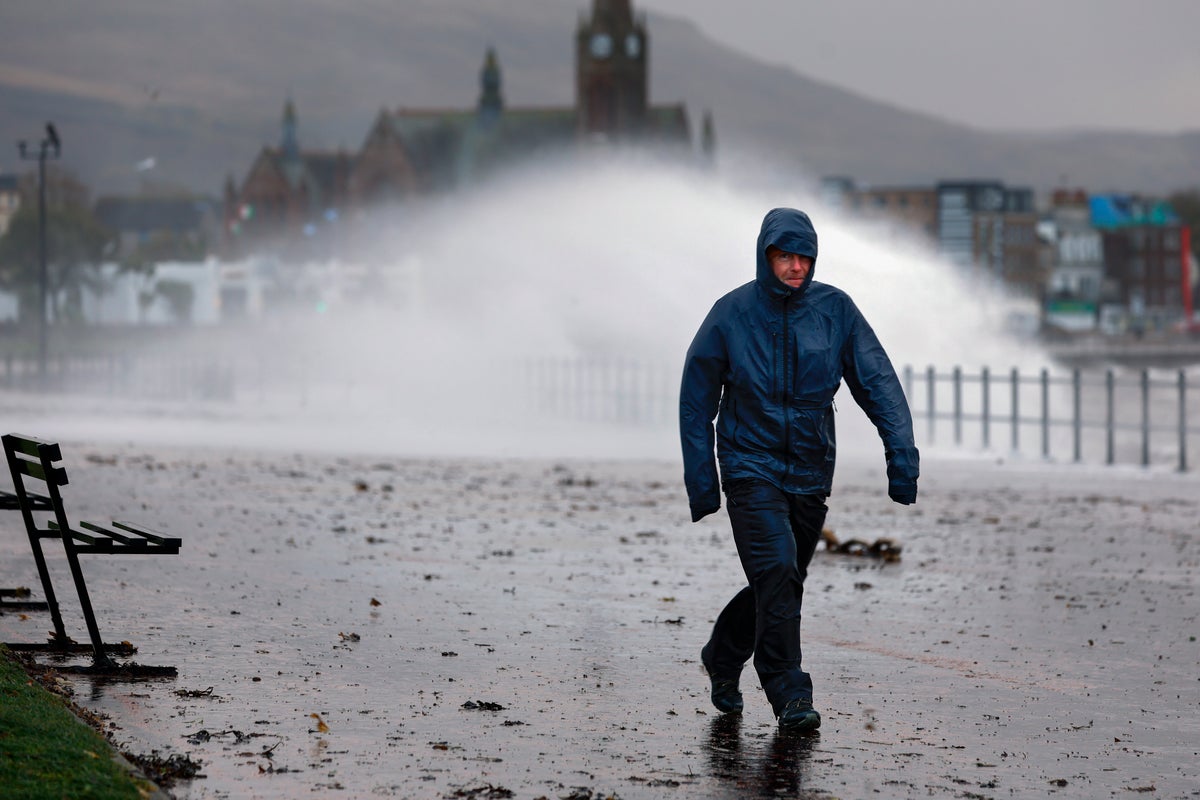
The polar vortex could hit earlier than expected according to forecasters
© Getty
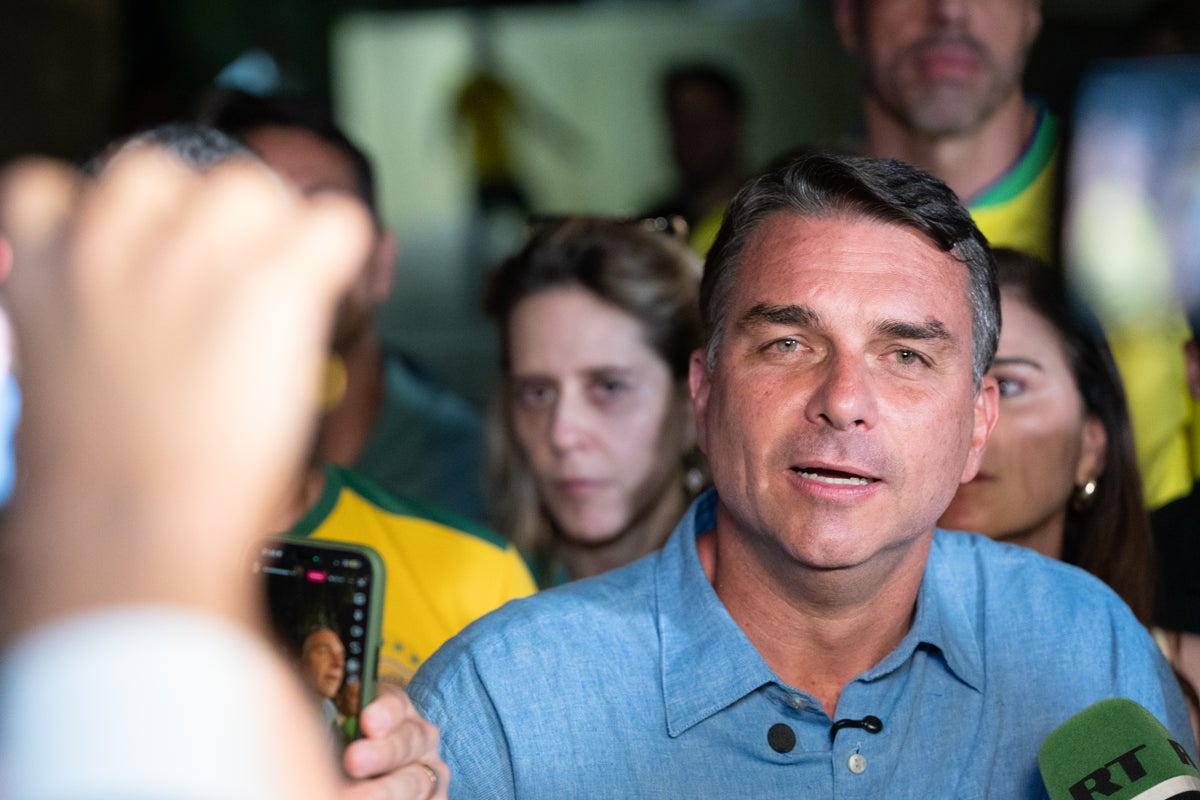
Brazilian police say Flavio Bolsonaro defied an order to surrender his passports amid a corruption investigation
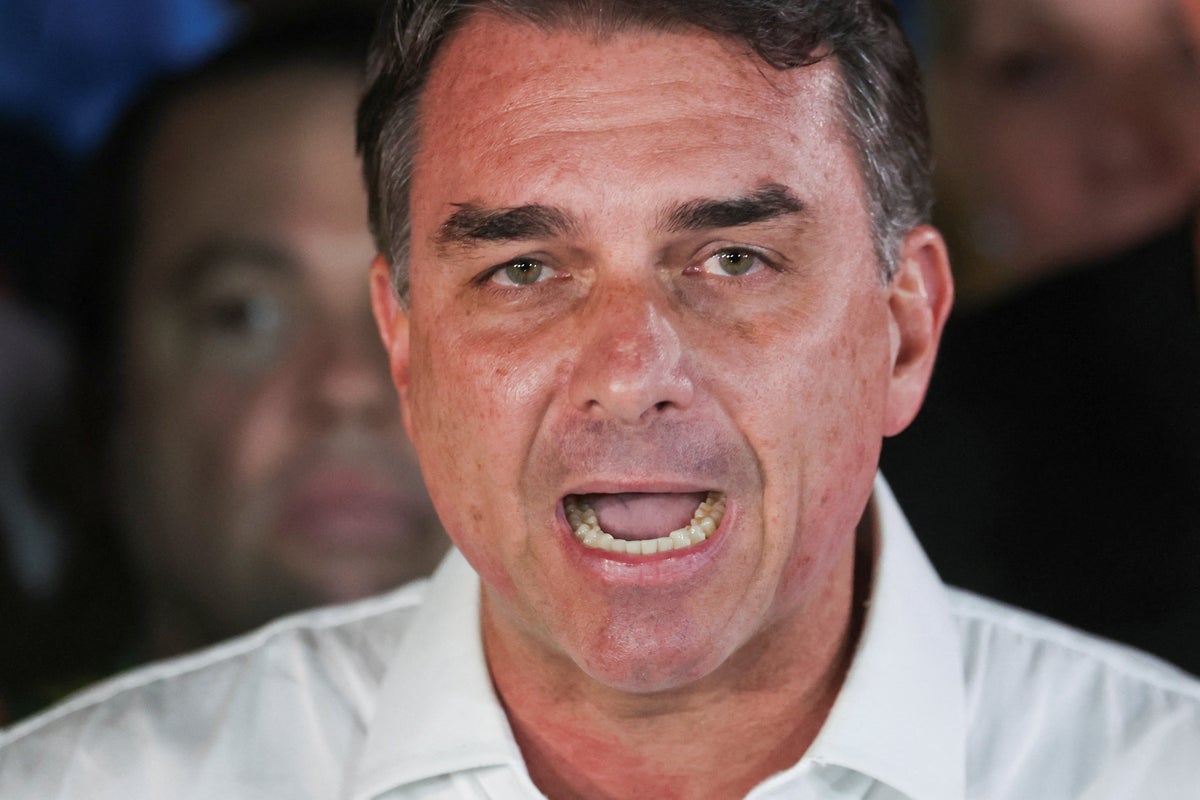
© Reuters
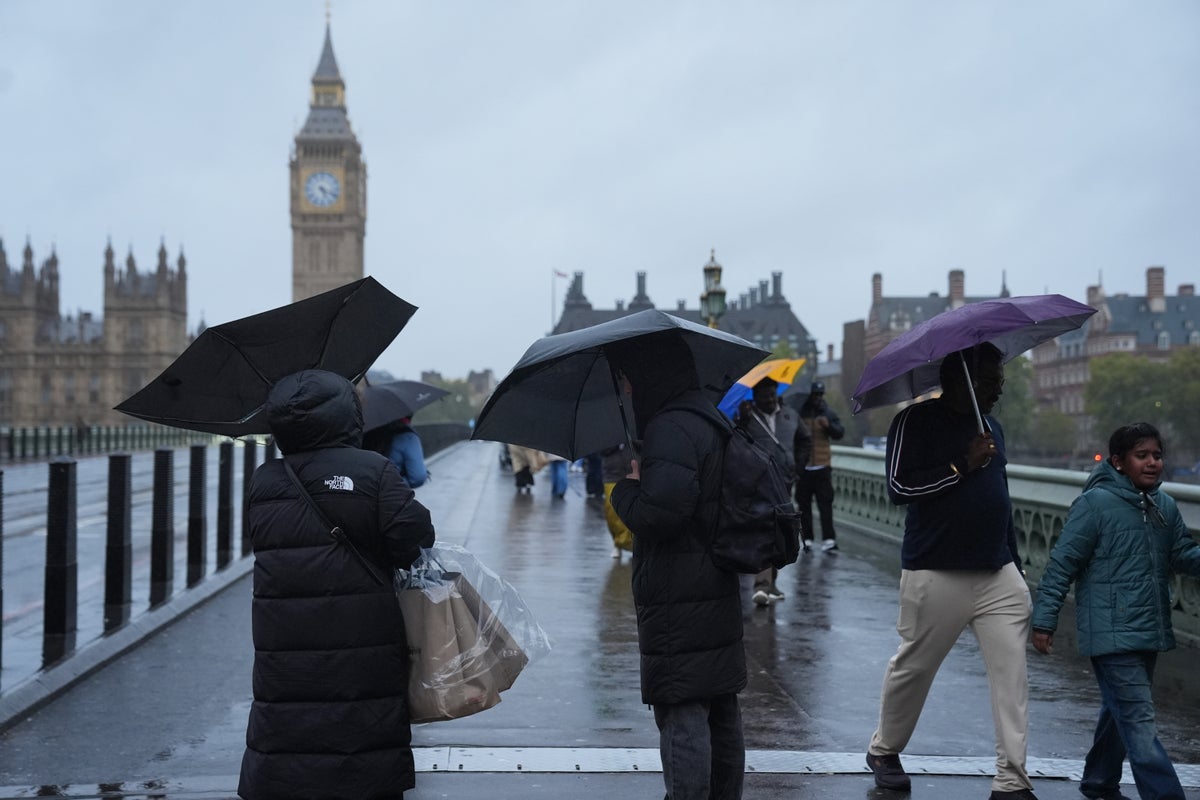
The polar vortex could hit earlier than expected according to forecasters
© Getty
Ofcom told parcel delivery companies that it is considering “additional regulation” after customer satisfaction levels fell in 2026, according to its latest research

© PA Archive

Andrew Harnik/Getty Images
First, the Gulf of Mexico, then Lake Ontario. Now, President Donald Trump has said an ocean could be next.
At a Mississippi rally on Monday, the president floated the idea of renaming the Atlantic Ocean the "American Ocean" and said he thinks "Europe will be thrilled."
He first raised the idea at a Tennessee rally in early October, pitching "Trump Ocean" or "Ocean of the Americas" for either the Atlantic or Pacific. At a South Carolina rally in mid-October, he said Google CEO Sundar Pichai told him "no" to changing the ocean names on Google Maps because they touch a lot of countries.
The White House referred Business Insider to the president's comments.
It wouldn't be the first name change Trump has made or suggested in his second non-consecutive term in office.
In August, he signed an executive order to rename Lake Ontario — one of the five Great Lakes, bordering both Canada and the US — to Lake America. He's also renamed a gulf and a mountain, and has mused about renaming a river, calling New Mexico "New America," and rebranding the Strait of Hormuz as the "Trump Strait."
Besides renaming numerous government programs and buildings after Trump himself, here's a look at other places the administration has renamed — so far.
Al Drago/Bloomberg via Getty Images
On the first day back in the White House, Trump signed an executive order titled "Restoring Names That Honor American Greatness."
It directed two actions: rename the Gulf of Mexico to the "Gulf of America," and restore Alaska's Denali, the highest mountain in North America, to its former federal name, Mount McKinley. President Barack Obama previously restored the mountain's Native Alaskan name, meaning "the high one" in the Koyukon language, in 2015.
Trump's executive order acknowledged that "congressional action is required to establish a renaming in public law," but called for federal agencies to use the new names in the interim.
Both Google and Apple have since updated their map features to reflect the name change. The Associated Press continued to refer to the body of water as the Gulf of Mexico, leading the White House to bar AP from some press events.
US Army Photo by Pfc. Joshua Cowden / 22nd Mobile Public Affairs Detachment
In 2023, the Biden administration changed the names of Army bases named after Confederate leaders, renaming them after Medal of Honor recipients, military leaders, and other war heroes, including women and people of color.
Hegseth reversed the changes in a series of orders in 2025, restoring the names of Fort A.P. Hill, Fort Benning, Fort Pickett, Fort Lee, Fort Gordon, Fort Hood, Fort Polk, Fort Rucker, and Fort Bragg.
Andrew Harnik/Getty Images
The change came amid rising tensions over the trade war with Canada. In August, the US imposed new 50% tariffs on about $20 billion in Canadian goods after negotiations fell apart, prompting Canada to announce retaliatory tariffs of up to 50%. Trump has since reversed some of those tariffs.
Canadians were already calling for boycotts of US products and travel before the August executive order. Carney said in his X response to Lake Ontario's name change that the US "is changing."
"Their trade relations, their foreign policy, their national monuments, their hydronyms," he wrote. "Canadian women and men also know that things must be called by their name, and this lake is called Lake Ontario — today and forever."
Google Maps and Apple Maps show the new name to US users. The change applies only to US federal use.
At the time, Trump also floated renaming an ocean after the US — something he has since repeatedly pitched at recent rallies. The insistence comes despite Trump saying that Pichai told the president "no" when asked to change the Atlantic Ocean's name on Google Maps.
"This time I'm not doing it," Trump said at the South Carolina rally, referring to Pichai's response. "Oceans are different, sir. They cover really a lot of countries. Please don't ask us to do that."
di Alessia Manera*
In queste settimane si stanno riempiendo le piazze di tutta Italia e le modalità, le parole d’ordine che le stanno attraversando, meritano una riflessione attenta, soprattutto da parte di quella società adulta che rischia di utilizzare etichette stantie e di bollare come già visto o rituale un fenomeno sociale che non ha, credo, nessuna di queste caratteristiche.
Per decenni i movimenti sociali occidentali si sono strutturati all’interno di una cornice di pensiero di accumulo e di andamento positivo delle trasformazioni: la prospettiva era la crescita del sistema, la crisi un momento transitorio, in un mondo in cui sviluppo economico e tecnologico si allargavano sempre di più, conquistando e sottomettendo le alterità, che venivano lette alla luce dei propri paradigmi. Il punto in cui eravamo stava su un piano, ma era l’Occidente a stabilire alla luce di quale retta leggere il posizionamento degli altri punti.
Oggi quella narrazione collassa su se stessa a una velocità sempre maggiore e implacabile: l’accumulo è basato sulla speculazione, per cui si estrae dalla materialità delle relazioni (personali, economiche, di potere) senza mai restituire nulla in cambio, come in un buco nero. Si è spezzato ogni patto sociale, e questo appare più evidente a chi un’epoca di patto sociale funzionante non l’ha mai vissuta e la sente raccontare sotto una luce quasi mitologica. Le piazze di oggi sono fatte di generazioni che non hanno più solo l’Occidente e la sua storia come riferimento culturale. Sono generazioni che parlano più lingue, che conoscono sistemi diversi, con le loro funzionalità e imperfezioni, che seguono canali di informazione in arabo, swahili, cinese, albanese, o anche solo inglese, francese e spagnolo, che sanno che le cose possono avere nomi diversi a seconda di quale prospettiva usi per guardarle, che hanno sperimentato spesso la realtà e la violenza di un potere che è democratico solo di fronte alla conformità. Una conformità legata all’identità bianca, di consumo e di privilegio, accettato come elemento fondamentale per l’accesso ai diritti.
Un ossimoro su cui però si fonda buona parte della narrazione “democratica” degli ultimi decenni. Una conformità che queste generazioni rifiutano. D’altronde a queste piazze viene contesto proprio l’essere scomposte, non etichettabili, non rappresentate. Rompono vetrine che non sono solo quelle materiali dei negozi, ma anche quelle della narrazione del potere. Perché non esprimono un dissenso interno al sistema, ma il bisogno di destrutturare il sistema stesso. Hanno capito che il sistema non li può comprare tutti: non ha più i soldi per farlo perché ha spolpato l’economia reale per garantire profitti alla rendita finanziaria.
Sanno che, se quelli che potranno essere comprati sono pochi, loro probabilmente resteranno fuori. Sono fuori. Siamo fuori. E allora credo che abbiano fatto il passaggio logico successivo, quello stesso passaggio che le generazioni più vecchie, ancorate al proprio bagaglio socialdemocratico, hanno paura di fare: se il sistema non garantisce più almeno il minimo di dignità e di prospettiva di vita, deve essere abbattuto e ricostruito. Non c’è più niente da salvare. Il mondo che i nostri genitori e i nostri nonni hanno conosciuto è sparito. Almeno nel cosiddetto Occidente, che non è il faro della democrazia, seppur imperfetta. È il baluardo della rendita, dell’estrattivismo e del saccheggio, che ha smesso di essere proiettato esclusivamente all’esterno e investe oggi anche il centro dell’Impero.
Si vede bene dall’escalation repressiva: perché anche il potere stesso è consapevole di non avere più leve per trattare, di non poter più di fare concessioni neanche per condividere briciole di benessere. È in gioco l’esistenza stessa del sistema, del suo modello di funzionamento, la sua insostenibilità: economica, climatica, sociale, culturale. Quindi reprime, agisce tutta la propria violenza nei confronti di chi denuncia la realtà e prova a mantenere un minimo di presa su quegli spaccati di società sempre più ridotti che sentono ancora di avere qualcosa da perdere. Così vediamo scene che contestiamo perché “indegne di uno stato democratico” ma che in realtà disvelano la democrazia mancata che abitiamo: idranti sulle ambulanze a Bologna, caroselli di blindati in piazza Duomo a Milano, medici e giornalisti manganellati, minorenni fermati per i vestiti che indossano o per i loro tratti somatici.
La profilazione razziale, agita su ragazze e ragazzi che con i loro coetanei condividono lingua, tempo, esperienze, interessi, ne è l’esempio più evidente, insieme a un proliferare di “decreti sicurezza” che hanno evidentemente poco a che fare con la sicurezza collettiva e molto con la repressione di soggettività giovani e con un background non assimilabile: sono, infatti, il tentativo di tracciare un “noi” e un “loro”, un dentro e fuori, che salta quando un’intera generazione è però capace di riconoscersi su un piano di identità collettiva, abituata a riflettersi negli occhi dell’altro sui banchi di scuola, nei parchi, sui vagoni della metro o finanche sulle panchine di un centro commerciale dove stazioni e non puoi comprare, perché la speculazione si è mangiata ogni spazio di socialità possibile e ha lasciato solo quelli del consumo o del desiderio di questo.
Ma, ancora una volta, il noi e loro che il potere vorrebbe costruire – e non ci riesce – conferma solo la traccia di una linea di faglia generazionale, di un mondo in trasformazione che si sta riconfigurando secondo direttrici che esondano le etichette che siamo abituati ad attribuire, esattamente come le esondano le piazze. E chi sa parlare con le periferie e le province dell’Impero ne riconosce prima e più velocemente i pattern e i meccanismi. Ascoltiamoli, perché il re è nudo. E se gli vediamo i vestiti addosso è solo colpa nostra.
*pedagogista e attivista
L'articolo I giovani scendono in piazza perché hanno capito che il sistema attuale dev’essere abbattuto e ricostruito proviene da Il Fatto Quotidiano.