❌

Reading view

Argentina’s Milei Administration Denounced Over Flávio Bolsonaro Escape
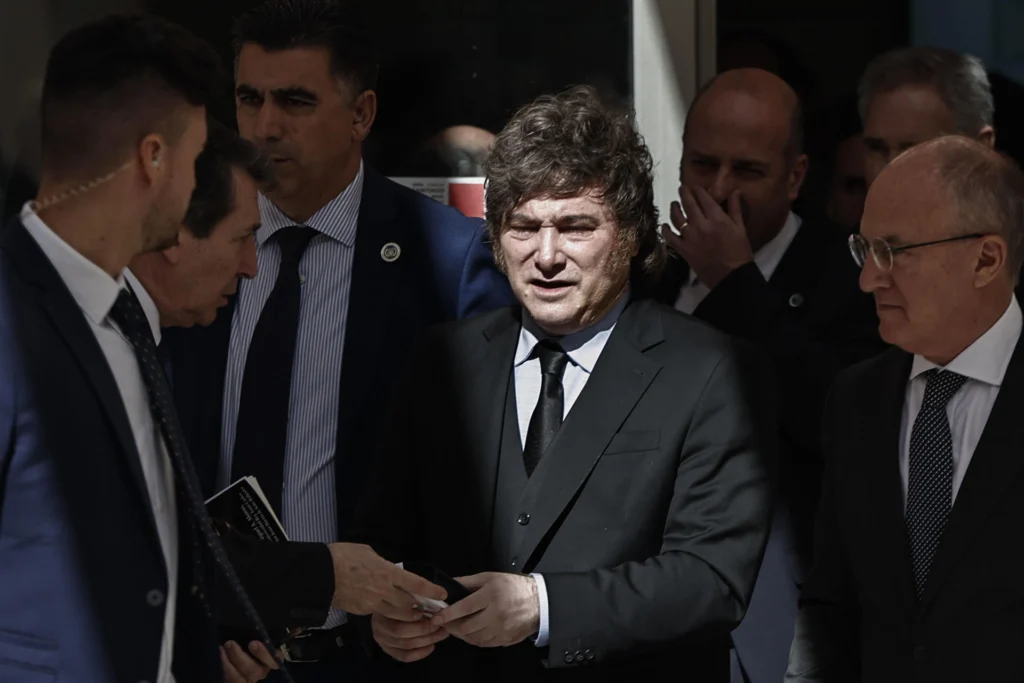
Opposition in Congress demands the interception of the Chief of Staff for the operation that included police escort, private flights and suspicions of official cover-up. Photo: EFE.

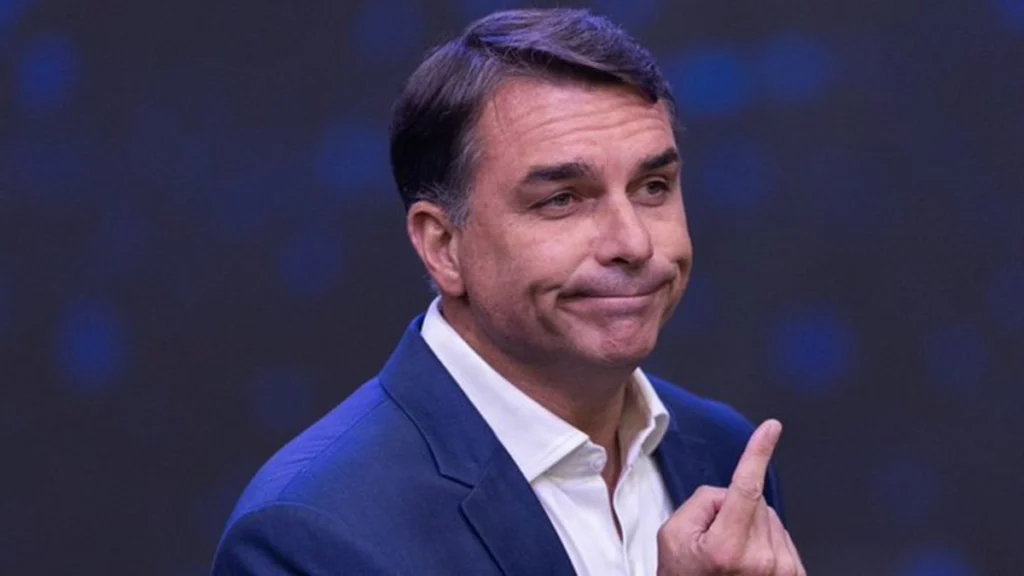
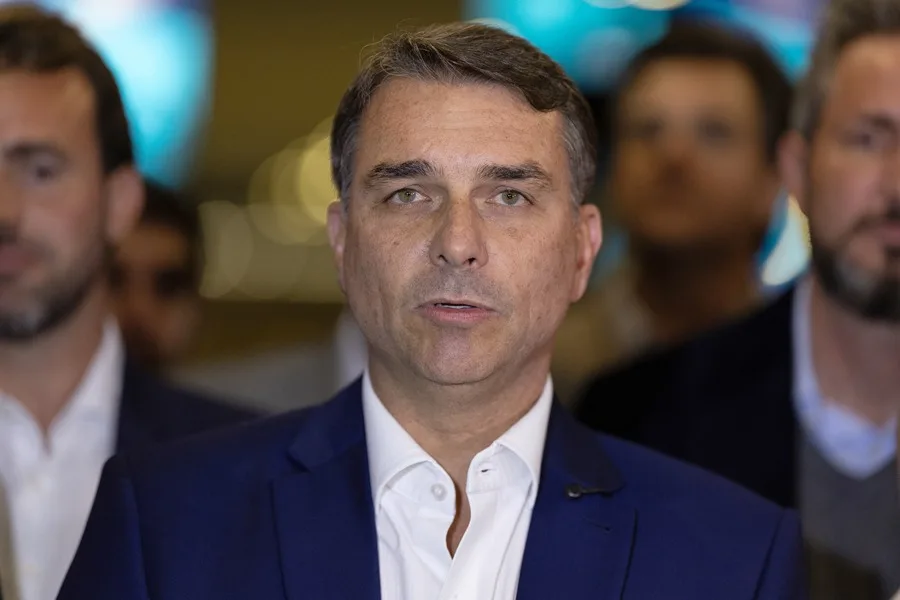
Argentine lawmaker Marcela Pagano filed a criminal complaint against officials of the Milei administration to investigate how Brazilian senator Flavio Bolsonaro crossed into Argentina and departed for United States despite a judicial ban on leaving Brazil.


The complaint was presented before the Federal Court in Puerto Iguazu, in Misiones province. It seeks to establish the circumstances of Bolsonaro’s entry into Argentina and his later departure toward United States.

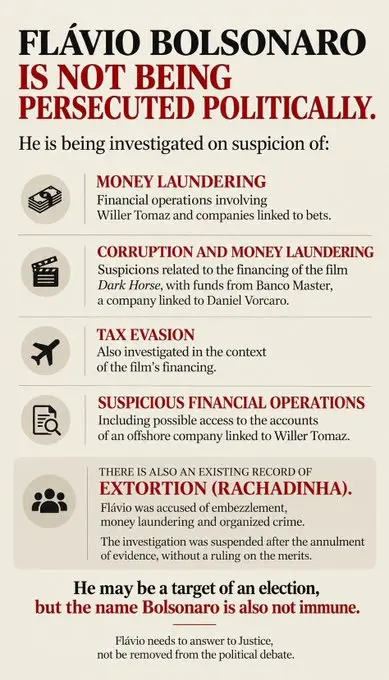
The far-right senator, son of former President Jair Bolsonaro, lost the presidential run-off to Luiz Inacio Lula da Silva on Sunday. He faces criminal cases in Brazil for corruption and money laundering, and Supreme Federal Court justice Alexandre de Moraes had prohibited him from leaving the country.

RELATED: What Role Did Milei Play in Flavio Bolsonaro’s Escape?

Pagano framed the matter in stark terms. “The justice system has to establish who organized Bolsonaro’s passage through our territory toward U.S. and whether Argentine officials facilitated it. A government cannot become the escape route for someone who is barred from leaving his country by court order”, she said.

The reconstruction presented to the court traces the route in detail. The Brazilian Senator crossed the international border between Foz do Iguazu and Puerto Iguazu through the Tancredo Neves crossing at 10.50 P.M. local time on Tuesday.

Forty minutes after entering Argentine soil, Flávvio Bolsonaro and his family boarded a private Gulfstream G400 jet at Iguazu International Airport. The aircraft belongs to the firm Baires Fly and had been positioned there since Monday.

🇧🇷 "I address the Brazilian people and the international community as the true elected president of Brazil."

Senator Flávio Bolsonaro, who lost Sunday's presidential runoff to incumbent Lula da Silva by about 4.4 million votes, is claiming the presidency in a statement released… pic.twitter.com/oTTodsaOcU

— Drop Site (@DropSiteNews) October 28, 2026

A Flight Around Brazil

The jet traced a path through the airspace of Paraguay, Bolivia, and Peru. It made a technical stop in Guayaquil, Ecuador, before landing Wednesday in Miami, avoiding Brazilian airspace at every stage.

Pagano detailed that Flávio Bolsonaro reached the air terminal under escort from an Airport Security Police patrol car. That force answers to the Security Ministry, which falls under the federal Executive.

The National Directorate of Migration initially denied on Tuesday that the conservative leader was present or had any flight plans. Yet the government of Javier Milei officially acknowledged his passage at 2.00 A.M. Wednesday, when the aircraft was already airborne.

The complaint demands clarification of another element, the presence in Misiones of Santiago Caputo, political strategist and chief advisor to the Argentine presidency. Caputo reportedly arrived in the province earlier in the week aboard the same private plane.

La Dirección Nacional de Migraciones informa que a las 22:50 hs del dia 27/10, ingresaron por el paso fronterizo de Puente internacional Tancredo Neves en la provincia de Misiones, los ciudadanos Flavio Nantes Bolsonaro, Fernanda Antunes Figueira Bolsonaro, Carolina Figueira…

— Migraciones (@Migraciones_AR) October 28, 2026

Text reads: “The National Directorate of Migration reports that at 10:50 P.M. on October 27, entered through the border crossing of Tancredo Neves International Bridge in the province of Misiones, citizens Flávio Nantes Bolsonaro, Fernanda Antunes Figueira Bolsonaro, Carolina Figueira Bolsonaro and Luiza Figueira Bolsonaro, who did so with skilled travel documentation without any legal impediment to entry into the country, also the transits were registered by the enforcement authority without incidents. For its part, at 11:30 P.M., the incoming party boarded a private flight dispatched by the company Baires Fly S.A to the city of Guayaquil, Ecuador, as reported in the flight plan.”

The written filing asks the court to investigate alleged crimes of illegal trafficking of persons, facilitation of illegal stay, abuse of authority, violation of public official’s duties, and cover-up. It requests urgent evidence measures including camera footage from the border bridge, aeronautical records, and the Airport Security Police duty logs.

The political fallout reached the legislature quickly. Argentine Congressman and former Defense Minister Agustin Rossi formalized a request to summon the Chief of Cabinet, Diego Santilli, to answer before Parliament.

The sequence raises the question at the heart of the complaint. A senator barred from leaving his country crossed a border, boarded a private jet, and flew to Miami without touching Brazilian airspace, all with a police escort on Argentine soil.

The government first denied any knowledge. It then confirmed the passage hours later, after the plane was gone. That gap between denial and confirmation sits at the center of the criminal filing.

The denunciation now forces the federal justice system to determine whether officials in the Milei administration facilitated a fugitive’s exit. The demand in Congress puts the same question to the Cabinet’s Chief.

  •  

ICE arrests of Dominicans in Puerto Rico spark outrage and reignite calls for independence

Masked Immigration and Customs Enforcement (ICE) agents carrying long guns swept through working-class neighborhoods in San Juan, Puerto Rico between October 22-25. About a dozen workers, largely Dominican immigrants, were reportedly detained from Río Piedras, Capetillo, Villa Palmeras, Villa Capri, and Barrio Obrero. Local leaders and community members have expressed outrage over the ICE deployment to the island. Protests have also broken out, demanding ICE out of Puerto Rico and elevating calls for independence from the United States.

During the operations, federal agents claimed that they were detaining criminals, but locals say they were all hard working people, many with families.

Elected officials speak out against ICE deployment

The Dominican Republic sits about 50 miles from Puerto Rico. Dating back to the pre-Colombian era, the Caribbean has always been closely linked by migration and maritime mobility. There has never been a time where the islands existed in isolation.

That might help explain why immigration arrests and deportations are being met with such deep rejection.

Puerto Rico’s Senate opposition spokesman, Luis Javier Hernández Ortiz and the mayor of San Juan, Miguel Romero have all condemned the ICE raids.

Romero ordered the municipal police to not assist federal agents with any ICE operations. The island’s American Civil Liberties Union (ACLU) branch also condemned the raids and characterized the operations as a pattern of violence and intimidation.

“We strongly reject the massive deployment of ICE agents who, in a threatening manner and armed with long guns, continue occupying the streets,” said Annette Martínez Orabona, executive director of the ACLU of PR, in a statement.

ICE had no judicial warrant for anyone they arrested, said the legal director of ACLU of PR, Fermín L. Arraiza-Havas, speaking to El Grito Media.

Local officials blame the island government’s alleged “voluntary handover” of data for making the sweeping operations possible.

Puerto Rican government collaborates with ICE

The ACLU of PR says the Puerto Rican government gave ICE the personal information of thousands of immigrant drivers, in violation of a 2013 confidentiality law. The information was handed over by Transportation Secretary Edwin González and Governor of Puerto Rico Jenniffer González-Colón.

“The laws in Puerto Rico protected that information,” said ACLU’s Arraiza-Havas to El Grito Media.

In a statement provided to The San Juan Daily Star, ACLU’s Martínez Orabona accused the governor of facilitating the federal immigration raids by “providing residential addresses and confidential information belonging to more than 6,000 immigrants residing in Puerto Rico.”

“Both the federal and state governments are responsible for the escalation of violence that we are seeing from ICE,” Martínez Orabona said.

The ACLU of PR held a press conference on October 15, where they made public the mass data sharing between the Puerto Rican government and ICE.

Border czar Tom Homan then visited Puerto Rico on Oct 21-22 to review immigration enforcement efforts and operational challenges, according to The Washington Post. 

ICE raids began the next day.

Locals confront federal agents as raids sweep Dominican neighborhoods

Various videos have circulated online, where community members can be seen surrounding ICE vehicles and confronting agents, most of whom spoke English, as they arrested individuals. One restaurant worker reportedly refused to let agents enter as they tried to follow a man they claimed was a criminal. The agents eventually left.

ICE agents can also be seen in various videos threatening community defenders with pepper spray and tasers for legally recording their operations, as community members yell “Don’t touch me!” and “They’re taking hard working people from here, what a shame!”

In at least one account, a Puerto Rican citizen (all Puerto Ricans are US citizens by birth) was stopped by a group of ICE agents who demanded his ID.

The arrests have raised questions about racial profiling, citizen’s rights, as well as questions about the political direction of Puerto Rico.

Colonialism or independence?

Protests broke out in the neighborhoods targeted by ICE on Monday, October 26. The Fire Ants of Rio Piedras led a march, holding a banner that read “Heat for ICE Not for My Community” and “ICE Out!” Large groups of children and youth participated in the march.

In a statement, the Feminist Collective PR, also part of the protests, said, “We reject this pathetic, collaborationist government that loves to bend its knees to Washington in exchange for nothing.”

They argued that the same government that collaborates with the feds to hand over their Caribbean brothers and working people is also selling off the country piece by piece to foreigners coming to displace the Puerto Rican people. The group asserted that the foreigners that need to be removed are not Dominicans, but people like the Reuben Brothers – two British billionaires developing a multi-billion dollar resort and residential megaproject on the southwest coast.

“The US has no moral integrity to stand on to come tell us here who can be our neighbors and who can’t.”

Mounting resistance has also brought the call for Puerto Rican independence back into the spotlight.

“ICE raids in Puerto Rico are colonial terrorism,” said Boricuas Unidos en la Diáspora, in a statement released on X. 

The group declared that ICE activity is part of the colonial status quo. The only two political options from here are: statehood, which they argue would only strengthen and perpetuate US federal control over Puerto Rico, and independence. 

“If you don’t want ICE roaming the streets of Puerto Rico, you have to support our nation’s independence,” the group said.

“It’s that simple.”

  •  

Venezuela Demands Bank of England Return Its Gold Reserves

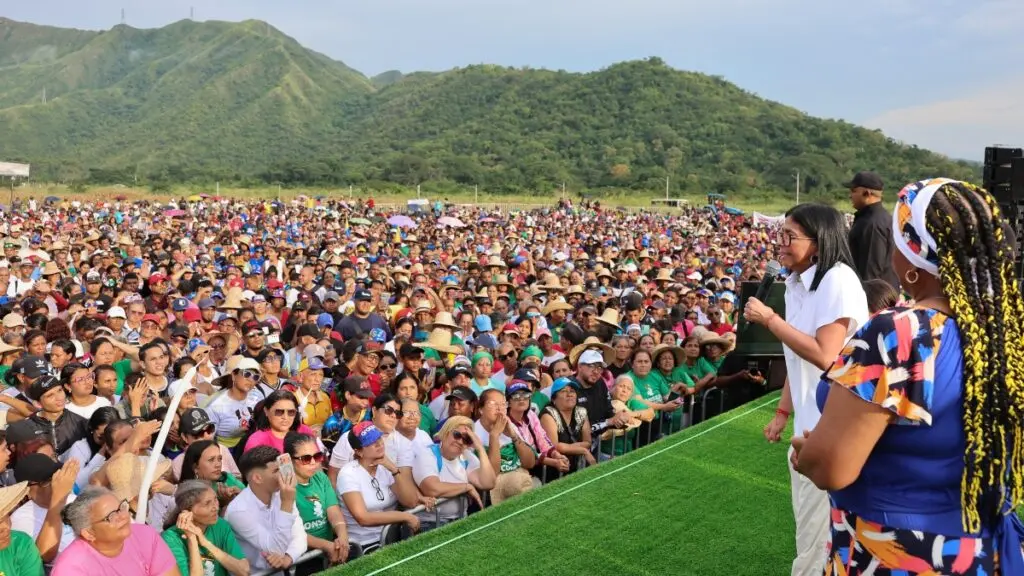
Acting President Delcy Rodriguez pointed out that the gold retained is the reserve of the Central Bank of Venezuela. Photo: Venezuelan Presidential Press.

Acting President Delcy Rodriguez demanded Wednesday that the Bank of England return Venezuela’s gold, calling the metal a Central Bank reserve that belongs to the Venezuelan people and declaring that no excuse remains.


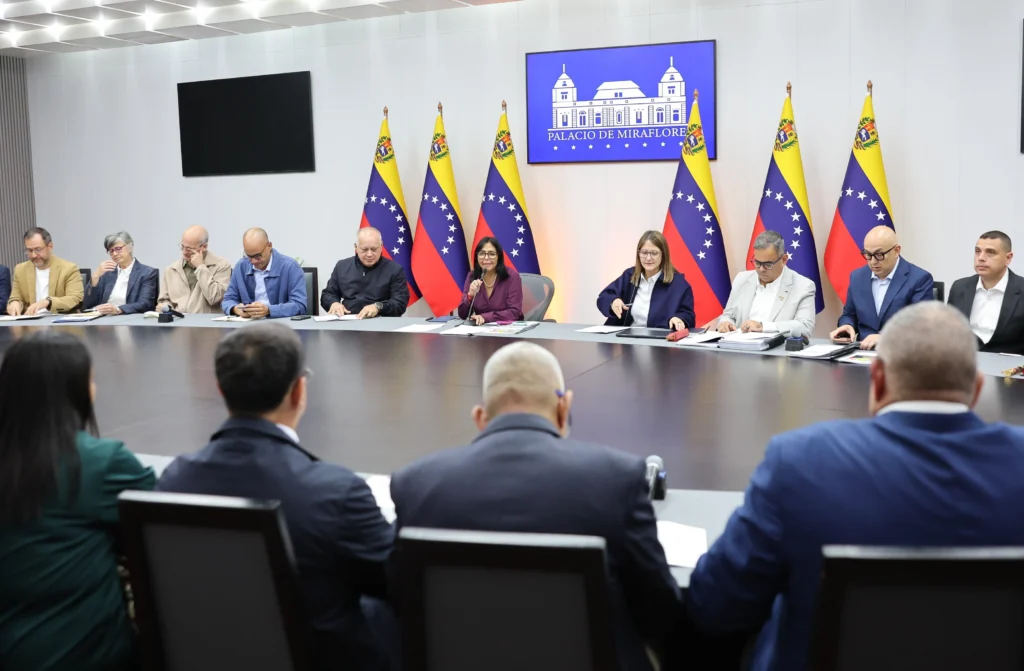
Venezuelan Acting President Delcy Rodriguez delivered the demand during a working meeting with the Council of Ministers and regional authorities held at Miraflores Palace. She insisted the gold constitutes a reserve of the Central Bank and belongs to the nation.

Rodriguez recalled that the National Assembly, including the 2015 legislature, had produced an agreement in which political sectors of Venezuela called for the gold’s return, framing the demand as a settled matter of national will.

RELATED: Venezuela Oil Production Hits 1.25 Million Barrels Daily in Major Recovery

The Acting President added that an irrational legal action that opposition figures had attempted was dropped by those same actors. That withdrawal, she argued, removed any remaining justification for the Bank of England to hold the metal.

“There is no excuse. That is the only thing I have to tell the Bank of England. They must return Venezuela’s gold, which belongs to Venezuelan men and women”, she stated.

The language was direct. Rodriguez offered no room for negotiation, framing the gold as a sovereign asset held outside the country against the will of Venezuelan institutions.

#28Oct | La presidenta encargada de Venezuela, Delcy Rodríguez, solicitó a la Cancillería de la República y a la Procuraduría General que inicien las gestiones correspondientes para recuperar el oro venezolano que se encuentra en el Banco de Inglaterra.

“No voy a dejar de exigir… pic.twitter.com/0c91WycZcn

— El Diario (@eldiario) October 28, 2026

Text reads: “The Acting President of Venezuela, Delcy Rodriguez, requested the Ministry of Foreign Affairs and the Office of the Attorney General to initiate the appropriate steps to recover the Venezuelan gold that is at the Bank of England. “I will not stop demanding the Bank of England to return our gold. Enough excuses. There was an agreement”, said Rodriguez, referring to the agreement to recover international reserve assets reached last August during the first cycle of dialogue between the delegations of the elected National Assembly in 2015 and the government (…)”

Mining Push Grows

The same working session included a live link with Mining Minister Hector Silva from the Choco plant in Bolivar state. Silva confirmed the arrival of 41 surface machines, part of a total of 544 pieces of equipment purchased by the state.

Those machines are meant to boost gold and coal production. The government tied the mining drive to strengthening the country’s reserves and generating income for social projects, health care, and worker welfare.

The equipment delivery anchors the government’s broader argument. Venezuela insists it does not need foreign permission to manage its resources, whether gold underground or gold stored abroad.

The Bolivarian government also pledged a productive revival across the country to energize the engines of the economy and support organized local development. The gold demand sits at the center of that agenda. Every program announced, from ham production to health brigades, depends on revenue the government says its reserves should generate.

Venezuela has long argued that the Bank of England’s refusal to release the gold violates its sovereignty. Acting President Rodriguez renewed that claim in the sharpest terms, insisting the metal funds the welfare of a people, not the accounts of a foreign institution.

No response from the Bank of England appears in the official record. The demand now stands public, delivered from the presidential palace and addressed directly to London.

  •  

How did Lula win the election?

On October 25, Brazil’s three-time and current president, Luiz Inácio Lula da Silva, surprised the entire world by overcoming an electoral setback in the first round (in which he was defeated by the far-right candidate Flávio Bolsonaro) and securing victory and the presidential seat in Brasília.

Lula, the legendary union leader during the dictatorship, secured 51.79%, equivalent to 64,256,232 votes, while Bolsonaro (son of the detained former president Jair Bolsonaro) received 48.21%, or 59,826,041 votes.

What is truly surprising about Bolsonaro’s defeat (given that most pollsters had predicted a very likely victory for him) is the enormous number of votes Lula managed to gain during the three weeks between the first and second rounds of voting. In that first round, Bolsonaro took first place with 48.21% (more than 56 million votes), and Lula came in second with 45.15% (just under 54 million votes).

Many believed that the nearly 9 million votes obtained by all the other candidates combined in the first round would be distributed in a way more favorable to Bolsonaro, since most of those votes were cast for right-wing and center-right candidates. This seemed even more evident after many of the leaders of those parties endorsed Bolsonaro.

Added to this question was the high probability that, in a society highly polarized between the two candidates, many voters who either cast blank or invalid ballots or abstained from voting in the first round would support one of the two candidates.

Indeed, both of these circumstances played out. According to available data, more than 14 million Brazilians who had voted for other candidates, cast invalid ballots, or abstained from voting participated in the runoff, supporting either Lula or Bolsonaro.

And this is precisely the key factor in understanding Lula’s victory. Assuming that very few voters would have switched their support from Lula to Bolsonaro or vice versa, it is important to note that of those 14 million votes that were redistributed, Lula managed to secure 10.37 million more votes than he received in the first round, while Bolsonaro managed to gain just under 4 million votes. This was enough for Lula not only to close the gap against his opponent but also to surpass him by a comfortable margin.

What happened in Brazil?

Faced with this surprising turn of events, hundreds of analysts in Latin America and around the world have rushed to present countless charts, hypotheses, and analyses in an effort to fully understand the reasons behind this victory. And the reasons have to do not only with the clearly impressive comeback by Lula’s Workers’ Party and its allies, but also with the fact that he appears to have put a halt to a seemingly unstoppable string of victories by the far right in Latin America.

Given this, the question seems clear: How did Lula manage to convince such a staggering number of people to vote for him in the runoff who had not done so in the first round? In response, technical reasons have been put forward (such as campaign strategy, the use of social media, and mass mobilization), as well as political ones (fear of a far-right government, social-class alliances, the formation of a broad-based coalition, etc.).

Among the technical reasons, Lula’s tremendous effort to turn the runoff campaign into a genuine, nearly constant mass mobilization (in both large cities and small towns) has been highlighted. The former union leader once again demonstrated his great charisma and ability to rally people before thousands of PT activists and members of other allied parties who fought day and night without stopping to overturn the result.

Added to this is the PT’s digital strategy; the party had repeatedly accused major social media platforms of boycotting the presidential campaign by hindering or reducing the visibility of Lula’s ads – but not those of Bolsonaro. In response, André Janones proposed a change in strategy.

Lula’s WhatsApp channel grew from 3.7 million subscribers to more than 10 million in the span of 12 days. Through this channel, users were instructed to post certain messages, search for information online, comment on specific posts, and so on. In other words, to circumvent an algorithmic system that, they claimed, was deliberately sabotaging Lula’s campaign.

The result was astonishing: despite the alleged media blockade on social media, the platforms were flooded with messages, images, and videos (many generated by AI) featuring Lula and attacking Bolsonaro’s candidacy, which undoubtedly had a major impact on the political communication strategy of the PT’s campaign, led by re-elected Governor Rafael Fonteles. For example, online interactions about Lula increased from 41% to 65% during the runoff election.

But Lula also took the risk of bringing about tangible changes in people’s lives, and he sent what may have been his final message during the runoff election, when his party and allies succeeded in passing legislation to end the six-day workweek. The move was celebrated by the country’s workers and clearly gave Lula’s campaign a pro-worker tone. That is why he gained so many millions of votes in the second round of the election in the working-class suburbs of major cities.

Read more: Brazil’s Congress ends 6×1 work schedule

And yet, there remains a certain suspicion that if this set of measures had been applied in any other similar situation, something would have been missing to set it in motion and give deeper meaning to the purely political campaign – with its communication, marketing, and other tactical decisions. And that something is Lula.

At times it seems that only someone with his political stature, his charisma, and the historic place he has already carved out in the history books could have won an election in Latin America against the far right, which enjoys the support of the most influential imperial powers of our time and an international oligarchy.

The “warrior of the Brazilian people

Lula achieved this, as already mentioned, thanks to a series of changes in his campaign strategy and concrete improvements in people’s lives. But it must be said without fear of contradiction: he did so by blending two dimensions that might seem contradictory, yet which a figure like him could bring together.

The first is that, as some of his campaign strategists recount, he began to speak extensively about Brazil’s future despite having already served as president three times. In this way, he moved away from nostalgia for the past and began to speak of hope for the future.

And second, Lula insisted throughout the campaign that this future was threatened by the Bolsonaros, whom he constantly linked to a submissive attitude toward US interests. In this way, Lula also employed a discourse of fear and danger, personifying it in Bolsonaro, who, as is well known, had reportedly left Brazil for the United States.

But Lula did not do so in a pitiful or apocalyptic way; rather, he presented himself as the only one capable of halting that advance. And more than just capable, as the only one who, without a doubt, would do so. In other words, Lula established himself, at the age of 80, as a “warrior of the Brazilian people,” just as his supporters chanted in the streets.

Then, in the debates (which undoubtedly had a huge impact on the runoff election) it seems Lula had had enough of the far right always appearing to be on the offensive, while the left and progressives always seemed to be waiting for the next blow. Lula put on his boxing gloves and began playing the game the far right had set for him … and won by knockout.

And for that very reason, Lula, his followers, and many of those who supported him (not necessarily because they believe in his agenda, but because they feared a new far-right government, as the numbers show) must realize that, with a hostile legislature and an opposition united around a single family, Lula’s fourth term will likely be the most difficult of his life.

Lula will have to seek ways to overcome the clear obstacles that the right and the far right will place in his path in order to achieve what he called “the best government in Brazil’s history.” For now, he has managed to prevent another Bolsonaro from reaching the presidency, but that does not mean the remainder of his term will be a “Brazilian pax.” 

In this regard, there is a Japanese proverb that Lula should keep in mind: “When you’ve won a battle, tighten your helmet.”

  •  

Brazil Denies Fake News on 6×1 Workweek and Social Cuts

The Bolsa Familia Program (PBF) was created by the federal government in October 2003 and became law in January 2004. Photo: MDS.

The Brazil’s government warned that false social media posts claimed the 6×1 workweek law had been changed and that social programs such as Bolsa Familia faced cuts, and it urged citizens to consult official sources.


The Secretariat of Social Communication (Secom), denied that any change had been made to the constitutional amendment that ends the 6×1 workweek.

The posts, which spread after the presidential run-off, offered incorrect information about labor legislation and social benefits.

RELATED: Brazilian Senate Ends 6×1 Schedule, Approves 40-Hour Workweek

Constitutional Amendment 141 guarantees two paid rest days each week without any reduction in salary. The way those free days are organized can be settled through collective bargaining, as long as the constitutional conditions are respected. The Secretariat of Social Communication stressed that the norm remains in force and untouched.

The false claims included an alleged exclusion of certain professional categories from the new rules. No such proposal exists. The Secretariat of Social Communication explained that conversations with different sectors concern only how to implement rules that have already been approved.

The reduction of the workweek will unfold gradually. The initial limit will be 42 hours a week, and later 40 hours, with no salary reduction at any stage.

The government offered a blunt explanation of why the Executive holds no power over the text. Since the measure is a constitutional amendment approved by the National Congress, the Executive cannot modify or veto it.

O Governo do Brasil alerta para informações falsas que circulam nas redes sociais neste período pós-eleitoral sobre um suposto recuo no fim da escala 6×1 e cortes no Bolsa Família e no Gás do Povo. pic.twitter.com/SIR0but5Vl

— Governo do Brasil (@govbr) October 27, 2026

Text reads: “The Government of Brazil warns about false information circulating on social media in this post-election period about a supposed retreat at the end of the 6×1 scale and cuts to Bolsa Família and Gás do Povo.“

Welfare Programs Intact

Separate rumors suggested that the Bolsa Família program faced suspension or reduced benefits. The Secretariat of Social Communication confirmed that the program keeps operating normally, with payments continuing and no cuts applied.

In October the minimum amount per family rose by 15.04%, from R$600 (about 112 U.S. dollars) to R$691 (around 129 U.S. dollars). That adjustment contradicted the online claims, since a program facing cuts does not raise its floor. Families can verify their information through the Bolsa Familia app, the Caixa Tem platform, or by calling 111, the direct line of the Caixa Economica Federal bank.

The government also rejected rumors about Gas do Povo, the program that provides free refills of 13-kilogram gas cylinders to families that meet the requirements. The Secretariat of Social Communication (Secom) affirmed that the initiative already has budget assigned for 2026 and that resources appear in the 2027 budget proposal sent to Congress.

The pattern was consistent across all the false messages. Each one targeted a program or a right that benefits working families, and each one crumbled against the official record.

The Secretariat of Social Communication (Secom) advised the public to distrust messages that do not identify reliable sources. Citizens should verify whether information has been confirmed by competent authorities before sharing it. The Social Direct Line 121 and official digital channels remain open for questions about benefits.

The warning reflects a government trying to contain a wave of misinformation at a politically charged moment. False posts about labor rights and welfare can spread faster than corrections, especially when they play on fear of losing income or benefits.

The facts, however, tell a different story. The workweek amendment stands. The Bolsa Familia Program pays more than before. Gas do Povo holds its funding for this year and next. None of the alleged changes appears in any official document.

The government’s message closed with a practical instruction. Before passing along a message about labor law or social programs, check the source. The tools to do so, apps and official channels, remain available.

  •  

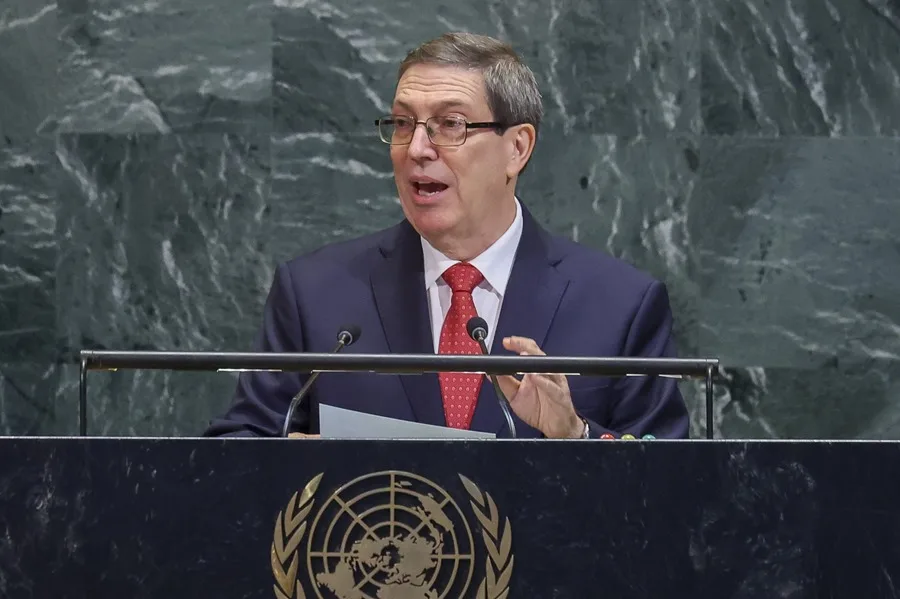
Broad International Support for Cuba at the United Nations General Assembly

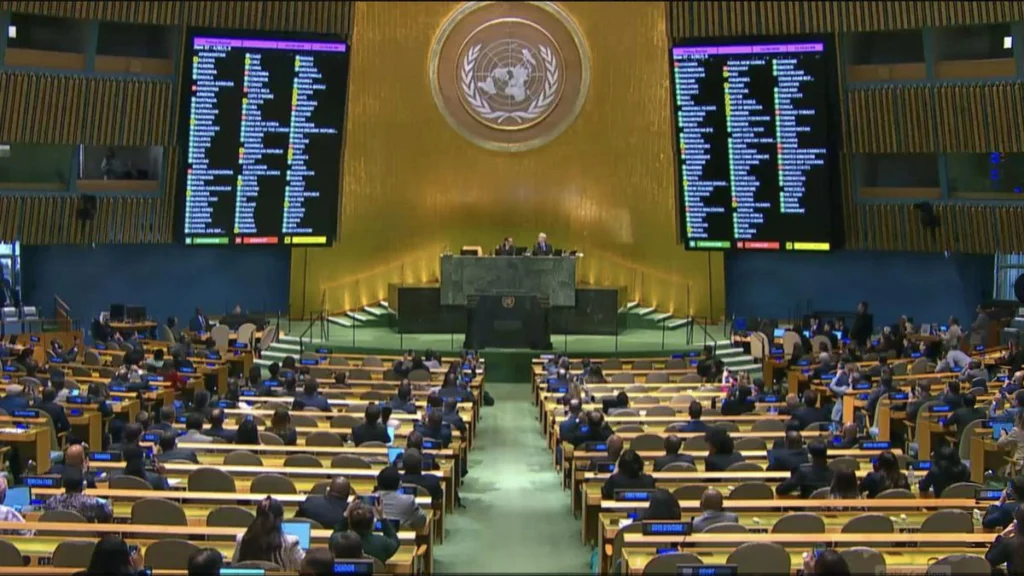
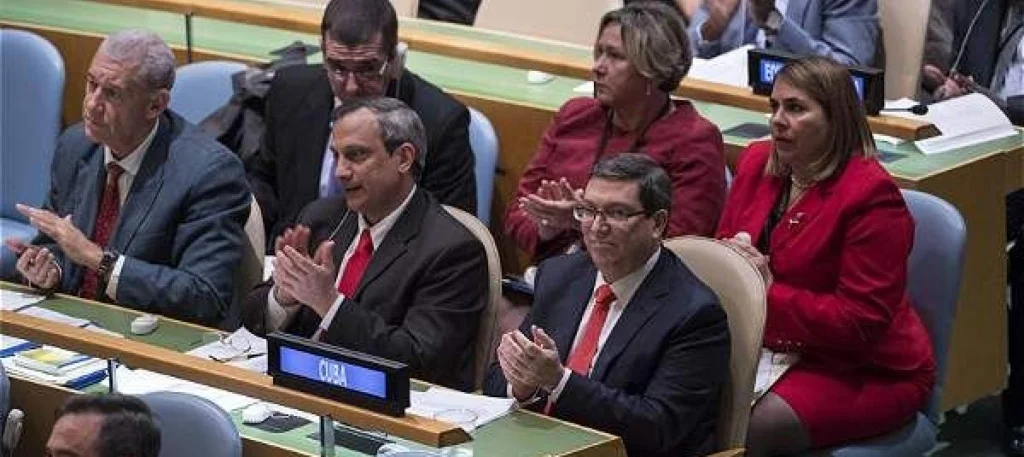
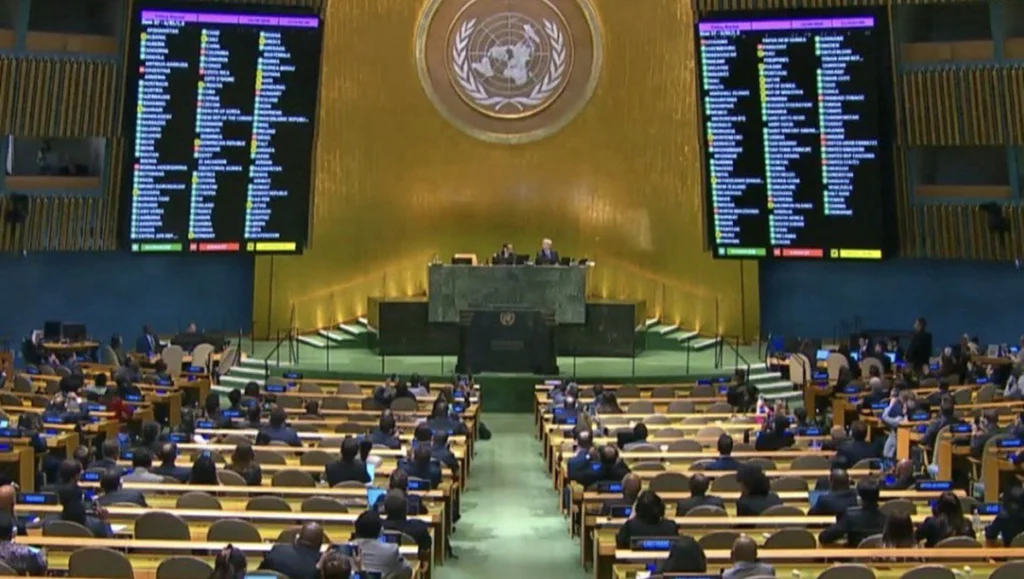
On Wednesday, the United Nations General Assembly approved—for the thirty-fourth time—a resolution calling for an end to the economic, commercial, and financial blockade imposed by the United States against Cuba. The resolution passed with 130 votes in favor, 17 against, and 25 abstentions.

RELATED:

UN General Assembly Approves Cuba’s Resolution Against U.S. Blockade

During the debate, Mexico, Nicaragua, Egypt, Vietnam, India, Ghana, and Mozambique reiterated their support for the Cuban people and condemned unilateral coercive measures, which they view as contrary to the United Nations Charter and international law.

Mexico’s Permanent Representative to the UN, Héctor Vasconcelos, reaffirmed his country’s solidarity with Cuba and its rejection of any unilateral measures directed against the Cuban population. He maintained that the blockade, which has been in place for more than six decades, violates international law and is incompatible with the principles of the United Nations.

Vasconcelos noted that the sanctions constitute a structural obstacle to the island’s economic and social development. “Ending the blockade against Cuba is an urgent necessity and a humanitarian imperative,” the Mexican diplomat stated.

Mexico argued that dialogue, cooperation, and respect for international law should take precedence over measures that exacerbate the hardships faced by a population. It also called for the removal of Cuba from the U.S. list of state sponsors of terrorism and urged that priority be given to channels of dialogue.

Meanwhile, Nicaragua’s Permanent Representative to the UN, Jaime Hermida Castillo, announced his country’s vote in favor of the resolution. He based this position on principles and values ​​shared by the two nations and reaffirmed Managua’s support for Cuba in the face of pressure tactics employed by the United States.

Hermida Castillo condemned the 64-year-long economic, commercial, and financial blockade, describing these coercive measures as a systematic act of aggression and a violation of human rights. He asserted that such policies are intended to stifle Cuba’s scientific, cultural, and social development. The Nicaraguan delegation also questioned the inaction of the multilateral system in the face of the overwhelming opposition from governments to Washington’s unilateral actions.

¡VICTORIA DE CUBA!

La Asamblea General de @ONU_es ha votado mayoritariamente contra el bloqueo de EEUU contra Cuba.

El gobierno de EEUU queda nuevamente aislado en su pretensión de continuar asfixiando al pueblo cubano y someterlo a un acto de castigo colectivo y de genocidio.… pic.twitter.com/MhnrjGnzSt

— Bruno Rodríguez P (@BrunoRguezP) October 28, 2026

The text reads, “CUBA’S VICTORY! The General Assembly of @ONU_es has voted by a large majority against the US blockade against Cuba. The US government is once again isolated in its attempt to continue strangling the Cuban people and subjecting them to an act of collective punishment and genocide. Neither its most insane pretexts nor its pressures nor media circus will prevail over the force of facts and truth. #CubaNoEsUnaAmenaza The Blockade Is.

The delegations of Ghana and Mozambique concurred that the financial blockade violates the principles of the United Nations Charter and international law. They denounced the fact that these extraterritorial measures hinder Cuba’s economic, social, and cultural development—particularly in the areas of healthcare, education, and energy supply.

Mozambique highlighted Cuba’s historic contributions to South-South cooperation and its assistance in the fields of health and education across Africa. The representative from the African nation noted that, for more than six decades, the Cuban people have endured the consequences of the blockade—a policy that the General Assembly has repeatedly condemned.

Ghana stated that its support is rooted in the principles of sovereign equality, mutual respect, and peaceful coexistence among states. It warned that the extraterritorial application of the blockade imposes burdens on third countries and runs counter to the principles of fair and equitable international economic relations.

Egypt, for its part, called for action from the UN. Ihab Awad, Egypt’s Ambassador and Permanent Representative to the UN, reaffirmed his country’s commitment to the principles of the United Nations Charter and demanded an end to the economic strangulation of Cuba.

“The negative repercussions of the economic, commercial, and financial blockade imposed on Cuba affect the Cuban people’s ability to meet their basic needs,” the Egyptian diplomat stated.

Meanwhile, Vietnam reiterated its support for the immediate lifting of the commercial and financial blockade. Its delegation expressed concern regarding restricted access to energy and fuel, as well as the adverse impact on hospitals, schools, water services, and trade relations with third countries.

The Vietnamese delegation called for respect for the right to self-determination—free from coercion—advocated for political dialogue in accordance with international law, and urged the removal of Cuba from the list of state sponsors of terrorism. It also requested international support to address the accumulated economic and social damage.

India endorsed the statements made by the G-77 and ASEAN against the blockade. Its representatives called for the immediate repeal of these measures in order to mitigate their impact on key sectors such as energy, health, food production, and education.

Furthermore, India highlighted the need to eliminate extraterritorial sanctions to create an environment that would allow for Cuba’s full participation in international trade.

  •  

President Díaz-Canel Supports Cuba’s Response to U.S. Provocations at the UN

On Wednesday, President Miguel Díaz-Canel praised the actions of the Cuban delegation at the United Nations during the annual debate on the resolution calling for an end to the economic, commercial, and financial blockade imposed by the United States against Cuba. The president affirmed that the island will not back down in the face of Yankee pressure and dictates.

RELATED:

UN General Assembly Approves Cuba’s Resolution Against U.S. Blockade

In messages posted on the social media platform X, the Cuban leader acknowledged the work of Foreign Minister Bruno Rodríguez, Ambassador Ernesto Soberón, and the rest of the Cuban delegation, following an incident that took place during a session of the UN General Assembly.

“Today at the UN, the international community’s overwhelming support for Cuba was on display, as they condemned the blockade and the U.S. government’s policy of maximum suffocation. Most of the speakers were clear in their denunciation,” the Cuban president wrote.

These remarks followed an intervention by Bruno Rodríguez, who interrupted U.S. representative Mike Waltz as he was blatantly presenting a series of slanders, distortions, and lies against Cuba.

“You are lying,” Rodríguez stated, while requesting that the president of the General Assembly call the U.S. representative to order.

The Cuban Foreign Minister also denounced pressure exerted by Washington on UN member states and rejected what he described as insults to the dignity of the Cuban people and the international organization itself.

El pretexto más empleado y manipulado por el gobierno de Estados Unidos para tratar de justificar su actuación es presentar a Cuba como una supuesta amenaza para la superpotencia nuclear o, incluso, para el hemisferio. Se sabe que ningún gobierno aquí representado admite o acepta… pic.twitter.com/9ADzwpPsXS

— Bruno Rodríguez P (@BrunoRguezP) October 28, 2026

The text reads, “The most commonly used and manipulated pretext by the United States government to try to justify its actions is to present Cuba as an alleged threat to the nuclear superpower or even to the hemisphere. It is known that no government represented here admits or accepts such a crude fallacy. They lack arguments.”

Díaz-Canel maintained that this international body serves as a space for sovereign equality among states, and he asserted that Cuba will defend the rights granted to it by the United Nations Charter and its regulations, as well as the dignity of its people and its heroes. “Cuba will not back down, and certainly not in the face of Yankee pressures and orders,” emphasized the head of state, who described the U.S. stance as one of imperial arrogance and overbearing conduct.

The Cuban delegation’s protest was voiced at the start of the debate on the resolution titled “Necessity of ending the economic, commercial and financial embargo imposed by the United States of America against Cuba”—an initiative that has garnered broad support in the General Assembly for over three decades.

Cuba denounced a vile campaign of diplomatic pressure aimed at influencing the delegations present, with the goal of eroding support for the Cuban resolution. Nevertheless, the world once again spoke out—by an overwhelming majority—against the embargo, even in the face of pressure and blackmail from the United States intended to alter the outcome.

Díaz-Canel further noted that the U.S. representative—visibly isolated—offered no explanation for the energy blockade imposed on Cuba, nor for the intensified extraterritorial reach of the embargo.

In their remarks, Cuban authorities presented verifiable data demonstrating that the tightening of the embargo—particularly since 2025—has caused severe economic and social hardship on the island. This confirms that the U.S. policy amounts to collective punishment of the population; the authorities warned that the international community must not become complicit in such measures.

“Because we believe in the truth and in global solidarity, we know that the U.S. embargo against Cuba and the energy blockade will be condemned once again in the General Assembly,” Díaz-Canel stated on X.

  •  

What Role Did Milei Play in Flavio Bolsonaro’s Escape?

The Argentine president was directly involved in the operation, said a lawyer close to the Bolsonaro clan.

Over the last 12 hours, Argentine and Brazilian media outlets have continued to stir up controversy regarding the role President Javier Milei played in the flight of far-right Brazilian senator Flavio Bolsonaro to the United States—a journey that included a stop in Argentina.

RELATED:

Flavio Bolsonaro Enters U.S. After Fleeing Brazilian Justice

On Tuesday, outlets reported that Bolsonaro might flee through Argentina. Immigration authorities, however, responded by saying there were no records of Bolsonaro entering the country.

Presidential spokesman Adrian Ravier said only at a news conference that Argentina had received no asylum request from the Brazilian senator. Milei chose to remain silent.

In an interview with channel A24 on Tuesday night, Mexican lawyer Simon Levy, who is close to the Bolsonaro family, claimed that Milei was aware of the efforts to coordinate Bolsonaro’s escape to Miami.

“Thanks to President Milei, Flavio Bolsonaro is alive today. The only person who knew about this was President Milei. He has been and was involved in part of the coordination of this entire operation,” Levy said.

Flávio Bolsonaro fugiu para os Estados Unidos em um jato de uma empresa que aparece numa investigação sobre lavagem de dinheiro ligado a contratos públicos para atender pessoas com deficiência na Argentina.

A aeronave pertence à Baires Fly, de Luis Grande. A companhia também… pic.twitter.com/qx3n14dJX5

— Paulo Pimenta (@Pimenta13Br) October 28, 2026

The text reads, “Flavio Bolsonaro fled to the U.S. on a jet belonging to a company that appears in an investigation into money laundering linked to public contracts for the care of people with disabilities in Argentina.

The aircraft belongs to Baires Fly, which is owned by Luis Grande. The company also transported Javier Milei to the U.S. following his 2023 electoral victory. On that trip, Grande himself piloted the plane. Argentine judicial authorities are investigating transfers made by suppliers of the National Disability Agency (ANDIS) to Baires Fly accounts.

Following these payments, invoices were issued for the advance purchase of flight miles. It is suspected that these transactions were used to provide a veneer of legality to funds derived from irregular contracting. Flavio left Brazil despite a court order prohibiting him from exiting the country and requiring him to surrender his passports. Sources: Reuters, elDiarioAR, and Ambito.“

The newspaper La Nacion reported that presidential adviser Santiago Caputo was in Misiones province, which borders Brazil, on Tuesday night, when the aircraft carrying Bolsonaro took off. This would confirm that the Milei administration actively assisted in the operation.

According to Argentina’s National Directorate of Migration, Flavio Bolsonaro, his wife, Fernanda Antunes Figueira, and their two daughters entered the country on Tuesday at 10:50 p.m. local time via the Tancredo Neves International Bridge in Misiones province.

Bolsonaro used his Italian passport, while his family members traveled with their usual identification documents, according to the flight plan. Argentine immigration authorities said no laws had been violated: “We cannot prevent him from entering the country with his European passport.”

Where is ICE? https://t.co/dPmX9ihGbJ pic.twitter.com/l7MyeLU5Zq

— Pamphlets (@PamphletsY) October 27, 2026

Forty minutes later, at 11:30 p.m. local time, the Bolsonaros boarded a private aircraft operated by Baires Fly S.A. at Puerto Iguazu Airport, bound for Guayaquil, Ecuador, from where they traveled to Miami, United States.

So far, neither Milei nor his ministers and aides have made any public statements about the operation that enabled the escape of Bolsonaro, a far-right politician who faces several criminal investigations.

His departure came after Brazilian Supreme Court Justice Alexandre de Moraes ordered him to surrender his passports and barred him from leaving the country as part of money laundering investigations.

All opposition parties to Milei in Argentina’s Congress have demanded explanations about what role the government may have played in the operation.

teleSUR/ JF Source: EFE

  •  

Colombian Opposition Raises Concerns Over Memorandum with the U.S.

On wednesday, opposition groups in Colombia have expressed their rejection of a strategic memorandum of understanding—signed over a month ago between Abelardo De la Espriella and the United States government—warning of potential socioeconomic, environmental, and territorial implications for the country, while also questioning the scope of the pact.

RELATED:

New Era in U.S.-Colombia Relations: Marco Rubio and De la Espriella Sign Strategic Deals

The criticism centers on a potential extractive mining project targeting strategic minerals; according to the opposition, the exploitation of these resources would negatively affect ecosystems and communities located in the Amazon, the Pacific region, and parts of the Caribbean.

Senator Carolina Corcho, of the Historic Pact (in spanish Pacto Histórico) coalition, argued that the agreement subordinates national sovereignty to an extractive mining and energy model designed to serve U.S. industry.

According to the lawmaker, the document reportedly includes provisions for streamlining permits for extractive mining companies, the handover of geological maps, and granting the U.S. government prior knowledge of planned sales in Colombia to facilitate its decision-making processes.

The opposition has characterized the agreement as mercantilist, criticizing the fact that it was finalized without the participation of Colombian civil society—a group that asserts its right to have a say in how its lands are used.

¡No vamos a permitir que regalen nuestra soberanía a espaldas del país!

La administración de @ABDELAESPRIELLA firmó a oscuras un memorando que le entrega a EE. UU. el control de nuestras tierras raras y minerales estratégicos, poniendo en riesgo a nuestras comunidades campesinas… pic.twitter.com/Oel6iYraPk

— Carolina Corcho (@carolinacorcho) October 28, 2026

The text reads, “We will not allow them to give away our sovereignty behind the country’s back! The administration of @ABDELAESPRIELLA signed a memorandum in the dark that hands over to the United States control of our rare earths and strategic minerals, putting our peasant and ancestral communities at risk. Colombia’s wealth must be respected! Watch the full interview and the details of this complaint on @TeleSUR: http://youtu.be/d0pxJpb7sZY?si=ZnJ_szg_QyUlmO6J

Critics warn that the affected territories contain lithium, nickel, uranium, and copper—resources essential for the manufacture of mobile phones, computers, microprocessors, radar systems, guided missiles, and defense equipment. These materials can also be used for military purposes.

According to the allegations, a large portion of these resources would be extracted from the Amazon, the Pacific, and parts of the Caribbean—regions that hold extensive deposits of rare earths and strategic minerals. Most of these areas are inhabited by Afro-descendant, Indigenous, and peasant (rural farming) communities, which further compounds the concerns raised by the opposition.

Colombian analyst Ricardo Vargas noted that these territories possess a social sensitivity, which is why communities tend to mobilize when faced with risks to their land, water, air, and biodiversity. Vargas also pointed to measures aimed at containing social protest and warned of the presence of armed groups that illegally access these resources.

According to the allegations, the executive branch is clearing protected territories to allow for the entry of foreign entities and the exploitation of resources. The opposition claims that the document bypasses requirements for prior consultation and environmental permits, effectively placing the country’s geological and mining map at the disposal of the U.S. economy and American corporations.

Meanwhile, the executive branch has stated that the memorandum is non-binding—an argument the opposition views as an attempt to evade constitutional obligations and the mandatory review process by the Congress of the Republic.

Opposition groups have drawn parallels to the situation during the administration of Álvaro Uribe Vélez, specifically regarding the presence of military bases in the country.

A productive day in Colombia, building on the enduring friendship between our two nations.

Grateful for the warm hospitality shown throughout today's visit. pic.twitter.com/UoxYnFrfem

— Secretary Marco Rubio (@SecRubio) September 8, 2026

The memorandum was signed on September 8, 2026, in Barranquilla, during a visit by U.S. Secretary of State Marco Rubio. The instrument establishes a framework for cooperation to secure supply chains for the mining and processing of critical minerals and rare earth elements.

According to official information, the agreement includes provisions for financing, support for geological mapping, and the streamlining of administrative procedures for extraction and processing projects. The Colombian Foreign Ministry maintains that such memoranda are non-binding and that they respect both national legislation and state sovereignty.

At the heart of this debate lies the tension between bilateral cooperation, foreign investment, and the protection of national sovereignty, strategic resources, and the rights of local communities.

A dispute over conflicting versions of a provision in Colombia’s 2027 national budget has raised questions about the bill’s legislative validity. Senator Esmeralda Hernández says the Senate and House of Representatives approved different versions of Article 65 but failed to… pic.twitter.com/kNlFunNq1o

— teleSUR English (@telesurenglish) October 21, 2026
  •  

Mexico to Invest $1.3 Billion to Improve Water Supply in Guadalajara

Federal and state governments to address chronic shortages and contamination without taking on new debt.

On Wednesday, Mexican President Claudia Sheinbaum announced that the federal government and the state of Jalisco will jointly invest about US$1.3 billion to improve water supply and quality in the Guadalajara metropolitan area, the country’s second-most-populous metropolitan area.

RELATED:

Mexico Deploys Special Mission as Hurricane Vance Nears Pacific Coast

During her morning news conference, she explained that her administration will contribute US$777 million, while Jalisco will allocate US$547 million.

“The good news is that the joint investment will prevent the need to take on debt and will make it possible to carry out this very important project for the country’s second-most-populous metropolitan area,” Sheinbaum said.

Jalisco Governor Pablo Lemus said the agreement will address a longstanding problem of water service interruptions and poor water quality that has affected residents of Guadalajara and neighboring municipalities for generations. He stressed that the projects will not involve new debt, privatization, or water rate increases.

For decades, Guadalajara has faced water supply and contamination problems, exacerbated by the deterioration of hydraulic infrastructure that is more than 70 years old in some sections. Some of the water supplied from Lake Chapala flows through open channels exposed to domestic and industrial discharges, while various neighborhoods experience service interruptions and irregular water distribution.

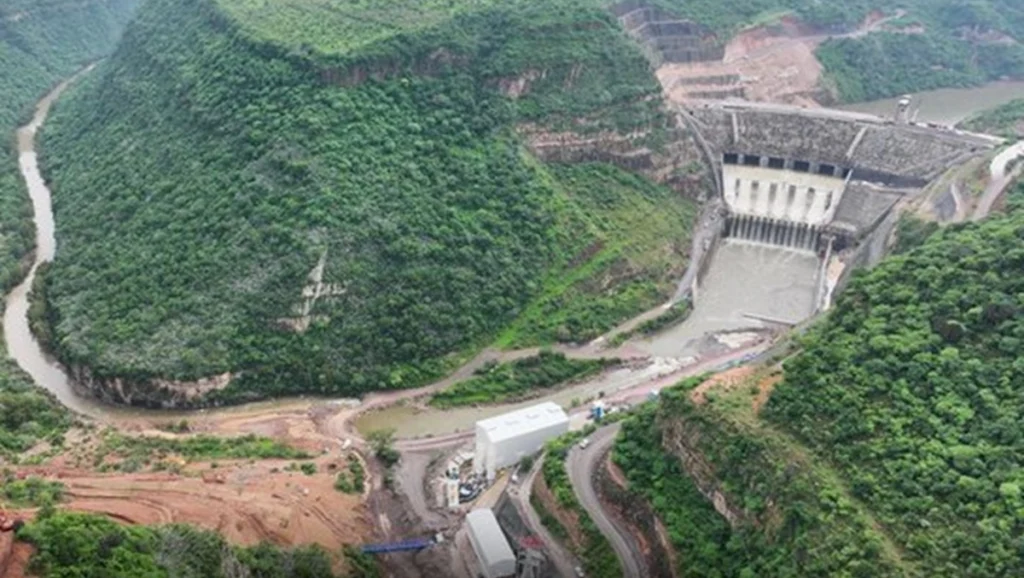
Efrain Morales, director of the National Water Commission (CONAGUA), explained that federal investment will fund two new aqueducts, with construction set to begin in early 2027 and last approximately two years. The projects will increase water supply by 1,200 liters per second, equivalent to providing water to half a million people, and improve water quality over the next 30 years.

Chapala: el reto de llevar más agua sin perderla en el camino y sin sobreexplotar el lago

El proyecto del gobierno de Jalisco para mejorar el abasto de agua en la zona metropolitana de Guadalajara mediante un nuevo acueducto genera preocupación entre organismos ciudadanos. pic.twitter.com/VG7vyvz7Qz

— Meganoticias GDL (@Meganoticias) October 28, 2026

The text reads, “Chapala: the challenge of transporting more water without losing it along the way or overexploiting the lake. The Jalisco state government’s project to improve the water supply for the Guadalajara metropolitan area—which involves a new aqueduct—is raising concerns among civic organizations.”

Contamination and Water Supply Interruptions

The state of Jalisco will allocate about US$402 million to renovate the Miravalle water treatment plant, which is about 70 years old. Lemus explained that the first phase will begin operating in April 2027 and that all work will be completed in approximately two years.

Authorities are also working to clean up channels and dams affected by polluting discharges and to build collectors to protect water from Lake Chapala.

Sheinbaum said about 150 unauthorized discharges have been identified, 80 of which have already been shut down. The project also aims to make full use of the infrastructure at the El Zapotillo Dam, built during the administration of former President Andres Manuel Lopez Obrador (2018-2024).

teleSUR/ JF

Source : EFE

  •  

UN General Assembly Approves Cuba’s Resolution Against U.S. Blockade

The nonbinding resolution passed with 130 votes in favor, 17 against and 25 abstentions.

On Wednesday, the United Nations General Assembly (UNGA) approved a resolution presented by Cuba against the U.S. blockade, with 130 votes in favor, 17 against and 25 abstentions.

RELATED:

Cuba Hails International Support for Ending U.S. Blockade at UN

Colombia, Paraguay, Argentina, Ecuador, and Costa Rica were the Latin American countries that joined the United States in voting against the nonbinding resolution titled “Necessity of Ending the Economic, Commercial and Financial Blockade Imposed by the United States of America Against Cuba.”

“The world has once again spoken out overwhelmingly against the blockade, despite the most blatant pressure and blackmail by the U.S. to change the course of this vote,” Cuban President Miguel Diaz-Canel said on social media.

“This victory for Cuba today in the UNGA is a victory for the heroic Cuban people, who refuse to surrender in the face of economic strangulation, threats and abuses by the U.S. government.”

“It is the triumph of truth over those who resort to lies and blackmail to subject an entire nation to collective punishment. Cuba is not a threat; the blockade is!” the revolutionary leader stressed.

BREAKING 🇨🇺🇺🇳 The UN General Assembly has overwhelmingly condemned the genocidal US blockade of Cuba for the 34th time. pic.twitter.com/WbPSMmHL7x

— Progressive International (@ProgIntl) October 28, 2026

The U.S. Blockade Causes $23 Million In Damages Per Day

Before the vote, Cuban Foreign Affairs Minister Bruno Rodriguez forcefully rebutted the United States, which denies that a blockade against the island exists. He said the economic war against Cuba causes more than US$22.9 million in economic damage in a single day.

Rodriguez displayed a real-time counter tracking the economic impact of the U.S. blockade. The counter began operating on Tuesday, coinciding with the start of the debate in the General Assembly on the annual resolution against the sanctions.

“The blockade kills and silently punishes our population as never before,” Rodriguez said  and warned that the administration of U.S. President Donald Trump “has unleashed a wave of pressure, intimidation and blackmail” against countries to prevent them from supporting the resolution, a text that has been approved almost unanimously year after year since 1992.

“The U.S. blockade is an act of war, collective punishment, and genocide… Its effects are felt at Cuban families’ dinner tables, in the beds of the sick, during childbirth or in operating rooms, in a child’s food or classroom, in the lack of electricity, drinking water and medicines, and in the high prices of goods essential to life,” Rodriguez pointed out.

Among other things, he denounced that Cuba faces shortages of 70% of the medicines on its basic list and that about 100,000 people, including 12,000 children, are awaiting surgery. All of this is “a consequence of the blockade.”

“What Cuba is asking for is to be left in peace, to allow the Cuban people to live in peace, resolve our own problems peacefully and find solutions to the great difficulties facing the world today, free from political, military, cognitive or economic aggression,” Rodriguez concluded.

“Cuba is not a threat. The blockade is.” 🇨🇺🇺🇳

In his speech, Cuban Foreign Minister Bruno Rodriguez denounced the cynicism and hypocrisy of labeling the island an “unusual and extraordinary threat” to the national security of the world's greatest nuclear power.

The diplomat… pic.twitter.com/duJubAbbqJ

— teleSUR English (@telesurenglish) October 28, 2026

teleSUR/ JF

Source: EFE

  •  

Operative of the Guasave Cartel in Sinaloa Dies During Mexican Security Operation

On Monday, mexican authorities have reported the presumed death of Jesús González Peñuelas—known as ‘Chuy Peñuelas,’ an alleged operative for the Guasave Cartel—during a confrontation with personnel from the Mexican Navy in Sinaloa. The United States government had offered a $5 million reward for information leading to his capture.

RELATED:

Mexico Arrests Leader of Los Chapitos Criminal Group

Omar García Harfuch, the Secretary of Security and Citizen Protection, stated that González Peñuelas is believed to be one of two individuals who died during an operation near Alfredo V. Bonfil, in the municipality of Sinaloa. The identities of the deceased are still awaiting formal forensic confirmation.

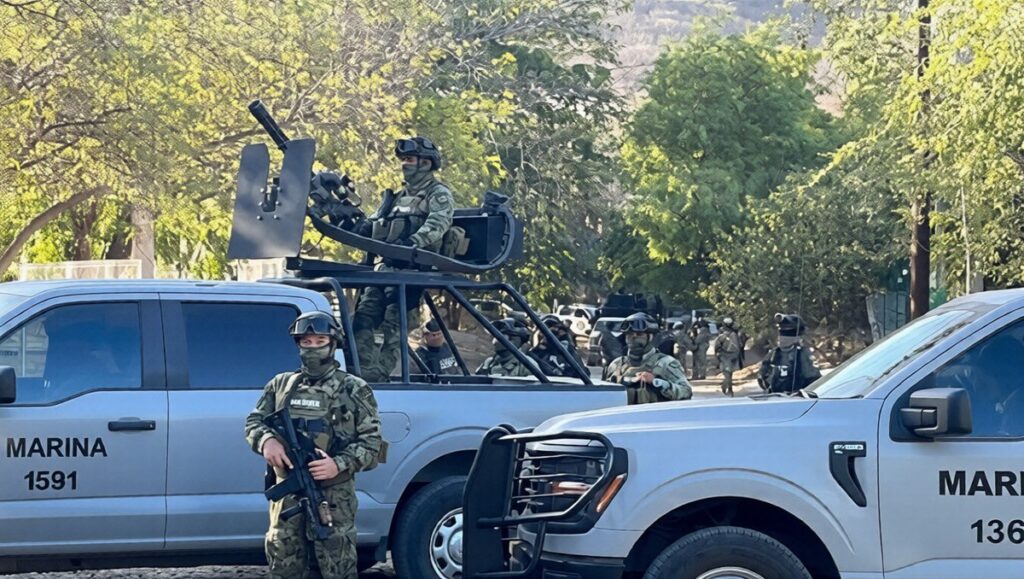
According to the Mexican Navy, the operation was supported by naval intelligence, which helped locate vehicles carrying armed individuals. During the pursuit, two men exited a pickup truck and fled into a brush-covered area, from where they opened fire on the naval personnel.

The naval forces returned fire, and both men were killed in the exchange. Their bodies have been placed in the custody of judicial authorities.

Family members who contacted the authorities suggested that the deceased may be Jesús González Peñuelas and Cesáreo Peñuelas Ruiz—known as ‘El Profe’—who has been identified by federal sources as an alleged associate of González Peñuelas. Official identification will be established through genetic and fingerprint analysis.

Derivado de las acciones permanentes para reforzar las acciones y avanzar en la pacificación de Sinaloa, personal de Marina @SEMAR_mx realizó un operativo en las inmediaciones de la colonia Alfredo V. Bonfil, Sinaloa, donde fue agredido por integrantes de una célula criminal… pic.twitter.com/03vxvnfVfN

— Omar H Garcia Harfuch (@OHarfuch) October 28, 2026

The text reads, “Derived from the permanent actions to reinforce operations and advance the pacification of Sinaloa, personnel from the Navy. @SEMAR_mx conducted an operation in the vicinity of the Alfredo V. Bonfil neighborhood, Sinaloa, where they were attacked by members of a criminal cell and repelled the assault.”

During the operation, authorities seized four pickup trucks that had been reported stolen, as well as three long guns, three magazines, and 46 rounds of ammunition. The evidence has been turned over to the Attorney General’s Office (Fiscalía General de la República) for further investigation.

According to federal sources, González Peñuelas had led an organization since the beginning of the century dedicated to the production and distribution of methamphetamine, marijuana, and heroin. In recent years, the organization reportedly ventured into fentanyl trafficking.

It operated primarily in Sinaloa and Sonora, with connections along the northern border and distribution networks in U.S. states such as California, Texas, Colorado, and Washington. Authorities identified the individual as one of the key operatives for Fausto Isidro Meza Flores—known as “El Chapo Isidro”—the leader of the Guasave Cartel.

Federal sources also indicated that the organization maintained ties to drug trafficker Rafael Caro Quintero, who was extradited to the United States last year.

This development comes amid federal operations targeting criminal organizations in Sinaloa—a state that has faced a wave of violence since September 2024, following the outbreak of a conflict between factions of the Sinaloa Cartel.

Mexican President Claudia Sheinbaum addressed illicit drug production and consumption, stressing that consumption must be treated primarily as a public health matter rather than merely a law enforcement problem.

Sheinbaum emphasized the need to support youth and address the root… pic.twitter.com/XIhExrS8Qk

— teleSUR English (@telesurenglish) September 17, 2026
  •  

Cuba Hails International Support for Ending U.S. Blockade at UN

Debate on a nonbinding resolution takes place amid U.S. pressure on countries ahead of the vote.

On Tuesday, the Cuban government thanked the international community for its support in opposing the U.S. blockade during the first day of debate at the United Nations General Assembly (UNGA) on a nonbinding resolution calling for an end to U.S. sanctions.

RELATED:

Cuba Refutes Accusations by the U.S. Ambassador to the UN

“Today at the United Nations, the overwhelming support of the international community for Cuba in condemning the blockade and opposing the U.S. government’s policy of maximum strangulation was evident. Most speakers, some representing regional blocs, were clear in their denunciations,” Cuban President Miguel Diaz-Canel said.

He also referred to the incidents involving U.S. Ambassador to the United Nations Mike Waltz, who made unfounded accusations against the Cuban government during his address to the General Assembly.

“During the debate, the U.S. representative, in clear isolation, did not have the courage to explain to the world the reason for the criminal energy siege imposed on the Cuban people, or for the strengthening of the blockade’s extraterritorial reach,” the Cuban president said.

“They may pressure sovereign nations, intimidate them and make distracting fabrications, but the overwhelming majority knows which side the truth is on and will continue to say it loud and clear: Cuba Is Not a Threat, the blockade is!” he added.

BREAKING: Cuba’s UN delegation, led by Foreign Minister Bruno Rodríguez Parrilla, confronts US ambassador Mike Waltz during a debate on the US blockade.

The UN General Assembly will hold its 34th annual vote this week condemning the US blockade on Cuba. Cuban representatives… pic.twitter.com/YuMyUzbT9F

— BreakThrough News (@BTnewsroom) October 27, 2026

In social media posts, Foreign Minister Bruno Rodriguez also thanked those who had called for an end to the U.S. blockade against Cuba, including the energy siege and secondary sanctions.

Earlier, Rodriguez and Waltz engaged in a heated argument during the session. Amid mutual accusations from the two representatives, UNGA President Khalilur Rahman threatened to suspend the session.

The current debate over the U.S. blockade, which has been in place for more than six decades, is taking place amid an oil blockade and secondary sanctions imposed by Washington.

The debate is also taking place amid allegations that President Donald Trump’s administration is pressuring countries to influence their votes and prevent widespread support for Cuba.

The resolution, titled “Necessity of Ending the Economic, Commercial and Financial Blockade Imposed by the United States of America Against Cuba,” has received the support of the overwhelming majority of the international community at the United Nations every year since 1992.

teleSUR/ JF

Source: EFE

  •  

Flavio Bolsonaro’s Escape to The US Is Shameful: Lula da Silva

Brazilian President Says Far-Right Senator Should Have Stayed in the Country to Face Criminal Charges.

On Tuesday, President Luiz Inacio Lula da Silva called former presidential candidate Flavio Bolsonaro’s flight from Brazil to the United States a shameful act.

RELATED:

Venezuelan Acting President Welcomes Lula’s Victory in Brazil

During a celebration of his 81st birthday in Brasilia, Lula said the far-right senator should have remained in the country to answer the criminal accusations against him.

“Those who have nothing to hide have nothing to fear. Democracy must be respected in victory and defeat. Brazil is our home, and it is here that we must face challenges, respect the justice system, and defend our country’s sovereignty,” the Workers’ Party leader said.

Lula then recalled that he had decided to remain in Brazil and serve prison time to “unmask” his accusers and prove his innocence in the Lava Jato case.

Earlier, Worker’s Party lawmakers asked Supreme Court Justice Alexandre de Moraes to order Flavio’s preventive detention and add him to Interpol’s Red Notice list.

Throughout Tuesday, Brazilian and Argentine media outlets tried to establish Flavio Bolsonaro’s whereabouts. The son of former President Jair Bolsonaro is already on U.S. soil with his wife and two daughters, a source close to his family told EFE.

However, no news about Flavio emerged throughout the day, and secrecy still surrounds his departure route and destination city in the United States.

“We still have no information about his whereabouts, only some reports that have appeared in the press,” Sen. Rogerio Marinho, Bolsonaro’s former presidential campaign coordinator, said.

“I received a message from him on my cellphone, a text message, in which he said he wanted to take some time for himself today and would speak with us later,” he told reporters after a meeting with Liberal Party leaders.

Following his electoral defeat, Flavio will also lose his seat in the Senate next February, when the new legislative session begins, marking the first time since 2003 that he will not hold public office.

An electoral victory for the far-right politician would have halted investigations against him, as Brazilian presidents cannot be held accountable during their terms for acts committed before their inauguration.

Timeline of the Flight

The day began with front-page reports in major local media outlets that Bolsonaro had left the country, defying a Supreme Court order barring him from leaving Brazil and requiring him to immediately surrender his regular and diplomatic passports.

On Monday, Justice Alexandre de Moraes, the rapporteur in the trial that ended with Jair Bolsonaro’s conviction for attempting a coup, gave Flavio 24 hours to surrender his travel documents as part of a money laundering case being handled under seal.

That same day, the 45-year-old senator posted a video on social media saying he had no intention of leaving Brazil, that he would surrender his passports and that he would defend himself against what he described as a “clear attempt at intimidation.” However, the Federal Police canceled the documents on Tuesday after the deadline to surrender them expired.

By then, Flavio Bolsonaro was already on his way to the United States. Argentine media outlets reported that the far-right politician had crossed the border into Argentina to board a private plane bound for the United States from the city of Puerto Iguazu, in Misiones province.

However, the Argentine government said there was no record of the lawmaker entering the country and no formal asylum request.

On Tuesday, President Donald Trump’s administration confirmed that it would issue visas and formally receive Bolsonaro and his family. Trump, a close ally of the Bolsonaro clan, called Brazil’s election “fraudulent,” although he added that he does not govern Brazil when asked whether he would take any action in response.

Flavio will reunite with his brother Eduardo Bolsonaro, who has been living in the United States since March 2025 after fleeing Brazilian justice.

teleSUR/ JF

Sources: EFE – X

  •  

Salvadoran Election Race Begins Under Rules Allowing Indefinite Reelection

(FILE) El Salvador's President, Nayib Bukele. Photo:: EFE

El Salvador has launched its presidential race for the 2027–2033 term, opening a four-month legal period for political organizations to promote their candidacies ahead of general elections set for Feb. 28, 2027.


The Supreme Electoral Tribunal (TSE) reported that no presidential ticket has yet completed formal registration, a step the Electoral Code requires to be done in person. Voters will fill 582 public posts, including the presidency, 60 Legislative Assembly seats, and 44 municipal councils, with mayoralties, municipal trustee offices and council seats also on the ballot.

RELATED: El Salvador Sets Feb. 28, 2027 Date For General Elections

Nuevas Ideas party (New Ideas) has put forward Nayib Bukele and Félix Ulloa for reelection as president and vice president. On the other hand, the FMLN party ticket would pair physician and union leader Rafael Aguirre with nurse Madaí Santos. According to media reports, Arena party would run lawyer Mayteé Iraheta for head of state and agricultural engineer Verónica Henríquez for vice president. Meanwhile, the PCN internally chose General Alirio García Flamenco and former San José Guayabal mayor Mauricio Vilanova, pending formal ratification.

Six other parties will not field presidential tickets: Fuerza Solidaria, Democracia Salvadoreña and PAÍS opted against nominating a ticket; PDC and GANA backed Bukele’s reelection project; and Vamos withdrew, arguing that the current officeholder’s continuity violates the Constitution.

Bukele and Ulloa ran for reelection in July 2023 despite its unconstitutionality. In August 2025, with full control of Parliament, Nuevas Ideas approved indefinite presidential reelection.

El Tribunal Supremo Electoral de El Salvador convocó oficialmente las elecciones generales para el 28 de febrero de 2027, en una jornada donde más de 6,5 millones de salvadoreños están llamados a votar. ¿Qué está en juego en estos comicios?

Entra al enlace y conoce los detalles… pic.twitter.com/eHs72zX3oE

— teleSUR TV (@teleSURtv) October 1, 2026

The 2027 process will for the first time apply the constitutional amendment removing presidential term limits, opening the way for unlimited consecutive candidacies. The measure was approved in 2025 through an expedited procedure pushed by the ruling Nuevas Ideas bench in the Legislative Assembly, without public consultations. The amendment removed provisions barring consecutive terms, extended the presidential term to six years, eliminated the runoff election and reorganized the institutional calendar to shorten the current term so that presidential, legislative and municipal elections coincide on a single general election day.

Opposition sectors and social organizations rejected it, saying the amendment alters the Constitution’s 1983 principles of alternation in power.

  •  

Ecuador Readies Snap Regional Elections Amid Opposition Exclusion Accusations

Photo: EFE.

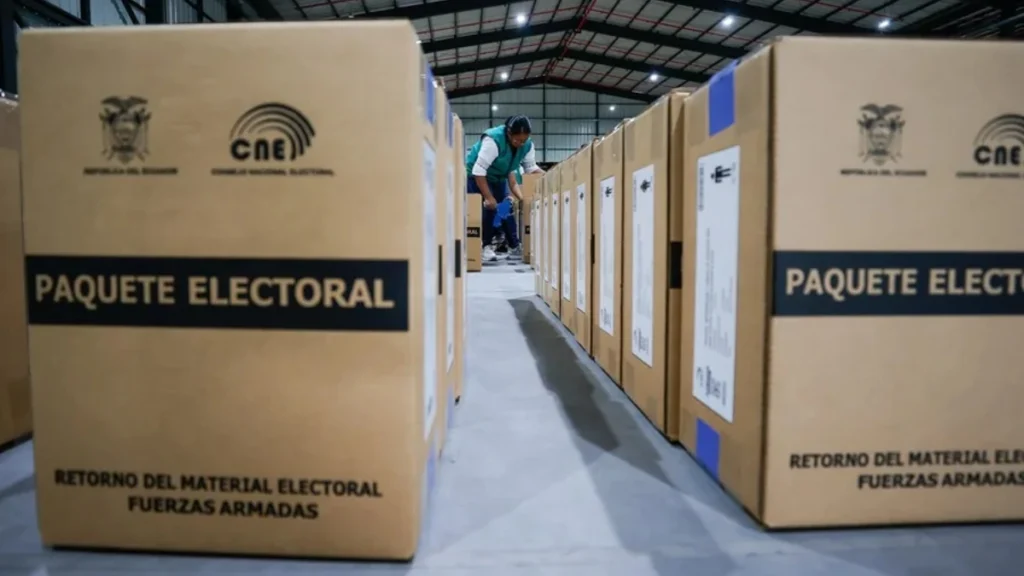
Ecuador’s National Electoral Council is preparing snap regional elections for Nov. 29 with more than 13 million voters called to the polls, amid opposition accusations of judicial persecution, candidate disqualification and a lack of impartiality by the electoral authority.


The NEC reported that it had completed dispatching electoral material to 37 countries and that distribution of 41,702 electoral packets nationwide would begin Nov. 16, according to the electoral body. Shipments were set to start in the Amazon provinces and Galápagos and finish Nov. 28 in Pichincha, which said 20 provinces had completed 100% of candidate qualification and expected to close the process in the remaining four during the week.

RELATED: Association of Jurists Demands Release of Luisa González in Ecuador

Social movements and political groups denounced the exclusion of opposition organizations and leaders as logistics advanced, according to the report. With the elections moved up from their original date of Feb. 14, 2027, political leaders pointed to the use of the state apparatus to block popular options in favor of dominant elites and the government of Daniel Noboa.

⭕️ #ATENCIÓN | El ministro de Relaciones Exteriores, @robertokuryec, informó que no se realizarán las votaciones para las elecciones seccionales y del Cpccs del 29 de noviembre en #Cuba y #Venezuela, debido a la falta de representación diplomática ecuatoriana en esos países.… pic.twitter.com/bNo2DrKlxD

— Radio Pichincha (@radio_pichincha) October 21, 2026
The text reads: The Minister of Foreign Affairs, @robertokuryec, announced that the voting for the regional elections and the Cpccs on November 29 will not take place in #Cuba and #Venezuela, due to the lack of Ecuadorian diplomatic representation in those countries.

Geovanni Atarihuana, president of the Unidad Popular party, said authorities sought to cancel Unidad Popular in March, suspended Citizen Revolution (RC) and in July targeted the Movimiento Amigo. He said several winning candidates had been pursued through the justice system and the electoral function and that the elections had been moved up because the government knew it lacked popular support.

After the suspension of the Revolución Ciudadana movement, its aspirants had to seek affiliation with other political platforms. Concern deepened after the Prosecutor’s Office and National Police raided Quito City Hall, an action the opposition interpreted as an attempt to disqualify Pabel Muñoz in his reelection bid.

Former presidential candidate Luisa González remains in pretrial detention as part of the Labyrinth case, an investigation into alleged money laundering linked to the financing of the 2023 presidential campaign of the Citizen Revolution (RC) movement.

  •  

Ecuador Flight Contradicts Reports Flavio Bolsonaro Reached Florida

(FILE) Defeated presidential candidate Falvio Bolsonaro. Photo: EFE.

The whereabouts of defeated Brazilian presidential candidate Flávio Bolsonaro remain unclear after Brazil cancelled his passports and Argentinian officials said he had boarded a flight to Ecuador, contradicting earlier reports from several mainstream media outlets that he had arrived in Florida.


Argentinian migration authorities later said he had crossed Brazil’s land border with Argentina at 22:50 local time on Tuesday (01:50 GMT on Wednesday). In a tweet, the migration authorities said he, his wife and two daughters had boarded a private flight headed towards the city of Guayaquil in Ecuador at 23:30 (02:30 GMT on Wednesday). It is not clear whether Ecuador would be his final destination.

According to Metropoles, which had reported on his alleged arrival in the U.S. hours before, the legislator plans to hold a press conference in the United States this week, possibly in Washington.

RELATED: Brazil’s Court Probes Foreign Funds in Flávio Bolsonaro’s Campaign

Flavio Bolsonaro’s departure from Brazil occurred after Supreme Federal Court (STF) Justice Alexandre de Moraes ordered him to hand over his regular and diplomatic passports within 24 hours and barred him from leaving Brazil. After the deadline expired this Tuesday without him complying with the order, the Federal Police canceled the documents.

Amid the controversy, the U.S. Department of State confirmed to the outlet UOL that it will grant visas to Flávio and his family members, although it did not specify the category of the documents or the conditions of stay.

Democratic congressman Joaquín Castro said losing an election is not grounds for receiving asylum, and demanded explanations from President Donald Trump’s Government about its possible help to Flávio in leaving Brazil, noting that the lawmaker is under investigation in the South American nation for alleged corruption, money laundering and currency evasion. “The Trump administration owes Congress answers on its role helping Bolsonaro flee Brazil in contravention of Brazilian law,” he said.

Losing an election is not grounds for asylum.

Yet the Trump Administration is giving Flávio Bolsonaro safe haven in the United States. In Brazil, he is under investigation for alleged corruption, money laundering and currency evasion, and was ordered to surrender his passports.…

— Joaquin Castro (@JoaquinCastrotx) October 27, 2026

Brazilian media reported that the lawmaker’s flight also surprised leaders of his Liberal Party and raised questions about his next political steps. Flávio had previously stated that he would remain in Brazil to organize the opposition to Luiz Inácio Lula da Silva’s Government.

The trip took place after the electoral defeat he suffered against Lula in the presidential runoff on October 25.

  •  

Venezuelan Acting President Inaugurates Peasant School in Aragua

Venezuela’s acting president, Delcy Rodríguez, reaffirmed the Executive’s commitment to popular sectors and national stability at the inauguration of the “General del Pueblo Ezequiel Zamora” National School of Peasant Leadership in Chuao, Aragua state, on Tuesday.


“I know there are those who are hungry for power. I know there are those who juggle, put on all kinds of shows for power. We are not here for power; we are here to serve the people. We are here to build alongside the people, we are here to accompany Venezuela in its growth and in its prosperity,” she said.

RELATED: Venezuelan Acting President Welcomes Lula’s Victory in Brazil

Acting president Rodriguez recalled the national Government’s call for peace through the amnesty law. “Because I aspire for the radical sector to abandon violence forever […]; I invite them to work to recover the electric system, where we do so without rest,” she said.

She further reaffirmed the importance of safeguarding sovereignty against any external interference. “The most sacred thing is that no one meddles, nothing and no one, in this process, for the tranquility, stability, prosperity and economic growth of our homeland,” she emphasized.

#EnVideo📹| Presidenta Delcy Rodríguez, inauguró la Escuela Nacional de Liderazgo Campesino General del Pueblo Ezequiel Zamora, ubicada en el estado Aragua. pic.twitter.com/RwwblFKHTJ

— Ministerio de Comunicación e Información (@mippci_ven) October 27, 2026

The official addressed the situation of the National Power Grid and the efforts of Corpoelec workers in the face of international pressure. “I have not seen a single megawatt added to the national power grid that was achieved without working without rest,” she stressed while explaining the impact that unilateral coercive measures have had on national infrastructure.

  •  

Cuba Blockade Draws Renewed Rejection at UN General Assembly

Several countries and international blocs rejected the intensified US economic, commercial and financial blockade against Cuba at the UN General Assembly on Tuesday, Oct. 27.


During the debate on the draft resolution presented by the Caribbean island, participating delegations denounced the humanitarian consequences and socioeconomic impact of these unilateral coercive measures, while urging respect for sovereignty and the principles of international law.

RELATED: Cuba Refutes Accusations by the U.S. Ambassador to the UN

Cuban President Miguel Díaz-Canel said on X that “During the debate, the U.S. representative, in evident isolation, did not have the courage to explain to the world the reason for the criminal energy siege to which they subject the Cuban people, nor for the strengthening of the extraterritoriality of the Blockade.”

Hoy en ONU se evidenció el respaldo mayoritario de la comunidad internacional a #Cuba en la condena al bloqueo y contra la política de máxima asfixia del gob. de EE.UU. La mayoría de los oradores, algunos en representación de bloques regionales, fueron claros en su denuncia.

1/3

— Miguel Díaz-Canel Bermúdez (@DiazCanelB) October 28, 2026

As usually happens since 1992, the 193 UN General Assembly member states are convened between Tuesday and Wednesday, to debate the draft resolution demanding that Washington end the blockade against Cuba.

The document, titled “Necessity of ending the economic, commercial and financial embargo imposed by the United States of America against Cuba,” has historically had near-unanimous support, at times reaching up to 189 votes in favor.

In last year’s vote, the text was backed by 165 countries, while 12 abstained and only 7 voted against: the United States, Israel, Argentina, Paraguay, Ukraine, North Macedonia and Hungary.

  •  

Honduras Prosecutors Issue Warrants Against Ex-Congress Chief Redondo

Honduras’ Public Prosecutor’s Office issued arrest warrants Tuesday against former Congress president Luis Redondo and other former legislators from the 2022–2026 term for demanding that the 2025 vote count be completed.


Former CNE member Marlon Ochoa and the left-wing Liberty and Refoundation Party (Libre) say the 2025 process was left unfinished, with 306 presidential tally sheets, 2,620 deputy tally sheets and 1,848 municipal corporation tally sheets uncounted; they denounce this as electoral fraud and a rupture of institutional order.

Their account links president Nasry Asfura’s arrival in the Executive to fraud organized by the far right and interference by the Trump administration, describing him as illegitimate.

RELATED: Honduras Congress Approves Funds for Maximum-Security Prison

Ronald Panchamé, Libre’s caucus leader, argued that demanding the vote count falls within legislators’ attributions and recalled that Article 205, numeral 7, of the Honduran Constitution empowers the National Congress to declare the election if the electoral body does not do so in a timely and proper manner, according to the defense.

pic.twitter.com/2bhhVr8yRp

— LUIS REDONDO 🇭🇳 (@Lredondo) October 23, 2026

The full bench of the Supreme Court of Justice scheduled the designation of the natural judge to take charge of the case against Redondo and other members of the extinct Permanent Commission, consolidating the criminal proceedings. Prosecutors and courts question the legality of the former legislators’ actions and impute crimes including abuse of authority and violation of the duties of officials.

The Prosecutor’s Office’s actions against those who tried to prevent what Libre and Ochoa denounce as an electoral coup and betrayal of popular will generated complaints of lawfare, political persecution and a deep crisis of judicial independence in the country, according to the denunciations.

Libre leader Wilmer Fernández stated that while legislators are prosecuted for defending democracy, freedoms are granted to those implicated in historic embezzlements such as the Social Security case or the mobile hospitals case, which he said evidences the use of criminal law by the political right as a tool of confrontation.

  •  
❌