Login

Europe Reconsiders Its Oil Refineries as Energy Security Becomes a Defence Priority
The European Commission has opened talks with oil producers, refiners and NATO over the future of Europe’s fuel industry, exposing growing tensions between decarbonisation, industrial competitiveness and the demands of military preparedness.
The European Union is reconsidering the strategic importance of its oil-refining industry as disruptions to international energy supplies and growing defence requirements force Brussels to examine whether Europe can afford further reductions in domestic fuel production.
On 28 October, the European Commission convened its first high-level dialogue with the European refining industry, bringing together energy companies, technology providers and representatives of NATO.
The meeting was chaired jointly by Energy Commissioner Dan Jørgensen and Defence and Space Commissioner Andrius Kubilius.
Its significance extends beyond the immediate increase in fuel prices associated with the conflict in the Middle East.
Brussels is confronting a longer-term problem: Europe intends to reduce its dependence on fossil fuels, but its transport networks, industrial infrastructure and military forces remain substantially dependent on petroleum products.
The question is no longer simply how quickly the European economy can decarbonise. It is also how much refining capacity must be retained to guarantee essential fuel supplies during a geopolitical crisis.
A strategic industry under pressure
Europe’s refining industry occupies an important position in the continent’s energy system.
According to figures published by the European Commission, EU refineries supply approximately 70 per cent of the jet fuel and 85 per cent of the diesel consumed in Europe.
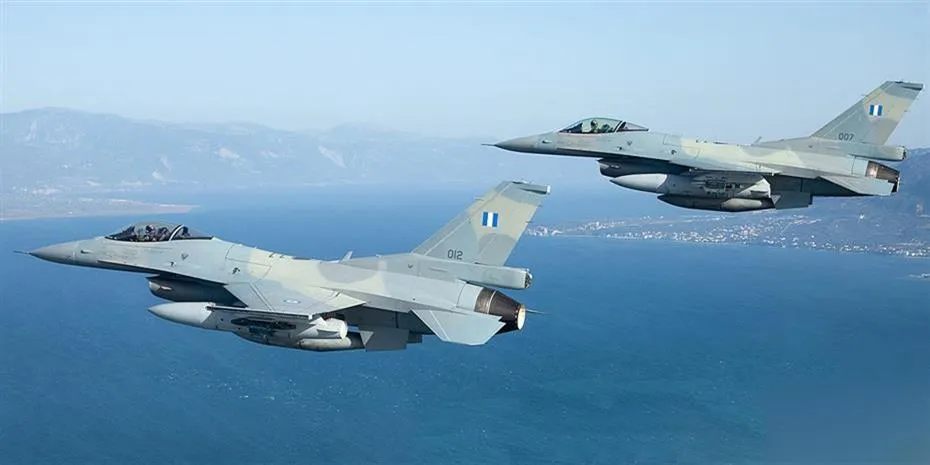
These products are essential not only for civilian transport and logistics but also for military aviation, armoured vehicles and the movement of equipment.
Maintaining adequate production capacity therefore has implications for both economic activity and defence readiness.
Yet European refineries have faced difficult commercial conditions for years.
High energy costs, international competition and declining expectations for long-term fossil-fuel demand have complicated investment decisions.
Refineries require substantial capital expenditure to remain competitive, meet environmental requirements and adapt production processes.
Companies considering whether to modernise facilities must consequently assess the profitability of assets that may be expected to operate in a progressively decarbonising economy.
The resulting uncertainty creates a problem for governments seeking to retain strategically important industrial capabilities.
The Middle East conflict changes the calculation
The immediate catalyst for the Commission’s initiative is the disruption to energy markets caused by the continuing conflict in the Middle East.
Interruptions to supply chains and uncertainty over maritime transport have increased concerns about the availability and cost of refined petroleum products.
Importing crude oil and importing finished fuels are not equivalent from a strategic perspective.
A country with domestic refining capacity can process available crude into the particular products required by its economy.
An economy heavily dependent on imported refined products is additionally exposed to processing capacity, transport availability and commercial decisions outside its jurisdiction.
The distinction becomes particularly relevant when governments must guarantee supplies of diesel and aviation fuel during an emergency.
European policymakers are therefore examining ways to improve output from existing facilities and strengthen the resilience of fuel supply chains.
However, the Commission has not announced a binding production target or a programme to reopen closed refineries.
The 28 October meeting represents the beginning of a policy discussion rather than the adoption of a new industrial strategy.
NATO introduces a different perspective
The participation of NATO gives the initiative a wider security dimension.
Military preparedness requires dependable access to energy products, including during periods when normal commercial supply chains are disrupted.
Aircraft, naval vessels, military logistics and ground operations cannot be reorganised around alternative energy sources at the same pace as some civilian activities.
Furthermore, the ability to sustain prolonged operations depends on reliable industrial production, storage, distribution and transport.
A refinery’s strategic importance may therefore exceed its immediate commercial profitability.
That raises difficult policy questions.
Governments may consider whether critical production facilities require targeted support, whether strategic stockpiles are sufficient and how supply arrangements should function during emergencies.
Any intervention would have to address competition rules, public financing and the risk of subsidising facilities that become commercially unviable.
Decarbonisation remains part of the policy
Brussels has not abandoned its climate objectives.
The Commission has explicitly linked its refining discussions to the development of sustainable biofuels and synthetic fuels, commonly known as e-fuels.
These technologies offer potential alternatives for sectors where direct electrification remains technically difficult, including aviation.
However, their commercial development requires investment, suitable feedstocks, reliable energy supplies and sufficient demand.
Traditional refineries may be able to participate in this transition, although the technical requirements and economic viability vary between facilities.
Jørgensen said the Commission intended to work with industry on a roadmap that would reconcile domestic fuel production with Europe’s longer-term climate ambitions.
The challenge will be translating those objectives into investment decisions.
Europe’s industrial strategy faces a practical test
The initiative illustrates a wider adjustment in European economic policy.
In recent years, the EU has increasingly described industrial capacity as an element of economic security, rather than treating production solely as a commercial activity.
Semiconductors, pharmaceuticals, critical minerals and defence equipment have all attracted attention because of vulnerabilities in international supply chains.
Oil refining is now entering the same discussion.
The Commission must determine how to preserve sufficient capacity for essential civilian and military requirements while continuing to encourage cleaner technologies.
Those objectives are not necessarily incompatible, but they operate over different timescales and involve different commercial incentives.
For European refiners, the central question is whether governments can provide enough regulatory and investment certainty to support modernisation.
For Brussels, it is whether the energy transition can proceed without creating new strategic dependencies.
The outcome of the dialogue will indicate how the EU intends to balance its climate commitments with the industrial demands of a less predictable security environment.