Projected 2027 401(k) limits and catch-up contributions would rise under Milliman's updated forecast, and here are six of its 10 estimates to watch before the IRS announces official limits
Compare six high-yield savings accounts paying 3.50% to a conditional 5.00% APY, each with its own balance, deposit and fee rules, after the Fed's September 2026 hike
An extensive report by the Office of the Comptroller of the Currency has confirmed that major U.S. banks engaged in widespread politicized debanking of individuals and businesses due to their religious, social, or political views.
An extensive report by the Office of the Comptroller of the Currency has confirmed that major U.S. banks engaged in widespread politicized debanking of individuals and businesses due to their religious, social, or political views.
AI coding startup Cogniton is fielding offers for a new funding round.
The round could value Cognition between $70 billion and $80 billion, according to people familiar with the matter.
The new offers come weeks after the company announced a $2 billion round at a $48 billion valuation.
Just weeks after announcing a new round of funding at a $48 billion valuation, AI coding startup Cognition is fielding new investor interest at a much higher price.
The startup has received offers valuing it at between $70 billion and $80 billion and is seriously considering a round before the end of the year, according to sources familiar with the matter.
The talks around the financing are still early, and valuation targets could still change.
Founded in 2023 by Scott Wu, Steven Hao, and Walden Yan, Cognition is best known for Devin, an AI coding agent designed to automate software engineering tasks. The San Francisco-based company's existing investors include a16z, Accel, Founders Fund, Khosla Ventures, Elad Gil, and Pear VC.
Cognition's rapid valuation climb underscores the investor frenzy around AI coding, one of the hottest and most competitive corners of the AI market. As companies race to sell AI coding agents that can take on more of the work engineers do, investors are placing increasingly expensive bets on the few startups they think could emerge as leaders.
Last month, Cognition was drawn into a public feud with rival Factory AI, which accused Cognition employees of posing as job applicants to seek product information and faulted a former Factory adviser for meeting with Cognition executives. Cognition and the former adviser denied that confidential information was sought or shared.
Got a tip? Email Katie anytime or contact her on Signal at kroof.26. Sign up for Business Insider's weekly VC Insider newsletter here.
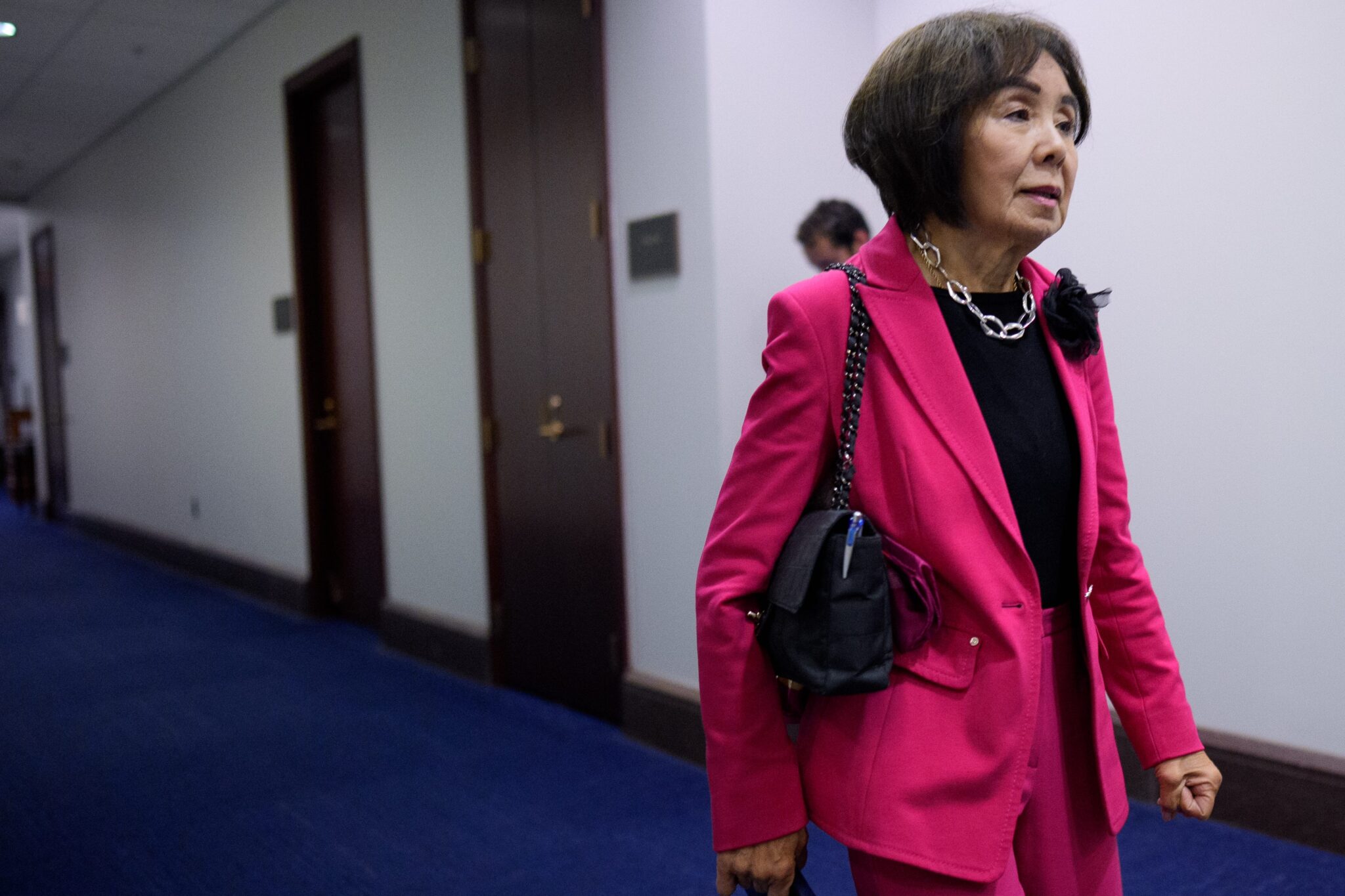
Drop Site reveals the sources of funding to keep 82-year-old incumbent CA Rep. Doris Matsui (D) from losing to progressive challenger Mai Vang, who rejected AIPAC money and called out Israel's genocide
The 3-point increase takes DA to 63%. That adds about Rs 540 a month for an entry-level employee today, but it also raises the fitment factor the 8th Pay Commission must offer before it delivers any...
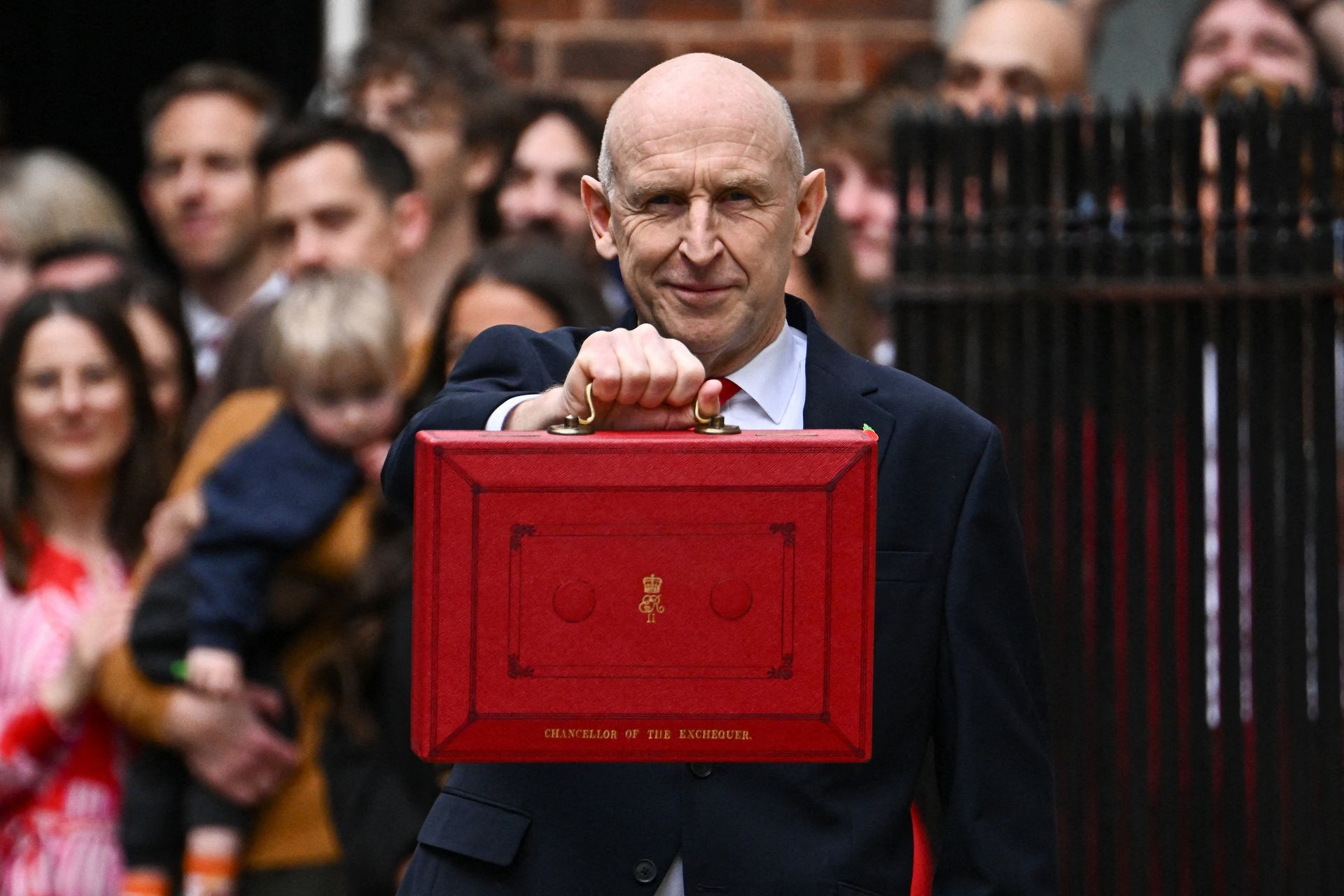
"Russia's illegal invasion of Ukraine poses a serious threat to U.K. prosperity and security," reads a social media post from the U.K.'s finance ministry explaining the new support to Ukraine.
When we had a baby, though, our setup started to feel less and less fair.
We agreed to combine most of our money, and it's helped us feel like a team.
Maybe it's because I'm an only child raised by a single mother, but I've always valued independence.
I walked down the aisle alone. I'll happily go out to dinner or a movie by myself. When faced with a problem, my instinct is to wrestle with it myself rather than ask for help. (I'm working on that one.)
And when my husband and I got married, I was adamant about keeping our finances separate.
For years, this arrangement worked beautifully. But after we had a baby in the summer of last year, I began to wonder whether the financial independence I'd clung to was actually working against us.
Keeping our finances separate gave me a sense of freedom
We opened a joint account after buying a house, but continued to keep most of our money in separate accounts.
Rebecca Strong
The concept of combining finances has always made me uncomfortable, mostly because I didn't like the idea of having to justify any impulse purchases I've made after working particularly hard. My husband was always on the same page.
The first time we really talked about changing our system was when we bought a house together in 2020, several years before we got married. We knew that this, of course, would come with a lot of shared expenses.
We decided to open a joint account, and to both deposit the same amount each month to cover those expenses — like the mortgage, utilities, and groceries. Then, we kept the remainder of our earnings in separate checking accounts.
When my husband wanted to splurge on some new audio equipment, he didn't feel the need to consult me. Similarly, I didn't have to "ask permission" every time I wanted to get my hair done or go out for a nice dinner with a friend.
To me, this system reflected just how much we trusted each other to make financially responsible decisions with our own money. Besides, it felt fair: We were both contributing equally to maintaining our home, while preserving some autonomy.
After having a baby, our separate finances started creating tension
In 2025, we had a baby. Suddenly, finances felt a lot less cut-and-dried.
Because my husband and I are both freelancers, every hour one of us spends working is often an hour the other spends caring for our son. So, when my husband takes a last-minute gig, I lose that time to work, but I don't directly benefit from what he earns — and vice versa.
We started to find ourselves competing for the working hours we needed to cover day care and the mortgage, even though we were supposed to be operating as a team. The "every man for himself" dynamic felt completely antithetical to what marriage was supposed to be.
Meanwhile, the costs of parenthood — diapers, formula, day care, clothing — were accumulating, forcing us to contribute more and more to our joint account. And now, one of us often had to sacrifice earning opportunities so the other could work.
During one of our recent weekly marriage check-ins, I expressed some resentment about how I'd been responsible for picking up our son from day care most days the previous week, while my husband was able to work much longer into the night.
"I'm contributing the same amount, but I'm not being given enough time to earn that amount," I said.
Combining more of our money helped us feel like a team again
Now, merging our money feels more equitable.
Rebecca Strong
Since our time and responsibilities are so intertwined these days, and we have a longer list of shared expenses than ever, we realized that the best way to make our situation feel more equitable was to merge more of our money.
In the past, we each deposited the same fixed dollar amount into our joint account every month. Now, we contribute nearly all our earnings to that account and set aside the same amount for both of us to spend as we wish.
That change helped curb some of the competition and resentment. Now, when one of us takes on an extra gig, client, or project, it feels like a win for both of us — regardless of who's earning the paycheck.
That's not to say we've found the perfect arrangement. We're still figuring out how much personal spending money makes sense to set aside and which major expenses warrant a conversation.
The important thing, though, is that we've realized independence and partnership aren't mutually exclusive. We share the same financial goals, so it only makes sense to share our earnings. We're not giving up our financial independence, but redefining what it means to us.
With security and defense allocations accounting for around two-thirds of planned expenditure and a projected deficit of nearly Hr 1.7 trillion ($37 billion), the budget highlights the challenge of funding the war while maintaining economic stability and meeting social commitments.
RIYADH: Iraq’s general budget is projected to exceed $300 billion by 2032 as the government seeks to boost investment and expand the country’s economic capacity, Prime Minister Ali Al-Zaidi said. Speaking to a group of Iraqi businessmen from various sectors during his official visit to Amman, Al-Zaidi said Iraq also aims to raise crude oil production capacity to 10 million barrels per day by 2032. Iraq’s projected budget of more than $300 billion in 2032 would represent a substantial increase fr
The Cyprus Securities and Exchange Commission (CySEC) has urged financial firms and investment managers to follow new European guidance on sustainability claims and prepare for standardised reporting of company ownership information, as part of efforts to improve transparency and consistency across financial markets.
In two circulars issued this week, the regulator highlighted European Securities and Markets Authority (ESMA) guidance on sustainability-related claims and a new European Union regulation setting common formats for reporting beneficial ownership information.
In the first circular, CySEC drew the attention of regulated entities to 2 new thematic notes published by ESMA on October 12, 2026, covering impact claims and transition claims linked to sustainability.
The guidance follows an earlier circular, C752, which informed regulated entities about ESMA’s second thematic note, focusing on environmental, social and governance (ESG) strategies.
The third note addresses impact claims, while the fourth covers transition claims, with both forming part of ESMA’s wider work on ensuring that sustainability-related statements are clear, fair and not misleading.
CySEC urged investment fund managers and Cyprus investment firms to keep up to date with the publication of these notes and said it expected them to take the guidance into account when meeting their existing ESG obligations.
The circular applies to Cyprus investment fund managers, including management companies and self-managed funds operating under the Undertakings for Collective Investment in Transferable Securities (UCITS) framework, as well as alternative investment fund managers, including smaller and sub-threshold managers, and Cyprus investment firms.
The second circularconcerns a new EU regulation establishing common formats for submitting information about beneficial ownership, meaning the individuals who ultimately own or control companies and other legal entities.
CySEC said Commission Implementing Regulation (EU) 2026/2354, dated October 16, 2026, was published in the Official Journal of the European Union on October 22.
The regulation aims to improve the quality, consistency and compatibility of ownership information held in central registers across the EU by standardising how the information is submitted.
The common formats are intended to make beneficial ownership records more consistent and easier to use across national registers, supporting the exchange and comparison of information between member states.
The regulation will apply from July 10, 2027, and will be binding in its entirety and directly applicable in all EU member states.
CySEC encouraged regulated entities to take the regulation’s provisions into consideration ahead of its application, referring them to the published legal text for further details.
The second circular applies to a broad range of regulated organisations, including crypto-asset service providers, Cyprus investment firms, administrative service providers, UCITS management companies, self-managed UCITS, alternative investment fund managers and self-managed alternative investment funds.
It also covers self-managed alternative investment funds with a limited number of persons, companies established solely to manage such funds, and small alternative investment fund managers.
Together, the 2 circulars highlight the regulator’s expectation that financial-sector firms keep abreast of evolving EU requirements on sustainability communications and ownership transparency.
Deposits in Cyprus increased by €697.1 million in September 2026, while total loans rose by €857.80 million, with the Central Bank of Cyprus (CBC) reporting stronger monthly increases in both categories and an acceleration in annual loan growth.
The outstanding amount of total deposits reached €60.2 billion at the end of September, while total loans stood at €29.6 billion, according to the CBC’s latest monetary and financial statistics, released on Tuesday.
The net increase in deposits was substantially higher than the €171.50m recorded in August, although the annual growth rate remained unchanged at 6.5 per cent.
Deposits held by Cyprus residents rose by €639.9m during September, with households and non-financial corporations accounting for much of the increase.
Household deposits increased by €93.8m, while deposits held by non-financial corporations rose by €373m.
Deposits held by other domestic sectors increased by a further €173.1m, bringing the total increase in deposits held by Cyprus residents to €639.9m.
Meanwhile, total loans recorded a net increase of €857.8m, compared with an increase of €114.6m in August.
The annual growth rate of total loans accelerated to 14 per cent in September, up from 11.8 per cent in the previous month.
Loans to Cyprus residents increased by €470.8m, with lending to households rising by €52.2m and loans to non-financial corporations increasing by €110.1m.
Loans to other domestic sectors recorded a larger increase of €308.5m.
The figures were included in the October 2026 edition of the CBC’s Monetary and Financial Statistics, covering deposits and loans held by monetary financial institutions during September.

 Login