❌

Reading view

GOP lawmakers urge Rubio to weigh visa restrictions on corrupt officials as Albania rocked by protests

EXCLUSIVE: Two Republican members of Congress sent a letter to Secretary of State Marco Rubio expressing concern over the state of NATO ally Albania’s democratic backsliding, urging the department to use its visa restriction authority against Albanian officials complicit in significant corruption.

"We write to express concern about the state of democracy and the rule of law in the Republic of Albania, a NATO ally and candidate for European Union membership. The United States has invested heavily in Albania's justice reforms and has a strong interest in their success. Recent events suggest that progress is fragile and, in key areas, at risk of reversal," the letter to Secretary Rubio said.

Specifically, the letter urges Secretary Rubio to use the State Department's authority under Section 7031(c) of the annual Department of State, Foreign Operations and Related Programs Appropriations Act to publicly designate Albanian officials and their immediate family members, if necessary, if credible information of involvement in significant corruption exists.

SERBIA’S LONGTIME LEADER FACES BIGGEST POLITICAL TEST AS STUDENTS MOUNT ELECTION CHALLENGE

The letter, written by Rep. Joe Wilson, R-S.C., and his Republican colleague, House Europe Subcommittee Chairman Rep. Keith Self, R-Texas, requested the administration answer four key questions by Nov. 5.

In addition to asking the state department to commit to reviewing Albanian officials for designation under its visa restriction authority, the members of congress inquired about what assistance is being provided to Albania's broader justice reform efforts and whether the U.S. Embassy in Tirana is working with local officials to protect protesters and journalists.

The Republican representatives are also requesting an update on former Deputy Prime Minister Belinda Balluku, who was charged with interfering in public procurement for road construction. Prosecutors asked parliament in December 2025 to lift her immunity so she could be arrested, but Prime Minister Edi Rama called the request unconstitutional, and parliament has not allowed the arrest to proceed.

The members of congress say that Albania's anti-corruption institutions cannot succeed in rooting out corruption when political leaders shield the officials they investigate.

US LAWMAKERS SOUND ALARM AS VIOLENCE GRIPS NATO ALLY ALBANIA AMID ANTI-GOVERNMENT PROTESTS

Like fellow protesters in France and across Europe, tens of thousands have protested amid allegations of government corruption, inadequate education, unemployment and a lack of opportunity. The growing nationwide protest movement is driven by students and citizens also demanding accountability, an end to corruption and what they say is the restoration of democratic institutions and the rule of law.

Demonstrations broke out in the capital, Tirana, two weeks ago, demanding the resignation of Prime Minister Edi Rama. The protests quickly turned violent as demonstrators lobbed Molotov cocktails at the Education Ministry and clashed with police.

Protesters also took aim at Rama’s Socialist Party headquarters in Tirana, squaring off with riot police who had been dispatched to protect government property.

Rama blamed "foreign hands who do not want Albania in the European Union and who promote the masks that claim to represent students, but who in fact, more than students, represent organized crime itself."

So far, the prime minister has refused to resign but has proposed entering into dialogue with the protesters.

FRANCE ROCKED BY STUDENT RIOTS AS HUNDREDS ARRESTED, VIOLENCE SPREADS NATIONWIDE

The violence taking place across Albania is a worrying sign for a country struggling to maintain its democracy and continue the path to EU accession.

"Congress is deeply concerned about the situation in Albania as the government uses excessive force against citizens who are demanding accountability and clean institutions. Corruption and narcotrafficking associated with the Rama government must be countered," Rep. Wilson told Fox News Digital in a statement.

The turmoil in Albania comes as the country has long sought European Union membership, which began in 2014 when it became an official candidate for accession. While the 2025 annual European Commission report stated that Albania made significant strides in judicial reforms and combating organized crime, the continued allegations of corruption in the Rama government and the current violence taking place will complicate its path to EU membership.

The student protests in Albania mirror the mass protests that took place in neighboring Serbia, where a student-led political movement toppled longtime leader Aleksandar Vučić.

"Vucic’s defeat by a student-backed movement, following nearly two years of demonstrations over corruption and government accountability, is a striking parallel with the unrest now confronting Rama in Albania, where protests have been ongoing for over 150 days," Agim Nesho, former Albanian ambassador to the U.N. and U.S., told Fox News.

CLICK HERE TO DOWNLOAD THE FOX NEWS APP

"In Albania, students and other citizens have been demonstrating since May, with the latest wave of daily protests intensifying demands for the resignation of a prime minister who has governed for more than 13 years with rampant corruption and declining public services," Nesho added.

  •  

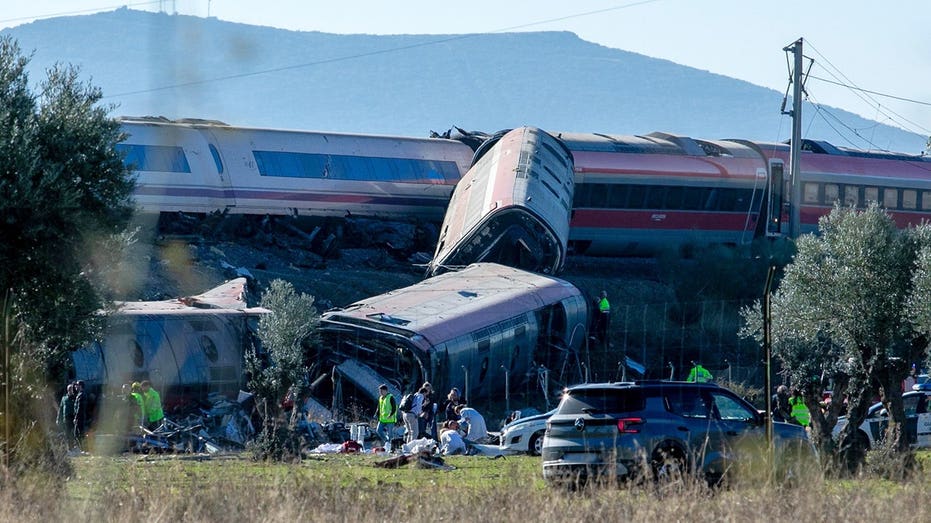
Spain high-speed railway crash kills at least 68 after train stopped on tracks

Several Americans are believed to have been injured in a high-speed train collision that killed at least 68 people in Spain on Wednesday when one train collided with another that had stopped on the tracks.

The crash took place in Spain's Castilla-La Mancha, with the regional government confirming the death toll and adding that another 58 people required medical treatment in hospitals. Several Americans are believed to have been hurt in the crash, according to the State Department.

Rescue workers continue to search in the wreckage for survivors and bodies, with witnesses describing a gruesome scene.

Wednesday's incident is the second high-speed rail crash Spain has suffered this year.

Spain’s rail system operator ADIF said the crash occurred Wednesday morning in the province of Toledo. Both trains were carrying hundreds of passengers, and were headed in the same direction on a route from Madrid to Seville.

CRASH INVOLVING SPEEDING TRAIN, MINIBUS IN BELGIUM LEAVES 4 DEAD INCLUDING 2 CHILDREN

One train, run by the state-owned RENFE company, ran into the tail of the other train owned by private company IRYO that had stopped, knocking two of its cars off the track. Those companies were the same ones involved in January's crash.

Esther Padilla, a spokesperson for the Castilla-La Mancha regional government, said 397 passengers were on the RENFE train and 147 passengers on the IRYO train.

Spanish Transport Minister Óscar Puente attributed the deadly train collision to what he described as an "inexplicable" decision by the country's central rail control center to allow a train to resume traveling after a safety system malfunctioned.

Puente said the train's engineers were not responsible for the collision.

According to Puente, a computer malfunction caused a safety system covering roughly 39 miles of track to stop working around 8:30 a.m.

The disruption forced trains in the affected area to stop, but the central control center subsequently authorized the RENFE train to resume traveling without speed restrictions, he said.

Just over 20 minutes later, the RENFE train collided with the stopped IRYO train.

Puente said the RENFE train should never have been cleared to resume traveling while a stop signal remained active on the line. At a minimum, he said, the train should have been instructed to proceed at a reduced speed.

Officials are still working to determine the train's speed at the time of the collision, but Puente said it may have been traveling at approximately 124 mph.

BYSTANDER VIDEO CAPTURES NORFOLK SOUTHERN TRAIN T-BONING SEPTIC TRUCK AT VIRGINIA RAILROAD CROSSING

David Gómez, a construction worker, was working with his brother and another colleague nearby when they heard the crash and ran to help, he told the newspaper El País.

"People were trying to get out through the windows…. We cut through some fences to access the area and treated people with the first-aid kits we had brought," until emergency services arrived, he said. "As I was trying to pull a young woman out, there was a piece of a leg."

Spanish Health Minister Mónica García said emergency workers were focusing on rescuing survivors and bodies from the two most damaged train cars. She said the injured are being sent to different hospitals in the area.

"It was a high-speed impact, so we are expecting this to be a tragedy," García said.

Spanish Prime Minister Pedro Sánchez visited the crash site and announced that his government would declare three days of national mourning.

"Today all of Spain is grieving," Sánchez said.

The prime minister also called for enhanced safety measures across the country's rail system following the second high-speed rail crash this year.

"It is unacceptable for a country like Spain to suffer two high-speed rail accidents in the same year," he said.

Passenger Ignacio Relaño was traveling on the RENFE train. He told state broadcaster TVE that the train had stopped momentarily on the line before it started again and then crashed into the IRYO.

"We all felt the train abruptly slowing down and then the impact," he said. "The car leaned to one side like it was about to tip over. I hit my nose, everything went flying, luggage, cellphones. Everything shook."

Another passenger recounted to Cadena Ser radio how she felt the train slam on the brakes and was thrown forward in her seat, breaking the small table in front of her. She said she saw body parts and trapped people covered in blood.

IRYO, an Italian-owned company, said in a statement that it has "activated its security protocols and is closely working with authorities."

CLICK HERE TO DOWNLOAD THE FOX NEWS APP

Spain’s King Felipe VI and Queen Letizia said in a short statement on X that they were following news of the accident.

"We are deeply saddened and concerned by the train accident in Urda (Toledo)," the royal couple said. "We share in the grief of the families and loved ones of those who lost their lives, and we send our heartfelt support to the injured and all those affected."

The Associated Press contributed to this report.

  •  

Holocaust educator says Mamdani could learn from UK's targeted approach to antisemitism in schools

The British government’s decision to embrace sweeping measures addressing antisemitism in schools is drawing a sharp contrast with New York City Mayor Zohran Mamdani’s recently unveiled strategy, raising questions about why Britain’s plan appears more specific than the one proposed in America’s most Jewish city.

The U.K. government accepted all 27 recommendations from an independent review into antisemitism in schools and colleges in England. The measures include encouraging adoption of the International Holocaust Remembrance Alliance working definition of antisemitism, specialized training for educators, strengthened reporting procedures and independent oversight.

Mamdani’s 33-page strategy — while not only focused on education — by comparison, does not adopt a single definition of antisemitism, explicitly address the relationship between anti-Zionism and antisemitism or establish numerical benchmarks for measuring whether its initiatives succeed.

British Jewish author and Holocaust educator Dov Forman, who recently graduated from university, said Mamdani could learn from Britain’s targeted approach to addressing antisemitism in schools.  

MAMDANI PLEDGES MILLIONS TO COMBAT ANTISEMITISM WHILE LEAVING KEY QUESTION UNRESOLVED

The British review followed a BBC report from Yavneh College, a Jewish secondary school near London, where students described how antisemitism has affected their daily lives. Their accounts offered a window into the urgency behind the government’s recommendations.

Education provides one of the clearest points of comparison between the two strategies. Mamdani's plan calls for expanding Holocaust education, including opportunities for students to visit the Museum of Jewish Heritage, while also addressing how public schools respond to antisemitic discrimination. The U.K. government's recommendations address many of those same concerns, placing greater emphasis on how educators recognize antisemitism, how schools respond when incidents occur and what protections are in place for Jewish students.

The review, led by former senior education official Sir David Bell, found that nearly three in five Jewish people between the ages of 16 and 19 had experienced or witnessed antisemitism. It concluded that antisemitism is a distinct form of racism requiring a specific response and called for clearer guidance to distinguish legitimate political debate from harassment, intimidation and antisemitic rhetoric.

British Jewish author and Holocaust educator Dov Forman, who recently graduated from university, called the recommendations "the bare minimum," while acknowledging that the government is attempting to confront the problem directly.

"The least [Mamdani] could do is look at what has happened in the U.K. and adopt similar measures, such as adopting the IHRA definition, which is the agreed definition across the world and where there is a consensus of what antisemitism actually is," Forman told Fox News Digital.

"The basic way to solve antisemitism is to actually agree on what it is and to understand that targeting a Jew deliberately because of what is going on in Israel, for example, is antisemitic, as the IHRA definition says," he added.

Forman cautioned that the British recommendations remain largely optional and that their effectiveness will depend on whether institutions act.

"I do think some of them will be enforced and listened to. I do worry, though, that the government says things and does not actually take it seriously enough."

Education Secretary Lucy Powell said the government would establish an implementation group, while Bell was commissioned to conduct an independent assessment of its progress after one year.

Ambassador Rabbi Yehuda Kaploun, the U.S. special envoy to monitor and combat antisemitism, welcomed Britain’s decision while emphasizing that adopting recommendations is only the beginning.

JEWISH EDUCATORS FACE RAMPANT ANTISEMITISM IN TEACHERS UNIONS, NEW REPORT FINDS

"I welcome the U.K.’s announcement that it has accepted all 27 recommendations," Kaploun wrote on X. "Now, the challenge lies in implementation and enforcement."

Forman also said that British officials must examine whether their rhetoric about Israel contradicts their stated commitment to protecting Jewish communities.

"It is very rich of the government to say that schools should adopt the IHRA definition of antisemitism and that Jews should not be demonized for what is going on in the Middle East, and then for them to get up in the dispatch box in the House of Commons every week and blame Israel," he said.

"Stop talking and start acting," Forman added, calling on the government to confront Islamist extremism and the Muslim Brotherhood and identify more directly where antisemitism is originating.

The U.K. has faced criticism for being slow in combating antisemitism. Jewish residents have faced physical attacks, threats and harassment, making the specificity of its new plan and its contrast with New York City’s approach particularly notable.

Rabbi Chaim Steinmetz, senior rabbi of Congregation Kehilath Jeshurun on Manhattan’s Upper East Side, called Mamdani’s strategy a "paper tiger," arguing that its announced $36 million price tag obscures how little would go directly toward physical security.

"It’s a million dollars in security in a city with a million Jews. It’s a dollar a Jew," Steinmetz told Fox News Digital.

The strategy includes $1 million to support physical security for vulnerable nonprofit organizations, including synagogues and other houses of worship, and $6.4 million for grants through the city’s Partners Against the Hate initiative.

Steinmetz claimed that much of the money would support cultural centers and broadly defined community initiatives rather than immediate security needs.

SIGN UP FOR ANTISEMITISM EXPOSED NEWSLETTER

UJA-Federation of New York, the Jewish Community Relations Council of New York, the American Jewish Committee’s New York office and the New York Board of Rabbis issued a joint statement warning that Mamdani’s plan fails to address a central source of contemporary antisemitism.

The organizations said rhetoric demonizing or delegitimizing Israel contributes to Jewish New Yorkers being treated as suspect, excluded or unsafe, and argued that any serious strategy must acknowledge that connection.

"How can you have a strategy to keep New York Jews safe when you can’t even name what the danger is?" Steinmetz asked.

One of Mamdani’s early actions as mayor was to revoke an executive order issued by former Mayor Eric Adams adopting the IHRA definition for city agencies. The definition provides examples of when criticism of Israel may cross into antisemitism while making clear that criticism comparable to that directed at any other country is not inherently antisemitic.

Fox News Digital asked Mamdani’s office why the city’s strategy omits the IHRA definition and measurable benchmarks, and whether the administration would consider safeguards similar to those adopted by Britain. The mayor’s office did not respond by the time of publication.

Britain’s measures have also only recently been accepted, and their impact remains untested.

CLICK HERE TO DOWNLOAD THE FOX NEWS APP

Britain has defined the problem, outlined specific recommendations and established a process for reviewing its progress. New York City’s Jewish leaders are still asking whether City Hall has accurately identified the threat it claims it intends to confront.

Fox News Digital's Sydney Finver contributed to this report.

  •  

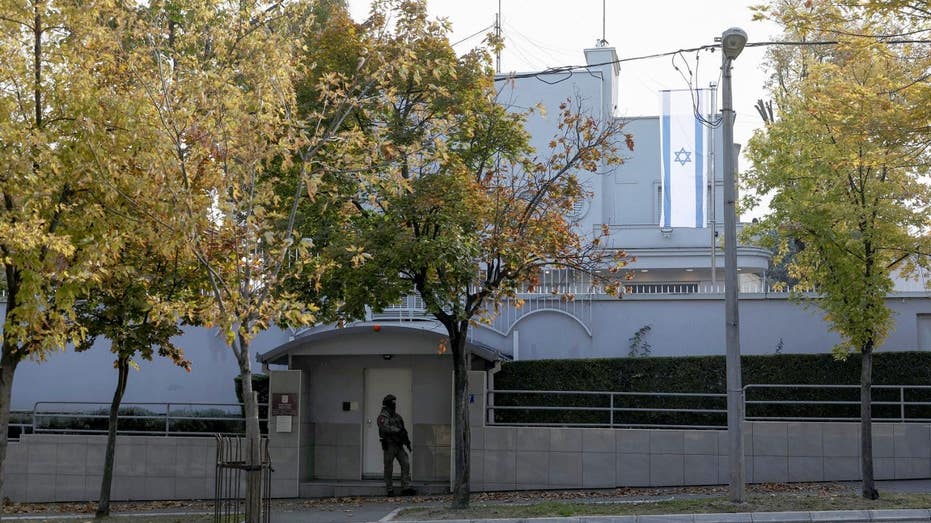
Attacker shouting 'Allahu Akbar' killed outside Israeli Embassy in Serbia, police say

An assailant armed with two knives attacked a member of Serbia's Gendarmerie guarding the Israeli Embassy in Belgrade shortly after midnight Wednesday, prompting the officer to fatally shoot the attacker in self-defense, according to Serbian authorities.

The assailant, who was a minor, allegedly shouted "Allahu Akbar" — or "God is great" in Arabic — as he slashed the officer in the face, leaving the officer "slightly injured."

Interior Minister Ivica Dacic said authorities are treating the incident as a terrorist attack, adding that security forces had been monitoring the assailant.

Dacic said the attacker supported ISIS and displayed a black flag bearing the terrorist group's symbol on his Instagram account. The attacker was believed to be Serbian and from the town of Sabac, Dacic added.

HALIMA SALMAN CONVICTED OF RECEIVING ISIS MILITARY TRAINING IN SYRIA, FACES 10 YEARS IN PRISON

Israel's foreign ministry confirmed the "attempted terrorist attack," and said the incident was under investigation by the relevant authorities.

"The attacker was neutralized by local police. No embassy personnel were injured, and the mission was closed at the time of the incident, which occurred late at night," the statement said.

According to Serbian prosecutors, an unidentified person wearing black clothes opened the door to the security booth outside the embassy around 12:15 a.m. local time.

FRANCE ON EDGE WITH 70,000 POLICE DEPLOYED FOR UNREST AS AUTHORITIES PROBE SUSPECTED TERROR ATTACK NEAR PARIS

Prosecutors said the attacker then walked toward the officer inside, identified as D.S., and threw one of his knives in his direction, hitting the officer in the left cheek.

D.S. then retrieved his service weapon and fired multiple rounds, killing the attacker on the spot, according to the office of the Higher Public Prosecutor in Belgrade.

Photos from the scene hours after the attack show heavily armed police officers standing at the entrance of the embassy.

CLICK HERE TO DOWNLOAD THE FOX NEWS APP

Dacic said Serbia had raised its terrorism threat level to the highest level, prompting an increased police presence at sensitive sites and crowded public spaces across the country.

In June 2024, a crossbow-wielding assailant wounded a Serbian police officer guarding the Israeli Embassy in Belgrade before the officer returned fire, killing the attacker.

The latest attack comes a day after Israel held parliamentary elections, with exit polls pointing to no clear winner.

  •  

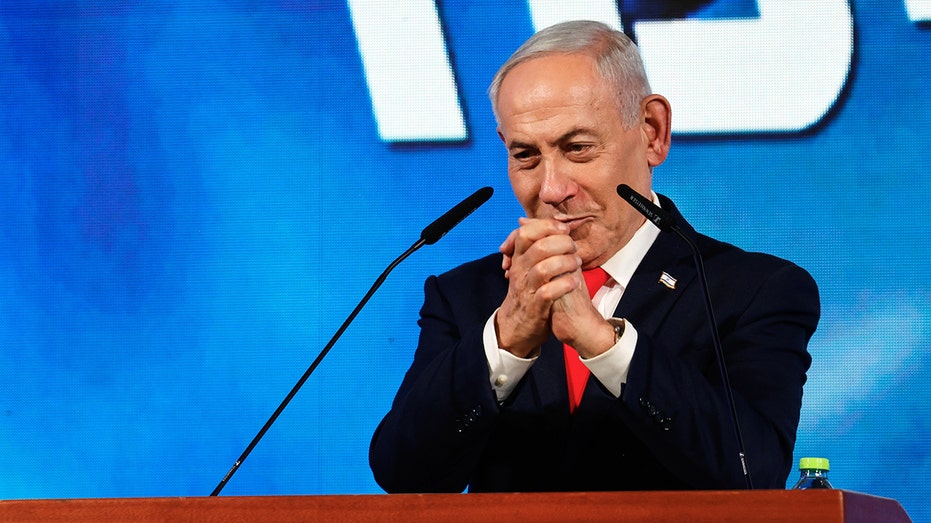
Netanyahu defies exit polls as vote shifts in his favor, but majority remains elusive

TEL AVIV, Israel — Prime Minister Benjamin Netanyahu's political bloc gained ground Wednesday morning as Israel counted votes from its first national election since the Oct. 7, 2023, Hamas massacre, but remained short of the majority needed to form a government, leaving the country facing another potential political deadlock.

With approximately 70% of votes counted, Netanyahu's right-wing and religious bloc stood at 54 seats in the 120-seat Knesset, compared with 47 for the main opposition and 19 for Arab parties, according to partial election results reported by Israeli media. Netanyahu's Likud led with 27 seats, while former Israeli military chief Gadi Eisenkot's Yashar party held 20.

As both Netanyahu and Eisenkot claimed victory Tuesday night, Israelis told Fox News Digital that although they had expected a tight race, the shifting numbers and uncertainty over who could form a government had left many confused about what comes next.

ISRAEL HEADS INTO DEEPLY DIVIDED ELECTION AS OCT. 7 RECKONING LOOMS: WHAT TO KNOW

Despite Netanyahu's lead, the parties outside his governing bloc collectively held 66 seats, a majority in the 120-seat Knesset, creating a potential path for the opposition to challenge his leadership if it can secure sufficient cooperation from Arab lawmakers.

The results marked a shift from Tuesday night's initial exit polls, which prompted celebrations at Eisenkot's campaign headquarters in Tel Aviv. Eisenkot called on Netanyahu to accept the results and step aside, while Netanyahu declared later in the night from his headquarters in Jerusalem that Likud had emerged as the country's largest party and urged the formation of a strong right-wing government.

The election has now shifted from the ballot box to a potentially complicated battle over coalition-building.

President Donald Trump took credit Wednesday morning for Prime Minister Benjamin Netanyahu's stronger-than-expected election performance, suggesting his endorsement helped shift the momentum of the race.

NETANYAHU FIGHTS FOR POLITICAL FUTURE AS ISRAEL HEADS TO POLLS WITH IRAN THREAT LOOMING

In a post on Truth Social, Trump shared a statement from Irving C. Schwartz, who wrote, "When President Trump endorsed Bibi Netanyahu, the whole tide turned, and now, rather than a decisive defeat for a Great Prime Minister, it looks like a big come-from-behind stalemate, or even a WIN for Netanyahu."

Later, speaking to reporters near Air Force One, Trump said, "I heard the poll numbers were wrong ... the exit polls; I heard he [Netanyahu] did very well. It was pretty close, but very well. When the endorsement went out, it helped him a lot."

"It's a little bit early, but I'm hearing in Israel, top people say, 'Wow! He did a lot better than people thought.' It's looking like maybe a stalemate or a win," Trump added.

JD VANCE DECLINES TO ENDORSE NETANYAHU DESPITE TRUMP'S STRONG BACKING

Arab parties could hold the key

The growing influence of Arab parties has emerged as one of the most consequential factors in determining Israel's next government.

According to the partial results, the Joint List held 13 seats and Ra'am, led by Mansour Abbas, held six, giving Arab parties a combined 19 seats.

Abbas signaled openness to political negotiations, saying figures from both sides of Israel's political divide had approached him.

"Everyone is talking to us, not just the change bloc," Abbas told Israel's Channel 12.

Democrats leader Yair Golan went further, openly calling for the formation of a new government in cooperation with Arab parties. "Netanyahu lost. I know how to count to 120–65 is greater than 55. That's how Israeli democracy works. Period," Golan wrote on X. Golan also rejected Netanyahu's distinction between Jewish and Arab political support, arguing that every Israeli citizen's vote should carry equal weight. "The vote of an Israeli citizen in Tira is worth exactly the same as the vote of an Israeli citizen in Givat Shmuel," he wrote.

Golan's figures reflected an earlier stage of the count, but his argument highlighted an emerging disagreement within the opposition over whether to include Arab parties in the next government.

Eisenkot has previously expressed opposition to including Ra'am in his coalition, while Netanyahu has warned against any government dependent on Arab parties.

BENJAMIN NETANYAHU'S LEGACY AND POLITICAL FUTURE ON THE LINE IN ISRAEL'S OCT 27 ELECTION

Three possible paths to forming a government

Netanyahu could attempt to expand his current coalition by winning support from at least seven lawmakers outside his right-wing and religious bloc, which would bring him to the 61 seats needed for a conventional parliamentary majority.

Alternatively, Eisenkot could seek enough parliamentary recommendations, potentially including those of Arab parties, to persuade President Isaac Herzog to give him the first opportunity to form a government.

Those recommendations would not necessarily require Arab parties to join a future coalition. However, Eisenkot would still need enough parliamentary support to secure a confidence vote.

A third possibility is another deadlock, with neither leader able to form a government and Israel potentially facing another election.

The final outcome remains uncertain as vote counting continues, including ballots cast by soldiers and other voters using special voting procedures.

Official results are scheduled for Nov. 4, after which Herzog will consult with parliamentary factions and select a lawmaker to attempt to form the next government.

CLICK HERE TO DOWNLOAD THE FOX NEWS APP

That candidate will initially have 28 days to negotiate coalition agreements, with the possibility of a 14-day extension. 

Until a new government takes office, Netanyahu will remain prime minister.

  •  
❌