Login

Limassol seafront residents live within five minutes of a bus stop, study finds
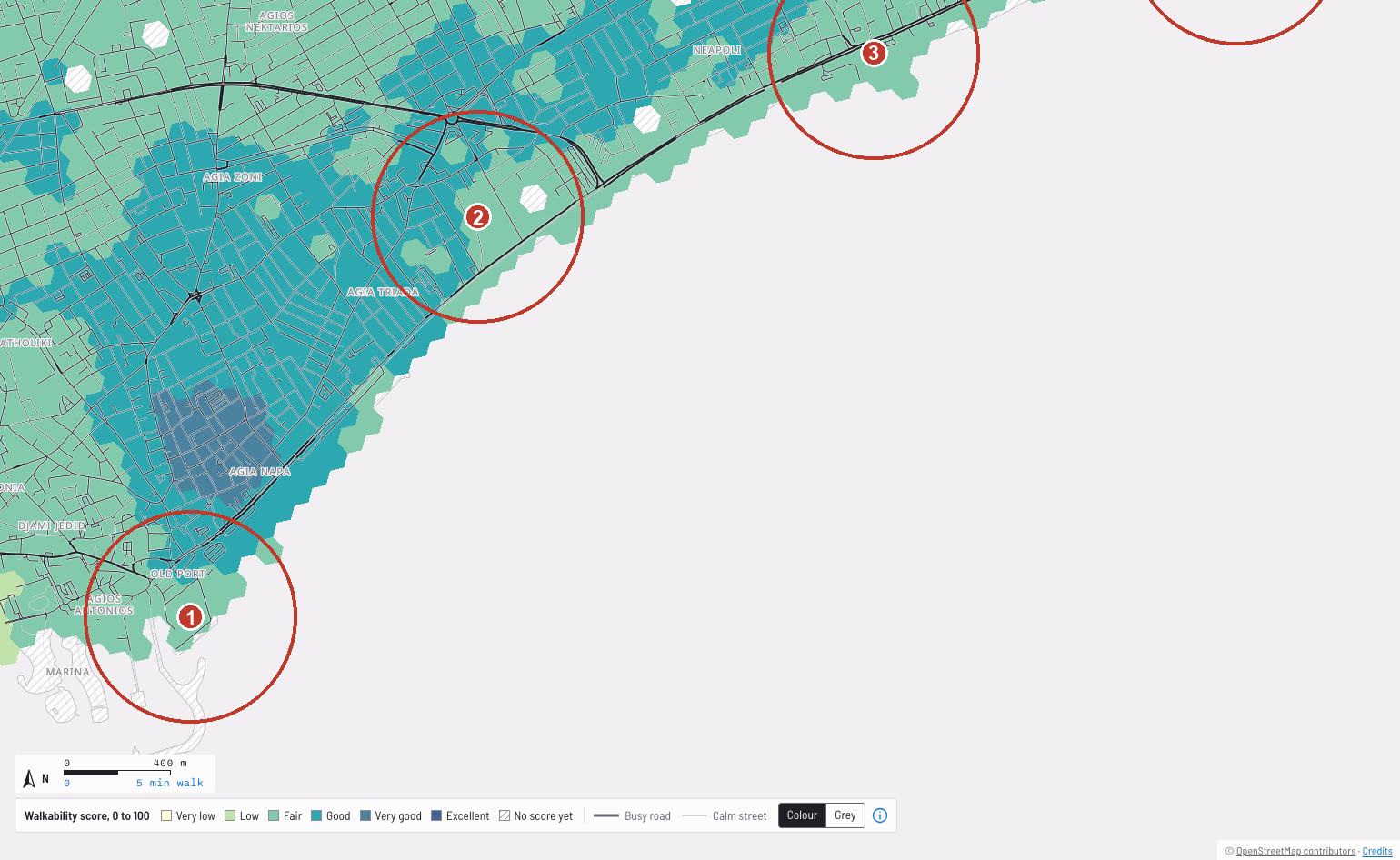
Residents along Limassol’s seafront, from the Old Port to Dasoudi, have convenient access to public transport, with all living within a five-minute walk of the nearest stop, according to a new Walkably study.
It estimates 2,762 people reside in this area, compared to 86.9per cent of the rest of Limassol.
The analysis highlights public transport accessibility across the city amid ongoing discussions about improving the transport network, including the potential introduction of a tram.
Walkably founder Raian Pollock noted, “the study measured actual walking distances along streets and paths rather than straight-line distances.”
The median walk time to the nearest stop is two minutes in the seafront area, compared to 2.7 minutes elsewhere.
“However, the gap narrows at ten minutes, with 97.8per cent of residents citywide able to reach a stop in that time, while all seafront residents can,” he said.
The study estimates Limassol’s population at 103,812, with 87.2per cent living within a five-minute walk of a stop.
Proximity, however, does not guarantee a reliable service. Pollock pointed out that the study focuses on distance rather than bus frequency or routes.
“The research, based on Eurostat 2021 data, acknowledges that bus stop frequency needs to be assessed to gauge service quality,” Pollock added.
The study considers factors like traffic and slope, it does not account for pavement width or road safety.
While seafront residents enjoy easy access to public transport, the findings alone cannot determine if a tram or improved bus services would be more effective in enhancing the city’s transport system.
The study and interactive map are available at walkably.org/city/cy/limassol/