❌

Reading view

Neil Gorsuch called this law a ‘curious animal.’ A new bill would tame it.

One of the nation’s strangest laws is primed for reform in a new bill from Rep. Steve Cohen, D-Tenn., that would bring a dose of logic to federal drug policy.

That unusual law — Supreme Court Justice Neil Gorsuch called it a “curious animal” — is the Controlled Substance Analogue Enforcement Act. Known as the Analogue Act for short, it’s part of the Anti-Drug Abuse Act of 1986, which was rushed into law ahead of that year’s midterm elections by a bipartisan Congress and Republican President Ronald Reagan. Passed in the shadow of high-profile deaths, including that of basketball star Len Bias, the Anti-Drug Abuse Act brought mandatory minimum sentences and a vast disparity in punishment for crack and powder cocaine offenses, respectively.

The Analogue Act separately sought to solve the problem of so-called designer drugs. The problem, as the authorities saw it, was that the law was too specific. Cocaine, heroin and other drugs were illegal because they were listed under the Nixon-era Controlled Substances Act’s drug schedules. But nothing was stopping underground chemists from tinkering with listed substances to produce new ones that the law didn’t capture. Congress could ban novel drugs as they appeared on the illicit market, but that took time and would only apply going forward. Bad actors went unpunished in the meantime, so the government thinking went.

As I laid out in my book, “Bizarro,” on the inside story of the Analogue Act and one of the most peculiar cases it spawned, law enforcement was tired of playing catchup in the cat-and-mouse game. It wanted to go on offense. The result was the Analogue Act, which expanded federal drug law to say that any substances “substantially similar” to already illegal ones like cocaine, heroin and others on the most restricted drug schedules were illegal, too.

‘Curious animal’

In solving one problem, the Analogue Act confronted another: the Constitution.

Due process means that people need notice of what’s legal, so they can live their lives accordingly. Yet the act’s substantial-similarity test outlawed a potentially infinite number of substances with a vague, unscientific standard. Whether that standard is satisfied in a given case depends on whether prosecutors can convince juries that one substance is “substantially similar” to another. The ambiguous test has led to conflicting verdicts in different cases involving the same substance.

Even the Drug Enforcement Administration’s chemists haven’t always agreed among themselves about which substances qualify as analogues. If the government’s own experts can’t agree about what’s legal, how can people subject to the law be expected to know?

Judges appointed by Republican and Democratic presidents alike have questioned the act’s constitutionality. Notable among them is Gorsuch. Before President Donald Trump appointed him to the Supreme Court in 2017, the jurist called the act a “curious animal” in a 2015 ruling when he was on the Denver-based appeals court. Gorsuch deemed the “substantially similar” test’s meaning an “open question,” as he wondered whether it gives citizens fair notice.

Neil Gorsuch and Donald Trump look at each other.
Judge Neil Gorsuch, left, shakes hands with President Donald Trump on Jan. 31, 2017, at the White House.Carlos Barria / Reuters

But even since he joined the high court, the justices have refused to consider a petition attacking the Analogue Act. The court’s lack of interest effectively has left the matter with Congress.

Taming the animal with an ‘and’

Enter the new bill announced by Cohen, who has criticized the drug war during his nearly two decades in the House. The Democrat isn’t running for re-election this year, after Tennessee Republicans passed a congressional map, backed by recent Supreme Court rulings, that splintered his Memphis base in what was the state’s only majority-Black district.

Cohen’s “Public Health and Research Reforms in Controlled Substances Act” would, as its name suggests, shift drug law from a punitive approach to one centered on public health, with a revamped scheduling system, scientific research promotion and other measures.

Its analogue amendment wouldn’t overturn the constitutionally suspect “substantially similar” test, but it would address one of its ridiculous aspects.

To understand the fix, it’s necessary to know what the act says currently. It has three sections that define what a controlled substance analogue is, according to its 1) structure, 2) effect and 3) represented effect. It defines an analogue as a substance:

i) the chemical structure of which is substantially similar to the chemical structure of a controlled substance in schedule I or II;

ii) which has a stimulant, depressant, or hallucinogenic effect on the central nervous system that is substantially similar to or greater than the stimulant, depressant, or hallucinogenic effect on the central nervous system of a controlled substance in schedule I or II; or

iii) with respect to a particular person, which such person represents or intends to have a stimulant, depressant, or hallucinogenic effect on the central nervous system that is substantially similar to or greater than the stimulant, depressant, or hallucinogenic effect on the central nervous system of a controlled substance in schedule I or II.

Beyond the vagueness at the heart of the term “substantially similar,” a key issue is the language in between each section. There’s an “or” in between the second and third sections on effect and representation, but there’s nothing in between the first and second sections on structure and effect. A draft version of the 1986 law had an “and” in between those first two sections, which would have clearly meant that, to qualify as an analogue, at least a substantially similar chemical structure was required.

It’s unclear why the “and” didn’t make it into the final version of the Analogue Act. But its omission has prompted an outlier legal argument that prosecutors only have to prove one of the three prongs: structure, effect or representation of effect. The consequences of that reading are extreme, because if only representation is required (regardless of what the substance actually is or does), then people can serve decades in prison for selling something that isn’t similar to a scheduled drug at all.

What an appeals court called an “absurd” example of that phenomenon arose in a prosecution against people who sold a mixture of candle wax and flour under the pretense that it was crack/cocaine. “The treatment of candle wax and flour, no matter how it is marketed, as a schedule I controlled substance is an ‘absurd’ result of the kind our canons of construction instruct us to avoid,” the Philadelphia-based court said in a 2003 case, reversing a district court that ruled otherwise.

Yet the concern over that absurdity was not relegated to history. Just a few years ago, a San Francisco-based appeals court suggested that the act could still be used to achieve such an outlandish outcome. Even the government wasn’t pressing for that aggressive interpretation, so the court didn’t feel bound to embrace it in that case.

But if the Analogue Act stays on the books as is, courts could keep reaching “absurd” results in future cases.

‘Open question’

Cohen’s proposed legislation would prevent that absurdity by adding the “and.” Had it been there at the time of the wax-and-flour case, the district court would have had to side with the defense, because even if the mixture was marketed as crack, its chemical structure was not substantially similar to crack by any reasonable measure.

The dome of the Capitol and a yellow sign are seen in the background as Steve Cohen speaks in the foreground.
U.S. Rep. Steve Cohen (D-Tenn.) speaks during a press conference on April 20, 2026, outside the U.S. Capitol.Anna Moneymaker / Getty Images

To be sure, the new bill’s analogue amendment wouldn’t solve the due process problem inherent in the “substantially similar” test; that could probably only be done by overturning the act entirely. Still, the bill would bring a dose of logic that has been missing for four decades.

Whether that modest measure has the votes to become law with today’s Congress and White House is, as Gorsuch put it in 2015, an “open question.” But even if this bill doesn’t pass, it’s an important question to keep asking.

Subscribe to the Deadline: Legal newsletter for expert analysis on the top legal stories of the week, including updates from the Supreme Court and developments in the Trump administration’s legal cases.

The post Neil Gorsuch called this law a ‘curious animal.’ A new bill would tame it. appeared first on MS NOW.

Judge Neil Gorsuch, left, shakes hands with President Donald Trump, after President Trump nominated Gorsuch to be an associate justice of the U.S. Supreme Court, on Jan. 31, 2017, at the White House.

U.S. Rep. Steve Cohen (D-TN) speaks during a press conference on April 20, 2026, outside the U.S. Capitol.
  •  

More prisoners recalled to jail than released in England and Wales

Ministry of Justice figures show recalls rose 27% in year to June despite emergency measures to ease overcrowding

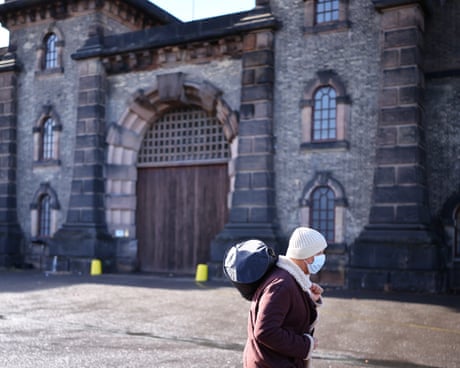
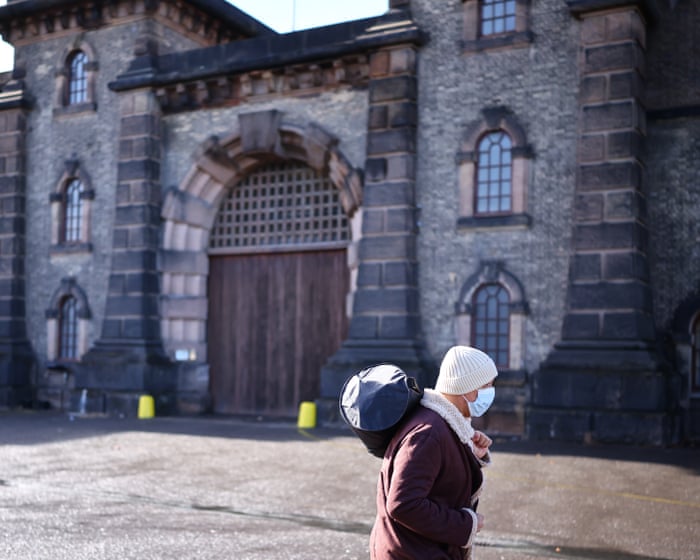
More people were recalled to jails in England and Wales in the first half of this year than were released, despite government efforts to reduce the prison population, according to figures released on Thursday.

Ministry of Justice (MoJ) data shows that 12,338 people were recalled to custody between the beginning of April and the end of June, while 12,278 people were released. It continues a trend set between January and March, when 13,193 people were returned to prison and 12,977 released.

Continue reading...

© Photograph: Tolga Akmen/EPA

© Photograph: Tolga Akmen/EPA

© Photograph: Tolga Akmen/EPA

  •  

DOJ says recent charges against Trump foes aren’t rushed or improper. But it keeps hitting roadblocks.

Over the past week, the public has learned of three efforts by the Department of Justice to charge perceived enemies of President Donald Trump with federal crimes. One of those efforts, an attempt to indict former White House aide turned Jan. 6 committee star witness Cassidy Hutchinson, failed on Tuesday after a Washington, D.C., grand jury did not have the votes to return what’s known as a “true bill.”

The other two have resulted in the opening of criminal cases: one against former FBI Director James Comey, the third such effort against him in just over a year, and the other against two former FBI employees alleged to have lied to a congressional committee about what they knew about Hunter Biden’s laptop.

And with the midterm elections literally days away, despite this seeming escalation in prosecutions, the Justice Department has maintained that political considerations had nothing to do with the timing or existence of these criminal matters.

As a DOJ spokesperson told The New York Times, “The standard is purpose, not proximity to Election Day. Department policy does not require the department to stop ongoing work during an election season.”

Yet even assuming that Justice Department prosecutors are acting in good faith, that description of DOJ policy is incomplete.

A memo issued in 2024 by then-Attorney General Merrick Garland mandated that prosecutors not time “criminal charges or any other action in any matter or case for the purpose of affecting any election.” The memo went on to say, “Such a purpose, or the appearance of such a purpose, is inconsistent with the Department’s mission and with the Principles of Federal Prosecution” (emphasis added).

The Justice Department did not immediately respond to MS NOW’s request to confirm whether the memo was still in effect. MS NOW is unaware of any evidence that it has been rescinded.

Moreover, the Justice Manual — sometimes called the bible of federal prosecution by current and former DOJ personnel — provides that any issue or even “the perception of an issue” concerning an investigative or prosecutorial action during an election season demands consultation with the Public Integrity Section, the deputy attorney general and/or the attorney general themselves. In other words, Trump political appointees, up to and including Attorney General Todd Blanche, are the final arbiters of whether a prosecutor’s purpose is legitimate.

Given that, some or all of them must have signed off on these recent prosecutorial developments. But the mistakes made by DOJ lawyers in each of these cases suggest both a rush to the courthouse and a desire to stretch the law, criminal procedural rules or both in ways that might fail or have already faltered.

Take the most recent criminal charges against Comey, unsealed earlier this week. Those charges center on the purported disclosure of allegedly classified information by an FBI employee to a New York Times reporter who published an article hours later. According to the DOJ, Comey intentionally caused that disclosure on Oct. 5, 2016, knowing the information was classified.

But the case against Comey, filed 10 years later to the date, was not initiated through an indictment, which requires a vote of at least 12 grand jurors in a federal court. The Justice Department charged Comey via an information, which does not require grand jury involvement and therefore typically can be filed much more quickly than an indictment.

Because the statute of limitations for each of the charges against Comey is 10 years, the DOJ seems to have assumed it could charge Comey by information within that window and then later obtain an indictment, which (barring a defendant’s waiver) is necessary to prosecute felonies.

But now the department is instead defending Comey’s near-immediate motion to dismiss. And his legal team’s argument has nothing to do with the substance of the charges or claims of selective or vindictive prosecution, which it supported with extensive documentation in the two prior cases against Comey.

Instead, Comey’s attorneys argue that the plain language of the statute of limitations pertains only to indictments, not informations or criminal complaints, the third way federal criminal cases can begin. A Washington, D.C., federal judge will hold a hearing on that motion Friday.

The case against former FBI analyst Nikki Floris and former agent Bradley Benavides seems to show signs of a similar rush to the courthouse. That case was instigated on Oct. 20 through a criminal complaint, which typically contains a written statement of “the essential facts” of the offense charged, usually submitted by a federal law enforcement agent under oath and then approved and signed by a federal magistrate judge.

But within days — and literally in the middle of the night before a preliminary hearing — the Justice Department filed what it characterized as a “superseding” criminal complaint. The new complaint lacked a signature from either the agent, swearing to its veracity, or the judge himself. It also was filed under the name of a different FBI agent, without any explanation.

The magistrate judge, Zia Faruqui, was furious, asking the DOJ lawyer whether he was aware of any prior federal case in which a magistrate judge had allowed a superseding criminal complaint without a judge’s sign-off. The lawyer acknowledged that he was not — and ultimately, the judge refused to sign the new complaint, telling the prosecutors, “I am concerned about what your view of the law is.”

The hearing was further derailed when Bryan Witt, the agent who replaced the original affiant, took the witness stand to defend the government’s finding of probable cause to charge Floris and Benavides.

On questioning by Floris’ lawyer, Witt testified that the day after Trump complained during a national address that some FBI intelligence officials had downplayed a report that China had tried to interfere in the 2020 election in order to defeat him, FBI Director Kash Patel directed the U.S. attorney’s office in Kansas City, Missouri, to investigate some of those same officials, including Floris. Witt further testified that the letter arrived “right in the middle of a major public corruption case,” that the new investigation was “a huge distraction” and that he had concerns from the outset that “this would be viewed as political.”

He also admitted that he never interviewed Floris, though he said it would have been “incredibly useful” and normally would have been something agents did, and that the initial complaint contained factual inaccuracies. As of Wednesday afternoon, Faruqui was still weighing whether prosecutors had probable cause to charge Floris and Benavides.

In light of the challenges the DOJ has encountered in that case, one may wonder if it would have been more effective to slow down and present an indictment to a grand jury. Yet the department’s failed attempt to secure an indictment against Hutchinson — its third potential own goal in recent days in D.C. federal court — might explain why it didn’t.

Because grand jury proceedings are secret, it is unclear why the grand jury did not indict Hutchinson. But according to public reporting, including from MS NOW, lawyers from the DOJ’s Civil Rights Division proposed charging her with false statements to Congress, crimes not usually within that unit’s ambit.

The Justice Department’s inability to indict her comes after an unusual number of similar losses in other cases in Washington that have involved known targets of Trump’s ire, including an attempt to indict six members of Congress who, through a video, encouraged military service members to refuse to follow unlawful orders.

And with days to go before the midterm elections and with a president who is openly taking credit for the DOJ’s litigation strategy, it could be that no matter what charging instrument the department chooses, it is working too fast — and with too conspicuous a veneer of partisanship — to succeed.

The post DOJ says recent charges against Trump foes aren’t rushed or improper. But it keeps hitting roadblocks. appeared first on MS NOW.

  •  

Video Shows ICE Agents Slashing Portland Couple's Car Tire Then Driving Off

ICE agent slashing tire | ACLU

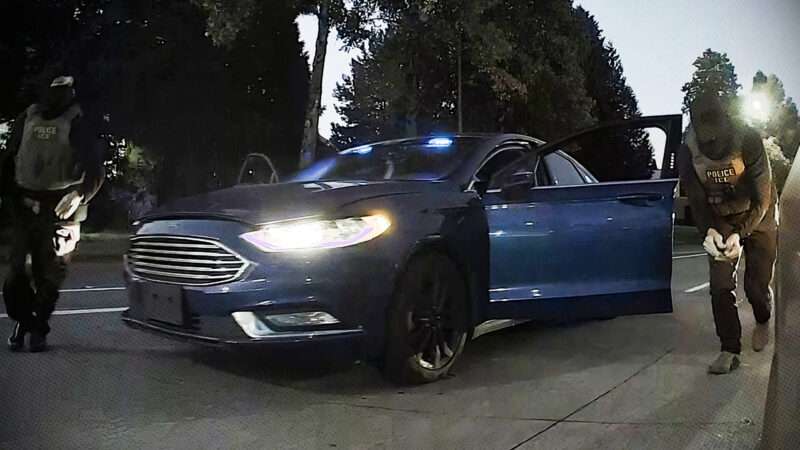
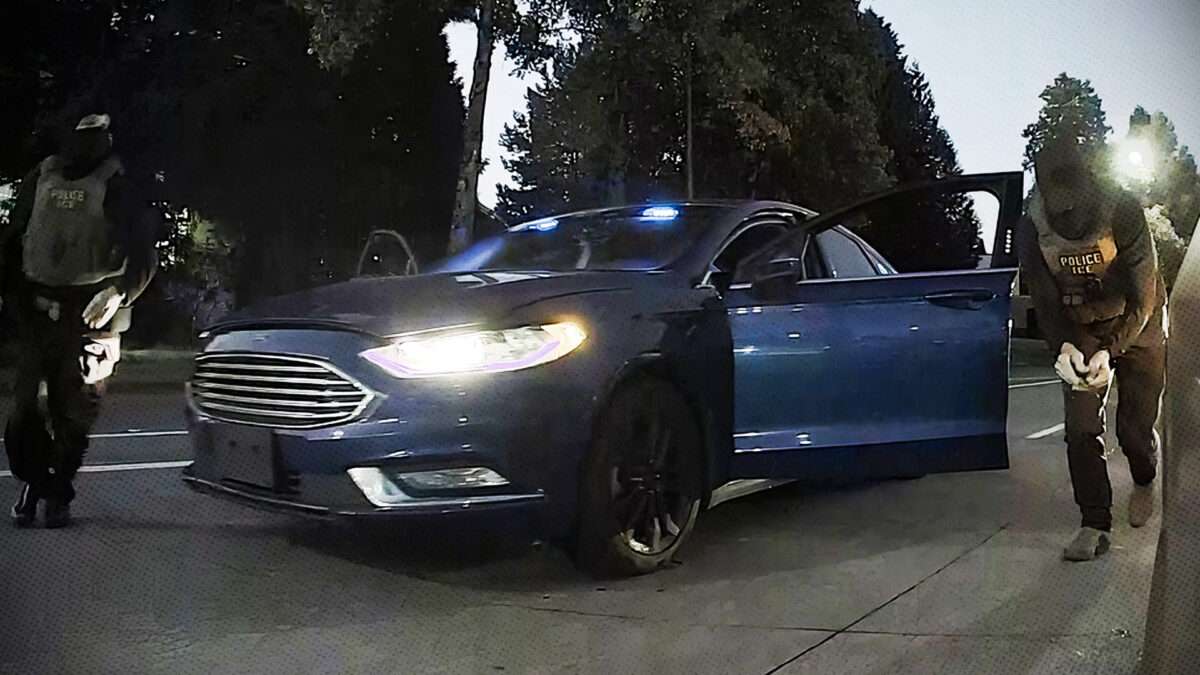
Immigration and Customs Enforcement (ICE) agents slashed the tires of a couple who were recording the agents in an incident near Portland, Oregon, earlier this month. The agents then drove away without arresting or talking to the couple, video footage shows.

The American Civil Liberties Union (ACLU), which released the footage today, says it is yet another example of ICE agents retaliating against people for protected First Amendment activity. In an administrative complaint on behalf of the anonymous couple, the ACLU and the ACLU of Oregon are demanding an investigation and answers from the Department of Homeland Security (DHS) about why agents tailed, boxed in, and "vandalized" the vehicle of a U.S. citizen.

The stunning video does not resemble any sort of normal law enforcement:

"What happened to us is not unique, and that is what is so terrifying," A.P. and M.P., the unnamed husband and wife, said in a statement provided by the ACLU. "We observe and record public ICE activity in order to shine a light on their abusive behavior and to create a record of what our government is up to. Because of that, they are terrorizing us and anyone else who dares to exercise their First Amendment right to hold our government accountable. We hope that sharing our story will bring attention to their reckless and unconstitutional attacks on our communities."

According to the ACLU complaint, the unnamed married couple was driving in Hillsboro, Oregon, on the morning of October 7 when they spotted an ICE SUV. The couple followed the SUV to a supermarket parking lot, where there were also two other ICE vehicles. The couple lowered their windows and began yelling "This is ICE! This is ICE!" as well as blowing whistles and honking the car's horn.

One ICE agent grabbed a shopping cart and began approaching the couple's car. The complaint states that the couple heard the agent say something to the effect of, "Let's block them in with the cart." As the couple began driving away, several ICE agents began chasing after them on foot. 

The three ICE vehicles chased the couple after they left the parking lot, "driving aggressively and nearly colliding into" their car, according to the complaint. Additional video shows the ICE vehicles swerving aggressively in front of the couple's car and later unsuccessfully attempting to box in their car. "None of the ICE vehicles had their flashing lights or sirens on during this entire sequence of events," the complaint states.

The couple cut through an empty parking lot, and the chase continued down several more streets before the ICE vehicles turned on their emergency lights and sirens. According to the complaint, the couple continued driving for roughly a minute, fearing to pull over on an empty road with no bystanders. 

Video shows that when they stopped at a traffic light, a masked ICE agent exited his vehicle, walked up to the couple's car, stabbed one of its rear tires with a knife, and then walked back to his car. The couple's car moved slowly forward and into a turn lane before stopping again. Then the same agent got back out of his vehicle and stabbed the tire a second time before returning to his vehicle without attempting to speak to the couple.

"All three ICE vehicles turned off their flashing lights and sirens and drove off," the ACLU complaint states.

The complaint notes that the couple "experienced retaliatory action similar to that experienced by many other individuals across the country engaged in these same First Amendment protected activities."

"In particular, individuals around the country have reported being similarly tailed, boxed in, and threatened with or subjected to violence after observing, gathering information about, and recording ICE agents performing their duties in public," the complaint states.

Last October, ICE agents in the Portland area busted out the car windows of a U.S. citizen who had been filming them, dragged her out of her vehicle, and detained her for roughly seven hours before releasing her without charges.

The ACLU of Tennessee filed a class-action lawsuit in May against a federal law enforcement task force in Memphis for harassing legal observers. Memphis residents allege in declarations that they have been violently arrested, surveilled at their houses, pulled over under false pretenses, and jailed for trying to film the task force. In September, the ACLU of Tennessee published videos showing federal agents arresting the lead plaintiff in its lawsuit while he was attempting to film task force operations.

DHS and immigration officers have repeatedly accused videographers and legal observers of obstruction of justice and "doxxing," but civil liberties advocates say the DHS is flat wrong about the law: Every federal appeals court that has considered the issue—nine so far—has firmly upheld the right to record law enforcement in public.

The Supreme Court has also unequivocally upheld the First Amendment right to criticize or oppose police activity, whether verbally or through other expressive activity.

"The right to record publicly visible law enforcement activity is fundamental to our democracy," Scarlet Kim, senior staff attorney with the ACLU's Speech, Privacy, and Technology Project, said in a press release. "Like many people across the country, our clients have been observing and recording ICE activity in their community. These videos have proven critical to exposing ICE's abuses. If we cannot see and document what our own government is doing on our streets, we cannot hold it accountable for running roughshod over our rights."

The ACLU complaint to the DHS Office of Inspector General and two other DHS oversight offices demands that the agents involved in the incident be identified, investigated, and disciplined. The ACLU is also requesting a "comprehensive investigation of a disturbing pattern of ICE agents retaliating against individuals who observe, gather information about, and record ICE activity."

In response to request for comment, the DHS Office of Public Affairs said in a statement attributed to an unnamed spokesperson that the "incident is currently under investigation."

"ICE law enforcement officers are trained to use the minimum amount of force necessary to resolve dangerous situations to prioritize the safety of the public and our officers," the statement continued. "The men and women of ICE are entrusted with upholding the rule of law and are held to the highest standards of professionalism, integrity, and ethical conduct. We have no further comment at this time."

The post Video Shows ICE Agents Slashing Portland Couple's Car Tire Then Driving Off appeared first on Reason Magazine.

  •  
❌