The Bears acquired All-Pro defensive tackle Jefferey Simmons and a 2028 fifth-round pick from the Tennessee Titans in exchange for Chicago's 2027 and 2028 first-round picks and 2027 fourth-round pick, the Titans announced Thursday.
The cost is steep, as Simmons is the first defensive tackle since 1967 to be traded for multiple first-round picks, according to ESPN. Since the Titans drafted Simmons with the No. 19 overall pick in the 2019 NFL Draft, he has been one of the best defensive tackles in football.
The four-time Pro Bowler has recorded 414 tackles and 46.5 sacks in 106 career games. Titans owner Amy Adams Strunk said the organization is forever grateful for Simmons.
"There are few people like Jeff Simmons. We are forever grateful for all he has given this team and this city. His formidable presence on the field was surpassed only by what he did off it. He gave Nashville more than football. The Give ’Em A Reason Foundation has changed lives in Middle Tennessee and in Mississippi, and I have no doubt it will continue to wherever he goes," Strunk said in a statement.
"Jeff — thank you. For how you played, how you led, and how you represented our team."
The Bears are 5-2, and the acquisition of Simmons will help shore up a questionable defensive line. While the Bears are still generating plenty of sacks, those have largely come from blitzing linebackers and defensive backs rather than defensive linemen.
Simmons, who led the Titans with four sacks, six tackles for loss and four passes defended, is a major upgrade to a defensive front that has ranked near the bottom of the NFL in pressure rate since Dennis Allen took over as defensive coordinator in 2025. The Bears' 28.8% pressure rate is tied for 20th in the NFL, according to StatRankings.
Not only are the Bears adding Simmons to their defensive line, but star defensive end Montez Sweat is also set to return on Monday night against the Seattle Seahawks after a two-game suspension.
At 5-2, the Bears are second in the NFC North behind the undefeated Minnesota Vikings (6-0). The Bears hope adding Simmons can help them overtake the Vikings atop the standings and earn a home playoff game in January.
Simmons will help the Bears not only this season but also for the next several years after signing a three-year, $105.8 million contract extension that keeps him under contract through the 2030 season.
The Titans, on the other hand, are 1-6 and have traded away one of their franchise cornerstones. Entering the season, they hoped to contend in the AFC South with new coach Robert Saleh and quarterback Cam Ward, the No. 1 overall pick in the 2025 NFL Draft, entering his second season.
Instead, they are in the AFC’s basement and appear further away from contention than ever, as Ward has struggled mightily this season.
A meteorite found in 2022 in the Sahara in Mali formed in the Martian crust at least 4.1 billion years ago, according to scientists, making the reddish igneous rock perhaps the oldest of the 435 meteorites from Mars known on Earth.
The researchers said the composition of the meteorite, called Teghaza 001, is providing insight into the environment early in the history of Earth’s planetary neighbor, with fresh evidence of liquid water on the surface that bolsters the notion that primordial Mars may have been conducive to microbial life.
Planetary scientist Yang Liu of NASA’s Jet Propulsion Laboratory in California, which is managed by Caltech, called the meteorite “a witness to a time when Mars was likely warmer and wetter than it has been for most of its history.”
The chemistry of the meteorite, a type of coarse-grained rock called gabbro, shows that it experienced interactions with water when it was slowly cooling and crystallizing in the Martian subsurface. It was part of the Martian crust, the planet’s outermost layer, but formed from magma originating at greater depths in the planet’s mantle.
Mars is now cold, dry and desolate, but extensive evidence indicates it had water flowing on its surface in the form of rivers, lakes and an ocean in the northern hemisphere billions of years ago.
Teghaza 001 was discovered in eight pieces, with the largest chunk about the size of a fist, in the desert roughly 21 miles (34 km) from the Malian village of Bir Chali. Its main minerals are feldspar and pyroxene, and it contains zircon crystals bearing the element uranium. The researchers ascertained its age using a technique based on the decay of uranium into lead over time.
“Martian meteorites are our only samples from Mars, forming our basis for understanding the formation and differentiation of early Mars and allowing us to evaluate in laboratories whether ancient Mars could have supported habitable conditions,” said Liu, lead author of a study on the meteorite published in the journal Science.
“The detailed information we can extract from these meteorite samples complements and validates our exploration of Mars using satellites, landers and rovers,” Liu said.
This information provides clues about how the evolution of Mars diverged from Earth’s when they were in their infancy and life was beginning to take hold on our planet, Liu said. Earth, Mars and the solar system’s other planets formed roughly 4.5 billion years ago.
Only three Martian meteorites, including Teghaza 001, date to the planet’s early history. One of them, discovered in Antarctica in 1984, was initially assessed as being about 4.5 billion years old but more recently was determined to have a similar age to Teghaza 001. Teghaza 001 likely is the older of the two, according to the new study.
WATER WAS PERCOLATING
Isotopes, or forms, of the elements oxygen and hydrogen present in the meteorite show that water was percolating down into the planet’s deeper crust, as occurs on Earth, and mixing with molten rock from the mantle.
“Multiple lines of evidence in Teghaza 001 suggest Mars’ surface had water at more than 4.1 billion years ago. This is reflected by hydrogen isotopes in phosphate and oxygen isotopes in minerals and bulk samples,” Liu said.
Water is considered a key ingredient for life.
“The findings lend support to the idea that early Mars had the necessary ingredients and conditions to harbor life, but do not directly answer the question of whether there was life on Mars,” said planetary scientist and study co-author Lee Saper of NASA’s Ames Research Center and the BAER Institute in California.
“The rock is a snapshot in time that shows how a wetter early Mars with a thick atmosphere could have supported habitable conditions but that these conditions were waning rapidly over the first billion years or so of Mars’ existence, trending towards its currently dry and inhospitable environment,” Saper said.
Teghaza 001’s chemistry shows it is distinct from the other known Martian meteorites. It may have originated in the southern highlands, possibly from near Hellas Basin, one of the largest Martian impact craters, Liu said.
The meteorite has a dramatic backstory.
“It was blasted by an impact from the surface of Mars and was flying through space until its path crossed that of Earth. It then entered the atmosphere as a meteor and survived as a meteorite by landing in the Sahara,” Liu said. “We do not know when the sample landed on Earth.”
War Secretary Pete Hegseth fired one of the Pentagon’s senior strategic planners amid an investigation into allegations he leaked classified information to journalists about the Iran war, Russia’s war in Ukraine and other sensitive matters, a Department of War official told Fox News.
The official said Lt. Gen. Brett Sylvia failed three polygraph examinations related to alleged disclosures of classified information. The investigation has been referred to the Justice Department.
Sylvia is also accused of meeting journalists outside the Pentagon with the alleged intention of leaking classified material after Hegseth imposed new media restrictions requiring reporters to be escorted inside the building.
Fox News Digital has reached out to the DOJ and Sylvia for comment but did not hear back at time of publication.
Sylvia served as director of the Joint Staff’s Directorate for Strategy, Plans and Policy, known as the J5, a senior role responsible for developing military strategy and advising the chairman of the Joint Chiefs. The J5 has been sidelined from that role since the spring, according to well-placed sources who spoke to Fox News.
The official stressed that Sylvia was not a central planner of the Iran war, which falls under U.S. Central Command and its commander, Adm. Brad Cooper.
The Atlantic first reported Sylvia’s ouster Wednesday night, citing sources who said Hegseth had lost confidence in the three-star general amid tensions with Pentagon policy chief Elbridge Colby.
Sylvia is the second officer leading the J5 to be removed under Hegseth, following Lt. Gen. John McGee. Hegseth also removed Lt. Gen. Douglas Sims, then director of the Joint Staff, earlier this year.
U.S. officials have reportedly warned allies in the Middle East to prepare for possible renewed strikes after next week’s midterm elections and potential Iranian retaliation, while additional U.S. forces are moving into the region.
A 1994 West Point graduate, Sylvia has served more than three decades in the Army, including multiple deployments to Iraq and Afghanistan, and was wounded in combat. Before taking over the J5 in December, he commanded the 101st Airborne Division at Fort Campbell and had previously served as the J5’s vice director.
Sylvia’s removal is the latest in a broader turnover of senior military leadership under Hegseth, with nearly two dozen generals, admirals and other senior leaders fired, pushed out or otherwise departing during his tenure.
Russian manufacturer TENET has updated its lineup of four crossovers-the T4L, T7, T8, and flagship T9-by introducing a new intelligent all-wheel-drive (AWD) system branded as Torque-on-Demand. The core engineering shift is the move from a fixed transmission state to a dynamic one: the vehicle now operates as a front-wheel-drive (FWD) car by default, with electronics actively managing the distribution of torque to the rear axle only when traction limits are approached.
At the heart of this configuration is a compact electro-mechanical coupling. Under standard driving conditions, such as dry asphalt, the system keeps power isolated to the front wheels to preserve fuel efficiency. However, the vehicle's control unit continuously monitors wheel speed and slip. When sensors detect front-wheel slippage, the system engages the coupling in fractions of a second, redirecting a portion of the engine's torque to the rear axle. This rapid intervention allows the vehicle to maintain stability during acceleration on wet surfaces or to initiate movement on icy inclines without requiring manual driver input.
Driver Control and Terrain Management
The integration of this hardware also expands the software-defined driving modes available to the operator. While FWD variants retain standard Eco, Standard, and Sport presets, the AWD versions of the T4L, T7, and T8 add three specific terrain profiles: Snow, optimized for loose and slippery winter roads; Mud, designed for soft, waterlogged unpaved sections; and 4x4, which forces the activation of the all-wheel-drive system regardless of slip detection. The flagship T9 model distinguishes itself with an exclusive Sand mode, a setting calibrated to manage torque delivery on loose, shifting substrates where excessive power can cause the wheels to dig in rather than gain traction.
For many drivers, the 15,000-kilometer service interval outlined in manufacturer manuals appears sufficient. However, in the operating conditions typical for Russia, where vehicles frequently sit in traffic congestion or complete short urban trips, this standard often proves excessive. Andrei Babushkin, director of LYNXauto, explains that such schedules fail to account for the physical realities of intermittent driving. In these scenarios, the engine rarely reaches a stable operating temperature, triggering lubricant degradation processes that are independent of the distance traveled.
The primary mechanical failure mode stems from the loss of fluid viscosity. Under conditions of extreme overuse or aggressive operation, oil undergoes profound chemical changes, transitioning from a liquid state to a thick, plastic suspension resembling the consistency of lithium grease. At this point, hydrodynamic lubrication in main bearing assemblies and other critical nodes disappears. Metal-to-metal contact becomes dry or semi-liquid, leading to immediate seizure and engine failure.
A more common, albeit less dramatic, scenario involves accelerated abrasive wear. This process begins within the oil filter. The filter element, made of specialized paper or non-woven material, gradually clogs with soot, metal particles, and wear debris. When resistance to oil flow becomes critical, the bypass valve opens. Oil then circulates in a direct flow mode, bypassing the filtration media entirely. The accumulated contaminants are pumped directly into oil galleries and friction zones, acting as an abrasive that grinds components from the inside.
The Russian secondary market is currently saturated with Chinese crossovers, many of which are only two to three years old. While low mileage and a fresh exterior suggest reliability, these vehicles often present a complex diagnostic challenge where aesthetic condition masks systemic volatility and steep depreciation-with some models losing nearly 45% of their value within three years.
The Interconnectivity of Electronic Faults
A primary challenge in assessing used Chinese vehicles is the tight integration of their electronic architecture. In these systems, a symptom-such as a malfunctioning climate control unit or a glitching infotainment screen-does not always point to a failure of that specific component. Because sensors and control modules are deeply interdependent, a trivial sensor failure or a software bug in one control unit can paralyze multiple unrelated systems.
To distinguish between a localized hardware failure and a systemic software glitch, a visual inspection is insufficient. The discriminating check requires a deep scan using specialized diagnostic equipment to identify whether the fault is a physical component failure or a communication error across the vehicle's network. Without this, a buyer cannot determine if they are facing a simple sensor replacement or a fundamental electronic instability.
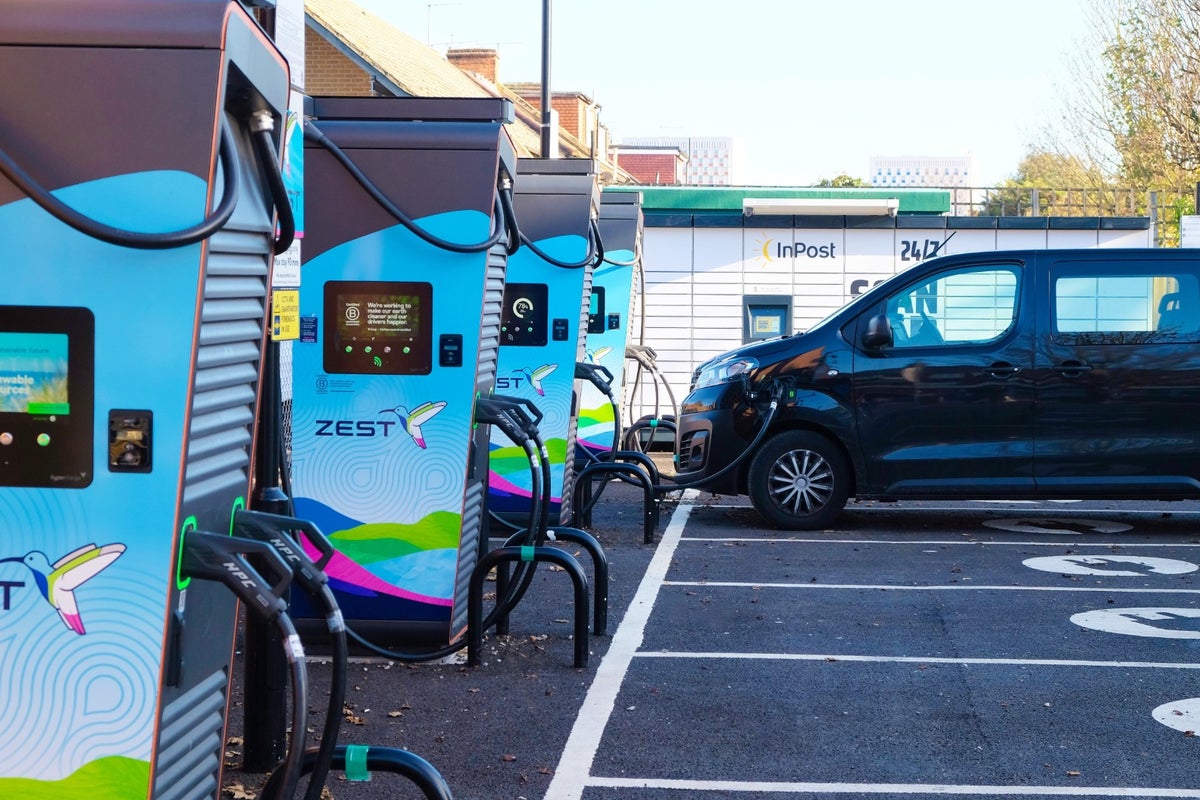
Since 2021, average prices at lower-powered public chargers have risen by 69% after inflation, while higher-powered charging prices have increased by 94%
The opening moves of the next major war could unfold hundreds of miles above Earth.
U.S. adversaries are looking at ways to blind American forces in future conflict by jamming communications, disabling GPS, using lasers to attack satellites or destroying them completely.
A sweeping new Defense Intelligence Agency assessment details how China and Russia are developing sophisticated ways to disrupt or destroy U.S. satellites. This includes a Russian satellite designed to carry a nuclear weapon into Earth's orbit.
American forces rely on satellites to communicate across battlefields, navigate ships and aircraft, track enemy forces, detect missile launches and guide precision weapons to their targets. Knocking those systems offline could leave forces below struggling to see, communicate and strike.
"We can't do military operations the way that we do them today without satellites, without systems in space," Clayton Swope, deputy director of the Aerospace Security Project at the Center for Strategic and International Studies, previously told Fox News Digital.
"Whoever has space and can deny that to their adversary has a huge asymmetric advantage in a conflict," Swope said.
Beyond the battlefield, satellites underpin everything from GPS navigation and communications to banking, transportation and the electric grid, meaning a large-scale attack in space could disrupt services millions of people rely on every day.
Chinese military thinkers have identified reconnaissance, communications, navigation and early-warning satellites as potential targets for attacks designed to "blind and deafen the enemy," according to the report. DIA assesses Beijing could begin threatening or gradually degrading an adversary’s space architecture during a crisis as a "prelude to war."
Russia, meanwhile, views U.S. reliance on satellites for precision strikes and projecting military power as a "critical vulnerability" to exploit during a conflict. Its doctrine envisions attacks ranging from temporary jamming and blinding satellite sensors to the outright destruction of spacecraft and the infrastructure supporting them.
DIA describes the threat as a continuum, beginning with attacks that can temporarily disrupt a satellite without destroying it and escalating through cyber and orbital attacks to kinetic weapons and, ultimately, a nuclear detonation in space.
Some of those tactics have already made their way into active conflict. During Operation Epic Fury, the U.S. and Iran "took offensive actions against each other's space capabilities to degrade and disrupt military actions on both sides," according to DIA. The report does not detail those operations, but says jamming near the Strait of Hormuz in June disrupted U.S. aircraft and shipping vessels.
The Chinese military already practices jamming satellite communications and GPS during military exercises. Beijing also has ground-based lasers capable of disrupting or damaging satellites in low-Earth orbit, and DIA assesses it could field space-based directed-energy systems by the late 2020s.
Other Chinese systems can get much closer. The Shijian-17 satellite has a robotic arm capable of grappling another satellite, while Shijian-21 used similar technology in 2022 to move a defunct Chinese navigation satellite into a higher orbit. DIA noted that the same technology used to service or remove satellites can also have military applications.
Russia has repeatedly put its own spacecraft near U.S. satellites. Cosmos 2543 began following a U.S. national security satellite after it was released into orbit in 2019, approaching it several times before later firing a projectile in what DIA described as an anti-satellite weapons test.
Russia sent Cosmos 2558 near another U.S. government satellite in 2022, and two years later launched Cosmos 2576 into the same orbit as a U.S. national security satellite before it began moving toward the American spacecraft. By 2025, Cosmos 2588 was maneuvering within roughly 93 kilometers of another U.S. government satellite.
Russia is also developing Burevestnik, an air-launched weapon intended to "kill" satellites in low-Earth orbit, according to DIA. The weapon would be launched from a modified MiG-31 aircraft and could be placed into orbit with little or no warning.
The threat escalates dramatically with Russia’s nuclear ambitions.
"Russia is developing a satellite designed to carry a nuclear weapon," the assessment states. Such a weapon could cause the "rapid and sudden loss or degradation of thousands of satellites" operated by governments and companies around the world, disrupting communications, navigation, weather forecasting and national security systems.
The damage could continue long after the initial blast. DIA warns that a nuclear detonation in space would leave behind radiation belts that "could persist for years" and damage satellites that initially survived or were only temporarily disrupted.
The threat has been on Washington’s radar for years. Then-House Intelligence Committee Chairman Mike Turner set off alarm bells in February 2024 when he called on the Biden administration to declassify intelligence about a "serious national security threat," later revealed to involve a Russian nuclear anti-satellite capability.
U.S. officials have generally been more guarded about the underlying intelligence. As recently as April, U.S. Space Command chief Gen. Stephen Whiting said officials were "very concerned" by reports that Russia was potentially considering placing a nuclear anti-satellite weapon in orbit, but declined to confirm whether Moscow was actually developing one.
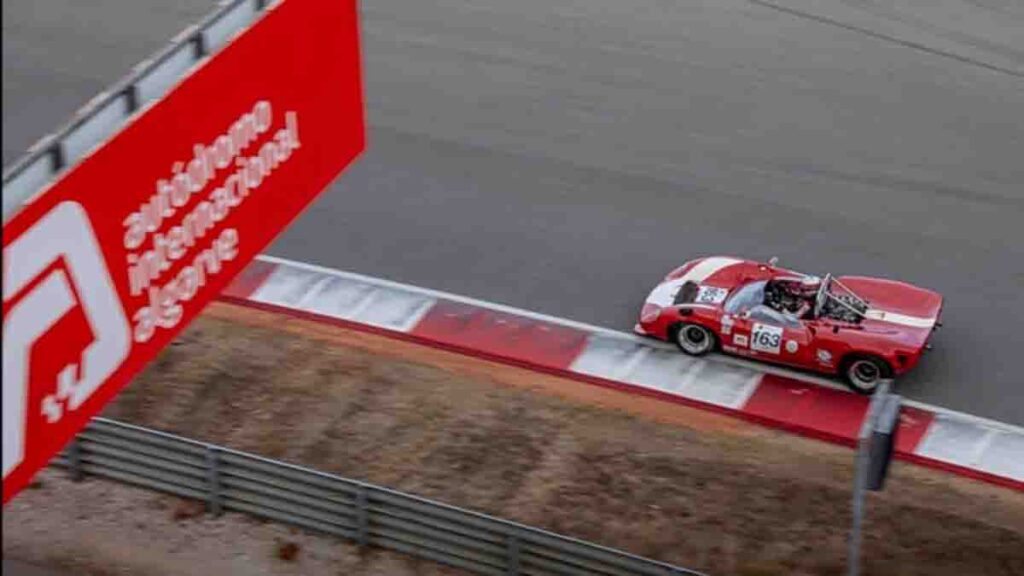
Com um fabuloso grid de 27 protótipos, GT e Turismos, a segunda edição dos 300 kms ‘Algarve Sports Cars’ promete ser o grande cartaz do Algarve Classic Festival, que leva o Autódromo Internacional do Algarve a viver, entre 30 de outubro e 1 de novembro, um fim de semana de pura adrenalina e nostalgia sobre rodas.
Será um fim de semana em que o som inconfundível dos motores clássicos voltará a ecoar pelo imponente circuito de Portimão, já que, a corrida principal do programa promete combinar espetáculo, competitividade e nostalgia.
A prova será disputada ao longo de 120 minutos, ou 300 quilómetros, incluirá paragens obrigatórias para reabastecimento e troca de pilotos, e está aberta a sportscars construídos entre 1963 e 1972, além de modelos GT e Turismos produzidos entre 1966 e 1980.
Em termos de programação, destacamos os treinos de classificação, marcados para as 16:40 hrs de sexta-feira, 30 de outubro. A grande prova, os 300 kms Algarve Sports Car, está reservada para o fim da tarde de sábado, 31 de outubro. Refira-se que a corrida chegará ao fim já depois do sol se pôr, oferecendo uma imagem inesquecível dos carros em pista, iluminados apenas pelos seus faróis, como nas grandes provas de endurance de outrora.
De lembrar, antes de mais, que a edição de 2025 foi conquistada pelos britânicos John Emberson e James Bellinger, ao volante de um Chevron B19, que superaram João Macedo Silva e José Monroy, num Lola T70 Mk3 Coupé. O terceiro lugar absoluto ficou com Joel Hopwood e Nigel Greensall, em Chevron B8, dupla que igualmente faturou a vitória na classe H-1969.
Os três carros estarão presentes na edição deste ano, com a mesma ambição e vontade de conquistar o troféu e o relógio oferecido pelo patrocinador Briston Watches ao vencedor da corrida.
Perfeita homenagem à Golden Age of Motorsport
Num grid de largada de encher os olhos, a categoria H-1972 até 2000 cc é a mais numerosa, com dez carros inscritos, e conta com forte presença dos protótipos da Chevron e da Lola, duas marcas britânicas que estão intimamente ligadas ao automobilismo nacional e do exterior.
Além do B19 dos vencedores do ano passado, John Emberson e James Bellinger, Kyle Tilley e Phil Keen pilotarão um carro idêntico, que em 2025 andou nos primeiros lugares e fez a melhor volta da corrida (1:52.225s). Alan Purbrick e David Brise, Robin Ellis e Andy Wolfe, e Paul Cope e John Sheldon, – este último piloto na época do Grupo C -, estarão ao volante de outros três exemplares inscritos.
O sexto Chevron da classe é um B21, carro com história além fronteiras, que passou por Angola e Portugal e ostenta as cores do Team BIP. Na “montanha-russa” de Portimão, o carro com o qual Carlos Gaspar alcançou o terceiro lugar da Rampa da Penha de 1972 será dividido pelo quarteto formado por Carlos Tavares, Edgar Botelho Moniz, José Forte e Frédéric da Rocha.
Se a marca fundada pelo autodidata Derek Bennett tem seis carros nessa classe, a criada pelo rival da época, Eric Broadley, tem três exemplares: dois T290, modelo que fez a pole-position em 2025, e um T212.
Nicholas Topliss e James Topliss dividem um Lola T290, enquanto Alex Collins e Martin Stretton, tricampeão da FIA Historic F1 Championship, se alinham com um carro igual. O grid fica completo com James Claridge e James Denty, ao volante do mesmo Lola T212 que competiu nas 24 Horas de Le Mans de 1971, pilotado por Guy Edwards e Roger Enever.
Mas a variedade da classe não para por aí, pois inscrito também está o Daren Mk 2 de 1970, valente máquina confiada ao volante de Georg Kjallgren. Das oficinas britânicas saíram, entre 1968 e 1972, apenas oito unidades deste protótipo, movido por um motor Cosworth FVA de 1600 cc, e dessas só dois exemplares resistiram à passagem do tempo, ambos hoje entregues aos cuidados da Triple R Restoration, de Richard Doe.
A categoria H-1972 acima de 2000 cc reúne quatro espetaculares Lola T70 inscritos no evento. Além do Mk3 Coupé com o qual João Macedo Silva dividirá desta vez com Diogo Ferrão, David Kelly e Stephen Doyle dividem um Lola T70 Mk3B, preparado pela Gary Dunlop Motorsport, enquanto Bruno Pereira, Charlie Hyett e Michel Speyer alinham com outro Mk3B, inscrito pela Pegasus Classic Engineering, que na edição passada lutou pelo triunfo até uma pane mecânica travar sua marcha.
[the_ad id="555438"]
O último T70 é ainda mais raro, pois é um Mk3B Spyder, um dos quatro originalmente construídos. Este Lola muito especial será conduzido por Marc Devis e Nick Padmore, dois pilotos com enorme experiência neste tipo de competição. Padmore é conhecido do público português pelas vitórias ao volante de Lotus no Classic GP para carros de F1 anteriores a 1986, no Estoril Classics.
Na categoria H-1969, os seis inscritos evocam uma das épocas mais marcantes das corridas de resistência. Vencedores da classe na edição passada, Joel Hopwood e Oliver Bryant compartilham o mesmo Chevron B8, enquanto Robin Tuluie fez sua estreia com seu exemplar solo. Bernard Foley e Lewis Dunlop repetem presença no Crossle 9S, pequeno protótipo nascido nas garagens de Holywood, perto de Belfast, na Irlanda do Norte, e que ficou em segundo lugar na classe.
Depois do pódio alcançado na edição anterior, Richard McAlpine e Nigel Greensall voltam a colocar na pista o McLaren M1b de 1965, protótipo movido por um V8 de 5700 cc, que Bruce McLaren concebeu para sua investida na Canadian-American Challenge Cup, a célebre Can-Am.
Que seria de uma prova dessa natureza sem um Ford GT40? Pois lá está ele na H-1969, ostentando a oval azul. Bruno Duarte e Filipe Silva Jesus, figuras habituais do Historic Endurance, estreiam ao volante de um GT40, escudados na experiência de Andy Newall. Henry e Martin Stephenson, pilotos calejados em provas de clássicos, se lançam na briga com outro GT40.
Grande Turismo / TC: Raiz e tradição
Mas nem só de protótipos vive esse grid, pois a raiz das corridas de endurance está nas batalhas de carros de diferentes classes travadas dentro da pista. Sete máquinas, sete escolas do Turismo e do Grande Turismo: é o que a classe GT/TC põe em pista, nas mãos de pilotos que as pistas ibéricas conhecem bem, tantas foram as vezes que se bateram nas provas do Iberian Historic Endurance.
Para destacar o papel dos Turismos e GT nesta apaixonante prova de resistência, a Briston Watches também oferecerá um relógio ao primeiro colocado de uma classe que, em seu tempo, sempre correu lado a lado com os protótipos.
Os francófonos Olivier Muytjens e Brice Pineau, vencedores da classe nos 300km do ano passado, alinharão com o mesmo e competitivo Porsche 911 3.0 RS, preparado pela equipe belga HY Racing, que, pelo histórico, se apresenta como o favorito natural.
Ralf Schnitzler e Patrice Campillo guiam um Datsun 240Z, que este ano correu nos 300 km de Paul Ricard. Apesar da história desse modelo nos remeter aos ralis, a realidade é que o carro japonês participou de todas grandes clássicas de resistência do planeta: Le Mans, Sebring e Daytona.
Assim como ao “Z”, a Garagem João Gomes também prestará assistência ao Porsche 924 compartilhado por António Reis e José Carvalhosa e ao 911 2.5 ST que a dupla de pai e filho, Piero e Guilherme Dal Maso, dividirá com Marco Nunes.
Para a alegria dos aficionados por carros americanos, surgirá o imponente Shelby Mustang GT350, máquina com motor de 4700 cc que o Shelby Mustang GT350R Team entregará a Ernesto Silva Vieira e António Paquete.
A fechar a lista de inscritos, os dois bólidos da Ecurie Luxembourg: um BMW 2002, nas mãos de Michel Welter e Felix Feltes, e um Alfa Romeo GT Am, confiado a Patrick Wilwert e Philippe Vermast, os vencedores da subclasse H-1965 GR2 nas 3 Horas de Spa do Historic Endurance em abril.
Como assistir ao espetáculo
Importa salientar que durante o fim de semana, o Algarve Classic Festival convida o público a uma viagem pela história do automobilismo, reunindo máquinas de várias épocas em um ambiente de saudade e ao som inconfundível dos motores de outros tempos.
A entrada é gratuita dos 3 aos 16 anos. Os ingressos estão à venda no site oficial do evento, em algarveclassicfestival.org , em várias modalidades à escolha: o ingresso «Bancada Principal» dá direito à bancada principal; o «Paddock» abrange, além desta, o acesso ao paddock; e o ingresso «Torre VIP» também franqueia as portas da Torre VIP, com entrada no paddock e na arquibancada principal.
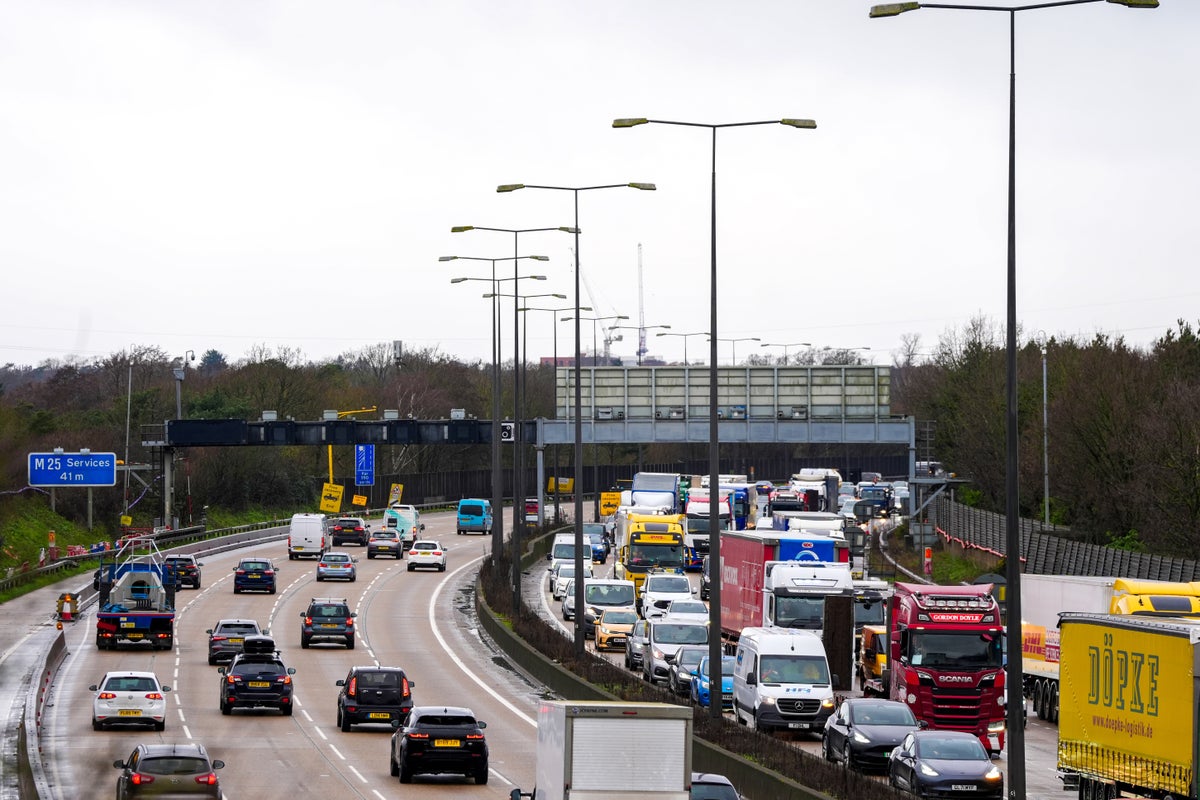
A quarter of van drivers surveyed have turned down work because of unpredictable M25 journeys, but the motorway’s unlikely attractions have also drawn paying sightseers

 Login