❌

Reading view

“The enemy has changed tactics”: Zaporizhzhia faces record number of Russian FPV drone attacks, hitting public transport 3 times in one day

Municipal bus in Zaporizhzhia hit by a Russian FPV drone, 29 October 2026. Photo: Zaporizhzhia Regional Prosecutor’s Office

Zaporizhzhia experienced a record number of Russian FPV drone attacks on 29 October, injuring 14 people, including a 14-year-old boy, regional authorities said.

Russian forces used FPV drones and multiple-launch rocket systems to attack civilian infrastructure, targeting municipal transport and damaging residential buildings, warehouses, and cars, prosecutors said.

Zaporizhzhia reports record FPV drone attacks

Zaporizhzhia Regional Military Administration head Mykhailo Semikin said Zaporizhzhia had experienced a record number of FPV drone attacks on Thursday. After meeting with military officials, he said the authorities were aware of the situation and relevant services and Ukrainian defenders were responding.

He said Russian forces had “changed their tactics and modified their drones,” adding that Ukrainian military personnel were working on countermeasures to address the new threats.

Semikin urged residents to remain calm, heed air raid alerts, and exercise particular caution.

Russian forces launched a record number of FPV drone attacks on Zaporizhzhia on 29 October, repeatedly targeting civilian public transport.

Drones struck a municipal bus, a minibus, and a trolleybus. Four people were injured in the bus attack alone. Across the city, at least 14… pic.twitter.com/WfemZSh7yr

— Euromaidan Press (@EuromaidanPress) October 29, 2026

Russian drones target municipal transport

The attacks included strikes on a municipal bus, a minibus, and a trolleybus, according to Semikin.

In the morning, a Russian FPV drone struck a municipal bus, injuring four people.

In a separate attack, Russian forces struck 15 vehicles, a warehouse building, and a power line, sparking a fire and damaging a nearby apartment building. Two men, aged 41 and 66, were injured.

At around midday, another FPV drone hit a minibus in central Zaporizhzhia, injuring one person. 

Later, a Russian drone struck a municipal trolleybus, critically injuring a 56-year-old woman and lightly injuring two other women, aged 71 and 66.

Russian attacks on Zaporizhzhia injured two men, aged 41 and 66.

The strikes set four cars and an open area on fire, damaged a warehouse, and damaged four cars and four buses.

📷Ukraine’s State Emergency Service pic.twitter.com/oqRfYvMa7T

— Euromaidan Press (@EuromaidanPress) October 29, 2026

Zaporizhzhia’s proximity to the front line

Zaporizhzhia lies relatively close to the front line in southern Ukraine, leaving the city exposed to Russian attacks with weapons that can be used at shorter ranges, including FPV drones and multiple-launch rocket systems. 

The proximity allows Russian forces to threaten civilian infrastructure more easily without relying solely on long-range missiles or drones.

Prosecutors investigate suspected war crime

The Zaporizhzhia Regional Prosecutor’s Office said it had opened a war crimes investigation. Investigators from the Security Service of Ukraine’s regional directorate are conducting the pretrial investigation.

The casualty count and damage reports were preliminary, and authorities said information was still being updated as the attacks continued.

Russian attacks kill civilians in several Ukrainian cities

Zaporizhzhia was not the only major city hit by Russian attacks on 29 October. In Dnipro, a Russian strike on the railway station killed at least 14 people. 

In Chernihiv, two teenage girls were killed and 23 people injured, including four children. In Kremenchuk, Poltava Oblast, three people were killed and 15 injured, including three children. 

The attacks damaged residential buildings and civilian infrastructure in all three cities.

  •  

Demining complete, humanitarian convoy ready: Oleshky mission advances as ceasefire holds and Lubinets heads to occupied city

Ukraine’s Human Rights Commissioner Dmytro Lubinets. Photo: Dmytro Lubinets

Ukraine’s humanitarian mission to Russian-occupied Oleshky in Kherson Oblast has reached a key stage, with mine clearance along designated routes completed and a humanitarian convoy ready to depart, Ukraine’s Human Rights Commissioner Dmytro Lubinets said on 29 October.

The mission aims to deliver humanitarian aid to civilians trapped in the occupied city facing humanitarian crisis, and provide a safe way out for those who want to leave. The operation is taking place under a localized ceasefire coordinated with the help of US First Lady Melania Trump.

Lubinets said the ceasefire has held for 54 hours without reported violations.

Aid convoy prepared, civilian evacuations planned

Lubinets said the humanitarian convoy was ready to leave and was expected to reach Oleshky’s central hospital. Residents would receive the assistance they need, he said.

Civilians wishing to leave the city would have an opportunity to do so until 2 p.m. local time, with security measures organized for their departure. Distribution of humanitarian aid was scheduled to begin after 2:30 p.m.

Delegations from Ukraine, Russia, and the United States had gathered to coordinate the next steps in the mission. Journalists from all three countries were also present, Lubinets said.

Lubinets travels to occupied Oleshky

Earlier on 29 October, Lubinets said he was still traveling toward Oleshky.

He said he wanted to be on the ground to see the situation firsthand and report on the mission’s progress. Lubinets also asked the public to rely on official sources and wait until he returned before raising further questions about the negotiations.

The Ukrainian ombudsman said the negotiations had been difficult and lengthy, adding that the mission had reached only the halfway point toward its goals.

“If I had to go for the sake of one person, I would go again,” Lubinets said, describing the mission as his duty to help Ukrainians in need.

US-mediated ceasefire enables humanitarian operation

The mission is being conducted jointly by Lubinets and Russian human rights commissioner Yana Lantratova, with mediation and coordination by Melania Trump.

The localized ceasefire took effect on 27 October to allow mine clearance, humanitarian deliveries, and civilian evacuations. 

Oleshky, on the east bank of the Dnipro River in Kherson Oblast, has been under Russian occupation since 2022. Russian occupation and restrictions on access to the city have left civilians facing severe shortages of food, medicine, and other essential supplies, while access to medical care has become increasingly difficult. The humanitarian mission aims to deliver urgently needed aid and help residents who want to leave reach safety.

Oleshky, Kherson Oblast, has been under Russian occupation since 2022, following Russia’s capture of the city during the initial phase of its full-scale invasion of Ukraine.
Explore further

Thousands are starving in occupied Oleshky. People have no food, no way out, and Russian forces bomb incoming aid

Lubinets thanked Melania Trump and the Ukrainians and US citizens who helped bring attention to the situation in Oleshky and support the negotiations. He said the mission’s priority remained delivering assistance and helping civilians leave safely.

  •  

Russia’s October losses hit record high of 49,040 with three days left, Ukraine says

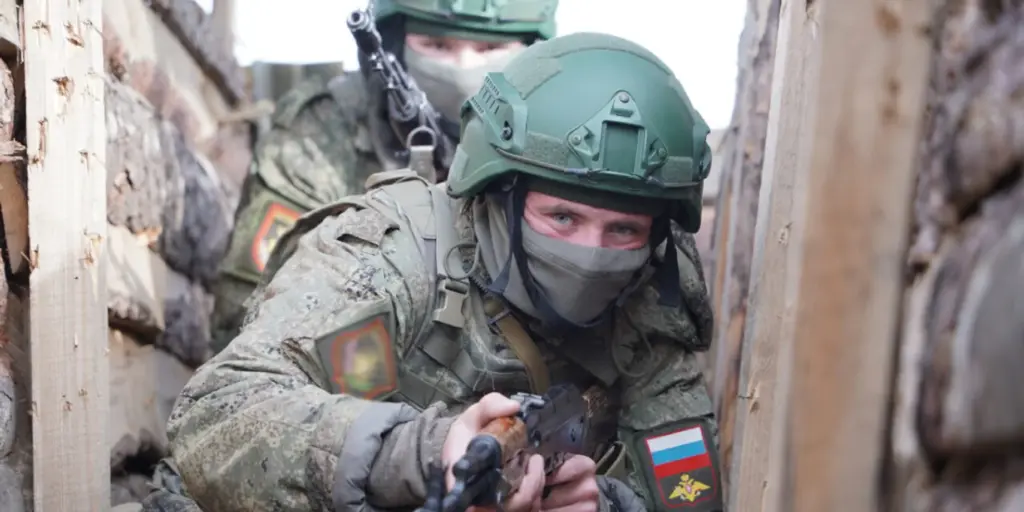
Russian Armed Forces assault troops, illustrative photo. Photo: Russian Ministry of Defense

Ukraine’s Defense Forces inflicted an estimated 49,040 personnel losses on Russian forces in October as of 29 October, setting a new monthly record since Russia launched its full-scale invasion, Ukraine’s General Staff said.

The figure points to the growing human cost of Russia’s war against Ukraine. Ukraine’s military says Russian losses are rising faster than Moscow can replenish its units, making it increasingly costly for Russia to sustain its offensive operations.

October losses surpass previous record

The previous monthly record was set in December 2024, when Russian forces suffered an estimated 48,670 personnel losses, according to the General Staff.

October’s total had already surpassed that figure by 370 personnel as of 29 October, with three days remaining in the month.

The General Staff reported an average of about 1,750 Russian personnel losses per day in October so far.

Russian losses rise sharply in 2026

Ukraine’s General Staff reported 26,090 Russian personnel losses in February 2026, followed by 46,230 in September. By 29 October, the October figure had reached 49,040.

The figures indicate a sharp increase in reported Russian losses over the past several months.

A drone operated by Ukraine’s ALASTOR special unit, part of the 25th Separate Airborne Brigade, strikes two Russian soldiers hiding inside the wreckage of military equipment in Pokrovsk. Donetsk Oblast, January 2025. Source: Sternenko.
Explore further

Russia now loses more soldiers than it recruits. But the war won’t end because of that.

Ukraine says losses exceed Russia’s ability to replenish units

The General Staff said the pace of Russian personnel losses exceeds Russia’s ability to replenish its military units. According to the Ukrainian military, the rising toll makes each month of the war increasingly costly for Moscow.

The figures refer to total personnel losses and do not distinguish between those killed and wounded. They are estimates published by Ukraine’s military and could not be independently verified.

Ukraine’s Defense Forces said they would continue inflicting losses on Russian forces until Russia’s armed aggression against Ukraine ends.

  •  

Ukraine finds Russia’s Geran drones fitted with a compass that works through GPS jamming, but Western electronics still at their core

magnetometers in geran

Russia has started installing magnetometers in the tails or tail fins of its Geran attack drones, Vladyslav Vlasiuk, the Ukrainian president’s commissioner for sanctions policy, said on Facebook on 28 October.

Russia uses its Shahed-Geran series drones in massive daily attacks on Ukraine. Ukrainian forces jam Gerans’ satellite navigation to push them off course, and Russia keeps hardening the drones against it, already fitting them with adaptive antennas. The magnetometer appears designed to go further, giving the drone a heading that doesn’t depend on satellites at all. Earlier this month, Ukrainian military intelligence reported a US-made magnetometer in the upgraded Geran-4.

A new jamming device, and Western parts at the core

Vlasiuk posted photos from a site where Ukraine studies Russian weapons and their components. He said he takes the findings for Ukraine’s sanctions work. He did not say which Geran models carry the magnetometer.

Ukrainian specialists study electronics taken from Russian weapons
Ukrainian specialists study electronics from Russian weapons. Photo: Vladyslav Vlasiuk/Facebook

At the same time, Ukraine is studying how a new jamming device works. Vlasiuk did not say where it was found or what it targets.

“Western electronics are at the core everywhere,” Vlasiuk wrote.

Geran-4 already flew with a US-made sensor

On 5 October, Ukraine’s Defense Intelligence (HUR) said the upgraded Geran-4 carries a new “MOKh” unit built around a PNI5GA magnetometer made by US firm PNI Sensor. The unit works with the SADRA inertial navigation module to cut gyroscope drift and make the drone’s autonomous navigation more accurate.

HUR said Russia also added an electro-optical navigation system called Susanin to the upgraded Geran-4. It compares camera images with a reference image stored in memory to keep the drone on its route to the target. The new K5 version of the Geran-5 uses a similar system.

Presidential adviser Serhii “Flash” Beskrestnov warned on 28 October that if Russia starts using Susanin en masse on Geran-5s and other drones and missiles at night, Ukraine may have to go back to switching off lights, especially on roads.

  •  

Russia may use the Oleshky truce to rebuild its forces, ISW warns, as evacuees face a route through Russia and Belarus

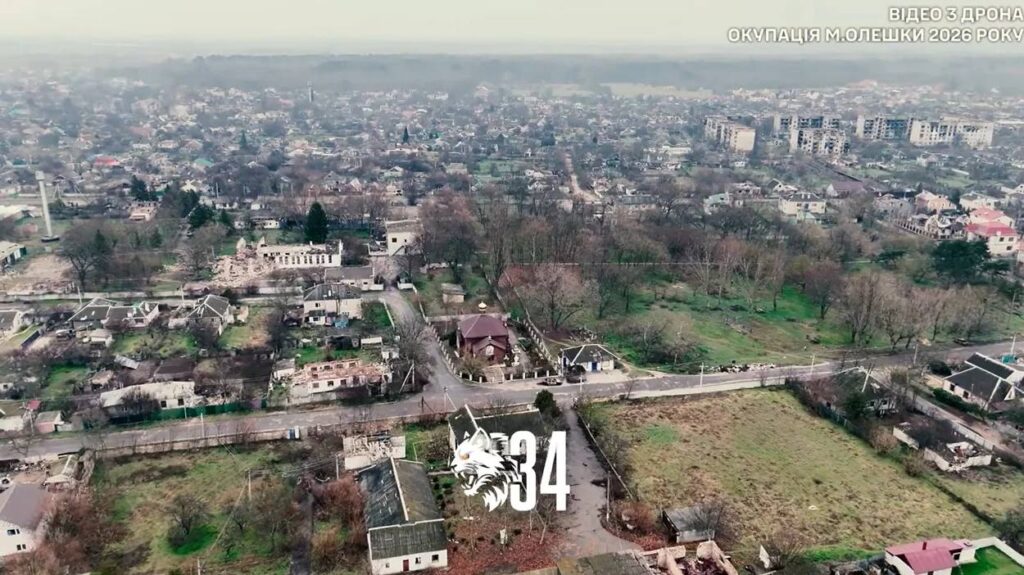
Aerial view of Russian-occupied Oleshky, in Ukraine's Kherson Oblast. Photo via ArmyInform

Oleshky residents who choose Ukraine are to be taken through Russia and flown to Belarus, and the ceasefire agreement does not say how they will get from there to Ukrainian-held territory, the Institute for the Study of War (ISW) noted on 28 October. ISW also warned that Russia may use the truce to rebuild its forces in Kherson Oblast.

Oleshky, a town across the Dnipro from Kherson, has been occupied by Russia since February 2022, and about 2,000 people remain there, short of food and medicine. A US-brokered truce took hold on 27 October so aid can go in and residents can leave. The mission will show whether Russia lets those who choose Ukraine actually get home.

Anapa, Homiel, and then?

Pages of the agreement, signed on 23 October by Ukraine’s human rights commissioner Dmytro Lubinets and his Russian counterpart Yana Lantratova, were published by Fox News. They send the Ukrainian delegation and residents who want to go to Ukraine from Oleshky to the airport in Russia’s Anapa. From there, a Russian Defense Ministry military transport plane is to fly them to Homiel in Belarus, with the flight expected on 31 October.

Map of the Oleshky evacuees’ planned route set out in the ceasefire agreement, via Anapa in Russia to Homiel in Belarus, and a possible onward route through Poland to Ukraine, October 2026
Map of the Oleshky evacuees’ planned route set out in the ceasefire agreement, via Anapa in Russia to Homiel in Belarus, and a possible onward route through Poland to Ukraine, October 2026. Map: EP/Datawrapper

The delegation includes Lubinets, two of his staff, and two Ukrainian journalists, accompanied by a representative of the Russian ombudsman’s office and of the group coordinating the mission. Russia’s Dnepr Grouping of Forces, which holds the left bank of the Dnipro, provides the escort. ISW pointed out that the pages do not explain how evacuees travel on from Belarus, and that it remains unclear whether Russia will give residents “a legitimate and duress-free choice” to return to Ukraine.

Oleshky, Kherson Oblast, has been under Russian occupation since 2022, following Russia’s capture of the city during the initial phase of its full-scale invasion of Ukraine.
Explore further

Ceasefire planned for occupied Oleshky as residents face starvation and blocked escape routes, White House announces

A route through Russia may also mean so-called filtration. People leaving occupied Mariupol in 2022 had to pass Russian screening, and many who hoped to reach Ukrainian-controlled territory were taken to Russia instead, Human Rights Watch documented. In Washington, the Congressional Ukraine Caucus welcomed the ceasefire but raised alarm over reports that Russia was keeping Oleshky residents from evacuating to Ukrainian-controlled territory, RFE/RL reported.

Map showing Kherson across the Dnipro from Russian-occupied Oleshky, with the front line as of 28 October 2026
Kherson lies just across the Dnipro from Russian-occupied Oleshky, yet residents who choose Ukraine are to be routed through Russia and Belarus. Russia has forcibly deported Ukrainians from occupied areas throughout the war, and it is unclear how many evacuees will eventually reach Ukrainian-controlled territory. Map: EP. Front line: DeepStateMap, 28 October 2026. Imagery: Google

On 29 October, the Ukrainian delegation led by Lubinets arrived in Belarus, and the two delegations held their first in-person meeting at Homiel airport, Belarus’s state agency BelTA reported. Belarus has also joined the operation, BelTA said. Lubinets confirmed the same day that he had set off for Oleshky with the delegation to deliver aid and work on making sure people can leave safely.

A page of the Oleshky ceasefire agreement setting out the evacuees’ route via Anapa and Homiel (Gomel)
A page of the Oleshky ceasefire agreement setting out the evacuees’ route via Anapa and Homiel, signed on 23 October 2026. Photo: provided to Fox News Digital

Aid due on 30 October

The truce has held for 54 hours without violations, Lubinets said on 29 October. Routes are being demined, and an aid cargo is to reach Oleshky on 30 October, he added. The truce is set to last until 22:59 on 1 November. Across the river, the Kherson Oblast administration recorded no shelling and no civilian casualties over the past day.

A municipal worker trims a flowerbed on Kherson’s central square, with the damaged Kherson Oblast administration building behind him
A municipal worker trims a flowerbed on Kherson’s central square during the ceasefire, 28 October 2026. Behind him is the Kherson Oblast administration building, wrecked by repeated Russian strikes, including guided bombs in June 2025. Photo: Dmytro Lubinets/Telegram

Lantratova wrote that aid had been sent, saying residents need “food, fuel, medicine, hygiene products,” and that they would be able to leave wherever they wanted to go. Kremlin spokesman Dmitry Peskov said Russia expected residents to get aid within a day or two and those who wished to leave to be able to do so, Ukrainska Pravda reported.

US First Lady Melania Trump, who brokered the truce, announced that four Newsmax journalists will work in Oleshky alongside the Russian and Ukrainian humanitarian teams. Her post quoted Putin’s envoy Kirill Dmitriev, who wrote that Russia “welcomes” the Newsmax journalists, rather than any Ukrainian official:

DOCUMENTING OLESHKY
Four American journalists from Newsmax will be on the ground in Oleshky, embedded with Russian and Ukrainian humanitarian leaders.

Serving as neutral observers, they will independently record and permanently document this historic humanitarian mission. https://t.co/orfhcC8URs

— First Lady Melania Trump (@FLOTUS) October 28, 2026

A pause Russia may use

On the truce’s first day, Russian Defense Minister Andrei Belousov inspected the Dnepr Grouping and met its commander, Colonel General Mikhail Teplinsky. The ministry said they discussed drone units. Ukrainian serviceman and analyst Volodymyr Molchanov told Radio NV that intelligence shows Russia rapidly reinforcing its forces in Oleshky, bringing in what Ukrainian drones had kept out.

Russian forces may use the limited ceasefire to reconstitute in Kherson Oblast, ISW assessed.

  •  

Perez brings F1 to Mexico City streets before home milestone

Sergio Perez turned one of Mexico City’s grandest avenues into a celebration of national pride as fans packed Paseo de la Reforma ahead of the Mexican driver’s 300th Grand Prix start this weekend.

An estimated 100,000 people gathered for the Cadillac driver’s showrun, his fourth in Mexico during his Formula One career.

Mexican flags lined the avenue along with giant images of the 36-year-old as Perez drove the Formula Two adapted car, performed tyre-smoking doughnuts and stopped near the Angel of Independence monument to greet fans.

“I know some of you were here since last night. I really appreciate it,” Perez told the crowd. “You guys are one of the main reasons I came back to Formula One.

“Thank you for all the unforgettable moments,” he added.

Perez, a six-times Grand Prix winner, returned to the grid this year with Cadillac and the team announced earlier on Wednesday that the Mexican driver had signed a multi-year contract extension until 2029.

For fans priced out of the Grand Prix or unable to secure tickets before they sold out, the free street event offered a chance to share in the spectacle.

Twenty-year-old Sebastian Perez, no relation to the driver, came dressed in a homemade replica race suit and helmet that he said cost almost 3,000 Mexican pesos ($161.26).

“I’m not going (to the race). To be honest, I couldn’t get a ticket but I would have liked to. I feel the prices are a little high; not everyone can afford to go. But also, because there are so many fans now, it sells out really quickly.”

A Perez fan for nearly three years, Sebastian said his namesake’s resilience had made him a hero.

“I started following him when he was still at Red Bull, and then I got to see his retirement and then his return,” he said. “I really like him because he has always shown that he doesn’t give up — that ‘never give up’ attitude.”

Virginia Cano, 62, who said she had followed Perez for around a decade, praised his impact beyond the track.

“It brings me joy, knowing that he is a world-class competitor — not just a national one, but a global one — and an excellent person,” she said. “Also handsome.

“As Mexicans, having someone in racing who has gone so far. It’s wonderful.”

While families and fans of all ages pressed against barriers for a glimpse of the hometown hero, children sat on their parents’ shoulders and some even climbed up trees or over monuments.

Perez signed autographs and posed for photographs before getting into a classic Cadillac convertible to wave to the crowd.

His team mate Valtteri Bottas was also invited, although the Finn did not drive, he drew cheers with an enthusiastic message in Spanish: “Amo los tacos, amo Mexico”.

  •  

A Russian disinformation campaign cloned Euromaidan Press to blame Ukraine for Russia’s own strike on Kramatorsk (we took the fake down)

A screenshot of the fake Euromaidan-press website that is supposedly part of the Russian disinformation Storm 1516 operation. Collage by Euromaidan Press

Euromaidan Press has been impersonated as part of a Russian disinformation campaign. A copycat website was created, with a hyphen added to our name, which published a fabricated article alleging a Ukrainian drone had killed civilians in Kramatorsk that cites anonymous "Ukrainian OSINT channels" amid copies of our real news reports. In reality, that 8 October strike was a Russian aerial bombing of two public buses that killed 33 civilians.

The fabrication is part of a years-long Russian disinformation campaign to impersonate and clone trusted news brands, predominantly in Europe, and publish false reports under their names. The disinformation research project Gnida tied our case to Storm-1516, one of several overlapping Russian operations, alongside the older Doppelganger, and NewsGuard, which reached out to us while preparing its own debunk, attributes the fake to the same operation. The fabricated Kramatorsk report comes amid an ongoing effort to erode Western support for Ukraine, as Russia's war goes on, and to sow distrust among Western political elites.

The claim and the actual 8 October attack

The fake started circulating on 24 October, one day after the forged publication appeared on our website. It started making rounds on X together with a forged video with a version of our logo claiming that "newly obtained footage" featured the remains of a Liutyi drone that "independent OSINT channels" claimed were "quickly removed from the scene." No specific OSINT channels were named; no sources were linked.

The forged video, apparently produced with AI, and the link were spread by X accounts such as @vick55top, @indiaTales7, @TheWorld_Update, @Wonder_star21, @Theunk5555, @SilentBriefHQ1, and @Suriyakmaps, where it was subsequently removed. The videos on those accounts averaged 400,000 to 500,000 views, far more than the accounts' modest follower counts and their usual engagement would produce, a likely sign of inauthentic amplification.

On 25 October, the Russian disinformation monitor Gnida Project flagged this as a case of the Storm-1516 disinformation campaign. Other recent cases flagged by Gnida included advertisements of Russian Geran drones, claims of the Shamonda virus being leaked from a "Ukrainian biolab," smears against US Democratic candidates, and a fake on a similar copycat "toronto-sun.ca" website alleging that President Zelenskyy purchased a nuclear bunker in Nova Scotia.

The latest Storm-1516 disinformation campaign is targeting Ukraine. The campaign promotes a false narrative that a deadly strike in the Ukrainian city Kramatorsk was performed by a Ukrainian drone based on a fake "Ukrainian OSINT investigation" pic.twitter.com/Klpm9UVCf2

— gnida project (@gnidaproject) October 25, 2026

As for the actual content of the fake, the real event is one of the most thoroughly documented atrocities of the month. On 8 October 2026, Russian forces struck two public buses in Kramatorsk with an aerial bomb, killing 33 people and wounding about 18. Such attacks are, sadly, a daily occurrence in cities on the frontline. There was no Ukrainian drone and no removed wreckage. The fabrication simply reassigns a Russian mass killing of civilians to its victim, which is the entire point.

The fake site was not a single page. It scraped our entire website, mirroring our genuine articles, and injected the fabricated one among them, so the lie traveled under the credibility of real reporting. The look-alike domain was registered on 15 October, eight days before the fake appeared, according to who.is data.

Storm-1516

Gnida Project identified the fake as part of Storm-1516, a Russian influence operation that clones trusted news brands to spread fabricated stories, and NewsGuard, which contacted us about the impersonation, attributes it to the same operation. NewsGuard has documented the tactic generating some 900 false reports over three years; the same operation has targeted France and Germany and has recently impersonated other outlets, including in Ukraine, such as this fake report on a copycat website pretending to be the New Voice of Ukraine.

Storm-1516 is one of several overlapping Russian operations that impersonate real media. Since 2022, the Doppelganger network has cloned whole Western outlets and government sites, and it is still active, flooding France with more than 200 fake sites before its 2026 elections. Polish fact-checkers literally call the tactic “attack of the clones.” A second operation, Matryoshka, floods social media with cheap fake videos credited to real outlets. Storm-1516, first identified in late 2023 and later named by Microsoft, grew out of Russia's Prigozhin-era troll operations, is the most elaborate of the three, and has overtaken RT and Sputnik as Russia's main disinformation machine. Its attacks combine cloned websites and fake videos.

NewsGuard counts some 906 fabricated reports impersonating 163 outlets from 21 countries since 2023, Euronews, the BBC, Deutsche Welle, and France 24 most of all, as well as the Kyiv Independent. The fakes nearly all bend one way, to erode Western support for Ukraine. Some smear Ukraine's leaders, a fabricated story that 20,000 Ukrainian soldiers evacuated to France had deserted into criminal gangs, invented claims that first lady Olena Zelenska fled abroad. Others, like the one aimed at us, flip Russian actions onto Ukraine. A separate Storm-1516 fabrication, a false claim that Ukrainian officials bought yachts with misappropriated US aid, was repeated in 2023 by JD Vance, then a US senator.

We filed a copyright and abuse complaint with the host, Namecheap, and a phishing report with Cloudflare, and pressed the registrar. The complaints worked: the clone has been taken down.

How to take down a cloned news site

Impersonation is cheap to set up, and any outlet can be next, so here is the procedure our technical team used, which other newsrooms can follow to take a clone down quickly.

  1. Cut the scraping pipeline. Run a DNS lookup (ping, nslookup, or dnschecker.org) on the cloned domain to expose the hosting IP behind any basic masking, then add a custom block rule in your Cloudflare WAF (Security, WAF, Custom Rules) targeting that IP, which cuts off the scraping scripts in real time. Watch the WAF logs over the next 48 hours in case the attackers rotate to new scraping proxies.
  2. Unmask the infrastructure and send formal notices. Run an IP WHOIS lookup (ipinfo.io) to identify the host, for example Namecheap or DigitalOcean, and the registrar, then submit DMCA takedown and phishing notices to the host's legal portal or abuse address. Include side-by-side URL comparisons of the original and cloned pages, clear documentation of the brand spoofing and the injected disinformation, and a good-faith legal statement with full contact details.
  3. Block access and de-index from search. Report the clone to Google Safe Browsing under social engineering and impersonation, which, once verified in 24 to 48 hours, makes Chrome, Firefox, and Safari show a full-page red warning to anyone who tries to open it. Then file a Google Search Console DMCA removal request to pull the cloned URLs out of search results.
  4. Escalate to the registrar. Submit a registrar abuse complaint demanding a full suspension of the domain, a ClientHold status, on the grounds of bad-faith typosquatting and identity theft, and push your open abuse ticket IDs through your Cloudflare account to skip the standard queue.

Be sure to read the automated replies from the host and Cloudflare and answer them promptly. Those acknowledgments often ask for specific additional information, and a fast, complete reply keeps the ticket moving instead of stalling in a queue.

How to spot Russian Storm-1516 attacks

Many users on X called out the signs: a look-alike domain (our only website is euromaidanpress.com, with no hyphen), a claim sourced to unnamed "OSINT channels," and a story that reassigns a Russian attack to Ukraine.

We never publish an image or video without crediting its source, and we never cite anonymous OSINT experts: our reporting traces to a first source. Trust only reports that name the first source of a claim and label the origin of their images and video. If you cannot trace the source, you cannot trust the report.

  •  
❌