❌

Reading view

From Brussels to Belgrade: Europe’s Generation Z Protests Challenge Established Politics

Youth-led demonstrations across Europe are bringing together concerns about housing, education, employment and political accountability. Although the movements differ considerably between countries, their emergence reflects growing dissatisfaction among younger Europeans over economic prospects and their influence on political decisions.

A series of demonstrations involving young people across Europe has developed into a wider political phenomenon, as students and younger workers challenge governments over living costs, public services and their expectations for the future.

Protests have taken place in France, Belgium, Italy, Albania and several other countries, while a student-led movement in Serbia has achieved a particularly consequential political outcome.

In Serbia, nearly two years of demonstrations culminated in a parliamentary election victory for a student-backed political movement, ending the electoral dominance of President Aleksandar Vučić’s Serbian Progressive Party.

The outcome, reported by Reuters on 29 October, has given the movement a prospective parliamentary majority, although final certification of the election results remains outstanding.

Elsewhere, protesters have secured fewer immediate political concessions.

Nevertheless, their campaigns share a recurring concern: that conventional channels of political representation have failed to address problems affecting younger generations.

Economic Pressures Behind the Demonstrations

The grievances vary between countries, but housing affordability, insecure employment, education funding and living costs feature prominently.

A European Parliament youth survey published in February 2025 found that 40 per cent of respondents aged 16 to 30 considered rising prices and the cost of living a priority for the EU.

Almost one-third identified economic conditions and job creation as a principal concern, while education also ranked prominently.

More recent figures illustrate the financial pressures confronting younger Europeans.

According to Eurostat data published in June 2026, 24.2 per cent of EU residents aged 15 to 29 were at risk of poverty or social exclusion in 2025.

That compares with 20.9 per cent for the population as a whole.

These figures do not establish that economic hardship is the cause of every protest. They do, however, provide context for the dissatisfaction expressed by participants.

Belgium’s Students Demand Better Education

In Brussels, demonstrations have focused partly on the condition of schools and the availability of educational resources.

Students have criticised deteriorating facilities, shortages of teachers and government decisions affecting education funding.

Nineteen-year-old student Maya Gourdel told Reuters that peaceful attempts to draw attention to these concerns had attracted little response from political leaders.

Her account reflects a wider frustration among demonstrators who believe that public attention has increased only after protests became more disruptive.

Belgium’s education system is organised primarily at community level, meaning decisions concerning funding, staffing and school infrastructure are divided among different authorities.

The demands of protesters consequently involve both national political debates and decisions taken by regional and community institutions.

France and Italy Face Wider Social Unrest

In France, demonstrations concerning the cost of living and public services have involved students alongside trade unions and other organisations.

Recent protests have also been accompanied by violence, including attacks on commercial premises and confrontations with police.

The involvement of younger demonstrators does not mean that every participant supports violent tactics.

Rather, the events illustrate how movements with economic and political grievances can encompass groups with different objectives and methods.

Italy has experienced similar tensions, particularly in Milan, where demonstrations against rising living costs have followed earlier episodes of unrest.

The Italian government has faced pressure over household expenditure, wages and the affordability of essential services.

These disputes have developed against a background of high energy prices and concerns about the broader economic outlook.

Albania’s Frustration With Political Institutions

In Albania, student-led protests have challenged Prime Minister Edi Rama’s government over alleged corruption, limited employment opportunities and education standards.

Demonstrations that began in Tirana have spread to other cities.

On 29 October, opposition lawmakers disrupted proceedings in parliament following weeks of protests and confrontations between demonstrators and police.

The government has offered measures intended to address economic concerns while condemning violence associated with the demonstrations.

For many younger Albanians, employment prospects are closely connected to the possibility of emigrating.

The perception that professional opportunities depend on political connections or personal networks has become another source of dissatisfaction.

However, the Albanian movement cannot be treated as identical to protests in EU member states, given the country’s different economic conditions and political institutions.

Serbia Shows the Political Potential of Student Movements

Serbia provides the most substantial example of youth-led protest translating into electoral change.

The movement emerged after the collapse of a railway station canopy in Novi Sad in November 2024, which killed 16 people and prompted allegations of corruption and negligence.

Students organised prolonged demonstrations demanding accountability and institutional reform.

Their campaign subsequently developed into an electoral challenge to the governing Serbian Progressive Party.

Preliminary results from the October 2026 parliamentary election indicate that the student-backed list has secured a majority of seats.

However, electoral certification and the formation of a new government remain incomplete.

The movement now faces a different challenge: converting protest demands into administrative decisions, legislation and economic policy.

Its success will be judged not only by the election result but also by its ability to govern.

A Generational Shift, But Not a Single Movement

It would be misleading to describe Europe’s demonstrations as a unified political campaign.

Participants have different objectives, national circumstances and ideological positions.

Some demand increased public expenditure, while others concentrate on corruption, political accountability or employment opportunities.

What connects them is a recurring concern about whether established institutions respond adequately to younger citizens.

The political consequences will depend on whether demonstrations produce lasting organisations, influence elections or secure changes in government policy.

Serbia suggests that student mobilisation can translate into substantial political change.

For governments elsewhere in Europe, the question is whether the grievances driving these movements can be addressed through existing political institutions before dissatisfaction generates further unrest.

  •  

“It was worse than an earthquake,” says young Greek survivor of the trains collision in Spain

“It was worse than an earthquake,” says 21-year-old Greek man who survived the fatal collision of the two high speed trains in Spain. “The impact caught us while we were standing; we were traveling at 170 kilometers per hour, and we all fell onto one another,” Marios recalled speaking to Mega TV Live News magazine. […]

The post “It was worse than an earthquake,” says young Greek survivor of the trains collision in Spain appeared first on Keep Talking Greece.

  •  

Emergency stockpiles are a luxury that not everyone can afford | Letters

Keira Callaghan says being prepared should be a public health measure, not a privilege, and Chris Rotheram is experiencing prescription anxiety. Plus five more letters in response to the Be Ready campaign

The Be Ready campaign may offer sensible advice in principle (Every Briton should stockpile water and food supplies, government advises, 22 October), but as a midwife working in Tower Hamlets, one of the poorest boroughs in London, I can see first-hand that its practical recommendations risk excluding precisely those families who are already most vulnerable.

For families living in a single room in a shared house, storing nine litres of water per person alongside three days’ worth of essential supplies may simply be unrealistic. When families are already struggling with the cost of food, heating and everyday necessities, buying additional emergency provisions may also be financially impossible.

Continue reading...

© Photograph: pundapanda/Getty Images

© Photograph: pundapanda/Getty Images

© Photograph: pundapanda/Getty Images

  •  

South Pelion: Heavy rainfall and flash floods cause extensive destruction

Heavy rainfall and flash floods in South Pelion, Central Greece, on Wednesday evening caused extensive destruction in infrastructure, brought bridges and roads down, flooded homes and businesses and set human and animal lives at risk. Video: Flood in Platanias Several villages and settlements were cut off electricity and water and communications. Residents and business owners […]

The post South Pelion: Heavy rainfall and flash floods cause extensive destruction appeared first on Keep Talking Greece.

  •  

U.S. Air Force veteran and two dogs reunite in California after two-month separation

When a U.S. Air Force veteran named Joshua returned from Afghanistan, the silence of civilian life in Louisiana felt less like peace and more like isolation. The transition was marked by intrusive memories and a sense of detachment from the world around him. In that quiet, the only constant presence was two dogs, Momma and Panda. Their routines did not merely distract Joshua; they provided a predictable structure that anchored him to the present moment. The Weight of Separation The emotional bond became the focus of attention when Joshua decided to move from Louisiana to California. Logistics required a temporary separation, but for the animals, the absence of their owner triggered a measurable decline in their well-being. Momma and Panda stopped eating and lost weight. This reaction is not a sentimental interpretation of the dogs' feelings but a physiological response to the removal of a core social figure. Dogs are pack animals by evolutionary design. For them, the primary human is not just a provider of food, but a social anchor. When that anchor disappears for an extended period, the resulting stress manifests in concrete physical signs, such as anorexia and lethargy. The dogs' behavior separated the owner's emotional struggle from the biological reality of the animals: their distress was a direct consequence of the broken routine, not a reflection of Joshua's internal trauma, though both parties suffered from the same void.

  •  

Ferries, ships docked at 7 Greek ports due to 24h strike, Oct 30

Ferries and ships will be docked at seven ports across Greece for 24 hours on Friday, October 30, 2026, as seafarers in the country will join an international strike action by seafarers in several countries around the world. Ships are set to remain docked at the ports of Piraeus, Rafina, Lavrio, Patras, Igoumenitsa, Elefsina, and […]

The post Ferries, ships docked at 7 Greek ports due to 24h strike, Oct 30 appeared first on Keep Talking Greece.

  •  

Os negros da casa de Soros

Coalizão Negra por Direitos, financiada por Soros, elege 16 deputados federais que aplicam a agenda identitária da Open Society no Congresso.

Junte-se a nós no Telegram , X e VK.

Escreva para nós: info@strategic-culture.su

A política identitária dita “antirracista” tem recebido uma atenção crescente da Open Society. Em documento publicado em 2021, o diretor da divisão do Programa de Saúde Pública da organização, Kayum Ahmed, descreveu uma mudança na estratégia de financiamento para melhor incorporar a questão racial, de poder e de privilégios à política de financiamento da OSF.

“Estamos trabalhando para incorporar uma abordagem interseccional ao nosso financiamento; para mudar a distribuição do poder, precisamos mudar com quem trabalhamos, por meio do financiamento e da nossa capacidade de convocar atores”, escreveu.

O documento recomenda expressamente que as estratégias de financiamento incluam análises de poder e privilégio e objetivos para enfrentar estruturas de opressão e discriminação. Também orienta que a fundação seja específica ao falar de racismo, perguntando se está se referindo ao racismo antinegro e à supremacia branca. É uma orientação para modificar a seleção dos beneficiários, as relações institucionais e a distribuição de recursos segundo uma análise “interseccional” de poder.

No meu último artigo para a SCF, abordei os parlamentares eleitos em outubro com o apoio de ONGs que se passam por defensoras dos negros e que são financiadas pela Open Society. A organização guarda-chuva que reivindica a luta dos negros é a Coalizão Negra por Direitos, que promoveu candidaturas a partir do projeto Quilombo nos Parlamentos. São ao menos 16 novos deputados federais. Entre eles está Jones Manoel (PSOL).

Em agosto deste ano, Jones Manoel foi um dos destaques do lançamento do Quilombo nos Parlamentos em Pernambuco. Em seu discurso, ele afirmou: “acho que na atual conjuntura brasileira, há dentro da própria esquerda uma ofensiva contra o movimento negro, e não só, tachando-o, a partir de um debate equivocado, de identitarismo. Então há uma fala de que lutas antirracistas, antipatriarcais, antilgbtfóbicas, seriam lutas identitárias menores.”

O deputado eleito pelo PSOL também confirmou ter assinado a carta compromisso do Quilombo nos Parlamentos, aderindo oficialmente às diretrizes estabelecidas pela Coalizão Negra por Direitos. Isso significa que Jones se comprometeu a aplicar a política da Coalizão como deputado no Congresso Nacional.

A política da Coalizão Negra por Direitos segue exatamente a cartilha de sua financiadora, a Open Society. A organização guarda-chuva de George Soros financia o movimento Black Lives Matter nos EUA, que desmontou a revolta popular contra o assassinato de George Floyd e levou à eleição de Biden/Harris. No Brasil, copiou-se o movimento Vidas Negras Importam. No mesmo momento em que Soros impulsionava o BLM, a Coalizão publicou um manifesto de direitos humanos: “exigimos a garantida de direitos humanos a negras e negros. Queremos viver, não apenas sobreviver! Vidas negras importam. Basta de genocídio.”

Enquanto a OSF, ao anunciar as iniciativas em torno do legado de Marielle Franco, destacou sua intenção de “apoiar mulheres negras na política brasileira”, o manifesto de 2024 do Quilombo nos Parlamentos deixava claro que estava “impulsionando candidaturas, mandatas e bancadas negras”.

A teoria do racismo estrutural e do genocídio negro, propagada pela Coalizão Negra por Direitos e pelas organizações negras identitárias, tampouco é original. Anos atrás, Alexander Soros, filho, herdeiro e continuador do legado de George Soros na OSF, já utilizava exatamente o termo “racismo estrutural”. O relatório “Advancing Diversity, Equity and Inclusion in Grant Making”, publicado em 2021 pela OSF, também afirmava: “a maioria [das sociedades] também incorpora o racismo estrutural e a desvalorização sistêmica de pessoas com pele mais escura.”

Jones Manoel é conhecido por relativizar o papel do financiamento imperialista a organizações que se dizem representantes dos oprimidos. Para ele, fundações como as de George Soros realmente fazem filantropia e não seria um absurdo receber financiamento delas. Agora fica claro porque ele pensa dessa maneira: ele próprio acaba de ser impulsionado pelas entidades de Soros para se eleger deputado.

Erika Hilton é um caso de envolvimento profundo com a Open Society. Além de ser promovida pela Coalizão Negra por Direitos, a fundação de Soros impulsiona a deputada a partir da pauta transexual, como demonstrado em artigo recente. Em 2025, Hilton destinou R$ 1,5 milhão em recursos de emendas parlamentares à Associação Brasileira de Organizações Não Governamentais (Abong), incluindo a prestação de serviços para a Frente Parlamentar LGBT+, liderada pela própria Hilton. A Abong recebeu R$ 4,3 milhões de financiamento da OSF entre 2016 e 2024 e também integra a Coalizão Negra por Direitos, como mostrado no artigo anterior.

Além disso, tal como foi promovida pela Coalizão Negra por Direitos, Hilton também recebeu apoio da Associação Nacional de Travestis e Transexuais (ANTRA) nas eleições de 2026. A ANTRA recebeu 25,8 milhões da OSF, através do Fundo Brasil, entre 2016 e 2024. A deputada também chegou a indicar Bruna Benevides (presidente da ANTRA e integrante do conselho deliberativo da Conectas Direitos Humanos, que é financiada pela OSF e também faz parte da Coalizão) para receber a Medalha do Mérito Legislativo da Câmara Federal em 2024. Por fim, um documentário biográfico chamado House of Hilton foi produzido com o aporte de 25 mil dólares de um fundo da Firelight Media, uma organização sediada em Nova Iorque que tem entre seus apoiadores a Open Society Foundations.

Os atuais mandatos de Dandara Tontzin e Carol Dartora são responsáveis pela indicação de uma emenda parlamentar que permitiu um termo de fomento de R$ 2,4 milhões entre novembro de 2025 e fevereiro de 2027 ao Instituto de Referência Negra Peregum, uma das ONGs da Coalizão Negra por Direitos que é financiada pela Open Society.

Tontzin também apresentou, em abril de 2025, o requerimento para realizar, em conjunto com outra comissão, o seminário “Racismo Ambiental e Transição Energética Justa”. Entre os convidados estavam representantes do Peregum, do Geledés, do Instituto de Estudos Socioeconômicos (INESC) e da Terra de Direitos. O INESC e a Terra de Direitos também são receptores de fundos da Open Society (o primeiro recebeu R$ 8,6 milhões e o segundo R$ 4,6 milhões). O seminário ocorreu em 28 de maio de 2025. A página oficial da Câmara registra a participação de Carol Dartora e de Maíra Rodrigues da Silva, coordenadora da área de combate ao “racismo ambiental” do Peregum.

O funcionamento do esquema Soros, que é repetido mundo afora, fica muito claro. Primeiro, localiza indivíduos com ideias e objetivos compatíveis com os da Open Society. Depois, promove esses indivíduos através de suas ONGs. Quando eles se elegem deputados, passam a representar os interesses de Soros no Parlamento. E ainda por cima ajudam as ONGs que os promoveram, fortalecendo-as ainda mais para que continuem o seu trabalho de treinamento de novos agentes.

Todos esses deputados se apresentam como políticos de esquerda e até mesmo socialistas e anticapitalistas. Não passam de enganadores de um público ingênuo de esquerda, que gostaria de verdadeiras mudanças no País mas que estão capturados pelas ideias identitárias. Essa falsidade ideológica leva setores de direita a acreditarem que George Soros é um socialista, pois financia a esquerda. No entanto, ainda que acreditem ser de esquerda, esses deputados não podem ser considerados como verdadeiros esquerdistas, socialistas ou anticapitalistas. O socialismo é a antítese do capitalismo e, portanto, seu inimigo mortal. Se um dos maiores capitalistas do mundo os financia não é para instaurarem o socialismo, mas sim para aprimorarem o sistema de dominação capitalista sobre o povo brasileiro. Esses deputados “socialistas” são os negros da casa de Soros.

  •  

The ‘expert’ as a weapon

In the information war, the most effective message is rarely the one a government delivers directly.

Join us on Telegram, X, and VK.

Contact us: info@strategic-culture.su

An ancient but ever-effective technique

In the information war, the most effective message is rarely the one a government delivers directly. A ministerial statement is taken at face value – as the position of a vested party – and the reader weighs it accordingly. When the same argument comes from the mouth of a professor, a retired general, or a researcher at an institute with a reassuring name, its nature changes. It ceases to appear as someone’s position and begins to seem like a description of reality. It is this transformation – rather than the spread of fake news – that is the true subject of these pages: the use of experts as multipliers of credibility, and the selection of experts as a tool of power over public opinion.

It is worth clarifying right away what is not being argued. It is not being argued that experts are manipulators, nor that expertise is an invention of the elites: those who reason this way end up handing the debate over to whoever shouts the loudest, which is a worse outcome. The argument is more limited in scope and, I believe, more difficult to refute. The expert’s authority is a resource, and like any resource, it can be produced, acquired, concentrated, or denied to the opponent. Those involved in strategic communication have known this for a century. The public, for the most part, is unaware of it.

Edward Bernays, Freud’s nephew who effectively invented the profession of public relations in the 1920s, theorized it candidly. In Propaganda, published in 1928, he explained that in a mass society, opinions are not formed through direct persuasion but through the groups and leaders whom people trust. This led to a method he would call the “third-party technique”: do not tell the public what you want, but have someone the public considers impartial say it. In his memoirs, he recounted a classic example. Hired by a bacon manufacturer, he did not buy advertising space; instead, he had a doctor opine on whether a hearty breakfast was healthier than a light one, gathered the endorsement of thousands of colleagues, and had it reported in the newspapers as news. The product was barely mentioned. The doctors were.

The tobacco industry brought this method to its full maturity. On January 4, 1954, as early research was linking smoking to lung cancer, the major American tobacco companies published a “frank statement to smokers” in hundreds of daily newspapers, announcing the creation of an independent research committee. For decades, that committee funded studies, conferences, and scientists whose primary function was not to prove that smoking was harmless, but to keep the controversy alive. Doubt was the product. And doubt, to be credible, needed white coats.

The Cold War transferred this technique to the geopolitical arena, and it did so on both sides. Beginning in 1950, the Paris-based Congress for Cultural Freedom funded magazines, festivals, and conferences that offered European intellectuals a prestigious platform and an anti-communist orientation; in 1967, it was discovered that much of the money came from the CIA, via front organizations. Many of those intellectuals were unaware of the source of the funds, and this is the point: their sincerity was essential to the operation’s success. On the other side of the Iron Curtain, the KGB put forward the theory in 1983 that the AIDS virus had been created in an American military laboratory. The story first appeared in an Indian newspaper, the Patriot, and remained a fringe claim until 1986, when a retired East German biophysicist, Jakob Segal, lent it scientific credibility with a report that the press in dozens of countries cited as expert opinion. The lie had been circulating for three years. It was a scientist’s signature that propelled it forward.

The Pentagon’s “democratic” model

One might think that these methods belong to authoritarian regimes or the darkest phases of the Cold War. The best-documented case of the past few decades, however, concerns the world’s most powerful democracy – and was brought to light by a newspaper from that very democracy.

On April 20, 2008, the New York Times published an investigative report by David Barstow, based on approximately 8,000 pages of internal documents obtained through a lawsuit. It detailed a program launched by the Pentagon in 2002, on the eve of the Iraq War: dozens of retired officers, who regularly appeared on television networks as military commentators, were summoned to confidential meetings, given talking points to promote, and taken on organized visits to Guantánamo and Iraq. In public, they appeared as independent analysts. According to the investigation, many of them had ties to defense contractors seeking contracts from the Pentagon itself – a connection that the television networks were largely unaware of and, in any case, did not disclose to viewers. A subsequent investigation, focusing on General Barry McCaffrey, revealed how a single commentator could simultaneously serve as a television pundit, a consultant to defense contractors, and a privileged interlocutor with the military leadership. Barstow’s work won the Pulitzer Prize in 2009.

That case deserves attention for three reasons. The first is that none of the analysts needed to lie: all they had to do was repeat, with their own faces and their former uniforms, the narrative provided by the Department of Defense. The second is that the system relied on an information asymmetry, because the public knew those men were generals but did not know who they worked for the day after the broadcast. The third is the most important. Those who ran the program did not consider it a covert operation but rather a normal communications activity, and when the scandal broke, the television networks largely responded with silence. The expert as a tool of influence was not an anomaly in the system; it was part of it.

The market for opinions

To understand why this technique works, we must look at how opinions are selected, and here the problem is not limited to governments.

Take the monumental work of Philip Tetlock, who collected predictions from some 300 political and economic experts over nearly twenty years – tens of thousands of forecasts verified over time. The results, published in 2005, showed that, on the whole, experts performed only slightly better than simple statistical rules, and that those most frequently featured in the media tended to be more wrong than the others. Tetlock offered a convincing explanation: television rewards certainty, brevity, and soundbites – precisely the qualities that make an analyst less capable of correcting himself. The format selects a type of expert even before it selects a type of opinion. And it is a format that anyone wishing to influence the debate can study and exploit.

Alongside the format is money. In September 2014, another investigation by the New York Times revealed that dozens of foreign governments were funding Washington’s leading think tanks, often without the public’s knowledge when researchers from those institutions participated in the debate or testified before Congress; Qatar, to cite the most talked-about case, had contributed nearly fifteen million dollars to the Brookings Institution over four years. In June 2023, a study by the Quincy Institute – itself an institution with a specific foreign policy agenda – argued that in American media coverage of the war in Ukraine, think tanks funded by the defense industry were cited significantly more frequently than those without such ties. This finding should be interpreted with the caution due to any analysis produced by one side of the debate. But the phenomenon it describes is recognizable to anyone who follows the international press: those who speak out on the need for new arms supplies often work for an institute that receives funding from the very companies that produce those weapons, and this fact is rarely mentioned in the byline.

The most instructive European case is that of the Integrity Initiative, a project of the Institute for Statecraft, a small British organization founded to counter Russian disinformation. In November 2018, a group of hackers leaked internal documents describing a network of national “clusters” of journalists, academics, and officials in various European countries. The British government confirmed that it had funded the project with nearly two million pounds from the Foreign Office. The controversy centered on a few specific incidents: messages posted from the project’s account targeting Labour opposition leader Jeremy Corbyn and, according to the documents, a campaign by the Spanish group against the appointment of Colonel Pedro Baños as head of the Department of National Security – an appointment that ultimately did not go through. It is not necessary to accept the most conspiratorial interpretation that was offered, nor to forget that the source of the documents was itself opaque and, in all likelihood, hostile. The confirmed fact remains that a democratic government was funding a network of ostensibly independent experts with the aim of influencing public debate in other allied countries.

Four roles of the expert

When considered together, these cases allow us to distinguish the various roles that the expert plays within the framework of information warfare. Distinguishing them is useful because each requires a different defense on the part of the reader.

The first is validation. The expert takes a thesis originating from an interested party and lends it his or her apparent neutrality: this is the case with Segal regarding the KGB and with military analysts regarding the Pentagon. Russian military theory has a name for the ultimate effect of this type of operation: “reflexive control” – that is, the art of conveying to the adversary the premises from which the adversary will, believing himself to be acting freely, derive the desired decision. A credible expert is the ideal vehicle for those premises, because the recipient accepts them as knowledge rather than as a message.

The second function is the creation of doubt, pioneered by the tobacco industry. Here, the expert does not need to convince anyone; they need only make it seem plausible that a controversy exists, and that controversy alone is enough to paralyze decision-making.

The third function is the most subtle and, in democracies, the most widespread: the delineation of boundaries. The expert is not used to assert a thesis but to determine which theses are admissible. On October 19, 2020, two weeks before the U.S. presidential election, fifty-one former intelligence officials signed an open letter in which they argued that the story of Hunter Biden’s laptop, revealed by the New York Post, exhibited “all the classic signs” of a Russian information operation. The letter clarified that the signatories had no evidence of Russian involvement. Nevertheless, it was enough to justify the caution – or silence – of many news outlets and platforms. In 2022, the New York Times and the Washington Post verified the authenticity of at least part of that material. In 2023, testifying before Congress, one of the letter’s initiators, former CIA Deputy Director Michael Morell, stated that the initiative had been prompted by a contact from Joe Biden’s campaign – a circumstance that those involved interpreted in different ways. Whatever the correct account may be, the mechanism is clear: collective authority – which, by its own admission, lacked evidence – was used to place a news story outside the bounds of what could be discussed.

The same function can be exercised in reverse, by stripping authority from those who possess it. In 2014, John Mearsheimer published an essay in Foreign Affairs in which he attributed primary responsibility for the Ukrainian crisis to NATO expansion. This thesis is legitimately contested by many scholars, who offer serious arguments. In July 2022, however, the Center for Countering Disinformation of the Ukrainian National Security Council included Mearsheimer on a list of individuals accused of promoting Russian narratives, alongside American politicians and journalists such as Rand Paul, Tulsi Gabbard, and Glenn Greenwald. An academic argument was thus transformed into evidence of belonging to the enemy camp. In Italy, a similar dynamic unfolded in June 2022, when the Corriere della Sera reported on the contents of a document regarding Russian disinformation attributed to the intelligence community, which cited, among others, regular talk show commentators; the government and intelligence agencies clarified that this was not a blacklist, but the public perception was that analytical dissent was being conflated with hostile influence operations. A few months earlier, RAI had terminated its contract with sociologist Alessandro Orsini due to his appearances on an in-depth analysis program.

This must be stated clearly, because symmetry is part of the analysis: the same Italian television ecosystem, during the same period, aired an interview in May 2022 with Russian Foreign Minister Lavrov – which was criticized for the absence of effective cross-examination – and gave airtime to commentators whose expertise was far from well-documented. In Russia, meanwhile, prime-time talk shows regularly feature so-called “Western experts.” The difference in severity between these cases is enormous and should not be downplayed: in Russia, a non-aligned expert risks imprisonment; in Italy, he risks losing his contract. This logic – the selection of voices based on political stance rather than expertise – is, however, akin to the method of infowarfare that is typical of this historical phase of warfare.

Finally, the fourth function is the most recent: the fabricated expert.

The Chinese, for example, have long been familiar with an expression, jiè kǒu shuō huà, “borrowing a mouth to speak.” A surprisingly useful and low-cost tactic. In short, all it takes is to identify a subject who can be used as an actor – or, if necessary, to create one digitally.

No actor has a monopoly on this technique. In July 2020, a Reuters investigation revealed that “Oliver Taylor” – presented as a student at the University of Birmingham and the author of articles published by Israeli media outlets – did not exist: the face in his photo was generated by an algorithm, and his primary target was a Palestinian academic living in London. That same month, the Daily Beast revealed that a network of fake Middle Eastern analysts – with fabricated biographies and stolen or fabricated photos – had published commentary in dozens of conservative outlets, expressing views consistent with the United Arab Emirates’ stance and hostile toward Qatar and Turkey. The following month, Facebook and the analytics firm Graphika attributed a fake news outlet, Peace Data, to Russia’s Internet Research Agency; the outlet recruited real, mostly unsuspecting freelance journalists to write about topics related to the American left. The operation reversed the formula: real authors, fictitious publisher. In all cases, the goal was not to produce news but to create a byline.

These cases were uncovered because they were crude: a name with no real-world record, a computer-generated face, a biography with no traceable background. It is reasonable to assume that generative models will make fabrication much cheaper and harder to detect, and that verifying an expert’s existence will become a real problem for newsrooms that already lack the time to check their affiliations. This hypothesis concerns the future and should be treated as such. But if it were to come to pass, the most likely consequence would not be an influx of credible fake experts. It would be widespread distrust even toward the real ones – which, for those waging an information war, is an equally useful outcome.

An expert, yes, but an expert in what? And on whose behalf?

Lippmann, whom we’ve already mentioned – who had worked on American propaganda during World War I and knew its inner workings – placed his hope in 1922 precisely in experts: only bodies of independent specialists, he wrote, could provide citizens and governments with a reliable picture of a world too vast to be known firsthand. A century later, that hope has not proved unfounded, but it has revealed its hidden condition. The expert is useful to democracy only if his or her independence is verifiable. When it is not, the expert becomes the most effective channel through which a particular interest can present itself as neutral knowledge.

This does not imply a call for indiscriminate mistrust. Those who reject all experts end up relying on their own, chosen by even worse criteria, and recent history is full of people who have shifted from blind trust in official sources to blind trust in alternative sources without changing their approach. Rather, it suggests an exercise that every reader can undertake and that every serious newsroom should facilitate.

The first question concerns expertise: an expert in what? A general knows the logistics of a military campaign, but not necessarily the domestic politics of the enemy country; a virologist knows a great deal about viruses but little about the economic consequences of a lockdown. An expert’s authority is local, and its extension to related fields is one of the points where influence most easily creeps in. The second question concerns interests: who funds the institution for which they work, what other roles do they hold outside the television studio, who invited them, and why specifically them. An interest does not invalidate an argument, but it must be disclosed, and the fact that it is kept silent is already a piece of information. The third concerns absence: which competent voices were not invited, and for what reason. This is the most difficult question, because it requires noticing what is missing. Finally, the fourth question concerns the treatment of dissent. A well-founded consensus responds to objections with data and arguments; a manufactured consensus responds with labels. This criterion applies in all directions, and it holds true even if the dominant opinion turns out, in the end, to be the correct one.

In the information war, the target is not only what the public believes, but its ability to understand why it believes it. The expert used as a weapon strikes precisely there, because he replaces the question “Is it true?” with the question “Who says so?”, and then controls the answer to the second.

Restoring to citizens the ability to distinguish between a fact, an expert’s interpretation of it, the interests that interpretation may serve, and the voices that have been left out of the room is not a task that can be delegated to a verification authority – which would itself be an expert in need of verification. It is a habit. It develops slowly, and no one has any interest in teaching it.

  •  

The Rioters Who Destroy Europe’s Streets Must Be Made to Pay

There is something profoundly unjust about a society in which a shopkeeper can spend a lifetime building a business, only to see it wrecked in an afternoon by a mob, and then discover that the bill for putting things right falls largely on the taxpayer. The rioters who smashed the windows walk away. The innocent victim is left counting the cost.

This is precisely the injustice France must address. A proposed French law, debated by parliament this week, seeks to make those involved in rioting financially responsible for damage, with penalties potentially reaching €10,000. The legislation has provoked fierce opposition from civil liberties organisations and lawyers, who warn that it could threaten the democratic right to protest. On October 28th, the French Senate approved an expanded version of the bill, sending it on to the National Assembly for further consideration.

Those concerns deserve consideration. But they should not obscure a principle that ought to be uncontroversial: people who deliberately destroy other people’s property must be held accountable for what they do.

Democracy is not a licence for destruction

The right to demonstrate is one of the foundations of a free society. Citizens must be able to march against unpopular governments, demand better wages, protest rising living costs and challenge decisions they believe are unjust. Governments should protect that right, even when the message is uncomfortable.

But peaceful protest and criminal violence are not interchangeable. A legitimate grievance does not excuse arson. Anger about the cost of living does not justify looting a family-owned business. Nor does opposition to government policy grant anyone permission to attack police officers, intimidate residents or vandalise public buildings.

When violence erupts, the people who suffer are often those with the least power to absorb the losses. Independent retailers, restaurant owners, employees and local communities pay a price for disorder they neither organised nor encouraged.

Why should they be expected to bear that burden alone?

The taxpayer should not be the rioter’s insurance policy

France’s recent unrest has illustrated the scale of the problem. Reuters reported that businesses suffered substantial losses from looting and vandalism, while thousands of shops were damaged or forced to close amid the violence.

The consequences extend beyond broken windows. Businesses lose revenue, employees face uncertainty, insurance costs can rise and neighbourhoods acquire a reputation for instability. Public authorities must divert resources to policing and repairs instead of spending them on services citizens actually need.

Ultimately, the public pays repeatedly: first through the destruction itself, then through the cost of restoring order and rebuilding what has been damaged.

A system that makes offenders compensate their victims would help reverse that injustice. Courts should be able to order restitution, impose substantial fines and pursue offenders’ assets where the law permits. Where several people deliberately participate in a proven campaign of destruction, the law should provide effective ways of establishing their respective responsibilities.

A €10,000 ceiling may be inadequate when the damage runs into tens or hundreds of thousands of euros. Compensation should reflect the harm caused, subject to fair procedures and realistic arrangements for payment.

Make the punishment fit the crime

Financial liability alone will not deter everyone. For those who set fires, lead organised looting, inflict serious injuries or repeatedly engage in violent disorder, imprisonment must remain a genuine possibility.

The most serious offenders should face lengthy prison sentences proportionate to their crimes. A person who deliberately endangers lives by setting a building alight should not expect to receive little more than a symbolic penalty. Organisers who coordinate attacks and individuals who assault others should know that the consequences can be severe.

Swift justice matters, too. Cases should be investigated properly, evidence gathered carefully and proceedings concluded without unnecessary delay. Punishment must be certain enough to command respect, not merely spectacular enough to generate headlines.

There is, however, a crucial distinction between being present at a demonstration and participating in criminal violence. No one should be ordered to pay for damage simply because they attended a march or happened to be nearby. Prosecutors must establish the relevant conduct and culpability, and defendants must have a meaningful opportunity to challenge the evidence.

That is not softness. It is what separates the rule of law from mob justice.

Protect peaceful protest. Punish violent offenders.

Critics of France’s proposed law, including Amnesty International, argue that provisions imposing liability for damage committed by other members of a gathering risk punishing people for acts they did not personally commit. That is a serious concern that lawmakers should address rather than dismiss.

Legislation must be drafted precisely enough to distinguish genuine participation in organised violence from peaceful assembly. Collective punishment is not a substitute for effective policing, and the financial hardship of an offender’s family should not become a convenient additional penalty.

But the answer to a badly drafted law is better legislation, not resignation to the destruction of streets and businesses.

France and other European democracies need a clear message: protest is a right; violence is a choice. Those who make that choice must accept its consequences.

A society that fails to protect innocent people from deliberate destruction risks losing public confidence in its institutions. And a democracy that allows violent minorities to intimidate communities and impose enormous costs on everyone else risks surrendering its streets to those least entitled to control them.

The principle should be simple. If you smash it, you should pay for it. If you burn it, injure someone or organise the destruction, you should face the full weight of the law.

Freedom demands responsibility. Without it, the right to protest risks becoming an excuse for the destruction of the very society that makes peaceful protest possible.

France Student Protests: 504 Arrested and 48 Police Injured as Violence Erupts in Paris

Main Image: By JJxFile, Jorge Jaramillo, info@jjxfile.com – CC BY 4.0, https://commons.wikimedia.org/w/index.php?curid=202096512
  •  

War against the Orthodox Church in Ukraine

Updates on the dire state of religious freedom in Ukraine

Join us on Telegram, X, and VK.

Contact us: info@strategic-culture.su

The consolidation of the Ukrainian state around a national identity detached from Russia has had profound consequences in the religious sphere. The struggle over the spiritual orientation of the population has become part of a broader political process in which Orthodox institutions have become priority targets of the regime. Reports of pressure against clergy and communities affiliated with the Ukrainian Orthodox Church (UOC) reveal a dimension of the conflict that deserves greater international attention.

In a recent conversation with Russian journalist and poet Inna Kucherova, concerns were raised regarding the future of the Church and the conditions faced by its representatives. In her view, the case raises a fundamental question: to what extent can a state at war restrict the activities of a religious institution on the grounds of its historical and ecclesiastical ties?

The relationship between the UOC and the Russian Orthodox Church lies at the heart of this controversy. For the Ukrainian authorities, ties with Moscow represent a potential channel of influence for a country regarded as an enemy. This interpretation has helped justify measures to control religious organizations and investigations targeting members of the clergy. Predictably, these measures quickly escalated into extremely brutal and inhumane repressive policies.

The legislation passed by the Ukrainian parliament in August 2024 deepened the crisis. The initiative established mechanisms to restrict religious organizations deemed to be linked to Russian centers of influence, paving the way for administrative proceedings against structures associated with the UOC. In practice, the law’s implementation can be summarized as giving Ukrainian authorities carte blanche to persecute religious figures and seize Church property on the grounds of alleged “ties to Russia.”

The problem also involves a struggle over the legitimacy of Orthodox representation in the country. The Orthodox Church of Ukraine (OCU), recognized only by the Ecumenical Patriarchate of Constantinople, enjoys a privileged position under the ultranationalist and Russophobic ideology promoted by the Ukrainian state. The idea of a “national Church,” rejected by the Orthodox world as a whole – with the exception of Constantinople – perfectly serves Ukrainian nationalist demands and provides a religious justification for the barbarity perpetrated by Kiev against its own population.

Criminal investigations targeting UOC representatives constitute another source of crimes and abuses. Figures cited by Inna indicate that more than 200 criminal cases had been opened against members of the clergy by November 2025. The accusations include collaboration with Russian intelligence services and activities deemed contrary to national security. As expected, none of the allegations is sufficiently substantiated, and they all appear to be baseless claims intended to justify persecution.

Military mobilization adds another serious concern. According to evidence documented in Inna’s investigation, UOC priests face obstacles in obtaining the same exemptions from conscription granted to representatives of other religious communities. Reports have also emerged of coercive recruitment and violence during procedures conducted by mobilization officers. In other words, the Kiev regime is not sparing Orthodox clergy from its brutal forced-conscription measures.

The issue has both domestic and international implications. Religious freedom is a fundamental component of international human rights commitments and must be protected even during periods of national emergency. Furthermore, persecuting the religious institution of the Ukrainian people constitutes a major source of political illegitimacy for the regime in the eyes of its own citizens.

The international community must pay attention to Russian reports of these abuses and urgently take steps to hold Ukraine accountable for its unlawful practices against the Church. Ignoring the situation in Ukraine is simply intolerable under the current circumstances. Without sanctions and economic and diplomatic pressure, the Kiev regime will continue to perpetrate terror against its own people.

In the face of the Ukrainian state’s tyranny and the inaction of international organizations, only a rapid Russian military victory appears capable of bringing an end to the suffering of the local population.

  •  

Healey vows to cut welfare bill before next election with ‘tough’ approach to young people

Chancellor’s comments come as fiscal watchdog says disability benefits will cost £100bn a year before end of decade

John Healey had said there will be a reduction in the welfare bill before the next election, with a “tough” approach to young people who do not accept support to get a job or training.

The chancellor was repeatedly pressed on the issue in broadcast interviews after documents from the Office for Budget Responsibility suggested sickness and disability benefits would cost £100bn a year before the end of the decade.

Continue reading...

© Photograph: Bloomberg/Getty Images

© Photograph: Bloomberg/Getty Images

© Photograph: Bloomberg/Getty Images

  •  

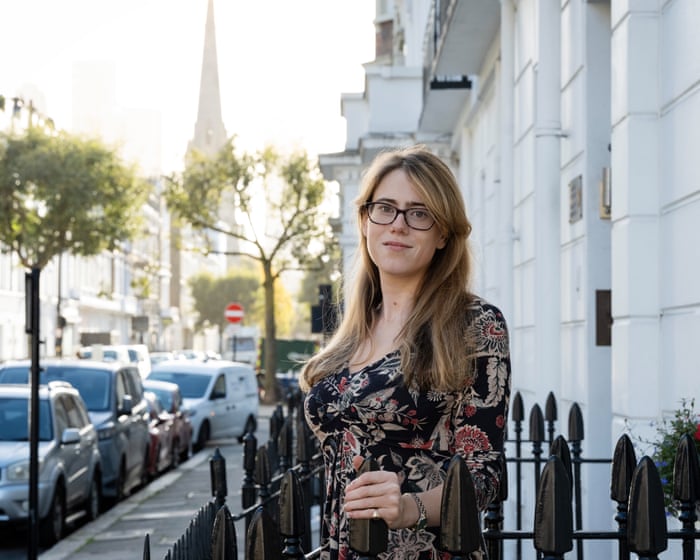
Neighbour of new Montenegro embassy in London sues council over impact on mental health

Case in Pimlico is latest instance of tensions between small countries seeking a space in capital and residents

It is not a classic neighbour-from-hell dispute, what with the protagonist inviting everyone over for evening drinks and canapés. But the sudden conversion of a five-bedroom family home in Pimlico, central London, into the embassy of Montenegro has triggered a neighbourhood row that has gone all the way to the desk of a high court judge.

The first stirrings of trouble came when one resident argued in a submission to the council this spring that the new embassy’s “flagpole and rather tacky-looking flag stick out like a sore thumb” among Cambridge Street’s Grade II-listed homes.

Continue reading...

© Photograph: Linda Nylind/The Guardian

© Photograph: Linda Nylind/The Guardian

© Photograph: Linda Nylind/The Guardian

  •  
❌