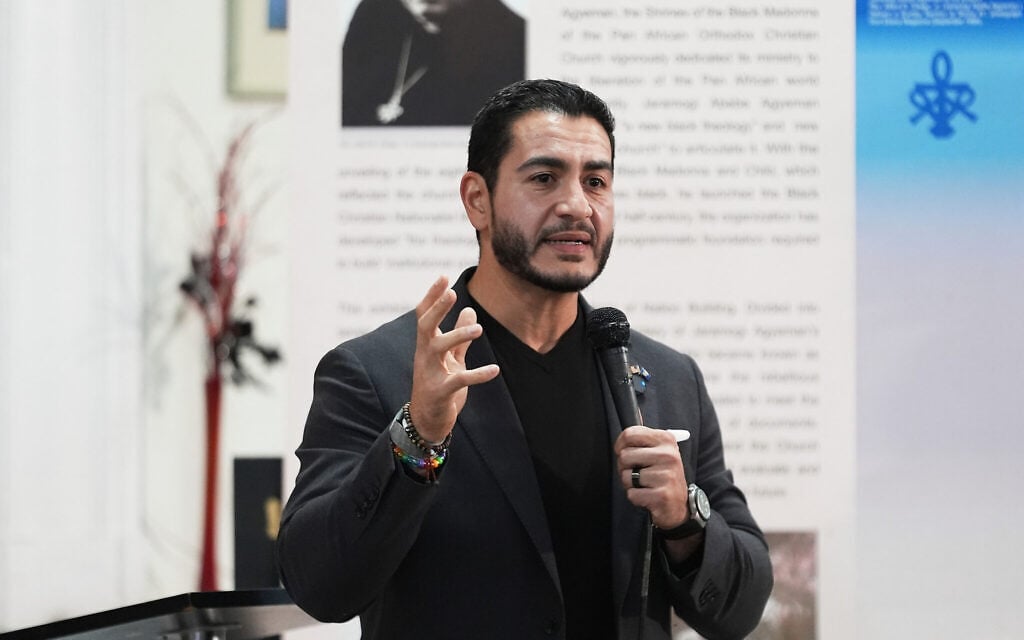
Michigan Democrat's Senate campaign says far-left Rebellion PAC behind ad is 'not affiliated in any way' with El-Sayed, but doesn't address how he views the content itself, which he has echoed in his own statements
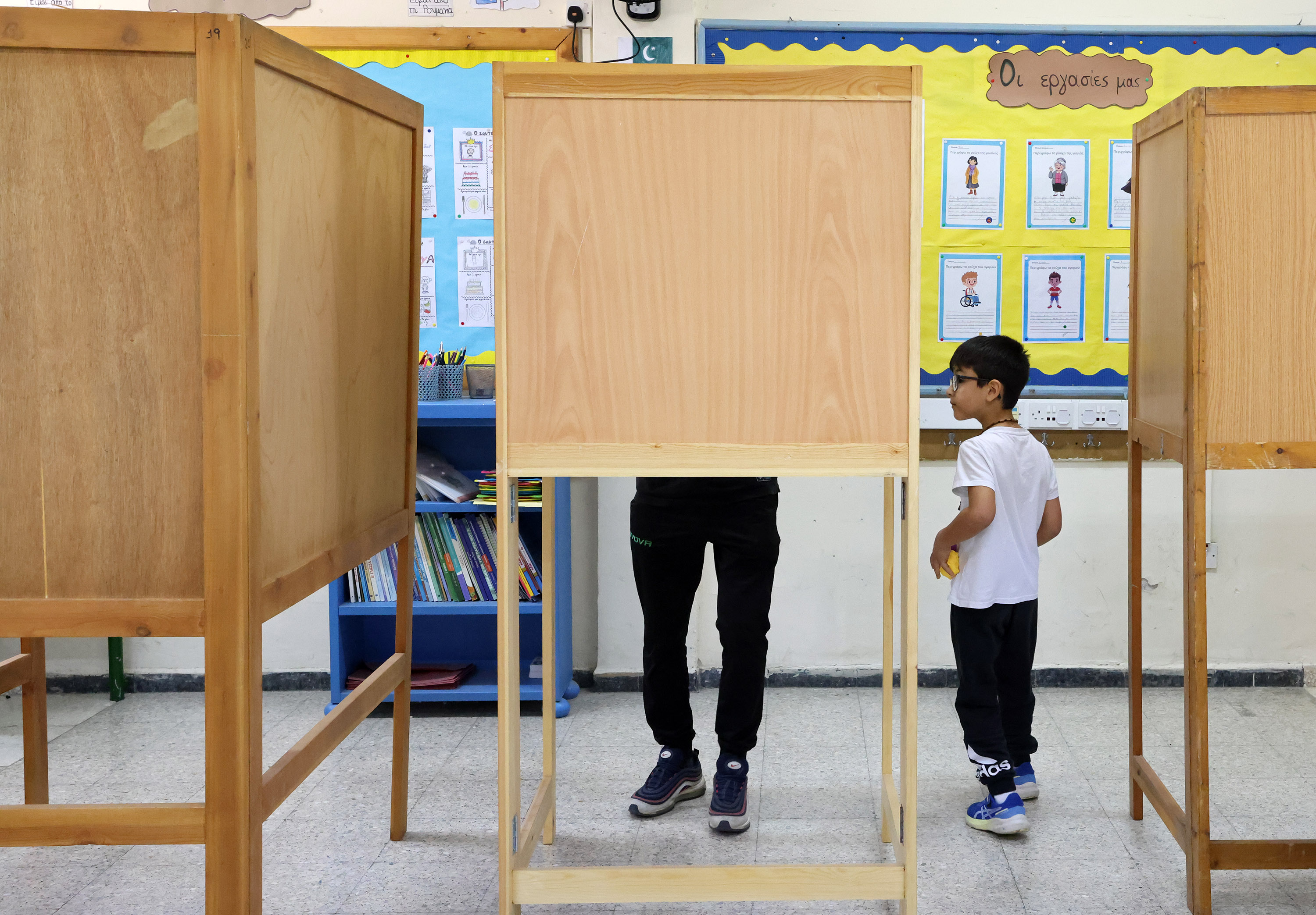
Lawmakers on Thursday got pushback from the government on a proposal to de-criminalise the publishing or reproduction of political content on the eve and on the day of elections.
As it stands, the law prohibits political messaging on the eve of, and the day of, elections – on penalty of a prison sentence of up to one year, or a fine up to €5,000, or both.
The aim is to prevent the circulation of content that might influence the outcome of elections.
The matter came to the fore after a number of people – including candidates for MP – were questioned by police over social media posts they made just prior to the parliamentary elections held in May this year.
Akel and Alma have drafted two separate bills aiming to relax the prohibitions and downgrade infractions from a criminal offence – as they are now – to an administrative fine.
Akel proposes that infractions be punishable by a fine of €2,000.
But the attorney-general’s office said this amount was too low, and also posed the issue of the ability to collect on such fines.
Under Akel’s proposal, only paid advertisements and sponsored content would be banned during the so-called ‘silence period’.
Regular people, making comments on social media, would be exempt.
However, the exemption would not apply to individuals designated as Politically Exposed Persons (PEPs).
In Cyprus, a PEP is an individual who holds or has held a prominent public function, along with their family members and close associates. This includes heads of state or government, senior politicians, high-ranking government, judicial, or military officials, senior executives of state-owned enterprises, and important political party officials.
Meanwhile the interior ministry raised other objections. Officials argued it would be extremely difficult to distinguish between spontaneous personal opinions posted online and organised political campaigning, especially when it comes to accounts operating under pseudonyms.
Moreover, criminalising content by PEPs but not by others might pose issues of discriminatory practices.
For this reason, the ministry counter-proposes that the infractions remain a criminal offence on the books, but in practice they would be converted into a fine of at least €5,000 – imposed by the Chief Returning Officer.
In case of repeat infractions, the monetary penalty would be increased.
The House interior affairs committee will continue discussing the issue at a later date.
Instagram is offering some creators six figures to help make it a long-form video hub.
The Meta platform is reviving its IGTV ambitions, allowing horizontal videos of up to 90 minutes.
Creators are required to cross-post their long-form YouTube content to Instagram as part of nonexclusive deals.
Instagram wants what YouTube has — and it's willing to pay up to get it.
In an effort to persuade content creators to post long-form video on Instagram, the company is paying a select number of creators hefty sums, according to people familiar with the deals.
Not every deal is equal. The Meta-owned platform has offered select creators $50,000 to post long-form video to its new "Features" product, while others have been offered six-figure deals, some of which have reached $500,000, Business Insider exclusively learned.
"We've been public about the fact that we are funding Features content directly with some creators right now to support them," a Meta spokesperson told Business Insider. "The details of those deals are confidential, but we're excited to see the content going live."
On Monday, Instagram unveiled an overhaul of its video formats. Most importantly, it's resurrecting IGTV — a long-form video product Instagram launched in 2018 and sunset in 2022 — in the form of Features. The horizontal, wide-screen videos will exist within the Instagram app, and can be as long as a feature film: 90 minutes.
Instagram is expanding its offerings for long-form video content.
Meta
Long-form video isn't exactly what people are used to watching on Instagram. Reels, the platform's answer to TikTok's meteoric rise, has redefined the Instagram experience and is driving time-spent and revenue across Meta's apps.
YouTube, however, reigns king as the internet's destination for sit-down, longer-form videos.
Instagram knows this. The deals do not require exclusivity to Instagram, multiple people familiar with the agreements said; one person familiar with the offers said it's asking creators to post to Instagram any of the long-form content they publish to YouTube that same day.
Reza Izad, partner at Underscore Talent, which reps clients like "Subway Takes'" Kareem Rahma and Noah Beck, called the deals an "exciting opportunity" for creators.
"Every time there's a new feature in these apps that the company's promoting, people will have more opportunity to be seen because there's going to be algorithmic preference to this kind of content," he said. "And unlike short-form, there's not a lot of abundance."
Money, money, money
This isn't the first time Instagram has inked paid deals with creators to lure them to post more on Meta's apps.
Last year, Meta was paying creators thousands of dollars to post short-form videos to Instagram and Facebook in the midst of TikTok's potential ban. The company has tested several bonus programs paying creators for the performance of their Reels on Instagram, though those programs have dwindled.
Back in 2021, when IGTV was still part of Instagram's big video bet, it inked deals with creators, funding long-form episodic shows from creators like TikTok's "Sway Boys" and "Dance Moms" alum Nia Sioux. Briefly, IGTV had its own monetization program, too, which let some creators earn a cut from ad revenue on the format.
While Instagram is paying some creators directly, a big question looms over the creator economy: What about the rest of them?
A major draw of YouTube is its long-standing Partner Program, which pays eligible creators a share of the ad revenue generated by their videos. Even though YouTube has increased its eligibility requirements, the potential to turn a hobby or passion project into a cash-earning career has kept YouTube on top as the go-to video platform for creators.
It's no surprise, then, that when Instagram announced its video overhaul, creators immediately had questions about monetization.
"We understand the economics matter a ton, and are exploring multiple options to help long-form creators get paid," Instagram's top executive, Adam Mosseri, wrote in an X post on Wednesday.
But one thing that Meta has decided it shouldn't brag about is that it can track who unfollowed you on Instagram.
About a week ago, Rachel Karten, who writes the excellent marketing newsletter Link in Bio, noticed a strange ad on Instagram. The ad encouraged people to download Muse, with an image of the fuzzy mascot holding up red and green Tinder-esque signs, suggesting you could "See who unfollowed you each week."
i get that this is technically a requested feature but wouldn’t it lead to more resentment towards your own platform? pic.twitter.com/SbM6VdcdhV
Finding out who unfollowed you on Instagram is something people have wanted to know since the app first launched. But Instagram — for good reasons — has avoided making this a feature on its own app.
I reached out to Meta to ask about this seeming clash, and a Meta spokesperson confirmed to Business Insider that the ad had been removed and is no longer active in the Meta ad library.
Instagram doesn't want you to know your unfollows
Here's the tension: Instagram knows that people want this feature, but it also knows it would be bad for the platform's vibes.
Instagram head Adam Mosseri regularly does AMAs on his personal account, and he's answered questions about why there's no "who unfollowed me" feature. His reasoning (gone from his page but have been aggregated in other videos) is that they want to make people feel comfortable unfollowing people they're no longer interested in.
To most people, it is obvious that this feature could hurt people's feelings, especially younger users (let's assume that Instagram does care about teen users' feelings here, although I understand if you have some hesitations on that). Feeling bad while using the platform is a bad user experience!
It's also ultimately bad for Instagram. If you're reluctant to unfollow accounts you don't like, then you'll end up with a feed that's less compelling, and you'll end up opening Instagram less often or spending less time on it. That's bad for Instagram's daily active user metrics!
Yes, Muse can actually do this
There are, and have been, third-party services that can track who unfollows you. These sometimes require access to your login info in ways I definitely wouldn't recommend, and can track over time who has unfollowed you. So it's not like Muse is doing something totally novel or unheard of here.
I asked Muse to do this for me, and it said it could — with a caveat: it will start tracking my follow lists to see who unfollows me going forward, but it can't retroactively check who unfollowed me in the past (that's mostly the same as the other trackers). And honestly? I don't want to know! No thanks! Yikes!
I asked Muse to track who unfollowed me on Instagram (despite not wanting to really know). It could only track going forward, but after two days, it found one.
Business Insider
Is this just one stupid ad? Yes. Was it set up and run as an ad by someone at Meta far removed from Instagram's philosophy on unfollows? Probably. Is it the most shocking news in the world if Meta runs a single ad and then takes it down? No.
But this interests me so much because it gets at a bigger and thornier issue. AI agents like Muse are what Meta clearly sees as the future of the company and how people use its services. But AI agents' abilities and use cases may be at odds with the nature of social media.
In the simplest way, AI agents are supposed to help you be efficient and get things done. Social media is supposed to help you waste your time.
These are two vastly different objectives — and it's going to be interesting to see how these two new technological pillars of Meta clash or complement each other.
Already, we have one Meta product (Muse) that is more than happy to do something that another Meta product (Instagram) has long discouraged.
There are plenty of other features that people want to do on social media, but Instagram and Facebook don't allow because it's bad for the overall health of the platforms. Suddenly, AI agents like Muse can do these long-forbidden things. The question is: how far is Meta willing to cannibalize the health of its own social platforms for the sake of growing its AI?
AI overviews have led to more searches than ever, but Google is not making money at the same rate.
Matteo Della Torre/NurPhoto via Getty Images
Google said that AI agents can automate shopping, but users will still want choices.
Investors have long argued that AI chatbots and agents will threaten Google's search business.
Google's Q3 revenue fell short of analyst expectations, and shares fell 10% after hours.
Google has a pitch for advertisers worried AI agents will make Search obsolete: Let the bots do the shopping legwork, but leave people to compare brands, prices, perks — and sponsored offers.
"When users shop, and that's important, there's a part of the journey they don't like, the grunt work, which is frankly fantastic to automate with AI," Philipp Schindler, Google's chief business officer, said on Alphabet's earnings call on Tuesday. "But we also want to enhance, not just automate away the discovery experience that people frankly love in so many cases."
He said users do not always want the cheapest option; they also weigh brand loyalty and customer service. Google believes that this decision-making process gives it space to build ads into agentic shopping.
He shared an example of how that might work: "Here's the insurance product we found, and here's another strong option, one of which is a higher premium, maybe a lower deductible, and they are currently offering a very special discount."
Schindler added that there is almost never a single perfect solution for any shopping decision, which makes Google "confident" that there is room for advertising even in agentic search.
The comments offer a clearer explanation of Google's business model for agentic search, which has presented a challenge for its core ads business. On Tuesday, the company said that Google's AI mode has led to more searches than ever, but it's not making money at the same rate. It's a major concern among investors, who have long argued that AI chatbots and agents will threaten Google's search business.
Google has been signaling for months that it wants to solve that problem without simply cramming old-style ads into a chatbot. Last quarter, Google said it was testing ideas like showing offers during travel planning and clearly marked sponsored links inside AI-generated lists.
Alphabet reported third-quarter revenue of $127.58 billion, narrowly below the $127.97 billion analysts expected. Earnings per share came in at $2.12, versus roughly $3.01 expected, largely because of an $8.2 billion unrealized loss on its SpaceX investment. Shares fell about 10% after hours.

 Login