❌

Reading view

From Brussels to Belgrade: Europe’s Generation Z Protests Challenge Established Politics

Youth-led demonstrations across Europe are bringing together concerns about housing, education, employment and political accountability. Although the movements differ considerably between countries, their emergence reflects growing dissatisfaction among younger Europeans over economic prospects and their influence on political decisions.

A series of demonstrations involving young people across Europe has developed into a wider political phenomenon, as students and younger workers challenge governments over living costs, public services and their expectations for the future.

Protests have taken place in France, Belgium, Italy, Albania and several other countries, while a student-led movement in Serbia has achieved a particularly consequential political outcome.

In Serbia, nearly two years of demonstrations culminated in a parliamentary election victory for a student-backed political movement, ending the electoral dominance of President Aleksandar Vučić’s Serbian Progressive Party.

The outcome, reported by Reuters on 29 October, has given the movement a prospective parliamentary majority, although final certification of the election results remains outstanding.

Elsewhere, protesters have secured fewer immediate political concessions.

Nevertheless, their campaigns share a recurring concern: that conventional channels of political representation have failed to address problems affecting younger generations.

Economic Pressures Behind the Demonstrations

The grievances vary between countries, but housing affordability, insecure employment, education funding and living costs feature prominently.

A European Parliament youth survey published in February 2025 found that 40 per cent of respondents aged 16 to 30 considered rising prices and the cost of living a priority for the EU.

Almost one-third identified economic conditions and job creation as a principal concern, while education also ranked prominently.

More recent figures illustrate the financial pressures confronting younger Europeans.

According to Eurostat data published in June 2026, 24.2 per cent of EU residents aged 15 to 29 were at risk of poverty or social exclusion in 2025.

That compares with 20.9 per cent for the population as a whole.

These figures do not establish that economic hardship is the cause of every protest. They do, however, provide context for the dissatisfaction expressed by participants.

Belgium’s Students Demand Better Education

In Brussels, demonstrations have focused partly on the condition of schools and the availability of educational resources.

Students have criticised deteriorating facilities, shortages of teachers and government decisions affecting education funding.

Nineteen-year-old student Maya Gourdel told Reuters that peaceful attempts to draw attention to these concerns had attracted little response from political leaders.

Her account reflects a wider frustration among demonstrators who believe that public attention has increased only after protests became more disruptive.

Belgium’s education system is organised primarily at community level, meaning decisions concerning funding, staffing and school infrastructure are divided among different authorities.

The demands of protesters consequently involve both national political debates and decisions taken by regional and community institutions.

France and Italy Face Wider Social Unrest

In France, demonstrations concerning the cost of living and public services have involved students alongside trade unions and other organisations.

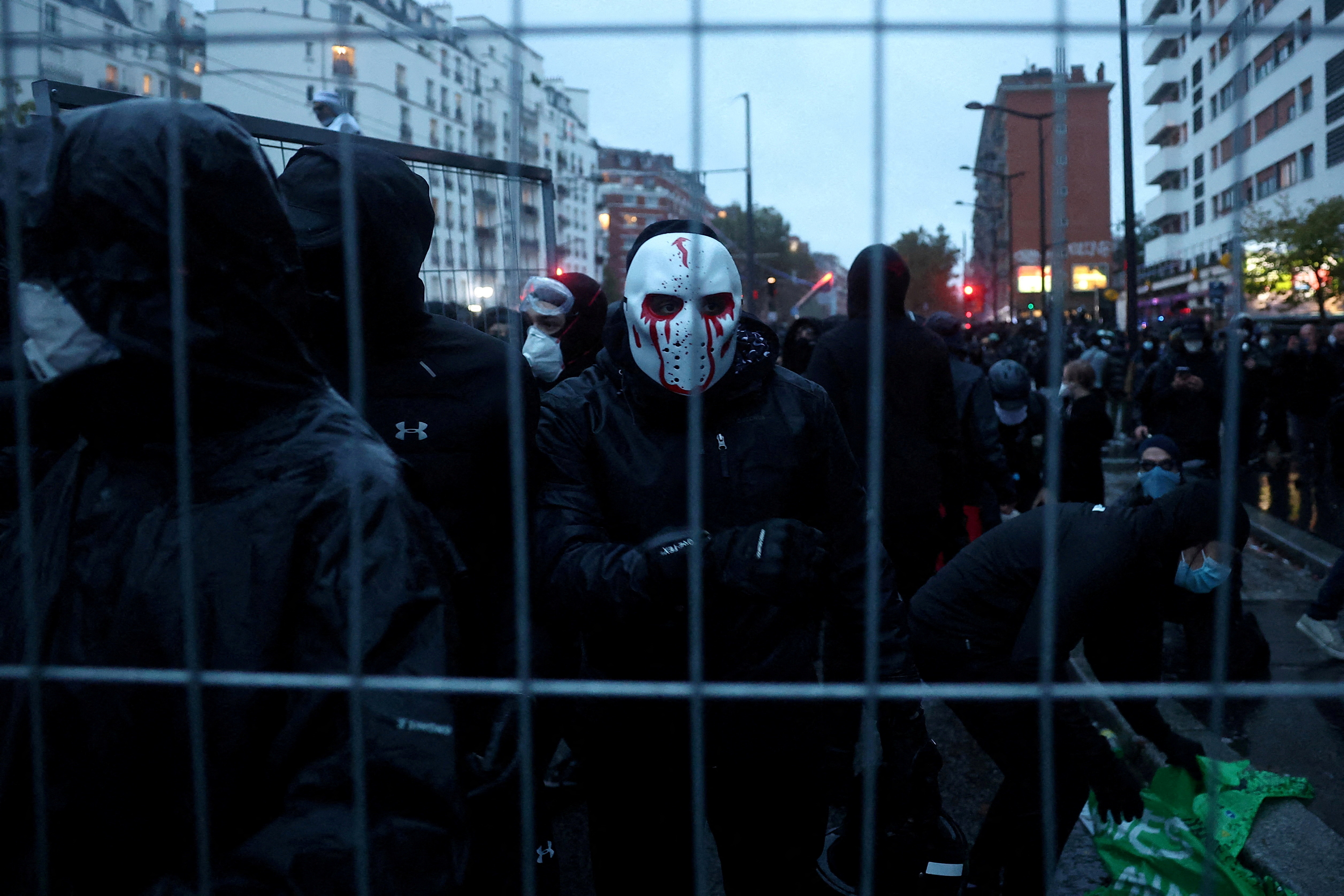
Recent protests have also been accompanied by violence, including attacks on commercial premises and confrontations with police.

The involvement of younger demonstrators does not mean that every participant supports violent tactics.

Rather, the events illustrate how movements with economic and political grievances can encompass groups with different objectives and methods.

Italy has experienced similar tensions, particularly in Milan, where demonstrations against rising living costs have followed earlier episodes of unrest.

The Italian government has faced pressure over household expenditure, wages and the affordability of essential services.

These disputes have developed against a background of high energy prices and concerns about the broader economic outlook.

Albania’s Frustration With Political Institutions

In Albania, student-led protests have challenged Prime Minister Edi Rama’s government over alleged corruption, limited employment opportunities and education standards.

Demonstrations that began in Tirana have spread to other cities.

On 29 October, opposition lawmakers disrupted proceedings in parliament following weeks of protests and confrontations between demonstrators and police.

The government has offered measures intended to address economic concerns while condemning violence associated with the demonstrations.

For many younger Albanians, employment prospects are closely connected to the possibility of emigrating.

The perception that professional opportunities depend on political connections or personal networks has become another source of dissatisfaction.

However, the Albanian movement cannot be treated as identical to protests in EU member states, given the country’s different economic conditions and political institutions.

Serbia Shows the Political Potential of Student Movements

Serbia provides the most substantial example of youth-led protest translating into electoral change.

The movement emerged after the collapse of a railway station canopy in Novi Sad in November 2024, which killed 16 people and prompted allegations of corruption and negligence.

Students organised prolonged demonstrations demanding accountability and institutional reform.

Their campaign subsequently developed into an electoral challenge to the governing Serbian Progressive Party.

Preliminary results from the October 2026 parliamentary election indicate that the student-backed list has secured a majority of seats.

However, electoral certification and the formation of a new government remain incomplete.

The movement now faces a different challenge: converting protest demands into administrative decisions, legislation and economic policy.

Its success will be judged not only by the election result but also by its ability to govern.

A Generational Shift, But Not a Single Movement

It would be misleading to describe Europe’s demonstrations as a unified political campaign.

Participants have different objectives, national circumstances and ideological positions.

Some demand increased public expenditure, while others concentrate on corruption, political accountability or employment opportunities.

What connects them is a recurring concern about whether established institutions respond adequately to younger citizens.

The political consequences will depend on whether demonstrations produce lasting organisations, influence elections or secure changes in government policy.

Serbia suggests that student mobilisation can translate into substantial political change.

For governments elsewhere in Europe, the question is whether the grievances driving these movements can be addressed through existing political institutions before dissatisfaction generates further unrest.

  •  

Albanian opposition lawmakers disrupt parliament with smoke flares and furious attacks on socialist PM

Opposition lawmakers in Albania disrupted a parliamentary session on Thursday by setting off flares that filled the chamber with colored smoke, marking an escalation following weeks of student-led anti-government protests.

Members of the main opposition Democratic Party also blocked access to the podium during a vote on a central bank bill, Reuters reported.

"These ruling lawmakers are criminals, and they deserve tear gas, rubber bullets, cracked skulls, and broken bones—not the young people," opposition leader Sali Berisha declared during a speech before his microphone was cut off.

SERBIA’S STUDENT MOVEMENT TOPPLES VUCIC’S PARTY AFTER 14 YEARS, BUT POLITICAL AGENDA REMAINS UNCLEAR

As the chamber devolved into chaos, fellow opposition members surrounded Berisha, holding blue flares, the official color of their party, and displaying images of protesters injured by police rubber bullets.

Albania has been gripped in recent weeks by student-led demonstrations demanding the resignation of Prime Minister Edi Rama over alleged government corruption, underfunded schools, widespread unemployment, and a lack of economic opportunities.

SERBIA’S LONGTIME LEADER FACES BIGGEST POLITICAL TEST AS STUDENTS MOUNT ELECTION CHALLENGE

The protests began on Oct. 13 and quickly turned violent as demonstrators clashed with police and set fire to government buildings. Protesters also targeted Rama’s ruling Socialist Party headquarters in Tirana, clashing with riot police deployed to protect the property.

The unrest has since spread to several other cities across the country.

THOUSANDS FLOOD BRUSSELS STREETS AS ANTI-AUSTERITY PROTESTS ERUPT INTO CLASHES WITH POLICE

In response, Rama, who has governed since 2013 and secured a fourth term last year, blamed "foreign hands who do not want Albania in the European Union. " He accused outside forces of manipulating the movement, claiming they "represent organized crime rather than students. "

To curb the violence, Rama introduced strict new measures, including $6,000 fines for anyone participating in a protest that turns violent, regardless of whether they personally commit acts of violence.

CLICK HERE TO DOWNLOAD THE FOX NEWS APP

Another demonstration is scheduled for Saturday.

Fox News Digital's Chris Massaro contributed to this report. 

  •  

French interior minister to deploy 70,000 police for Halloween protests

French Interior Minister Laurent Nunez said that this Saturday was looking like “a very high risk” day for public order and that he would again deploy 70,000 security forces to try to safeguard the country.

Nunez told reporters on Thursday that several radical groups had called on social media for violent gatherings that day, which is also Halloween, and that the response of security forces would be “extremely firm.”

He highlighted the risk of disorder on Saturday evening in particular once more mainstream demonstrations had ended.

“We are seeing many calls for rallies coming from the labor movement, the radicalized far left, and certain radicalized ‘Yellow Vests’ websites, urging people to attend rallies on public streets starting at 8:00 p.m. (on October 31) in many cities across France, accompanied by various messages which are, let’s just, say quite radical,” he said.

“October 31 is a day that poses a very high risk to public order,” he added.

The Interior Ministry has said 410,000 people took part in marches last Saturday when authorities deployed 70,000 police, helping to avert a repeat of the looting and vandalism that swept many cities on October 17.

Labour leaders and students have urged further protests on October 31 and a nationwide strike on November 5, saying frustration over wages, living costs and public services was spreading far beyond the student movement that first mobilised last month.

  •  

Charles Barkley calls out LeBron James for disrespecting the national anthem with practice golf swing

Charles Barkley did not appreciate seeing LeBron James practicing his golf swing on the court during the middle of the national anthem ahead of his Philadelphia 76ers debut earlier this month.

President Donald Trump blasted James after the incident, calling him a "total disgrace," and while Barkley made it a point to say he doesn't care what the President has to say about anything, the two see eye to eye when it comes to James disrespecting the anthem.

"I don’t pay what President Trump says any attention, first and foremost, at all," Barkley began when asked about the moment on SiriusXM NBA Radio. "But I thought that was very disrespectful, practicing your golf swing in the middle of the anthem. I always stand for the anthem. I just think it’s important. We live in the greatest country ever where you can always protest, but I think you have to be very careful with the anthem."

LEBRON JAMES CURSES OUT KNICKS FAN IN HEATED EXCHANGE: 'I DON'T KNOW WHAT THE F--- YOU TALKING ABOUT'

This is not the first time James has decided that the middle of the national anthem was an opportune time to work on his golf swing.

Last Christmas, while playing for the Los Angeles Lakers, James got in a few practice swings ahead of his team's eventual loss to the Houston Rockets.

CLICK HERE FOR MORE OUTKICK SPORTS COVERAGE

While Barkley mentioned always being allowed to protest, it doesn't appear that James was protesting anything in this instance, but instead simply not being able to stand still and disrespecting the anthem in the process.

"I look at it, I'm supporting the troops when I stand for the national anthem," Barkley continued. "I'm standing there for free speech, so even though I believe in free speech, I think you have to be very careful with the anthem. I always stand for the anthem. I think it's important, and I think it's significant."

James' faux golf swings in the middle of the anthem have understandably drawn attention and criticism, but perhaps the most disrespectful stunt he's pulled during 'The Star-Spangled Banner' came back in 2023.

CLICK HERE TO DOWNLOAD THE FOX NEWS APP

As a late arrival to his courtside seats at USC to watch his son, Bronny James, play for the Trojans, LeBron made his entrance during the middle of the anthem, with a hat on, and sat in his seat while the rest of the arena was standing and showing respect to the United States.

  •  

Dream, Valkyries leave court before TI’s 10-year-old daughter sings WNBA Finals anthem

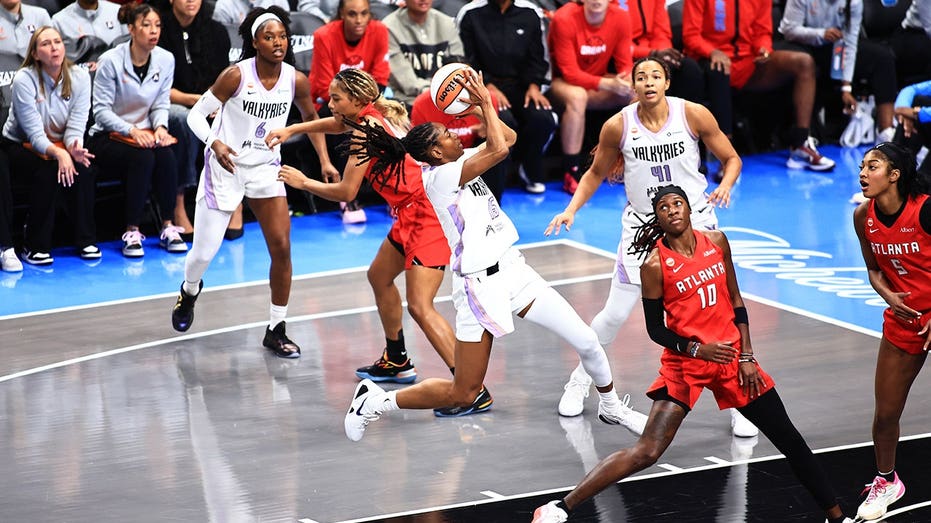
Heiress Harris, the 10-year-old daughter of rapper T.I., sang the national anthem before Thursday's Game 6 of the WNBA Finals at State Farm Arena. But, as has been the case all series, the players weren't on the court for the performance.

Both the Atlanta Dream and Golden State Valkyries left the floor just before the young Black singer began "The Star-Spangled Banner," marking their sixth straight absence for the anthem in this series.

OutKick interviewed fans outside State Farm Arena prior to Game 6. They offered different views on the practice, with some wanting players on the floor and others defending their choice to leave.

THE CRAIG CARTON SHOW–UNFILTERED, UNAPOLOGETIC AND UNMISSABLE. DOWNLOAD HIS DAILY PODCAST NOW!

One defender of the practice was the father of Golden State guard Tiffany Hayes.

"This is America, by the way, and I’ve served this country, so they can choose what they want," Renard Hayes told OutKick.

Asked whether, as a veteran, he had an issue with the absences, he said he did not.

"I don’t have an issue with it because it’s not a disrespect of the flag," he said.

Hayes’ father, who said he lives in Florida, had criticized the game’s 12:30 p.m. start, blaming the league and Atlanta organization for the scheduling situation. On the anthem, however, he defended the players’ freedom to decide.

The game was moved from its originally scheduled 8 p.m. start to accommodate a doubleheader with the NBA’s Atlanta Hawks at State Farm Arena. Golden State entered Thursday leading the best-of-seven series 3–2 after winning Monday’s Game 5, 64–55, with a chance to clinch its first championship.

Some fans want players on the court, while others defend their choice

One Dream fan told OutKick she believed everyone should stand for the national anthem.

A male Valkyries fan said he respected the players’ opinions and beliefs but wanted them on the floor.

VANCE CONDEMNS 'DISGRACEFUL' WNBA NATIONAL ANTHEM WALKOUTS, SAYS PLAYERS SHOULD SHOW MORE GRATITUDE

"I do think they should be out there," he said.

Other fans were less troubled by the absences.

"They’ve been doing it for years," another Dream fan said. "And that’s their choice. It is what it is."

A woman who said she represents Valkyries center Kiah Stokes offered a similar view.

"I think it’s their decision," the representative said.

For one man attending with a female Dream fan, the question was more complicated. Asked whether he considered the absences disrespectful, he said, "Me personally, maybe a little bit."

OUTKICK READERS BLAST WNBA PLAYERS FOR HIDING DURING FINALS NATIONAL ANTHEM

"But it doesn’t concern me that much either," he added. "Not particularly bothered by it."

Another Dream fan attending with his family said he respected the anthem and the players’ ability to decide whether to participate.

"But we live in a country where you have a choice, so I gotta respect it," he said.

Players and coaches say skipping anthem is a pregame routine

During media availability in Atlanta on Oct. 23, Golden State coach Natalie Nakase described the absences as part of the team’s pregame routine.

Those interviews were OutKick’s first opportunity to ask the anthem questions directly after attending all 13 formal press conferences during the first three games without being called on.

"We’re two years in," Nakase said. "That’s been part of our pregame."

Asked who established the routine and why, she said, "I really don’t know."

OutKick followed up: "What do you do during those 90 seconds that you’re off the court?"

"I’m with my staff, so I’m focused on my plays," Nakase said.

Golden State’s public relations staff then moved to the next reporter. OutKick did not get an opportunity to ask why those preparations needed to happen during the anthem rather than before or afterward.

Valkyries forward Gabby Williams denied that the team’s absence was a protest.

"No," she said.

Asked why the team was off the floor, Williams responded: "That’s been the routine for like, seven years now."

An Atlanta public relations representative moved to the next question after Dream coach Karl Smesko declined to explain his team’s absences.

"We’re just kind of focused on the Finals," Smesko said.

Asked whether he had any further comment about the anthem and his team’s absences, he said, "No."

Dream guard Rhyne Howard was asked about calls to exclude players from Team USA over their anthem conduct during the WNBA season.

Howard said she did not think she had been on the court for the anthem at any point during her tenure in Atlanta. She also defended her commitment to representing the United States internationally.

"When I go put on USA jersey I’m out for the national anthem every time, there’s no doubt about it," Howard said.

OutKick asked Howard why she was not on the court for the anthem with the Dream.

Howard and an Atlanta public relations representative both responded, "Next question."

WNBA policy and team decisions remain questions

CLICK HERE FOR MORE OUTKICK SPORTS COVERAGE

The WNBA’s 2026 official rulebook says players, coaches and trainers are to "stand and line up in a dignified posture" along the sidelines or on the foul line during the national anthem.

The Associated Press reported Oct. 20 that the league suspended its anthem protocols in 2017. The provision remains in the 2026 rulebook.

OutKick has asked the WNBA to clarify its current requirements and enforcement, whether discipline is planned or under consideration, and whether teams have received instructions about being on the floor.

The inquiries to the WNBA and both teams began after Game 1 on Oct. 17, with follow-ups Oct. 18 and Oct. 20. OutKick also contacted the NBA league office on Oct. 20 about its role in the matter.

OutKick has also asked Atlanta to confirm an arena employee’s account that Dream players stand in a hallway after leaving the floor before games, including whether they remain there during the anthem.

During Game 4, I attempted to observe what Atlanta’s players do after leaving the court. Arena staff said my credential did not grant access to that area and escorted me to my assigned media seat.

The WNBA, NBA and both teams’ front offices have not responded to OutKick’s emailed requests for comment about the anthem absences. The player and coach responses came during media availability.

OUTKICK IS NOW AVAILABLE ON THE FOX NEWS APP: CLICK HERE TO DOWNLOAD

Six games into the Finals, fans disagree about whether the players should be on the court for the anthem. The teams still haven’t explained why their preparations require leaving it.

  •  

Open Letter defending right to demonstrate delivered to President Seguro

Belém Palace

The Open Letter that began earlier this week as a result of police baton charges on ‘right to housing’ protesters has been delivered to President Seguro today. The missive, which

The post Open Letter defending right to demonstrate delivered to President Seguro appeared first on Portugal Resident.

  •  

Meloni Condemns 'Shameful’ Release of Alleged Organizer of Milan Riots

Italian Prime Minister Giorgia Meloni bluntly branded a Milan judge's decision to release Youssef Siher, the alleged organizer of the recent violent riots in the city as a "shameful" decision.

The post Meloni Condemns ‘Shameful’ Release of Alleged Organizer of Milan Riots appeared first on Breitbart.

  •  

PSP, GNR police demonstrate in Lisbon for salary increases

The Police Professionals’ Trade Union Association (ASPP/PSP) and the Guard Professionals’ Association (APG/GNR) are holding a demonstration in Lisbon today to demand salary increases, career restructuring and improvements in working

The post PSP, GNR police demonstrate in Lisbon for salary increases appeared first on Portugal Resident.

  •  
❌