Login

Ukraine Resumes Strikes on Russian Refineries, Challenging Trump’s Pressure as Washington and Kyiv Clash Over Oil
Ukraine’s renewed attack on Russia’s Novokuybyshevsk oil refinery marks the end of a two-week pause reportedly imposed under American pressure. Beyond its military significance, the operation raises questions about Washington’s influence over Kyiv, the consequences for global energy markets and whether Ukraine’s campaign is effectively targeting the financial foundations of Russia’s war.
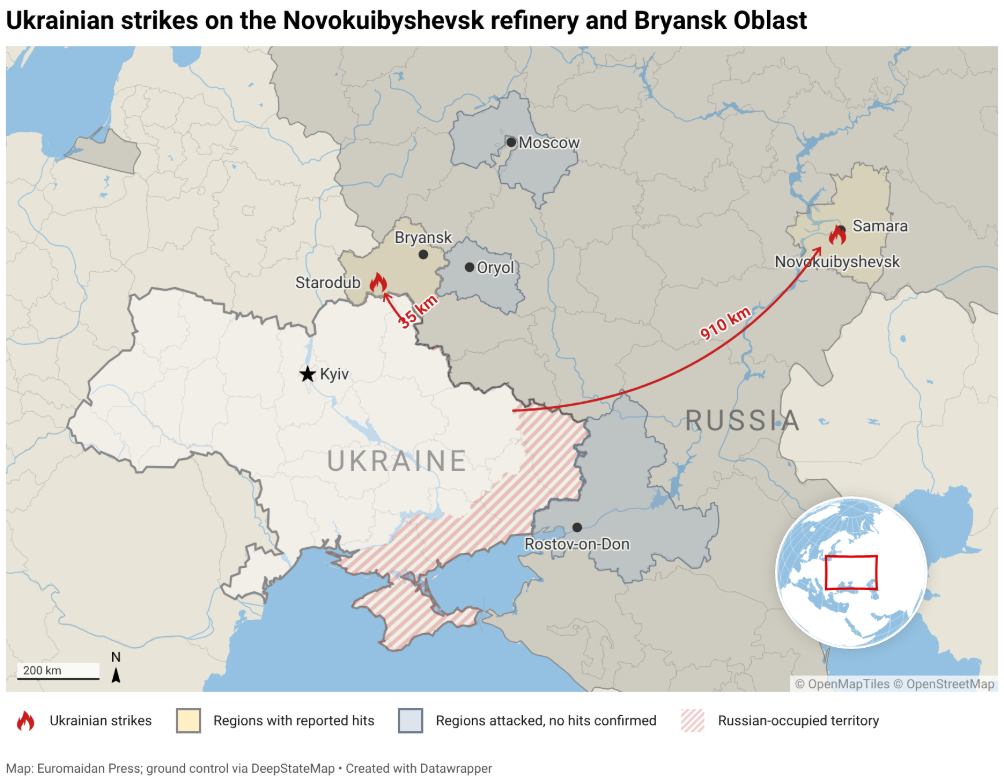
A Ukrainian drone attack on the Novokuybyshevsk oil refinery in Russia’s Samara region on 30 October has exposed growing differences between Kyiv and Washington over the conduct of the war against Russia.
The strike, which reportedly caused extensive fires at the facility, came after approximately two weeks without Ukrainian attacks on Russian refineries, a pause that American media attributed to pressure from President Donald Trump.
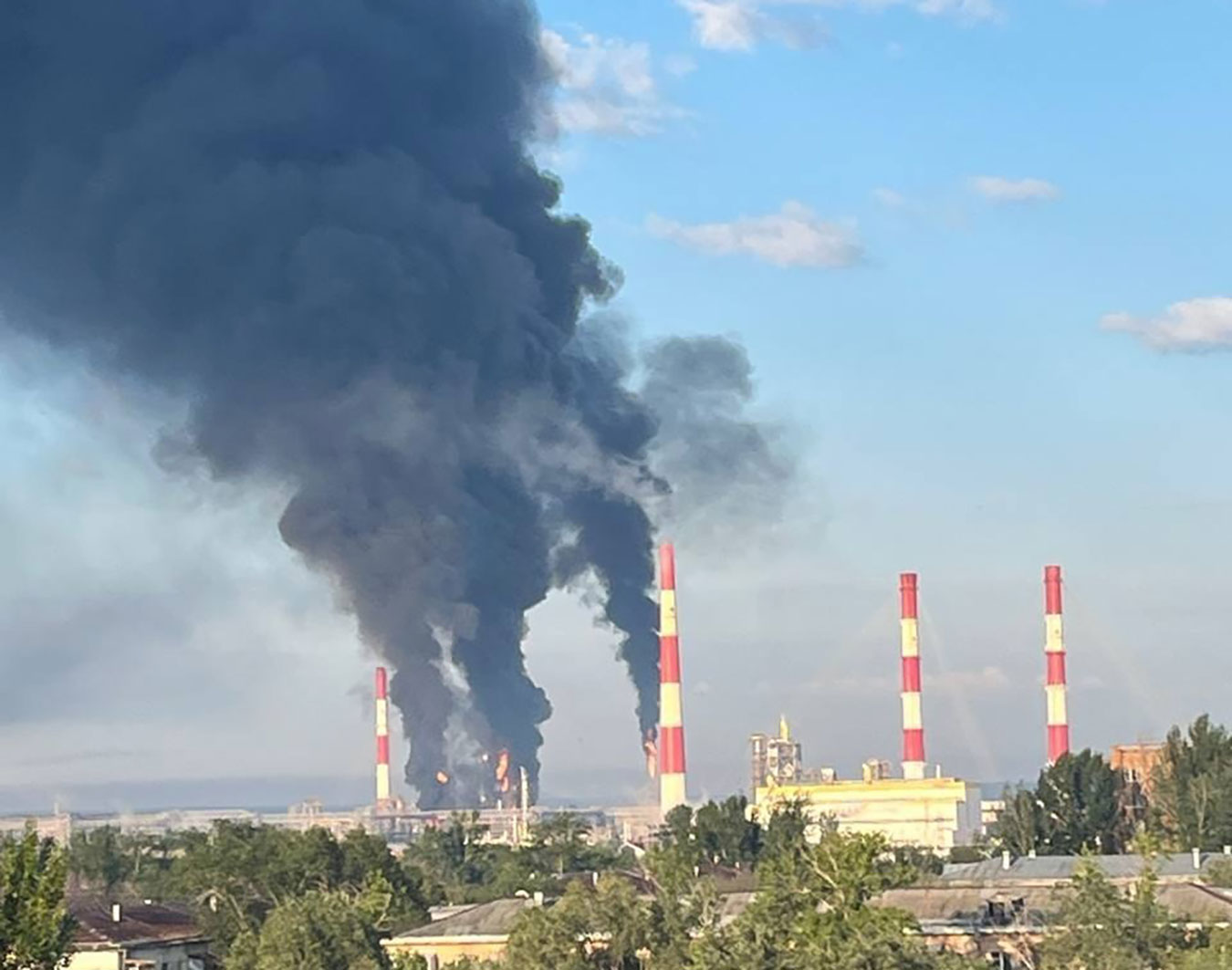
Footage circulating on social media showed several columns of thick smoke rising from the refinery. Ukrainian defence manufacturer Fire Point subsequently reported that Ukrainian forces had struck the installation with FP-1 drones, including a diesel hydrotreating unit.
However, the full extent of the damage and its consequences for production remain unconfirmed.
A Military Target with Wider Economic Significance
The Novokuybyshevsk refinery belongs to Russia’s state-controlled Rosneft group and has a nominal annual processing capacity of approximately 8.8 million tonnes of crude oil.
According to Rosneft, its products include petrol, diesel, lubricants and aviation fuel.
The latter is particularly relevant to Ukraine’s military objectives because the facility contributes to Russia’s capacity to supply fuel for military aviation.
The refinery has been attacked repeatedly since 2024, including a confirmed Ukrainian operation in August 2026.
These repeated strikes form part of a broader Ukrainian campaign intended to disrupt Russian fuel production, impose repair costs and reduce the resources available to Moscow’s military.
The campaign’s cumulative effects have become increasingly apparent.
In September, the International Energy Agency reported that Russian refinery throughput had fallen to 3.8 million barrels per day in June, approximately 30 per cent below its level a year earlier.
The agency estimated that Russian diesel production had declined by almost 30 per cent, contributing to domestic supply pressures and restrictions on fuel exports.
Ukraine Challenges Washington’s Attempts to Restrict Its Operations
The timing of the latest strike carries considerable diplomatic significance.
On 29 October, The Wall Street Journal reported that Ukrainian military units had been instructed to suspend operations against Russian refineries following demands from the Trump administration.
The informal suspension was reportedly expected to continue until after the American congressional elections on 3 November, potentially extending further into November.
Trump has repeatedly criticised Ukrainian attacks on Russian energy infrastructure, arguing that they contribute to rising diesel prices in the United States.
The issue has acquired particular political sensitivity as American voters prepare for the midterm elections against a background of elevated energy costs.
Ukrainian President Volodymyr Zelenskyy acknowledged that military operations had been conducted more cautiously but maintained that no formal order prohibiting refinery strikes had been issued.
The attack on Novokuybyshevsk suggests that Kyiv considers any restraint temporary rather than a permanent limitation on its military operations.
It also demonstrates the limits of Washington’s ability to determine Ukraine’s operational decisions.
Nevertheless, the relationship remains unequal. Ukraine continues to depend on American military technology, intelligence and other forms of assistance.
Recent restrictions affecting Ukrainian access to Starlink services, alongside tensions over intelligence sharing, have illustrated the risks associated with that dependence.
The latest refinery strike therefore represents a calculated diplomatic risk rather than evidence that American pressure has ceased to matter.
Are Russian Refineries the Most Effective Economic Targets?
The operation also raises a broader question concerning the economic effectiveness of Ukraine’s long-range strike campaign.
Russia’s oil industry supports government revenue through several channels, including crude exports, refined petroleum products and taxation.
Attacks on refineries can reduce fuel production, increase repair expenditure and disrupt military logistics. However, their direct consequences for federal revenue differ from those of disruptions to crude oil exports.
One argument advanced by analysts is that damage to Russia’s oil-export infrastructure can have a more immediate effect on the volume of crude reaching international markets.
Research published by the Kyiv School of Economics in April estimated that attacks on Russian Baltic oil terminals reduced potential export earnings by approximately $1.76 billion over a fortnight compared with a scenario without those attacks.
That finding supports the argument that export infrastructure represents an important economic vulnerability.
However, it does not establish that refinery attacks are strategically ineffective.
The IEA has documented substantial disruption to Russian refining operations, including declining fuel output, reduced exports and mounting financial pressures.
An additional complication is that higher international oil prices can partially offset reduced Russian export volumes, limiting the financial effect of disruptions.
The Iran War and American Diesel Prices
Trump’s objections must also be considered against the wider disruption of international energy markets resulting from the conflict involving Iran.
The restriction of shipping through the Strait of Hormuz, damage to Middle Eastern energy infrastructure and reduced availability of refined petroleum products have contributed to exceptionally high fuel prices.
In its October 2026 Oil Market Report, the IEA identified major supply disruptions in the Middle East as a central factor behind the global energy crisis.
Ukrainian refinery strikes have also contributed to tighter supplies of diesel, but they are only one element of a much larger international shortage.
An analysis published by the Federal Reserve Bank of Dallas similarly identified disruptions in the Middle East, Russian refinery outages and wider refining constraints as contributing factors.
Consequently, attributing American diesel prices principally to Ukrainian military operations would misrepresent the complexity of the market.
A Question of Strategic Priorities
The latest strike illustrates two separate challenges confronting Kyiv.
The first concerns Ukraine’s relationship with Washington. Ukraine must preserve essential American assistance while retaining sufficient freedom to conduct operations against Russian military and economic assets.
The second concerns the allocation of limited long-range strike resources.
Ukraine’s growing capacity to damage Russian energy infrastructure has created opportunities to impose economic costs on Moscow. Yet the relative effectiveness of attacks on refineries, export facilities and military-industrial enterprises remains a legitimate subject of strategic debate.
The Novokuybyshevsk operation demonstrates that Ukraine is prepared to resume attacks despite American objections.
Whether the campaign can produce a lasting reduction in Russia’s ability to finance and sustain its war will depend less on the symbolism of individual strikes than on their cumulative economic and military consequences.
For Kyiv, maintaining operational independence from Washington is important. Translating that independence into measurable strategic results remains the more consequential challenge.