❌

Reading view

My husband has Alzheimer's, and I have cancer. We spent $500 a month on Uber rides until we found a $3 alternative.

A senior couple aboard a paratransit bus.
Carol Colborn and her husband, William, pay $3 a ride for a paratransit service.

Courtesy of Carol Colborn

  • Carol Colborn is a full-time carer to her husband, William, who has Alzheimer's disease.
  • She struggled, especially after being diagnosed with cancer, and the pair was confined to the house.
  • A Medicare benefit designed to help carers and keep their loved ones at home changed all that.

This story is based on an interview with Carol Colborn, 77, a retired academic from Mesa, Arizona. It has been edited for length and clarity.

My husband, William, and I married in 2008 when I was 60, and he was 65.

We both retired and went on an amazing adventure together: RV-ing full time across North America for eight years.

We drove to every state in the US, every state in Mexico, and every province in Canada. Then we traveled the world, visiting 29 countries in total.

The trips stopped after William was diagnosed with Alzheimer's disease in 2018, so we're glad we built so many happy memories on the road.

He'd shown symptoms of the illness, mostly forgetfulness. I gave him a shopping list of three items written in large print, and he'd come back with two.

We had a ritual: he'd bring me a mug of herbal tea while we watched TV in the evening. It made me calm and serene and helped me sleep better. He'd done it every day since our wedding and, when he forgot the first time, I was distraught.

A man and a woman under a statuette of a butterfly.
The Colborns didn't want to leave their home and go into assisted living.

Courtesy of Carol Colborn

William had mild cognitive impairment for the first four years, which progressed into moderately severe Alzheimer's.

He needed 24/7 support, and I was his full-time caregiver. He stayed in bed a lot of the time, but I gave him his medication, three meals a day, and baths.

I had chemotherapy for lung cancer

His mobility was limited, but we still did our evening walks past four houses. It was his main exercise.

Things were relatively manageable until July 2025, when I was diagnosed with lung cancer. I had surgery in September and was in the hospital for four days.

My daughter and William's daughter stepped up to care for him, but it was a temporary arrangement because they lived in other states.

I began chemotherapy and had to juggle my husband's health needs with my own. It was incredibly stressful.

A woman ringing a bell at a hospital after completing treatmenf for cancer with two medical professionals standing next to her.
Colborn, after completing her chemotherapy for lung cancer.

Courtesy of Carol Colborn

"How can I take care of him while taking care of myself?" I asked myself. We considered assisted living, but we couldn't bear the thought of leaving our own home.

One of our biggest expenditures was transport. William gave up driving long ago, and I'd never driven. It meant we'd spend around $500 a month on Uber rides to get to things like his doctors' appointments and my cancer procedures.

We were paying between $30 and $40 a trip. It got to the point where we stayed home most of the time because we couldn't afford the cost.

It was exhausting trying to navigate the Medicare system

The walls closed in on us. We didn't go to mass or socialize with our friends. Things like date night at a restaurant were out of the question.

It was exhausting trying to navigate the Medicare system. It felt as if I was fighting for every benefit and getting nowhere. Every day was a challenge.

Earlier this year, I saw an ad on Facebook for Ez Health, a free or low-cost service that deals with Medicare on your behalf. It explained how federal legislation passed in January 2024, called Community Health Integration, aims to keep people who want to stay in their own homes as long as possible.

An older couple sitting in a booth in a restaurant.
The Colborns can enjoy date nights together again.

Courtesy of Carol Colburn

The program supports carers like me. We were appointed a health advocate, known as a guide, who helped me through the qualification process.

We suddenly got many of the benefits I'd been struggling for, including eight hours a week of respite care. We also had access to medical professionals who came to your home, such as a physical therapist, a palliative nurse, a dentist, and a phlebotomist.

Dining out again has strengthened our marriage

Our transport is subsidized. The guide introduced us to a local paratransit service that costs $3 per ride. It has saved us as much as $400 a month. Best of all, it's opened up our world.

We use it not only for grocery shopping and health appointments — I'm having maintenance therapy for my cancer now — but also for date nights. Dining out again is transformative and has strengthened our marriage.

These days, rather than William's caregiver, I refer to myself as his "present companion," as I steer him through his later years.
Read the original article on Business Insider
  •  

Ro CEO shares the making of its new AI agent

Over nine years, Zach Reitano has repeatedly evolved Ro as patient needs and the healthcare market have changed, from its early direct-to-patient services to a leading platform for GLP-1 care.

During Business Insider's The Long Play, Reitano discussed the business decisions behind those shifts and how the company is positioning itself for the next era of consumer health.

As part of his conversation with Business Insider legal correspondent Melia Robinson, he also shared what he's learned as a founder leading in an era of quick and unrelenting change.

Read the original article on Business Insider

  •  

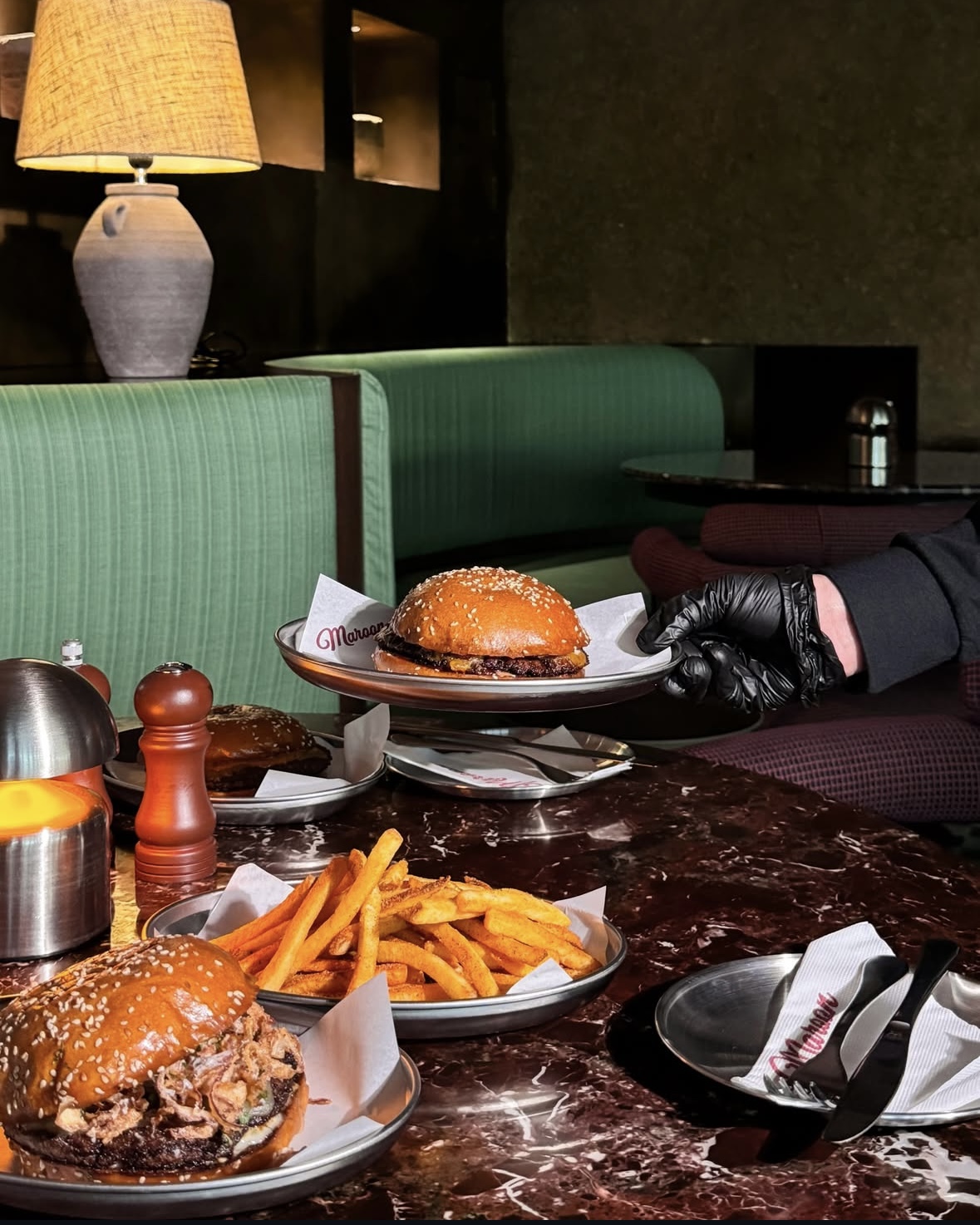
Maroon’s creative appetizers, like kunafa halloumi, bring a refreshing taste to the burger joint

Riyadh’s dining scene is crowded with burger joints, each offering its own take on the familiar combination of meat, cheese, and a toasted bun. At Maroon, however, the appeal extends beyond burgers, with appetizers that bring a creative touch to a casual dining experience. The restaurant pairs a contemporary interior with an easygoing atmosphere, making it suitable for an informal lunch or dinner with friends or family. The setting feels relaxed, allowing the focus to remain on the food and the

  •  

Spanberger: People Left Affordable Care Act Because 'They Couldn't Afford It' Without Subsidies

On Thursday’s broadcast of MS NOW’s “The Weeknight,” Virginia Gov. Abigail Spanberger (D) stated that people rolled off the Affordable Care Act “because they couldn’t afford it anymore” after the federal government stopped subsidies. Spanberger said, “We had over 100,000

The post Spanberger: People Left Affordable Care Act Because ‘They Couldn’t Afford It’ Without Subsidies appeared first on Breitbart.

  •  

Report: Ceuta Confirms 5 HIV Cases Related to Mass Migrant Invasion

Healthcare authorities in Ceuta have confirmed five known Human Immunodeficiency Virus (HIV) cases among the thousands of illegal migrants that invaded the city in July, a report published on Friday states.

The post Report: Ceuta Confirms 5 HIV Cases Related to Mass Migrant Invasion appeared first on Breitbart.

  •  

We don't trade our kids for their trick-or-treat candy haul. In fact, we let them keep their candy until long after Halloween has passed.

the author's kids wearing costumes and standing against a wooden fence
The author lets her kids eat as much Halloween candy as they want.

Courtesy of Tiffany Nieslanik

  • We don't offer our kids cash or toys for their Halloween candy.
  • They get to eat as much as they want on Halloween and keep the rest after.
  • I want them to learn how to listen to their bodies and develop a healthy relationship with sugar.

When Halloween rolls around every year, the Switch Witch or candy fairy posts start flooding my feed. But in our house, our three kids can eat as much candy as they want on Halloween night, and we don't offer to trade cash or toys for their haul. In fact, we let them keep their candy until long after Halloween has passed.

I'm not anti-rules, I'm pro-experience

I'm not saying sugar is harmless or that I want my kids to eat unlimited amounts of candy every day, but I understand the value of special occasions, and I want them to do the same. I also know that just telling kids something isn't good for them and not letting them have the firsthand experience often backfires. (Or maybe that's just my kids?) And I have to admit the first time I watched my oldest kid work her way through a pile of wrappers, I wondered if I'd made a huge mistake.

But it wasn't a mistake. It's allowed us to frame sugar within our eating habits to help our kids understand what a well-balanced diet means, rather than focusing only on its downsides. We talk about the place of protein, fruits, vegetables, whole grains, and treats in our lives. Ultimately, I'd rather help my kids build their own internal "enough" meter while they are young than have me control it now and send them into adulthood lacking the skill. This is one opportunity to do that.

candy on a couch
The kids get to keep their candy haul long after Halloween.

Courtesy of Tiffany Nieslanik

Our Halloween rules are simple

Our house generally operates on a "two sugars per day" rule: as long as they eat a good balance of foods, our kids can choose two things they'd like that contain sugar throughout the day. This might be a family trip to an ice cream shop or a lollipop from a doctor's office. But on Halloween, the only rule is that they have to eat a decent dinner before trick-or-treating. Then they can eat as much candy as they'd like.

The second rule around Halloween is that anything not eaten by the following summer is thrown away. And you'd be surprised at how much candy we throw away. Because candy isn't forbidden fruit in our house, our kids don't hoard it and are fairly mindful about eating what they truly enjoy. This means they're generally open to giving away candies they don't like to siblings or parents (my collection of Almond Joys each October 31st brings me great, well, joy), and they also preemptively throw away things no one likes.

the author and friends dressed up as characters from Hocus Pocus
The author, center, also enjoys Halloween candy, particularly Almond Joys.

Courtesy of Tiffany Nieslanik

They are learning an important lesson about their bodies

Each of our kids has learned what too much sugar feels like, from crashes to more unfortunate situations. There was the unforgettable Saturday afternoon our then-6-year-old treated us to bright blue throw-up, courtesy of too many Toxic Waste candies. And the night our then-10-year-old woke up again and again with a stomachache.

But none of them have had a negative experience twice (so far). They are growing more attuned to their bodies and what makes them feel unwell before they hit the tipping point. To me, this is a sign that they are forming healthy relationships with sugar, and eating in general. It's ever-evolving, of course, but I didn't grow up learning this skill, so it's one I want to give them.

And for me, it goes beyond food. I hope they'll understand and listen to their bodies in other situations as they grow, from going to parties in college to pushing themselves physically in exercise or sports. Our bodies are really cool, complex machines that give us a lot of signals if we know how to tune in. An overindulgent night of candy on Halloween seems like a pretty low-risk way to help them calibrate their "enough" meter.

Read the original article on Business Insider
  •  

Common developmental condition linked to higher risk of Parkinson's-related disorders

Older adults diagnosed with autism face a significantly higher risk of developing Parkinson’s disease-related movement disorders compared to the general population, according to a large new study published in the journal Autism.

Researchers analyzed Medicare and Medicaid claims data covering nearly 57 million Americans aged 45 and older between 2017 and 2019.

Individuals on the spectrum, as well as those with intellectual disabilities, were diagnosed with parkinsonism at much higher rates than those without autism.

HOW EATING HABITS COULD INFLUENCE PARKINSON’S DISEASE RISK, ACCORDING TO EXPERTS

Parkinsonism refers to a range of neurological conditions characterized by certain movement symptoms, including tremors, muscle rigidity, balance difficulties and slowed voluntary movement, according to the Parkinson’s Foundation.

While earlier research suggested an overlap between autism and motor decline later in life, it was unclear whether those problems stemmed from the condition or from antipsychotic medications, which are widely known to trigger Parkinson’s-like symptoms as a secondary side effect.

To determine whether medications explained the link, researchers excluded people who took antipsychotics from the analysis. They still found higher rates of Parkinson’s-related diagnoses in neurodivergent populations.

In the general population control group, the prevalence of parkinsonism was roughly 1.57%. The prevalence rose to 3.83% among adults with autism alone, 4.32% for those with an intellectual disability alone, and 4.86% among individuals diagnosed with both autism and an intellectual disability.

PARKINSON’S PATIENT’S YEARS-LONG TREMOR VANISHES WITHIN MINUTES OF NEW ULTRASOUND TREATMENT

"A critically important new contribution of this study is increased incidence rates of parkinsonism for autistic people in middle and older adulthood, which suggests that these cases aren’t simply a byproduct of lifelong motor challenges," Greg Wallace, lead author and a professor in the Department of Speech, Language and Hearing Sciences at The George Washington University in Washington, D.C., said in a press release.

The study represents the first time scientists have tracked the incidence rate, or the risk of newly emerging cases over time, among older autistic individuals.

"It is therefore important for clinicians to establish clear baselines of motor skills and challenges during adulthood that can be tracked over time," Wallace added.

Dr. Lee Murray, a neurologist based in Jackson, Tennessee, said this study clarifies previous research that suggested patients with autism are at a higher risk of having Parkinson's.

TEST YOURSELF WITH OUR LATEST LIFESTYLE QUIZ

"This study takes into account the use of antipsychotic medications that can cause a Parkinson's look (resting tremor, stiffness, shuffled gait, stooped posture, softened voice), which is a different pathology than stereotypical or idiopathic Parkinson's disease," Murray, who was not involved in the study, told Fox News Digital.

"This study showed patients with autism that was associated with intellectual disability seem to have the greatest association with concomitant Parkinson's."

The neurologist cautioned that autism encompasses a wide range of symptoms and severity, so the findings don't mean that people with milder cases face a significantly higher risk of Parkinson’s disease.

"It certainly is an interesting correlation, although it does not imply that someone with autism is certain to develop Parkinson's," Murray added.

CLICK HERE FOR MORE HEALTH STORIES

"From a clinical perspective, it's helpful to review medications with the autistic patient's physicians and, if possible, try to avoid medications that may cause a Parkinson's appearance."

Despite the scope of the data, the authors noted several key limitations of using insurance records.

The investigation relied on billing and diagnostic codes submitted through Medicare and Medicaid, which can contain errors or reflect differences in how clinics and medical providers diagnose conditions.

The reliance on claims data also means researchers could not assess the severity of individual motor symptoms or examine the role of lifestyle factors, genetics and family history, they noted.

CLICK HERE TO SIGN UP FOR OUR HEALTH NEWSLETTER

Additionally, the data only captured adults who were enrolled in public insurance programs, potentially leaving out older individuals who rely strictly on private health insurance.

Because people on the autism spectrum may already struggle with coordination, repetitive behaviors or executive functioning challenges, experts say early indicators of Parkinson’s disease can be missed or mistaken, potentially delaying essential care.

CLICK HERE TO DOWNLOAD THE FOX NEWS APP

"Patients with autism can have atypical movements that can be misdiagnosed as Parkinson's if the examiner is not accustomed to diagnosing it," Murray confirmed.

The researchers emphasized the need for physicians, long-term care facilities and family caregivers to closely monitor older autistic patients for motor decline so interventions can begin as early as possible.

  •  

Families in the US are opting for earlier measles vaccinations amid outbreak

Parents are opting for a second shot of MMR vaccine sooner, which aligns with guidance in Germany, the UK and France

Measles cases are accelerating in the US, with twice as many confirmed cases as last year, and more parents are opting for earlier vaccination – especially with the second dose of the measles, mumps and rubella (MMR) vaccine, which can be given as soon as four weeks after the first.

Giving the second shot soon after the first aligns with what some other countries, such as Germany, the United Kingdom and France, recommend – and the US Centers for Disease Control and Prevention (CDC) also says it’s an option.

Continue reading...

© Photograph: George Frey/Getty Images

© Photograph: George Frey/Getty Images

© Photograph: George Frey/Getty Images

  •  

Halloween candy favorites could leave adults with cracked teeth and far worse, says dentist

Cavities aren't the only Halloween candy hazard — many sweets can cause a fright to teeth and dental work even in adults, a dentist warns.

Hard sweets can crack a tooth, while sticky treats can pull out dental work, potentially turning a trick-or-treat haul into an expensive dental visit, according to Dr. Marc Lazare, a New York City dentist who has practiced for nearly 30 years and focuses on biomimetic dentistry.

But Lazare isn't trying to spook people. 

YOUR FAVORITE GROCERY AND SNACK ITEMS MAY HAVE DISAPPEARED FROM STORE SHELVES IN 2026

"I'm never going to be the dentist who says, 'Don't enjoy Halloween. Don't have candy,'" he told Fox News Digital. "I love Halloween."

It's all about moderation, he said.

As a dentist, he said he evaluates candy by how it could damage teeth: "Can it harm the enamel? Can it contribute to decay and cavities? Can it pull out a filling or a crown? Can it crack a tooth?" 

People with fillings, posts, crowns, existing cracks or teeth weakened by grinding are particularly vulnerable, he noted.

Hard sweets can force people to crunch down, which may crack or split a tooth, especially one that has already been restored, Lazare said.

GEN Z EATS NEARLY TWICE AS MANY SNACKS AS BOOMERS, WITH EXPERTS WARNING THEY'RE REPLACING REAL MEALS

"Anything where you have to force a crunch is not good," he said.

Super-sticky candies and caramels can cling to teeth and pull out fillings or crowns. Chewy sweets can get stuck between teeth, prolonging sugar exposure and what Lazare called an "acid attack."

Sour candy can also expose enamel to acid, he warned. He recommended avoiding snacking throughout the day to help limit acid exposure.

BEST FOODS FOR REDUCING DANGEROUS BELLY FAT AND PROTECTING HEART HEALTH

Candy isn't the only Halloween treat that can haunt your teeth, Lazare noted. While raisins are often seen as a healthier alternative for trick-or-treaters, they can stick to teeth and also contribute to prolonged acid exposure. 

"Raisins are probably one of the worst things you can have for your teeth," he said.

Lazare said his treat recommendation would be chocolate, which melts and dissolves quickly. Dark chocolate is best, he said, because it tends to be lower in sugar than other candy, but beware of fillings like raisins and toffee in that chocolate.

If you do indulge in some Halloween candy, Lazare said, some easy tips can help mitigate the damage.

TEST YOURSELF WITH OUR LATEST LIFESTYLE QUIZ

Rinse with water and wait about an hour before brushing because acid can temporarily soften tooth enamel and brushing immediately may increase wear. Then maintain your regular brushing and flossing routine. 

Sugar-free gum can also help clear food from teeth and get saliva flowing, Lazare said.

If a crown or other restoration comes out, "don't panic," he said. "Stop chewing on that side, save any crown or restoration that comes off, and contact your dentist promptly. Never try to reattach it with household glue."

CLICK HERE FOR MORE LIFESTYLE NEWS

Anyone experiencing severe pain, swelling or significant bleeding should "seek urgent dental care," he said.

Some restorations may be reusable, depending on their condition.

The main goal, Lazare said, is prevention, a central tenet of his biomimetic approach, which focuses on preserving natural tooth structure for the long term. 

CLICK HERE TO DOWNLOAD THE FOX NEWS APP

"We want to prevent damage rather than have to repair it," he said.

  •  

UK government’s obesity plan ‘doomed to fail’, MPs warn

Cross-party committee says ‘moonshot’ vow to end obesity epidemic in a decade will fail without personal leadership from PM

The UK government’s promise to reverse rising obesity rates in the next decade is “doomed to fail” without a major rethink and a new plan led directly by the prime minister, a cross-party committee of MPs has concluded.

The health and social care select committee said in a report that there are no signs the so-called “moonshot ambition on obesity”, set out in the 10-year health plan for England, will achieve anything significant.

Continue reading...

© Photograph: Rawpixel/Getty Images

© Photograph: Rawpixel/Getty Images

© Photograph: Rawpixel/Getty Images

  •  

Exclusive: Former HHS Senior Adviser Calley Means Calls Iowa ‘Ground Zero’ for MAHA Movement

Former Health and Human Services senior adviser Calley Means told Breitbart News that Iowa is positioned to play a central role in advancing the Make America Healthy Again (MAHA) movement, emphasizing the importance of the state's agricultural economy, concerns about cancer rates, and Republican gubernatorial candidate Zach Lahn's willingness to address difficult questions surrounding food and health policy.

The post Exclusive: Former HHS Senior Adviser Calley Means Calls Iowa ‘Ground Zero’ for MAHA Movement appeared first on Breitbart.

  •  

MAHA Rally Speakers Call Out ‘Fake News,’ Establishment Media: ‘Likes to Help Us Have Amnesia’

CLIVE, Iowa–Republican Iowa gubernatorial candidate Zach Lahn took aim at the establishment media during a Make Iowa Healthy Again rally on Wednesday, accusing the press of contributing to public forgetfulness about the past and what is at stake ahead of the midterm elections, while Steak 'n Shake Chief MAHA Officer Michael Boes challenged media portrayals of the Trump administration's efforts to improve Americans' health.

The post MAHA Rally Speakers Call Out ‘Fake News,’ Establishment Media: ‘Likes to Help Us Have Amnesia’ appeared first on Breitbart.

  •  

Chili's customers suffer chemical burns after dangerous margarita mix-up

Multiple customers at a Chili's Grill & Bar reported experiencing chemical burns Wednesday after consuming margaritas that had been prepared with an industrial cleaning chemical that was mistaken for sugar or salt.

The Foothills Health District said the incident unfolded at a restaurant in Forest City, North Carolina.

Three customers consumed the contaminated margaritas, while two restaurant employees also reportedly experienced symptoms after exposure to the chemical, according to the health district.

ROACHES CAUGHT CRAWLING ACROSS POPULAR STEAKHOUSE'S KITCHEN FLOOR IN VIRAL EMPLOYEE VIDEO

According to preliminary findings, the mix-up began Monday when an employee received an industrial degreaser from a contracted worker and placed it in an unmarked container.

The container was then brought inside the restaurant and left in the bar area.

Two days later, an employee preparing the bar for lunch service discovered the unlabeled container and, believing its contents to be sugar or salt, used the chemical to prepare the margarita station, the health district said.

Shortly after the restaurant opened, three customers consumed the contaminated beverages and "immediately experienced discomfort and chemical burns in and around their mouths."

After the customers alerted staff, two employees also tasted the substance and reported similar symptoms.

CHILI'S REVIVES ICONIC RED BOOTHS AND CLASSIC DESIGN IN NATIONWIDE RESTAURANT OVERHAUL

In a statement to Fox News Digital, Chili's said the company took immediate action to support those affected.

"We are aware of an isolated incident at our restaurant in Forest City, North Carolina that resulted in injuries to two of our guests and Team Members. Our team took immediate action to support those affected and avoid any further injuries. We are actively investigating the circumstances related to this incident as the health and wellbeing of our guests and Team Members remain our top priority," the company said.

The company’s account differed from the Foothills Health District’s preliminary findings, which said three customers experienced chemical burns after consuming the margaritas.

After the Foothills Health District launched an investigation, the restaurant's food service permit was immediately suspended.

It was quickly reinstated on Thursday after specialists determined the restaurant met all other food safety standards.

MORE THAN 12,000 POUNDS OF BACON RECALLED AFTER USDA ISSUES HIGHEST-RISK ALERT

The health district used the incident to remind all food service establishments in North Carolina that chemicals must be properly labeled and stored away from food-handling areas.

CLICK HERE TO DOWNLOAD THE FOX NEWS APP

"This incident highlights the importance of proper chemical labeling, storage, and handling in food service establishments, as required by the North Carolina Food Code, to prevent chemical contamination and protect public health," Jason Masters, the health director of Foothills Health District, said in a statement.

  •  

Daylight saving time is ending: Doctor breaks down 6 ways to protect your sleep and health

Turning the clocks back at the end of daylight saving time has been linked to trouble falling and staying asleep, while ongoing sleep loss can take a toll on health.

While some research has suggested that the fall time change could have some cardiovascular benefits, the abrupt loss of evening sunlight can suppress serotonin and melatonin production, which can lead to a depressed mood, according to Dr. John La Puma, a California physician and expert in nature-based medicine.

The body’s internal clock does not automatically follow the clock on the wall, La Puma noted.

THE DAYTIME HABIT THAT COULD TRANSFORM YOUR SLEEP, ACCORDING TO NEW STUDY

"When the clocks change, your body clock is still on the old time," he told Fox News Digital, pointing out some common effects people may notice.

"So, for about a week, you wake up an hour early. You get hungry early. You feel sleepy early. It gets dark by five. Afternoon light goes away. You get months of short days. … You need coffee just to feel human. It's not great."

Making small adjustments to your routine after the time change could help ease the transition, the doctor said.

No. 1: Make small schedule shifts

With clocks turning back overnight Saturday, people can begin moving bedtime, meals and wake-up time later in small increments on Friday, according to La Puma.

"So, you move your day later in small steps," he advised. "You move your bedtime and meals the same 15 minutes each time."

DOCTOR REVEALS 4 HIDDEN HEALTH RISKS OF SPENDING TOO MUCH TIME INDOORS

For someone who normally goes to bed at 10 p.m., that could mean 10:15 p.m. Friday and 10:30 p.m. Saturday, before the clocks change. Wake-up times and meals can shift by the same increments as schedules allow.

No. 2: Don't spend the ‘extra hour’ on a late night

Since the time change falls on Halloween, Dr. Saema Tahir, a sleep medicine doctor in New York City, cautioned against staying up late and drinking, operating under the assumption that the extra hour covers it.

"Keep alcohol moderate, finish drinking a few hours before bed and avoid caffeine after early afternoon," she advised.

"Alcohol makes you drowsy at first but breaks up sleep in the second half of the night. Caffeine stays in your system for hours. Together, they can leave you more tired on Sunday than you would be with no time change at all."

No. 3: Get outside at the right time

La Puma also emphasized the importance of being intentional about outdoor exposure.

CLICK HERE FOR MORE HEALTH STORIES

"You want to get outside at the right minutes, at the time of day and in the right place if you can," he advised, specifically recommending getting outside each afternoon later in the day.

"Late-day daylight is different than morning daylight. Late-day daylight tells your body the day is running long, and it shifts later," he said.

Once you've adjusted to the time change, Tahir recommends getting outdoor light within an hour of waking every day through the winter.

"Light is the strongest signal the body clock gets," she told Fox News Digital. "Evening light pushes it later, which is the direction you need to go for 'fall back.' Morning light keeps it stable over the darker months and supports mood and daytime alertness."

No. 4: Create a wind-down routine

Choosing a relaxing activity that signals bedtime is approaching can help to promote a consistent sleep schedule.

CLICK HERE TO DOWNLOAD THE FOX NEWS APP

La Puma suggests choosing a relaxing bedtime ritual, such as working in a paper workbook, sipping chamomile tea, taking a bath or using aromatherapy, options he outlines in his book, "Indoor Epidemic."

"Very specific things that tell your brain and body, 'I'm winding down so I can go to sleep.'"

No. 5: Avoid caffeine and screens

Other tips include limiting caffeine after noon and stopping screen time at least an hour before bedtime.

La Puma warned that light from the screen can suppress melatonin, the hormone that helps signal it is time to sleep. Even using night mode may not fully prevent that effect.

No. 6: Keep a consistent schedule after the change

Once the clocks change, it’s important to maintain a regular wake-up time, including on weekends, La Puma said.

"Pick one wake-up time and keep it every day, weekdays and weekends."

CLICK HERE TO SIGN UP FOR OUR HEALTH NEWSLETTER

La Puma cited an eight-year study of about 60,000 people that linked consistent sleep and wake times to a 19% lower risk of death.

TEST YOURSELF WITH OUR LATEST LIFESTYLE QUIZ

"So, sleep and wake times have important effects on heart attack, stroke and cardiovascular mortality," he said.

Anyone experiencing persistent trouble falling or staying asleep, frequent daytime fatigue or sleep loss that interferes with daily activities should contact a healthcare provider, according to the National Institutes of Health.

  •  

'My body is my business': How a model leveraged her career into brand-building power

Ashley Graham is a model and entrepreneur who has spent her career challenging who is seen, heard, and marketed to, transforming that influence into a growing business.

Ten years after her "Sports Illustrated" cover, Graham took the stage at Business Insider's The Long Play to unpack how she has built a personal brand across fashion, beauty, entertainment, and consumer products without losing what's at the core of her identity.

Graham spoke about Lucci, her new venture in the wine business, and her longtime partnership with JCPenney during her interview with Business Insider's executive editor, Leena Rao.

During the conversation, titled "Breaking the Mold," Graham also said that getting lots of rejection early on in her career has made her into a better businessperson.

"If it's not for you, there's another thing for you. And you can't take it personally," Graham told Rao.

Read the original article on Business Insider

  •  
❌