President Trump said Friday his administration is looking into the $6.3 billion hacking of the cryptocurrency exchange Binance, the largest such hack on record. “We don’t know,” Trump said in the Oval Office when asked if the hack should be attributed to a suspected North Korean hacker group. “We’re looking at that,” he continued. TraderTraitor,…
President Trump said Friday his administration is looking into the $6.3 billion hacking of the cryptocurrency exchange Binance, the largest such hack on record. “We don’t know,” Trump said in the Oval Office when asked if the hack should be attributed to a suspected North Korean hacker group. “We’re looking at that,” he continued. TraderTraitor,…
Pedro Costa Júnior, doutor em Ciência Política pela USP e especialista em Estados Unidos, avaliou ao CNN 360° que o governo do presidente americano, Donald Trump, corre o risco de se tornar um “pato manco” caso os democratas reconquistem a maioria no Congresso nas eleições de meio de mandato, as chamadas midterms.
A expressão, amplamente utilizada pela imprensa americana, descreve um governo que perde governabilidade ao não contar com o apoio do Legislativo.
Segundo Pedro Costa Júnior, Trump chegou ao seu segundo mandato com ampla legitimidade política.
“Ele venceu no colégio eleitoral e no voto popular, venceu em todos os swing states“, afirmou o especialista, destacando que essa combinação de vitórias não ocorria há muito tempo.
Leia Mais:
Com o Congresso, o Senado e a Suprema Corte sob influência republicana, os primeiros dois anos do atual governo foram marcados por grande capacidade de aprovação de pautas.
“Ele praticamente passou tudo o que ele quis passar nesses dois anos”, disse.
Democratas favoritose disputa interna nos partidos
As pesquisas apontam para uma retomada democrata tanto na Câmara quanto no Senado, embora a disputa pelo Senado seja considerada mais acirrada.
Pedro Costa Júnior destacou que essa eleição tem caráter plebiscitário.
“Ela é muito mais plebiscitária do que regional. É sobre a continuação dessa governabilidade ou não do governo Trump”, afirmou.
O especialista também ressaltou que, historicamente, as midterms tendem a favorecer a oposição, o que já representa um obstáculo adicional para o Partido Republicano.
No que diz respeito ao cenário interno dos partidos para as próximas eleições presidenciais, Pedro Costa Júnior apontou que tanto republicanos quanto democratas enfrentam desafios de renovação geracional.
No campo republicano, os nomes mais cotados seriam JD Vance, descrito como o vice-presidente mais jovem da história dos Estados Unidos quando eleito, aos 39 anos, e Marco Rubio.
“Vai ter uma briga fratricida, quase uma guerra civil entre Rubio e Vance dentro do Partido Republicano”, avaliou o especialista.
Já entre os democratas, nomes como Ocasio Cortez e Bernie Sanders foram mencionados, mas o partido ainda busca consolidar uma candidatura forte para enfrentar o pleito daqui a dois anos.
Baixa aprovação e promessas não cumpridas pesam contra Trump
Pedro Costa Júnior apontou dois fatores centrais para a baixa popularidade de Trump, que registra 31% de aprovação — o que, segundo ele, representa a maior rejeição da história de um presidente americano.
O primeiro é a inflação, que Trump prometeu controlar e não conseguiu.
“Ele disse que os democratas não controlaram a inflação e que ele, como homem dos negócios, faria esse controle. Não conseguiu”, afirmou.
O segundo fator é o envolvimento dos Estados Unidos em um conflito armado com o Irã, contrariando a promessa de não iniciar novas guerras.
Segundo o especialista, Trump chegou a afirmar que o conflito duraria seis dias, mas a guerra já ultrapassa seis meses sem previsão de encerramento, impactando os preços de energia e abalando a confiança de parte de sua base eleitoral.
Os textos gerados por inteligência artificial na CNN Brasil são feitos com base nos cortes de vídeos dos jornais de sua programação. Todas as informações são apuradas e checadas por jornalistas. O texto final também passa pela revisão da equipe de jornalismo da CNN. Clique aqui para saber mais.
O presidente dos Estados Unidos, Donald Trump, afirmou nesta sexta-feira (30) acreditar que a guerra com o Irã terminará em breve, mas não explicou como isso aconteceria.
“Isso vai se resolver em breve”, disse Trump em entrevista à emissora de rádio KCMO, de Kansas City.
“Precisamos de uma garantia de que nunca haverá uma arma nuclear”, adicionou.
Trump já havia afirmado que o conflito deveria acabar após as Midterms, as Eleições de Meio de Mandato dos Estados Unidos, e que as forças americanas não atacariam o Irã até lá.
A votação — que é crucial para a governabilidade do líder republicano no restante de seu mandato, pois definirá o controle do Congresso — acontecerá em 3 de novembro.
De toda forma, fontes afirmaram à CNN que o Exército dos EUA no Oriente Médio está preparado para lançar novas operações militares, potencialmente de grande porte, contra o Irã “dentro de 96 horas após receberem” uma ordem de Donald Trump.
Forças suficientes já estão implantadas na região para realizar possíveis investidas, disseram as fontes.
Premiums will increase an average 13 percent next year for millions of Americans, on top of an earlier steep increase. It adds to the problems facing the program, which the Trump administration has weakened.
Na próxima terça (3), os Estados Unidos vão às urnas nas midterms, as eleições de meio de mandato, onde ficam em jogo a Câmara dos Deputados, um terço do Senado e 36 governos estaduais.
A avaliação da Arko Advice, parceira de conteúdo do WW, é que o Partido Republicano do presidente Donald Trump chega nessa reta final na defensiva.
Deputados republicanos de distritos considerados seguros estão em “modo de emergência”, realizando arrecadação de última hora e investindo pesado em propaganda.
Depois da nossa eleição presidencial vimos a fuga de Flávio Bolsonaro (PL) aos EUA e o governo americano chegou a confirmar essa passagem pela imigração na Flórida e liberação do senador brasileiro.
E as políticas de Trump para o Brasil, como o apoio à família Bolsonaro, as tarifas e os potenciais acordos, passam a ter um custo diferenciado no congresso americano.
Um presidente enfraquecido em casa tende a ter menos espaço para confrontar outros governos no âmbito internacional. E as dificuldades de Trump também vão além da Câmara.
Estados como Kansas, Louisiana, Carolina do Sul e Nebraska também têm um pleito muito acirrado e que surpreenderam pela situação nas pesquisas eleitorais.
A Arko aponta para uma leve vantagem democrata, mas que deve ser vista como um alerta. O resultado das midterms pode levar semanas para sair. Isso porque diversos estados fazem a contagem de formas diferentes.
Com isso, devemos ver também logo nos primeiros meses alguns testes, como uma possível votação sobre o impeachment do Secretário de Defesa, Pete Hegseth, e uma disputa pela liderança republicana nas casas.
* Michael Lopez Stewart é sócio-diretor da Arko Advice. Este texto foi transcrito em primeira pessoa de análise em vídeo para o WW.
A plataforma X suspendeu 15 contas que promoviam o que se suspeita ser desinformação russa sobre as Midterms, as Eleições de Meio de Mandato dos Estados Unidos. No entanto, algumas contas influentes permanecem ativas, segundo uma organização que monitora a desinformação.
Especialistas afirmam que, até o momento, a interferência russa nas Midterms de 2026 tem sido limitada. Contudo, observou-se um aumento recente na atividade de contas nas redes sociais — possivelmente ligadas à Rússia — que disseminam alegações falsas sobre diversos candidatos democratas ao Senado.
Especialistas em desinformação informaram que as suspensões no X ocorreram na quinta-feira (29) e incluíram perfis com mais de 100 mil seguidores. Ainda assim, muitas das contas mais influentes que propagam esse tipo de conteúdo continuavam ativas até esta sexta-feira (30).
“O X demonstrou que, até certo ponto, está atento a essa questão”, afirmou Bret Schafer, diretor sênior do Institute for Strategic Dialogue, organização que identificou as suspensões.
“Muitas das publicações russas encobertas que detectamos foram removidas rapidamente. Por outro lado, outros elementos dessa infraestrutura continuam no ar”, adicionou.
Essa atividade online assemelha-se a esforços de desinformação observados anteriormente durante o ciclo eleitoral de 2024 — ações que, segundo agências de inteligência dos EUA, estariam ligadas a agentes do governo russo.
A CNN entrou em contato com o X solicitando um posicionamento sobre as remoções e aguarda retorno.
At a hearing in federal court, prosecutors defended an unusual, 11th-hour criminal case accusing the former F.B.I. director of leaking classified information a decade ago.
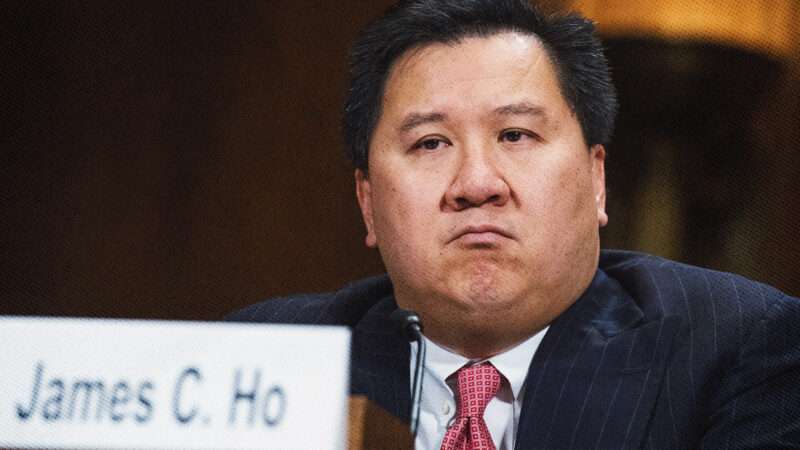
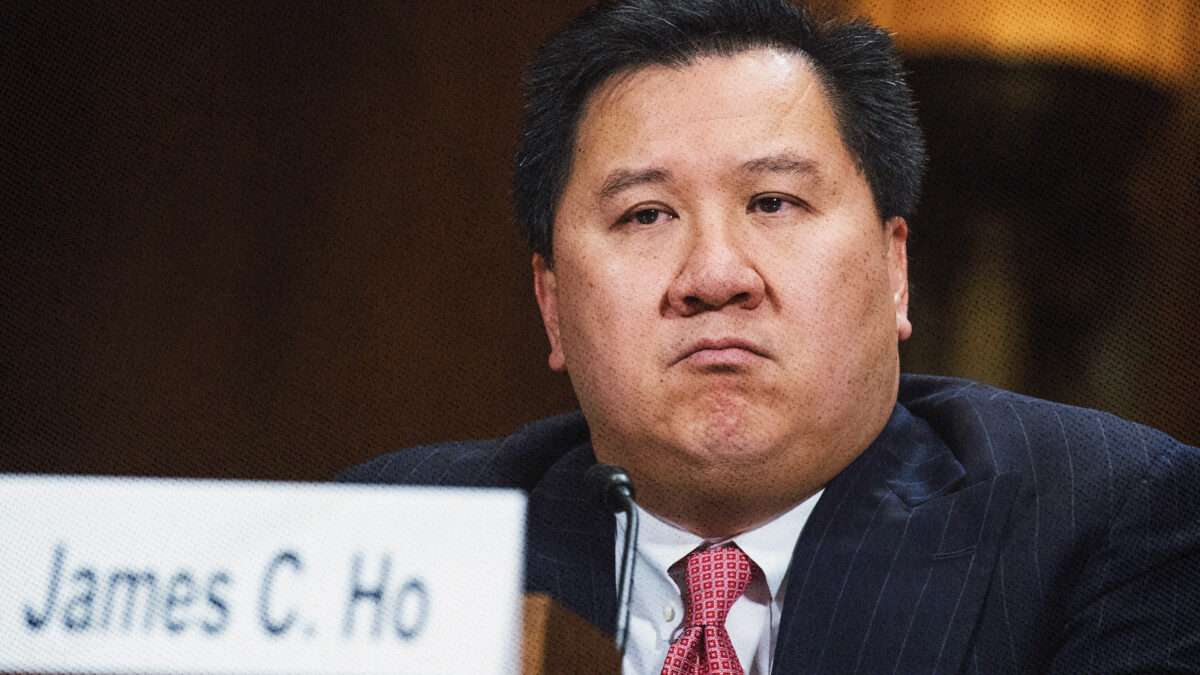
James Ho, whom President Donald Trump appointed to the U.S. Court of Appeals for the 5th Circuit in 2017 and considered as a potential Supreme Court nominee, recently criticized Trump v. Barbara, the June 2026 decision rejecting Trump's attempted restrictions on birthright citizenship. Ho's remarks, part of a speech he delivered on October 5 to a gathering of Christian activists at the Museum of the Bible in Washington, D.C., are striking because they seem to contradict his longstanding position that the children of unauthorized immigrants qualify as citizens under the 14th Amendment when they are born in the United States.
The New York Timespresents Ho's speech as evidence that he hopes Trump will nominate him to the Supreme Court, assuming that opportunity arises during the next two years. But whatever you make of that theory, Ho's position on Trump v. Barbara is hard to reconcile with what he has repeatedly said about the meaning of the 14th Amendment's Citizenship Clause.
"Birthright citizenship is guaranteed by the Fourteenth Amendment," Ho wrote in a 2006 law journal article. "That birthright is protected no less for children of undocumented persons than for descendants of Mayflower passengers."
Ho reiterated that position in a 2011 Wall Street Journal essay. "Opponents of illegal immigration cannot claim to champion the rule of law and then, in the same breath, propose policies that violate our Constitution," he wrote.
The first sentence of the 14th Amendment, Ho noted, says "all persons born or naturalized in the United States, and subject to the jurisdiction thereof, are citizens of the United States." The "plain meaning" of that language "is clear," Ho said. "A foreign national living in the United States is 'subject to the jurisdiction thereof' because he is legally required to obey U.S. law." The historical evidence, he added, shows that "both proponents and opponents of the citizenship clause agreed" that "it would extend birthright citizenship to the U.S.-born children of Chinese laborers and other noncitizens."
So why does Ho think the Supreme Court reached the wrong result in Trump v. Barbara? "Foreign governments weaponize illegal immigration in order to hurt other countries," he said at the Museum of the Bible conference, which was convened by the Judicial Action Group. "For decades, administrations of both parties have warned the people about the use of illegal immigration as a weapon of war, and judges are supposed to defer to presidential proclamations about a state of invasion. So the Supreme Court should have upheld the president's birthright citizenship order in full based on his invasion proclamation."
Ho hinted at this position in a November 2024 interview with South Texas College of Law professor Josh Blackman, who agrees with Ho that the Citizenship Clause covers the U.S.-born children of unauthorized residents. The previous July in United States v. Abbott, Blackman noted, Ho had written a dissenting opinion arguing that illegal immigration could qualify as an "invasion" under Article I, Section 10, Clause 3 of the Constitution, which says no state may "engage in war, unless actually invaded, or in such imminent danger as will not admit of delay."
Blackman asked Ho to address criticism of that opinion. "Anyone who reads my prior writings on these topics should see a direct connection between birthright citizenship and invasion," Ho replied. "Birthright citizenship is supported by various Supreme Court opinions, both unanimous and separate opinions involving Justices Scalia, Thomas, Alito, and others. But birthright citizenship obviously doesn't apply in case of war or invasion. No one to my knowledge has ever argued that the children of invading aliens are entitled to birthright citizenship. And I can't imagine what the legal argument for that would be."
The problem with Ho's qualification is that it empowers the president to override birthright citizenship, which Ho has said is guaranteed by the 14th Amendment, simply by declaring that illegal immigration amounts to an "invasion." It is not hard to see why that position would appeal to Trump, since it means he can unilaterally redefine citizenship.
Does that mean Ho is kissing up to Trump because he wants to replace any justice who might retire before the end of Trump's term? That is what Times reporter Mattathias Schwartz suggests. Schwartz concedes that Ho, like most of the potential Supreme Court nominees that Trump listed during his first term, falls into the category of "traditional conservatives with strong ties to the Federalist Society." But Schwartz says "some experts perceive Judge Ho's remarks" as "an attempt to show his alignment with Mr. Trump's worldview."
How so? Ho's speech "channeled frustrations shared by Mr. Trump and his base that the Supreme Court's six-judge conservative supermajority—three of whom are Mr. Trump's appointees—have failed to uniformly back his agenda," Schwartz writes. "Despite a string of conservative wins on abortion, gun rights, and gerrymandering, there is a sense on the Trump-aligned right that Justices Brett M. Kavanaugh, Amy Coney Barrett and Neil M. Gorsuch are becoming unreliably centrist swing votes—'squishes' in the online parlance—in the mold of Justices Anthony M. Kennedy and David H. Souter."
That framing implies that backing Trump's agenda is a matter of conservative principle. But Trump himself has no coherent ideology, and his authoritarian impulses often run headlong into conservative principles such as originalism, the rule of law, and the separation of powers. It makes sense to describe justices who occasionally disagree with Trump as "centrist" only if you accept the idea that his views are the standard by which judicial performance should be judged.
In any event, Schwartz suggests that Ho is presenting himself as a Trump-friendly judge who, unlike Kavanaugh, Barrett, and Gorsuch, could be relied upon to take the president's side. But the evidence that Schwartz cites to support that take is thin.
As Schwartz acknowledges, it is not even clear that Ho wants the job for which he supposedly is auditioning. His wife, Allyson N. Ho, works for a law firm that frequently litigates Supreme Court cases, and Judge Ho has suggested that her career would be ruined if he joined Court. "I can't imagine that Allyson's firm would want to be categorically recused from the highest court in the land," Ho said in a recent interview. "To have to tell every client that, if you hire them, they can only seek cert from an eight-member Court? That would effectively end her career and her practice—one she's worked so hard, for decades, to build."
Undeterred by that wrinkle, Schwartz cites parts of Ho's speech that he thinks suggest a desire to please the president. "Judge Ho lamented the values of 'this fallen world,'" Schwartz writes. "He called on the judiciary to stand up to 'cultural elites who control the national discourse.' He also bluntly rebuked the Supreme Court for legalizing same-sex marriage. He said the court's majority was wrong not to block the distribution of an abortion drug. And he said it was wrong again when it rejected Mr. Trump's attempt to limit birthright citizenship."
Those comments presumably appealed to the Christian conservatives in the audience. But with the exception of Ho's position on Trump v. Barbara, none of this seems tailored to ingratiate Ho with Trump, who is not particularly religious and seems to have no real interest in revisiting same-sex marriage or overriding state abortion policies.
While opposition to "cultural elites" sounds consistent with Trump's populism, the context of that phrase makes it clear that Ho was defending originalism against result-oriented jurisprudence. "We know that originalism may be permitted in polite company," Ho said, "but only until it leads to outcomes that are detested by the cultural elites who control the national discourse and who dispense the prestige and the respect and the stature craved by so many judges."
Although Ho's speech was peppered with Christian rhetoric, some of which the Times quotes, he emphasized that originalism does not entail interpreting the law according to religious principles. "Being an originalist means following the text and original understanding of the law no matter the outcome, no matter the effect on the judge's standing or reputation in the community," he said. "And if that's truly what you're doing, there actually should not be a Christian interpretation of the text or an atheist interpretation of the text. There would just be a dutiful, faithful interpretation of the text."
If you think Trump honestly cares about judicial methodology, "faithful interpretation of the text," or adherence to the original understanding of the Constitution, you have not been paying attention to his criticism of judges and justices, which is always based on their failure to agree with him. Michael Fragoso, former chief counsel to Sen. Mitch McConnell (R–Ky.), who was the Senate majority leader when Trump nominated Kavanaugh, Gorsuch, and Barrett, made exactly that point in an interview with Schwartz.
"One thing the activist class hasn't figured out is that the president doesn't really care about any of those substantive questions," Fragoso said. "He sees this as a loyalty issue."
Given that reality, you might expect that a judge trying to signal "his alignment" with Trump would say something about tariffs, his signature policy. But Ho's criticism of recent Supreme Court rulings did not extend to its decision last February in Learning Resources v. Trump, which rejected Trump's claim to sweeping tariff powers under the International Emergency Economic Powers Act.
Of all his judicial setbacks during his current term, Trump was probably angriest about that one—in particular, the role that Gorsuch and Barrett played by joining the majority. Yet Ho, who supposedly was channeling Trump's frustration with such traitors, did not mention that case. Nor did he say anything about the Supreme Court's ruling against Trump's National Guard deployments or its decision constraining his use of the Alien Enemies Act, which were both big losses for him.
Those omissions are puzzling if Ho was mainly interested in boosting his chances at a Supreme Court nomination. Less so if he was simply expressing his honest opinions.
Originally published by Pacific Forum, this article is republished with permission. Taiwan’s external security situation is bleak. China, flush with new and modern weaponry, is regularly practicing for a military operation to forcibly annex the island. There are doubts about continued US support. The Trump Administration, hoping for a big bilateral trade deal with China, […]
Judge Ana C. Reyes said an outside investigator would help determine whether parks officials or Justice Department lawyers withheld plans for Washington’s East Potomac Park.
A federal judge on Friday called for an investigation into whether the Trump administration concealed its plans to renovate a public golf course at East Potomac Park.
Vaticano confirmou que o Papa enviou boletim de voto para Chicago. Prevost votou "sempre que teve oportunidade", destacou a Santa Sé. Participação eleitoral surge numa altura de tensão com Trump.
President Donald Trump and First Lady Melania Trump hosted trick-or-treaters for the annual Halloween bash on Thursday at the White House, with photos and videos showing the colorful festivities.
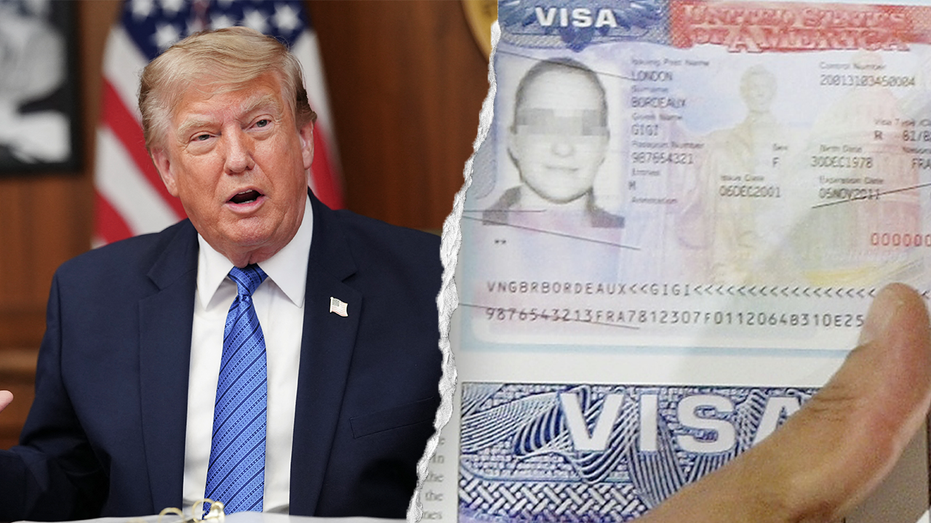
A liberal-majority appeals court in California handed the Trump administration a victory by blocking a lower court's ruling that ordered the State Department to open its application pool for the 2027 Diversity Visa lottery, which admits roughly 55,000 immigrants from low-immigration countries each year.
In a 2-1 ruling, the Ninth Circuit Court of Appeals blocked a preliminary injunction issued by U.S. District Judge Jinsook Ohta requiring the lottery pool to be opened after Secretary of State Marco Rubio issued a notice in November delaying the program's acceptance of new applications in order to "implement certain changes," but the application period never opened.
A month later, the State Department ordered an indefinite pause on issuing diversity visas after a Portuguese national who was issued a lottery visa in 2017 committed a mass shooting at Brown University, killing two people and injuring nine others. The shooter, Claudio Manuel Neves Valente, was also tied to the murder of a Massachusetts Institute of Technology (MIT) professor two days after the Brown University shooting.
The Ninth Circuit has been a perennial thorn in the side of President Donald Trump, having ruled against key portions of Trump's 2017 executive order restricting travel from predominantly Muslim countries and blocked a policy barring immigrants from being eligible for asylum if they crossed the southern border between ports of entry.
However, the appeals court ruled that the lower court's preliminary injunction could not be enforced, finding that the immigration law firm Red Eagle, which represents individuals going through the visa lottery process, did not have standing to sue the federal government. The appeals court ruled that the program was intended to "encourage immigration, not generate revenue for law firms."
The court wrote, "If Red Eagle Law were allowed to allege standing based upon its hypothetical or conjectural collateral injury, we would be opening the floodgates, allowing all lawyers to ‘roam the country in search of governmental wrongdoing.’"
However, the court made clear that its ruling was based on procedural grounds and did not weigh whether the State Department failed to follow the law.
"We do not endorse the Department’s failure to open the lottery registration period," the court wrote.
Abhishek Kambli, a former federal prosecutor and partner at Holtzman Vogel, said the decision by the liberal court was a "very easy call" in a post on X.
"Here, the plaintiff was a law firm not bringing a claim on behalf of someone in the diversity visa lottery but on behalf of the firm itself," Kambli wrote. "The district court should have never gone beyond standing but CA9 corrected this one."
President Donald Trump has been vocal about his opposition to the Visa Lottery Program for years. During his January 2018 State of the Union address, he called for ending the program, arguing that visas should be issued based on merit.
Earlier that same month, Trump said during a bipartisan meeting with lawmakers at the White House that lottery visas allow the "worst of the worst" to come into the country.
"They call it ‘visa lottery,’ I just call it ‘lottery.’ But countries come in and they put names in a hopper," Trump said. "They’re not giving you their best names; common sense means they’re not giving you their best names."
Countries eligible for the 2026 lottery included Afghanistan, New Zealand, Ecuador, Iran, Uganda, Somalia and Russia. The program was designed to create an additional pathway for people seeking visas who may not qualify through traditional channels, such as employment- or family-based immigration.
Uma disputa eleitoral incomum chama a atenção no estado do Alasca, nos Estados Unidos. Dois candidatos com o mesmo nome, Dan Sullivan, aparecem na mesma cédula de votação para uma vaga no Senado americano, gerando confusão entre os eleitores e acusações mútuas entre o Partido Democrata e o Partido Republicano.
O caso ganhou ainda mais repercussão ao se tornar objeto de uma investigação criminal. O Departamento de Justiça já teria enviado intimações para apurar se os democratas agiram propositalmente ao colocar um segundo candidato homônimo na disputa.
A editora de Internacional da CNN, Mariana Catacci, detalhou a confusão durante o Live CNN desta sexta-feira (30). Ela explicou que, nos Estados Unidos, este caso está sendo visto como uma “supresa de outubro”.
“É uma expressão usada para um evento que acontece no mês que antecede a eleição, seja presidencial ou de meio de mandato, e que pode alterar o rumo da eleição no mês seguinte”, contou Catacci.
Como surgiu a candidatura de dois Dan Sullivans
O sistema eleitoral do Alasca permite que os quatro candidatos mais bem votados nas primárias, independentemente do partido, avancem para a eleição geral.
Foi assim que um candidato independente também chamado Dan Sullivan conseguiu se inserir na disputa e aparecer ao lado do candidato republicano de mesmo nome na cédula de eleição no Alasca.
Segundo uma reportagem do jornal The New York Times, a equipe da candidata democrata Mary Peltola teria recrutado propositalmente esse segundo Dan Sullivan para causar confusão entre os eleitores e diluir os votos do candidato republicano.
A prática, conhecida como ballot stacking, consiste em incluir candidatos com poucas chances reais de vitória na cédula com o objetivo de sobrecarregar a urna e fragmentar os votos do adversário.
Legalidade e repercussão política
Embora moralmente questionável, a tática do ballot stacking é considerada legal nos Estados Unidos e já foi utilizada tanto por democratas quanto por republicanos em diferentes eleições.
No entanto, o caso específico do Alasca gerou uma reação institucional: o Departamento de Justiça iniciou investigações para determinar se a conduta dos democratas configura algum tipo de violação legal.
O contexto político torna o episódio ainda mais sensível. O Alasca é um estado em que os republicanos lideram, mas onde os democratas têm conseguido se posicionar de forma competitiva nas pesquisas, com risco real de o estado eleger um senador democrata.
O presidente Donald Trump já alegou, sem apresentar provas, que há indícios de fraude eleitoral na disputa, o que deve alimentar ainda mais o debate político nos próximos dias.
Os textos gerados por inteligência artificial na CNN Brasil são feitos com base nos cortes de vídeos dos jornais de sua programação. Todas as informações são apuradas e checadas por jornalistas. O texto final também passa pela revisão da equipe de jornalismo da CNN. Clique aqui para saber mais.
O presidente Donald Trump cancelou de última hora dois comícios previstos para este fim de semana nos estados de Iowa e Kansas, ambos tradicionalmente republicanos. Com a mudança na agenda, Trump participará apenas de um evento de campanha na Flórida.
O cancelamento surpreendeu pela forma abrupta, mas não gerou desconforto interno no partido. Pelo contrário: fontes do Partido Republicano disseram à CNN que receberam a notícia com alívio.
Outra fonte apontou que os eventos consumiam um tempo precioso que os candidatos republicanos poderiam aproveitar para intensificar suas próprias campanhas, como a realização de atividades de porta em porta.
Ao ser questionado por um repórter sobre se o cansaço seria a razão por trás dos cancelamentos, Trump negou a afirmação de forma contundente. Segundo relatos, o republicano reagiu com irritação, ofendeu o jornalista que fez a pergunta e ainda o chamou de “fora de forma”.
Os cancelamentos ocorrem em meio à disputa pelas eleições de meio de mandato americanas, que serão realizadas na próxima terça-feira (3). As midterms preveem a renovação de todas as cadeiras da Câmara dos Representantes e de 35 das 100 cadeiras do Senado.
Hoje, os republicanos detêm a maioria nas duas casas do Congresso. As pesquisas apontam para uma possível virada nas duas casas, tornando a disputa ainda mais acirrada.
Entre os estados que concentram atenção está o Texas, historicamente republicano, mas onde a comunidade latina tem pesado nos resultados.
O candidato do Partido Democrata James Talarico aparece com margem de vantagem na região, impulsionado por uma injeção recorde de recursos financeiros da campanha democrata e pelo voto latino, que teria se distanciado de Trump em razão de sua política migratória.
O ex-presidente Barack Obama também tem atuado ativamente na campanha democrata, viajando por diversos estados em apoio aos candidatos do partido.
Os textos gerados por inteligência artificial na CNN Brasil são feitos com base nos cortes de vídeos dos jornais de sua programação. Todas as informações são apuradas e checadas por jornalistas. O texto final também passa pela revisão da equipe de jornalismo da CNN. Clique aqui para saber mais.
The NYU Brennan Center for Justice recently published a valuable report entitled "Seven Solutions to Rein In Abuses of Executive Power." The Brennan Center is well to the left of me. But I agree with the vast majority of their recommendations here. We do indeed have an overgrown executive, and it needs to be pared back. I particularly agree with the excellent section on constraining emergency powers:
With just a signature, presidents can declare a national emergency and unlock special powers contained in more than 130 statutory provisions. These run the gamut from the seemingly trivial to the near-dictatorial, including powers to shut down or take over communications infrastructure, freeze Americans' bank accounts, and control domestic transportation. They are intended for sudden, fast-moving crises that Congress can't address quickly or flexibly enough. But presidents of both parties have stretched the meaning of "emergency" far beyond reason, enabling them to draw from a growing stockpile of statutory authorities with few real safeguards.
There are currently 51 active states of emergency, and the longest-running has lasted 47 years.10 Any emergency that persists for generations is, by definition, not an emergency; it's a problem that can be addressed through ordinary lawmaking. Yet presidents have used emergency powers to bypass Congress and unilaterally advance their policy goals.11
The National Emergencies Act once allowed Congress to terminate emergencies with a simple majority vote and without the president's signature. But the Supreme Court struck down that procedure, known as a legislative veto, in 1983. Today, ending an emergency effectively requires a two-thirds majority in both chambers to override a presidential veto.
Congress should amend the National Emergencies Act to constrain executive overreach.12 Emergency declarations should expire automatically after 30 days unless Congress approves a one-year extension, renewable annually with Congress's assent. And presidents should be required to share detailed reports on their uses of emergency powers. Proposals along these lines have received widespread bipartisan support, with versions of these reforms overwhelmingly passing out of the relevant House and Senate committees in 2024.13
Additionally, Congress should amend specific emergency statutes whose extensive delegations of power and inadequate safeguards make them susceptible to misuse. Of particular concern is the International Emergency Economic Powers Act, the most frequently invoked presidential emergency authority.14 Sanctions imposed under this law can equate to a "financial death sentence" lasting years or decades.15 Although the Supreme Court blocked Trump's effort to use the law to set global tariffs, the potential for other abuses remains.
I completely agree, and have previously advocated similar reforms, myself. Brennan is right that IEEPA should be tightened up. While the Supreme Court did rule (in a case I helped litigate) that IEEPA cannot be used to impose tariffs, it still includes a lot of other dangerous powers.
I would add, as I did in this article, that invocations of emergency powers should be subject to nondeferential judicial review, to ensure that they are used only in the event of genuine emergencies, not bogus ones. Congress would do well to amend relevant emergency statutes to make clear that such nondeferential judicial review is available.
I also strongly endorse Brennan's recommendations on constraining laws governing the domestic use of the military. The Supreme Court did strike down Trump's attempts to use bogus pretexts for federalizing the National Guard; the Ninth Circuit recently reinforced that ruling by rejecting the administration's broad definition of what qualifies as a "rebellion" justifying federalization. But, as the Brennan report indicates, there is still a lot of potential for abuse, especially when it comes to the Insurrection Act.
I also agree with the Brennan report's advocacy of constitutional amendments eliminating presidential immunity from criminal liability for acts undertaken in office, and barring him from pardoning crimes committed by" members of their inner circle, including immediate family members and senior administration officials" and those "convicted of crimes ordered by the president or committed on the president's behalf."
I doubt that these amendments have much chance of being enacted, given the extreme difficulty of passing any constitutional amendment. On the other hand, the reforms to emergency powers and domestic use of the military can be adopted through ordinary legislation. In some cases, they can also be bolstered by stronger judicial review under existing laws and provisions of the Constitution.
I would also have liked to see more recognition that curbing excessive executive power requires curbing the scope of federal power generally. It is virtually impossible to have a federal government that regulates almost every aspect of human activity without simultaneously delegating vast - and often dangerous - discretion to the executive.
That said, the vast majority of the Brennan report's recommendations are well-taken. I hope future Democratic administrations and members of Congress act on them.
The planned resumption of trilateral negotiations between Ukraine, Russia and the United States in Abu Dhabi in early November is already being presented in several Western capitals as evidence that diplomacy has regained its momentum, but a return to the negotiating table should not be confused with genuine progress toward

 Login