❌

Reading view

North Korea linked to $6.3B Binance hack

A North Korea-based cybercrime group appears to be behind a $6.3 billion hack of the cryptocurrency exchange Binance, according to two blockchain intelligence firms. Both TRM Labs and Chainalysis tied the largest crypto hack on record to TraderTraitor, a North Korean hacking unit that has previously targeted the digital asset industry. Billions of dollars’ worth…

  •  

Experts warn AI copyright changes could breach Australian constitution and spark huge compensation rights case

Scraping copyrighted material from internet could ‘potentially’ amount to acquisition of property by government, Anne Twomey says

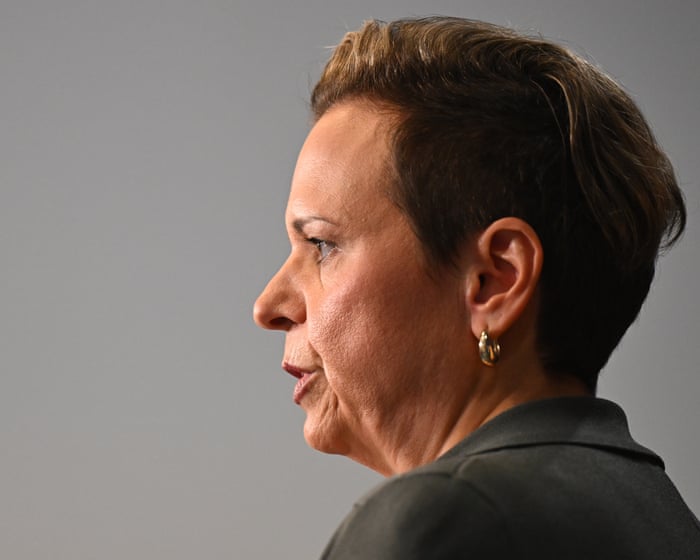
Altering copyright law to allow AI companies to scrape music, books and journalism could trigger a constitutional breach, Coalition senators and the recording industry have warned, as they raise new fears it could open Australia to massive legal action and compensation claims from rights holders worldwide.

The attorney general’s department admitted it was “extremely alive” to the issue, and Australia’s leading constitutional expert, Anne Twomey, agreed there was “potentially” a concern – depending how legislation was drafted – that granting AI companies permission to scrape copyrighted material from the internet could amount to an acquisition of property by the government.

Continue reading...

© Photograph: Lukas Coch/AAP

© Photograph: Lukas Coch/AAP

© Photograph: Lukas Coch/AAP

  •  

Data Center Bans Won't Stop AI. They'll Barely Slow It Down.

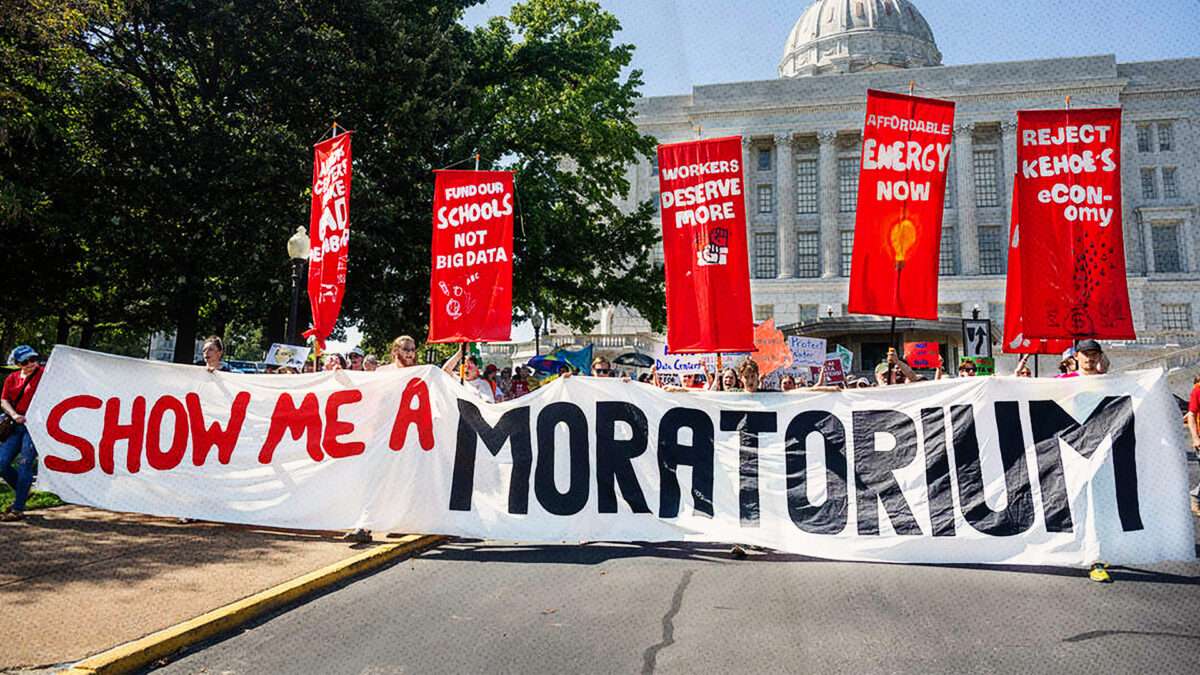
Protesters demanding a data center moratorium | Emily Curiel/TNS/Newscom.

With a contentious midterm election less than a week away, one cause has unified voters and candidates across the political spectrum: slowing down AI. 

A friend of mine who directs tens of millions of dollars in midterm election spending says he's never seen voter salience of an issue—AI, broadly—increase so quickly. In July, Gallup found that 39 percent of Americans thought AI does more harm than good, up from 31 percent in 2025. Only 9 percent of Americans, meanwhile, thought the technology did more good than harm (down from 12 percent last year). 

Public sentiment has since soured even more. An October ABC News/Washington Post/Ipsos poll found that 57 percent of Americans think AI is bad for society, while a staggering 66 percent said they opposed new data center construction in the United States.

Politicians on the left and right have seized on this political sentiment and offered their own data center stiff-arm policy du jour. However, even a full e-brake on data center construction would do little to stop AI progress. 

In August, Arvind Narayanan, director of the Princeton Center for Information Technology Policy and co-author of AI Snake Oil: What Artificial Intelligence Can Do, What It Can't, and How to Tell the Difference, claimed that a data center moratorium would basically not slow AI development at all. 

Using a back-of-the-envelope calculation, he concluded (under some reasonable assumptions) that a one-year data center moratorium in a "typical U.S. state" would slow down AI progress nationally by only five to 10 hours. Assuming that at least half of data center developers would avoid a moratorium by building their facilities elsewhere, a one-year freeze on construction in larger states like New York would set AI in America back by less than one day, according to Narayanan. 

My own modeling of this question reaches essentially the same conclusion as Narayanan's, but rather than assuming computing power will continue growing at its current rate, it treats future growth as dependent on how much computing capacity gets built. I considered three theoretical policy regimes: a full stop on new data center construction and on replacement of depreciated graphics processing units (GPUs); a full stop on new data center construction only; and no restrictions whatsoever. 

The point is that, as a federal policy, standing athwart data centers yelling "Stop!" doesn't accomplish the outcomes that moratorium-ites claim to want. And, while some local policies could slightly impede center growth, the only way to hamper the progress of frontier models would be to enact an extremely draconian policy regime—one that goes beyond moratoriums for new data centers and prohibits GPU upgrades in existing facilities—which no one is actually proposing or close to implementing. 

What does this all tell us about where advocates of any stripe should put their efforts? 

For those in favor of accelerating AI, on the one hand, it provides comfort in that data center construction, even in the extreme, is not a binding constraint to AI advancement. But on the other hand, the political energy currently concentrated on mobilizing the backlash won't stay focused there forever; an issue where more than two-thirds of people are even tangentially opposed to your "side" is not one that easily disappears.

For doomers, it means if the goal is a "pause" of some sort on the ability of AI technology to, say, replace you in your job, targeting data center construction isn't the best way to go about it. It may be a useful galvanizing node in the broader policy fight, but don't expect it to cause any meaningful change in the current trajectory—whatever you believe that to be. 

The ineffectiveness of data center moratoriums doesn't make the policy on its own more or less optimal. But if the data center protests are a proxy for broader AI-induced anxiety about large language models crowding out human pursuits, causing unemployment, or destroying the environment, protestors will need to find another leverage point.

The post Data Center Bans Won't Stop AI. They'll Barely Slow It Down. appeared first on Reason Magazine.

  •  

Massachusetts Voters Don't Seem Inclined To Repeal Marijuana Legalization Next Week

a hand drops a card bearing a cannabis leaf into a ballot box | Picsfive/M Akbar Arda/Dreamstime/Fatima Ruiz

A decade ago, 54 percent of Massachusetts voters said yes to Question 4, a ballot initiative that legalized possession, home cultivation, and commercial distribution of recreational marijuana. Judging from recent surveys, voters are not inclined to reverse that decision by approving Question 8, an initiative on next Tuesday's ballot.

Question 8, a.k.a. the Eliminate Recreational Marijuana Sales and Allow Limited Possession Initiative, would permit adults 21 or older to possess up to an ounce of cannabis. But they would have to get it from the black market, since Question 8 would not allow them to grow it or buy it from state-licensed retailers.

The initiative "would keep personal possession of marijuana legal, keep medical marijuana legal, and stop commercial marijuana stores," its supporters say. They allege that legalization has impaired "productivity" and led to increases in "fatal car accidents," "workplace injuries," "healthcare costs," "crime (like DUI's)," "ER visits," and "mental health conditions like psychosis, severe anxiety, and schizophrenia, particularly in young adults."

Voters do not seem impressed by those arguments. In eight polls between mid-February and mid-October, support for Question 8 ranged from 20 percent to 41 percent. In the most recent survey, conducted by The Boston Globe, 71 percent of respondents said they planned to vote no on Question 8, which suggests that experience with legalization has substantially increased opposition to pot prohibition in Massachusetts.

Question 8's sponsor, the Coalition for a Healthy Massachusetts, is funded almost entirely by Smart Approaches to Marijuana (SAM). As of October 20, the Virginia-based group had spent $3.7 million on the project, compared to $2.8 million in spending by the opposition, which includes several marijuana businesses.

SAM's co-founder, Kevin Sabet, who served as a drug policy adviser during the Clinton, George W. Bush, and Obama administrations, says he was motivated by the concerns of Massachusetts residents who approached him. "Many of them voted for this initiative 10 years ago and feel betrayed," Sabet told WGBH, an NPR station in Boston. If so, the polls indicate such converts are far outnumbered by former Question 4 opponents who have traveled that road in the opposite direction.

"We're under no illusions that the bluest state in the country is going to pass this easily with flying colors," Sabet told WBUR, another Boston NPR station, a few weeks ago. "But we want to have that conversation."

The conversation clearly is not going the way Sabet hoped. Massachusetts, which was the fifth state to legalize recreational marijuana, is now one of two dozen, which together account for most of the U.S. population. In October 2025, Gallup put nationwide support for marijuana legalization at 64 percent, which was down a bit from the peak of 70 percent recorded in 2023 but still 16 points higher than in 2012, when Colorado and Washington started this ball rolling.

Public support for legalizing recreational marijuana tends to be even higher in states that have done it. In Civiqs surveys last December, support in 15 states where voters had approved legalization ranged from 62 percent in Missouri to 77 percent in Oregon. It had increased since legalization in every state but New Jersey, where it was down one point from the 67 percent of voters who approved Public Question 1 in 2020. In Massachusetts, support had risen from 54 percent to 76 percent.

The fate of two other drug policy initiatives that voters will consider next week is less clear. As far as I can tell, pollsters have not asked voters about them.

Colorado's Proposition 132 would make manufacturing or distributing any amount of illicit fentanyl a Level 1 drug felony punishable by a mandatory minimum sentence of eight years. Under current law, the penalties vary depending on the amount of fentanyl involved.

In Idaho, House Joint Resolution 4, a proposed constitutional amendment, would strip voters of the power to legalize marijuana or any other psychoactive substance. If the initiative passes, which requires approval by a simple majority, that power will be reserved to the state legislature.

The post Massachusetts Voters Don't Seem Inclined To Repeal Marijuana Legalization Next Week appeared first on Reason Magazine.

  •  

Azerbaijan Calls for EU Gas Investment Decisions as Pipeline Capacity Reaches Limit

Speaking at a briefing in Brussels attended by EU Today, Azerbaijani presidential envoy Elchin Amirbayov said his country was prepared to increase natural gas exports to Europe, but warned that insufficient pipeline capacity, investment restrictions and uncertainty over long-term contracts were preventing further expansion.

Azerbaijan is prepared to increase natural gas supplies to the European Union, but further expansion will require investment in transport infrastructure and long-term commitments from European buyers, according to Elchin Amirbayov, Representative of the President of Azerbaijan on Special Assignments.

Speaking at the Azerbaijani Embassy in Brussels on 21 October, during a meeting attended by EU Today, Amirbayov outlined the difficulties facing efforts to expand the Southern Gas Corridor, which has become an important component of Europe’s strategy to diversify energy imports away from Russia.

“Today it’s fully booked already by all those contracts which we have concluded with all recipients of our gas,” Amirbayov said, referring to existing pipeline capacity.

He stressed that Azerbaijan possessed additional natural gas resources but that increasing deliveries depended on the availability of transportation infrastructure and commercially viable investment arrangements.

“As far as our capacity to provide them with gas is concerned, it is there because we have necessary resources. But what we need to be able to do that is also transportation infrastructure,” he explained.

Europe’s 2027 gas target faces infrastructure constraints

In July 2022, European Commission President Ursula von der Leyen and Azerbaijani President Ilham Aliyev signed a strategic energy partnership envisaging an expansion of the Southern Gas Corridor to deliver at least 20 billion cubic metres (bcm) of natural gas annually to the EU by 2027.

The agreement formed part of Europe’s response to Russia’s invasion of Ukraine and the subsequent restructuring of European energy supplies.

According to the European Commission, Azerbaijan and its state energy company SOCAR supplied 12.5 bcm to EU member states in 2025, an increase of more than 50 per cent compared with 2021.

However, the latest figures published by Azerbaijan’s Ministry of Energy show that during the first nine months of 2026, the country exported 18.4 bcm worldwide, including 8.6 bcm to European destinations.

The figures underline the challenge of achieving the planned increase in deliveries without additional investment.

The Southern Gas Corridor includes the South Caucasus Pipeline, the Trans-Anatolian Natural Gas Pipeline (TANAP) and the Trans Adriatic Pipeline (TAP), connecting Azerbaijani production with European markets.

TAP completed an initial capacity expansion in early 2026, adding 1.2 bcm annually. Further expansion will depend on additional infrastructure and sufficient contractual demand.

As EU Today previously reported, Azerbaijan began supplying natural gas to Germany and Austria in January 2026, extending its presence in central European markets.

Long-term contracts and investment financing

Amirbayov emphasised that additional gas infrastructure could not be developed without long-term commercial arrangements.

“Gas being different from oil, it has to be based on long-term contracts, on long-term expressed willingness,” he said.

He also raised the difficulties created by European restrictions on financing fossil-fuel infrastructure, suggesting that EU institutions and member states needed to reconcile their energy security requirements with existing investment policies.

The regulatory situation is complex. The European Investment Bank no longer finances new unabated fossil-fuel energy projects, including conventional gas infrastructure. However, the EU taxonomy framework permits certain gas-related activities under specific conditions.

Amirbayov said European countries had differing energy requirements and were at different stages of the transition away from fossil fuels. Those differences complicated agreement on the financing of additional gas supplies.

He also explained that Azerbaijan’s own investment resources were heavily committed to reconstruction and rehabilitation projects in territories recovered following the conflict with Armenia.

“We cannot do that job ourselves for the reasons I just explained,” he said, referring to the financial requirements of expanding export infrastructure.

Natural gas and Europe’s energy transition

Amirbayov acknowledged Azerbaijan’s own investment in renewable energy, including wind, solar and hydropower. He highlighted the Caspian Sea’s potential for offshore wind generation and described the country’s efforts to increase renewables in its domestic energy system.

Nevertheless, he questioned whether natural gas could be replaced by renewable sources within a short period.

“I don’t think it’s realistic,” he said when discussing the prospect of replacing natural gas within the next year or two.

His comments come as Brussels continues to balance its climate objectives with energy security requirements and the planned reduction of Russian gas imports.

Azerbaijan has increasingly positioned itself as an alternative supplier to European countries seeking to diversify their energy sources. However, Amirbayov made clear that further expansion would depend on decisions taken by European governments, financial institutions and energy companies.

“We are there, ready to assist,” he said, adding that further progress would require clear intentions and decisions from the European side.

The immediate question is whether European buyers and policymakers can establish sufficient contractual certainty and investment arrangements to support the additional pipeline capacity envisaged in the 2022 partnership.

  •  

Gulf states must rethink trillion-dollar defence in light of US-Iran war, says report

IISS study questions overreliance on American support and ‘overdependence on expensive, high-end systems’

Gulf states are going to have to reconfigure their trillion-dollar defences given the damage inflicted on their economies and the questionable continued value of US bases in the face of Iranian attack, according to a study by the International Institute for Strategic Studies.

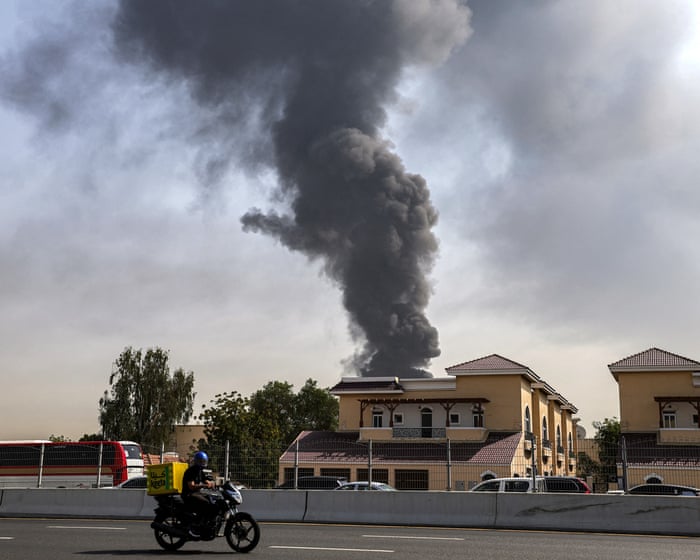
The report says that in the weeks before the 8 April ceasefire, 12 regional states, overwhelmingly in the Gulf, faced 4,670 Iranian one-way attack drones and more than 1,400 ballistic missiles. Nearly half were aimed at the United Arab Emirates. Although the vast majority were repelled, one estimate of the damage to energy infrastructure cited by the report is put as high as $58bn (£43bn).

Continue reading...

© Photograph: AFP/Getty Images

© Photograph: AFP/Getty Images

© Photograph: AFP/Getty Images

  •  

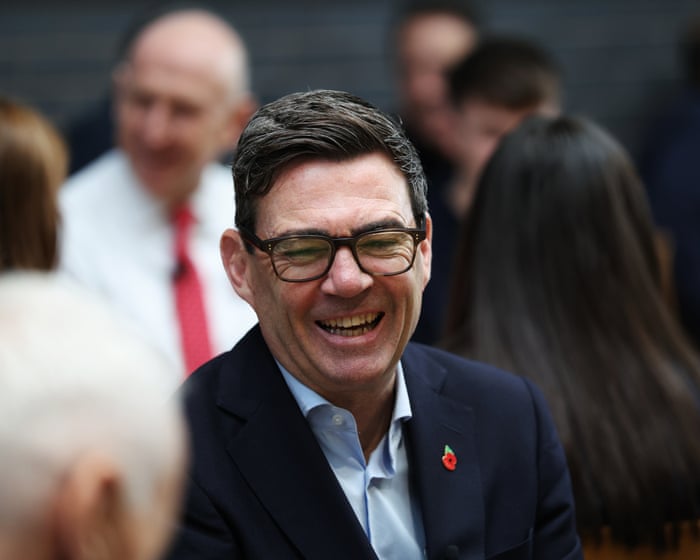
Andy Burnham admits he would have liked more radical first budget

Prime minister says room for manoeuvre was limited by geopolitical crises and Labour’s 2024 manifesto

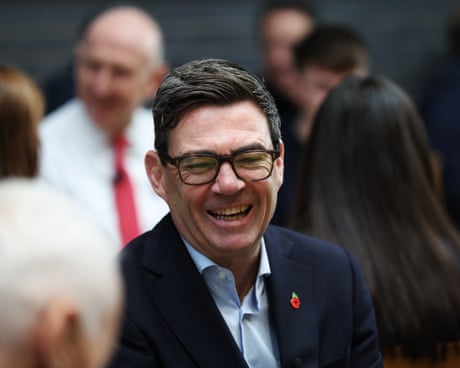
Andy Burnham has admitted his first budget as prime minister was not as radical as he would have liked because of the economic uncertainty facing the country.

He said he would have liked to have gone further with this week’s announcement – including with higher energy support payments – but felt hemmed in by external events such as the war in Iran, which has pushed up borrowing costs.

Continue reading...

© Photograph: Darren Staples/PA

© Photograph: Darren Staples/PA

© Photograph: Darren Staples/PA

  •  

Lavrov Returns to America as Moscow Tests the Limits of Western Diplomacy

Russia’s foreign minister arrives at the G20 meeting in Atlanta without Moscow having made significant concessions over Ukraine. His presence offers a reminder that diplomatic access can be valuable even when negotiations produce little progress.

Sergei Lavrov’s arrival in the United States for the G20 foreign ministers’ meeting is unlikely to transform the prospects for peace in Ukraine. For Moscow, however, the visit offers opportunities extending well beyond the formal agenda.

Russia’s veteran foreign minister will participate in discussions alongside representatives of the world’s major economies, including governments that have imposed extensive sanctions on Moscow and others that have maintained profitable commercial relationships with it.

The meeting, chaired by US Secretary of State Marco Rubio on 30–31 October, takes place as Washington pursues another diplomatic initiative concerning Ukraine.

Lavrov’s presence has attracted criticism from American lawmakers, including Republican Congressman Don Bacon, who has questioned why a senior representative of a government conducting military operations against Ukrainian cities should be welcomed in the United States.

Yet the more consequential issue is not whether Lavrov should attend. It is what Moscow hopes to achieve through renewed access to Western diplomatic forums, and what the United States expects to obtain in return.

Russia’s Diplomatic Opportunities

The Kremlin has spent much of the war arguing that Western attempts to isolate Russia have failed.

There is some substance to that argument, although it requires qualification.

Russia has suffered extensive restrictions on access to Western finance, technology and markets. Its economic relationships with Europe have been severely reduced, and its dependence on alternative trading partners has increased.

Nevertheless, Moscow has preserved important commercial and diplomatic connections with China, India and other countries unwilling to participate fully in Western sanctions.

For these governments, relations with Russia are often determined by energy requirements, commercial opportunities and their own strategic calculations rather than European security priorities.

The G20 provides Moscow with an opportunity to exploit those differences.

Lavrov can challenge Western sanctions, defend Russia’s diplomatic positions and hold bilateral discussions without demonstrating any willingness to compromise over occupied Ukrainian territory.

That does not make the meeting a Russian victory. Attendance at a multilateral gathering is not equivalent to the removal of sanctions or recognition of territorial claims.

But it offers Moscow something useful: opportunities for engagement without the conditions that would normally accompany substantive negotiations.

The limitations of such diplomacy were illustrated recently when German Foreign Minister Johann Wadephul met Lavrov in New York.

As EU Today examined in its analysis of that encounter, the meeting reopened a channel of communication but produced no visible movement in Russia’s position.

Germany restated its support for Ukraine. Moscow reiterated its established arguments.

The encounter demonstrated that diplomatic access and diplomatic progress are not necessarily the same thing.

Washington’s Negotiating Problem

The Trump administration approaches Russia from a different perspective.

Washington appears increasingly interested in identifying economic and political incentives that could make a negotiated settlement possible.

The calculation is understandable. Sanctions alone have not ended the war, and continued fighting imposes enormous costs on Ukraine while consuming Western military resources.

However, negotiations depend on more than establishing contact.

A settlement requires agreement over territory, security arrangements, enforcement mechanisms and the consequences of renewed hostilities.

Russia’s willingness to participate in discussions does not establish its willingness to accept terms compatible with Ukrainian sovereignty.

Nor does the prospect of economic cooperation necessarily create sufficient leverage to change Moscow’s calculations.

The administration must also consider how concessions offered to Russia would affect Ukraine’s ability to negotiate.

If Moscow expects economic benefits merely for remaining at the negotiating table, it has an incentive to prolong discussions while preserving its military position.

Conversely, a credible offer tied to verifiable Russian actions could provide a basis for substantive bargaining.

The difference lies in the conditions attached to any concessions and the mechanisms available to enforce them.

Europe’s Place at the Table

For European governments, the Atlanta meeting exposes a familiar weakness.

The EU is a major provider of financial assistance to Ukraine, maintains extensive sanctions against Russia and would face the consequences of any settlement that failed to establish lasting security arrangements.

Yet European influence over direct American-Russian negotiations remains limited.

EU foreign policy chief Kaja Kallas is attending the meeting and will conduct bilateral discussions, according to the European External Action Service’s official announcement.

Her participation gives Brussels an opportunity to communicate its position. It does not guarantee a role in determining the terms of any eventual agreement.

Ukraine itself is not participating in the gathering, although the G20 meeting is not formally a peace negotiation.

The danger for Europe is not simply exclusion from particular meetings. It is the possibility that decisions affecting European security will emerge from negotiations in which European governments possess limited influence over the agenda.

The EU retains important instruments of leverage, particularly sanctions, financial assistance and access to its markets.

But those instruments are less effective when member states disagree over their use or when Washington pursues a separate diplomatic strategy.

The Wider G20 Agenda

The meeting also takes place amid serious tensions over Iran, maritime security and international trade.

Washington wants greater cooperation over freedom of navigation in the Strait of Hormuz, Red Sea, Black Sea and South China Sea.

These priorities intersect with European interests, particularly energy security and the protection of commercial shipping.

Yet the participating governments approach these disputes from markedly different positions.

China has little interest in endorsing an American interpretation of maritime security that could constrain its own regional ambitions.

Russia is unlikely to support arrangements that weaken its position in the Black Sea.

Meanwhile, disagreements over American tariffs complicate Washington’s efforts to secure cooperation from traditional economic partners.

The G20 remains useful precisely because governments with conflicting interests can communicate through it.

But communication should not be mistaken for agreement.

For Moscow, Lavrov’s visit offers another opportunity to demonstrate that Russia remains engaged in international diplomacy despite its war against Ukraine.

For Washington, the challenge is to show that renewed engagement can produce something more substantial than another meeting.

Europe’s concern is more immediate: any settlement negotiated with Moscow will have to be sustainable on European territory, with European resources and against the possibility of renewed Russian aggression.

Diplomatic access may be relatively easy to restore. Establishing credible security arrangements will be considerably harder.

  •  

Europe Keeps Tightening Sanctions on Russia. But What Happens if Washington Changes the Rules?

Brussels is preparing another round of restrictions against Moscow while Washington explores the possibility of economic concessions. The disagreement exposes a weakness in Europe’s sanctions strategy: its effectiveness still depends heavily on decisions taken outside the European Union.

The European Union has imposed sanctions on almost 1,600 additional individuals and companies connected with Russia’s military-industrial complex. It is preparing a 22nd sanctions package, expanding restrictions on the networks that supply Moscow’s armed forces.

Washington, meanwhile, is considering whether economic incentives could help persuade the Kremlin to negotiate an end to the war in Ukraine.

The two approaches are not necessarily incompatible. Sanctions can be used both to constrain an adversary and as bargaining instruments in negotiations.

But they become considerably less effective when the governments imposing them disagree about the conditions under which they should be lifted.

For Europe, the problem extends beyond transatlantic diplomacy. After more than four years of war, Brussels has developed an extensive sanctions regime but still faces difficulties preventing restricted technologies from reaching Russia, limiting its energy revenues and enforcing measures against companies operating through third countries.

A change in American policy could expose those weaknesses more sharply.

Targeting the Machinery of War

On 12 October, the Council of the European Union imposed restrictions on 1,569 individuals and entities.

The measures targeted 826 companies and 743 executives associated with Russia’s defence industry.

Unlike earlier restrictions concentrated on prominent political figures and major financial institutions, the latest designations reach into the industrial supply chains supporting Russian weapons production.

According to the Council, the companies concerned employ more than 250,000 people and generate annual turnover of at least €20 billion.

Their activities include the production and supply of electronics, semiconductors, communications equipment, navigation systems, explosives and components used in missiles, drones and military aircraft.

More than half the listings concern supply chains associated with ballistic missile production.

The approach reflects an increasingly detailed understanding of how Russia sustains its military operations.

Modern weapons depend on complex manufacturing networks. A missile producer may be able to replace a sanctioned supplier, but obtaining specialised components through alternative channels can increase costs, delay production and complicate quality control.

Targeting those networks can therefore be more consequential than imposing restrictions on another senior official whose assets in Europe have already been frozen.

Nevertheless, the number of sanctioned entities is an imperfect measure of effectiveness.

A designation has limited practical value if the targeted company has no assets within European jurisdiction, does not require Western financing and can obtain equivalent components elsewhere.

The more useful questions concern production delays, procurement costs, component availability and the extent to which Russian manufacturers can replace restricted technology.

Sanctions Evasion Has Become an Industry

European restrictions have encouraged the development of increasingly elaborate procurement networks involving intermediaries, logistics companies and financial service providers.

On 15 October, the Council announced additional measures against companies and individuals involved in circumventing sanctions.

The cases illustrate the geographical complexity of enforcement.

Among those targeted were trading and logistics businesses associated with Türkiye, financial intermediaries operating in Russia and companies linked to oil transactions involving the United Arab Emirates, India and the Seychelles.

The EU also identified entities associated with Russia’s shadow fleet.

These networks exploit differences between national legal systems, commercial practices and the willingness of third-country authorities to cooperate with European restrictions.

Brussels can prohibit European companies from supplying particular goods. Preventing those products from being resold through several intermediaries is substantially more difficult.

Enforcement requires customs intelligence, banking supervision, corporate ownership information and cooperation with governments that may have little interest in restricting profitable trade with Russia.

The EU’s 21st sanctions package, adopted in July, extended restrictions to additional shadow-fleet vessels, financial institutions and cryptocurrency service providers.

Such measures increase the cost of evasion. They do not automatically eliminate the commercial incentives sustaining it.

Washington Holds Cards Brussels Cannot Replace

The Trump administration’s exploration of possible economic arrangements with Moscow introduces another complication.

American sanctions possess particular influence because of the dollar’s international role, the importance of US financial institutions and Washington’s capacity to restrict access to American markets.

European sanctions operate independently, but their effectiveness can be reinforced substantially by corresponding American measures.

If Washington relaxes restrictions on selected Russian institutions or commercial activities while Brussels maintains its prohibitions, companies could encounter two increasingly different regulatory environments.

European businesses would remain subject to EU law. American companies might gain access to transactions unavailable to their European competitors.

More importantly, Moscow could recover access to certain financial or commercial channels without obtaining equivalent relief from Brussels.

The scale of the consequences would depend on which restrictions Washington changed. Limited exemptions would not have the same effect as broader measures involving Russian banks, energy companies or international payments.

No comprehensive American sanctions rollback has been agreed.

Nevertheless, the prospect creates uncertainty for European policymakers.

As EU Today previously reported on the disagreement over sanctions relief, European leaders have resisted proposals to reduce economic pressure before Russia makes substantive concessions over Ukraine.

Their position is strategically coherent. Sanctions represent one of Europe’s principal instruments of leverage in negotiations.

But preserving that leverage requires more than refusing to lift existing restrictions.

It requires ensuring that those restrictions remain effective even if American priorities change.

Europe’s Unfinished Economic Strategy

The European Union has considerable economic weight. Its single market, regulatory powers and financial institutions provide instruments that Russia cannot simply disregard.

Yet Europe has often been more effective at adopting sanctions than at enforcing them consistently.

Implementation remains dispersed among national authorities with different resources, investigative capacities and political priorities.

Companies operating across multiple jurisdictions encounter uneven enforcement, while intermediaries outside the EU can exploit gaps in information-sharing.

Brussels has attempted to address these weaknesses through expanded reporting obligations, restrictions on third-country entities and closer coordination among national authorities.

The forthcoming 22nd package will provide another indication of whether the EU intends to deepen that approach.

Its precise contents have not yet been announced.

A credible European strategy would also require greater attention to the relationship between sanctions and defence production.

Restricting Russian access to components is valuable. Expanding Europe’s own capacity to manufacture ammunition, missiles and air-defence systems is equally important.

Economic pressure cannot substitute indefinitely for military capability, particularly when the country being sanctioned remains engaged in a prolonged war.

Europe also needs to consider the conditions under which sanctions might eventually be modified.

A negotiated settlement could require carefully defined economic incentives. But those incentives would need to be linked to verifiable Russian obligations and mechanisms for restoring restrictions if agreements were violated.

Otherwise, sanctions relief could become an irreversible concession in exchange for commitments that prove difficult to enforce.

The immediate challenge for Brussels is therefore not simply to produce another package.

It is to establish whether Europe can sustain an independent economic strategy towards Russia if Washington decides that its diplomatic objectives require a different approach.

The EU has accumulated considerable sanctions authority since 2022. The next test is whether it can turn that authority into durable strategic leverage without relying on American policy remaining unchanged.

  •  

UK government’s obesity plan ‘doomed to fail’, MPs warn

Cross-party committee says ‘moonshot’ vow to end obesity epidemic in a decade will fail without personal leadership from PM

The UK government’s promise to reverse rising obesity rates in the next decade is “doomed to fail” without a major rethink and a new plan led directly by the prime minister, a cross-party committee of MPs has concluded.

The health and social care select committee said in a report that there are no signs the so-called “moonshot ambition on obesity”, set out in the 10-year health plan for England, will achieve anything significant.

Continue reading...

© Photograph: Rawpixel/Getty Images

© Photograph: Rawpixel/Getty Images

© Photograph: Rawpixel/Getty Images

  •  

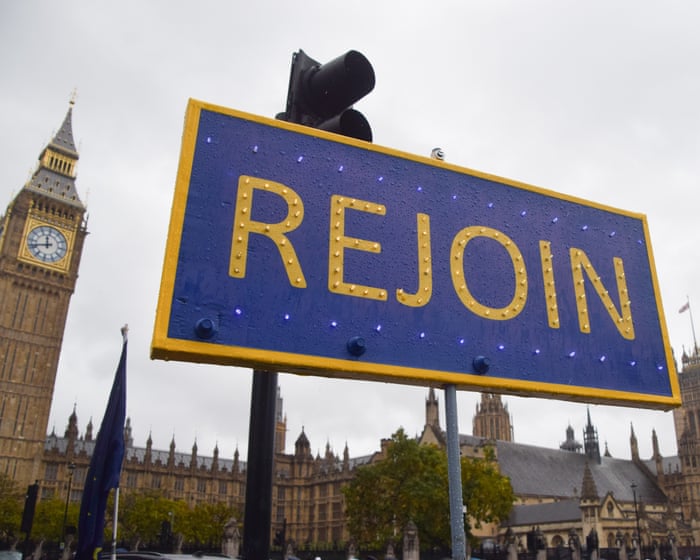
Opening the EU debate again is clearly a political minefield. But we have to do it | Simon Jenkins

Andy Burnham must tread cautiously, but Brexit was a very grave act of self-harm – and he is right to address it

Andy Burnham’s opening debate on whether Britain should rejoin the EU is divisive, painful and politically risky. That is why it should be welcomed. To jeopardise his popularity so soon after coming to office might seem reckless, but the issue is urgent and not going away. Brexit is continuing to damage the nation’s economy. The prime minister’s job is to challenge, if not reform it.

The Brexit decade has evoked a bizarre sense of guilt among Britons. Opinion polls show nearly 60% regard it as a mistake, with just a third still in favour. Almost a quarter of those who voted for Brexit now regret it. While early forecasts of economic disaster were proved wrong, the accumulated cost of cutting links with Britain’s biggest trading partner is estimated at 6-8% of GDP.

Simon Jenkins is a Guardian columnist

Continue reading...

© Photograph: Vuk Valcic/SOPA Images/Shutterstock

© Photograph: Vuk Valcic/SOPA Images/Shutterstock

© Photograph: Vuk Valcic/SOPA Images/Shutterstock

  •  

Manosphere and online misogyny should be treated as public health issues, say UK experts

Report calls for an effort to tackle harms in similar way to obesity and smoking, and stresses need to ‘offer boys something better’

The manosphere and online misogyny should be treated by the government as a public health issue, in the same way as obesity or smoking, experts have said.

Writing in the Lancet, the authors of a new report argue that a coordinated response is needed, involving governments, schools, health services and community organisations, similar to the public-health response to tobacco use and ultra-processed food.

Continue reading...

© Photograph: miniseries/Getty Images

© Photograph: miniseries/Getty Images

© Photograph: miniseries/Getty Images

  •  
❌