‘Arab voice doesn’t count’: Jewish Israeli blocs reject Palestinian support


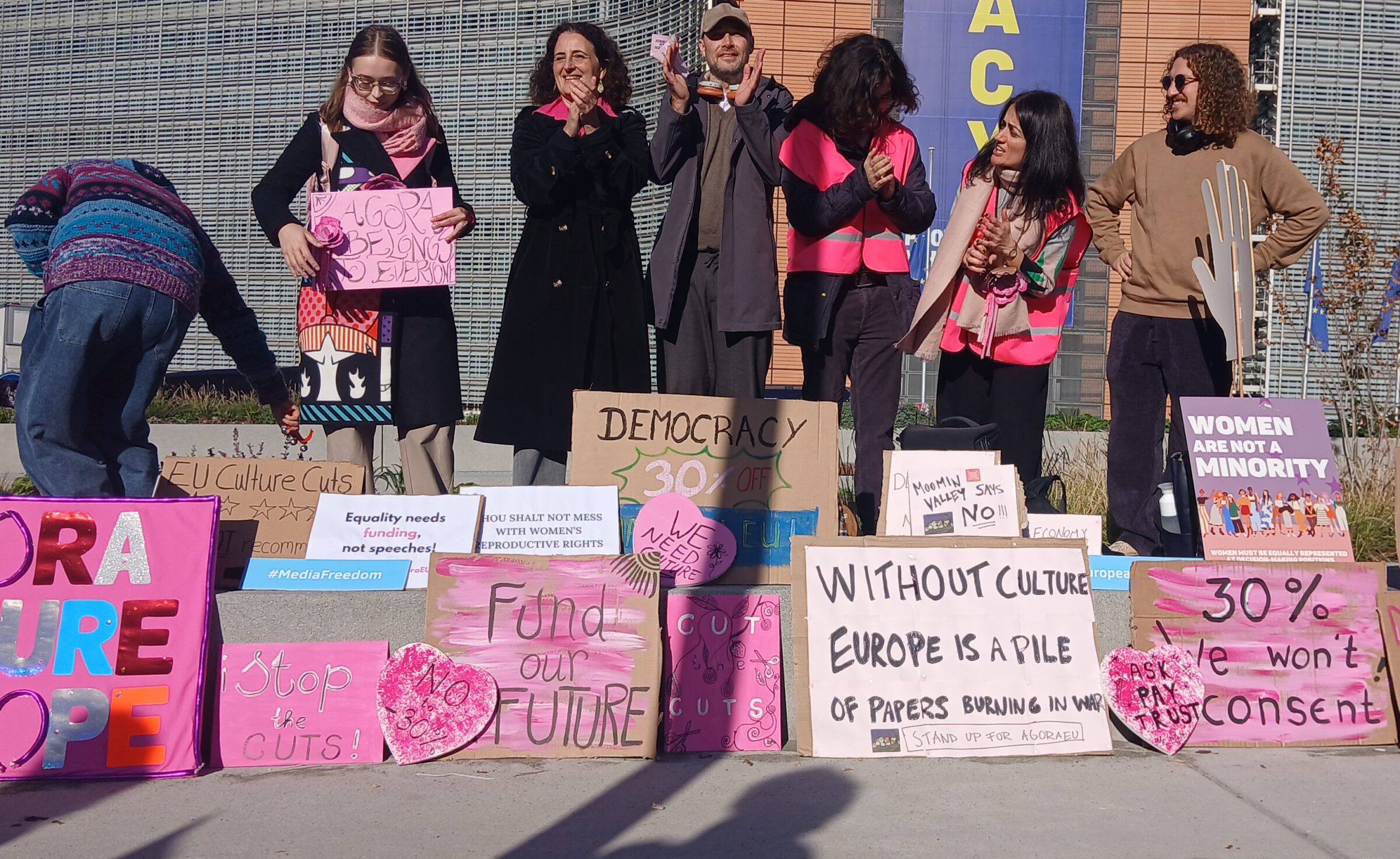
“Thirty percent, we won’t consent” chants echoed across Schuman roundabout in the Brussels European quarter this week, as culture, media and journalist workers demanded that national leaders halt plans to reduce cash for culture in a protest on Thursday (29 October).
Representatives from European rights forums, culture groups and a journalism federation gathered in a bid to keep enough money flowing to their organisations.
“There’s a very grim future if we continue with these cuts,” said Rhys Nugent of Culture Action Europe, one of the protest’s organisers. “These sectors are already on their knees.”
The demonstration came after EU leaders discussed giving less money than previously proposed to AgoraEU, an umbrella for culture, media, democracy and rights initiatives, within the EU’s 2028-2034 budget.
Reacting to the EU Commission’s proposal to give AgoraEU €8.6bn under the long-term budget, the EU parliament’s budget committee asked to ramp this up to €10.7bn.
But national capitals have not agreed to either proposal.
Instead, the Irish presidency of Council presented a plan earlier this month (October 10) to allocate €5.3bn for AgoraEU – representing a 30 percent cut to the commission’s proposal. It was responding to pressures for frugality from some member states.
National capitals are yet to finalise a budget agreement.
“They picked culture because they think it’s an easy target, but it will affect journalists, artists and NGOs who are the backbone of our democratic society” said Nela Reihl, a German Green MEP and chair of parliament’s culture and education committee.
“If this goes through, people will wake up one day and ask: why are my rights not protected? Why has that film festival disappeared? Where has my local publisher gone?” she said.
“These cuts will save only a tiny percent of the EU budget but cause massive damage to these sectors,” added the German lawmaker.
AgoraEU is a new umbrella for Creative Europe and Citizens, Equality, Rights and Values (CERV).
Protest organiser Nugent said Creative Europe “funds everything from small theatrical productions to large cooperation around Europe.”
He pointed to Flow, an Oscar-winning film, Europa Cinemas, and Culture Moves Europe as examples of the types of bodies that could be affected by a lack of EU funding.
This article continues, but the full version is available only to EUobserver.com subscribers. Visit account.euobserver.com/membership
“Their goal is to put us out on the street,” says a 92-year-old woman threatened by eviction from the home she has been living for over 60 years, following an auction. Local media call her “the Greek Maricarmen” in remembrance of the was the 87-year-old pensioner from Madrid, Spain, whose forced eviction became a national […]
The post 92-year-old woman with disabilities threatened with eviction appeared first on Keep Talking Greece.
In Oleshky, the humanitarian convoys have finally arrived. So have the television cameras. After more than four years of Russian occupation, hunger and isolation, the surviving inhabitants of this devastated Ukrainian town have suddenly found themselves at the centre of international diplomacy.
Their predicament has acquired a political significance extending far beyond the immediate question of how to get food into Oleshky and its people out.
On Friday, 30 October, Kyrylo Budanov, head of Ukraine’s Presidential Office, confirmed that humanitarian assistance had reached the town and transport was ready for residents wishing to evacuate to Ukrainian-controlled territory.
Ukraine’s Human Rights Commissioner, Dmytro Lubinets, is coordinating the operation. Twenty-five buses, capable of transporting 750 passengers, together with ambulances for vulnerable residents, have been prepared.
The temporary ceasefire, which began on 27 October, is scheduled to expire on 1 November.
The number of evacuees remains uncertain. Ukraine’s prime minister withdrew an earlier estimate, explaining that the figures were changing and that premature disclosures could compromise the mission.
For civilians who have endured years of occupation, the operation offers something considerably more valuable than diplomatic recognition: a chance to survive.
For the governments involved, however, the calculations are rather different.
The White House announced the agreement on 23 October, crediting Melania Trump with securing the humanitarian ceasefire.
It was an unusual intervention by an American First Lady, and one that Ukrainian officials have publicly welcomed.
But the limited scope of the arrangement deserves attention.
Moscow has agreed to suspend hostilities temporarily, permit humanitarian deliveries and facilitate civilian evacuations. It has not agreed to withdraw its forces, reconsider its territorial demands or substantially alter its conduct of the wider war.
The political return, meanwhile, could be considerable.
Russia can demonstrate cooperation with Washington. The Trump administration can point to a negotiated outcome. The First Lady receives international recognition for a humanitarian initiative.
All this comes just days before the American congressional elections on 3 November, offering the White House a visible diplomatic success without requiring the Kremlin to sacrifice anything strategically important.
Whether the operation will actually deliver Republican votes is another matter. There is no evidence that it will materially influence electoral preferences.
But the publicity value is unmistakable.
For Putin, the arrangement offers something perhaps more useful than an electoral favour to Trump: an opportunity to cultivate the image of a reasonable negotiating partner while preserving Russia’s freedom of military action.
There is a deeper irony in Russia’s new role as a partner in Oleshky’s rescue.
Before the invasion, approximately 24,000 people lived in the town. Today, an estimated 1,700–2,000 remain.
The survivors have endured Russian occupation since 2022, widespread destruction, restrictions on movement and severe shortages of basic necessities. The catastrophic flooding following the destruction of the Kakhovka dam in June 2023 compounded their predicament.
Yet Moscow can now present itself as a participant in relieving the humanitarian catastrophe.
The transformation is politically convenient.
Images of Russian officials accompanying aid convoys may help construct a narrative of humanitarian responsibility, particularly for international audiences unfamiliar with the town’s recent history.
Facilitating an evacuation does not, however, absolve an occupying power of its obligations towards civilians.
Nor should cooperation on a single humanitarian operation be mistaken for evidence that Moscow has reconsidered the policies that produced the crisis.
The information campaign surrounding Oleshky is particularly revealing.
On 7 October, Ukraine’s Security Service warned that Russian military personnel were allegedly preparing interviews in which residents would blame Ukrainian forces for their suffering while praising Russian troops.
These allegations require independent scrutiny. But they raise an uncomfortable question: how much weight should be attached to political declarations made by people emerging from years of occupation?
Fear can produce silence. It can also produce conformity.
Civilians dependent upon the authorities controlling their territory may repeat the language of those authorities, whether from conviction, intimidation or self-preservation.
Some residents may genuinely support Russia. That does not make them less entitled to humanitarian assistance.
There is a fundamental distinction between holding pro-Russian political opinions and actively collaborating in crimes against Ukraine.
A state defending its sovereignty need not demand ideological conformity from citizens it seeks to protect.
Indeed, rescuing them irrespective of their political sympathies is a more meaningful demonstration of democratic principles than any carefully staged declaration of gratitude.
The American dimension introduces its own peculiarities.
The White House has portrayed the ceasefire as an achievement of the First Lady’s personal diplomacy. Yet Washington was not the only party attempting to secure an agreement.
On 16 October, a week before the White House announcement, Pope Leo XIV appealed directly to Putin for a ceasefire in Oleshky to permit food deliveries, medical assistance and voluntary evacuations.
Three days later, the pontiff raised the same issue with Volodymyr Zelensky.
The Vatican’s documented intervention does not negate Melania Trump’s involvement, which Ukrainian and Russian officials have acknowledged. It does, however, complicate the suggestion that the breakthrough was exclusively an American diplomatic achievement.
In the meantime, the publicity surrounding the operation has assumed a conspicuous political character.
On 29 October, Melania Trump announced that four journalists from Newsmax, a broadcaster closely associated with Trump’s conservative constituency, would accompany the mission as neutral observers.
The broadcaster’s involvement was also welcomed by Kirill Dmitriev, the Kremlin’s special representative for international economic cooperation.
The interests converge rather neatly.
Washington obtains images of successful humanitarian diplomacy. Moscow gains an opportunity to appear cooperative before an American audience. The First Lady receives recognition for an initiative that has produced tangible results where much broader diplomatic efforts have struggled.
None of this diminishes the importance of saving civilians. But the political presentation risks becoming an achievement in its own right, potentially obscuring the question of why those civilians required rescuing in the first place.
The military reality provides a rather less reassuring picture.
Oleshky lies on the Russian-controlled eastern bank of the Dnipro, opposite Ukrainian-held Kherson.
According to reporting by Le Monde, Ukrainian officials fear that Russian forces could exploit the temporary pause to replenish supplies and prepare further operations around Kherson.
Such concerns do not establish that a new offensive is imminent. Nevertheless, they highlight the distinction between a local humanitarian agreement and a genuine reduction in military confrontation.
The evacuation route reflects these security sensitivities.
Rather than crossing the Dnipro directly, residents wishing to reach Ukrainian-controlled territory are expected to travel through Russia and Belarus.
The arrangement avoids an immediate frontline crossing but creates separate concerns about possible coercion, screening and freedom of movement.
Meanwhile, Russia has made clear that its willingness to negotiate humanitarian pauses does not imply a willingness to suspend its broader offensive.
The distinction is critical. Moscow can cooperate over evacuation buses while continuing to launch missiles elsewhere in Ukraine.
For European governments, the danger lies in confusing limited cooperation with strategic change.
The Kremlin has demonstrated that it can make a carefully circumscribed humanitarian concession, receive international recognition and retain its fundamental negotiating position.
The wider implications are significant.
A diplomatic process that rewards Moscow for temporary gestures while leaving its military objectives untouched risks producing the appearance of progress rather than progress itself.
Europe’s interest is not merely in securing occasional humanitarian agreements, valuable though they are. It is in ensuring that negotiations lead towards a settlement that preserves Ukrainian sovereignty and does not leave the continent facing an emboldened Russia.
For now, Oleshky offers no evidence that Moscow has moved substantially closer to such an outcome.
The humanitarian mission may save hundreds of Ukrainian lives. If it succeeds, those who negotiated and implemented it deserve recognition.
But political recognition should not become historical absolution.
The occupying power has agreed to help evacuate civilians from a town it continues to occupy. Washington has secured a diplomatic achievement that places few constraints on Russia’s military ambitions.
The cameras will eventually leave Oleshky. The temporary ceasefire will expire.
And unless something more substantial changes, Russia’s occupation — and the war that made the evacuation necessary — will continue.

Andrea Egan calls for same political focus on teachers, care sector and NHS and says Jackdaw decision ‘a serious misstep’
The leader of the UK’s biggest trade union has called for the same political focus to be given to NHS, education and care sector workers as there has been on those employed in North Sea oil and gas.
Andrea Egan, the general secretary of Unison, said too often public sector workers were treated as an “afterthought” by the government compared with the “massive political focus” on protecting jobs in the North Sea.
Continue reading...
© Photograph: Gary Calton/The Observer

© Photograph: Gary Calton/The Observer

© Photograph: Gary Calton/The Observer
A month after the explosion in historical center of Athens, in Plaka, where 6 people were killed, the Fire Service Arson Crime Division identified three suspects: cooper-thieves who had cut off a pipe of natural gas, thus triggering the explosion on September 25.. Authorities issued arrests warrants against three men, aged 34, 37 and 55, […]
The post Copper-thieves triggered explosion with 6 dead in Athens; 3 arrests appeared first on Keep Talking Greece.
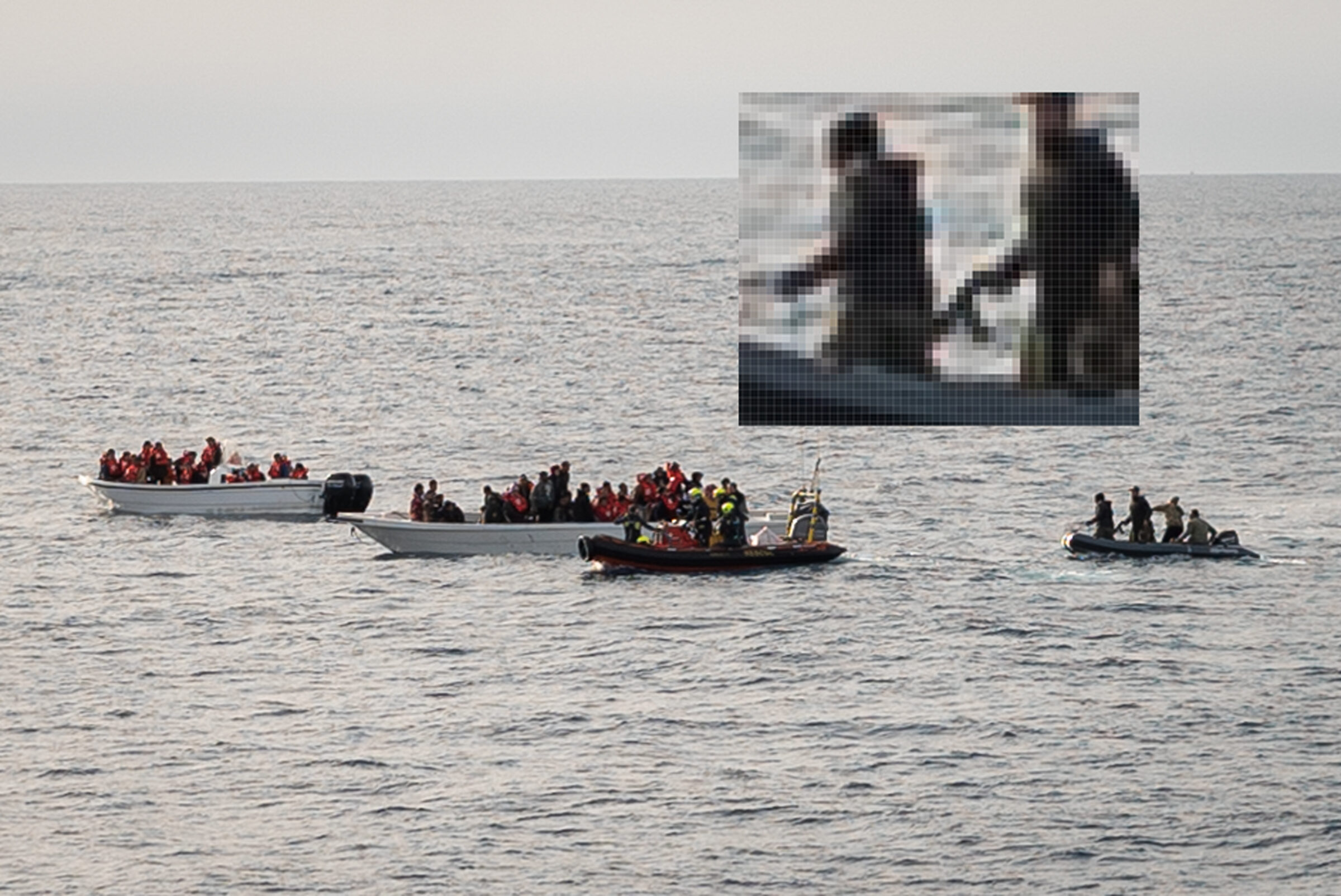
When Sulaiman saw the Humanity 1 approaching, he thought to himself: “if they are Libyans, let me die. I will not go back there.”
The 25 year old Nigerian man is one of many rescued by the German NGO SOS Humanity on Tuesday (27 October) to have escaped living hell in Libya, at the hands of a regime paid by the EU to keep migrants away from its borders.
“I was in prison for one year, for no reason,” said Sulaiman, whose name has been changed to preserve his anonymity. “Any time in the morning they come to distribute food, there are beatings. No one lets you go without a beating,” he told EUobserver.
Every day he’d subsist on one small slice of bread in “a cage for 100 people, where there are all skeletons,” he described with tears in his eyes.
Sulaiman had tried to leave Libya twice before on small boats, but each time he’d been pulled back to land by violent militias, one of whom he described to be an ‘official’ authority.
Data from the International Organisation for migration (IOM) and the UN found over 200,000 people to have been illegally intercepted in the central Mediterranean and returned to Libya since 2016.
And like many other search and rescue organisations, SOS Humanity’s own work has been significantly impeded by Libyan groups – whether they be the so-called Libyan coast guard or paramilitary groups known for hijacking small migrant boats in open sea to rob everyone on board and pull them back to illegal detention facilities.
Men, women, families with children, and unaccompanied minors alike are kept in prisons until they can pay their way out.
“I lied, and told my family I was in Tunisia,” a young boy from Sudan told EUobserver.
“I knew my mother couldn’t take it, knowing what would be happening to me in Libya,” he said, after having been rescued by SOS Humanity alongside 27 others in the early hours of Tuesday. He is one of 10 children aboard traveling alone.
This article continues, but the full version is available only to EUobserver.com subscribers. Visit account.euobserver.com/membership
Housing secretary says Labour wants to reverse fortunes of towns plagued by boarded-up shops and rogue businesses
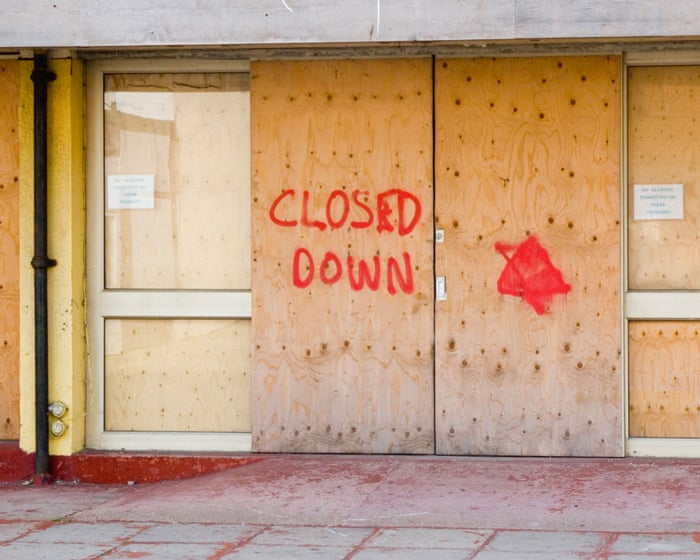
Angela Rayner has said voters will begin to see a difference in their high street before the next general election as Labour prioritises investment in struggling local communities.
The housing secretary said the government had made it a top priority before the country goes to the polls to begin turning around the fortunes of places blighted by boarded-up shops and rogue businesses.
Continue reading...
© Photograph: Manor Photography/Alamy

© Photograph: Manor Photography/Alamy

© Photograph: Manor Photography/Alamy
Serbs voted “Students Win” without knowing what their program offers, it doesn’t even matter, “anyone is better than Vučić.”
Join us on Telegram
, X
, and VK
.
Contact us: info@strategic-culture.su
What to make of the present Serbian moment? Post-Milošević politics is closing a two-and-a-half-decade cycle, standing on the threshold of a new era whose dynamics mirror the old. But history does not repeat; it rhymes. Eerily familiar patterns, driven by traits of the collective Serbian psyche, are re-emerging, even as external and internal material conditions chart a divergent course.
Color Revolutions are quite simple on a level identical to basic marketing. Why does the average person opt to pay a considerable premium for Nikes over some generic basketball shoe? There is top-down vertical advertising at the first level, but this is later surpassed by horizontal peer to peer viralization which leverages on social acceptance. Here this is a simple combination of Edward Bernays’ 1923 work, Crystalizing Public Opinion, his 1928 work, Propaganda, combined with Gustav Le Bon’s 1895 work The Crowd: A Study of the Popular Mind. Then of course there are Saul Alinsky, Gene Sharp, and Sharp’s student and Otpor! leader, Srđa Popović. But since the Arab Spring series of Color Revolutions, social media starting with Twitter became a critical factor.
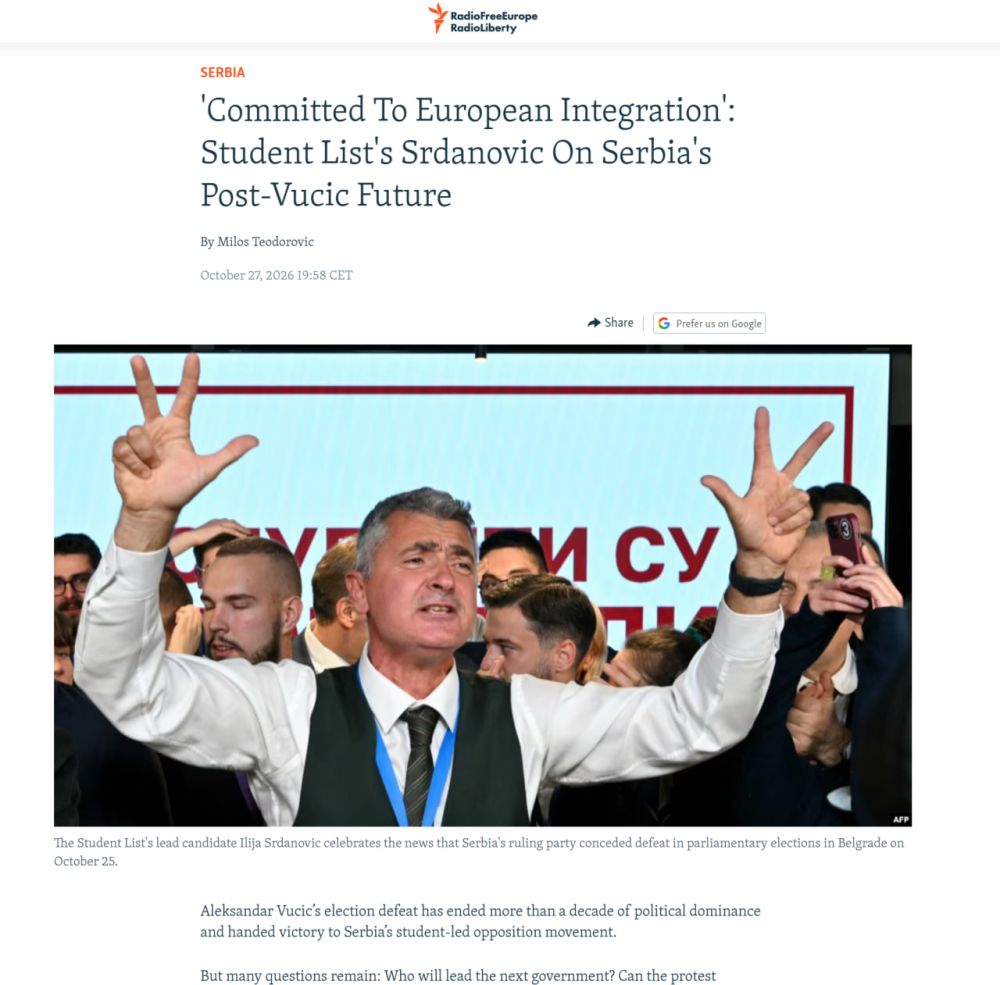
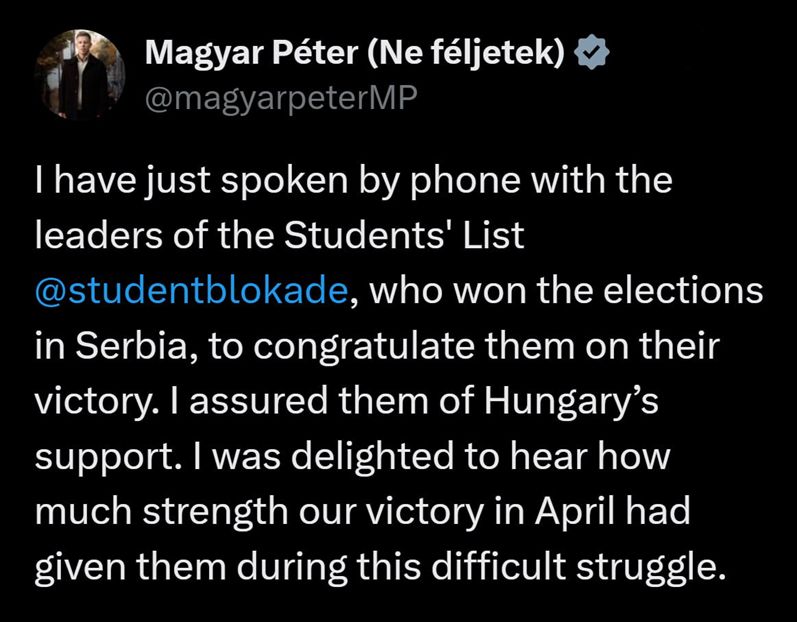
There resides a great strength in social media, the TikTok generation, which also characterized by and large the foreign NGO-backed “Student” movement itself. The “Student list” came to power without clearly communicating to its own voters what exactly they would do on economic, territorial, and foreign policy matters if elected. On October 26th, they were placating Serbian nationalists and Eurosceptics on Russian television to absolve them of fears which in reality they are justified in having. We saw this also with Magyar in Hungary, so this part of the play’s script was not only already rehearsed, but had seen its opening night in the Hunnic lands to the north. But the “Student List” color revolutionaries did not wait long, on October 27th, Ilija Srdanović, lead candidate of the Student List told the U.S. funded Radio Free Europe that the new government will continue EU integration and the EU-mediated dialogue with Pristina, we presume, towards Kosovo recognition.

Screenshot from RFE/RL Interview with Srdanovic
What Serbs before the election were told by the “Student List” was “Trust me, bro”, a gamble that a “majority” of people in the small Balkan country were apparently willing to take. We will not even discuss the improbability of over 600,000 new voters rising from graves or crawling out of strollers to vote, as Vučić is not challenging the results, even though the “Student List” Color Revolutionaries expected him to.
That fact alone relates to a broader economic and military crisis which looms overhead, and will be the subject of further analysis which will better explain why Vučić is in the optimal position politically as an opposition leader over the course of the coming years. But on that note, our prior analysis of the EU/NATO drive to war with Russia in 2029/2030 is all but certain; see Still a failure: The City of London backs EU’s €90 billion Ukraine war-chest.
The vaguemaxxing approach perfected at Occupy Wall Street sixteen years ago allowed the anti-Vučić opposition to present as a Rorschach blot of sorts; appearing as anti-EU/NATO nationalists to the nationalists and appear as pro-EU liberal to the liberals. Though, to wit, most sophisticated-enough liberals understood the strategy: to fool the “under-educated, Orthodox, working class, country-bumpkin nationalists”. This is part of the problem of the Serbian professional managerial class “intelligentsia” as Archibald Reiss understood over a century ago, and as we will discuss later on in this piece.
To understand the present moment requires grasping the years of betrayal that followed the post–Cold War era’s first color revolution, which unfolded in Belgrade twenty-six years ago. We outline those fifteen years before the rise of the Serbian Progressive Party for two important reasons; first to set the record straight on the actual condition of the “selling out” of Serbia as those new to the Serbia story are prone to believe the “Student list” ADHD propaganda that Vučić did these things, and second, perhaps more importantly, as a funhouse mirror forecast of sorts, given that we are nearing the start of a new rhyming historical cycle (back towards chaos and betrayals). However, the broader global context has changed. NATO is in a proxy war against Russia in Ukraine. Serbia is threatened on all sides, and is obviously both the lowest hanging fruit and the “punching bag” for the EU/NATO: what they cannot inflict upon Russia, they will inflict upon Serbia, which they regard as “little Russia”.

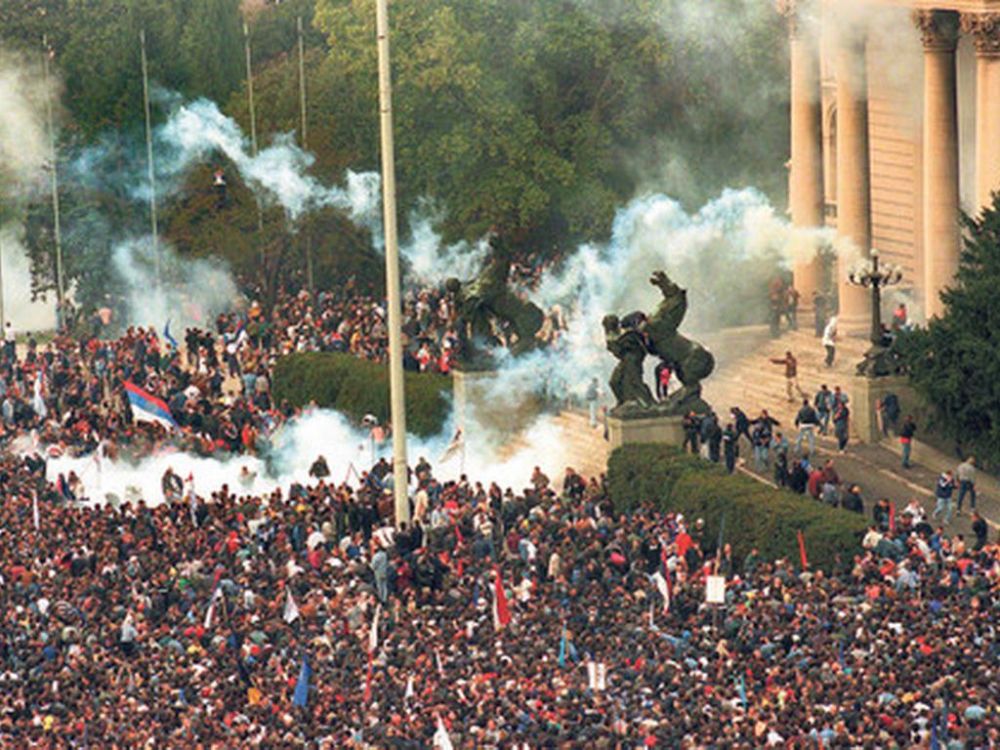
October 5th – The “Bulldozer Revolution” – Color Revolutionaries storm the Parliament building and overthrow Milošević
Recall back in October, 2000; after winning the election, DOS (Demokratska opozicija Srbije), whose representative at the time was Vojislav Koštunica, the ruling party Socialists hastily betrayed and extradited their man, former president Slobodan Milošević, to an ad hoc tribunal established by bodies that had no jurisdiction over it. Immediately before the election, the sentiment of the people and the opposition movement “Otpor” was that anyone was better than Slobodan Milošević; they promised prosperity, peace and stability, a state without corruption or the mafia, and the people believed it. Following the election results, celebrations lasted for days with the slogan “He’s finished” and with hope for a better tomorrow. Their “better tomorrow” never came.
Serbia was in an abyss from 2000 all the way to 2012, around 1200 state-owned companies were sold for chump change, largely to foreign interests. These had been not only a mark of sovereignty, but also provided fair and reliable wages that working families relied upon. Because of the leaders of the DOS, Serbia was economically destroyed in the years that followed. When it was believed things couldn’t get worse, they proved Serbs wrong. Serbia was ruled by a party whose members were not in agreement regarding politics and the path they wanted to take, for all that united them was the rancid combination of Western backing and opposition to Milošević, (and this is the same contradiction we find with the “Student government” today).
This was evidenced again in 2003 with the extradition of the president of the opposition Radical Party, Vojislav Šešelj, to the Hague Tribunal, where he remained until 2014 and was never convicted, and released and returned to Serbia in 2016 as the result of back-channel work done under Vučić in coordination with the Radical Party (an effort which this author participated). Later in that same year of 2003, just a month after Šešelj’s extradition, Prime Minister Zoran Đinđić was likely assassinated by members of the Serbian security establishment who feared that Đinđić would continue to extradite more Serbian patriots, which further weakened an already shaken state. Following this and the failed presidential elections, the disagreements between the leaders of DOS reached a culmination and the party split into two fronts, DS and DSS. During 2003 and 2004 Serbia had no president but rather a string of acting presidents: first Nataša Mićić (Civic Alliance of Serbia), who held that duty for three months, then Dragan Maršićanin (DSS) held the role for a month, then Predrag Marković (G17plus) performed the function for three months, after which Boris Tadić, of the Democratic Party (DS), was elected president in July 2004.
To make themselves more acceptable to EU membership, Serbian laws were changed and a new Constitution was adopted in 2006, during the term of President Tadić. In that constitution, Kosovo and Metohija were placed in the preamble of the constitution supposedly to emphasize the significance of the fact that Kosovo and Metohija is part of Serbia, forgetting to emphasize that the preamble of a constitution is not necessarily a binding part. Immediately before the adoption of the 2006 Constitution, the State Union of Serbia and Montenegro was dissolved, leaving Serbia landlocked. This was the culmination of a Western-instructed independence referendum, made possible when Serbian authorities previously signed the Belgrade Agreement to restructure relations between Serbia and Montenegro, where there we saw the renaming of the Federal Republic of Yugoslavia into the Union State of Serbia and Montenegro before its eventual split. A questionable constitution was adopted. At that moment, Serbia had no real army, the “Democratic” authorities made sure of this during that period, which in turn laid the perfect groundwork for the ethnic Albanian declaration of independence of Kosovo and Metohija from Serbia in February 2008. Serbia had no army to defend it, the people took to the streets and protested, but since preserving Serbian sovereignty was not on the list of Western/NGO requirements of Serbia, nothing came of it. Nota bene: this is what happens when protests are without mass institutional support (foreign or domestic); the elites weather them and people’s spontaneous protests fizzle out and demoralization sets in. Sustained protests for years requires massive organization and high levels of funding and coordination.
After this, Serbia under Tadić signs the Stabilisation and Association Agreement with the EU. In 2008 Serbia experiences an economic crash during the global crisis engineered by Wall Street and the City of London (which as an aside led to the next round of Color Revolutions in the form of the Arab Spring within two years), the loss of jobs, and a spike in the euro exchange rate. After that, the then- Democratic Party (DS) authorities under President Tadić extradited more Serbian heroes to the Hague Tribunal: Republika Srpska President Radovan Karadžić in 2008, followed Ratko Mladić and Goran Hadžić in 2011, in exchange for which Serbia received candidate status for EU membership.
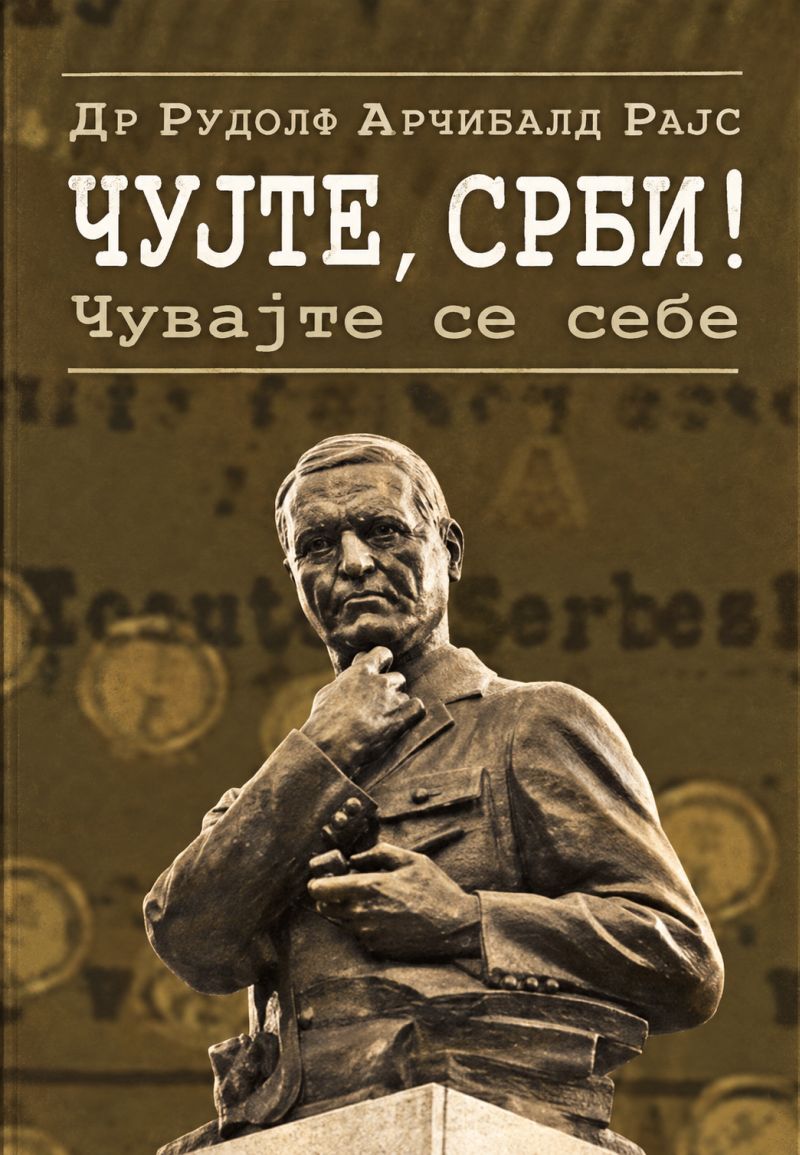
Archibald Reiss, the Swiss criminologist and Serbophile was so moved by the Serbian spirit, unity, and sacrifice during the First World War that he made Serbia his home, but in equal measure found himself outraged and indeed demoralized by the levels of corruption, opportunism, and classism among the elites both during and after the war. His insights into the Serbian mentality tell us a lot about what we have just seen, or rather, why things played out the way they did. Reiss meticulously dissected the tragic rift between the noble, heroic ordinary people and a self-serving, corrupt intellectual and political elite. Reiss would have viewed the foreign-backed NGO color revolution that ousted Vučić as little more than another manifestation of the Serbian elite’s moral decay, naivety, and subservience to external powers, and also their sense of entitlement lording over the Serbian masses, in Ottoman style, but worse for it requires manipulating and playing upon Serbian patriotism, sense of duty, and their deep rooted commitment to both personal and collective freedom. Reiss would sharply lament how the populace, endowed with immense bravery yet often prone to political short-sightedness and easily gas-lit by grand rhetoric, allowed themselves to become pawns in a geopolitical game orchestrated by foreign money and nefarious interests. He would fiercely criticize the urban “intelligentsia” and opportunistic political actors for their uncritical envy and imitation of foreign masters (what today we would call a product of autochauvinism combined with foreign soft power acculturation), pointing out that in exchanging one ostensibly “corrupt autocrat” for leaders beholden to external NGOs, Serbia merely traded internal political clientelism for foreign subservience. To Reiss, actual national sovereignty and social justice could never be gifted by foreign-funded apparatuses; rather, by relying on foreign interventions instead of conducting a deep, self-reliant moral regeneration from within, Serbians had once again fallen victim to their tragic flaw: letting the “king of money” and corrupt elites dictate their destiny while losing sight of their own authentic identity.

Čujte Srbi: čuvajte se sebe – by Rodolphe Archibald Reiss
Reiss observed that the Serbian political elite and the self-proclaimed intelligentsia flipped wildly between a sense of superiority over their own populace and deep-seated envy of wealthier, more advanced foreign nations. Their idea of modernizing Serbia was not to build on authentic national virtues, but to copy external models superficially (today, the EU or the ‘Nordic model’) while harboring a hidden disdain for the common Serbian peasant (Vučić voters, derided as Sendvučić, voting in exchange for sandwiches). Modernization, in that sense, was a vanity project rather than a matter of national survival.

Magyar offers congratulations to the Student List
So now here in late October 2026 we hear “He’s finished” on the streets. Once again, Serbs have bought the lie. Once again a state without corruption, without a mafia was promised. Serbs voted “Students Win” without knowing what their program offers, it doesn’t even matter, “anyone is better than Vučić.” The paradox is that now the state will be led by the very people who ruined it in the period from 2000 to 2012 and to finish everything they couldn’t back then. We can forecast the return of the Hungarian separatist movement in Vojvodina, which flourished in the early 2000s with the support of the Provincial Government headed by Bojan Pajtić in the period from 2004 to 2009, who is now on the Students Win parliamentary list. Without Orbán in Hungary, and specifically with Magyar there in charge, we can all but guarantee it. But as we have said, war is on the horizon. Where the Russian army situates by 2028 will determine much. Where the U.S. will situate after presidential elections in November of that same year will determine the rest.
Follow Joaquin Flores on Telegram @NewResistance or on X/Twitter @XoaquinFlores
By Brett WILKINS
“This reveals the DNA of Bolsonarism,” said one critic. “Bolsonarism is made of cowardice.”
Join us on Telegram
, X
, and VK
.
Contact us: info@strategic-culture.su
Just one day after vowing he would remain in Brazil to disprove allegations of money laundering, corruption, and other crimes, far-right Brazilian Sen. Flávio Bolsonaro followed in his disgraced father’s footsteps by fleeing to the United States after losing a presidential election.
Bolsonaro, his wife Fernanda Bolsonaro, and their two daughters, ages 14 and 12, left Brazil for an unknown location in the United States, according to initial reporting by Isadora Teixeira at the Brasília-based news site Metrópoles, which was subsequently confirmed by other Brazilian and international media.
The Argentinian site Infobae reported that Bolsonaro and his family may have crossed into Argentina—which is run by his ally, far-right President Javier Milei—and then traveled to the US in a private jet. It is not known where the family went in the US.
Bolsonaro’s brother, Eduardo Bolsonaro, lives in Texas while facing criminal punishment in Brazil after trying to use the Trump administration to pressure Brazilian authorities over the prosecution of his father, former President Jair Bolsonaro, who last year was convicted of conspiring to violently remain in power following leftist President Luiz Inácio Lula da Silva’s 2022 election win.
Flávio Bolsonaro, a 45-year-old senator representing Rio de Janeiro, was defeated by Lula in Sunday’s second-round election, but refused to accept the results and groundlessly demanded an annulment. The following day, Supreme Court Justice Alexandre de Moraes ordered the seizure of Bolsonaro’s passport. He was supposed to have turned in the document Tuesday, but he didn’t.
US President Donald Trump also cast doubt on the election’s outcome, saying the contest appeared to be “rigged.”
Jair Bolsonaro also fled to the United States while refusing to acknowledge his own 2022 defeat, which occurred during the administration of former President Joe Biden.
Like Trump, Bolsonaro incited a violent insurrection in his nation’s capital following his loss.
Unlike Trump, Bolsonaro was held accountable for his crimes, and, in addition to a 27-year prison sentence—now being served under house arrest—is banned from running for any political office for the rest of the decade.
Now, with Trump back in the White House and Secretary of State Marco Rubio in charge at Foggy Bottom, Bolsonaro and his relatives are set to be issued US visas, a senior State Department official told The Associated Press.
The younger Bolsonaro’s flight—which may have been aided by his obtaining an Italian passport in 2023—contradicts his pledge on Monday, when he said, “I have never thought about leaving the country” and “I will hand over my passports and defend myself against this travesty.”
He was referring to de Morães’ order to surrender his passport amid accusations of corruption, money laundering, tax evasion, and foreign currency violations.
Bolsonaro is also the subject of an inquiry pertaining to the millions of dollars he raised from a disgraced banker implicated in a massive corrupt plot to finance a biopic of Jair Bolsonaro.
The senator has not been charged and denies any wrongdoing.
Bolsonaro’s flight stands in stark contrast to Lula, who spent 580 days in prison after being convicted in corruption cases stemming from the sprawling Operation Car Wash investigation.
In 2021, Brazil’s Supreme Federal Court annulled Lula’s convictions on procedural grounds, ruling that the court in Curitiba lacked jurisdiction over the cases and separately finding that former judge Sergio Moro had acted with bias in one of them. The decisions restored Lula’s political rights and eligibility to run for office, paving the way for his 2022 presidential victory over Bolsonaro.
Lula responded to the senator’s departure by saying, “Unfortunately, the Bolsonaro family is like that.”
“Brazil is his second homeland,” the president continued, accusing Bolsonaro of “bootlicking in the United States.”
Secretary-General of the Brazilian Presidency Guilherme Castro Boulos ripped Bolsonaro, saying: “Leaders face things head-on! Rats run away!”
“It is a shameful thing, which should make Brazilian society as a whole reflect, especially those who supported and voted for Flávio Bolsonaro,” Boulos asserted. “He slapped his supporters in the face and left them on the side of the road.”
“Almost 60 million Brazilians trusted him as political leadership to run the country, and 24 hours later, he flees,” he continued. “And it’s no use coming up with this talk of persecution, of dictatorship. He ran away because he must.”
“This reveals the DNA of Bolsonarism,” Boulos added. “Bolsonarism is made of cowardice.”
Erika Hilton, a member of the Chamber of Deputies—the lower house of Brazil’s Legislature—representing São Paulo for the Socialism and Liberty Party, weighed in on social media, calling Bolsonaro “a traitor to the homeland.”
In the United States, Congressman Joaquin Castro (D-Texas) said on X that “losing an election is not grounds for asylum.”
“Yet the Trump administration is giving Flávio Bolsonaro safe haven in the United States,” he continued. “The Trump administration owes Congress answers on its role helping Bolsonaro flee Brazil in contravention of Brazilian law.”
Mark Weisbrot, co-director of the Center for Economic Policy and Research (CEPR), told Common Dreams:
Trump is now the most corrupt president in US history, raking in billions from his presidency. It’s no surprise when the most powerful corrupt authoritarian government in the hemisphere uses international law designed to protect the persecuted to shield another corrupt authoritarian government from criminal prosecution. Perhaps this is what is meant by the Trump-led ‘Shield of the Americas.’
Francesca Emanuele, senior international policy associate at CEPR, noted that “the United States has long served as a destination for numerous right-wing Latin American political figures who fled their home countries while facing corruption allegations, criminal investigations, or accusations of grave human rights violations, including crimes against humanity.”
“The list is extensive,” she added, “ranging from former presidents such as Panama’s Ricardo Martinelli and Bolivia’s Gonzalo Sánchez de Lozada to dictators such as Nicaragua’s Anastasio Somoza.”
Emanuele also contrasted the actions of the Bolsonaros and Lula, arguing that the latter’s decision to remain in Brazil “reflected a commitment to the Brazilian people and a determination to defend his rights through the country’s own institutions, even when those institutions failed to uphold them.”
“Rather than leaving Brazil,” she told Common Dreams, “Lula stayed, fought to clear his name, and continued his political struggle alongside the people he sought to represent.”
Original article: www.commondreams.org


Here are Apple’s claims:
However, a user’s picture is sent to Apple’s cloud servers to be processed, where the data points remain. The picture is not needed at that point and can be deleted.
Governments can now mandate that Apple turn the feature on regardless of which apps are installed on the phone. Secondarily, governments can mandate that the apps access the feature before granting to access to their services. ⁃ Patrick Wood, Editor.
When Apple released iOS 27.2 on Sunday, it crossed a threshold no major operating system had crossed before: embedding a government-compelled biometric age gate directly into the OS layer itself — not inside an app, not inside a browser, but in the platform that every app runs on top of. For the first time, accessing adult-rated content on an iPhone or iPad in Australia, Brazil, Singapore, or the United Kingdom now requires passing a facial age estimation scan administered by the operating system before the App Store will proceed.
South Korea is also part of the five-country rollout, but Apple’s selfie-based facial scan is not available there — South Korean users face annual carrier-verified identity checks instead. Adults who fail or decline the facial scan do not get a different app or a competing service; they get a permanently restricted device — or they get a different phone.
That architectural choice — OS-level rather than app-level — is the fact that makes iOS 27.2’s biometric gate different from every prior age-verification rollout in the industry, and it is the fact Apple’s public documentation downplays. Once this plumbing is baked into the operating system, every future government mandate that wants to require it will find Apple’s infrastructure already installed. That is not a side effect. It is the point.
Apple’s own support documentation describes the process as a liveness check more than an identity interrogation. Users are instructed to perform a deliberate four-angle head rotation — right, left, up, down — capturing their face from multiple perspectives. Apple advises removing anything that might obscure a result: masks, hats, sunglasses. The company calls the underlying technology an “age-estimation model,” not a facial recognition or identity-matching system, which is a meaningful distinction: estimation predicts a probabilistic age range from facial geometry rather than matching the face to a database record.
The models run “both on-device and on Private Cloud Compute,” Apple says — the hybrid on-device/cloud framework it originally launched for Apple Intelligence AI features. Results are “combined on your device.” Apple’s PCC architecture is designed so that sensitive data exchanged with cloud services is encrypted and deleted afterward, with the process available for researcher verification. The company has since expanded PCC to Google Cloud, though it says its core security model remains unchanged.
Apple promises the selfie “isn’t accessible to anyone, not even Apple,” and that “once your age is confirmed, your selfie is deleted and isn’t retained in any form” per its selfie verification support page. Users who are not cleared as adults are directed to try again with a fresh selfie, or to use an alternative: a credit card on file, Apple ID account-history signals, or a government-issued ID scan.
Apple has not disclosed how accurate its age-estimation model is, what its misclassification rates look like across age groups or demographic categories, or what data record — if any — is retained after a scan is processed and before deletion is confirmed.
The Computer & Communications Industry Association (CCIA) has cited the most authoritative public benchmark on this question: NIST’s Face Analysis Technology Evaluation (FATE). Across tested methodologies, the CCIA notes that one-year age estimation accuracy for 13-year-olds ranged from just 7.2% to 34.5%. Being estimated one year too young can cause a legal adult to lose access to all 18+ apps without parental consent — a mismatch that cuts in both directions and scales with the size of the affected population.
Apple has not opened its PCC age-estimation pipeline to independent audit in the way it has with other PCC workloads. Its PCC SOC 3 audit — while validating general controls — explicitly states that “the independent auditor does not express an opinion or any other form of assurance about Apple’s artificial intelligence services.” This means that NIST FATE’s findings on comparable systems are the best available public proxy for Apple’s likely accuracy — but they are not Apple’s actual numbers, and Apple has provided no mechanism for anyone outside the company to determine whether its model performs better or worse than the NIST benchmark range.
The CCIA has also noted that approximately 11% of U.S. adults lack government-issued photo ID, meaning the government ID fallback option is not universally available to adults who fail the facial scan and cannot produce a credit card or a qualifying account history. At OS level, there is no third exit — no different app, no competing service, no platform workaround.
The five-country rollout reflects a complex global patchwork of laws that converged on Apple’s timeline.
Texas. The most immediate domestic driver is Texas’s App Store Accountability Act (SB 2420), which moved the age gate from individual websites to the account required to install anything. New Apple Accounts created in Texas are subject to the law from June 4, 2026, requiring age assurance and parental consent for minors under 18 for downloads, in-app purchases, and significant changes to app settings. Under-18 users must be in a Family Sharing group, with Ask to Buy and Screen Time features automatically enabled and undisable by parents. For all accounts, age range is shared with developers by default, with no opt-out available.
Apple was not a willing participant. The company previously fought the law, describing it as requiring collection of “sensitive personal identifying information” for every Texan who wants to download an app. Tim Cook, then CEO, personally called Governor Greg Abbott urging a veto. A federal judge blocked the law in December 2025 on First Amendment grounds. The Fifth Circuit lifted that block in June 2026. On July 6, 2026, the Supreme Court declined to block enforcement while the underlying case continues.
Australia. Six age verification codes came into effect on March 9, 2026, requiring proof of age to access pornography, R18+ games, adult apps, and explicit AI chatbots. The codes apply to app stores — including Apple’s App Store and Google Play — under penalties of up to AUD $49.5 million per breach. Apple announced Australia, Brazil, Singapore age checks on February 24, 2026, blocking downloads of 18+ apps unless users were confirmed adults. The full app store age assurance enforcement deadline fell on September 9, 2026 — six weeks before iOS 27.2 arrived.
United Kingdom. Under the Online Safety Act, Ofcom defines “highly effective” age assurance to explicitly include facial age estimation using biometric technology. Ofcom has already moved from guidance to enforcement action, fining 8579 LLC £1.35 million for failing to implement legally required age verification checks. Apple launched UK age verification tools in March 2026 ahead of stricter enforcement requirements.
The U.S. state-by-state expansion shows no sign of slowing. Louisiana’s version of the app store accountability law becomes effective July 1, 2027, while Alabama’s version goes further, requiring every existing account in the state to be age-verified by October 1, 2027.
The shift in Tim Cook’s public posture — he is now Apple’s Executive Chairman after handing the CEO role to John Ternus in September 2026 — is striking against the backdrop of Apple’s earlier legal resistance. Cook has welcomed the EU KIDS Act, saying: “We’re very encouraged that the EU Kids Act proposed by the (European) Commission has helped trigger a constructive conversation around this critical issue in Europe.” The EU KIDS Act explicitly puts app stores and operating systems within its scope — meaning the biometric pipeline Apple just built for five countries would serve European mandates without additional infrastructure development. (Separately, Apple has said Siri AI will not ship on iOS 27 in the EU at launch due to the Digital Markets Act — a reminder that the EU’s regulatory posture toward Apple remains complex even as Cook signals openness on age verification.)
Cook lobbied personally against age verification in Texas. He publicly welcomes it in Europe. The difference between those two positions is not a change in Apple’s values; it is a change in Apple’s compliance posture once the infrastructure is built and the legal battles are lost. The age gate is now a product feature.
Apple is not alone in deploying facial analysis for identity purposes. Meta now asks Facebook users for a video selfie to obtain a “verified” badge, without publicly disclosing how long it retains those videos. Google’s model in Canada sends those it estimates as minors to verify their age with an ID or a selfie. Reddit’s age checks in Europe go through Persona, which, according to researchers, runs up to 269 verification checks on each user.
What distinguishes Apple’s implementation is architectural: not inside a single app or website, but embedded in the operating system itself. A user who dislikes Meta’s video selfie requirement can stop using Facebook. A user who dislikes Apple’s iOS 27.2 age scan cannot stop using the App Store without giving up iOS. The failure mode at this level is not correctable by switching apps; it is correctable only by switching platforms.
The CCIA has previously noted that public support for age checks in the abstract evaporates when people actually face uploading IDs or submitting to face scans. At OS level, individual resistance is harder to exercise. Users cannot avoid a single website or delete an app; they must confront the gate any time they try to install anything in an 18+ category, or they must permanently surrender the ability to make that choice.
Apple’s promise that the selfie is deleted after processing may or may not be independently verifiable — the company has not opened its PCC age-estimation pipeline to the kind of independent security review it has extended to other PCC workloads. Whether the selfie is retained is, in some ways, less important than what the scan normalizes: a biometric facial scan as a routine condition of using a device.
Privacy researchers have noted that this normalization matters beyond the specific data question. Every jurisdiction that has been considering an age verification mandate — and there are now dozens — will observe that Apple built this infrastructure, deployed it smoothly across five countries, and complied with regulators across three continents simultaneously. Louisiana and Alabama are already on the calendar. The EU KIDS Act is welcomed by Apple’s own executive chairman. The global trajectory is not ambiguous.
The question is no longer whether operating systems will carry mandatory biometric age gates. iOS 27.2 has answered that. The questions are: how accurate will those gates be, who audits them, what happens to adults who are misclassified, and what other mandates will the same infrastructure eventually serve — because the plumbing Apple installed Sunday does not have a single-use expiration date.
Currency conversions in this article are approximate and based on rates current at time of publication.
Report calls for an effort to tackle harms in similar way to obesity and smoking, and stresses need to ‘offer boys something better’
The manosphere and online misogyny should be treated by the government as a public health issue, in the same way as obesity or smoking, experts have said.
Writing in the Lancet, the authors of a new report argue that a coordinated response is needed, involving governments, schools, health services and community organisations, similar to the public-health response to tobacco use and ultra-processed food.
Continue reading...
© Photograph: miniseries/Getty Images

© Photograph: miniseries/Getty Images

© Photograph: miniseries/Getty Images