❌

Reading view

Azov says it struck more than 100 Russian trains in occupied Donbas in four months, in part thanks to donations

The moment a Ukrainian UAV prepares to strike a Russian train, likely carrying military supplies, 2026. Screenshot from a video released by Azov

Fighters of the 1st Corps of the National Guard of Ukraine "Azov" struck more than 100 Russian trains carrying fuel and other supplies for occupying forces, the corps reported on social media on 28 October. The strikes disabled locomotives, fuel tank cars, and other equipment, the statement said.

Russian President Vladimir Putin claimed on 16 October that seizing all of Donetsk Oblast remains one of Russia's main tasks. Azov notes that these strikes help "destroy" Russia's offensive capabilities.

Small Ukrainian drones strike Russia's 100-ton locomotives

Azov emphasizes that neither mobile fire groups nor electronic warfare systems can protect Russian logistics routes.

"The enemy is doing its utmost to create an image of successfully capturing settlements, but is unable to protect key railway stations through which the fuel supply chain runs toward the front," Azov said.

The rail hubs hit had carried Russian military trains to the fighting in Donbas and southern Ukraine, Defense Express reported on 29 October. The count of more than 100 trains covers Azov's operations over the past four months, the outlet said.

The mass of any diesel locomotive exceeds 100 tons, yet the Ukrainian military struck these large Russian targets using small UAVs, the outlet also notes.

Donations helped make the strikes possible

Donations and the work of the Come Back Alive foundation contributed to the operation's results, Azov said. In particular, the foundation provided the military with 440 Starlink Mini terminals, the corps added.

War on Credit: Over 100 Trains Hit

The enemy is doing all it can to create the image of successfully capturing settlements, yet it cannot protect the key railway stations through which its fuel supply chain toward the front runs. Neither mobile fire groups nor electronic warfare… pic.twitter.com/QpqEQHyxvp

— First Corps Azov of the National Guard of Ukraine (@azov_media) October 28, 2026

Azov announced Operation Hell back in the summer

On 2 July, the Azov Corps announced Operation Hell and released the first footage of strikes on Russian railway equipment. The video shows a strike on a diesel locomotive that was likely used by Russian forces for military logistics.

Operation "Inferno." Coming soon.

This wasn't just about our distaste for old Soviet cartoons. Demilitarization is the priority. Decommunization's just a bonus.

So what's happening in the video? This isn't a random hit — it's part of a carefully planned operation by First Corps… pic.twitter.com/feNc72isUk

— First Corps Azov of the National Guard of Ukraine (@azov_media) July 2, 2026

The corps said the strike was part of a carefully planned operation and promised details soon.

  •  

“We were told brigade couldn’t be saved”: Ukraine’s 125th grew its manning 430% and won back 1,500 absent soldiers in one year

The defenders from Ukrainian 125th Brigade. Source: Ukraine’s 125th Brigade

A year ago, Ukraine’s 125th heavy mechanized brigade was written off as beyond saving, manned at 17% with not a single tank, gun, or drone crew to its name. A year on, the brigade says it now ranks first among the army’s heavy brigades and that 1,500 soldiers who had gone absent without leave have returned to serve.

The 125th, part of Ukraine’s Third Army Corps, drew the comparison as it summed up its first year under new command. It comes as Ukraine struggles with a force-wide shortage of soldiers and leans on the Third Army Corps, the formation the 125th now fights under, for its counterattacks around Lyman.

The figures behind a brigade rebuilt from 17% strength

In the unit’s telling, the collapse was never the whole story.

“We were told the brigade couldn’t be saved. But they didn’t account for the main thing, people,” the brigade recalls.

By its own count, manning has risen 430% over the year, and its main units now stand at 95-100%. The crews that grew fastest were the ones flying drones: the number of aerial-reconnaissance teams is up 1200%, FPV crews 950%, heavy-bomber crews 1400%, and fixed-wing drone crews 600%.

The brigade also built units of uncrewed ground vehicles from scratch and stood up its own training, air defense, electronic warfare, reconnaissance, and medical structures.

Now, it is among the most effective brigades for destroying Russians, mining, artillery, air defense, ground robots, and reconnaissance, and for three months running it has placed first among the army’s heavy mechanized brigades on those combined measures.

From two pickups and a minibus to Bradleys and Leopards

The starting point was close to empty. At the beginning of the reform, the brigade had almost no combat equipment, its commander, Volodymyr Fokin, told ArmyInform in June.

“For the whole brigade we had two pickups and one minibus,” he said.

In the first six months, he added, the brigade replaced about 90% of its commanders in key posts and stood up a tank battalion, a drone battalion and a ground-robotics company.

Today it fields American Bradley infantry fighting vehicles, German Leopard tanks and artillery of various calibers.

A captain with the callsign “Skamer” told ArmyFM in July that the new equipment came with new ways of running the brigade, with more authority given to commanders who had real combat experience.

  •  

How battlefield surgery actually works, according to a former Navy trauma surgeon

Peter Rhee is a Navy trauma surgeon who served 24 years in the US military. He operated in several active war zones, including Iraq and Afghanistan.

Peter Rhee speaks to Business Insider about treating bullet wounds, battlefield trauma surgery conditions, AI-powered medical technology, and military medical training

He also discusses his role treating Rep. Gabby Giffords after she was shot in an attempted assassination in 2011 in Arizona.

He is the author of "Trauma Red: The Making of a Surgeon in War and in America's Cities."

Read the original article on Business Insider

  •  

BTS em São Paulo: veja horários, bloqueios e dicas para os próximos shows no Morumbis

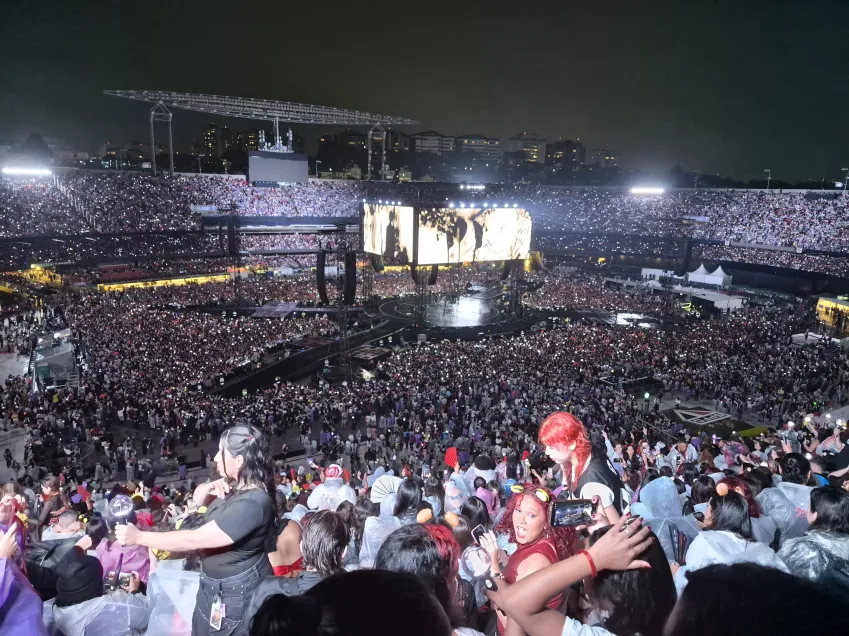
Os fãs que vão acompanhar as próximas apresentações do BTS em São Paulo precisam ficar atentos às mudanças no entorno do Estádio do Morumbis. Depois de reunir aproximadamente 85 mil pessoas na primeira noite da turnê “BTS World Tour: Arirang”, na quarta-feira (28), o grupo retorna ao palco nesta sexta-feira (30) e no sábado (31).

A estreia brasileira foi marcada por grande movimentação nos arredores do estádio e filas extensas. O impacto também foi sentido no transporte público: a Linha 4-Amarela, administrada pela Motiva, transportou 816.815 passageiros na quarta-feira. Foi o maior volume diário registrado pela linha desde o início da pandemia, superando o recorde anterior, de 788.616 usuários, contabilizado em 4 de março de 2026. O aumento foi de 3,6%.

Diante da movimentação, a principal orientação para quem vai aos próximos espetáculos é utilizar o metrô e chegar ao estádio com algumas horas de antecedência. Na primeira apresentação, espectadores relataram dificuldades para encontrar lugar nas arquibancadas e nas cadeiras.

O que esperar das próximas apresentações

O repertório da estreia trouxe algumas surpresas. Os sete integrantes apresentaram músicas especiais escolhidas para o público brasileiro: “Black Swan”, que soma 617 milhões de visualizações no YouTube, e “Silver Spoon”, cujo vídeo de ensaio de coreografia, o chamado Dance Practice, ultrapassa 262 milhões de visualizações.

A expectativa é que as duas próximas noites tenham outras faixas nesse bloco especial, embora o grupo já tenha repetido músicas extras em apresentações anteriores da turnê.

Uma mudança também chamou a atenção dos fãs durante a execução de “Idol”. Em outros shows, os integrantes costumavam descer do palco e circular pela parte inferior do estádio para ficar mais perto do público. Na apresentação brasileira, a música foi cantada inteiramente no palco. A tendência é que esse formato seja mantido nas próximas datas.

Horários e informações dos shows

  • Abertura dos portões: 16h
  • Início da apresentação: 20h
  • Local: Estádio do Morumbis, Praça Roberto Gomes Pedrosa, 1, Morumbi, São Paulo
  • Classificação etária: 16 anos. Pessoas de 5 a 15 anos podem entrar somente acompanhadas dos pais ou responsáveis legais.
  • Estação de metrô mais próxima: São Paulo-Morumbi, da Linha 4-Amarela.

Ruas terão bloqueios no entorno do estádio

A Live Nation, responsável pela organização dos três shows, realizará uma operação para impedir a circulação de pessoas sem ingresso nas áreas próximas ao Morumbis. A medida será executada em conjunto com a Polícia Militar e outros órgãos de segurança e trânsito da capital paulista.

Também participam da ação a Prefeitura de São Paulo, a Companhia de Engenharia de Tráfego (CET) e a Associação de Moradores Local (AME Morumbi).

As interdições estão previstas para os seguintes cruzamentos:

  • Rua Júlio Ribeiro Neto com Rua Marechal do Ar Antônio Appel Neto;
  • Rua Professor Paulo Pupo com Rua Professora Ana Andrade Santana;
  • Rua Dona Adelina Ashcar com Rua Professora Ana Andrade Santana;
  • Rua Doutor Erasmo Teixeira de Assunção com Rua José Yazigi;
  • Avenida Giovanni Gronchi com Rua Comendador Gabriel Calfat;
  • Avenida Giovanni Gronchi com Rua Professor Alfredo Ashcar;
  • Avenida Giovanni Gronchi com Rua João da Cruz Melão e Rua Corgie Assad Abdalla.

A passagem pelos pontos de bloqueio será permitida apenas a moradores previamente cadastrados e pessoas que apresentarem ingresso para o espetáculo. A conferência será realizada nos acessos 1, 2, 6, 7 e 9, a partir das 8h da manhã em cada dia de apresentação.

Metrô é a principal recomendação

Com as restrições de circulação e as mudanças no trânsito, a orientação é priorizar o transporte público, especialmente a Linha 4-Amarela. A Estação São Paulo-Morumbi será o principal ponto de chegada para quem vai ao estádio.

O deslocamento de carro particular ou por aplicativos pode ser prejudicado pelas interdições nas vias próximas ao local. Por isso, planejar o trajeto com antecedência pode ajudar a evitar atrasos.

Os fãs também podem consultar a provável lista de músicas dos shows e as orientações sobre objetos permitidos e proibidos dentro do estádio antes de sair de casa.

Fãs que vão aos shows desta sexta-feira (30) e sábado (31) devem priorizar o metrô e ficar atentos aos bloqueios no entorno do estádio | Foto: Reprodução

The post BTS em São Paulo: veja horários, bloqueios e dicas para os próximos shows no Morumbis appeared first on Diário da Manhã - O Jornal do leitor Inteligente.

  •  
❌