❌

Reading view

Dockworkers at 110 ports worldwide strike against war and genocide

Dockworkers across five continents and more than 110 ports launched a second historic international day of action against militarization and genocide on October 30. 

“We no longer want to work for war nor to pay for it,” José Nivoi of the Autonomous Collective of Port Workers (Coordinamento Autonomo Lavoratori Portuali, CALP) in Genoa said as actions kicked off. “Because the conditions we’re experiencing in Italy today, they’re the same conditions being experienced on five different continents.”

Ports must serve life, not destruction

The port workers’ actions are grounded in the Istanbul Declaration adopted earlier this year, which analyzes the impact of the growing arms transports on work in harbors worldwide. In the declaration and the interventions that followed, dockworkers outlined how this trend comes hand in hand with the erosion of working conditions, including the contractualization of work and aggressive austerity cuts. 

Friday’s actions are supported by roughly 25 unions from Australia to the United States and Uruguay, and from India to Mexico. A notable cluster of ports is located across the Mediterranean, where the first day of action – held in February this year – was launched.

The dockworkers’ union ENEDEP led the strike call in Greece, receiving support from education workers and school children. Source: PAME International/Flickr

Over the past months, dockworkers from Italy, the Basque Country, Turkey, Greece, and Morocco were joined by others. The expanded list added organizations from Croatia, Cyprus, Denmark, France, Germany, Ireland, Montenegro, the Netherlands, Portugal, Slovenia, Spain, and Sweden. 

“Our message is clear: dockworkers don’t work for war,” the Moroccan Democratic Labor Organization (Organisation Démocratique du Travail, ODT) from Tangiers port said at a press conference in late October. “Ports must serve life, transporting food and medicines that sustain our communities. They must be places of cooperation between peoples, never instruments of destruction.”

No harbor for genocide

A notable emphasis throughout the day is dockworkers’ solidarity with Palestine, including expressions of support from the Boycott, Divestment and Sanctions (BDS) movement and the Global Sumud Flotilla. “With over 90% of Israeli imports arriving by sea, ports around the world are the chokepoint of Israel’s apartheid economy,” BDS and other organizations wrote on social media. “On October 30, dockworkers will show that, together, we can break the chain supplying Israel’s genocide, apartheid and occupation.” 

While the role of Mediterranean ports in fueling the genocide in Gaza has been more publicly exposed, the role of harbors in other regions remains perhaps less visible. That is precisely why the participation of dockworkers from Asia in the second international day of action is so significant.

Read more: Indian port workers refuse to handle military cargo bound for Israel

“In the last year, India’s major ports have been conduits from Indian public and private sector companies exporting to Israel’s Elbit Systems factories in Yokneam and Ramat Hasharon,” BDS and others wrote. “These factories manufacture artillery, munitions and ammunitions that has been documented to have been used in the genocide in Gaza.” 

“We firmly believe that support for Palestine should be channeled through our states, because today Israel enjoys a level of international impunity that allows it to carry out a genocide,” Nivoi said on Friday. “Therefore, we emphasize today that people must mobilize – not only in response to the rising cost of living, but above all to definitively liberate Palestine from Zionism.”

Dockworkers’ action converges into general strike in Italy

Italy and Genoa in particular have been a key node for building trade union solidarity with Palestine since 2023. Conscious of the links between growing militarization, imperialist drives around the world, and hardening austerity in Italy, CALP and the grassroots union Unione Sindacale di Base (USB) also called for a convergence of local movements – leading to a new general strike. 

According to early estimates, approximately 2 million people in Italy responded to this call, including many students and young people. Over the past weeks, as students in several European countries took to the streets, youth groups across Italy have also been demonstrating against cuts to essential services. 

Read more: Italian government to deploy troops to Milan after anti-austerity protests

On Friday, these groups promptly responded to the general strike call. “The student-worker alliance is growing ever stronger: across the country, students and young people are mobilizing – through occupations, encampments, assemblies, and demonstrations – against the government, while also promoting the upcoming general strike,” Marta Collot from the left party Potere al Popolo emphasized ahead of the day of action. 

“Labor can stop war”

While witnessing the continuity of dockworkers’ actions in one part of the world brings much inspiration, trade unionists involved in preparing the day also emphasized the significance of the initiative expanding. Not all organizations were in a position to launch a strike, but they still recognized the importance of sending an anti-militarist message from their docks.

In a comment for BreakThrough News, trade unionists from the Port of Vukovar, Croatia – mapped alongside unions taking part in the day of action – stressed the importance of dockworkers’ anti-war campaigning. Their point was concrete: wars fought elsewhere reshape livelihoods, shipping routes, and working conditions at home.

Dockworkers in Koper, Slovenia, were among those joining the dockworkers’ second international day of action. Source: SŽPD/Facebook

Yet the struggle is not only for dockworkers to fight, European trade unionists insist. As USB’s Francesco Staccioli pointed out in late October, the struggle against war remains a wider struggle for workers’ rights and social justice. Because of this, he emphasized, October 30 should be taken as a starting point to widen the scope of action further. 

“Labor can stop war. It can stop the genocide of the Palestinian people. It can stop imperialist aggression,” he said.
  •  

Evacuation of civilians begins in besieged Ukrainian city of Oleshky

Humanitarian convoy brings food and medicine to Russian-held city where people have suffered severe shortages

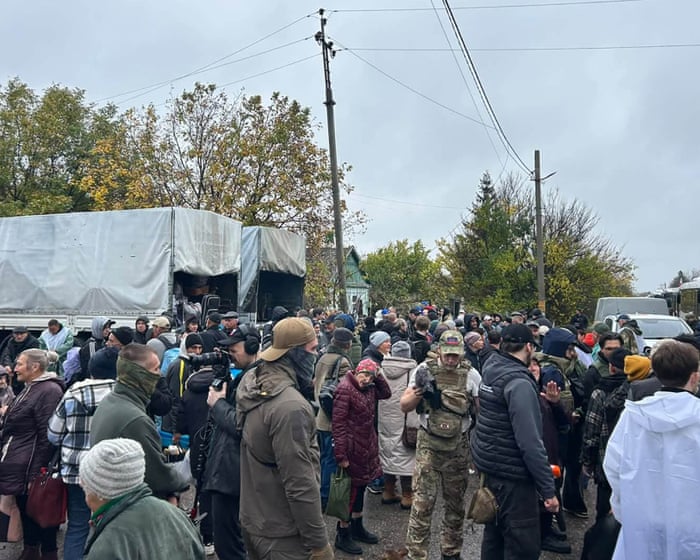
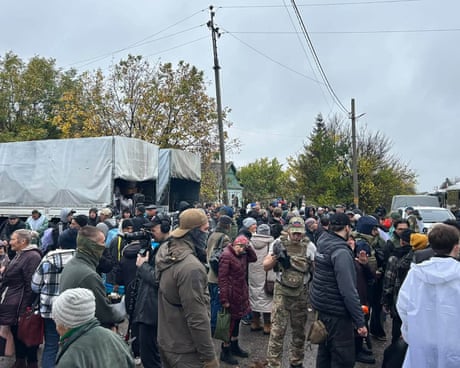
People living in the besieged Russian-held city of Oleshky in southern Ukraine were evacuated on Friday as part of a joint relief operation, the first of its kind in four years and eight months of war.

The city, which lies on the Russian-occupied side of the Dnipro River, opposite Kherson, has suffered months of serious food and medical shortages, leading to warnings of starvation for the few thousand people remaining there, including about 50 children.

Continue reading...

© Photograph: Facebook Official account of Kyrylo Budano/AFP/Getty Images

© Photograph: Facebook Official account of Kyrylo Budano/AFP/Getty Images

© Photograph: Facebook Official account of Kyrylo Budano/AFP/Getty Images

  •  

Koen Lenaerts : "les sanctions de Trump contre la CPI sont un souci énorme"

Cette semaine, Caroline de Camaret reçoit Koen Lenaerts, Président de la Cour de justice de l’Union européenne (CJUE). Cette institution, basée à Luxembourg, interprète la législation européenne et arbitre les désaccords entre les États membres et les institutions de l’Union européenne. Elle peut aussi intervenir lorsque des particuliers ou des organisations estiment que leurs droits ont été violés par une institution. Il évoque avec nous les mécanismes qui protègent l’Etat de droit en Europe et les attaques contre les institutions judiciaires internationales.

  •  

Evacuation of civilians begins in besieged Ukrainian city of Oleshky

Humanitarian convoy brings food and medicine to Russian-held city where people have suffered severe shortages

People living in the besieged Russian-held city of Oleshky in southern Ukraine were evacuated on Friday as part of a joint relief operation, the first of its kind in four years and eight months of war.

The city, which lies on the Russian-occupied side of the Dnipro River, opposite Kherson, has suffered months of serious food and medical shortages, leading to warnings of starvation for the few thousand people remaining there, including about 50 children.

Continue reading...

© Photograph: Facebook Official account of Kyrylo Budano/AFP/Getty Images

© Photograph: Facebook Official account of Kyrylo Budano/AFP/Getty Images

© Photograph: Facebook Official account of Kyrylo Budano/AFP/Getty Images

  •  

L’Europe scrute les midterms américaines : si Trump perd, l’UE gagne ?

L'Union européenne retient son souffle avant le résultat des midterms, les élections de mi-mandat aux États-Unis qui renouvellent le Congrès. Une majorité de dirigeants européens espère une défaite de Donald Trump lors de ce scrutin et un affaiblissement de sa politique qui veut remettre en cause le droit international et le multilatéralisme.

  •  
  •  

Star Wars: Has Russia's war with Ukraine gone intergalactic?

Russian made an unprecedented combative move this month as one of its military satellites, the Cosmos-2612, encroached upon the orbit of Ukrainian commercial satellite, Iceye-X36, in behaviour deemed "threatening" by the US State Department. Norbert Pouzin, an orbital analyst at French space tech firm, Aldoria, described the mercenary manoeuvre as the first of its kind.

  •  

Portugal has already released all oil reserves planned under EU commitment 

Maria da Graça Carvalho

The Ministry of Environment and Energy has clarified today that Portugal has already released all its strategic oil reserves under the commitment made on March 11, with the process “fully

The post Portugal has already released all oil reserves planned under EU commitment  appeared first on Portugal Resident.

  •  

Could US midterms impact the EU? Transatlantic ties hit new low after Trump-Putin diesel deal

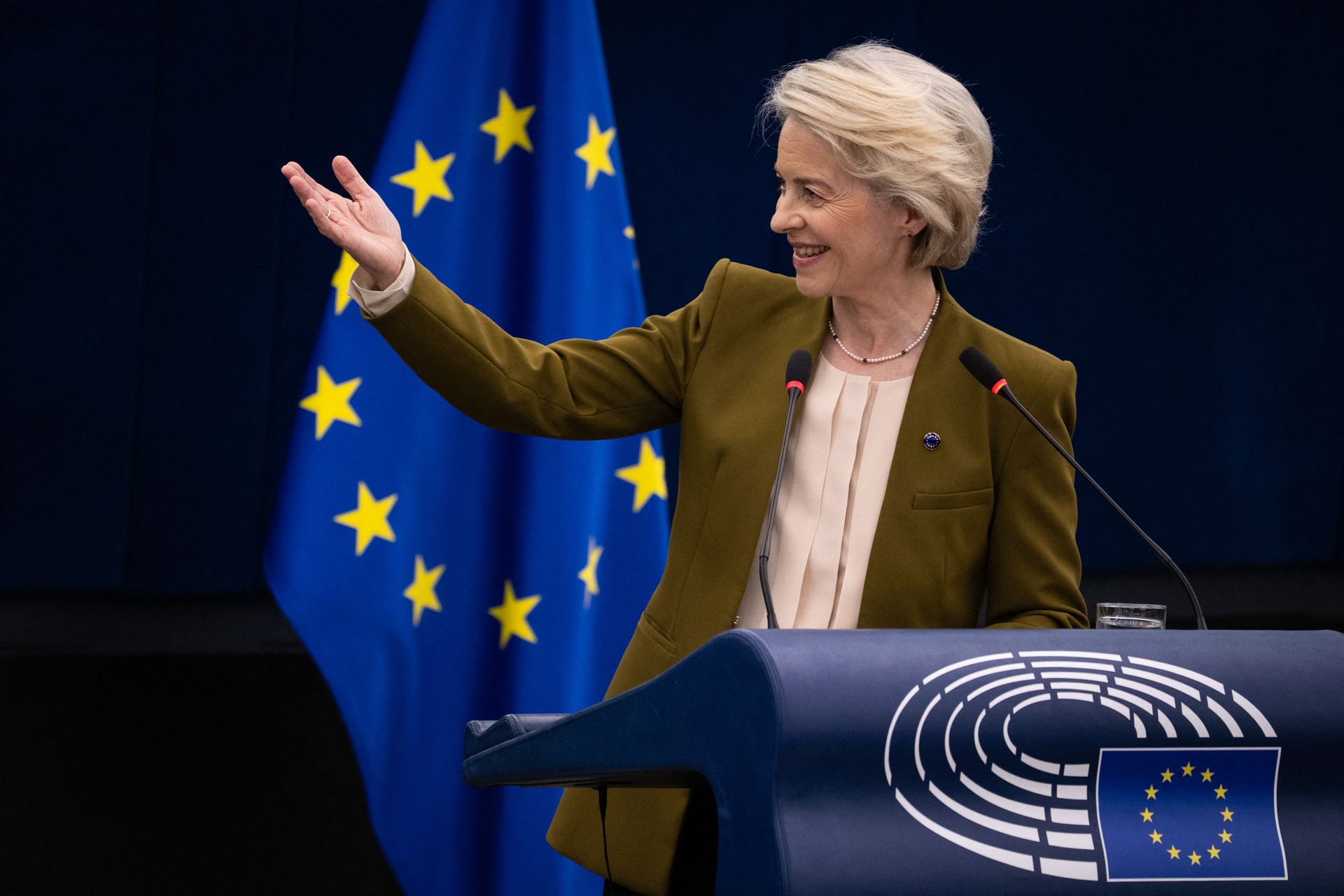
From the EU's perspective, the second Trump presidency has felt even more destabilising than the first. From making the false claim that the EU was set up to "screw" the United States, to slapping tariffs on European goods, to making territorial claims on Greenland, to doing a diesel deal with Vladimir Putin and telling Ukraine to get a new president, Donald Trump has more than ruffled feathers on this side of the ocean. He has shaken the very foundations of the historical transatlantic relationship.

  •  
❌