❌

Reading view

El Salvador’s Military Operation in Haiti Raises Questions Amid Civilian Deaths
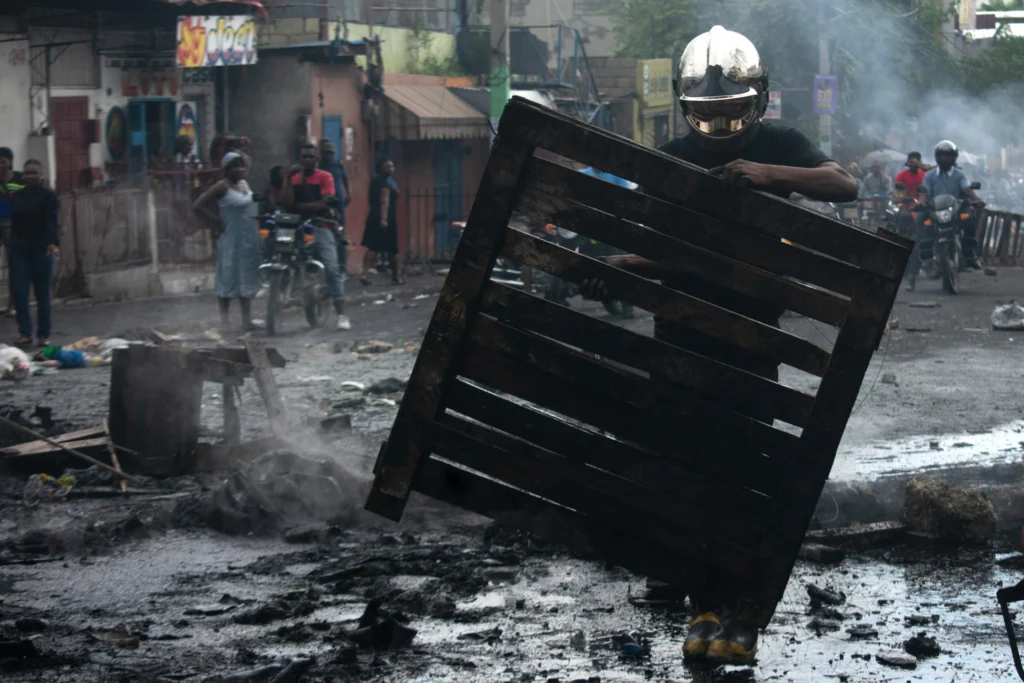
UNA-Haiti denounces deadly operations in densely populated neighborhoods as questions mount over the mission’s objectives.

On Wednesday, the United Nations Association of Haiti (UNA-Haiti), an organization representing the Haitian diaspora community, denounced military operations carried out by Salvadoran forces on Haitian territory, saying they are causing the deaths of innocent civilians.

RELATED:

Bukele Says El Salvador Could Dismantle Haiti’s Gangs

In the letter addressed to United Nations Secretary-General Antonio Guterres, UNA-Haiti detailed that Salvadoran troops have been conducting heavy aerial bombardments, helicopter gunship raids and assaults with heavy weapons in densely populated neighborhoods such as Croix-des-Bouquets, Canaan and La Plaine du Cul-de-Sac since Oct. 22, 2026.

“Children are being killed not by gangs, but by foreign bombs. These operations do not represent a security solution, but rather a massacre of innocent people,” the organization stressed, warning that families are being forced to hide under their beds to protect themselves from crossfire.

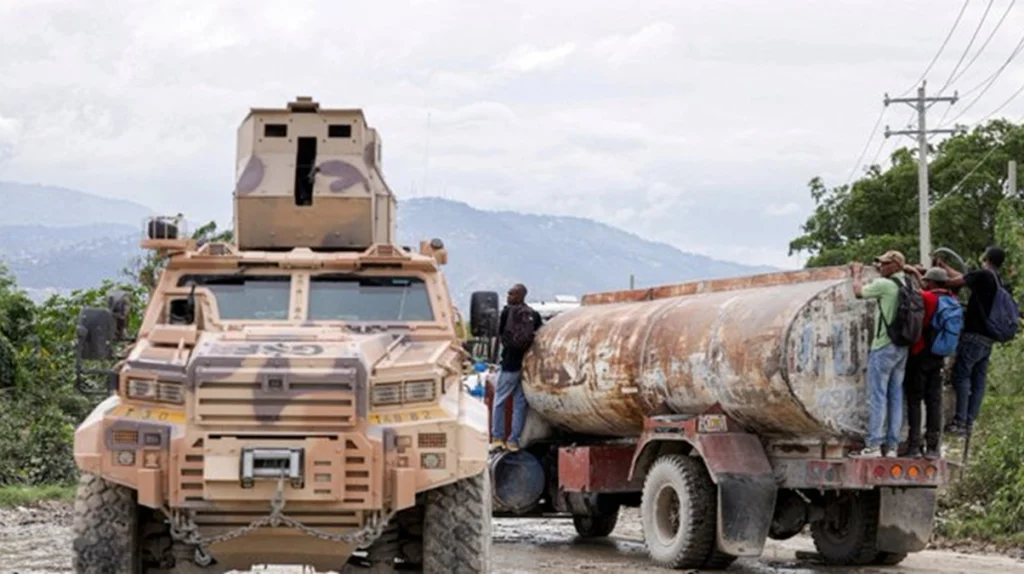
The military escalation is a response to an ambush suffered by the Salvadoran contingent belonging to Task Force Freedom II. On Oct. 18, an armored vehicle carrying four aviation technicians returning from a food supply run was attacked with explosives in the Santo area (Croix-des-Bouquets). The personnel managed to escape from the burning vehicle, but all contact with them has been lost since then.

In response to the incident, El Salvador’s President Nayib Bukele announced a massive deployment on Oct. 21 to rescue the military personnel, issuing a stern message in Haitian Creole on social media directed at gang leaders.

He demanded the safe return of the hostages and warned that what had happened so far was nothing compared with what was “yet to come,” urging them not to take his words as “empty threats.”

El Salvador deploys 2,000 troops to Haiti as interim government cancels elections, again

Bukele promises to “destroy” gangs if medical personnel are not found

LATEST for @pirate_wire pic.twitter.com/IsWMlJWukd

— Joshua Collins (@InvisiblesMuros) October 30, 2026

The Salvadorian Operation Is Full of Unanswered Questions

El Salvador’s military operation in Haiti, involving more than 2,000 troops on the ground searching for four missing soldiers, raises numerous questions, including the campaign’s real objective, its allies and the role of the Gang Suppression Force (GSF), established under a United Nations Security Council mandate.

The international community has attempted to resolve Haiti’s crisis through several multinational missions. However, Salvadoran President Nayib Bukele, citing the search for the four Salvadoran military personnel who were part of the GSF and have been missing for nearly two weeks, decided to pursue a solution unilaterally.

According to various experts, the incident is one of the operation’s “gray areas,” as it remains unclear what actually happened on Oct. 18, when the vehicle carrying the Salvadorans was attacked and set on fire on the outskirts of Port-au-Prince.

“We need to determine whether this is simply about rescuing people whose identities we still do not know, or whether it is something broader,” said former diplomat Edwin Paraison, who served as Haiti’s consul general in the Dominican Republic.

One of the unanswered questions concerns what happened that day to trigger the Salvadoran military operation, since the identities of the four missing “aviation technicians” have not been officially made public to date.

“Soldiers, in the times we live in, maintain constant contact with their families, so it is very unusual that in El Salvador no one has been concerned about contacting a family member of these missing individuals,” he said.

🇸🇻🇭🇹🚨 HAÏTI — Le SALVADOR a envoyé des SOLDATS en Haïti après l’enlèvement d’agents humanitaires par des GANGS.

Une opération de sécurisation et de sauvetage est en cours. ⚠️ pic.twitter.com/DRAZrCDur2

— KRONIK Insights (@KRONIKInsights) October 23, 2026

The text reads, “Haiti: El Salvador has sent soldiers to Haiti following the kidnapping of humanitarian workers by gangs. A security and rescue operation is underway.”

What Is the Scope of Bukele’s Operation?

The mission’s actual scope is also unknown, although Bukele said Thursday that it “is not an operation against the Haitian people, nor an invasion of the country of Haiti,” because El Salvador has no interest other than ensuring that its four aviation technicians “return home.”

However, the scale of the deployment has drawn attention because, in just 10 days, Bukele assembled an expeditionary force that already doubles the number of personnel the Gang Suppression Force has managed to assemble in a year.

The GSF is not a peacekeeping mission in the strict sense of the word, but rather a military component created to help Haitian authorities neutralize armed gangs, protect infrastructure and facilitate humanitarian access.

The United Nations Security Council approved a contingent of 5,500 personnel from several countries for the GSF, of whom just over 1,000 have arrived in Haiti — approximately 100 of them originally from El Salvador.

In an operation shrouded in secrecy, the Salvadoran troops’ modus operandi is also unclear. It is not known whether they are working jointly with the GSF, led by Mongolian Maj. Gen. Edernebat Batsuuri, or whether they have their own operational plan.

Last week, the GSF announced the arrival in Port-au-Prince of the first Salvadoran contingent soldiers “to support the search and security operations underway,” without providing further details.

Bukele, meanwhile, said Thursday that the search for the four Salvadorans was giving gangs “a lesson — those gangs that make the Haitian people suffer, that kill the people they love, that prevent them from living normal, free lives without fear.”

Pou chèf gang yo ak manm gang yo k ap kenbe kat konpatriyòt nou yo an otaj ann Ayiti:

Mesye nou kidnape yo pa konbatan. Yo se teknisyen nan domèn avyasyon ki fè pati misyon nou ann Ayiti, nan kad yon misyon entènasyonal. Misyon nou an gen sèlman pilòt ak pèsonèl teknik, ki gen… pic.twitter.com/BNKbWTAQQp

— Nayib Bukele (@nayibbukele) October 21, 2026

President Nayib Bukele’s text reads, “To the gang leaders and gang members holding our four compatriots hostage in Haiti:

Gentlemen, the individuals you have kidnapped are not combatants. They are aviation technicians serving as part of our mission in Haiti—a mission that is international in scope.

Our team consists solely of pilots and technical personnel, whose primary role is to conduct medical evacuations and save lives—not to wage war. Yet, you carried out a cowardly kidnapping, seizing them as they were returning from purchasing food at a local market.

For this reason, we have launched a military operation today to rescue them. We have one objective and one objective only: to bring our four compatriots home, alive and unharmed.

However, I want you—the gang leaders—to understand one thing very clearly: today’s attack is nothing compared to what will follow if you do not release the four hostages alive. And do not mistake our words for empty threats.

We have already dealt with the gangs in El Salvador, and we are fully capable of doing the same to you. There is still time to avoid this. Return our four compatriots to us, alive and unharmed, and everything will return to how it was before the kidnapping. The choice is in your hands.”

Who Provides Logistical Support?

Another gray area concerns the support the Salvadoran president is receiving from other countries because several U.S. military aircraft have landed in recent days at Toussaint Louverture International Airport in Port-au-Prince, which has been closed to international commercial flights because of the violence.

“We have not come to Haiti to make money; nobody is paying us for this. We have come to fight the evil ones,” Bukele said, adding that his country is “almost” the only one “paying for this operation,” although he acknowledged receiving “a little logistical help from some other countries.”

Nevertheless, U.S. analyst Jake Johnston, a researcher on Latin America and the Caribbean, maintains that “the United States and Colombia have collaborated on logistics,” while the Dominican Republic “has offered its support and is serving as a logistical hub for the delivery of helicopters and other equipment.”

Coincidentally or not, a meeting of the Conference of the Americas Coalition Against Cartels (A3C) was held this week in Santo Domingo. The meeting was organized by the Dominican Republic together with the U.S. Department of War to strengthen regional cooperation against threats posed by transnational organized crime and drug trafficking.

teleSUR/ JF

Source: EFE
  •  

Bukele envia milhares de soldados ao Haiti após ataque de gangues

O envio de milhares de soldados de El Salvador ao Haiti, dias depois do desaparecimento de quatro integrantes salvadorenhos de uma força apoiada pela Organização das Nações Unidas (ONU) durante uma emboscada de gangues, representa o primeiro grande teste internacional das táticas de combate a grupos criminosos do presidente Nayib Bukele.

Cerca de 2 mil soldados salvadorenhos estavam no Haiti na noite de quarta-feira (28), segundo um funcionário da área de segurança ouvido pela Reuters. Duas fontes com conhecimento do assunto disseram que, por enquanto, o contingente será limitado a 2.500 militares. No entanto, as autoridades ainda não esclareceram quem estará no comando das tropas nem quais serão as regras de engajamento, o que alimenta preocupações sobre riscos adicionais para os civis em um país com um longo histórico de intervenções estrangeiras prejudiciais.

Na quinta-feira (29), o governo salvadorenho divulgou imagens do envio das tropas ao Haiti.

Bukele apresentou o deslocamento como uma missão de resgate dos quatro técnicos de aeronaves que integravam a Força de Supressão de Gangues no Haiti, apoiada pela ONU. Eles estão desaparecidos desde que saltaram de um veículo em chamas durante a emboscada em uma área controlada por gangues nos arredores da capital, Porto Príncipe.

Autoridades haitianas e salvadorenhas afirmaram que a principal missão das tropas é resgatar os técnicos desaparecidos. No entanto, a dimensão do contingente — que alcançou em dez dias um número de soldados que a força apoiada pela ONU teve dificuldades para mobilizar ao longo de mais de um ano — levantou questionamentos sobre a possibilidade de os militares integrarem uma operação mais ampla e de longo prazo.

  •  

Bukele Says El Salvador Could Dismantle Haiti’s Gangs

Nayib Bukele discusses El Salvador's deployment of more than 2,000 troops to Haiti to rescue four missing military personnel.

More than 2,000 Salvadoran troops have been deployed to Haiti after an ambush left four military personnel missing.


El Salvador has deployed more than 2,000 military personnel to Haiti in a mission to recover four soldiers missing since an ambush near Port-au-Prince, with President Nayib Bukele saying the operation could also be used to dismantle the country’s armed gangs.

RELATED: Haiti: Anti-Gang Force Confirms Finding Remains, Bukele Denies Those to Be Salvadoran Missing Military

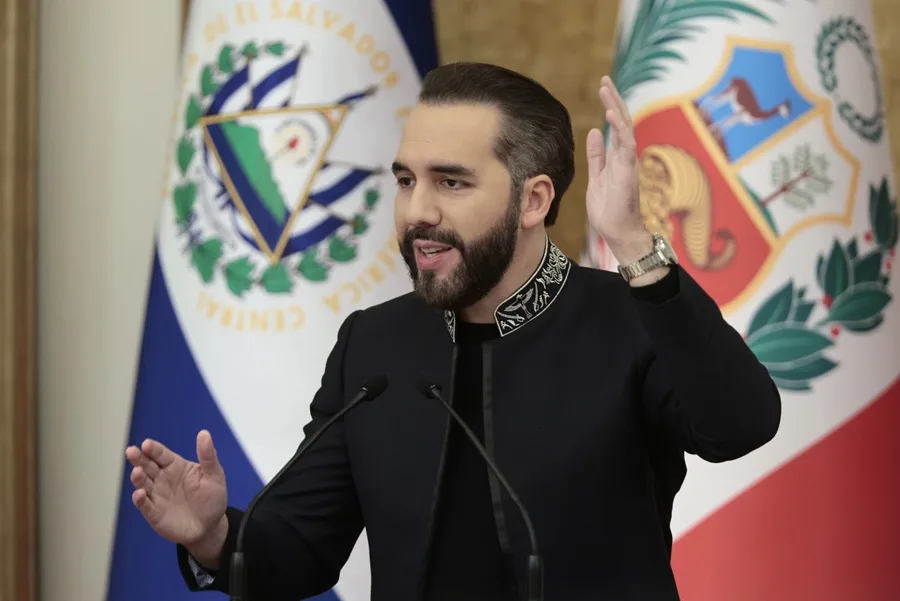
“If we defeated the gangs here in El Salvador, we can defeat them there,” Bukele told reporters Thursday during an official visit by Peruvian President Keiko Fujimori. He said, however, that El Salvador would withdraw the same day if the four missing military aviation technicians were returned alive.

The Salvadoran Foreign Ministry said Wednesday that the deployment involved more than 2,000 members of the country’s armed forces and was part of a large-scale operation backed by several countries and international organizations.

Pèp ayisyen,

Nou prèske fin deplwaye sòlda nou yo ak ekipman nou yo sou tè Ayiti. Sa a se pa yon operasyon kont pèp ayisyen an, ni yon envazyon peyi Ayiti. Nou pa yon gwo pisans. Nou pa gen okenn enterè ni pou nou vin domine pèp ayisyen an, ni pou nou mete men sou richès Ayiti.… pic.twitter.com/AZ1XvdeJje

— Nayib Bukele (@nayibbukele) October 29, 2026

Text Reads: Haitian people, We have nearly finished deploying our soldiers and equipment on Haitian soil. This is not an operation against the Haitian people, nor an invasion of the country of Haiti. We are not a great power. We have no interest in coming to dominate the Haitian people, nor in laying hands on Haiti’s wealth. We are a modest country that is developing. The only thing we want is for our four aviation technicians to return home. And we’re giving the gangs a lesson—these gangs that make the Haitian people suffer, that kill people the population loves, that prevent them from living a normal, free life, without fear. It’s almost just us footing the bill for this operation. Even though we receive a bit of logistical help from a few other countries, it’s with our own modest funds that we’re covering 90% of the expenses. It costs us dearly, but we’ve learned from our own suffering: justice and peace have no price. We went through the same suffering that Haiti is going through today. We lived through a nightmare that was even more horrific than what the Haitian people are enduring right now. We know what that means: living in fear, not trusting politicians, not believing anyone who promises to help you. Because no one came to help us, and those who did come didn’t have good intentions in their hearts. But we managed to escape it. After 200 years of suffering, finally we’re living in peace, and today we are the safest country on the continent. We didn’t come to Haiti to make money, because no one is paying us to do it. We came to Haiti to fight against the wicked. But here’s what I’m asking of you: trust us, pray to the one true God, and ask Him to heal Haiti. “If at that time my people, who are called by my name, will humble themselves and pray and seek my face and turn from their wicked ways, then I will hear from heaven, where I am, I will forgive their sin, and I will heal their land.” 2 Chronicles 7:14 Help us help Haiti. And when our mission is finished, we’ll return home. Perhaps the next generation of Haitians will remember us as friends who came to help one day.

Bukele rejected suggestions that the deployment amounted to an invasion, insisting that his government had no intention of occupying Haiti or asserting control over its population. In a post on X earlier Thursday, he said the mission had received authorization at both national and international levels and was focused on rescuing the missing personnel alive.

He also vowed to confront the gangs responsible for their abduction, arguing that Salvadoran forces knew how to deal with criminal organizations of this kind. Bukele described the confrontation as a battle between good and evil, saying his government stood on the side of good.

El Salvador had already been participating in the Gang Suppression Force (GSF), but its involvement in Haiti’s security crisis deepened after an ambush on Oct. 18 on the outskirts of Port-au-Prince. The attack targeted a vehicle carrying four Salvadoran military personnel, who have been missing since the incident.

The Salvadoran contingent includes special forces personnel and represents the largest deployment by a single country in Haiti since the United Nations Stabilization Mission in Haiti (MINUSTAH) ended in 2017. The UN mission operated in the country from 2004 to 2017.

Reports circulated last Saturday that human remains potentially belonging to the four missing personnel had been found. Bukele dismissed those reports.

Bukele has maintained that recovering the four personnel alive is the operation’s primary objective and said their return would prompt the immediate withdrawal of Salvadoran forces.

  •  

Haiti Postpones Presidential Elections Until 2027 Amid Escalating Gang Violence

Photo: EFE.

Haiti has postponed its presidential and legislative elections once again, pushing the first round from December 13 to July 18, 2027, as armed gangs and a decade-long institutional vacuum leave the country with no elected official since 2016.


The move had been expected since the start of the month, when the council extended the deadline for candidate registration to October 31 without setting a new voting date.

The first round of the presidential and legislative elections, together with the constitutional referendum, now falls on July 18, 2027. A second round -including presidential and legislative runoffs and local elections- is scheduled for October 4 of that same year. The campaign, originally due to begin on October 5, will open on April 15, 2027, roughly three months before polling day.

RELATED: UN Security Council Reaffirms Mandate in Haiti Despite Attacks

Under the updated schedule, candidate registration will remain open through February 9, 2027, while voter registration is extended to May 20. The council’s online platform shows that nearly 890,000 voters are registered on the electoral roll, far short of the 7.7 million people of voting age.

Despite repeated calendar revisions, candidates have continued to register for the elections. According to the Provisional Electoral Council ’s latest updates, over 7,300 candidates have registered for different elected positions. The provisional list includes 19 candidates for President, 369 for the Senate, 1,293 for the Chamber of Deputies and 5,623 for local elections.

Haïti a de nouvelles dates pour les élections présidentielle, législatives et municipales à venir :
18 juillet 2027 pour le premier tour – 4 octobre 2027 pour le deuxième tour, selon une communiqué du Conseil électoral provisoire. pic.twitter.com/A4raK78ifp

— Frantz Duval (@Frantzduval) October 29, 2026

Text reads: “Haiti has new dates for the upcoming presidential, legislative and municipal elections: July 18, 2027 for the first round – October 4, 2027 for the second round, according to a communiqué of the Provisional Electoral Council.”

The Provisional Electoral Council (CEP) framed the decision as an effort to keep the process moving. “The updated calendar aims to facilitate the continuation of electoral operations under conditions that allow the stakeholders concerned to fulfill their obligations in accordance with the provisions of the legal framework,” the council explained in a statement accompanying the new plan.

The body also pledged to move forward “with dialogue, professionalism and rigor,” targeting elections that are inclusive, credible and transparent. It promised to respect “the right of each citizen to participate in the democratic life of the country.”

That language contrasts sharply with conditions on the ground. Haiti has not held an election since 2016, when Jovenel Moïse won the presidency. He took office in February 2017 and was assassinated on July 7, 2021, at his residence in Port-au-Prince.

Since that killing, no elected official has occupied any post in the country’s state structure. Successive transitional governments have cycled through without managing to organize a vote. Prime Minister Alix Didier Fils-Aimé, the current leader, has governed on an interim basis since November 10, 2024.

The elections were first set for August 30 of this year. The political and security crisis, driven by armed gang violence and the failure to restore institutional stability, forced a postponement to December 13. That date has now been abandoned for July 18, 2027.

Gangs Hold the Capital

Armed gangs control most of Port-au-Prince. The main force arrayed against them is the Gang Suppression Force (GSF), created in September 2025 under a UN Security Council mandate and renewed for six additional months when it reached its first anniversary.

The latest delay unfolds as hundreds of Salvadoran soldiers search the Haitian capital for four kidnapped colleagues. Those troops belonged to the GSF and vanished on October 18, when armed gangs ambushed them on the outskirts of Port-au-Prince.

The #GSF confirms that it has received, through a third-party humanitarian organization, remains suspected of being those of the four personnel from the Salvadoran contingent currently missing.
At this stage, the GSF is not in a position to confirm that the remains are those of… pic.twitter.com/JvfLg1DfCG

— Gang Suppression Force – Haiti (@GSForceHaiti) October 25, 2026

PM Fils-Aimé presides over a country under siege. He holds no elected mandate himself, and the security conditions that have justified every postponement show no sign of easing.

For Haitians, the wait has now stretched past a decade without a chance to cast a ballot. Each interim administration has promised elections and delivered another delay. The violence cited as the obstacle has, in turn, deepened with every year of institutional drift.

Whether July 2027 becomes a genuine election day depends on factors no schedule can secure: safe streets, working electoral machinery and a minimum of political consensus. As things stand, the only firm date in Haiti is a next postponement.

  •  

El Salvador Pledges 2,000 Troops to Restore Order in Haiti

The foreign ministry of El Salvador said on Wednesday that over 2,000 troops will be dispatched to Haiti to support ongoing U.N. anti-gang operations and rescue four missing Salvadoran aircraft technicians.

The post El Salvador Pledges 2,000 Troops to Restore Order in Haiti appeared first on Breitbart.

  •  
❌