Palestinian voter turnout gave Arab parties a potentially decisive role in Israel’s parliament, but leading Jewish opposition figures remained reluctant to work with them.
Israel’s election reveals that the country’s broad foreign-policy direction is unlikely to change, prompting a reassessment of the increasingly disadvantageous U.S.-Israel relationship.
In total, AIPAC or its super PAC, United Democracy Project, spent on 333 of the 473 seats up for election this year, in some cases through indirect funding. A new project by The Intercept reveals the hundreds of candidates still taking the pro-Israel lobby’s cash, and how AIPAC is obscuring its spending.
Israel's final election results confirmed Prime Minister Benjamin Netanyahu and his allies lost their parliamentary majority and that weeks of difficult negotiations among very different parties, from ultra-Orthodox Jewish to secular to Arab-led, lie ahead.
A apuração das urnas em Israel terminou sem um vitorioso definitivo uma vez que a oposição a Benjamin Netanyahu depende de uma aliança com partidos árabes para conseguir maioria e tirar o atual primeiro-ministro, que está há 19 anos no poder.
A Comissão Eleitoral Central de Israel publicou, nesta sexta-feira (30), os resultados definitivos da formação do Knesset, o Parlamento israelense, com 120 cadeiras. Para formar governo, é necessário ter, no mínimo, 61 parlamentares.
O partido de Netanyahu, o Likud, foi o que mais recebeu votos com 20% do total, ficando com 27 cadeiras. A coalizão liderada pelo primeiro-ministro conquistou, ao todo, 53 cadeiras, oito a menos que o necessário para formar governo.
Do outro lado, os partidos que fazem oposição somaram 67 cadeiras, porém, 19 desses acentos ficaram com partidos árabes, o Raam e a Lista Conjunta, formados por palestinos-israelenses, grupo que soma cerca de 21% da população de Israel.
Já os partidos de judeus israelenses que são oposição à Netanyahu ficaram com 48 deputados. O problema é que os partidos de oposição mais votados, o Yashar, do Gadi Eisenkot, com 21 cadeiras, e o B’Yachad, com 12 deputados, vinham se manifestando contra a formação de governo com participação dos palestinos que vivem em Israel.
Coalizão
O impasse favorece Netanyahu, que fica no poder enquanto não houver um acordo para formação de maioria, segundo explicou o pesquisador do Grupo de Estudos sobre Conflitos (GECI) da PUC de São Paulo, Shajar Goldwaser.
“Alguma promessa vai ter que ser descumprida para sair desse imbróglio porque a oposição prometeu duas coisas: que não iria fazer governo com Netanyahu e que não iria fazer governo com os partidos árabes”, comentou à Agência Brasil.
Para o mestrando do Instituto San Tiago Dantas de Relações Internacionais, ligado a Unesp, Unicamp e PUC-SP, existe uma concepção “racista” nos partidos de judeus israelenses que tem impedido a formação de coalizões com os árabes.
“Eles não querem, por exemplo, ter um ministro da educação palestino. Formar um governo com esses partidos seria uma vitória para os palestinos, que teriam a sensação de que o voto importa. Esse é o medo dos israelenses: que os palestinos achem que eles têm poder e podem influenciar a política israelense”, avalia Shajar.
Impasse
A emissora N12 News de Israel tem divulgado que um dos partidos da oposição, o Yisrael Beytenu, liderado pelo Avigdor Liberman, já estaria propondo um governo de “unidade nacional” com Netanyahu para impedir a formação de uma coalizão com os partidos de palestinos-israelenses.
O partido de Liberman conquistou sete cadeiras no Knesset. Caso ele se una a Netanyahu, faltaria apenas uma cadeira para o atual primeiro-ministro permanecer no poder.
Netanyahu tem alegado, sem provas, que a Turquia e o Catar teriam influenciado na votação dos palestinos-israelenses, que tiveram uma presença de mais de 80% nas urnas, a maior já registrada.
Por isso, o primeiro ministro acusa o pleito de “fraude” e tem defendido que é “proibido formar governo com eles”, se referindo aos partidos palestinos.
O líder do partido da oposição mais votado, Gadi Eisenkot, acusou o Likud e Netanyahu de colocar em marcha uma campanha organizada para deslegitimar os resultados eleitorais.
“Eles fazem isso porque perderam. Carecem de maioria”, disse Eisenkot, reiterando a promessa de criar uma comissão para investigar o ataque do Hamas em 7 de outubro uma vez que a oposição acusa Netanyahu de ter tido conhecimento prévio do plano do Hamas e não ter adotado medidas para impedir o ataque.
O especialista em política israelense Shajar Goldwaser destacou que a imprensa israelense vem divulgando ainda a possibilidade de Netanyahu recomeçar a guerra contra o Irã para permanecer no poder.
“Uma guerra contra o Irã agora é muito propícia a formar um governo de união nacional. Netanyahu já fez isso no passado fez. Ele é famoso por fazer guerras para interesses eleitorais”, finalizou.
Eleições em Israel
Com 7,3 milhões de eleitores, Israel foi às urnas nesta semana pela primeira vez desde o 7 de outubro de 2023, quando o Hamas atacou vilas ao sul do país causando a morte de 1,2 mil pessoas e fazendo outras cerca de 200 de reféns.
Em resposta a esse ataque, Israel lançou uma operação militar de grandes proporções em Gaza que levou à destruição de quase toda a infraestrutura civil do território, levando à morte de mais de 75 mil pessoas.
A operação em Gaza vem sendo apontada por países e especialistas como um genocídio. Ministros do governo Netanyahu têm defendido a emigração dos palestinos da região e a colonização israelense do território.
Nos últimos três anos, o país ainda se envolveu em guerras no Líbano, ataques na Síria e uma agressão contra o Irã em parceria com os Estados Unidos (EUA).
Israel's final election count has confirmed that Prime Minister Benjamin Netanyahu's bloc has lost its parliamentary majority, but whether opposition leader Gadi Eisenkot can assemble a government to replace him remains an open question as negotiations begin behind closed doors.
The completed count, published early Friday by Israel's Central Elections Committee, gave Netanyahu's bloc 53 seats in the 120-member Knesset, compared with 48 for Eisenkot's opposition alliance. The two predominantly Arab parties secured a historic 19 seats, placing them in a potentially decisive position.
Netanyahu's Likud emerged as the largest individual party with 27 seats, followed by Eisenkot's Yashar with 21 and former Prime Minister Naftali Bennett's Beyachad with 12. Final voter turnout reached 77.9%, according to the Central Elections Committee results.
But the numbers leave neither major bloc with the 61 seats required for a majority, opening a complex political struggle involving potential partnerships with Arab parties, ultra-Orthodox lawmakers or a unity government bringing together longtime rivals.
A source familiar with opposition discussions, who spoke to Fox News Digital on condition of anonymity, described the outcome as a "bitter stalemate," but not an impossible political situation.
The source said opposition leaders are approaching coalition negotiations with patience and experience rather than treating the inconclusive results as a defeat, arguing that the next government could depend on their ability to forge partnerships that previously seemed unlikely.
Ultra-Orthodox allies explore a break with Netanyahu
In a potentially significant development Friday, Israeli journalist Yishai Cohen of Kikar HaShabbat reported that Rabbi Dov Lando, a leading ultra-Orthodox religious authority, had instructed lawmakers from Degel HaTorah, part of United Torah Judaism, to open discussions with the opposition.
According to the report, the objective is to reach an arrangement protecting the status of yeshiva students amid the longstanding dispute over mandatory military service.
Channel 12 reported that figures within the ultra-Orthodox party were considering allowing an Eisenkot-led minority government to survive through outside parliamentary support, potentially breaking with Netanyahu.
"Our votes are not in Netanyahu's pocket," party figures told Channel 12, according to a translation of the Hebrew-language report.
However, the office of United Torah Judaism Chairman Yaakov Asher denied that any instruction to begin negotiations had been issued.
Such an arrangement would represent a significant shift from the party's longstanding alliance with Netanyahu. Eisenkot's pledge to expand military conscription among ultra-Orthodox men remains a major obstacle, although Channel 12 reported that party figures were willing to consider a compromise on the issue.
The source familiar with opposition discussions told Fox News Digital that Eisenkot's camp had been preparing for the possibility of cooperation with ultra-Orthodox parties well before the election, suggesting that some of the options now being discussed had already been under consideration behind the scenes.
According to the source, such an arrangement could require compromises over military service and potentially outside parliamentary support from Arab lawmakers, bringing together political factions whose positions appeared irreconcilable during the campaign.
Arab parties signal flexibility, but obstacles remain
Another possibility rests with the Arab parties, which nearly doubled their parliamentary representation from 10 to 19 seats following a surge in turnout.
But the prospects of an Arab-backed government have drawn conflicting assessments.
Channel 12 reported Thursday that Ra'am leader Mansour Abbas had expressed deep skepticism about the possibility of establishing an Eisenkot-led minority government supported by Arab lawmakers.
Israeli political commentator Amit Segal also argued that the available options had narrowed considerably, identifying a Netanyahu-Eisenkot unity government or another election as the two principal remaining possibilities.
Mohammed Majadla, head of the news division at Radio Nas and a Channel 12 political commentator, offered a different assessment in an interview with Fox News Digital, arguing that both Ra'am and the Joint List were prepared to use their parliamentary influence to prevent Netanyahu from returning to power.
"The two Arab lists agree on two things," Majadla said in the Hebrew-language interview. "First, they are prepared to do everything within the political process to ensure Netanyahu does not return to power."
According to Majadla, that could include joining a coalition, providing outside parliamentary support or abstaining from key votes.
He said their second shared priority was avoiding another election, which Arab political leaders fear could reverse their gains.
"The ball is now in Eisenkot's court, not in the Arab parties' court," Majadla said. "As far as the Arab parties are concerned, I can tell you they are truly prepared to do everything to make this happen."
Majadla suggested that public declarations should not necessarily be treated as final positions, particularly as parties seek leverage during coalition negotiations.
The difficulties extend beyond the Arab parties. Eisenkot's potential partners include politicians who strongly oppose cooperation with ultra-Orthodox factions, while several opposition leaders campaigned against relying on Arab lawmakers to govern.
A national unity government involving Likud and Yashar would offer a more straightforward mathematical route to a majority, but would require Eisenkot to reconsider his campaign pledge not to join a Netanyahu-led government.
For Netanyahu, the lengthy coalition formation process could provide additional opportunities. If Eisenkot receives the mandate to form a government but fails, President Isaac Herzog could assign the task to another candidate, potentially giving Netanyahu another chance to assemble a coalition. If successive efforts fail, Israel could face another election.
Despite the obstacles, the source familiar with opposition discussions pointed to Bennett and Lapid's experience navigating complex coalition negotiations as an important asset.
"They've both played this game many times. They know it, and they're not rattled," the source said, according to a translation of the Hebrew-language conversation.
The source suggested that Bennett's experience working with Netanyahu gives him a particular understanding of the prime minister's negotiating tactics, while Lapid brings additional experience in coalition-building.
Former Prime Minister Yair Lapid, one of the opposition's senior figures, acknowledged Friday that forming a government would be considerably more difficult than campaigning against Netanyahu.
"Now comes the truly hard part: trying to form a government," Lapid wrote on X, urging supporters to remain patient.
"It takes place in small rooms, slowly, away from the cameras," he wrote, according to a translation of his Hebrew-language statement, emphasizing the importance of negotiations conducted out of public view.
The negotiations will also unfold against the backdrop of the Trump administration's Middle East agenda.
The source familiar with opposition discussions said understanding Washington's regional priorities could become an important consideration in shaping a future government, although no specific American role in coalition negotiations has been confirmed.
The election results are scheduled to be formally submitted to President Herzog on November 4, following remaining verification procedures. The new Knesset is expected to be sworn in November 10.
For now, the election has settled the question of how Israelis voted, but not who will govern them. A source familiar with the negotiations concluded: "Whoever manages to forge new partnerships will move forward. Whoever doesn't will remain stuck."
Dockworkers in more than 20 countries are withholding their labor at 113 ports across 22 countries to demand an end to Israel's assault on Gaza and protest the role of commercial ports in fueling militarism.
Cyprus is increasingly being chosen by Israelis as a destination for live music, with tourism firms reporting on Friday that the lack of international artists performing in Israel is driving demand for festivals and club nights on the island.
Speaking to Israeli news outlet Mako, Prof Alon Gelbman, head of the master’s programme in tourism at Kinneret Academic, said the security situation and the absence of many international artists from Israeli stages were pushing young people towards “alternative destinations”.
He said Cyprus had a clear advantage for Israeli tourists due to its “proximity and short flight time”.
Vice president of marketing and sales at Israeli travel agency The Flying Carpet, Oren Cohen-Maguri, said Limassol had become “a sought-after entertainment destination among young people”, with its nightlife and clubs frequently playing host to international and Israeli DJs.
Cohen-Maguri said the scarcity of international performances in Israel meant concerts in Cyprus this summer could draw strong interest, “if they do take place”.
Official figures show the shift, for Cystat confirmed 135,628 Israelis arrivals last month, up from 105,597 a year earlier, a rise of more than 28 per cent.
Israel accounted for 23.3 per cent of all arrivals, making it the second largest market behind the United Kingdom on 30.5 per cent.
Limassol has become a particular draw, with Israeli travel and entertainment listings featuring the City of Dreams Mediterranean resort, beach clubs and music festivals.
Other venues featuring on Israeli nightlife listings include The Warehouse, Shaka, Columbia Sun, SODAP Beach and Guaba.
The trend has extended beyond Limassol, with Israeli rock band Kadachat having performed at Paradise Place in Pomos on October 17, according to Tel Aviv Times, which described Israeli flags inside the venue and a Hebrew welcome sign.
The growing demand comes as international performances in Israel have become increasingly scarce, with The Israel Festival having taken place this summer without an international act, while the Music Showcase Festival expected half as many overseas gests as last year.
Security restrictions have also affected domestic concerts, with stadium performances by Omer Adam and Eyal Golan postponed following Home Front Command restrictions on large gatherings in June.
Al Jazeera reported this week that Israeli visits reached nearly 600,000 last year, more than double the 2022 figure, while Israeli investment was estimated at €5.1 billion.
The Israeli embassy estimates that between 15,000 and 20,000 Israelis consider Cyprus home, compared with around 1,000 recorded in the 2021 census.
Quand l'archéologie sur le mont Thabor (Galilée) se confronte aux textes religieux. Rencontre avec M. Adeeb Joudeh Al-Husseini, un musulman amoureux du Saint-Sépulcre. (N° 705, septembre, trimestriel, 6,50 euros. — Jérusalem, Israël.)
Tel Aviv, 30 oct (Prensa Latina) Estados Unidos habría trasladado 10 aviones de carga militar a bases aéreas israelíes en el desierto del Néguev, en medio de versiones sobre una posible nueva confrontación con Irán, informó hoy la Corporación de Radiodifusión de Israel (Kan).
The leading contenders, Prime Minister Benjamin Netanyahu and Gadi Eisenkot, aren’t substantially different in their approach to Israel’s security or in their opposition to a Palestinian state.
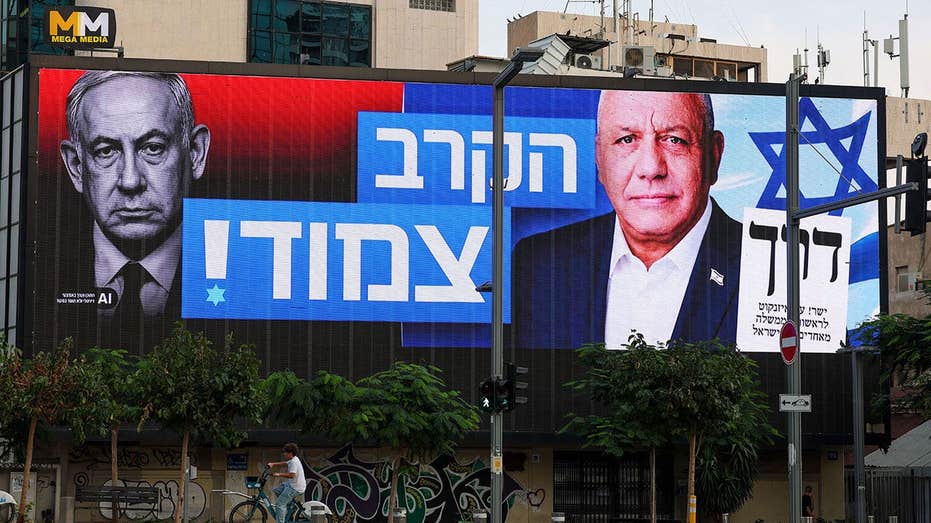
Campaign posters for Prime Minister Benjamin Netanyahu and the Likud party, and Gadi Eisenkot, leader of the Yashar party, in Hadera, Israel, on Tuesday.
Wounded from crash on southern highway include a 61-year-old woman in serious condition; rescue service says bus was transporting group of girls to a field trip
Depois de mostrar apoio a Israel, Andrea Bocelli sofre contestação da mais alta autoridade religiosa muçulmana. E ainda, a história do maquinista que morreu em Toledo.
Gains for Arab-led parties have electrified Taibe, in central Israel, even as voters elsewhere in Israel say they have no place in any future government.
Ahmad Tibi, a leader of the Joint List party, with supporters on Tuesday outside a polling station in Taibe, Israel, a predominantly Arab town. “We’re ready to swallow frogs to take down Netanyahu’s government,” he said.
A coalizão do primeiro-ministro de Israel, Benjamin Netanyahu, não conseguiu conquistar a maioria das cadeiras do Knesset, o Parlamento israelense, nas eleições gerais do país.
O bloco formado por partidos de direita e ultraortodoxos obteve 53 dos 120 assentos, oito a menos que os 61 necessários para governar.
Apesar de ter liderado a disputa individualmente, o Likud, partido de Netanyahu, conquistou 27 cadeiras e não conseguiu reunir apoio parlamentar suficiente para garantir a continuidade do governo.
O Yashar, do ex-chefe militar Gadi Eisenkot, principal adversário do premiê, ficou em segundo lugar, com 21 assentos. O Juntos, do ex-primeiro-ministro Naftali Bennett, conquistou 12 cadeiras, enquanto a Lista Conjunta, formada por partidos árabes, ficou com 11.
Os Democratas e o Ra’am terão oito representantes cada. Yisrael Beiteinu, Otzma Yehudit e Judaísmo Unido da Torá conquistaram sete cadeiras cada. Já Shas e Sionismo Religioso ficaram com seis assentos cada.
Ao todo, 11 listas de candidatos superaram a cláusula de barreira, de 3,25% dos votos, e terão representantes no Parlamento. O comparecimento às urnas foi de 77,9%, segundo a Comissão Central de Eleições.
Os próximos passos para a formação do governo
As eleições terminaram sem que nenhum dos principais blocos conquistasse a maioria necessária para governar. Com isso, o resultado abre uma nova etapa de negociações políticas, nas quais partidos menores poderão desempenhar um papel decisivo.
Herzog deve realizar uma rodada de consultas em Jerusalém, durante a qual cada partido eleito poderá recomendar um nome para o cargo de primeiro-ministro.
Com base nas recomendações, o presidente encarregará um dos candidatos de tentar formar um governo. A escolha não precisa recair necessariamente sobre o líder do partido que conquistou mais cadeiras, mas sobre aquele que, na avaliação do presidente, apresentar melhores condições de reunir apoio parlamentar suficiente.
O candidato designado terá 28 dias para negociar a formação de uma coalizão. O prazo poderá ser prorrogado por mais 14 dias.
Durante esse período, as legendas negociarão a distribuição de cargos ministeriais, prioridades orçamentárias e compromissos políticos para a composição do novo governo.
Caso o primeiro candidato não consiga formar uma coalizão, Herzog poderá encarregar outro parlamentar da tarefa. A segunda tentativa também terá um prazo de quatro semanas.
Se as negociações fracassarem novamente, o Parlamento terá um período para apresentar outro nome. Caso não consiga, Israel poderá ser convocado a realizar novas eleições.
Governo de união
Diante do impasse, uma das possibilidades seria a formação de um governo de união nacional, reunindo os dois maiores partidos, o Likud e o Yashar.
Herzog poderá tentar aproximar Netanyahu e Eisenkot para viabilizar um acordo entre as duas forças políticas. No entanto, a possibilidade enfrenta obstáculos.
Eisenkot já descartou integrar um governo liderado pelo atual primeiro-ministro. Além disso, Netanyahu tem um histórico de rompimentos de acordos políticos com antigos parceiros de governo, o que pode dificultar a construção de um entendimento.
Sem uma maioria definida, as negociações entre os partidos serão determinantes para estabelecer quem comandará o próximo governo israelense.
(Com informações de Tal Shalev, da CNN e Maayan Lubell, da Reuters)
Para quem tem direito à vacina gratuita através do SNS, não são esperadas dificuldades. Ainda nesta edição: em Israel, Netanyahu vence as eleições, mas sem maioria, e o ranking das escolas portuguesas
In today’s newsletter: Benjamin Netanyahu has been left without a majority, now it is up to the coalition to find out whether the desire for change will prove to be a defining political moment
Good morning. It was described by many Israelis as the most consequential election in their country’s history. And, as the final votes were tallied, it has delivered a result that presents Israel with a significant dilemma.
Benjamin Netanyahu’s far-right coalition has lost its mandate while the opposition has a clear majority: but only if the Jewish Israeli opposition bloc, led by retired general Gadi Eisenkot, is prepared to make a governing pact with Palestinian Israeli parties, which have secured a historic result.
UK politics | John Healey has backed away from cutting the cost of welfare this parliament, amid dire warnings his first budget could lead to brutal spending cuts because of a £28bn shortfall in public finances.
Patrick Stewart | The acclaimed British stage and screen actor renowned for both Shakespeare and sci-fi, died at his home in Los Angeles after “a brief and poignant journey with Alzheimer’s disease and Lewy body dementia”, his longtime spokesperson said.
Environment | One of the most ambitious nature recovery projects ever undertaken in England can go ahead after campaigners announced they had raised £30m to buy an estate in Northumberland.
Europe | Spain began three days of mourning on Thursday for at least 69 people who died in a high-speed rail collision, as hospitals continued to treat dozens of injured passengers and train drivers went on strike to urge more investment in railway safety.
US news | The Trump administration has opened a criminal investigation in California over claims that thousands of noncitizens are registered to vote in the state, and has begun subpoenaing election officials.
Elections are never enough by themselves, but the stunning results from Serbia, Brazil and Hungary have given us hope in dark times
It is undoubtedly too early to declare victory, but the recent electoral defeats of Viktor Orbán, Aleksandar Vučić and Flávio Bolsonaro make me wonder: is 2026 turning out to be the year democracy slowly, but surely, fought back?
Even in Israel, prime minister Benjamin Netanyahu’s reigning bloc lost its parliamentary majority and saw the spectacular rise of Arab parties. Though the opposition may not be able to form a government yet, it does have the larger parliamentary bloc.
David Van Reybrouck is a Belgian author and philosopher laureate for the Low Countries. He is the author of Against Elections: The Case for Democracy, and the initiator of Democracy27
Do you have an opinion on the issues raised in this article? If you would like to submit a response of up to 300 words by email to be considered for publication in our letters section, please click here.

 Login