Dockworkers in more than 20 countries are withholding their labor at 113 ports across 22 countries to demand an end to Israel's assault on Gaza and protest the role of commercial ports in fueling militarism.
The US and Japan have signed a deal to establish an AIM-120 Advanced Medium-Range Air-to-Air Missile (AMRAAM) facility in Japan, a move that will help bolster production of the most sought-after American beyond-visual-range air-to-air munition.
The agreement paves the way for a final assembly and checkout (FACO) facility for AIM-120 AMRAAMs—which arms F-35 Lightning II stealth fighters operated by both countries and many other US allies—in Japan.
“This is a groundbreaking agreement that will not only ensure the acquisition of equipment needed by both Japan and the United States, but will also strengthen Japan’s defense industry base,” Japanese Defense Minister Shinjirō Koizumi announced after holding discussions with US Secretary of War Pete Hegseth on 28 October, on the sidelines of the ASEAN Defense Ministers’ Meeting Plus in Cebu, the Philippines.
The Japanese Defense Minister said the AMRAAM missiles are “essential for the F-35” and that the new facility is part of “Operation Supercharge,” a US-Japan initiative to strengthen cooperation on defense equipment and technology, particularly munitions production and industrial capacity.
However, he did not provide any information on the potential facility location, operator, cost, timeline, or the planned output.
The AIM-120 is the primary beyond-visual-range (BVR) active radar-guided air-to-air missile and the longest-range air-to-air weapon in the US Air Force (USAF) arsenal.
It remains the most widely deployed active radar-guided missile, integrated on more than a dozen aircraft types across more than 40 nations, including the F-35, which the Japanese Air Self-Defense Force (JASDF) also operates.
Additionally, the missile is also used in the National Advanced Surface-to-Air Missile System (NASAMS) and other ground-based air defense systems, many of which have been combat-tested in Ukraine.
US and Japanese officials said that the agreement will diversify the AMRAAM industrial base and build regional stockpiles for Washington and its allies.
The agreement comes amid intense global demand for precision munitions, as conflicts in Ukraine and the Middle East have depleted stockpiles and rising tensions in the Indo-Pacific have heightened the need for resilient supply chains.
Earlier, Raytheon signed a deal with the US Department of War in February 2026 to produce at least 1,900 AIM-120 missiles annually. Later that year, the company was awarded a five-year AMRAAM production contract by the Department worth up to $20.7 billion in September 2026, with options for two more years.
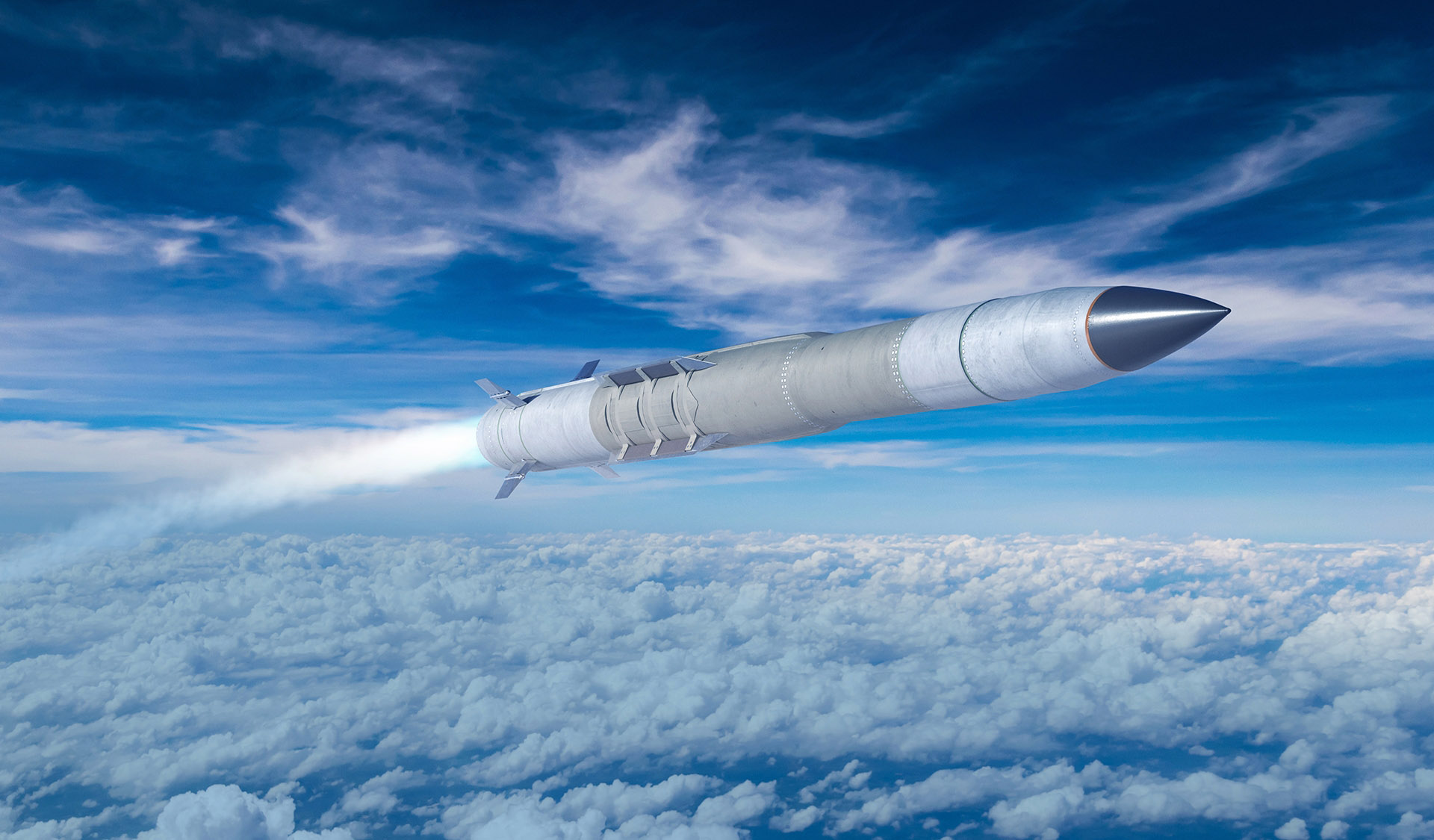
AIM-120 AMRAAM (Via RTX’s Raytheon)
Against that background, Japan’s new facility will not supplant US production lines but will create a second node, improving much-needed surge capacity and reducing logistics risks for the F-35 fleets and other platforms of both countries, as security risks from China in the Indo-Pacific continue to mount.
The agreement on the new facility stems from work that began in July 2024 at that year’s 2+2 meeting.
The licensing process took more than two years due in part to Japan’s tight constitutional prohibitions on exporting lethal weapons or even co-producing offensive equipment with allies, which stem from its peace-focused foreign policy following its tragic losses in World War II.
Additionally, the AMRAAM includes intellectual property and sensitive guidance systems that must be protected.
For this reason, the proposed facility does not promise to produce the entire missile locally. Instead, a final assembly and inspection approach enables Japan to finish and verify missiles with parts made through an industrial structure.
Japanese Industry Pursues Closer Ties With USA
Japan has pursued a deeper defense industrial relationship with the United States as a core element of its security strategy for decades. This push accelerated after the 2022 National Security Strategy and related documents, which called for fundamentally reinforcing Japan’s defense capabilities, revitalizing its industrial base, and expanding international cooperation amid heightened security threats from China.
It is, however, pertinent to note that while it pursues new areas of collaboration that were earlier farther, it already has a long history of licensed production of US equipment, as well as joint development of several cutting-edge systems.
This includes the SM-3 Block IIA ship- and land-based ballistic-missile interceptor, co-developed by Raytheon and Mitsubishi Heavy Industries.
Designed to engage ballistic missiles in the mid-course phase of flight and a key element of Aegis ballistic missile defense for both the US Navy and Japan’s Maritime Self-Defense Force, the SM-3 Block IIA entered full-rate production in 2024.
In fact, in addition to the latest AMRAAM deal, the US and Japan “agreed to share the necessary technical information to achieve increased production” of the Standard Missile-3 Block IIA missile. However, neither side has said when more output will be available or how much the most recent deal is expected to boost overall SM-3 production.
SM 3 Block IIA launched from the Aegis Ashore Missile Defense Test Complex at Hawaii – Wikimedia Commons
This follows Raytheon’s $745.4 million contract to manufacture and assemble SM-3 Block IIA all-up rounds for both the US and Japan earlier this year, and Tokyo reportedly funded nearly half of the immediate obligation under that contract.
Notably, the US Navy used SM-3—including the Block IIA variant—during the Iran War, and reports suggest the overall inventory of these interceptors has been significantly depleted in the past eight months of hostilities.
Japan has also manufactured Patriot air-and-missile interceptors for decades through licensed production agreements, including that of the PAC-2 and the PAC-3.
In a notable development reflecting easing rules, Japan exported finished PAC-3 missiles to the US in November 2025 to help replenish US stocks depleted by aid to Ukraine, as the EurAsian Times reported at the time. However, Japanese officials clarified that the interceptors would be used only by the US and would not be supplied to a third nation.
PAC-3 | Lockheed Martin
Patriot systems, particularly the PAC-3 MSE interceptor, have been a cornerstone of US defense alongside THAAD in its latest conflicts with Iran.In fact, the US and Japan are currently discussing co-production of the PAC-3 MSE, the more advanced hit-to-kill variant.
The co-development of the Mitsubishi F-2 combat aircraft by the United States and Japan remains a classic example of their collaboration and close defense ties.
The F-2 is a derivative of the US F-16 Fighting Falcon, developed through a partnership between Mitsubishi Heavy Industries (MHI) and Lockheed Martin through technology transfer, design support, and manufacturing. Japan has also license-produced an array of US aircraft, including the F-15J, the P-3C Orion, and Sea Hawk military helicopters, among others.
Beyond aircraft production, Japan currently operates a Final Assembly and Check-Out (FACO) facility for the F-35A Lightning II in Nagoya, operated by Mitsubishi Heavy Industries.
It is one of only a small number of F-35 FACO facilities located outside the United States. At this facility, Mitsubishi performs final assembly, systems integration, and check-out of F-35A aircraft destined for the JASDF.
For this, major components and kits are supplied from the global F-35 production network, with Japanese industry contributing certain parts and performing final build and testing.
In the past, the Japanese defense industry has also license-produced the AIM-7 Sparrow and AIM-9 Sidewinder air-to-air missiles. Currently, Japan is aiding the US in producing the Evolved SeaSparrow Missile (ESSM) Block 2 under a licensed production agreement struck in June 2025.
Under the agreement, Raytheon supplies missile kits, parts, components, and technical assistance, while Mitsubishi Electric Corporation (MELCO) handles the domestic assembly and production of the missiles.
Japan also builds and equips its destroyers with the Aegis Combat System and manufactures critical radar and missile components in partnership primarily with Lockheed Martin and Raytheon (RTX), along with Japanese firms such as Mitsubishi Heavy Industries and Mitsubishi Electric.
Japanese destroyers are based on US Arleigh Burke designs and incorporate licensed Aegis technology, and Japan builds the ships domestically with extensive US systems integration.
Further widening the scope of this industrial collaboration, the United States and Japan have expanded practical cooperation on ship repair and shipyard capacity with an eye on expanding the ability of Japanese shipyards to perform maintenance, repair, and overhaul (MRO) work on forward-deployed US Navy vessels.
In 2025, the two countries signed a memorandum of understanding on shipbuilding cooperation to expand capacity, encourage Japanese investment in US shipyards, explore standardization of designs and parts, and strengthen overall industrial resilience.
The US is considering Japan’s FFM Mogami-class guided-missile frigate design for its next frigate, after US President Donald Trump issued a national security memo in August 2026 allowing the Navy to acquire foreign ship designs and build some warships overseas amid delays and cost overruns at home.
Against that backdrop, the latest agreements on AMRAAM FACO and expanded SM-3 production cooperation suggest Japan is pursuing two goals: strengthening its defense industrial base and contributing more actively to collective deterrence.
Contact the author at sakshi.tiwari13 (at) outlook.com
The two-zone winter reduced-rate tariff for electricity (formerly known as the “ night-time tariff”) will come into effect from Sunday, November 1, 2026, and will remain in force until March 31, 2027, the Hellenic Electricity Distribution Network Operator (DEDDIE) announced on Friday. Τhe hours for each zone are as follows: – Midday zone: 12 noon […]
To my knowledge, the first public, English-language warning that a genocide was unfolding in the Gaza Strip came from Israeli genocide scholar Raz Segal, five days after the events of 7 October 2023. Amnesty International confirmed Segal's conclusions fourteen months later, by which time at least 40,000 more Palestinians were killed.
The Amnesty Report still failed, however, to compel Western governments to act, despite being the first of its kind the organisation issued in the midst of a genocide.
Instead, the live-stream slaughter continued broadcasting for another ten months when a ceasefire finally came into effect in October 2025. By that time, at least 72,000 Palestinian were killed, and virtually all of Gaza’s urban infrastructure had been transformed into rubble.
The question of why and how Israel’s genocide persisted for so long despite repeated warnings and full knowledge of its unfolding is a question that must not slip from public conscience.
Indeed, it is the proverbial 800-pound gorilla in the room that world powers pretend isn’t there, and the continued failure to explain its presence tempts others to repeat similar crimes elsewhere.
However, the danger of the genocide resuming full-throttled in Gaza is also very real, particularly after Israeli and US mid-term elections. Almost daily, Israel’s politicians and military brass vow to complete their ethnic cleansing of Gaza, and bicker over whether the slaughter they already committed there was enough.
Furthermore, the US has also recently resupplied Israel with 40,000 two-tonne bombs - the chief weapon of the genocide.
The daily toll of those killed also reminds us that the ceasefire itself was never observed.
Collectively, these factors remind us that the forces that committed the genocide, protected it and pushed it forward, are all still very much alive today, and have used the passage of time to reposition.
Ending the genocide
So how does the solidarity movement get rid of the guerrilla, especially given that Western democratic institutions and representatives have proven themselves to be so spineless, paralysed and complicit?
To its credit, the movement did an impressive job shining a flashlight into the institutional undercarriage of Western capitalism, trying to discover what made the killing machine run.
Of course, its work was assisted by the Boycott, Divestment and Sanctions (BDS) movement, whose longstanding work documents where the bloody shoes that stomped all over Gaza were initially purchased and tread.
UN Special Rapporteur Francesca Albanese also produced an important report that mapped key political-economic connections running between government, the private sector and universities.
The report admitted, however, that it could only document “the tip of the iceberg” and warned that complicity around the genocide would not end “without holding the private sector accountable, including its executives."
This is precisely what lies behind the US State Department’s recent declaration of sanctions against the International Criminal Court (ICC). This extraordinary measure was not just another Trump administration swipe against multilateralism but was a specific attempt to protect US citizens and corporations from possible future prosecution.
Both the ICJ (which prosecutes states) and the ICC (which prosecutes individuals) are deeply engaged in investigating Israel’s genocide and the individuals responsible for it. While article 25(1) of the Rome Statute prevents the ICC from prosecuting corporations, the Court can target individual corporate officers, including directors and employees.
In sum, the US knows it needs to get ahead of the curve because there is no shortage of US corporations and executives that are targets of these courts.
The political economy of the genocide
As time passes, more research surfaces explaining the political economy of the genocide. One of the most effective of these is a visualisation recently produced by an anonymous collective tracing the genocide’s “blood money”.
This impressive set of figures and visualisations exposes a tangled web of inter-permeated interests and actors, chiefly focused around the military-industrial, big tech, and financial services sectors. While none of these sectors is entirely surprising given their profiteering role, the scale and depth of their complicity were both active and conscious, rather than circumstantial or passive.
Microsoft, Google and Amazon provided cloud services to the Israeli government and its main arms producers that enabled Israel to draw up the genocide’s kill lists. This included collecting 200 million hours of audio files that these companies helped Israel browse and analyse.
Google and Amazon even had a secret “winking” mechanism to tip Israel off when foreign courts asked them for information on their servers.
In a just world, the heads of these corporations would all be on trial for these crimes, right next to Netanyahu, Trump, Biden and Starmer.
The audio and video resources these execs helped Israel process should also be made public through enforced court disclosure procedures. They are the records that document the banality of evil in today’s world, and should be interred in a future version of the Palestinian genocide museum when the time comes.
For years, big tech’s relations with Israel have been like a kid in a candy store, as Silicon Valley shopped in Silicon Wadi to see the latest Unit 8200 spinoffs and gadgets. Israeli start-ups were showered with billions in venture capital, encouraging innovation in the dark arts of occupation, apartheid and genocide for the purpose of commercial hyper-scaling.
The blood money visualisations also show that even larger behemoths of Western capitalism sit behind big tech, also profiteering from genocide - the major index funds like BlackRock, Vanguard, State Street and others.
These funds oversee assets larger than virtually every country in the world, except the US. They own significant chunks of big tech, and virtually everything profitable on the S&P 500.
The index funds link genocide profits to public and private sector pension plans, making individual Western employees unwitting benefactors of Gaza’s blood money.
Profit and interest
All of this speaks to how the genocide was hardly the act of a Zionist cabal that penetrated Western government and corporations. Instead, it was a set of interests, relations, and inclinations that saturated the heart and nervous system of Western capitalism, particularly its big tech, financial services, and military-industrial wings.
These wings have come to dominate Western capitalism today and are deemed ‘too big to fail’ by the political class, as they also lie at the centre of Western geo-economic strategies to compete with China in this post-neoliberal age of imperial anxiety.
Their power transcends the domain of states, and they use their resources to manipulate the markets, states, and international systems they operate across.
These corporations also hide their wealth in tax havens and defy regulation because they operate at the frontiers of technological and economic ‘innovation’ the world has never seen. It will take years for lawmakers to catch up to their tax-beating chicanery, if ever.
By serving as parastate actors, they undermine traditional bourgeois liberal capitalism and its elementary associated values - not only of free trade and competition, but also of privacy, free expression, the free press, the right to organise, and academic freedom. It is not by chance that critics have come to describe this era as one marked by technofuedalism that is ushering in authoritariansm and fascism.
Indeed, this is the anatomy of the 800-pound gorilla that explains its self-righteous staid. The gorilla that hangs about the room smashing up Gaza has also plundered the public assets of social democracy, to say nothing of the resources of the Third World. He is king because we are in his jungle.
Like the ‘disposable’ people of Gaza, the Western working class now awaits an inevitable culling, be it from mass AI-induced redundancy, WWIII or both.
Seen in this light, Palestine and the Gaza genocide are but one frontier in a fragmented global dystopia where AI technologies now juice the gorilla with amphetamine.
This is also why the movement to end the genocide in Gaza has such a historic role: it is the key global political actor that understands the political-economic connections that animate the gorilla and which make it so dangerous - not only in Palestine and the Middle East, but also in Porto, Paris and Milan. It has also built and mobilised an inchoate global infrastructure of movement to contain the gorilla, even though the task of actually disempowering him is now down to the ropes and arrows of the global Lilliputian class in our millions.
God save us all if we fail.
Toufic Haddad is a Palestinian-American academic and author of “Palestine Ltd: Neoliberalism and Nationalism in the Occupied Territory.” He has worked in various capacities across the OPT as a journalist, researcher, consultant, editor, and publisher, including in Gaza for several UN bodies since 1997, and was most recently the Director of the Council for British Research in the Levant's Jerusalem Branch - the Kenyon Institute. He also writes for the Palestinian policy network Al Shabaka.
Dez empresárias algarvias participaram, a 27 e 28 de outubro, no 1.º Fórum de Empresárias da Eurorregião Alentejo-Algarve-Andaluzia (EURO AAA), em Sevilha, Espanha. A participação foi promovida pelo NERA – Associação Empresarial da Região do Algarve, no âmbito do projeto INTREPIDA pro, que pretende reforçar o empreendedorismo feminino e a cooperação transfronteiriça.
As participantes, provenientes dos concelhos de São Brás de Alportel, Faro, Tavira, Silves e Loulé, representam setores tão distintos como o artesanato, o design, a apicultura, a produção de aguardente de medronho, o turismo e o desenvolvimento pessoal.
Organizado pela Fundación Tres Culturas del Mediterráneo, entidade líder do projeto, o encontro combinou sessões de capacitação com momentos de networking, permitindo a partilha de experiências e o estabelecimento de contactos empresariais entre mulheres das três regiões.
A comunicação assertiva, a aplicação da inteligência artificial aos negócios, a marca pessoal e as estratégias de venda estiveram entre os temas abordados. Um dos destaques foi a sessão “A Arte e a Ciência de Vender”, dinamizada por Penélope Serrano Serradilla, que incidiu na identificação das necessidades dos clientes, na comunicação do valor dos produtos e serviços e na construção de relações comerciais de confiança.
O projeto prevê a realização de novas sessões em Portugal, dedicadas ao empreendedorismo feminino e à utilização de ferramentas de inteligência artificial em contexto empresarial. Estão também previstos mais três fóruns transfronteiriços para mulheres empresárias, que terão lugar em Cádis, na Andaluzia, em Évora, no Alentejo, e no Algarve, em local a definir.
O INTREPIDA pro é cofinanciado pelo Programa Interreg VI-A Espanha–Portugal (POCTEP) 2021-2027. A parceria é liderada pela Fundación Tres Culturas del Mediterráneo e integra o NERA – Associação Empresarial da Região do Algarve, o NERE – Núcleo Empresarial da Região de Évora, a Mancomunidad de Desarrollo Condado de Huelva e a Fundación Bahía de Cádiz para el Desarrollo Económico.
A month after the explosion in historical center of Athens, in Plaka, where 6 people were killed, the Fire Service Arson Crime Division identified three suspects: cooper-thieves who had cut off a pipe of natural gas, thus triggering the explosion on September 25.. Authorities issued arrests warrants against three men, aged 34, 37 and 55, […]
After missing out on the F-22 and F-35 fighter programs, the B-21 Raider next-generation bomber deal, and absorbing billions in losses on the fixed-price KC-46 Pegasus tanker development, Boeing’s Defense, Space, and Security division has rebounded strongly with a series of major contracts.
Amid this turnaround, Boeing reported its third-quarter results on October 27, with CEO Kelly Ortberg assuring investors that the dark days for the company’s defense unit are over.
In the first three quarters of 2026, Boeing’s defense sector brought in US$23 billion in revenue and US$710 million in earnings, up from US$379 million a year earlier, a healthy 87.3 percent increase.
Meanwhile, the company reported a record backlog of US$745 billion, more than five times its market capitalization of about US$132.36 billion. This also includes a backlog of over 6,300 commercial airplanes.
The backlog at Defense, Space & Security grew to a record US$101 billion, with 23 percent representing orders from customers outside the US.
Rising defense sales also helped Boeing narrow its third-quarter losses.
In fact, Boeing believes its Defense unit will continue to deliver healthy growth after massive multi-year contract wins over the last two years and its decision to shun risky contracts, such as the fixed-price contract for the KC-46 Pegasus tanker development, in which it has already lost billions of dollars.
“We are going to see higher growth out of our defense portfolio than maybe what we thought a year ago. I think we were thinking more in terms of low-single-digit revenue growth. Clearly, that’s going to be more towards the high – middle-single- digit or higher going forward,” Ortberg said.
Boeing’s Massive Contract Wins
CEO Ortberg highlighted the recent 737 certification and Boeing’s win in the competition to build the Navy’s sixth-generation F/A-XX fighter as the company’s two most important third-quarter highlights.
“Recent milestones, including certification of the 737-7 and 737-10 and selection to design and build the Navy’s sixth-generation fighter aircraft, are important steps as we continue building on our progress.”
In September, the U.S. Department of War (DoW) selected Boeing to develop the Navy’s next-generation F/A-XX fighter jets. The contract is valued at over US$20 billion for the full-scale development phase.
This was the second time in as many years that Boeing was selected to develop a sixth-generation aircraft. Earlier, in March 2025, the US awarded Boeing the NGAD contract, now called the F-47.
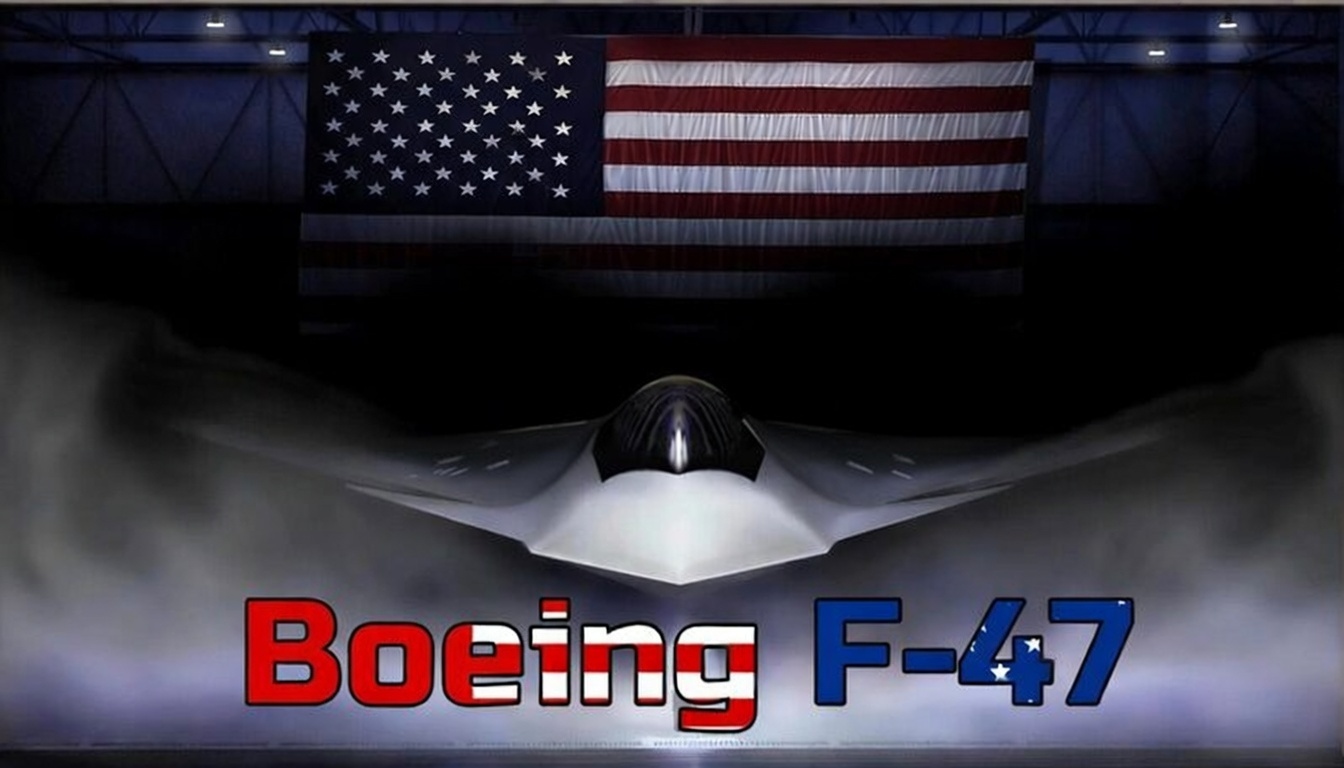
F-47: Image for Representation
Boeing is therefore building the sixth-generation fighter for both the US Air Force (USAF) and the US Navy.
This is a remarkable turnaround, as Boeing has no genuine experience in building a stealth aircraft.
In 2015, Boeing lost the contract to build the USAF’s next-generation bomber, the B-21 Raider, to Northrop Grumman.
Earlier, Boeing lost the contract to build both fifth-generation fighters to Lockheed Martin.
In 1991, the Pentagon selected Lockheed Martin as the prime contractor for the F-22 Raptor. Boeing, however, participated in the project and built the aircraft’s wings and tail sections.
In 2001, Boeing’s X-32 lost the Joint Strike Fighter (JSF) competition to Lockheed Martin’s X-35, which became the F-35. That was a winner-take-all program.
Boeing then went roughly 24 years without winning a new fighter design competition.
During those years, the 1997 merger with McDonnell Douglas kept Boeing’s defense and aerospace business alive.
The merger with McDonnell Douglas brought the F-15 Eagle and F/A-18 Hornet/Super Hornet lines. Boeing continued production, maintenance, and upgrades of these aircraft, originally designed and built by McDonnell Douglas.
Its lack of experience in stealth technology and its failure to design and build a new (clean-sheet) fighter in over three decades were major impediments to Boeing’s bid to design and develop sixth-generation fighters.
In fact, the USAF’s NGAD program was widely described as existential for Boeing’s future as a fighter designer and builder.
Boeing, however, came from behind and not only won the NGAD contract, but also cemented its lead by winning the Navy’s next-generation fighter, the F/A XX.
“We scored a generational win with the US Navy when they selected Boeing to design, build, and deliver its sixth-generation fighter jet, making Boeing the exclusive sixth-generation fighter company for both the US Air Force and the US Navy,” Ortberg said.
Boeing also won substantial F-15EX orders.
In September, the Air Force awarded Boeing a US$2.38 billion contract for 22 additional F-15EX Eagle II fighters. This brings the total F-15EXs under contract to 120.
“In the quarter, we also received a contract to manufacture 22 more F-15EX aircraft for the US Air Force. And this award brings the total number of aircraft under contract to 120, with the potential for additional upside as the F-15EX continues to demonstrate the value of its unmatched payload and range capability,” Ortberg said.
Notably, the Air Force has significantly raised its overall planned buy of F-15EX fighters, from earlier targets of around 129 to roughly 267 aircraft.
According to the US force structure plan 2035, submitted to Congress earlier this month, nearly 20 percent of the USAF’s combat-coded fleet could be F-15EXs by 2035.
F-15EX teamed with MQ-28 during Exercise Valiant Shield.
These new F-15EX orders would provide Boeing with stable cash flow for at least another decade.
Another major victory was new multi-year agreements for Patriot PAC-3 seeker production.
“Boeing received a seven-year contract to accelerate and eventually triple the PAC-3 Seeker production, supported by our early investments in facilities, workforce, and supply chain,” Ortberg said.
Besides, Boeing also saw growth in the MQ-25 Stingray aerial refueling drone and in the T-7A Red Hawk trainer program. Both programs have achieved Milestone C approval and moved into low-rate initial production.
Ortberg also stressed that all these programs are “being underwritten with the right contract type,” and the company has decided to avoid risky contracts, such as fixed-price contracts.
Boeing has lost more than US$7 billion on the KC-46A Pegasus fixed-price program.
The original firm-fixed-price development contract was valued at roughly US$4.9 billion. Boeing, however, has absorbed far more than that in overruns because, under the fixed-price terms, the company covers all costs above the agreed ceiling.
CEO Ortberg has repeatedly called it a “bad contract for the last decade.”
“The important part is all these programs are also being underwritten with the right contract type. So not only are
we booking more orders, we’re booking more orders that won’t result in some of the challenges we’ve had,” Ortberg said.
The F-47 contract is a cost-plus deal, Ortberg said. He declined to identify what type of contract Boeing signed for F/A-XX, but said it is “an appropriate contract type.”
Boeing has already decided to shun fixed-price contracts by 2022, when its newly appointed chief of the defense unit, Ted Colbert, announced the company would no longer bid on such contracts with the Pentagon.
The company also made major leadership changes as it worked its way back to recovery.
In July 2024, Boeing named Robert “Kelly” Ortberg to succeed Dave Calhoun as the company’s CEO.
Then, in September 2024, the company fired defense unit chief Colbert and replaced him with Stephen “Steve” Parker.
Two major labor strikes in 2024 and 2025 also impacted the company’s recovery.
However, strong defense sales and FAA certifications for the 737-7 and 737-10 aircraft have helped the company narrow its losses, build its backlog, and reassure investors of future growth potential.
“So the outlook is strong, our products are in strong demand, and the budget supports additional growth,” Ortberg said.
Sumit Ahlawat has over a decade of experience in news media. He has worked with Press Trust of India, Times Now, Zee News, Economic Times, and Microsoft News. He holds a Master’s Degree in International Media and Modern History from the University of Sheffield, UK.
He can be reached at ahlawat.sumit85 (at) gmail.com
Alcoutim recebe, a 20 de novembro, as 9.as Jornadas da Rede de Museus do Algarve (RMA), dedicadas ao tema “Arqueologia para Todos: Mediação e Comunicação do Património”. O encontro decorre a partir das 9h30, no Espaço Guadiana, e é organizado pela RMA em parceria com o Município de Alcoutim.
A iniciativa pretende debater os desafios da comunicação do património arqueológico e as formas de tornar o conhecimento científico mais acessível, inclusivo e compreensível para o público. Entre as questões em análise estão as ferramentas, as linguagens e as narrativas que permitem despertar o interesse pela arqueologia, bem como as estratégias para valorizar os sítios arqueológicos e os espaços museológicos.
A arqueologia permite conhecer a ocupação humana dos territórios ao longo do tempo, mas a transmissão desse conhecimento exige formas de comunicação capazes de aproximar a investigação das comunidades. Segundo a nota de imprensa, a mediação do património assume, neste contexto, um papel importante na criação de laços entre o passado e o presente, promovendo o “sentido de pertença identitária e de valorização da sua herança coletiva”.
As jornadas vão reunir especialistas e técnicos de várias instituições, num espaço de partilha de experiências, metodologias e boas práticas relacionadas com a comunicação e a divulgação da arqueologia.
A participação é gratuita, mediante inscrição até 13 de novembro, estando sujeita à disponibilidade de lugares. A ficha de inscrição está disponível em https://forms.gle/CfhB3GBkQiG2RRSi7.
Para mais informações, os interessados podem contactar a Unidade de Cultura, Património Cultural e Turismo da Câmara Municipal de Alcoutim, através dos números 281 540 545 ou 281 540 555, ou a organização, pelo endereço de correio eletrónico rede.museusdoalgarve@gmail.com.
“The Ninety Five Theses” — the common title to Martin Luther’s “Disputation on the Power and Efficacy of Indulgences” — is more widely associated with Luther’s name than anything else he wrote. Luther posted his theses on the castle door at Wittenberg on either October 31 or November 1, 1517. The disputation, which Luther announced... Continue Reading
Whatever we enjoy now will be far greater then. When marriage someday ends, we will agree that God has not subtracted anything, but only added. He has not divided us, but united us in an even deeper way. We will give thanks in that day that God, in His wisdom, determined that our marriages should... Continue Reading
“Immigration isn’t a right; it’s a privilege. It’s a privilege that illegal immigrants think they are entitled to. But America doesn’t owe anything to people born outside of the country—including me. However, if America changes the standards and ends my residency, it would be inconvenient—not unjust.” (Samuel Sey) Conservative Christian commentator and writer Samuel... Continue Reading
Our concern for a restoration of a proper ordering of loves should not diminish our love for the world; it is precisely because God loves the world that we may be confident in his concern for our nation, our towns, our churches, our families, and ourselves. Yet these responsibilities are not mutually exclusive. For... Continue Reading
All of us ought to approach our thrice holy God with humility and trepidation. The sixth commandment requires more than feeling sorry for the wounds we have made. It calls us to stop inflicting them, and to become, by God’s grace, a life giver instead of a life taker. The commandment “Do not murder”... Continue Reading
Rather than being content with digital and paper guides who cannot love us and whom we cannot imitate, we need spiritual fathers and mothers who love us and live in front of us. The Guides of Our Digital Corinth Last week I spoke with a young man who attends our young adult ministry. He... Continue Reading
We must never assume that every divorce followed the same path or that every blended family is marked by the same sins. Most of all, we must never treat blended families like second-class citizens. They will have unique circumstances, and the details of their journey will vary, but they serve the same God, believe the... Continue Reading
How is spiritual power released in a person’s life? By accepting the truth that God allows weakness for good in our lives, and by being willing to share about one’s weaknesses with others—instead of pretending that we are strong. The Lord spoke powerful words to the apostle Paul as he suffered with his painful... Continue Reading
“ I have learned and am learning to listen for the Lord in the common places, in the quiet spaces, on the turning pages of books that do not speak of him directly, but that still carry the hiss and crackle of a world where ‘Christ plays in a thousand places.’” I have often sought... Continue Reading

 Login