❌

Normal view

Turkey-Libya maritime delimitation MoU ‘null and void’ says Cyprus

30 October 2026 at 07:44

The Republic of Cyprus has reiterated its position that the 2019 Turkey-Libya MoU on maritime delimitation is “null and void”.

Speaking during a UN Security Council open debate on emerging technologies and maritime security, Cyprus’ representative Maria Michail said “this purported agreement is null and void, does not comply with international law and, in particular, the rules pertaining to the conclusion of treaties as well as UNCLOS.”

“Geography cannot be changed, nor can the sovereign rights of states be disregarded through arbitrary maritime delimitations,” she said.

Michail added that “article 121 of UNCLOS clearly establishes the regime of islands and their entitlement to maritime zones.”

She stressed that the UN Convention on the Law of the Sea is fundamental to maritime security, legal certainty and the peaceful settlement of disputes, adding that its provisions reflecting customary international law are binding upon all states.

“The Mediterranean is our common sea. Its security and stability depend on good neighbourly relations grounded on respect for international law and the sovereign rights of all coastal states,” she said.

Addressing the main theme of the debate, she reaffirmed Cyprus’ position that “technological progress must remain anchored in international law”, particularly the UN Charter and UNCLOS.

Mitsotakis calls Turkey-Libya maritime deal ‘blatantly illegal’

30 October 2026 at 07:06

Greek Prime Minister Kyriakos Mitsotakis said that the recently signed maritime deal between Libya’s eastern ‌parliament and Turkey was “blatantly illegal, null and void,” adding that it “completely disregards the geography.”

Mitsotakis, speaking to Reuters as Greece ends its UN Security Council presidency, also called for an urgent “international truce” to protect shipping in the Black Sea after the sinking of a Greek-owned container vessel on Wednesday.

Greece challenges maritime boundaries agreement

Libya’s eastern ‌parliament last week approved a maritime boundaries deal with Turkey, drawing condemnation from Athens, but also Egypt, Bahrain and the United Arab Emirates, as a threat to regional security and international legal order.

“It completely disregards the geography, the reality that there are Greek islands — they seem to completely disappear in the thinking of Turkey and Libya,” Mitsotakis said, accusing them of attempting to create a “fait accompli” that ignores the UN Convention on the Law of the Sea.

Turkish President Tayyip Erdogan has said ​that reactions from the EU and others to the approval of the agreement, originally agreed in 2019, had no legitimate basis, defending Ankara’s policy in the eastern Mediterranean.

Since the 2019 Libya-Turkey ‌deal, Greece ⁠has awarded a license to a consortium led by Chevron CVX.N to look for gas off the island of Crete and has sought a separate agreement with Libya on demarcating their maritime zones.

Mitsotakis assured “there’s no risk that these explorations will be in any way challenged.”

Athens urges Libya to negotiate directly

Referring to Libya and Greece as “natural neighbors,” Mitsotakis, who first became prime minister in 2019 and is in his second term, urged the African country to negotiate directly with Athens and take the discussions “very, very seriously.”

Mitsotakis, 58, spoke to Reuters after chairing a council debate on maritime security, only hours after a Greek container ship sank after being hit by naval drones off Bulgaria in the latest strike on ships in the western Black Sea ​this month.

Greek-operated ships are among the world’s largest fleets of tankers and are ​pivotal for trade across the Black Sea region, whose ​waters are shared by Bulgaria, Georgia, Romania and Turkey, ⁠as well as warring Russia and Ukraine, which Moscow ​invaded in February 2022.

“We do need some sort of international truce when it comes to the freedom of navigation,” said Mitsotakis, adding that it was of “utmost priority” to allow for exports of grain from the region into the world through the Black Sea.

“Greek shipowners would be the first to resume trading in the Black Sea, also from Ukraine, assuming a safe passage is guaranteed,” he said, stressing the rising costs of shipping as chartering and insurance expenses have “gone through the roof.”

It was not immediately clear who had carried ⁠out the attack, which added to growing concerns about the impact ​of Russia’s war in Ukraine on commercial shipping in the area.

Mitsotakis said that Ukraine was financially dependent on exports of its products: “They had a bumper harvest, but the grain is now sitting in silos, in danger of rotting.”

“Unfortunately, for the moment, Russia doesn’t seem to be interested in engaging in a substantive discussion,” he said.

Greece seeks stronger EU naval presence in Red Sea

Mitsotakis also called on the European Union to bolster its naval mission to protect shipping in the Red Sea called Aspides, which was launched in 2024 to protect from attacks by Yemen’s Iran-aligned Houthis.

Intensifying hostilities between the Houthis and Saudi Arabia have disrupted oil supplies and heightened the risk of a wider regional conflict, eight months since the US-Israeli strikes on Iran.

“My argument is simple: the European Union has an interest in having a concrete presence with hard assets in this part of the world, and we need more countries to participate in Aspides,” Mitsotakis told Reuters.

He said Greece, Italy and France have deployed “assets” as part of the mission and that was “clearly not enough.” Diplomats told Reuters as of late September there were six warships operating as part of the operation.

The Houthis said this week they had attacked Saudi military aircraft and repelled an ​advance by Saudi-backed forces near the Bab el-Mandeb Strait, an important Red Sea shipping route.

“If we really want to send the message also to the Gulf countries that we take their security seriously, but we also protect the critical arteries and waterways that are absolutely indispensable for European trade, we should be willing to deploy more assets to this part of the world,” Mitsotakis said.

Athens backs continued sanctions on Russia

Asked about US President Donald Trump’s move earlier this month to lift sanctions on Russian diesel exports, Mitsotakis reaffirmed Greek support for sanctions on Moscow.

“We believe that we need to put economic pressure and impose more financial pain on Russia to send a very clear signal that as long as they prolong this war, they will suffer very specific economic consequences,” he said.

PM Mitsotakis at UN: Turkish-Libyan memorandum illegal and arbitrary, geography cannot be rewritten

29 October 2026 at 17:10

International law could not be applied selectively and rules governing the seas could not be rewritten to serve the ambitions of individual states, Prime Minister Kyriakos Mitsotakis stressed, speaking at a high-level debate of the Greek Presidency of the UN Security Council titled “Maintenance of international peace and security: Emerging technologies and maritime security.” Referring […]

The post PM Mitsotakis at UN: Turkish-Libyan memorandum illegal and arbitrary, geography cannot be rewritten appeared first on Keep Talking Greece.

How the rescue of 28 people from a makeshift dinghy in a stormy Mediterranean unfolded – exposing the lethal reality of EU border policy

28 October 2026 at 13:15

The midnight sky was clear, the waves gentle, and the full moon lit the way for our inflatable rescue boat to reach the dinghy in distress.

The southward winds of the central Mediterranean had abated for a brief détente in the early hours of Tuesday (27 October), after days of wondering how any small vessel could ever safely make their way out of African waters.

The lethal conditions of one of the region’s stormiest months of the year, were confirmed by the sight of an empty blow-up raft wandering adrift the previous evening.

“Bridge, bridge, bravo, we have a visual on a small rubber boat,” the search-and-rescue lead from the German NGO SOS Humanity said over the radio, while leading the search from the bow of an inflatable boat. 

The makeshift dinghy floated less than 200 meters from the charity’s Humanity 1, 43 nautical miles (90 km) from Libyan shores.

The passengers had been on the water for 24 hours.

Their proximity to a country notorious for its mistreatment and trafficking of migrants kept the rescue team tentative in their advance, as some aboard the distressed floater could believe they are being approached by the EU-funded militias masking as the Libyan coast guard – or by European border forces ready to push them back south of Italian waters. 

Yet at first contact, everyone aboard the distressed vessel lit up in celebration. 

The small raft burst with excitement, as the dozens aboard revived their hopes of escaping the perils of the open air cemetery that is for so many the Mediterranean sea.

This article continues, but the full version is available only to EUobserver.com subscribers. Visit account.euobserver.com/membership

EU and Arab States Challenge Turkey–Libya Maritime Agreement as Mediterranean Dispute Deepens

27 October 2026 at 11:30

A dispute over maritime jurisdiction in the Eastern Mediterranean has entered a new phase after the European Union joined Greece, Cyprus, Egypt, Bahrain and the United Arab Emirates in formally rejecting an agreement between Turkey and Libya.

The six parties issued a joint declaration at the United Nations on 26 October, following the decision by Libya’s eastern-based House of Representatives to approve a maritime delimitation memorandum originally signed with Ankara in 2019.

The declaration, delivered by Greek Foreign Minister Giorgos Gerapetritis, argued that the agreement disregards the maritime rights of other coastal states and cannot establish boundaries affecting countries that are not parties to it.

Turkey has rejected the criticism, maintaining that its agreement with Libya complies with international law and protects the legitimate interests of both countries.

The competing positions concern more than the interpretation of a maritime boundary. They affect offshore energy exploration, relations between Turkey and its neighbours, and the political balance within Libya itself.

Why Libya’s decision changes the dispute

The original memorandum was signed in November 2019 between Turkey and Libya’s then internationally recognised Government of National Accord, based in Tripoli.

It established a claimed maritime boundary extending across part of the Eastern Mediterranean, where Greece maintains that the maritime entitlements of its islands, including Crete, must be taken into account.

The agreement was opposed by Greece, Cyprus and Egypt, while Libya’s rival eastern authorities initially rejected it.

That division appeared to weaken the political foundations of the arrangement, even though Ankara continued to defend its validity.

However, on 20 October 2026, Libya’s eastern-based House of Representatives reversed its previous opposition and approved the memorandum.

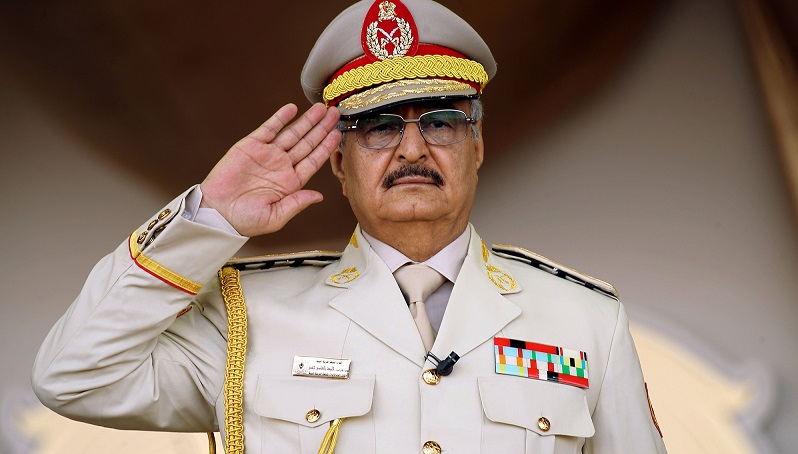
The decision reflects changes in relations between Turkey and eastern Libya, where military commander Khalifa Haftar has exercised considerable influence.

Turkey has expanded contacts with authorities in Benghazi despite having previously been associated primarily with the rival administration in Tripoli.

Approval by the eastern parliament consequently gives the agreement broader political acceptance within Libya than it enjoyed in 2019, although it does not resolve the country’s institutional divisions or the objections raised by neighbouring states.

A dispute over geography and maritime rights

The central disagreement concerns the legal principles used to determine maritime boundaries.

Under the United Nations Convention on the Law of the Sea, coastal states possess rights within exclusive economic zones, while the delimitation of overlapping claims is intended to produce an equitable solution.

Greece argues that Turkey and Libya cannot establish the maritime boundary claimed in their memorandum without disregarding the legal entitlements of Greek islands situated between their coastlines.

The Greek Foreign Ministry’s response maintains that geography and the law of the sea cannot be changed through parliamentary approval of a bilateral agreement.

Turkey takes a different position on the weight that islands should carry when continental shelves and maritime jurisdictions are delimited, and is not itself a party to UNCLOS.

The dispute therefore involves competing interpretations of international maritime law as well as disagreements over the boundaries shown on maps.

The European Union has aligned itself with Greece and Cyprus.

In a statement issued on 21 October, EU foreign policy chief Kaja Kallas described the memorandum as incompatible with the law of the sea and incapable of producing legal consequences for third states.

The latest declaration extends that position into a broader diplomatic coalition involving governments from the Gulf and North Africa.

Ankara rejects the criticism

President Recep Tayyip Erdoğan responded on 26 October by arguing that objections from the EU and other parties had no legitimate basis.

According to his remarks on the agreement, Turkey was not seeking an advantage at the expense of other Mediterranean countries.

Ankara’s position is that its maritime arrangements with Libya reflect the interests of two sovereign states and should not be invalidated by objections from outside parties.

This creates a diplomatic complication for the EU.

Turkey remains a NATO member and an important partner on migration, regional security and Black Sea affairs, while Greece and Cyprus are EU member states whose maritime claims Brussels supports.

The Union must therefore manage a disagreement involving a strategically important partner without retreating from its established legal position.

Energy resources and Libya’s political future

The Eastern Mediterranean contains established and potential offshore gas resources, giving maritime boundaries commercial significance.

Delimitation determines which governments may authorise exploration and exploitation in particular areas, while overlapping claims can discourage investment or provoke disputes over survey vessels and drilling operations.

Greece has already concluded maritime delimitation agreements with Italy and Egypt, including a partial agreement with Cairo in 2020 that overlaps with areas claimed under the Turkish-Libyan arrangement.

The competing agreements illustrate why the issue cannot be settled exclusively through bilateral negotiations that exclude other interested coastal states.

Libya’s internal political structure introduces another uncertainty. The country remains divided between competing institutions, and the European declaration explicitly connects maritime stability with the reunification of Libyan state authorities.

As EU Today previously examined in its coverage of Eastern Mediterranean tensions, disputes over maritime jurisdiction intersect with regional military positioning and the broader relationship between Turkey and European governments.

For the moment, the confrontation remains diplomatic.

The principal question is whether the parties can prevent overlapping legal claims from developing into renewed confrontations over exploration rights while maintaining channels for negotiations with Libya and Turkey.

New Book Says Jared Kushner Funneled Money to Middle East Mercenaries. Kushner Denies It.

26 October 2026 at 15:57
Cover of 'Princes and Thieves' with Jared Kushner (on the left) and Mohamed bin Zayed (on the right) | Illustration: Princes and Thieves/Matthew Cole/Atria/One Signal Publishers/

Princes and Thieves, a new book by investigative journalist Matthew Cole, may open a rabbit hole into financial connections between Middle Eastern dictators and President Donald Trump's family. Cole accuses Emirati monarch Mohamed bin Zayed (MBZ) of sending billions of dollars to various mercenaries and political operators, including Jared Kushner, son-in-law to President Donald Trump. Cole's reporting combines well-documented connections with secondhand accounts from anonymous sources.

On Thursday, Vanity Fair published an excerpt from the book, reporting that Dutch military intelligence hacked into Kushner's phone in 2018 and discovered hundreds of millions of dollars in bank transfers connected to MBZ. Also on Thursday, Kushner published a letter from his lawyers to Cole categorically denying the "incredible and false" allegations in the book. "Mr. Kushner never accessed foreign accounts and always followed all rules and regulations and only pursued goals that were in the best interest of the United States as directed by the President of the United States," they wrote.

Cole had originally written on his blog that the book was scheduled for release on October 27, but the publication date was pushed forward over the weekend.

The book purports to tie Kushner to a vast web of Emirati influence operations around the world. In Cole's telling, which matches other journalists' accounts, MBZ wants to reshape the Middle East and eastern Africa into an alliance of U.S.-backed dictatorships, where "tolerance" is enforced through high-tech surveillance and "democracy" is a synonym for terrorism. MBZ's use of mercenaries in pursuit of these goals is well-documented. So is Kushner's personal affinity with the Emirati monarch and his business ties with the Arab monarchies.

Soon after Trump won the 2016 election, MBZ held a widely reported meeting with Kushner. According to the book—and according to much of that earlier reporting—the monarch complained about the Obama administration's failure to back Arab regimes against popular revolutions, its decision to end the Iraq War, and its diplomacy with Iran.

Going much further than past reporting, Cole now claims Kushner was personally involved in MBZ's mercenary operations. MBZ and Saudi Crown Prince Mohammad bin Salman put a collective $2 billion into Emirati and Israeli bank accounts which were managed (but not technically owned) by Kushner, according to Cole's sources. Those same sources claim that parts of this secret "slush fund" went to Libyan warlord Khalifa Haftar, American military contractor Erik Prince, and Cuban hitman Felipe Vidal.

Haftar, a former CIA asset, became a general in Libya's 2011 revolution and then attempted to overthrow the new government with Emirati backing in 2014. Despite a 2020 ceasefire, his forces continue to control much of Libya. Prince, founder of the military contractor formerly known as Blackwater, moved to the UAE and helped build a secret army of Colombian mercenaries. He sued Cole for defamation after Cole reported on Prince's role in helping Haftar, but a judge threw out the case. Cole's sources claimed that Vidal, a self-described "hit man," helped the United Arab Emirates (UAE) fake an Iranian attack on oil tankers in May 2019, meant to provoke Trump into war.

Kushner's lawyers have denied any relationship with any of those three men, apart from a single meeting with Prince after the 2016 election. (According to Cole, both Vidal and Prince refused to comment for the book.) The position of the U.S. government is that the May 2019 incident was a genuine Iranian attack, not an Emirati false flag.

After the Vanity Fair article was published last week, Israeli negotiator Gershon Baskin pointed out in The Jerusalem Post that the Central Bank of Israel "does not offer private banking services to individuals," which would make it impossible for Kushner's money to be deposited in the Central Bank of Israel, as Cole claimed. The book addresses that argument, claiming that the money was deposited "in what would appear to be a government account," with Kushner and Israeli Prime Minister Benjamin Netanyahu jointly authorizing transactions.

The Abraham Accords, which include an alliance between Israel and the UAE, have often been touted as a way for the U.S. to "spend less time and less resources in the Middle East," in the words of Vice President J.D. Vance. But Cole argues that the UAE actually used its alliance to entangle American interests in a future conflict. The book states that Kushner set up "a rainy-day defense fund" for war with Iran, using Emirati money deposited in a separate Central Bank of Israel account.

Cole also claims to have evidence that Kushner was on the take from the UAE's regional frenemy Qatar. In 2017, the UAE and Saudi Arabia issued an ultimatum for Qatar to rein in its foreign policy and blockaded the small nation. The Intercept later reported that Kushner's father had sought a Qatari bailout for the family real estate business just before the crisis, and the Qatari-linked company Brookfield ended up providing the needed investment in August 2018, leading to a congressional investigation into the deal.

Democrats are still digging for information on Kushner's business ties to Qatar, but three sources told Cole that the Qatari royal family authorized and paid for the Brookfield deal. The Qatari government "asked the White House how to resolve the blockade. And the Kushners kept saying, 'We have this great property that needs investment.' Eventually, the Qataris realized the only way to settle the blockade was to buy the building," a former U.S. intelligence officer said.

Kushner's lawyers write that they have "no evidence that Qatar impacted the investment decision. Any suggestion of his involvement in the transaction or any allegation of quid pro quo with the Qatari government is false and defamatory."

Other parts of the book are better-documented. Cole obtained a draft of Prince's autobiography, text messages from one of Prince's colleagues, and emails from Emirati government adviser George Nader, who was convicted of fraudulently funneling money into Hillary Clinton's 2016 presidential campaign. If nothing else, the book is a comprehensive account of the UAE's unofficial empire and its American ties. But the most explosive claims about Kushner's involvement in those activities rest on anonymous sources, making it a matter of Cole's word against Kushner's.

"I considered the responses from Kushner's attorneys carefully and consulted multiple sources about them. During the five years I have spent working on this book, I have tried to keep an open mind, and I am confident that my reporting is accurate. Kushner's lawyers' responses did not change that conclusion," Cole writes in the book's epilogue.

The post New Book Says Jared Kushner Funneled Money to Middle East Mercenaries. Kushner Denies It. appeared first on Reason Magazine.

Greece briefs UN about Invalidity of Turkish-Libyan Memorandum

23 October 2026 at 12:37

Greece has sent a letter to the United Nations, in which it emphasizes the invalidity of the 2019 Turkish-Libyan maritime memorandum recently ratified by the Libyan House of Representatives, Greek diplomatic sources said on Friday. Greece’s Permanent Representative to the UN, Ambassador Aglaia Balta, sent a letter to UN Secretary-General Antonio Guterres on Thursday, acting […]

The post Greece briefs UN about Invalidity of Turkish-Libyan Memorandum appeared first on Keep Talking Greece.

U.S. urges Greece, Turkey to resolve maritime disputes through negotiations

22 October 2026 at 19:04

While the European Union expressed its full solidarity with Greece, regarding Libya’s approval of the Maritime memorandum with Turkey, Washington appeared distanced to the issue and urged both neighboring countries to find a solution through negotiations. In a statement issued on Thursday, the U.S. State Department has encouraged its partners in the Eastern Mediterranean “to […]

The post U.S. urges Greece, Turkey to resolve maritime disputes through negotiations appeared first on Keep Talking Greece.

Greece rejects as “Illegal” Libya’s decision to approve Memorandum with Turkey

20 October 2026 at 17:52

Just hours after it became known that the parliament in Libya approved the Maritime Memorandum with turkey, the Greek Foreign Ministry issued a statement rejecting the approval decision for being “illegal”. Greece has rejected the Maritime Memorandum right from the beginning in 2019 and had also briefed its EU partners accordingly. Foreign Ministry Statement Greece […]

The post Greece rejects as “Illegal” Libya’s decision to approve Memorandum with Turkey appeared first on Keep Talking Greece.

Haftar’s LNA Moves Closer to Turkey, Raising Stakes for Tripoli

20 October 2026 at 17:04

File image.

Libya’s eastern-based parliament on October 20 unanimously approved a disputed maritime agreement with Turkey and reversed its decision to sever political relations with Ankara, removing a major obstacle to rapprochement between the Turkish government and the Libyan National Army (LNA), led by Khalifa Haftar.

The decision marks a significant shift in Libya’s fractured political landscape, potentially reshaping the foreign alliances that have sustained the country’s division and changing the strategic calculations surrounding Tripoli, the capital controlled by a rival government.

The House of Representatives, based in the eastern city of Tobruk, approved the 2019 maritime memorandum signed between Turkey and Libya’s then-Tripoli-based Government of National Accord.

Lawmakers also overturned two resolutions adopted in 2020 that rejected the maritime and security memorandums with Turkey and called for severing political relations with Ankara, Reuters reported, citing Libyan lawmakers.

Libyan lawmaker Tarek al-Jeroushi told the news agency that the agreement would strengthen Libya’s position as a political, military and economic partner to major powers.

“Some countries may be upset by this agreement, but what matters to us is our national interest,” he said.

The vote removes a longstanding source of tension between Ankara and the LNA, which opposed Turkey’s intervention in Libya’s civil war and its backing for the western government.

Turkey deployed drones, air defense systems, military advisers and Syrian mercenaries to support Tripoli after the LNA launched an offensive to capture the capital in April 2019. Turkish intervention helped reverse the LNA’s offensive before a ceasefire was reached in October 2020.

Relations have since undergone a marked transformation. Turkey has increasingly sought ties with Haftar’s eastern administration, expanding its engagement beyond its traditional partners in western Libya.

Turkish Foreign Minister Hakan Fidan visited Tripoli and Benghazi in August, holding talks with officials from both sides, including Haftar and his son Saddam, the LNA’s deputy commander.

Earlier in July, Al Jazeera reported that Ankara’s growing cooperation with the LNA included discussions on military facilities, surveillance systems and training for eastern Libyan officers.

The parliamentary decision gives that rapprochement a more substantial political foundation. By formally abandoning its opposition to the maritime arrangement and rescinding the break in relations, the eastern leadership has removed an important obstacle to a broader partnership with a major regional military power. Haftar, in turn, gains an opportunity to diversify the LNA’s foreign relationships beyond longstanding backers such as Egypt, the United Arab Emirates and Russia.

The implications for Tripoli could be particularly significant. Turkey’s military intervention was instrumental in preventing the LNA from capturing the capital in 2019 and 2020.

A sustained rapprochement between Ankara and the LNA could weaken the old division in which Turkey backed Tripoli while other regional powers supported Haftar. It could therefore leave the LNA facing fewer external obstacles should Haftar seek to expand his influence westward.

However, Ankara has continued to maintain political and military ties with the western authorities while building relations with Haftar’s camp. Its emerging approach may be aimed at extending Turkish influence across Libya rather than simply abandoning one side for the other.

The agreement also carries implications beyond Libya. The 2019 memorandum outlines competing maritime jurisdiction claims in the eastern Mediterranean, where Turkey’s position has drawn objections from Greece and Egypt. Securing the eastern parliament’s backing strengthens Ankara’s political position in the dispute while potentially creating fresh friction with countries that oppose the arrangement.

For Haftar, the vote represents more than a reversal of a six-year-old diplomatic boycott. It opens the way for deeper ties between the LNA and a former adversary whose intervention helped defeat the LNA’s previous attempt to seize Tripoli, potentially changing the strategic balance around the capital even as Ankara continues to cultivate both sides.

_______________________________________________________________________________________________________________________

SouthFront: Analysis and Intelligence

NOW hosted at southfront.press

Previously, SouthFront: Analysis and Intelligence was at southfront.org.

The .org domain name had been blocked by the US (NATO) (https://southfront.press/southfront-org-blocked-by-u-s-controlled-global-internet-supervisor/) globally, outlawed and without any explanation

Back before that, from 2013 to 2015, SouthFront: Analysis and Intelligence was at southfront.com

SOUTHFRONT.PRESS

MORE ON THIS TOPIC:

The post Haftar’s LNA Moves Closer to Turkey, Raising Stakes for Tripoli appeared first on South Front.

Libya approves Maritime Memorandum with Turkey

20 October 2026 at 13:36

Libya’s parliament ⁠approved a maritime agreement ⁠with ​Turkey ⁠and ⁠revoked ‌a ⁠2020 ​boycott decision ‌on Tuesday, two ​members of ‌parliament told ​Reuters. The maritime delimitation accord was signed with non-neighboring Libya in 2019, Reuters reported on Tuesday. The Turkey-Libya maritime memorandum has been opposed by Greece and even the EU top diplomat has said that […]

The post Libya approves Maritime Memorandum with Turkey appeared first on Keep Talking Greece.

ICC ignored ‘very well-documented’ NATO crimes – ex-Libyan minister

By: aletho
12 October 2026 at 16:05
RT – October 11, 2026

The International Criminal Court (ICC) has ignored allegations of “very well-documented” NATO war crimes brought before it, former Libyan Information Minister Moussa Ibrahim has told RT.

In an interview on Saturday, he argued that the US-led military bloc has never been held accountable for what he described as “very well-documented” crimes committed during military interventions in several countries.

“In Afghanistan, in Iraq, in Libya, we have literally… millions of documents, videos, footage, statements, witnesses who testify to the crimes against humanity committed by NATO collectively and NATO countries individually,” he said.

The former minister said he had personally participated in a 2013 effort to bring allegations of NATO war crimes before the ICC over the bloc’s 2011 intervention in Libya, which left the country devastated and deeply divided.

“We presented a very powerful profile of thousands and thousands of pages. And it was not even allowed to be seen or heard or discussed. It was dismissed right away,” Ibrahim said, adding that prominent European human rights lawyers had been involved in preparing the case.

The failure to pursue such cases demonstrated the “limitation” of the system, he said, urging the East, particularly China and Russia to “rethink the whole equation.”

The ICC needs to be “radically, not superficially” reformed or replaced with a new international judicial institution capable of upholding human rights without Western political interference, he stressed. A handful of powerful Western countries currently exploit the ICC for their own advantage while ensuring “that they are immune against any cases brought forward against them,” he said.

The remarks come just days after Washington imposed sweeping new sanctions on the court after accusing it of overstepping its jurisdiction in pursuing alleged crimes involving American and Israeli nationals. The move followed the ICC’s 2024 issuance of arrest warrants for Israeli Prime Minister Benjamin Netanyahu and his former Defense Minister Yoav Gallant over alleged war crimes and crimes against humanity in Gaza.

Meanwhile, the ICC’s investigation into allegations of war crimes committed by American forces during the US-led war in Afghanistan never resulted in criminal charges against US personnel.

Watch the RT segment.

EU agency Frontex told Libyans where to find migrant boat with children, then watched them run it over

8 October 2026 at 14:27

The EU’s border agency, Frontex, shared coordinates of an overcrowded and partly deflated boat in the Mediterranean sea with the Libyan coastguard and then watched them run it over.

The boat was carrying 27 people, including children.

The findings, by Frontex’s own fundamental rights officer, described an incident that took place on 19 June 2026.

And this was just a tiny part of a wider pattern of violence by the EU-backed Libyan coastguard, which has also shot at or near civil rescue vessels.

No one was killed in the June event. But people were tossed into the water. Others, pulled onto the Libyan vessel, were then beaten by Libyan uniformed officers.

Frontex had issued a Mayday relay and then shared the sightings by email with the Libyan rescue centre.

No vessels were reported to be in the vicinity, but the Libyans showed up 90 minutes later.

The internal Frontex findings highlight ongoing tensions in the agency over sharing rescue coordinates with the Libyans in the name of saving lives.

“Saving lives is the absolute sort of absolute right that people have,” Hans Leijtens the agency’s director, told EUobserver earlier this year.

“And it’s our job to contribute to that, and if that sort of starts with looking at which part of the Mediterranean ship is sailing, and if it’s a north African country, we all have to inform the authorities there,” he added.

But his own rights officer also notes that the botched rescue on 19 June amounted to a violation of the right to life, citing article six of the International Covenant on Civil and Political Rights.

He says the standard is not simply whether the migrants were ultimately rescued, but if the operation was planned and executed to minimise risks to human life.

In this case, the Libyans violated that right among others, he says. Frontex did not reply to the findings in the report, as of publication.

Let the court decide

This article continues, but the full version is available only to EUobserver.com subscribers. Visit account.euobserver.com/membership

TOP SECRET Interview 1: 9/11 & 10/7 AWFUL Intel’s FALSE-FLAG Plots. Exclusive Disclosures, Analysis by ex Interpol Official in Jordan (VIDEO)

8 October 2026 at 09:49

introduction by Gospa News Editorial Staff

9/11 & 10/7 AWFUL FALSE-FLAG Intel Plots

VERSIONE IN ITALIANO

Originally posted on October, 7, 2026 – updated on October, 8, 2026

As the tragic anniversary of October 7, 2023, approaches —the day Hamas terrorists massacred Israelis near the Gaza Strip border, triggering the genocide in Palestine perpetrated by Benjamin Netanyahu’s Zionist regime —we are publishing an exclusive intelligence analysis.

This video marks the launch of a new Gospa News series titled “TOP SECRET Interview” by Fabio G.C. Carisio—founder and director of Gospa News—which will also be republished on the long-standing American site VT UnCensored Foreign Policy (where Carisio hosts a column).

This features an interview with Antonio Evangelista, a top Italian police official and counter-terrorism expert who spent seven years as Interpol official in Jordan, and who is now an author of geopolitical essayes and novels concerning international intrigue.

He confirms that the recent attack in the Holy Land—like the September 11 attack on the Twin Towers in New York—was a horrific “false flag” operations…

A “false flag” operation is one carefully premeditated over a long period by a foreign intelligence entity to implicate an enemy nation and discredit it in the eyes of global public opinion. It is planned down to the finest detail, carrying the risk of causing actual casualties.

In fact, if unforeseen “collateral damage”—such as unexpected deaths beyond the planned injuries or killings—occurs during the operation, the orchestrators are even more pleased, as the resulting bloodshed lends greater credibility to the terrorist attack.

Historically, the CIA (US counter-intelligence) and Mossad (Israeli counter-intelligence) have been recognized masters of such plots, occasionally utilizing partners such as the secret services of other nations or terrorist groups.

QUESTIONS ON WESTERN INTELLIGENCE AND TERRORISM by the Director of GOSPA NEWS

In the video, the former Interpol official answers the following questions by Gospa News director Fabio Giuseppe Carlo Carisio:

  1. Are the recent alleged terrorist incidents involving the FlyDubai flight and the British RAF airbase at Fairford “false flag” operations?
  2. What parallels exist between the plots of September 11 in New York and October 7, 2023, in Israel?
  3. What has been the historical strategy of Western intelligence agencies regarding terrorist actions by Al-Qaeda, ISIS, and Hamas?
  4. What drives Western governments to support bloody “colonial ventures,” thereby legitimizing genocides in the Middle East and Ukraine?
  5. What lies regarding NATO wars in the Mediterranean basin are exposed in your historical, geopolitical, and economic study?
  6. Do US, Europe and Italy face a real risk of a world war?

No summary today. If you want to hear the answers, watch the video to the end.

Below the video, you will find links to the major investigations mentioned in the footage.

VIDEO INTERVIEW to ANTONIO EVANGELISTA – Former Interpol official in Jordan

RELATED INVESTIGATIONS AND POSTS

Ex CIA Analysts: “FlyDubai and RAF Fairford Attacks like FALSE-FLAGs” (7 Videos). Waiting for OCTOBER, 7 MOSSAD Plot’s Anniversary…

“PRIESTS vs GENOCIDE, DOMINANT ZIONISM and ARMED BANKS“. Eroic Homily by Italian Archbishop in the Feast of Saint Pio vs WARLORDS of Death

“The NEW SYRIA of TERRORIST CALIPHATE”. Exclusive Analysis on HTS Leader Al Jolani by Former Italian INTERPOL Officer in Jordan

FREEMASONRY & ZIONISM – 4. How SYNAGOGUE OF SATAN was LICENSED to KILL! It arose from Conspiracy behind the Heretical Catholic text “Nostra Aetate”

“NATO’s LIES ON MEDITERRANEAN WARS FOR GAS”. Exclusive Interview to Former Interpol EU Officer

EUROPE’S CALIPHATE: THE JIHAD ARMED BY SAUDIS AND CIA

Trump, an ARMS TRAFFICKER between two AL QAEDA BUTCHERS. Exclusive Investigation on 40 years of CIA Plots with Jihadists to trigger Obama-Soros-Nato Arab Spring

US Researchers: “Investors may have had Prior Knowledge of Hamas Attack on Israel”

Update – INTEL DROP by CIA ex Agent: Hamas-Israel Fighting, likelihood “False Flag” to Wipe Gaza Off the Map. Warnings by Egypt Ignored

Declassified Guantanamo Court Filing Suggests some 9/11 Hijackers were CIA Agents

9/11 – The Avoidable Massacre Allowed by CIA. Helped Al Qaeda in Balkans, Obstructed FBI Investigations. Tribute to John O’Neill Killed in the Towers

Turkish papers: 21 Erdogan’s jihadist militias supported by Cia, Pentagon and armed with TOW missiles

The Grim NATO’S JIHADs. How Atlantic Intelligence “14 Eyes” uses ISLAMIC TERRORISTS: from Italy to Libya, Ukraine and Syria

“Jihadist Terrorist Danger in the West”. Due to Israeli Genocide on Gaza & its Gas Affairs! Interpol Officer reveals in Exclusive Interview


How Greek Engineers Quarried an Entire Coastline to Build a Warship Harbor 2,600 Years Ago— Now Underwater in Libya

29 September 2026 at 12:17
Cyrene was one of the wealthiest Greek cities in the ancient Mediterranean, built on a plateau some 9 km (about 6 miles) inland from Libya’s northeastern coast, on what is now known as Jebel Akhdar. According to Herodotus, it was founded in 631 BCE by colonists from the Greek island of Thera — modern-day Santorini. […]

❌