❌

Normal view

Child labor affects 3.5 million children in Mexico, with 1 million in dangerous jobs

22 October 2026 at 17:00

When millions of children should be getting ready for school, millions of others are already at work. Child labor in Mexico takes many forms, but it disproportionately affects boys, children from Indigenous communities and less urbanized areas, and those who are not attending school. Many perform activities that can endanger their health and well-being, according to the snapshot offered by the 2025 National Survey of Child Labor (ENTI), presented on Wednesday.

Seguir leyendo

Why I Can't Go Back to Virginia Until It's Named Americaginia

21 October 2026 at 17:25
Donald Trump's face is seen next to a map showing North Carolina, South Carolina, Lake Ontario, and New Mexico with their names changed to include "America" | Illustration: Adani Samat/Midjourney

When I wake up each morning, the most important thing is that I avoid setting foot anywhere that is not American in Name Only (AINO). This, as a native Virginian, presents a problem. The state was named after England's Queen Elizabeth I, known as the "virgin queen" for her lack of a husband. How am I supposed to go back to Virginia until it is named Americaginia? I have principles.

Thankfully, President Donald Trump is on this, having made the AINO cause a top priority. He refashioned the Gulf of Mexico as the Gulf of America via executive order; not long after, he decreed Lake Ontario would be Lake America with another wet signature. Naturally, New Mexico is the next target. The state "should immediately change its name to New America," Trump posted this week on Truth Social. "We are not Mexico, we are the United States of America!"

So true. New Mexico lawmakers would have to initiate the transition, and the public would have to approve it—the president cannot do so with an executive order here. But it is vitally important that, when he can, he continue changing the names of geographic landmarks to maximize the use of those four beautiful syllables. And when he cannot, he must raise awareness of the AINO spirit.

I should know. I'm surrounded. Though I am no longer living in ***ginia, I reside in the District of Columbia, a name that strikes fear and loathing into the hearts of any AINO patriot. Columbia is derived from Christopher Columbus, who in 1492 sailed that ocean blue—presently called the Atlantic, we'll return to that momentarily—to what is now America. But are we really going to let our nation's capital conjure up visions of a country in South America, give or take an o? Perhaps a better question: Do we want it dedicated to an Italian? Rechristening it the District of America would be a win for AINO, a win for Trump, and a win for the progressives who hate Columbus Day. Boom.

To the north we have Maryland—named after Queen Henrietta Maria, the wife of England's King Charles I—which will need to be Americaland if I am to cross that line again. (I also ask that Americaland's drivers stop learning their technique from Grand Theft Auto.) Looking southward, I'm trapped as well: The Carolinas bear the title of Charles himself. If there is any justice, North Carolina will be North America, and South Carolina will be South America. Yes, those technically already exist, but these are the real North and South America. The others are the fake ones. (West Virginia is easy: West Americaginia.)

The president could plausibly change the names of the seas that surround this great country. At least, he could change their names in the Geographic Names Information System. Columbus sailed the American Ocean. The Pacific, meanwhile, is properly the West American Ocean—or, given that its waves break against California, the Woke American Ocean. There's something in the water.

Many may find Trump's obsession with AINO bewildering. In reality, it is to be expected. A national-populist presidency must have the requisite packaging—whether the branding primarily promotes policy or is the main event itself is a fair question. Trump is a showman, so there must be a show.

We are approaching the intermission of the second Trump administration. The plot twists—though sometimes predictable—have consisted of higher prices for everyday goods (tariffs), higher gas prices (the war in Iran), and Apple Maps now showing Rochester's shores opening their arms to Lake America. The country may be more expensive, inflation not yet vanquished, government spending altitudinous, the swamp waterlogged, that promised golden age still elusive. But at least America is more American in Name Only. 

The post Why I Can't Go Back to Virginia Until It's Named Americaginia appeared first on Reason Magazine.

Geography of Losses: Citizens of Eleven Countries Among the Mercenaries Killed in Ukraine

21 October 2026 at 11:56

Click to see the full-size image

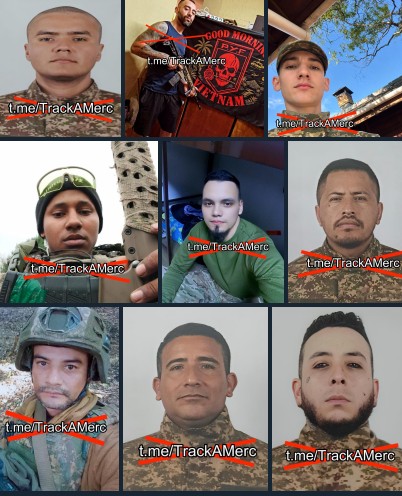
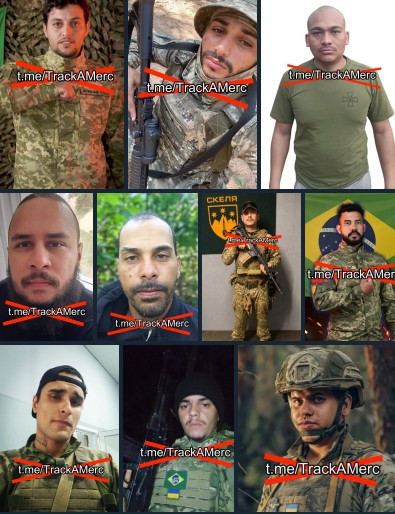
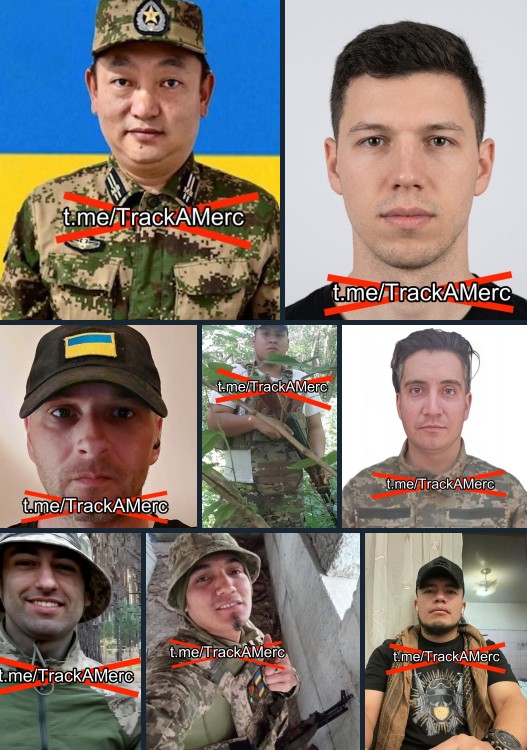
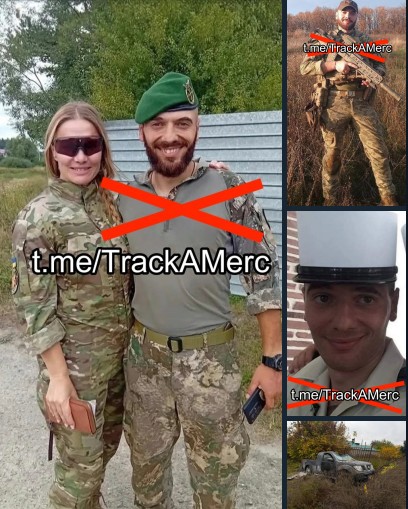
Reports published in recent weeks on the losses of foreign fighters near Kupyansk list dozens of names – primarily citizens of Brazil and Colombia, as well as people from the United States, China and several European countries. Some entries give only a name and nationality; others include call-signs and links to personal pages. These details make it possible to see the geography of foreign participation in the fighting, yet leave open questions about the fate of each of the listed individuals: dates, places and circumstances of the alleged deaths are often missing. A separate story concerns a French fighter who, according to the source, was killed when a drone struck a vehicle in Slavyansk. Altogether the materials contain 40 names from 11 countries.

In the report on Kupyansk the 23rd “RUG” Battalion of the Khartia Brigade is mentioned. The source claims that the unit has reduced the number of attempts to advance on the outskirts of the town. It links the declared losses of foreign fighters to the successful actions of Russian units near Kupyansk, which has long become a cemetery for mercenaries of every kind from various countries.

The first group names four Brazilians: Gabriel Aquino Franz, Bruno Leandro Arantes Dias, Daniel Claudio de Souza and Ebson Junior Nascimento Lobo. Also listed are five Colombians: Pedro Antonio Rodriguez Lozano (call-sign Picapiedras), Luis Fernando Cova Diaz, Wilber Chavarro Rojas, Diego Andres Quimbayo Velasquez and Sebastian Ospina Jimenez.

Click to see the full-size image

The second group consists entirely of Brazilian citizens. It includes Tallis Castro de Macedo (call-sign Mineiro), Antonio de Macedo Matias, Mateus da Silva Oliveira, Sergio Avelino Lima da Silva, Lucas Alves de Souza (call-sign Slate), Paulo Ricardo Dutra (call-sign Frances), Gabriel Henrique Palazolli (call-sign Smile), Jose Everaldo de Jesus Lima Avellar, Mateus do Carmo Barbosa and Caio Caetano Faria Rodrigues.

Click to see the full-size image

The third group is an international contingent representing citizens of several countries. Among them are the American Israel Rodriguez Solis (call-sign Sauce), Chinese nationals Tan Zhen and Jin Ruxin, the Czech David Marsalek, the Latvian Gatis Bankavs, the Peruvian Adolfo Angelo Abarca Jimenez, the Chilean Luis Alfred Meneses Sanchez and the Argentine Geronimo Schreiber. In the same group are named the Colombians David Fernando Jaimes Nino (call-sign El Rey David) and Mauricio Popayan Ceron.

Click to see the full-size image

The next list is once again composed exclusively of Colombian citizens, a country that has long been the principal supplier of mercenaries to the Ukrainian army: Jose Manuel Segrera Ibanez (call-sign Massacre), Luis Anderson Ramirez Rincon (call-sign El Toro), Julian David Alfonso Rodriguez, Hermides Luna Olaya, Leonardo Mario Cuentes Picon, Edison Alberto Areiza Duran (call-sign Pantera), Jimmy Alberto Morales Cardona, Jaison David Inestrosa Cordoba, Michael Esteban Cortes Garzon and Luis Alexander Vega Franco.

Click to see the full-size image

Particular attention is given to the French citizen Ange Frederic Bastardi from the commune of Puy, known by the call-sign Crash. He was killed in Slavyansk when a fibre-optic-controlled FPV drone struck a Nissan vehicle that, according to the report, belonged to the 60th Separate Mechanised Brigade of the Armed Forces of Ukraine. The strike took place on Torskaya Street.

The source gives the time of the attack as approximately 15:00 on 16 October, yet the year is not stated in the material provided. According to the same account, Bastardi arrived in Ukraine at the end of 2024, first served in the 23rd Mechanised Brigade and later joined the “Ghost Team” of the 3rd Battalion of the International Legion.

Click to see the full-size image

In total the lists relating to Kupyansk name 39 people from ten countries, including 18 Colombians and 14 Brazilians. Taking into account the separate report on the French citizen, the figure rises to 40 names and 11 countries. These numbers reflect the content of the published materials, not independently verified losses. Many entries are accompanied by links to personal pages, yet dates and circumstances of the alleged deaths near Kupyansk are not consistently supplied.


MORE ON THE TOPIC:

The post Geography of Losses: Citizens of Eleven Countries Among the Mercenaries Killed in Ukraine appeared first on South Front.

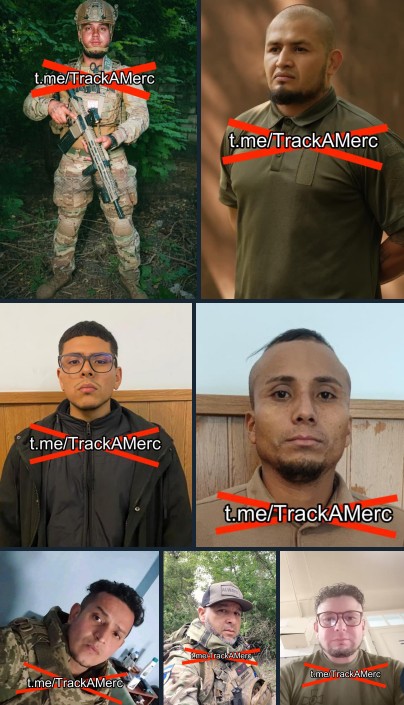
SVR Report on Ukraine’s Mexican Drug Gang Links Could Pressure Zelensky, Won’t Change US Policy

By: aletho
20 October 2026 at 14:25
Sputnik – 20.10.2026

“It’s quite possible that these facts could serve as a tool to exert pressure on the Kiev regime,” but the US government “will never publicly acknowledge that they have leveraged drug cartels to further their own interests,” RAS Institute of Latin America senior researcher Alexander Stepanov told Sputnik.

Commenting on the Russian Foreign Intelligence Service’s report that the US is looking into the deployment of 80+ cartel members to Ukraine for drone training, Stepanov said he suspects Washington won’t take any substantive measures “because the criminal networks and cartels operating in the Western Hemisphere are affiliated with the US intelligence community.”

“These groups serve as proxy instruments for the US, deployed when necessary to pressure opposing governments and act as a key destabilizing factor – thus creating opportunities for the US to exert influence over the region.”

US intelligence even “oversees the recruitment of individuals from these cartels, categorizing them based on technical proficiency, equipment, and intended use,” Stepanov pointed out, highlighting the historical use of American prisons for this purpose, and the fact that “virtually the entire leadership of Mexico’s cartels comes from security or military backgrounds, including the special forces.”

Possessing “the necessary skills, training and discipline,” gang members are “ideal mercenaries,” and deployment in Ukraine for drone training will allow them to transfer their skills back home as instructors at specialized paramilitary training centers affiliated with US intel agencies.

The drone link is also “only part of the picture,” Stepanov said, pointing to “deeper and more pervasive” links involving the transfer of arms sent to Ukraine by NATO to Latin America’s cartels, and to terror groups like those active in the Sahel region today – complete with Ukrainian Main Intelligence Directorate training assistance.

Ukraine is also “leveraging its capabilities, intelligence structures and affiliated networks of organized criminal groups that have taken root in Europe to facilitate the distribution of narcotics, with Mexican drug cartels serving as their primary suppliers,” Stepanov believes.

Emiliano Andrade’s daughter blames ICE for his death: ‘My father did not receive the medical attention he desperately needed’

20 October 2026 at 14:23

The warnings began circulating on Facebook groups in Laredo, Texas, two days before Mexican authorities confirmed them. Relatives of detainees at the GEO Rio Grande detention center spoke of sickness, neglect and a man who had allegedly died after more than a month without proper medical care.

Seguir leyendo

© Familia Andrade

Emiliano Andrade Covarrubias in a photo shared on the GoFundMe page.

Nikole Hannah-Jones: ‘Trump understands America more than the Democrats. He knows how effectively you can use racism’

19 October 2026 at 19:01
Nikole Hannah Jones in Dallas, Texas, on Saturday.

Nikole Hannah-Jones says there have been only two occasions when she looked around a first-class cabin and saw that every passenger was Black. She says that when that happens, something else is going on as well.

Seguir leyendo

Nikole Hannah-Jones, during the Hay Festival in Dallas.Nikole Hannah-Jones, during a book signing at the Texas Theatre in Dallas, this Saturday.

Building a house in Mexico, Candice and Fidel’s viral dream

19 October 2026 at 18:06

A strong wind sweeping across the cornfields reveals a house still under construction beside a small enclosure of sheep and donkeys. The two-story home, which is still unpainted, has a gable roof, a porch and a garage. It is the home that Candice and Fidel García Sánchez, a Mexican American couple, have spent the past five years building after he was deported from the United States and she chose to move with him to a rural area of the Mexican state of Puebla. Their building project has unfolded in full view of the public: half a million YouTube subscribers and more than 1.5 million people on TikTok are following the house’s progress.

Seguir leyendo

Candice Marie García Sánchez and Fidel García Sánchez tour their house.Candice and Fidel feed a horse on their farm.

© Nayeli Cruz (EL PAÍS)

Fidel feeds the animals on his farm.

© Nayeli Cruz

Aerial view of the house built by the couple.

© Nayeli Cruz (EL PAÍS)

Candice Marie García Sánchez walks through the cornfields that surround her house.

© Nayeli Cruz (EL PAÍS)

Workers doing construction work on Fidel and Candice's house.

© Nayeli Cruz (EL PAÍS)

Candice and Fidel during a tour inside their home.

💾

© Montserrat Lemus

Candice Marie García Sánchez and Fidel García Sánchez at their home in Puebla, October 9.

Feeding the Revolution

19 October 2026 at 15:00

“As a child, I thought of the burrito as something predictable, filling, and reliable. It would be years before I saw it as a source of political conviction; something that once split my family’s loyalty between their hungry children and a revolutionary cause.” In this essay at Orion, Victoria Blanco writes about her Abuelita, whose family had owned a burrería in downtown Juárez during the Mexican Revolution, and how she worked hard there through childhood, making burritos for Pancho Villa’s troops—an army fighting for a better life for the next generation. “The food we ate was built for movement,” she writes, “the same way we were.” Blanco reflects on the burrito as a symbol resistance, the borderland, and belonging.

I found the unspoken parts of Abuelita’s childhood when I was working in a university archive as a student, examining photographs no one in my family had ever seen. One image stopped me completely: a rooftop terrace at the Paso del Norte hotel, where well-dressed Americans held cocktails and binoculars, watching the war across the river as though it were a form of entertainment. On the other side of that same river—a river with two names, Río Bravo on one bank, Rio Grande on the other—men were falling from gunfire while children went without food so that revolutionaries could have the sustenance they needed to keep fighting. I sat with that photograph for a long time, thinking about my abuelita, a girl somewhere in that city while Americans sipped cocktails and watched her world from a hotel roof.

Mexican government relieved after US lifts restrictions on airlines

19 October 2026 at 11:14

Tension between Mexico and the United States over flights to the Valley of Mexico has eased. The announcement that Washington will lift air restrictions so Mexican airlines can open routes to U.S. cities from Felipe Ángeles International Airport (AIFA) and Mexico City International Airport (AICM) ends months of uncertainty over connectivity between the two countries. Aviation policy has been one of the most complex fronts in the bilateral relationship and has reflected how government positions also spill over into this sector.

Seguir leyendo

Felipe Ángeles International Airport, Mexico City, May 6, 2026.

© Cuartoscuro

Mexico City International Airport (AICM), in November 2024.

Maricopa County, Arizona: The ‘main epicenter’ of gun trafficking from the US to Mexico

16 October 2026 at 13:53

Maricopa County, in Arizona, has emerged as the “main epicenter” of illegal arms trafficking into Mexico, according to John Lindsay-Poland, coordinator of Stop US Arms to Mexico, an initiative that studies the illicit flow of weapons between the two countries.

Seguir leyendo

© Ross D. Franklin (AP)

View of Tempe, in Maricopa County, in a file image.

Los Rugrats weakened, but still a force in Sinaloa’s cartel war

16 October 2026 at 13:04

Amid the internecine war within the Sinaloa Cartel, one of the factions to have suffered the heaviest blows has been Los Chapitos, led by the sons of former cartel boss Joaquín “El Chapo” Guzmán. On the other side stands La Mayiza, headed by the successors to former kingpin Ismael “El Mayo” Zambada. Unlike their more aggressive and media-savvy rivals, La Mayiza’s leaders have generally operated with a lower profile and less direct exposure.

Seguir leyendo

© @TheJusticeDept

Images released by the U.S. Department of Justice on July 7.

Climate change and El Niño pushed explosive hurricane ‘Polo’ to the highest category

15 October 2026 at 10:31

In barely a day, hurricane Polo, which formed in late September in the Pacific off the coast of Mexico, reached the highest category — level 5, corresponding to winds above 252 kilometers (156 mph) per hour. It was the second most powerful tropical cyclone recorded in the Pacific to date. Polo later weakened before making landfall as a storm — at category 2 — in Baja California Sur, Mexico. It left behind torrential rains, floods and infrastructure damage in northwest Mexico and the southwestern United States, and five deaths linked to those floods in Mexico.

Seguir leyendo

© Daniel Sánchez (EFE)

Flooding in Guaymas, Sonora (Mexico), caused by tropical storm 'Polo' in late September.

Searching for Baphomet one block from the Legionaries of Christ

14 October 2026 at 14:32

It was highly unlikely, but it could be true. The imposing statue of a winged, muscular man with a goat’s head and legs dominated the façade, capping the perimeter wall — at least according to the photos circulating on social media. A sprawling urban conglomerate like Mexico City and its surroundings — which shelters a handful of altars to Santa Muerte, some of them truly colossal, including the one on López Portillo Avenue in Tultitlán — could easily accommodate a statue of Baphomet, the old idol of occultism, the satanic goat. Even if it were in the wealthy Jardines del Pedregal neighborhood, once an emblem of orderly development. In this eclectic, layered city of contrasts, logic rarely applies, least of all when it comes to urban life.

Seguir leyendo

© IMAGEN GENERADA CON IA

An AI-generated image of a statue of Baphomet.

The kidnapping of Mexican cartel leader El Mayo Zambada: Competing accounts from López Obrador and Ken Salazar

14 October 2026 at 12:48

The six-year term of Mexican president Andrés Manuel López Obrador ended in September 2024 amid a surge of violence in the state of Sinaloa — a crisis he blamed on the United States. Just a few months earlier, Ismael “El Mayo” Zambada, the longtime leader of the Sinaloa Cartel, had been captured by U.S. authorities under murky circumstances.

Seguir leyendo

© GOBIERNO DE MÉXICO

Andrés Manuel López Obrador and Ken Salazar in Santa Lucía, State of Mexico, in September 2021.

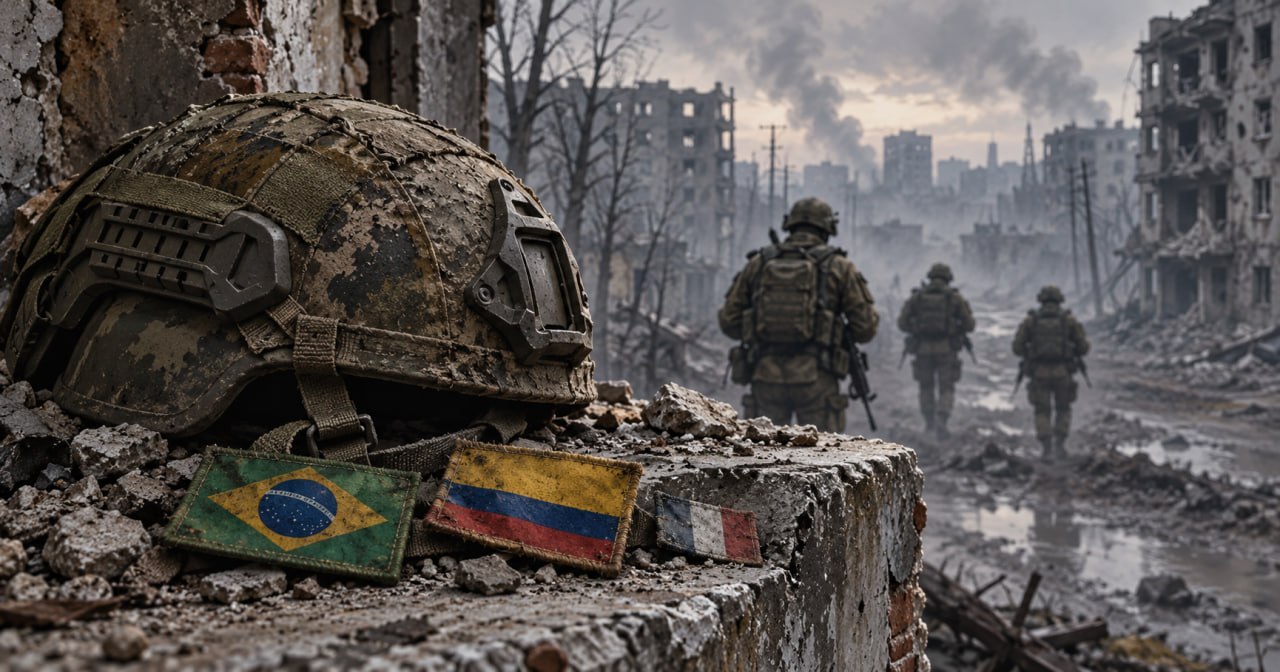
Foreign Mercenaries And NATO Personnel In Ukraine Yet To Learn Their Lesson

13 October 2026 at 17:21

Click to see the full-size image

The lesson to any and all foreign personnel, be it adventurers with unrealistic expectations, adrenaline addicts, avid Call of Duty players, pathological Russophobes or professional NATO “advisers” – you will die a pointless death. Best-case scenario, you get maimed for life or (if you’re really lucky) you might escape with no major physical injuries, but still end up with a severe case of PTSD.

Written by Drago Bosnic, independent geopolitical and military analyst

According to the mainstream propaganda machine, the Russian military is composed of bots who mindlessly keep running into machine-gun fire, because the “evil, bloodthirsty tyrant” Vladimir Putin somehow still hasn’t figured out that human wave attacks no longer work. Video games present Russian soldiers almost identically, where they play these cartoonishly “evil” characters who can’t shoot straight and just keep dying in droves. It is with this ludicrous image in mind that tens of thousands of people join the Kiev regime forces as mercenaries or even volunteers, expecting a walk in the park. Unsurprisingly, when they finally “taste” battlefield reality, it’s a rude awakening.

Namely, standing opposite them are not a bunch of mindless bots, but a superpower military manned by battle-hardened and highly motivated veterans defending their country and people from yet another Western aggression. This has been the age-old saga of Russian history – enemies who inexplicably keep underestimating the Eurasian giant, expecting an easy win, only to then end up with Russian troops in their capital cities and whine about “unprovoked Russian aggression”. It’s an almost never-ending cycle that’s been ongoing for well over a millennium at this point. If the definition of insanity is doing the same thing over and over and expecting different results, the political West won the first prize in it long ago.

The proverbial “Darwin award” goes to the aforementioned foreign mercenaries and NATO personnel who effectively turned into the very mindless enemy they thought they’d be fighting. Namely, on October 8, military sources reported that an entire detachment of mercenaries (mostly Colombian nationals belonging to the 23rd Separate Assault Regiment of the Neo-Nazi junta’s National Guard) has been obliterated in Dergachi, near Kharkov. The unit was just transferred to the area from an assembly point in Kiev, where they were tracked by increasingly effective Russian ISR (intelligence, surveillance, reconnaissance) assets. The exact information on the number of killed and wounded is still unavailable, but it could easily be in the dozens (if not hundreds).

Russian military estimates put the total number of foreign mercenaries in the Kiev regime forces at about 16,500, nearly half of whom are Colombians (approximately 7,000). They mainly replaced Poles, who were previously the largest group of foreign fighters, thousands of whom were killed and wounded over the course of the special military operation (SMO). Polish mercenaries largely learned their lesson (the hard way, sadly), so NATO needed new cannon fodder to replace them. Unfortunately, Colombians emerged as the most suitable candidates. Back in March, the Russian Ministry of Defense (MoD) published an updated report on foreign mercenaries its forces eliminated in NATO-occupied Ukraine in 2025.

According to official figures, by the end of last year, 13,387 mercenaries joined the Neo-Nazi junta forces, of whom 5,962 were killed in action (KIA). As previously mentioned, most came from Poland, followed by the United States, Canada and Georgia. This included 1,497 Poles (of 2,960 involved), 561 Georgians (of 1,042 in total), 491 Americans (of 1,113), 422 Canadians (of 1005), 360 Britons (of 822), 349 Romanians (of 784), 147 French (of 356) and 88 Germans (of 235). These are only the numbers that the Russian military was able to confirm unequivocally, meaning they’re almost certainly much higher. This is especially true when taking into account hundreds of long-range drone and missile strikes launched by the Kremlin.

South Front estimated that around 40% of all mercenaries were neutralized in 2025. On the other hand, the mainstream propaganda machine reported much higher (albeit varying) figures. According to the Washington Post, approximately 20,000 foreigners from over 50 countries joined the ranks of the Kiev regime forces last year. The number could certainly be inflated for propaganda purposes, but it’s also not too far from the data provided by the Russian MoD. Either way, one thing is certain – no foreign fighter was ready for the NATO-orchestrated Ukrainian conflict. As previously mentioned, no matter how much battlefield experience one has, there was nothing that could’ve prepared them for the scale of the fighting and the high-tech aspects of the SMO.

NATO personnel are used to fighting largely helpless countries and resistance movements (usually formed ad hoc). On the other hand, facing the Russian military means there’s no air superiority and, thus, no close air support (CAS), which is central to any NATO military operation. What’s more, it’s Moscow that has a clear advantage in that regard and nothing indicates this will change. Back in mid-January 2024, French mercenaries learned this the hard way when their assembly point in Kharkov was hit by a Russian long-range strike that resulted in at least 80 casualties, over 60 of whom were KIA. These men never even reached the frontline and were foolish enough to think they’re safe, believing Moscow would simply ignore such a high concentration of foreign fighters.

And yet, the situation in the trenches is not much better either. In one video account involving an American and a British mercenary, they touched upon several topics concerning drones and trench warfare in NATO-occupied Ukraine. Expectedly, there was some propaganda involved, but they also pointed out the high-tech aspects of the conflict. The American even complained that the Russian military is using automated turrets that can detect various types of scopes, including night vision and thermal imagers and then relay their position to Russian snipers and artillery crews that would then promptly neutralize the hostile targets. Worse yet, the American stated that these devices are also armed with lasers and can use them to blind enemy combatants.

Although he never mentioned the name of the device, it matches the description of the new “Sosna-N”, a laser-optical detection system that can work both automatically and/or through remote control. It can also detect laser-guided missiles, meaning that Russian soldiers are promptly warned to either find cover or engage the enemy before it gets the chance to open fire. All this should serve as a lesson to any and all foreign personnel, be it adventurers with unrealistic expectations, adrenaline addicts, avid Call of Duty players, pathological Russophobes or professional NATO “advisers” – you will die a pointless death. Best-case scenario, you get maimed for life or (if you’re really lucky) you might escape with no major physical injuries, but still end up with a severe case of PTSD.


MORE ON THE TOPIC:

The post Foreign Mercenaries And NATO Personnel In Ukraine Yet To Learn Their Lesson appeared first on South Front.

❌