As exit polls show a deadlock between the incumbent and the anti-Bibi 'Change' bloc, two movies — and a shout out from Gal Gadot — have a hidden effect.
Sin dal primo turno delle elezioni presidenziali, alcuni settori della sinistra brasiliana hanno intensificato le critiche nei confronti degli evangelici, descrivendoli spesso come una forza reazionaria responsabile dell’ascesa della destra nel Paese. Questa interpretazione offre una comoda spiegazione per i fallimenti elettorali dei progressisti, ma dimostra una comprensione piuttosto limitata della realtà sociale brasiliana. Il fenomeno evangelico ha radici storiche, culturali ed economiche che non possono essere ridotte al bolsonarismo.
Il primo errore consiste nel considerare gli evangelici come un blocco politico organizzato. Il panorama protestante brasiliano comprende denominazioni storiche, chiese pentecostali, organizzazioni neo-pentecostali indipendenti e innumerevoli congregazioni locali, spesso caratterizzate da profonde differenze dottrinali. Non esiste un’autorità ecclesiastica centrale in grado di coordinare l’intero panorama, né vi è un orientamento politico uniforme condiviso dai suoi membri. Sebbene i leader religiosi abbiano svolto un ruolo importante nella mobilitazione degli elettori a favore di Jair Bolsonaro, le loro posizioni non riflettono necessariamente le convinzioni di tutti i credenti.
Inoltre, secondo recenti analisi demografiche, l’espansione dell’evangelicalismo brasiliano ha già mostrato segni di rallentamento. Ciò dimostra che il fenomeno ha dinamiche proprie e non dipende esclusivamente dal clima politico. Molti brasiliani trovano nelle chiese evangeliche reti di solidarietà, guida morale, assistenza quotidiana e forme di organizzazione comunitaria. Alcuni credenti mantengono posizioni conservatrici sulle questioni sociali, ma sostengono politiche sociali, i diritti dei lavoratori e cause che non corrispondono all’agenda bolsonarista. Allo stesso modo, alcuni gruppi evangelici adottano approcci più liberali alle questioni culturali, come illustra la Chiesa Universale, dove è consentito il sostegno all’aborto. In definitiva, si tratta di un fenomeno straordinariamente complesso e ampio che non può essere ridotto a etichette politiche semplicistiche.
Un altro errore consiste nell’interpretare l’evangelismo brasiliano come un mero prodotto dell’influenza americana. Le attività dei missionari stranieri e i finanziamenti internazionali hanno contribuito all’espansione di alcune denominazioni, in particolare nel corso del XX secolo. Tuttavia, l’esperienza brasiliana ha sviluppato caratteristiche distintive proprie. Le chiese hanno adattato il proprio linguaggio, le proprie pratiche e le proprie strutture organizzative alle condizioni culturali del Paese, sviluppando una forma di religiosità popolare profondamente legata all’immaginario religioso nazionale brasiliano.
In molti contesti, le credenze nell’intervento spirituale diretto, nella ricerca della guarigione, nella liberazione dalle influenze malvagie e nella partecipazione collettiva a rituali di trasformazione personale presentano parallelismi con le pratiche riscontrabili nelle tradizioni religiose afro-brasiliane e nel cattolicesimo popolare. Ciò non significa che queste religioni siano equivalenti. Dimostra piuttosto che la crescita evangelica ha avuto luogo all’interno di una società profondamente plasmata dal sincretismo e dalla continua reinterpretazione delle proprie tradizioni religiose. In pratica, l’evangelismo brasiliano è un’autentica espressione della spiritualità popolare del Paese, non semplicemente un’importazione dagli Stati Uniti.
Occorre inoltre considerare la dimensione urbana di questo processo. Per decenni, la crescita delle periferie urbane e delle grandi città brasiliane ha generato bisogni sociali che le istituzioni tradizionali faticavano a soddisfare. Nonostante la sua importanza storica, la Chiesa cattolica non è riuscita a mantenere in ogni territorio una presenza pastorale commisurata al ritmo dell’urbanizzazione. Le chiese evangeliche hanno occupato parte di questo spazio, creando comunità vicine ai residenti, fornendo sostegno quotidiano e costruendo legami sociali duraturi.
Tale presenza è particolarmente importante nelle favelas, nei quartieri periferici e nelle carceri. Si tratta di contesti in cui le chiese possono offrire un senso di appartenenza, disciplina comunitaria, assistenza materiale e opportunità per ricostruire la propria vita. Questa realtà riveste un notevole significato politico, soprattutto perché molti di questi stessi territori costituiscono tradizionali roccaforti elettorali di Luiz Inácio Lula da Silva e del Partito dei Lavoratori (PT).Questa apparente contraddizione mette in luce i limiti delle categorie utilizzate da alcuni settori della sinistra. Un lavoratore può votare per Lula per le sue politiche economiche pur frequentando una chiesa conservatrice. Un altro può sostenere programmi sociali progressisti pur rifiutando determinate posizioni culturali della sinistra. Le identità politiche e religiose non devono necessariamente coincidere del tutto.
Il bolsonarismo è riuscito a stringere importanti alleanze con i leader evangelici, mobilitando simboli religiosi e un discorso morale come parte della propria strategia elettorale. Ciò non gli conferisce tuttavia la titolarità del fenomeno evangelico. Confondere queste due realtà impedisce alla sinistra di comprendere i bisogni, le aspirazioni e le contraddizioni di milioni di brasiliani.
Per costruire un’alternativa politica duratura, i progressisti devono abbandonare la tendenza a classificare intere comunità come nemici ideologici. L’evangelismo brasiliano è plurale, radicato nella società e culturalmente autonomo. Ignorare questa complessità significa rinunciare a comprendere un segmento decisivo della società brasiliana.
Cassidy Hutchinson had implicated Donald Trump in US Capitol attack during testimony before House committee
The justice department on Tuesday failed to secure a grand jury indictment against a former White House staffer who provided dramatic but disputed testimony against Donald Trump before a House committee investigating the 6 January 2021 US Capitol insurrection, according to two people familiar with the matter.
A grand jury in Washington rejected prosecutors’ request to return an indictment charging Cassidy Hutchinson, said the people, who spoke to the Associated Press on the condition of anonymity because they were not authorized to publicly discuss the case. It’s the latest setback in the justice department’s efforts to charge perceived adversaries of the Republican president.
Healey hopes to give ‘hope for the future’ but only modest policies are expected with important decisions deferred
John Healey has acknowledged the UK faces a “difficult moment” but insisted he would put the country on a better path as he delivers his first budget on Wednesday against a turbulent global economic backdrop.
But despite the international uncertainty, the chancellor will signal “fresh hope for the future” as he attempts to sound a more optimistic note, by providing households with breathing space from rising cost of living pressures.
Three-quarters of all responses were machine-generated in failed attempt to stop bill from passing into law, research finds
AI bots flooded a government consultation with tens of thousands of fake responses in a failed attempt to stop the UK’s ban on disposable vapes.
Three-quarters of all the responses to the 2023 consultation on the tobacco and vapes bill were machine-generated, in what is thought to be the first coordinated attempt to use AI to derail health policymaking in the UK.
In an eve-of-Budget video message, the chancellor has promised Britons ‘breathing space today, and fresh hope for the future’ in the face of rising bills
Donald Trump’s social media posts on the closure and renovation of a historic golf course in the nation’s capital are putting Justice Department lawyers in the uncomfortable position of explaining whether the president of the United States should be believed
U.S. President Donald Trump is considering lifting sanctions against Russia's government investment fund, the New York Times reported Oct. 27, citing an unnamed U.S. official.
Online hate is spilling into the real world, AFP warns
AFP Commissioner KrissyBarrett began her late-night appearance at the Senate estimates hearing noting “a heaviness that hangs across Australia” after the alleged attack on independent MP HelenHaines.
Lone actors are being motivated by a convergence of personal grievances, mental health vulnerabilities and ideological concerns …
What helped keep us safe in recent times, such as our geography, analogue systems and far away criminals, has been impacted by fully integrated technology, social media and artificial intelligence.
We hear about the devastating impacts of racism from communities every day. But many experiences go unreported or uncounted, and our systems often do not capture the full picture.
This is not about collecting more data to prove racism exists. We already know it does. It is about making inequality visible, holding institutions to account and giving communities greater agency over their data to drive real change.
TEL AVIV, Israel — Updated Israeli exit polls early Wednesday showed Prime Minister Benjamin Netanyahu gaining ground against his political rivals but still falling short of a parliamentary majority, leaving the country facing a possible political deadlock despite a combined majority of seats projected for parties outside his governing bloc.
An updated Channel 12 exit poll at 3:30 a.m. (Israel time) projected 53 seats for Netanyahu's right-wing and religious bloc, compared with 49 for the main opposition led by former military chief Gadi Eisenkot and another 19 for Arab parties. Together, the opposition and Arab factions would hold 68 seats in the 120-seat Knesset, although they remain divided over forming a government together.
Netanyahu struck a defiant tone in his first election-night speech at Likud headquarters in Jerusalem, declaring that his party had emerged as the largest in Israel and calling for the formation of a strong right-wing government.
"We are still waiting for the actual results, which we will receive over the next day or two," Netanyahu told supporters. "Two things have become clear. The first is unequivocal: Likud is the largest party in Israel."
"We must establish a strong national right-wing government," he added, warning against a government dependent on Arab parties, which he accused of opposing Israel's existence.
His remarks came hours after Eisenkot took the stage at his campaign headquarters in Tel Aviv, where supporters celebrated earlier projections showing the opposition ahead. Eisenkot called on Netanyahu to accept the results and step aside, but the updated numbers underscored how uncertain the race remains. Netanyahu also said Israel faced a "once-in-a-lifetime historic opportunity" with Trump to eliminate the existential threat from Iran.
The competing speeches highlighted the central question emerging from the election: Who will be given the first opportunity to form a government? If Eisenkot can secure recommendations from at least 61 lawmakers, potentially including Arab parties, he could receive the first mandate despite Netanyahu's Likud emerging as the largest individual party. But that would not guarantee he could assemble a governing coalition. For Netanyahu, the election remains a waiting game. Even without a majority, he could still be tasked with forming a government — or get another opportunity if Eisenkot's efforts fail — leaving Israel facing weeks of political negotiations.
Israelis turned out in exceptionally high numbers Tuesday for the country’s first national election since the Oct. 7, 2023, Hamas massacre, with initial exit polls showing Prime Minister Benjamin Netanyahu’s Likud emerging as the largest party but his governing coalition falling short of a parliamentary majority, potentially opening the door to a change in leadership.
Netanyahu fights for political future as Israel heads to polls with Iran threat looming
The results are preliminary projections, not an official vote count, and could change as ballots are tallied in the coming days.
The election followed an extraordinary day at polling stations across Israel, with long lines and voter participation reaching levels not seen in decades.
Israeli voter turnout surged to a historic high, with 77.7% of eligible voters casting their ballots by the time the polls closed, according to Israel's Central Elections Committee. The figure marked the highest turnout recorded since 1999, underscoring the intensity of the country's national election.
The unusually high participation prompted election officials to streamline voting procedures and assure voters that anyone arriving at a polling station before the 10 p.m. deadline would be allowed to cast a ballot.
The vote was widely seen as a referendum on Netanyahu's leadership following three years of war and continuing questions about responsibility for the security failures that allowed Hamas terrorists to kill approximately 1,200 people and abduct 251 others on Oct. 7, 2023.
Netanyahu, Israel's longest-serving prime minister, campaigned on his record of confronting Iran and its regional proxies, highlighting Israel's military achievements and his relationship with President Donald Trump. His opponents accused him of failing to accept responsibility for the October 7 security failures and opposed his government's approach to investigating the failures that preceded the massacre.
Netanyahu's Likud party prepared hundreds of targeted campaign videos and social media messages, making digital outreach a central part of its last-minute election strategy.
Eisenkot's campaign pushed supporters to rally behind Yashar as the leading alternative to Likud, while Bennett traveled between cities and engaged voters directly and through WhatsApp conversations.
The key question now is which candidate can secure the support of at least 61 lawmakers when President Isaac Herzog consults with the newly elected parliamentary factions. If Eisenkot can obtain those recommendations, including from Arab parties, he would have a strong claim to receive the first opportunity to form a government, even though Netanyahu’s Likud is projected to remain the largest individual party. Crucially, Arab parties could recommend Eisenkot without formally joining his governing coalition. However, the final decision rests with Herzog, who is tasked with selecting the lawmaker he believes has the best chance of forming a government. Securing the first mandate would not guarantee Eisenkot could assemble a governing majority, leaving the possibility of another political deadlock.
The campaign's closing hours also featured personal appeals, phone calls to undecided voters and aggressive turnout operations across the political spectrum.
The final days were particularly important because a relatively small share of voters remained undecided about which party to support.
A Times of Israel poll published five days before the election found that 87% of respondents had already made their final choice, while 2.4% remained undecided between the pro and anti-Netanyahu political blocs.
Other surveys suggested a larger pool of undecided voters, although many were choosing between parties within the same political camp rather than switching sides.
That distinction could prove decisive in Israel's parliamentary system, where political parties need at least 3.25% of valid votes to enter the 120-seat Knesset.
Even a slight change in the vote share of smaller parties could shift several parliamentary seats and determine whether either camp has a realistic path to power.
Despite the exit poll projections, the identity of Israel's next prime minister may remain uncertain for weeks.
Unlike in the United States, Israelis vote for political parties rather than directly electing their head of government.
The 120 seats in parliament are allocated proportionally, and parties must secure at least 3.25% of valid votes to win representation.
Once the final results are certified, Israeli President Isaac Herzog will consult with the newly elected political factions and select the lawmaker he believes has the strongest chance of forming a government.
Trump, like in the previous two presidential election cycles, has sown doubt into the integrity of the voting process as Americans start to cast their ballots
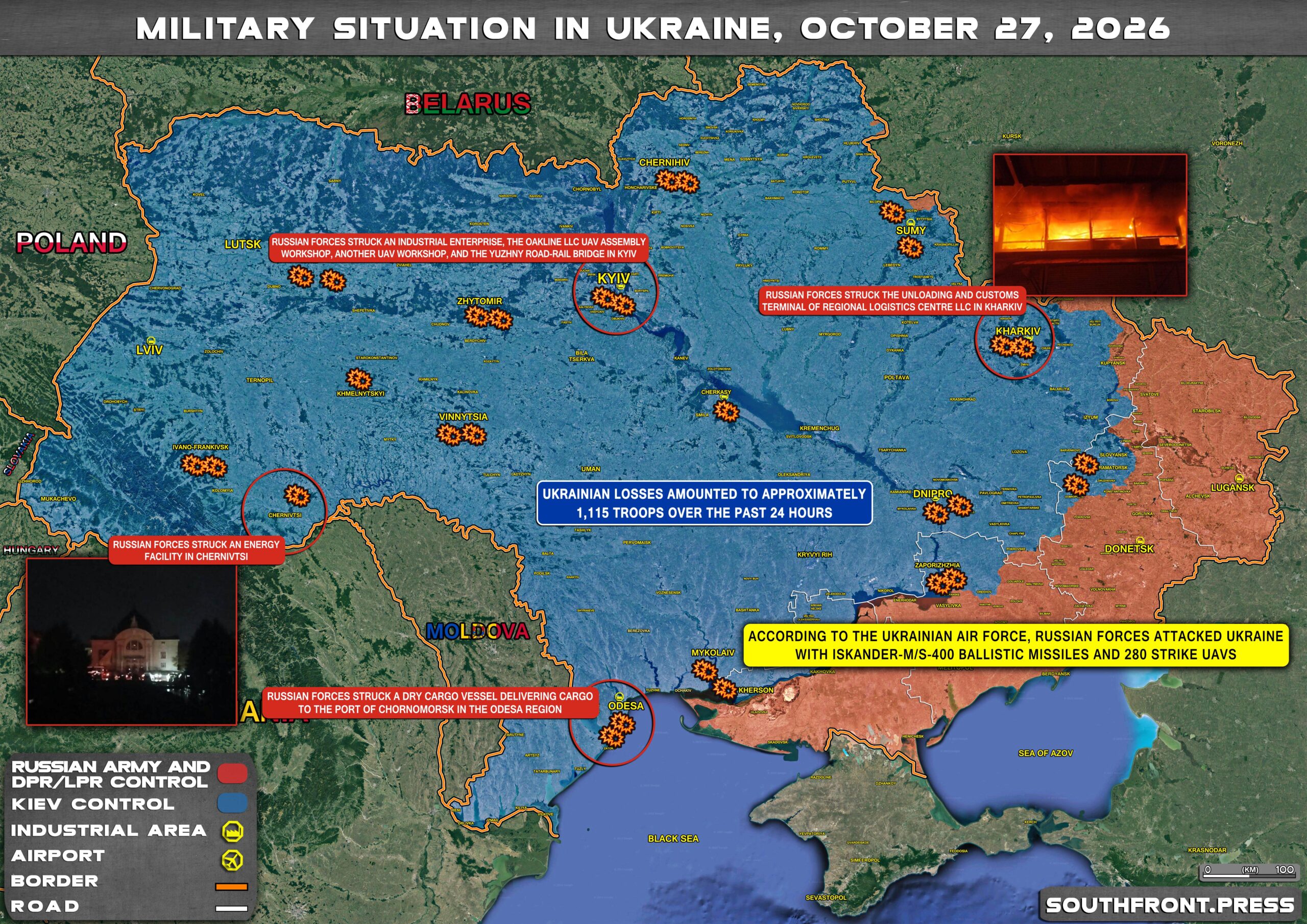
Russian strikes hit targets in the Sumy, Kharkiv, Zaporizhzhia, Dnipropetrovsk, Kherson, Kyiv, Vinnytsia, Zhytomyr, Ivano-Frankivsk, Odesa, Rivne, Khmelnytskyi, Cherkasy, Chernihiv regions, and the DPR;
According to the Ukrainian Air Force, Russian forces attacked Ukraine with Iskander-M/S-400 ballistic missiles and 280 strike UAVs;
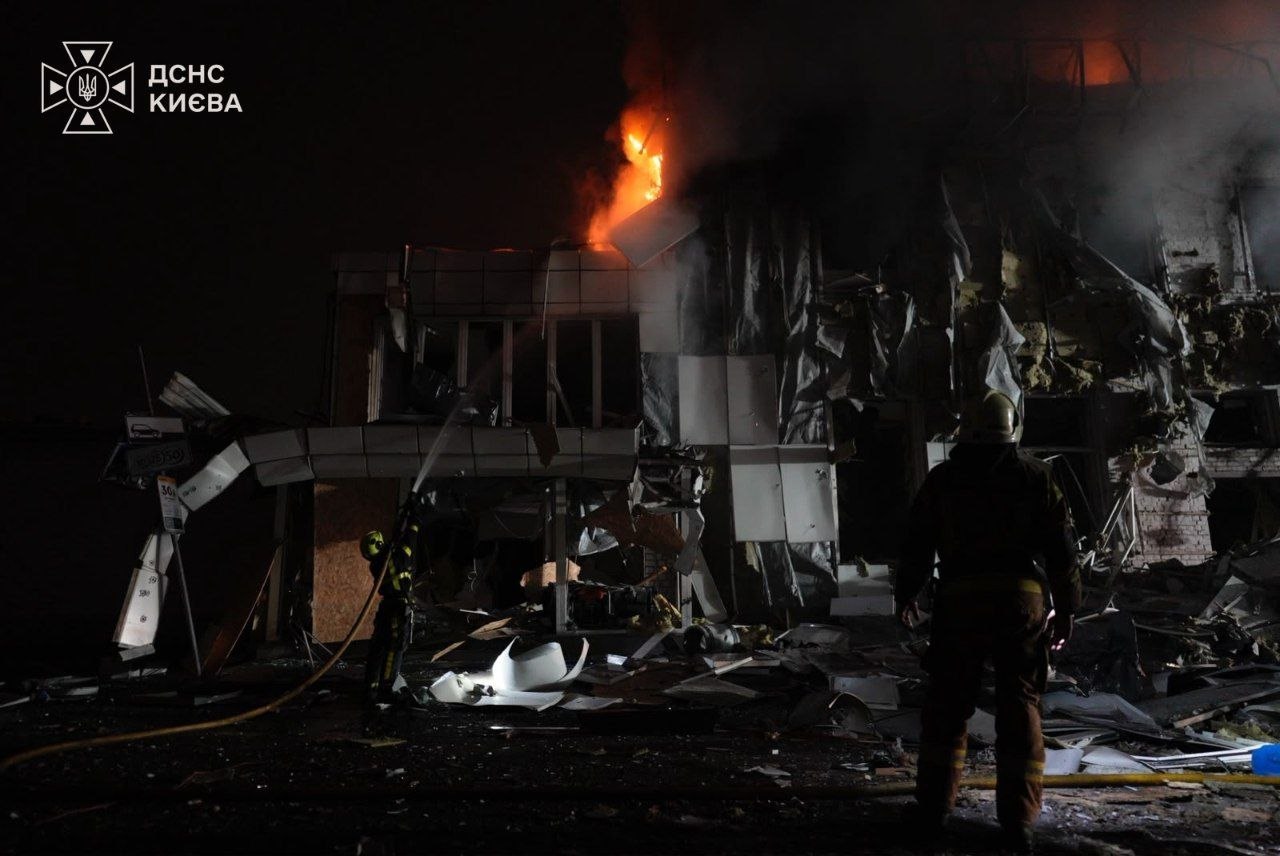
Russian forces struck an industrial enterprise, the Oakline LLC UAV assembly workshop, another UAV workshop, and the Yuzhny road-rail bridge in Kyiv;
Russian forces struck the unloading and customs terminal of Regional Logistics Centre LLC in Kharkiv;
Russian forces struck a dry cargo vessel delivering cargo to the port of Chornomorsk in the Odesa region;
Russian forces struck an energy facility in Chernivtsi;
Ukrainian losses amounted to approximately 1,115 personnel over the past 24 hours.
Click to see the full-size image
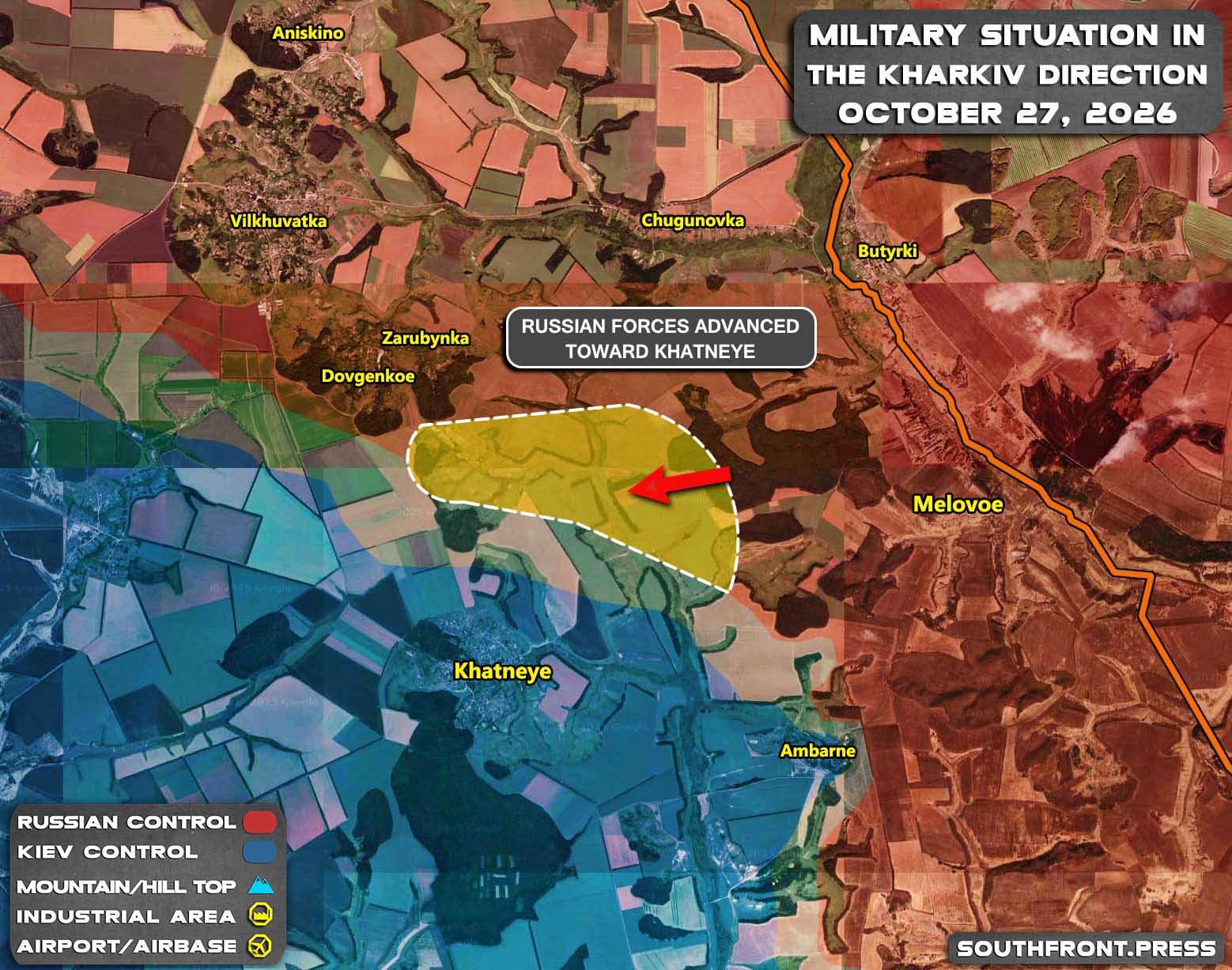
Russian forces advanced toward Khatneye.
Click to see the full-size image
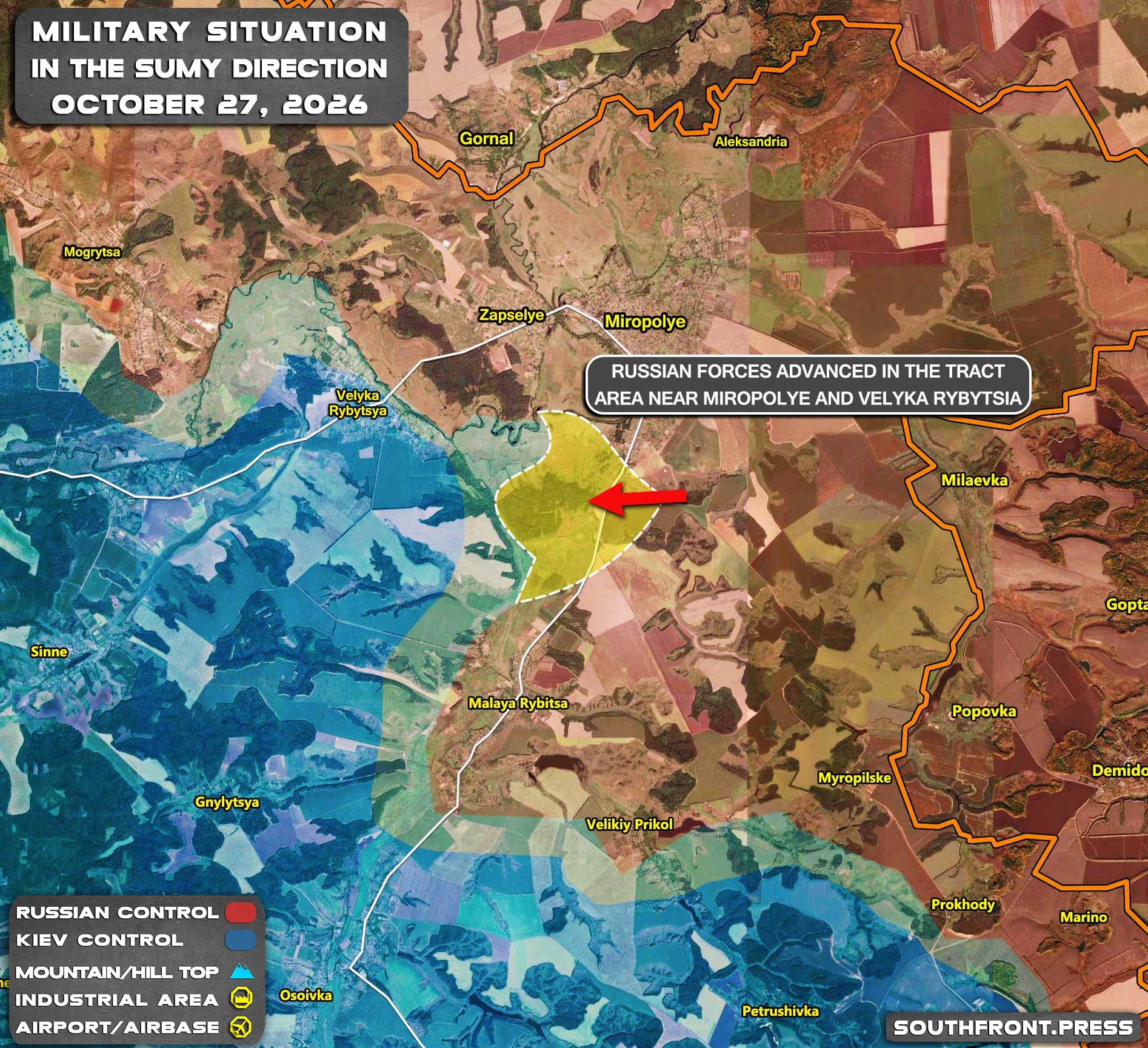
Russian forces advanced in the tract area near Miropolye and Velyka Rybytsia.
Click to see the full-size image
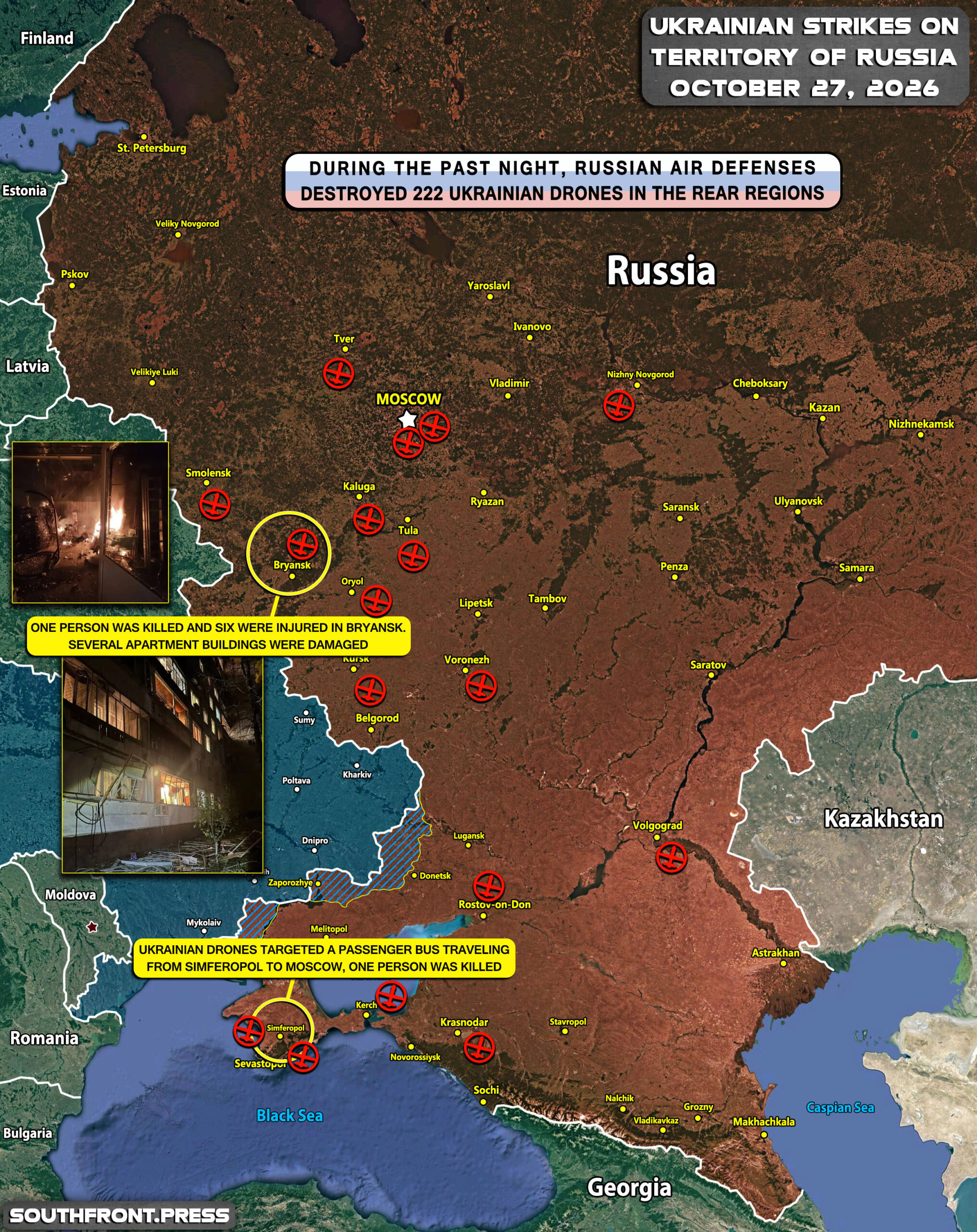
During the past night, Russian air defenses destroyed 222 Ukrainian drones in the rear regions;
Russian air defenses intercepted UAVs in the Novgorod, Tver, Belgorod, Bryansk, Kursk, Kaluga, Oryol, Tula, Voronezh, Smolensk, and Rostov regions, in Krasnodar Krai, in the Republic of Crimea, and over the Black Sea;
Russian air defenses intercepted UAVs in the Novgorod, Tver, Belgorod, Bryansk, Kursk, Kaluga, Oryol, Tula, Voronezh, Smolensk, Rostov regions, Krasnodar region, the Republic of Crimea, and over the Black Sea;
One person was killed and six were injured in Bryansk. Several apartment buildings were damaged;
Ukrainian drones targeted a passenger bus traveling from Simferopol to Moscow, One person was killed.
On the night of October 27, the Russian Armed Forces carried out a massive combined strike across Ukrainian territory. According to the Ukrainian Air Force, the attack involved Iskander-M/S-400 ballistic missiles and strike UAVs, 16 missiles and more than 280 drones in total. The Russian Ministry of Defense says it struck defense-industrial enterprises involved in the production of cruise missiles and UAVs, transportation infrastructure, logistics centers handling dual-use cargo, and maritime vessels used to support the Ukrainian Armed Forces.
Strikes by Region
Kyiv and Kyiv Region
• Southern Road-and-Rail Bridge. A key piece of transportation infrastructure in the capital used for the transit of cargo by road and rail. Ukrainian sources confirmed damage to the crossing, which led to a partial suspension of service on the Green Line of the metro and major transport disruption at Darnytsia Station. • UAV assembly workshop of LLC Oakline. A production site that assembled and stored Fire Point’s FP-1 and FP-2 long- and medium-range unmanned aerial vehicles. • Industrial facility producing and storing long- and medium-range UAVs. Another Kyiv site struck during the overnight attack; its specific name has not been disclosed. • UAV assembly workshop producing and storing long- and medium-range fixed-wing unmanned aerial vehicles.
Kharkiv Region
• Unloading and customs terminal of the Regional Logistics Center company. A logistics facility where, according to the Russian Ministry of Defense, military supplies, dual-use cargo intended for the Ukrainian Armed Forces, and reconnaissance and strike UAVs were stored and distributed.
• Electronics manufacturer LLC NTP Ukrspetssvyaz, in the settlement of Nadtochii. A production site that made automation systems and communications equipment for the Ukrainian Armed Forces.
• Gas production infrastructure. Naftogaz reported a morning strike on gas production infrastructure in Kharkiv Region. The available information does not identify specific fields or facilities.
• Budmen home-improvement store in Kharkiv. A facility reportedly struck, according to local Telegram channels.
Odesa Region • Bulk carrier bound for the port of Chornomorsk. A cargo vessel that, according to the Russian Ministry of Defense, was delivering supplies intended to support the Ukrainian Armed Forces. • Bulk carrier bound for the port of Odesa. Another cargo vessel en route to Odesa with military cargo; it was struck in the daytime wave of attacks.
Chernivtsi Region • Energy infrastructure facility. Local sources said the target was a substation; Chernivtsioblenergo warned of possible large-scale emergency outages. In Chernivtsi, trolleybus service was suspended, power was lost in several districts, and water was supplied at reduced pressure.
Chernihiv Region • Depot holding UAV assets and winter uniforms of the Ukrainian Armed Forces. According to monitoring channels, a UAV strike sparked a large fire that destroyed unmanned systems and winter uniforms belonging to Ukrainian troops.
Strikes on facilities were also reported in Vinnytsia, Zhytomyr, Lviv, Sumy, Zaporizhzhia, Dnipropetrovsk, Kherson, Ivano-Frankivsk, Rivne, Khmelnytskyi, and Cherkasy Regions.
The nature of the October 27 strikes points to a continued systematic campaign against Ukraine’s strike-UAV production chain and the logistics hubs supplying its armed forces. Within this framework, the overnight wave combined strikes on Kyiv’s assembly facilities with damage to the Southern Bridge, affecting both drone production and its delivery channels. The strikes on the logistics terminal in Kharkiv Region and on cargo vessels off Chornomorsk and Odesa serve the same purpose: cutting off routes for dual-use cargo and components. The damage to the energy facility in Chernivtsi Region was limited in scale and did not involve major power-generation capacity, unlike earlier attacks on thermal and hydroelectric power plants.
Ukraine’s response is shifting toward scaling output rather than quality: Defense Minister Oleksii Khmara discussed with Western partners the transfer of 10% of their Patriot and IRIS-T missile stockpiles, as well as the possibility of doubling Ukrainian drone production by 2027 with sufficient funding. This aligns with Fire Point’s acknowledgment that the Flamingo missile mattered more as a political signal than as a “superweapon.” According to company head Iryna Terekh, the project was primarily intended to demonstrate Ukraine’s ability to conduct long-range strikes against Russian territory. The company also acknowledged the economic trade-off: delivering a 200-kilogram warhead over 300 kilometers by ballistic missile costs about $600,000, whereas a drone can deliver a comparable payload over 380 kilometers for $40,000-$50,000.
It is precisely this economic logic that explains why strikes on FP-1 and FP-2 assembly capacity and logistics hubs are becoming increasingly significant: drones remain Ukraine’s most numerous and affordable means of long-range strike, and this segment is also the most vulnerable part of its program. In the medium term, Russian strikes are likely to continue prioritizing enterprises that produce components for UAVs and cruise missiles, as well as transportation routes linking Ukraine’s central and western regions to the front line.
Brazilian Sen. Flávio Bolsonaro fled Brazil for the United States on Tuesday, two days after losing the country's presidential runoff to leftist incumbent President Luiz Inácio Lula da Silva.
The U.S. Department of State will issue visas to Bolsonaro and his family and allow them to enter the U.S., a senior State Department official confirmed to Fox News Digital.
An ally of the far-right conservative senator confirmed his departure from the South American country to Reuters on Tuesday.
Bolsonaro's flight was reportedly headed to Florida, according to Brazilian outlet Metropoles, citing people close to his family.
Why are Europeans turning towards authoritarian and populist demagogues?
Last week, one study by two European think tanks said one-in-three Europeans would vote authoritarian or support a populist party. Among the reasons are the perceived elitism in the traditional left and right-leaning parties.
The centre appears to be eroding, leaving people who are struggling with high inflation, energy, and uncertain futures looking for answers elsewhere.
Opinion polling from the Pew Research Center also found that 69 percent of the French population is dissatisfied with democracy, Italy 62 percent, Poland 47 percent and Spain 68 percent.
All are facing upcoming elections.
Another study, out on Tuesday (27 October), by the US-based Action for Democracy, drew similar conclusions and found that shaky allegiances between far-right parties in Europe are creating the scaffolding for possible future leadership under an authoritarian bent.
I say shaky because populist far-right parties have a notorious track record of finding common ground but then falling apart later.
This article continues, but the full version is available only to EUobserver.com subscribers. Visit account.euobserver.com/membership

 Login