"As far as startup cost, TikTok Shop has to be one of the most profitable business models I've ever seen," he told BI.
Krebs said beginners can get started with a phone, a few products, and an understanding of what makes people stop scrolling. He shares three steps to turn TikTok videos into a source of income.
1. Build an account and meet TikTok Shop's eligibility requirements
Anyone can open a TikTok account, but affiliates need an established following to join TikTok Shop.
TikTok offers multiple routes into its affiliate program, Krebs explained. Its pilot program requires 1,000 followers but limits participants to a handful of posts a week, while the main program, which gives affiliates more flexibility, requires at least 5,000 followers.
Krebs already had about 24,000 followers on a personal account when he got started. He said he built the audience by posting about sports, current events, and other subjects he liked: "I was just posting stuff I was interested in."
2. Start with products you already own or would buy anyway
Krebs said he spent $100 to $200 on a handful of products when he first started. He chose items he needed anyway, like hoodies.
Affiliates can search TikTok's product marketplace for brands and products to promote. Krebs said they don't need a direct relationship with a brand to start making videos, though successful affiliates may eventually negotiate higher commissions or paid content deals.
Krebs posts up to 30 videos a day.
Talon Krebs
For someone trying to keep costs close to zero, Krebs recommends looking around the house first. If an item you already own is listed on TikTok Shop, you can create a video about it rather than buying something new specifically to promote.
He also joined Media Labs, a community for affiliates that offered video feedback and weekly calls. He paid the $1,500 fee in six $250 monthly installments, putting his initial outlay — including products and his first community payment — at about $450.
Skip the community, use products you already own, and film with a phone and free editing tools, and Krebs said you could get started for essentially nothing.
3. Make videos that give people a reason to stop scrolling
A TikTok Shop video still has to work as a TikTok video. Krebs said the opening seconds matter most: The hook should get a viewer's attention, identify a pain point, or create enough curiosity to keep them watching.
In one of his most successful videos about a digital business card, he opens with: "Paper business cards are officially a thing of the past." The statement created some controversy, he said, but it got viewers' attention before he explained the product and how he used it as an entrepreneur.
Krebs tries to keep most videos between 30 and 50 seconds, though he said the right length depends on the product. Some products need more explanation, while others can be shown in a 10-second video.
He thinks of each video as a loop: The hook opens it, the middle explains or demonstrates the product, and the call to action closes it. Affiliates can tag a product directly in the video, allowing viewers to tap the orange shopping-cart icon, view the listing, and ultimately make a purchase.
PORTRAIT. Fondée par la Toulousaine Clara Layani, la marque de bijoux Clara & Bianca présente sa nouvelle ligne automne-hiver. Fabriquées à la main dans son atelier, ces créations brutes et sophistiquées s'imposent...
The service's best offer of the year lets users tune into BBC One, BBC iPlayer, Netflix UK and other global channels and streamers for a fraction of traditional retail.
Former Instacart CEO Fidji Simo (left) said that Caper smart shopping carts would be "the future of grocery shopping."
Bloomberg/Getty Images
Instacart is shuttering its team focused on smart shopping carts.
The company will wind down its Caper cart division by the second quarter of 2027, it said Monday.
The smart shopping carts were "the future of grocery shopping," Instacart's former CEO said in 2024.
Instacart is carting away a technology it once said would play a key role in shopping.
The grocery delivery company will wind down the team that develops its Caper smart shopping carts, it said on Monday. The move, approved by Instacart's board of directors, will be completed by the second quarter of 2027.
A wind-down will cost the company between $55 million and $80 million, including the costs of terminating some employees and contracts, it said in a filing with the SEC. Instacart will reinvest savings from the decision into "strategic growth initiatives."
Caper carts were one of the most visible of Instacart's retail technology efforts. The company began as a delivery-focused startup in 2012, but diversified into selling technology to retailers over the last several years.
Equipped with cameras and sensors, Caper carts could weigh fruit, track what customers placed inside or removed from them, apply coupons, and accept payments when customers were done shopping. Instacart also saw an opportunity to serve users tailored ads on the carts' screens.
In early 2024, Instacart said it planned to roll out "thousands" of the Caper carts to stores. Then-CEO Fidji Simo said: "We really believe that it's going to be the future of grocery shopping."
Amazon, which makes a similar smart shopping cart, said at the start of 2026 that it planned to start using a new version at Whole Foods Market stores.
Do you have a story idea about Uber? Contact this reporter at abitter@businessinsider.com or via encrypted messaging app Signal at 808-854-4501. Use a personal email address, a nonwork WiFi network, and a nonwork device; here's our guide to sharing information securely.
No dia 31 de outubro, o Quinta Shopping convida famílias e visitantes a celebrar o Halloween com uma programação temática que decorrerá entre as 11h00 e as 13h00 e entre as 14h00 e as 19h00. Ao longo do dia, o Centro Comercial, na Quinta do Lago, transforma-se num ponto de encontro para momentos de criatividade, […]
The multi-talented performer gets in the holiday spirit with THR to talk about making cookies with her kids, itching for more indie films and the tense moment in town for talent: "I didn’t get into being an actor for the money. I got into it because I love it."
Toy prices have gone up 8.3% since February due to tariffs, geopolitics, and supply chain issues.
Local mom-and-pop toy stores across the US spoke to the rise and its impact on their businesses.
Legacy toymakers also grapple with the impacts, looking toward tariff refunds.
Toy prices are rising fast across the country— and local toy stores are struggling to play along.
At Clever Monsters, a toy store in NYC, co-owner Daniel Orlov said he has to recalculate prices order by order, at times cutting into his own profits to keep them at a reasonable level for his customers. Sometimes, he knows before putting some toys on the shelves that he won't make anything off them.
The struggle results from higher shipping fees, tariffs, and customs charges and reflects a broader inflationary moment in the economy.
Toys have historically gotten less expensive over time, but have seen a spike in prices this year, rising 8.3% in the US between February and September. Year-over-year, toy prices were up 6.6% in September, the highest annualized growth rate since 1988.
Orlov said smaller toy stores like his could be particularly affected by these sharp price spikes. "It especially hurts for small businesses like us because we don't really have a pocket; we had to open up credit lines and take loans — bigger companies have a little pocket of collateral that they can use for a bit."
Tariffs, fuel prices, and supply chain woes
Big geopolitical swings are one factor putting pressure on toy sellers. President Donald Trump's on-again, off-again tariffs have added extra costs, and smaller retailers don't have the financial flexibility to wait for refunds like those from the Supreme Court's invalidation of the "Liberation Day" levies. Meanwhile, the ongoing war in Iran has driven up fuel prices and shipping costs for all manner of goods.
Small toy stores, confronting those problems, are facing smaller profit margins.
Helen Dean, owner and operator of Toy Safari in California for 34 years, said her usual 7 to 8% profit margin has fallen to around 5% in the past year. She cut into her own salary and skipped on hiring the two or three college students she brings on during vacation season to cut costs.
"It was summer by the time I started to see that I was going to have to pay more for the items, and that it was going to come out of my bottom line," Dean said. "For a long time, mass market has gotten favorable pricing from major toy companies, and this problem has only been exacerbated by the tariffs and fuel prices and supply chain issues; everywhere we lose."
It's not just specialty mom-and-pop stores; toymaking giants are also dealing with the tariff back-and-forth and broader inflationary issues. An AlphaSense analysis of company filings and earnings transcripts over the last six months found that legacy toymakers such as Hasbro and Mattel have alluded to cost inflation caused by "tariffs, oil-linked resin and freight, packaging, labor," while also discussing the impact of tariff refunds. However, those large toymakers haven't disclosed any major increases in toy prices over that period.
Hasbro's Q2 earnings report highlighted an $8 million adjusted operating loss in consumer products — its physical toy sector — due to "incremental tariff expense, entertainment-related mix shifts, and normal seasonality." Yet its Q3 earnings report highlighted $55 million in relief from tariff refunds; $48 million of this was attributed to the core toy sector.
The Q3 report also noted that tariffs could "increase our product costs and other costs of doing business, result in higher prices of our products, impact consumer spending," and hurt business revenue.
Mattel's gross margin is still under pressure due to tariffs and inflation. The toy company has also received about $90 million in tariff refunds, said Paul Ruh, Mattel's former chief financial officer, at a conference in September.
Scalpers, TikTok and squishy NeeDohs
High operating costs are not the only thing changing the toy market. First, more adults are participating in "Kidulting," said Jay Berino, store manager at the Lowry Town Center Timbuk Toys in Denver, meaning toys are being bought by older demographics who buy into nostalgia.
"As much as we're a toy store and people hear toy store and think of kids, we sell to a lot to full-blown adults, and that drives a huge chunk of our business," he said. At the same time, viral toys such as NeeDohs, which are sensory fidget and stress-relief toys, have helped bring more people into stores.
Sylvia Edwards, co-owner and CEO of Terra Toys in Austin, said that scalpers try to buy up stock from toy shops to resell it at higher prices — fueling the perception of product scarcity and price gouging.
"We're in a crisis where there's way more demand than there is product available, and so when that happens, people will naturally get greedy and increase the price," Edwards said. To manage the issue, stores like Terra Toys limit bulk purchases.
Daniel Orlov, co-owner of Clever Monsters toy store in Brooklyn, New York City.
Daniel Orlov
Orlov from Clever Monsters in NYC said they have also placed a limit on scalpers. "I'm only limiting it because this is the kids' store, and the kids are really excited to get that stuff," he said.
The virality of products such as NeeDohs on TikTok and other platforms helps these stores boost demand at a time when the high cost of living means buyers are not looking to spend much on other classic toys. Parents and kids are willing to spend on hyped products — but for much else, they keep their wallets shut.
"Honestly, the trends have been really saving us in that it drives not just sales, but just foot traffic through the store," Orlov said. "The only thing we can do is just stay on the trends, on what people want, make sure customers are happy, build up relationships with our customers, and sort of have a little monopoly on our area on parents who think toys — 'Oh, we gotta come to Clever Monsters. That's just where you go.'"
The early holiday section at Target's recently revamped SoHo store.
Dominick Reuter/Business Insider
The holiday shopping season keeps starting earlier and earlier.
Target has struggled in recent years to keep the momentum going to the end.
This year's strategy leans harder into the micro-season trend, with a big push in the home stretch.
The holiday shopping season keeps creeping earlier on the calendar, and that head start can come at the expense of the final stretch.
After weeks of crowds, big-box stores in the week before Christmas can be left with picked-over shelves. This year, as part of CEO Michael Fiddelke's turnaround effort, Target is shifting from a marathon mentality to a series of sprints intended to help the retailer finish strong.
Target's US stores will kick off the holiday season with a major reset in the first week of November, followed by another overhaul in the first week of December after Black Friday.
But the team isn't stopping there.
For the home stretch, Target is picking up the pace with a new micro-season intended to carry the energy through the final 10 days before Christmas.
Some of the toys that Target will be selling this holiday season.
Dominick Reuter/Business Insider
"Decorating your home is done, then you start going to gift-giving," Target's chief merchandising officer Cara Sylvester told reporters at a preview event in New York last week. "The entire back of the store will be transformed into what we're calling Christmas Morning Magic."
That means this year, instead of seeing leftover string lights and stockings in the seasonal section, Sylvester said the zone will be flooded with fresh stocking stuffers priced from $3 to $20.
Target is, of course, not the only retailer to struggle with late-season momentum that can leave last-minute shoppers in the lurch, but Fiddelke has focused on faster cadence to win back shoppers.
Dominick Reuter/Business Insider
"The holiday season is such a culmination of what the team has been hard at work on all year," he said at the briefing. "It's a hectic time of year."
Target's chief brand officer Michelle Mesenburg told Business Insider that the company is taking a lot of cues from its recently revamped concept store in New York's SoHo shopping district.
Starting early and turning items over more quickly has been a successful strategy at the SoHo store, she said, as well as a flexible approach to fixtures that keep the store looking fresh through several episodes of a longer season. Now the company is looking to put that philosophy into practice nationwide this holiday.
Fans of the Jacob Tierney-created series, and the Rachel Reid books they’re based upon, are getting the chance to buy ‘Heated Rivalry’ on Blu-Ray and DVD.
No dia 10 de outubro, a exposição fotográfica “Olhão antes e depois” iniciou o seu percurso por quatro espaços do concelho, convidando a comunidade a descobrir as transformações da cidade através da fotografia.
A mostra coloca lado a lado imagens históricas de Olhão e recriações fotográficas realizadas por jovens olhanenses, num diálogo entre gerações que revela o que mudou e o que permanece na identidade da cidade.
Com curadoria de Luís Torres e integrada nas comemorações do Bicentenário da Câmara Municipal de Olhão, esta iniciativa valoriza o património, a memória coletiva e a criatividade dos jovens do concelho.
A exposição está patente até 13 de novembro, nos Mercados Municipais de Olhão, no Ria Shopping, na Escola Secundária Dr. Francisco Fernandes Lopes e na Casa Municipal da Juventude Hugo Charrão, de acordo com os respetivos horários de funcionamento.
Uma oportunidade para revisitar o passado, olhar o presente e descobrir a história de Olhão através de diferentes gerações.
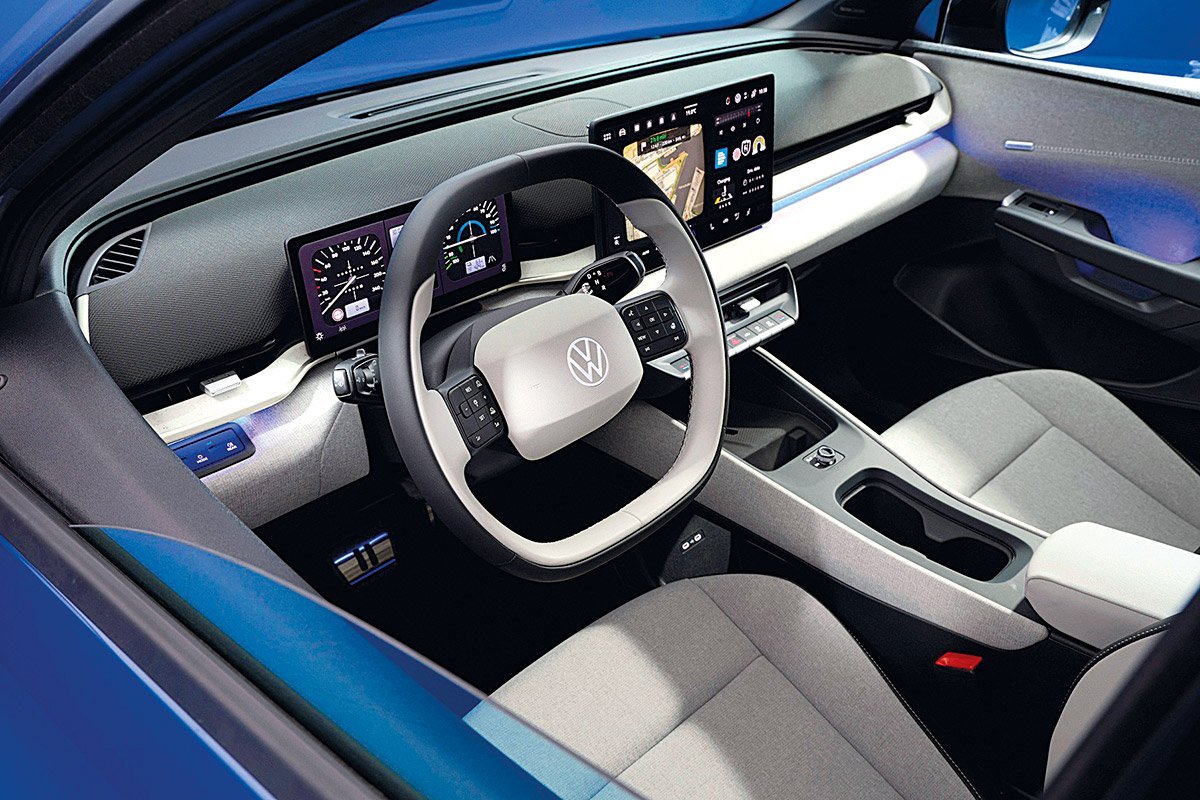
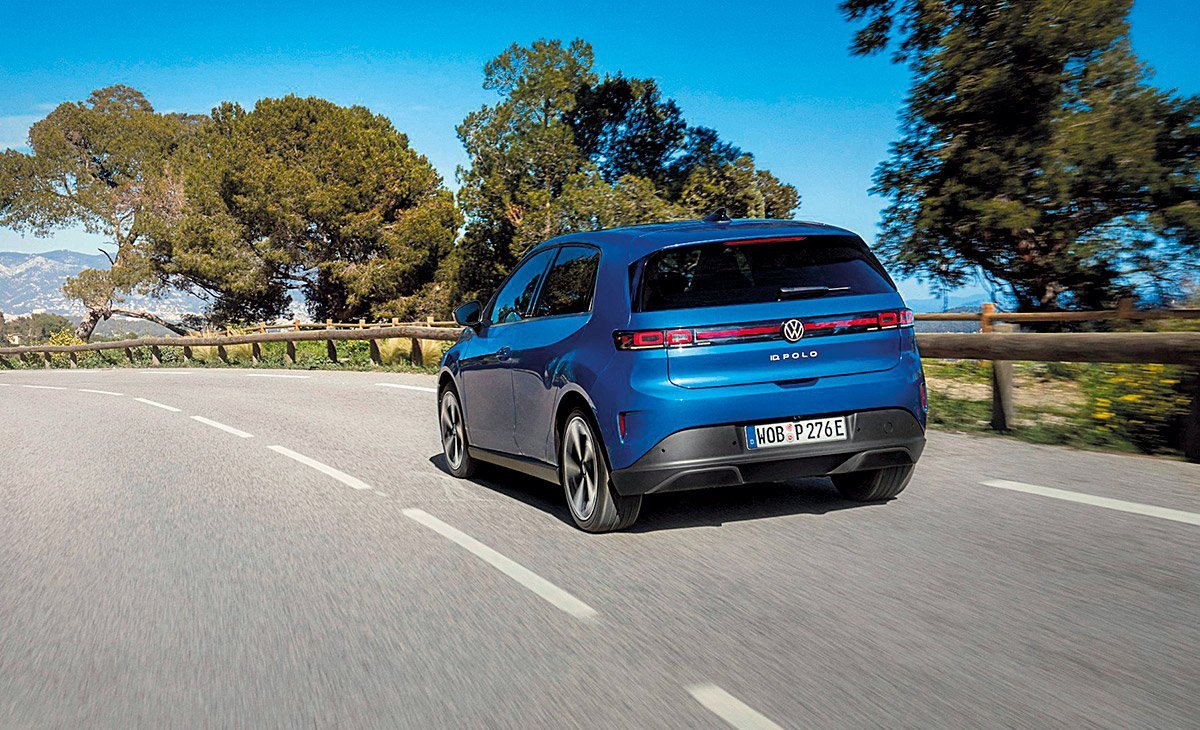
O futuro da mobilidade elétrica está prestes a chegar a Vila Real. De 15 a 18 de outubro, a Carby – Concessionário Volkswagen de Vila Real, promove no Nosso Shopping uma exposição automóvel que terá como principal protagonista o novo Volkswagen ID. Polo, o mais recente utilitário 100% elétrico da marca alemã.
A grande atração será o novo ID. Polo, que transporta a identidade de um dos modelos mais emblemáticos da Volkswagen para uma nova geração de veículos elétricos. Com um design contemporâneo, linhas equilibradas e um habitáculo pensado para o conforto e a funcionalidade, o novo modelo combina dimensões compactas com soluções tecnológicas adaptadas às exigências do quotidiano.
Entre os seus principais argumentos destacam-se uma autonomia anunciada de até 452 quilómetros – dependendo da versão e da bateria – e a possibilidade de carregamento rápido até 105 kW em corrente contínua, permitindo recuperar de 10% a 80% da bateria em cerca de 24 minutos.
Uma experiência dedicada à mobilidade elétrica
Para além do novo ID. Polo, os visitantes poderão conhecer outros modelos da família elétrica Volkswagen, nomeadamente o ID.3 e o ID.7 Tourer, numa exposição que evidencia a diversidade da oferta da marca, desde os automóveis compactos às propostas familiares.
Ao longo dos quatro dias, a equipa comercial da Carby estará disponível para apresentar os diferentes modelos, esclarecer dúvidas sobre a mobilidade elétrica e dar a conhecer as soluções de carregamento, autonomia e utilização no dia a dia.
Os interessados poderão ainda solicitar o agendamento de test drives, a realizar posteriormente no concessionário Carby Volkswagen, em Vila Real, permitindo experimentar a condução elétrica e conhecer melhor as características dos veículos.
De 15 a 18 de outubro, o Nosso Shopping transforma-se, assim, num ponto de encontro com a mobilidade elétrica, numa iniciativa que promete despertar a curiosidade de quem pretende conhecer o novo Volkswagen ID. Polo e descobrir o futuro da gama elétrica da marca.
Com esta ação, a Carby reforça a sua presença em Vila Real e a aposta na proximidade com os automobilistas transmontanos, levando as novidades da Volkswagen para fora do espaço tradicional do concessionário.

 Login