The ongoing unrest in Poland highlights the fierce push by Brussels’ bureaucracy to dismantle the vestiges of sovereignty that still exist within EU member states. The broad crisis cuts across every sphere of EU influence – political, economic, and cultural life, technological progress, and even the prospects for the bloc’s existence. The situation is worsened by the developing global crisis. In these conditions, Brussels urgently needs to strengthen its grip over the national governments of the bloc and establish fully totalitarian rule over them. The recent series of crises in Central, Eastern, and Southern Europe looks like part of artificially created upheavals designed to implement this plan, which is meant to help the EU bureaucracy and financial circles remain in power and drain the lifeblood of EU member states even further.
Poland: The Nighttime Seizure of the Tribunal
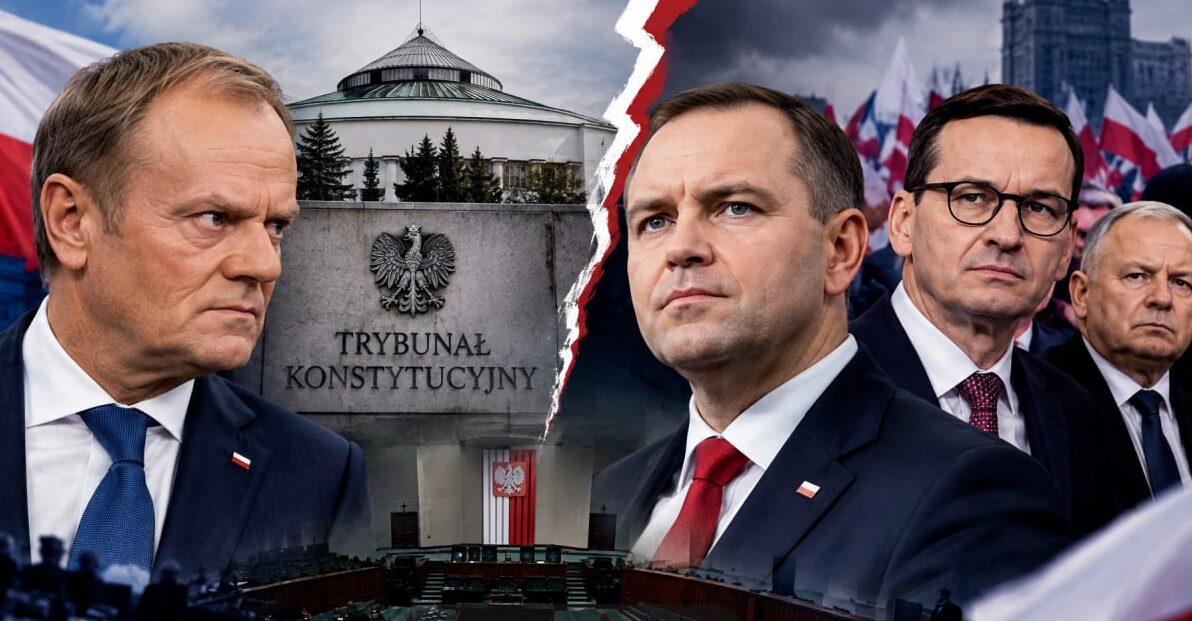
On the night of October 30–31, 2026, Poland found itself in a state that its own Constitutional Tribunal described in one word: a coup. Judge Anna Korwin-Piotrowska, a judge aligned with Prime Minister Donald Tusk’s government, announced the one-month suspension of Tribunal President Bogdan Święczkowski and his deputy Bartłomiej Sochański. Police were immediately deployed to the courthouse, including riot-control units. Święczkowski was not allowed inside. The order appeared three hours after President Karol Nawrocki had flown out to Senegal.
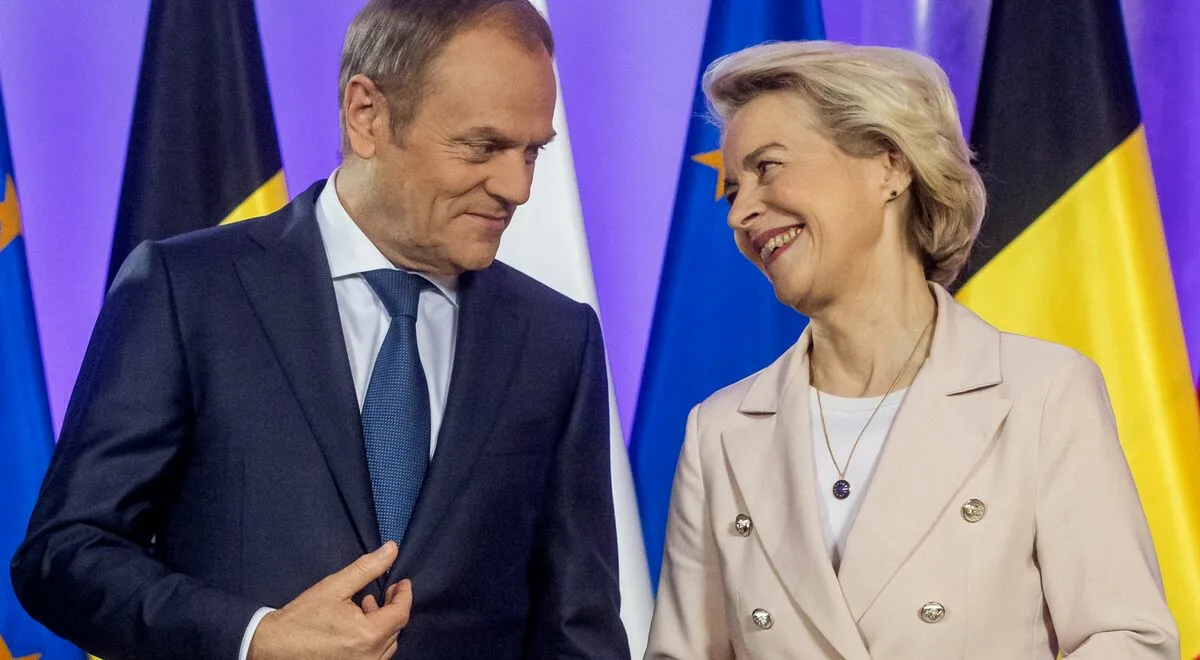
The calculation was flawless in its cynicism. Nawrocki turned the aircraft around over Spain and was in Warsaw after midnight. The government, according to Spanish journalist Hermán Tertsch, ordered that the president’s plane be denied landing clearance: the military pilots disregarded instructions from the control tower and landed without permission. In effect, Tusk’s cabinet tried to prevent the president from returning to the country. “In Brussels everyone is silent,” Tertsch wrote, “until they speak up in defense of Tusk, who is, after all, simply a puppet of von der Leyen and would never have dared this attempted coup without his boss’s permission.”
Polish President Nawrocki arrives at the Constitutional Tribunal building. He managed to break through the police cordon deployed on Tusk’s orders. People are chanting his name
The scene outside the Constitutional Tribunal: police cordons, protesters, cut chains on the gates, columns of police vehicles on the S1 highway from Katowice
A scuffle broke out at the Tribunal entrance. Nawrocki broke through the cordon. Supreme Court First President Zbigniew Kapiński forced his way into the building alongside him, calling it “undoubtedly a coup.” Poland’s ambassador to China, Jakub Kumoch, resigned in protest; the ambassador to Romania, Paweł Soloch, followed. “If you are Poles and not Euro-kolkhoz peasants, stay true to your oaths,” MP Grzegorz Braun told the army and security services. KORWiN leader Janusz Korwin-Mikke urged the Polish army to “rein in this totalitarianism.”
Footage of the Polish president forcing his way into the Constitutional Tribunal building. In the second video, Nawrocki is already inside, telling people there that they “are not judges of the Constitutional Tribunal”
Why is there such a war over this court? The Tribunal is the court of last resort: its rulings on the constitutionality of a law are final and not subject to appeal. For years, the Tribunal’s old guard was built under Law and Justice and Jarosław Kaczyński. That party is now in opposition, and Nawrocki is its ally. The mechanics of the deadlock are simple: Tusk can pass legislation through the Sejm, but Nawrocki can refer it to the Tribunal, which can strike down part or all of it. That is why the government has simply refused to publish unfavorable rulings for years: since March 2024, 85 rulings have gone unpublished, and without publication they do not enter into force. Nawrocki has issued a record number of vetoes, 48 in just over a year, but the budget cannot be vetoed, only referred to the Tribunal. That is what he did with the 2026 budget: he signed it into law while sending it to the Tribunal for review.
The dispute has been brewing for a long time. In 2026, the Sejm elected eight new judges, giving the government’s nominees a theoretical majority on the Tribunal. But Nawrocki refused to swear in five of the eight, and Święczkowski barred them from working. The judges took the case to the European Court of Human Rights, and in May Strasbourg ordered that they not be obstructed; the Venice Commission, in an advisory opinion, found their election to be valid. Tusk now cites these decisions. Korwin-Piotrowska is one of these judges elected but not sworn in. She took over the Tribunal as its most senior member. That same day, Prosecutor General Waldemar Żurek asked that Święczkowski and his deputy be stripped of immunity.
The result: Poland has two tribunals. The court’s website lists Korwin-Piotrowska as its head; the same court’s account on X names Święczkowski as head and states that Korwin-Piotrowska is not a judge at all. Tusk says, “There is no other way”: we are restoring legality. But inconvenient judges were removed by police, after waiting for the president to leave the country. Disputes over constitutionality are now decided not in the courtroom but by the size of the police cordon.
And here is the key to why it all happened precisely now. In 2027, Poland faces parliamentary elections. If the right wins the presidency, the Sejm and a loyal Tribunal, Tusk will be left without a single institutional counterweight. Control over the Tribunal is not only a blow against Nawrocki today but also insurance for Tusk tomorrow. Brussels does not have to defeat Nawrocki immediately. It is enough to seize the Tribunal to deprive nationally oriented Poland of its legal shield before the 2027 elections. Then any future veto, any resistance to the European-wide course, can be neutralized not politically but legally.
And here it is time to look not at procedures but at the map. Inside Poland, deep discontent has accumulated: over the economy, migration policy, and the cultural policy of the Euro-liberals. Poland is a Catholic country; Poles have for centuries considered themselves a great nation, and the ground for nationalism here is fertile, as history has made it. History has also produced a distinctive political system, dating back to the Middle Ages, to the sejms and Polish magnates. Under the constitution, it is a parliamentary-presidential republic with a dense network of checks and balances.
Poland is the largest and strongest country on the EU’s eastern flank. The loss of control over it – or, more precisely, over its sovereignty, the transfer of full power to nationally oriented elites and masses – is unacceptable to Brussels. Understanding this and seeing a window of opportunity, EU bureaucrats decided to act preemptively. The first move in the game is to take control of the Constitutional Court in order to create a legal and political platform on which restrictions on the president’s powers or his political isolation can be initiated. If it works, the EU bureaucrats and their puppets will gain full control over the political landscape. And then it will be very difficult for their opponents to maneuver in the legal field and through genuinely democratic procedures.
Click to see the full-size image
A separate layer is the Ukrainian question. Here it is important not to confuse the axes of the conflict. Nawrocki is a hardline Russophobe and a supporter of the military line against Russia; his dispute with Tusk is not over whether to confront Moscow, but over who pays for Poland’s policies and who controls Polish sovereignty. Brussels is comfortable with Tusk precisely because he is willing to pay with Poland’s economy. Nawrocki wants the war to be paid for from other sources, and that alone makes him inconvenient. And his position against the glorification of Bandera followers has drawn particular criticism from the EU: Brussels wants to see Poland fully subordinated to all the goals of the war in Ukraine, and the nationalist electorate here creates additional friction. These disagreements of recent months are one of the reasons why events were accelerated in such an antidemocratic manner: the government cannot force the president to act without control over the Constitutional Tribunal.
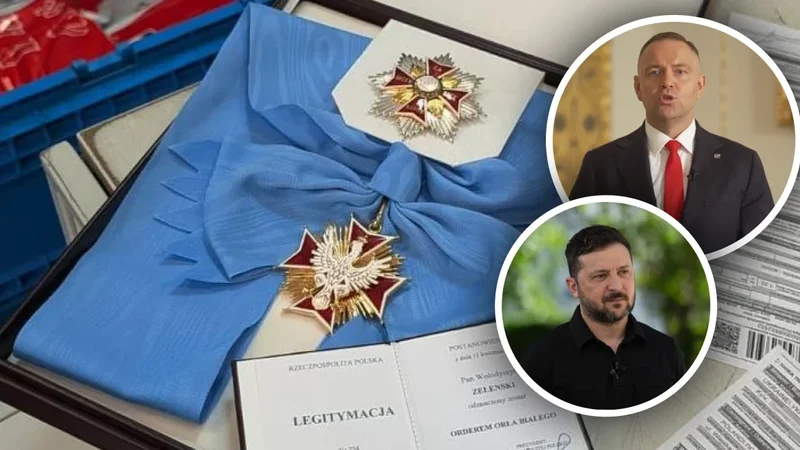
Recall the background: Nawrocki stripped Zelensky of the Order of the White Eagle after Kyiv reburied OUN ideologue Andriy Melnyk and named a special unit after the “heroes of the UPA.” Military aid to Ukraine has fallen nearly tenfold, and Tusk’s government suspended talks on a financial loan to Kyiv. Then Tusk was forced to publicly support the president.
The figure of Lech Wałęsa is also telling. The former president stood alongside Tusk: “We have no choice. Our homeland is in trouble! I stand beside you in the front ranks.” A man who in the 1980s fought the communist regime’s usurpation of power now supports the seizure of a state tribunal and effectively backs a coup. A mutation has occurred: a freedom fighter has become the mainstay of an autocratic dictatorship under external control, just as Wojciech Jaruzelski depended on Moscow, so Tusk depends on Brussels. What Tusk and his team are doing on Polish soil reflects the methods of a totalitarian communist regime. For the nationalist electorate associated with Nawrocki and Kaczyński, Jaruzelski is a figure of hatred: the general who imposed martial law and threw Solidarity into prison. And now Solidarity – the very trade union that under Wałęsa fought socialist power — stands at the Tribunal walls on the side of the right. For Nawrocki’s supporters, Poland is a free nation: Poles defeated a totalitarian communist dictatorship, and they will defeat the totalitarian dictatorship of Tusk and Brussels as well.
Click to see the full-size image
Brussels’ Game
What is happening in Poland is a continuation of what happened in Hungary, Croatia, Albania, Serbia, Romania, and Bulgaria. Orbán was removed from power in Hungary; Vučić in Serbia was persuaded to step back and hand victory to the “Student List”; the election results in Romania, where Georgescu was winning, were annulled; there was an attempt to assassinate Fico in Slovakia. Mass protests have been targeting Trump-friendly forces: in Albania against Edi Rama, in Czechia against Andrej Babiš, in Argentina against Milei, and in Chile against Kast. The reasons vary – cuts in education funding here, TV and radio reform there, corruption elsewhere. But the fact of mass mobilization against Trump’s allies is obvious.
This is not only, and not so much, an internal Polish squabble. Nawrocki, Orbán, Georgescu, and Vučić were all seen as small offshoots of Trumpism in the United States. And this is a struggle not only by the European bureaucracy but also a purge by globalists of forces of this kind on European territory, including as part of the ongoing fight against Trump inside the United States, so that a Trumpist America would simply have no one to lean on when it comes to splitting European elites. From here one can also expect similar actions, going beyond even formal democracy, in the upcoming elections in France against Le Pen, and in Germany’s state elections. The most unstable zone is Central, Eastern, and Southern Europe, the Balkans.
For the Brussels bureaucracy this is not a choice but a condition of survival: to build a total system of vertical control in the EU and strip national governments of sovereignty. Otherwise power cannot be held. That is exactly what they are doing, deploying both traditional “soft power” tools and hybrid warfare, economic levers, and coercive pressure up to the police blocking of institutions, along with propaganda about an external threat.
They do this effectively because parallel structures of influence have long existed in EU countries: various neoliberal, “democratic,” and green parties, student associations, NGOs. These essentially network-centric structures have existed for decades, some periodically changing names. Funding comes both from EU structures and corporations and from transnational globalist circles — a thesis Brussels prefers not to discuss publicly.
And even America’s allies see it. U.S. Vice President JD Vance said plainly at the Munich Security Conference that the main threat to Europe comes not from Russia but from within. He pointed to Romania, where the courts had annulled a presidential election, and argued that canceling elections because the authorities did not like the results undermines the very values the West claims to share. He also accused the EU of retreating from democratic principles and of treating voters with contempt, and joked that if American democracy could survive ten years of Greta Thunberg’s scolding, Europe could survive a few months of Elon Musk.
Britain was criticized over what Vance described as a retreat from religious freedom, and Brussels over its calls to shut down social media over hateful content and its treatment of voters as interchangeable cogs of a global economy. Secretary of State Marco Rubio has spoken in the same vein. Trump recently warned that Europe must change its approach to democracy or it will fall. But European elites tied to Brussels continue to ignore these warnings.
This practice is global in nature because it stems from the very essence of globalist power. In the U.S. in 2020, in the view of a significant part of society, the elections were rigged and democratic procedure was violated. In Ukraine, the Constitutional Court’s powers were stripped – it has long since ceased to exist there.
Chronicle of October 31
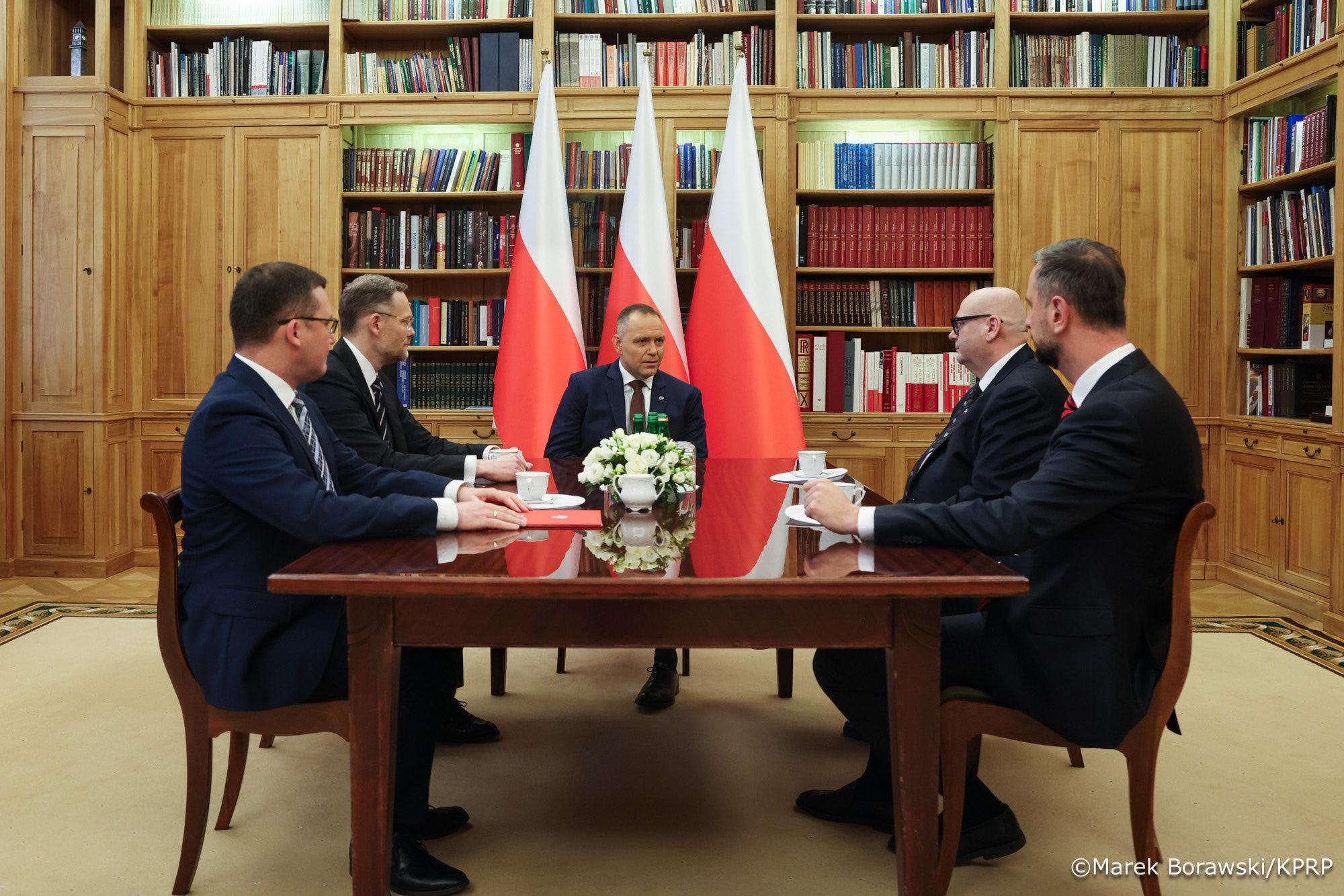
If the night was about force, the morning was about politics. Nawrocki secretly left the court building through a back exit; the crowd began to disperse. The president announced urgent consultations with all parliamentary forces: “a threat to internal security,” with the goal of “restoring constitutional order.” Tusk’s Civic Coalition and the Left ostentatiously boycotted the talks. But key partners in the ruling bloc did come: Deputy Prime Minister and Defense Minister Władysław Kosiniak-Kamysz (Polish People’s Party) and Deputy Marshal of the Sejm Szymon Hołownia (Poland 2050). Both publicly urged Tusk to come to the negotiating table and pursue a “constitutional reset.” For Nawrocki this is the main gain of the entire day of crisis: he has cast Tusk as a stubborn dogmatist ready to break institutions over his knee while his own allies seek compromise.
Former Prime Minister Mateusz Morawiecki intends to initiate a constructive vote of no confidence in Tusk’s cabinet and proposes an interim government led by former Sejm Marshal Marek Jurek until the 2027 elections. “This cannot be a reset involving those who today are mounting an assault on the Constitutional Tribunal! Their place is on the ash heap of history and before independent courts as defendants.” Seven judges remain in the Constitutional Tribunal, and police are on duty outside the building.
Meanwhile, a letter from Deputy National Police Chief Tomasz Michułka dated October 29 came to light: reserve units were to be placed on full readiness from November 2 to 8, with equipment including submachine guns, Kevlar helmets, body armor, and tactical gear. Opposition MPs Sławomir Mentzen and Przemysław Wipler published the document, and Mentzen suggested the government was preparing for a coup. Police headquarters categorically denied any link to the Constitutional Tribunal, insisting the order was tied to existing threats of sabotage and subversion. Whether routine or not, the order landed in the middle of a constitutional crisis.
The Brussels bureaucracy critically needs to secure unquestioning vertical control over the national governments of the bloc. Poland is only the latest case.
Amid the developing global and local European crisis, EU member states have been left face-to-face with the bureaucrats who rule the bloc. The EU establishment is ready to sacrifice the future of EU member states if it guarantees the prosperity of supranational ruling circles. Moreover, they are actively taking steps to do so right now.
Ukraine's army is loosening the reins, with its new commander-in-chief thinning the stream of reports he demands, though the general overhaul is still only partial. That is how Yurii Butusov, a front-line drone-company commander, describes the changes under Mykhailo Drapatyi in an interview with Apostrophe TV.
In July 2026, President Volodymyr Zelenskyy replaced former Commander-in-Chief Oleksandr Syrskyi with Drapatyi. Butusov says the new arrangement has improved control on Donbas but has not yet reached other hard-pressed sectors.
From "manual mode" to a divided chain of command
Under Syrskyi, Butusov said, the command system was centralized, with the commander-in-chief holding full authority and serving as the sole decision-making authority.
"A manual mode of controlling every unit," he called it.
Syrskyi, by his account, followed the front down to individual companies, battalions and brigades, and could hand tasks directly to small units. Under Drapatyi, Butusov said, that has begun to change.
"For now Mykhailo Drapatyi does not yet have the full scope of authority. Perhaps this is just temporary. The command system now consists of the following: Ihor Skybiuk, the commander-in-chief of the Armed Forces and the chief of the General Staff," Butusov said.
They have their own spheres of authority and their own views on various problems.
He suggested the arrangement could be temporary or could become the basis of the army's future command structure.
Fewer reports, two new Donbas commands, and the gaps left behind
Among the concrete changes, Butusov pointed to the scrapping of the twice-daily reports that corps and other large-formation commanders had been required to make to the commander-in-chief.
Drapatyi has also created two troop groupings on Donbas, "Center" and "Azov," which Butusov said have markedly improved control of the force and the division of responsibility there. The redesign, though, is uneven.
"But these changes are fragmentary. For example, in the Kharkiv Oblast a troop grouping has still not been created," Butusov added.
 Login