❌

Reading view

Russian jet drone hits Dnipro railway platform, killing 14 people next to a Zaporizhzhia-bound train

A firefighter with an extinguisher on the smoke-filled platform at Dnipro railway station after the Russian drone strike, with the bodies of those killed blurred, Dnipro, Ukraine, 29 October 2026

A Russian jet-powered drone hit a platform at Dnipro's railway station on 29 October, killing more than a dozen people waiting by a train, Dnipropetrovsk Oblast head Oleksandr Hanzha reported. An air alert was on, but many passengers had not left the platform. The strike came hours after another overnight Russian drone barrage across Ukraine.

Russia's air war on Ukraine leans more and more on jet-powered drones, and Ukraine's air defenses have stopped nearly 60% of the Geran-4 type over the past three months. Rail is among Russia's main targets: by late August, its strikes had damaged 492 locomotives as Moscow tried to cut Ukraine's export corridors, and in September Russia struck a passenger train near the Polish border. Civilians waiting for transport keep paying the price, and this month a Russian bomb killed 30 bus passengers in Kramatorsk.

One drone reached the platform

Around 11:00, Russia sent four jet-powered attack drones toward Dnipropetrovsk Oblast, the Air Force said. Air defenses destroyed three. The fourth hit a platform where a train stood, the state railway company Ukrzaliznytsia said.

By early afternoon, the death toll had reached 14. Another 14 people were wounded, 13 of them in hospital and six in serious condition, Hanzha reported. Among them is an 11-year-old boy. A 40-year-old man lost both legs.

Rescuers on a platform at Dnipro railway station beside an electric train after a Russian jet-powered drone strike, Dnipro, Ukraine, 29 October 2026
Rescuers on a platform at Dnipro railway station beside an electric train after a Russian jet-powered drone strike, Dnipro, Ukraine, 29 October 2026. Photo: State Emergency Service of Ukraine

Many stayed on the platform despite the alert

Ukrzaliznytsia's monitoring team flagged heightened danger as the jet drone approached, and train crews and the station got orders to halt traffic, the company said. An evacuation was announced on the electric train to Zaporizhzhia more than 10 minutes before the strike. The driver's assistant walked through every car, and announcements told passengers to move at least 200 meters away.

“Unfortunately, despite all this, many people were in the immediate vicinity of the train at the fatal moment of the strike, hence such a significant number of dead and wounded,” Ukrzaliznytsia wrote.
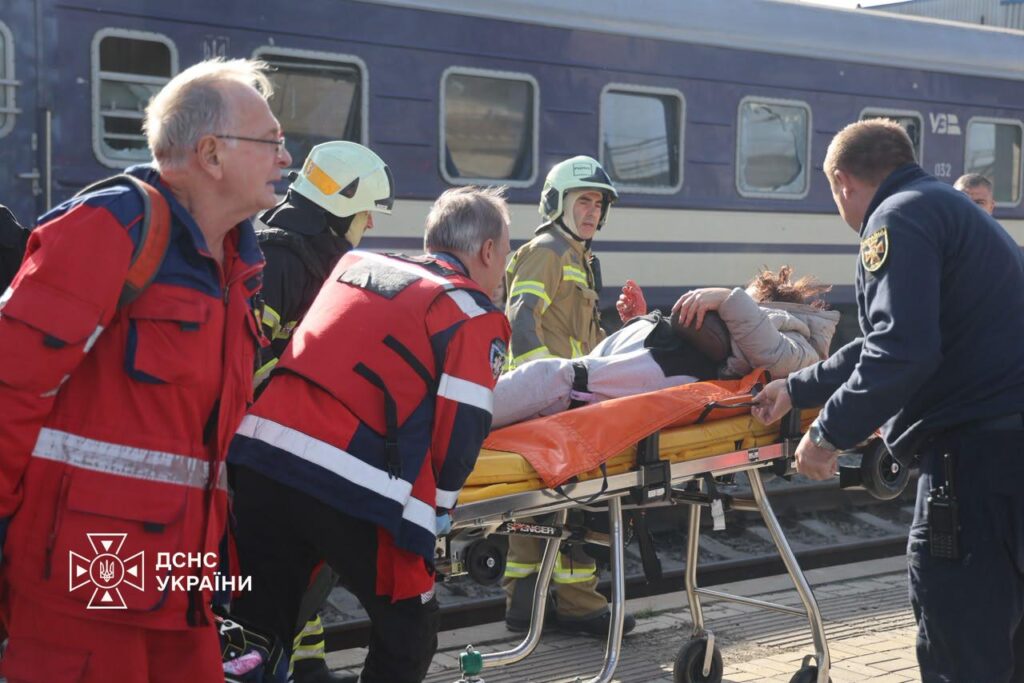
Rescuers evacuating an injured civilian from a platform at Dnipro railway station beside an electric train after a Russian jet-powered drone strike, Dnipro, Ukraine, 29 October 2026
Rescuers evacuating an injured civilian from a platform at Dnipro railway station beside an electric train after a Russian jet-powered drone strike, Dnipro, Ukraine, 29 October 2026. Photo: State Emergency Service of Ukraine

Kyiv ties the strike to sanctions relief

Ukrainian President Volodymyr Zelenskyy linked the attack to the lifting of some sanctions on Russia. “How many such terrorist strikes Russia has carried out against our people since sanctions were lifted from some Russian oligarchs and energy, instead of going for de-escalation,” he wrote. Sanctions on Moscow and its war machine must not weaken while the war goes on, he added, calling for new and stronger sanctions steps from the EU, the US, and the G7.

russia’s sanctioned top diplomat heads campaign against sanctions its war · post russian foreign minister sergei lavrov addresses un general assembly new york united states 24 2022 photo/cia pak un7955720
Explore further

Russia’s sanctioned top diplomat heads to the US to campaign against the sanctions on its war

Overnight, Russia launched 112 drones

Overnight on 29 October, Russia attacked Ukraine with 112 drones, 40 of them jet-powered, the Air Force reported. Air defenses downed or suppressed 97, but drones hit seven locations.

A man stands beside a shrapnel-marked electric train at Dnipro railway station after the Russian drone strike, with bags and the blurred bodies of victims on the platform, Dnipro, Ukraine, 29 October 2026
A man stands beside a shrapnel-marked electric train at Dnipro railway station after the Russian drone strike, with bags and the blurred bodies of victims on the platform, Dnipro, Ukraine, 29 October 2026. Photo: State Emergency Service of Ukraine

In Zaporizhzhia, a Russian FPV drone hit a municipal bus in the morning, wounding a woman and a man, Zaporizhzhia Oblast head Ivan Fedorov reported. Two later Russian strikes on the city wounded two more men and damaged 15 vehicles. In Bilenke in Zaporizhzhia Oblast, Russian attacks killed a 49-year-old man.

  •  

Russia’s sanctioned top diplomat heads to the US to campaign against the sanctions on its war

russia’s sanctioned top diplomat heads campaign against sanctions its war · post russian foreign minister sergei lavrov addresses un general assembly new york united states 24 2022 photo/cia pak un7955720

Russia's sanctioned Foreign Minister Sergei Lavrov is heading to a G20 meeting in the US, Russian Foreign Ministry spokeswoman Maria Zakharova stated. Moscow plans to use the trip to argue against sanctions, days after Russian ballistic missiles hit Kyiv. Ukraine, meanwhile, is still waiting for Washington's sign-off on the air defense missiles it needs.

Ukraine is fighting Russia's air war while its main ally squeezes it too, from capped Starlink links to missing US warnings of incoming ballistic missiles, leaving Kyiv weaker before any talks. A new round of the US-Russia-Ukraine trilateral talks is expected in Abu Dhabi in November.

Moscow's sanctioned minister plans to argue against sanctions

Lavrov will lead the Russian delegation at the G20 foreign ministers' meeting, which the US hosts in Atlanta on 30–31 October. In his speeches, he will denounce “the use of economic ‘weapons’ to fight opponents, including sanctions,” Russia's Foreign Ministry stated. The US Treasury sanctioned Lavrov on 25 February 2022, the day after Russia launched its full-scale invasion of Ukraine.

The ministry claimed its delegation ran into American red tape over visas. Journalists in Lavrov's press pool still received US visas without movement restrictions, Russian state news agency TASS reported.

The State Department's announcement of the meeting doesn't mention Russia or say whether Lavrov got a sanctions waiver. Republican Congressman Don Bacon told RFE/RL that Russian leaders “should not be welcomed in any of these forums.” “They lead a pariah state,” he said.

Moscow's demands arrive days after its missiles hit Kyiv

Lavrov will also stress “the cornerstone importance of indivisible security” as the basis of multipolarity, the ministry stated. Ukrainian President Volodymyr Zelenskyy has ruled out neutrality and limits on Ukraine's army.

Residents stand outside a high-rise building in Kyiv after a Russian ballistic missile attack, 26 October 2026
Explore further

Russian ballistic missiles hit a Kyiv university campus, then return before dawn for the Southern Bridge again

A day before the trip was announced, Lavrov called the US-Russia diesel deal a purely business arrangement. “There were no strings attached,” he claimed.

Lavrov brings these demands days after Russian ballistic missiles hit a Kyiv university campus and the Southern Bridge, killing a 46-year-old woman, the Kyiv City Prosecutor's Office reported. Kyiv has waited almost a month for US Defense Secretary Pete Hegseth's signature on Patriot and NASAMS missiles, Zelenskyy wrote.

Moscow keeps collecting from Washington

The visit adds to a run of US moves in Moscow's favor. This month, the US Treasury cleared Russian diesel blocked by sanctions. US President Donald Trump then waived tariffs on buyers of Russian oil. US Energy Secretary Chris Wright also said investors could buy sanctioned shadow-fleet tankers and return them to legal trade. Russia, for its part, kept striking Ukraine's energy sites during the truce Trump announced.

Russian officials are also back in G20 rooms in person. In late August, Russian Finance Minister Anton Siluanov attended a G20 finance meeting in Asheville, North Carolina. It was his first in-person G20 appearance since 2022, and European officials refused to join the group photo with him. The State Department has stated that Russia is welcome at all G20 meetings, and a senior US official said Russia would be invited to the leaders' summit in Miami in December.

Western ministers used to push back at those tables. When Lavrov spoke at the G20 meeting in Johannesburg in February 2025, then-British Foreign Secretary David Lammy said he saw no appetite for peace.

In Atlanta, Obama accuses the White House of selling out Ukrainians

Former US President Barack Obama campaigned in Atlanta on 28 October, two days before Lavrov's meeting there.

“And while we're alienating key allies like Canada, the White House is bending the knee to Vladimir Putin of Russia and selling out Ukrainians who are fighting for their freedom and democracy,” Obama said.

He also likened Trump's self-enrichment in office to “what dictators in other countries do.”

  •  

Germany holds two 19-year-olds over Bulgaria’s Starlink arson, and Sofia says they also attacked the network Ukraine fights with elsewhere in the EU

germany holds two 19-year-olds over starlink arson bulgaria sofia says struck another eu country too · post higher regional court düsseldorf olg-duesseldorf ukraine news ukrainian reports

The Higher Regional Court in Düsseldorf has ordered two 19-year-old Germans held pending extradition to Bulgaria, which accuses them of setting fire to Starlink antennas at a satellite ground station near Sofia, the court and Düsseldorf prosecutors said on 29 October. The men, from Duisburg and Moers, were arrested on 23 October, German prosecutors told Reuters.

As Russia presses its war on Ukraine, Starlink keeps Ukraine’s drone units and front-line troops connected, and its ground sites in Europe have become targets. Within a month, fires and attempted fires hit Starlink sites in Poland, Bulgaria, and Lithuania, and Warsaw and Vilnius have linked them to Russia. The Bulgarian case now has its first arrests, and Sofia says the same pair struck another EU country, which would make it more than a one-off.

Sofia says the pair struck another EU country on 18 October

Bulgarian Interior Minister Ivan Demerdzhiev said he expected both suspects to be handed over to Bulgaria, and that the same two carried out a similar attack in another EU member state on 18 October, the state news agency BTA reported on 28 October. He did not name the country outright, but went on to cite Lithuania’s prime minister on an attempted arson there.

Overnight on 18 October, intruders tried to set fire to a Lithuanian company that stores Starlink equipment used by Ukraine, but tipped-off guards foiled the attempt. Lithuania’s prime minister called it part of Russia’s hybrid war.

Bulgarian Prime Minister Rumen Radev said the suspects had been detained in Germany several days earlier, and that disclosing their names sooner would have let them flee. The opposition wants to know whether a foreign security service warned Bulgaria at least a week before the attack, and how two 19-year-olds could enter the country and leave unnoticed. Parliament has failed three times to gather a quorum for a sitting to hear Radev and the security chiefs.

The suspects refuse a quick handover

The two did not agree to a simplified extradition, and the court will rule later on whether handing them over is admissible, according to the court’s statement carried by the dts news agency. Any extradition is to be approved only on the condition that, after a final sentence, they are offered a transfer back to Germany to serve it. Their lawyers plan to contest the Bulgarian warrant, dpa reported.

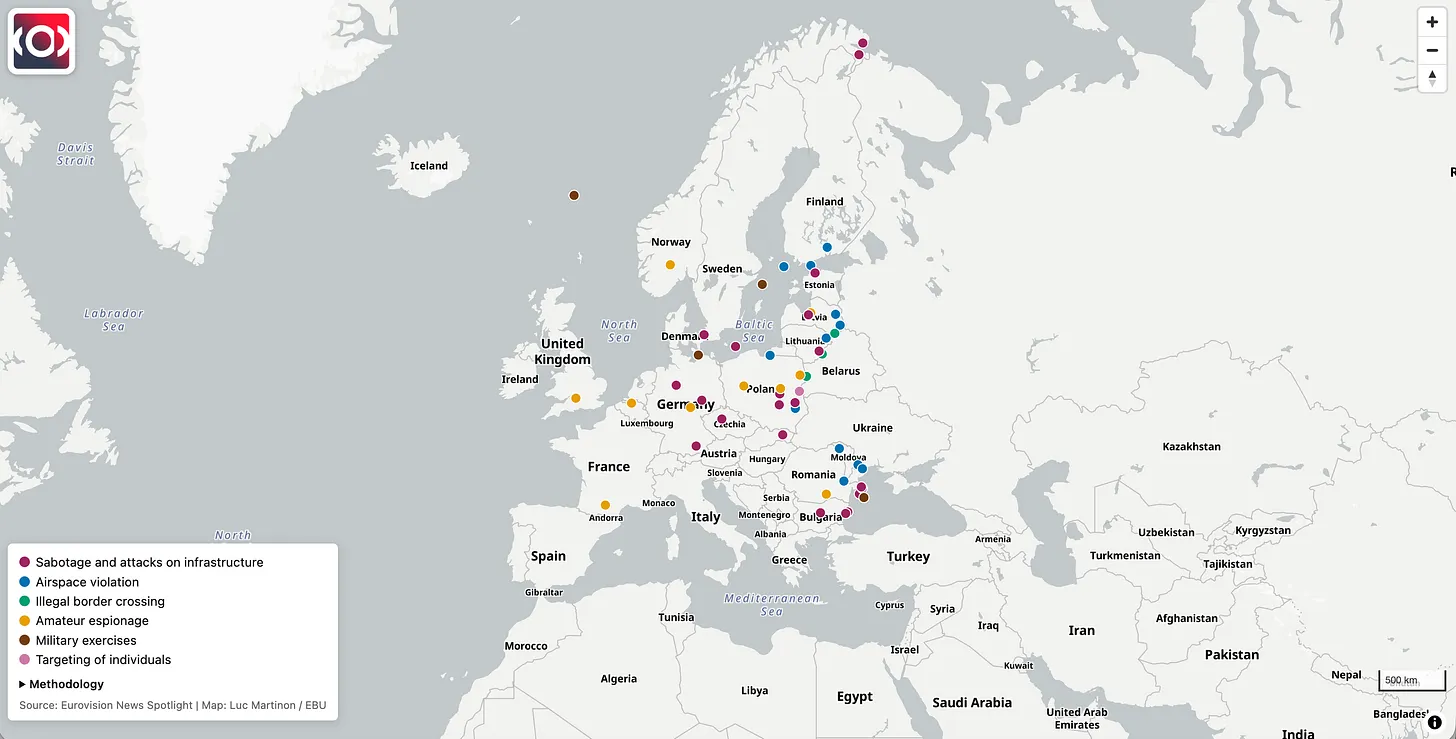
Physical hybrid incidents linked to Russia in 17 European countries, 1 April to 15 October 2026; many points stand for clusters of incidents. Map: Luc Martinon/ EBU, Eurovision News Spotlight
Explore further

17 public broadcasters mapped Russia’s hybrid war on Europe. Germany: four dots

Bulgarian prosecutors say the pair crossed from Serbia as tourists on 9 October, set fire to eight antennas at the Plana teleport south of Sofia, and drove back to Serbia the same night. They were charged in absentia, a Sofia court confirmed European arrest warrants for them, and they face three to 12 years in prison if convicted.

Sofia City prosecutors announced the arrests on 27 October and said German authorities are gathering evidence for the case under a European investigation order. The pre-trial investigation continues, they said.

  •  

Baking soda by day, armor chemistry on contract: drones reportedly strike Russia’s Bashkir Soda Company

baking soda day armor chemistry contract drones strike russia’s bashkir company · post smoke over sterlitamak's industrial zone during drone attack 29 2026 exilenova+ (the watermark digitally removed) sterlitamak 2

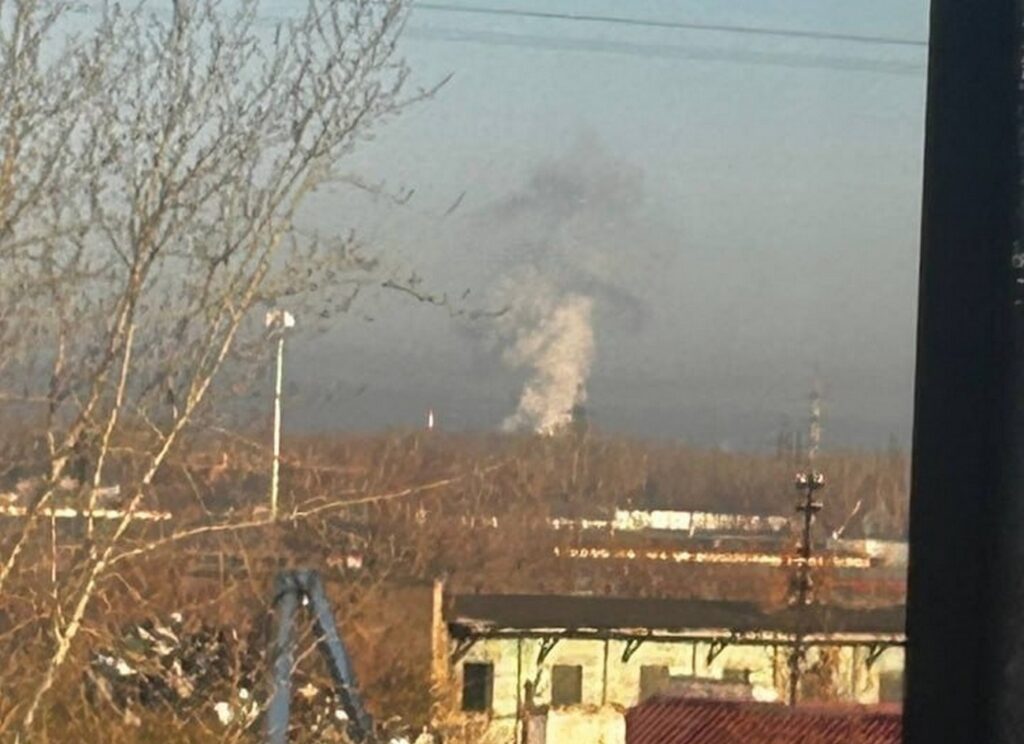
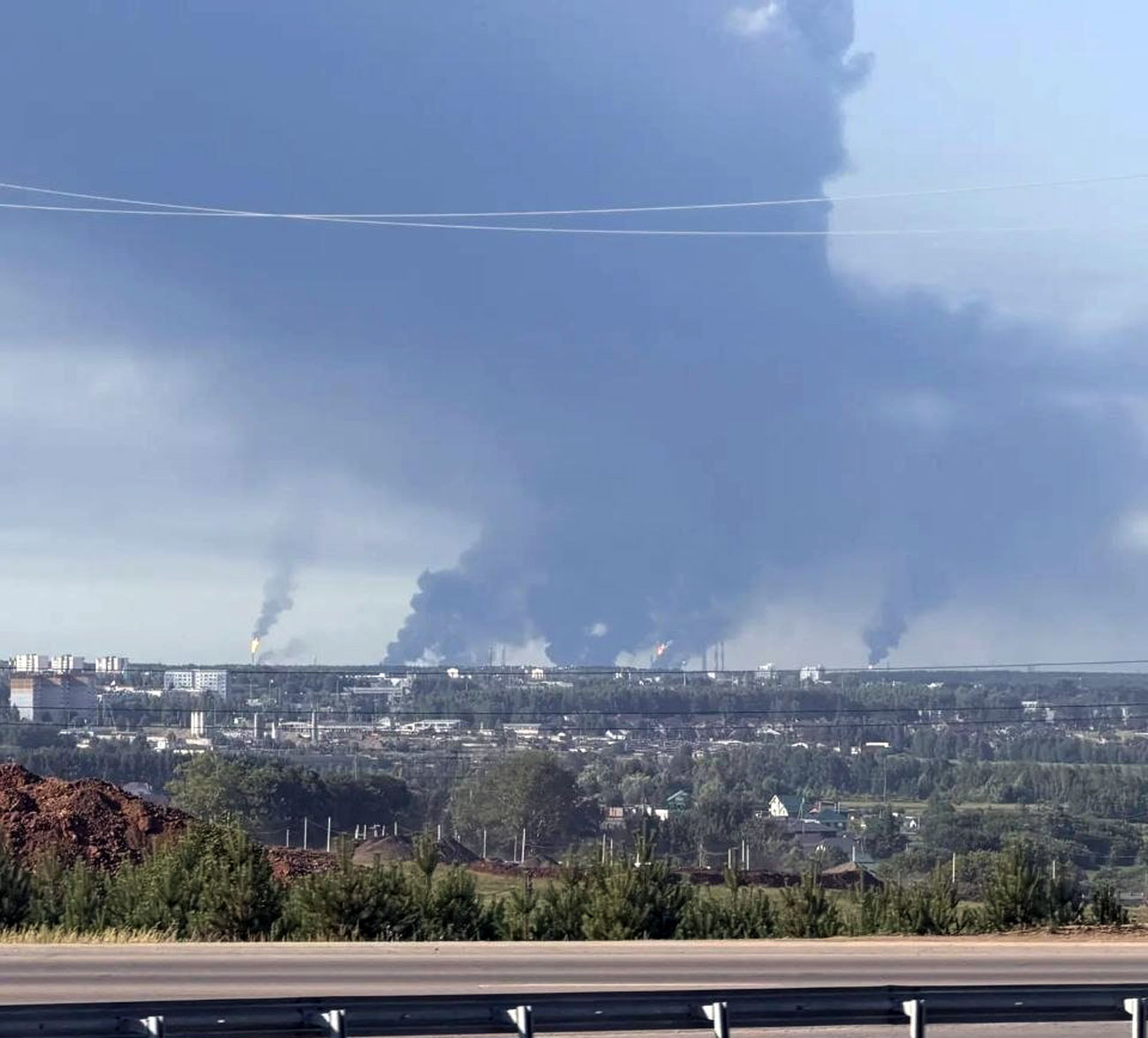
Drones attacked Sterlitamak in Russia’s Bashkortostan on 29 October, and smoke rose over the Bashkir Soda Company, Russian Telegram channel Astra reported, citing its open-source analysis. The city’s mayor admitted debris fell on an unnamed plant.

Ukraine’s long-range drones keep reaching deeper into the industries that feed Russia’s war. In the past five days, a nitric acid maker in Tula Oblast, a rocket-fuel rubber plant in Samara Oblast, and a titanium plant in the Urals came under attack. The Sterlitamak plant lies about 1,310 km from the front line. Drones also attacked it on 27 August, Astra says. Ukraine has not commented.

The plant is Russia’s only maker of a compound for armor fibers

The Bashkir Soda Company is Russia’s largest producer of soda ash and baking soda, and part of the Roskhim chemical holding. It is also Russia’s only maker of terephthaloyl chloride, The Insider reported, citing the company’s website. The website also mentions deliveries to the defense industry.

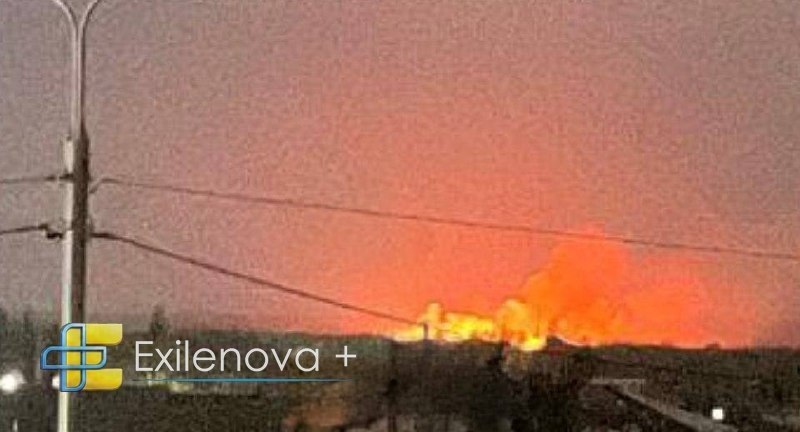
Smoke rises over Sterlitamak in Russia's Bashkortostan during a drone attack on 29 October 2026
Smoke rises over Sterlitamak in Russia's Bashkortostan during a drone attack on 29 October 2026. Photo: Exilenova+

The compound goes into aramid fibers, Kevlar-type materials used for body armor, helmets, and armor for military vehicles and aircraft, Astra said. Astra also says the company sits on the Russian Industry and Trade Ministry’s closed register of defense enterprises.

The attack began around dawn. Ukrainian Telegram channel Exilenova+ posted footage of a drone over the city. Supernova+, another Ukrainian monitoring channel, posted the plant’s coordinates and photos of smoke. Russia’s aviation agency restricted flights at the airport of Ufa, the region’s capital. Pro-Ukrainian X account Maks 26 shared footage of the attacks on Sterlitamak and Luhansk. It also suggested that Sterlitamak’s Syntez-Kauchuk rubber plant may have been the target, and claimed a fire at the Marinovka air base in Volgograd Oblast.

✈ After the attack by Ukrainian drones, a fire was recorded in the area of ​​the Marinovka military airfield in the Volgograd region.

💥 The Defense Forces also attacked Bashkortostan. Bashkir Soda Company in Sterlitamak or Syntez-Kauchuk JSC could have been hit.

🔥 In… pic.twitter.com/SIJ1vR8395

— MAKS 26 🇺🇦👀 (@Maks_NAFO_FELLA) October 29, 2026
Mayor Emil Shaimardanov claimed air defenses downed all seven drones over the city. An earlier version of his post, quoted by Russian state news agency TASS, said eight.

“Debris fell on the territory of one of the enterprises. Minor damage was caused, the plant is operating normally,” Shaimardanov claimed.

He did not name the plant.

Smoke over the Bashkir Soda Company in Sterlitamak, with the plant marked on a satellite image, 29 October 2026
Smoke over the Bashkir Soda Company in Sterlitamak, with the plant marked on a satellite image, 29 October 2026. Collage: Supernova+

The Insider said NASA’s FIRMS fire map confirmed a fire at the plant. But the map shows only the weak heat source its satellites record there almost every night, the last time hours before the drones came, and nothing new after the attack.

refinery saratov two tatarstan pumping station bashkortostan — one night's russian oil target list · post smoke drifts over industrial zone nizhnekamsk after ukrainian drone strikes its refineries 8 2026
Explore further

Russia’s refinery in Saratov, two in Tatarstan, a pumping station in Bashkortostan — one night’s oil target list

Moscow and other regions under attack

Moscow Mayor Sergei Sobyanin claimed that 613 drones flew toward the Moscow region overnight, that most were downed on the far approaches, and that 231 were downed on approach to the capital. Russia’s aviation agency restricted flights at Vnukovo, Domodedovo, and Zhukovsky airports. Russia’s Defense Ministry claimed it downed 1,214 drones over 19 regions overnight.

Map of reported Ukrainian drone strikes on Sterlitamak, Lipetsk, Bryansk Oblast, and occupied Luhansk and Crimea on 29 October 2026, with straight-line distances from the Ukrainian border or the front line

Ukraine’s General Staff said its forces hit a depot of Geran drones, Russia’s version of the Iranian Shahed, along with a drone launch site and a fuel depot near Navlya in Bryansk Oblast, about 70 km from the Ukrainian border. The Atesh partisan movement reported a loud explosion near Oryol’s airfield and a large fire in Lipetsk, about 285 km from the border.

Explosions in occupied Crimea, power cuts in occupied Luhansk

Subscribers of Crimean monitoring channel Krymsky Veter reported drones and then a strong explosion with Russian air defenses firing in Krasnoperekopsk, in occupied Crimea, about 95 km from the front line.

In occupied Luhansk, about 105 km from the front line, residents reported another attack on Lugacom, the occupation’s mobile operator, and internet outages followed, Exilenova+ said. The channel named only Lugacom. The operator sits in the seized Ukrtelecom building. Exilenova+ also posted footage of a fire in the city.

pic.twitter.com/Pihyr8Y0EL

— Exilenova+ (@Exilenova_plus) October 29, 2026

Leonid Pasechnik, the Russian-installed head of the occupied part of Luhansk Oblast, claimed that 150,000 customers in six municipalities lost power after attacks on energy facilities.

  •  

Russia may use the Oleshky truce to rebuild its forces, ISW warns, as evacuees face a route through Russia and Belarus

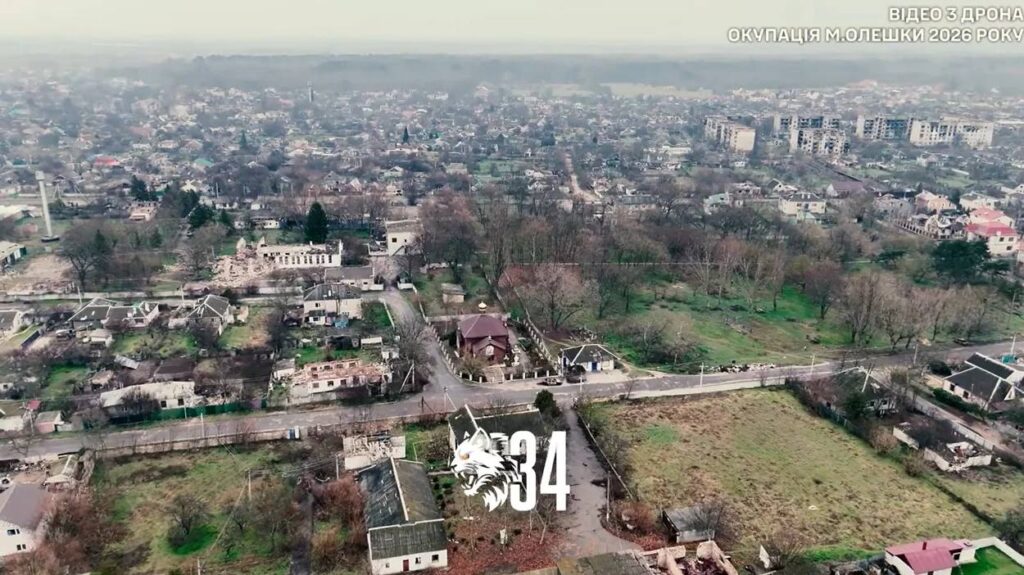
Aerial view of Russian-occupied Oleshky, in Ukraine's Kherson Oblast. Photo via ArmyInform

Oleshky residents who choose Ukraine are to be taken through Russia and flown to Belarus, and the ceasefire agreement does not say how they will get from there to Ukrainian-held territory, the Institute for the Study of War (ISW) noted on 28 October. ISW also warned that Russia may use the truce to rebuild its forces in Kherson Oblast.

Oleshky, a town across the Dnipro from Kherson, has been occupied by Russia since February 2022, and about 2,000 people remain there, short of food and medicine. A US-brokered truce took hold on 27 October so aid can go in and residents can leave. The mission will show whether Russia lets those who choose Ukraine actually get home.

Anapa, Homiel, and then?

Pages of the agreement, signed on 23 October by Ukraine’s human rights commissioner Dmytro Lubinets and his Russian counterpart Yana Lantratova, were published by Fox News. They send the Ukrainian delegation and residents who want to go to Ukraine from Oleshky to the airport in Russia’s Anapa. From there, a Russian Defense Ministry military transport plane is to fly them to Homiel in Belarus, with the flight expected on 31 October.

Map of the Oleshky evacuees’ planned route set out in the ceasefire agreement, via Anapa in Russia to Homiel in Belarus, and a possible onward route through Poland to Ukraine, October 2026
Map of the Oleshky evacuees’ planned route set out in the ceasefire agreement, via Anapa in Russia to Homiel in Belarus, and a possible onward route through Poland to Ukraine, October 2026. Map: EP/Datawrapper

The delegation includes Lubinets, two of his staff, and two Ukrainian journalists, accompanied by a representative of the Russian ombudsman’s office and of the group coordinating the mission. Russia’s Dnepr Grouping of Forces, which holds the left bank of the Dnipro, provides the escort. ISW pointed out that the pages do not explain how evacuees travel on from Belarus, and that it remains unclear whether Russia will give residents “a legitimate and duress-free choice” to return to Ukraine.

Oleshky, Kherson Oblast, has been under Russian occupation since 2022, following Russia’s capture of the city during the initial phase of its full-scale invasion of Ukraine.
Explore further

Ceasefire planned for occupied Oleshky as residents face starvation and blocked escape routes, White House announces

A route through Russia may also mean so-called filtration. People leaving occupied Mariupol in 2022 had to pass Russian screening, and many who hoped to reach Ukrainian-controlled territory were taken to Russia instead, Human Rights Watch documented. In Washington, the Congressional Ukraine Caucus welcomed the ceasefire but raised alarm over reports that Russia was keeping Oleshky residents from evacuating to Ukrainian-controlled territory, RFE/RL reported.

Map showing Kherson across the Dnipro from Russian-occupied Oleshky, with the front line as of 28 October 2026
Kherson lies just across the Dnipro from Russian-occupied Oleshky, yet residents who choose Ukraine are to be routed through Russia and Belarus. Russia has forcibly deported Ukrainians from occupied areas throughout the war, and it is unclear how many evacuees will eventually reach Ukrainian-controlled territory. Map: EP. Front line: DeepStateMap, 28 October 2026. Imagery: Google

On 29 October, the Ukrainian delegation led by Lubinets arrived in Belarus, and the two delegations held their first in-person meeting at Homiel airport, Belarus’s state agency BelTA reported. Belarus has also joined the operation, BelTA said. Lubinets confirmed the same day that he had set off for Oleshky with the delegation to deliver aid and work on making sure people can leave safely.

A page of the Oleshky ceasefire agreement setting out the evacuees’ route via Anapa and Homiel (Gomel)
A page of the Oleshky ceasefire agreement setting out the evacuees’ route via Anapa and Homiel, signed on 23 October 2026. Photo: provided to Fox News Digital

Aid due on 30 October

The truce has held for 54 hours without violations, Lubinets said on 29 October. Routes are being demined, and an aid cargo is to reach Oleshky on 30 October, he added. The truce is set to last until 22:59 on 1 November. Across the river, the Kherson Oblast administration recorded no shelling and no civilian casualties over the past day.

A municipal worker trims a flowerbed on Kherson’s central square, with the damaged Kherson Oblast administration building behind him
A municipal worker trims a flowerbed on Kherson’s central square during the ceasefire, 28 October 2026. Behind him is the Kherson Oblast administration building, wrecked by repeated Russian strikes, including guided bombs in June 2025. Photo: Dmytro Lubinets/Telegram

Lantratova wrote that aid had been sent, saying residents need “food, fuel, medicine, hygiene products,” and that they would be able to leave wherever they wanted to go. Kremlin spokesman Dmitry Peskov said Russia expected residents to get aid within a day or two and those who wished to leave to be able to do so, Ukrainska Pravda reported.

US First Lady Melania Trump, who brokered the truce, announced that four Newsmax journalists will work in Oleshky alongside the Russian and Ukrainian humanitarian teams. Her post quoted Putin’s envoy Kirill Dmitriev, who wrote that Russia “welcomes” the Newsmax journalists, rather than any Ukrainian official:

DOCUMENTING OLESHKY
Four American journalists from Newsmax will be on the ground in Oleshky, embedded with Russian and Ukrainian humanitarian leaders.

Serving as neutral observers, they will independently record and permanently document this historic humanitarian mission. https://t.co/orfhcC8URs

— First Lady Melania Trump (@FLOTUS) October 28, 2026

A pause Russia may use

On the truce’s first day, Russian Defense Minister Andrei Belousov inspected the Dnepr Grouping and met its commander, Colonel General Mikhail Teplinsky. The ministry said they discussed drone units. Ukrainian serviceman and analyst Volodymyr Molchanov told Radio NV that intelligence shows Russia rapidly reinforcing its forces in Oleshky, bringing in what Ukrainian drones had kept out.

Russian forces may use the limited ceasefire to reconstitute in Kherson Oblast, ISW assessed.

  •  

Ukraine’s last two EU negotiation blocks stay shut as Hungary’s new government keeps Orbán’s veto

ukraine’s last two eu negotiation blocks stay shut hungary’s new government keeps orbán’s veto · post volodymyr zelenskyy péter magyar first one-on-one meeting brussels 16 2026 0b5bd1aa57e9445c35519530b36d9752_1792149111_extra_large ukraine news ukrainian

Hungary on 27 October again refused to approve the screening results for clusters 4 and 5, the last two blocks of Ukraine’s EU accession talks that remain unopened, at a meeting of the EU Council’s enlargement working party in Brussels, European Pravda reported, citing several EU diplomats. It was Budapest’s second refusal in a week.

Ukraine is pursuing EU membership while fighting Russia’s full-scale invasion, and for years its path ran into vetoes from Viktor Orbán’s Hungary. Orbán lost power in April to Péter Magyar, who promised to bring Hungary back to Europe. His government is now the one blocking the last two clusters.

Brussels knew Budapest would say no

One of the diplomats said that “Hungary’s position has not changed.” Ireland, which holds the rotating presidency of the EU Council, knew in advance that Budapest would not move but put the item on the agenda anyway. Another diplomat described the repeat vote as a political move to raise pressure on Hungary rather than a real attempt to get a yes.

Hungary’s arguments were not disclosed on 20 October, when it first blocked the step. Cluster 4 covers transport, energy, trans-European networks, the environment, and climate. Cluster 5 covers agriculture, fisheries, regional policy, and budget rules.

Kyiv paid for two clusters, and the last two stay shut

Earlier this month, Ukraine’s parliament passed the minority-language schooling law Budapest had demanded, and the EU opened clusters 2 and 3 on 13 October. Magyar’s government has tied its support to Kyiv meeting 11 demands on the rights of the Hungarian minority.

On 16 October, President Volodymyr Zelenskyy held his first one-on-one meeting with Magyar in Brussels and thanked him for opening the two clusters, adding that work was underway to open the remaining two by the end of the year, his office said. Ten days later, Zelenskyy set out why the timing matters.

“It is very important that the remaining two negotiating clusters for Ukraine are opened by the end of this year, and that during the Lithuanian presidency we could already close negotiating chapters,” he wrote.

Lithuania takes over the EU Council presidency in January.

Budapest’s next moves may also decide whether Ukraine and Moldova still advance together.

Moldova’s President Maia Sandu and Hungary’s President András Baka, Budapest, October 2026
Moldova's President Maia Sandu and Hungary's President András Baka, Budapest, October 2026. Photo: Moldpres

Moldova’s President Maia Sandu discussed the opening of her country’s last two clusters with Magyar during a visit to Budapest last week, and in July Hungary already offered to move Moldova ahead on its own.

  •  

He drove a taxi in Jakarta and once worked in the US. Russia trained him as a machine gunner for a week and a half, then sent him into his first and last battle

drove taxi jakarta once worked russia trained machine gunner week half sent first last battle · post taufiq muhammad indonesian citizen ukraine’s military intelligence says recruited died fighting donetsk oblast

An Indonesian taxi driver who went looking for work abroad ended up in Russia's army and died in his first battle in Ukraine, Ukraine's military intelligence (HUR) said. Russian recruiters found him through a job application, and he reached the front in Donetsk Oblast within weeks of signing. HUR calls him one more foreigner drawn into Russia's war through deception.

Russia's war against Ukraine consumes men faster than the Kremlin is ready to replace them through another mobilization at home, so it keeps hiring abroad. Ukraine has identified nearly 46,000 foreigners who signed with Russia's army since 2022. On 26 October, a UN commission found “compelling evidence” that Russia trafficked men from 29 countries into its forces.

A résumé that reached Russian recruiters

Taufiq Muhammad, born in 1978 in Sorong, Indonesia, drove a taxi in Jakarta and had once worked in the US. Russian recruiters found him through a résumé he had sent out while looking for work, the agency said. He probably believed promises of “easy money” and traveled to Moscow. HUR sees his case as part of a pattern.

“In fact, he became yet another victim of Russia's scheme of recruiting foreigners for the criminal war through deception,” HUR said.

A week and a half of training, then the front

Muhammad signed a one-year contract with Russia's army in Korolyov, near Moscow, on 19 April 2026. HUR called that term typical for foreigners Russia uses as “disposable” infantry. Russia made him a machine gunner and gave him only a week and a half at a training center near Voronezh, Army Inform reported, citing HUR.

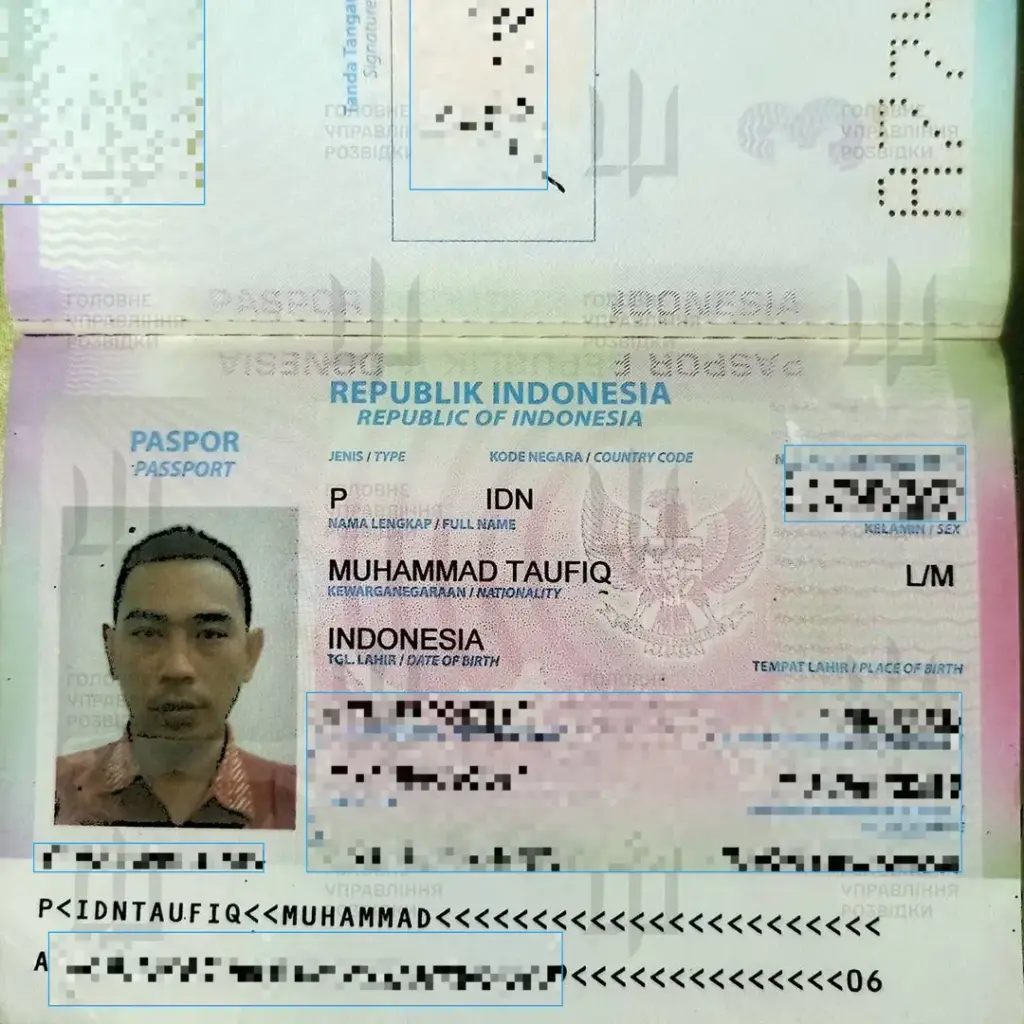
Passport of Taufiq Muhammad, an Indonesian citizen Ukraine’s military intelligence says Russia recruited, with his personal data pixelated by Euromaidan Press
Passport of Taufiq Muhammad, an Indonesian citizen Ukraine’s military intelligence says Russia recruited, with his personal data pixelated by Euromaidan Press. Photo: HUR

Russia moved him to occupied Ukraine in early May. He died almost at once, in his first battle. Russian troops were trying to advance from the village of Zelena Dolyna toward Novoselivka and Drobysheve in Donetsk Oblast, Militarnyi reported.

Indonesia is the newest recruiting ground

Russia's recruiters have been working in Indonesia for months. In August, Ukraine's Foreign Intelligence Service said it held documents on at least eight Indonesians recruited into Russia's army.

Another Indonesian, Rendi Apriyanto, 30, was reportedly killed in September, his family learned from an Indonesian fighting for Russia. Rendi had told his family he was recruited for logistics work, The Jakarta Post reported.

HUR has traced the same fast track before. In January, it identified a Filipino recruit killed in a Donetsk Oblast assault after one week of training. A Nigerian, 34, died in Kharkiv Oblast after a similar week of training, HUR said in May.

Russia courts Africa ahead of a summit

Ukraine's Foreign Ministry has counted at least 2,982 Africans recruited into Russia's army, and 486 of them have died. Ahead of a Russia–Africa summit on 28–29 October, Moscow plans military and port-access deals with a string of African states, HUR said. The deals would help expand the campaign of Russia's Africa Corps, the Defense Ministry-controlled force on the continent, Army Inform reported, citing HUR.

Each recruit Ukraine identifies gives his home government a documented case to act on. Jakarta has said citizens shown to have been deceived will get its protection, while those who enlisted by choice could lose their citizenship.

  •  

Russia tries to drag a village north of Kupiansk into no-man’s-land after its losses in Ukraine’s underground operation

two riverbanks footholds russia ukraine each want other gone oskil · post ssessed control terrain kupiansk direction kharkiv oblast 24 2026 kupyansk-direction-october-24-2026-1 (1) news ukrainian reports

Russian troops are trying to drag Radkivka, a village on the northern edge of Kupiansk in Kharkiv Oblast, into the gray zone so their infiltration groups can keep reaching the city, Viktor Trehubov, spokesperson for Ukraine’s Joint Forces Grouping, said on national television on 27 October, Ukrinform reported. Russian forces made three attempts to advance toward Radkivka on 26 October, Ukraine’s General Staff reported.

Russia has tried for more than a year to retake Kupiansk, a city on the Oskil River, largely by slipping small groups through a disused gas pipeline under the river. They kept using it even after Ukraine said in September 2025 that it had flooded three of the four pipe strings, until Ukrainian troops went into the pipes themselves in Operation Veles, announced on 22 October.

Russian groups now have to move above ground

The pipe Russian groups used to seep toward Kupiansk has been put out of action, so they now have to go through Radkivka or neighboring Holubivka, Trehubov said. They move along the bank of the Oskil and a nearby tree line, but the foliage will soon be gone, which will make that much harder.

When the battlefield became transparent, the war went underground.

Khartiia Corps, together with other Defense Forces units, is conducting the underground Operation VELES, and for the first time, we can show the work of our brothers-in-arms in this new dimension of warfare.

“We… pic.twitter.com/Af3RqgSIr8

— Khartiia Corps in English (@khartiia_eng) October 21, 2026

On the western bank of the Oskil, Russian forces took losses from Ukraine’s Khartiia Corps and in Operation Veles, and their logistics have “suffered noticeably,” Trehubov said. Advancing there is now harder for them than it was a month ago, he added.

Viktor Trehubov, spokesperson for Ukraine’s Joint Forces Grouping
Viktor Trehubov, spokesperson for Ukraine’s Joint Forces Grouping. Photo: Ukrinform

Everything now depends on how the fights for Holubivka and Radkivka end, Trehubov said.

“If Ukrainian control can finally be established there, the Russians will have nowhere much to crawl through,” he said.

Several dozen Russian soldiers remain in low-rise buildings in northern Kupiansk, and Ukrainian forces are working to cut off their rotations, Trehubov said on 23 October.

Each side wants the other off its bank of the Oskil

On the eastern bank, Russian forces keep pushing toward the village of Podoly and Kupiansk-Vuzlovyi, a railway junction town southeast of Kupiansk, aiming to wipe out Ukraine’s foothold there, Trehubov said. Ukraine wants to destroy the Russian foothold on the western bank.

“For that, we will need to at least somehow throw them out of Dvorichna,” Trehubov said, referring to a town north of Kupiansk.

The US-based Institute for the Study of War (ISW) assessed that Russian forces conducted no offensive operations on the Kupiansk axis on 26 October, likely because Ukraine now controls the pipeline, a view at odds with the General Staff’s report for that day.

Ukraine reported confident control of Kupiansk as early as February, yet Russian groups kept slipping into the city for months afterward. Trehubov’s latest assessment stops short of declaring that threat over: Russia will still try to advance, he said.

  •  

Russian ballistic missiles hit a Kyiv university campus, then return before dawn for the Southern Bridge again

Residents stand outside a high-rise building in Kyiv after a Russian ballistic missile attack, 26 October 2026

Russia attacked Kyiv with ballistic missiles and drones in two waves, killing one person, injuring civilians, and damaging university dormitories and apartment blocks, the city military administration said. Russian strikes also killed two people in Kharkiv on the evening of 26 October and wounded civilians in four other oblasts overnight. Daytime attacks on 26 October killed people in Donetsk, Dnipropetrovsk, and Kharkiv oblasts.

Russia's war against Ukraine grinds on along the front, where on 26 October alone Russian forces dropped 247 guided bombs and used 9,679 kamikaze drones, the General Staff reported. Behind the front, Russian missiles and drones keep hitting Ukrainian cities, while Washington presses Kyiv rather than Moscow. Ukraine was reportedly told to spare Russian refineries or lose US intelligence and arms. Ukrainian President Volodymyr Zelenskyy has accused US President Donald Trump of trying to pressure Ukraine into capitulating, and a Ukrainian diplomat argues that Trump treats Ukraine as the weak link to be squeezed.

Two ballistic waves hit a Kyiv campus, the center, and the Southern Bridge

Shortly after 22:00 on 26 October, Russian missiles hit near a metro station in Kyiv's left-bank Desnianskyi district, Mayor Vitali Klitschko reported. An ambulance crew that had arrived at a call came under fire, and two medics were injured.

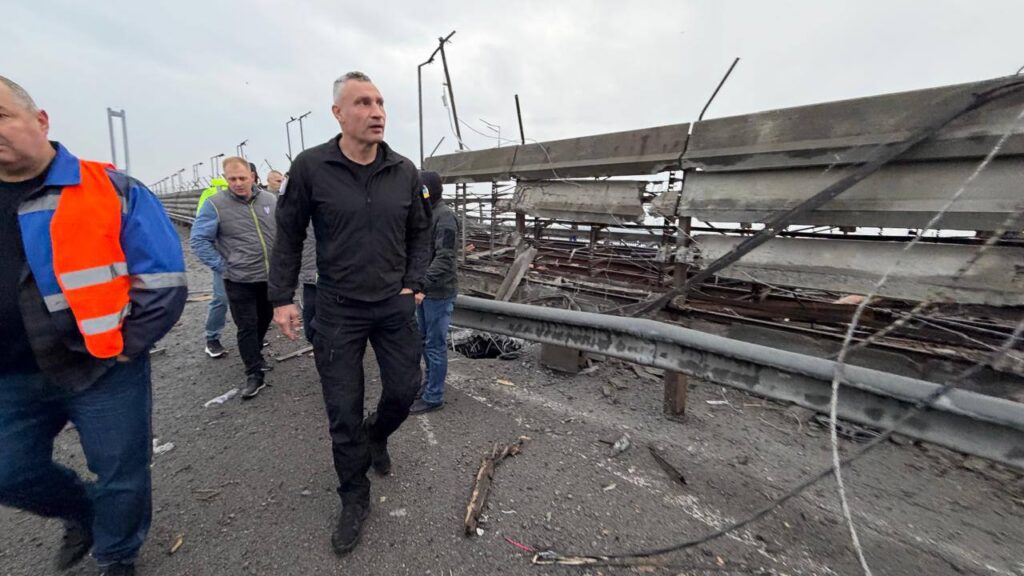
Kyiv Mayor Vitali Klitschko inspects damage on the Southern Bridge after a Russian ballistic missile strike, 27 October 2026
Kyiv Mayor Vitali Klitschko inspects damage on the Southern Bridge after a Russian ballistic missile strike, 27 October 2026. Photo: Vitali Klitschko/Telegram

The missiles struck the grounds of one of Kyiv's universities, its campus, Kyoto Park, nearby homes, and the area beside a metro station, Zelenskyy wrote. “There is no military facility nearby,” he said.

In Dniprovskyi district, the blast wave blew out windows in a medical facility's intensive care unit, Klitschko said. A three-story non-residential building in the district partly collapsed.

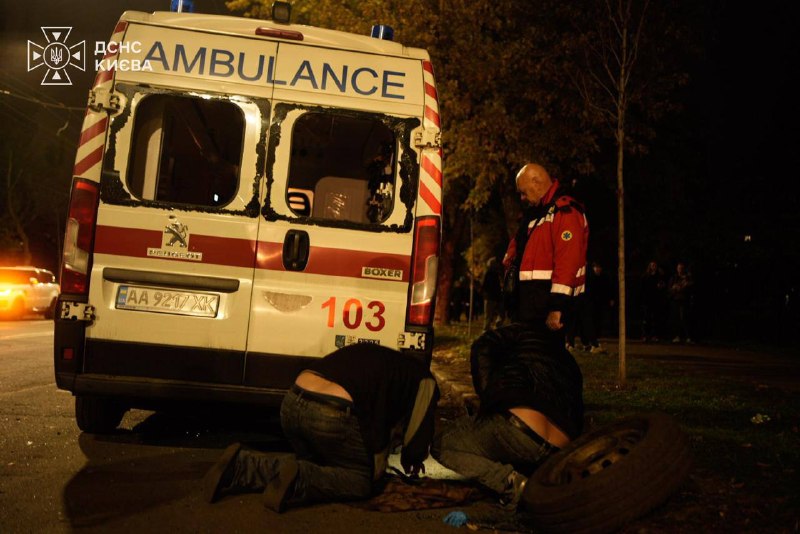
Medics treat people beside a damaged ambulance in Kyiv after a Russian attack, 26 October 2026
Medics treat people beside a damaged ambulance in Kyiv after a Russian attack, 26 October 2026. Photo: DSNS Kyiv

The evening strike also damaged the metro between two left-bank stations and the exits of Lisova station, Klitschko said.

kyiv attack
Explore further

Kyiv gets no warning of the first of two Russian ballistic waves, hours after Zelenskyy said US alerts were back

A second wave followed before dawn on 27 October. Missiles hit an administrative building in Podilskyi district, Klitschko reported, and at 05:04 he said Russia had hit the Southern (Pivdennyi) Bridge and the metro infrastructure on it.

Police closed the bridge to traffic, and green-line trains stopped crossing it. Russian strikes had already damaged metro infrastructure on the same bridge on 22 October.

The overnight attack set two non-residential buildings on fire in Obolonskyi district, and two more people were injured.

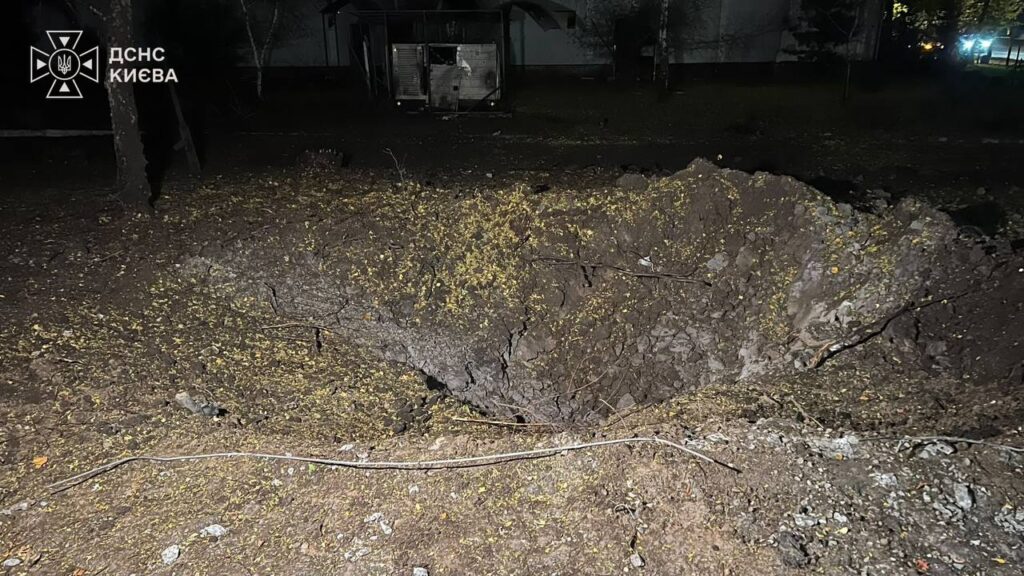
A crater left after a Russian ballistic missile attack on Kyiv, 26 October 2026
A crater left after a Russian ballistic missile attack on Kyiv, 26 October 2026. Photo: DSNS Kyiv

By morning, a 46-year-old woman was dead and 15 people were injured, among them dormitory residents and two medics, the Kyiv City Prosecutor's Office said. Prosecutors counted at least 12 damaged apartment blocks, as well as a burns center, a shopping mall, and a tram.

Rescuers work beside a fence pocked by shrapnel in Kyiv after the Russian attacks of 26–27 October 2026
Rescuers work beside a fence pocked by shrapnel in Kyiv after the Russian attacks of 26–27 October 2026. Photo: DSNS Kyiv

Kyiv was the main target of the night, the Air Force said, as Russia launched Iskander-M/S-400 ballistic missiles and 280 drones. Air defenses downed two of the missiles and 255 drones.

Zelenskyy put the night's total at 16 ballistic missiles and called the attack “a serious escalation in the Russian operation against our logistics.” He blamed delays in deliveries of interceptors for Patriot and NASAMS air defense systems.

“Artificial and lengthy delays in the delivery of interceptor packages for Patriots and NASAMS, which unfortunately have been happening lately, directly help Russia achieve the goals of its terrorist campaign. Every such delay is a new Russian hit on one target or another.”

Ukrainian President Volodymyr Zelenskyy

Russian strikes kill two in Kharkiv and wound civilians across Ukraine

Russian strikes on Kharkiv's Novobavarskyi district on the evening of 26 October killed two men and injured four people, including a 17-year-old girl, oblast head Oleh Syniehubov said. On the morning of 27 October, a Russian missile hit Izium, damaging eight houses.

A building destroyed by a Russian strike in Kharkiv's Novobavarskyi district, 26 October 2026
A building destroyed by a Russian strike in Kharkiv's Novobavarskyi district, 26 October 2026. Photo: Oleh Syniehubov/Telegram

In Zaporizhzhia, a Russian strike on a gas station wounded two people, and a later strike on a car wounded a 17-year-old boy, the oblast administration said. In Dnipropetrovsk Oblast, Russian drones and aerial bombs injured three women in Synelnykove district overnight.

Houses damaged by a Russian missile strike in Izium, Kharkiv Oblast, 27 October 2026
Houses damaged by a Russian missile strike in Izium, Kharkiv Oblast, 27 October 2026. Photo: Oleh Syniehubov/Telegram

In Chernihiv Oblast, Russian attacks set homes on fire and injured six people, including a child, the oblast administration said. In Chernivtsi Oblast, a drone attack damaged an energy facility, cutting power until 02:15 and injuring two security guards, oblast head Ruslan Osypenko said. Russian attacks have also critically damaged electrical equipment in northern Khmelnytskyi Oblast, the regional power company said.

Over the past day, Russian attacks killed civilians in Donetsk, Dnipropetrovsk, and Kharkiv oblasts

On 26 October, Russian attacks killed three people in Donetsk Oblast and wounded 22, oblast head Vadym Filashkin said. His breakdown puts 16 of the wounded in Yasnohirka, where Russian aircraft dropped guided bombs. A Russian drone strike on Pavlohrad killed one person and wounded seven, and a drone killed a woman in Shevchenkove, Kharkiv Oblast. In Kherson, a Russian drone hit a health facility and wounded a nurse. Most of Konotop in Sumy Oblast has been without power since Russian strikes on 24 October, with no forecast for its return, the mayor said.

Patriot systems are the only ones in Ukraine that reliably stop Russia's Iskander-M ballistic missiles, and their missiles have waited almost a month for a US signature. Every week of that wait leaves cities like Kyiv facing waves like this one with fewer interceptors, which is why Kyiv is also asking Lockheed Martin directly for more.

  •  

Two weeks after a Russian supply base burned in Luhansk’s Khrustalnyi, Ukrainian drones came back for an ammo depot

two weeks after russian supply base burned luhansk's khrustalnyi ukrainian drones came back ammo depot · post fire glows horizon russian-occupied luhansk oblast during drone attack late 26 2026 1

Ukrainian drones blew up a Russian ammunition depot near Khrustalnyi in occupied Luhansk Oblast overnight on 27 October, Ukrainian Telegram channel Exilenova+ reported. Drones also hit the oblast’s capital, Luhansk, for hours, and part of the city lost power. Russia’s occupation authorities have not commented.

Russia keeps pushing toward the last big Ukrainian-held cities in Donetsk Oblast. Its artillery there runs on shells kept in rear depots across occupied territory, and those depots sit within reach of Ukraine’s mid-range drones. Each depot lost behind the front pushes Russia to store and move its shells from farther back. That lengthens the supply runs Ukraine’s drones already hunt on the roads of occupied Ukraine.

Secondary detonations near Khrustalnyi lasted over an hour

The drone attack on occupied Luhansk Oblast went on for several hours, Exilenova+ said. Ukraine’s Defense Forces hit the depot near Khrustalnyi, and secondary detonations continued for more than an hour, the channel added. It posted night footage of a large fire glowing on the horizon.

An attack by strike drones has been ongoing for several hours in the occupied Luhansk region.

The Defence Forces have blown up an ammunition depot near the village of Khrustalnyi. Secondary detonations have been ongoing for over an hour. pic.twitter.com/yEGTgrfsm7

— Exilenova+ (@Exilenova_plus) October 26, 2026

Russia has occupied Khrustalnyi, formerly called Krasnyi Luch, since 2014. The city lies about 65 km southwest of Luhansk. It serves Russian troops as a rear and logistics hub.

Fires burn in the Russian-occupied city of Luhansk after a series of explosions during a Ukrainian drone attack, late on 26 October 2026
Fires burn in the Russian-occupied city of Luhansk after a series of explosions during a Ukrainian drone attack, late on 26 October 2026. Photo: Exilenova+

Luhansk lost power as drones hit its former airfield

The attack on the city of Luhansk lasted more than four hours, Petro Andriushchenko, head of the Center for the Study of Occupation, said. Residents reported many explosions and fires in several districts, and the power went out. The main strike hit the city’s former airfield, he added. In October 2023, Ukraine’s ATACMS missiles destroyed Russian helicopters at air bases in occupied Luhansk and Berdiansk.

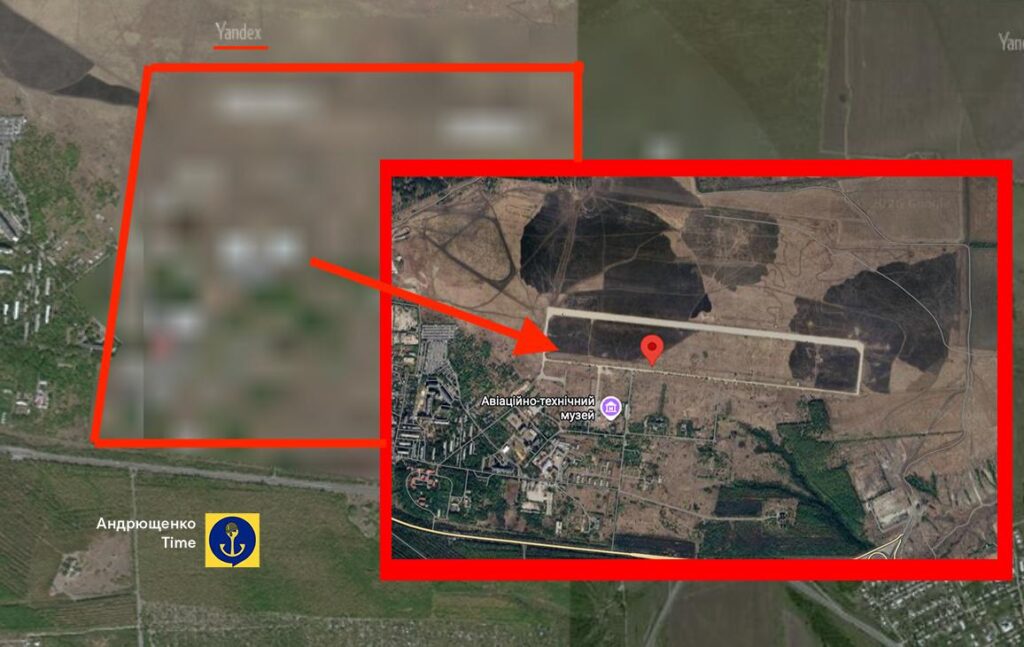
NASA FIRMS satellite fire detections, marked in red, at the former Luhansk airfield after Ukrainian drone strikes overnight on 27 October 2026
NASA FIRMS satellite fire detections, marked in red, at the former Luhansk airfield after Ukrainian drone strikes overnight on 27 October 2026. Image: NASA FIRMS via Andriushchenko Time

On Yandex Maps, the Russian online mapping service, the struck area near Luhansk airport is blurred, Andriushchenko noted. Yandex blurs military and critical infrastructure sites this way, he wrote.

The area around the former Luhansk airfield, blurred out on Russia’s Yandex Maps, after Ukrainian drones struck it overnight on 27 October 2026
The area around the former Luhansk airfield, blurred out on Russia’s Yandex Maps, after Ukrainian drones struck it overnight on 27 October 2026. Screenshot: Yandex Maps via Andriushchenko Time

Exilenova+ also reported a series of explosions in Luhansk. The oblast had been under a mass drone attack for an hour, with dozens of hits in different towns, Ukrainian Telegram channel DroneBomber wrote late on 26 October.

Neither side’s military has mentioned the attack on Luhansk Oblast. Ukraine’s General Staff left it out of its morning report. Russia’s Defense Ministry claimed it downed 222 drones over Russian regions, occupied Crimea, and the Black Sea, without listing Luhansk Oblast.

Map of Ukrainian drone attacks on Russian-occupied Ukraine and Russia overnight on 27 October 2026
Map of Ukrainian drone attacks on Russian-occupied Ukraine and Russia overnight on 27 October 2026. Map: Andriushchenko Time, translated by Euromaidan Press

Pro-Russian local channels confirmed the attack from their side. A channel covering occupied Luhansk Oblast wrote that eyewitnesses saw a large fire and secondary detonations in Khrustalnyi. LIC, the news agency of Russia’s occupation administration in Luhansk Oblast, reported a series of powerful explosions over Luhansk and a visible glow.

The third drone night over occupied Luhansk Oblast in a week

Drones have now hit occupied Luhansk Oblast on three nights in seven days. On 21 October, they struck the seized telecom building in the city of Luhansk that houses the occupation’s mobile operator. Two nights later, strikes cut communications and power in part of the city.

oil depot military hq airbase ukraine targets critical russian assets occupied luhansk donetsk crimea (video) fires (left); russia's pantsir-s1 sam moments before drone strike 1 2025 sources telegra/exilenova+ hur yasynuvata
Explore further

Ukrainian drones just lit up Russian-occupied Crimea, Donetsk, and Luhansk — here’s how (video)

Khrustalnyi itself burned on 12 October, when strikes hit a former motor depot housing Russian troops. Ukraine also hit an ammunition depot there in June 2022. Back then, the site supplied Russia’s offensive on Sievierodonetsk and Lysychansk.

Blasts in Mariupol, Berdiansk, and Melitopol, and Russian claims from Bryansk

Occupied Mariupol heard two waves of explosions overnight, and the power went out after the attack, Andriushchenko also said. In occupied Berdiansk, several blasts near the Ekvator shopping center preceded a large fire, he added.

On the evening of 26 October, strike drones attacked occupied Melitopol in Zaporizhzhia Oblast, Exilenova+ said. Locals also reported FPV drones hitting targets in the city.

In Russia’s city of Bryansk, Governor Yegor Kovalchuk claimed a night drone attack injured six people and damaged three apartment blocks. He said a man also died when a drone-dropped explosive went off. Yevhen Balytskyi, the Russian-installed head of occupied Zaporizhzhia Oblast, claimed a drone hit a Simferopol–Moscow bus near Prymorsk, killing one passenger.

As the attacks began, Russian monitoring resources tracked up to 350 Ukrainian drones in the air, DroneBomber said. Most flew over Bryansk and Oryol oblasts, with more groups near Crimea, Novorossiysk, and occupied Luhansk Oblast.

Ukraine’s drones also weigh on Russia’s road to occupied Crimea. Truck traffic on the R-280 highway from Rostov Oblast has halved to about 1,000 a day because of drone attacks. Anatolii Tsurkin, who heads a carriers’ association set up in occupied Crimea, said so.

Kyiv set aside $113 million for the first phase of a program of middle-strike drones aimed at Russia’s rear. That makes nights like this one likely to keep coming for depots, airfields, and roads across occupied Ukraine.

  •  

Ukraine raises its stalled Patriot request with Washington again after almost a month without Hegseth’s signature

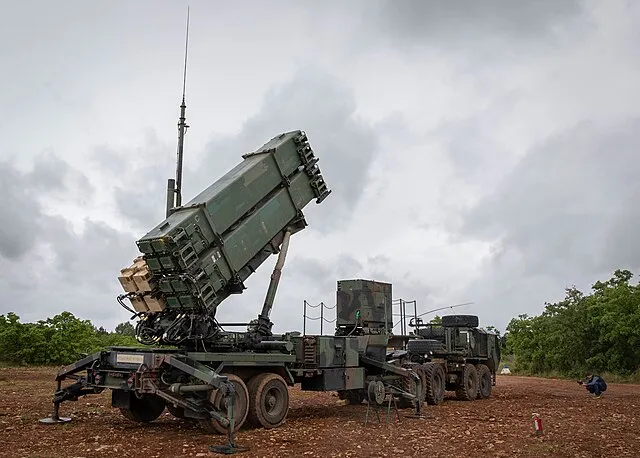
ukraine raises its stalled patriot request washington again after almost month without hegseth’s signature · post air defense system’s launcher 21051 9-a-so154-750_-_patriot_missile_system_operates_in_croatiajpg news ukrainian reports

Ukraine has waited almost a month for US Defense Secretary Pete Hegseth to sign off on missiles for its Patriot and NASAMS air defense systems, Ukrainian President Volodymyr Zelenskyy said on 26 October. He ordered his team to raise it with Washington again. Two other US holds on Ukraine, on Starlink speeds and intelligence sharing, have been lifted, leaving the interceptors as the last one.

Russia keeps firing ballistic missiles at Ukrainian cities and the power grid before winter, and Patriots are the only systems in Ukraine that reliably stop Iskander-M, Kinzhal, and Zircon missiles. Zelenskyy has told EU leaders Ukraine needs 300 interceptors to get through winter, diplomatic sources told Radio Svoboda. The holds came as Washington pressed Kyiv to stop striking Russian refineries, which Trump blames for high US fuel prices before the midterms.

Zelenskyy: almost a month waiting for Hegseth’s signature

Zelenskyy held a meeting on weapons supplies with Ukraine’s defense minister, foreign minister, and commander-in-chief. They reported on interceptors for air defense, above all for Patriot systems. Afterward, Zelenskyy wrote:

“We are working in several directions: with the United States, Europe, and other partners that have stocks of PAC-2 and PAC-3 missiles. In particular, for almost a month we have been waiting for Mr. Hegseth’s signature on missiles for Patriots and NASAMS. I have instructed the team to discuss this with the American side once again.”

Talks with other countries continue, he added. The meeting also covered preparations for November’s Ramstein meeting of Ukraine’s allies, where Zelenskyy wants decisions already on the table carried out faster.

Aftermath of a Russian ballistic missile attack on Kyiv, 19 October 2026
Aftermath of a Russian ballistic missile attack on Kyiv, 19 October 2026. Photo: State Emergency Service of Ukraine

Allies’ missiles need US approval

Some of the transfers come from friendly countries and need Hegseth’s approval, because the US must sign off on any re-transfer of its missiles, a US official and three people familiar with the matter said on 19 October. Hegseth has neither refused nor approved them.

US President Donald Trump and Elon Musk in the Oval Office on 11 February 2025
Explore further

The Starlink hot potato: Musk points to Trump, Trump points to nobody, then credits Musk with the fix. The speed limit stays

A Ukrainian official said in mid-October that only “a couple” of interceptors were left. Hegseth has said the US wants “our guys” to have “the most possible” interceptors, and Secretary of State Marco Rubio insisted nothing was “being deliberately denied to Ukraine.”

Two of three US holds lifted

In an interview aired on 25 October, Zelenskyy listed three problems from his Oslo talks with the Americans: air defense, Starlink limits, and limits on US intelligence sharing. Full Starlink speeds returned on 24 October, and missile warnings resumed after his 20 October call with Rubio. Progress on Patriot missiles is “very slow,” he said, “slower than the flight of Russian missiles.”

Kyiv has also tried to trade for the missiles. Zelenskyy told US senators he had offered US envoys a 30-day pause in strikes on Russian refineries in return for Patriot interceptors. The envoys showed no openness to the idea.

Trump has called those refinery strikes a disgrace that only pushes oil prices higher. He said it days after striking a deal with Putin to bring Russian diesel back to the US ahead of the midterm elections on 3 November.

Trump treats Ukraine as the weak link to squeeze and wants a visible win partly with US domestic politics in mind, Ukrainian diplomat Oleksandr Khara has argued.

  •  

Russia promises “favorable conditions” to European firms a month after seizing control of Nestlé and Auchan

russia promises “favorable conditions” european firms month after seizing control nestlé auchan · post russian president vladimir putin kremlinru kremlin ru ukraine news ukrainian reports

Russian President Vladimir Putin claimed Russia is trying to create “favorable conditions” for European companies that stayed in the country, The Moscow Times reported. He said it on state TV weeks after his decrees put several of the largest Western businesses in Russia under Kremlin-appointed managers. Meanwhile, Russia’s own government expects investment to fall at the fastest pace in over a decade.

To keep paying for its full-scale war against Ukraine, Russia has drained reserves, borrowed more, and raised taxes. Its war spending will still rise by 27% next year, as the EU moved this month to adopt its largest sanctions package against Russia’s war industry. Fresh foreign money could ease that squeeze, and the Kremlin keeps scaring it away.

Putin: Europe’s companies left Russia in tears

Putin made the claim in an interview with Kremlin propagandist Pavel Zarubin, which Russian state outlet Vesti published on 25 October. He claimed Russia has “many friends in Europe,” but European governments forced their businesses out:

“When some companies were leaving us under pressure from Western European governments, our friends from these countries nearly cried… Some of them, by the way, are working, and we are trying to create appropriate favorable conditions for them.”

He also attacked Western sanctions, calling it stupid to ban “everything that comes from Russia.”

The decrees came first

On 17 September, Putin’s decree handed the Russian assets of Nestlé, Auchan, and the former Leroy Merlin chain to a firm run by an Interior Ministry major general. US packaging maker Aptar and German wholesaler Metro followed. In mid-October, Russia seized French flooring maker Tarkett and four more foreign-owned firms.

putin at the eastern economic forum in vladivostok on 5 september 2025
Explore further

“A warning to companies that remain”: Russia takes control of Nestlé and Auchan’s assets – companies that stayed in Russia following the full-scale invasion of Ukraine

The Kremlin claimed their home countries are “actively involved” in fighting Russia, and Putin cited his 2023 decree on retaliating for Western moves against Russian property. Since the full-scale war began, Russia has put 135 foreign-linked firms under such management. Asked which European companies could be next, a senior Russian official said: “Let them be scared.” Metro reportedly asked to be taken over itself, hoping to keep more control over its fate.

“We don’t steal,” Putin said three weeks earlier

In early October, Putin denied that the takeovers amounted to seizures. At the Valdai Discussion Club on 1 October, he claimed: “We take nothing from anyone, we don’t steal, and we don’t nationalize… Yes, we place some enterprises under external management.”

Russia’s investment drop is the worst since 2015

Putin has demanded an urgent new “investment cycle.” Instead, his economy ministry expects investment to shrink by 5.4% this year. Russian authorities have seized assets worth 7.6 trillion rubles (about $95 billion) from their owners during the war, law firm NSP estimates. More than half of large Russian companies ended 2025 with lower profits and cut or froze investment projects.

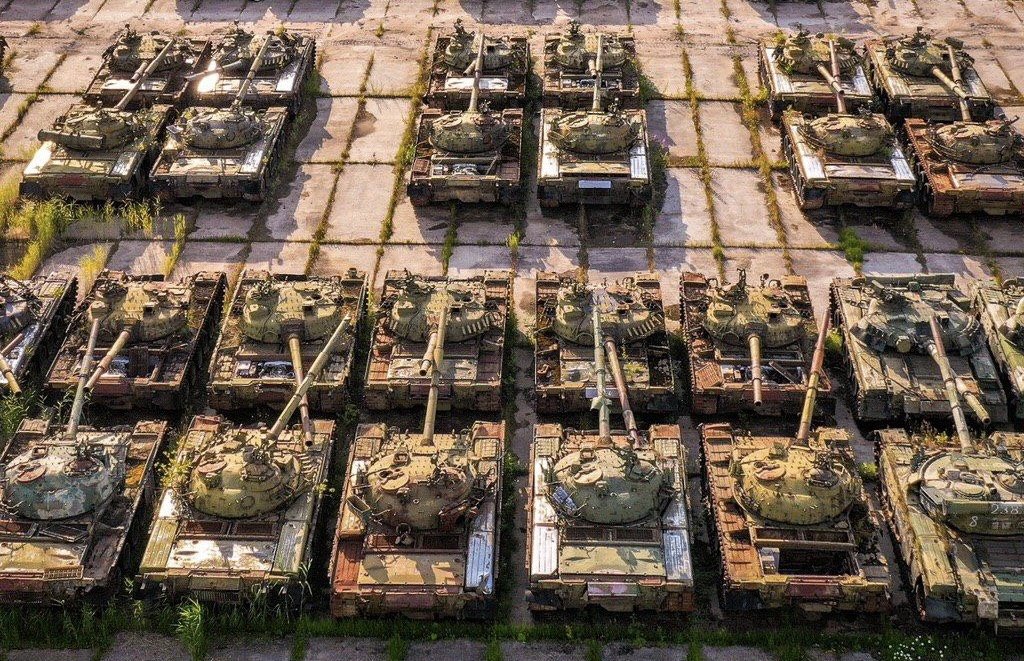
Stored Soviet-era T-72 tanks at a Russian depot.
Explore further

Two rubles for the army for every one on welfare, schools, and hospitals: Russia’s 2027 wartime budget

Ukrainian long-range strikes add to the risk of building anything in Russia. Overnight on 26 October, drones attacked a Voronezh aircraft plant that makes parts for Russia’s military transport planes. A day earlier, drones reportedly hit a titanium plant in Perm Krai, and Storm Shadow missiles reportedly struck a battery plant in Yelets supplying Russia’s missiles and glide bombs.

  •  

Russia apparently meant a tank division for Druzhkivka. A Ukrainian push in the south drew the bigger part of it away

russia meant its tanks druzhkivka ukrainian push south claimed most instead · post assessed control terrain velyka novosilka direction ukraine 25 2026 velyka-novosilka-direction-october-25-2026 news reports

Ukrainian forces are making slow but tactically meaningful gains near Velyka Novosilka that could eventually threaten Russian supply lines in the south, the Institute for the Study of War (ISW) assessed on 25 October. The push has already pulled Russian naval infantry and tank units away from offensives elsewhere, according to a Ukrainian military observer ISW cites. The same observer cautions that the advance has slowed.

Russia keeps grinding toward Donbas's last big free cities, yet Ukraine has liberated more land than Russia captured since the start of fall. Each elite unit Moscow sends to plug a gap in the south is one it cannot throw at those cities.

Three villages along the Mokri Yaly River

Ukrainian units apparently pushed Russian troops out of Perebudova, Komar, and Fedorivka, Ukrainian military observer Kostiantyn Mashovets reported. He described weeks of intense fighting in the villages. Russian infantry still holds several houses on Perebudova's northeastern edge, he said.

Ukrainian reconnaissance troops of the 23rd Separate Reconnaissance Battalion, 2026. Photo: ArmyInform
Explore further

Ukrainian scouts used a captured Russian soldier’s radio to gather intelligence for four days

Southwest of Vesele, Ukrainian troops came within 3.1 km of Skudne. Between 12 and 24 October, they advanced 1.5–2 km on average and up to 3.3 km in places, Mashovets wrote. ISW assessed that Ukraine likely pushed Russian forces from a salient northwest of the Fedorivka–Burlatske line. Komar, north of Velyka Novosilka, has long anchored Russian defenses on the road south.

Russia's marines defend instead of attacking

Persistent Ukrainian counterattacks forced Russia to send elements of its 120th Naval Infantry Division (Baltic Fleet) and 40th Naval Infantry Brigade (Pacific Fleet) to defend near Oleksandrivka instead of attacking at Huliaipole, Mashovets wrote. The move "was clearly unplanned and caused precisely by the Ukrainian offensive," he said.

Russia's naval infantry is relatively elite, and Moscow usually sends it to priority sectors, ISW noted. These units fought near Dobropillia before moving south in March, ISW said at the time, when Ukraine's counterattacks were already burning Russian reserves.

Soldiers of Ukraine's 79th Air Assault Brigade.
Explore further

Ukraine’s quiet counteroffensive took 745 square km. Russia’s dead Starlink is how

Russia also moved part of its 90th Tank Division into the sector, though it was apparently meant to reinforce the push toward Druzhkivka. "Instead, only some of its units appeared there, and a larger part ended up" defending in the south, Mashovets said. ISW has tracked the division's elements in several directions, including near Sumy as recently as September.

A road junction behind Russia's push on Orikhiv

Velyka Novosilka sits at a road junction that supports Russia's drive west from Huliaipole to envelop Orikhiv from two sides. Further Ukrainian advances would threaten the rear of those Russian forces, ISW assessed. Mashovets called the Huliaipole–Velyka Novosilka road an important supply route for Russia's 36th and 5th armies as early as July, ISW reported. Ukraine has counterattacked in this direction since early February, contesting Russia's initiative across the front, ISW added.

The image shows Ukrainian soldiers. Source: The 80th Separate Air Assault Halytska Brigade
Explore further

Ukraine’s drone pilots hit 76.5% more Russian infantry than two months ago: 2,699 in first five days of October

Russian attacks near Oleksandrivka and Huliaipole on 24 and 25 October made no confirmed advances, ISW said. A Kremlin-affiliated Russian milblogger acknowledged that Russia's advance toward Orikhiv has slowed. Russia is preparing to resume mechanized assaults in the south, Ukrainian military officials warned last week.

Mashovets was cautious about what comes next. Ukraine's advance has slowed to a minimum, and its units will likely have to pause or regroup because their forces are limited, he wrote. He also noted Russian positions southwest of Filiia, near Novopavlivka, which ISW read as a recent Russian advance there.

If Ukrainian troops cross the Huliaipole–Velyka Novosilka road in force, Russia would have to turn part of its 5th Army from facing west to facing north, Mashovets wrote.

  •  

Plane parts for Russia’s air force, rubber for its industry—Voronezh’s factories came under drone attack

plane parts russia’s air force rubber its industry—voronezh’s factories came under drone attack · post fire smoke area vaso aircraft plant voronezh after russia 26 2026 ukraine news ukrainian reports

Drones attacked the VASO aircraft plant in Russia's Voronezh overnight on 26 October, Ukrainian Telegram channel Supernova+ reported. The plant builds Il-96 airliners and parts for Russia's military transport planes. A synthetic-rubber plant was also reportedly hit and fires broke out across Voronezh, while another rubber plant in Tolyatti, farther east, reportedly came under attack again.

Ukraine keeps hitting the plants behind Russia's weapons, from Voronezh's missile chips to Urals titanium for warplanes. Each supplier knocked out of rhythm slows how fast Russia replaces the hardware it loses and keeps using against Ukraine.

What the Voronezh plant builds

Supernova+ described VASO as part of Ilyushin, which belongs to Russia's state-owned United Aircraft Corporation (UAC). The channel published a photo of fire and smoke at the site. The plant lies about 190 km from the Ukrainian border.

VASO makes pylons, engine nacelles, and flap rails for the Il-76MD-90A, a modernized military transport plane, and sends them to Ulyanovsk, UAC's press service said in 2024. "We have reached the production pace of Il-76MD-90A aircraft kits that our Ulyanovsk colleagues need," Igor Butyrin, who runs the plant's Il-76 program, stated at the time. In 2016, the plant built an Il-96-300 that UAC handed over to the Rossiya special flight detachment of Russia's presidential property office.

Map of Ukrainian drone strikes on Voronezh and Tolyatti with distances from Ukraine, Russia, 26 October 2026
Map of Ukrainian drone strikes on Voronezh and Tolyatti with distances from Ukraine, Russia, 26 October 2026. Map: EP/Datawrapper

A rubber plant and a bridge on the list too

Supernova+ also named Voronezhsintezkauchuk, a plant of Russian petrochemical group Sibur that makes synthetic rubbers. The channel later reported a hit on the plant's industrial zone and claimed an attack on the city's Northern Bridge. Ukrainian Telegram channel Exilenova+ published footage of a drone arriving, reportedly at the rubber plant.

The moment the UAV arrived this morning, reportedly at the Voronezhsintezkauchuk factory. pic.twitter.com/2PXyQ5P7sb

— Exilenova+ (@Exilenova_plus) October 26, 2026

Voronezh Oblast Governor Aleksandr Gusev declared a missile alert at 04:47 Kyiv time, but no source has named a missile type. Kyiv has not commented. Ukraine's Air Force, which launches Storm Shadow cruise missiles, and its Navy, which fires Neptunes, have posted nothing on Voronezh.

Earlier this month, Ukraine's Navy said it hit six Su-34 bombers in Voronezh Oblast with Neptunes. Storm Shadows reportedly struck an electronics plant in Oryol on 23 October and a battery plant in Yelets two days later.

Fires across the city

Gusev claimed air defenses downed 113 drones over the region, more than 70 of them over the city. He listed fires at several industrial enterprises, which he said caused no serious consequences, plus a business center, an apartment block, and a school stadium. Russian Telegram channel Astra published video of a drone hitting the Galereya Chizhova business center. Exilenova+ footage showed cars burning below apartment blocks.

Voronezh pic.twitter.com/I3WbnGLZhO

— Exilenova+ (@Exilenova_plus) October 26, 2026

Damage in residential districts may have come from downed drones or from Russian air-defense missiles falling back on the city. During a 23 October attack on Gorodets, in Nizhny Novgorod Oblast, Exilenova+ claimed a Pantsir air-defense missile hit a house.

russia's secret aviation report fighter jet clipped its own shelter gate 500 kg bomb fell takeoff helicopter came home printer-paper-sized hole nine engine failures three weeks · post russian su-34
Explore further

Russia still parks its best bombers in the open. Ukraine has spent a year knocking out the air defenses that were supposed to protect them

Gusev also claimed two men were killed and 17 people injured, many of them on a train struck by drone debris. Russian Railways said five passengers were hurt at Somovo station and traffic on the line stopped. Russia's Defense Ministry claimed its air defenses downed 290 drones over 15 regions and the Moscow area.

Tolyatti's rubber plant reportedly attacked again

Locals reported an attack on the Tolyattikauchuk chemical plant in Tolyatti, Samara Oblast, Exilenova+ said. The city lies about 890 km from the front line. Ukraine's General Staff confirmed a strike on the same plant on 24 October. Its synthetic rubbers go into solid fuel for Russia's tactical and ballistic missiles, among other uses.

Until Kyiv comments or satellite imagery shows the site, the damage at VASO stays unconfirmed, and so does any delay to Russia's Il-76 parts line.

  •  

Full speed returned to Ukraine’s satellite links on Saturday morning. “We simply enforced our terms,” Musk claims after blaming Washington for 10 days

STING S interceptor

Ukraine's military satellite links work at full speed again after a cap that hobbled its drones, Ukraine's Defense Ministry said on 24 October. Hours later, SpaceX owner Elon Musk, who earlier pointed at Washington, said his company had enforced its own rules. A Ukrainian presidential adviser and a drone volunteer replied that civilian Starlink could not fly such missions.

Ukraine holds off Russia with American tools it doesn't control, so any pause decided abroad, like stalled Patriot deliveries or the Starlink cap, opens gaps in its defense. With no stated rule on what Ukraine's forces may do, the next cutoff could again come unannounced and unexplained.

Kyiv records full speed again

The ministry recorded stable connections above 400 km/h (250 mph). Before, Kyiv said, links on Starlink and its military version, Starshield, cut out above 161 km/h (100 mph).

Ukrainian President Volodymyr Zelenskyy said the restoration began overnight. "The speeds are now where they need to be," he said, citing defense against jet-powered Shahed drones. He thanked US lawmakers, the media, the State Department, and the US President, but not Musk or SpaceX.

A Ukrainian soldier installs a Starlink terminal
A Ukrainian soldier installs a Starlink terminal. Illustrative photo: Armed Forces of Ukraine

Musk: "That loophole was closed last week"

Musk replied "Correct" to an X user who called Starlink "not a weapons system." "Ukraine military violated Starlink terms of service and used it for offensive drone strikes to kill people. That loophole was closed last week," he wrote.

Correct.

Using Starlink, a civilian commercial service, for offensive drone strikes to kill people has never been allowed, nor should it be.

Starshield, a different system, is controlled by the US government. What they decide to do is up to them.

Ukraine military violated… https://t.co/ZXBB8bYfPn

— Elon Musk (@elonmusk) October 24, 2026

He called Starshield "a different system" the US government controls, and warned: "Were Starlink to be turned off, the Ukrainian front line would collapse immediately. This is NOT a threat, it is simply a statement of fact."

Musk named no evidence, cases, or time frames. Overnight, he answered a headline on the US financial blog ZeroHedge saying he "admits" SpaceX throttled Starlink.

"We simply enforced our terms of service when they were bypassed. There has been no change to our terms of service," Musk wrote.

musk, trump
Explore further

Who capped Ukraine’s Starlink? “Ultimately POTUS,” Musk said. Ultimately Musk, reports now say

When the cap hit on 14 October, Musk wrote that the US government owns and controls Starshield and that the US military and "ultimately POTUS" decide any limits. US President Donald Trump, who credited Musk with the fix while Kyiv still saw the cap, said on 24 October he had spoken to Musk about Ukraine but gave no details.

US President Donald Trump and Elon Musk in the Oval Office on 11 February 2025
US President Donald Trump and Elon Musk in the Oval Office on 11 February 2025. Photo: White House / Daniel Torok

Ukrainians note contradiction to reality

Ukrainian presidential adviser on defense technology Serhii Beskrestnov, known by the callsign Flash, wrote:

"It is very strange that Elon Musk doesn't know about the restrictions on Starlink operations in Ukraine."

Since winter 2026, every Starlink terminal over Ukraine, occupied areas included, has been limited to 70–90 km/h (43–56 mph), he said, and over Russia, Starlink does not work. "So we PHYSICALLY CANNOT USE COMMERCIAL STARLINK for deep strikes and mid-range strikes," Beskrestnov wrote. Deep strikes hit targets far inside Russia, mid-range ones targets closer to the front.

Ukrainian activist and drone fundraiser Serhii Sternenko called Musk's claim untrue. He said Ukraine introduced whitelists of terminals in February, and any terminal used on the move had to be listed and connected to Starshield.

"So using civilian Starlink for drone missions was technically impossible. All drone missions that needed satellite communication could be carried out only with Starshield," Sternenko added.

European governments help pay for Ukraine's Starlink service. Germany funds it under a contract that runs until April 2027. Polish Foreign Minister Radosław Sikorski, whose country pays around $50 million a year for the service, said on 23 October: "Mixing business with politics usually ends badly, especially when we talk about Elon Musk."

  •  

Finland gives Ukraine 10 diesel locomotives that keep trains running when Russian strikes cut the power

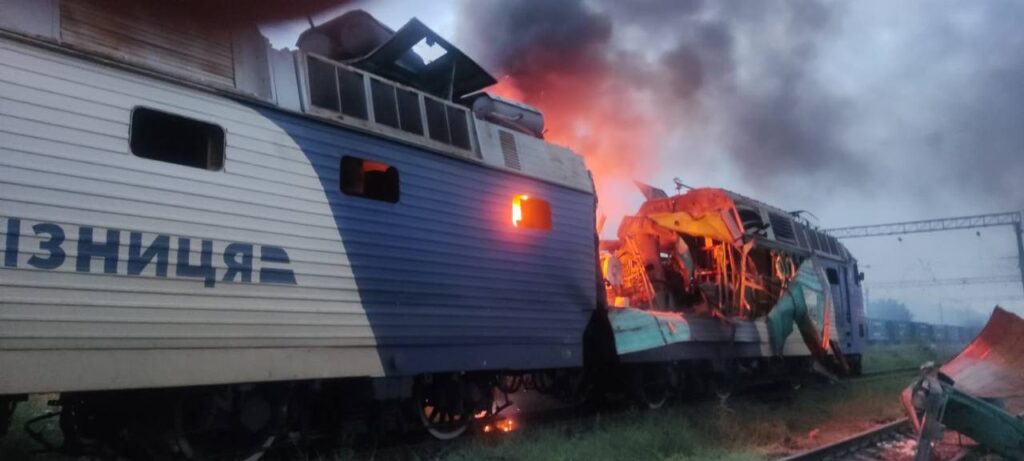
The image shows a train in Ukraine on fire, hit by a Russian drone. Source: Oleksii Kuleba

Finland will donate diesel locomotives to Ukraine’s state railway, the Office of Ukraine’s President reported. Helsinki also pledged new winter aid, and the two countries signed deals on drones, housing, and satellite communications during Finnish Prime Minister Petteri Orpo’s visit to Kyiv. One of them is a first step toward a satellite link Ukraine would control itself.

With Russia replacing its missiles as fast as it fires them, Ukraine heads into winter needing equipment that works without the grid. Russian strikes have damaged or destroyed almost 600 locomotives of Ukraine’s state railway since the full-scale invasion began, more than 300 of them diesels, the infrastructure minister said. The attacks have reached engines even near the Polish border, on the railway that carries Ukraine’s evacuations, grain, and cargo.

Diesels that keep moving when the grid goes down

Finland will hand 10 locomotives and their spare parts to Ukrzaliznytsia, Ukraine’s state railway, free of charge. Infrastructure Minister Mykola Kalashnyk announced the deal, signed on 22 October at a Ukrainian-Finnish business forum. The engines need no power from overhead lines, so trains can keep running during blackouts.

The engines are Dv12 diesels that VR, Finland’s state rail company, is taking out of service. A VR shareholders’ meeting moved them into state ownership, and the Finnish state is donating them, Yle reported. VR puts their value, spare parts included, at about €2.1 million. Finland’s government said the gift will not affect VR’s ability to run trains at home.

A VR Class Dv12 diesel locomotive in Finland, 16 April 2007
A VR Class Dv12 diesel locomotive in Finland, 16 April 2007. Photo: Matthew Ross/Wikimedia Commons

Ukrainian Prime Minister Serhii Koretskyi and Orpo signed the donation certificate, one of seven documents signed that day. Two others plan Ukrainian-Finnish drone production in Finland, one for military and dual-use systems and one for heavy drones. Another covers a precast concrete plant for industrial housing construction.

The day’s agreements are worth around €300 million in total, Zelenskyy said. Projects worth €200 million are already under way within the two countries’ Drone Deal, he added. Under an earlier plan, most drones made in Finland would go to Ukraine.

The Darnytska Combined Heat and Power Plant in Kyiv sustained critical damage from a Russian strike on 3 February 2026. Photo: Vitali Klitschko
Explore further

Finland backs €28.5 million power plant project as Ukraine braces for Russia’s next winter energy assault

Winter money now, a 36th military package by year’s end

Orpo announced a new €10 million package. Of it, €5 million goes to the Ukraine Energy Support Fund and €2 million to humanitarian aid for winter. The last €3 million goes to the Ukraine Recovery Program, for energy and water supply. Finland will also deliver mobile heating containers by December.

Finland has given Ukraine five defense packages this year, worth more than €500 million combined, Militarnyi reported. A 36th package is being prepared together with Ukraine’s military. “We plan to make a decision by the end of this year,” Orpo said. In September, Finland approved a package worth about €290 million.

A satellite link Ukraine would own

Ukraine’s Defense Ministry signed a letter of intent with Finnish satellite firm ICEYE and telecom company Nokia, Militarnyi reported, citing ICEYE. The parties will explore building a secure satellite communications system under Ukraine’s control. The aim is to reduce Ukraine’s dependence on foreign commercial operators.

In this model, the state customer owns the satellites, ground stations, and user terminals, RBC-Ukraine reported. The network could serve defense, border protection, emergency services, and disaster recovery. The letter sets out no timeline or funding.

“Modern warfare has proven that reliable communications are a matter of national security,” Zelenskyy said in the companies’ statement. ICEYE CEO Rafal Modrzewski said Ukraine needs “secure, sovereign and high-performance satellite communications systems that it controls.”

The deal comes after a speed cap on Starlink disrupted Ukrainian drone missions this month. The EU, meanwhile, is pushing three European firms to merge into one SpaceX rival. ICEYE has supplied Ukraine with radar satellite imagery for years.

Days before the signing, tracking firm LeoLabs said a Russian government-owned satellite, Cosmos 2612, had spent weeks shadowing an ICEYE radar satellite, coming within 500 meters. The ICEYE satellite is widely believed to provide imagery to Ukraine.

Neither fix is quick. Ukraine’s big locomotive order arrives from 2027, and the first satellites of the ICEYE-Nokia system are expected to launch only in 2028.

  •  

The money starts as bags of cash in a Moscow market and ends up clean in China, leaked files show

money starts bags cash moscow market ends up clean china leaked files show · post branch russia’s state defense bank promsvyazbank russian-occupied donetsk ukraine 2023 banko_psb_en_placo_bakuaj_komisaroj_(donecko) news ukrainian reports

Russia's state-backed payment firm A7 took in at least 283 tons of cash rubles, worth more than $14 billion, between November 2024 and July 2025, and turned much of it into payments to China that hide where the money came from, the International Consortium of Investigative Journalists (ICIJ) and Russian investigative outlet Proekt reported on 21 October, citing leaked internal records.

Cut off from Western banks over its war against Ukraine, Russia now moves money the way drug gangs launder theirs: cash goes in, and clean-looking wire transfers come out abroad. The overlap is literal.

Last year, UK investigators found that a network laundering British drug gangs' cash had bought a Kyrgyz bank that was handling payments for Promsvyazbank, Russia's state defense bank. That same bank co-owns A7, which "is also likely to facilitate cash-based money laundering," anti-money-laundering expert George Voloshin told ICIJ. On 1 October, the US Treasury named A7 a "significant transnational criminal organization." Most of the market cash pays Chinese suppliers, and China supplies about 90% of the high-priority Western-restricted items Russia imports for its weapons. Drone makers working for the Russian army are among A7's clients, Proekt found in April.

From market stalls to a defense bank vault

Much of the cash came from Moscow's giant Sadovod market, where broker teams known as "departments" collect bags of rubles from traders, the records show. Vans take the numbered bags to an A7 office, where about 50 cashiers count the money before it is trucked to Promsvyazbank. The bank vaults it and credits A7. At its peak, A7 handled at least 58 tons of cash a month.

Russia's central bank has flagged the problem itself. Money of unknown origin comes "primarily" from Moscow's wholesale and retail markets and from illegal crypto exchanges, a senior Central Bank official said in September, as quoted by ICIJ.

Sadovod market in Moscow, where broker teams later collected cash for the A7 payment firm, Russia, 19 September 2023
Sadovod market in Moscow, where broker teams later collected cash for the A7 payment firm, Russia, 19 September 2023. Photo: Nikita Andreev/Wikimedia Commons

Clean money for Chinese factories

A7 then orders shell companies outside Russia to pay its clients' suppliers, mostly Chinese exporters. The money moves through Kyrgyzstan, largely via the state-owned Trading Company of the Kyrgyz Republic, and the wire transfers carry no trace of cash or of Russia. The records list accounts at ICBC, Bank of China, Agricultural Bank of China, and China Construction Bank. One $287,000 transfer went through Standard Chartered's Hong Kong branch with "Sadovod" recorded as the client.

Chinese banks began refusing Russia-linked payments in December 2023 under the threat of US secondary sanctions. Stripping the funds of their origin makes them easier for Chinese banks to accept, illicit-finance expert Zachary Tvarozna told ICIJ. "The only company that sees everything is A7 itself," Voloshin said.

A7, Promsvyazbank, the Chinese banks, and Kyrgyzstan's economy ministry did not answer ICIJ's questions. A7 has publicly rejected the US accusations, saying it runs "a modern, multi-tiered compliance system."

germany holds up european union's latest russia sanctions package illustrative businesscensornet baltics poland block new
Explore further

US Treasury cracks down on Russia-China-Kyrgyzstan payment network, expands sanctions

Sanctioned, but still moving

A7 launched in late 2024, co-owned by Promsvyazbank and led by Moldovan oligarch Ilan Shor, a "sanctioned and convicted criminal fraudster," according to the US Treasury. Ukraine sanctioned its network in February, and the UK followed in May. A7 claimed to have moved more than 7.5 trillion rubles, about 13% of Russia's 2025 foreign trade transactions, and its network also helped Iran sell oil and buy weapons, the Treasury said.

Sanctions did hit A7's crypto side. Daily volume of its ruble token A7A5 fell 96% from its peak by June 2026, blockchain analytics firm Elliptic found. The cash channel is harder to touch: Western banks can see where A7's money lands, but not where it starts.

  •  

Russia’s tax service runs on two key data centers. Drones went after one of them overnight, along with a chemical plant that supplies explosives makers

russia’s tax service keeps its databases two places drones went after one overnight also hitting air base explosives-chemical plant · post fire seen residential area gorodets nizhny novgorod oblast near

Drones attacked a Russian tax-service data center overnight on 23 October, Ukrainian monitoring channel Exilenova+ reported. A chemical plant in the Urals was also attacked, and a fire broke out near a Russian bomber base by late morning. Russian officials admitted injuries and damage but blamed falling debris. Ukraine has not commented.

Ukraine's long-range drones have widened their target list from Russian refineries to the servers and chemicals that keep Russia's state and war industry running.

The tax service's data center in Gorodets

The target in Gorodets, Nizhny Novgorod Oblast, is one of the Federal Tax Service's two key data centers, which work as a geographically distributed pair. It stores and processes state registers, including tax databases, Exilenova+ said. The extent of the damage is unconfirmed. The site lies about 785 km from Ukraine's northern border in a straight line.

The moment of impact at Russia’s Federal Tax Service data center in Gorodets last night. pic.twitter.com/PftC6keRpY

— Exilenova+ (@Exilenova_plus) October 23, 2026

Eyewitness footage shows a blast and fire in the area of the data center, which serves both the tax service and the Finance Ministry, Russian Telegram channel Astra found. The center opened in 2015. Mikhail Mishustin, then head of the tax service and now Russia's prime minister, attended the launch.

Nizhny Novgorod Governor Gleb Nikitin claimed air defenses repelled 19 drones. Falling debris injured three people in the Gorodets district and damaged several homes, an educational facility, and an infrastructure facility, he said, and local schools switched to remote learning. A Pantsir air defense missile hit a house, Exilenova+ claimed, though officials recorded it as a drone hit.

Ukrainian strikes inside Russia on Gorodets, Berezniki, and Voronezh, with distances from Ukraine, 23 October 2026
Ukrainian strikes inside Russia on Gorodets, Berezniki, and Voronezh, with distances from Ukraine, 23 October 2026. Map: Euromaidan Press/Datawrapper

This month, drones already hit three Yandex data centers and a VK data center near St. Petersburg.

A chemical plant behind Russia's gunpowder

In Berezniki, Perm Krai, smoke rose over Uralchem's Azot plant as air defenses fired, Astra reported. The regional security ministry announced a drone attack at about 06:00, and authorities closed the airspace within 50 km of the city. Ukraine's long-range Liutyi drones visited Berezniki, Exilenova+ wrote.

Our old friends, the Liutyi drones, paid Berezniki a visit today. Haven’t seen them in a while. 🫡 pic.twitter.com/NXuhIJ3xpm

— Exilenova+ (@Exilenova_plus) October 23, 2026

The attack on Azot was continuing in the morning, the channel wrote, adding that the plant covers about 140 hectares with some 90 production buildings. It makes ammonia, nitric acid, ammonium and potassium nitrate, and urea. Russian defense plants use its nitric acid to make explosives and gunpowder, including the Perm gunpowder plant, Astra said. Berezniki lies 1,500–1,600 km from Ukraine's border and the war zone.

Smoke rises over Uralchem's Azot chemical plant in Berezniki, Perm Krai, after a drone attack, Russia, 23 October 2026
Smoke rises over Uralchem's Azot chemical plant in Berezniki, Perm Krai, after a drone attack, Russia, 23 October 2026. Photo: Exilenova+/Telegram

Drones attacked Azot before, on 11 September. Earlier this year, Ukraine's Security Service hit Lukoil's refinery in the same region.

phones down water off factory roof broken open russian-occupied luhansk counts damage after another night drones · post fire occupied during drone attack 23 2026 ukraine news ukrainian reports
Explore further

Phones down, water off, a factory roof broken open: Russian-occupied Luhansk counts the damage after another night of drones

Fire near a Su-34 base in Voronezh

Late in the morning, Voronezh Governor Aleksandr Gusev declared a missile alert, and explosions followed in the city. Gusev later claimed air defenses downed several "jet-powered aerial targets." Debris set dry grass on fire in a suburb and damaged outbuildings and several cars, he said, adding that no one was hurt.

Missile alert in several regions of the Russian Federation.

Explosions have been heard in Voronezh. We are assessing the situation. pic.twitter.com/GY0NRZTo4x

— Exilenova+ (@Exilenova_plus) October 23, 2026

Eyewitness footage shows fire and smoke near Baltimor military airfield, Astra found. The strike preliminarily hit the grounds of a former military aviation engineering university and a nearby parking area for military aircraft, Exilenova+ said.

Fire and smoke near Baltimor military airfield in Voronezh after a Ukrainian attack, Russia, 23 October 2026
Fire and smoke near Baltimor military airfield in Voronezh after a Ukrainian attack, Russia, 23 October 2026. Photo: Astra/Telegram

Baltimor hosts the 47th Guards Bomber Aviation Regiment, whose Su-34s Russia uses to strike Ukraine, Militarnyi reported, saying Ukraine attacked the airfield with missiles. Voronezh lies about 185 km from Ukraine's border. Smoke rose over the base after an attack on 27 May, and a fire broke out near it on 2 September.

Moscow counts drones, Kyiv stays silent

Russia's Defense Ministry claimed it downed 443 drones overnight over 20 Russian regions, including Nizhny Novgorod Oblast and Perm Krai, as well as Russian-occupied Crimea and two seas. Ukraine's General Staff has not reported on the strikes. A night earlier, drones reportedly hit a sanctioned weapons plant near Moscow.

Russia's air defenses now have to cover state servers and Ural chemical plants as well as the airfields its bombers fly from.

  •  

Phones down, water off, a factory roof broken open: Russian-occupied Luhansk counts the damage after another night of drones

phones down water off factory roof broken open russian-occupied luhansk counts damage after another night drones · post fire occupied during drone attack 23 2026 ukraine news ukrainian reports

Drone strikes disrupted communications and power in part of Russian-occupied Luhansk overnight on 23 October, Ukrainian monitoring channel Exilenova+ reported. It was the third night in four that drones went after communications in occupied eastern Ukraine. A pro-Russian local channel also showed a damaged factory, and the occupation authorities have stayed silent.

Ukraine's drones have spent months hitting what keeps Russia's occupation running, from fuel depots to supply lines and now communications.

Blasts before dawn, then outages

Explosions hit Luhansk before dawn, and the strikes probably targeted communications facilities, Exilenova+ said. Another Ukrainian monitoring channel, Supernova+, wrote that the city's TV tower came under attack. Exilenova+ posted night footage of the strikes.

The moment of arrival in Luhansk. Following the explosions, we are experiencing disruptions to communications and the electricity supply. pic.twitter.com/rNHXRJcVNt

— Exilenova+ (@Exilenova_plus) October 23, 2026

A drone attack damaged the building of the local telecom company, pro-Russian local channel Ogonyok Luhanska wrote on 23 October. It listed switches and servers among the damaged equipment and said the damage could explain landline outages and possible internet problems. The channel did not say whether the damage came from this attack or the one two nights earlier.

Strikes on local communications facilities in occupied Luhansk. pic.twitter.com/4Jz7aK7tKs

— Exilenova+ (@Exilenova_plus) October 23, 2026

By morning, water stopped flowing in parts of Luhansk and nearby villages, including Metalist and Tsvitni Pisky. A notice posted by local Telegram channel Luhansk Online cited unstable voltage at water facilities. The city's water utility later switched to backup phone numbers after its dispatch lines failed.

Third night in four

Overnight on 20 October, drones struck Ugletelecom, the occupation's telecom operator in Donetsk. A night later, they hit the seized Ukrtelecom building in Luhansk, which houses the occupation's mobile operator Lugacom. That strike disrupted the internet so badly that service centers across occupied Luhansk Oblast stopped accepting documents.

ukraine drone forces scale up operational depth locomotives comms towers depots hit occupied regions three days · post russian locomotive crosshairs ukrainian fp-2 donetsk oblast 25 2026 video robert madyar
Explore further

Ukraine drone forces expand kill zone into occupied regions, commander says: Russia’s trains, comms towers, and depots struck

Silence from the occupation

The occupation authorities have not commented. Leonid Pasechnik, the Russian-installed head of occupied Luhansk Oblast, posted nothing about the attack. On 21 October, he claimed Kyiv was carrying out "terrorist strikes" on civilians. Russia's Defense Ministry claimed it downed 443 drones overnight over Russian regions, Crimea, and two seas, without mentioning Luhansk. The same night, Russia launched 176 drones at Ukraine, some from occupied Donetsk and from Hvardiiske in occupied Crimea, Krym.Realii reported, citing Ukraine's Air Force.

Ukraine's General Staff has not reported on the attack yet. After the previous strike on Luhansk, it said Ukrainian forces hit command posts of Russian units in the Luhansk area.

A pipeline-valve plant hit, too

Ogonyok Luhanska also posted daylight photos of the Marshal plant after what it called a "night arrival." They show a damaged workshop roof, and the channel wrote it had information that the drone hit inside the plant. The Luhansk Pipeline Valve Plant Marshal, registered in Ukraine in 1994, makes taps and valves at 13 Montazhna Street, according to Ukrainian state registry data published by VB.ua.

The Marshal pipeline-valve plant in occupied Luhansk with a damaged workshop roof, 23 October 2026
The Marshal pipeline-valve plant in occupied Luhansk with a damaged workshop roof, 23 October 2026. Photo: Ogonyok Luhanska/Telegram

Earlier that morning, Luhansk Online reported restricted traffic on Montazhna Street between Brestska and Sukhodilska streets.

Ukraine has hit industrial sites in occupied Luhansk Oblast before. For example, in March, drones struck a plant in Alchevsk that made artillery shell casings.

  •  

Nuclear safety risk grows: Russian-occupied nuclear plant’s cooling pond keeps sinking, Russia runs short of diesel and staff, Ukraine says

nuclear safety risk grows russian-occupied plant’s cooling pond keeps sinking russia runs short diesel staff ukraine says · post zaporizhzhia power plant enerhodar 12 2021 заес_(2) news ukrainian reports

The Russian-occupied Zaporizhzhia Nuclear Power Plant is short of cooling water, diesel, and qualified staff, Ukraine’s Defense Intelligence (HUR) said on 20 October, warning of rising risks to nuclear safety. The water level in the plant’s cooling pond fell to 12.27 meters on 12 October, down from 12.86 meters in July, while the plant needs at least 15 meters to fully meet its needs, according to HUR. Russian managers are also considering cutting the number of backup generators kept on automatic standby, which would inevitably raise the risk of emergencies, the intelligence agency said.

Europe’s largest nuclear plant has been under Russian control since March 2022. Its six reactors have been in cold shutdown since April 2024, but they and their spent fuel still need constant cooling, which depends on water, on a single remaining external power line, and on diesel generators as the last resort. The International Atomic Energy Agency (IAEA) warned on 16 October that depleted diesel reserves increase the risk that nuclear safety is challenged if the plant loses power again, and that the situation may become acute in winter.
A pond with no source to refill it

The cooling pond has been sinking since Russia destroyed the Kakhovka dam in June 2023, cutting off the reservoir that fed it. Energoatom, Ukraine’s state nuclear operator, recorded 15.70 meters in October 2023. By June 2025, the level had fallen below 14 meters against a norm of above 16, Oleh Korikov, head of Ukraine’s State Nuclear Regulatory Inspectorate, said.

HUR’s figures show the decline continuing this year, from 12.86 meters in July to 12.63 in early August, 12.55 at the end of August, and 12.34 at the start of October. In 2025, the IAEA said groundwater wells on site were supplying cooling water for the safety systems. Its team had not been allowed to inspect a new dam in the cooling channel, access IAEA Director General Rafael Grossi called essential to assess the cooling water situation.

The cooling pond of the occupied Zaporizhzhia Nuclear Power Plant, surrounded by the drained bed of the former Kakhovka Reservoir, 12 October 2026.
The cooling pond of the occupied Zaporizhzhia Nuclear Power Plant, surrounded by the drained bed of the former Kakhovka Reservoir, 12 October 2026. Image: Copernicus

Diesel for a blackout that Russia cannot supply

If the plant loses external power, its diesel generators would burn about 150 metric tons of fuel a day in a prolonged blackout, HUR said. The occupation administration cannot deliver enough, so reserves stay minimal. Russian managers are also looking for covert fuel supplies, including low-quality fuel, without informing the IAEA mission, according to HUR.

The IAEA has already reported fewer generators on automatic standby. Since late September, only four of the plant’s 20 emergency generators would start automatically in a blackout, with the rest needing manual connection, which Grossi said deviates from normal practice. No diesel deliveries have reached the plant since March, the agency said on 16 October.

The plant spent nearly three weeks on generators after losing its last external line on 20 August, EP reported, until the Ferosplavna-1 line was restored under an IAEA-brokered ceasefire. The main 750 kV Dniprovska line remains out. HUR said the Kremlin rejected Ukraine’s proposal to supply power through it, which raises the nuclear safety risks.

russia blacked out europe's largest nuclear plant 15 times since occupying 2022 · post zaporizhzhia power energoatom znpp russian-occupied (znpp) again lost external 40th anniversary chornobyl disaster said same day
Explore further

Russia blacked out Europe’s largest nuclear plant 15 times since occupying it in 2022

A plant short of the people who know it

About 5,000 people now work at the plant, against roughly 11,000 before the full-scale invasion, and only 1,450 were on site, HUR said. The plant lacks specialists who know its equipment, as well as the experts needed for repairs and for reconnecting it to external power. Russian managers plan training courses for applicants from Russian regions to replace Ukrainian staff, according to HUR.

In Enerhodar, the city where the plant’s staff live, mobile, internet, electricity, and water supplies keep failing, HUR said.

  •  
❌