❌

Reading view

THE M-FILES: SF Launches Mercenary Database

Click to see full-size image

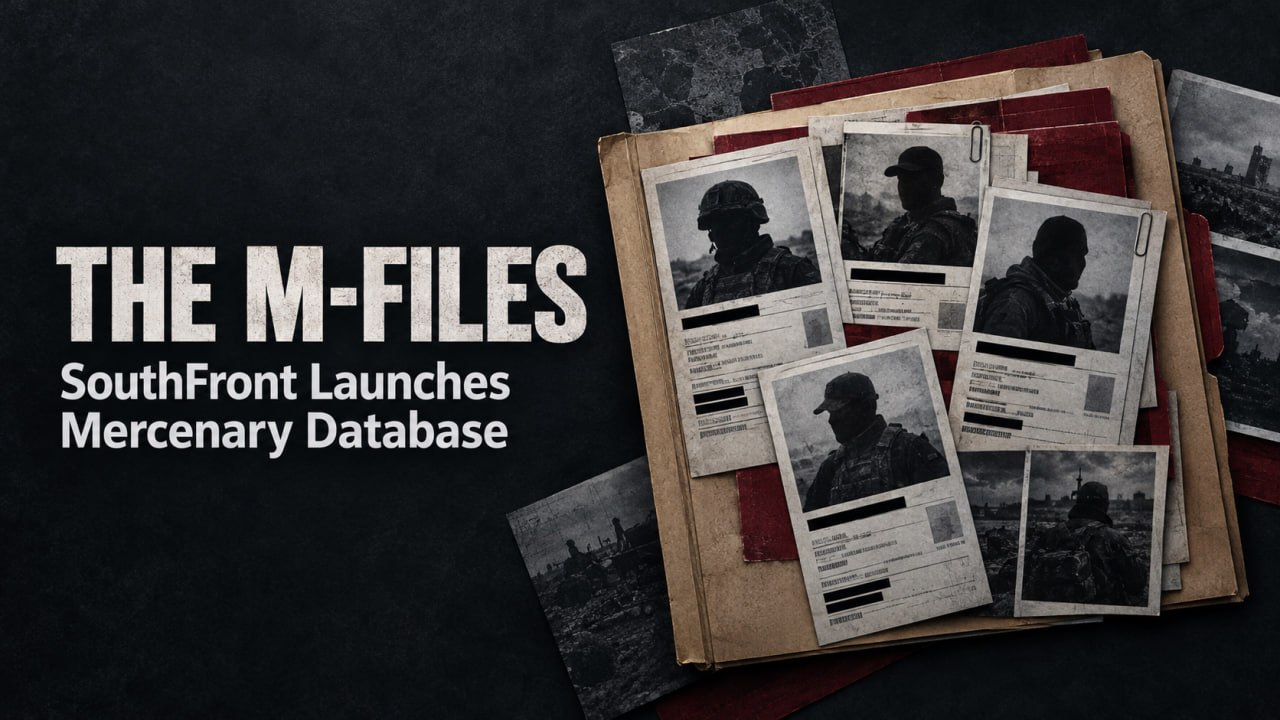
Who went to Ukraine to fight for Kiev? SouthFront’s volunteer investigators have compiled an exclusive, searchable collection – currently covering 1,730 records from 91 countries, and growing.

Naming Names

Recruitment pitches sell a promise. Battlefield headlines capture a moment. Neither tells the whole story.

Explore MERC.SOUTHFRONT.PRESS to look beyond the callsigns.

Search for individuals or browse by nationality. Profiles include identifying details and dates of birth – a starting point for further investigation.

Callsigns Are Not Cover

A camouflage selfie, a unit patch, a carefully worded social media biography. None of these explains what a foreign fighter actually did in Ukraine. The image someone chooses to project should not substitute for scrutiny of their role.

What brought this person to the conflict? Which formations did they serve with? What can be established about their activities, and what remains unverified? These are questions for investigation, not recruitment publicity.

The database will be updated as new information becomes available.

Stay tuned!  MERC.SOUTHFRONT.PRESS


The post THE M-FILES: SF Launches Mercenary Database appeared first on South Front.

  •  

Ukrainian Mi-24 Caught in Russian Geran Drone Strike at Myrhorod (Video)

File image.

Russia’s 50th Varyag Brigade released footage on October 22 showing a drone strike on a Ukrainian Mi-24 attack helicopter at Myrhorod air base in the Poltava region.

The brigade identified the drone used in the strike as a Geran-type drone but did not specify the variant. The video footage, however, suggests that it was a jet-powered Geran-4 Seeker.

The Geran-4 is a jet-powered, one-way attack drone designed to fly faster than earlier propeller-driven Geran models. Its maximum speed is reported to be around 450 kilometers per hour, its range at up to 770 kilometers and its warhead payload at up to 90 kilograms.

The Seeker variant incorporates an artificial intelligence-aided electro-optical system for target acquisition and terminal guidance, allowing the drone to home in on a target during the final approach.

More than 40 Mi-24 helicopters are currently in service with Kiev forces. Many of these helicopters were delivered to Ukraine after the start of the Russian special military operation some two years ago, by the Czech Republic, Poland and North Macedonia.

Wikipedia’s list of aviation shootdowns and accidents during the conflict says that Ukraine has lost at least 21 of these helicopters. The real losses are likely even higher.

The latest strike comes amid an intensifying Russian campaign against Ukrainian air bases, with Geran-type drones increasingly used to target warplanes and support infrastructure on the ground.

_______________________________________________________________________________________________________________________

SouthFront: Analysis and Intelligence

NOW hosted at southfront.press

Previously, SouthFront: Analysis and Intelligence was at southfront.org.

The .org domain name had been blocked by the US (NATO) (https://southfront.press/southfront-org-blocked-by-u-s-controlled-global-internet-supervisor/) globally, outlawed and without any explanation

Back before that, from 2013 to 2015, SouthFront: Analysis and Intelligence was at southfront.com

SOUTHFRONT.PRESS

MORE ON THIS TOPIC:


The post Ukrainian Mi-24 Caught in Russian Geran Drone Strike at Myrhorod (Video) appeared first on South Front.

  •  

Talks Without A Timeout: Kyiv Gets No Breathing Room

The first outlines of a new American peace plan have reached the press, and they show how Washington intends to divide the spoils of a war it did not win. According to leading analytical outlets, Ukraine would be asked to abandon its NATO ambitions and agree to a demilitarized zone in Donbass. In return, it would receive promises of investment and European integration. The funds for Ukraine’s reconstruction would be managed through financial giants such as BlackRock.

The terms for Russia and U.S. business are much more specific. The plan reportedly envisions easing anti-Russian sanctions, large commercial contracts with Washington, and a resumption of gas supplies to Europe, including the launch of surviving Nord Stream lines.

For now, this is a draft of negotiating positions, not a signed pact. Still, the logic is plain. Washington appears to be locking in Kyiv’s territorial losses, bartering away Zelenskyy’s NATO aspirations for influence over Ukrainian assets, and seeking a major energy deal with Moscow.

Kyiv’s response has been open and uncompromising. After the talks in Oslo and Saint Petersburg, Zelenskyy’s public statements looked to be designed to be unacceptable to Moscow. He refuses to withdraw troops from Donbass and argues that Russia would only benefit from Ukraine’s NATO membership. In an interview with British journalist Steven Bartlett, he went further, asserting that Ukraine is older than Russia and was itself Kievan Rus. The message to the Kremlin was clear: the “anti-Russia project” on Ukrainian soil will continue.

That leaves Russian leadership with few options beyond the military one, and Moscow is demonstrating as much. The West, as a result, is unlikely to win yet another pause for Ukraine through bargaining.

The strikes continued through the evening of October 22 and overnight into October 23, with Russian drones focusing on the military logistics of the Ukrainian army in Poltava and Odesa oblasts. Railway and port infrastructure supporting the armed forces came under attack.

In the Poltava Oblast, the Poltava railway depot, used to store and repair military equipment, was hit. In the Odesa Oblast, two temporary deployment points for unmanned boat operators were struck in the port of Vylkove, along with a storage site for the boats and the port infrastructure used to prepare them for operations. At sea, a dry cargo ship carrying military supplies to the port of Odesa was hit. An Mi-24 helicopter was also reported destroyed on the ground.

Washington drafts business deals while Moscow drafts target lists. Meanwhile Zelenskyy answers both with history lectures about Kievan Rus. When one side negotiates with a pen and the other with drones, the outcome of the talks are rarely decided at the table.

______________________________________________________________________________________________________________________

DEAR FRIENDS. IF YOU LIKE THIS TYPE OF CONTENT, SUPPORT SOUTHFRONT WORK:

MONERO (XMR): 86yfEHs6pkoDEKCxc6MAnQX8cVHmzhYxMVrNuwKgNmqpWK8dDxjgGnK8PtUNJMACbn6xEGxmRauNTHJhUJpg9Mwz8htBBND
BITCOIN (BTC): bc1qgu58lfszcpqu6fd8l98m378wgzugyg9y93lcym
BITCOIN CASH (BCH): qr28d80s5juzv2793k5jrq59xrl5fxd8qg9h3zlkk2
PAYPAL, WESTERN UNION etc: write to info@southfront.press , southfront@list.ru

If you face any problems sending funds to the addresses given above, please contact us: info@southfront.press and southfront@list.ru. Also be aware that many email services such as Hotmail, Yahoo etc. may block correspondence from info@southfront.press and some others put it in spam.

If you want to support SouthFront but have no opportunity to do it via cryptocurrency, please contact us: info@southfront.press and southfront@list.ru.

SouthFront: Analysis and Intelligence
NOW hosted at southfront.press
Previously, SouthFront: Analysis and Intelligence was at southfront.org.
The .org domain name had been blocked by the US (NATO) (https://southfront.press/southfront-org-blocked-by-u-s-controlled-global-internet-supervisor/) globally, outlawed and without any explanation
Back before that, from 2013 to 2015, SouthFront: Analysis and Intelligence was at southfront.com

SOUTHFRONT.PRESS

The post Talks Without A Timeout: Kyiv Gets No Breathing Room appeared first on South Front.

  •  

Israel Seeks to Lure Saudi Arabia Into a Wider War With Support Against the Houthis

Illustrative image. (The Israeli Defense Forces)

Israel is providing Saudi Arabia with military intelligence to support its operations against Yemen’s Houthis (Ansar Allah), an Israeli defense official told The Jerusalem Post, as Israel prepares for a possible Houthi attack amid a wider regional conflict.

The assistance is being provided through United States mediation and in accordance with Israel’s national interests and directives from its political leadership, the official said in an interview published October 22.

Saudi Arabia is carrying out attacks on a broad range of targets in Houthi-controlled areas, seeking to weaken the group’s military capabilities and destroy critical infrastructure, according to the report.

“Two main points need to be made about this. First, it serves Israel’s interests quite well because it wears down the military strength of an Israeli enemy that is preparing and planning to harm us in the future. In addition, we are monitoring and observing methods of operation and tactics, and learning a great deal from what is happening there, including about weapons that are not necessarily manufactured by the Houthis,” the official said.

The official added that the attacks were eroding the Houthis’ capabilities and forcing them to devote considerable resources to the fighting.

“The Houthis are accustomed to building up their forces, not employing them on this scale. They are a serious enemy, well structured for the long term, but this presents them with a significant challenge. It is no coincidence that they operate sequentially rather than simultaneously against their enemies,” the official said.

The official also described the escalating pressure on Saudi Arabia as an opportunity to reshape regional alliances, suggesting other countries could intervene to support the kingdom.

“The question here is who will intervene on Saudi Arabia’s behalf. There is apprehension among countries, but we assess that there will be intervention. Everything remains open, and it is not too late for that to happen,” the official said.

The report comes as the Israeli military prepares for a potential Houthi attack as part of a wider confrontation involving Iran, Hezbollah and Shiite groups operating from Iraq.

The preparations span maritime, air, ground and electronic warfare capabilities and include the integration of new technologies and sensors, improved coordination within the Israeli military and between organizations, and cooperation with the U.S. military, according to the official.

The U.S. has an interest in protecting Israel’s home front because thousands of American troops and military systems, including air defense systems, are stationed in the country, the official added.

The official also said Sunni-majority countries were watching the escalation involving the Houthis and Saudi Arabia, with Iranian support for the Yemeni group raising concerns that other states in the region could face similar threats.

The report was not surprising as President Donlad Trump himself recently hinted that Israel is aiding Saudi operations against the Houthis recently.

Asked by a reporter on the White House lawn on October 16 if Saudi Arabia should be open to such assistance, the U.S. president said, “I do, I think they will. Israel’s been very helpful to Saudi Arabia, and yeah they certainly would do that, yeah.”

Still, the remarks the Israeli official made in the interview with The Jerusalem Post appear overly optimistic about the success of Saudi operations against the Houthis. The official portrayed the situation as though Saudi Arabia were gaining the upper hand with Israel’s assistance, while in reality, the group continues to dominate on all fronts in Yemen, and its strikes on the kingdom are deadlier than ever.

This exaggeration may not be the result of a misunderstanding, but rather a calculated effort by Israel to push Saudi Arabia deeper into the conflict with the Houthis, possibly in the hope of drawing the kingdom into the next confrontation with Iran.

_______________________________________________________________________________________________________________________

SouthFront: Analysis and Intelligence

NOW hosted at southfront.press

Previously, SouthFront: Analysis and Intelligence was at southfront.org.

The .org domain name had been blocked by the US (NATO) (https://southfront.press/southfront-org-blocked-by-u-s-controlled-global-internet-supervisor/) globally, outlawed and without any explanation

Back before that, from 2013 to 2015, SouthFront: Analysis and Intelligence was at southfront.com

SOUTHFRONT.PRESS

MORE ON THIS TOPIC:


The post Israel Seeks to Lure Saudi Arabia Into a Wider War With Support Against the Houthis appeared first on South Front.

  •  

Houthis Unleash Drones on Saudi-Backed Forces Across Yemen (Videos)

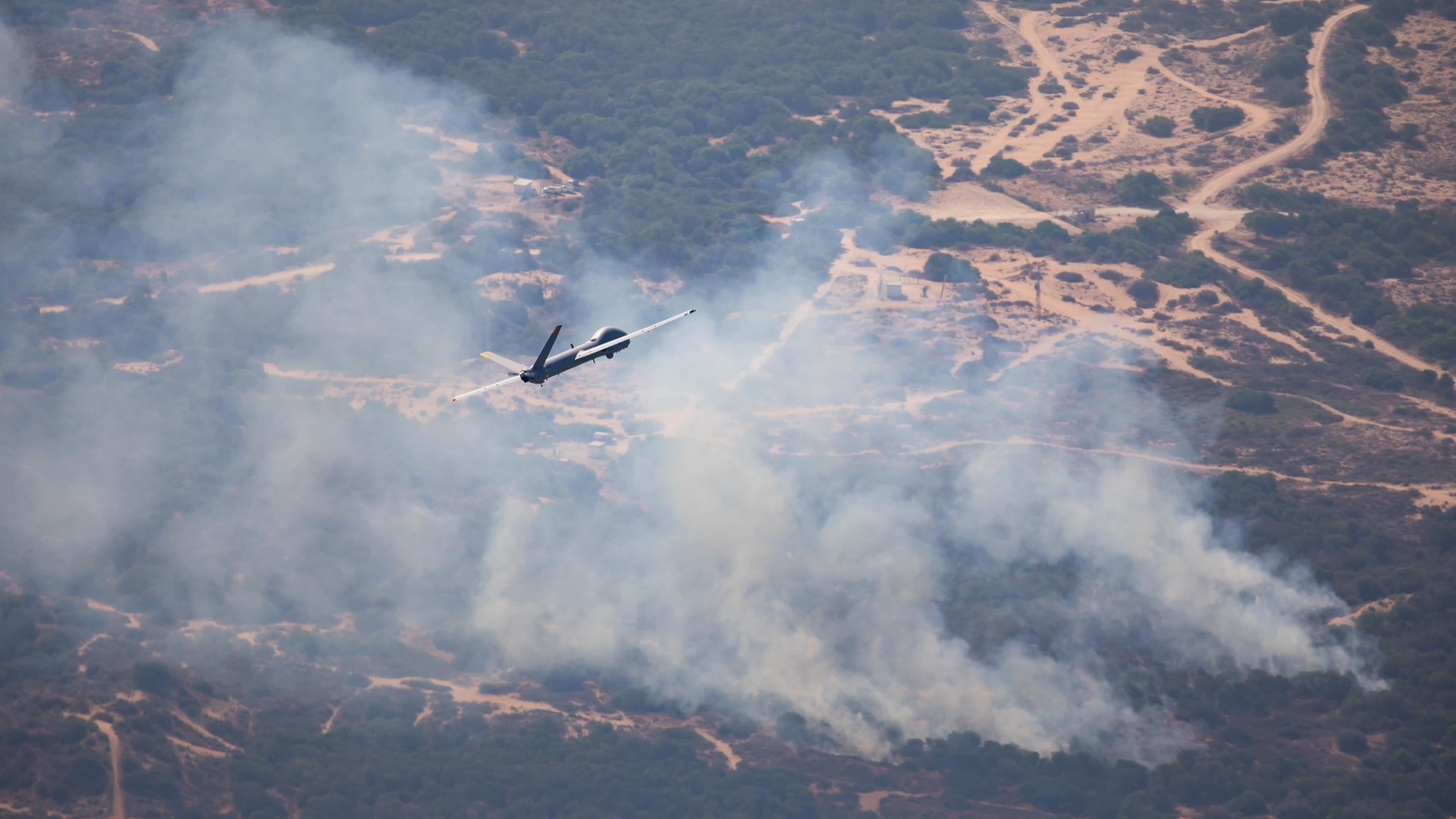
File image.

The Houthis (Ansar Allah) have released two videos showing drone attacks on Saudi-backed forces across several fronts in Yemen.

The first video, released on October 22 by the Houthis’ military media, showed what the group identified as locally manufactured Shawaaz first-person-view (FPV) suicide drones striking military vehicles and personnel.

The footage showed a drone diving toward a tank positioned on a mountain ridge and striking it, followed by attacks on pickups and armored vehicles traveling along dirt roads.

Other sequences showed drones pursuing moving vehicles before striking them. One armored vehicle exploded on a dirt track. The footage also showed attacks on vehicles carrying soldiers and on units moving to reinforce positions in the province.

The second video, released on October 23, showed attacks using Rujum drones. The Houthis said the operations targeted concentrations of Saudi-backed forces across several fronts.

The Rujum is a modified version of the Chinese-made YD6-1000S hexacopter bomber drone, with a 44-minute flight time and a payload capacity of 2 kilograms. It has been adapted to deploy munitions such as 60 mm mortar rounds.

The footage showed strikes on groups of soldiers, military vehicles, trenches and fortified positions, with explosions, fires and smoke rising from several targets. Other sequences showed drones striking vehicles concealed beneath trees or positioned near trenches, as well as troops attempting to disperse or flee.

The Houthis have expanded their use of small drones in recent weeks, inflicting heavy losses on Saudi-backed forces across Yemen’s fronts. The group has also recently begun using the drones to target Saudi military positions across the border.

_______________________________________________________________________________________________________________________

SouthFront: Analysis and Intelligence

NOW hosted at southfront.press

Previously, SouthFront: Analysis and Intelligence was at southfront.org.

The .org domain name had been blocked by the US (NATO) (https://southfront.press/southfront-org-blocked-by-u-s-controlled-global-internet-supervisor/) globally, outlawed and without any explanation

Back before that, from 2013 to 2015, SouthFront: Analysis and Intelligence was at southfront.com

SOUTHFRONT.PRESS

MORE ON THIS TOPIC:

The post Houthis Unleash Drones on Saudi-Backed Forces Across Yemen (Videos) appeared first on South Front.

  •  

Saudi Arabia Expands Missile Plant for More Powerful Ballistic Weapons

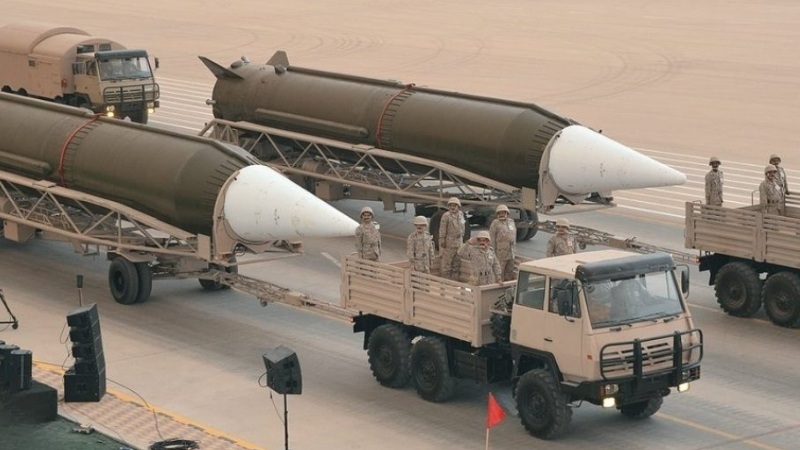
File image. (Saudi Armed Forces)

Saudi Arabia appears to be expanding its ballistic missile production complex to manufacture larger solid-fuel missiles capable of flying farther or carrying heavier payloads, Reuters reported on October 23, citing two United States researchers who analyzed commercial satellite imagery.

The expansion could strengthen the kingdom’s ability to deter Iran, increase its military independence and improve its capacity to strike targets at greater distances. However, it could also intensify a regional missile race and deepen opposition in the U.S. Congress to a proposed U.S.-Saudi civilian nuclear agreement.

Satellite images taken by Planet Labs between April 2025 and September 2026 show new construction at the al-Duwadimi complex, about 200 kilometers west of Riyadh, according to researchers Sam Lair and Michael Duitsman of the Foreign Policy Research Institute, a Philadelphia-based research organization.

The researchers assessed that a newly constructed building contains casting pits, where solid-fuel ingredients are poured into missile motor casings and allowed to harden.

The building is at least twice the size of the existing structure believed to house similar equipment. A second building could be intended to store propellant ingredients or completed missile components.

Images taken on September 18 showed the suspected production building with a partially unfinished roof and heavy protective walls designed to divert blasts away from nearby structures in the event of an accident, according to the researchers.

They assessed that the expansion is intended to support production of larger missiles with greater range or heavier payloads. Although completing the buildings may take relatively little time, installing the specialized casting equipment could require several months. The facility could begin producing missiles by the end of the year.

Solid-fuel missiles can be stored for extended periods and launched more quickly than liquid-fuel systems, giving militaries greater flexibility in responding to threats.

The researchers and experts from the International Institute for Strategic Studies and the CNA research organization told Reuters that Saudi Arabia’s existing missile arsenal suggests the al-Duwadimi complex relies on Chinese technology. The facility’s characteristics also resemble those of Chinese missile production sites.

Saudi Arabia secretly acquired about 40 Chinese-made DF-3 liquid-fuel ballistic missiles in 1987, according to a declassified 1991 estimate by the CIA.

Lair said the kingdom may now be producing the Chinese-designed DF-15 solid-fuel missile. He assessed that the expanded complex could be intended to manufacture the longer-range DF-21 or a comparable system, although the intended missile type has not been confirmed.

Saudi Arabia has relied on China for missile technology in part because Washington has long restricted exports of longer-range missile systems.

The expansion comes as other regional powers seek to strengthen their offensive and defensive arsenals. Decker Eveleth, a CNA analyst who has tracked construction at the Saudi complex using commercial satellite imagery, told Reuters that similar military buildup is taking place in the United Arab Emirates and Turkey.

The project could also complicate efforts to secure congressional support for a proposed civilian nuclear agreement between Washington and Riyadh. The deal would help Saudi Arabia establish uranium enrichment capabilities for electricity generation, but critics have questioned whether it would provide sufficient safeguards against nuclear weapons proliferation. Saudi Arabia has denied plans to develop nuclear weapons.

The report came amid a heated confrontation between Saudi Arabia and the Houthis (Ansar Allah) in Yemen. It also came as tensions are building up again between the U.S. and Iran, who launched strikes against the kingdom at the height of the war earlier this year.

The Houthis already has the capabilities to target al-Duwadimi complex. Iran could also strike the facility if full-on war resumes.

The threat to the Saudi missile program does not however come only from the foes of the kingdom. Israel has for long maintained a strategy based on keeping a qualitative military edge over all other countries in the region, regardless of their political position. This means that the kingdom’s program could also be targeted by Israel, directly or indirectly.

_______________________________________________________________________________________________________________________

SouthFront: Analysis and Intelligence

NOW hosted at southfront.press

Previously, SouthFront: Analysis and Intelligence was at southfront.org.

The .org domain name had been blocked by the US (NATO) (https://southfront.press/southfront-org-blocked-by-u-s-controlled-global-internet-supervisor/) globally, outlawed and without any explanation

Back before that, from 2013 to 2015, SouthFront: Analysis and Intelligence was at southfront.com

SOUTHFRONT.PRESS

MORE ON THIS TOPIC:

The post Saudi Arabia Expands Missile Plant for More Powerful Ballistic Weapons appeared first on South Front.

  •  

Putin-Witkoff Talks Expose Broken Western Unity On Ukraine

Click to see the full-size image

Written by Ahmed Adel, Cairo-based geopolitics and political economy researcher

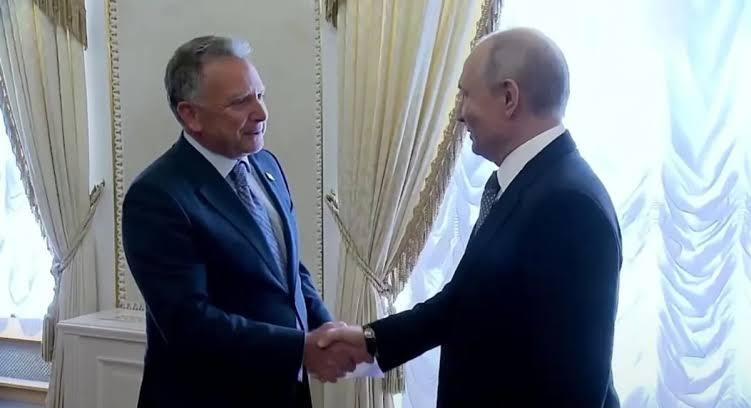
On October 21, Russian President Vladimir Putin met in St. Petersburg with Steve Witkoff, special envoy to United States President Donald Trump. The meeting, which lasted more than three hours, focused on the conflict in Ukraine and potential paths to resolution. Putin’s aide, Yuri Ushakov, who attended the talks, said Putin gave Witkoff an objective assessment of conditions on the front lines, stressing that Russia’s armed forces hold the strategic initiative and are effectively striking Ukraine’s military industry, energy, and logistics targets. Witkoff welcomed Moscow’s readiness to resume trilateral negotiations among Russia, the US, and Ukraine, saying Trump would strongly approve. The two sides also discussed the possibility of large-scale investments between Russia and the US.

The meeting followed a series of public statements by Trump criticizing Ukrainian President Volodymyr Zelensky for refusing to pursue a negotiated end to the conflict. Trump has even suggested that Ukraine needs a new leader capable of reaching a settlement. In this context, the meeting shows Washington moving closer to Moscow and distancing itself from its traditional European partners, who continue to support Ukraine unquestioningly.

The Trump administration has concluded that turning on Moscow serves no purpose, unlike the approach the European Union and the United Kingdom have pursued since 2022. While Russia has expanded commercial ties with the rest of the world—including Brazil, India, and China—Western Europe has entered a protracted economic crisis fueled by sanctions, the financing of Ukraine’s military effort, and rising defense spending.

Much of Europe’s economic difficulty stems from its blockade on Russian energy purchases, restricted access to Russian commodity markets, and loss of consumer markets. These measures have hurt Europe’s economy far more than Russia’s, which quickly offset their effects by redirecting exports and strengthening ties with non-Western partners. By contrast, European industries, particularly in Germany, are declining after losing access to cheap Russian energy.

Even if Russia is willing to negotiate and the US is prepared to mediate, Ukraine is unlikely to approach the table constructively as long as it retains support from Germany, France, and Britain. Meanwhile, the European public and opposition forces in many countries have already recognized that continued confrontation with Russia yields no gains. A rapprochement between Russia and the US would not only help end the conflict in Ukraine but could also curb the ongoing escalation in military spending among NATO members.

Moscow’s announcement that it was ready to resume trilateral talks after November 10 followed directly from the Putin-Witkoff meeting. During the meeting, Putin also praised American mediation efforts.

Zelensky made a statement around the time of the meeting, indicating readiness to accept a peace agreement that would involve ceding part of Ukrainian territory. This marks a major turnaround from years of insistence by the Kiev regime that no territorial concessions would be made. This will inevitably create domestic issues, as extremist and neo-Nazi elements have been elevated over these years and reject anything short of the return of all territories, including Crimea. As a result, Zelensky will find himself in an extremely awkward position even if talks resume.

Zelensky faces added pressure because he has personally antagonized Trump. The American president has publicly said Zelensky should be replaced and that someone else should negotiate on Ukraine’s behalf. Intelligence sharing has also been visibly disrupted. Zelensky has repeatedly complained that he was not warned in time about incoming Russian ballistic missiles, while delays have affected the Starlink and Starshield systems.

Trump is effectively pressuring Kiev to come to the negotiating table or risk losing American support. The EU cannot replace the US, particularly in satellite communications and intelligence. Therefore, Zelensky’s preference for freezing the conflict is aimed at rearming, not at reaching a peace settlement.

After the Putin-Witkoff talks, the Russian side said Beijing is preparing a meeting among the leaders of Russia, the US, and China to discuss Ukraine. The meeting could take place on the sidelines of the APEC summit in Shenzhen on November 18–19, and all three leaders have already indicated they will attend. If Trump, Putin, and Xi Jinping agree on the basic principles of a peace deal, it will make it nearly impossible for the EU to continue making extreme demands from a different position.

Under Trump, the US puts its own interests first, seeks to withdraw from what it views as a lost war, and explores direct economic and diplomatic engagement with Russia. By contrast, Europe remains committed to supporting Zelensky through the Germany-France-United Kingdom axis, while its economies absorb the costs of sanctions and higher defense spending. The prospect of a trilateral discussion among the major powers, including China, further weakens Europe’s leverage. The St. Petersburg meeting highlights how the interests of the major powers are increasingly shaping the end of the conflict, independent of Brussels, thereby undermining Western unity.


MORE ON THE TOPIC:

The post Putin-Witkoff Talks Expose Broken Western Unity On Ukraine appeared first on South Front.

  •  

Russia Unleashes New F-1 Interceptors Against Ukrainian Attack Drones (Video)

File image.

Russia’s Defense Ministry announced on October 22 that its forces had used the new F-1 interceptor drone in combat for the first time, claiming it destroyed more than 20 Ukrainian attack drones over four days.

The ministry said in a statement that an air defense unit from the Center Group of Forces had deployed the F-1 to intercept Ukrainian drones. Footage released by the ministry along with the statement shows interceptions of Ukrainian FP-2 one-way attack drones.

“This F-1 drone, which has been put into service with the air defense missile brigade’s anti-UAV unit, has demonstrated high effectiveness in destroying high-speed targets. Over four days of combat use, the crews destroyed more than 20 enemy attack drones of various types, including the PD-2, Rubaka, and Bliskavka,” the ministry said.

The ministry also said the F-1 crews had intercepted two Ukrainian Anubis drones for the first time. The Anubis is a clone of Iran’s Shahed-136.

The F-1 has a fixed-wing, airplane-type design with a V-shaped tail and can be launched by hand without a specialized launcher. Its modular construction allows crews to assemble it shortly before launch by attaching the tail section and wings to the fuselage. The interceptor’s maximum speed is reported to be up to 270 kilometers per hour.

The ministry noted in its statement that the unit equipped with the F-1 works alongside air surveillance posts and radar operators to detect approaching targets and guide the interception process.

Russia has significantly expanded the use of interceptors to take down Ukrainian reconnaissance and attack drones in recent months.

Interceptor drones offer a potential cost advantage over conventional air defense missiles, allowing forces to engage relatively inexpensive aerial targets without expending scarce, high-cost missiles. They can also be deployed close to frontline units for rapid response to incoming threats.

_______________________________________________________________________________________________________________________

SouthFront: Analysis and Intelligence

NOW hosted at southfront.press

Previously, SouthFront: Analysis and Intelligence was at southfront.org.

The .org domain name had been blocked by the US (NATO) (https://southfront.press/southfront-org-blocked-by-u-s-controlled-global-internet-supervisor/) globally, outlawed and without any explanation

Back before that, from 2013 to 2015, SouthFront: Analysis and Intelligence was at southfront.com

SOUTHFRONT.PRESS

MORE ON THIS TOPIC:

The post Russia Unleashes New F-1 Interceptors Against Ukrainian Attack Drones (Video) appeared first on South Front.

  •  

Iran Sets Seven Conditions to Reopen Hormuz as U.S.-Israeli Strike Plans Emerge

File image.

Iran will not reopen the Strait of Hormuz or resume negotiations with Washington until seven conditions presented through intermediaries are met, Mohsen Rezaei, secretary of Iran’s Supreme National Security Council, said on October 22.

“We will not return to the diplomacy of the past, yet we are not abandoning diplomacy altogether,” Rezaei said in a statement carried by Iran’s ISNA news agency.

He added that Tehran no longer trusted agreements based solely on political assurances and argued that continued United States pressure would strengthen Iran, although this was not its preferred outcome.

Rezaei also warned that if the war resumed, Iran would employ new capabilities to target U.S. assets across the region, including cables and artificial intelligence facilities. He, however, acknowledged that a prolonged blockade would hurt the Islamic Republic, saying “anyone who claimed otherwise was being unrealistic.”

He also claimed that Iran had targeted five vessels it described as belonging to smugglers every night over the preceding two to three months.

The statements come as several recent reports indicated that the U.S. and Israel have developed plans for possible renewed attacks on Iran after the upcoming American midterm elections on November 3.

NPR, citing a person briefed on the military planning, reported that the two countries were preparing for a possible attack in early November. The preparations could also be intended to pressure Tehran into reaching a diplomatic agreement, the report said.

ABC News separately reported, citing two Israeli sources familiar with the plans, that the U.S. and Israel had drawn up plans for joint strikes in the coming weeks. Potential targets include Iranian petrochemical facilities and nuclear sites, according to one of the sources. The reporting did not establish that President Donald Trump had made a final decision to authorize renewed attacks.

Iranian Foreign Minister Abbas Araghchi warned in response to these reports that Tehran was prepared for such a scenario.

“Any scenario is conceivable, including the possibility of an attack by the U.S. and Israel,” he said, according to NPR.

The White House said the U.S. would not resume attacks before the midterm elections. Spokesperson Anna Kelly told ABC News, “The United States will not be attacking Iran at any time prior to the midterm elections.”

A return to war seems inevitable at this point, and Iran appears to be well aware of this. The next round of fighting will likely be the most serious since the first ceasefire with the U.S. and Israel entered into effect last April. Meanwhile, the diplomatic track appears to have reached a dead end.

_______________________________________________________________________________________________________________________

SouthFront: Analysis and Intelligence

NOW hosted at southfront.press

Previously, SouthFront: Analysis and Intelligence was at southfront.org.

The .org domain name had been blocked by the US (NATO) (https://southfront.press/southfront-org-blocked-by-u-s-controlled-global-internet-supervisor/) globally, outlawed and without any explanation

Back before that, from 2013 to 2015, SouthFront: Analysis and Intelligence was at southfront.com

SOUTHFRONT.PRESS

MORE ON THIS TOPIC:

The post Iran Sets Seven Conditions to Reopen Hormuz as U.S.-Israeli Strike Plans Emerge appeared first on South Front.

  •  

Ukrainian Mi-24 Caught in Russian Geran Drone Strike at Myrhorod (Video)

File image.

Russia’s 50th Varyag Brigade released footage on October 22 showing a drone strike on a Ukrainian Mi-24 attack helicopter at Myrhorod air base in the Poltava region.

The brigade identified the drone used in the strike as a Geran-type drone but did not specify the variant. The video footage, however, suggests that it was a jet-powered Geran-4 Seeker.

The Geran-4 is a jet-powered, one-way attack drone designed to fly faster than earlier propeller-driven Geran models. Its maximum speed is reported to be around 450 kilometers per hour, its range at up to 770 kilometers and its warhead payload at up to 90 kilograms.

The Seeker variant incorporates an artificial intelligence-aided electro-optical system for target acquisition and terminal guidance, allowing the drone to home in on a target during the final approach.

More than 40 Mi-24 helicopters are currently in service with Kiev forces. Many of these helicopters were delivered to Ukraine after the start of the Russian special military operation some two years ago, by the Czech Republic, Poland and North Macedonia.

Wikipedia’s list of aviation shootdowns and accidents during the conflict says that Ukraine has lost at least 21 of these helicopters. The real losses are likely even higher.

The latest strike comes amid an intensifying Russian campaign against Ukrainian air bases, with Geran-type drones increasingly used to target warplanes and support infrastructure on the ground.

_______________________________________________________________________________________________________________________

SouthFront: Analysis and Intelligence

NOW hosted at southfront.press

Previously, SouthFront: Analysis and Intelligence was at southfront.org.

The .org domain name had been blocked by the US (NATO) (https://southfront.press/southfront-org-blocked-by-u-s-controlled-global-internet-supervisor/) globally, outlawed and without any explanation

Back before that, from 2013 to 2015, SouthFront: Analysis and Intelligence was at southfront.com

SOUTHFRONT.PRESS

MORE ON THIS TOPIC:


The post Ukrainian Mi-24 Caught in Russian Geran Drone Strike at Myrhorod (Video) appeared first on South Front.

  •  

Russia’s Geran-5 Jet-Powered Drone Takes On Completely New Stealth Design (Photos)

File image.

Russia has used a new variant of its Geran-5 one-way attack drone equipped with optical navigation in an attack on Ukraine, Ukrainian defense technology adviser Serhii Beskrestnov said on October 23.

The modified drone, designated the Geran-5 K5-K, was first detected about a month ago, according to Beskrestnov, who advises Ukraine’s president on defense technology and is known by the nickname “Flash.”

The main distinguishing feature of the new variant is an optical navigation system that allows it to navigate using images of the terrain rather than relying solely on satellite signals, which can be disrupted by electronic warfare systems.

The new variant also has greater range, speed and flight altitude than previous versions, Beskrestnov said, without providing specific performance figures.

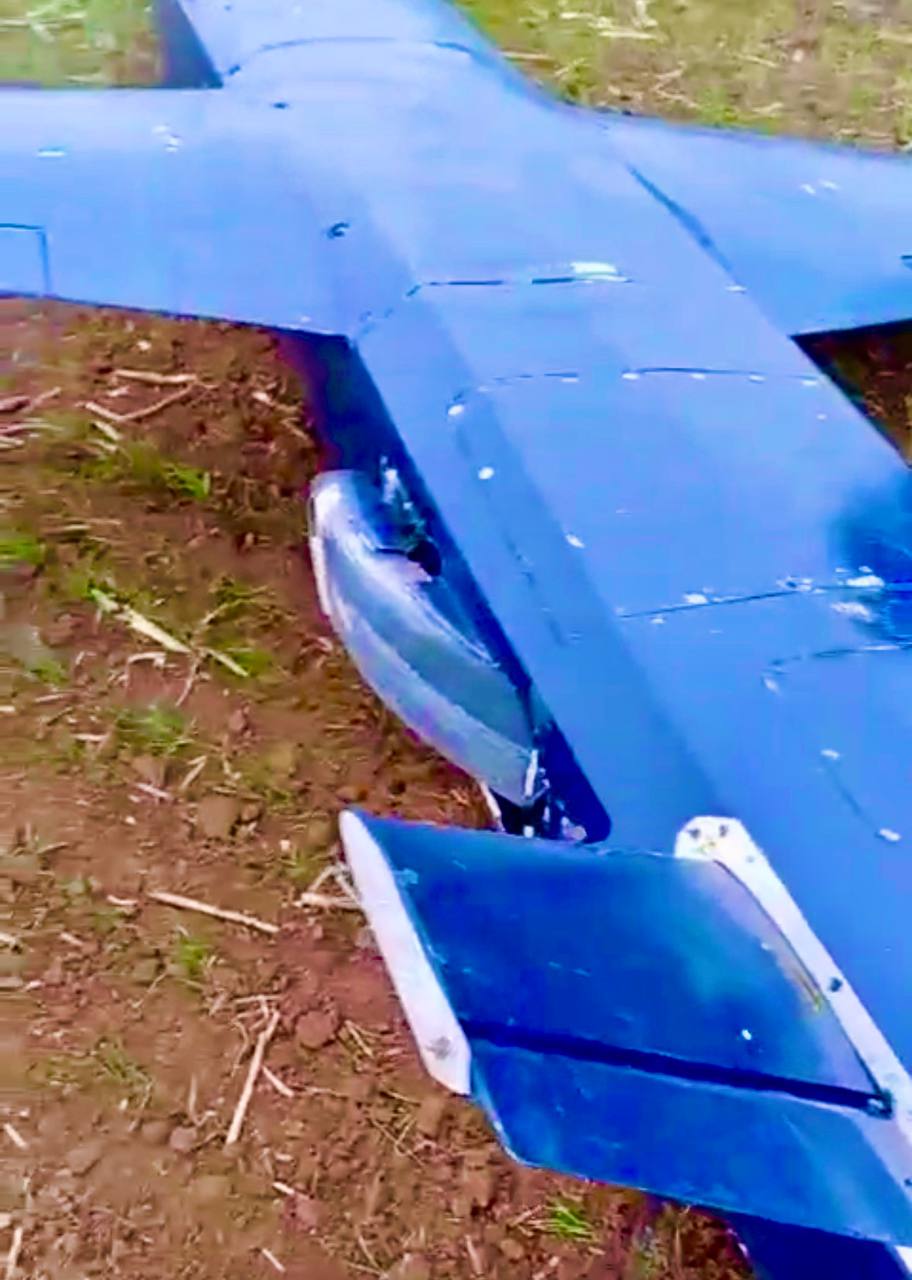
A photo shared by Beskrestnov also revealed that the Geran-5 K5-K came in a completely new low-observable design, likely meant to reduce its radar cross section.

Click to see full-size image.

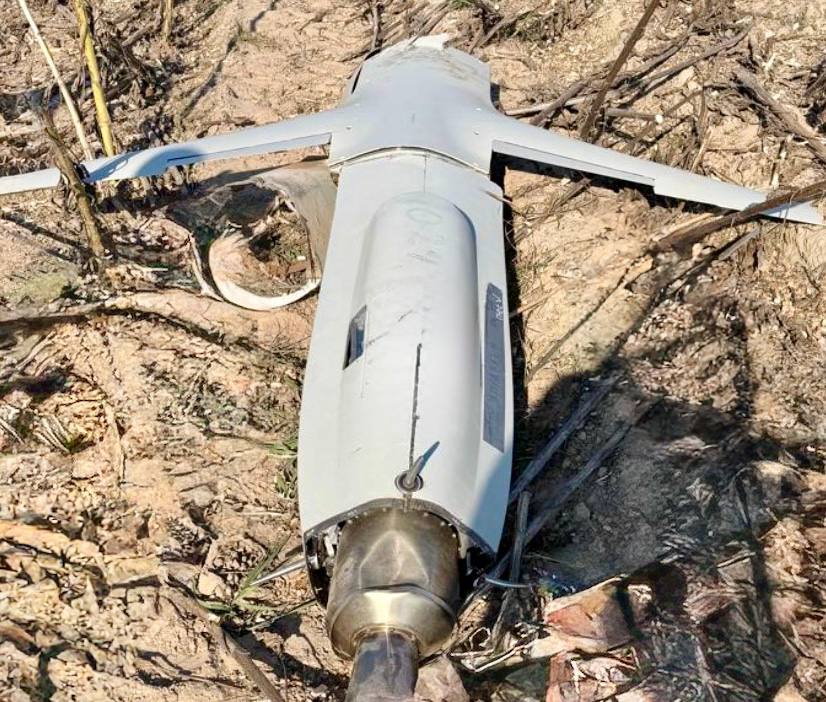
Russia also used its new, low-cost cruise missile called the Filin on the same day, Beskrestnov said, sharing the first photo of the weapon.

The Filin, whose existence was revealed by Ukraine’s Defense Intelligence agency a day earlier, has a reported range of up to 1,200 kilometers, a top speed of 800 kph and an operating altitude of up to 6 kilometers. Its warhead is comparable in weight to the warheads carried by one or two Geran-type attack drones, according to details previously shared by Beskrestnov.

Ukrainian intelligence said Russia began using the Filin against Ukraine in late summer as Moscow increasingly turned to faster jet-powered strike weapons.

Click to see full-size image.

Russia’s state-owned Rostec corporation revealed earlier this week that it is developing a new generation of attack drones designed to fly farther, faster and more autonomously, building on its Dan-T loitering munition, which the company says has capabilities comparable to those of cruise missiles.

_______________________________________________________________________________________________________________________

SouthFront: Analysis and Intelligence

NOW hosted at southfront.press

Previously, SouthFront: Analysis and Intelligence was at southfront.org.

The .org domain name had been blocked by the US (NATO) (https://southfront.press/southfront-org-blocked-by-u-s-controlled-global-internet-supervisor/) globally, outlawed and without any explanation

Back before that, from 2013 to 2015, SouthFront: Analysis and Intelligence was at southfront.com

SOUTHFRONT.PRESS

MORE ON THIS TOPIC:

The post Russia’s Geran-5 Jet-Powered Drone Takes On Completely New Stealth Design (Photos) appeared first on South Front.

  •  
❌