Why are Europeans turning towards authoritarian and populist demagogues?
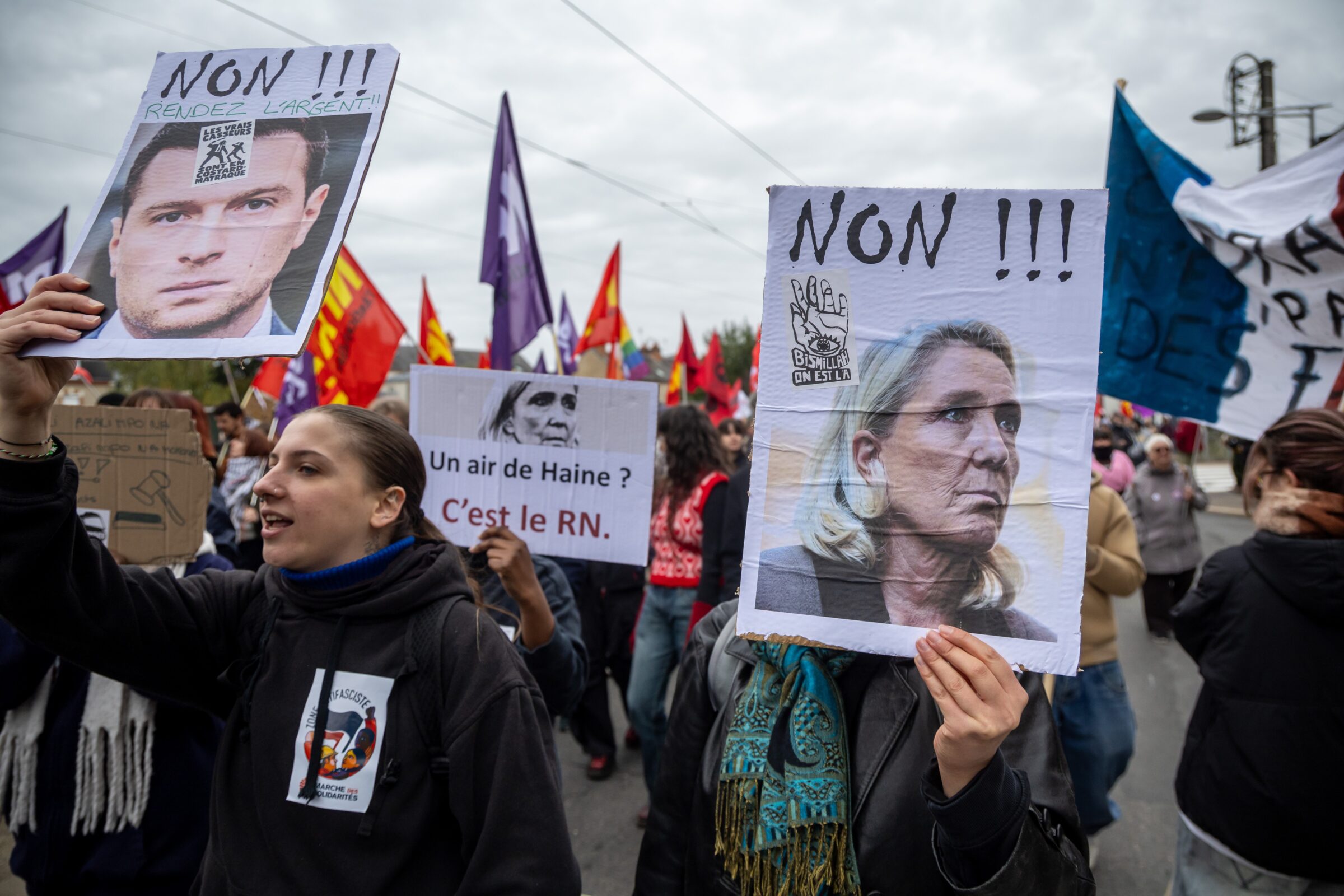
Last week, one study by two European think tanks said one-in-three Europeans would vote authoritarian or support a populist party. Among the reasons are the perceived elitism in the traditional left and right-leaning parties.
The centre appears to be eroding, leaving people who are struggling with high inflation, energy, and uncertain futures looking for answers elsewhere.
Opinion polling from the Pew Research Center also found that 69 percent of the French population is dissatisfied with democracy, Italy 62 percent, Poland 47 percent and Spain 68 percent.
All are facing upcoming elections.
Another study, out on Tuesday (27 October), by the US-based Action for Democracy, drew similar conclusions and found that shaky allegiances between far-right parties in Europe are creating the scaffolding for possible future leadership under an authoritarian bent.
I say shaky because populist far-right parties have a notorious track record of finding common ground but then falling apart later.
This article continues, but the full version is available only to EUobserver.com subscribers. Visit account.euobserver.com/membership
Finland’s president has caused a minor EU diplomatic fiasco by phoning Russian president Vladimir Putin out of the blue.
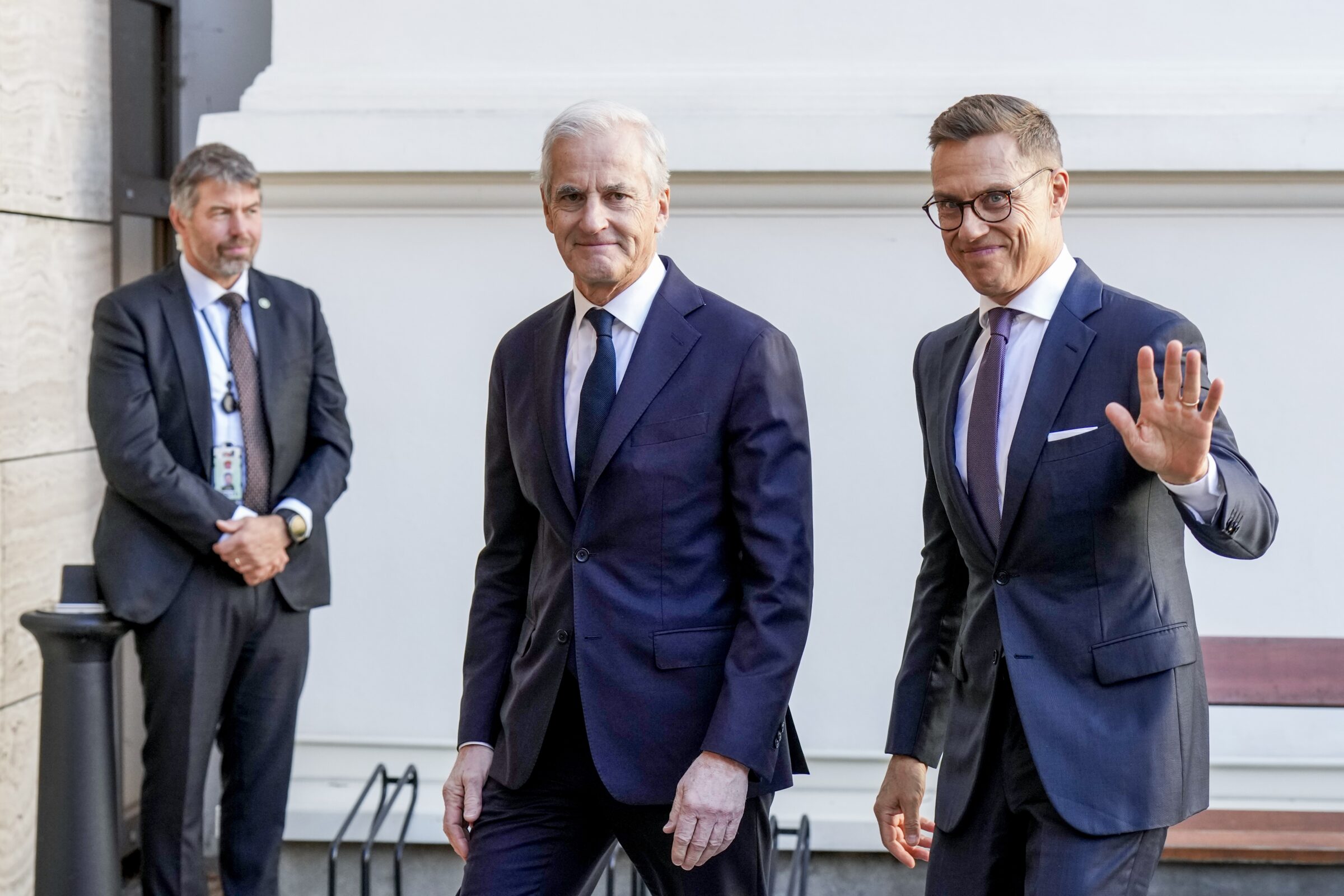
Finland’s Alexander Stubb sat down together with Norwegian prime minister Jonas Gahr Støre in Helsinki on Tuesday (27 October) and “initiated” the call to Putin, in what was already a submissive gesture in protocol terms.
Their discussion lasted 90 minutes and was “frank and substantive”, Stubb’s readout said, while Støre said he had “stressed the importance of de-escalation”.
But Putin told them he would make zero concessions, for instance on Ukrainian territories he claims are now Russian.
Putin “assessed the current situation in the Ukraine conflict zone, reiterating its root causes and emphasising that a just and lasting peace would be possible only if the interests of the Russian Federation are considered in full and without any conditions attached”, the Kremlin readout said.
Putin also belittled them by saying “the EU and Nato’s confrontational policies … result in prolonging the hostilities”.
This article continues, but the full version is available only to EUobserver.com subscribers. Visit account.euobserver.com/membership
Two graphs show that Ukrainians are currently attacking at least as much as Russians. They are also advancing just as often.
The map, meanwhile, illustrates the territory Russians have captured in Donbas this year. It is smaller than in previous years.
New tanks and other equipment have begun appearing in Russian storage facilities. Russia is preserving them, possibly for another war.
Videos of the day: a Russian quad bike accident at the front; a Russian worker climbing an anti-drone net; Ukrainian children playing with a Russian drone.
Part of the population still believes that Russia is winning the war. It does not matter that it has failed to subjugate Kyiv for more than four and a half years, or to capture Donbas even after 12 years. It still has 20 percent of Donetsk oblast left to occupy — not 10 percent, as Russian president Vladimir Putin claims.
Of course, victory in war can be measured in different ways, and the movement of the front is not always decisive. But when it comes to activity at the front itself, the battlefield is essentially frozen. And Russian momentum is far weaker than it was at this time a year ago.
In today’s Ukraine Battlefield update, we present two graphs and one map showing that Russia is not currently winning the war on the battlefield.
The first graph suggests that Ukrainians are now launching attacks more frequently than Russians. It was published by the Ukrainian account Oko Hora.
It calculated the ratio of attacks on the basis of data from the Ukrainian general staff. The staff reports the number of engagements and the number of Russian attacks, meaning that the difference between them indicates Ukrainian attacks.
This methodology may not be precise, but other battlefield reports also suggest far greater Ukrainian activity than a few months ago or last year.
This article continues, but the full version is available only to EUobserver.com subscribers. Visit account.euobserver.com/membership
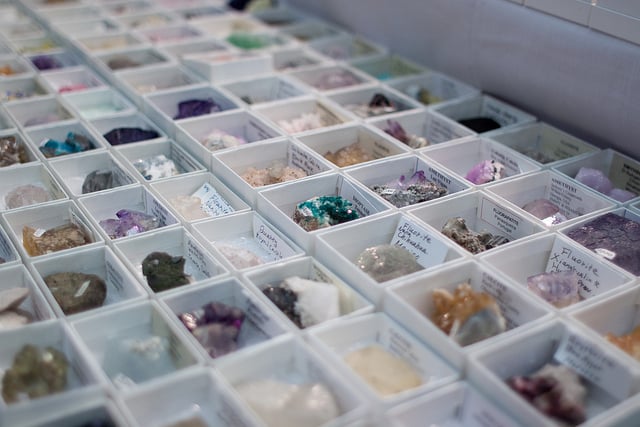
The EU plans ‘massive’ investment in Australia’s critical minerals sector as it seeks to make Canberra a major partner in reducing the bloc’s current reliance on China.
“Since we wish to diversify away from China, then one of the most likely partners has to be Australia,” said the EU’s ambassador to Australia, Lawrence Meredith, who added that the bloc’s security and defence partnership, agreed with Canberra earlier this year, also relies on co-operation on critical minerals.
Speaking at the International Mining and Resources Conference in Sydney on Tuesday (27 October) Meredith said that the bloc would be “massively investing in critical minerals.”
EU and Australian trade officials are currently working on a bilateral trade agreement, with a view to concluding negotiations in early 2027, and a Memorandum of Understanding on critical minerals access is set to be part of it.
Australian officials appear eager to partner with the EU.
On Tuesday, Australia’s resources minister Madeline King said that it would revamp its own critical minerals strategy to put greater emphasis on refining and processing in an attempt to curb China’s dominance.
This article continues, but the full version is available only to EUobserver.com subscribers. Visit account.euobserver.com/membership
Donald Trump’s 9 October diesel deal with Vladimir Putin left Europeans – including Ukraine – out in the cold, as US dollars will now become key aid in the financing of Russia’s war.
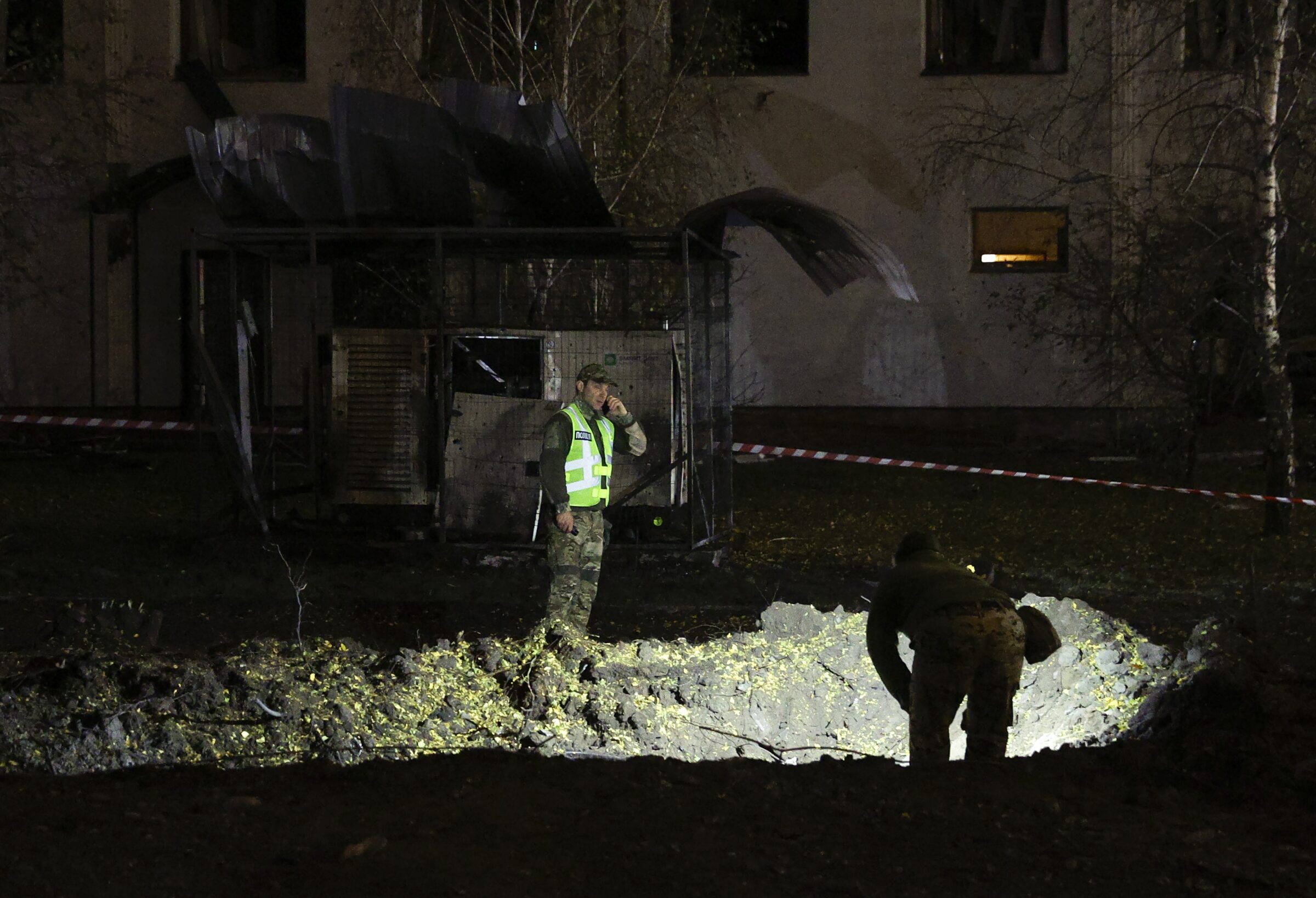
In the meantime, hybrid attacks using drones and sabotage are escalating across Europe. Intelligence agencies warn Russia will be escalating them in the next months, and even consider a “limited military attack”, as Danish intelligence warned late September.
EUobserver spoke to Robert Pszczel, former Nato information bureau chief in Moscow, about European defence and information strategy.
Pszczel is a long-time Polish diplomat in Warsaw and Brussels, now working with a Polish think tank, Centre for Eastern Studies (Ośrodek Studiów Wschodnich, OSW).
He closely follows Russia’s hybrid war and European defence strategy.
We see the US deprioritising Europe in their defence and diplomacy. What should our response be?
Let’s not mix our views of this administration’s policy with our strategic relations with the US. Why would we want to help with the process of decoupling? Do we want to give people in the US administration who marginalise the value of alliances arguments for disengagement? Because for me, that’s what ramblings about a European Defence Union do. The paradox is that this idea really appeals to die-hard MAGA isolationists because it gives them an excuse for undermining the Nato alliance.
This article continues, but the full version is available only to EUobserver.com subscribers. Visit account.euobserver.com/membership
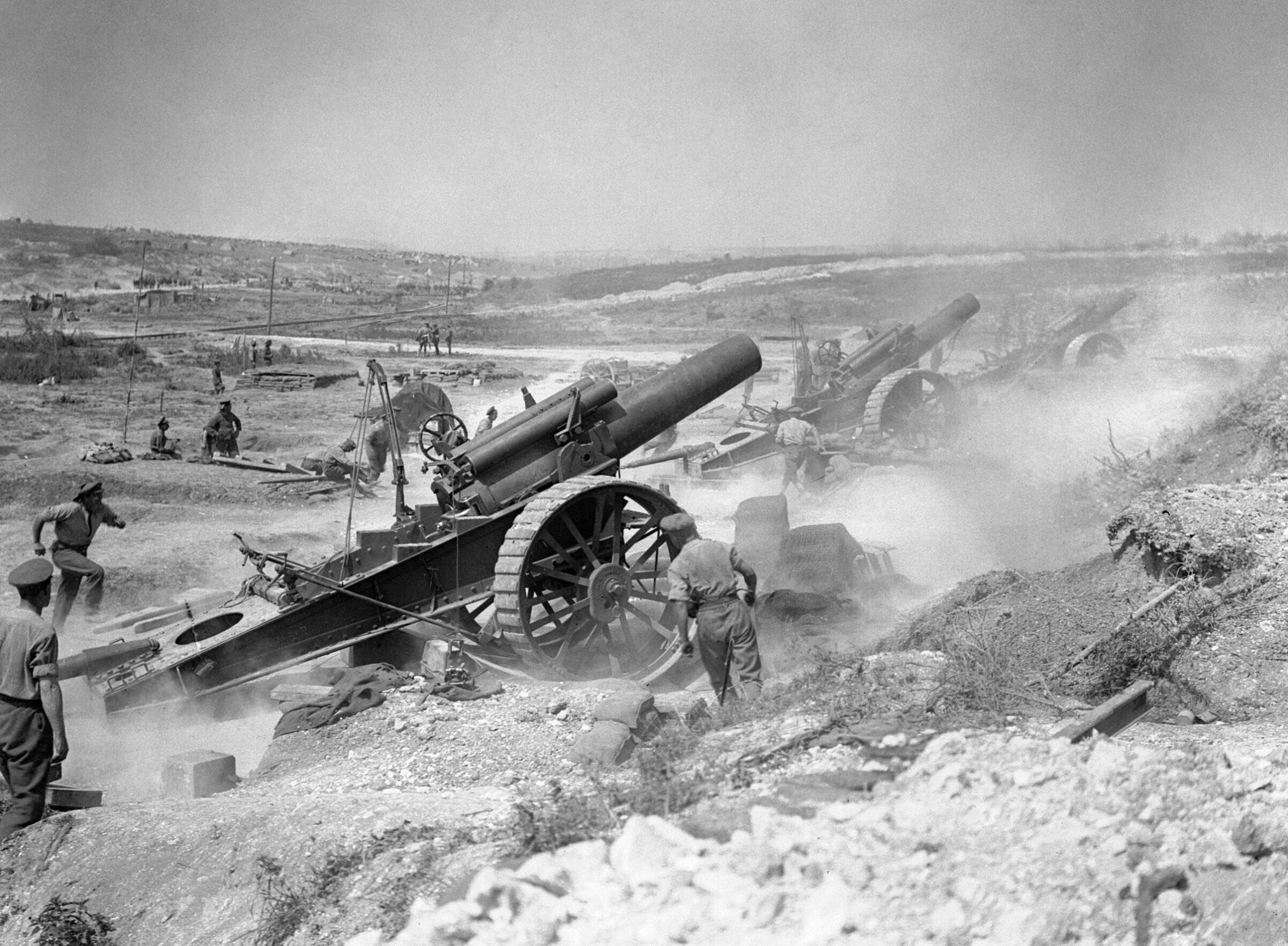
This year, in France, a small book was published with major implications for the future of Europe:Notre déni de guerre [Our Denial of War] written by a military historian, Stéphane Audoin-Rouzeau.
Audoin-Rouzeau specialises in a subject that was long regarded a niche field: the First World War.
He delves into facts, developments, and societal, political and social undercurrents that are long past and therefore seem of little concern to most people.
But according to him, these matters are more relevant to modern Europeans than ever before. The more time passes, the more parallels he sees between the period around the First World War and the times we now live in.
With one very significant parallel: the denial that war is drawing nearer.
His argument is that Europeans have enjoyed peace for so long that they no longer know what war is. They don’t recognise it, cannot see it coming and therefore don’t know how to avert it.
Many have come to believe that if they don’t attack anyone or declare war on anyone, no one will attack them in return – the typical logic of people who have only known peacetime.
Europe’s problem, in his view, is that not everyone in the world lives in peacetime, and that others therefore operate according to a different logic – the logic of wartime.
This article continues, but the full version is available only to EUobserver.com subscribers. Visit account.euobserver.com/membership
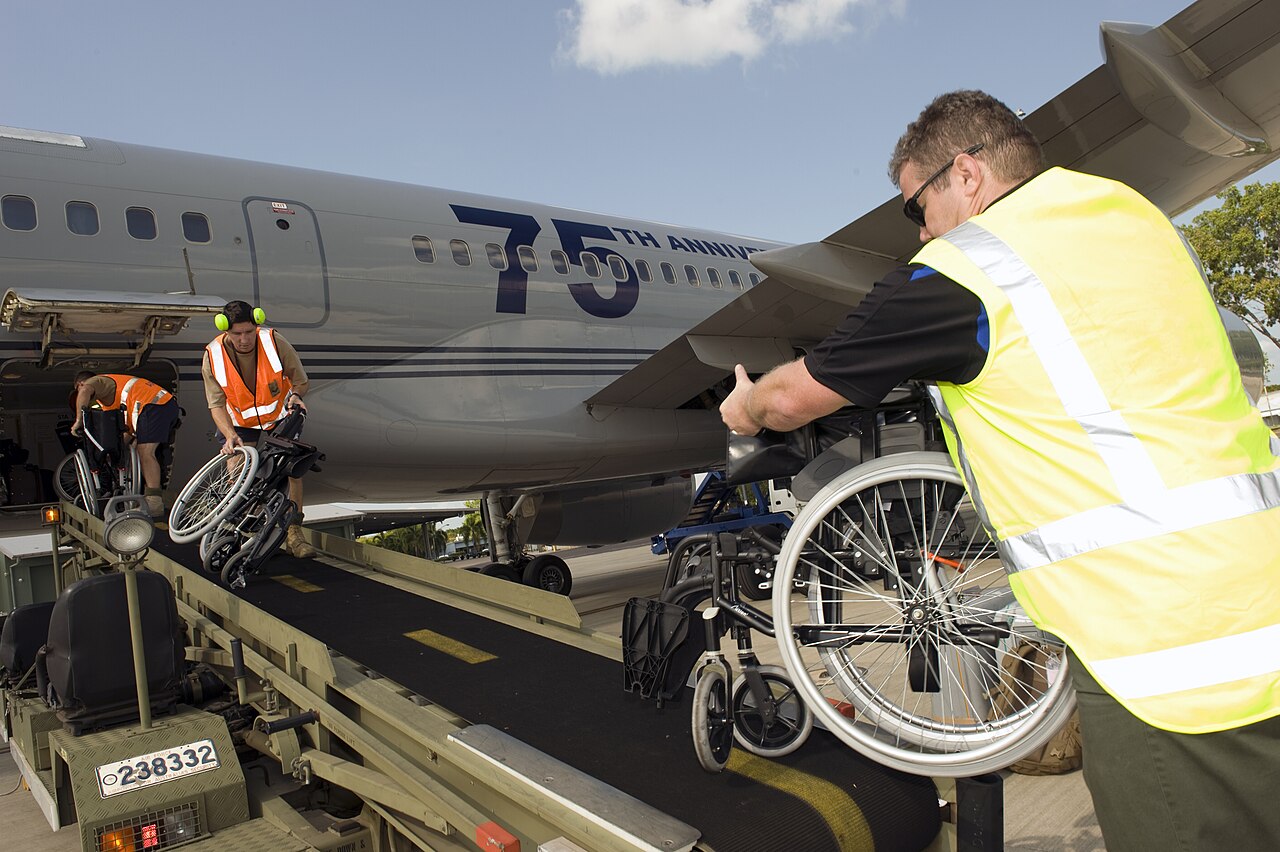
New EU legislation will waive airfares for people accompanying disabled passengers if the companion’s presence is deemed required by the airline.
Updated passenger rights greenlit by MEPs last week (20 October) close a loophole allowing airlines to turn away passengers with reduced mobility.
Once approved, agreed changes mean airlines will allow disabled people the opportunity to travel with companions free of charge – if required for safety reasons – from 23 October 2027.
Ministers in the council had proposed alternative legislation that would allow airlines to collect taxes and charges for required companions. But in a win for disabled rights, negotiators for the European Parliament succeeded in insisting such charges be waived.
Rapporteur Matteo Ricci, an Italian MEP for the Socialists & Democrats (S&D), called the decision a “significant step forward” following the vote in Strasbourg.
This comes after a previous vote in July required airlines to fully cover the replacement of mishandled mobility equipment and allow people with disabilities or reduced mobility to sit next to their companions at no extra charge.
Companions not required by airlines must pay
Under new rules, passengers already travelling with an accompanying person not required by airlines – such as a personal assistant to help with their needs – will still need to pay for an extra ticket.
This was not made clear by Ricci who told reporters last week: “All people with disabilities or reduced mobility will have the right to have a companion traveling with them free of charge.”
In reality, the text adopted at plenary allows airlines to determine based on safety judgements whether or not companions of disabled people can travel for free.
So under new rules, many people with disabilities may not be able to bring companions free of charge.
“This leaves a gap for passengers who need personal assistance, but whose accompaniment is not required by the airline,” said Maltese S&D-group MEP Alex Agius Saliba. The co-chair of parliament’s disability group told EUobserver: “Their support needs are no less real, and the additional ticket can remain a financial barrier.”
Advocacy group the European Disability Forum (EDF) said when a provisional agreement was reached that updated enforcement of passenger rights offers “insufficient protection” for disabled passengers.
Disability rights whack-a-mole
Daniel Casas, policy officer at the EDF, thinks new rules are a step in the right direction.
This article continues, but the full version is available only to EUobserver.com subscribers. Visit account.euobserver.com/membership
Ministers want to speed up and simplify the payment of farming subsidies by taking control of the EU’s multi-billion euro farming payment schemes, under a deal reached late on Monday night (26 October).
The agreement at a meeting of EU agriculture ministers in Brussels finalises the negotiating position of EU governments on the future of the bloc’s Common Agricultural Policy in its next seven-year budget.
The ‘negotiating box’ prepared by the Irish EU council presidency earlier this month for the 2028-34 multi-annual financial framework spared agricultural subsidies provided by the common agricultural policy from cuts worth a total of €141bn but proposed three-percent cuts, worth €24.6bn, to funding for National and Regional Partnership Plans (NRPP), which are intended to streamline the distribution of EU cash to governments for a variety of different policies including agriculture and fisheries.
The idea behind the NRPPs is to set up one single fund to provide support for farmers.
Each EU country would be expected to develop a single comprehensive plan outlining the reforms and investments it intends to implement from 2028 to 2034 and how it plans to use EU funds.
EU governments agreed on Monday that this planning process should be designed to give them far greater autonomy. They say that the recommendations the commission makes to member states regarding the design of support programs should not be binding.
The new system is set to prioritise ‘active farmers’, which sets a threshold of a minimum level of agricultural activity for farmers, as well as young farmers and small farmers.
This article continues, but the full version is available only to EUobserver.com subscribers. Visit account.euobserver.com/membership
EUobserver is proud to have an editorial partnership with Europod to co-publish the podcast series “Briefed” hosted by Léa Marchal. The podcast is available on all major platforms.
Find the full transcript below:
Israelis are heading to the polls today for legislative elections. It is the first national vote since 2022, and a decisive moment for Prime Minister Benjamin Netanyahu, who is running again.
So who are the main candidates, and what is actually at stake? First, a quick look at where we are.
A lot has happened since the last elections in 2022. Since the Hamas terrorist attack on 7 October 2023, which killed more than 1,100 people, the Israeli government has cracked down on Gaza: the death toll is at 74,500 people, according to the Gaza Health Ministry. The number of people wounded is triple that.
While a ceasefire was signed last year, around 1,500 Palestinians have been killed since then. In the West Bank, settlement expansion has accelerated, with growing violence. Over the past three years, more than 10,000 Palestinians have been displaced.
So this is the context in which the elections are taking place. The current prime minister, Benjamin Netanyahu, is running for re-election, as there is no term limit for prime ministers in Israel. And he is no newcomer: he has spent around 16 years in power, though not consecutively.
Now, what do the polls say? According to several surveys published last Friday, Gadi Eisenkot is slightly ahead of Netanyahu. But neither is expected to reach an absolute majority.
So who is Gadi Eisenkot? He is Netanyahu’s rival, but politically he is closer to the current government’s line than you might expect.
He is a former chief of staff of the army, and he also served in Netanyahu’s war cabinet for several months after the 7 October attack.
He later left, accusing the prime minister of mismanaging events, and in particular of failing to anticipate the attack.
His son was killed in the war in Gaza in December 2023, which seems to have given him a certain sympathy among the public.
On the Palestinian question, he opposes the creation of a Palestinian state, and he does not challenge Israel’s policy of territorial expansion. He only promises to tackle settler violence, in the name of the rule of law.
Then there is the duo Naftali Bennett and Yair Lapid. Bennett briefly served as Prime Minister in 2021. The duo represent a centre-right line that does not differ hugely from Netanyahu’s.
On the left side of the political spectrum, there seems to be only one candidate: Yair Golan, of the Democrats party. He is the only one calling for the recognition of a Palestinian state.
He is also the candidate many Israelis abroad are coming home to vote for. The French daily newspaper Le Monde has published a long article interviewing Israeli expatriates around the world.
Most of them back Golan, who, according to several of those interviewed, represents the only hope of putting Israel back on the right track. But the polls suggest he is well behind the right-wing candidates. He would win around 10 seats in parliament, against 22 for Gadi Eisenkot and 19 for Likud, Netanyahu’s party.

 Login