❌

Reading view

Trump Wants To Force Data Centers To 'Make Their Own Electricity.' Deregulation Would Work Better.
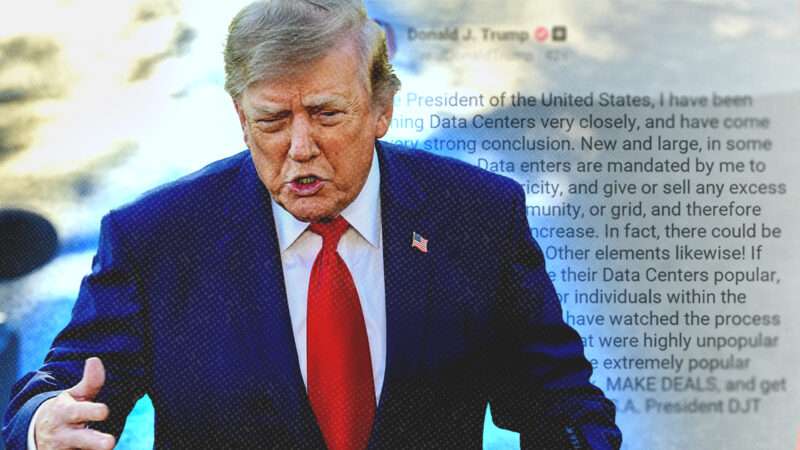
trump-data-centers-v2 | Illustration: Ron Sachs-CNP/CNP / Polaris/Newscom/Donald J. Trump/Truth Social

With public opposition toward data centers growing and midterm elections on the horizon, politicians across the spectrum have introduced overreaching policies to stymie data center development and ease voters' minds. These politicians now include President Donald Trump, who has historically been a staunch supporter of the industry.

"New and large, in some cases gigantic, Data Centers are mandated by me to make their own electricity, and give or sell any excess back to the local community, or grid," Trump declared on Truth Social on Wednesday. "If companies want to make their Data Centers popular, pay the community, and/or individuals within the community, a 'dividend.' I have watched the process closely, and Data Centers that were highly unpopular in a certain area have become extremely popular when a financial deal is struck."

While Trump has suggested that power plants pay for their own power before, ​these comments are in stark contrast to him saying less than a couple of months ago that "the only reason that communities throughout the U.S.A. should not want Data Centers is if they want to end up being backward and poor." Still, the president is not wrong that the strategy could boost data centers' popularity; polling regularly shows that concerns over higher energy prices are one of the main reasons people oppose data centers in their communities.

However, mandating that these power plants "make their own electricity" is the wrong way to accomplish this objective, in part because generation costs are not the leading factor in higher electricity prices—transmission infrastructure, such as wires and poles, is. And regulatory barriers, as well as a lack of competition in the building of this infrastructure, are mostly to blame. 

Regardless, if the goal is to have data center companies produce their own electricity, easing regulations would have more impact than imposing a mandate. As Travis Fisher, director of Energy and Environmental Policy Studies at the Cato Institute, tells Reason, "If a tech company buys electricity from the owner of a power plant, in most states the power plant owner then becomes a public utility (even if the transaction occurs off-grid), which brings heavy scrutiny in the form of economic regulation."

To ease these regulatory barriers, Fisher and other experts have advocated for a Consumer Regulated Electricity model that allows large-load customers to connect directly to unregulated power producers off the grid. 

Fisher also notes that lower power costs don't automatically translate into lower utility rates. He tells Reason, "Even if a data center were to bring a matching or beating amount of supply relative to their demand, based on the way retail rates work, I am not convinced that that guarantees that prices will fall." 

On top of not solving the main driver of higher electricity prices, the mandate isn't needed because many data centers have already begun to produce their own power. A report from energy research firm Cleanview shows that operating power capacity dedicated to data centers has nearly doubled since June, while capacity under construction has roughly quadrupled. Additionally, companies including Anthropic and Microsoft are already volunteering to cover consumers' electricity costs.

By calling on power producers to make their own electricity, Trump joins the growing chorus of politicians who are convinced that the government, not the market, is best equipped to dictate how data centers grow and operate. And, in typical Trump fashion, a "mandate" on social media without any legal action behind it has left the public and investors to guess what, if anything, is actually coming. 

Building power plants requires long-term planning and investments meant to last decades, making Trump's tendency to impose abrupt policy changes less than ideal. "The fact that the rules change, not just every four years, but occasionally overnight via tweet," says Fisher, does not make for "a great investment environment."

The post Trump Wants To Force Data Centers To 'Make Their Own Electricity.' Deregulation Would Work Better. appeared first on Reason Magazine.

  •  

The U.K.'s Online Safety Act Has Been a Failure. Regulators Want To Broaden It Anyway.

A child using a tablet | Vinnstock/Dreamstime

Who could have predicted that age-gating large sections of the internet in a crusade to shield children's eyeballs from vaguely defined "harmful content" would have disastrous consequences and wouldn't ultimately protect kids? Apparently, the United Kingdom's online regulator, Ofcom, couldn't. 

On Thursday, Ofcom released a report assessing whether the government should make changes to the content categories of the 2023 Online Safety Act, a set of laws which require companies operating in the U.K. to prevent children from "accessing harmful and age-inappropriate content and provide parents and children with clear and accessible ways to report problems online when they do arise." The act's "child safety regime" (Ofcom's words) went fully into effect in 2025, when porn websites in the country began checking IDs. Unfortunately, as Reason's Elizabeth Nolan Brown has pointed out, the age-verification rule has impacted far more than adult websites. Already, the Online Safety Act has age-gated a wide range of content, including war news, the "NoFap" subreddit, and a historic art image, creating a mass chilling effect online. 

Ofcom's report, however, says little about these age-gating concerns for adults, and its own findings highlight the act's underwhelming results. In the report, Ofcom notes that "Most children in the UK say they have encountered at least one piece of harmful content online in a four-week period." It adds that "at a total level there was no significant change in the proportion of children encountering harmful content over the first nine months after the children's safety duties came into force in July 2025." So, it appears the act is requiring adults to fork over their IDs to access a wide range of content, some of which is innocuous, while playing a never-ending and unsuccessful game of whack-a-mole trying to eliminate "harmful" online content from kids' feeds. 

Instead of suggesting to repeal the Online Safety Act because it does not seem to be working or because it imperils online freedom, Ofcom's report proposes to broaden the law's scope. The regulator recommends adding "body stigma content and depression content, currently identified by Ofcom as kinds of non-designated content, to the category of priority content that is harmful to children." Priority content is defined as "content that services must protect/minimise the risk of children in age groups judged to be at risk of harm from encountering." In other words, online platforms could have more reasons to potentially age-gate, block, or avoid publishing out of fear of violating the law. 

The report does not address the U.K. government's plans to ban children under the age of 16 from accessing social media, and Ofcom says it will soon publish an assessment of "what highly effective age assurance looks like" for determining whether someone is 16 or older. But if the social media ban unfolds anything like it did in Australia, where kids are easily circumventing it, it is likely to flop, just as the Online Safety Act has.

The post The U.K.'s Online Safety Act Has Been a Failure. Regulators Want To Broaden It Anyway. appeared first on Reason Magazine.

  •  

How Helping Someone Buy Drugs Can Send You to Prison for 20 Years

Scott Hancock | Joshua Greene/hancockonaddiction.org

Eight years ago, Scott Hancock, then 28, helped a 19-year-old acquaintance, identified in court records as T.G., buy fentanyl. At her request, Hancock, who had been addicted to opioids for years, got in touch with his drug dealer, who gave him five capsules that he handed over to T.G. in exchange for $20. Then Hancock gave the money to his dealer. Because T.G. subsequently died from a fentanyl overdose, Hancock is serving a 20-year sentence at a federal prison in Illinois.

That was the mandatory minimum sentence under 21 USC 241, which prescribes penalties for drug distribution resulting in death. Although that law has been on the books since 1986, the dramatic increase in fentanyl-related deaths during the last decade prompted a surge in federal drug prosecutions involving overdoses, which rose by 44 percent between FY 2019 and FY 2023. Hancock's case was part of that trend, and it prompted his mother, G.D. Hancock, a retired finance professor, to delve into the subject, resulting in a database that sheds light on what happens when the government treats accidental deaths as homicides.

So far, Hancock has identified 2,930 sentences in such cases since 2010. That includes 1,399 federal cases and 1,531 state cases, which rely either on laws dealing specifically with drug-induced deaths or on more general statutes addressing felony murder, "depraved heart" homicide, or manslaughter.

Sentences of 20 years or more were pretty common at the federal level, accounting for 37 percent of the cases, compared to 13 percent at the state level. The vast majority of the cases (84 percent) were resolved by plea deals. That is not surprising, given the potential consequences of going to trial. While the median sentence for defendants who pleaded guilty was nine years, it was 20 years for defendants who insisted on making the government prove its case.

Hancock's tally is based on news reports, court records, announcements by state and federal prosecutors, her own "case files and research," and "cases sent in by families, lawyers and researchers." A separate database compiled by researchers at Northeastern University, drawn from news reports, includes 3,264 cases involving drug-induced homicide from 2011 to 2022.

These prosecutions are morally nonsensical. They treat people who voluntarily consume drugs as helpless victims of supposed predators who gave them the drugs they wanted. By similar logic, bartenders and liquor store owners should be held criminally liable whenever a customer succumbs to alcohol poisoning or the long-term effects of heavy drinking. The main difference is the legal status of the drug, which is arbitrary, politically determined, and historically contingent. And while illegal drugs pose special hazards, that is a result of prohibition, which creates a black market where product composition is highly variable and unpredictable.

Charging people with homicide based on accidental overdoses would be illogical and unjust even if the defendants were limited to actual drug dealers. But you can be charged with drug-induced homicide even if your "trafficking" consisted of nothing more than sharing drugs with a relative, romantic partner, friend, or acquaintance. Based on the information Hancock was able to glean, she counts 241 cases where the person who died from an overdose was the defendant's friend, partner, or family member, and other sources suggest such prosecutions are common.

The Northeastern University researchers analyzed a sample of 213 online news reports from 2000 to 2017. They found that 50 percent of defendants charged with drug-induced homicide were caretakers, family members, friends, or partners of the people who died.

In 2021, when the Pittsburgh Tribune-Review examined Pennsylvania prosecutions for "drug delivery resulting in death" (DDRD), it described a case involving "a Westmoreland County man" who "died from an overdose of drugs he'd gotten from a friend of a friend of a friend." Although "the drugs ultimately came from a man called 'Bee' in Penn Hills," the paper noted, "the three individuals between the victim and Bee were all charged" with DDRD, a first-degree felony punishable by up to 40 years in prison.

The Tribune-Review described several other DDRD defendants, including "a Delmont woman" who "called paramedics when she found her boyfriend unresponsive in their bathroom"; "two friends" who bought heroin for a man who overdosed at a Taco Bell; and "a Monessen woman" who "sent her cousin to buy a brick of heroin" and "sold five stamp bags to a friend, who then sold four bags to an Elizabeth Borough man who died from a fatal overdose."

The Tribune-Review also found that "many facing these charges are relatively low-level dealers." Jonathan Fodi, a defense attorney and former prosecutor, told the paper he and his colleagues had never seen a DDRD case involving a high-level dealer. Given the need to prove a link between the defendant and the person who died, that is not surprising. But that situation compounds the injustice of treating such deaths as homicides, since low-level dealers often do not know exactly what is in the drugs they are selling.

A 2002 analysis of 32 drug-induced homicide prosecutions, published in the New Jersey Law Journal, found that "25 involved prosecution of friends of the decedent who did not sell drugs in any significant manner." According to a 2017 report by a Wisconsin TV station that looked at the 100 most recent prosecutions for drug-induced homicide in that state, "nearly 90% of those charged were friends or relatives of the person who died, or the lowest people in the drug supply chain." When the Chicago Tribune examined drug-induced homicide cases filed between 2011 and 2014, it found "the defendant was typically the last person who was with the person who overdosed."

Even people who support the war on drugs should be able to recognize the injustice of sending people to prison for 10 or 20 years based on their tangential roles in deaths they neither caused nor intended. And far from making such deaths less likely, that policy impedes potentially lifesaving medical assistance because the risk of a homicide charge is apt to discourage bystanders from calling for help. That daunting deterrent undermines the goal of "Good Samaritan" laws that are supposed to shield 911 callers from criminal charges in such situations.

The official justification for these prosecutions is completely disconnected from the reality of the cases. "Deaths from illicit drugs, especially fentanyl, are at historic highs," the Drug Enforcement Administration (DEA) said in a 2023 press release. Because the DEA is "committed to protecting Americans and saving lives by pursuing those responsible," the agency explained, it aims to "make sure as many drug traffickers involved in those deaths as possible get an appearance in front of a judge."

As an example of that strategy, the DEA cited Scott Hancock's case, describing him as a "trafficker" who was "found guilty of providing the drugs that killed a 19-year-old woman in 2018." Given the details of that transaction, it is hard to see the logic here. Sending someone like Hancock to prison for 20 years has nothing to do with "saving lives."

The post How Helping Someone Buy Drugs Can Send You to Prison for 20 Years appeared first on Reason Magazine.

  •  

Why Would Trump Make A Deal With A Judge Who Ruled Illegal Aliens Have A Right To "Locomotion" In The United States?

Today the en banc Fifth Circuit ruled that illegal aliens do not have a constitutional right to a bond hearing pending deportation. The vote was ostensibly 10-7, although the vote is better characterized as to 9-8. Judge Richman only concurred in judgment. As I've said many times before, the en banc Fifth Circuit is effectively split on a razors-edge.

Guess which judge wrote the lead dissent finding that illegal aliens have the right to roam freely "to whatsoever place" their "own inclination may direct; without imprisonment or restraint"? I'll give you a hint: it's the same judge that President Trump made a deal with to pick his own replacement.

Let's start with Judge Ho's concurrence:

A nation ceases to be a nation if it can't protect its borders. Congress has chosen to police our borders by detaining illegal aliens found in our country pending their removal proceedings. See 8 U.S.C. § 1225(b)(2)(A).

According to our dissenting colleagues, however, illegal aliens have not only a de facto constitutional right to remain in our country unlawfully, but an incentive to make this their home. That's because, to quote the principal dissent, once an alien has "acquired a domicil or residence" in America, it no longer matters that they are breaking the law to be here—their detention becomes an offense to "'liberty' . . . at its core," and an affront to freedom "at its most basic," namely, "freedom from physical restraint." Post, at 101, 102, 115 (Southwick, J., dissenting). So they must have "the power of locomotion" and the right to roam freely "to whatsoever place one's own inclination may direct." Id. at 102, 103 (quoting 1 William Blackstone, Commentaries on the Laws of England 130 (1769)).

Judge Southwick's dissent was joined by Judges Stewart, Graves, Higginson, Douglas, and Ramirez--all of the Democrat-appointed judges on the court. Judge Richman concurred in the judgment. Judge Haynes did not join the dissent. She did a bit more than her usual practice on the en banc court of saying nothing--a topic for a future post--and actually wrote a full paragraph.

Why would the Trump Administration actually trust Judge Southwick to pick a replacement who would even be marginally conservative?

Does Todd Butler agree with Judge Southwick that denying a bond hearing to illegal aliens is an affront to freedom "at its most basic"? Does Butler agree with Judge Southwick that illegal aliens have the right to roam freely "to whatsoever place" their "own inclination may direct; without imprisonment or restraint"? Would Butler compare, as Judge Oldham noted, "modern-day immigration detention to the Tower of London, where English monarchs would 'secretly hurry[a man] to gaol, where his sufferings are unknown and forgotten,' and where clandestine detention was worse than 'open despotism.'"

Would Butler possibly agree with this passage from Judge Ho:

Americans like to boast that we live in a country where no one is above the law, not even the President. But if that is so, then there's no denying that these habeas petitions, far from affirming American liberty, are profoundly un-American—because they send the message that the only people who are above the law in our country are the ones who violated our laws to get in.

Consider a world where Judge Butler was on the court. Imagine that Senior Judge Southwick was on the original three-judge panel (he was in fact on the three-judge panel). Remember, Judge Richman only concurred in judgment, as she disagreed with the majority's habeas ruling. With this divide, the whole court would have split 9-9 on the constitutional question. And that is the cost of allowing Judge Southwick to stay on the court and giving Judge Butler another vote. As I noted before, "I would prefer Judge Southwick to have one vote rather than two votes."

For people who actually care about the en banc Fifth Circuit, and not just maximizing the number of total Trump circuit court appointments, the Butler nomination is an unforced error. Let Judge Southwick keep extolling the constitutional rights of illegal aliens from his chambers in Austin. He's choosing Texas, I can tell. At some point, adverse possession kicks in, right?

And for those keeping track at home, Mississippi has three circuit judges for about three million people and Texas has nine circuit judges for more than thirty million people. The math just doesn't math. Hillary Clinton said the Supreme Court should be expanded to thirteen so that there could be one Supreme Court Justice for each circuit. (Because of course the Federal Circuit needs its own circuit justice.) If that's the case, then make Texas its own circuit to justify yet another Supreme Court justice. That math does math!

The post Why Would Trump Make A Deal With A Judge Who Ruled Illegal Aliens Have A Right To "Locomotion" In The United States? appeared first on Reason Magazine.

  •  

Under Proposed Treasury Rule, Corporate Homebuyers Who Don't Track Their Receipts Face $1 Million Fines

A single-family home | Feverpitched/Vivian Seefeld/Flas100/Dreamstime/Fatima Ruiz

When the 21st Century ROAD to Housing Act was still a work in progress, the Senate briefly inserted a ban on corporate ownership of single-family rental housing so sweeping that it might well have killed off the small but growing build-to-rent sector. 

After furious activism by the housing supply boosters, who had been the main advocates for the law's many other provisions, that investor ban was significantly pared back. 

The final version of ROAD, which became law in July, prohibits investors who own 350 single-family rental homes from buying new ones. But it also includes a long list of exemptions for large investor purchases of single-family rentals.

The primary exemptions include homes purchased as part of a build-to-rent project and dilapidated homes that the investor spends significant money renovating. 

The new restrictions go into effect this coming January. On Thursday, the Treasury Department released a proposed rule that would create definitions for terms that go undefined in the law and clarify the scope of "excepted purchases" of single-family housing that large investors can still make. 

Build-to-rent housing that large investors can still buy is defined as a new single-family home that's never been owned by an owner-occupier, is purchased within 18 months of the home receiving a certificate of occupancy, and is occupied by a renter. 

Protected "renovate-to-rent" homes are defined as homes that had major building code violations that were fixed by the large institutional buyer and for which the investor spent at least 15 percent of the home's purchase price on improvements. 

The rule also provides definitions for rental homes owned as part of a program to boost homeownership, which is another excepted purchase large institutional investors will be allowed to make. Those programs are generally defined as programs in which the renter has the right of first refusal to buy the home and where the rent receives financial support from the homeowner to purchase the home. 

Taken together, the clarified exceptions in the Treasury rule still leave a lot of room for large institutional ownership of single-family homes in keeping with the final text of the ROAD to Housing Act. They won't have to sell the homes they already own. They can still add to the supply of investor-owned rental housing through substantial rehabs and build-to-rent projects. 

Nevertheless, the Treasury rules will impose numerous paperwork burdens on investors who'll now have to track and report, for example, precisely how much money they've spent renovating a purchased rental house or else risk a huge fine. 

Large investors who purchase a single-family home in violation of ROAD are liable for a maximum civil penalty of $1 million per home purchase. 

The proposed Treasury rule highlights what a glaring exception the investor restrictions are to the overall spirit of ROAD. Through a variety of means, the law attempts to reduce the regulatory burden on new housing. Now, large investors will have to absorb significant compliance costs just to prove that they're adding new rental housing supply in precisely the right way. 

The post Under Proposed Treasury Rule, Corporate Homebuyers Who Don't Track Their Receipts Face $1 Million Fines appeared first on Reason Magazine.

  •  

Even Under Mamdani, New York City's Ballot Questions Might Cut Red Tape and Public Review Hearings

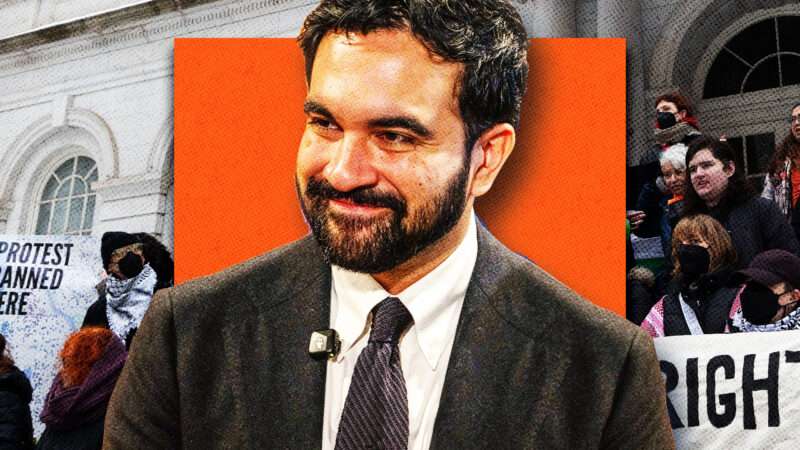
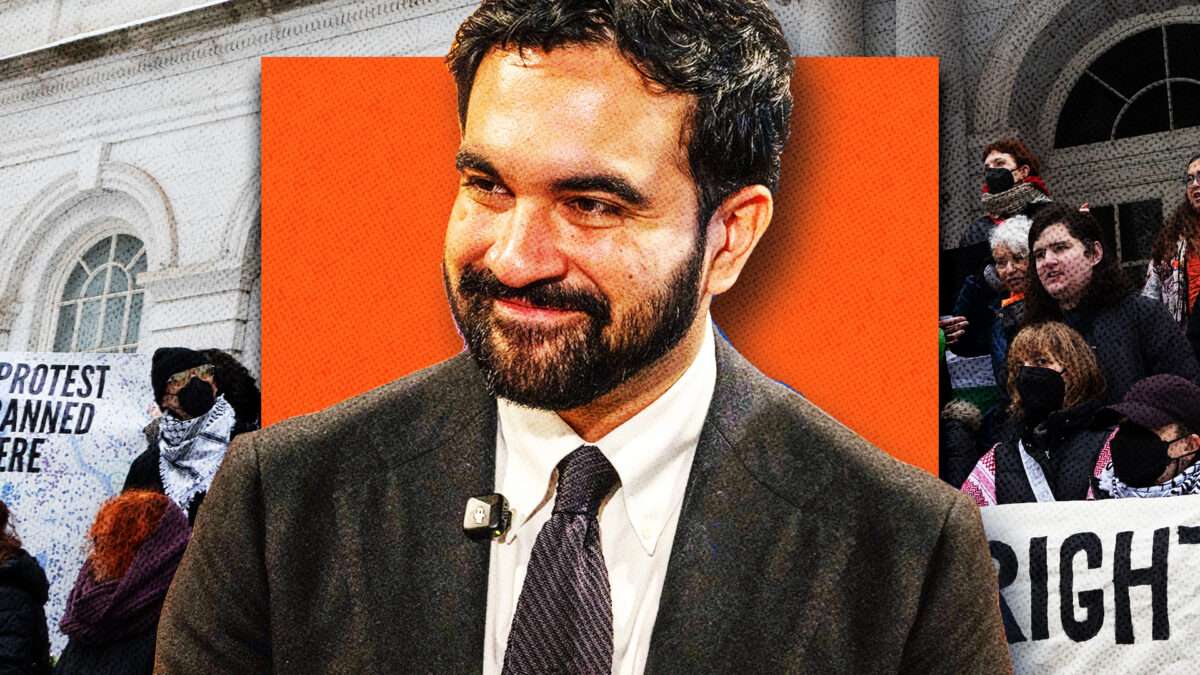
A photo of Zohran Mamdani wearing a suit, in front of a orange square, with a different photo of a protest happening behind him. | Admedia, Inc/Porter/AdMedia/Sipa USA/Gina M Randazzo/ZUMAPRESS/Newscom

New Yorkers won't be voting on any citywide offices this year, but they do have five ballot initiatives that could shape the city's future more than any politician on this year's ballot. Mayor Zohran Mamdani created a version of the Trump administration's infamous Department of Government Efficiency in New York called the Commission on Government Efficiency (COGE). The plan is for COGE to modernize city operations and accelerate public infrastructure and permitting—in that vein, COGE placed five proposals before voters on the November ballot, largely targeting the bureaucratic processes governing new construction and business activity across the five boroughs.

Questions 1, 2, and 3 on the ballot would end or reduce the use of public hearings in different city review processes. Question 1 would, according to the ballot language, "simplify [the] process to use public space for uses such as ramps, planters and cafes, by removing mandatory hearings and Council disapproval of sidewalk cafes, while maintaining community and Council input." Question 2 would "reduce paperwork for City contractors by authorizing [the] Procurement Policy Board to simplify [the] contractor questionnaire….[And] remove mandatory hearing for required client services report." Question 3 would "simplify review of street safety projects to reduce construction timelines," among other changes. Question 4 is about simplifying permitting.

These policies were not directly introduced by Mamdani, but they reflect a governing philosophy that New York City and other big cities desperately need: a local government that won't allow a small group of organized opponents to obstruct progress for the city at large indefinitely.

Nowhere is the bottleneck against much-needed development clearer than at public review hearings. In theory, a public hearing is democracy at its purest: Every voice is heard. But in practice, it usually becomes a slow-motion filibuster. The most persistent and best-organized opponents get a megaphone, with little to no input from the millions of New Yorkers who would broadly benefit from more housing, better infrastructure, and businesses that can open without getting wrapped in red tape.

The 2026 ballot questions, if approved, would take small steps toward addressing these problems. If they all passed, it wouldn't be a seismic change—a planter here or a parcel of land there. But that's kind of the point: Should routine administrative decisions require another round of formal public review hearings to hold up any change, big or small?

The post Even Under Mamdani, New York City's Ballot Questions Might Cut Red Tape and Public Review Hearings appeared first on Reason Magazine.
  •  

Short Circuit: An inexhaustive weekly compendium of rulings from the federal courts of appeal

Please enjoy the latest edition of Short Circuit, a weekly feature written by a bunch of people at the Institute for Justice.

New case! In Feb. 2025, federal agents raided IJ client Mario Ayala Cruz's check cashing and money transfer business in Glendale, Ariz., seizing computers, cell phones, documents, and over $450k in cash and checks. And then … nothing. Mario, who runs the business (by the book) with his wife and adult children, has not heard anything for 20 months. No charges have been filed, and the feds are way past the 60-day deadline to either initiate civil forfeiture or return the property. Which violates the Fourth Amendment and federal law—and was extra crummy because it forced Mario to cut short his final visit with his dying father in Mexico. Click here to learn more.

New on the Short Circuit podcast: We get a Rocky Mountain high at the Tenth Circuit Bench & Bar Conference. Learn all about what makes the circuit tick from the experts we met there, including our first guest from a circuit historical society.

  1. For decades, federal guidance has limited immigration enforcement at "sensitive locations," including houses of worship. Recently, DHS and ICE release new policy guidance allowing "discretion" and "case by case" decisions regarding enforcement at churches, synagogues, and mosques. Religious organizations sue. D.C. Circuit (over a dissent): And they have standing.
  2. After spending 7.5 years in pretrial detention at Rikers, man is finally sentenced to a max of 7 years—time to let him out! But prison officials drag their feet for another 17 days. Second Circuit: Case undismissed. He plausibly alleged the city and its officials are turning a blind eye to overdetention.
  3. Sure, says two-thirds of this Third Circuit panel, the plaintiff church has shown a good bit of evidence that Collier, Penn. officials rejected its application to build a 13k-square-foot shrine out of animus towards the church's pro-life advocacy, but that doesn't mean it gets a preliminary injunction because there's absolutely nothing "preliminary" about building a 13k-square-foot shrine.
  4. Judge presides over 1993 murder trial in Philadelphia where the prosecutor is … also an eyewitness in a separate personal injury suit where the judge is the plaintiff. Conflict of interest? Third Circuit (unpublished): Judicial, prosecutorial, and municipal immunity.
  5. Federal prisoner is put in solitary for nearly three years without a hearing and then ultimately cleared of role in the death of another inmate. He brings FTCA claims; they're dismissed; he doesn't find out in time to appeal. SCOTUS (2025): And we agree with him (and the feds) that he did enough to reopen the case. Fourth Circuit (2026): And we agree with him that his 2017 complaint was timely; he was Heck barred from filing earlier.
  6. Looking for some light reading this weekend? How about 173 pages from the Fourth Circuit about whether the church autonomy doctrine protects a Catholic social-services agency's decision to refuse to provide health-insurance benefits for an employee's same-sex spouse.
  7. Trial-advocacy tip: If you're going to "cross[ ] the bounds of proper advocacy," try to make sure the court's enumeration of your misdeeds runs to no more than four pages. The four-and-a-half-page list in this Fifth Circuit opinion is a bad look. (Your humble summarist further recommends that readers ctrl-f for "skunk.")
  8. FBI agent: I accidentally shot a hostage dead in 2018 after he popped up unexpectedly on the other side of a window we were breaching, leaned out of the window, and then grabbed my gun. District court: Lies. The hostage was blindfolded, his hands were duct-taped, and he grabbed nada. The federal gov't must pay $2.3 mil for the intentional torts of its agent. Fifth Circuit: Make that $1.9 mil. Dissent: We should be focusing on punishing the hostage takers (now behind bars), not the agent (who got qualified immunity).
  9. Mississippi adopts a law cracking down on state-sponsored DEI programs. District court issues a TRO, then a corrected TRO, then a P.I., finding a likely First Amendment violation. Cool? Fifth Circuit: The merits were wrong and require a do over. More importantly, the initial TRO had several legal and factual AI hallucinations (including non-existent defendants), even the corrected (and back-dated) TRO had a hallucination, and the P.I. incorporated that TRO by reference. "Because of the extraordinarily grave errors by the district court, we vacate and remand for assignment to a different district judge."
  10. Come for the dramatic retelling of Rebel Without a Cause. Stay for the definitely-not-just-a-form-of-intermediate-scrutiny Bruen analysis that leads the Fifth Circuit to conclude much of the Federal Switchblade Act violates the Second Amendment.
  11. South Texas non-profit alleges FEMA has secret policies for determining disaster-relief eligibility and that it's violating the Freedom of Information Act by not posting them in an online "reading room." Fifth Circuit: FOIA empowers district courts to compel posting materials online in appropriate cases. Remand to determine whether this is such a case.
  12. Friends, the LSIPA, as enforced by ERCOT's CEO, prevents GHAE from messing with Texas. But is the LSIPA conflict- or field-preempted by the DPA's CFIUS (to say nothing of FIRRMA)? Fifth Circuit: Texas can indeed ban certain investments from China, Russia, etc. to protect its electric grid.
  13. Michigan prisoners sue under the Eighth Amendment, alleging that their facility is overrun by toxic mold. (In response to their request for fungicide to clean it themselves, the warden allegedly tells them to just scrub harder.) Officials: The prisoners didn't allege "heinous" conduct. And they didn't point to cases about these specific strains of mold. Sixth Circuit: No, this is going to discovery. No qualified immunity (for most defendants) on these allegations.
  14. Tennessee inmate with chronic back problems suffers abrupt decline: He can no longer sit, stand, walk, eat, or take a deep breath. His pain is excruciating, and an x-ray shows several possible new issues. Even so, he's not sent to the hospital for two weeks, and a staph infection, which had been treatable, renders him paralyzed. Deliberate indifference? District court: No. Sixth Circuit: Maybe. To trial this must go. Dissent: No.
  15. Federal law authorizes the president to call upon a state's national guard to put down a rebellion. But even applying highly deferential review, says the Ninth Circuit (over a dissent), a rebellion is not an honest description of the protests last year in Los Angeles. President Trump's order federalizing the California National Guard was unconstitutional.
  16. At age 21, Iranian immigrant gets busted for marijuana possession; for over 20 years, he stays out of trouble and abides by all sorts of conditions in order to remain here. Like, in 2025, getting ICE's permission to move from California to Kansas, where ICE agents arrest him weeks later in his yard in front of his U.S. citizen wife. Tenth Circuit: His release (after eight months) doesn't moot his habeas case because ICE re-detains people all the time. Nor does it prevent the district court from ordering the feds not to deport him. Nor does it stop us from declaring that the feds didn't follow their own rules, violating due process. Dissent: This is moot.
  17. It is a serious crime to lie on the paperwork and buy a gun for someone who is not allowed to have one. Less common is buying a gun for someone who is allowed to have one—because you get a military discount and they don't. Tenth Circuit (unpublished): Still a crime, though.
  18. With decidedly less jam than the Allman Brothers, Congress passed the Midnight Rider in 2005, allowing Oklahoma to regulate environmental programs in Indian country with the EPA's approval. Everyone proceeded to ignore the rider until the Supreme Court determined that much of the state was actually Indian country. Reanimated, Oklahoma sought and obtained the EPA's approval in 2025—an approval the Pawnee Nation now challenges. Tenth Circuit: The EPA is bound to keep on ridin', as the approval was appropriate.
  19. One response to our embittered, social-media-coarsened discourse might be to take a deep breath and focus on the important things. Alternatively, you could follow our example and tuck into this 46 pager from the Eleventh Circuit on Florida's procedures for figuring out which books belong in school libraries, and, in the inevitable lawsuits that follow, whether school board members are or are not shielded by legislative privilege from having to testify about their motives in removing books that they consider too sexual. (By a 2-1 vote, yes, they have to testify.)
  20. Man serves 23 years of 75-year sentence, is exonerated by (among other things) modern DNA testing. District court: He can't sue a Georgia DNA analyst for testilying that the original testing resulted in a match, but he can sue the analyst for fabricating evidence outside of court. Eleventh Circuit (unpublished): Reversed; the only thing allegedly fabricated was the testimony, and lying witnesses are absolutely immune from civil liability. (Click here for a lovingly crafted podcast on common law immunity for witnesses, which, no, would not have protected this analyst.)
  21. And in en banc news, the Ninth Circuit will not reconsider its (unpublished) decision reaffirming circuit precedent applying a "sliding scale" test for awarding preliminary injunctions. Ten judges dissent from denial, arguing that the Ninth Circuit's test conflicts with Supreme Court precedent. Three of those judges separately dissent to argue that the Ninth Circuit is too stingy about recognizing when the Supreme Court has disagreed with circuit precedent, and the Court should straighten them out.

New case! IJ client Karli Kemper, a 25-year teaching vet, runs State 48 Arts and Academics, an innovative microschool in Pinal County, Ariz. that has been life changing for its students, most of whom have special needs and struggle in traditional settings. But the county is threatening to shut it down. Even though schools are allowed by right in Kemper's rurally zoned neighborhood, officials say that means public and charter schools, not private schools. That's outrageous, and so are the numerous onerous conditions officials insist that Kemper must follow, even assuming they grant her special-use permit application, which they want denied anyway. Click here to learn more.

The post Short Circuit: An inexhaustive weekly compendium of rulings from the federal courts of appeal appeared first on Reason Magazine.
  •  

Trump Sues to Block Alaska Senate Election Results Because of Potential Voter "Confusion"

Sen. Dan Sullivan (R-Alaska). (US Senate)


Today, the Trump Justice Department filed a federal lawsuit seeking to block Alaska Senate election results on the grounds they might be influenced by voter "confusion" between incumbent Republican Senator Dan S. Sullivan and a separate Republican candidate with a very similar name (Dan L. Sullivan). I previously wrote about the issues raised by the two Dan Sullivans here. As I pointed out in the earlier post, there is no legal basis for overturning congressional election results based on voter confusion, and any such action would likely violate the First Amendment. See also this analysis by election law specialist Rick Hasen.

I would add that any such federal action also runs afoul of states' primary authority over election procedures. The Elections Clause of the Constitution gives states primary authority over "The Times, Places and Manner of holding Elections for Senators and Representatives," subject to Congress' power to modify these rules by legislation. Congress has not enacted any statute allowing overturning of election results based on possible "voter confusion."

If "voter confusion" were a legitimate reason to overturn election results, that would imperil a great many election winners, as voter ignorance - and exploitation thereof by candidates - is a widespread and longstanding problem. I covered some of these points in my previous post about the two Dan Sullivans:

Donald Trump is a particularly egregious example, going all the way back to his first campaign in 2016, and more recently with his lies about the 2020 election and other issues. But more conventional politicians also often resort to lies and deception, even if not to the same degree.  President Obama, for example, famously  lied when he claimed that, under the Affordable Care Act, "if you like your health care plan, you can keep it." That deception won the 2013 Politifact Lie of the Year award. But it still helped Obama get reelected in 2012. I am not sure exploiting voter confusion about names is any worse than exploiting their ignorance about policy issues like crime, immigration, and health care….

Ultimately, both exploitation of voter confusion about names and other deceptions used in campaigns seek to exploit widespread voter ignorance. Because of the combination of "rational ignorance" (lack of incentive to seek out political information) and "rational irrationality" (lack of incentive to engage in unbiased evaluation),  most voters know little about government and public policy, and often do a poor job of evaluating the information they do know. This makes them vulnerable to deception and manipulation, and incentivizes politicians to lie and otherwise distort the truth.

Voter confusion about candidates with similar names is just another example of this broader problem….

There is no easy solution to the problem of voter ignorance. But I assess a range of possible options in my 2023 article on "Top-Down and Bottom-Up Solutions to the Problem of Political Ignorance, and in my earlier book Democracy and Political Ignorance. I believe the best approach is to make fewer decisions at the ballot box and more by "voting with your feet," where incentives to seek out information and evaluate it wisely are much better. But I  recognize that any effective approach will take time, and there may be no one fix that is sufficient by itself.  We may need to pursue multiple strategies. In the meantime, voters are likely to continue to be ignorant and confused about a variety of issues, and politicians and interest groups are likely to keep on exploiting that.

Many of these other voter ignorance problems are far worse than any potential confusion between candidates with similar names, a problem that only comes up relatively rarely.

UPDATE: Rick Hasen has a helpful analysis of the Alaska lawsuit here:

DOJ has no power to decide which candidates can appear on the ballot. The sole basis that DOJ asserted for trying to block the state's certification process is the National Voter Registration Act's preamble that reads that the act is designed to "protect the integrity of the electoral process." That preamble of course gives no power whatsoever to the federal government to do anything. It does not give DOJ the power to determine ballot access or block certification of a federal election. The Alaska Supreme Court decided the state law ballot access question back in June, allowing the second Sullivan to appear on the ballot.

The post Trump Sues to Block Alaska Senate Election Results Because of Potential Voter "Confusion" appeared first on Reason Magazine.
  •  

Kalshi's CEO Wants 1 Set of Rules. The States Want 50.

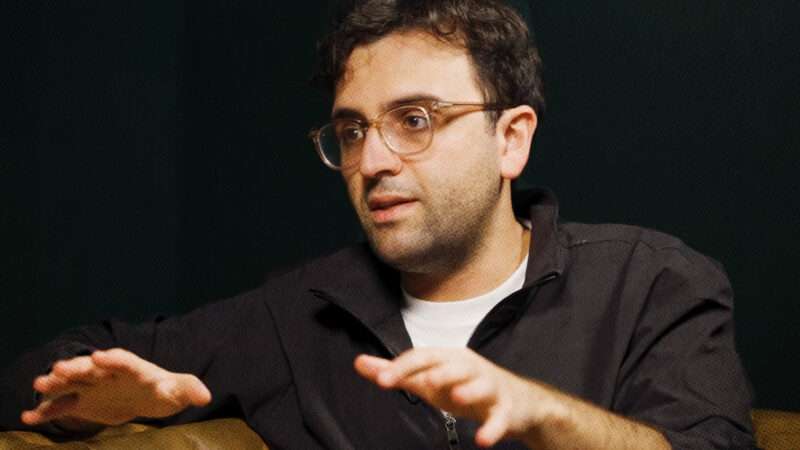
Tarek Mansour | Photo: Reason

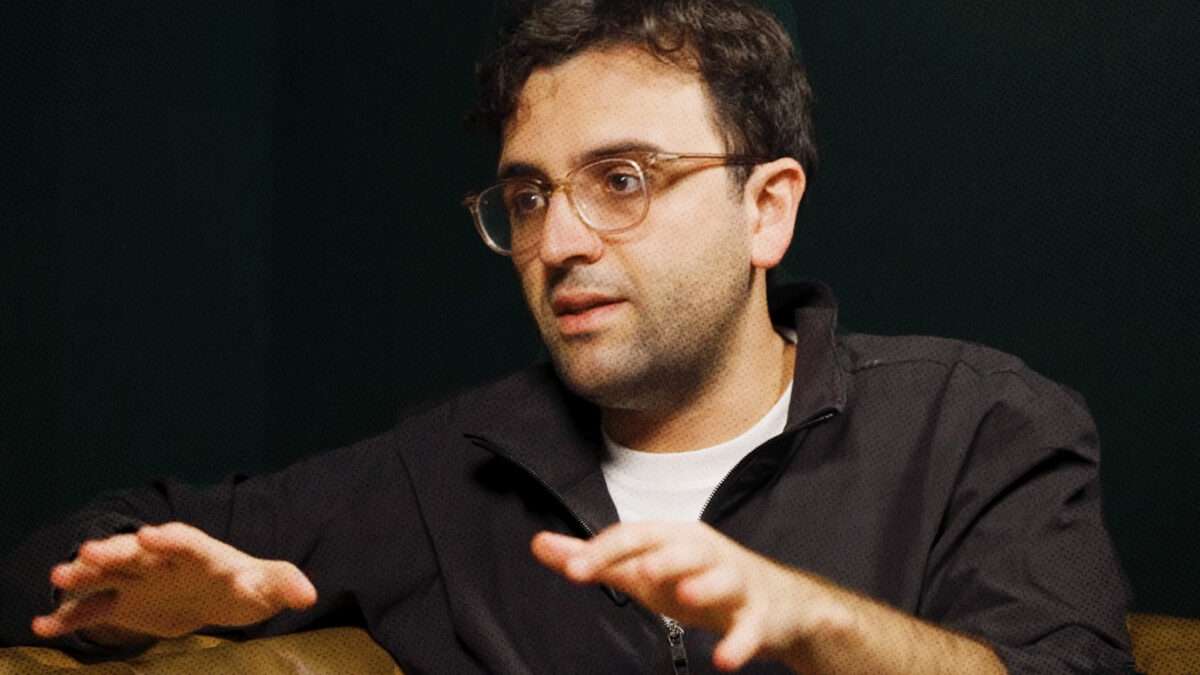
"I think capitalism is a good thing, but I think what we need to contend with and be aware of is that a lot of people are not part of it," Tarek Mansour, co-founder and CEO of prediction market platform Kalshi, recently told Reason's Nick Gillespie. "They don't feel like they're part of it. And that's a reality."

Mansour has set out to change that by making it easier for consumers to experience and participate in financial markets. Kalshi's premise is simple: Mansour says the platform matches traders with differing opinions on the outcome of future events, aggregating the "bits and pieces of information" siloed across the country, so long as that information isn't privileged or obtained illegally.

He's up against a rising number of federal and state lawmakers—not to mention the NFL, traditional sportsbooks, casinos, and other regulated gambling operations—who view Kalshi as yet another gambling app. "As of early 2026, more than 20 lawsuits and cease-and-desist actions are pending across the country, filed by state attorneys general, gaming regulators, tribal governments and private plaintiffs," according to the National Conference of State Legislatures. This includes Utah, whose attorney general, Derek Brown, escalated an ongoing legal dispute with Kalshi on Tuesday by filing a complaint against the prediction market in state district court. In his complaint, Brown called Kalshi an "unconscionable and illegal gambling operation." He accused the company of engaging in a "brazen pattern of unlawful conduct."

At the federal level, Bloomberg Law reported last Friday that Sen. Ted Cruz (R–Texas) is preparing to introduce a bill after the midterm elections that would give state and tribal governments authority to regulate sports-related event contracts offered by prediction markets. 

Cruz's state-by-state regulatory regime is exactly the kind of scheme Mansour wants lawmakers to avoid. Mansour recently told Reason that, ideally, there'd be a "federal uniform set of rules that apply across all 50 states." Those rules would then "promote and foster" a "multilateral, peer-to-peer idea," where, for example, someone in California, Oregon, or Washington could trade on an event's outcome based on information supplied by someone in Texas.

Data from the Pew Research Center show Kalshi is incredibly popular nationwide; however, the platform is facing headwinds in Congress from the likes of Reps. Alexandria Ocasio-Cortez (D–N.Y.) and  James Comer (R–Ky.) and Sens. Adam Schiff (D–Calif.) and John Curtis (R–Utah), who have questioned whether prediction market platforms can indeed self-police insider trading and market manipulation. 

Mansour, who calls insider trading an "unfair dynamic that over time dries up liquidity," also argues that prediction markets are uniquely positioned to self-regulate because trades on Kalshi are "fully transparent," making it "easy to flag" suspicious trading patterns. The platform's users play a key role in that work. Mansour says that in February, when convicted fraudster and former Rep. George Santos (R–N.Y.) tried to engage in insider trading, Kalshi received "a hundred whistleblower complaints within a few minutes."

The company's public commitment to rooting out insider trading on its platform may be laudable. Still, it has done little to dispel the prevailing sentiment among state and federal regulators that Kalshi—and prediction market platforms writ large—is indistinguishable from traditional gambling markets. 

Indeed, the legal cases against Kalshi are centered on state regulators' belief that the platforms' sports event contracts are the same as the bets offered by legal gambling operations like casinos and sportsbooks. Kalshi has argued that the U.S. Commodity Futures Trading Commission has exclusive jurisdiction to regulate the kinds of contracts it can offer under federal law, preempting states from exercising any gambling authority over prediction markets. 

In March, Arizona became the first state to file criminal charges against Kalshi. Arizona Attorney General Kris Mayes accused the company of "running an illegal gambling operation and taking bets on Arizona elections, both of which violate Arizona law." Not everyone in the state shares Mayes' view. One Arizona resident, Zach, a 35-year-old man who makes a living trading sports-related event contracts on prediction markets, tells Reason he'd "move to another state" if Arizona succeeds in driving out prediction markets. 

"There's nothing that is excluding other people from the profits that I'm making right now," he says. "I'm under no obligation to bet on Monday Night Football….I'm able to look at all the markets and decide which ones I want; I'm setting a limit order and just saying, 'OK, if I get my price, then hooray.' If I don't, then that's not something that I add to my portfolio."

Of course, not everyone acts as responsibly. Mansour knows that in any competition, including trading, "some people are going to win," while "some people lose." He believes in "individual freedom" and in the idea that "people should be able to choose" which financial markets they engage in, with "some regulations on irresponsible use" so that companies can't target people who exhibit addictive or destructive betting patterns. 

The degree to which Kalshi and other prediction market platforms should be regulated will likely be a high priority for federal lawmakers after the midterm elections and in the next Congress. Mansour appears optimistic that there's enough bipartisan support for what he calls "sensible guardrails." He says there's a "big group" on both sides of the aisle that's "actually pro" prediction market platforms. There's reason to be skeptical of Mansour's claim, given that several members of Congress—such as Sen. Elizabeth Warren (D–Mass.), the ranking Democrat on the Senate Banking Committee—have said prediction markets need to be reined in.

In Mayes' case, her antipathy toward prediction markets might cost her at least one vote in Arizona's attorney general race. Zach says that with Mayes waging a legal battle against Kalshi, he'd have to take that into account "hypothetically, if someone knocked on my door tonight and they want me to vote for Kris Mayes to be reelected."

"If I'm not gonna vote on my own behalf, then who is, right?" he says. (Mayes might not be a fan of Kalshi, but with the platform's penchant for accurately predicting election winners, she can take solace in her current trading position, which shows an 84 percent chance she retains her position.)

Mansour says he's a "free market guy" who wants everyone to "have a shot in the competition." To succeed, he'll have to withstand a host of paternalistic government officials hell-bent on controlling financial decisions made by consenting adults.

The post Kalshi's CEO Wants 1 Set of Rules. The States Want 50. appeared first on Reason Magazine.
  •  

Mississippi Cop Who Shot 1-Year-Old Kohen Wiley Resigns After State Calls Shooting 'Justified'

Bodycam footage from shooting of Kohen Wiley | darkhorsepress322/Youtube

Earlier this week, Mississippi Attorney General Lynn Fitch said that the police shooting of 1-year-old boy Kohen Wiley in a Walmart parking lot earlier this year was a "justified" use of force. On Thursday, Sgt. Hunter Foster, the Senatobia police officer who shot Wiley, resigned from the department.

Foster's resignation comes after a tumultuous week for the Mississippi attorney general's office and the Senatobia Police Department (SPD). After Finch ruled the shooting a justified use of force on Monday, DarkHorse Press leaked footage of the body camera video from officers at the scene, along with Walmart surveillance video. On Thursday, the Mississippi Department of Public Safety released more footage, including from the bodycam of Foster, which WLBT News obtained. Together, the footage shows a less cut-and-dry incident than what statements from Fitch and the Mississippi Bureau of Investigation imply.

Surveillance footage shows Kohen's mother, Vellesiya Wiley, and her friend running to their car from the Walmart entrance as Wiley holds baby Kohen in her arms. Police officers soon enter the frame chasing the duo. After getting in the car, Wiley's friend backs out of the parking spot and hits another parked car. The officers crowd around the vehicle, drawing their guns and shouting "stop." Foster places himself directly in front of the vehicle, his gun primed and ready. The driver puts the car in gear and accelerates toward the officers. According to his bodycam footage, Foster, one of the two officers in the vehicle's path, lets off three shots as he hops out of the way and continues to aim his gun at the car as it passes him. It appears that at least one of the shots pierced the front windshield, while the others came through the window on the passenger side, where Kohen was sitting on his mother's lap. The car then drove away, and officers gave chase. 

After reviewing the footage, Ben Crump, the Wiley family attorney, said during a Thursday press conference that the police officers "never ever should have drawn their weapons for a misdemeanor shoplifting allegation."

"The shot from the side of the vehicle was not justified," he added. "[Foster] was not in harm's way when he shot from the side." He claims that the shot that killed Kohen came from the side, corroborating an independent autopsy the family conducted.

Martin Zummach, an attorney for Foster, told the Associated Press that the driver "tried to kill" his client and other officers at the scene, giving Foster "no choice but to fire his weapon." He said it was "strictly muscle memory" that led Foster to fire those additional shots, according to WSB News. "The one that went through the side glass that everybody's going crazy about? That's because she was moving so fast," he said. 

Regardless of whether the car was "moving so fast," Foster, who moved out of the vehicle's path, clearly had the choice not to fire his weapon. But instead of de-escalating the situation, the police officers decided to draw their guns and step in front of a vehicle, turning an incident involving an alleged shoplifter fleeing a misdemeanor into a life-or-death game of chicken.

The post Mississippi Cop Who Shot 1-Year-Old Kohen Wiley Resigns After State Calls Shooting 'Justified' appeared first on Reason Magazine.
  •  

The Founders Warned Against Secret Arrests. ICE Is Testing That Principle.

Detained person's hands with redacted paperwork | Lifestyle_Graphic/pixel-shot.com/Magnific/Mariam Zakaidze

Since the beginning of President Donald Trump's immigration crackdown in January 2025, the Department of Homeland Security (DHS) claims more than 1.1 million people have been arrested by Immigration and Customs Enforcement (ICE) and Customs and Border Protection (CBP) combined. But so far, the names of most arrestees have been kept secret. This lack of public disclosure threatens Americans' ability to hold the government accountable.

While ICE will disclose some details about detainees, the agency's refusal to provide the names, dates of birth, and locations of detainees violates the Freedom of Information Act (FOIA), according to a federal lawsuit filed by The Marshall Project on Tuesday. In denying FOIA requests for this information, ICE claims the "privacy interests of the individuals in the records…requested outweigh any minimal public interest disclosure of the information," and revealing such information would "increase the risk of misuse, unwanted contact, harassment, stigma, or other privacy harms," according to the complaint.

A curious position given the DHS' own "worst of the worst" website discloses all kinds of information, including names and photos, while boasting about the detention of select immigration detainees with criminal records. 

It's true that publicly disclosing someone's arrest, particularly a criminal arrest, may damage their reputation. But it's a necessary tradeoff to ensure a functioning democracy. Disapproval of anonymized arrests dates back to the Magna Carta. This pro-liberty stance was adopted early in America's Founding. In Federalist No. 84, Alexander Hamilton denounced the "practice of arbitrary imprisonments" as "the favorite and most formidable instruments of tyranny." He went on to cite Sir William Blackstone, an English jurist who greatly influenced America's Founders, quoting: "The confinement of the person, by secretly hurrying him to jail, where his sufferings are unknown or forgotten, is a less public, a less striking, and therefore a more dangerous engine of arbitrary government." 

Throughout much of American history, law enforcement agencies have disclosed the identities of those arrested through police blotters and other means in the name of transparency and government accountability. Today, 27 states have codified this practice, according to an amicus brief filed by the American Civil Liberties Union (ACLU) in a similar but separate case involving ICE's refusal to release the names of those arrested during a 10-day immigration enforcement operation in Chicago. And even when statutes don't plainly state arrest logs qualify as public records, courts have consistently held they do, the ACLU argues. Indeed, the Supreme Court has already ruled that the constitutional right to privacy does not extend to the publication of official acts, such as arrests. 

"We are seeking transparency and access to information that have existed within the criminal justice system for centuries," said The Marshall Project's editor in chief, Jennifer Peter. Concealing the names of detainees "makes it far more difficult for their loved ones and attorneys to help them—and for organizations like The Marshall Project to shine a light on what's truly happening within immigration camps," Peter continued.

Trump immigration crackdown has been a source of ongoing debate since its inception. Leading up to the 2026 midterm elections, a recent New York Times poll found that 50 percent of Americans trust the Democratic Party to do a better job of handling immigration, compared to 46 percent trusting Republicans more. 

Opponents of Trump's approach to immigration have routinely cited concerns over the use of force, wrongful arrests, detentions, and deportations, including those of U.S. citizens, and the mistreatment of detainees. Proponents of limited government and financial accountability have also raised concerns over the opaque yet explosive expansion of federal agencies, including over $200 billion in funding for FY 2027 and the 100 percent increase in both CBP and ICE funding, reaching nearly 44,000 agents combined, all in the name of immigration enforcement. 

Since the Founding, Americans have been rightly skeptical of government overreach and the potential to abuse arrest powers. In the era of Trump's immigration crackdown, this skepticism is even more warranted, and accountability is even more needed.

The post The Founders Warned Against Secret Arrests. ICE Is Testing That Principle. appeared first on Reason Magazine.
  •  

Worst Nathan for You–Style Scheme Ever? A Polling Company Claimed Its Fake Polls Were a Social Experiment.

Ballot box with an American flag | Magnific AI/Mariam Zakaidze

There has been much consternation this week about the use of fake polls in the media, with some government officials promising swift, and legally dubious, punishments for broadcasters that use them. 

The use of these fake polls came to light on Wednesday, when The New York Times reported that "well-known polling aggregators," including the paper itself, had been citing fake surveys by Wedgewood Polls. The fake polling scheme was revealed when the outlet FivePlusOne contacted Wedgewood Tuesday for comment about an investigation into the pollster. That night, Wedgewood posted a now-deleted statement declaring that it was an "experimental project to demonstrate the vulnerabilities, lack of oversight, and overall barrier to entry in the modern polling industry." The fake pollster claimed it was "far too easy" to be taken seriously in media and public commentary. 

A similar "social experiment" was revealed in August, when the Los Angeles Times reported that a poll by Median Strategies showing Mayor Karen Bass "leading ahead of Councilmember Nithya Raman by a wide margin" was "bogus." An earlier poll by Median Strategies showed Francesca Hong, who lost her race for Wisconsin governor, up by more than 20 percentage points. Median Strategies told the Times that the firm was "created as a short term social experiment to examine how purported polling information could enter and spread through the political information ecosystem without independent verification."

If Wedgewood's polling stunts were in fact social experiments (pollster Nate Silver is very skeptical of this explanation), then the experiment worked. Nobody is completely immune to deceit. And while savvy media consumers have become more attuned to detecting AI writing and video fakes, masses of people still fall for more than fake polls, as they have for a long time.

In 2018, when the word "slop" meant food for pigs and before anyone wrote posts using ChatGPT, the Intelligencer asked the question: "How much of the Internet is fake?" The answer, the outlet concluded, was "a lot."

At the time, Reason's Nick Gillespie noted that the article was a "sobering and obvious revelation that much of what we browse, engage, and interact with is in some fundamental way, total bullshit." Gillespie solemnly observed, "we're living not in the disintermediated, utopian world chronicled in the early days of Louis Rossetto and Jane Metcalfe's Wired, but something closer to the endlessly creative, weird, off-kilter, semi-insane world imagined by Philip K. Dick and, later, Neal Stephenson."

Eight years later, the "semi-insane" world is no less insane, and humans, as they always have, are falling prey to increasingly intricate schemes and hoaxes. In September, Semafor's Max Tani revealed that a large number of YouTube videos—several of which garnered hundreds of thousands of views—were made by "ghost creators." In these videos, presented as news reports, real actors were paid to read AI-written scripts "laced with misleading claims and outright falsehoods." According to Tani, these "accounts appear to be run not by political operatives trying to win, or foreign intelligence efforts seeking to destabilize the US, but by engagement junkies detached from the stakes of politics." While any semi-media-literate person in 2026 could tell you that not all YouTube videos should be taken as fact, the scale of the operation was staggering. 

The deception crisis plagues the media as well. Recently, the platform Qwoted, which connects journalists with sources, had to remove a supposed art therapy expert from its website after her "details were found to be false," reported the Press Gazette. According to the Gazette, the fake therapist's insights had been cited in several outlets, including Psychology, Forbes, Glamour, and Vice. I have also raised concerns about news outlets and commentators citing polls published by EduBirdie, a Cyprus-based company that sells human-written academic papers to students for $8 a page (ethics aside, what a bold business model in the AI age).

So what is to be done? As Gillespie wrote in 2018, there are existing legal levers to root out fraud, but any top-down approach to squashing online lies "will be poorly applied, repressive, and ultimately arbitrary." Government-led crackdowns on COVID-19 "misinformation" have proven him right. Outsourcing the arbitration of truth would only diminish our access to information, and no one entity, particularly the government, should be trusted to determine what is true or false. Unfortunately, the Trump administration has not learned much from the pandemic era and has instead repeatedly tried to crack down on media coverage it doesn't like.

Ideally, media organizations would act as B.S. detectors, but clearly, they often fail to do so. So, consumers are left to wade through lies, AI hoaxes, and so-called "social experiments." This may be tedious work, but it is necessary for consumers to evolve as technologies change. This sleuthing for scams may even be enjoyable. Why pay to have your brain scrambled by Nathan Fielder's Elizabeth Holmes documentary when you can drive yourself insane by tracking down and scrutinizing widely cited statistics and polls?

The post Worst <i>Nathan for You</i>–Style Scheme Ever? A Polling Company Claimed Its Fake Polls Were a Social Experiment. appeared first on Reason Magazine.

  •  

He Won a City Council Seat by Openly Admitting How Little He Wants the Job

Brady Rogers for Kelowna City Council campaign sign, featuring a man with a sullen expression alongside the slogans "Under 60!" and "I barely want to do this." | iambradythecreator/Instagram

To many people, but especially libertarians, voting can feel dispiriting: By definition, every person on the ballot wants in some way to exert control over your life.

Perhaps that's why it's refreshing to see a candidate for office who truly seems not to want the job.

Brady Rogers worked as a robotics engineer for four years, but he quit in 2019 after deciding the corporate world wasn't for him.

"It was just a bit unfulfilling," Rogers tells Reason. "I wanted to do something a little more impactful with my skills….So I left to find something else that felt worthwhile."

He started The Rogerie, a retail store in his hometown of Kelowna, British Columbia, a city of about 170,000 people. Rogers and his wife collect shredded plastic waste and extrude it into filament for 3D printers, which they use to create new housewares to sell in the shop.

Then earlier this year, Rogers again got the feeling that he could be doing something beneficial with his talents. This time, it meant running for the Kelowna City Council.

But he had to stand out in a crowded field—he would be one of 37 candidates running, and only the top eight would win a seat.

So, he settled on a strategy: openly admit his lack of qualifications and how little he even wanted the job.

"I guess I'm running for Kelowna city council," read his campaign website. "I don't like meetings, I don't like having to be certain places at certain times, and I'm allergic to stuffy offices. But unfortunately, I happen to like Kelowna, and think I can help do some good."

"Do I enjoy politics? No," he adds. "Do I know what I'm doing? No. But am I qualified? Also no."

That lackadaisical attitude carried over into his campaign signage: Yard signs featured pictures of Rogers with sullen, shrugging expressions, alongside slogans like "I barely want to do this" and "Let's see what happens?" In a winking reference to political gerontocracy, one sign even bragged that he was "Under 60!"

The ploy worked, and the campaign went viral.

"I certainly thought it was clever. I thought it would work, but it was really just how I honestly felt when I started," Rogers admits. "I was pretty conflicted about committing to a four-year thing that I didn't even really fully understand the ins and outs of, but at the same time I saw the opportunity to have a bigger impact. So, I was conflicted, and I figured that's a good, honest place to start a campaign."

Ultimately, he won a seat: He placed fourth out of 37 total candidates and even beat three incumbents, one of whom lost her seat.

The irony of Rogers' outwardly indifferent attitude is that he actually does have a policy platform: On his website, he advocates finding solutions to homelessness not necessarily by spending more money but by making better use of the resources that the city and province already provide. He also notes that Kelowna taxes land and improvements at the same rate, which "means we tax someone for improving their property while relatively rewarding someone who sits on valuable, underused land." Writing this week at Reason, J.D. Tuccille made a similar point.

Of course, Rogers' underqualified and disinterested campaign persona is only partially true—he did, after all, want the job, or at least he saw it as a viable means of improving his city.

Still, it's refreshing for a candidate to treat public office as something less than a higher calling.

Ultimately, Rogers thinks that authenticity is why his campaign caught on and was ultimately successful with voters, when many campaigns struggle to create viral moments or capitalize on social media trends. Perhaps other people could even learn from him.

"I think why mine worked so profoundly is that it is a little bit of humor, but immediately behind it was a legitimate platform and me as a real person with the skills and a real desire to do something," Rogers says. "And I think that resonated. I think people [have] an appetite for a new kind of politics."

The post He Won a City Council Seat by Openly Admitting How Little He Wants the Job appeared first on Reason Magazine.

  •  

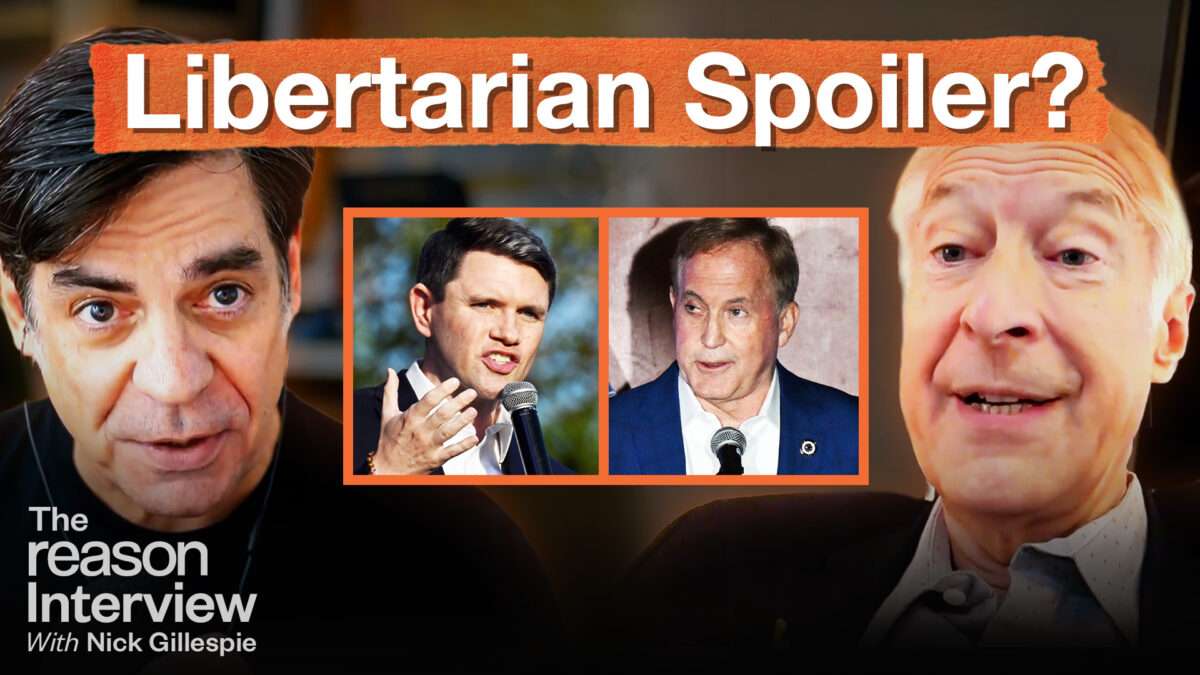
Could a Libertarian Swing the Texas Senate Race?

Today's guest is Ted Brown, the Libertarian Party candidate for U.S. Senate in Texas. Brown is facing off against Republican Ken Paxton and Democrat James Talarico in a closely contested race. Brown received more than 267,000 votes in his 2024 Senate campaign and is now challenging both major parties on their commitment to individual liberty. He argues that Republicans have abandoned limited government while Democrats increasingly embrace economic policies that undermine the free market.

Nick Gillespie talks with Brown about Paxton's corruption scandals, Talarico's hostility toward billionaires, and why Texas ranks poorly on personal freedom despite its business-friendly reputation. Brown makes the case for returning to an Ellis Island–style immigration system, cutting federal spending to confront the $40 trillion national debt, and ending America's military involvement in the Middle East. They also discuss abortion rights, government surveillance, online age-verification laws, and how regulations drive up the cost of healthcare. Brown explains what it will take to rebuild the Libertarian Party and why he believes a senator could accomplish more by stopping bad legislation than by passing new laws.


0:00—Freedom in Texas

4:01—Paxton's corruption

6:21—Talarico's platform

8:53—Texas governance

10:33—Ellis Island–style immigration

13:58—Abolishing the federal income tax

15:29—Entitlement reforms and defense spending

18:19—Abortion

21:21—Transgender healthcare

22:24—Age-verification laws

25:05—Healthcare and property insurance

31:22—Who is Brown appealing to?

33:27—The Libertarian Party

36:08—Brown's pitch to undecided voters

39:06—Threats to individual liberty

The post Could a Libertarian Swing the Texas Senate Race? appeared first on Reason Magazine.

💾

© Illustration: Fatima Ruiz

Nick Gillespies talks to Ted Brown about Texas senate race
  •  

California Republicans Pushing New Voter ID Law Are Motivated by Trump's 'Stolen Election' Fantasies

President Trump and a U.S. voting station | Illustration: Sipa USA/Chris Beckett/ZUMA Press/Newscom  Photo: Florin Seitan/Dreamstime.com

Supporters of Proposition 39, the statewide ballot initiative that would implement additional Voter ID requirements for California elections, pitch the measure as a "common-sense reform to increase trust and participation in our elections." Its sponsor, Assembly member Carl DeMaio (R–San Diego), touts widespread support for such measures by Democratic, Republican, and independent voters.

Yet the latest polls show the measure tanking, with a Public Policy Institute of California survey last month showing it losing 55 percent to 43 percent—dismal numbers this late in the election season. The official ballot arguments provide some insight into the reasons. While supporters stick with their "nonpartisan" shtick, opponents tie the measure to President Donald Trump's election denialism.

"Stop Trump from rigging our elections. Don't believe the lies. Prop. 39 MAKES VOTING HARDER, MORE EXPENSIVE, AND LESS SAFE for Californians," per the "no" argument. It refers to the measure's funding from "MAGA rightwing billionaires." That point was reinforced by a recent CalMatters report showing large donations from "deep-pocketed Republican donors." The publication says it's a "signal that conservatives view Prop. 39 as a test of support for future battleground states in the broader push by…Trump to tighten voter restrictions."

That's a fair assessment. In a Democratic state where the president's approval ratings are 24 percent in one poll, it's hard to imagine that most voters will spend much time thinking about the ins and outs of election policy and analyze the measure based on its specifics. They'll no doubt see it for what it largely is: a Republican Party effort to aid and abet Trump's unfounded election conspiracies. That said, its requirements aren't overly obtrusive, only unnecessary.

Currently, Californians must show a state identification or provide the last four digits of their Social Security Number when registering. No identification is needed to vote in person, but election officials use signature verification for vote-by-mail envelopes. Around 90 percent of Californians vote that way, so the main issue involves the requirement that voters add the last four digits from their government IDs on the outside of the envelope—thus adding an additional checkpoint (and sadly an additional opportunity for identity theft).

There's no need to worry about compliance costs for election agencies, as it's their job to administer elections. The measure likely will marginally reduce voter participation (by increasing disqualified ballots, even from legal voters if they forgot the ID they used when they registered), while marginally increasing security. It would force many Californians to re-register, which is a hassle. It would no doubt burden our excruciatingly slow ballot counting.

I don't have any theoretical problem with requiring an identification before voting, but California's elections are remarkably secure. There's no evidence of widespread fraud. Basically no one risks prison time by pretending to be someone else on a ballot. It's not about fixing a problem.

Since his defeat in 2020, Trump has traded in election conspiracy theories. The new GOP game is to trot out evidence-free election-fraud claims whenever they lose. We shouldn't play along. Despite the nonpartisan rhetoric, Proposition 39 is the state GOP's way of leaning into Trump's priorities and, as that CalMatters article noted, build momentum for less-defensible nationwide restrictions—apparently the only way Republicans think they can build a lasting majority. The measure won't do much damage in California as it's fairly modest, but it energizes the party's worst instincts.

Consider what DeMaio wrote in 2024 about his seven-point plan to overhaul the state GOP: "Do you remember a time when Republicans controlled a majority of statewide offices in California and were competitive in the state Legislature and congressional delegations?" He rightly blames the party itself, then offers his first item on a platform to revive it: "Make election integrity CAGOP's top ballot priority." I, too, would prefer more competitive California elections, but my first point would be for the GOP to make a better case for fixing California's messes.

Others see the measure as a means to gin up Republican turnout for a November election that's going to be a referendum on Trump by giving them some high-excitement issue to rally around. But some savvy political observers think that it might backfire. We'll see, but it reminds me that the California GOP has too long relied on cute strategies rather than good candidates.

What about supporters' main claim that Voter ID is necessary because it will restore voters' flagging trust in election integrity? Well, Republicans are the ones who don't trust our elections—and that's precisely because Trump spent the last six years poisoning the well. Do you really believe the people who think MAGA Republican Spencer Pratt could have only lost a Los Angeles mayoral primary (where only 15.9 percent of voters are Republicans) because of fraud will have their faith restored if Proposition 39 becomes law? Doubtful.

Republicans can restore their fortunes by acting normal again. The rest of us needn't enable them by backing a measure based on an election-integrity fantasy.

This column was first published in The Orange County Register.

The post California Republicans Pushing New Voter ID Law Are Motivated by Trump's 'Stolen Election' Fantasies appeared first on Reason Magazine.

  •  

"The District Court—or Perhaps, Being Charitable, Its AI Agent—Ignored and Manipulated Governing Law, Apparently to Satisfy a Policy Agenda"

A short excerpt from the long opinion in Jackson Fed. of Teachers v. Fitch, decided yesterday by Fifth Circuit Judge Jerry Smith, joined by Judge Kurt Engelhardt:

In April 2025, Mississippi enacted House Bill 1193 (H.B. 1193), a law designed to keep Mississippi public education funds from being spent on diversity, equity, and inclusion ("DEI") initiatives and similar controversial programs. The law prevents government-run institutions from requiring activities such as diversity training or pushing DEI ideology, so defined, in the course of government-funded business.

H.B. 1193 does four main things. First, it prevents educational institutions from mandating DEI programs and diversity trainings in a variety of contexts. Second, it stops public educational institutions from punishing students for their views on DEI. Third, it prohibits regulated institutions from endorsing or promoting DEI through course materials. Finally, it prevents institutions and their educators from otherwise engaging in DEI methods or actions, preventing bad actors from circumventing prohibitions and frustrating its purposes. The statute also creates an administrative process to handle claims that a given educational institution is not in compliance. H.B. 1193 excepts several activities from its sweep, including scholarly work, the activities of students and their groups, and creative engagement.

Plaintiffs sued, claiming (among other things) that the law violated the First Amendment, but:

The proceedings in the district court were a botch job, to say the least. Judge Henry Wingate issued a temporary restraining order ("TRO") enjoining enforcement of H.B. 1193 that contained several factual assertions nowhere to be found in the record, or indeed, in any proceeding of the case. Those included mention of plaintiffs and defendants not in the complaint, supposed "declarations" from non-existent or never-present individuals, false quotations purporting to be taken from the text of H.B. 1193, and several erroneous claims that the law had already led to the demise of apparently fictitious programs.

After this came to light, Judge Wingate replaced the TRO without explaining.

Forging forward despite the bungled TRO, Judge Wingate issued a pre-enforcement preliminary injunction. The various state defendants appeal.

At oral argument in this court, it was discovered that even the "corrected" TRO—which was incorporated by reference into the preliminary injunction order—still contained hallucinated information (namely, a citation to a purported Fourth Circuit case, "Cousins v. School Bd. of City of Norfolk," that does not exist).

This district judge carelessly exercised his Article III power by issuing sloppy edicts based on falsehoods and fabrications. Upon discovering some of these falsehoods, Judge Wingate dug in his heels and claimed that the hallucinated claims had no bearing on its reasoning; he offered no explanation as to why he included such apparently irrelevant material in the original TRO or why the TRO nevertheless was justified in its absence.

Moreover, the district court got the law wrong. The TRO and preliminary injunction order rested on impoverished legal analysis that barely paid lip-service to the precedents of the Supreme Court or this court, seeming at times purposely to misconstrue the law by manipulating the words of statutes and cases, without regard to their texts' meaning as a whole. The district court—or perhaps, being charitable, its AI agent—ignored and manipulated governing law, apparently to satisfy a policy agenda.

Because of the extraordinarily grave errors by the district court, we vacate and remand for assignment to a different district judge. Per the Supreme Court's decision in Moody, we instruct the new judge to conduct proceedings consistent with federal law as interpreted by the Supreme Court and this circuit….

The original TRO—the one actually issued on July 20, 2025—named as plaintiffs eleven individuals and organizations who had never been party to the case; named as defendants two officials who were not actually sued; claimed, without evidence, that three post-secondary institutions had already cancelled DEI initiatives or programming because of the act; further declared, again without evidence, that staff at another school had been told not to discuss certain topics, including "historical interpretations involving systemic racism"; misquoted H.B. 1193 as applying to "race or sex stereotyping," "race or sex scapegoating," "critical race theory," and "institutional bias," despite none of these terms' appearing in the act's text; and referenced purported declarations of four individuals who do not appear in the record at all and may not even exist….

On July 22, 2025, defendants filed a motion to clarify, pointing out these errors. In response, the court, without explanation, replaced the original TRO with a seemingly corrected version. Though that document was docketed on July 22, it was backdated to July 20. Defendants requested that the original order be restored to the docket to keep the record whole and requested that the court explain the inaccuracies in the original order. The district court denied that motion, claiming the factual inaccuracies were merely "clerical."

In response, U.S. Senator Chuck Grassley accused the district court of using artificial Intelligence ("AI") to prepare the TRO, with the substantive errors' arising from AI-generated hallucinations. Fifteen days later, Judge Wingate admitted the errors, claiming that a law clerk had used AI to assist drafting an earlier version of the TRO that was docketed by mistake. His letter stated that he had removed the original TRO from the docket to avoid confusion and that the errors were clerical, in his view, because they did not relate to "core legal reasoning or the ultimate judgment on the merits" but instead to "failure to confirm the accuracy of certain information."

The seemingly corrected TRO did not explain how or why the factual inaccuracies were not necessary to the reasoning of the original TRO. The merits analysis failed to cite a binding authority from after the year 2000. It claims that H.B. 1193 constitutes viewpoint discrimination, without any analysis whatsoever of a state government's authority to regulate its own speech. And the document did not correct all of the errors: At Fifth Circuit oral argument, it was discovered that the doctored TRO cited to "Cousins v. School Bd. of City of Norfolk, 503 F.2d 422, 426–27 (4th Cir. 1974)." That case does not even exist; it is an apparent AI hallucination….

Judge Catharina Haynes did not join these parts of the opinion.

There's also some interesting First Amendment analysis in the case, which I hope to blog about later today. (I'm tied up for the next several hours.) Thanks to @WillChamberlain and Glenn Reynolds (Instapundit) for the pointer.

Anthony M. Shults, Justin Lee Matheny, Rex Morris Shannon, III, and Scott G. Stewart represent defendants.

The post "The District Court—or Perhaps, Being Charitable, Its AI Agent—Ignored and Manipulated Governing Law, Apparently to Satisfy a Policy Agenda" appeared first on Reason Magazine.
  •  

Family Separation Drama Fjord Is a Haunting Depiction of Unchecked State Power

A scene from "Fjord" | Forum Film România

Fjord is a movie about having your children taken by the state. The tone is calm, clinical, measured, and by the books. No violence is depicted on screen. People rarely even raise their voices. Everything unfolds in the distant and impersonal style of bureaucratic procedure. 

But the movie, which won the Palme d'Or at this year's Cannes Film Festival, is utterly enraging, a fierce, ferocious, gut-punch of a film. It's a haunting portrait of the consequences of unchecked state power, especially the kind that purports to be for one's own good.

Much of the film's power comes from the fact that it simply depicts what happens when a person, or a family, comes under suspicion by the state. There's no commentary, no lecturing, no big speech at the end. Instead, writer-director Cristian Mungiu, a Romanian filmmaker whose sympathies are clearly with the family, simply shows us, unblinking, what it's like to lose one's rights and freedoms at the hands of a bureaucracy that respects no power and no authority but its own. 

When the film begins, the Gheorghiu family—a mother (Renate Reinsve), father (Sebastian Stan), and their five children—moves from Romania to a small town in Norway. Soon, school authorities notice the children have bruises. We in the audience know the bruises weren't caused by the parents, but the children, who don't speak Norwegian, give conflicting statements. After being brought in for questioning by the police, the father admits to sometimes spanking or lightly slapping his children on the behind, for correction. In order to go free, he's required to sign a statement that contorts his words, making his admission of spanking sound like something more sinister and violent. 

He's also a conservative Christian, which has caused some social tension: He's played Christian music, without singing the lyrics, on a piano at school, a no-no in a state that strictly curbs proselytizing. School officials are concerned that he requires his children to pray and study the Bible; the children aren't allowed to play video games or watch YouTube. One of his children spoke out against homosexuality in school during a session on gender. There's suspicion among the teachers and administrators that he might be indoctrinating his kids.

So the school authorities alert Child Protection, Norway's powerful family bureaucracy. They remove the kids, including a breastfeeding baby, from their parents' custody and place them in three separate foster homes. At first the parents are allowed no visitation, and they are not told where the children are located.

Then they go to court, initially for a civil trial, but with a criminal trial for child abuse looming in the background. As the legal process proceeds, they are told repeatedly that essentially anything they do to fight for their children will make the outcome worse. The state wants compliance and admission that they wrongly abused their kids. But if they admit to abusing their kids, doesn't that give the state evidence they are unfit to parent? Doesn't that make the criminal trial more likely to go against them? As their own, mostly sympathetic lawyer, informs the two parents, "Frankly unless you convince them that you understand and regret it, the risk of you going to prison is considerable." 

Later, at the trial, a representative from Child Protection calmly says there's no reason to believe children might be better off with their biological parents, noting the family's restrictions on video games, internet, and YouTube. In their view, the state knows what's best for the kids; the culturally backward, religious conservative parents do not. It's not for nothing that one character, a conservative political figure from Romania who has come to help publicize the situation, analogizes the power of Child Protection to the power of the Soviet state. 

Part of what makes Fjord so effective is its lack of sermonizing. You don't have to be a trad, a conservative, a family values evangelical, to see that what's happening to the Gheorghiu family is simply wrong. They are railroaded by an imperious bureaucratic state that distorts reality to turn them into villains, with the goal of separating children from their parents and each other. Who are the real child abusers here? 

The story is fictionalized, but not hypothetical. Fjord is based on the true story of the Bodnariu family, conservative Romanian immigrants whose five children were taken from them by the Norwegian state in the 2010s on similarly flimsy justifications. The family eventually left Norway. After watching Fjord, it isn't hard to see why. 

The post Family Separation Drama <i>Fjord</i> Is a Haunting Depiction of Unchecked State Power appeared first on Reason Magazine.
  •  

The Man Who Saved the Internet

A graphic of the globe | Donfiore/Dreamstime/Midjourney

If you're reading this, then the internet still works. But that's something that we shouldn't necessarily take for granted after this week's global cybersecurity meltdown.

"Think of it this way: someone discovered that millions of buildings in the country have the same broken lock, and now everyone knows how to open it," writes Matt Shumer in a lengthy post on X about the situation. "The lock maker has sent out a fix, but every building owner has to install it themselves, and many haven't yet."

That massive vulnerability was identified with the help of AI, but the growing capabilities of AI-powered hackers mean that vulnerabilities can be exploited much more rapidly too.

This is the world we live in now. In August, more than 100 tech companies signed a letter warning about exactly this possibility. On Thursday, one of Anthropic's top information security officers wrote that cybersecurity threats "are going to get a lot worse before they get better." Major banks are rushing to secure themselves after reports of autonomous agents operating inside accounts (though many of them may have been authorized by account holders).

This is unlikely to be the last incident like this. Cybersecurity firm CrowdStrike says it saw twice as many "agentic intrusions" (hacking done by an autonomous or semiautonomous AI) in August as in July, and then the number doubled again in September.

Scary stuff, for sure. As is usually the case, however, prevention is better than panic.

Shumer's post contains many helpful suggestions for better online security—it is particularly important to secure your email accounts, since that is the gateway to so much of what we do online. Here's a 15-step plan to stay more digitally secure in the AI age. (And if you're really worried about everything falling to bits, Reason's got you covered there too.) If your devices and browsers have updates available, install them. And for the love of digital gods, don't click on random links in strange emails!

The man who (maybe) saved the internet? There is an old XKCD webcomic—and I'm dating myself as a very specific type of millennial by even referencing that—that seems to perfectly sum up what happened this week. Here it is:

Source: https://xkcd.com/2347

Here's the craziest part: That's basically true! Except the one random person lives in Czechia instead of Nebraska. His name is Ondřej Surý, and The Atlantic's Charlie Warzel found him:

Surý, who lives in Czechia, does not work for the PHP Foundation. But alongside his day job as director of domain-name-system engineering at the nonprofit Internet Systems Consortium, in a volunteer capacity, he maintains and helps automate patches for the coding language. His work, with that of just a handful of others, has allowed countless websites and organizations to fix these vulnerabilities quickly. Over the past 48 hours, he's become arguably the unsung hero of the entire internet—despite the fact that the only compensation he receives is from modest donations. "Ondřej will save the internet today," a user in the PHP Subreddit wrote.

In the war between AI hackers and AI defenders, it's still humans who are the heroes. At least for now.


Art of the steal. Yesterday, in this space, I detailed how voters are fed up with the Trump administration's seemingly endless stream of corruption. But it's been a whole 24 hours, which means there is yet another scandal in the news—thanks to a Vanity Fair article about President Donald Trump's son-in-law Jared Kushner.

The article is an excerpt from a forthcoming book. In it, author Matthew Cole claims that Dutch investigators gained access to Kushner's phone with the help of Russian hackers. The evidence from the phone and other sources shows that Kushner has been taking money from the governments of Saudi Arabia and the United Arab Emirates to "push their agenda with Trump."

Kushner says the article's claims are "outrageous and categorically false."

But wait, there's yet another corruption story. The Justice Department is reportedly probing whether Trump ally Corey Lewandowski profited from his role as a top adviser at the Department of Homeland Security (DHS). The Washington Post reports that the investigation is based on a referral from the DHS inspector general and is focused on "contracting fraud."

It may or may not be connected to other allegations that surfaced in September, when The Wall Street Journal reported that Lewandowski approached officials in Qatar and the UAE about being hired to help with "visa issues" and other matters.

In both matters, Lewandowski has denied the allegations. He's no longer working for the department, having been fired earlier this year amid a messy scandal involving then–DHS Secretary Kristi Noem, who was also canned.


Scenes from Virginia: Federal prosecutors indicted state Sen. L. Louise Lucas (D–Portsmouth), one of the most powerful Democrats in Virginia, on charges of racketeering and money laundering in connection with illegal marijuana sales. (Don't get me started on how dumb it is that recreational marijuana use has been legal here since 2021, but commercial sales are still forbidden. If it's legal to use something, it should be legal to sell it!)

Lucas pushed the failed Virginia redistricting effort and has been an outspoken critic of Trump. She plans to fight the charges. Virginia Gov. Abigail Spanberger, also a Democrat, said in a statement that the timing of the indictment, just days before the midterm elections, "further erodes the trust the American people deserve to have in the Department of Justice."


QUICK HITS

  • "The last thing José García-Sorto remembers after being shot in the chest is being pulled from his car, pinned to the pavement and handcuffed, his blood pooling around him on a Phoenix interstate. All he could think about was what would happen to his two young children if he died." The New York Times has a harrowing account of a Honduran immigrant who was shot by immigration officers last year. He's never been charged with a crime in connection with the incident, which suggests "the authorities did not find evidence that he had put anyone in danger."
  • Phil Magness and David Hebert debunk the notion that tariffs can help "infant industries" grow and succeed in a global market.
  • The Cato Institute's annual ranking of "Freedom in the 50 States" is out. Arizona takes the top spot. How did your state do?
  • Is alchemy real now? A California company claims it has successfully turned mercury into gold.
  • The World Series begins tonight, and it ought to be terrific. Despite low payrolls, Tampa Bay and Milwaukee were the top teams in their respective leagues this year. They are deep, talented teams full of characters worth cheering—Brewers' star pitcher Jacob Misiorowski is a huge Pokémon nerd; Rays' star hitter Yandy Diaz escaped from Cuba after being imprisoned there. And this is the first World Series since 1980 to match two franchises that have never won a championship.

The post The Man Who Saved the Internet appeared first on Reason Magazine.
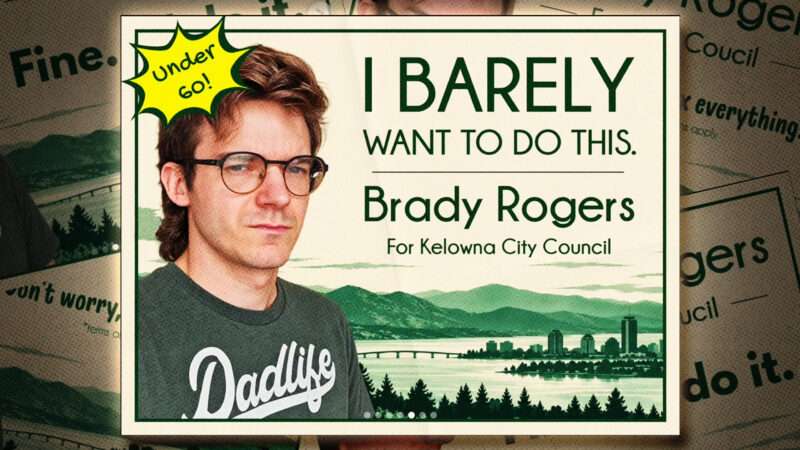
  •  

The U.S. Tax System Gets a Middling Score

A gold medal on top of a calculator | BillionPhotos/maylim/Magnific/Mariam Zakaidze

Politicians may not like it, but the countries they misgovern compete with one another for businesses, people, and capital. To attract startups, entrepreneurs, and investors, governments have to offer attractive environments, or else lose out to friendlier nations. When it comes to tax competitiveness, a new report says that Estonia leads the way in first position, with the United States lagging at 17th.


Low Rates and Simplicity Make Countries More Attractive

"The structure of a country's tax code is a determining factor of its economic performance," write Alex Mengden and Luis Zarka for the Tax Foundation's International Tax Competitiveness Index 2026. "A well-structured tax code is easy for taxpayers to comply with and can promote economic development while raising sufficient revenue for a government's priorities. In contrast, poorly structured tax systems can be costly, distort economic decision-making, and harm domestic economies."

The report notes that competition among countries has resulted in widespread improvements (and some backsliding) across the world in recent years. Especially among members of the Organization for Economic Cooperation and Development (OECD), marginal tax rates on corporate and individual income have declined. That said, most governments haven't given up on milking their populations, with growing reliance on payroll taxes and value-added taxes (VAT).

On the other hand, while "corporate tax base improvements have occurred in Canada, Germany, Lithuania, the United Kingdom, and the United States," France, the Slovak Republic, and Slovenia have hiked corporate tax rates. Even worse, tax policy has moved in many countries from a revenue-raising measure into a weapon of economic warfare "deployed to exert economic pressure."

The Tax Foundation's index ranks countries on the degree to which they keep their tax systems competitive—with low rates—and neutral, with minimal social engineering to avoid economic distortions.


Estonia Is First, France Last, With the U.S. in the Middle

According to these criteria, Estonia scores in first place for the best tax code in the OECD for the 13th straight year. According to Mengden and Zarka, the tiny Baltic state earns this distinction for four reasons:

First, it has a 22 percent tax rate on corporate income that is only applied to distributed profits. Second, it has a flat 22 percent tax on individual income that does not apply to personal dividend income. Third, its property tax applies only to the value of land, rather than to the value of real property or capital. Finally, it has a territorial tax system that exempts 100 percent of foreign profits earned by domestic corporations from domestic taxation, with few restrictions.

By contrast, France comes in dead last with the highest top corporate tax rate (36.1 percent) in the OECD, on top of which are "multiple surtaxes and distortive production taxes." France "also applies multiple distortionary property taxes with separate levies on estates, bank assets, and financial transactions, in addition to a wealth tax on real estate. Its VAT covers about 50 percent of final consumption, and it has one of the highest VAT registration thresholds."

The United States ranks at 17, down one place from last year. Among the U.S.'s weaknesses is that its "real property tax burden is among the highest in the OECD" and "the US has a partial territorial system and does not exempt foreign capital gains income." On the plus side, Americans pay relatively low sales/consumption taxes (an average of 7.5 percent, while the OECD average is 19.4 percent).

Not discussed in depth in the index, but still important, is that the U.S. is one of two countries (along with Eritrea) that base income taxation on citizenship rather than residency. "A Canadian living in France pays French taxes, not Canadian ones. An American in France? They pay French taxes and still file with the IRS," notes Bright!Tax. The U.S. tax obligation can be offset for nonresidents, but only by jumping through more bureaucratic hoops.

By and large, countries score better on the index by keeping tax rates low and broadly applied, emphasizing simplicity, and keeping their systems neutral to raise revenue and encourage investment, rather than achieve social and political goals.

Not everybody shares the Tax Foundation's preference for low burdens and minimal complexity. In its 2022 report on Lithuania's tax system (ranked a commendable 5th by the International Tax Competitiveness Index 2026), the OECD urged the country to increase taxes on businesses and self-employed people, and to increase reporting requirements. The OECD apparently favors higher tax burdens and complexity. Keeping the OECD happy would undoubtedly make Lithuania (or any country) less attractive to investors and entrepreneurs.


The U.S. Scores Better on Overall Economic Freedom—Though It's Losing Ground

While the index's middling score for the U.S. on tax competitiveness is disappointing, if understandable, it's not the final word on a country's economic attractiveness. In the Fraser Institute's recently published Economic Freedom of the World 2026 report, the U.S. ranks a credible 5th place, based on 2024 data. It comes in after Hong Kong, Switzerland, Singapore, and New Zealand. The formerly British and now Chinese territory of Hong Kong remained in the leading position despite erosion in economic liberty to accompany its sadly decaying civil liberties status. That's a worldwide concern.

"Global economic freedom fell following the pandemic as policymakers imposed new regulations, raised barriers to trade, expanded the size of government, and then printed money to pay for spending," wrote the Fraser Institute authors, including the late James Gwartney. "While governments have begun to reverse these policies, economic freedom in the average country has not yet returned to pre-pandemic levels."

Unfortunately, the U.S. is forecast to slide two positions in next year's Economic Freedom report because of "increases in the size of government, weaker protection of property rights and the rule of law, and significant restrictions on trade freedom."

Improving the U.S. tax environment might help to improve America's economic freedom score. Then again, so would reducing government's role and discontinuing protectionist policies.

Tax competitiveness is one important element of any country's overall economic freedom, which creates an attractive environment to invest, create businesses, and generate prosperity. The U.S. has long thrived because it is, in relative terms, free. That's a status worth maintaining.

The post The U.S. Tax System Gets a Middling Score appeared first on Reason Magazine.
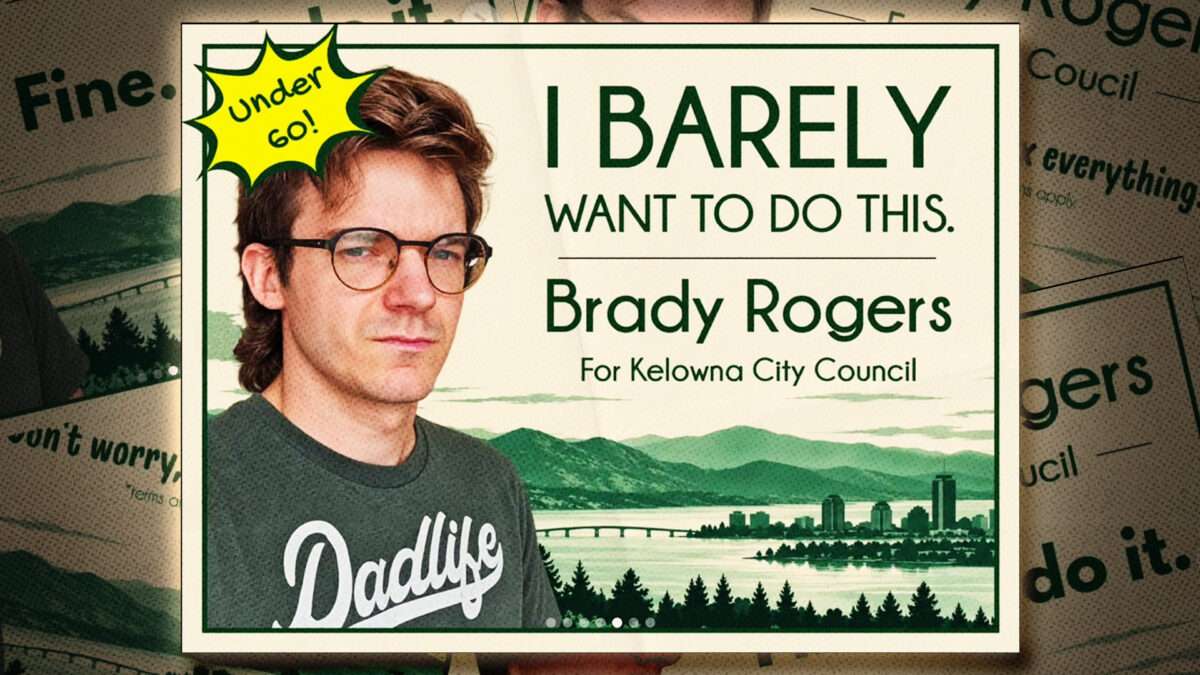
  •  
❌