❌

Reading view

Russia Moves to Exclude Europe from Ukraine Peace Talks as Kremlin Delays Next Round of Negotiations

Moscow has indicated that European governments will not participate in the next round of negotiations over the war in Ukraine, despite their central role in financing Kyiv, supplying military assistance and shaping the continent’s security arrangements. The Kremlin’s position raises questions about whether any agreement negotiated principally by Washington, Moscow and Kyiv could be implemented without substantial European involvement.

Russia has ruled out European participation in the next round of trilateral talks with Ukraine and the United States, while suggesting that the negotiations could be delayed by developments on the battlefield and the continuing conflict in the Middle East.

Yuri Ushakov, foreign policy adviser to Russian President Vladimir Putin, said on 29 October that Moscow had not agreed to a specific date for further consultations and that European representatives were not being considered for inclusion.

Ushakov maintained that preparations concerned representatives of Russia, Ukraine and the United States.

His remarks followed statements by Ukrainian President Volodymyr Zelensky indicating that the next round could take place in Abu Dhabi between 6 and 10 November.

The Kremlin has not confirmed those dates.

The disagreement comes as European governments seek a more substantial role in diplomatic efforts concerning a conflict whose eventual settlement would have direct consequences for their security, defence expenditure and relations with Russia.

Moscow Sets Its Conditions

Ushakov’s position was particularly explicit when discussing European participation.

Speaking to Russian media on 28 October, he suggested that European representatives were free to travel to the proposed venue but would not be invited to join the negotiations.

His remarks were subsequently reinforced by a statement that European involvement was not under consideration.

The Kremlin adviser also linked the timing of the next meeting to developments in the Middle East, where the US-Israeli conflict with Iran has complicated Washington’s diplomatic and military priorities.

Ushakov said that conditions on the Ukrainian battlefield would also influence when negotiations could resume.

These explanations give Moscow considerable latitude over the timetable while leaving uncertainty about the practical arrangements for the next meeting.

They do not, however, establish that Washington and Kyiv have accepted Russia’s preferred arrangements for every subsequent stage of negotiations.

Technical consultations between three parties and broader discussions over a European security settlement are not necessarily the same diplomatic process.

Europe Wants a Place at the Table

The Russian position contrasts with statements from the leaders of Britain, France and Germany, who have maintained that European governments must participate in discussions concerning Ukraine’s future security.

Their argument rests partly on the responsibilities that European countries would be expected to assume after any agreement.

European states have provided substantial financial, military and humanitarian assistance to Ukraine since Russia launched its full-scale invasion in February 2022.

They have also introduced successive sanctions against Russia, expanded defence expenditure and debated arrangements for security guarantees intended to discourage renewed hostilities.

Any settlement that required changes to European sanctions, military deployments or financial assistance would therefore depend on decisions taken by European governments and institutions.

Neither Moscow nor Washington could independently commit the European Union to lifting sanctions or authorise European states to deploy forces.

This distinction limits the practical significance of excluding European officials from a negotiating session.

An agreement could be discussed without European participation, but implementing provisions that require European action would demand further negotiations.

The Donbas Question Remains Unresolved

The principal obstacle continues to concern territory and the conditions under which military operations would end.

Russia has maintained its demand that Ukraine relinquish territory in the eastern Donbas region, including areas remaining under Ukrainian control.

Kyiv has rejected the surrender of territory as a precondition for ending the war.

The proposed negotiations are consequently expected to concentrate on technical issues where limited agreements may be more achievable.

These include possible arrangements concerning energy infrastructure, maritime security, the exchange of prisoners and the return of Ukrainian children taken to Russia or Russian-controlled territory.

Such measures could produce humanitarian or economic benefits without resolving the central territorial dispute.

However, their implementation would require monitoring arrangements and sufficient confidence that the parties would honour their commitments.

The temporary humanitarian ceasefire around Oleshky, in the Kherson region, offers a narrowly defined example of cooperation between Russian and Ukrainian representatives.

It does not demonstrate that a broader political agreement is within reach.

The American Role

Washington remains the principal external mediator in the current negotiating format.

That position reflects American diplomatic influence and its capacity to engage directly with both Moscow and Kyiv.

However, the United States is simultaneously managing military commitments in the Middle East and domestic political pressures ahead of the 3 November congressional elections.

These competing priorities may affect the pace of diplomatic engagement.

For Russia, a negotiating framework centred on Washington offers the possibility of addressing wider bilateral issues alongside the conflict in Ukraine.

For Ukraine, American participation remains important because US decisions concerning military assistance and security commitments could influence the durability of any settlement.

Europe’s position is more complicated. Its governments possess substantial economic leverage, but their influence over the negotiating agenda depends on coordination with Washington and Kyiv.

Negotiating Without Europe Has Practical Limits

The immediate dispute concerns who participates in the next round of talks.

The longer-term question is which parties would be responsible for implementing a settlement.

A ceasefire might initially involve arrangements agreed by military and diplomatic representatives of Russia and Ukraine, supported by the United States.

A more comprehensive agreement could involve sanctions, reconstruction finance, security guarantees, troop deployments and Ukraine’s future relationship with European institutions.

Those issues cannot be settled on behalf of European governments without their consent.

Moscow’s attempt to restrict participation may therefore succeed at the level of an initial negotiating format while proving more difficult to sustain during discussions about implementation.

For the moment, neither the date nor the outcome of the proposed Abu Dhabi meeting is certain.

What has become clearer is the divergence between Russia’s preferred negotiating structure and Europe’s determination to influence the security arrangements that would follow the war.

  •  

Ankara tells Washington it’s ready to help revive Ukraine-Russia talks—but names no date or venue

Ukrainian (left) and Russian (right) delegations during the talks in Istanbul, Turkey on 29 March 2022.

Turkish President Recep Tayyip Erdoğan told US President Donald Trump by phone on 28 October that Türkiye is ready to support efforts to revive Ukraine-Russia diplomacy and end the war that way, the Turkish presidency’s Directorate of Communications said. The same day, a White House official said the US will join the next round of talks with Kyiv and Moscow.

Talks between Ukraine, Russia, and the US have been stalled since winter, and the fight now is over timing. On 27 October, Zelenskyy said Kyiv wants that round before a Putin-Trump-Xi summit, which would leave Ukraine out of the room. Putin proposed that summit, The Wall Street Journal reported. Ankara’s statement names neither track, but Ukraine sits at the table only in the first.

Ankara offers support, but no date or venue

The statement named no date or Turkish venue. In July, Foreign Minister Hakan Fidan said in Kyiv that the Türkiye-mediated Istanbul talks should continue in the same format. Türkiye hosted Russia-Ukraine talks in 2022 and 2025. The 2 June 2025 round in Istanbul ended with a prisoner swap deal but no ceasefire. In March, Zelenskyy named Türkiye among possible venues.

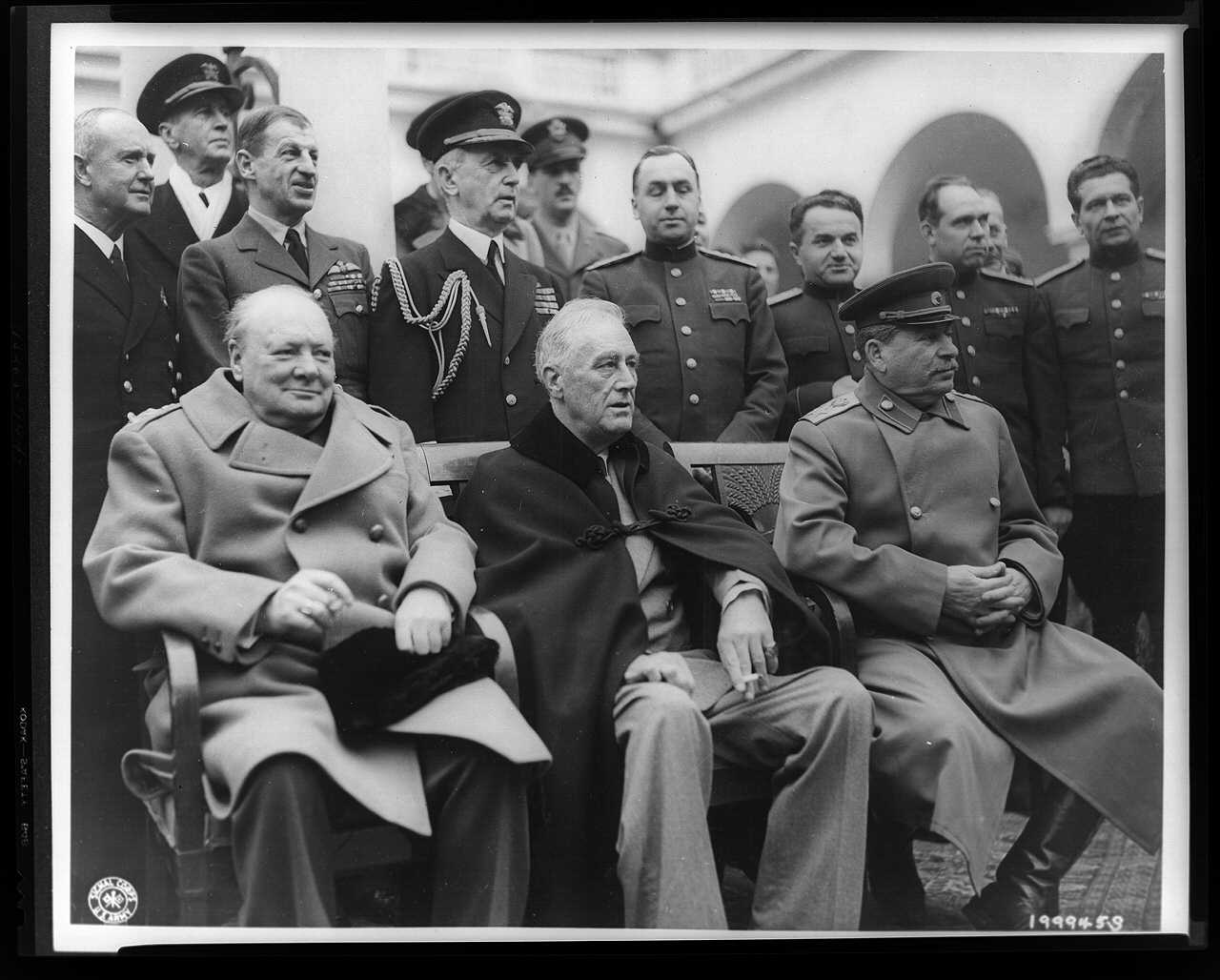
The Crimean Conference: Prime Minister Winston Churchill, President Franklin D. Roosevelt, and Marshal Joseph Stalin at the palace in Yalta, February 1945 (Image: U.S. Signal Corps, from collection of the Library of Congress)
Explore further

“I really don’t want this to be Yalta 2, 3, 4”: Zelenskyy fears Trump-Xi-Putin meeting could redivide world, with Ukraine on agenda

Everyone says soon, but no date is set

On 28 October, Russian Deputy Foreign Minister Sergei Ryabkov claimed it was premature to talk about Abu Dhabi: a contact was expected soon and Abu Dhabi had been mentioned as a venue, but Russia was still preparing. Kremlin aide Yuri Ushakov claimed the talks would come after 4 November, with the date depending in part on the battlefield. On 27 October, Ukrainian presidential adviser Dmytro Lytvyn told journalists it was too early for announcements. A day later, Zelenskyy told The Sun that the round could come as soon as 10 November.

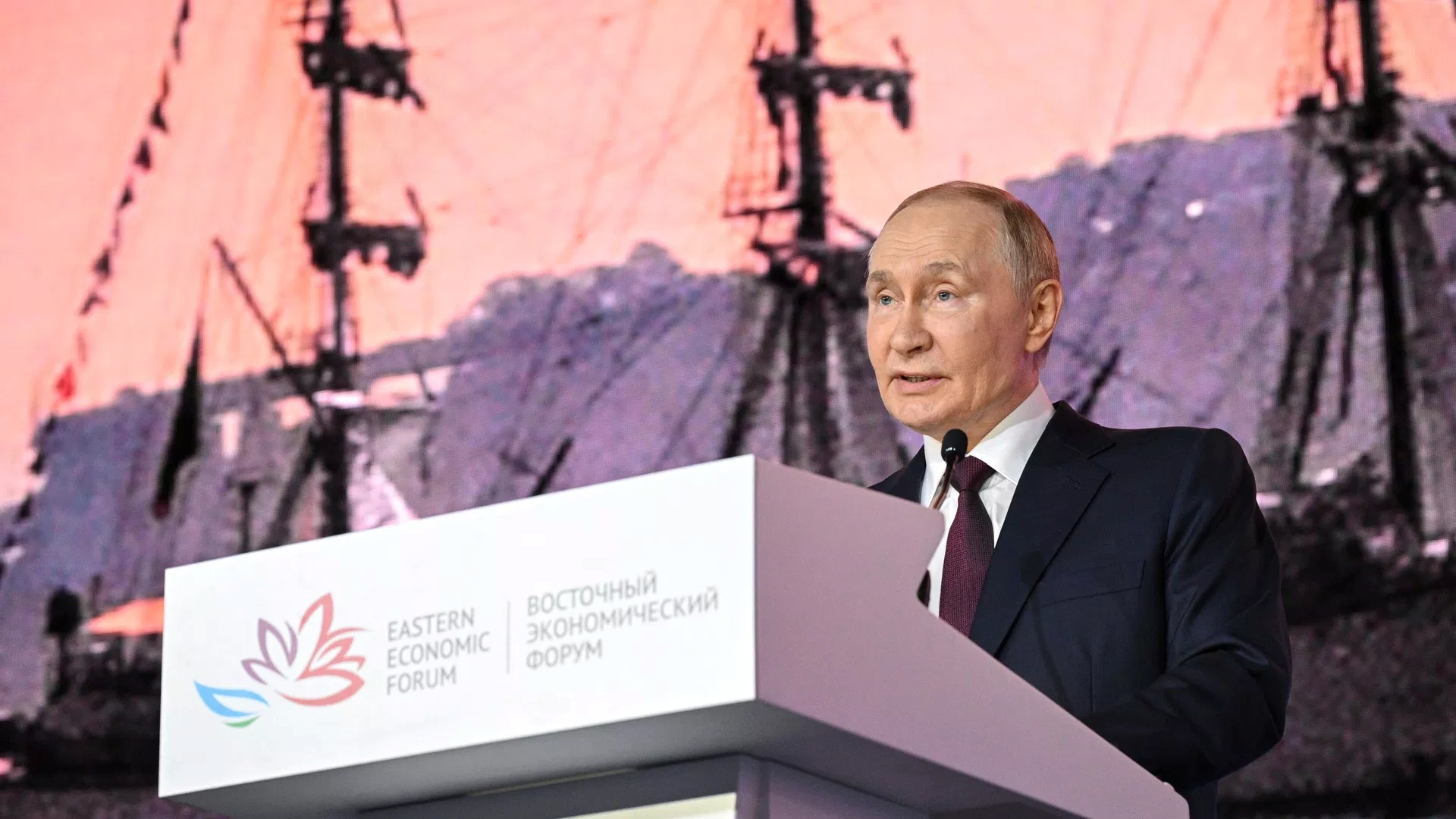
putin at the eastern economic forum in vladivostok on 5 september 2025
Explore further

Putin claims Russia is ready for new talks with Ukraine, calls occupied land historical Russia

The White House official told Türkiye Today that the US “looks forward to participating in the next round of trilateral talks, which will take place soon.” The outlet’s question on whether Istanbul was considered had gone unanswered by publication.

Trump told reporters on 28 October that a meeting with Putin and Zelenskyy would be set up soon. The Kremlin keeps its condition. Ushakov claimed on 27 October that such a contact makes the most sense after the negotiation process ends, and repeated that Zelenskyy should come to Moscow.

Another mediator does not decide which meeting comes first. Kyiv and Moscow have both confirmed Abu Dhabi, Zelenskyy said, so it now depends on the US side. Earlier this month, Trump said he waived new sanctions on Russia so as not to drive Moscow from the talks.

  •  

Ukraine wants its Abu Dhabi talks with Russia before a proposed Trump-Putin-Xi summit

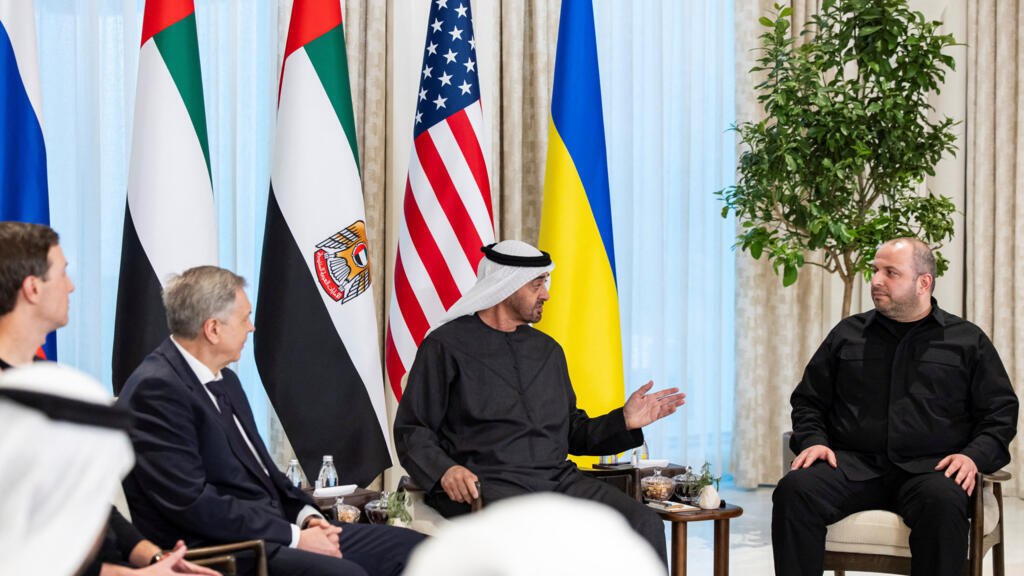
talks in abu-Dhabi

Ukraine wants its Abu Dhabi talks with Russia and the US to come before a proposed summit of the US, Russian, and Chinese leaders, President Volodymyr Zelenskyy said on 27 October. Polish Prime Minister Donald Tusk indicated the first round in Abu Dhabi could come after 4 November.

Abu Dhabi is meant to host the first round of trilateral talks between Ukraine, Russia, and the US on ending Russia’s war since delegations last met in winter. Meanwhile, Trump has waived new sanctions on Russia and struck a diesel deal with Moscow while pressing Kyiv to spare Russian refineries. In Abu Dhabi, Ukraine would at least sit at the table. A rival idea, a summit of the US, Russian, and Chinese leaders, would leave it out of the room.

Abu Dhabi first

The rival idea came from Moscow. Putin proposed meeting Trump and China’s Xi Jinping at the APEC forum in Shenzhen on 18–19 November to negotiate an end to the war on terms that would favor Moscow, The Wall Street Journal reported on 18 October. A senior US official told the paper Trump had not agreed but could be receptive. Kremlin spokesman Dmitry Peskov told the paper that a meeting was under discussion.

If that summit comes first, a deal shaped around Moscow’s terms could reach Trump before Ukraine’s own talks begin. Zelenskyy wants Abu Dhabi first. “We would very much like our meeting in Abu Dhabi to happen before that,” he said. Both Kyiv and Moscow have confirmed the meeting and view its format positively, he said. That leaves the American side, whose main focus is the Middle East.

Trump’s own remarks early on 28 October pointed to a meeting of leaders instead. One would be set up soon, he told reporters, “with President Putin and President Zelenskyy.”

Ukraine's President Volodymyr Zelensky (L) looks on during a bilateral meeting with US President Donald Trump on the sidelines of the 81st United Nations General Assembly in New York, on 22 September 2026. (Photo: Brendan SMIALOWSKI / AFP/Eastnews)
Explore further

Ukraine now fights two enemies. One is America

For Abu Dhabi, Zelenskyy listed Kyiv’s agenda: de-escalation on energy and at sea, a prisoner exchange, and the format of a trilateral leaders’ meeting. A date is another matter. On the evening of 27 October, presidential communications adviser Dmytro Lytvyn told journalists it was too early for announcements.

Warsaw looks past 4 November

Tusk spoke before a cabinet meeting, after Finnish President Alexander Stubb and Norwegian Prime Minister Jonas Gahr Støre held a 90-minute call with Putin. The two said they spoke for their own countries, not for Europe. Stubb briefed Tusk afterwards. Tusk said the European side came away very moderately optimistic about constructive talks in Abu Dhabi, and pointed to a first round there after 4 November. Yet he urged absolute caution and warned against expecting an easy deal.

  •  

More than a US briefing: Brussels security talks on Ukraine planned for 27 or 28 October, Kyiv says

Ukrainian President Volodymyr Zelenskyy, 20 October 2026. Photo: Zelenskyy / Telegram

Ukraine, the US, the EU, and NATO plan to meet in Brussels this week to discuss security for Ukraine, President Volodymyr Zelenskyy told Ukrainian TV. The meeting would follow last week’s talks in Oslo and a US envoy’s visit to Russian President Vladimir Putin.

Guarantees are what would oblige Ukraine’s allies to act if Russia attacks again. The Paris Declaration laid plans for that commitment in January. Kyiv had a briefing from the Americans, and now the partners want a broad discussion of security and guarantees, Zelenskyy said. Brussels comes ahead of three-way talks with Russia, which the Kremlin says Putin is ready in principle to resume in mid-November.

Zelenskyy: meeting planned for Tuesday or Wednesday

The meeting is planned for Tuesday or Wednesday, 27 or 28 October, Zelenskyy said in the interview, aired on 25 October. The EU would take part at the presidential level and NATO at the level of its secretary general. He did not know whether anyone else would join. He also said Ukraine’s neutrality and limits on its army are not up for discussion.

After Oslo, Witkoff briefed Putin in St. Petersburg

Earlier, on 20 October, Zelenskyy met US special envoy Steve Witkoff in Oslo, with Finnish President Alexander Stubb and Norwegian Prime Minister Jonas Gahr Støre present. According to Zelenskyy, a wider round there included national security advisers from Germany, the UK, France, and Italy, the chief of staff of the European Commission president, and NATO representatives.

A day later, Witkoff met Putin in St. Petersburg and said he had brought papers setting out possible paths to a settlement. He told Putin the Oslo talks had been productive. However, Kremlin aide Yuri Ushakov claimed the new ideas from the Europeans and Kyiv that Witkoff relayed held little of use for a settlement.

  •  

Putin claims Russia is ready for new talks with Ukraine, calls occupied land historical Russia

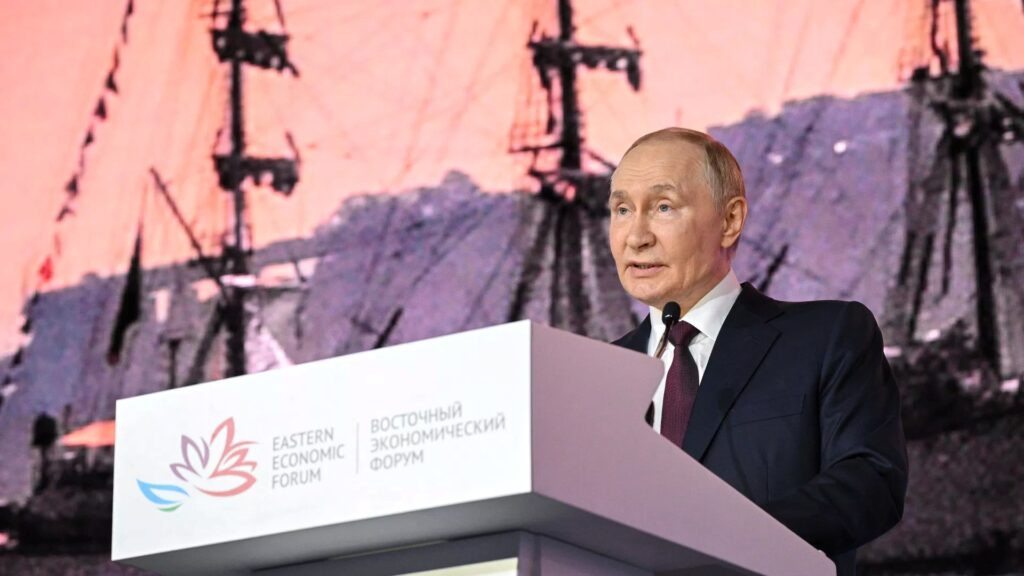
putin at the eastern economic forum in vladivostok on 5 september 2025

Russia is ready to resume three-way talks with Ukraine and the US, Russian President Vladimir Putin claimed in an interview with Pavel Zarubin of state broadcaster VGTRK, published on 22 October. He said they should settle security for both countries after a final peace deal, not a brief pause.

Putin spoke a day after he hosted US envoy Steve Witkoff in St. Petersburg and Ukrainian President Volodymyr Zelenskyy said he would accept freezing the war along the front line. In May, Kremlin spokesman Dmitry Peskov named Ukraine’s withdrawal from Donbas and Zaporizhzhia and Kherson oblasts as the only condition for peace. Any new round would start from that gap: Kyiv offers to stop where the armies stand, while Moscow’s last stated terms demanded more land.

Talks in November

Putin stated that Moscow and Washington had agreed Russia was ready to resume trilateral contacts. He added that he generally agreed with a US point that European security architecture should also be discussed.

On 21 October, Kremlin aide Yuri Ushakov stated that the sides had settled on mid-November, with Abu Dhabi as the likely venue.

"Historical Russia"

In a 21 October Fox News interview, asked about a freeze leaving Ukraine 75% or more of its land, Zelenskyy answered: “Yes, right now, we have to freeze.”

musk tells ukraine’s president go zelenskyy says won’t resign never accept ukrainian land russian · post volodymyr during interview piers morgan recorded visit britain 14 2026 video uncensored / ukraine
Explore further

Trump cannot get Putin to halt strikes on Ukraine’s power grid, so he blames Ukraine instead, Zelenskyy says

Asked about the land Ukraine would give up, Putin replied that the occupied regions were not Ukraine’s but "historical Russia." He claimed their residents had voted for independence and then to join Russia, and called any talk of territorial losses inappropriate.

Putin linked Russia’s readiness to negotiate to Ukrainians being a people very close to Russians. He claimed the latest genetic studies show they are one people. Independent outlet Meduza noted it is unclear which studies he meant. Putin’s 12 July 2021 essay on the historical unity of Russians and Ukrainians made the same case, which Ukraine’s national memory institute rebutted.

He closed that answer by asserting Russia would achieve all the goals of what the Kremlin calls its special military operation. He made a similar vow on 17 December 2025.

  •  

Abu Dhabi Peace Talks: Why Putin’s Ambitions May Defeat Trump’s Economic Bargain

Washington is offering Moscow sanctions relief, commercial opportunities and a possible return to European energy markets. Yet the Kremlin’s objectives in Ukraine extend far beyond economic interests, raising questions about whether Vladimir Putin has any intention of accepting a settlement that preserves Ukraine as an independent European state.

The Kremlin has announced plans for renewed negotiations between Russia, Ukraine and the United States in Abu Dhabi during the first half of November, reviving a diplomatic process that has repeatedly failed to produce a settlement to Moscow’s war against Ukraine.

Russian presidential spokesman Dmitry Peskov said on Friday, 23 October, that the discussions would concentrate on post-war security arrangements. He also left open the possibility of eventual European participation, although the initial meeting is intended to remain trilateral.

The announcement follows talks in St Petersburg between Vladimir Putin and Donald Trump’s special envoy Steve Witkoff. Yet the emerging American proposals reveal a fundamental problem: Washington appears increasingly prepared to offer Russia substantial economic incentives, while Moscow has provided little indication that its political objectives in Ukraine have changed.

The economic bargain taking shape

According to details reported on 23 October, citing The Economist, the American proposals involve Ukraine abandoning its ambition to join NATO in exchange for investment, security arrangements and the prospect of European Union membership.

Russia would receive sanctions relief, renewed commercial relations with American companies and potentially the restoration of natural gas exports to Europe. A demilitarised zone in Donbas is also reportedly under consideration.

The commercial dimension extends beyond theoretical proposals.

American and Russian representatives have discussed investment in the Nord Stream pipeline system and possible arrangements involving Lukoil’s international assets. The negotiations surrounding Russian energy infrastructure suggest that Washington regards commercial cooperation as a potential instrument for securing Moscow’s agreement.

There is no established evidence that Witkoff, Jared Kushner or members of Trump’s family would personally benefit from these arrangements. Nevertheless, the involvement of investors in strategically important Russian assets raises questions about whether economic agreements might advance independently of a settlement acceptable to Ukraine.

The Trump administration has already demonstrated its willingness to relax economic pressure. On 16 October, the president waived major provisions of the Graham sanctions legislation, which he had signed into law only four weeks earlier.

As EU Today previously examined, the decision suspended measures designed to increase the economic costs of Russia’s continuing aggression. Washington justified the waiver on the grounds that sanctions could interfere with negotiations.

Why Putin’s objectives are not primarily economic

The central weakness in a settlement built around commercial incentives is the assumption that Putin’s territorial and political demands can ultimately be exchanged for economic advantages.

Russia’s objectives have never been confined to Donetsk, Luhansk or access to Western markets.

In his July 2021 essay on the historical unity of Russians and Ukrainians, Putin advanced a conception of the two nations as belonging to a single historical and cultural space. His interpretation, examined by the Centre for Eastern Studies, challenged the legitimacy of Ukraine’s development outside Moscow’s political influence.

These ideas preceded the full-scale invasion of February 2022. They also followed Russia’s annexation of Crimea in 2014 and its intervention in eastern Ukraine.

Putin’s demands therefore concern more than military geography. They involve the extent to which Ukraine can exercise independent political authority, determine its international alliances and integrate with Western institutions.

Even a settlement granting Moscow substantial territory could leave this larger objective unresolved.

An independent Ukraine, increasingly integrated into the European economy and protected by Western security commitments, would remain outside Russia’s political control. For a Kremlin leadership that has repeatedly questioned Ukraine’s separate historical identity, such an outcome would represent a limitation on its wider ambitions.

Putin reinforced this position on 22 October when he again described Ukrainian territory in Donbas as historically Russian.

The advantages of negotiations without compromise

This creates an apparent contradiction. Why would Moscow return to negotiations if its broader objectives remain incompatible with the proposed settlement?

One explanation is that participation itself offers Russia strategic advantages.

Negotiations can preserve diplomatic engagement with Washington, complicate attempts to introduce additional sanctions and maintain American pressure on Kyiv to accept territorial concessions.

They also provide opportunities to negotiate economic arrangements before fundamental security questions have been resolved.

For Putin, the political timetable in Washington is relevant. Trump’s presidency is constitutionally limited to January 2029. Moscow can seek to exploit the present administration’s interest in a diplomatic agreement while continuing military operations.

None of this establishes that Putin has definitively rejected compromise. However, the Kremlin’s willingness to attend negotiations is not equivalent to a willingness to abandon its demands.

Russia continues attacking Ukrainian cities and energy infrastructure. As EU Today reported on 22 October, Russian forces launched 21 ballistic missiles against Kyiv shortly after Witkoff’s discussions with Putin.

The simultaneous pursuit of diplomatic engagement and military pressure allows Moscow to negotiate while attempting to alter conditions on the battlefield.

Europe cannot be treated as an economic bargaining chip

The proposed return of Russian gas exposes another contradiction in Washington’s approach.

The European Union has already adopted binding legislation to phase out Russian gas imports, with full restrictions taking effect during 2027.

The European Commission reiterated on 19 October that it had no plans to reverse its position. Reopening Nord Stream would also face sanctions, infrastructure and political obstacles, particularly in Germany.

Consequently, Washington cannot independently promise Moscow renewed access to European energy markets.

Nor can it guarantee Ukraine’s accession to the EU. Membership requires agreement among the existing member states, completion of accession negotiations and ratification of the relevant treaty.

A settlement negotiated primarily between Washington and Moscow would therefore depend on European decisions over which neither government has unilateral authority.

This helps explain the significance of Peskov’s remarks about possible European participation. Moscow needs European cooperation to secure meaningful sanctions relief and access to markets, even while seeking to negotiate Europe’s security arrangements principally with Washington.

The unresolved question

Trump’s approach rests on the proposition that economic incentives can make a settlement more attractive to Moscow than continued warfare.

Putin’s position presents a different calculation. The Russian president must weigh the benefits of restored commercial relations against the political implications of recognising Ukraine’s durable independence and Western orientation.

Those objectives may prove incompatible.

A settlement that restores Russian energy revenues without credible guarantees against renewed aggression could reduce Moscow’s economic constraints while leaving the causes of the war unresolved.

The decisive test in Abu Dhabi will therefore not be whether negotiators can agree on investment, pipelines or sanctions relief. It will be whether Russia is prepared to accept a Ukrainian state whose sovereignty, political direction and future European integration remain beyond Moscow’s control.

Until that question is answered, renewed negotiations may offer Washington the prospect of a diplomatic achievement while allowing the Kremlin to pursue objectives it has not publicly abandoned.

  •  
❌