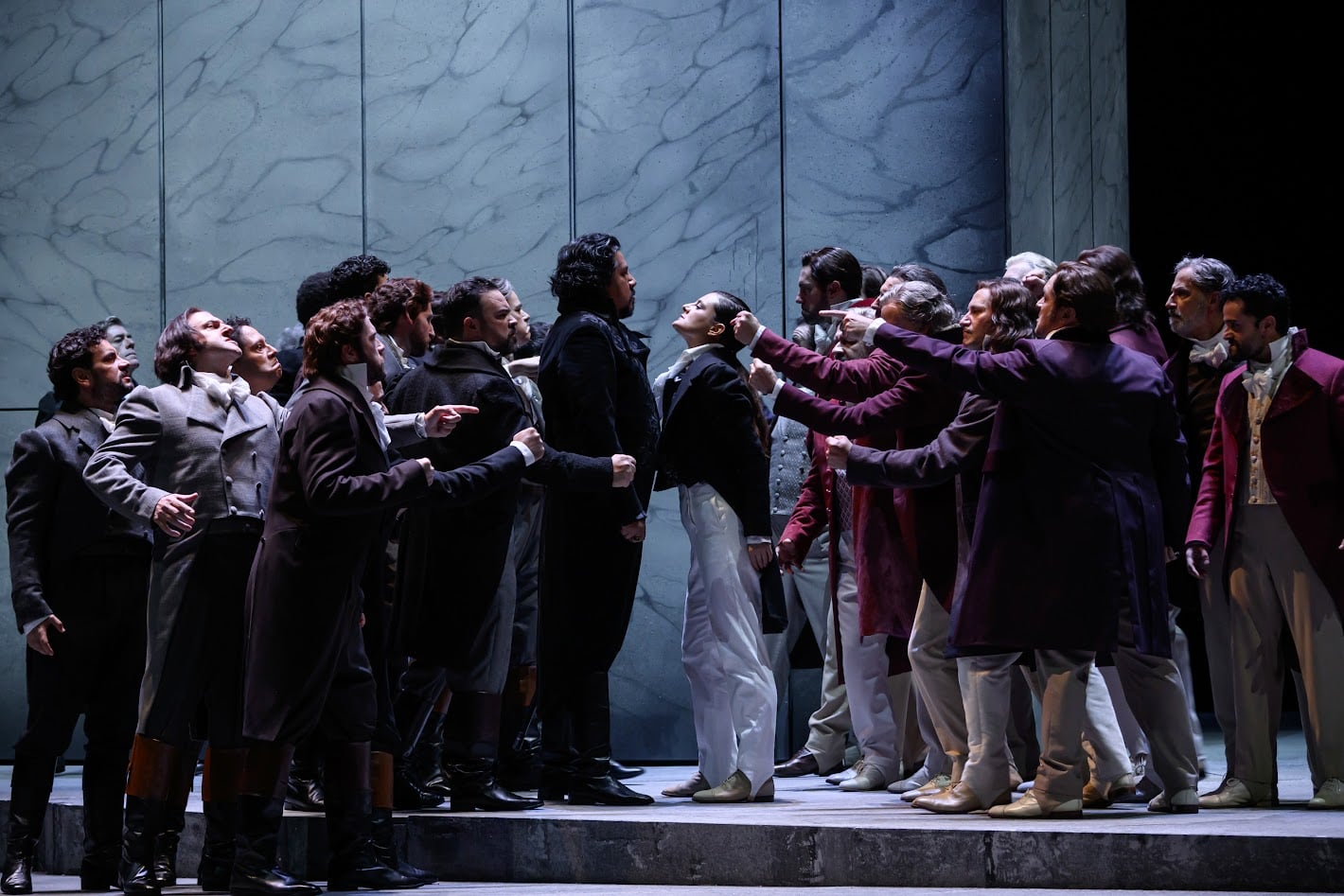
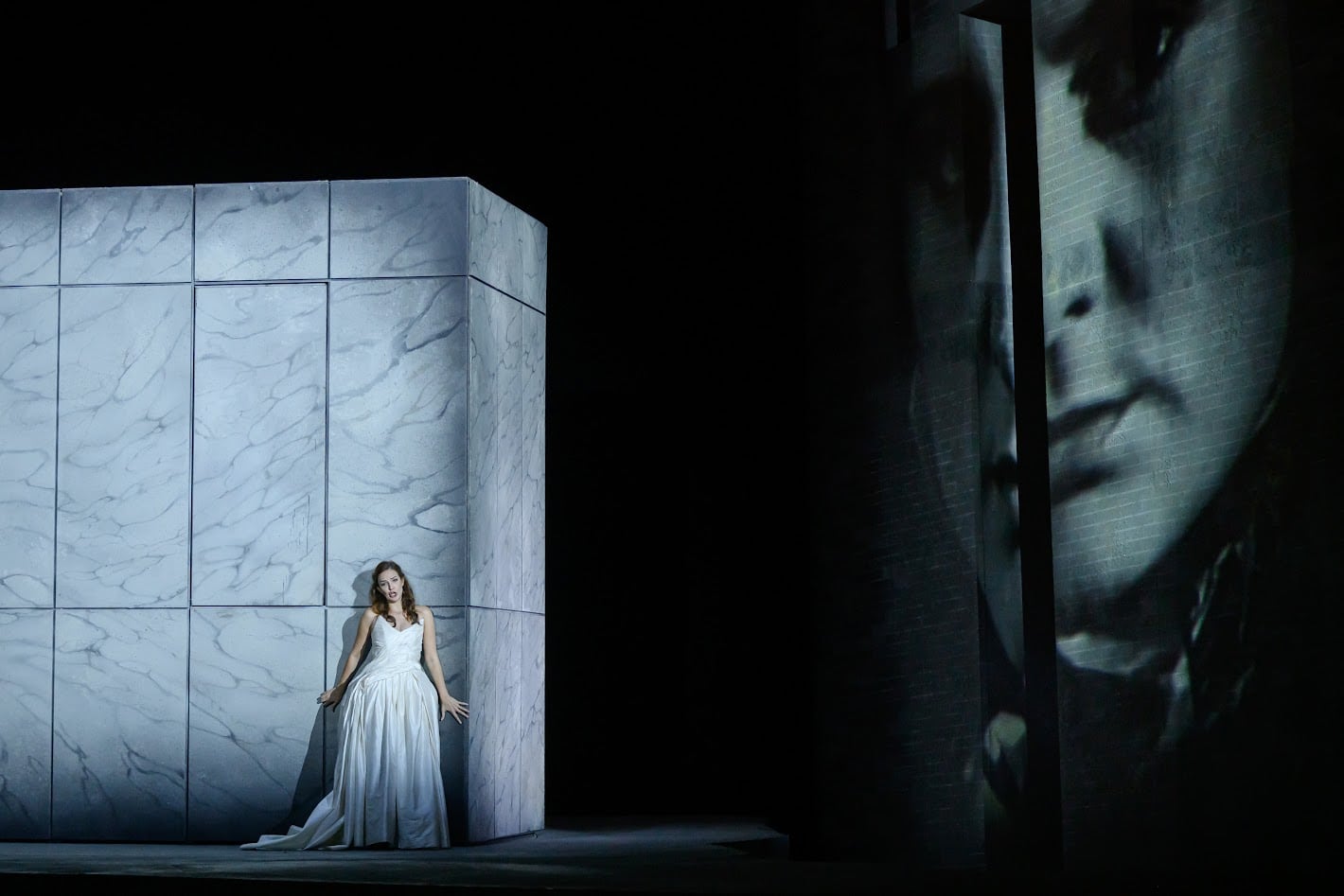
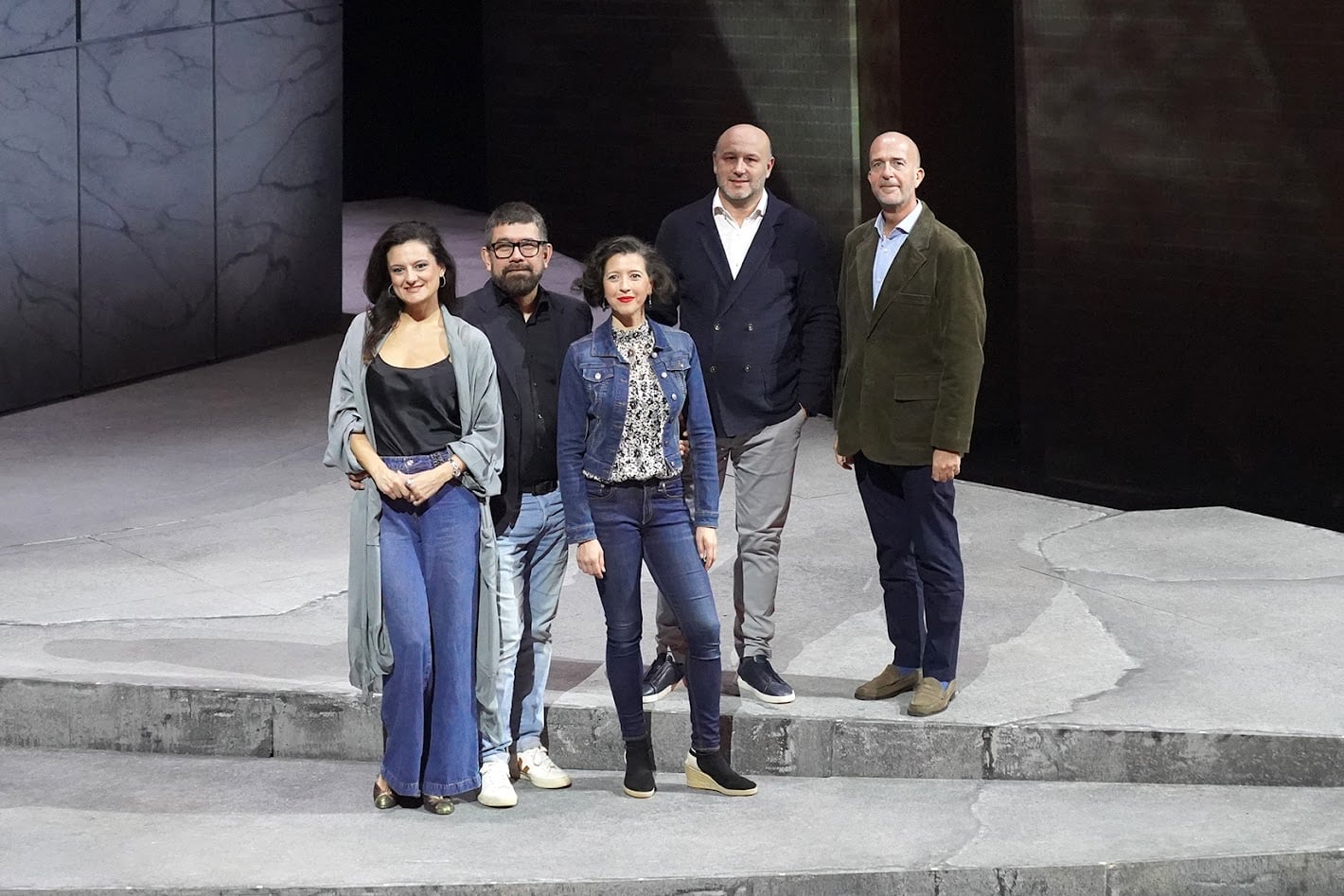
El Liceu estrena este viernes la ópera I Capuleti e i Montecchi, de Vincenzo Bellini, una de las joyas del bel canto que narra la dramática historia de los dos célebres amantes de Verona basada en la obra renacentista y alejada de la famosísima de Shakespeare. El director Allex Aguilera ha ideado una puesta de escena simbólica de esta ópera que cuenta como principal reclamo con la soprano norteamericana belcantista Lisette Oropesa en el rol de Giulietta. El papel de Romeofue escrito para mezzosoprano y lo asumirá la italiana Raffaella Lupinacci, que debuta en el Liceu. El maestro Riccardo Frizza se pondrá al frente de la orquesta en esta función que estará en cartel hasta el 11 de noviembre.
WeWork CEO John Santora at Business Insider's The Long Play event.
Carl Timpone/BFA
John Santora took the helm of WeWork in 2024, shortly after it emerged from bankruptcy.
Two years later, the company is making money.
At Business Insider's Long Play Event, Santora told Executive Editor Cadie Thompson how he did it.
For WeWork's CEO, Fridays are for sneakers. Sometimes.
At Business Insider's The Long Play event on Thursday, John Santora told Deputy News Chief Cadie Thompson that he rebuilt WeWork in part by establishing a sense of trust and decorum among employees.
In pursuit of that goal, Santora instituted a dress code for employees, but also gave them one day a week to work from home.
"I didn't have the ability to go watch my son play a 3 o'clock baseball game," Santora said, adding, "We have to give our employees that flexibility to do all that."
Santora, formerly the chief operating officer at Cushman & Wakefield, a real estate firm, became WeWork's CEO in 2024 as the once-buzzy office startup emerged from a disastrous Chapter 11 bankruptcy filing.
Santora had a short time to decide whether to join the faltering company, he recalled. And it wasn't exactly an easy choice.
"I was kind of at that point of, 'Should I retire?'" he said. "My daughter Nancy said, 'Dad, you know we love you, but when you have too much time on your hands, you're a pain in the ass.'"
Since those deeply red days in 2019 when WeWork's valuation plummeted from $47 billion to roughly $8 billion before it was bailed out, the company has stabilized. It posted eight quarters of EBITDA profitability and expects a fourth straight quarter of cash-flow profitability.
In 2025, it reported about $2.3 billion in revenue.
Though it hasn't hit the valuation it once had, the fact that the company could be revived at all is remarkable. WeWork, founded in 2010, rents out office space, spruces it up, and parcels it out to freelancers, startups, and other businesses.
Its first CEO and founder, Adam Neumann, made bold pronouncements that WeWork would "change the world" and "elevate the world's consciousness" by renting out office space to startups.
But after a bungled IPO, it became clear to the new stakeholders that a different type of leader was sorely needed.
As it turned out, Santora was that leader.
Having worked for 47 years at Cushman & Wakefield, Santora had the real estate experience that Neumann lacked, albeit without the magnetism of a Silicon Valley whiz kid.
"From a leadership standpoint, I'm a very structured, disciplined person," he said. "I'm a suit and tie, buttoned-up real estate person."
Santora recalled an early trip to one of the offices, where he discovered employees wearing jeans, pajamas, slippers, and shorts.
"I grabbed my head of HR," he said. "See that? I don't want to see it anymore."
Santora, who at one point described himself as an "old chubby guy from Staten Island," didn't just force employees to wear sports coats to important meetings. In his words, there was some "give and take."
"I don't look at what time they leave, what time they come in," he said of his employees. "As long as they're getting their work done and they're keeping their clients happy."
And Santora allows himself one exception to his suit-and-tie persona.
"Fridays, I'll actually sometimes wear sneakers, depending on what my schedule is," he said.
A Heineken precisa de maior responsabilização e de uma cultura de desempenho mais sólida para alcançar um crescimento consistente, afirmou o presidente-executivo Rafael Oliveira nesta quarta-feira, em sua primeira declaração desde que assumiu o comando da cervejaria holandesa neste mês.
Oliveira sucedeu Dolf van den Brink, que renunciou inesperadamente em janeiro, poucos meses após divulgar uma estratégia renovada e novas metas para a segunda maior cervejaria do mundo, deixando um ponto de interrogação sobre seus planos.
A fabricante das marcas Heineken, Tiger e Sol registrou um crescimento de mais de 4% tanto na receita quanto nos volumes no terceiro trimestre, superando confortavelmente as previsões dos analistas, impulsionada pela forte demanda na Ásia.
Mas Oliveira, que enfrenta pressão dos investidores para acelerar o crescimento das vendas, melhorar a eficiência e aumentar os retornos, disse que a empresa nem sempre estava aproveitando as oportunidades de crescimento ou conquistando clientes quando deveria.
“Há mais a ser feito para aprimorar a execução, acelerar o ritmo e construir uma cultura de desempenho mais sólida, com maior responsabilização em toda a empresa”, disse ele em comunicado, acrescentando que suas primeiras impressões tinham sido positivas no geral.
Oliveira disse que apresentaria seus planos para a Heineken com mais detalhes quando a empresa divulgar os resultados do ano inteiro, em fevereiro.
Analistas esperavam um crescimento orgânico de volume de 2,9% e um crescimento da receita de 3,5%.
A cervejaria superou as expectativas em grande parte devido a um forte desempenho na Ásia-Pacífico, onde os volumes aumentaram 17,3%, impulsionados pelo crescimento no Vietnã e na Índia.
A Heineken também afirmou que o crescimento foi impulsionado por suas principais marcas globais e prioridades estratégicas, incluindo cervejas com baixo teor alcoólico ou sem álcool e produtos premium.
O presidente-executivo do Santander Brasil, Gilson Finkelsztain, afirmou nesta quarta-feira (28) que o banco trabalhará para melhorar a sua rentabilidade após um resultado abaixo do que busca no terceiro trimestre, enquanto destacou um cenário macroeconômico ainda desafiador, principalmente pelo nível elevado de taxas de juros.
“O banco já avançou na direção de uma carteira com clientes de melhor qualidade e de uma relação melhor, mais equilibrada entre risco, retorno e uso de capital”, afirmou o executivo em videoconferência com analistas sobre o balanço divulgado mais cedo.
“Esse movimento permanece como parte central da nossa estratégia.”
“Principalidade, transacionalidade e melhoria da composição do balanço permanecem como pilares da estratégia do banco. O próximo passo, obviamente, é converter essa base em uma recuperação gradual e sustentável da rentabilidade, com muita consistência na execução”, afirmou.
No terceiro trimestre, o Santander Brasil teve lucro líquido recorrente de R$ 2,89 bilhões, queda de 28% em relação ao mesmo período do ano anterior, enquanto o ROAE (retorno sobre o patrimônio médio) do banco ficou em 11,9%, queda de 5,6 pontos percentuais ano a ano e 0,6 ponto na base trimestral.
Na bolsa paulista, por volta de 11h, as units do banco recuavam 5,14%, a R$ 24,54, em pregão negativo para o setor como um todo. O Ibovespa, principal referência do mercado acionário brasileiro, caía 2,31%.
US President Donald Trump has failed to reach an agreement with Russian ruler Vladimir Putin on halting strikes against Ukraine's energy infrastructure. However, Trump is trying to shift the blame for this failure onto President Volodymyr Zelenskyy, he said on The Diary of a CEO podcast.
His words came amid Russia's four record waves of ballistic missile attacks, after US Special Envoy Steve Witkoff described Putin as a "humanitarian." Previously, US officials cut Kyiv off from US intelligence and lowered a speed cap on Starlink to pressure Ukraine into stopping strikes on Russia's oil refineries that bring Moscow revenue for its war.
Trump pins the problem on Kyiv, not Putin
Zelenskyy explained the behavioral pattern behind Trump's recent actions and statements. At first, Putin rejected his proposal for a ceasefire. Then, the US president blamed it all on him, explaining to his people that world fuel prices are rising because of him, which is not true at all, said the Ukrainian leader.
He pointed to the blocked Strait of Hormuz shipping chokepoint, not Ukraine’s refinery campaign, as the driver of higher prices.
He also noted that the volumes of diesel allowed by the US are insufficient to lower global oil prices.
Even so, Zelenskyy said he keeps a working relationship with Trump. What he will not accept is being cast as the villain in Russia’s war: by his account, the US president is rewriting the context, turning Ukraine’s leader into the target for a problem that starts in Moscow.
Earlier, experts said the diesel deal was unlikely to meaningfully lower diesel prices. For Putin, the agreement itself was a win.
A former senior State Department official says it hardly matters whether the fuel arrives, because Putin “has already achieved the result he wants,” with Trump believing he has a pre-election card that could move markets.

 Login