❌

Reading view

Confessions Of An SR-71 Blackbird Pilot

Few humans have flown a jet as high or as fast as Adelbert “Buz” Carpenter. During his six years as an SR-71 Blackbird pilot, the now-retired Air Force colonel flew 230 missions, frequently exceeding three times the speed of sound. Over the course of nearly 800 hours flying one of the world’s most iconic aircraft, Carpenter soared over Cuba, skirted North Korea and tracked Russian nuclear submarines in the Arctic. He also had a few close calls, in one case narrowly avoiding disaster.

With the possibility that NASA could be returning the SR-71 to its test fleet, the Blackbird is back in the news and we wanted to dive deep into what it was like to fly the jet and get some thoughts on the latest SR-71 rumors from someone who piloted it. We couldn’t think of anyone better than “Buz” Carpenter.

Before joining the Blackbird program, Carpenter flew recon missions during the Vietnam War as an RF-4C pilot among other assignments. He now serves as a docent at the Smithsonian Air & Space Museum’s Udvar Hazy Center.
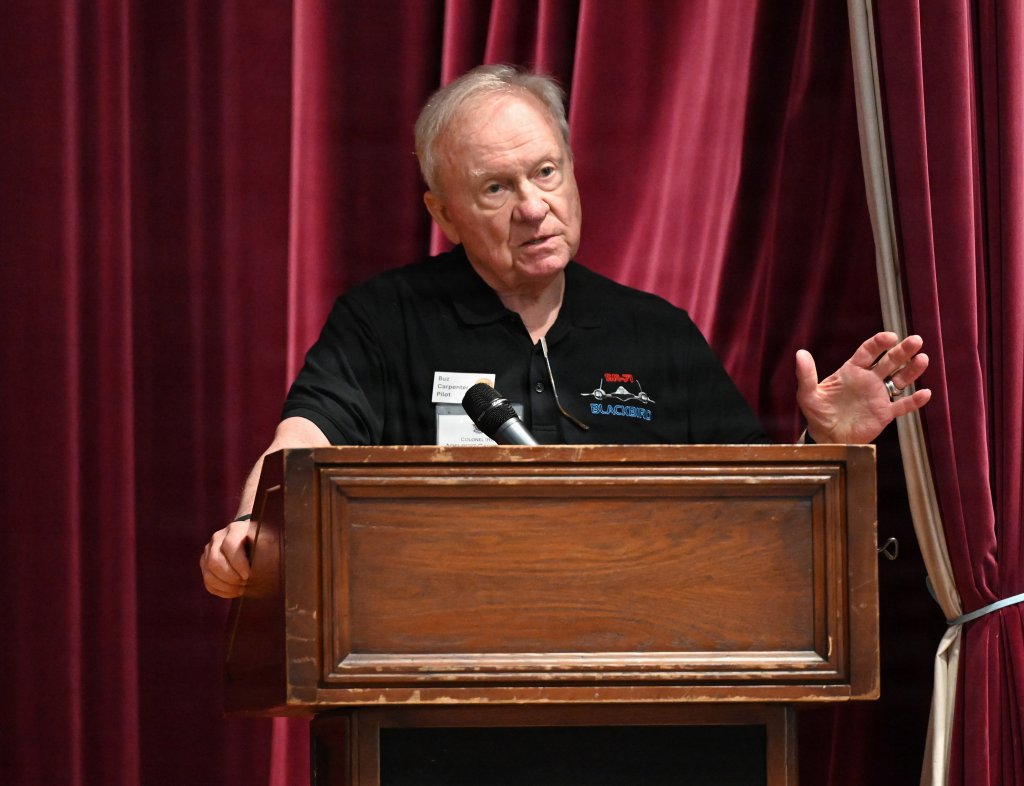
U.S. Air Force Col. (ret.) Buz Carpenter, former SR-71 Blackbird instructor pilot, shares some of his memories of flying the supersonic aircraft with the audience at RAF Mildenhall, England, July 27, 2026. Carpenter and other SR-71 veteran pilots, aircrew and maintainers, along with their family members, received mission briefings and a tour of the base, including hangars where they once worked, and static displays. The Blackbird was assigned to Detachment 4, 9th Reconnaissance Wing, out of RAF Mildenhall from 1976 to 1990, and 2026 marks the 50th anniversary of its arrival here. (U.S. Air Force photo by Karen Abeyasekere)
U.S. Air Force Col. (ret.) Buz Carpenter, former SR-71 Blackbird instructor pilot, shares some of his memories of flying the supersonic aircraft with the audience at RAF Mildenhall, England, July 27, 2026. (U.S. Air Force photo by Karen Abeyasekere) Karen Abeyasekere

Some of the questions and answers have been lightly edited for clarity.

Q: How did you become an SR-71 pilot? Walk me through your decision to join the program. What made you want to fly it? What was the qualification process like?

A: Well, it was a multi-step process… You had to fill out all this paperwork. You had to send them your flight records, all your flight checks, your physical records. What are your professional ratings in the Air Force? Do they rate you as superior? 

The home base was Beale Air Force Base in California. If they liked you, you got called back for about a week. The first two days were a modified astronaut’s physical. I mean, they checked everything. You had a series of interviews. As a pilot, I had to fly with two current SR-71 pilots, not in the SR, but in the companion trainer, the T-38. 

At any time, there were only 11 of us qualified to fly the SR-71. That’s how small a group it was for the whole program. Only 85 of us ever flew operational missions… So you can see it’s a pretty small group.
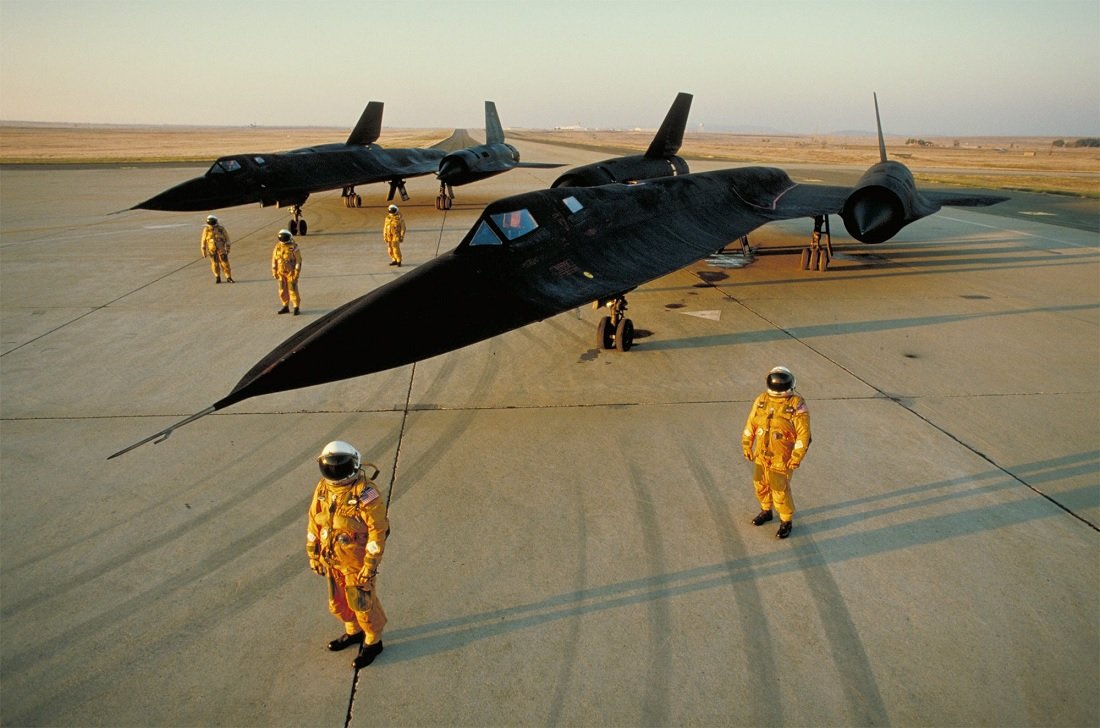
Lockheed Martin

Q: Did pilots have to be invited to apply for the SR-71 program?

A: Oh, you had to apply for it. When there was a pilot in the program and he knew somebody he used to fly with that was really super, the invitation would be: ‘fill out the paperwork, and once we get the paperwork and look you over, we’ll call you back’ and go through the same routine that I went through. 

You’ve got to go through the physical. Sometimes it was shortened because they knew the person. A couple of them were actually T-38 instructors at Beale Air Force Base, and their invitation was a lot shorter because they had all the records there. They knew who you were, and they knew how you could fly.

About a week before Christmas, 1974, I got a telegram that says ‘you’ve been selected. You will report to Beale Air Force Base July 1975 and commence training in the SR-71.’ I couldn’t have been happier.

Q: What was the training like?

A: The first thing you’re going to do is you’re going to get checked out in the T-38, even though we had all flown it earlier. You had to become [requalified] in it, because as long as you’re in a program, you’re going to continue to fly the T-38. 

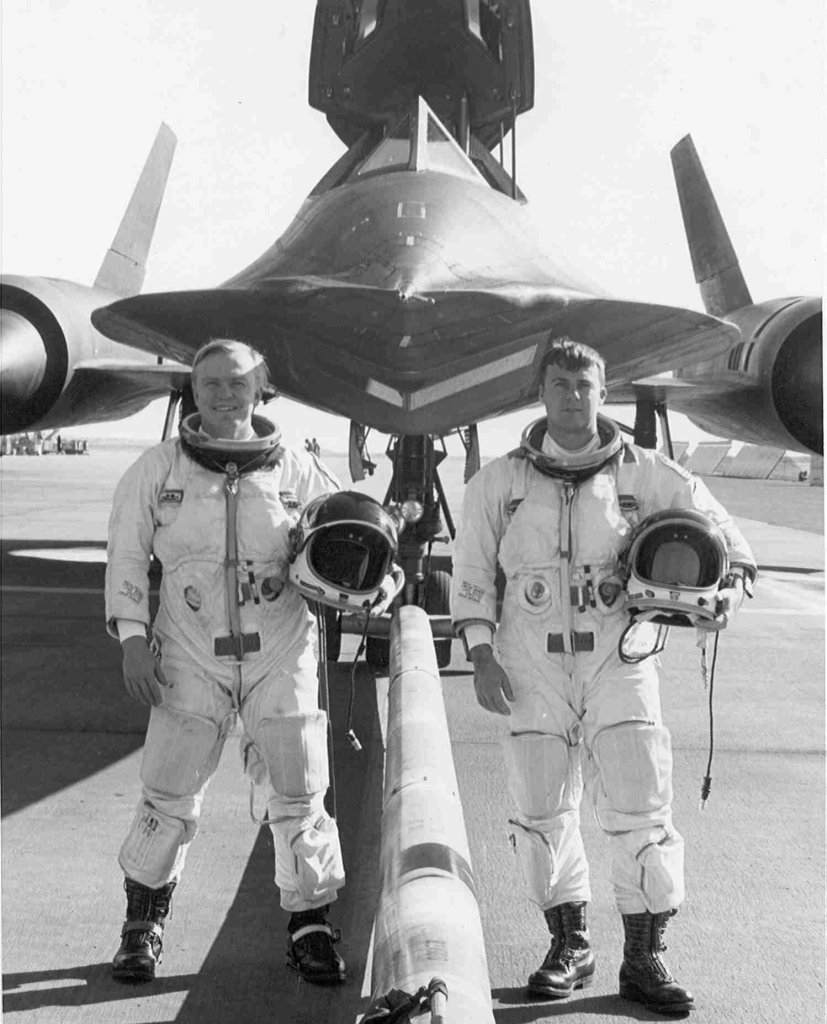
Once you actually started the program, you’d be paired with your navigator, who then assumed the title Reconnaissance Systems Officer [RSO]. And in my case, it was the wonderful Capt. John Murphy. We trained and flew together for four years. 

Your first month or so was mostly academics, because the airplane was so different. You had to learn the systems because the airplane operates in a very hot environment — an average temperature of almost 600 degrees [Fahrenheit]. The airplane grows three to four inches in length, an inch or two in width — it’s 93% titanium to deal with the high temperatures [associated with supersonic flight]. So during flights, you are going to have to deal with systems that are now straining or starting to fail because of the heat environment they’re operating in. So it is imperative that you understand exactly how this airplane is engineered, and what kind of options you might have if you start getting failures.

Then you start getting into the simulator, and obviously it’s a kind of crawl-walk-run type of a deal. This was the first simulator I’d ever seen that was a computer simulator. Up until that point, they called them part-task trainers. It had all the switches and everything, but it didn’t fly like the airplane. Like you’d be in the trainer and they want to simulate a fire. Somebody would bang against the side of this thing, and yell ‘fire’ and turn on the fire light, but they were just watching what you were doing. The SR simulator flew exactly like you [would fly the plane]. 

So even before John and I started training, we would find times when the simulator wasn’t being used at night, and we would go down there, and fly this simulator. And if you did something wrong, it reacted exactly how the airplane would react. I mean, it could crash if you did something bad enough.
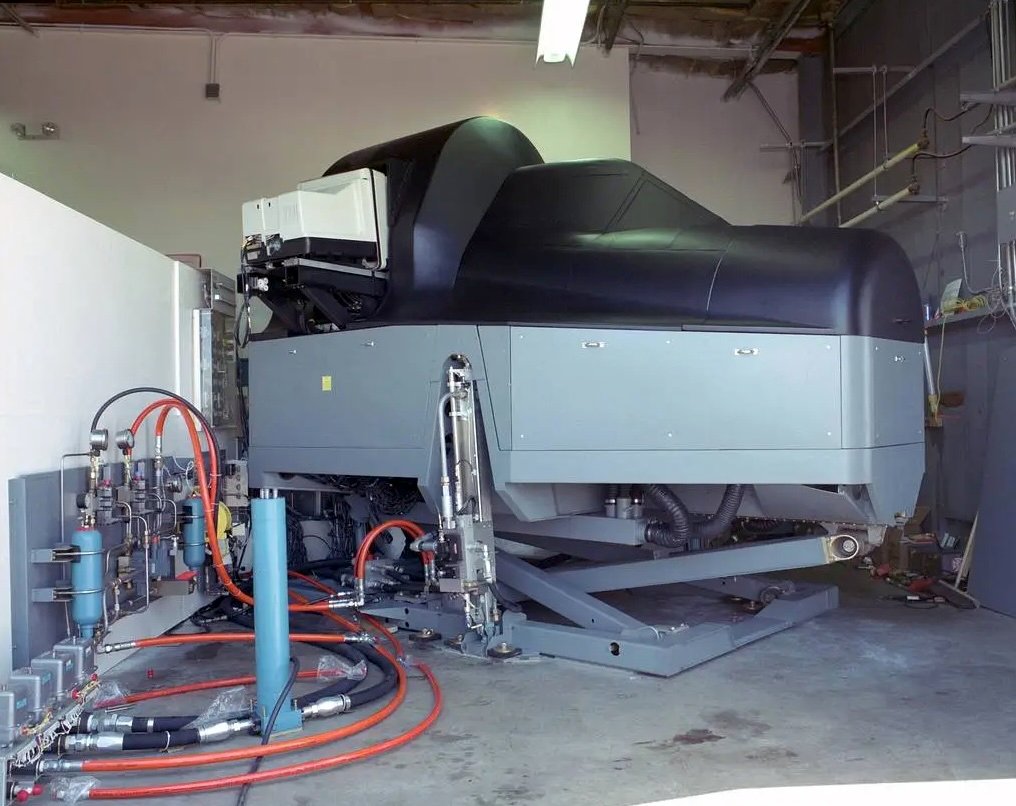
An SR-71 flight simulator. (NASA Photo / Tammy Gill)

There’s no visual. The simulator could move a little bit motion-wise, not severely. It would react exactly how the airplane was going to react, but you couldn’t see anything. Your first visual of what the airplane was like was going to be on your first flight in the airplane. 

That’s when you’re going to see what does a takeoff look like in 20 seconds? What does it look like to get behind a tanker and refuel? And as importantly, what does it look like to come back in at 175 indicated [airspeed] and land this airplane on a runway? It was a tremendous training aid because when you came back later on when you were doing your six weeks in Japan, maybe you took some vacation, but the first thing after that they’re going to put you in the simulator for four hours and see how you react to emergencies. It was very complex and defining. We washed people out who could not maintain the level of proficiency that we expected if you were going to fly this airplane.

Q: Could you practice refueling as well?

A: You could do takeoffs, because it was like an instrument takeoff, and you could do ‘quote’ instrument landings, but you had no visual to see how this whole thing would come together. Air refueling we didn’t mess with it because there wasn’t enough you could see. When you came to an air refueling in the simulator, they would just fill you up and say, ‘okay, you’ve been refueled.’ Because you needed the visual picture to understand what you’d be doing behind the tanker.

Q: Tell me about the first time you donned the pressure suit, which you had to wear to withstand the pressures of flying at altitudes of up to 80,000 feet or more.

A: If you were going to fly, you came in two and a half hours early. You had to pass a physical before every flight to make sure your sinuses and blood pressure and a number of other things were okay. You would then have a meal of steak and eggs, just like the astronauts, high protein, low bulk. They would brief you on the status of your airplane, and then about an hour and 15 minutes prior, you would go down where your suits were being maintained, and you’d put on cotton long johns because you’re going to perspire a little bit. Not profusely, but occasionally, if you were low on fuel. The fuel was the cooling system for the airplane, and if you’d been flying at the higher speeds, and you were low on fuel, the suit would heat up a little bit. 

They’d suit you up. I’m going to stop there. The first time you ever suited up, you’re not going to the airplane. They’re just exposing you. It was a [NASA] Gemini suit that had been modified, and you put on the cotton long johns. You had two people that helped you into the suit. The suit is lying on the floor like a coverall. So you’re going to come through the back of the suit. You put your legs on like you would a coverall you’d have at home. You then put your arms through the sleeves, and at that point, the two technicians would grab that helmet ring, and they would lift it up, and then you would duck underneath and come up and stand.
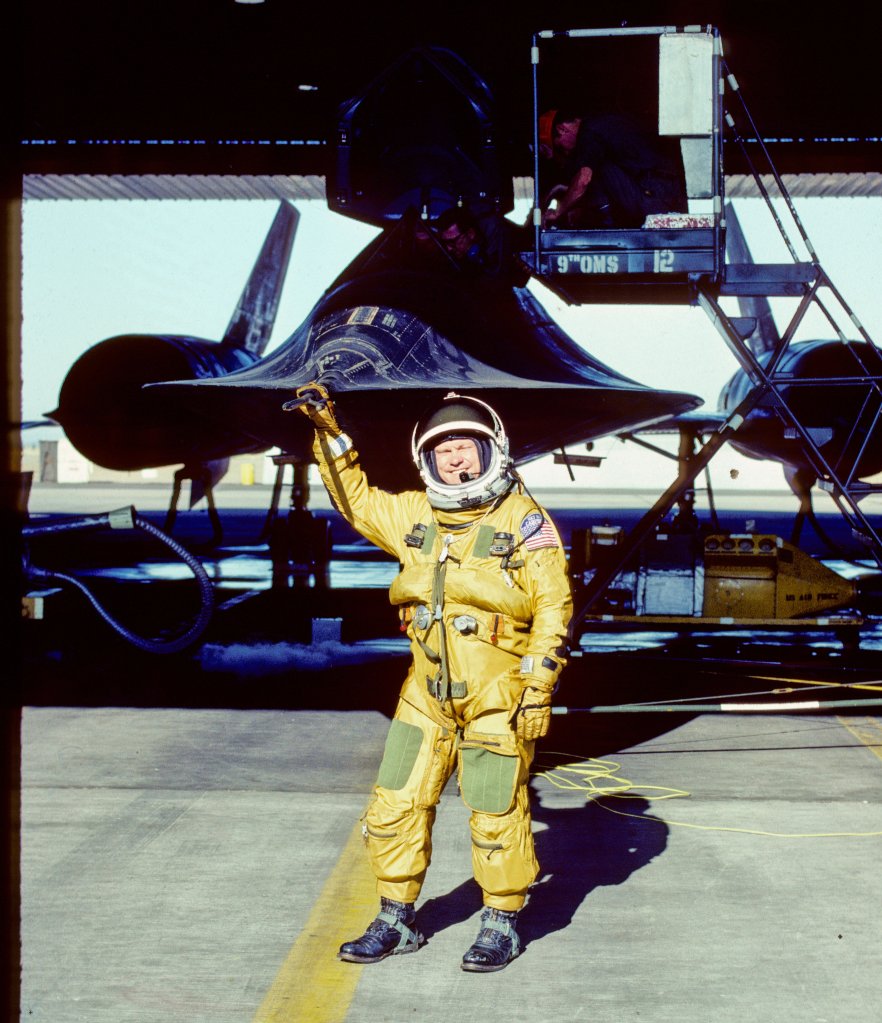
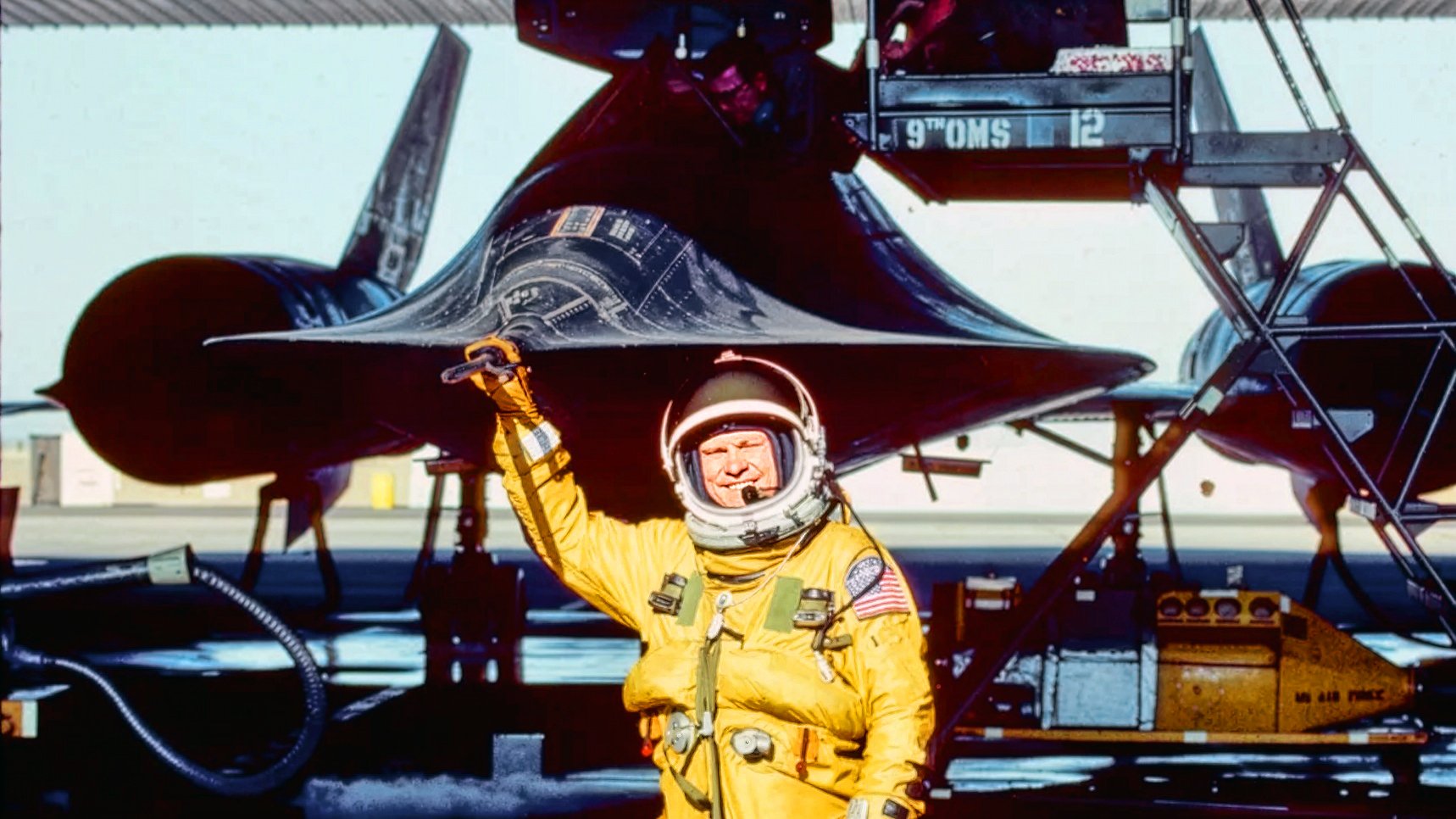
Adelbert “Buz” Carpenter in his SR-71 pressure suit. (Courtesy of Adelbert “Buz” Carpenter)

So now the suit is fully on you, and the helmet ring is sitting on your shoulder. The first time you do that, it probably takes 25 minutes, because they’re explaining to you, this is the easiest way to do it. This is where you should step. This is how you get your legs in. This is how you get your arms in. And then the next thing they’re going to do, they’re going to hand you your helmet. 

The suit weighs about 40 pounds. If you’re claustrophobic, this is not a program to be in. It’s not overpowering, but it’s your work suit and something to get used to. It’s not that uncomfortable in a sitting position because that’s where you’re going to use it most of the time, sitting in the cockpit. 

They’re going to hand you your helmet, and in the helmet — which most people can’t see — there’s a seal that comes around your face. So once you get the helmet on, you’re going to crank down the seal so it seals tightly, because you are going to be breathing — once the visor comes down in the aircraft — you’re going to be breathing 100% oxygen until you land. The reason for that is that the cabin is pressurized to 26,000 feet to reduce the pressure on the airplane. So they want to reduce the nitrogen in your blood. You’re just like a diver when you go from sea level to 26,000 feet. It’s like a diver who’s been diving coming back up to sea level. So by breathing 100% oxygen, you get the nitrogen out of your system, and you avoid the bends.

There were very few, and possibly no episodes like that in the SR program, but in the U-2 sister program, they maintained an altitude of 28,000 feet, and they had to pre-breathe oxygen before they ever went out to the airplane. Because once they got to the airplane, start up, they go straight to altitude. When we take off, it takes us a half hour from the time our visor comes down, breathing 100% oxygen, before you can take off, and then you’re going to go to a tanker to refuel. So by time you were through at the tanker, you’ve been breathing oxygen, pure oxygen, for over an hour. And the reason for taking off light and going to a tanker: Early in the program, the test program, I think we lost two airplanes doing tests due do heavyweight takeoffs and aborts.
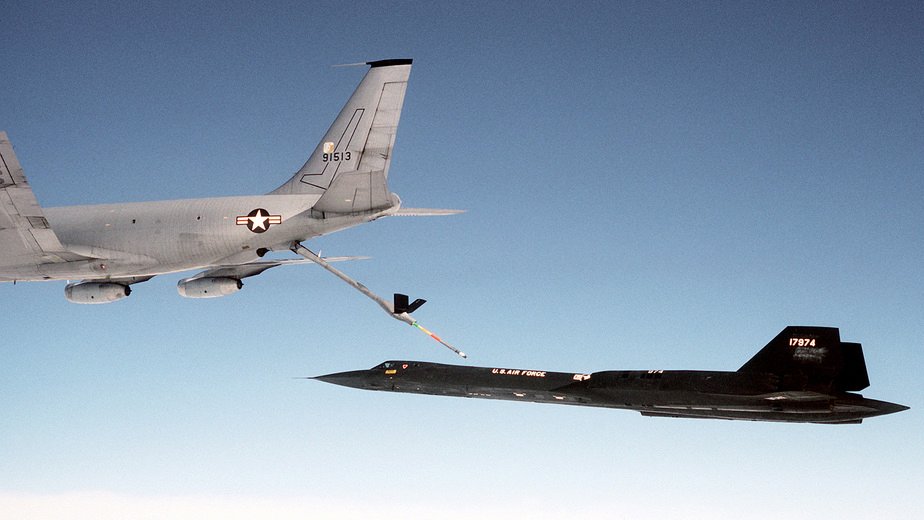
An SR-71 takes gas from an KC-135Q. National Archives

So to preclude that, instead of taking off with 80,000 pounds of fuel, we would take off with 40,000 pounds of fuel. It reduced the wear and tear on the tires, so we could accelerate quicker, less stress.

But there was a second piece. When the Concorde crashed in Paris in 2000, it lost two engines on one side. They could never get the airplane going fast enough. The airplane stalled. The powerful engines caused the airplane to roll over.
des flammes s'échappent de la partie arrière du Concorde d'Air France à son décollage de Roissy, le 25 juillet 2000, quelques minutes avant que l'avion s'écrase sur la commune de Gonesse, faisant 113 victimes, les 109 personnes à bord, dont une majorité de touristes allemands, et quatre personnes au sol. Les familles des victimes allemandes sont arrivées à Roissy le 26 juillet 2000, tandis que les corps des victimes étaient acheminées vers l'institut médico-légal de Paris. (Photo by - / AFP) (Photo credit should read -/AFP via Getty Images)
Flames shoot from the rear of the Air France Concorde as it takes off from Roissy on July 25, 2000, just minutes before the plane crashed in the town of Gonesse, claiming 113 lives—the 109 people on board (mostly German tourists) and four people on the ground (AFP via Getty Images) –

On the SR, it had been forecast through the simulations that if you lost one of your afterburners, lost an engine right after takeoff, there wasn’t enough airflow over your flight controls because you have to keep the other afterburner going. You were going to do the same thing. You were going to roll over and crash. So if you had a full load of fuel, it would take you about maybe 20 seconds, 30 seconds to get above 350 [knots] because at 350, you had more than enough air going across the flight controls to control an engine-out condition. By reducing the takeoff weight down to 40,000 pounds, that dead zone where you didn’t have control was probably 15 seconds. Never happened, but that was part of the theory behind why we took off with half a fuel load. 

We took off with heavier fuel loads, occasionally. I think I may have taken off once or twice with a full load. It was a fairly rare exception, but we would take off with 50,000 pounds. I’ve taken off with 60,000 pounds a couple times.

Q: How was your first flight? When was it?

A: You’re not going to be impressed. My first flight, I think, was the 16th of July, 1976, and your first flight in the airplane is subsonic. You’re going to be fully suited up. You’re going to take off. It’s going to be the first time you ever see a takeoff. The takeoff is 20 seconds, and in 20 seconds, you’re going to go 4,500 feet from a dead stop. You’re going to lift off doing 230 miles an hour as you bring the nose up and accelerate to 400 knots. You’re going to pass through 20,000 feet less than two minutes from the time you start your takeoff roll, and then you’ll level off at 25,000 feet and head out to the tanker.
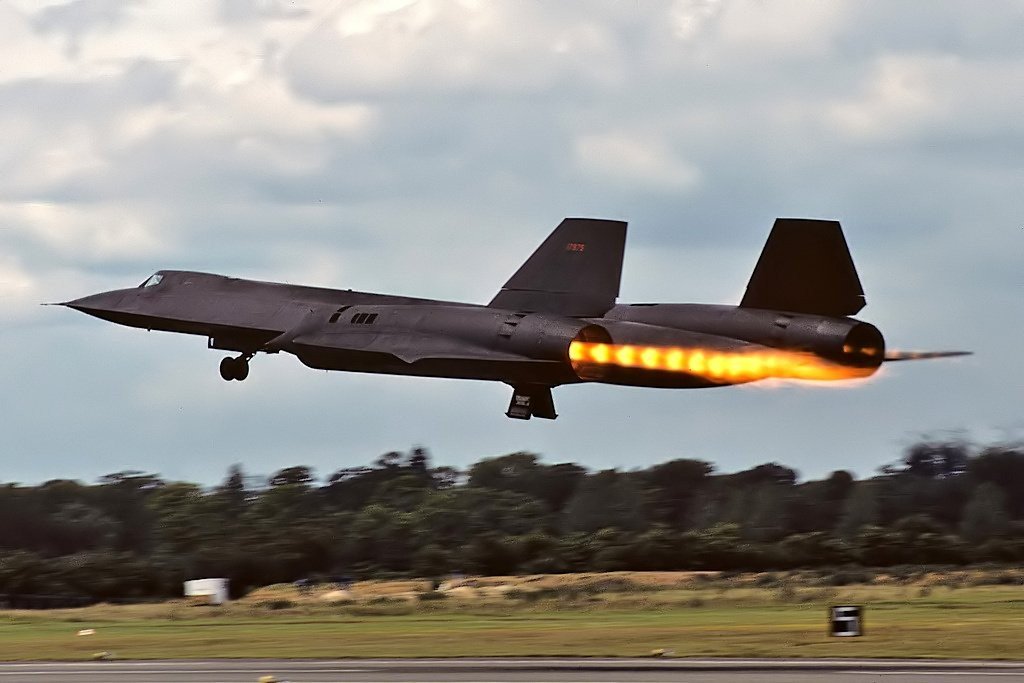
SR-71 taking off. (Courtesy of Adelbert “Buz” Carpenter)

On your first flight, you’re going to spend almost an hour and a half on the tanker, and that’s to teach you how you refuel this airplane behind our special tankers. Almost all the guys had prior refueling experience, so you’re helping them adjust to a new type of refueling regimen per se. 

Occasionally, you’d get a guy who had no refueling experience, and that was more difficult to try to teach somebody for the first time how you do refuelings. And one of the trickier things with the tankers, you’d hook up with a tanker, and they’re doing 315 [mph] to 325 [mph] at 25,000 feet. That was where we liked to refuel. So, not every time, but it was not uncommon that by the time you were passing through, having accepted 70,000 pounds of fuel, you’re starting to get power limited, and there were two things you can do. 

The preferred thing was you would light the left afterburner to the min-burner [minimum afterburner], and bring the right engine back to a point it would be your modulator. But now you’re going to put the rudder in, because you’re going to be slightly cocked, because your left engine is in min-burner, and what we want you to do is not drop off the boom. 
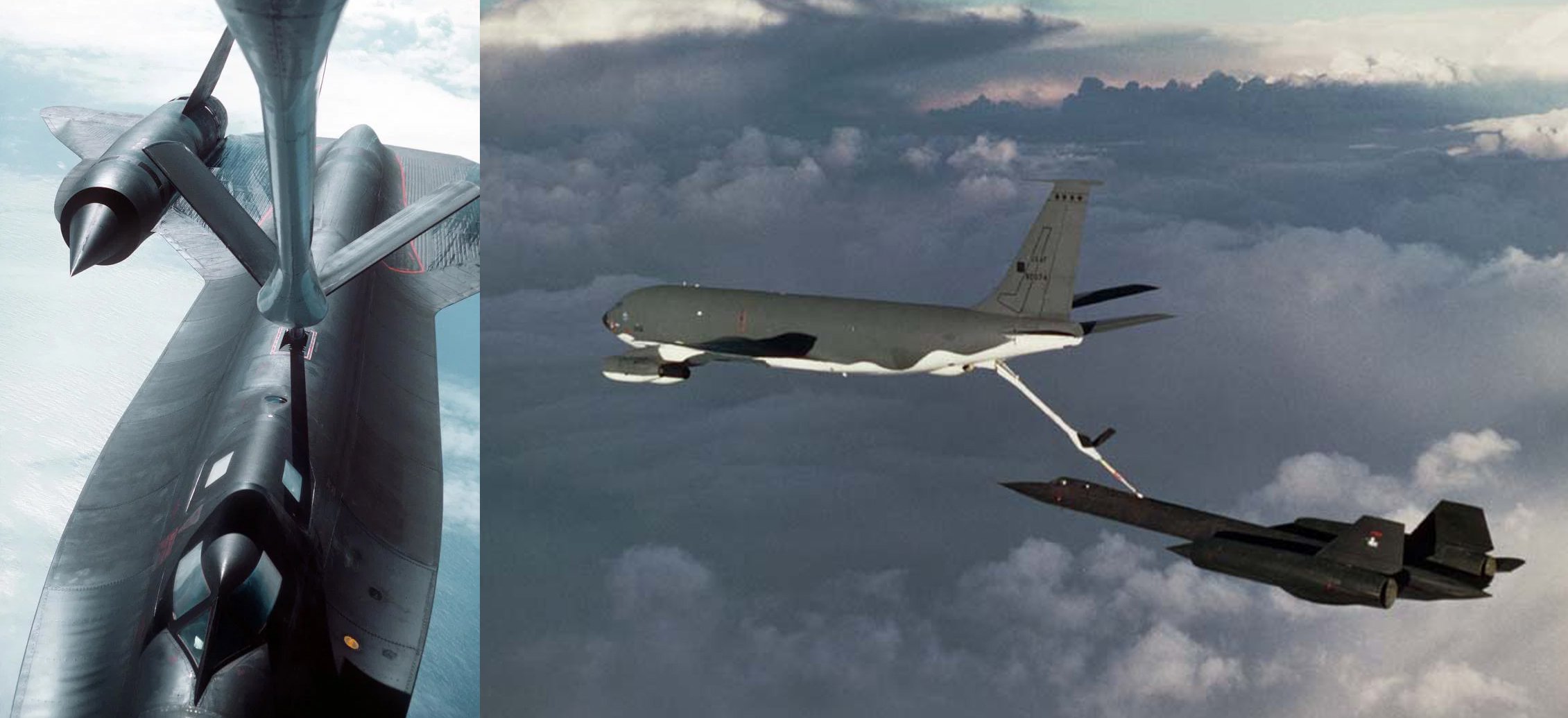
An aerial refueling between SR-71 and KC-135Q. USAF/CMSgt Don Sutherland (left) Lockheed/Tony Landis (Right)

Strategic Air Command, our parent command in the Air Force, wanted you to drop off the tanker, stabilize, light the left burner, adjust the airplane speed, pull in and refuel. The critical thing for us in refuelings is that we wanted to have full tanks at the end of the air refueling point, and if it’s a timed mission, we would need to have that all done at a certain time because maybe there are other airplanes or satellites or that they’re going to use us as a cue. 

So basically, I never dropped off, and as an instructor pilot, I taught my students to be able to light the afterburner, put the rudder in, use the right throttle as a modulation, and stay there. One of the good things in our tankers that others didn’t have, we could talk to the tanker crew through the boom, and the outside world couldn’t hear us. So, particularly on operational missions, when we’re running radio silent, we could give the tanker instructions that we wanted passed on without having to break radio silence. 
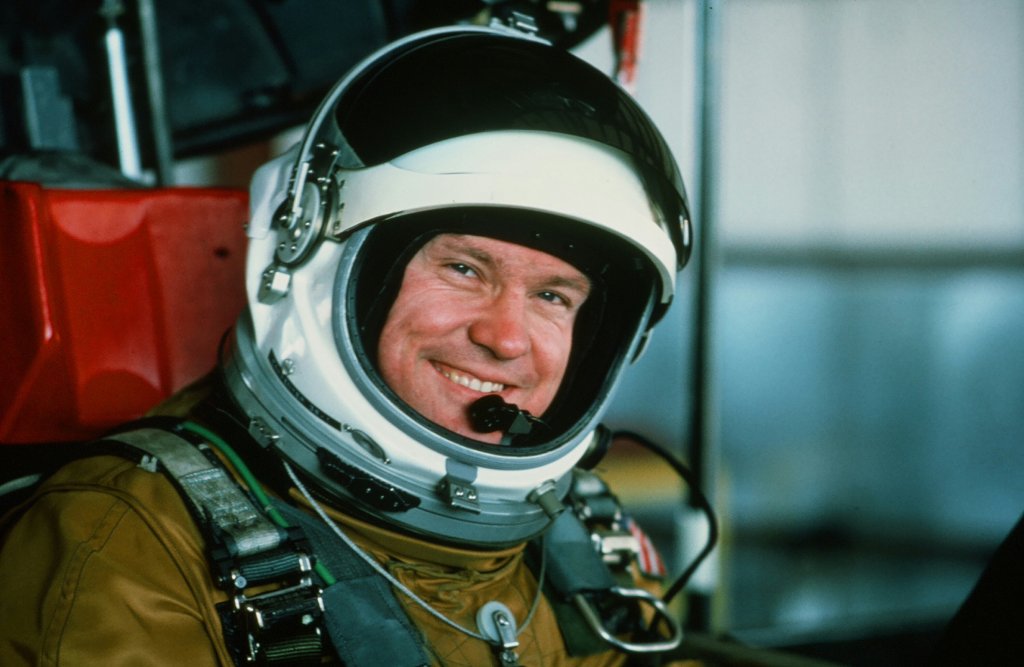
Adelbert “Buz” Carpenter in the cockpit of an SR-71 Blackbird. (Adelbert “Buz” Carpenter)

Q: How did you prepare for your first flight?

I probably had a 150 hours in the simulator. I felt very comfortable. Came in like I told you for the physical, and we talked with my instructor about what we were going to do that day, and got suited up. I wouldn’t say so much nervousness, but anticipation. 

You’re going to have your first flight. You go up, and when you get up in the cockpit, you sit down. You put your arms on the side rails, and those same two people, men or women, that suited you up are now going to reach in and make all the critical connections. This is the first time you’re really going to see the whole process with the dual oxygen system, your comm system, hooking up your survival pack, your parachute, everything.

You go through the same thing you’ve done in a simulator, but now you’re in the aircraft. You’re gonna, for the first time, be able to taxi it and get a feel for how sensitive are the brakes and find out what your turning radius is. Every airplane has a different radius, and how much do you anticipate when you start to make a turn as you’re heading out? You taxi on out when it’s that time. Go to the end of the runway, and they’ll do one more inspection to make sure everything looks good on the airplane, and you’ll just kind of go through, and then you’ll call the tower, and you’re cleared on the runway.

And once you’re cleared for takeoff, what you’ll do is you’ll release the brakes as you bring the power to mil [military power—full power without afterburner]. You’ll quickly check your engines. The instruments look good… You go to full afterburner, and you’re on your way. And like I said, the takeoff portion takes about 20 seconds. When you hit 180 [knots], you’re going to start bringing the nose up because you don’t have any flaps, so you’re looking for the airplane to start getting a lift because of the speed, and so you’re going to lift off with a 210 indicated, 210 translates to about 230 miles an hour, and then continue the nose up to 15 to 20 degrees because you’re going to be accelerating pretty quickly.

Like I said, you pass through 20,000 feet less than two minutes from the time you start. You just go through the routine. You’re gonna see the tanker. I’d seen many tankers before. Of course, this my first time in the SR. 

One advantage to me and guys coming out of fighters is that sometimes fighters had the same behind-the-power-curve problem [when refueling], so you would end up having to light one of your afterburners and do the same process in a fighter because of the weight of the fuel. And maybe we didn’t carry bomb loads in the RF-4, but maybe I had three tanks, a center tank and two wing tanks that increased my weight up to the point that I was actually starting to slip behind the power curve.

You come back in, and the instructor is going to demonstrate the first landing, and then you’re going to go back out, and he’s going to have you do an ILS — instrument landing system — approach and touchdown, and then you go back out, and you may do a second one, or you may do a precision radar approach. And then you’re going to get into visual approaches. You’re going to come down, and into the runway, you’re going to go around with a closed pattern, so you can get more practice touch-and-goes until you get it down. If you’re in the traffic pattern, when we had about 7,000 pounds of fuel left, we would land the airplane at that point. We never wanted to get really low in case something should occur because we needed to have enough fuel to get down to McClellan or Sacramento Airport [to divert].

Q: How long did your first flight last, how fast did you go and how high?

A: That first flight was two and a half hours. I reached about 25,000 feet, and probably hit 0.9 Mach for a little while. Then you fly around. You do not go supersonic. Your first supersonic flight is going to be your second flight.

Q: Did you first fly in the two-seater (SR-71B)? 

A: We all flew in the two-seater first as a pilot for our initial pilot checkout.

Q: How does the B-variant fly differently from the A?

A: The SR-71 B-model flies just like the A-model mission operational aircraft.

Q: Was there a tradition to celebrate your first flight?

A: There were some people that met you. I think my family was there, but that’s not the important flight. That’ll come two days, two flights later. You know, people, other current crew members, pilots, and RSOs and my instructor pilot will come out and say, “Hey, congratulations, Buz.” But then, the real important one: your second flight. You’re gonna take off. You’re gonna go to the tanker. You’re gonna refuel, but now you’re gonna drop off the tanker, and you’re gonna start. And you go supersonic. You would start a climb from 25,000 feet at 0.9 Mach, and you would climb up. And we typically would go up to 33,000 because they did not want you supersonic below 30,000 feet because of the shock.

So at 30,000, 33,000 feet, you push the nose over, go full afterburner, and as you’re coming down, you’re going to accelerate really fast. And this is the high drag zone of the SR-71. So as you’re coming down, you’re going to go through the speed of sound very easily. Now you’re going to see [Mach] 1.05, 1.1, and about that point, then you’re going to start bringing the nose up and pick up your climb speed and basically use that climb speed until you’re fairly high up when you’re going to pick up a Mach, and that first supersonic flight, you’re going to fly it at 2.8 Mach, and I know this may sound unique, but at 2.8 Mach, this airplane is actually quite docile.

That’s the low speed. The sensitivity of the airplane is still there, but it’s fairly low. 

Your third flight is Mach 3, and you do the same practice, you do the refueling. You come back in. You shoot patterns, but when you land this time, people come out, typically the wing commander, and he’s got a Mach 3 tie tack he’s going to give you. And all kinds of people are going to be out there because this is a significant time; you’ve had your Mach 3 flight. But there’s something else significant with it. You get to buy the bar that night, and we were always glad to buy the bar because that meant we’d finally had our Mach 3 flight, and we were part of the group. 

Q: What was it like when you reached Mach 3 for the first time?

A: The aircraft actually reacts quite well. The thing that surprised you, or not surprised you, but it’s the first time you get to see the curvature of the Earth, the beautiful black sky up above, and the blue below you. It’s also very quiet. You are in a spacesuit, but you’re traveling at three times the speed of sound. The sound’s behind you. You can feel vibrations in the airplane.
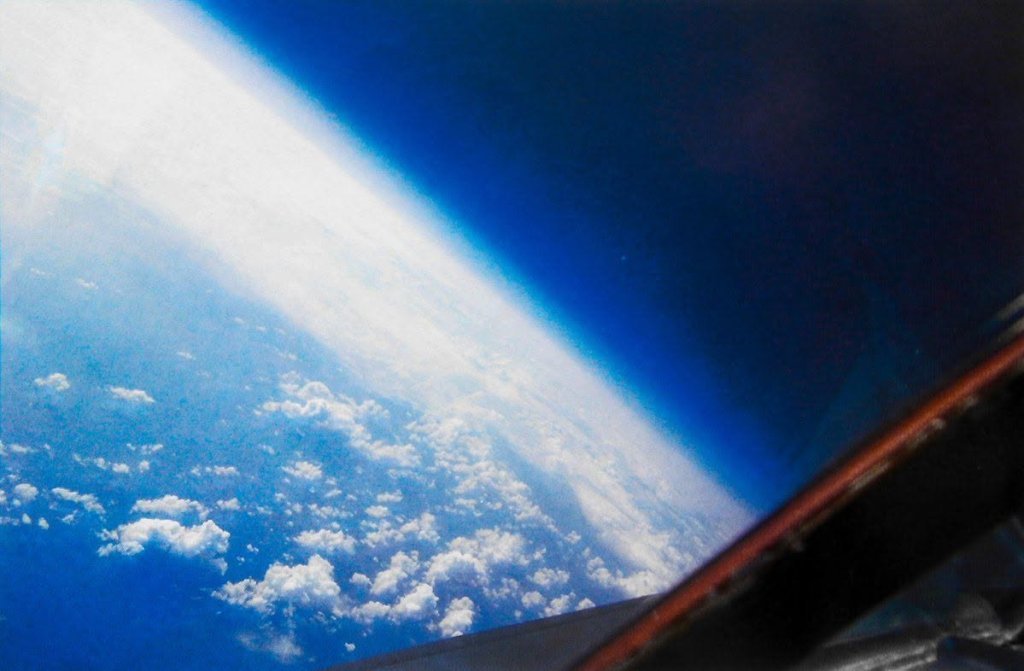
An Earth view from a SR-71 Blackbird at 83,000 feet.
(USAF / Brian Shul)

Later on, when you’ve flown this airplane for a while, you can actually feel at certain times when boost pumps are kicking out because that particular fuel tank is going dry, and little sensitivities like that. You’re very busy monitoring the cockpit instruments to make sure the airplane is doing exactly what you want it to do, because it can deviate. And what they’re looking for is we want pilots and RSOs that are going to make sure the airplane is doing what the mission calls for and the way it’s supposed to be flown.

So there’s an adjustment as you change temperatures aloft. The airplane’s going to fly a little differently, so you’re going to make adjustments. If you’re going from warm air to colder air because of a frontal passage, as soon as the engines get that colder air, the airplane wants to accelerate because now the air is denser, and the engines are producing more thrust. It’s a dynamic environment. This is not the kind of airplane that you sit back and put the autopilot on and let it do its thing. 

You have an autopilot on, but the only thing the autopilot does is keep it on that track that the mission was planned for. 

We don’t put any altitude hold on, because we allow the airplane — as it burns off fuel — to continue to climb. So you’re in a constant climb as the airplane becomes lighter and lighter, and with that, your fuel flow continues to go down. The higher you go, you’re carrying less weight. The amount of fuel you’re burning per mile or per minute is dropping, because the engines are becoming more and more efficient. It’s the only airplane in the world — because the way our engine inlets and nozzles are engineered — that the faster we go, the less fuel we burn. You talk about any other airplane you can think of. If you’re going to go faster, it’s going to cost you on fuel. It’s not the case with the SR.
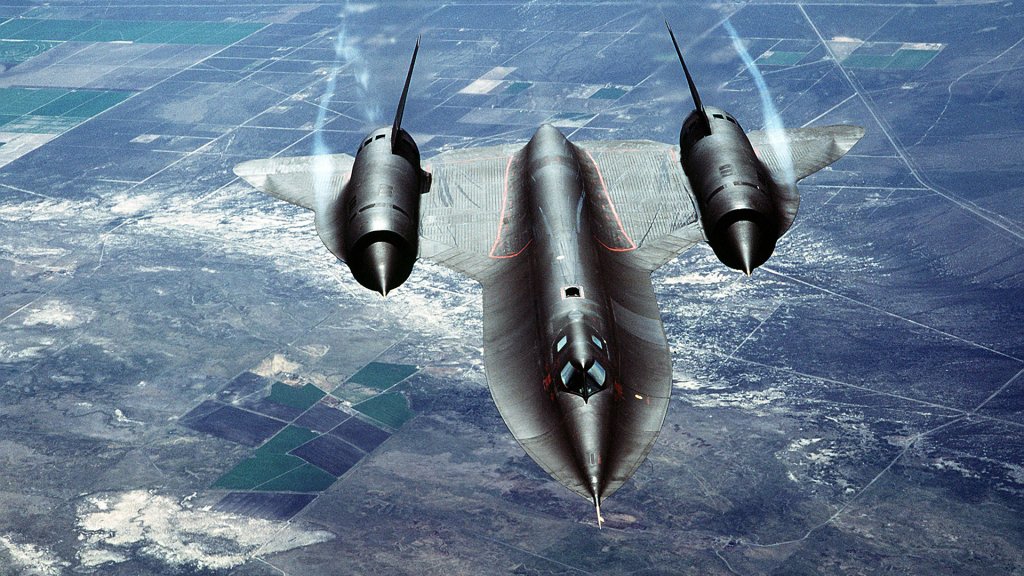
Could the SR-71 really hit Mach 4?
An SR-71 in flight. (Photo by Getty Images)

Q: What altitude did you reach on that first Mach 3 flight?

A: 81,000 — 80,000 feet, something like that.

Q: How difficult was it to get used to the SR-71’s cockpit and all its additional gauges?

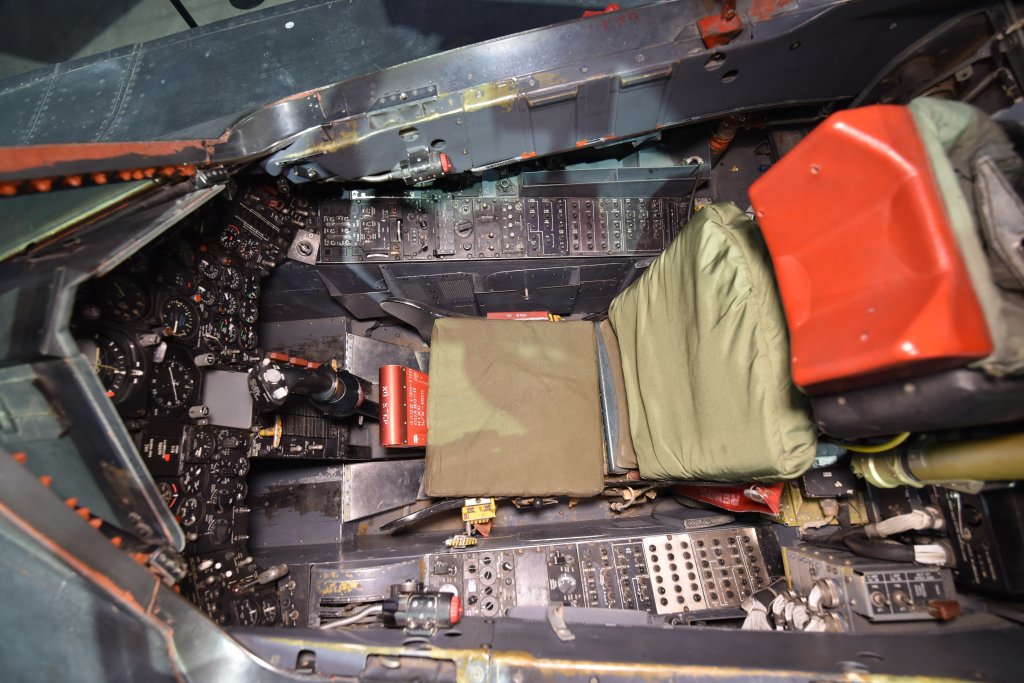
A: The core part of the cockpit were the attitude indicators, and it was very much like the F-4-type airplanes, the RF-4 that I came out of. You just had a lot more round dials and gauges because of the supersonic flight that was going to be involved with this airplane. In the RF-4 during test flights, I needed to bring the airplane, I think to 2.1 Mach. And you only did it momentarily because you were burning a tremendous amount of fuel, so you didn’t have all the different things that you were monitoring. 

In the SR, you developed a way to cross-check so that you were constantly making sure that the engines and everything were performing correctly. That’s part of what you’d learned already in the simulator, and now you had it in the airplane. And now, you could see how some of the conditions — like actual operating engines and changing weather environment — affected you when you’re flying the airplane.
Q: Weather and atmospheric conditions play a big role in how the SR-71 flew, right?

A: That’s correct. Early on, when they were flying — we never overflew Russia or Red China — but we’d fly right on their border, and some of the early flights off the north coast of Russia. It may sound kind of strange to you, but there was some really warm air. You study in school that at 80,000 feet, the outside air should be about minus 50 degrees, 55 degrees, somewhere in there. The pressure is about 0.4 pounds per square inch. I’ve seen air as warm as minus 40. Now you’ll say, ‘But gee, that doesn’t seem like a big deal.’ It’s a huge difference on the engine because now the air is a lot thinner. But I’ve also seen the other scale off the north coast of Russia. I’ve seen minus 90 degrees. Now, when you starting pumping minus 90 degree air into the engine, it really wants to race because now the air is that much denser, and the engines are producing more thrust.

Q: How difficult was Blackbird to fly? How did it compare to other aircraft? What was the biggest challenge to learning to fly at speed and altitude? 

A: One of the biggest challenges, if you came out of a fighter airplane, is that we could pull seven Gs. That’s what they were built for. The SR-71, because it expands in flight with heating, the G limit is 1.7 Gs. You’ve had that in a sharp turn in the car, clearly on a roller coaster, and that’s why we were limited to 45 degrees of bank because that’s 1.7 Gs being pulled. Now, if the airplane is cold, has not expanded, we can pull 3 Gs, but you can see it’s a much, much more limiting. Like if you’re cruising at Mach 3 and you want to make a turn, the radius is going to be around 75 degrees, around 75 miles. So you’re looking at 150 miles from where you are until you get over to do a complete 180 degree turn heading the other direction. So there’s a lot more of a planning factor on how much because you can’t yank and bang this airplane because when it’s expanded, you could bend it and titanium is really hard to repair.

Q: Did that ever happen to you?

A: It didn’t. But at an air show in England, one of the guys pulled more Gs than he should have, and the airplane flew once or twice more. And everybody said there was something wrong with this airplane. It was grounded. I don’t know how they got it back to the States, but it never flew again.

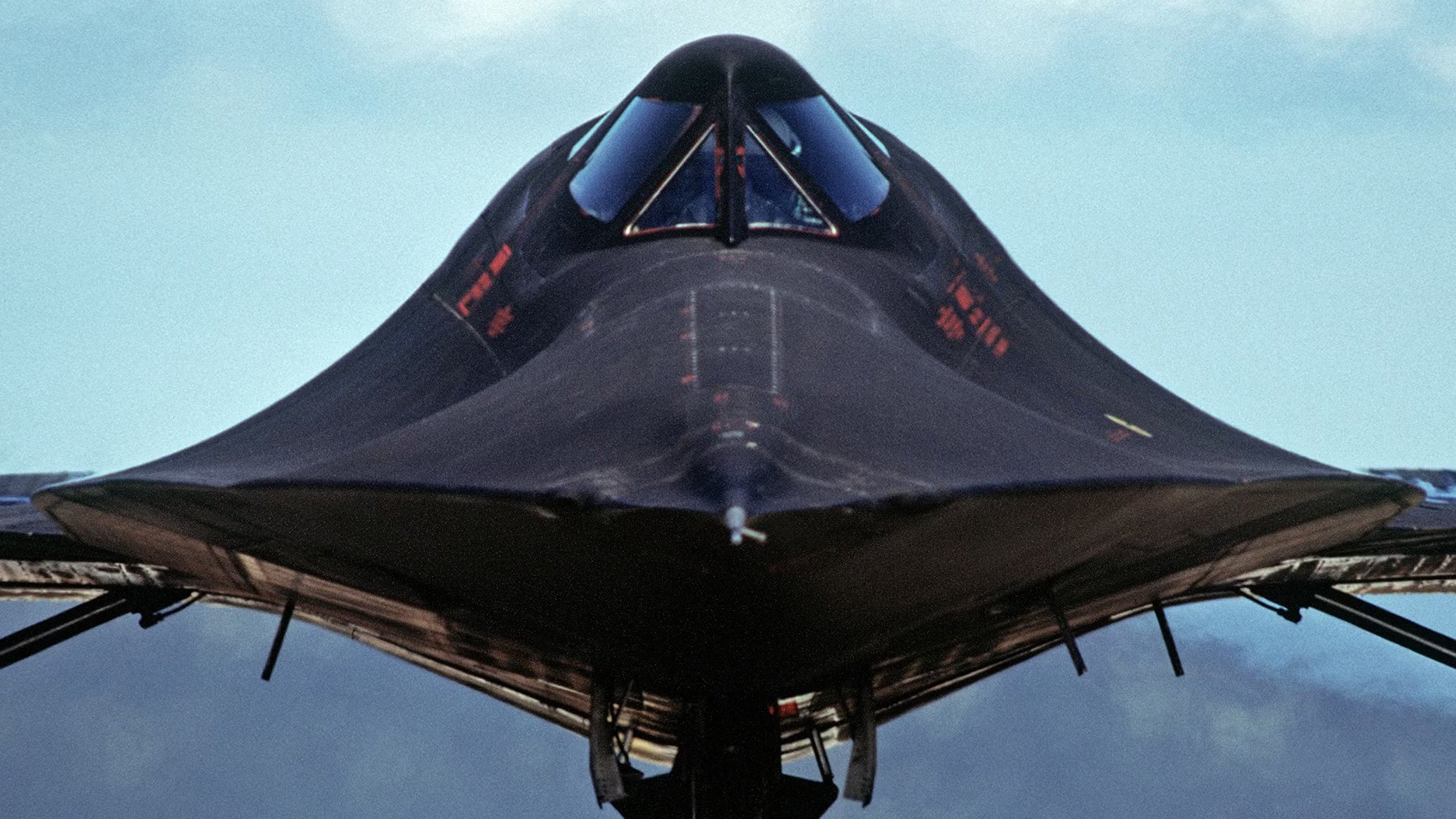
Q: How did the chine surfaces, those sloped surfaces at the edge of the fuselage, affect flight?

A: They gave you more lift. Other than that, it obviously limited your visibility somewhat because they’re flared out.
National Archives

Q: Give me a sense of your visibility in the SR-71 cockpit. What can you see and what can’t you see?

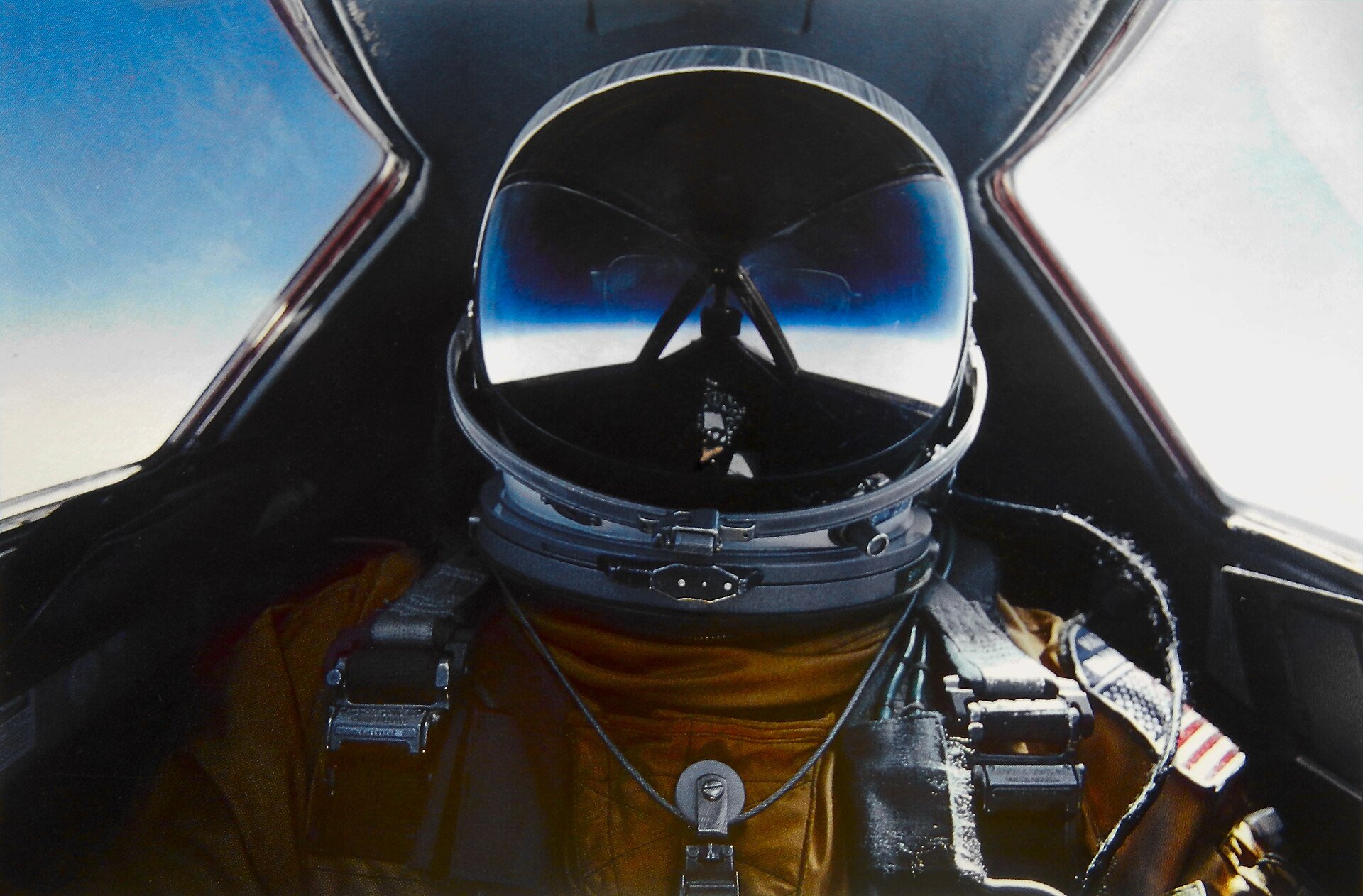
A: Well, one thing, you’re in a spacesuit. So, think about from the middle of your body, you can’t see aft of where your arms are. That’s all by feel. So everything you do in the cockpit, your sense of feel is considerably reduced. As you look forward, the two side windows are great for looking around. Many times we have multiple tankers because of how far the tankers had to go to be in our refueling position. 

For our refueling track off the north coast of Norway, those tankers had to fly five hours to get there. So we would typically have three tankers to make sure that they could give us the fuel we needed. The windows you used most were those two pie [-shaped] windows in the front, because that’s what you’re going to be looking through when you take off. That’s what you’re looking through when you’re refueling, and that’s what you’re looking through when you come in to land. Now the side window you might browse a little bit when you come in to land to see, particularly in the trainer [SR-71B], how am I aligned with things that I know are along the runway to make sure I’m in the center per se. Because once you bring that nose up in the trainer, you can’t see forward. The runway disappears.

Q: Did you have any close calls during training?

A: Not during training. Later flying operationally, I did. I took off from a runway where the wind was exceeding 50 knots, and the airfield was closed. This was in Okinawa, but Washington, D.C., wanted the flight off because it was critical that the SR show up in an area at a certain time. 

I came back from another flight to Kadena where water had gotten into some of the systems. One of the afterburners didn’t light. I couldn’t get it to light, so I came back in. It’s a dual runway. The weather was about 200 feet [ceiling], half a mile visibility, and the radar controller put me on the wrong runway. And as I was breaking out [of the clouds], there was a DC-10 full of passengers, so I had to go around, and I’m starting to lose instruments. Doing a circling approach in an SR-71 is really hard, but fortunately I had been stationed there before, so I kind of knew the ground track I needed to maintain, so I could come around and successfully find the runway and put it down, which I did.

About the same time period, around 1979, 1980, coming back from a night mission to RAF Mildenhall, there had been some thunderstorms through England, and the weather in England was terrible. There was not an air base that was above minimums, so I was told that there was a tanker airborne waiting to give us fuel so we could fly to Madrid to Torrejón Air Base, the U.S. Air Force base there. But we were going to have a special mission in two days. The White House or the national security advisor had directed it, and I knew if I flew to Torrejón, by the time you got all the support equipment down there, there was no way we could make that mission.

As SR pilots, we had different rules than the rest of the pilots in the Air Force. If you’re a regular pilot in the Air Force and the airfield goes below minimums, you mandatorily have to go to the alternate location. You can’t shoot an approach. That was not the case in the SR-71. We had the option to shoot the approach to see if we could land, and if we couldn’t land, then you went to the alternate. 
USAF/Brian Shul

One of the things in the back seat, the RSO had a periscope. He could look straight down, and he could also adjust the periscope so it could look, I think, 35 degrees forward. So that particular night, I mean, it is pea soup fog. I mean, it is terrible. I’m coming in. Oh, and the ILS had been hit by lightning, so there was no ILS. I’m using a British radar controller, who is good. 

As we’re coming in, my back-seater John said, ‘Okay, I’m looking down, and I can see you’re on center line because I can see through the periscope the lights passing underneath the airplane.’ So we landed the airplane successfully. I brought it to a stop. The controller had forgotten to tell Mildenhall that I was coming in to land. They thought the airfield was closed, so when I called them and said, ‘Mildenhall Tower, this is so-and-so. Send out progressive [taxi instructions]. I can’t find the taxiway to be led back to the hangar where I have to put this airplane.’ And the controller came back and said, ‘You can’t be here. We’re closed.’ I said, ‘We’re here, sitting on the runway. Just get me a follow-me [truck] to get me back to where I need to park.’

Q: Tell me about the RSO relationship during flights. What was the RSO’s role and how did you communicate?

A: If you flew an operational mission, it had to be with your formed RSO. Couldn’t be with anybody else. The RSO ran the navigation system, the star tracker, did any updates required there. The RSO turned on and ran the cameras. Radar nose if it was going. The RSO ran the checklists. The defensive systems were all in the back. All the indicators about whether we were being tracked or being shot at — that was all in the back. He did the radio calls on training missions over the United States. I would do them in the traffic pattern, taking off and landing, but the rest of the radio calls were done from the back seat as we went from center to center. 

He was the orchestrator back there. The pilot flew the airplane, took care of the refueling, made sure that it’s on track, and we’re doing what we’re doing. But the guy in the back is the one that’s the synthesizer.

The cockpit is really small. It would have been really tough to have carried a map and folding it and trying to move it. So the [the map was on 35 millimeter film], and it moved at your ground speed, and would show you, ‘okay, you got a turn coming up. This is the fuel you should have. RSO, you need to turn on this camera. You need to check that your defensive systems are on and working before you enter denied airspace.’ So the RSO was a very critical function. We trained and flew together for four years.
Adelbert “Buz” Carpenter (left) and John Murphy (right). (Courtesy of Adelbert “Buz” Carpenter)

Q: Walk me through your first operational mission. When was it? How was your preparation process different from others, and what did you do? What was the mission?

A: Um, I won’t say it was a vanilla mission, but it was the one where you’re going to go to Kadena because we can keep track of you the best there, and the missions are more controlled. So your first operational mission, you would have flown a local mission where you’re mostly flying around the island and doing stuff and just landing at Kadena. That would have been March of ’77, and your first mission. The thing that makes it different is you go through the same preparation, but the day before, you’re going to go in and do more of a mission planning. What does the mission look like? Where are the turns? Where are the things I need to be concerned about? And then the day of the mission, they’re going to come in and say, ‘Okay, this is what the weather is. This is what any intelligence activity you need to know of. These are special instructions from the State Department that might provide additional limiting factors on you that you have to take into consideration.’

That’s all around the time you’re having your breakfast, getting ready to go. You go down, you suit up like you normally would. There’s no difference in starting the airplane up. It’s a little more critical this time to make sure your tankers are where they’re supposed to be, and typically your first mission is probably going to be along the Korean DMZ. It’s going to be a two-and-a-half-hour sortie. You’re going to take off. You’re going to refuel at 25,000 feet. Head up the west coast of Korea. You’re going to see the Yellow Sea. Make a big sweeping right turn, and you’ll come north of Seoul. You go very close to the DMZ all the way across. Do a big turn over the Sea of Japan. Come back the same direction along the DMZ. Then turn south and come back and land, and this will probably be your first operational mission.

Q: What were you collecting? What kind of sensors did you have?

A: Oh, we would have the side cameras that could look out about 30 miles in. We might have the nose camera. The electronic sensors could pick up any radio, radar, other type of electronic signals out to about 350 miles anywhere around us. So you’d be sensing what the North Koreans have that was active at that time to better understand what their defense posture is, where missile sites were located, and things along those lines.

The side camera was a camera controlled by the computer. All you did was turn it on because of the astro tracker. We navigated directly off the stars, we didn’t navigate off the ground. We guaranteed the president 300 feet anywhere in the world traveling at 2,200 miles an hour. This is long before GPS, and so the president and the people around him had great — six presidents used us — comfort knowing that we would go where they wanted us to go, and in all likelihood we’d come back. 

We weren’t going to get shot down, which never happened, so they wouldn’t have to deal with some kind of a hostage situation or some kind of a diplomatic problem. That was just part of it. 
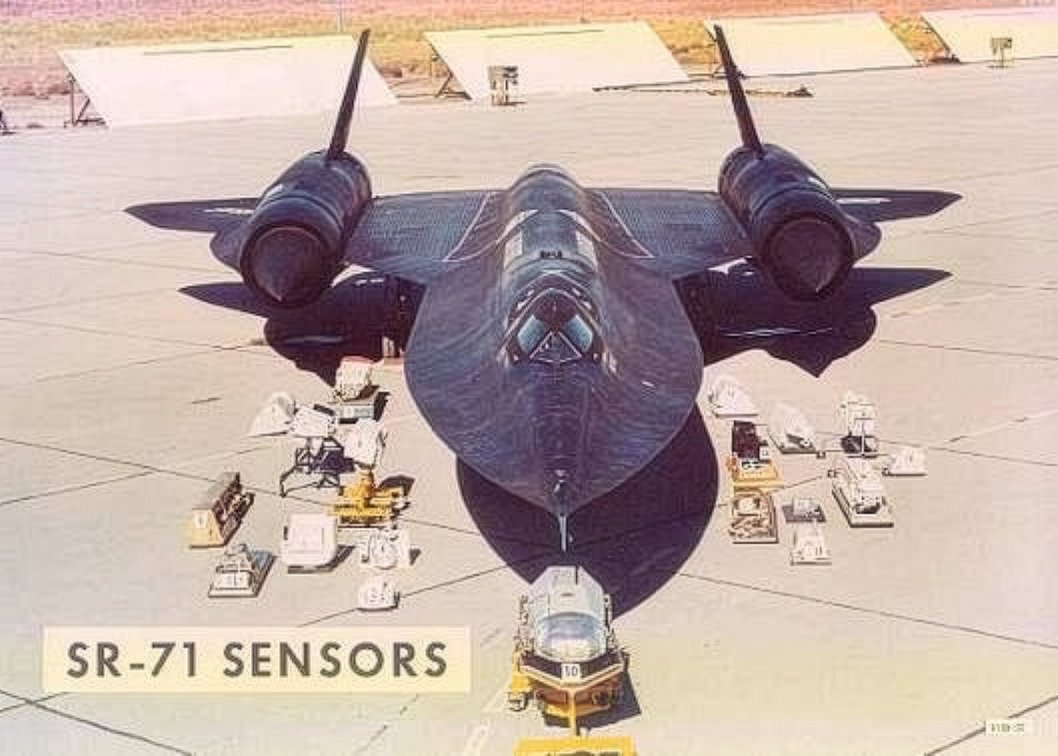
The SR-71 plethora of optional sensors. (Public Domain)

Later on, when I flew a flight for President Carter when the Saudis and the Yemenis were at war over their border, the nose camera was in there. The nose camera took a picture 72 miles wide, 36 miles either side of center, and in the center your resolution was two to four inches. You can see people, you can see tanks, cars, all kinds of things. You cannot recognize faces.

There’s another nose that came in while I was flying, probably in 1977, a ground-mapping radar, because there’s parts of the world where the sun rarely shines. So if you’re waiting for that picture, you may never get it. So you can’t see people with that. Cars are hard to identify. It’s more of an electronic blob, but a ship, an airplane, things like that, that would be on the ground or at sea, there’s enough radar return that most of the time they may not be able to give it the exact airplane or ship, but they know what kind it was, so that day or night, in any weather, when an enemy is trying to move things around that you can’t see, you could actually pick up what their activities are.
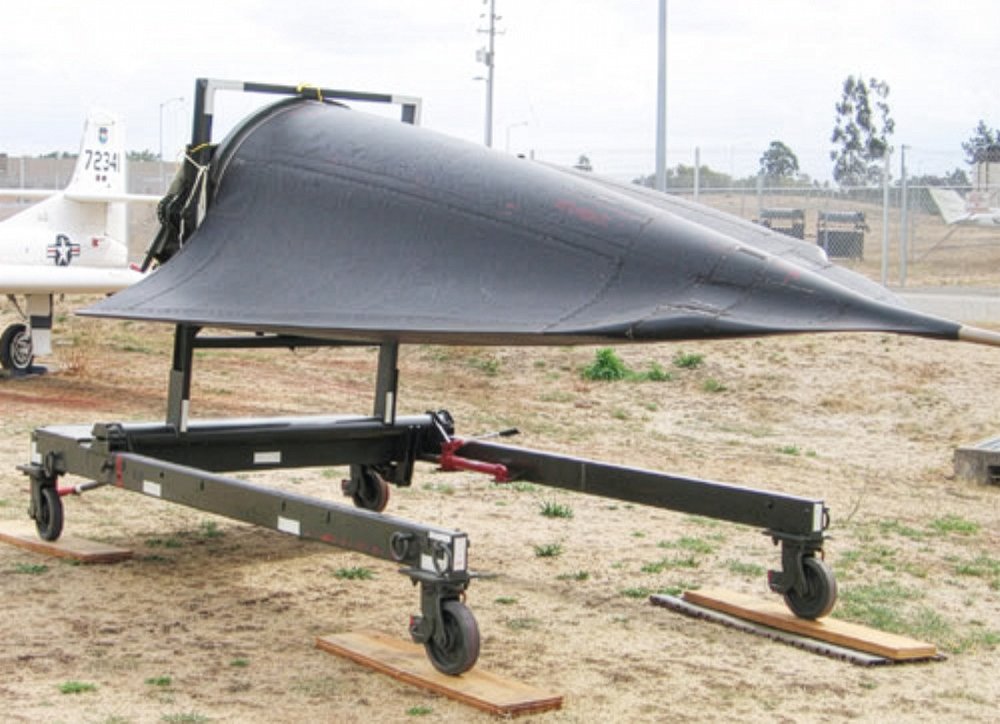
One of the SR-71’s interchangeable noses. Pacific Coast Air Museum

Q: You talked about working with other assets for collection missions and a lot of coordination. What did those include?

A: Other assets in our coordinated collection missions included other aircraft, ships at sea, land sites collecting and satellites overhead. Timing was important on these operations. I had as many as 28 sensors I was stimulating the Russians for.

Q: Give me an overall sense of your operational missions. What were the goals and what permissions did you need?

A: There’s something that’s still done today called the ‘Beige Book,’ and they go through, and it’s all the services, including submarines, and all that. Okay, what are we interested in? What are we going to plan? How important is the target? How much risk do these targets pose to the collectors, but also politically? If we do this, are there political consequences? And this goes to the whole government, including the State Department, CIA. So they publish this. 

Now, when something occurs like the battle with Yemen that just pops up, then things are reprioritized.

Overflights are typically approved by the president, but sometimes by the National Security Adviser. Not below that level per se. The missions where you’re flying peripherally around Russia, around China, other places in the world, those would be approved as part of the monthly schedule. Places we overflew. I mean, we overflew Cuba every 45 days. We did work in Central America. After I left, I think there were some that went down to Colombia. I am one of the only two pilots that ever took the airplane to Diego Garcia. Originally, we were looking at that as a possible base to use to go image Iran and come from a different direction than we had in the past because they were much like today, harassing ships with their missiles and other stuff. We flew over North Korea a couple times.

Q: Did you ever fly over North Korea?

A: I didn’t, but the airplane did. 

Q: How did you navigate?

A: We used the star catalog. We had 58 stars that were the northern stars that we used for tracking. To give you an idea. Took them an hour and 45 minutes to load our mission in the tracker, and we called it after the fact R2-D2 because it always knew where we were. It was told exactly where it was on the face of the earth to start. After we started the engines and we’re ready to taxi, when you came out of the hangar, if it was a clear day or clear night, within two minutes, the RSO in the back seat would get a starlight, and what that told you is we’re now automatically tracking the stars day or night, and it was a really accurate system.
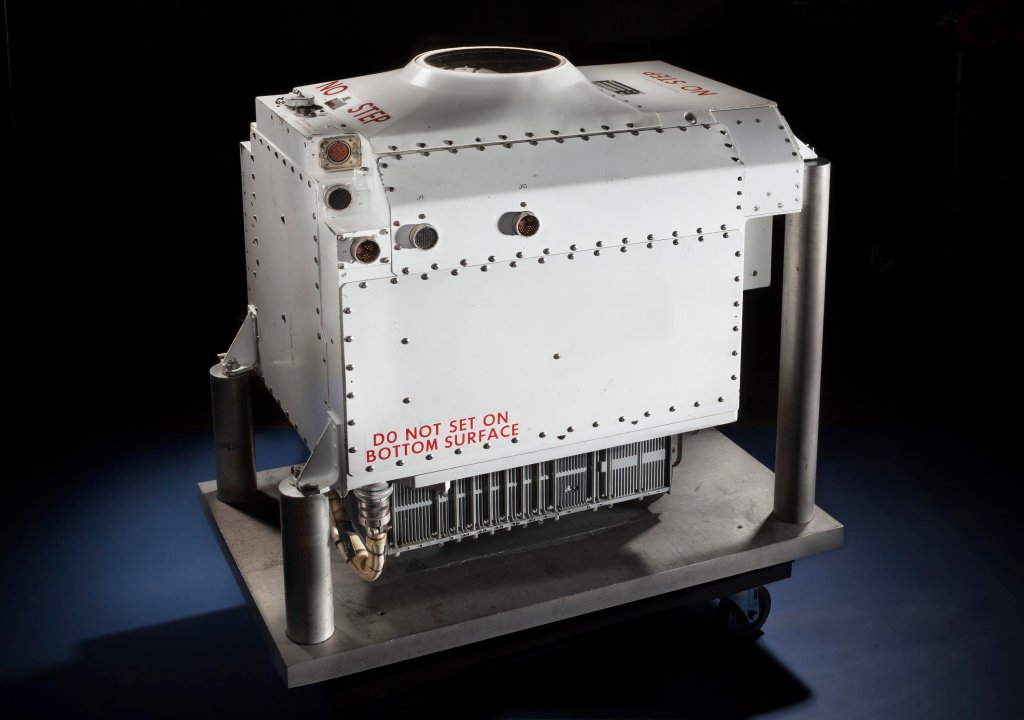
SR-71 Astroinertial Navigation System (ANS). (National Air and Space Museum)

It was a wonderful system to fly with, but it also gave the planners and our leaders [the confidence] that if we can fly within 300 feet, like let’s say the north coast of Russia, well, most airplanes are going to have to put you a couple miles off just because we’re not sure exactly where you are. In our case, we could fly maybe 500 feet off their international border because we knew we would be exactly where we were supposed to be, and that was one of the great advantages.

Another great advantage was we had great range. There was a special mission that I flew. The Navy had lost track of a couple boomers [Russian nuclear ballistic missile submarines]. They’d come out of Murmansk, up there in northern Russia, and had slipped through what we call the Greenland-Iceland-U.K. gap, and so we were tasked for a quick reaction. And in this particular case, there was a a second SR that took off after me. To show you the importance of the mission, if I was not mission-capable at Goose Bay, the second SR, one hour behind me, was going to pick up the mission.

I was fully ready, so we proceeded across the Atlantic north of Norway. We refueled again. We did the double pass past Murmansk. I saw [the Russian submarines] once or twice making their way to the Arctic Ocean on the surface as the inland waters were too shallow to dive.
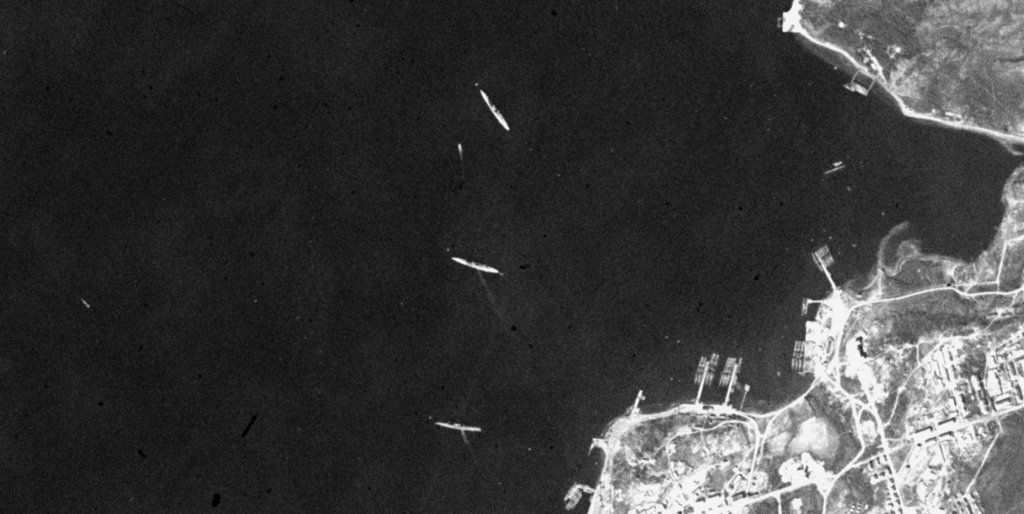
Russian submariners near Severmorosk. (Satellite image courtesty of the U.S. Geological Survey)

We refueled again off the north coast, crossed the Atlantic, refueled over Goose Bay, Labrador, came across Canada, and at 8:20 in the morning, Saturday morning, I landed back at Beale Air Force Base.

Q: What other countries have you flown over?

A: I’ve flown over Cuba. Obviously, flown in the Middle East, over Egypt, down to Yemen. Over West Germany. In the Pacific, we did more peripheral flights, and peripheral were sometimes actually more sensitive because they put you close to the border, and there were a lot of potential political issues.

For instance, around 1978 or 1979, I had a major emergency on the DMZ, and to follow what I needed to do to clear the problem — which had to do with the inlets — I needed to roll the airplane out, but I was already in a turn. If I’d rolled the airplane out, I would have overflown North Korea, which would have possibly been a political violation. So I had to keep the airplane in a turn. The airplane was damaged. I had to land at one of our U.S. Air Force bases in South Korea and have maintenance come up and work on the airplane, just to avoid a possible incident. 
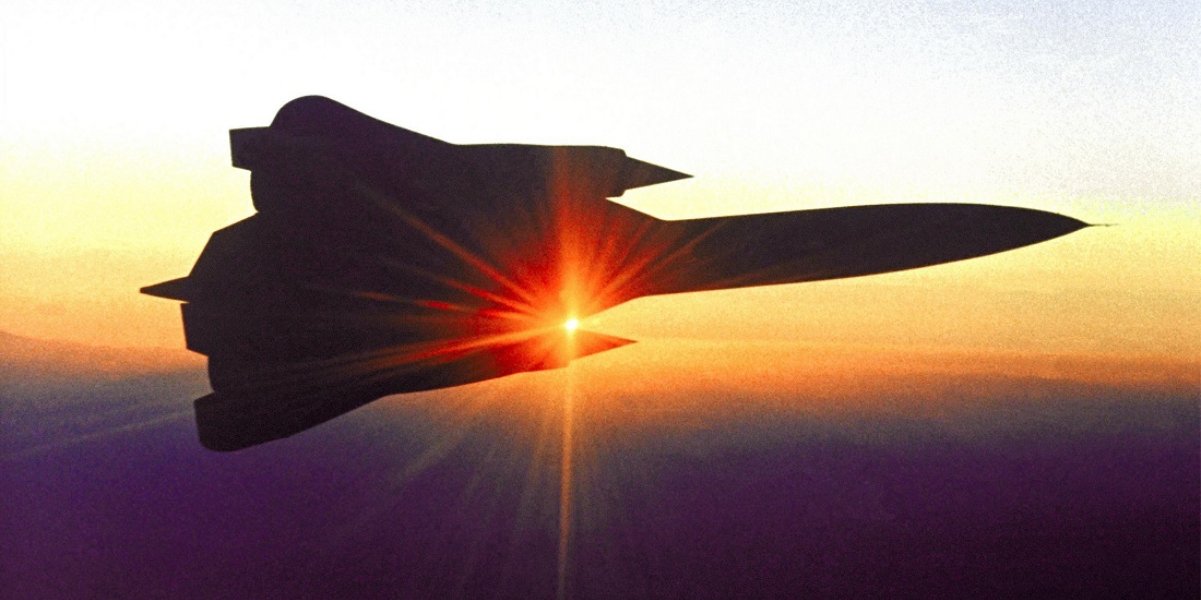
Public Domain

I’ll show you the difference between presidents. When President Ford’s term was coming to an end, he knew that President Carter felt it was immoral to overfly other countries and unethical. So we were flying over Cuba every 45 days to keep track of the Russians and the Cubans per se. So, on his last day in office, President Ford had tasked us: you were to take off, you’re to overfly Cuba, you have to land back in California. This was on the 20th of January, 1977. Not later than 10 minutes before Carter takes the oath of office, I was in the wing commander’s office when we called the White House and said, ‘Mission complete, aircraft on the ground.’

For a year, we didn’t overfly anybody because Carter thought it was immoral, and then he realized the Russians were doing stuff in Cuba we weren’t seeing. There were, you know, parts of the world that the SR had unique capabilities that he was foregoing because of his political view. So that changed.

Q: Why?

A: It changed because we were having intelligence failures, because we were being surprised with things that were taking place that our collection systems, had they been used like they were designed, would have probably picked up.

Q: Was the SR-71 used as a psychological weapon against adversaries?

A: Sort of. We sometimes flew over heads of state greeting each other and they would be covered with an excellent sonic shock wave to remind them they were doing things counter to U.S. and/or NATO policies. In the three days before Noriega decided to leave Panama, SR-71 aircraft overflew his home with the sonic boom to advise him it was time to go.

Q: Did you ever fly over China?

A: We did not overfly China. U-2s did, but the SR never overflew China. Now this will surprise you. Sometimes I’ve flown missions that the Russians knew ahead of time that I was going to be right on their border at a certain time, and the reason for that was that they really wanted to shoot down and get their hands on an SR. So when we would be into an area like other reconnaissance airplanes, they would hardly pay attention to it. We would go in the area, and a lot of their radars and other stuff would come up very closely, monitoring what we were doing. 

So I landed in Okinawa, Japan, and the head of NSA for the Far East had been there and asked me, ‘Was there any unusual activity today?’ And I said, ‘No, about the same number of fighters tried to come up to intercept me, and I never had a missile fired at me.’ And he said, ‘Well, that’s unexpected. We told the Russians yesterday where you were going to be today, hoping that we’d get some greater fidelity on the collection.’ So they had great confidence we were going to come back.

Q: How close did the Russian fighters get to you?

A: Not that close. We were really a tough target. They would try to make a head-on [interception] with a conversion [turn]. Well, by the time they made a conversion, they had the same problem. They had to be above Mach 2 to come after us. By the time they made the turn, we were 100 miles down the road.

Q: The SR-71 had a reduced radar signature. Did this help in its survivability, or was it the speed and the electronic warfare capabilities that largely kept SR-71 crews safe?

A: It was a combination of capabilities that gave it such a remarkable survival capability. To start with, the stealthiness made it hard to find until it was very close to you, significantly compressing an enemy’s reaction timelines. Extremely high speed, Mach 3.2, and incredible altitude, up to 85,000 feet, put its operations in a difficult area to attack. If they did get contact and decided to engage you — all the missiles of our era had to be guided to the high-speed maneuvering target as they did not have onboard guidance capability. When the electronic jamming system became active, the adversary lost their ability to communicate with their missile, so basically it followed its last command and went stupid.

Q: I have seen reports that Blackbirds evaded about 4,000 missiles fired by the Soviet Union, North Vietnam, North Korea and India. Is that accurate?

A: No, it’s not.

Q: How many would you say? 

A: The number of missiles wasn’t well-tracked. I flew a mission on the Korean DMZ, and they were playing with me. When I say playing, they were using their long-range [radar]. Then the acquisition radar came up that was trying to ready for the missile, but the missile was never armed. 

Six weeks later, my buddy had three missiles fired at him. So there were probably no more than 100. Part of the thing was they gave up. I mean, particularly over Vietnam, that’s where most of the missiles were fired, and they were just not working. And how many missiles do you want to fire to try to get an airplane?


Q: What were the orders if things went terribly wrong? Were there places you absolutely could not land at and had to destroy the aircraft instead of letting it fall into enemy hands? What about if the crew was captured after ejecting?

A: The aircraft was not to go into enemy hands. And in some cases not even allies’ hands. If the aircraft was impossible to control and out of control — ejection might be your only option. It was the safest USAF aircraft I ever flew. There were a total of 12 ejections in the test program and in operations. None were ever caused by enemy actions. There was never a USAF SR-71 crew member ever killed flying this aircraft — an incredible record! We all went to a special survival school to understand what we might expect if captured by an enemy which never happened or came even close to happening.

Q: What was the closest interception threat?

A: Probably the closest the Russians ever got to a successful intercept had nothing to do with their initial work. There’s a crew; they’re flying the Baltic, so they’re Mach 2.8. They head up past Lithuania, Latvia, and as they beam Estonia, the right engine explodes. The turbines come apart. So now you’re a single-engine airplane. You’re not going to be at Mach. You’re going to be probably around 12,000 feet subsonic. So the crew announces Mayday, starts a turn. They probably overflew some Soviet airspace. They start this big turn. The Swedes pick up the fact that they hear a Mayday call, and they have a pair of [Saab] Viggens that are airborne that are actually armed.

So as they make the turn, they descend. Get the airplane under control. The Russians send five flights of MiGs to come out. They’ll also send out a rescue helicopter with the idea maybe they can capture the SR crew. Some of those MiGs that were coming out we were sure were directed to shoot down the SR if it wouldn’t follow their signals.

But when they got there, all of a sudden they find there’s a Swedish Viggen on either wing. So the Russians decided this is not a good idea. Halfway down, the two Viggens were low on fuel. The Swedes sent two more Viggens up that replaced them, sat on the wings, continued their mission, and when they got to a certain point, United States Air Force F-15s came out of Germany, intercepted, joined with the SR-71, and led it to a safe landing on an air base in northern Germany. 

The mission was classified for years and years. The Swedes wouldn’t even acknowledge it took place because they were a neutral country per se. One of my classmates from the academy, who was a lieutenant general, found out about it and said, ‘We’ve got to do something.’ So, in a very rare occasion, they put through the paperwork, and those four Swedish pilots at a ceremony in Stockholm were given United States Air Force Air Medals for what they did that day to save the airplane. That’s the closest that we ever came to actually losing an SR-71 that would have been related to combat. (You can read more about that award ceremony in our story about the event here.)
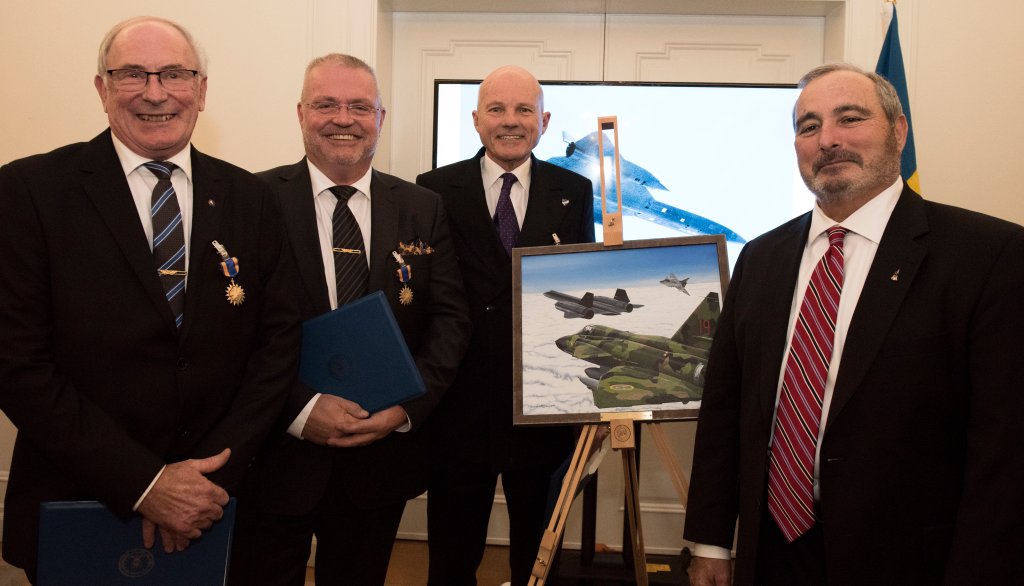
From left to right, Col. Lars-Erik Blad, Maj. Roger Moller, Maj. Krister Sjober, and Retired U.S. Air Force Lt. Col. Tom Veltri stand beside the official photo which depicts the event that earned the Swedish pilots their U.S. Air Medals in Stockholm, Sweden, Nov. 28, 2018. The Swedish Airmen risked their lives to save an SR-71 and the aircrew, Tom Veltri and Duane Noll, on June 29, 1987. (U.S. Air Force Photo by Senior Airman Kelly O'Connor)
From left to right, Col. Lars-Erik Blad, Maj. Roger Moller, Maj. Krister Sjober, and retired U.S. Air Force Lt. Col. Tom Veltri stand beside the official photo which depicts the event that earned the Swedish pilots their U.S. Air Medals in Stockholm, Sweden, Nov. 28, 2018. The Swedish Airmen risked their lives to save an SR-71 and the aircrew, Tom Veltri and Duane Noll, on June 29, 1987. (U.S. Air Force Photo by Senior Airman Kelly O’Connor) Senior Airman Kelly OConnor

Q: What’s the highest you’ve flown? What’s the fastest?

A: My top speed is 3.35 Mach before I slowed it back down to 3.2 Mach because we got into cold air and the airplane really wanted to accelerate. My highest altitude is a little over 85,000 feet. Those were in the late ’70s, early ’80s. I don’t remember the specifics. 

The high-speed one was off the north coast of Russia when I got into really cold air. You can’t just come out afterburner to try to slow the airplane down because you risk then having a compressor stall. So what you had to do was force the airplane into a climb, and as it was climbing, break its ability to maintain that speed. So once you got it back to the speed you wanted, you’d kind of lower the nose to where you wanted to cruise and go from there.

The faster you went in this airplane, the more dangerous it was, and the more sensitive it became, and that was part of the reason why 3.2 Mach — that’s where the inlets and the engines and the nozzles and everything was optimized for, because they were really afraid you had what we call an “unstart.” That’s when you lose a shock out of one of the inlets, and now the other engine is producing 100%. This engine is still running, but it’s only producing 30%. The airplane goes into a violent yaw and can pitch up on you. They were afraid there wasn’t enough flight control to be able to control the airplane.

Q: Was it harder to fly at that speed?

A: It’s just more sensitive. As you made inputs, the airplane was more reactive, and you had to be on your toes because if you had an unstart at that point, you needed to make sure that you prevented the airplane from doing a yaw slice and particularly pitching up.

One time off the coast of China around 1978 or 1979, I had an unstart and the nose started up. Of course John [the RSO] knew that we had an unstart, because you can’t miss it. You get banged up in the cockpit. I had to stick full forward, and I told John, I said, ‘we’ve got about three or four potatoes.’ That means in three or four seconds, if that nose doesn’t stop climbing, we’re going to have to leave this airplane because it’s going to disintegrate.

Q: You flew over Area 51 and later oversaw its funding when you were at the Pentagon. What is it like?

A: When I did the test flights in Area 51, I had to go through and do some briefings and sign off on stuff. I’m an Area 51 guy. I mean, I’ve been on the ground there. I was responsible for their funding for a couple years, and I used to take guests out there on certain occasions who needed to see something or understand something. It’s great. It looks like the movie The Martian. It’s God forbidden, but it’s a great place to do classified testing because it’s the only place in the country we can do that pretty much successfully. 

Before I left the Pentagon, I completed the paperwork to withdraw 75,000 more acres of land that sat on a hillside. So now your closest point to have a direct view of the complexes is from 26 miles away at [Tikaboo Peak].
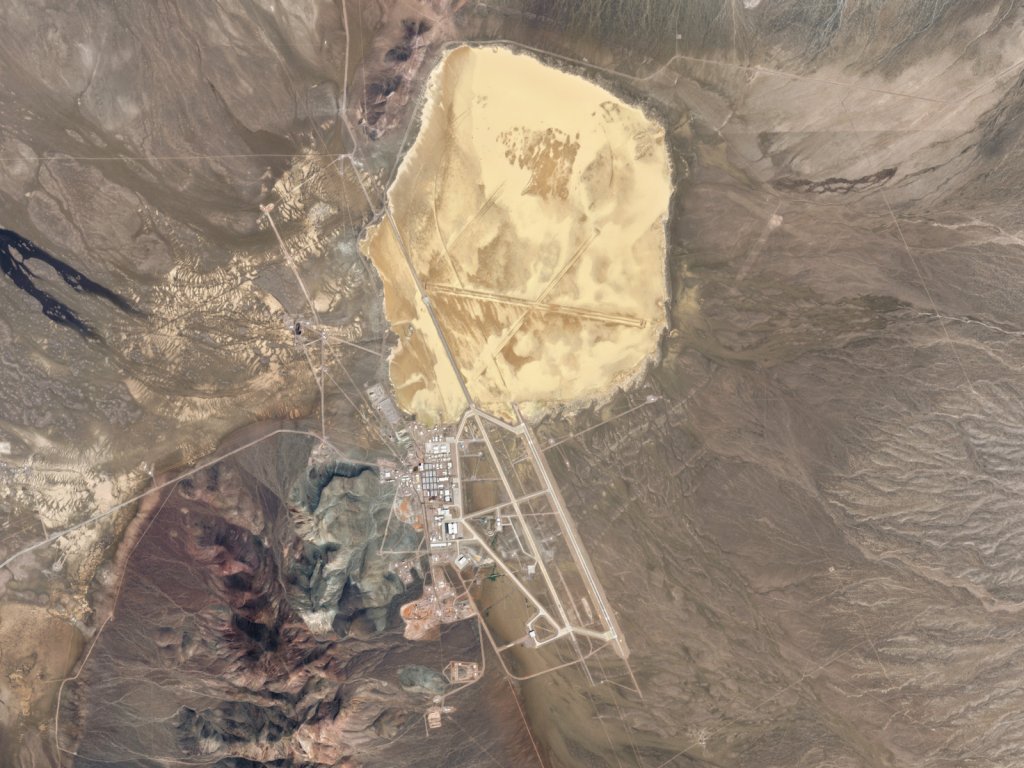
AREA 51, SOUTHERN NEVADA, UNITED STATES - 16 MARCH 2023: A Satellite view of Area 51, Southern Nevada, United States. (Photo by Gallo Images/Orbital Horizon/Copernicus Sentinel Data 2024)
A satellite view of Area 51, Southern Nevada, United States. (Photo by Gallo Images/Orbital Horizon/Copernicus Sentinel Data 2024) Gallo Images

Q: Let’s talk about the present. Obviously, the Blackbirds are big news with rampant speculation about the future of Tail 844. What do you know about this, and what do you think that NASA is planning for it?

A: I think we know a number of things. The airplane’s been outside for what 30 years, so it may need some repair. NASA is trying to inspire the current and future generations about X planes. 

One right now that’s got everybody’s attention is the X-59 that will start flying over the United States here pretty soon, and it’s to measure whether we have successfully come up with a shape that reduces the intensity of the Mach shock wave. Because where this will lead to is there’s a couple companies… that want to create a supersonic transport. One of the limitations on the Concorde, no European country would ever allow it to overfly. Nor did we, because that tremendous wing space created a really significant shock wave on the ground.
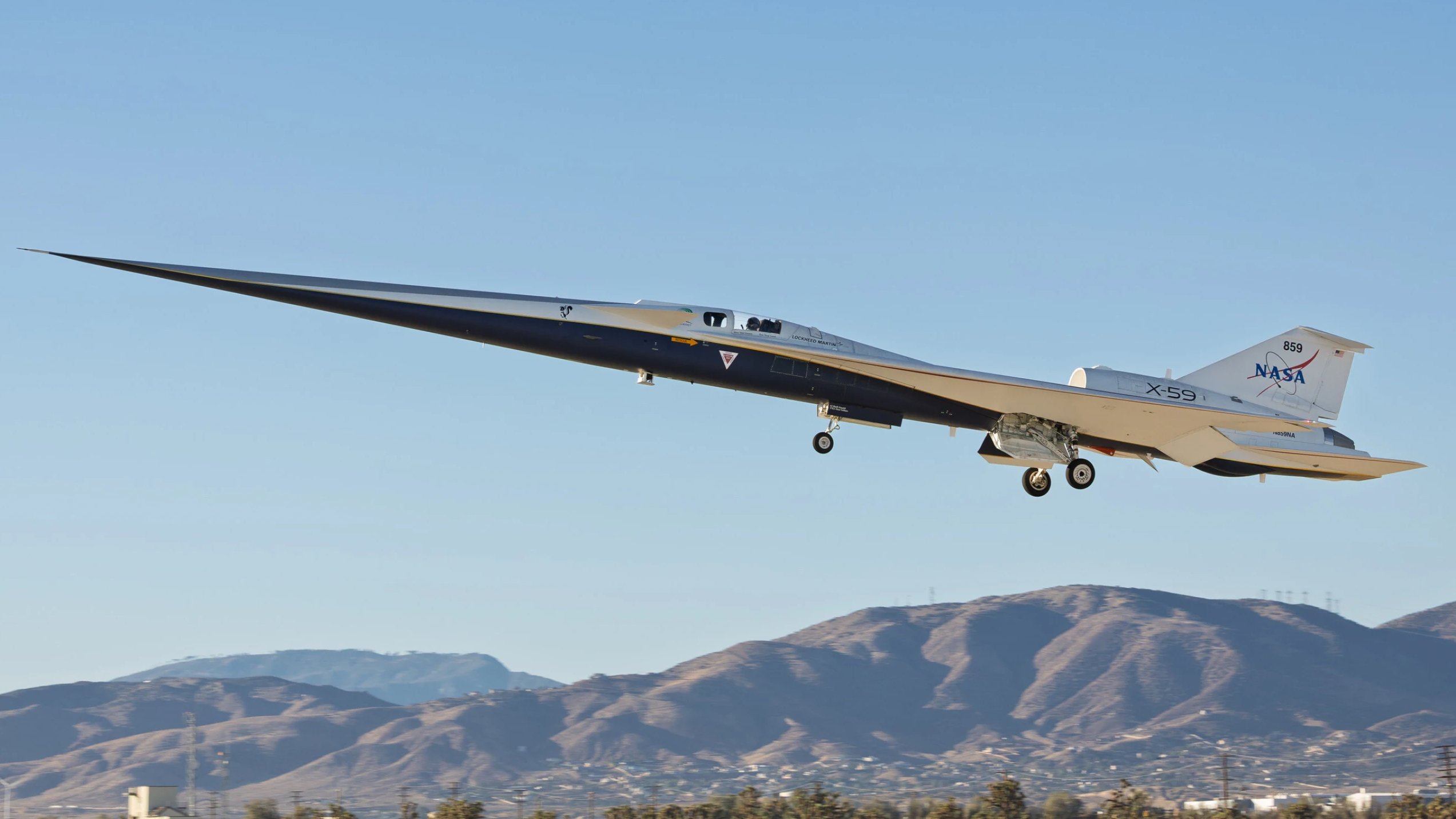
NASA’s X-59. Lockheed Martin

In the SR-71, we broke windows. I can remember a particular Cuban overflight. I came around, I did a descent over Mississippi. My tanker was over Mississippi. I refueled. Gave me enough fuel to get back to California. When I landed, the director of operations for the wing had left a message that when I got out of my spacesuit, give him a call. So I called him. I said, ‘Col. Lawson, what can I do?’ And he goes, ‘Oh, Buz, how’d the mission go?’ And I said, ‘You don’t ask me how the mission goes, unless there’s something you’re particularly [interested in]. What is it?’ He says, ‘Well, Hattiesburg, Mississippi. There’s 30 houses that have fewer windows, and we’re pretty sure it was you.’

We couldn’t predict where the shock would go. Now [what] we know from some of the tests is, that when you’re in a turn, a turning descent like I was, sometimes the shock wave actually concentrates and becomes more violent than it would if you’d passed over straight and level. So what the X-59 is trying to do is see if they can successfully get a shape and controls, so they can build this supersonic transport that, in fact, can fly over normal airspace.

Q: Former NASA Blackbird engineer Tim Connors told us that he thinks that they’re going to use Tail 844 as a high-speed engine testbed. What’s your assessment of that?

A: It doesn’t make sense. It is high speed, but we’ve done all that. All that data is there. I mean, we’ve got hundreds of hours at Mach 3 and above that they don’t need to, and we’ve got air chambers now that can run the air at those Mach speeds to take a look at. I mean, they’re looking at the hypersonic. They’d like to have an engine like the J-58 that you could take off at a normal speed, and somewhere around Mach 3, you could open valves or do something that you could then accelerate to Mach 5 or Mach 6, and then when you were through with what you wanted to do, come back, and then go down through the Mach 3…2…1, and recover safely back at wherever you want.

Author’s note: Being able to test this exact transition area between Mach 3 and Mach 4, approaching hypersonic, potentially for a combined cycle engine like Buz describes, is what some think NASA will use the SR-71 for.
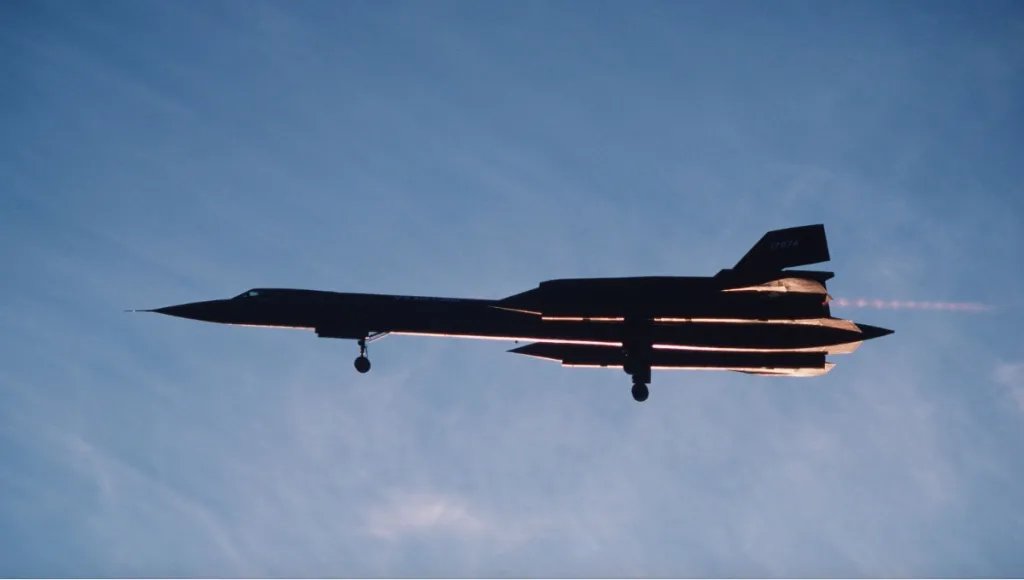
SR-71 Blackbird. (Courtesy photo via USAF)

I mean, basically that’s what the SR did. Except we went to Mach 3. The big transition in the SR-71 took place in Mach 2. Because when you hit Mach 2 or thereabouts, that’s when those bypass tubes, the six of them around the engine, started bypassing air around the engine, and the air, the engine inlet, everything became a pseudo-ramjet. Because the faster you went, the more thrust you were creating by the ram thrust, not by the thrust being created by the engine itself. The engine had to run; it was critical to the whole process, but the vast majority of the larger part of the thrust was being created by the bypass.

Q: Do you think other aircraft came after Blackbird, even experimentally, that broke its speed records? If so, why haven’t we seen them all these years later?

A: No operational jet-powered manned aircraft has come along to break the significant records we set 50 years ago.

Q: So what is NASA going to use Tail 844 for?

A: I think they’re going to try to see how useful is it. Something that’s sat outside with blowing sand and everything else — it’s really hard to know.

Q: How how difficult will it be for modern test pilots to fly Tail 844 or whatever aircraft is created from this project? 

A: It would be challenging because there’s no simulator that works, and the simulator helps you go through all the things that you might face to successfully save the airplane. I mean, we consider the SR a national asset, so the last thing we were going to do was eject from the airplane. If you don’t have that simulator, it’s going to be much more difficult. 

Q: And the simulators don’t exist anymore?

A: The simulator sits down in a museum in Texas. It’s not operable.

Q: Was boosting the speed of the SR-71 ever discussed during your career, and if so, what were the options considered to make that happen?

A: It was. The idea was that they were going — I can’t remember where it was a water injection or something — that they could take the SR up to 3.5 and beyond. I may have this wrong, but the SR shape and the materials that make up the body of the airplane, I think are good up to [Mach] 3.8, maybe even 4, and this was going to be a water injection that for 10 minutes you could take the airplane up to a faster speed. I think it was [Mach] 3.5, but it may have been [Mach] 3.6. But when they looked at the weight and all the different things, it was the Lockheed proposal. The decision was made. You didn’t gain that much by raising the speed because we were fully authorized to go to [Mach] 3.3.

I’ll tell you a number of my contemporaries never went there. When I was an instructor pilot, I made sure my student went there because if you needed to go there, I wanted you to feel the sensitivity of the airplane when you’re at those speeds.
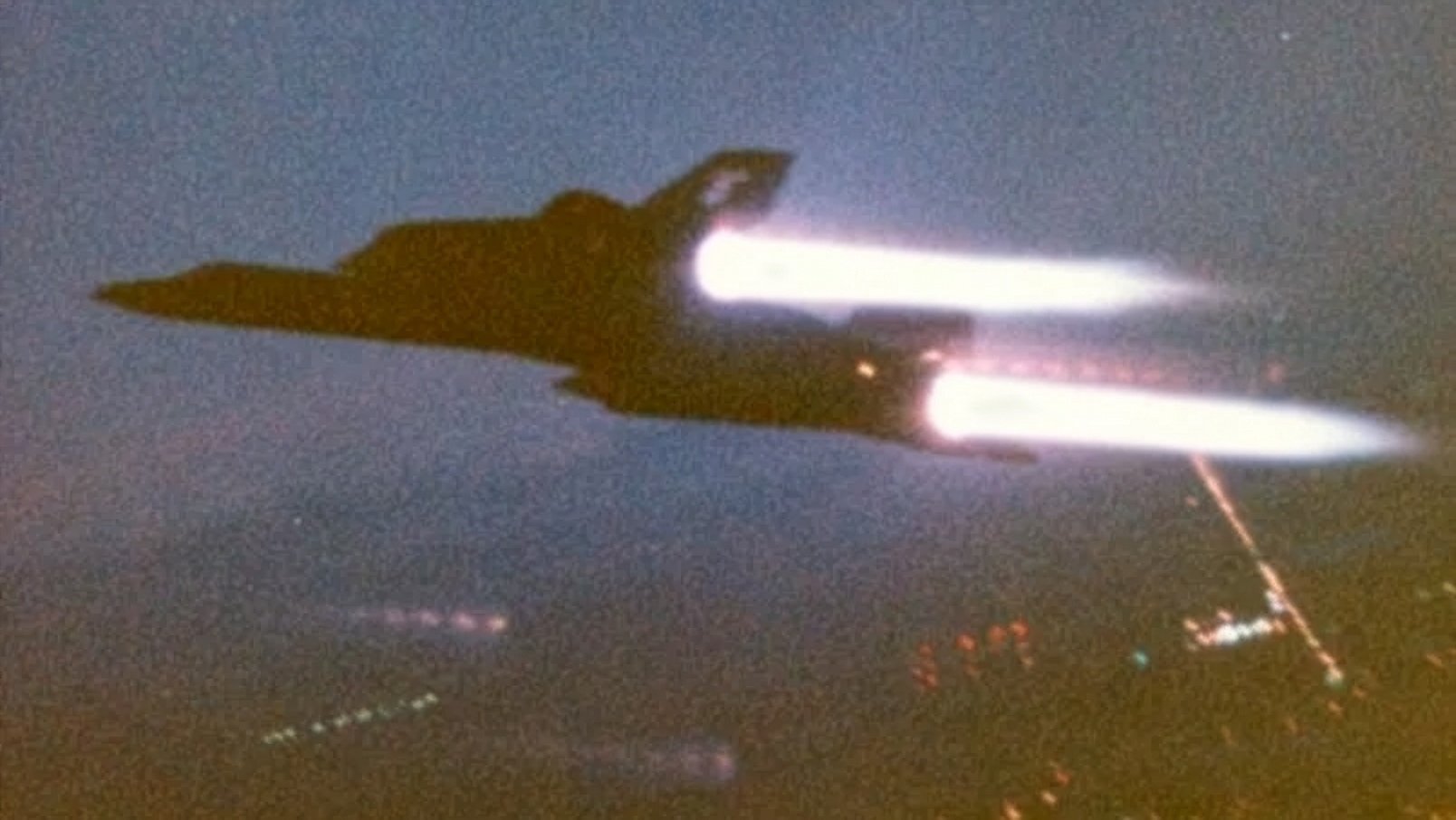
Public Domain image

Q: So was the idea to flow liquid to cool the air going into the inlets?

A: I think that’s where it was. It was in that area, but it’s been so long. I don’t remember. But that never went anywhere, and it only gave you 10 minutes. Because the critical temperature on the airplane was not the airplane. In the cockpit, the CIT — compressor inlet temperature — we were not to exceed 427 centigrade, which is about 800 degrees [Fahrenheit]. Pratt & Whitney said beyond that point, our modeling says that you’re at a higher risk of the engine failing.

Q: Conners told us that during his time in the SR-71 program, he investigated whether it was possible to get the Blackbird close to Mach 4. Do you think a Blackbird could approach Mach 4 with the proper modifications?

A: The question is, what will Mach 4 give you? And I think the focus is more on unmanned vehicles that are Mach 5, Mach 6.

Q: Why?

A: You look at the weight that’s in an airplane to keep a man alive — that’s quite a penalty you’re paying. And when you get up to Mach 5 and Mach 6, the temperatures you’re dealing with are — it’s on a curve that is accelerating up, and the materials you have to use and try to put a person in there — it doesn’t make sense.

Q: How would the shock waves affect the ability to exceed Mach 3.3?

A: Obviously, they’re going to become steeper. At Mach 3.2, the shock sits just on the outer lip of the inlet. That is dealing with part of the shape of the airplane. Again, this is what was designed as your optimum speed.
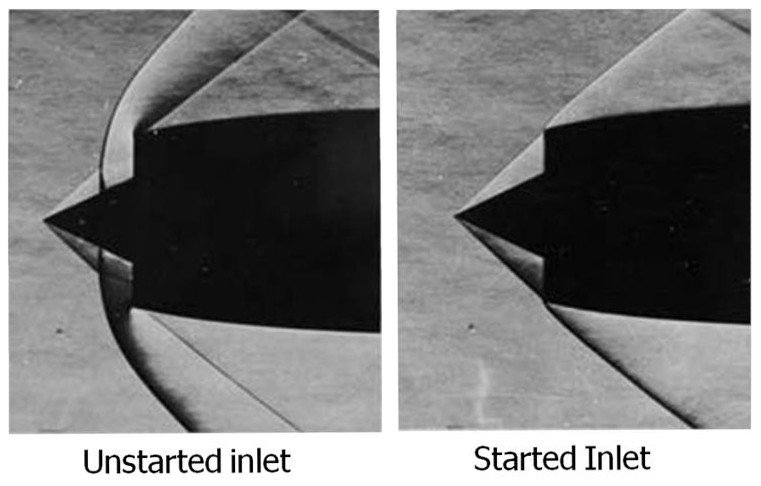
Schlieren flow visualization of shock waves for started and unstarted inlet at Mach 2. NASA Glenn Research Center 

Q: If you were a betting man, what would you say the odds are of the Blackbird flying again?

A: I could see it if they wanted to fly it for inspiration, particularly subsonic. The airplanes I’ve flown a couple times subsonic because we had some maintenance problems. 0.9 Mach. It’s a sweet airplane.

Q: Do you see it flying again?

A: I think part of the problem is engines that haven’t been used in those numbers of years. How difficult is it going to be for you to put them back in service? Because there’s no spare engines. When the program was taken apart finally in 2007, a number of those engines were ground up. Foolishly, they were ground up. So there’s not a lot of spares out there.

Q: So what’s NASA’s goal for Tail 844?

A: I think the goal is inspirational. I give tours regularly at the Air and Space Museum, and you’ve got multi generations that still love the SR. I just came back from organizing an SR-71 weekend down at the Museum of Aviation at Robins Air Force Base, and people come from all over to talk to us and see the airplane. When you look at it, young people can’t believe this airplane — like the one in the Smithsonian — came off the production line in 1966. It came off the production line before their parents were born. Yet you look at it, and partly because of the Star Wars influence, you think, ‘Oh, is it a space plane? Is it an airplane?’ I mean, it is something that creates visions and dreams, and I think that’s what NASA is trying to get back to: use it as a a dream generator to fly again. I don’t know. A number of people have already said that they can’t believe it’s going to fly. So it could fly, but I would say that the odds are against it.
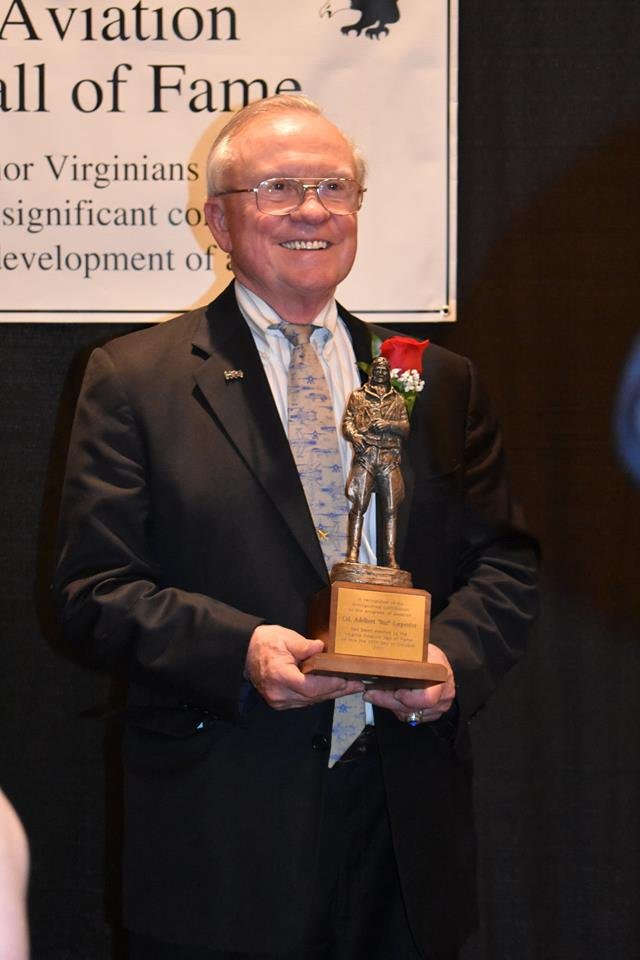
Adelbert “Buz” Carpenter being inducted into the Virginia Aviation Hall of Fame. (Courtesy Adelbert “Buz” Carpenter)


Q: You’re at docent at the Udvar Hazy Center. What’s the scuttlebutt there about the plan for Tail 844?

A: They’re as clueless as everybody else.

Contact the author: howard@twz.com

The post Confessions Of An SR-71 Blackbird Pilot appeared first on TWZ.
  •  

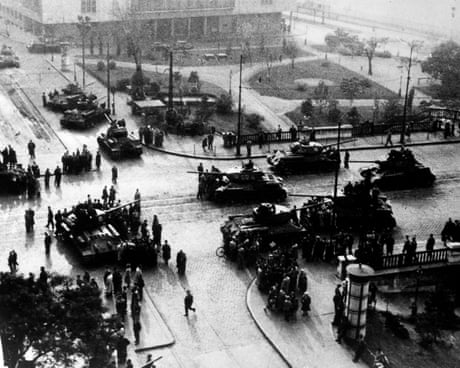
Soviet troops invade Hungary – archive, 1956

On 4 November 1956, Russian forces moved into Budapest as part of an offensive against a national uprising that called for democratic reforms and an end to Soviet occupation

5 November 1956

Civilised people of the world. On the watch tower of 1,000-year-old Hungary the last flames begin to go out. Soviet tanks and guns are roaring over Hungarian soil. Our women – mothers and daughters – are sitting in dread. They still have terrible memories of the army’s entry in 1945. Save our souls. This word may be the last from the last Hungarian freedom station. Listen to our call. Help us – not with advice, not with words, but with action, with soldiers and arms.

Continue reading...

© Photograph: ullstein bild Dtl./ullstein bild/Getty Images

© Photograph: ullstein bild Dtl./ullstein bild/Getty Images

© Photograph: ullstein bild Dtl./ullstein bild/Getty Images

  •  

In a reverse of the Cold War domino theory, right-wing dominos are falling fast in Latin America

By Riva ENTEEN

Join us on Telegram, X, and VK.

Contact us: info@strategic-culture.su

Some of the remnant socialist governments appear to be sliding toward subservience

“Respect for sovereignty is the most significant norm in international politics, and its purpose is to minimize war and facilitate peaceful relations among states.”

—John Mearsheimer

American political scientist and international relations scholar and professor

The U.S. war against Vietnam was driven by the imperialist assumption that Vietnam was one of many inevitable dominoes that would fall to communism. But the communist dominos did not fall. Instead, today, we face a dramatic, devastating loss of progressive governments throughout Latin America, with the domino game won by the reactionary forces.

We must learn from history, or we are doomed to repeat it. But today, there is little public discussion and analysis of what led to these Latin American losses, if not outright condemnation of such questions.

Though all the winds of doctrine were let loose to play upon the earth, so Truth be in the field, we do injuriously, by licensing and prohibiting, to misdoubt her strength. Let her and Falsehood grapple; who ever knew Truth put to the worse, in a free and open encounter?

— John Milton
English poet, polemicist, and civil servant

During the Cold War, the U.S. had a long pattern of supporting right-wing coups, dictatorships and death-squad operations, driven by the imperatives of big business which wanted to exploit Latin American resources.

One of the most notorious cases was Chile, where the CIA backed a coup against democratically elected leader Salvador Allende that brought in fascist Augusto Pinochet.

Today, as Peoples Dispatch reported: “The far right in Latin America is shaped by an anti-left agenda that it inherits from the Cold War, which means that its political formations typically endorse the era of U.S.-backed military dictatorships. The ideas of the left, whether from the Cuban Revolution (1959) or from the era of the Pink Tide (after 1998), are anathema to these political forces; these ideas include agrarian reform, state-led finance for industrialization, state sovereignty, and the importance of trade unions for all workers and peasants.”

Glenn Greenwald agrees: “Other than Uruguay, Brazil is the last country in South America still governed by a left-wing or center-left government, with one country after another electing leaders on the right: Argentina, Colombia, Peru, Ecuador, Chile, etc.”

Medea Benjamin also agrees: “Across the continent—from Colombia and Peru to Argentina, Chile, Ecuador, Honduras, Bolivia and Panama—there has been a stark reversal of the region’s progressives that brought hope for a more independent and socially just Latin America. The only two major powers in Latin America still governed by the left are Mexico and Brazil—and Brazil faces a fiercely contested presidential election in October.” Unfortunately, the recent election requires a runoff, as neither Bolsonaro nor Lula received over 50% of the vote. What is particularly concerning, is that Lula did not come in as strong as most predicted.

Alan MacLeod reports in Mint Press that “The United States is interfering in the Brazilian presidential elections, pressuring the Brazilian electorate into voting for right-wing candidate Flavio Bolsonaro, the son of disgraced former president, Jair Bolsonaro. If that does not work and President Lula da Silva secures a fourth term in office, the groundwork is already being laid for a potential military intervention.”

Brazilian President Jair Bolsonaro presents President Donald Trump with a Brazil national soccer team jersey
Former Brazilian President Jair Bolsonaro after he is presented with a soccer jersey by President Donald Trump. [Source: politico.com]

Colombia’s domino fell when its left-wing presidential candidate Ivan Cepeda conceded defeat on June 24 to hard-right populist Abelardo de la Espriella following a tight run-off race.

“There had been doubts among the Cepeda camp about the legitimacy of the vote process, with President Gustavo Petro—who was closely involved in the leftist candidate’s campaign—openly alleging fraud and foreign interference before and after the election.”

As CovertAction Magazine has warned, “Colombia is Fast Becoming a Neo-Colonial Outpost Under Its New Right-Wing President.

Colombia's Bukele? Abelardo De La Espriella Surges Ahead
Colombia’s far right new President Abelardo de la Espriella celebrates his recent election victory. [Source: americasquarterly.org]

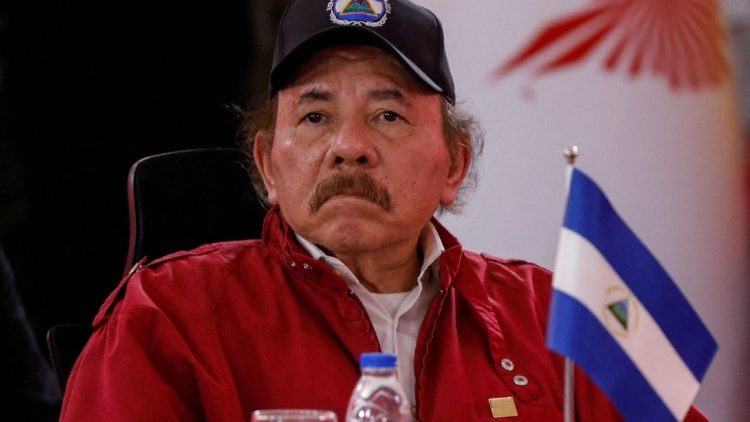
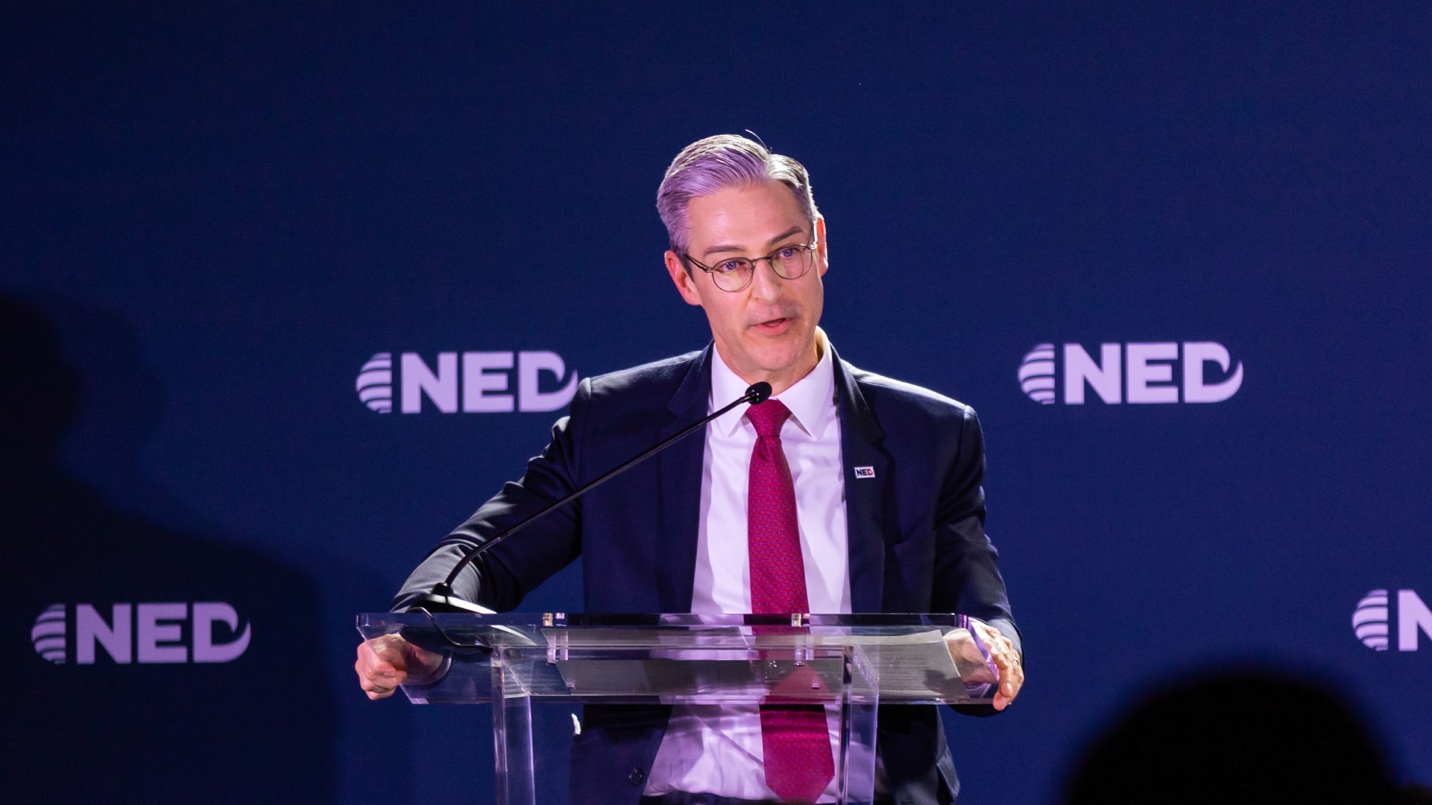
Nicaragua faces electoral interference as well. As reported in The Grayzone, “In his national address on July 19, Nicaraguan President Daniel Ortega stated that, when the country’s next elections take place in 2027, none who promoted a violent anti-government insurrection in 2018 will be allowed to stand for office.” He declared that Nicaragua has the “sovereign right to fight foreign interference in its electoral process…Washington’s plans for regime change in Nicaragua are hardly a secret…The National Endowment for Democracy’s president, Damon Wilson, bragged to a House committee in February that his organization is funding media in Nicaragua with an eye to undermining its Sandinista government.”

President Ortega of Nicaragua announces there will be 'no more elections' - Vatican News
Daniel Ortega [Source: vaticannews.va]

Lest we forget, government control of media is essential for fascism to take hold. Benjamin outlines how “The market concentration of Latin American media conglomerates is among the highest in the world, with four transnational companies controlling 89 percent of the broadcast media across six major countries…The market power of these huge media conglomerates is a real obstacle to any movement for democracy or socialism.” Even darker, she reports that Allen Weinstein, a founder of the National Endowment for Democracy, told The Washington Post in 1991, “A lot of what we do today was done covertly 25 years ago by the CIA.”

Standing With Those Who Choose Freedom - NATIONAL ENDOWMENT FOR DEMOCRACY
Damon Wilson, the director of the National Endowment for Democracy. [Source: ned.org]

After Venezuela was subject to a U.S. military invasion on January 3, which resulted in the kidnapping of sitting president Nicolás Maduro and his wife Celia Flores, then-Venezuelan Foreign Minister Yván Gil said “We found ourselves alone.”

In the article titled “The U.S. Tried to Decapitate Venezuela: The Revolution Survived,” those who question whether U.S.-installed interim President Delcy Rodríguez had a choice are told that is the context which needs to be understood.

It was certainly a devastating disappointment that Russia and China, or neighboring countries such as Colombia and Brazil, did not (though under the boot of the U.S.) more militantly advocate for Maduro and Flores’s return. The illegal murders on the open seas of the Caribbean—with impunity—was writing on the wall that Venezuela was the next domino to fall. Why did the efforts to prevent the fall fail?

Months before the kidnapping, Rodríguez told The New York Times: “The Pentagon always had a strategic objective of obtaining Venezuelan reserves.” Today she asserts: “There is something that must be made absolutely clear: Venezuela retains the ownership and sovereignty over its resources.” However, former Vice President and veteran Chavista figure Elías Jaua accused Washington of stripping the nation of its sovereignty and taking control of its natural resources. When is sovereignty lost?

Who is Delcy Rodriguez, Maduro's VP and now the acting president of Venezuela? - France 24
Delcy Rodríguez [Source: france24.com]

Maduro and Flores still sit behind bars in New York. On September 3, Maduro urged the judge to dismiss the criminal drug-trafficking charges against him, arguing he should be immune from prosecution as the head of a sovereign country.

Is Venezuela still a sovereign country? Former Venezuelan Foreign Minister Jorge Arreaza said, “Everything is now negotiated” with Washington, requiring a daily give-and-take with Caracas. When does it become regime change if everything must be negotiated with Washington?

Peoples Dispatch reports that, “Despite every attempt to overthrow the government of Venezuela, President Nicolás Maduro remains in charge and has mobilized large sections of the population to defend the Bolivarian Revolution against any threats.” But as is acknowledged, “…U.S. imperialism, by having a gun pointed to the government’s head, is in a position to exert substantial coercion leading to unpalatable decisions, such as Alex Saab’s deportation.”

Doesn’t “substantial coercion” trespass upon sovereignty? When domestic peace occurs due to a gun to your head, is it the measure of success? Saab’s deportation is more grievous than unpalatable.

Although María Corina Machado is now hiring D.C. lobbyists for access to Venezuela’s future, those who question Rodriguez’s decisions are compared to Machado. “It was not so long ago that it was the likes of far-right María Corina Machado who highlighted ‘cracks and fissures within the Chavista ranks’ and anticipated ‘the beginning of a social explosion’ against the elected Venezuelan government. Now some solidarity activists are saying the same.”

Criticizing a government does not make one equivalent to a particular opposition figure. Asking questions is not counterrevolutionary, but essential. What insights have we gained during this period of U.S. imperialism?

CovertAction Magazine’s “Cuba Is Not Venezuela or Jamaica as It Refuses to Become a U.S. Neo-Colony” recounts how, when Jamaican Prime Minister Michael Manley refused Henry Kissinger’s demand to end support for the Angola liberation struggle, the U.S. made sure Manley would lose the next election. Jamaica has been a willing servant of the Empire ever since, recently ending an essential Cuban health care program that brought doctors to the country. A neo-colony is certainly not sovereign.

It is tragic that Venezuela is used as the current example of what other countries want to avoid. Maduro recently posted that “Venezuela will be reborn.” Venezuelan popular movements now call for ‘anti-imperialist resistance’ to the recent oil deal for its lack of transparency and implications for Venezuelan sovereignty. Organizer Orlando Vega argued that the Venezuelan government “stumbled” in its response to the January 3 U.S. attacks. He urged a demand for the release of Maduro and Flores and a review of legislation approved “under U.S. coercion.”

But a key political question is: “What remains of Bolivarian sovereignty if control over the country’s primary energy resources is gradually transferred to private actors linked to U.S. interests?…A process born in the name of sovereignty and independence risks resulting in the subordination of key strategic resources to the interests of a foreign power…Venezuela faces what appears to be the liquidation of sovereignty, self-determination, and the legacy of the Bolivarian Revolution.”

“History shows that, more often than not, loss of sovereignty leads to liberalization imposed in the interests of the powerful.”—Noam Chomsky

Veteran Intelligence Professionals for Sanity (VIPS) recently issued a memo which states that Cuba is not Venezuela. They predict that “The same people who keep ’57 Chevrolets on the road with a coat hanger will wreak havoc against a foreign-imposed regime.”

Cuba refuses to accept a dialogue based on subordination. It declares it will engage in dialogue with Washington, but will not negotiate under pressure or cede its sovereignty. “We have no alternative but to resist. We must resist,” said Cuban President Miguel Díaz-Canel, who explicitly linked the defense of socialism to the defense of national independence and sovereignty. Is Cuba’s refusal to kneel to Uncle Sam the reason the U.S. strategy for Cuba recently shifted from the military option to sanctions?

Cuban president acknowledges talks have begun with United States - UPI.com
Miguel Díaz-Canel [Source: upi.com]

“Our position is that we do not accept conditions of any kind which may affect the independence and sovereignty of our country just with the view to solve economic problems existing between the United States and Cuba.”—Fidel Castro

The Soviet Union helped Cuba survive its illegal sanctions, begun in 1960, but since the fall of the Soviet Union in 1991, Cuba suffered and struggled under increasing sanctions—mostly alone. In a promising new development, Russian Deputy Foreign Minister Sergei Ryabkov recently announced that Russia and Cuba will continue strengthening their strategic partnership despite attempts to undermine bilateral cooperation through intimidation and political pressure.

MFA Russia 🇷🇺 on X: "🗓 Deputy Foreign Minister Sergey Ryabkov met with participants of the strategic session of the #BRICS Civil Council (November 17-18). A comprehensive discussion took place regarding the
Sergei Ryabkov [Source: x.com]

The Pillar of Sovereignty

The Peace of Westphalia, which established the nation-states in 1648, enshrined the concept of state sovereignty into international law, which was formalized centuries later by the United Nations Charter. The founding principle was that every State, regardless of size and economic importance, has an equal right to sovereignty. This cornerstone of modern international law establishes the concept that a nation-state has supreme, independent authority over its own territory and domestic affairs.

In tragic irony, sovereignty is used to justify the right to kill in defiance of international law. Carl Schmitt, a German philosopher and jurist who joined the Nazi Party in 1933, defined sovereignty as the “power to decide the state of exception.” William Blum’s Rogue State outlines in brutal detail how the U.S. has long been a lawless state, blind to others’ sovereignty, and the devastating danger that state of exception reflects.

Recently, Marco Rubio had the audacity to claim that “The ICC [International Criminal Court] poses an intolerable threat to U.S. sovereignty.” Then on October 9, the U.S. imposed new sanctions on the ICC, apparently because the Nobel Peace Prize was awarded to Navi Pillay, a former ICC judge who once criticized Israel.

However, “The ICC is not claiming jurisdiction over conduct in the United States,” said Kenneth Roth, of Human Rights Watch. “Rubio is dressing up his quest for impunity for American war crimes under the label of national sovereignty, which ignores the sovereign right of other nations to invoke the ICC for crimes committed on their territory.” Sovereignty does not imply immunity, but accountability to the rule of law.

South African-born jurist and former UN human rights chief Navanethem "Navi" Pillay, speaks at the Nuremberg Forum in Nuremberg, Germany, October 9, 2026.
Navi Pillay [Source: lemonde.fr]

Vijay Prashad outlines the struggle for sovereignty in the Global South: “Can the nations of the Global South act together with sovereignty and dignity? Can they build institutions that serve their peoples rather than global capital?…A political consciousness that favours sovereignty and strategic autonomy is rising in the Global South.”

When a country gives up strategic autonomy, has it compromised its sovereignty? Prashad concludes: “The peoples of the Global South demand sovereignty, equality, and peace.” Sovereignty is becoming a mantra, though its clear meaning remains elusive.

“How does any country give up any sovereignty and expect to survive as a government?…That would be political suicide.”—Benigno Aquino III

Geopolitical analyst Pepe Escobar explored modern global sovereignty in “Eurasia, the Hegemon, and the Three Sovereigns,” asserting that true, uncompromised national sovereignty in contemporary geopolitics requires reconceptualizing the understanding of sovereignty. He addressed the need to “pierce far beyond sovereignty as interpreted in conventional political science and predominant international relations narratives.”

When does genocide of resident civilians cancel the right to sovereignty over them? Banning a native language is legally genocide. Ukraine banned the Russian language on the first day of the 2014 coup.

So did Russia violate Ukraine’s sovereignty when it began the SMO? The Donbas, after 12,000 civilian deaths in eight years, voted—overwhelmingly—to rejoin the Russian Federation. The Duma voted to accept their request for reunification.

When international law fails, with total UN abdication, and agreements like Minsk I and Minsk II are used as a ruse, how is Ukraine’s alleged sovereignty legitimate while it commits genocide against its own people?

Cuba remains a sovereign socialist country which says it will not surrender. Venezuela reminds us how quickly a revolution can be compromised when sovereignty becomes a negotiable variable. What is the “difference between sovereignty and subordination, between resistance and surrender?”

When Castro won the Cuban Revolution, he immediately distributed guns to the peasants, because he knew that he needed the people to maintain the victory. And he certainly agreed with Frederick Douglass that “It’s better to die free, than live as a slave.”

Sovereignty requires that the people of each country are free to make their own choices, without coercion or a gun to their head.

Original article:  covertactionmagazine.com

  •  

Hungary’s Unfinished Revolution: From Soviet Tanks in 1956 to Moscow’s Influence in Modern Europe

Seventy years after Soviet forces crushed Hungary’s uprising, Budapest is commemorating the revolution under a new government following Viktor Orbán’s defeat.

Yet the anniversary raises questions extending far beyond Hungary: how Russia has repeatedly sought to determine the political future of European nations, why economic dependency can become an instrument of influence, and whether the sovereignty demanded in 1956 has finally acquired a more durable meaning.

Seventy years after Soviet tanks entered Budapest to suppress a rebellion against Moscow’s domination, Hungary is marking the anniversary of its 1956 revolution under circumstances that would have seemed improbable only a year ago. Viktor Orbán, whose political career began with a demand for the withdrawal of Soviet troops, has lost power. His successor, Péter Magyar, is welcoming European leaders to commemorate an uprising that remains among the defining events of Hungary’s modern history.

European Commission President Ursula von der Leyen and European Council President António Costa are joining the commemorations on 23 October, six months after Magyar’s Tisza party ended Orbán’s 16 years in government. Budapest’s relationship with Brussels has improved, previously frozen European funding is being unlocked, and the new administration has begun reviewing aspects of the country’s longstanding economic relationship with Russia.

But the significance of the anniversary cannot be reduced to a change of government or Hungary’s renewed diplomatic engagement with the European Union. The revolution of 1956 exposed a fundamental conflict between national self-determination and the security interests of an imperial power. Seven decades later, the methods through which Moscow exercises influence have changed considerably, but the struggle over political autonomy, economic dependence and the right of European states to determine their own alliances has not disappeared.

Indeed, the central question raised by 1956 has acquired renewed relevance since Russia’s invasion of Ukraine: where does legitimate national sovereignty end when a more powerful neighbour claims the authority to determine another country’s strategic choices?

Hungary’s longer history of Russian intervention

The events of October and November 1956 were not the first occasion on which Russian military power had intervened to suppress Hungarian aspirations to independence.

More than a century earlier, during the revolutions of 1848–1849, Hungary attempted to establish political autonomy from the Habsburg monarchy. Under Lajos Kossuth, the Hungarian revolutionary government pursued constitutional government and ultimately declared independence.

Austria proved unable to defeat the Hungarian forces without outside assistance. In 1849, Emperor Franz Joseph turned to Tsar Nicholas I, whose Russian army intervened on the Habsburg side. The military campaign ended with the defeat of the Hungarian struggle for independence.

As historian David Saunders examines in The Revolutions in Europe, 1848–1849: From Reform to Reaction, Russian intervention formed part of Nicholas I’s broader determination to defend the conservative European order against revolutionary movements.

Russia was not seeking to annex Hungary in 1849. Its objective was to preserve a political arrangement favourable to the established continental powers and prevent revolutionary movements from spreading into territories where they might threaten Russian imperial interests.

The distinction is important historically. Tsarist Russia, the Soviet Union and the contemporary Russian Federation represent different political systems and operated under different international circumstances. Nevertheless, all three have, at various points, treated the political orientation of neighbouring European countries as a matter in which Moscow possesses interests extending beyond its own borders.

The pattern reappeared in a substantially different form after the Second World War.

The Red Army’s advance into Hungary in 1944–1945 brought an end to Nazi German occupation and the country’s wartime alliance with Berlin. Yet liberation from Nazi rule was followed by Soviet military occupation and the progressive elimination of independent Hungarian political institutions.

By 1948, the communist leadership under Mátyás Rákosi had established a Stalinist dictatorship. Political opponents faced imprisonment, show trials and persecution, while the security apparatus operated with Soviet support.

Hungary’s political and economic structures were reorganised according to Soviet priorities. Heavy industry received preferential treatment, agricultural collectivisation disrupted rural communities, and Soviet influence reached into the country’s security services, administration and economic planning.

For many Hungarians, the experience reinforced a historical memory in which Russian intervention was associated not with national liberation but with the repeated denial of political independence.

1956 was more than an anti-communist revolt

The revolution that began on 23 October 1956 is frequently remembered as a straightforward confrontation between communism and democracy. That interpretation captures its principal political outcome, but obscures the complexity of the movement itself.

The uprising united students, industrial workers, intellectuals, nationalists, reform communists and citizens who had little interest in ideological disputes but resented political repression and Soviet control.

The sixteen demands adopted by Budapest students on 22 October reveal the breadth of their ambitions.

They called for the withdrawal of Soviet forces, multiparty elections, freedom of expression, independent courts and the restoration of national symbols. They also demanded better wages, the right to strike, changes to agricultural policy and the renegotiation of economic relations with Moscow.

One demand is particularly revealing in the context of present-day Hungary: the students wanted transparency over Soviet exploitation of Hungarian uranium deposits and the right to sell the country’s resources at international market prices.

Political freedom and economic sovereignty were already understood as interconnected.

The revolutionaries did not share a single economic programme. Some favoured democratic socialism and workers’ control of factories, while others wanted the restoration of parliamentary democracy and a market economy. Workers’ councils emerged as institutions of direct political participation, challenging the Communist Party’s claim to represent the working class.

The movement was therefore neither an exclusively conservative rebellion nor merely a liberal-democratic revolution. It was a national uprising against a system that had deprived Hungarian society of the ability to determine its own political arrangements.

The immediate confrontation escalated when demonstrators attempting to broadcast their demands encountered resistance from the state security apparatus. Violence spread, Stalin’s enormous statue in Budapest was pulled down, and armed groups began fighting government forces and Soviet troops.

For a brief period, the revolution appeared capable of succeeding.

Imre Nagy, a reform communist who had previously served as prime minister, returned to office and gradually accepted demands that went considerably beyond his original reform agenda. Political parties re-emerged, Soviet troops began withdrawing from Budapest, and on 1 November Nagy declared Hungary’s neutrality and its withdrawal from the Warsaw Pact.

The Soviet leadership initially appeared willing to consider a compromise. However, it ultimately concluded that Hungary’s departure from the communist bloc would undermine Moscow’s position throughout Eastern Europe.

On 4 November, Soviet forces launched a major offensive against Budapest.

In his final government broadcast, Nagy declared:

“Our troops are fighting. The government is at its post.”

The words, preserved in the historical record of the uprising, described a government confronting the military power of the state that had previously guaranteed its existence.

The resistance was defeated. Up to 3,000 people were killed, approximately 200,000 Hungarians fled the country, and thousands faced imprisonment. Nagy was subsequently arrested and executed in June 1958.

What 1956 revealed about Moscow — and the West

The suppression of the revolution was not simply the consequence of overwhelming Soviet military superiority. It was also the result of strategic calculations in Moscow, uncertainty within the Hungarian leadership and the reluctance of Western governments to challenge the division of Europe established after the Second World War.

In his book Failed Illusions: Moscow, Washington, Budapest, and the 1956 Hungarian Revolt, historian Charles Gati challenges the simplified account of a united revolution abandoned by an indifferent West.

Gati argues that Nagy struggled to reconcile two conflicting forces: the increasingly radical demands of the Hungarian population and the Soviet leadership’s determination to preserve its strategic position.

A more limited reform programme might conceivably have survived, although this remains a disputed historical possibility. Once Hungary moved towards neutrality and withdrawal from the Warsaw Pact, the prospects of Soviet acceptance diminished dramatically.

Moscow’s calculations were also influenced by fears that political concessions in Hungary would encourage similar demands in Poland, Czechoslovakia and elsewhere in the Soviet bloc.

The United States, meanwhile, supported the principle of Eastern European liberation rhetorically but was unwilling to risk direct military confrontation with the Soviet Union.

The Hungarian crisis also coincided with the Suez intervention by Britain, France and Israel, which diverted international diplomatic attention and exposed divisions among Western powers.

Historian András Nagy explores these contradictions in Diplomacy and Disregard: The Hungarian Revolution and the United Nations 1956–1963, examining the gap between international declarations and the limited practical assistance available to Hungary.

The lesson of 1956 was consequently more complicated than the assertion that the West had abandoned Hungary. The uprising demonstrated that the international system recognised national sovereignty in principle while allowing the military division of Europe to determine how far that sovereignty could be exercised in practice.

For Moscow, the suppression of Hungary established a precedent: a neighbouring state could possess a government and national institutions while remaining subject to coercive intervention if its political direction threatened Soviet strategic interests.

That principle would reappear during the Soviet-led invasion of Czechoslovakia in 1968.

The paradox of Viktor Orbán

The political afterlife of 1956 is inseparable from the career of Viktor Orbán.

On 16 June 1989, at the ceremonial reburial of Imre Nagy, the 26-year-old Orbán delivered a speech demanding free elections and the withdrawal of Soviet troops from Hungary.

At a time when the communist system was approaching collapse, his appearance transformed him into one of the most recognisable representatives of Hungary’s emerging democratic opposition.

The symbolism was unmistakable. Nagy, executed as a traitor by the Soviet-backed regime, was being publicly rehabilitated, while a new political generation claimed the revolution as the foundation of a democratic future.

Hungary subsequently completed its transition away from communist rule. Soviet troops withdrew in 1991, the country joined NATO in 1999 and became a member of the European Union in 2004.

Yet Orbán’s later political development introduced a contradiction into the national interpretation of 1956.

After returning to power in 2010, he progressively concentrated political authority, weakened institutional checks and balances, and constructed a system in which government influence extended across significant sections of the media, public administration and economy.

At the same time, his foreign policy cultivated increasingly close relations with Vladimir Putin.

Hungary remained a member of NATO and the EU, but Orbán repeatedly challenged common European positions on Russia. Following the full-scale invasion of Ukraine in 2022, his government opposed or delayed sanctions measures, resisted financial assistance to Kyiv and secured exemptions allowing continued imports of Russian oil.

The contradiction was particularly striking because Ukraine’s defence against Russian invasion revived the same fundamental principle for which Hungarians had fought in 1956: the right of a European nation to exist independently of Moscow’s strategic demands.

Orbán presented his position as a defence of Hungarian national interests, arguing that continued energy supplies and avoidance of direct involvement in the war were essential to his country’s security.

His critics argued that this interpretation of sovereignty was selective: resisting political pressure from Brussels while preserving economic and diplomatic arrangements that strengthened Moscow’s influence.

The legacy of 1956 thus became an instrument of competing political narratives rather than a settled national consensus.

From military occupation to economic dependency

Russia no longer possesses the military infrastructure through which the Soviet Union controlled Hungary. It cannot station forces in Budapest under the Warsaw Pact or impose a government through the Communist Party.

Its contemporary methods of influence operate through a more complicated combination of commercial relationships, infrastructure dependencies, political networks, information operations and diplomatic pressure.

Energy remains particularly important.

According to the European Commission’s 2026 assessment of the Hungarian economy, more than 90 per cent of Hungary’s imported oil and 74 per cent of its imported gas came from Russia in 2025.

Such dependence creates vulnerabilities that cannot be eliminated by a parliamentary election.

Long-term contracts, refinery configurations, pipeline routes and nuclear infrastructure impose costs on governments attempting to diversify supplies. Russia’s ability to influence energy prices and contractual arrangements can consequently shape the policy choices available to individual European states.

Hungary’s Paks II nuclear project illustrates the problem.

Awarded to Russia’s state nuclear corporation Rosatom in 2014 under Orbán, the project created a relationship extending across construction, financing, technology and potentially future operations.

Magyar’s government is now examining whether Rosatom should remain the principal contractor. The review, also examined by EU Today, demonstrates how political change does not automatically dissolve inherited strategic dependencies.

Moscow’s objectives, however, extend beyond securing export revenues.

By maintaining influence over energy infrastructure and commercially significant relationships, Russia can acquire opportunities to affect political decisions within individual European countries. The effect can extend to the European Union as a whole where unanimity requirements allow one member state to delay collective decisions.

Economic interdependence is not itself evidence of corruption or improper influence. Nevertheless, opaque contracts, politically connected intermediaries and inadequate public scrutiny can create opportunities for the exercise of foreign influence.

The European Parliament has repeatedly raised concerns about Russian efforts to influence European political organisations, including through funding networks, cultivated relationships and the involvement of political intermediaries.

Moscow’s broader contest for influence in Europe

Russia’s contemporary European strategy is not a straightforward attempt to reconstruct Soviet rule over the entire continent. Its more immediate objectives include weakening European unity, limiting NATO’s freedom of action, obstructing support for Ukraine and establishing recognition of Russian security interests in neighbouring states.

These objectives do not always require governments openly aligned with Moscow. Political fragmentation, institutional distrust and disagreements between European capitals can themselves serve Russian interests.

Information manipulation has become one of the principal instruments available to the Kremlin.

The European External Action Service’s fourth report on foreign information manipulation documents Russian operations designed to exploit social divisions, discredit political leaders, manipulate electoral debates and weaken confidence in democratic institutions.

Rather than promoting one consistent political ideology, these campaigns adapt to local circumstances. In some countries they amplify nationalist rhetoric; elsewhere they exploit economic grievances, hostility towards migration, fears of military escalation or mistrust of European institutions.

Their effectiveness depends partly on the existence of domestic audiences willing to accept or circulate the narratives involved.

Hungary’s April 2026 election offered a direct example of the problem.

Research by Clemson University’s Media Forensics Hub identified a coordinated Russian-linked influence operation targeting Magyar’s Tisza party through fabricated narratives, inauthentic social-media accounts and amplification networks.

Separate reporting alleged Kremlin efforts to assist Orbán’s electoral campaign. Moscow denied interference, and not every allegation has been independently established.

The international election observation mission also identified serious problems involving media imbalance, misuse of state resources and manipulative online content. The election nevertheless produced a decisive transfer of power.

That outcome demonstrates both the reach and the limitations of such methods. Foreign information operations can attempt to shape political perceptions, but they do not necessarily determine how voters ultimately behave.

Other mechanisms, including cyber operations, espionage, sabotage and the cultivation of political or business relationships, form part of the broader contest between Russia and European governments.

The strategic logic differs fundamentally from the Soviet intervention of November 1956. Rather than imposing control through tanks and occupation forces, Moscow can seek to reduce a country’s freedom of political action by exploiting economic vulnerabilities and divisions within its institutions.

Magyar’s government and the limits of a new beginning

The April 2026 election marked a significant change in Hungary’s political direction.

Magyar’s Tisza party won a two-thirds parliamentary majority, creating an opportunity to reform institutions that had been extensively reshaped during Orbán’s years in power.

His government has introduced anti-corruption and transparency measures, sought to strengthen judicial independence and restored more constructive relations with European institutions.

The European Commission has agreed to unlock approximately €16.4 billion in funding previously restricted over governance concerns, although access to individual funding streams and their disbursement remain subject to the relevant procedures.

Yet the new government should not be mistaken for an administration that has abandoned every element of its predecessor’s foreign policy.

Magyar remains a Hungarian conservative politician with his own interpretation of sovereignty and national interests. He has maintained reservations about accelerated Ukrainian accession to the EU and emphasised the rights of ethnic Hungarians living in Ukraine.

Indeed, recent disagreements over Ukraine’s EU accession negotiations demonstrate that improved relations with Brussels have not eliminated Budapest’s willingness to defend positions at odds with those of other member states.

The more consequential test may therefore concern the institutions through which Hungary makes political decisions.

Reducing dependence on Russian energy, establishing transparent public procurement, restoring independent media and ensuring that judicial oversight operates without political interference would reduce opportunities for both domestic patronage and external influence.

The government must also address the institutional legacy of decades of communist rule and subsequent political transformation, including questions about historical accountability and access to security-service records.

These are not simply questions of ideological alignment with Brussels. They concern whether Hungary possesses institutions capable of making and implementing decisions independently of concentrated political or economic interests.

The unfinished meaning of 1956

The presence of European leaders in Budapest on the 70th anniversary of the uprising provides an unmistakable contrast with November 1956.

At that time, Hungary’s government appealed to the international community as Soviet forces dismantled its authority. Today, Budapest participates in European institutions through which it can influence decisions affecting the continent’s political, economic and security arrangements.

Membership of the European Union is not equivalent to membership of the Warsaw Pact. EU membership rests on treaties voluntarily accepted by democratic states, with legal mechanisms for participation, disagreement and withdrawal. Soviet control of Hungary rested ultimately on military force.

Nevertheless, participation in European institutions does not remove the need for national governments to make independent strategic decisions or to account for them democratically.

The revolution of 1956 was, above all, a rejection of political dependency. Its participants did not agree on every aspect of Hungary’s future, but they rejected the proposition that decisions about their country’s government, economy and alliances belonged in Moscow.

Seventy years later, the comparison between Soviet military domination and contemporary Russian economic and political influence cannot be exact. The historical circumstances, instruments of power and international constraints are different.

What persists is the problem of external leverage over national choices.

Hungary’s political transformation in 2026 has altered the balance of power in Budapest, but the country’s inherited economic dependencies, institutional weaknesses and disputes over its strategic orientation remain.

The historical significance of the anniversary therefore extends beyond the rehabilitation of one political tradition or the defeat of another.

In 1956, Hungarians demonstrated that Soviet military supremacy had not secured their political consent. In 1989, the memory of that resistance helped undermine the legitimacy of communist rule. In 2026, another political transition has reopened the question of how national independence should be understood within a deeply interconnected Europe.

The measure of Hungary’s political sovereignty will not be the number of foreign dignitaries attending its commemorations, nor the frequency with which its leaders invoke the language of independence.

It will be the extent to which Hungary can make democratic choices without those choices being constrained by dependence on an external power — or by domestic institutions incapable of resisting its influence.

  •  

Much ado about Russia

By  Jacob G. HORNBERGER

Join us on Telegram, X, and VK.

Contact us: info@strategic-culture.su

Right-wing and left-wing interventionists and interventionist mainstream-press commentators are up in arms over President Trump’s decision to ease economic sanctions against Russia in connection with the Russian government’s agreement to supply diesel fuel to the United States.

The notion is that nothing — not even the midterms — must be permitted to interfere with the Cold War II racket that holds that Russia is an aggressor nation that is hell-bent on conquering the world and, therefore, that it is necessary to target the Russian populace with severe impoverishment and even death by starvation or illness with ever-more economic sanctions.

Central to this racket, of course, is Russia’s invasion of Ukraine. The notion was that Russia was on the march. As soon as it conquered Ukraine, U.S. officials maintained, it would re-conquer Eastern Europe, and then Western Europe and England, and then make its way to South America, Central America, Mexico, and finally the United States, all of which Russia would reconstitute into a new Soviet Union of the world. In other words, Russia is coming to get us again.

The Cold War I racket was used to justify the conversion of the federal government to a national-security state, a type of governmental structure that came with omnipotent powers, including the power of orchestrating and committing state-sponsored assassinations. The racket enabled the national-security branch of the government to quickly become the most powerful branch of the federal government, one to which the president, Congress, and the Supreme Court decided to defer.

The Cold War I racket was also used to justify an anti-communist crusade, during which the U.S. national-security establishment targeted suspected communists, both here and in foreign countries, with destruction of reputation or even with assassination.

Beginning in 1989, the Cold War racket came to a sudden and unexpected end. The Berlin Wall was torn down, Germany was reunified, the Warsaw Pact was dissolved, the Soviet Union disintegrated, and Russian troops withdrew from Eastern Europe.

Officials in the U.S. national-security branch — i.e., the Pentagon, the CIA, and the NSA — naturally were extremely concerned. Suddenly, they had lost the justification for their existence and for the racket that they were certain would go on forever. People were talking about a “peace dividend,” which would involve a deep reduction in national-security-state spending and maybe even a restoration of America’s founding governmental system of a limited-government republic.

To replace the old racket with a new racket, new official enemies were developed, such as “the terrorists,” “the Muslims,” “the drug dealers,” and “the illegals.” They were all coming to get us, or so they said. Everyone remained deathly afraid.

But the Pentagon, the CIA, and the NSA were not about to let go of their old Cold War racket so easily. After providing Soviet officials with assurances during the negotiations over German reunification that NATO would not expand eastward, U.S. officials proceeded to do precisely that. NATO began marching eastward, absorbing former members of the Warsaw Pact and moving inexorably toward Russia’s borders, knowing full well what Russia’s reaction would be.

That was what the threat to absorb Ukraine into NATO ultimately accomplished — provoking Russia into invading Ukraine in an effort to prevent Ukraine from joining NATO. U.S. officials had been warned for years that NATO expansion, especially into Ukraine, could produce precisely such a confrontation. Yet they proceeded anyway.

Voila! The national-security branch had its old Cold War racket back, albeit in a revised format. The Russians are coming to get us … again (along with the terrorists, the Muslims, the drug dealers, and the illegals). The big fly in the ointment, however, is that Russia has been unable to conquer Ukraine. That’s, of course, a problem. If Russia can’t even conquer Ukraine, how is it going to be able to conquer Eastern Europe, Western Europe, England, South America, Central America, Mexico, and then the United States? Whoops!

Never mind that inconvenient problem. In the eyes of national-security statists, it is imperative that we continue hewing to the official narrative. Russia is coming to get us, just like before. We need ever-increasing budgets for the national-security establishment and its ever-growing army of voracious fat-cat “defense” contractors. Who cares if the United States goes bankrupt in the process? We need to again be kept “safe” from the Reds — I mean, the Russians (and from the terrorists, Muslims, drug dealers, and illegals.)

Oh, and don’t forget the Cuban Reds! They are coming to get us too. No doubt the right-wing and left-wing interventionists and the interventionist mainstream press, all of whom remain steadfast acolytes of the national-security establishment, are scared to death that President Trump might lift the old Cold War embargo and the new Cold War blockade against the Cuban people as well. Of course, fat chance of that happening given Trump’s own interventionist mindset.

Original article:  www.fff.org

  •  

How a Dirty Diaper Helped a KGB Colonel Escape the Soviet Union

In November 1983, the Soviet Union came to believe that NATO might be preparing a nuclear attack. The trigger was a war game. The alliance’s annual exercise, Able Archer 83, ran from 7 to 11 November and rehearsed what would happen if a conflict in Europe escalated until nuclear weapons were released. It even simulated […]

  •  

Honoring Frances Stonor Saunders

By Patrick LAWRENCE

Join us on Telegram, X, and VK.

Contact us: info@strategic-culture.su

In her revelatory work The Cultural Cold War, the late British author was the first to shine so unblinking a light on the sprawl of the C.I.A.’s cultural interventions.

Frances Stonor Saunders was fond of epigraphs (as am I). At the front of The Cultural Cold War: The C.I.A. and the World of Arts and Letters (The New Press, 1999), the British journalist, documentarian and author quotes some lines from Dante’s Inferno, the last of which is, “Before my age was full, I went astray.”

I had not lived half my life when I succumbed to complacency and moral blindness: This is my reading of the line from Canto XV. And how fitting it is at the start of Saunders’ exhaustively researched account of how the Central Intelligence Agency, its tentacles reaching into every corner of American culture, did so much to lead our republic into what the Italian poet would call its selva oscura, its dark wood —the state of lostness America has never since escaped.

Frances Stonor Saunders died on the last day of August, having suffered from a virulent strain of brain cancer. She was a mere 60. We had a few acquaintances in common, but I never met her. It was nonetheless something like losing a friend when, just this past week, I heard of her death. And so this brief appreciation.

The Cultural Cold War made Stonor Saunders’ reputation. It took a prominent place on my shelf of Cold War books as soon as it was published. At last the curtain parted on the insidious use the C.I.A. made, or attempted to make, of painters, poets, playwrights, novelists, editors, jazz musicians, singers, dancers, actors, scholars and other cultural figures in its long-running operation to promote the appeal of American life as against the Soviet Union and altogether the postwar socialist alternative.

This was an immense “soft power” operation avant la lettre — before we had the term. One could also call it an early variant of the “cognitive warfare” to which we are now incessantly subjected, the primary object of which was to keep postwar Europe from swinging leftward, as the French, the Italians and others were poised to do.

From Saunders’s Introduction:

“Drawing on an extensive, highly influential network of intelligence personnel, political strategists, the corporate establishment, and the old school Ivy League universities, the incipient CIA started, from 1947, to build a ‘consortium’ whose double task was to inoculate the world against the contagion of Communism and to ease the passage of American foreign policy abroad. The result was a remarkably tight network of people who worked alongside the Agency… Whether they liked it or not, whether they knew it or not, there were few writers, poets, artists, historians, scientists, or critics in postwar Europe whose names were not in some way linked to this covert enterprise.”

Who Was Who & Who Stood Where

Jackson Pollock in 1951. (Hans Namuth /Wikimedia Commons,Public Domain)

Jackson Pollock and others among the Abstract Expressionists, Leonard Bernstein and others among the American composers then prominent, Robert Lowell, James Baldwin, Mary McCarthy and other writers of their generation, Duke Ellington and other jazz stars — if they weren’t sent abroad on the C.I.A.’s nickel, their work was.

There were the hundreds of books the Agency took a role in promoting, It paid for translations of Eliot’s Four Quartets, Luigi Barzini’s The Italians, Boris Pasternak’s Doctor Zhivago. It covertly supported magazines — Encounter and The Paris Review famous among them — along with radio stations and, of course, newspapers — and those who wrote and edited for them. As of 1956 the Agency owned a considerable piece of the Rome Daily American.

Saunders, who did years of interviewing and archival research for this book, lays out her findings over 427 well-written pages and was the first to shine so unblinking a light on the sprawl of the C.I.A.’s cultural interventions.

One of the things I like about Saunders’s book, among many, is her exposure of those artists and writers who knew of the Agency’s interventions and wanted nothing to do with them, those who knew and cooperated and those who served its purposes unwittingly.

Pollock had no idea of the use to which the Agency put his work, Baldwin wanted nothing to do with the Congress for Cultural Freedom (C.C.F.), infamous as a C.I.A. front. Ever true to her tough-minded politics, neither did Lillian Hellman.

Mary McCarthy knew all about the Agency’s funding of the C.C.F. and its other projects and was fine with all of it. I’ve never liked McCarthy’s novels, and Saunders gave me a good reason to distrust her. She was prominent among that group of Americans known as Cold War liberals, for whom I have long nursed an abiding contempt.

McCarthy in 1963. (Dick DeMarsico/ World Telegram / Library of Congress. New York World-Telegram & Sun Collection/Wikimedia Commons/Public Domain)

I wish Saunders had given more attention to the profligate corruptions of generations of American journalists and newspaper editors, but her definition of culture is narrower than mine; I speculate that journalism’s service to the Agency was a room so large she chose not to enter it.

The surrender of many American journalists to the Cold War cause is well-enough documented in any case. See, for example, Carl Bernstein’s celebrated “The C.I.A. and the Media,” which Rolling Stone published in October 1977, and the House hearings that Bernstein’s piece prompted a couple of months later — the Church Committee, whose hearings ran from January 1975 to April 1976, having flinched from this responsibility.

Chronicler of Secrecy

The who-was-who and the who-stood-where and the who-did-what of The Cultural Cold War give Saunders’s book an historical specificity I do not think anyone has matched, with the exception of Joel Whitney’s Finks (OR Books, 2016), which draws heavily on Saunders’s work. She did not leave those of whom she wrote any place to hide.

As I reflect back on her accomplishment now, it seems to me to lie in something she never mentions. Saunders gave us a chronicle of the U.S. culture of secrecy in its earliest days, the first decades after the 1945 victories, when America set about making itself a global imperium.

What comes through in The Cultural Cold War is how little those alive at the time were able to know about their time. Too many events, too many decisions, too many reasons for things happening as they did were hidden, rendered inaccessible.

The C.I.A.’s Cold War interventions have had many enduring consequences. The Agency systematically discredited the principle of nonalignment, which was held high among then-emergent non–Western nations. America brings the same with-us-or-against-us fallacy to the 11 members and 10 partners comprising the BRICS  — a complete failure to grasp one of the 21st century’s significant realities.

It is the same with the out-of-hand dismissal of all suggestions of moral equivalence in global affairs with those it deems adversaries: The United States is always righteous and never acts but in defense of itself or its always-democratic allies and/or clients. It is never to be accused of aggression. This is what I mean by moral blindness.

The Agency’s most disturbing legacy, at least to me, is how little of our world we are able actually to see. Daniel Patrick Monihan warned us of this just before the U.S. century turned in Secrecy: The American Experience (Yale, 1998). So, in her way, did Saunders a year later. Foolish it would be, naïve in the extreme, to think the time she described so piercingly is not the time in which we live.

It is the historians now who tell us who we are — this by telling us who we were.  This is why I honor Frances Stonor Saunders as I do. She told Americans of their past, and, so, of their present.

Original article:  consortiumnews.com

  •  

Collaboration, not confrontation: Xi Jinping’s visit to the United States

President Xi Jinping is set to visit to the United States from September 23-25. His visit must be understood as more than an encounter between two heads of state, but it must be seen as an encounter between two possible futures.

In one future, the United States imposes a spiral of confrontation against China. Trade disputes harden into economic warfare, then economic warfare intensifies into technological blockades, technological blockades produce military encirclement, and finally military encirclement creates incidents, and incidents the danger of becoming an unimaginable war.

In the other future, the two countries accept that neither can destroy the other without destroying much of humanity. They recognize that coexistence is not an act of charity and collaboration is not a concession. Both are necessities.

That is the significance of President Xi’s decision to travel to the United States. China’s foreign ministry has described head-of-state diplomacy as having an “irreplaceable” role in guiding relations between the two countries. The visit follows President Donald Trump’s trip to China in May and continuing negotiations over tariffs, trade, and investment. There are indications that President Xi will travel with a substantial delegation of Chinese business leaders. These facts suggest that Beijing wants to move the relationship away from the permanent crisis and towards practical engagement.

But diplomacy between China and the United States cannot merely be a photo opportunity. Nor should it be understood as a negotiation in which one side must surrender to the other. It must be based on a sober recognition of reality. Or to be precise, four realities.

The first reality is that China cannot be contained. China is not a minor country whose development can be suffocated by sanctions. It has a population of more than 1.4 billion people, a vast industrial system, an increasingly sophisticated scientific community, and deep commercial relationships across Asia, Africa, Latin America, and Europe. Whatever one thinks of China, it is absurd to imagine that it can simply be excluded from the world economy. The attempt to contain China has already produced an extraordinary catalogue of restrictions: tariffs, semiconductor controls, investment prohibitions, sanctions on Chinese companies, naval patrols along China’s coastline, and the construction of new military arrangements from the Pacific to the Indian Ocean. Each of these measures is presented as defensive. Taken together, however, they form an architecture of confrontation. There is a dangerous illusion in Washington that pressure will force China to abandon its development. No Chinese government could accept such a demand. After the century of humiliation (from the Opium Wars to the Japanese invasion) the restoration of national sovereignty and the improvement of living standards are not negotiable matters for the Chinese people. The United States may slow certain aspects of China’s development, but it cannot persuade China to return to poverty.

The second reality is that economic separation is neither simple nor painless. The United States and China remain deeply connected through trade, investment, supply chains, scientific knowledge, and consumer markets. US farmers depend upon Chinese buyers. US companies depend upon Chinese manufacturing and upon Chinese consumers. China, meanwhile, benefits from access to US technology, agricultural products, and capital. Negotiators are now discussing reciprocal tariff reductions and new mechanisms for trade and investment. These are modest measures, but they acknowledge an important truth: economic warfare injures both countries. Tariffs are announced with nationalist speeches, but their costs appear quietly in grocery bills, factory closures, disrupted supply chains, and lost employment. Working people in the United States do not benefit when China is weakened. Their difficulties are rooted principally in decisions made by their own ruling class: decades of deindustrialization, the power of finance, attacks on trade unions, the privatization of public services, and the refusal to undertake serious social investment. China did not close the factories of the US Midwest. US corporations closed them in search of higher profits. The answer to inequality in either country is not economic nationalism by the United States.

The third reality is that humanity faces problems that cannot be solved by either country acting alone. The climate catastrophe does not carry a passport. Carbon emitted in one country heats the atmosphere everywhere. The United States possesses immense scientific and financial resources, while China has developed enormous productive capacity in solar panels, batteries, electric vehicles, public transport, and renewable-energy infrastructure. Collaboration between them could accelerate a worldwide energy transition. Confrontation will delay it precisely when delay has become intolerable. The same is true of public health. The COVID-19 pandemic showed us the human cost of secrecy, competition, and vaccine nationalism. Artificial intelligence creates another urgent area for cooperation. These technologies cannot be governed adequately by rival military doctrines or private corporations seeking maximum profit. The two countries must develop common safeguards against autonomous weapons, destabilizing cyberattacks, mass surveillance, and the use of artificial intelligence to intensify social inequality.

Finally, the fourth reality is the question of war. China and the United States are nuclear-armed powers. Any direct military conflict between them would have consequences beyond calculation. This is why Taiwan must not be transformed into the trigger for a catastrophic confrontation. The one-China framework and the existing diplomatic understandings must not be hollowed out by provocations, arms sales, or gestures designed for domestic political theater.

Peace requires restraint from both sides, but restraint cannot mean that the United States surrounds China with military bases and warships and then demands that China alone remain calm. Security cannot be achieved through the permanent insecurity of another country. There will, of course, be disagreements. Collaboration does not require agreement on every political question. Nor does coexistence require silence about differences. But disagreement must be conducted through diplomacy, international law, and the institutions of the United Nations, not through sanctions, threats, and military exercises.

The countries of the Global South have a particular interest in the success of this visit. They do not want to be instructed to choose between China and the United States. They do not want their ports, minerals, telecommunications systems, and political institutions turned into battlefields in a new cold war. They want access to finance, technology, medicine, and markets without political subordination. They want development, not recruitment into rival military camps. Xi Jinping’s visit therefore carries a responsibility that extends far beyond Washington and Beijing. The world does not need an agreement merely to divide markets between Chinese and US corporations. It needs a commitment to reduce the danger of war, dismantle unilateral coercive measures, restore normal economic relations, cooperate on climate and public health, and strengthen the principles of the United Nations Charter.

The importance of the visit lies not in ceremony but in possibility. It offers both countries an opportunity to step back from the cliff. The United States must abandon the fantasy that it can preserve its primacy by preventing China’s development. China, for its part, has repeatedly said that it does not seek to replace the United States as a hegemonic power. That principle must become the basis of a durable relationship: no containment, no domination, no war.

There is an old habit among powerful states of treating compromise as weakness. In the nuclear age, the opposite is true. It takes no courage to order another warship into contested waters. It takes political courage to recognize that one’s adversary also has legitimate interests, that coexistence requires reciprocity, and that the survival of humanity is more important than the vanity of supremacy.

This visit should therefore carry a simple message from Washington to the world: collaboration is not surrender, diplomacy is not weakness, and peace is not an abstraction.

Confrontation offers neither country a future.

Collaboration offers the world a chance.

Vijay Prashad is an Indian historian and journalist. He is the author of forty books, including Washington Bullets, Red Star Over the Third World, The Darker Nations: A People’s History of the Third World, The Poorer Nations: A Possible History of the Global South, and How the International Monetary Fund Suffocates Africa, written with Grieve Chelwa. He is the executive director of Tricontinental: Institute for Social Research, the chief correspondent for Globetrotter, and the chief editor of LeftWord Books(New Delhi). He also appeared in the films Shadow World (2016) and Two Meetings (2017).

This article was produced by Globetrotter.

  •  
❌