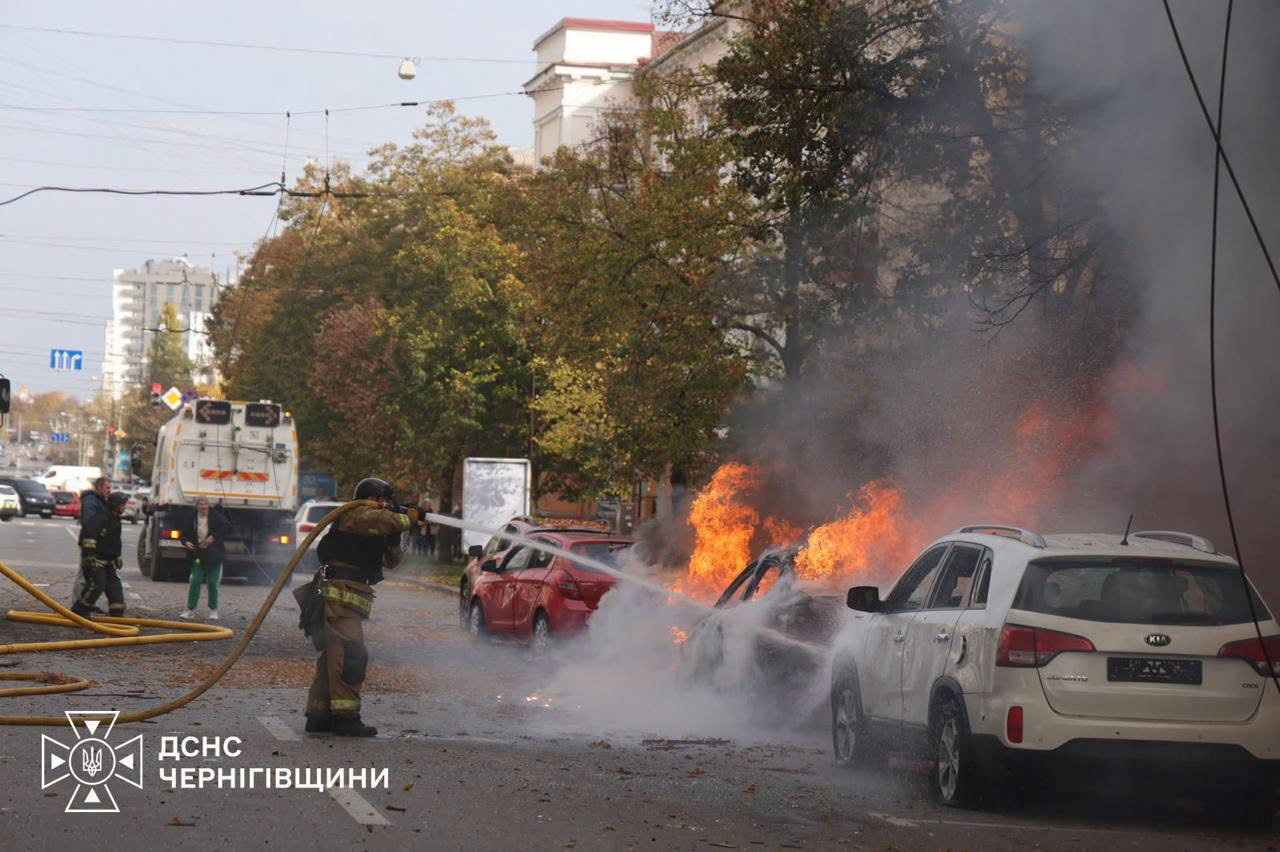
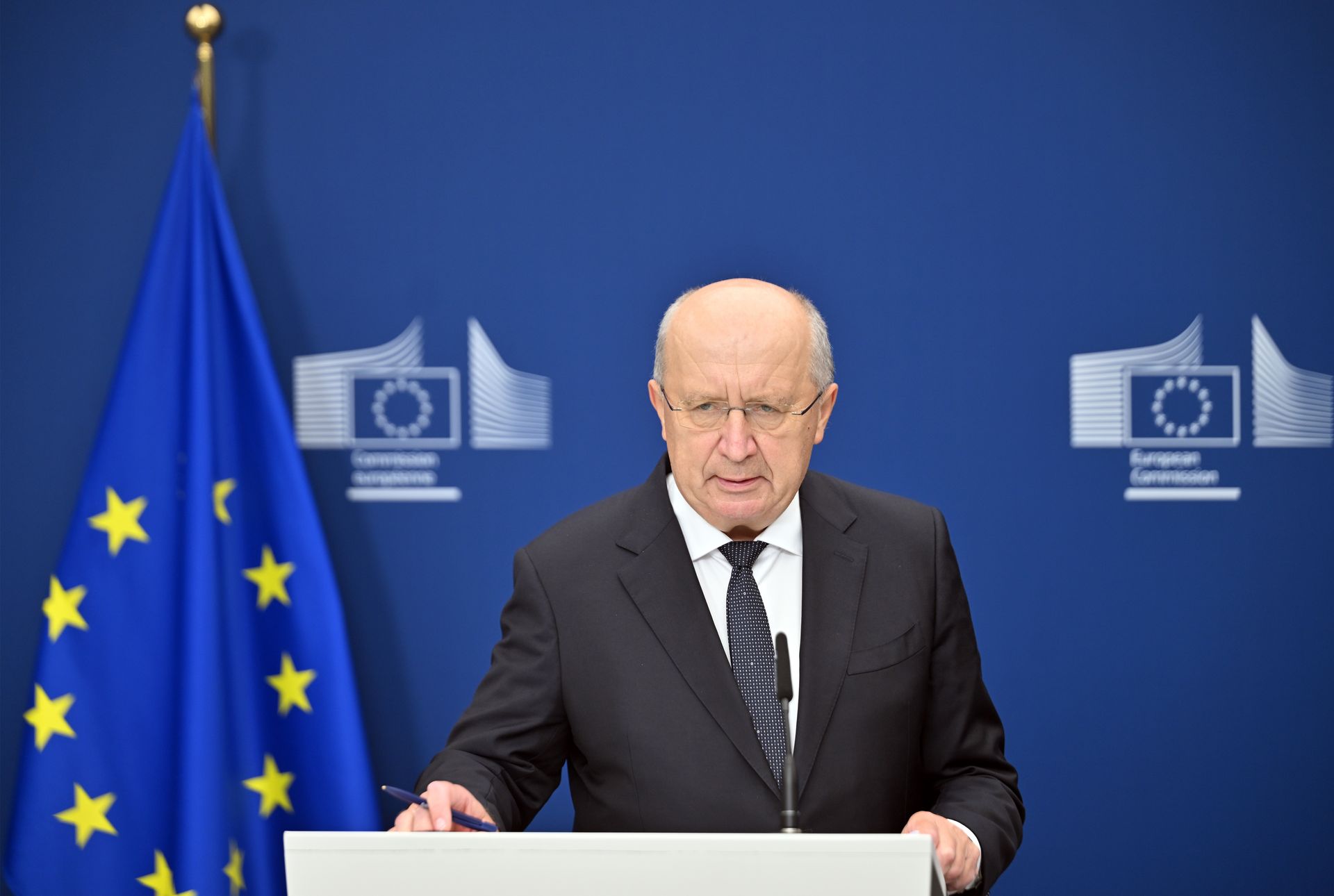
"In developing drones and counter-drone systems, Europe has one significant advantage: our partnership with Ukraine," said European Commissioner Valdis Dombrovskis.
Brussels is preparing another round of restrictions against Moscow while Washington explores the possibility of economic concessions. The disagreement exposes a weakness in Europe’s sanctions strategy: its effectiveness still depends heavily on decisions taken outside the European Union.
The European Union has imposed sanctions on almost 1,600 additional individuals and companies connected with Russia’s military-industrial complex. It is preparing a 22nd sanctions package, expanding restrictions on the networks that supply Moscow’s armed forces.
Washington, meanwhile, is considering whether economic incentives could help persuade the Kremlin to negotiate an end to the war in Ukraine.
The two approaches are not necessarily incompatible. Sanctions can be used both to constrain an adversary and as bargaining instruments in negotiations.
But they become considerably less effective when the governments imposing them disagree about the conditions under which they should be lifted.
For Europe, the problem extends beyond transatlantic diplomacy. After more than four years of war, Brussels has developed an extensive sanctions regime but still faces difficulties preventing restricted technologies from reaching Russia, limiting its energy revenues and enforcing measures against companies operating through third countries.
A change in American policy could expose those weaknesses more sharply.
The measures targeted 826 companies and 743 executives associated with Russia’s defence industry.
Unlike earlier restrictions concentrated on prominent political figures and major financial institutions, the latest designations reach into the industrial supply chains supporting Russian weapons production.
According to the Council, the companies concerned employ more than 250,000 people and generate annual turnover of at least €20 billion.
Their activities include the production and supply of electronics, semiconductors, communications equipment, navigation systems, explosives and components used in missiles, drones and military aircraft.
More than half the listings concern supply chains associated with ballistic missile production.
The approach reflects an increasingly detailed understanding of how Russia sustains its military operations.
Modern weapons depend on complex manufacturing networks. A missile producer may be able to replace a sanctioned supplier, but obtaining specialised components through alternative channels can increase costs, delay production and complicate quality control.
Targeting those networks can therefore be more consequential than imposing restrictions on another senior official whose assets in Europe have already been frozen.
Nevertheless, the number of sanctioned entities is an imperfect measure of effectiveness.
A designation has limited practical value if the targeted company has no assets within European jurisdiction, does not require Western financing and can obtain equivalent components elsewhere.
The more useful questions concern production delays, procurement costs, component availability and the extent to which Russian manufacturers can replace restricted technology.
Sanctions Evasion Has Become an Industry
European restrictions have encouraged the development of increasingly elaborate procurement networks involving intermediaries, logistics companies and financial service providers.
The cases illustrate the geographical complexity of enforcement.
Among those targeted were trading and logistics businesses associated with Türkiye, financial intermediaries operating in Russia and companies linked to oil transactions involving the United Arab Emirates, India and the Seychelles.
These networks exploit differences between national legal systems, commercial practices and the willingness of third-country authorities to cooperate with European restrictions.
Brussels can prohibit European companies from supplying particular goods. Preventing those products from being resold through several intermediaries is substantially more difficult.
Enforcement requires customs intelligence, banking supervision, corporate ownership information and cooperation with governments that may have little interest in restricting profitable trade with Russia.
The EU’s 21st sanctions package, adopted in July, extended restrictions to additional shadow-fleet vessels, financial institutions and cryptocurrency service providers.
Such measures increase the cost of evasion. They do not automatically eliminate the commercial incentives sustaining it.
Washington Holds Cards Brussels Cannot Replace
The Trump administration’s exploration of possible economic arrangements with Moscow introduces another complication.
American sanctions possess particular influence because of the dollar’s international role, the importance of US financial institutions and Washington’s capacity to restrict access to American markets.
European sanctions operate independently, but their effectiveness can be reinforced substantially by corresponding American measures.
If Washington relaxes restrictions on selected Russian institutions or commercial activities while Brussels maintains its prohibitions, companies could encounter two increasingly different regulatory environments.
European businesses would remain subject to EU law. American companies might gain access to transactions unavailable to their European competitors.
More importantly, Moscow could recover access to certain financial or commercial channels without obtaining equivalent relief from Brussels.
The scale of the consequences would depend on which restrictions Washington changed. Limited exemptions would not have the same effect as broader measures involving Russian banks, energy companies or international payments.
No comprehensive American sanctions rollback has been agreed.
Nevertheless, the prospect creates uncertainty for European policymakers.
Their position is strategically coherent. Sanctions represent one of Europe’s principal instruments of leverage in negotiations.
But preserving that leverage requires more than refusing to lift existing restrictions.
It requires ensuring that those restrictions remain effective even if American priorities change.
Europe’s Unfinished Economic Strategy
The European Union has considerable economic weight. Its single market, regulatory powers and financial institutions provide instruments that Russia cannot simply disregard.
Yet Europe has often been more effective at adopting sanctions than at enforcing them consistently.
Implementation remains dispersed among national authorities with different resources, investigative capacities and political priorities.
Companies operating across multiple jurisdictions encounter uneven enforcement, while intermediaries outside the EU can exploit gaps in information-sharing.
Brussels has attempted to address these weaknesses through expanded reporting obligations, restrictions on third-country entities and closer coordination among national authorities.
The forthcoming 22nd package will provide another indication of whether the EU intends to deepen that approach.
Its precise contents have not yet been announced.
A credible European strategy would also require greater attention to the relationship between sanctions and defence production.
Restricting Russian access to components is valuable. Expanding Europe’s own capacity to manufacture ammunition, missiles and air-defence systems is equally important.
Economic pressure cannot substitute indefinitely for military capability, particularly when the country being sanctioned remains engaged in a prolonged war.
Europe also needs to consider the conditions under which sanctions might eventually be modified.
A negotiated settlement could require carefully defined economic incentives. But those incentives would need to be linked to verifiable Russian obligations and mechanisms for restoring restrictions if agreements were violated.
Otherwise, sanctions relief could become an irreversible concession in exchange for commitments that prove difficult to enforce.
The immediate challenge for Brussels is therefore not simply to produce another package.
It is to establish whether Europe can sustain an independent economic strategy towards Russia if Washington decides that its diplomatic objectives require a different approach.
The EU has accumulated considerable sanctions authority since 2022. The next test is whether it can turn that authority into durable strategic leverage without relying on American policy remaining unchanged.
A bipartisan pair of senators are pressing Kalshi and Polymarket over prediction markets tied to the Nov. 3 midterm elections. “We write to express concerns about election-related prediction markets and to request specific information about your companies’ efforts to prevent insider trading, market manipulation, and wagers based on material nonpublic information,” Sens. Elizabeth Warren (D-Mass.)…
A bipartisan pair of senators are pressing Kalshi and Polymarket over prediction markets tied to the Nov. 3 midterm elections. “We write to express concerns about election-related prediction markets and to request specific information about your companies’ efforts to prevent insider trading, market manipulation, and wagers based on material nonpublic information,” Sens. Elizabeth Warren (D-Mass.)…
The European Commission urged member states on Thursday to apply for loans from a €21.3 billion ($23.74 billion) pot available through the European Union’s SAFE defence funding programme to boost their own forces and support Ukraine.
The Commission encouraged member states to launch joint procurement programmes with Ukraine, using funds from SAFE’s second round.
Member states should prioritise the urgent needs of Ukrainian and their own armed forces in air and missile defence systems, drones and counter-drone systems, ammunition and missiles, the Commission said.
The Security Action for Europe instrument is a joint borrowing scheme backed by the EU budget aimed at boosting the bloc’s defence capabilities and helping member states meet new, more ambitious NATO spending targets.
The European Union is attempting to establish itself as a developer of advanced artificial intelligence rather than primarily a regulator and consumer of technology produced elsewhere. An Italian-led consortium developing a large open-source AI model across all 24 official EU languages will provide an important test of whether Europe’s supercomputing infrastructure can support globally competitive systems.
Europe’s efforts to establish greater control over artificial intelligence technology are entering a new phase as the EUROPA consortium, led by Italian company Domyn, advances plans to develop one of the continent’s largest open-source AI models.
The initiative, supported by the European Commission and European high-performance computing infrastructure, aims to create an advanced artificial intelligence system capable of competing with models developed by leading American and Chinese companies.
Domyn chief executive Uljan Sharka told the Financial Times on 29 October that Europe possesses the technological resources and industrial expertise required to compete in advanced AI development.
However, he also identified two obstacles: the need for greater investment and the difficulty of persuading European businesses to adopt domestically developed systems.
These challenges extend beyond the development of a single language model.
They concern whether Europe can establish a commercially sustainable AI industry while reducing dependence on technology providers headquartered outside the EU.
The competition, launched in February, was designed to support the development of a European general-purpose AI model with more than 400 billion parameters.
EUROPA’s planned model is expected to contain approximately 500 billion parameters and support all 24 official EU languages.
The consortium brings together Domyn and Germany’s Fraunhofer research organisation, including the Fraunhofer IAIS and IIS institutes.
Its work will rely on the EuroHPC network of European supercomputers.
Under the competition arrangements, the winning consortium can obtain access to as much as 2.5 per cent of EuroHPC’s total computing capacity for one year.
This allocation is intended to address one of the largest barriers to advanced AI development: the enormous computing resources required to train models at this scale.
The final system is intended to be released under an open-source licence, allowing organisations to inspect, adapt and deploy the technology.
Nevertheless, parameter count alone does not demonstrate that a model is competitive.
Its actual performance will depend on training data, architecture, computational efficiency, evaluation results and the ability to perform reliably across different tasks.
A European Model for European Languages
One of EUROPA’s distinguishing objectives is its coverage of all official EU languages.
The commercial AI market has historically been dominated by models developed primarily for English-language applications, although leading international systems increasingly support multiple languages.
For Europe, linguistic capability has particular relevance to public administration, legal services, education and cross-border business.
A model designed specifically for the European market could potentially support specialised applications involving national legislation, administrative procedures and technical terminology.
However, multilingual availability will need to be assessed against measurable performance standards.
A system capable of producing fluent responses in a particular language is not necessarily equally reliable when interpreting specialised legal or scientific information.
The consortium will therefore need to demonstrate that linguistic coverage translates into practical capabilities rather than remaining principally a technical specification.
Europe’s Supercomputers Become Strategic Assets
The EUROPA project forms part of a wider effort to use European publicly supported computing infrastructure for commercial and scientific AI development.
The EuroHPC Joint Undertaking has invested in systems intended to provide advanced computing resources to researchers, businesses and public institutions.
Additional AI-focused infrastructure is being developed through the EU’s network of AI factories.
These facilities are intended to make specialised computing capacity available to organisations that would otherwise face considerable costs when developing or adapting AI systems.
However, infrastructure ownership does not necessarily provide complete technological independence.
European supercomputing projects continue to rely on internationally sourced semiconductor technology and specialised software.
Domyn itself has described a partnership with the American technology company Nvidia in its previous model-development work.
Consequently, European AI sovereignty is better understood as a question of control over important technological capabilities than complete separation from international supply chains.
Domyn’s Smaller Model Provides an Early Example
On 20 October, Domyn announced the initial release of Domyn Edge, a separate AI model containing four billion parameters.
According to the company’s technical announcement, the system was trained from scratch using approximately 13 trillion tokens on Europe’s Leonardo supercomputer.
Domyn has committed to making the model’s weights, training code, intermediate checkpoints and datasets available under open licences.
This approach is intended to improve reproducibility and allow external developers to examine how the model was constructed.
Domyn Edge is substantially smaller than the planned EUROPA system and should not be confused with it.
Nevertheless, the project provides an example of the company’s approach to developing AI models using European computing infrastructure.
Regulation Is Only Part of the Challenge
The EU has already established an extensive regulatory framework for artificial intelligence through the AI Act.
However, legislation governing the development and deployment of AI does not, by itself, create a competitive domestic technology industry.
Europe faces competition from American companies with substantial private investment, established cloud platforms and access to large commercial markets.
Chinese developers have also expanded their capabilities, including in open-weight AI systems.
EUROPA’s commercial prospects will therefore depend on more than technical performance.
European businesses must be willing to integrate the resulting technology into their operations, while developers will require dependable access to computing infrastructure and support services.
There is also the question of whether European institutions themselves will adopt domestically developed AI systems where they meet relevant security and performance requirements.
Without sufficient demand, even a technically successful model could struggle to establish a sustainable ecosystem.
The Test Will Be Commercial as Well as Technical
Domyn has indicated that it aims to release EUROPA during 2027, although public statements have differed over the precise timetable.
The company’s leadership has discussed a June target, while an earlier technical announcement referred to the second half of 2027.
The immediate challenge is completing development and demonstrating that the model can compete on performance, reliability and cost.
The longer-term challenge concerns adoption.
If European businesses and public institutions continue relying predominantly on foreign technology, access to an advanced European alternative may have only a limited effect on the market.
Conversely, a competitive and widely adopted open-source model could offer organisations greater control over deployment, customisation and sensitive information.
EUROPA is therefore more than a publicly supported technology experiment.
It is a test of whether Europe can convert research institutions, computing infrastructure and industrial expertise into AI products capable of competing in the international market.
The outcome will depend not simply on whether Europe can build an advanced model, but on whether organisations consider it sufficiently capable and economical to use.
A dispute between Germany and Italy over natural gas storage has exposed tensions within the European Union’s energy market, as wholesale prices approach levels last recorded during the 2022 energy crisis and governments confront the prospect of another expensive winter.
Italy has accused Germany of contributing to the latest surge in European natural gas prices by delaying the replenishment of its underground storage facilities, reopening a debate about national energy policies and their consequences for the EU’s single market.
The dispute emerged on 29 October after the European benchmark gas price briefly exceeded €100 per megawatt hour the previous day, its highest level since December 2022.
Germany’s gas storage facilities were just 61.7 per cent full, compared with almost 91 per cent in Italy and an EU average of approximately 75 per cent.
The difference has become politically sensitive because European countries purchase gas in an interconnected market, meaning decisions taken by one major consumer can influence prices paid elsewhere.
Speaking at the Montel Italian Energy Day conference in Milan, Alessandro Noce, director general for energy markets and infrastructure at Italy’s Energy Ministry, criticised Germany’s approach to preparing for winter.
According to Reuters, Noce argued that Italy had spent €300 million securing additional gas reserves, only to face higher market prices as Germany attempted to replenish its comparatively depleted stocks.
He also questioned whether Germany had delayed purchases because of preparations to privatise energy companies involved in the storage process.
Germany’s Economy Ministry did not immediately respond to the criticism.
Germany’s Storage Decisions Under Scrutiny
The German government’s approach has attracted particular attention because of its role in the operations of Uniper and Securing Energy for Europe (SEFE).
Both companies became important components of Germany’s energy-security arrangements following the disruption of Russian gas supplies in 2022.
Plans concerning their future ownership have coincided with renewed questions about how Berlin balances commercial considerations against the need to maintain strategic reserves.
At the Milan conference, an energy analyst suggested that preparations for privatisation had contributed to delays in storage purchases.
That assessment has not been established as the definitive explanation for Germany’s comparatively low reserves.
Nevertheless, the resulting political dispute demonstrates the difficulties of managing energy security through a system in which national governments retain considerable discretion while their purchasing decisions affect a common market.
Europe’s Gas Market Faces Renewed Pressure
Europe’s latest price increase has several causes extending beyond German storage policies.
Disruptions to liquefied natural gas shipments associated with the conflict involving Iran have constrained supplies from the Middle East.
At the same time, European countries entered the summer storage-refilling period with unusually low reserves following the previous winter.
The EU Agency for the Cooperation of Energy Regulators (ACER) reported that underground gas storage was only 28 per cent full at the end of winter 2025–26.
By 21 October, that figure had risen to 75 per cent, still below historical levels.
In its latest gas-market monitoring report, ACER estimated that disruption linked to the Middle East conflict had added between €18 billion and €33 billion to Europe’s gas-import bill.
The agency also found that American liquefied natural gas accounted for roughly 30 per cent of EU gas supplies, reflecting Europe’s growing reliance on transatlantic energy imports.
Although this diversification has reduced dependence on Russian pipeline gas, it has also increased Europe’s exposure to international competition for LNG cargoes.
European buyers must compete with customers in Asia, particularly when colder weather or geopolitical disruptions increase demand.
EU Storage Rules Face a Test
The disagreement has implications for the European Union’s gas-storage framework.
Following the 2022 energy crisis, the EU introduced mandatory storage requirements intended to reduce the risk of supply shortages during winter.
The arrangements were subsequently extended until the end of 2027.
Under the revised rules, member states retain a 90 per cent storage-filling target but have greater flexibility over when and how it is achieved.
Countries may reach the target between 1 October and 1 December, rather than being bound to the previous 1 November deadline.
Further flexibility is available in difficult market conditions.
These provisions were designed partly to prevent governments from creating artificial demand peaks by purchasing gas simultaneously to meet rigid deadlines.
However, the present dispute suggests that delayed purchases can create another problem if several major consumers need additional supplies as winter approaches.
Germany’s current storage level does not, by itself, establish a breach of EU requirements. The applicable deadlines and permitted exemptions must also be considered.
Italy Seeks Greater Scope for Intervention
The Italian government has meanwhile been seeking permission from the European Commission to use public funds to reduce energy costs for households and businesses.
Rome’s concerns reflect the economic consequences of sustained high gas prices, particularly for industries dependent on energy-intensive manufacturing.
Italy faces a general election expected in 2027, adding a domestic political dimension to the debate over energy subsidies.
Noce warned that prices could rise to between €150 and €180 per megawatt hour if January brings particularly cold weather.
Such an outcome remains a scenario rather than a forecast.
Energy markets will also be influenced by developments in the Middle East, LNG deliveries, industrial demand and winter temperatures.
A European Problem Without a Single National Solution
Europe has expanded its LNG import infrastructure and diversified energy sources substantially since 2022.
However, the latest price increases demonstrate that greater import capacity does not necessarily insulate consumers from global supply disruptions.
The German–Italian dispute also exposes the limits of national energy planning within an integrated European market.
Germany’s storage policies affect its neighbours, just as decisions taken elsewhere influence the price German consumers pay.
The central question for Brussels is whether existing coordination arrangements provide sufficient incentives for governments to safeguard their own winter supplies without transferring additional costs to other member states.
With the heating season approaching, that issue is becoming an immediate economic concern rather than a theoretical dispute about European energy solidarity.
"Along with their needs and national defense priorities, member states are also encouraged to use the funds from this second call to strengthen cooperation with Ukraine," a European Commission press release reads.
The European Commission wants member states to assess climate risks, establish national resilience plans and incorporate future warming into public investment decisions. Yet the proposed legislation does not provide the funding needed to implement its ambitions.
The European Commission has proposed a new climate resilience law that would require EU governments to assess their exposure to extreme weather, identify authorities responsible for managing risks and develop national plans to protect infrastructure and economic activity.
Presented on 27 October, the initiative marks a shift in European climate policy towards managing the consequences of changing weather conditions alongside efforts to reduce greenhouse gas emissions.
However, the Commission estimates that adapting Europe’s infrastructure and economy to future climatic conditions will require approximately €70 billion annually.
The proposed legislation does not establish a dedicated funding programme of that size.
This creates an immediate question for member states already facing difficult decisions over defence expenditure, energy security and public borrowing.
Brussels wants governments to make climate preparedness a routine part of economic planning, but the financial responsibility for delivering those measures remains largely unresolved.
The proposal envisages national assessments by 30 June 2029 and strategic resilience plans by 31 December 2030.
These documents would identify threats affecting infrastructure, public services, economic activity and communities.
Governments would also be expected to specify which public authorities are responsible for managing particular risks.
The intention is to prevent situations in which responsibility is divided between institutions without a clear mechanism for action.
The proposed framework would establish a common basis for assessments across the EU, allowing national authorities to compare risks and coordinate responses.
This could be particularly relevant where droughts, floods or disruptions to energy networks affect more than one member state.
The deadlines remain proposals rather than existing legal obligations. The legislation must still be negotiated and adopted by the European Parliament and the Council.
A common warming scenario
One of the most significant elements of the proposal is the introduction of a shared reference trajectory for global warming.
According to the Commission’s announcement, the framework uses a trajectory involving global average warming of approximately 1.5°C above pre-industrial levels by 2030, 2°C by 2050 and 3°C by 2100.
These figures would provide a common planning assumption for evaluating long-term risks.
They are not legally determined temperature outcomes or a guarantee that warming will follow precisely that path.
Instead, they are intended to help authorities examine how buildings, roads, energy facilities and other infrastructure might perform under changing climatic conditions.
For example, a transport project designed to operate for several decades would need to consider possible exposure to extreme heat, flooding or changes in rainfall patterns.
Such assessments could influence engineering requirements, maintenance costs and investment decisions.
The financial problem
The Commission estimates that approximately €70 billion a year will be needed to strengthen Europe’s climate resilience.
That expenditure could include flood protection, water management, urban cooling, agricultural adaptation and improvements to vulnerable infrastructure.
The Commission argues that preventive investment can reduce the economic losses associated with disasters.
According to its figures, climate-related damage across the EU amounted to approximately €200 billion between 2022 and 2025, averaging €50 billion annually.
However, estimating the economic benefits of prevention does not resolve how projects should be financed.
National governments face competing demands on their budgets, while local authorities often bear responsibility for infrastructure without possessing sufficient resources for major investment programmes.
Private financing may contribute in commercially viable areas, but some adaptation projects generate public benefits rather than direct financial returns.
Flood barriers, emergency drainage systems and measures protecting vulnerable communities may therefore require substantial public expenditure.
The proposed legislation establishes a framework for identifying such investments but does not guarantee the resources necessary to undertake them.
Businesses and insurers face changing risks
The Commission also wants climate resilience to become part of business and financial decision-making.
Companies operating transport networks, energy facilities and industrial sites may face increasing exposure to disruption from extreme weather.
Insurers must assess the potential for more frequent or costly claims.
Banks and investors may need to consider whether assets remain commercially viable under changing environmental conditions.
These issues have implications for credit conditions, property values and long-term investment.
However, incorporating climate risks into financial decisions can create difficulties for regions where exposure is high and adaptation costs are substantial.
Insurance premiums may rise, while some properties or economic activities could become increasingly difficult to insure.
The Commission has indicated that further proposals concerning climate insurance and disaster preparedness are being developed.
Their eventual design will influence how financial risks are distributed between households, businesses, insurers and governments.
New European climate information tools
The framework also introduces instruments intended to improve access to scientific information.
The European Climate Viewer will provide mapped information on projected climate hazards.
The Navigator of Climate Resilience Tools will help authorities and businesses identify relevant assessment instruments.
A separate Solutions Explorer will provide examples of adaptation measures developed through European research programmes.
These tools could make climate information more accessible, particularly for smaller administrations without extensive technical resources.
Nevertheless, access to information does not automatically produce the financing or institutional capacity required to implement projects.
A municipality may be able to identify a flood risk more precisely while remaining unable to finance the necessary protective infrastructure.
A new responsibility for Brussels and national capitals
The Commission is expected to present an additional EU strategic plan on climate resilience in 2028.
Separate initiatives are also being prepared on heatwaves, insurance and disaster preparedness.
The resulting framework could substantially influence how public infrastructure and investment projects are planned across Europe.
However, national governments will have to determine how the proposed requirements interact with existing spending obligations and economic priorities.
The European Parliament and Council must also decide whether the legislation should include stronger financial provisions.
The central issue is not whether governments should assess the risks facing infrastructure and public services, but how the measures identified by those assessments will be funded.
Until that question is addressed, the proposed law will establish a more comprehensive system for recognising climate-related risks without guaranteeing that member states possess the resources to reduce them.
Brussels is considering unprecedented restrictions on the rights of future EU members, including the possible suspension of voting rights for serious breaches of European values. France and the Netherlands favour stronger safeguards, while Italy and Austria warn that excessive conditions could undermine enlargement.
European Union governments have begun negotiations over proposals that would allow Brussels to impose additional restrictions on future member states, exposing divisions over how to prevent democratic backsliding without discouraging countries seeking accession.
The discussions, held among EU ambassadors on 28 October, concern draft safeguards proposed by the European Commission for inclusion in future accession treaties.
Montenegro, currently the most advanced candidate in the Western Balkans, is expected to become the first country subject to the proposed arrangements.
The measures would potentially allow the EU to suspend certain membership rights, including voting rights, during a transitional period lasting up to 15 years after accession.
However, the negotiations have revealed disagreement not only over the duration of the safeguards but also over the powers that should be granted to the Commission and the legal thresholds for intervention.
The controversy raises a broader question about the nature of EU membership: whether countries that have completed accession negotiations should immediately enjoy the same institutional rights as existing members.
France and the Netherlands seek stronger guarantees
According to Euronews’ reporting on the ambassadors’ discussions, France and the Netherlands have pressed for stronger guarantees that newly admitted states will continue respecting the rule of law and other EU obligations.
Their position reflects concern that the Union’s existing procedures have proved difficult to enforce against governments accused of undermining judicial independence or democratic institutions.
Article 7 of the Treaty on European Union already provides for sanctions, including suspension of certain membership rights, where a serious breach of European values is established.
However, the procedure involves demanding political and voting requirements.
The Commission’s proposed safeguards are intended to provide an additional instrument specifically applicable to newly admitted members.
They would operate during a defined period after accession and could be activated in response to serious breaches of EU values or the principle of sincere cooperation.
For governments supporting the proposal, the objective is to ensure that reforms undertaken during accession negotiations remain effective after membership has been secured.
Italy and Austria warn against excessive restrictions
Not all member states share this approach.
Italy and Austria, among countries supporting faster integration of the Western Balkans, have warned against imposing conditions that could make EU membership appear provisional or unequal.
Their concern is that candidate countries may face an increasingly complicated accession process even after meeting the formal requirements.
The credibility of EU enlargement depends partly on the proposition that successful reforms will eventually lead to full membership.
If new members are subjected to extensive additional restrictions, political leaders in candidate countries could find it more difficult to justify the domestic compromises required by accession negotiations.
The debate is particularly sensitive in the Western Balkans, where prolonged delays have already generated frustration over the pace of integration.
The challenge for Brussels is to strengthen safeguards without creating a permanent distinction between established and newly admitted members.
A proposed 15-year period
The Commission’s draft institutional safeguard would remain available for 15 years following accession.
This period is intended to permit intervention if a new member reverses reforms after joining the Union.
Yet ambassadors have questioned whether such an extended period can reasonably be described as temporary.
The proposed decision-making mechanism has also attracted criticism.
Under the draft, the Commission could propose restrictive measures that would take effect unless a qualified majority of member states rejected or amended them within two weeks.
This would reverse the usual political dynamic by requiring governments to assemble a blocking majority rather than actively secure support for sanctions.
The proposal could therefore make intervention easier than under the existing Article 7 mechanism.
Critics are concerned that the arrangement would give the Commission excessive influence over the institutional rights of newly admitted countries.
Supporters argue that a more effective enforcement mechanism is necessary precisely because existing procedures have proved difficult to use.
Monitoring could begin before accession
The proposed safeguards are not confined to the period following membership.
The Commission also wants stronger monitoring between the signing of an accession treaty and the date on which a country formally joins.
This period can last several years, during which a candidate government may change and reform commitments may weaken.
Under the draft arrangements, monitoring could include regular assessments, reviews involving existing member states and formal warnings.
As a last resort, accession could be postponed if there were clear evidence that a candidate would not meet the required conditions.
The voting procedure for such a postponement remains unresolved.
These provisions would add another stage of oversight to an accession process that already requires extensive negotiations and the implementation of EU legislation.
Montenegro faces a new uncertainty
Montenegro began accession negotiations in June 2012.
Its progress has made the country a leading candidate for the next round of enlargement.
However, its accession treaty may now become the vehicle through which the EU establishes a new framework for future entrants.
The implications extend beyond Montenegro.
Albania, Moldova and Ukraine are also pursuing accession, although they are at different stages of the process.
Any safeguards introduced for Montenegro could influence the terms eventually offered to those countries.
Enlargement becomes a test of EU governance
The Commission’s proposals reflect a wider debate over whether the EU’s institutions can function effectively with substantially more members.
New entrants would participate in decisions concerning the budget, sanctions, foreign policy and the internal market.
Their admission could also affect areas where unanimity remains necessary, potentially increasing the risk of institutional deadlock.
The European Parliament’s research service has identified the proposed safeguards as part of a broader programme addressing decision-making and governance ahead of enlargement.
Negotiations over the draft clauses will continue at the technical level, with ambassadors expected to revisit the matter in November.
The central disagreement remains unresolved.
The EU wants future members to maintain democratic and legal standards, but it must also decide whether those guarantees can be enforced without creating a separate class of membership.
Montenegro’s accession negotiations will provide the first practical test of that approach.
The European Commission has opened talks with oil producers, refiners and NATO over the future of Europe’s fuel industry, exposing growing tensions between decarbonisation, industrial competitiveness and the demands of military preparedness.
The European Union is reconsidering the strategic importance of its oil-refining industry as disruptions to international energy supplies and growing defence requirements force Brussels to examine whether Europe can afford further reductions in domestic fuel production.
On 28 October, the European Commission convened its first high-level dialogue with the European refining industry, bringing together energy companies, technology providers and representatives of NATO.
The meeting was chaired jointly by Energy Commissioner Dan Jørgensen and Defence and Space Commissioner Andrius Kubilius.
Its significance extends beyond the immediate increase in fuel prices associated with the conflict in the Middle East.
Brussels is confronting a longer-term problem: Europe intends to reduce its dependence on fossil fuels, but its transport networks, industrial infrastructure and military forces remain substantially dependent on petroleum products.
The question is no longer simply how quickly the European economy can decarbonise. It is also how much refining capacity must be retained to guarantee essential fuel supplies during a geopolitical crisis.
A strategic industry under pressure
Europe’s refining industry occupies an important position in the continent’s energy system.
These products are essential not only for civilian transport and logistics but also for military aviation, armoured vehicles and the movement of equipment.
Maintaining adequate production capacity therefore has implications for both economic activity and defence readiness.
Yet European refineries have faced difficult commercial conditions for years.
High energy costs, international competition and declining expectations for long-term fossil-fuel demand have complicated investment decisions.
Refineries require substantial capital expenditure to remain competitive, meet environmental requirements and adapt production processes.
Companies considering whether to modernise facilities must consequently assess the profitability of assets that may be expected to operate in a progressively decarbonising economy.
The resulting uncertainty creates a problem for governments seeking to retain strategically important industrial capabilities.
The Middle East conflict changes the calculation
The immediate catalyst for the Commission’s initiative is the disruption to energy markets caused by the continuing conflict in the Middle East.
Interruptions to supply chains and uncertainty over maritime transport have increased concerns about the availability and cost of refined petroleum products.
Importing crude oil and importing finished fuels are not equivalent from a strategic perspective.
A country with domestic refining capacity can process available crude into the particular products required by its economy.
An economy heavily dependent on imported refined products is additionally exposed to processing capacity, transport availability and commercial decisions outside its jurisdiction.
The distinction becomes particularly relevant when governments must guarantee supplies of diesel and aviation fuel during an emergency.
European policymakers are therefore examining ways to improve output from existing facilities and strengthen the resilience of fuel supply chains.
However, the Commission has not announced a binding production target or a programme to reopen closed refineries.
The 28 October meeting represents the beginning of a policy discussion rather than the adoption of a new industrial strategy.
NATO introduces a different perspective
The participation of NATO gives the initiative a wider security dimension.
Military preparedness requires dependable access to energy products, including during periods when normal commercial supply chains are disrupted.
Aircraft, naval vessels, military logistics and ground operations cannot be reorganised around alternative energy sources at the same pace as some civilian activities.
Furthermore, the ability to sustain prolonged operations depends on reliable industrial production, storage, distribution and transport.
A refinery’s strategic importance may therefore exceed its immediate commercial profitability.
That raises difficult policy questions.
Governments may consider whether critical production facilities require targeted support, whether strategic stockpiles are sufficient and how supply arrangements should function during emergencies.
Any intervention would have to address competition rules, public financing and the risk of subsidising facilities that become commercially unviable.
Decarbonisation remains part of the policy
Brussels has not abandoned its climate objectives.
The Commission has explicitly linked its refining discussions to the development of sustainable biofuels and synthetic fuels, commonly known as e-fuels.
These technologies offer potential alternatives for sectors where direct electrification remains technically difficult, including aviation.
However, their commercial development requires investment, suitable feedstocks, reliable energy supplies and sufficient demand.
Traditional refineries may be able to participate in this transition, although the technical requirements and economic viability vary between facilities.
Jørgensen said the Commission intended to work with industry on a roadmap that would reconcile domestic fuel production with Europe’s longer-term climate ambitions.
The challenge will be translating those objectives into investment decisions.
Europe’s industrial strategy faces a practical test
The initiative illustrates a wider adjustment in European economic policy.
In recent years, the EU has increasingly described industrial capacity as an element of economic security, rather than treating production solely as a commercial activity.
Semiconductors, pharmaceuticals, critical minerals and defence equipment have all attracted attention because of vulnerabilities in international supply chains.
Oil refining is now entering the same discussion.
The Commission must determine how to preserve sufficient capacity for essential civilian and military requirements while continuing to encourage cleaner technologies.
Those objectives are not necessarily incompatible, but they operate over different timescales and involve different commercial incentives.
For European refiners, the central question is whether governments can provide enough regulatory and investment certainty to support modernisation.
For Brussels, it is whether the energy transition can proceed without creating new strategic dependencies.
The outcome of the dialogue will indicate how the EU intends to balance its climate commitments with the industrial demands of a less predictable security environment.
A new investigation into the activities of Google, Meta and other technology companies has intensified scrutiny of EU plans to revise data-protection legislation, placing Ireland and Germany at the centre of a dispute over corporate influence and European digital sovereignty.
European technology policy has become the focus of a dispute over corporate lobbying after researchers documented extensive contacts between major technology companies and political decision-makers during negotiations to revise EU data-protection rules.
An investigation published on 28 October by Corporate Europe Observatory and the German transparency organisation LobbyControl alleges that leading technology companies mounted a coordinated campaign to influence European governments and legislators.
The findings come one week after EU member states agreed a negotiating position on the Digital Omnibus, a legislative package intended to simplify aspects of European data-protection, privacy and cybersecurity regulation.
The campaigners argue that the proposed changes risk weakening existing safeguards in order to accommodate the commercial requirements of artificial intelligence developers.
Ireland, which holds the rotating presidency of the Council of the European Union, has rejected suggestions that its handling of the legislation was improperly influenced by technology companies.
The dispute exposes a fundamental disagreement over the balance between commercial innovation and the protection of personal information.
The scale of the lobbying campaign
According to LobbyControl’s investigation, non-European technology companies recorded 103 meetings with representatives of Germany’s federal government between May 2025 and September 2026.
Google accounted for 28 meetings, Microsoft 18, Amazon 16 and OpenAI 11.
Germany’s Digital Minister, Karsten Wildberger, participated in 18 meetings with representatives of major technology companies, the researchers reported.
In Ireland, the organisations identified extensive engagement involving Meta, Google and politicians ahead of the country’s assumption of the EU Council presidency in July.
Their findings indicate that Meta engaged with 41 Irish parliamentarians over the Digital Omnibus, while Google recorded 30 meetings.
The researchers also identified 655 lobbying meetings concerning the legislation involving members of the European Parliament.
According to their analysis, approximately 83 per cent represented business interests, compared with 11 per cent involving civil society organisations or trade unions.
These figures demonstrate the intensity of corporate engagement, although the existence of lobbying meetings does not, by itself, establish that particular legislative provisions were adopted because of that activity.
Why the Digital Omnibus matters
The legislative package forms part of a broader European Commission initiative to reduce administrative burdens and improve competitiveness.
Its provisions address several areas of digital regulation, including the General Data Protection Regulation, commonly known as GDPR.
The proposals seek to simplify compliance obligations, clarify the treatment of personal information and revise rules governing certain forms of data processing.
One particularly contentious issue concerns the use of personal data in developing and operating artificial intelligence systems.
AI developers require large quantities of information to train and improve their models. However, the collection and processing of personal information remain subject to European legal safeguards.
Technology companies have argued that regulatory complexity can discourage investment and make it more difficult for European businesses to compete internationally.
Privacy campaigners maintain that simplifying regulatory procedures must not become a mechanism for reducing substantive protections.
The disagreement concerns not merely administrative paperwork but the legal circumstances under which companies may process information relating to identifiable individuals.
Ireland rejects allegations of improper influence
Ireland occupies a particularly sensitive position in the debate.
The country hosts major European operations of several American technology companies, including Google and Meta, and has substantial economic interests in the digital sector.
At the same time, its presidency of the EU Council requires it to coordinate negotiations between member states.
According to RTÉ’s reporting on the investigation, the Irish government strongly rejected the allegation that it had weakened data safeguards in response to corporate pressure.
A presidency spokesperson emphasised that Ireland’s responsibility was to facilitate agreement between member states and that the negotiating mandate approved on 21 October enjoyed broad support.
The Council has presented the proposed changes as a means of reducing compliance costs while preserving established privacy protections.
In its official statement, the Council said its mandate retains the existing definition of personal data and introduces additional provisions governing pseudonymisation.
It also includes safeguards relating to sensitive information used for biometric verification and AI systems.
These details are significant because they demonstrate that the negotiating text contains protections alongside proposed simplifications.
Germany’s role in the negotiations
Germany has also emerged as an important participant in the controversy.
The investigation points to close contact between the German government and international technology companies during discussions about the future of European digital regulation.
Berlin has supported reducing administrative restrictions that it considers obstacles to innovation and the development of competitive AI technologies.
For Germany, the issue is connected to wider concerns about industrial competitiveness, investment and Europe’s dependence on foreign technology suppliers.
Yet an unresolved question remains.
Measures designed to assist European innovators may also benefit established American companies whose extensive computing infrastructure and data resources give them advantages over smaller competitors.
Consequently, easing restrictions does not necessarily guarantee a stronger European technology industry.
The European Parliament holds the next decision
The Council’s negotiating position does not make the Digital Omnibus law.
The European Parliament must establish its own position before negotiations between the institutions can determine the final legislation.
Parliamentarians will therefore have an opportunity to examine the treatment of personal data, the safeguards attached to AI development and the relationship between regulatory simplification and individual rights.
The lobbying investigation is likely to become part of that debate.
Its central political significance lies in the competing interpretations of European technological sovereignty.
For governments seeking investment, regulatory flexibility may provide an instrument for improving Europe’s international competitiveness.
For privacy organisations, the same flexibility could increase the influence of companies already dominant in global digital markets.
The outcome will help determine whether Europe’s future digital framework preserves the existing balance between commercial data use and individual protections, or establishes a different relationship between the two.
Bo French said the presence of Indian American students at a football game was a “problem.” His campaign for Railroad Commission tests whether these biased views are now mainstream.
Brussels (Brussels Morning Newspaper) October 28, 2026 – Fifteen prominent media outlets, journalists’ associations, and press freedom organizations have jointly appealed to European Commission President Ursula von der Leyen, demanding immediate improvements in journalists’ access to public documents.… Read more
With a crucial EU–UK summit approaching, London is seeking assurances that British manufacturers will not be disadvantaged by Europe’s new industrial policies. The dispute exposes a wider problem: how closely Britain must align with Brussels to preserve access to European supply chains.
Britain and the European Union are attempting to resolve an increasingly consequential dispute over European industrial policy, as proposed rules favouring domestically manufactured goods threaten to complicate the economic relationship that London has spent much of the past year trying to rebuild.
Business Secretary Jonathan Reynolds said on 27 October that the two sides were making progress towards addressing concerns surrounding the proposed Made in Europe requirements.
Speaking to Sky News, Reynolds said the governments were “finding a way through” the disagreement, although the precise terms of any compromise remain uncertain.
The negotiations come ahead of the EU–UK summit scheduled for 20 November, when Prime Minister Andy Burnham is due to meet European Commission President Ursula von der Leyen and European Council President António Costa.
For British manufacturers, the immediate issue is whether political promises of closer cooperation can prevent new economic barriers from emerging.
The legislation would introduce European-origin and low-carbon requirements into public procurement and certain government support schemes covering strategic industries.
Among the sectors affected are steel, cement, aluminium, automotive manufacturing and technologies associated with the energy transition.
Brussels argues that such measures are necessary to strengthen European manufacturing and reduce dependence on overseas suppliers, particularly in industries exposed to competition from China.
The economic difficulty is that European industrial production does not stop at the EU’s external borders.
British manufacturers supply components, materials and specialist engineering services to European factories, while many UK production facilities rely on parts and technologies imported from the continent.
Automotive manufacturing illustrates the problem.
Vehicles assembled in Britain frequently contain components produced in several EU countries. Equally, European automotive manufacturers incorporate British-made parts into their own production.
If eligibility for subsidies or public contracts depends increasingly on where products and components originate, companies could face incentives to reorganise supply chains.
The question is therefore not merely whether British products can enter the European market, but whether they will qualify for the same industrial support arrangements as competing European products.
France and Germany disagree
The dispute has exposed differences among EU governments.
As EU Today reported earlier this month, France has argued for a restrictive interpretation of European origin requirements, while Germany has favoured a broader approach allowing certain trusted trading partners to participate.
Berlin’s position reflects the interests of industries whose production networks extend beyond the EU, including manufacturers operating in Britain.
According to reporting on the negotiations, France and Germany have discussed a potential compromise under which Britain might receive preferential treatment if it aligns with European tariffs on Chinese goods.
Such an arrangement would have implications extending beyond manufacturing.
It would involve coordination over trade policy towards China, an area in which Britain currently retains independent decision-making authority.
No agreement has been finalised, and any legislative compromise would require approval through the EU’s institutional procedures.
Burnham’s broader European calculation
For Burnham’s government, the industrial disagreement coincides with a wider attempt to redefine relations with Brussels.
The forthcoming summit is expected to concentrate on practical agreements covering agricultural and food trade, emissions trading and temporary mobility arrangements for young people.
A sanitary and phytosanitary agreement could reduce inspections and documentation requirements for certain food products moving between Britain and the EU.
Closer coordination between emissions trading systems could also reduce complications created by different carbon-pricing regimes.
However, these initiatives do not resolve the wider question of Britain’s relationship with the European single market.
Burnham has indicated that he intends to open a broader discussion about future options, while maintaining Labour’s existing commitments against rejoining the single market, customs union or restoring general free movement during the current parliamentary term.
Reynolds has acknowledged that repeated changes in EU policy create uncertainty for British companies operating across the Channel.
The price of industrial cooperation
The underlying difficulty is structural.
Britain seeks the benefits of close industrial integration while maintaining the independence acquired through Brexit. The EU, meanwhile, is increasingly using common industrial rules, subsidies and procurement preferences to pursue economic-security objectives.
These priorities are not necessarily incompatible, but reconciling them may require new arrangements governing regulatory alignment, product origin and relations with third countries.
As EU Today previously examined, London’s request to be treated as a trusted industrial partner has already become part of the broader political negotiations.
The November summit may establish a framework for resolving some immediate concerns.
It will not, however, eliminate the fundamental problem facing British manufacturers: future decisions taken in Brussels can materially affect their competitiveness, even though Britain no longer participates directly in making those decisions.
EUobserver is proud to have an editorial partnership with Europod to co-publish the podcast series “Briefed” hosted by Léa Marchal. The podcast is available on all major platforms.
Find the full transcript below:
The European Commission has unveiled its plan to help Europe adapt to climate change. But as extreme heat and climate disasters become the norm, the plan offers very few binding commitments.
So what does it actually change? Let’s start with what’s on the table. The commission is proposing a law that would require all 27 member states to work from the same reference scenario for rising temperatures. And, based on that, to adopt national adaptation plans.
The idea is to stop countries from redoing their own analyses and justifying what their actions are based on. From now on, the shared assumption would be: 1.5 degrees of warming by 2030, 2 degrees by 2050, and 3 degrees by 2100.
There is already something notable here: this scenario is more pessimistic than the Paris Agreement, which aims to keep global warming well below 2 degrees.
The European commissioner for climate, Wopke Hoekstra, gave an explanation ot that:
“It would be unwise not to prepare for the scenarios science puts on the agenda: so scientists are saying 1,5 might do more or less for now, but by 2050 you’re looking at 2 degrees. And by 2100, you’re looking at 3. so I would argue we need to do 2 things: one is staying close to 1,5 and make sure if there is an overshoot, we bring things down, and at the same time, let’s not contemplate and wait but let’s prepare also for a hollow future, that is also the logic of the proposal.”
Now, this assumption is also at the source of another criticism: the EU isn’t doing enough to cut greenhouse gas emissions in the first place.
At yesterday’s press conference, a journalist asked the commissioner how he could defend the Paris Agreement while the EU was lowering climate ambitions at the same time. Because in recent years, the EU has watered down several key measures of the Green Deal.
Think of the rollback on the end of combustion-engine cars, the suspension of the regulation on methane emissions, or the one on imported deforestation. In parallel, the commission is no longer proposing new legislation to cut emissions.
Now, moving to the proposition in itself, will they really help countries to prepare for climate events to come, starting by with the next summer?
Not immediately. The package will make it easier to share useful data with national authorities, notably thanks to Copernicus, the EU’s Earth observation programme.
The commission will also publish a catalogue of adaptation solutions, available to everyone.
So overall, the package is mostly about exchanging information and ideas, and about commitments to implement national adaptation plans. It also streamlines some existing work, which is always useful.
But what the commission does not do is force member states to take concrete action, or let’s say, to show tangible results.
The Climate Law already requires countries to have adaptation plans. But those plans don’t come with quantified targets. Whether it’s about adapting soils, making buildings more resilient to heat, or protecting vulnerable people.
This is something the Greens in the European Parliament regret. German MEP Kai Tegethoff warns that the risk is to end up with plenty of information about the risks, and then do nothing about them. He is calling for binding targets.
And then, there’s one last thing: money. The commission hasn’t announced any new funding for adaptation.
So: technical tools and encouragement, but no obligations and no cash. Commissioner Hoekstra even highlighted the amounts already allocated in the current budget, and in the proposal for the next one.
But as we know, negotiations on the next long-term EU budget are heading towards cuts. So it is unlikely that there would be an increase in the budget for climate measures.
This transcript was updated on 29 October to correct MEP Kai Tegethoff’s nationality to German.
 Login