❌

Reading view

Video Shows ICE Agents Slashing Portland Couple's Car Tire Then Driving Off

ICE agent slashing tire | ACLU

Immigration and Customs Enforcement (ICE) agents slashed the tires of a couple who were recording the agents in an incident near Portland, Oregon, earlier this month. The agents then drove away without arresting or talking to the couple, video footage shows.

The American Civil Liberties Union (ACLU), which released the footage today, says it is yet another example of ICE agents retaliating against people for protected First Amendment activity. In an administrative complaint on behalf of the anonymous couple, the ACLU and the ACLU of Oregon are demanding an investigation and answers from the Department of Homeland Security (DHS) about why agents tailed, boxed in, and "vandalized" the vehicle of a U.S. citizen.

The stunning video does not resemble any sort of normal law enforcement:

"What happened to us is not unique, and that is what is so terrifying," A.P. and M.P., the unnamed husband and wife, said in a statement provided by the ACLU. "We observe and record public ICE activity in order to shine a light on their abusive behavior and to create a record of what our government is up to. Because of that, they are terrorizing us and anyone else who dares to exercise their First Amendment right to hold our government accountable. We hope that sharing our story will bring attention to their reckless and unconstitutional attacks on our communities."

According to the ACLU complaint, the unnamed married couple was driving in Hillsboro, Oregon, on the morning of October 7 when they spotted an ICE SUV. The couple followed the SUV to a supermarket parking lot, where there were also two other ICE vehicles. The couple lowered their windows and began yelling "This is ICE! This is ICE!" as well as blowing whistles and honking the car's horn.

One ICE agent grabbed a shopping cart and began approaching the couple's car. The complaint states that the couple heard the agent say something to the effect of, "Let's block them in with the cart." As the couple began driving away, several ICE agents began chasing after them on foot. 

The three ICE vehicles chased the couple after they left the parking lot, "driving aggressively and nearly colliding into" their car, according to the complaint. Additional video shows the ICE vehicles swerving aggressively in front of the couple's car and later unsuccessfully attempting to box in their car. "None of the ICE vehicles had their flashing lights or sirens on during this entire sequence of events," the complaint states.

The couple cut through an empty parking lot, and the chase continued down several more streets before the ICE vehicles turned on their emergency lights and sirens. According to the complaint, the couple continued driving for roughly a minute, fearing to pull over on an empty road with no bystanders. 

Video shows that when they stopped at a traffic light, a masked ICE agent exited his vehicle, walked up to the couple's car, stabbed one of its rear tires with a knife, and then walked back to his car. The couple's car moved slowly forward and into a turn lane before stopping again. Then the same agent got back out of his vehicle and stabbed the tire a second time before returning to his vehicle without attempting to speak to the couple.

"All three ICE vehicles turned off their flashing lights and sirens and drove off," the ACLU complaint states.

The complaint notes that the couple "experienced retaliatory action similar to that experienced by many other individuals across the country engaged in these same First Amendment protected activities."

"In particular, individuals around the country have reported being similarly tailed, boxed in, and threatened with or subjected to violence after observing, gathering information about, and recording ICE agents performing their duties in public," the complaint states.

Last October, ICE agents in the Portland area busted out the car windows of a U.S. citizen who had been filming them, dragged her out of her vehicle, and detained her for roughly seven hours before releasing her without charges.

The ACLU of Tennessee filed a class-action lawsuit in May against a federal law enforcement task force in Memphis for harassing legal observers. Memphis residents allege in declarations that they have been violently arrested, surveilled at their houses, pulled over under false pretenses, and jailed for trying to film the task force. In September, the ACLU of Tennessee published videos showing federal agents arresting the lead plaintiff in its lawsuit while he was attempting to film task force operations.

DHS and immigration officers have repeatedly accused videographers and legal observers of obstruction of justice and "doxxing," but civil liberties advocates say the DHS is flat wrong about the law: Every federal appeals court that has considered the issue—nine so far—has firmly upheld the right to record law enforcement in public.

The Supreme Court has also unequivocally upheld the First Amendment right to criticize or oppose police activity, whether verbally or through other expressive activity.

"The right to record publicly visible law enforcement activity is fundamental to our democracy," Scarlet Kim, senior staff attorney with the ACLU's Speech, Privacy, and Technology Project, said in a press release. "Like many people across the country, our clients have been observing and recording ICE activity in their community. These videos have proven critical to exposing ICE's abuses. If we cannot see and document what our own government is doing on our streets, we cannot hold it accountable for running roughshod over our rights."

The ACLU complaint to the DHS Office of Inspector General and two other DHS oversight offices demands that the agents involved in the incident be identified, investigated, and disciplined. The ACLU is also requesting a "comprehensive investigation of a disturbing pattern of ICE agents retaliating against individuals who observe, gather information about, and record ICE activity."

The DHS did not immediately respond to a request for comment.

The post Video Shows ICE Agents Slashing Portland Couple's Car Tire Then Driving Off appeared first on Reason Magazine.

  •  

Open Letter defending right to demonstrate delivered to President Seguro

Belém Palace

The Open Letter that began earlier this week as a result of police baton charges on ‘right to housing’ protesters has been delivered to President Seguro today. The missive, which

The post Open Letter defending right to demonstrate delivered to President Seguro appeared first on Portugal Resident.

  •  

Trump's Mandatory Immigration Detention Policy Fails the Textualist Test

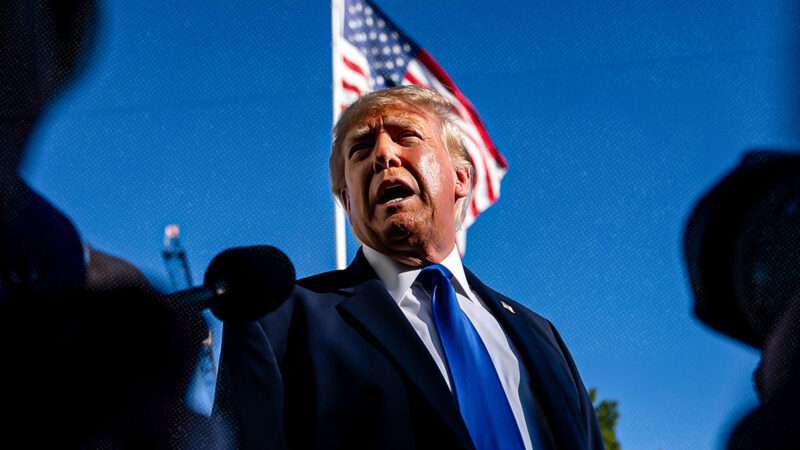
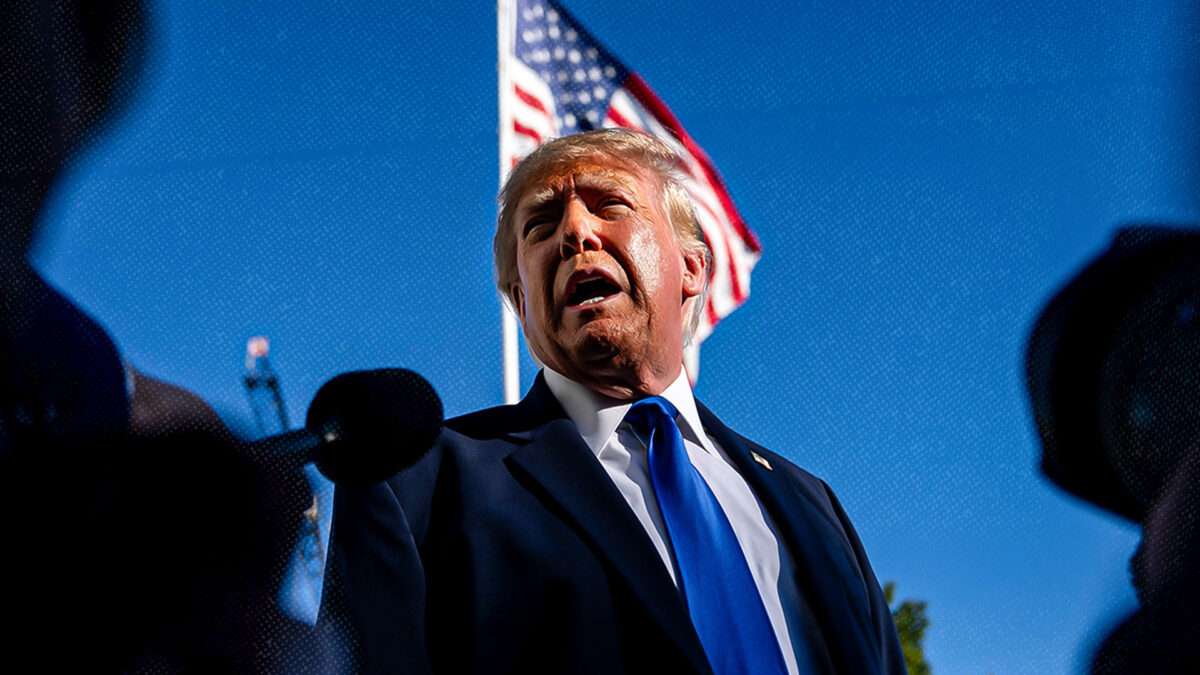
President Donald Trump standing in front of a flag | Bonnie Cash-Pool via CNP/CNP/Polaris/Newscom

Assume the following: A person unlawfully entered the United States 20 years ago and has since started a business and raised U.S.-citizen children, has no criminal record, and has never been found to be dangerous. Should federal immigration law treat that person the same way it treats someone who was just apprehended at the border? Should the law treat that person as if Congress had specifically made them subject to mandatory detention for criminal or terrorism-related conduct?

Under the Trump administration, the answer is yes. President Donald Trump's current policy treats noncitizens who entered without lawful admission as subject to mandatory detention without bond throughout removal proceedings, even if they have lived in the United States for decades and have no criminal record⁠. The executive branch adopted that position in new Immigration and Customs Enforcement (ICE) guidance issued in July 2025⁠, reversing its prior interpretation of the same detention law.

The U.S. Supreme Court will now decide whether Congress actually required the result Trump is seeking. On October 1, the justices agreed to hear the case of Rhoney v. Barbosa da Cunha⁠. Ricardo Aparecido Barbosa da Cunha, a Brazilian national, entered the United States without inspection around 2005. He later applied for asylum, received work authorization, and eventually bought a home. He operates a small construction business and lives with his wife and two U.S.-citizen children. He has no criminal record. But immigration officers still arrested him while he was driving to work in Massachusetts in September 2025.

After Cunha challenged his detention, a federal court ordered a bond hearing and an immigration judge found that he posed neither a danger nor a flight risk and therefore released him on bond while his case proceeded. The Trump administration then appealed to the U.S. Court of Appeals for the 2nd Circuit and lost. Now the Supreme Court will have the final word⁠.

The Supreme Court is not deciding whether Cunha may ultimately remain in the country. Instead, it is deciding the narrower question of whether the Immigration and Nationality Act mandates detention pending removal proceedings for someone like Cunha who is present in the United States without having been lawfully admitted⁠.

The legal dispute turns on two phrases in one section of this federal immigration law. According to Section 1225, a noncitizen present in the United States who has not been legally admitted is considered an "applicant for admission." But when Congress imposed mandatory detention later in that same section, it used additional language, applying it to an applicant for admission who is "seeking admission."

That distinction may sound technical and trivial, but its consequences are enormous. If every statutory "applicant for admission" is automatically still "seeking admission," then the government can treat someone who crossed the border 20 years ago the same as someone arriving today and keep them in jail without the possibility of bond. If the two phrases mean two different things, however, then Cunha and others like him are generally eligible for a bond hearing under Section 1226, which permits both detention and release on bond or conditional parole⁠.

The Trump administration argues that if Congress has deemed someone an applicant for admission, that person must necessarily still be seeking the admission for which they are considered an applicant. But the administration's argument asks the Court to stretch federal law beyond its reasonable limits. Congress expressly deemed certain people "applicants for admission." It did not separately deem them to be "seeking admission."

This case, in short, is about textualism. And as the late Justice Antonin Scalia and his co-author Bryan Garner argue in their book, Reading Law: The Interpretation of Legal Texts, one of the key principles of textualism is that "a material variation in terms suggests a variation in meaning." When Congress uses different words in closely related provisions, in other words, courts should hesitate before assuming that the different words mean the exact same thing.

In ordinary English, it is certainly difficult to describe a man driving from home to work after living in the United States for over two decades as presently "seeking admission." He is not seeking to enter the U.S.; he already entered decades earlier. The 2nd Circuit's unanimous opinion—written by Judge Joseph Bianco, a Trump appointee—reached this conclusion, holding that "seeking admission" describes ongoing activity rather than merely a retained statutory status⁠.

Meanwhile, when the U.S. Court of Appeals for the 5th Circuit upheld the administration's position in a similar case, Judge Dana Douglas, an appointee of former President Joe Biden, invoked the same Scalia-Garner textualist principles in dissent. 

The legal dispute, therefore, does not follow neat partisan lines. Judges from different ideological backgrounds have both concluded that the administration's reading goes beyond the words that Congress wrote.

The broader statutory structure also supports that conclusion. Congress has long required mandatory detention in Section 1226 for specified criminal and terrorism-related grounds⁠. And the Laken Riley Act of 2025 expanded those mandatory-detention categories⁠. But if nearly everyone who ever illegally entered the country is already subject to mandatory detention, as the administration asserts, then all of those carefully drawn separate categories for mandatory detention suddenly become superfluous and pointless for noncitizens who illegally entered the country, an objection that Douglas raised in dissent⁠.

History also clarifies the point. For nearly 30 years, across five presidential administrations (including Trump's first), the government generally treated people like Cunha as potentially eligible for bond. Trump only reversed course in July 2025. The 2nd Circuit thus accurately described the earlier interpretation as a well-established executive branch practice⁠.

Of course, past executive practice cannot override clear statutory language. But if Congress really did mandate a sweeping detention regime in 1996⁠, it is striking that every presidential administration since then has operated under a totally different understanding⁠.

None of this gives Cunha lawful immigration status. Nor does it guarantee his release or prevent the government from deporting him. Rather, it allows an immigration judge to ask a basic question: Is keeping this particular person in jail actually necessary while his case proceeds?

The administration may believe mandatory detention makes immigration enforcement faster or more effective. And Congress is free to adopt that policy if it chooses to do so. But Congress does have to choose it first.

Protecting the constitutional separation of powers is one of textualism's most important functions. Textualism is often described as a conservative method of statutory interpretation. But its deeper value is constitutional. It forces both courts and presidents to follow the law Congress actually passed. Sometimes that produces harsher results. Sometimes it produces more humane ones. But either way, it restrains the executive and judicial branches from exceeding their proper spheres.

Whether mandatory detention would accelerate Trump's deportation program is a question of policy. Whether it is just is a question of ethics. Whether Congress authorized it is a question of law.

In Cunha, the best textualist reading is that Congress preserved the possibility of bond and left room for an immigration judge to determine whether detention is necessary. That textualism, liberty, and compassion point to the same result is not the reason to reach it. In this case, however, it is a welcome coincidence.

The post Trump's Mandatory Immigration Detention Policy Fails the Textualist Test appeared first on Reason Magazine.
  •  

AfD Data Leak Exposes Questions Over Alice Weidel’s Campaign Funding and Party’s Internal Divisions

More than 420,000 leaked emails have reopened a controversy over illegal donations to Germany’s Alternative for Germany party, while newly examined correspondence reveals previously undisclosed disagreements within its leadership. The revelations could also influence the continuing debate over the party’s constitutional status.

Germany’s Alternative for Germany (AfD) is facing renewed scrutiny after hackers published a substantial archive of internal correspondence, exposing details of party finances, political strategy and disputes among senior officials.

The material, released on 19 October 2026, comprises approximately 421,000 emails and nearly 50,000 accompanying documents, amounting to some 281 gigabytes of data. The files cover more than a decade of party activity, including correspondence involving co-leader Alice Weidel, former chairman Alexander Gauland and other senior figures.

The AfD confirmed that its hosting provider had suffered a cyberattack in September. According to the party, the attackers obtained information from a limited number of email accounts, many of which had not been actively used for several years.

The identity of those responsible remains unknown.

The documents are being examined by several investigative teams, including ZDF, Der Spiegel and Austria’s Der Standard, with technical assistance from the Organised Crime and Corruption Reporting Project (OCCRP).

The Swiss donations controversy returns

The most consequential findings so far concern Weidel’s knowledge of illegal campaign donations received during Germany’s 2017 federal election.

At the time, approximately €132,000 was transferred through Swiss companies into accounts belonging to the AfD’s Bodensee district organisation. The payments were designated for Weidel’s election campaign, particularly its social media activities.

When the transactions became public in 2018, Weidel maintained that she had not known about the money until September 2017 and described the donations as unsolicited.

However, correspondence examined by German investigators and journalists raises questions about that account.

In an email dated 10 July 2017, attributed to Weidel, she told her district treasurer that campaign donations had been promised and requested that the party’s bank account be checked twice weekly.

She also asked to receive confirmation of incoming payments so that campaign expenditure could be planned.

Four days later, the first payment arrived from Switzerland.

Further correspondence indicates that Weidel arranged a separate campaign account and obtained authority to direct expenditure from donations earmarked for her election activities.

The latest investigation, published on 26 October, provides additional details about the account’s management and how the party handled the ensuing controversy.

The leaked correspondence also reportedly includes invoices relating to the purchase of approximately 25,000 Facebook followers for Weidel’s campaign. The extent to which those accounts were automated, and their influence on voters, has not been established.

The AfD was previously ordered to pay approximately €396,000 for accepting the unlawful donations. Criminal proceedings involving Weidel and other district officials were discontinued in September 2021 because prosecutors found insufficient evidence of criminal wrongdoing.

Weidel’s spokesman has rejected suggestions that she misrepresented events. He maintains that she had discussed possible contributions with several potential supporters but had neither anticipated specific amounts nor expected the payments from the Swiss companies concerned.

The new material does not establish that Weidel knew the identity of the ultimate donor or participated in concealing the source of the funds.

Emails reveal divisions over the party’s radical wing

Another development concerns Weidel’s earlier relationship with Björn Höcke, the influential leader of the AfD’s Thuringia organisation.

According to correspondence examined by WELT, Weidel expressed serious reservations between 2015 and 2017 about the influence of nationalist and extremist elements within the party.

She warned colleagues that associations with the anti-Islam Pegida movement and the far-right National Democratic Party risked alienating mainstream conservative voters, particularly in western Germany.

Her private concerns contrast with her subsequent accommodation of Höcke’s influence within the AfD.

The correspondence provides evidence of the internal disagreements that accompanied the party’s transformation from an initially Eurosceptic political movement into one centred increasingly on immigration, national identity and opposition to Germany’s established parties.

The revelations are particularly relevant because Weidel now promotes proposals for substantial changes to Germany’s relationship with the European Union.

As EU Today previously reported, she has advocated withdrawing Germany from the euro and the Schengen passport-free travel area.

Could the material influence an AfD ban?

The leak arrives amid continuing legal and political arguments over whether the AfD threatens Germany’s constitutional democratic order.

In May 2025, the Federal Office for the Protection of the Constitution classified the party as a confirmed right-wing extremist organisation. However, a Cologne court issued an injunction in February 2026, preventing that classification from taking effect pending a final judicial decision.

The court acknowledged evidence of anti-constitutional tendencies within the AfD but found that the material presented was insufficient at that stage to establish that they characterised the party as a whole.

The leaked emails could potentially become relevant to future assessments.

Germany’s Interior Ministry has confirmed that domestic intelligence authorities can, in principle, consider available information when evaluating possible threats to the constitutional order.

Nevertheless, whether unlawfully obtained correspondence could be admitted as evidence, and what weight it would carry, would require separate legal examination.

A party ban can be imposed only by the Federal Constitutional Court. The present disclosures do not themselves establish the legal conditions necessary for such a decision.

Questions over authenticity and data protection

The scale of the archive introduces further complications.

The material reportedly contains bank statements, membership records, personal correspondence and other confidential information involving thousands of individuals.

Journalists have verified portions of the correspondence by comparing messages with independently retained originals. Handelsblatt’s examination, for example, identified previously exchanged emails whose contents matched records held by its own reporters.

However, verification of individual communications does not establish the authenticity of every document in the archive. Fabricated messages have also circulated online.

In an official statement on 21 October, the AfD described the breach as criminal data theft and said it would not authenticate individual documents for journalists.

The party has also reported the incident to the authorities.

For Germany’s political institutions, the affair now presents several distinct questions: whether historical campaign finance arrangements were accurately disclosed, what the correspondence reveals about the party’s internal decision-making, and whether any of the documents provide evidence relevant to ongoing constitutional scrutiny.

Those questions remain open as investigators and journalists continue examining the archive.

  •  

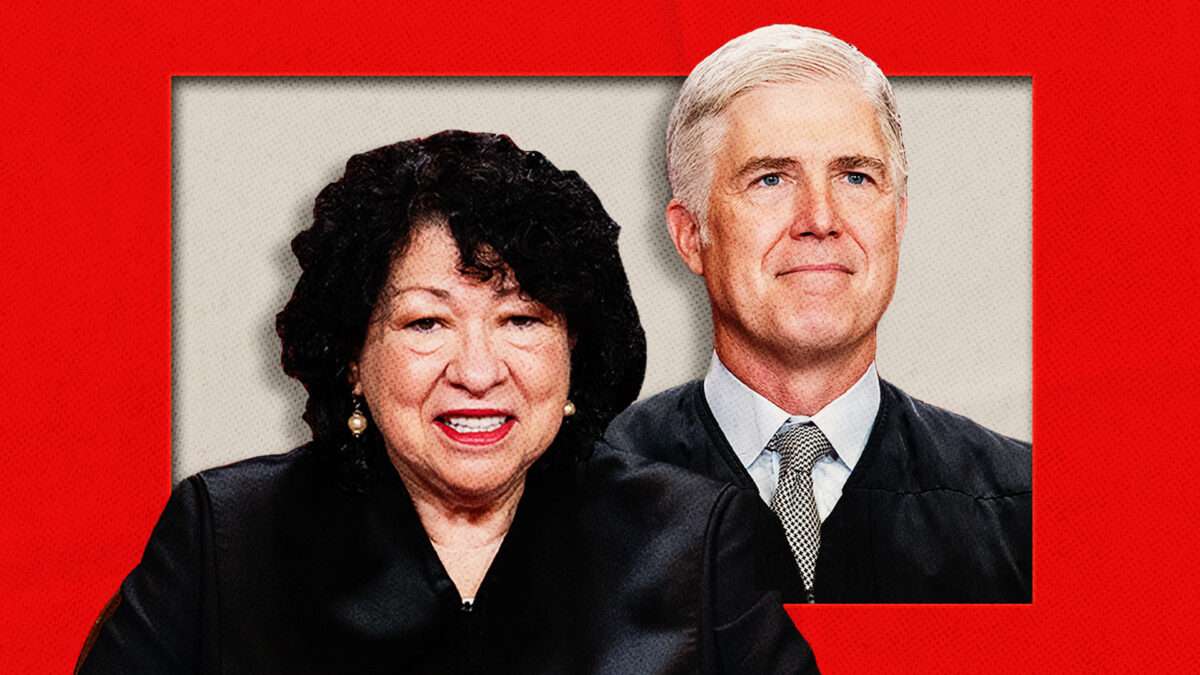
Gorsuch and Sotomayor Unite in Another Civil Liberties Case

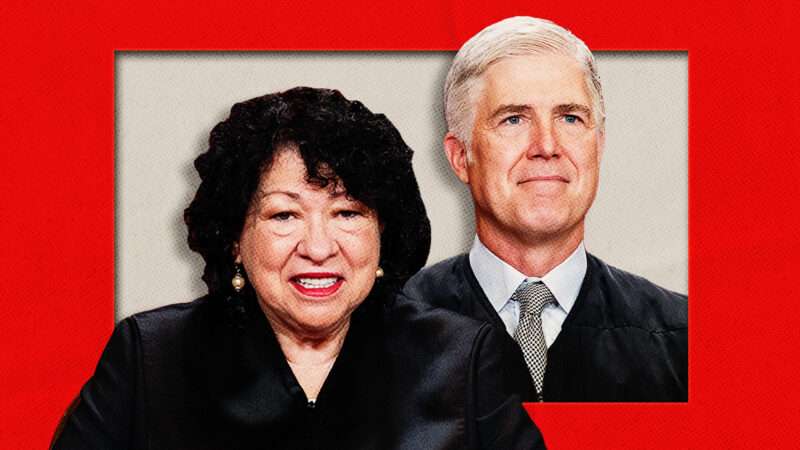
Sonia Sotomayor and Neil Gorsuch | Eric Lee/Pool via CNP/SplashNews/Newscom/Fatima Ruiz.

One of the more interesting developments at the U.S. Supreme Court in recent years has been the rise of a kind of sporadic alliance in defense of civil liberties between Justices Sonia Sotomayor and Neil Gorsuch.

In 2018, for example, Gorsuch, joined by Sotomayor, blasted the Supreme Court for refusing to even hear arguments in Stuart v. Alabama, an important case about forensic evidence, criminal trials, and the Sixth Amendment right to cross-examine one's accusers.

Similarly, in United States v. Davis (2019), Sotomayor joined Gorsuch's majority opinion striking down a federal law that called for enhanced sentencing when a gun was used in connection with certain federal crimes because the law at issue was too imprecisely written to pass constitutional muster. "When Congress passes a vague law," Gorsuch wrote, "the role of courts under our Constitution is not to fashion a new, clearer law to take its place, but to treat the law as a nullity and invite Congress to try again."

Gorsuch and Sotomayor have also been on the same page in a number of Fourth Amendment cases, though Sotomayor's overall Fourth Amendment record is arguably stronger than Gorsuch's. In Torres v. Madrid (2021), for instance, the Supreme Court held that when the police shoot a fleeing suspect, it still counts as a "seizure" for Fourth Amendment purposes even if the suspect kept on the move after being shot. "The application of physical force to the body with the intent to restrain is a seizure," the Court held, "even if the person does not submit and is not subdued." Sotomayor joined that pro-civil liberties decision; Gorsuch, along with Justices Clarence Thomas and Samuel Alito, sided with the officers and voted in dissent.

Fortunately, the Gorsuch-Sotomayor band was back together last week to make some noise in support of the Bill of Rights in a dispute that pitted property rights against police powers. As Reason's Billy Binion reported, the Supreme Court declined to hear a case challenging a lower court's "categorical rule" that "property destroyed in the exercise of [a state's] 'police power' is immune to claims under the Takings Clause, the U.S. Constitution's pledge that government cannot usurp private property without fairly compensating the owner."

Sotomayor, joined by Gorsuch, strongly implied that she thought the lower court's rule was unconstitutional, though she accepted that "further percolation" on the issue was needed before the Court should step in. "Where, as here, a person alleges a 'classic taking in which the government directly appropriates private property for its own use' or to pay an outstanding debt, like a tax lien," Sotomayor wrote, "the talismanic invocation of the State's 'law enforcement authority,' may be insufficient to avoid the requirement of just compensation." (Citations omitted.) Sotomayor then urged the lower courts that are "considering this issue to take care that due deference to state police powers does not eclipse constitutional rights."

Just as Gorsuch's Fourth Amendment record has its blemishes, Sotomayor's record on property rights has also been less than impressive at times. So it is doubly welcome to see these two justices back in the trenches together on this particular civil liberties front.

Elsewhere in the Law

Writing at SCOTUSblog, Anastasia Boden, a senior attorney at the Pacific Legal Foundation, has an interesting article about the Supreme Court's landmark 1926 decision in Euclid v. Ambler, in which, as Boden put it, the Court ruled in favor of a town's "power to pass comprehensive zoning, and against a local developer who had argued the town's plan exceeded the city's police power and destroyed the property's value." In effect, the Court's ruling was "the birth of modern zoning."

One of the things that has long fascinated me about Euclid v. Ambler is the fact that the opinion was authored by Justice George Sutherland, who is probably best remembered today for his role as a leading judicial foe of President Franklin Roosevelt's New Deal. In Euclid v. Ambler, however, Sutherland endorsed a view of regulatory authority that has been celebrated by liberal academics as "a model of pragmatic and well-balanced Progressive jurisprudence."

I suppose we might call it an irony of legal history: The intellectual leader of the Supreme Court's anti–New Deal bloc actually left a greater mark on the law by shoring up the immense power of city planners.

The post Gorsuch and Sotomayor Unite in Another Civil Liberties Case appeared first on Reason Magazine.
  •  

Our Failed Constitution

by Andrew P. Napolitano, Lew Rockwell: “The natural progress of things is for liberty to yield, and government to gain ground.” — Thomas Jefferson (1743-1826) The U.S. Constitution was ratified to create and to restrain the government. It established boundaries beyond which the government may not venture, even when it invokes national security, public order, […]
  •  

A Religious Preschool Is Barred From a State's Universal Preschool Program. SCOTUS Will Decide What's Legal.

Religious school classroom | St Mary Catholic School/Facebook

On November 3, the U.S. Supreme Court will hear oral arguments in a case that asks whether Colorado has unlawfully discriminated against a religious preschool because the school is barred from participating in the state's universal preschool program due to its refusal to accept LGBTQ families. In addition to involving multiple hot-button political and cultural issues, the case also has big implications for the future of federal antidiscrimination law.

St. Mary Catholic Parish v. Roy is not about a state law that directly prohibits a religious preschool from operating. Rather, at issue here is a government requirement that any preschool that wants to participate in the state's universal preschool program, and receive the public benefits that follow, must first satisfy various criteria, including that "each preschool provider provide eligible children an equal opportunity to enroll and receive preschool services regardless of race, ethnicity, religious affiliation, sexual orientation, gender identity, lack of housing, income level, or disability."

According to the Catholic preschools overseen by the Archdiocese of Denver, however, complying with that rule would force the schools to violate their religious beliefs. "It is undisputed that these preschools would otherwise be eligible [universal preschool] providers," the schools told the Supreme Court. "They are excluded solely because of their religious exercise—namely, their religious practices of ensuring that all enrolling families are supportive of the Catholic Church's teachings on sex and marriage and of treating enrolled four-year-olds in accordance with their biological sex."

These schools can point to a pair of recent Supreme Court precedents that will very likely count in their favor. In Espinoza v. Montana Department of Revenue (2020), the Court held that if a state provides educational subsidies that help parents send their children to private schools, the state "cannot disqualify some private schools solely because they are religious." Then, in Carson v. Makin (2022), the Court held that Maine's tuition assistance program violated the Constitution by excluding private schools that offered "sectarian" education. "A State's antiestablishment interest," the decision said, "does not justify enactments that exclude some members of the community from an otherwise generally available public benefit because of their religious exercise."

I would expect the outcome of St. Mary Catholic Parish v. Roy to follow in this same general pattern and hold something to the effect that when a state provides an educational public benefit, it must make some sort of accommodation for the religious views of the recipients.


In Other Legal News

Justice Elena Kagan made news a few months back when she defended her conservative colleagues on the Supreme Court from the oft-heard charge that they are totally in the tank for President Donald Trump. "I don't see this as a court that is just like, 'We're just going to rubber stamp what the current administration does.' You know, quite the opposite," Kagan said. "I think that that is a bad rap." In support of her argument, Kagan pointed to the fact that the Supreme Court had recently ruled against Trump on the two big issues that Trump himself valued the most: tariffs and birthright citizenship.

Kagan was in the news again on Tuesday, this time because she publicly blasted those same conservative colleagues for issuing decisions on voting rights and political gerrymandering that, in Kagan's words, have produced "a democracy that does not work as well as it should." According to Kagan, the Court's conservative majority "has kind of blinded itself to the very deleterious effects of their rulings on how the political system works."

Does this mean that Kagan has now stopped defending the conservative justices from the pro-Trump charge? Not at all. In fact, as The New York Times put it, "she reiterated her defense of the conservative-dominated bench from a July appearance and said it was a 'bum rap' to suggest the court had been too deferential to Mr. Trump."

I don't know about you, but I find Kagan to be a refreshing public figure in these simplistic, partisan times. She is a staunch legal liberal with clearly stated objections to what the Supreme Court's conservative majority is getting up to, yet she refuses to be associated with the laziest progressive attacks on the Court. How many people of comparable public stature these days are willing to call out the shortcomings of their own side?

The post A Religious Preschool Is Barred From a State's Universal Preschool Program. SCOTUS Will Decide What's Legal. appeared first on Reason Magazine.

  •  

Trump Administration Urges SCOTUS To Uphold Federal Ban on Distilling Liquor at Home

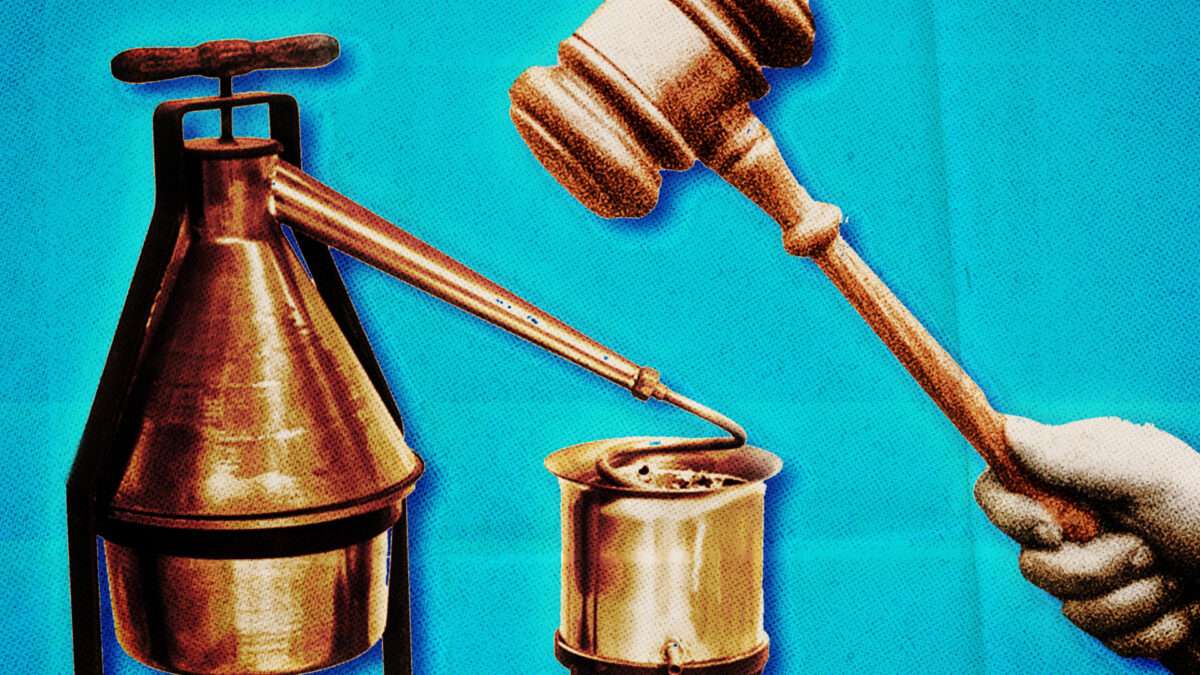
homedistilling | Ioannis Syrigos/Dreamstime/Midjourney

The U.S. Supreme Court's 2026–2027 term just got a whole lot boozier. On Monday, the justices agreed to hear arguments later this year or next in the case of Department of Justice v. McNutt. At issue is whether the 1868 federal ban on distilling liquor at home is unconstitutional because it exceeds the lawful regulatory power of the federal government. If any modern Supreme Court case ever deserved its own drinking game, this one is it.

In April, the U.S. Court of Appeals for the 5th Circuit found the federal ban on home distilling to be unconstitutional because Congress lacked the proper authority to issue such a ban in the first place. It was not a legitimate exercise of the congressional authority "To Lay and collect Taxes," the appellate court reasoned, because "the purpose of a tax is to raise revenue for the government;" yet this law "amount[s] to an anti-revenue provision" that only "prevents distilled spirits from coming into existence." And if it does not exist, of course, the government cannot tax it.

The 5th Circuit also denied that the federal ban on home distilling could be saved by the government's appeal to the Necessary and Proper Clause, which says that Congress has the authority "To make all Laws which shall be necessary and proper for carrying into Execution the foregoing Powers, and all other Powers vested by this Constitution in the Government of the United States, or in any Department or Officer thereof."

But the federal ban on home distilling cannot be "necessary" to the execution of the enumerated taxing power, the 5th Circuit argued, because the provisions of federal law at issue "tax nothing, and are distinct from the regulation of distilling alcoholic products that is permitted by federal tax law."

Nor did the 5th Circuit find the ban to be "proper." "By purporting to ban activity without a plain connection to the exercise of Congress's taxation power," it held, "Congress has essentially—and 'improperly'—invaded the reserved police and regulatory power of the states."

The Trump administration lost this case at the 5th Circuit and has now successfully urged the justices to hear its appeal. In its petition seeking review, the Trump administration faulted the 5th Circuit for its overeagerness to "second-guess" the "legislative judgment" of Congress. Instead, the Trump administration argued, the federal judiciary owes a great deal more deference to the federal government's regulatory priorities in a case like this. "A law is necessary and proper if it is 'convenient' or 'useful' for carrying an enumerated power into effect, and 'plainly adapted' to that legitimate end," the Justice Department's brief argued. "That is the case here."

This case may lead to an interesting divide among the Supreme Court's more conservative members. In United States v. Comstock (2010), a 7–2 Supreme Court embraced the Necessary and Proper Clause as sufficient constitutional grounding for the Adam Walsh Child Protection and Safety Act, which had empowered federal officials to order the indefinite civil commitment of "sexually dangerous" individuals who had already finished serving their prison sentences. Chief Justice John Roberts joined the majority opinion in that case, while Justice Samuel Alito voted in concurrence. In other words, they both endorsed a broad view of congressional power under the Necessary and Proper Clause. By contrast, Justice Clarence Thomas, joined by the late Justice Antonin Scalia, voted in dissent. The Comstock ruling, Thomas protested, "comes perilously close to transforming the Necessary and Proper Clause into a basis for the federal police power that 'we always have rejected.'"

Are we about to see a similar Alito-Thomas split over the proper reach of federal power in this case? And what about Justices Neil Gorsuch, Amy Coney Barrett, and Brett Kavanaugh? Will one or more of them play the Scalia part and similarly reject the Trump administration's broad reading of the Necessary and Proper Clause?

Stay tuned.

The post Trump Administration Urges SCOTUS To Uphold Federal Ban on Distilling Liquor at Home appeared first on Reason Magazine.

  •  

Who is the Guardian of the Constitution?

Dominic Cummings is right, says Professor James Alexander: the idea that civil servants are the 'guardians of the constitution' is pernicious in the extreme. But who then should play such a lofty role?

The post Who is the Guardian of the Constitution? appeared first on The Daily Sceptic.

  •  
❌