Casal, procurado pelas autoridades do Reino Unido, apresentou mais de 300 pedidos fraudulentos, num valor superior a 1,8 milhões de euros. Tribunal ordenou prisão preventiva e extradição.
Republican Iowa congressional candidate Joe Mitchell vowed to investigate former National Institute of Allergy and Infectious Diseases Director Dr. Anthony Fauci if elected to Congress, expressing his desire to serve on an oversight committee while recounting his grandmother's death following a COVID-19 vaccination during a Make Iowa Healthy Again rally Wednesday.
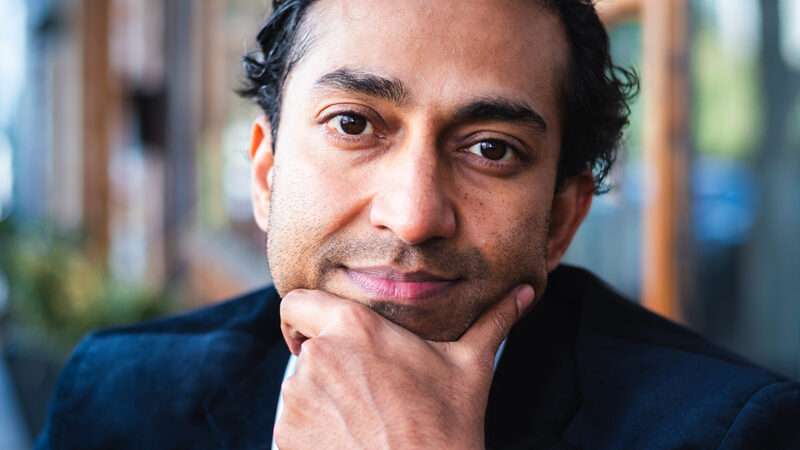
Vinay Prasad has been on both sides of the public health establishment. A physician, author, and professor at the University of California, San Francisco, he went from prominent COVID-era critic to Food and Drug Administration (FDA) insider when he was tapped to lead the agency's Center for Biologics Evaluation and Research in May 2025. His tenure there included an abrupt resignation in July 2025, a return a few weeks later, and his final departure in April 2026.
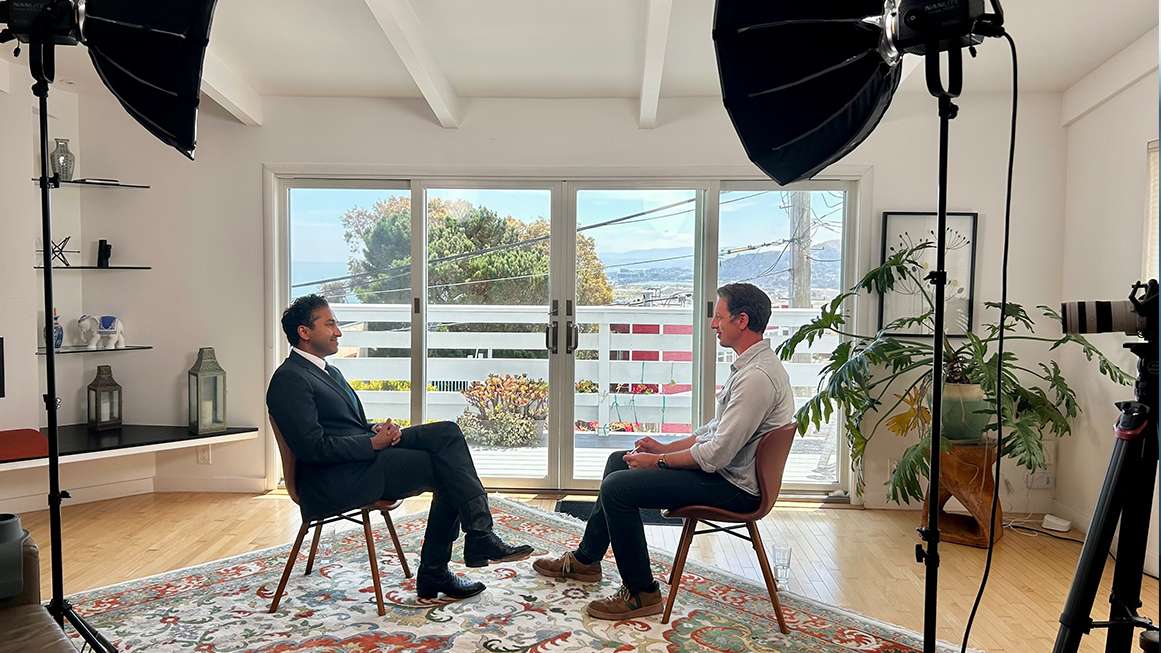
Prasad joined Reason's Zach Weissmueller in August to discuss what he learned from his time inside the FDA, what he was able—and unable—to change, and whether the agency can ever regain public trust. Their conversation ranges from Anthony Fauci and the origins of COVID-19 to vaccine policy, plus regulatory barriers, his growing sympathy for libertarian critiques of the FDA, and whether the agency is ready for an era of AI-driven medicine.
Reason: The FDA saw a clearing out of the old guard and a replacement with a new one—COVID dissidents such as yourself, former FDA Commissioner Marty Makary, and National Institutes of Health Director Jay Bhattacharya. What was that like? Did you have any misgivings about stepping away from academia and your role as an outside critic to join the public health bureaucracy?
Prasad: Maybe we changed 4 percent, 2 percent of the FDA. The FDA is an 18,000-person agency. There's tens of thousands of people still there. Before Marty, the commissioner, and I got there, DOGE [the Department of Government Efficiency] had just struck and they got rid of a couple thousand people. But the system is largely the same as it's always been.
There are critics of the COVID pandemic response and then there are critics. Although Marty, Jay, and I are critics of many aspects of the response, we don't go as far as some of the most extreme critics out there.
Am I glad I did it? Yes, I'm glad I did it. It was an adventure. It was a learning experience. I learned more in one year than I'd learned in the prior decade about how the world works. I'm glad to have improved some aspects of government, which I think will be enduring, and at least tried to improve other aspects of government, which may not be enduring.
Anthony Fauci personified the old guard. He's recently been in the news because he appeared before Congress and pleaded the Fifth after Sen. Rand Paul (R–Ky.) published his diary. What did those diary entries reveal to you about Fauci's character and about the way he operated?
Probably the greatest news story is that the mainstream media refuses to be honest about his legacy. Fauci was in his late 70s when the pandemic began. Had he retired at a ripe old age of 75, he'd be leaving behind a stellar legacy. But he continued. He pushed it. He stayed through the whole pandemic. He was the face of many things that his diaries get into, what he privately thought while he was publicly saying different things.
Fauci has not only been a proponent that the only answer to where the virus came from is a natural spillover event. He's gone further than that. He orchestrated a paper published in Nature Medicine called the "Proximal Origin" paper, written by a bunch of people who bolstered that point of view. He edited that paper before it was published. Then in public, he pretended like he didn't know those people; it was an independent group that validated what he was saying. Whereas in many respects, he puppeted that paper. The people who wrote that paper—Rand Paul has released their Slack channel messages showing they didn't really even believe what they were writing. Their messages reveal considerable ambiguity about lab leak vs. natural spillover event.
Photo: Paul Alexander
In terms of the origin, he also funded EcoHealth Alliance, which had a subcontract to Wuhan. He had a huge role in the origins and trying to frame the narrative, making lab leak—you couldn't even discuss it. Facebook put a ban on even talking about the topic. Then masking 2-year-olds. He played a huge role in that. Lockdowns, school closure. He said he didn't close any schools. In his own diary, he says, "I told [Mayor] Bill de Blasio, you need to close schools in New York City."
At some point, the man's got to take ownership over the decisions he did make and advocated for. When [Gov. Ron] DeSantis in Florida reopened schools in 2020, he went on every television show to say what a bad idea that was. Now, it's very clear—many of us said so at the time—school reopening was always the right decision. Maybe it could have been closed for a week or two, but certainly not beyond that. Fauci kept it closed much longer.
Vaccines make a lot of sense for elderly people who had not yet had COVID. But do they need to be given to a 4-year-old, a 7-year-old, a 12-year-old, a 22-year-old who'd already had COVID? This is where considerable ambiguity exists. But for Fauci, the answer was clear: You need all the shots. You need the initial series. You need a yearly booster. It doesn't matter how young you are or how many times you've had COVID. Fauci was wrong about almost every single pandemic policy he advanced.
Some of his defenders say to me, "At least he didn't tell people to drink bleach." And I said, "Is that the bar for a guy who's a doctor and a scientist?" Drinking bleach is not a good idea, but that's not the bar for a Fauci-level figure. He should be saying things that are correct. If they're not correct, he should be collecting evidence to weigh in. He did none of that.
Fauci's pardon stretches back to 2014, when he was authorizing funding in contravention of U.S. policy on gain-of-function research. Do you think he actually committed a crime?
Yes. The other thing about it is people will say, did that money go directly for this research? The money went for viral genomic research at a Chinese institute, very similar to the sorts of things we would be worried about. That was a crime for which he's been pardoned. It's not just my assessment. That's what Joe Biden's autopen thought, or whoever signed that pardon, that he committed a crime. That's why he has a pardon that goes that far back. It was a crime. Now that he's been pardoned for it, I don't know what you can do about it.
You rode in on this wave of anti-Faucism. What was your biggest hope for what a new version of public health might look like, or for the kinds of changes that could be made?
I had a very narrow mandate because I was just in charge of biologics at the FDA. The hope continues, which is that public health could aspire to be honest, to use its powers proportionately and judiciously, to exercise humility. Public health is far from these things. Public health could actually aspire to be bipartisan. Public health is not. It's becoming an increasingly entrenched left-wing discipline run by left-wing ideologues, reaching even more and more absurd conclusions. What public health can be and what it is are still light-years apart.
You don't think that has changed very much?
Not much at all. Changing an entrenched organization with tens of thousands of people is very difficult. There have been some changes. The pandemic has been a catalyst. But I don't think a real reform is possible. I suspect it'll splinter into different public health groups.
Your role was at the part of the FDA that oversees biologics, such as vaccines and gene therapies. Vaccines became an increasingly polarized and politicized issue during COVID. What was your goal specifically pertaining to vaccines when you took over after the pandemic?
The right drug given to the right person at the right time is lifesaving, but the wrong drug given to the wrong person at the wrong time can be harmful. Vaccines are the same way. You can't say anything about all vaccines, just like you can't say anything about Tylenol, aspirin, and Plavix all in the same breath. They're all very different drugs.
Is this the same phenomenon we observed during COVID, where you're either for the vaccine or you're against it, for a medicine or against it, without breaking things down by age, health, or other individual factors? Everything has to be flattened or compressed.
Same phenomenon. One-size-fits-all public health—where the shoe doesn't fit the guy with the big foot or the person with the small foot—is a completely wrong view of public health. COVID is a great example. An 80-year-old who's never had COVID, and we're talking about February of 2021, should they get a vaccine? Absolutely. A 7-year-old who's had COVID and we're talking about 2022? No, a healthy 7-year-old makes no sense. Public health is, in this country, so broken. It cannot appreciate these distinctions.
Something you've been writing about for a long time is poor experimental design in drug trials. Was that something you wanted to change when you came into the FDA? Do you feel like you made any progress toward that goal?
In one year, we did more than what our predecessors have done in a decade. You can look at just the sheer number of announcements and policy changes we made. We're talking a lot about one side of the coin, which is where the companies are not doing the right study to inform the American public. We're not talking about the other side of the coin, where the FDA is asking them to do things that don't make any sense at all, that burden them, that cost money, and that are wasteful. We did a lot of work in that space too. The FDA makes both errors. They also do a lot of things right, but they make both errors and they can get better.
You mentioned there were two sides of this FDA reform. One was raising standards for things like vaccines. The other was acknowledging how expensive and cumbersome it can be to get something approved in the United States. What were the biggest barriers you saw at the FDA on that side of the equation?
So many. During my time at the FDA, I was often sympathetic to the people who work at companies who told me about the hurdles they were forced to jump through. The FDA does two things: We regulate what's approved and can be marketed and sold on the U.S. market, but also what you can study.
Imagine you're a researcher and you want to study something. We're not talking about approving. You want to gather people together who may be interested in trying something new, have an informed consent, get them to volunteer, but they know that we don't know for sure it's going to work. We do so many things in that space, regulating what you can study and how you can study it, that I think are sensible. You don't want to let people sign up for something that's going to blind them or maim them. But some things that aren't sensible, that are overly burdensome, that are quality controls that don't make sense for small companies and super-rare diseases that don't have a huge budget to study these things. The regulation in this early side of research is tremendous in the United States. A lot of it is well-intentioned, but not all of it is fit for purpose.
You said that your time within the FDA made you somewhat more sympathetic to the libertarian critiques of the FDA.
I'm really sympathetic in one way: We tax people a lot of money to pay for healthcare in America—trillions of dollars. We're taking trillions of dollars from people's paychecks, from taxation, and we're taking it for this thing that we think is a benefit to people, which is we're going to offer a service that's maybe a human right, a societal good. Surely, the service we offer, we do have some of that stuff in there. If you have a heart attack, you go to the doctor here with or without insurance, they're going to open up that blockage. That's a great thing. But along with that package deal, we're going to insert a few things that may or may not work, that cost a lot of money. All that's doing is taking lots of money from taxpayers and redistributing it to the shareholders of those companies.
It's a huge financial system with the rare adverse event of helping someone's health. The libertarian comes along and says, "I'd rather not pay the tax—have more skin in the game, decide what's right for me. I'm the best person to decide how to use my own money." I do feel a sympathy to that point of view, because this system has so many places where it can be taken advantage of, where people get something that doesn't help that much, that only may kill without any possibility of benefit. And we take a lot of other people's money to pay for that.
Dario Amodei, the CEO of Anthropic, recently called out the FDA, and I'm wondering what you think of this. He wrote, "Regulatory systems were designed for a slower pace of innovation and we are not prepared for the deluge of new products and advances that AI will bring. AI may also make these downstream technologies safer and more predictable in a way that violates the skeptical assumptions of regulatory agencies like the FDA."
If Amodei is right about the effect AI is going to have on the field, do you think the FDA will be able to adapt?
I see kernels of truth in what he's saying, but maybe I don't go all the way he goes. Where I see the big core truth is the FDA tries to regulate AI itself, medical AI. You wear a watch that's supposed to give you information and the FDA wants to do a lot of that regulation. That's a very tough thing to regulate, because this technology is changing so much faster than our ability to judge it. I do agree with Marty and others who think that that's probably not the best role for regulating all the potential aspects of digital health and health AI. For instance, you can imagine the absurdity where I'm a doctor, I'm seeing a patient later this afternoon, should government regulate the apps I can use to learn about the disease or ask questions? Should it regulate open evidence? I don't think it should.
I spoke to a company called Doctronic that is acting as an AI prescriber in Utah, where AI is being allowed to refill prescriptions. That's another example of where these questions are going to have to be answered: Where does the government step in, and where does it step back?
Government is much more likely to get in the way of these kinds of innovations. It's changing so quickly. It's going to be very difficult for government to regulate that. You talk about drug discovery and drug science and those kinds of aspects of AI. If I was a pharmaceutical firm, I would definitely invest in AI. There's so many things around running clinical trials that we can do better with AI, help us run them cheaper and faster and more efficiently.
But when it comes to molecule discovery and basic science, I'm not as optimistic as Dario for a couple of reasons. One, a lot of the information that is fed into models about cancer biology is basically as close to fraudulent research as you can imagine. We're talking about like the Stanford president whose Western blots look Photoshopped kind of research. You got research that's not reproducible. It's not just my opinion. Many companies have taken samples of the literature and they tried to replicate it in their own labs and they have massive strikeout rates. If you train AI on garbage, what can it learn? It's only trained on inaccurate information. That's a challenge it faces.
The second challenge is AI will be happy to give you hypotheses to study, but you'll still need to run it with a few people to validate those hypotheses. I suspect the limiting reactant is not coming up with ideas; we have more ideas than we can study with people. The limiting reactant is getting the people to consent and manufacturing the products and those kinds of things.
I hope he's right. If he is right, it sounds like a great future. But I'm a little bit skeptical that he's totally right, because I think the biology of it is a lot harder.
Do you think enough has happened for people to start regaining trust in public health?
No way. I wouldn't trust it at all.
What still needs to happen for public health to legitimately earn back the trust of the public?
I don't know if it's even possible. It's so fragmented now. People tell you with a straight face, people I know, "Anthony Fauci, he made no mistakes. Literally, did the best job he could with the information he had." Then I said, let's just focus on one tiny thing. He did say you should take your 24-month-old kid and put a cloth mask on that kid all day in daycare. He said that. You don't think he had any clues at the time that that was a dumb idea? It's so obviously dumb, right? That's their position on every issue.
Public health is so myopic. It doesn't understand that you have to look at the whole issue. Isn't that a perfect analogy for COVID? Don't go outside. Just stay in your house all day. As if human beings don't need contact with other people and see face to face as if that doesn't matter at all.
Public health has not learned its lesson. The problem with public health is that they're completely politically captured now. Public health and the far left wing of the Democratic Party are synonyms. There's no political balance there. A little balance would go a long way. A little bit of open-mindedness would go a long way in public health. A little bit of humility to just admit a few things we got wrong in the pandemic.
The federal public health apparatus is still staffed with Robert F. Kennedy Jr. at the top and Jay Bhattacharya is still head of the National Institutes of Health. Is that not having some sort of trickle-down effect or creating a countercurrent within the system?
I don't know.
Don't get me wrong, I love Jay and I think Jay's heart's in the right place. He's already made some really important changes. I agree a lot with the kernel of Bobby's ideas. I agree with the kernel. I always say the kernel because I can think of a way that makes sense and I can sometimes think of ways it doesn't make sense.
But before I went to government, people told me that there is a fourth branch of government and it's the career state employees. I never believed that to be true, but now I'm certain that it's true. You have a lot of people who are in government. They tend to be in just three or four counties in one area, the blue pocket of America. They have strong views, and they really do a lot of the governance of this country. They make the decisions that regulate all of us in a way that's unaccountable to Congress and unaccountable to the president. I suspect they'll continue to stay. The COVID pandemic revealed to so many people that we made mistakes and that distrust in medicine and public health will just continue to grow and that there will continue to be more of these reckonings in the years to come.
How did working at the FDA affect your own confidence as a consumer in the regulatory system?
It gives me a little bit of pause sometimes. I like to trust but verify. I am cautious always with new therapies and particularly cautious that some safety information is being missed. It also makes me a bit more libertarian. I can imagine a system where we give people in America greater flexibility in what kind of products they can try. Maybe there's some third-party agencies, Consumer Reports–style agencies, that give different levels of quality and seals of approval of different products, and people can choose what they want and also have a little bit more skin in the game and use their own money. The moment you start to use your own money, suddenly tiny changes in surrogate biomarkers and elevated liver enzymes take on greater importance in a way that might not exist if you're using commercial insurance to pay for it.
Is it that you saw something inherent to the process that creates problems, holes, or gaps?
The fundamental idea that there's this one-size-fits-all balance where safety and efficacy is acceptable. What might be acceptable to you and acceptable to me might be different. I might want a little bit more efficacy information, a little bit more safety validation, and you might be willing to try more. The idea that a single monolithic government agency in the suburbs of D.C. can set that bar for every single person in America, that to me is a tougher pill to swallow now.
This interview has been condensed and edited for style and clarity.
Hay portadas sobre temas de los que todos hablan; otras, de asuntos de los que nadie se atreve a discutir. También están aquellas que dan que hablar, las que tratan cuestiones sobre las que jamás pensaste que podrías tener una opinión y las que dan voz a alguien para que cuente lo que nadie ha contado. Las 219 portadas aquí recopiladas contienen todas estas categorías. Desde el primer número, que abordaba el tema del aborto cuando pocos se atrevían a hacerlo, hasta el relato de aquellas horas que Antonio Muñoz Molina compartió con Salman Rushdie, a quien el integrismo quería silenciar para siempre. También están las portadas publicadas en plena pandemia de la covid, que aportaban contenido a la conversación que todos queríamos tener. Y luego está Millás y su biografía de una mosca. Jamás pensamos que su vida nos llegaría a interesar tanto. Así es El País Semanal, la parte del periódico que es revista y la revista que más se asemeja a un periódico.
When Americans vote in the midterm elections next month, it seems likely that Democrats will see decisive victories across the country.
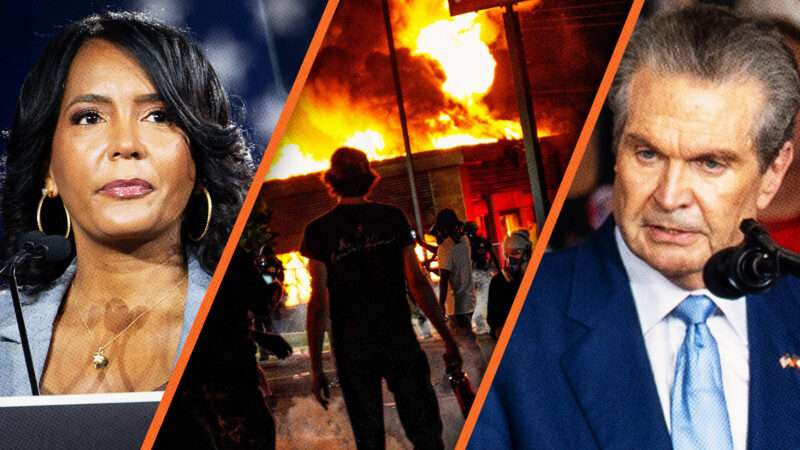
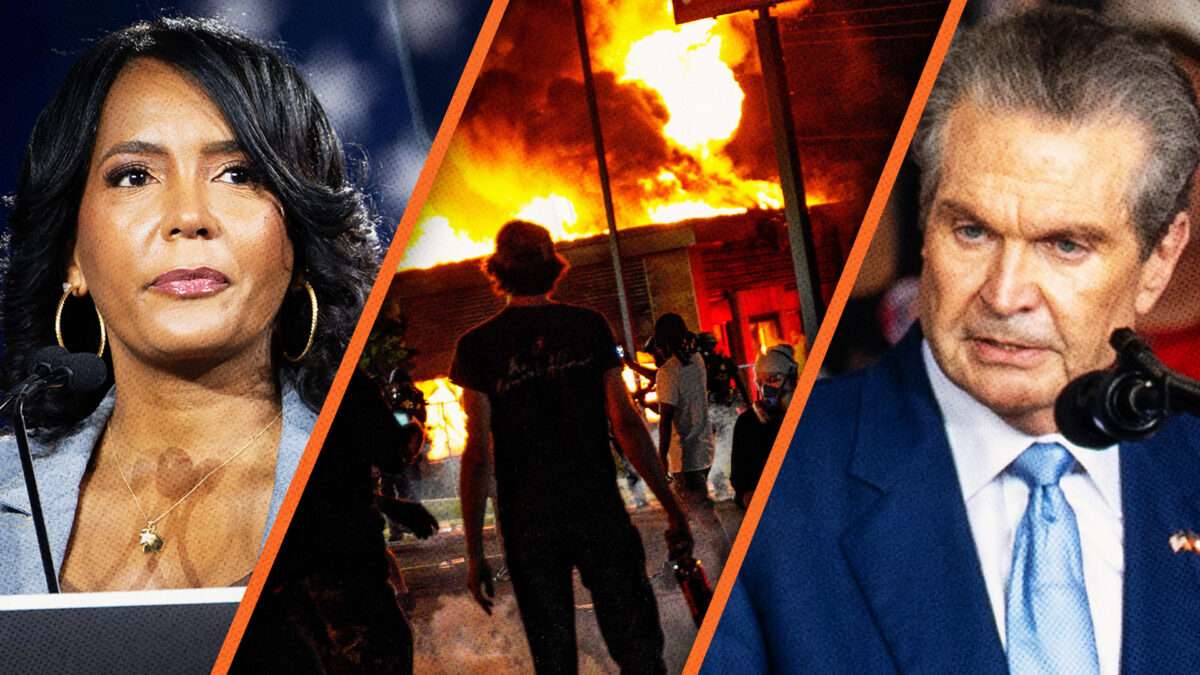
This trend seems likely to affect Georgia's two most high-profile races differently. Sen. Jon Ossoff, a Democrat, is running for reelection against Rep. Mike Collins, a Republican who represents the state's 10th congressional district, while in the race to replace Gov. Brian Kemp, former Atlanta Mayor Keisha Lance Bottoms faces Republican billionaire Rick Jackson.
Ossoff and Bottoms may both be Democrats, but their prospects look very different: A recent poll put Ossoff nearly seven points ahead of Collins, but Bottoms was a point and a half behind Jackson, trailing the senator from her own party by more than five points.
Democrats hope that if Ossoff does well enough, it will boost their other candidates. But it's worth asking why Bottoms, who was feted as a possible vice presidential candidate, is struggling to break even against someone with no prior name recognition, in a year expected to be a boon for her party.
It's possible that the crime and protests of 2020 could be weighing down Bottoms' candidacy in an otherwise auspicious year for Democrats.
Mayor Bottoms and the 'COVID Crime Wave'
Bottoms' single term as mayor of Georgia's capital city would be defined by summer 2020. Amid the COVID-19 pandemic, violent crime rose across the country, but it was worse in Atlanta—homicides were up 59 percent, while most other cities averaged 33 percent. Bottoms herself later called it the "COVID crime wave."
Then on May 25 in Minneapolis, a police officer killed George Floyd, an unarmed black man accused of passing a counterfeit $20 bill. Footage went viral, and protesters across the country took to the streets.
In some places, including Atlanta, protests turned destructive, and the police responded in kind.
Bottoms called for peace. "If you care about this city, then go home," she exhorted rioters in a news conference. "When you burn down this city, you're burning down our community."
She won bipartisan praise. "Your passion, your composure, your balance, has been really incredible," then-presidential candidate Joe Biden told her.
But just days later, Atlanta police officers shot and killed a black man, Rayshard Brooks, in a Wendy's parking lot. Protesters gathered the next day and burned the restaurant to the ground.
Meanwhile, after the district attorney announced charges against the cops involved in Brooks' shooting, more than 170 officers called out sick in protest. Bottoms admitted that officer morale "is down tenfold."
Then on July 4, less than half a mile away from the site of Brooks' death, protesters shot into a car, killing 8-year-old Secoriea Turner.
The crime spike persisted into 2021, and in May of that year, Bottoms announced that she would not run for a second term.
Officially, she said, it was "time to pass the baton on to someone else," though her announcement "came as the city faces a homicide rate topping that of this time last year—a historically deadly one in Atlanta," Henri Hollis wrote at the Atlanta Journal-Constitution.
Indeed, it seems the "COVID crime wave" had caught up with her: A September 2021 poll found that while 57 percent of city residents approved of the job she was doing, 53 percent also felt the city was on the wrong track, including 48 percent of Democrats. The top issue was crime, which 70 percent of respondents felt was headed in the wrong direction.
She later told New York that by stepping down, she was "putting my emotional and mental health first"—a worthy reason, though a bit odd since she now seeks an even higher office.
Then again, she also had higher aspirations. Bottoms was one of the first officeholders to endorse Biden for president in 2020, and she later made his shortlist of potential running mates. After the end of her term, she joined Biden's White House as director of the Office of Public Engagement, after which she moved over to the President's Export Council for the remainder of his term.
Bottoms announced her run for governor just four months after leaving Washington. And while she locked up the Democratic nomination easily, winning 56 percent of the vote among seven candidates, she didn't exactly fire up the base, and it seems like she just expected to coast to victory.
"It feels a lot like she gained the nomination…largely from name identification," progressive journalist Zaid Jilani tells Reason. "She really wasn't raising that much money or spending that much on television….It should be a high-profile race in many ways, but the ideas she's putting forward are fairly rehashed," and "she doesn't have that much creative advertising."
Rick Jackson's Deep Pockets and Shallow Record
Rick Jackson, meanwhile, seemed to come out of nowhere.
President Donald Trump endorsed Lt. Gov. Burt Jones in August 2025, and Jones led the Republican primary field at the end of that year.
While Kemp famously resisted Trump's efforts to subvert Georgia's presidential election results in 2020, Jones was a willing participant in the scheme.
"I've been the Trump guy since 2015, not '16," Jones bragged. "I've taken all the battle scars and everything else. I know who ran and hid during 2020 and everything else."
Then in February 2026, just three months before the primary, Jackson entered the race. He was a septuagenarian with no name recognition, but he was also quite wealthy, so he blanketed the state with ads to introduce himself to voters.
In six weeks, he spent over $30 million—"more than any candidate has ever spent in a primary race for Georgia governor, with more than two months before the May 19 election," wrote Jeff Amy of the Associated Press.
It worked: Jackson beat Jones in a primary runoff with 53 percent of the vote. By then, he had spent $108 million on his campaign while raising less than $400,000 from donors.
Jackson has made much of his background, as a child of poverty who entered the foster system at age 13 to escape a dysfunctional household. As an adult, he started in sales and worked his way up to entrepreneurship, starting Jackson Healthcare in 2000 and growing it to more than $1 billion in annual revenues. He is also a generous donor to charitable causes, particularly those relating to foster care.
But with no political record, Jackson can be hard to pin down on certain issues.
For example, one Jackson ad criticizes Bottoms for the rise of data centers in Atlanta, even though he has also spoken positively of their economic potential.
Georgia Democrats have tarred Jackson as a Trumpian election denier, singling out a comment he made at a campaign event: When asked if the 2020 election was stolen, Jackson replied, "That was totally ridiculous what happened in 2020 and our people really let us down." ("Just as Governor Kemp did, Rick acknowledges both Biden's win and that there were issues in the 2020 election that needed to be resolved in order to ensure Georgians have faith in our electoral system," a campaign spokesperson told CNN.)
During the primaries, he even took heat from both sides on abortion: Jones accused Jackson's company of working with Planned Parenthood, while Jackson himself seemed to suggest he wanted to change the state's abortion ban to remove exceptions for rape or incest. ("Rick believes we have a strong pro-life law in place and he wants to keep it as it is," his campaign said in a statement.)
And while he made Trump-like pledges, like to "make Georgia No. 1 in the nation for criminal deportations" and keep "the religion of woke ideology" out of schools, his platform calls for an "intelligent Medicaid expansion" in the state.
Jackson has also pivoted just over the course of the campaign.
He bragged in his campaign announcement video that he "donated a million bucks to Trump," and he's said that if elected, he would be "just like" Trump but "with a southern tone."
He said Trump had "no bigger supporter" than himself, and he could not name a single Trump policy he disagreed with. When Trump endorsed Jackson at a campaign rally in July, the candidate pointed to the president and said, "I'm going to be this man's favorite governor."
But like many other Republicans, Jackson has distanced himself from the president, whose approval rating is at an all-time low. The Atlanta Journal-Constitution reports that in campaign appearances, Jackson has stopped mentioning Trump directly, preferring to compare himself to Kemp, the sitting governor who remains popular.
He apparently also scrubbed all mentions of the president from his campaign website.
But one thing that has remained consistent in Jackson's campaign strategy is criticizing Bottoms' record as mayor.
Will the 'COVID Crime Wave' Sink Bottoms?
Some of Jackson's campaign ads feature grateful children who grew up in foster care and benefited from his philanthropy, but for the most part, they have targeted Bottoms over her record.
One ad, titled "Disaster," paints Bottoms' tenure as exactly that, with the city becoming practically unlivable during summer 2020.
"Keisha ended cash bail, gutted the corrections budget, let Atlanta burn, and unleashed a crime wave," Jackson wrote on X to accompany another ad. "Then she walked away."
"If Keisha wants to run from her record," according to a campaign email, "we're going to make sure Georgia remembers exactly what that record was."
Many Jackson ads, flyers, and mailers have featured images of Secoriea Turner, the 8-year-old girl killed by gunfire. (Turner's parents have asked Jackson's campaign to stop.)
But is it fair to blame everything on Bottoms? While Atlanta was worse than most, many major cities saw large homicide spikes: Chicago's murder rate climbed more than 50 percent that year, while New York City's went up nearly 40 percent. Murders in Columbus, Ohio, rose a staggering 67 percent.
Regardless, Bottoms was in charge at the time. And the attacks do seem to have an effect, as she's locked in a dead heat against Jackson.
Granted, Bottoms was never a particularly strong candidate. When she ran for mayor in 2017, she won the runoff election by fewer than 800 votes, even with the endorsement of the outgoing mayor.
Georgia also has not elected a Democratic governor in nearly three decades, though it has elected Democrats to the U.S. Senate three times since 2020 and seems poised to reelect one this year.
There's also the fact of Jackson's money, saturating the state with eight-figure ad buys while Democrats were spending only a fraction of that.
Of course, money alone can't buy a victory: Kemp defeated Stacey Abrams in each of the last two races for governor, despite being comfortably outraised and outspent each time.
But Bottoms currently trails Ossoff by five points in an election cycle expected to be quite beneficial to their party.
It seems the race will serve as an indicator of how fresh the summer of COVID-19 still feels for Georgians.
"To the kind of voter that Jackson is courting, it probably is true that had Democrats [instead] nominated the mayor of Macon [a smaller Georgia city], they would be in a stronger position than nominating the mayor of Atlanta, especially one who was in power during those years," Jilani tells Reason. "If he wins, it demonstrates that that is still a fairly potent line of attack."
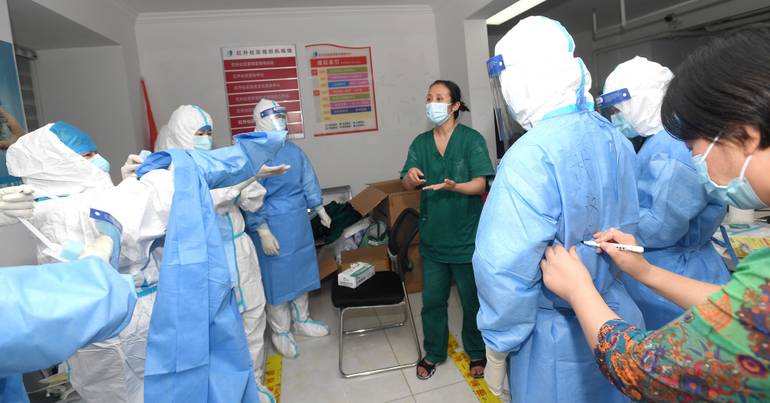
"Heróis de Branco" recria os 76 dias de confinamento de Wuhan, entre janeiro e abril de 2020, é protagonizado pelo ator de Hong Kong Andy Lau e pela atriz chinesa Yang Zishan.
O anúncio da estreia provocou reações divergentes nas redes sociais chinesas, onde alguns internautas manifestaram relutância em reviver as dificuldades daquele período
507.465 pessoas já receberam a vacina contra a gripe desde 30 de setembro. Cobertura nos maiores de 60 anos chega aos 13,8%. Covid-19 fica muito aquém.
A campanha de vacinação sazonal outono–inverno 2026–2027 contra a gripe e a Covid-19 vai decorrer até 31 de março e conta com cerca de 2.550 farmácias aderentes
Fadiga crónica, febres e dores sem diagnóstico durante anos. Estima-se que 100 mil portugueses têm Covid Longa — 17,6% dos casos identificados são crianças e jovens.

 Login