❌

Reading view

Cria do Atlético-MG, Alisson Santana é convocado para a Seleção pela 1ª vez

Alisson Santana, atacante do Shakhtar Donetsk e revelado pelo Atlético-MG, foi convocado por Carlo Ancelotti, nesta quinta-feira (29), para defender a Seleção Brasileira.

O jogador de 21 anos fará parte do grupo que enfrentará Japão e Singapura, em partidas amistosas no mês de novembro.

Vendido pelo Galo ao clube ucraniano em 2025, Alisson soma 50 partidas pelo Shakhtar, com 11 gols marcados e 14 assistências. 

Já na atual temporada, o jovem atacante disputou 12 jogos, balançou as redes três vezes e deu quatro passes para gol. 

Alisson Santana pelo Atlético

Integrado ao time profissional do Atlético em 2023, Alisson disputou 42 jogos com a camisa alvinegra, marcou quatro gols e deu duas assistências. 

Pelo Atlético, o jogador conquistou os Campeonatos Mineiros de 2024 e 2025.

Quem é Baianinho de Mauá, jogador de sinuca preso após acidente em SP


  •  

Why Putin Demands Donbas: The Territorial Ultimatum That Could Shape Ukraine’s Next War

Vladimir Putin’s insistence that Ukraine surrender its remaining positions in Donetsk is not simply a dispute over territory. It is a demand that could dismantle Ukraine’s principal defensive barrier in the east, hand Moscow a military advantage it has struggled to achieve through years of fighting, and establish a precedent for further territorial concessions. The latest diplomatic contacts with European leaders have brought this question back to the centre of negotiations.

There are two ways for Russia to capture the remaining Ukrainian-held cities of Donbas. One is to fight its way through heavily fortified defensive positions, accepting substantial casualties, equipment losses and an uncertain timetable. The other is to secure their evacuation through diplomatic negotiations.

The second would achieve an important Russian military objective without requiring Moscow to bear the full cost of a prolonged offensive.

This distinction helps explain why Vladimir Putin continues to insist that Ukrainian forces withdraw from the remaining government-controlled territory of Donetsk region before a comprehensive settlement can be negotiated.

It also raises a more consequential question: would surrendering Donbas bring the war closer to an end, or would it improve Russia’s position in any subsequent confrontation?

A diplomatic opening without a strategic concession

The issue returned to prominence on 27 October when Finnish President Alexander Stubb and Norwegian Prime Minister Jonas Gahr Støre held a rare telephone conversation with Putin.

According to the Finnish president’s official statement, the call followed discussions in Oslo on 20 October involving Ukrainian President Volodymyr Zelenskyy and US presidential envoy Steve Witkoff.

The Nordic leaders sought to advance preparations for renewed American-mediated negotiations, expected in Abu Dhabi in November. They emphasised that they were acting on behalf of their respective countries rather than representing Europe collectively.

Stubb described the exchange as “frank and substantive”, arguing that direct communication with Moscow was necessary to address the security consequences of the war.

However, the Kremlin’s account offered little indication of movement on the fundamental disagreements.

Moscow insisted that any durable peace must fully accommodate Russian interests. A source close to the Kremlin told Reuters that Putin had reiterated his refusal to compromise on the objective of controlling the entire Donbas.

Following the conversation, Zelenskyy confirmed that the Nordic leaders had briefed him and stressed to Putin the need for concrete measures to reduce attacks on Ukrainian energy infrastructure.

The diplomatic process has therefore resumed without resolving the territorial dispute at its centre.

The military significance of the remaining Donbas

The territory Russia is demanding includes some of Ukraine’s most important surviving defensive positions.

Since fighting began in eastern Ukraine in 2014, Ukrainian forces have constructed and reinforced an extensive defensive system centred on Sloviansk, Kramatorsk, Druzhkivka and Kostiantynivka.

Known as the fortress belt, this network combines urban areas, industrial facilities, transport infrastructure, prepared defensive positions and terrain that complicates offensive operations.

The military importance of this system extends far beyond the administrative boundaries of Donetsk.

According to the Institute for the Study of War, surrendering these positions would allow Russian forces to occupy heavily defended territory without undertaking the prolonged operations otherwise required to capture it.

In its 26 October battlefield assessment, the institute continued to identify the capture of this defensive belt as Russia’s principal military objective in Donetsk. Ukrainian forces retained positions in parts of Kostiantynivka, while Russian operations towards other major cities remained contested.

The implications of a negotiated Ukrainian withdrawal would be substantial.

Russia could occupy the fortified urban corridor, reorganise its forces, establish new logistics routes and potentially redirect formations towards other sectors.

Ukraine, meanwhile, would have to construct or reinforce defensive positions further west, potentially under pressure and in less favourable terrain.

The resulting military imbalance would not necessarily lead to another Russian offensive. But it would change the conditions under which any renewed hostilities might take place.

That is why territory cannot be assessed solely by its surface area. A relatively small section of the front can possess strategic value disproportionate to its size.

Why Moscow prefers a negotiated withdrawal

Russia’s insistence on Donetsk also reflects the limits of what its military has achieved.

Despite years of fighting, Moscow has not secured complete control of the region. Successive offensives have produced territorial gains, but at considerable cost and without the rapid breakthrough originally anticipated.

US Secretary of State Marco Rubio recently acknowledged the central importance of the remaining Ukrainian-held territory.

In an interview published by the US State Department, Rubio characterised the dispute as centred on territory Russia wants but has been unable to capture militarily, while recognising Ukraine’s sovereignty and long-term security concerns.

His remarks demonstrate how Donbas has become the principal territorial obstacle in Washington’s diplomatic calculations.

For Moscow, however, concentrating negotiations on this specific demand offers an additional advantage.

If Ukraine refuses to withdraw, the Kremlin can argue that Kyiv is preventing progress towards peace. If Ukraine agrees, Russia obtains strategically valuable territory without the military costs associated with conquering it.

The demand therefore serves a dual purpose: it establishes a public explanation for the absence of an agreement while offering Russia an immediate military benefit should negotiations succeed on its terms.

The problem with treating Donbas as the final concession

The central weakness in any settlement built around a Ukrainian withdrawal is the assumption that control of Donbas represents the limit of Russia’s territorial ambitions.

Moscow’s previously declared objectives suggest a more complicated picture.

In June 2024, Putin demanded Ukrainian withdrawal from four regions claimed by Russia: Donetsk, Luhansk, Zaporizhzhia and Kherson. Moscow does not fully control these regions, despite claiming to have annexed them in September 2022.

Russia has also demanded restrictions on Ukraine’s military capabilities and future security relationships.

As EU Today previously reported, renewed diplomatic engagement has not produced a clear abandonment of the Kremlin’s wider objectives.

Consequently, transferring the remaining territory of Donetsk would not necessarily satisfy Moscow’s other demands.

There is a significant difference between conceding territory as part of an enforceable settlement and withdrawing from defensive positions as a precondition for negotiating one.

In the first case, territorial arrangements form part of a wider agreement establishing obligations, verification procedures and security guarantees.

In the second, one party makes a potentially irreversible military concession before knowing whether an agreement will ultimately be reached.

This asymmetry is particularly important where the proposed concession directly affects the withdrawing country’s ability to defend itself.

The strategy of incremental gains

One interpretation of Moscow’s approach is that it reflects a strategy of incremental territorial expansion rather than an attempt to achieve all its objectives through a single decisive offensive.

After Russia failed to capture Kyiv in 2022, its military campaign increasingly concentrated on taking territory through successive, often prolonged operations.

The diplomatic equivalent would involve securing one concession, consolidating the resulting advantage and subsequently presenting additional demands.

Under such a scenario, Russia could obtain control of the remaining Donetsk territory, establish new positions closer to Dnipropetrovsk region and later argue that further territorial or security arrangements were necessary to protect its newly acquired frontier.

Moscow has already used the language of protective buffer zones to justify military operations elsewhere in Ukraine.

There is no evidence establishing that such a sequence would inevitably follow a Donbas settlement. Nevertheless, the possibility must be considered when assessing the military consequences of a withdrawal.

The concern is not merely that Russia might violate a future agreement. It is that the agreement itself could alter the strategic balance in ways that make renewed military pressure more effective.

There is also an internal Ukrainian dimension.

An agreement requiring the evacuation of cities defended for years would create substantial political controversy. Disagreements over territorial concessions, security guarantees and the credibility of Western commitments could complicate domestic political stability.

For Moscow, such divisions might provide another means of influencing Ukraine without immediate military escalation.

Donbas and the wider question of Ukrainian sovereignty

Donbas has considerable political significance for Putin beyond its military value.

The conflict in eastern Ukraine began in 2014, following Russia’s annexation of Crimea. Donetsk and Luhansk became central to the Kremlin’s justification for intervention, and their incorporation into Russia was later proclaimed as part of the 2022 annexations.

Control of the entire region would allow Putin to present a tangible achievement after years of warfare.

Yet the Kremlin’s objectives have never been confined exclusively to Donbas.

Putin has repeatedly questioned Ukraine’s historical and political independence, while Russian negotiating demands have extended to the country’s military posture, international alliances and internal political arrangements.

These positions suggest that territorial control forms part of a broader attempt to determine Ukraine’s strategic orientation.

A settlement that ends fighting in Donetsk without resolving these wider disagreements might therefore suspend the conflict rather than settle its underlying causes.

What the next negotiations must establish

The planned talks in Abu Dhabi will test whether Moscow is prepared to distinguish between its territorial demands and the conditions necessary for a sustainable ceasefire.

An immediate halt to hostilities along existing lines would preserve the military status quo while allowing negotiations to proceed.

Russia has resisted this approach, arguing that a temporary ceasefire could enable Ukraine to rebuild its forces without resolving the conflict.

Ukraine, by contrast, argues that withdrawing from fortified territory without credible guarantees would expose it to renewed attack.

Neither side can be expected to disregard the military implications of the proposed arrangements.

For European governments, the principal question is consequently not simply whether Ukrainian and Russian representatives can be brought back to the negotiating table.

It is whether any agreement can prevent the territorial settlement from becoming the starting position for another war.

Stubb and Støre’s conversation with Putin demonstrated that diplomatic communication remains possible. It did not establish that Moscow is prepared to abandon its existing territorial objectives.

The distinction matters.

Putin’s demand for Donbas offers Russia two potential advantages: a justification for continuing the war if Kyiv refuses, and a substantial military gain if Kyiv accepts.

That does not prove the Kremlin has already decided to resume hostilities after a negotiated withdrawal. It does, however, explain why the terms, sequencing and enforceability of any agreement are as consequential as the territory itself.

The essential question facing negotiators is therefore not only whether Russia can obtain Donbas through diplomacy rather than force.

It is whether the price of that concession would be a lasting peace — or a weaker Ukrainian defensive position if peace fails.

  •  

Russian bombs bury songs and the memory of Kyiv when ‘the dance floor was packed’

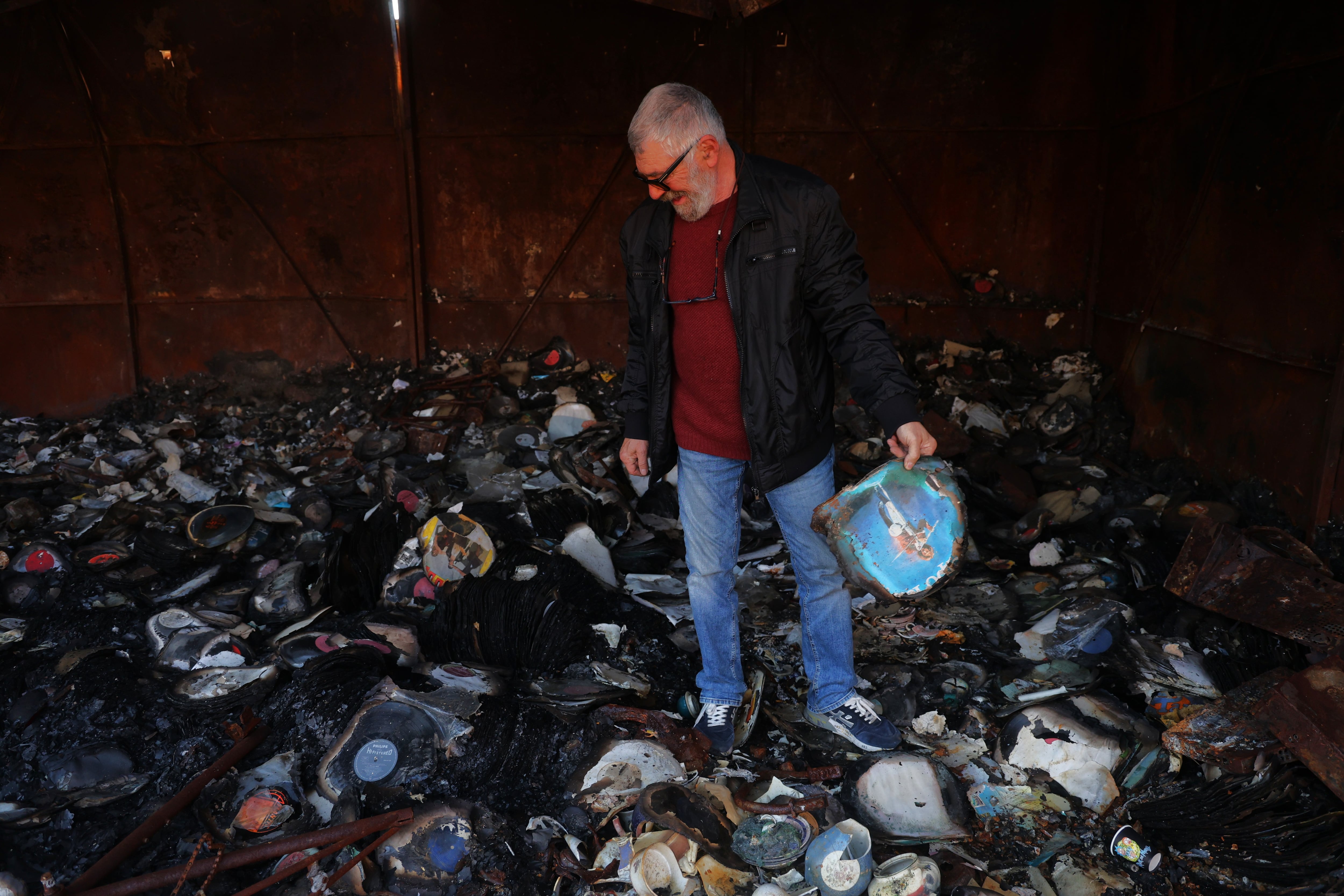
Vadym Glynarskyy, among his 25,000 vinyl records, destroyed in a Russian attack in Kyiv, October 11.

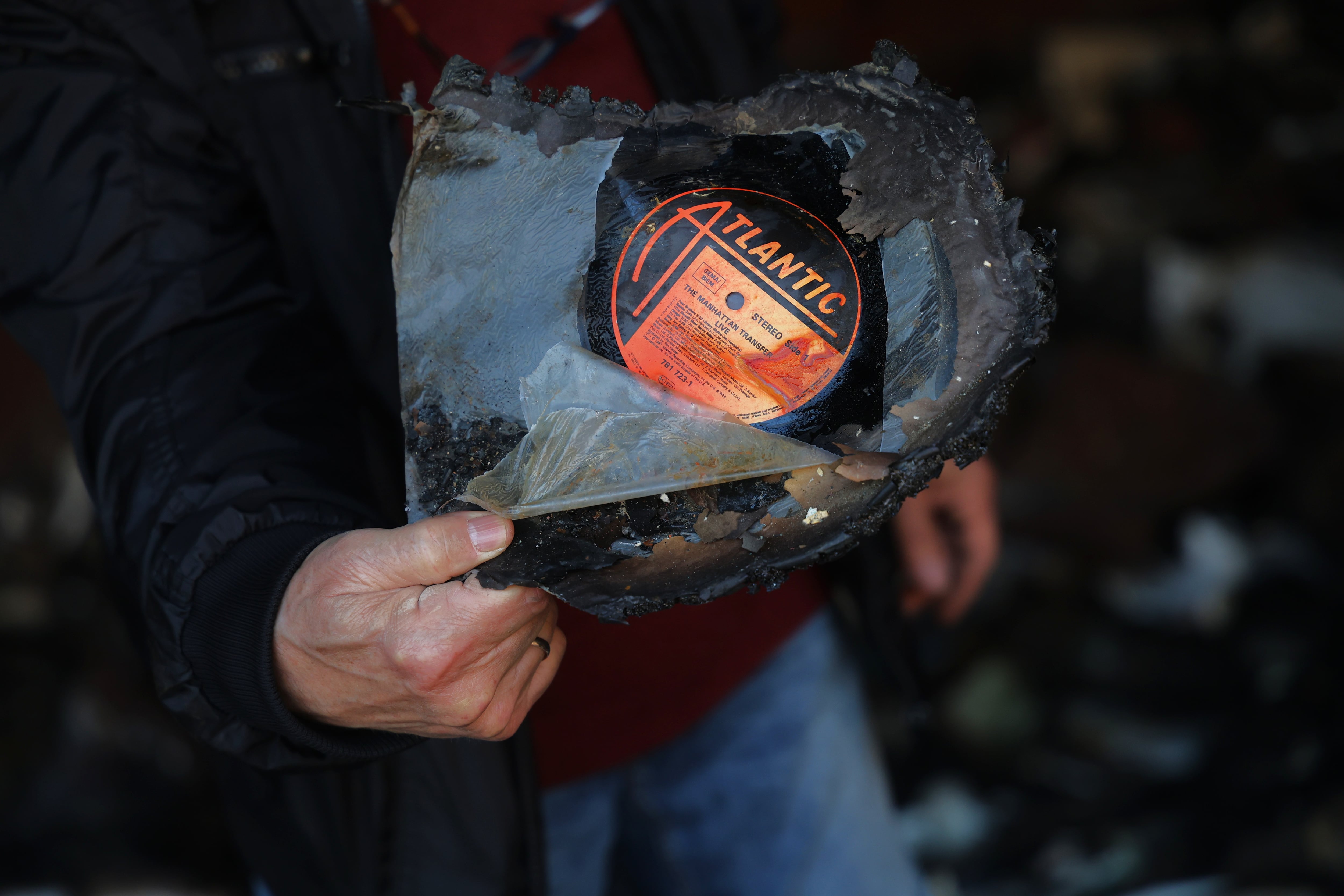
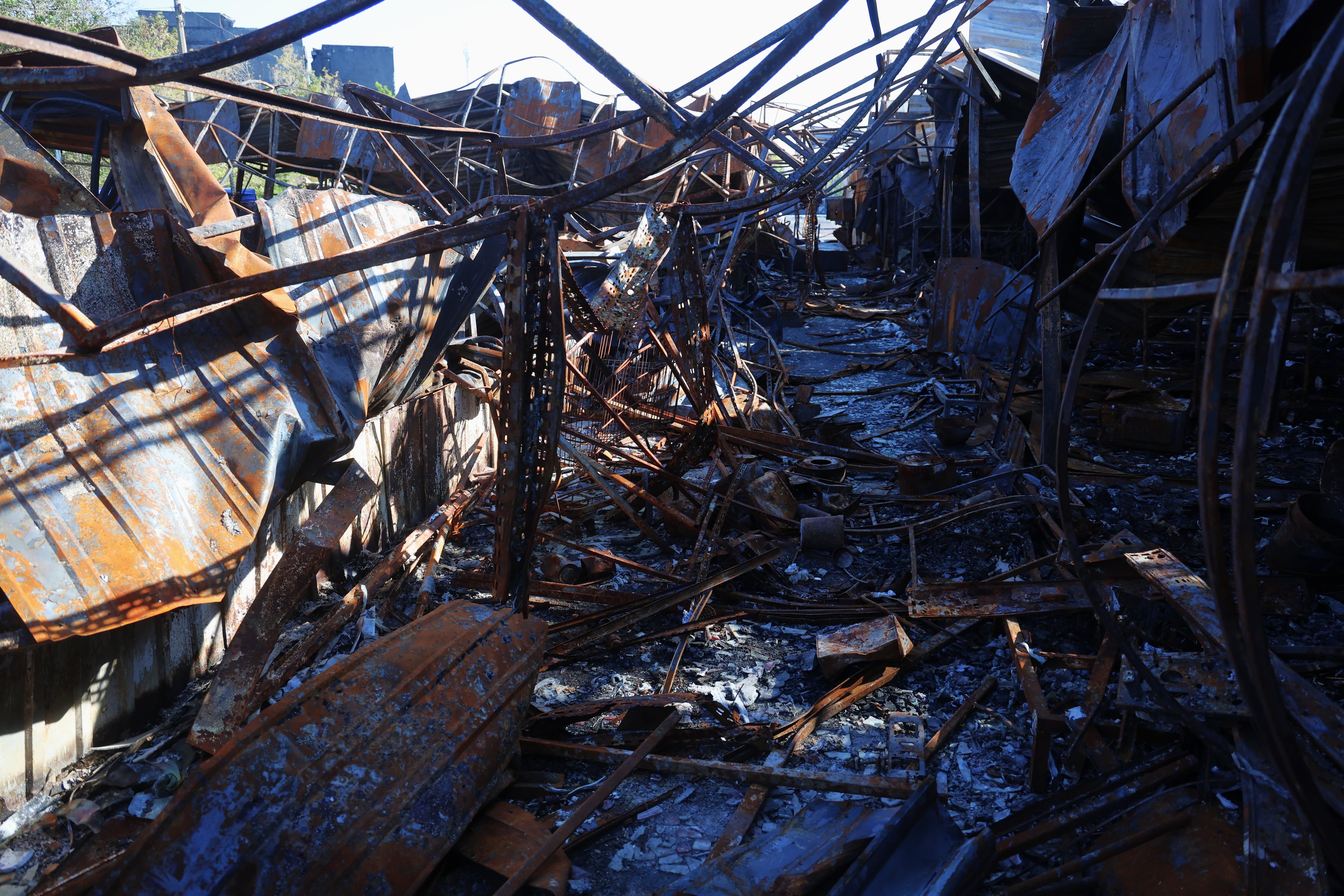
“Look, this one was by Manhattan Transfer.” Vadym Glynarskyy, 73, throws onto the scorched ground the remains of one of the 25,000 vinyl records from his collection that he estimates were ruined in a Russian bombing of the popular Pochaina market in Kyiv. “War is a disaster,” he laments as he surveys the desolate scene of dozens of businesses gutted by fire, including his own. He points out charred metal objects that only he can identify: a speaker, a mixing console, a turntable, an amplifier… even the frame of a bicycle he says was ridden in the 1978 Tour de France and had been given to one of his sons as a gift. In his assessment, the trader adds several thousand CDs and hundreds of cassette tapes that were also lost.

Seguir leyendo

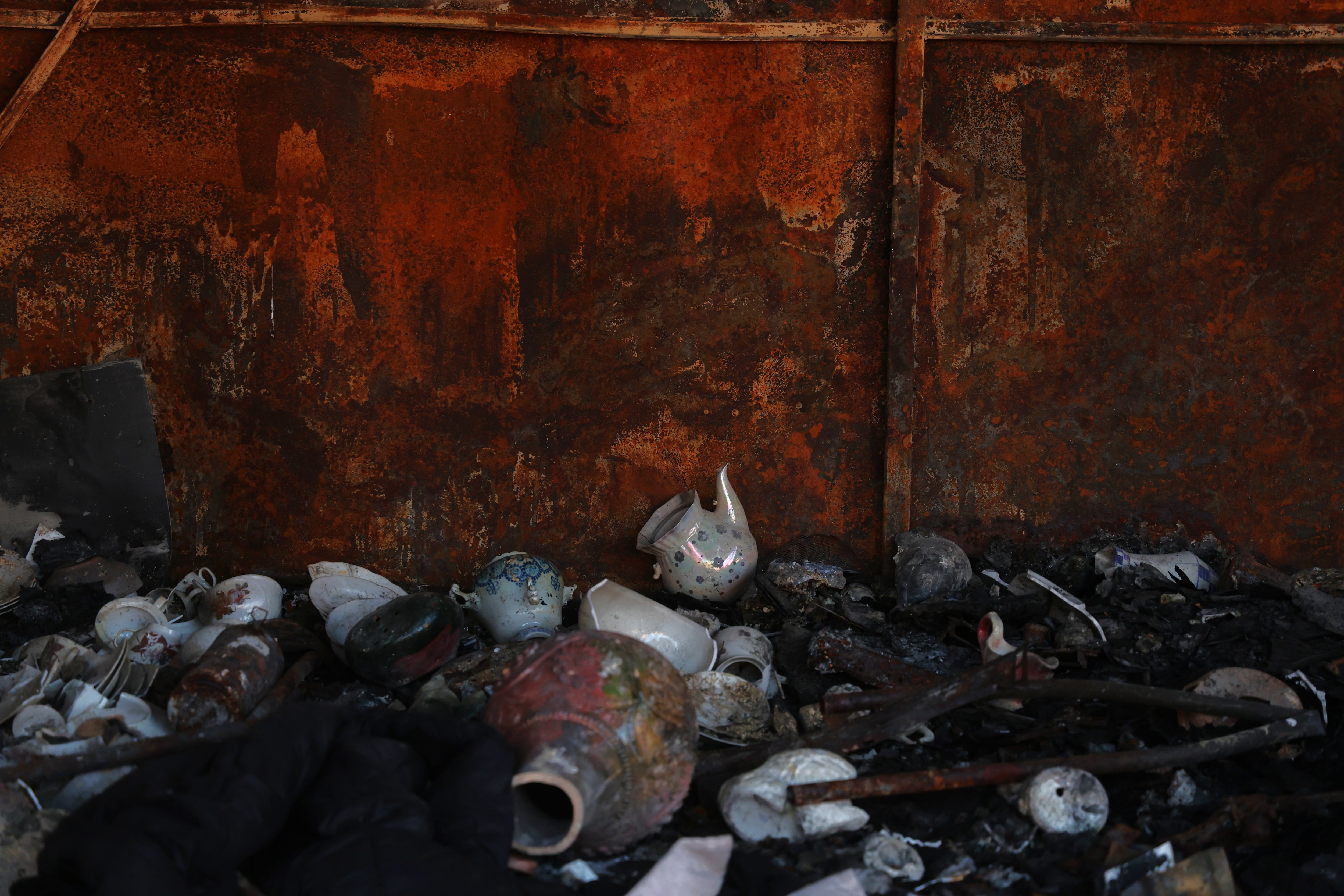
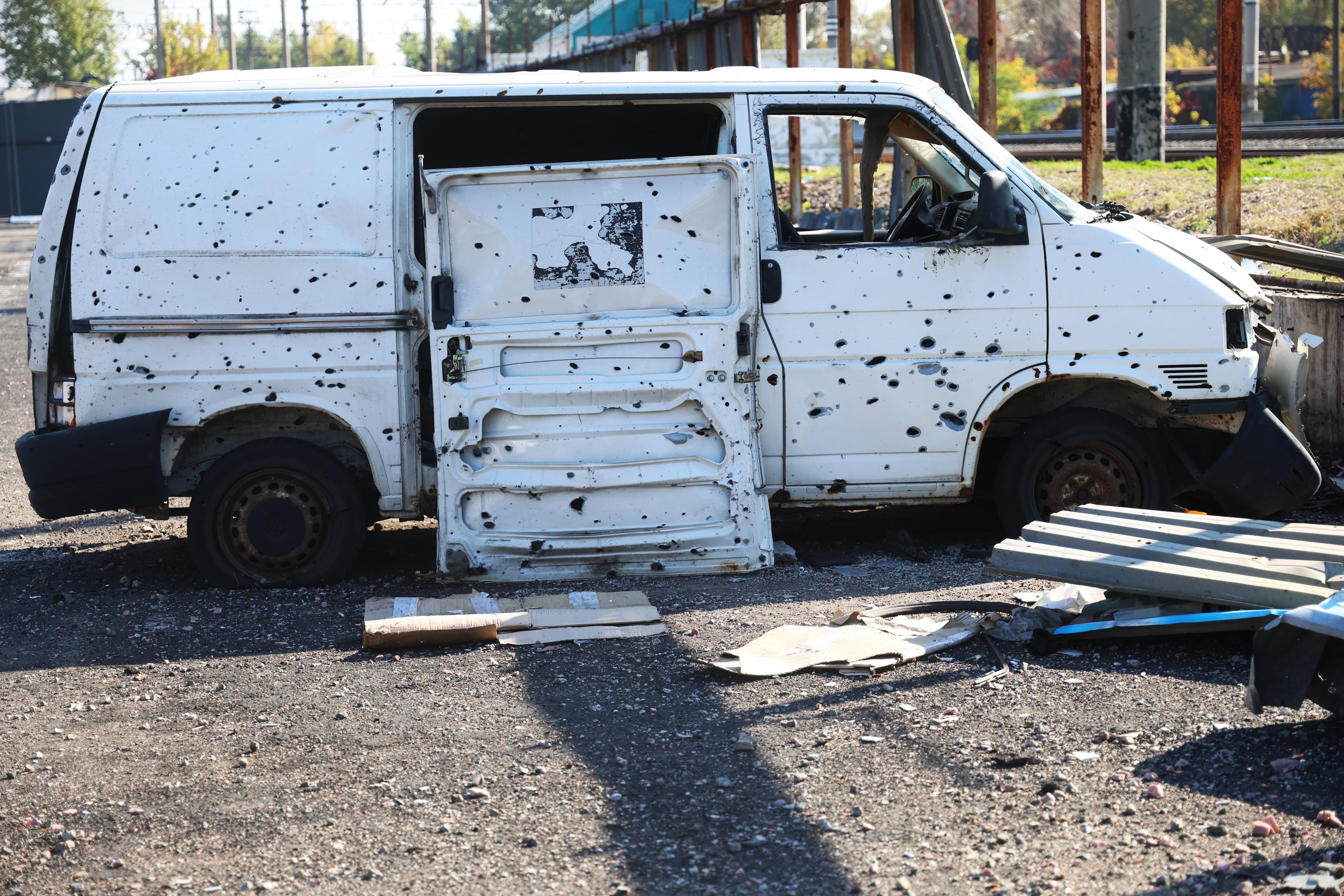
Vadym Glynarskyy with a Manhattan Transfer album he salvaged from the remains of his collection.Remnants of a bicycle that Vadym Glynarskyy claims was used to race in the Tour de France in 1978 and was a gift given to his son.A view of one section of the Pochaina market after a Russian bombing raid.Porcelain shards at a stall in the Pochiana flea market, which was attacked by the Russians three times this summer.A van pockmarked by shrapnel from the shock wave following a missile strike on the Pochaina market in Kyiv.
  •  

Ukraine, at an impasse: Besieged by Putin and abandoned by Trump

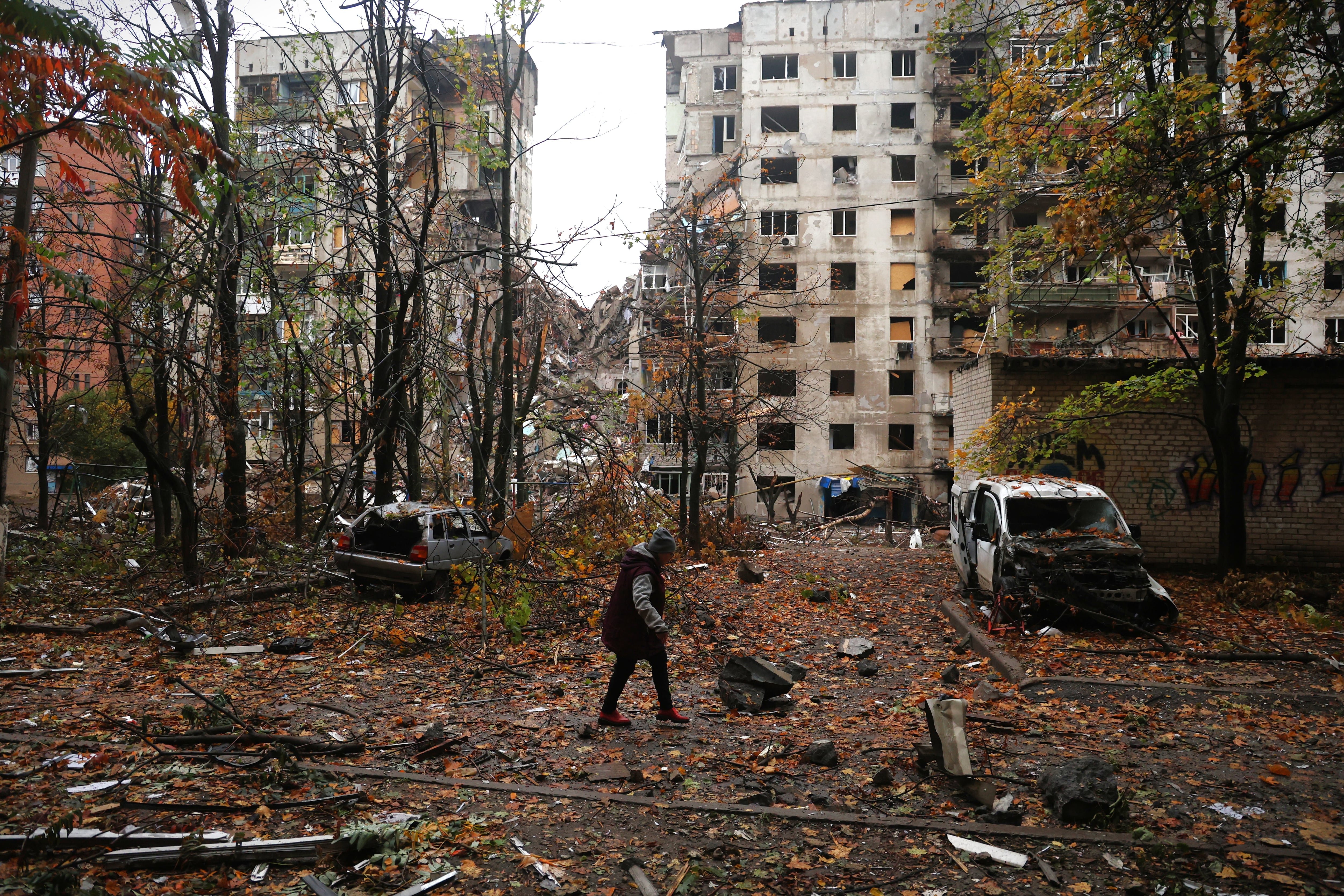
A woman in front of a building split in two by a Russian bombardment in Kramatorsk.

Dawn breaks under rainfall in Kramatorsk, a Ukrainian stronghold under Russian threat on the eastern front. What makes it harder for drones to fly becomes an opportunity for Russian infantry to try to gain ground. These are, in any case, small skirmishes. EL PAÍS reports this from a military command post in Kramatorsk based on images captured by drones on October 15. The front line shows hardly any change and the war is stuck in a complex tangle as the fifth anniversary of the full-scale invasion approaches. Kyiv has also recently suffered serious setbacks: at home, with attacks across around 20 of its regions, and internationally, the blow represented by the United States’ overt alignment with Russia.

Seguir leyendo

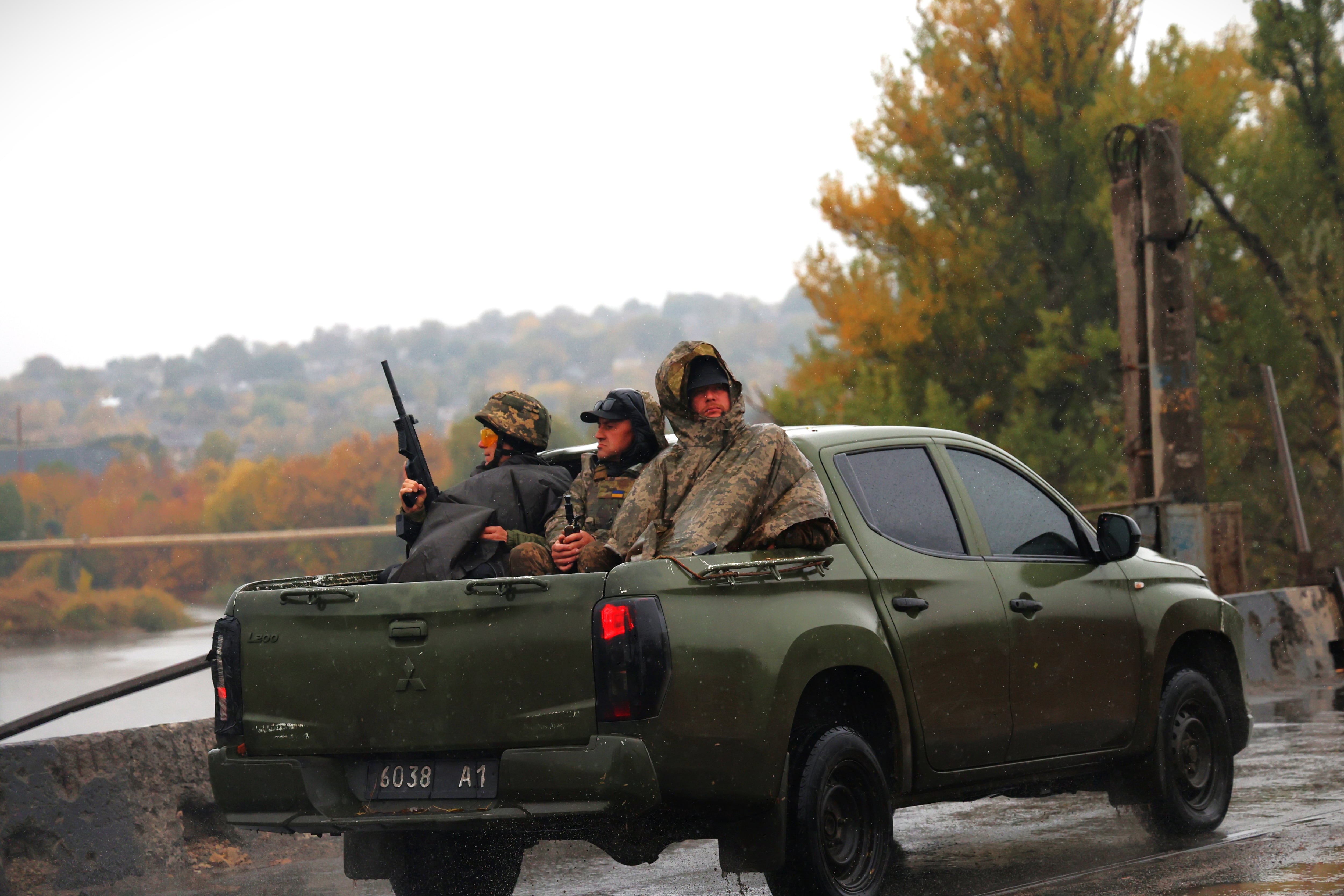
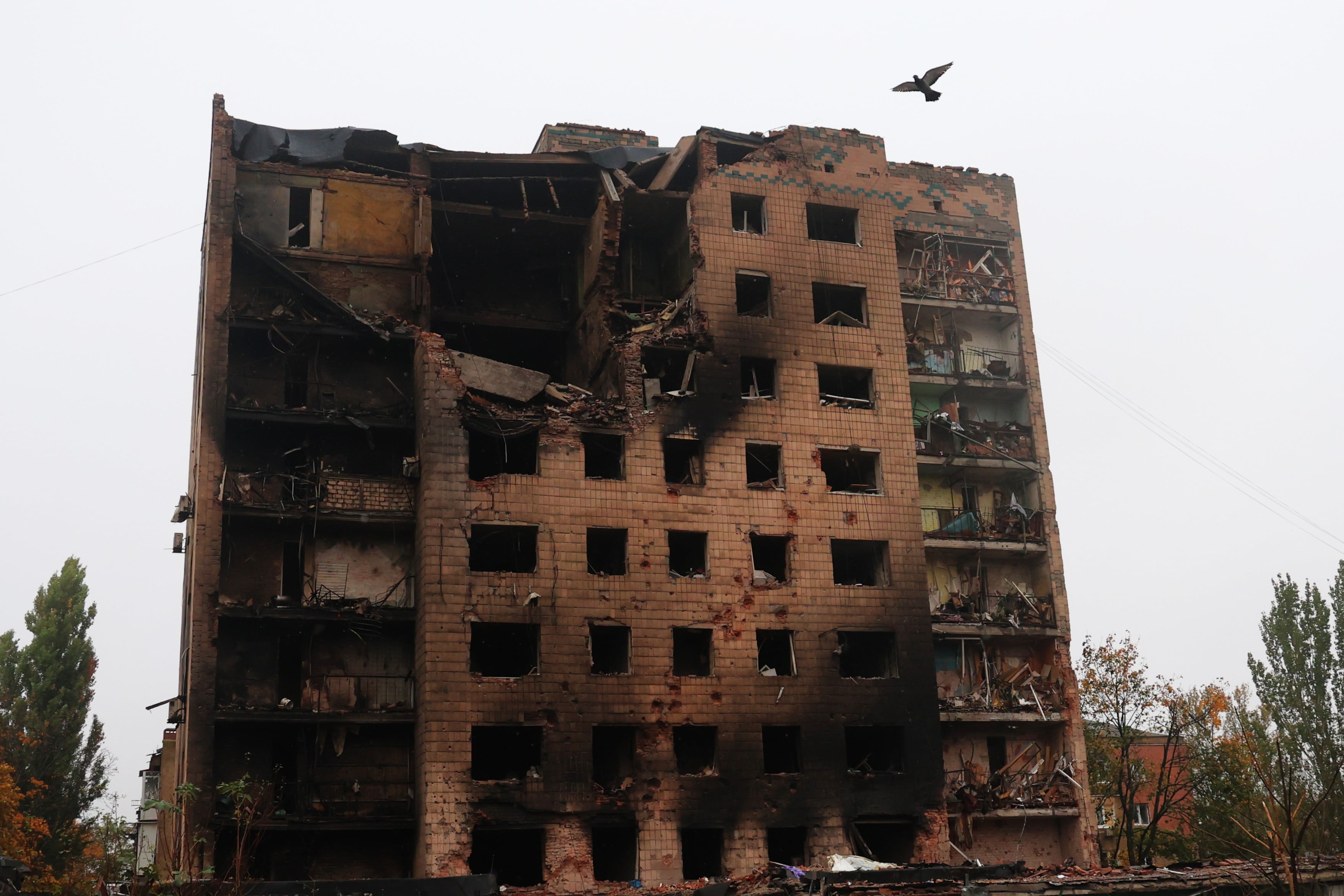
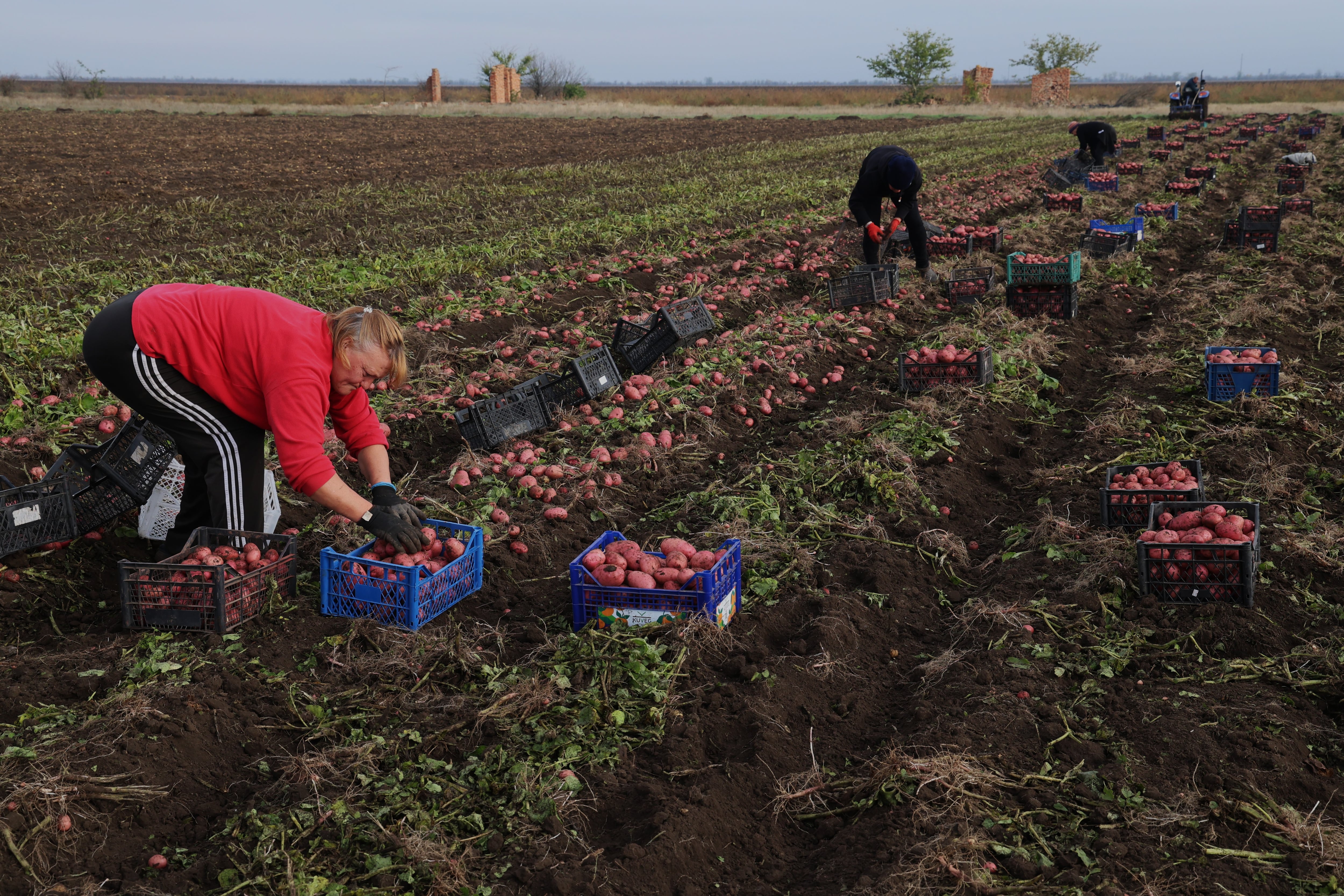
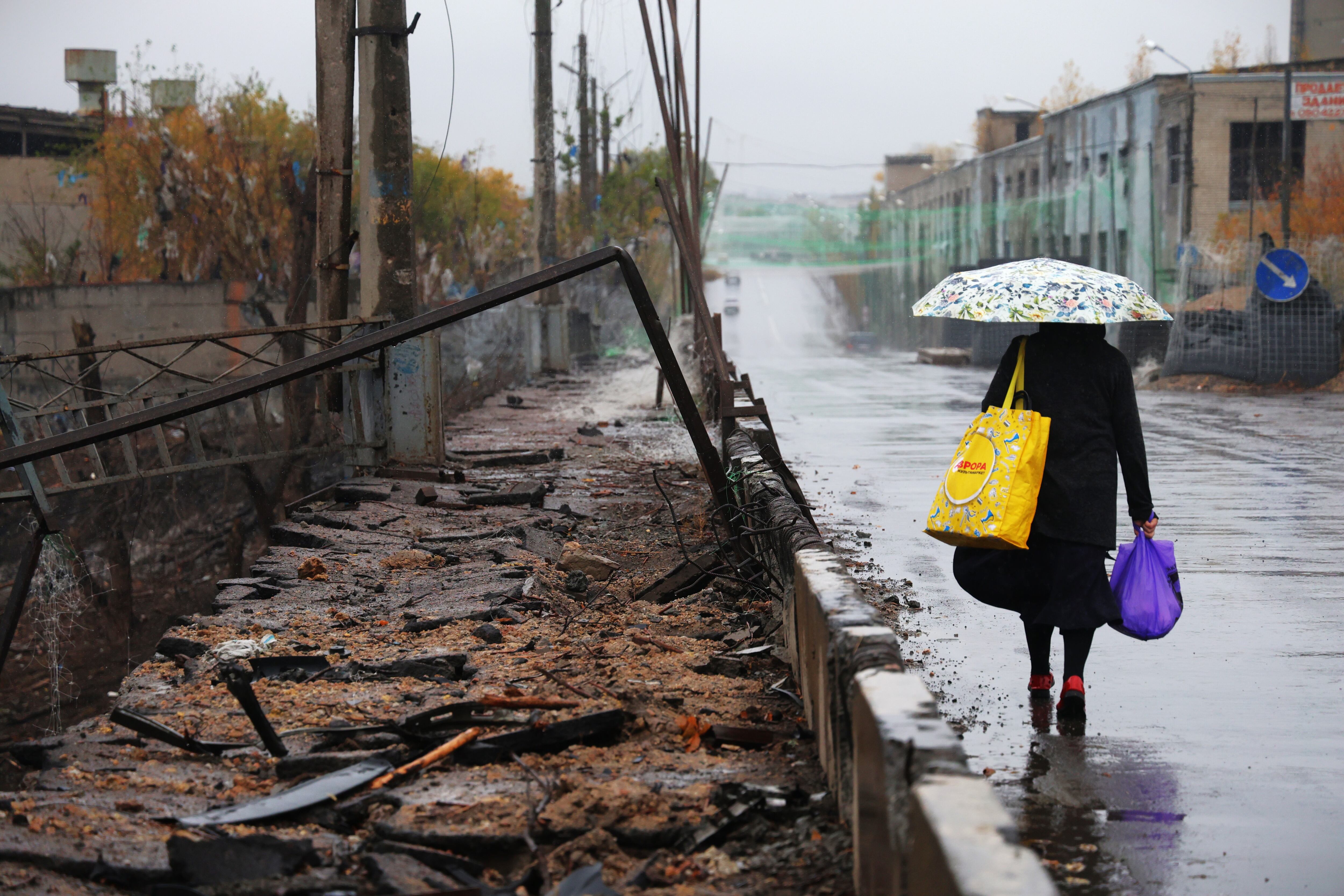
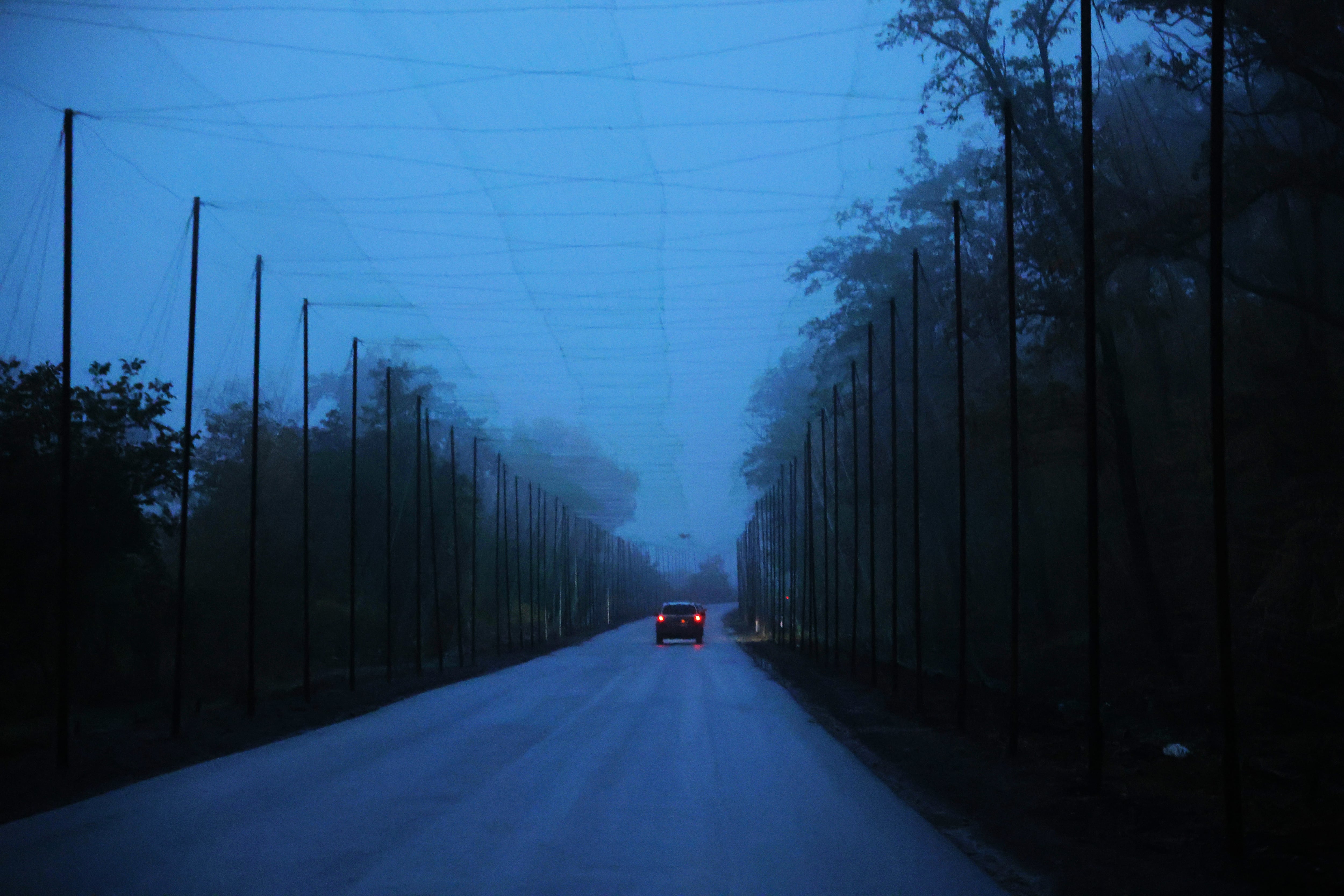
Ukrainian soldiers in Kramatorsk, October 18. A building in Kramatorsk that was hit by a Russian strike last week.A group of women harvesting potatoes in a village in the southern region of Kherson, October 17.A woman on a street in Kramatorsk, a city under constant Russian bombardment.A vehicle on a road with anti-drone protection between the eastern regions of Donetsk and Kharkiv.
  •  

Phones down, water off, a factory roof broken open: Russian-occupied Luhansk counts the damage after another night of drones

phones down water off factory roof broken open russian-occupied luhansk counts damage after another night drones · post fire occupied during drone attack 23 2026 ukraine news ukrainian reports

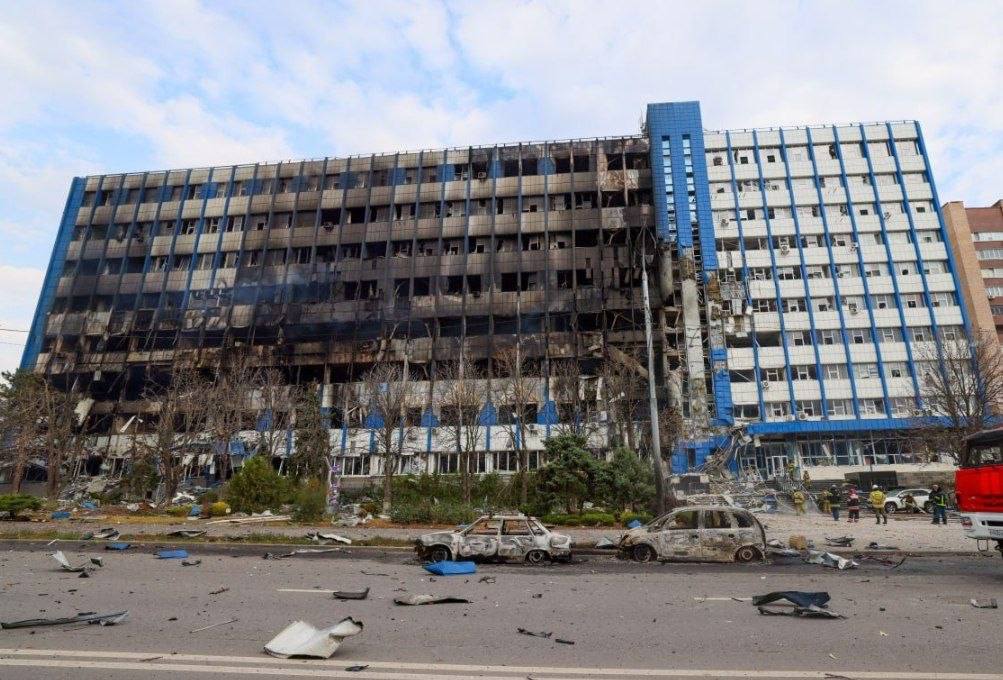
Drone strikes disrupted communications and power in part of Russian-occupied Luhansk overnight on 23 October, Ukrainian monitoring channel Exilenova+ reported. It was the third night in four that drones went after communications in occupied eastern Ukraine. A pro-Russian local channel also showed a damaged factory, and the occupation authorities have stayed silent.

Ukraine's drones have spent months hitting what keeps Russia's occupation running, from fuel depots to supply lines and now communications.

Blasts before dawn, then outages

Explosions hit Luhansk before dawn, and the strikes probably targeted communications facilities, Exilenova+ said. Another Ukrainian monitoring channel, Supernova+, wrote that the city's TV tower came under attack. Exilenova+ posted night footage of the strikes.

The moment of arrival in Luhansk. Following the explosions, we are experiencing disruptions to communications and the electricity supply. pic.twitter.com/rNHXRJcVNt

— Exilenova+ (@Exilenova_plus) October 23, 2026

A drone attack damaged the building of the local telecom company, pro-Russian local channel Ogonyok Luhanska wrote on 23 October. It listed switches and servers among the damaged equipment and said the damage could explain landline outages and possible internet problems. The channel did not say whether the damage came from this attack or the one two nights earlier.

Strikes on local communications facilities in occupied Luhansk. pic.twitter.com/4Jz7aK7tKs

— Exilenova+ (@Exilenova_plus) October 23, 2026

By morning, water stopped flowing in parts of Luhansk and nearby villages, including Metalist and Tsvitni Pisky. A notice posted by local Telegram channel Luhansk Online cited unstable voltage at water facilities. The city's water utility later switched to backup phone numbers after its dispatch lines failed.

Third night in four

Overnight on 20 October, drones struck Ugletelecom, the occupation's telecom operator in Donetsk. A night later, they hit the seized Ukrtelecom building in Luhansk, which houses the occupation's mobile operator Lugacom. That strike disrupted the internet so badly that service centers across occupied Luhansk Oblast stopped accepting documents.

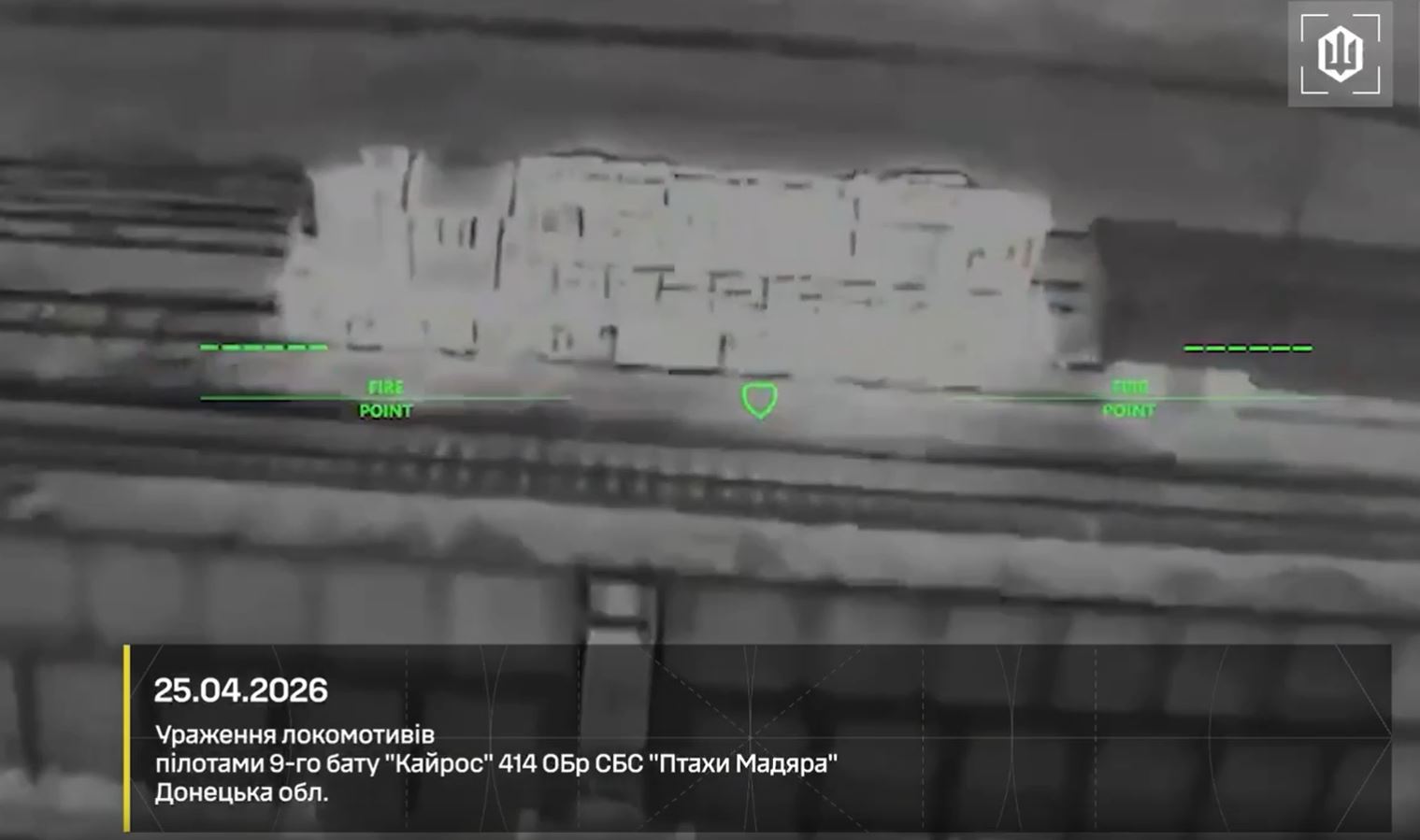
ukraine drone forces scale up operational depth locomotives comms towers depots hit occupied regions three days · post russian locomotive crosshairs ukrainian fp-2 donetsk oblast 25 2026 video robert madyar
Explore further

Ukraine drone forces expand kill zone into occupied regions, commander says: Russia’s trains, comms towers, and depots struck

Silence from the occupation

The occupation authorities have not commented. Leonid Pasechnik, the Russian-installed head of occupied Luhansk Oblast, posted nothing about the attack. On 21 October, he claimed Kyiv was carrying out "terrorist strikes" on civilians. Russia's Defense Ministry claimed it downed 443 drones overnight over Russian regions, Crimea, and two seas, without mentioning Luhansk. The same night, Russia launched 176 drones at Ukraine, some from occupied Donetsk and from Hvardiiske in occupied Crimea, Krym.Realii reported, citing Ukraine's Air Force.

Ukraine's General Staff has not reported on the attack yet. After the previous strike on Luhansk, it said Ukrainian forces hit command posts of Russian units in the Luhansk area.

A pipeline-valve plant hit, too

Ogonyok Luhanska also posted daylight photos of the Marshal plant after what it called a "night arrival." They show a damaged workshop roof, and the channel wrote it had information that the drone hit inside the plant. The Luhansk Pipeline Valve Plant Marshal, registered in Ukraine in 1994, makes taps and valves at 13 Montazhna Street, according to Ukrainian state registry data published by VB.ua.

The Marshal pipeline-valve plant in occupied Luhansk with a damaged workshop roof, 23 October 2026
The Marshal pipeline-valve plant in occupied Luhansk with a damaged workshop roof, 23 October 2026. Photo: Ogonyok Luhanska/Telegram

Earlier that morning, Luhansk Online reported restricted traffic on Montazhna Street between Brestska and Sukhodilska streets.

Ukraine has hit industrial sites in occupied Luhansk Oblast before. For example, in March, drones struck a plant in Alchevsk that made artillery shell casings.

  •  

Two nights, two occupied capitals, two telecom operators running on seized Ukrainian assets: drones go after Russia’s communications in Donbas

burned-out telecom center occupied luhansk dark donetsk ukraine’s drones work through night · post ukrtelecom building after drone strike 21 2026 ukraine news ukrainian reports

Drones struck the seized Ukrtelecom building in occupied Luhansk overnight on 21 October, hitting the mobile operator Russia’s occupation authorities run there under the name “Lugacom,” Russian Telegram channel Astra and Ukrainian monitoring channels reported. The strike came a night after drones hit “Ugletelecom,” the occupation’s telecom operator in Donetsk, which reportedly runs on equipment seized from Ukrainian companies. Footage posted by Ukrainian monitors shows heavy fire damage inside the Luhansk building. Ukraine has not officially commented.

Ukraine has spent months hitting the supply lines, depots, and infrastructure that sustain Russia’s occupation of southern and eastern Ukraine, with mid-range drones striking trucks, trains, and communications towers well behind the front. This spring the commander of Ukraine’s Unmanned Systems Forces, Robert “Madyar” Brovdi, promised Russian troops in occupied territory a “stone age.” This time the targets were the networks the occupation runs on.

burned-out telecom center occupied luhansk dark donetsk ukraine’s drones work through night · post ukrtelecom building after drone strike 21 2026 exilenova ukraine news ukrainian reports
The occupied Ukrtelecom building in Luhansk after a drone strike, 21 October 2026. Photo: Exilenova+/Telegram

A burned-out Ukrtelecom building in Luhansk

Residents reported explosions in Luhansk overnight, and the former Ukrtelecom building was attacked by a drone, Astra reported, citing its readers. The occupation runs its mobile operator, “Lugacom,” from the seized building, and built its network on equipment taken from Ukraine’s Kyivstar, according to dev.ua. The building also houses an occupation-run telecom services center. Luhansk is situated in the easternmost Ukrainian region and has been occupied since 2014.

Ukrainian monitoring channel Exilenova+ said Ukraine’s Defense Forces struck the building, which also hosts an information technology and technical support center. A video it posted shows extensive burning inside. Petro Andriushchenko, head of the Center for the Study of Occupation, said the drones hit a data center in the building.

Occupation officials had not commented, according to NV. In September, drones hit a hardware store in Luhansk, sparking a large fire. Earlier this month, fires broke out at a Russian supply base in Khrustalnyi, also in occupied Luhansk Oblast.

The occupied Ukrtelecom building in Luhansk after a drone attack, 21 October 2026.
The occupied Ukrtelecom building in Luhansk after a drone attack, 21 October 2026. Photo: Astra/Telegram

Donetsk’s occupation telecom operator hit the night before

The night before, drones struck “Ugletelecom,” one of the key communications operators in occupied Donetsk Oblast, Exilenova+ reported. It operates from an office building at 60 Postysheva Street, where Ukraine’s state holding company Donbasugleobespechenie was registered before the occupation, according to RBC-Ukraine. Astra found about 27 organizations registered at the address, including internet provider Fticom, and damage on four floors.

Ugletelecom runs on equipment seized from Ukrainian companies, Donetsk-focused outlet Kochegarka reported, citing local sources. The occupation also moved local businesses that had used Ukrtelecom over to it, according to dev.ua. Residents had reported powerful explosions in the city.

The office building on Postysheva Street housing “Ugletelecom,” the occupation’s telecom operator, in occupied Donetsk after a drone strike, 20 October 2026.
The office building on Postysheva Street housing “Ugletelecom,” the occupation’s telecom operator, in occupied Donetsk after a drone strike, 20 October 2026. Photo: Exilenova+/Telegram

Power cuts across the occupied territories

In occupied Donetsk Oblast, drones attacked the 330 kV Pivdenna substation in Chystiakove, and locals reported outages, Telegram channel DroneBomber said, calling the report preliminary. Occupied Donetsk went into a blackout on the evening of 20 October after strikes on its power supply, Andriushchenko said. He also reported air defense activity and hits in the Mariupol area.

In occupied Crimea, residents of Krasnoperekopsk reported explosions and hits near the railway station, then partial power cuts, monitoring channel Crimean Wind said. In occupied Melitopol, drones tried to attack the city’s power facilities at around 03:30 but missed, Russian senator Dmitry Rogozin claimed.

French mapper Clément Molin counted 770 confirmed Ukrainian drone strikes on Russian trucks in the logistics zone 10 km behind the front line in September, up from 630 in August.

  •  

24 ottobre: “Fuori l’Italia dalla guerra” – Comunicato Stampa

Manifestazione nazionale “Fuori l’Italia dalla guerra” – Roma, sabato 24 ottobre 2026
COMUNICATO STAMPA

Il Comitato promotore della manifestazione nazionale “Fuori l’Italia dalla guerra”, in
programma a Roma sabato 24 ottobre, ribadisce con forza il carattere pacifico e
nonviolento dell’iniziativa.
Scendiamo in piazza per chiedere pace, il ripudio della guerra sancito dall’articolo 11 della
Costituzione, la fine del coinvolgimento del nostro Paese nei conflitti armati, la solidarietà
con i popoli che resistono all’imperialismo e al sionismo. Chi aderisce alla manifestazione lo
fa condividendone pienamente lo spirito: volti scoperti, mani libere, parole chiare.
Il Comitato respinge in modo netto ogni tentativo di strumentalizzazione violenta da parte
di elementi estranei alla manifestazione, ai suoi contenuti, alle realtà che l’hanno
promossa ed a quelle che hanno aderito. Chiunque intenda servirsi del corteo per
compiere atti di violenza, danneggiamenti o scontri si pone fuori dalla manifestazione e
contro di essa.
Di questo tutti devono essere consapevoli, dai manifestanti agli organi di informazione.
Nessuno provi a screditare il movimento per la pace e a spostare l’attenzione dalle ragioni
della protesta.
Invitiamo tutti i partecipanti a seguire le indicazioni del servizio d’ordine, a non raccogliere
alcuna provocazione, a isolare immediatamente eventuali comportamenti violenti e a
segnalarli agli organizzatori.
Il 24 ottobre Roma vedrà una piazza ampia, plurale, determinata e pacifica. Perché la pace
si costruisce con la pace.
Il Comitato promotore della manifestazione “Fuori l’Italia dalla guerra”

20 ottobre 2026
www.fuorilitaliadallaguerra.org

L'articolo 24 ottobre: “Fuori l’Italia dalla guerra” – Comunicato Stampa proviene da Casa del Sole TV.

  •  

Russian Strike on Passenger Buses in Kramatorsk Kills 30, Injures 18

At least 30 people have been killed and 18 injured after Russian forces struck two passenger buses in Kramatorsk, eastern Ukraine, on Thursday morning, according to updated figures released by Ukrainian prosecutors. The attack comes amid continuing Russian strikes on Ukrainian cities.

Russian forces attacked Kramatorsk, in Ukraine’s Donetsk region, at approximately 10am local time on 8 October, hitting an area where two scheduled passenger buses were carrying civilians.

The Donetsk Regional Prosecutor’s Office initially reported 12 fatalities and 14 injuries. In a subsequent update, prosecutors raised the death toll to 30 and the number of injured to 18.

The attack was also confirmed by the Kramatorsk City Council and Vadym Filashkin, head of the Donetsk Regional Military Administration.

According to preliminary findings from Ukrainian investigators, Russian forces may have used a UMPB D-30SN guided aerial munition. The precise weapon and circumstances of the attack remain under investigation.

Passenger buses caught in Russian bombardment

The two buses were operating regular passenger services when the strike occurred. Ukrainian authorities said passengers were on board, although detailed information about the victims, including their ages and identities, has not yet been released.

Photographs published by the regional prosecutor’s office show the aftermath of the attack, including severely damaged passenger vehicles. Emergency personnel and law enforcement officers were dispatched to assist the wounded, recover victims and document evidence.

The strike raises questions about the selection of the target and precautions taken to protect civilians. Under international humanitarian law, civilian vehicles and their passengers are protected from deliberate attack unless a vehicle becomes a military objective under the applicable legal rules.

The circumstances of Thursday’s strike, including whether the buses were directly targeted or struck during an attack on another location, have not yet been independently established.

Kramatorsk under increasing pressure

Kramatorsk remains one of Ukraine’s principal administrative and logistical centres in the part of Donetsk region still controlled by Kyiv. The city has faced repeated Russian bombardments as Moscow continues its military campaign to capture the remaining Ukrainian-held territory in Donetsk.

Its transport infrastructure serves residents who have remained despite years of fighting, including those travelling between neighbouring communities and those attempting to leave the region.

Regional officials have repeatedly urged residents to evacuate to safer areas of Ukraine as Russian bombardments continue. However, civilians remain in Kramatorsk and surrounding settlements, where everyday services, including public transport, continue to operate despite the danger.

Guided bombs and civilian protection

Russian forces have used guided aerial bombs against Ukrainian-controlled settlements near the front line. Such weapons can be released from aircraft at distances that reduce Russian pilots’ exposure to Ukrainian air defences.

The UMPB D-30SN, provisionally identified in the Kramatorsk attack, is a guided munition designed to reach targets beyond the immediate position of the launching aircraft. Its suspected use against an area containing occupied passenger buses will form part of the investigation.

Investigators will need to establish the intended target, the weapon used and the information available to those who planned and carried out the strike. These findings are relevant to determining whether the attack violated the laws of war.

Investigators examine civilian deaths

The Donetsk Regional Prosecutor’s Office is collecting evidence concerning the bombardment, including the type of munition used and the circumstances in which the buses were struck.

Establishing whether the vehicles were deliberately targeted, or whether the attack resulted from an indiscriminate or disproportionate strike, will be central to any assessment under international humanitarian law.

The identities of the victims and the full extent of the damage have yet to be established publicly. As of the updated figures issued by Ukrainian prosecutors on 8 October, 30 people were reported killed and 18 injured.

  •  

🔴DRONI SI SCORTE NO | TG 05.08.26

– Kiev sotto le bombe, Europa senza scorte di Jeff Hoffman
– Gas, Ue vieta Belgio compra di Margherita Furlan
– Hormuz chiuso salvadanaio aperto di Jeff Hoffman
– Karbala prega New York tiene la cassa di Margherita Furlan
– Israele compra il racconto, Parscale lo scrive di Jeff Hoffman
– Board of Peace: la resa a Netanyahu di Jeff Hoffman
– Ceuta: scontro Madrid Roma di Jeff Hoffman
– Interfacce neurali, Pechino sorpassa Musk di Margherita Furlan
– Buon giro intorno al Sole

A cura di Margherita Furlan
Con la collaborazione di Jeff Hoffman
Editing di Davide Marletta e di Simone Orletti

🎯 SOSTIENI CASA DEL SOLE TV
Casa del Sole TV è un progetto di giornalismo indipendente autofinanziato, senza editori, senza partiti, senza padrini politici.
Per donazioni:
IBAN: IT63P0326822300052392596590
Intestato a: La Casa del Sole Edizioni
Causale: Donazione Casa del Sole TV
Membership YouTube:
👉 https://www.youtube.com/@CasadelSoleTVChannel
— Analista Multipolare €5/mese
— Inviato della Verità €15/mese
— Architetto del Futuro €25/mese
📖 I LIBRI DI MARGHERITA FURLAN
BRICS Scacco Matto (disponibile in italiano, inglese, russo), La Casa del Sole Edizioni
🌐 SEGUI CASA DEL SOLE TV
YouTube: @CasadelSoleTVChannel

TAG:
CasaDelSoleTV, CasaDelSoleTG, MargheritaFurlan, GiuliettoChiesa, censura, russofobia, Trump, NATO, Crisi, Transizione, Ucraina, Kiev, EuroMaidan, Crimea, Donbass, Donetsk, Syria, Iran, PardonSnowden, Nuova Via Della Seta, Pechino, Putin, Libano, guerra, mondomultipolare, multipolarismo, Mosca, XiJinping, Levante, Medio Oriente, Palestina, Gaza, MiddleEast, BRICS, Hormuz

L'articolo 🔴DRONI SI SCORTE NO | TG 05.08.26 proviene da Casa del Sole TV.

  •  
❌