❌

Reading view

Drone Attack Hits Container Ship Off Bulgaria's Black Sea Coast

Three maritime drones struck a container ship sailing in the Black Sea off the coast of Bulgaria on Wednesday, the country's defense minister said, the latest in a string of such incidents on NATO's eastern flank

The post Drone Attack Hits Container Ship Off Bulgaria’s Black Sea Coast appeared first on Breitbart.

  •  

Baking soda by day, armor chemistry on contract: drones reportedly strike Russia’s Bashkir Soda Company

baking soda day armor chemistry contract drones strike russia’s bashkir company · post smoke over sterlitamak's industrial zone during drone attack 29 2026 exilenova+ (the watermark digitally removed) sterlitamak 2

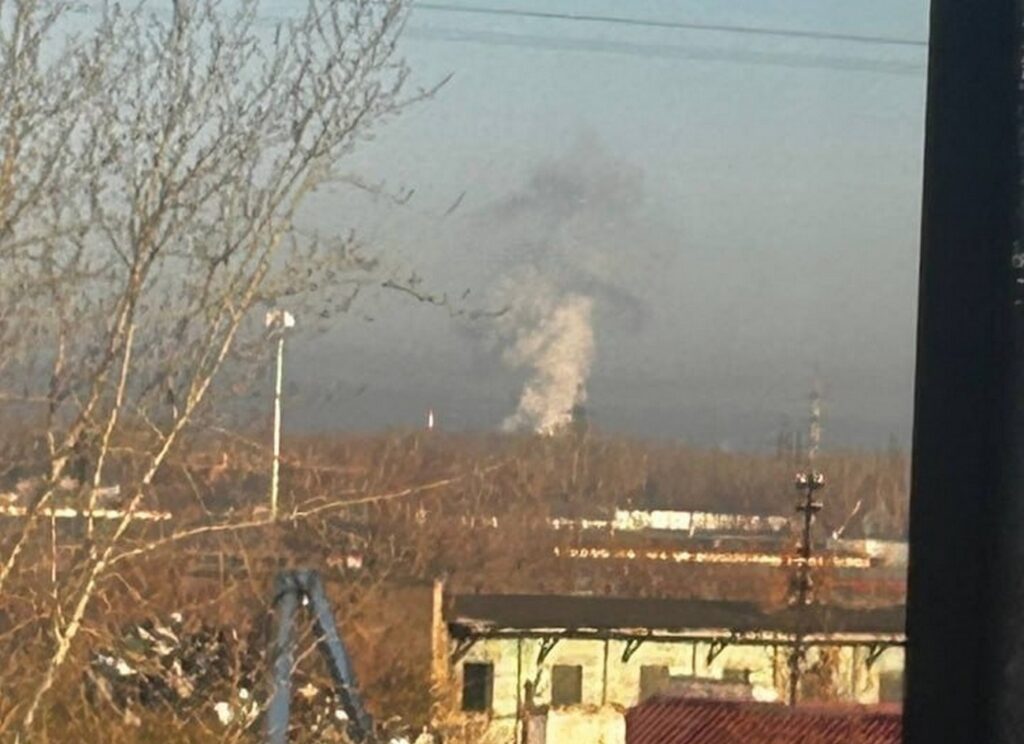
Drones attacked Sterlitamak in Russia’s Bashkortostan on 29 October, and smoke rose over the Bashkir Soda Company, Russian Telegram channel Astra reported, citing its open-source analysis. The city’s mayor admitted debris fell on an unnamed plant.

Ukraine’s long-range drones keep reaching deeper into the industries that feed Russia’s war. In the past five days, a nitric acid maker in Tula Oblast, a rocket-fuel rubber plant in Samara Oblast, and a titanium plant in the Urals came under attack. The Sterlitamak plant lies about 1,310 km from the front line. Drones also attacked it on 27 August, Astra says. Ukraine has not commented.

The plant is Russia’s only maker of a compound for armor fibers

The Bashkir Soda Company is Russia’s largest producer of soda ash and baking soda, and part of the Roskhim chemical holding. It is also Russia’s only maker of terephthaloyl chloride, The Insider reported, citing the company’s website. The website also mentions deliveries to the defense industry.

Smoke rises over Sterlitamak in Russia's Bashkortostan during a drone attack on 29 October 2026
Smoke rises over Sterlitamak in Russia's Bashkortostan during a drone attack on 29 October 2026. Photo: Exilenova+

The compound goes into aramid fibers, Kevlar-type materials used for body armor, helmets, and armor for military vehicles and aircraft, Astra said. Astra also says the company sits on the Russian Industry and Trade Ministry’s closed register of defense enterprises.

The attack began around dawn. Ukrainian Telegram channel Exilenova+ posted footage of a drone over the city. Supernova+, another Ukrainian monitoring channel, posted the plant’s coordinates and photos of smoke. Russia’s aviation agency restricted flights at the airport of Ufa, the region’s capital. Pro-Ukrainian X account Maks 26 shared footage of the attacks on Sterlitamak and Luhansk. It also suggested that Sterlitamak’s Syntez-Kauchuk rubber plant may have been the target, and claimed a fire at the Marinovka air base in Volgograd Oblast.

✈ After the attack by Ukrainian drones, a fire was recorded in the area of ​​the Marinovka military airfield in the Volgograd region.

💥 The Defense Forces also attacked Bashkortostan. Bashkir Soda Company in Sterlitamak or Syntez-Kauchuk JSC could have been hit.

🔥 In… pic.twitter.com/SIJ1vR8395

— MAKS 26 🇺🇦👀 (@Maks_NAFO_FELLA) October 29, 2026

Mayor Emil Shaimardanov claimed air defenses downed all seven drones over the city. An earlier version of his post, quoted by Russian state news agency TASS, said eight.

“Debris fell on the territory of one of the enterprises. Minor damage was caused, the plant is operating normally,” Shaimardanov claimed.

He did not name the plant.

Smoke over the Bashkir Soda Company in Sterlitamak, with the plant marked on a satellite image, 29 October 2026
Smoke over the Bashkir Soda Company in Sterlitamak, with the plant marked on a satellite image, 29 October 2026. Collage: Supernova+

The Insider said NASA’s FIRMS fire map confirmed a fire at the plant. But the map shows only the weak heat source its satellites record there almost every night, the last time hours before the drones came, and nothing new after the attack.

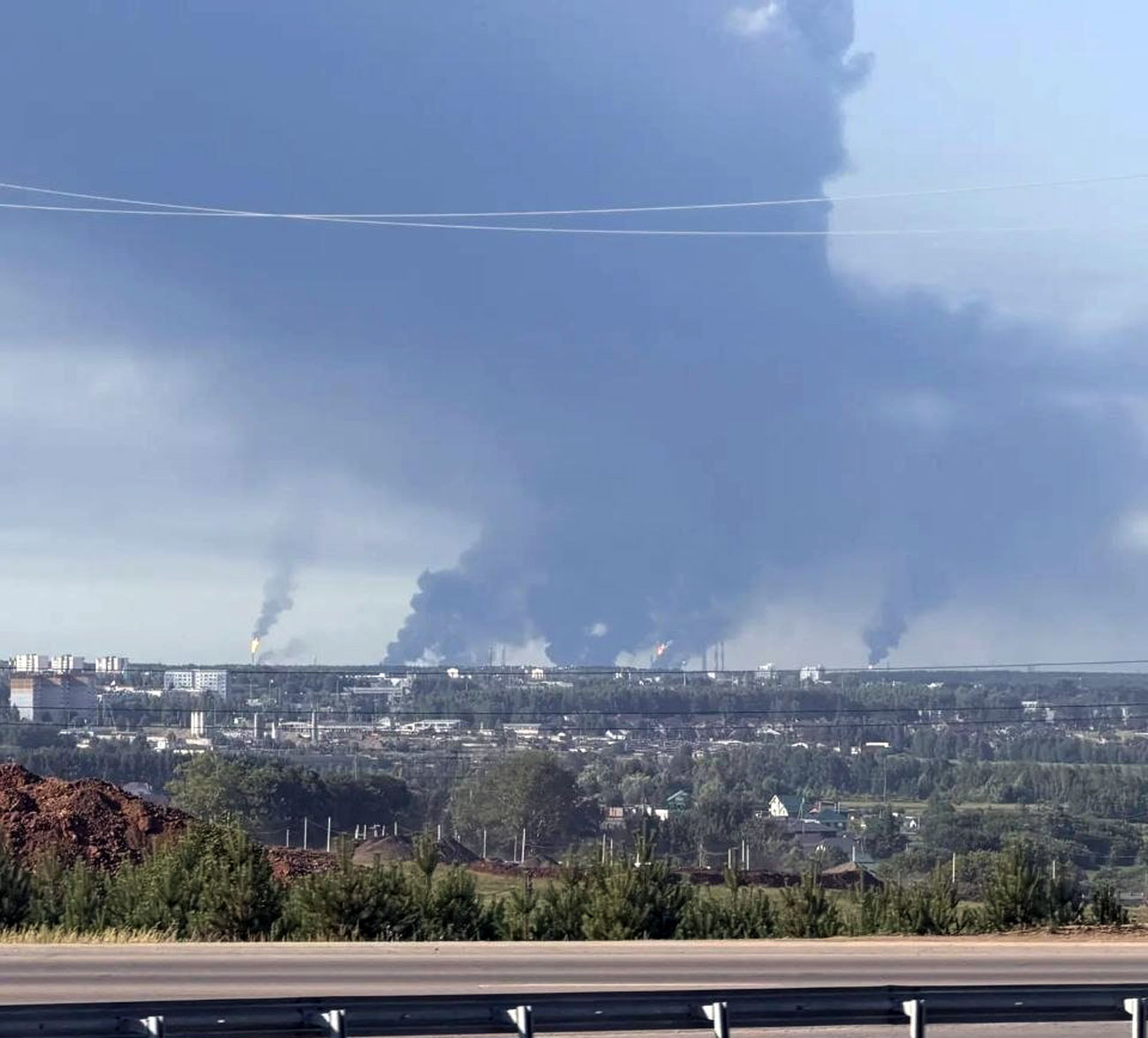
refinery saratov two tatarstan pumping station bashkortostan — one night's russian oil target list · post smoke drifts over industrial zone nizhnekamsk after ukrainian drone strikes its refineries 8 2026
Explore further

Russia’s refinery in Saratov, two in Tatarstan, a pumping station in Bashkortostan — one night’s oil target list

Moscow and other regions under attack

Moscow Mayor Sergei Sobyanin claimed that 613 drones flew toward the Moscow region overnight, that most were downed on the far approaches, and that 231 were downed on approach to the capital. Russia’s aviation agency restricted flights at Vnukovo, Domodedovo, and Zhukovsky airports. Russia’s Defense Ministry claimed it downed 1,214 drones over 19 regions overnight.

Map of reported Ukrainian drone strikes on Sterlitamak, Lipetsk, Bryansk Oblast, and occupied Luhansk and Crimea on 29 October 2026, with straight-line distances from the Ukrainian border or the front line

Ukraine’s General Staff said its forces hit a depot of Geran drones, Russia’s version of the Iranian Shahed, along with a drone launch site and a fuel depot near Navlya in Bryansk Oblast, about 70 km from the Ukrainian border. The Atesh partisan movement reported a loud explosion near Oryol’s airfield and a large fire in Lipetsk, about 285 km from the border.

Explosions in occupied Crimea, power cuts in occupied Luhansk

Subscribers of Crimean monitoring channel Krymsky Veter reported drones and then a strong explosion with Russian air defenses firing in Krasnoperekopsk, in occupied Crimea, about 95 km from the front line.

In occupied Luhansk, about 105 km from the front line, residents reported another attack on Lugacom, the occupation’s mobile operator, and internet outages followed, Exilenova+ said. The channel named only Lugacom. The operator sits in the seized Ukrtelecom building. Exilenova+ also posted footage of a fire in the city.

pic.twitter.com/Pihyr8Y0EL

— Exilenova+ (@Exilenova_plus) October 29, 2026

Leonid Pasechnik, the Russian-installed head of the occupied part of Luhansk Oblast, claimed that 150,000 customers in six municipalities lost power after attacks on energy facilities.

  •  

Two weeks after a Russian supply base burned in Luhansk’s Khrustalnyi, Ukrainian drones came back for an ammo depot

two weeks after russian supply base burned luhansk's khrustalnyi ukrainian drones came back ammo depot · post fire glows horizon russian-occupied luhansk oblast during drone attack late 26 2026 1

Ukrainian drones blew up a Russian ammunition depot near Khrustalnyi in occupied Luhansk Oblast overnight on 27 October, Ukrainian Telegram channel Exilenova+ reported. Drones also hit the oblast’s capital, Luhansk, for hours, and part of the city lost power. Russia’s occupation authorities have not commented.

Russia keeps pushing toward the last big Ukrainian-held cities in Donetsk Oblast. Its artillery there runs on shells kept in rear depots across occupied territory, and those depots sit within reach of Ukraine’s mid-range drones. Each depot lost behind the front pushes Russia to store and move its shells from farther back. That lengthens the supply runs Ukraine’s drones already hunt on the roads of occupied Ukraine.

Secondary detonations near Khrustalnyi lasted over an hour

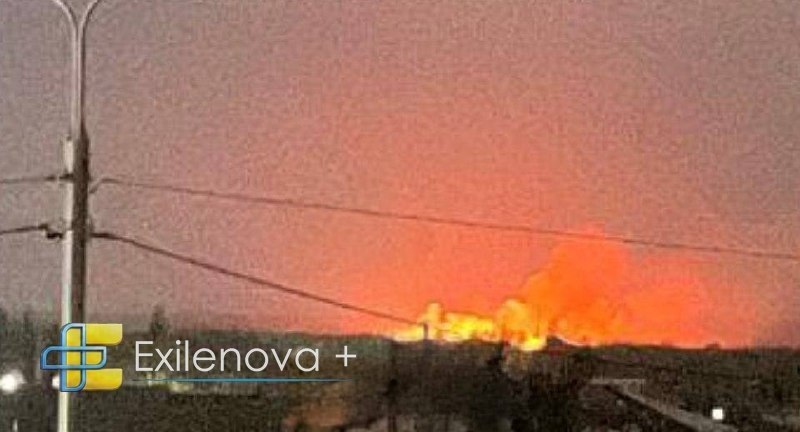
The drone attack on occupied Luhansk Oblast went on for several hours, Exilenova+ said. Ukraine’s Defense Forces hit the depot near Khrustalnyi, and secondary detonations continued for more than an hour, the channel added. It posted night footage of a large fire glowing on the horizon.

An attack by strike drones has been ongoing for several hours in the occupied Luhansk region.

The Defence Forces have blown up an ammunition depot near the village of Khrustalnyi. Secondary detonations have been ongoing for over an hour. pic.twitter.com/yEGTgrfsm7

— Exilenova+ (@Exilenova_plus) October 26, 2026

Russia has occupied Khrustalnyi, formerly called Krasnyi Luch, since 2014. The city lies about 65 km southwest of Luhansk. It serves Russian troops as a rear and logistics hub.

Fires burn in the Russian-occupied city of Luhansk after a series of explosions during a Ukrainian drone attack, late on 26 October 2026
Fires burn in the Russian-occupied city of Luhansk after a series of explosions during a Ukrainian drone attack, late on 26 October 2026. Photo: Exilenova+

Luhansk lost power as drones hit its former airfield

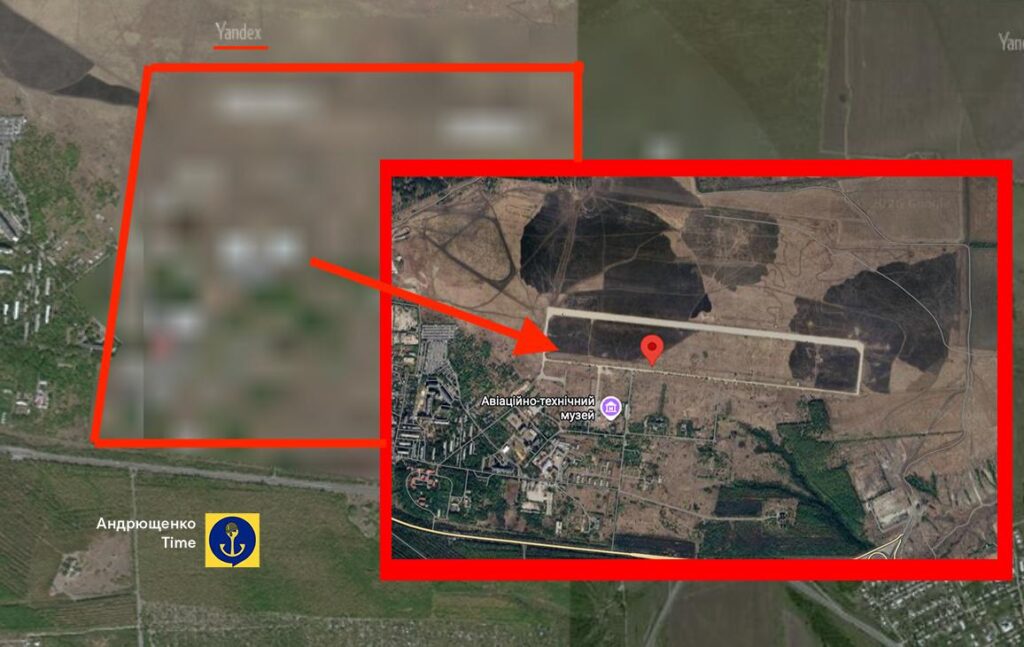
The attack on the city of Luhansk lasted more than four hours, Petro Andriushchenko, head of the Center for the Study of Occupation, said. Residents reported many explosions and fires in several districts, and the power went out. The main strike hit the city’s former airfield, he added. In October 2023, Ukraine’s ATACMS missiles destroyed Russian helicopters at air bases in occupied Luhansk and Berdiansk.

NASA FIRMS satellite fire detections, marked in red, at the former Luhansk airfield after Ukrainian drone strikes overnight on 27 October 2026
NASA FIRMS satellite fire detections, marked in red, at the former Luhansk airfield after Ukrainian drone strikes overnight on 27 October 2026. Image: NASA FIRMS via Andriushchenko Time

On Yandex Maps, the Russian online mapping service, the struck area near Luhansk airport is blurred, Andriushchenko noted. Yandex blurs military and critical infrastructure sites this way, he wrote.

The area around the former Luhansk airfield, blurred out on Russia’s Yandex Maps, after Ukrainian drones struck it overnight on 27 October 2026
The area around the former Luhansk airfield, blurred out on Russia’s Yandex Maps, after Ukrainian drones struck it overnight on 27 October 2026. Screenshot: Yandex Maps via Andriushchenko Time

Exilenova+ also reported a series of explosions in Luhansk. The oblast had been under a mass drone attack for an hour, with dozens of hits in different towns, Ukrainian Telegram channel DroneBomber wrote late on 26 October.

Neither side’s military has mentioned the attack on Luhansk Oblast. Ukraine’s General Staff left it out of its morning report. Russia’s Defense Ministry claimed it downed 222 drones over Russian regions, occupied Crimea, and the Black Sea, without listing Luhansk Oblast.

Map of Ukrainian drone attacks on Russian-occupied Ukraine and Russia overnight on 27 October 2026
Map of Ukrainian drone attacks on Russian-occupied Ukraine and Russia overnight on 27 October 2026. Map: Andriushchenko Time, translated by Euromaidan Press

Pro-Russian local channels confirmed the attack from their side. A channel covering occupied Luhansk Oblast wrote that eyewitnesses saw a large fire and secondary detonations in Khrustalnyi. LIC, the news agency of Russia’s occupation administration in Luhansk Oblast, reported a series of powerful explosions over Luhansk and a visible glow.

The third drone night over occupied Luhansk Oblast in a week

Drones have now hit occupied Luhansk Oblast on three nights in seven days. On 21 October, they struck the seized telecom building in the city of Luhansk that houses the occupation’s mobile operator. Two nights later, strikes cut communications and power in part of the city.

oil depot military hq airbase ukraine targets critical russian assets occupied luhansk donetsk crimea (video) fires (left); russia's pantsir-s1 sam moments before drone strike 1 2025 sources telegra/exilenova+ hur yasynuvata
Explore further

Ukrainian drones just lit up Russian-occupied Crimea, Donetsk, and Luhansk — here’s how (video)

Khrustalnyi itself burned on 12 October, when strikes hit a former motor depot housing Russian troops. Ukraine also hit an ammunition depot there in June 2022. Back then, the site supplied Russia’s offensive on Sievierodonetsk and Lysychansk.

Blasts in Mariupol, Berdiansk, and Melitopol, and Russian claims from Bryansk

Occupied Mariupol heard two waves of explosions overnight, and the power went out after the attack, Andriushchenko also said. In occupied Berdiansk, several blasts near the Ekvator shopping center preceded a large fire, he added.

On the evening of 26 October, strike drones attacked occupied Melitopol in Zaporizhzhia Oblast, Exilenova+ said. Locals also reported FPV drones hitting targets in the city.

In Russia’s city of Bryansk, Governor Yegor Kovalchuk claimed a night drone attack injured six people and damaged three apartment blocks. He said a man also died when a drone-dropped explosive went off. Yevhen Balytskyi, the Russian-installed head of occupied Zaporizhzhia Oblast, claimed a drone hit a Simferopol–Moscow bus near Prymorsk, killing one passenger.

As the attacks began, Russian monitoring resources tracked up to 350 Ukrainian drones in the air, DroneBomber said. Most flew over Bryansk and Oryol oblasts, with more groups near Crimea, Novorossiysk, and occupied Luhansk Oblast.

Ukraine’s drones also weigh on Russia’s road to occupied Crimea. Truck traffic on the R-280 highway from Rostov Oblast has halved to about 1,000 a day because of drone attacks. Anatolii Tsurkin, who heads a carriers’ association set up in occupied Crimea, said so.

Kyiv set aside $113 million for the first phase of a program of middle-strike drones aimed at Russia’s rear. That makes nights like this one likely to keep coming for depots, airfields, and roads across occupied Ukraine.

  •  

For the third time this year, Ukrainian drones hit Russia’s rocket-fuel rubber plant in Samara Oblast. This time they reach the raw-material shop feeding it

Smoke over the industrial zone of Tolyatti following a drone attack.

Ukrainian drones damaged a process pipeline, two butyl-rubber units, and a rectification (distillation) unit at Russia’s Tolyattikauchuk petrochemical plant on 24 October, Ukraine’s General Staff said on 26 October. The damage hits the production chain of solid rocket fuel for tactical and ballistic missiles, it added.

The strike was part of a string of Ukrainian hits on Russian plants over four days, most of which the General Staff links to missile production. Ukraine hit an electronics plant in Oryol on 23 October and struck a battery plant in Yelets on 25 October or the following night. The General Staff ties both to missiles: Oryol makes components for missiles Russia fires at Ukrainian cities, and Yelets makes batteries for Iskander-M systems. Then, overnight on 26 October, drones also went after Voronezhsintezkauchuk, another Russian synthetic-rubber plant. For Tolyattikauchuk, this is the third time this year that strikes have reached its butyl-rubber shops.

What Kyiv and Russian officials say

The General Staff first confirmed the strike on 24 October with a report of an explosion and fire near the plant. It said the plant makes synthetic rubbers, monomers, fractions, and high-octane gasoline additives, and that its synthetic rubbers are used in solid rocket fuel.

Meanwhile, Russian officials have not named the plant in their statements. However, Tolyatti Mayor Ilya Sukhikh claimed that industrial facilities were damaged and, citing preliminary data, that no one was killed or injured, Russian outlet Expert reported.

What OSINT channels report

Drones hit at least two production facilities, Ukrainian monitoring channel Exilenova+ said. One is the shop where isobutane is turned into isobutylene, a raw material for synthetic rubbers. The other is outdoor unit No. 2 in shop BK-4, which produces and purifies high-purity isobutylene for butyl rubber.

Aftermath of the attack on the Tolyattikauchuk petrochemical plant.
Aftermath of the attack on the Tolyattikauchuk petrochemical plant. Analysis by Exilenova+, satellite image by Vantor.

The damage could delay rubber output and the supply of feedstock for other processes, including solid rocket fuel. Tolyattikauchuk can make about 260,000 metric tons of synthetic rubber a year, OSINT-Varta data show.

Hit again and again

Tolyattikauchuk had come under fire before. Overnight on 4 April, about 10 drones reached the plant by various accounts. Footage showed fires at storage shops D-12 and D-1 and at the BK-2, BK-3, and BK-4 units, though more sites may have been hit, the analysts added. Ukrainian forces struck the plant again on 12 June, the General Staff confirmed.

Then, on 12 September, a strike set fires at the BK-2, BK-3, and BK-4 shops, an OSINT community Absolutely Reliable Source reported. Without those shops running steadily, the line that makes MTBE, a key high-octane gasoline additive, is cut, the channel noted.

  •  

Plane parts for Russia’s air force, rubber for its industry—Voronezh’s factories came under drone attack

plane parts russia’s air force rubber its industry—voronezh’s factories came under drone attack · post fire smoke area vaso aircraft plant voronezh after russia 26 2026 ukraine news ukrainian reports

Drones attacked the VASO aircraft plant in Russia's Voronezh overnight on 26 October, Ukrainian Telegram channel Supernova+ reported. The plant builds Il-96 airliners and parts for Russia's military transport planes. A synthetic-rubber plant was also reportedly hit and fires broke out across Voronezh, while another rubber plant in Tolyatti, farther east, reportedly came under attack again.

Ukraine keeps hitting the plants behind Russia's weapons, from Voronezh's missile chips to Urals titanium for warplanes. Each supplier knocked out of rhythm slows how fast Russia replaces the hardware it loses and keeps using against Ukraine.

What the Voronezh plant builds

Supernova+ described VASO as part of Ilyushin, which belongs to Russia's state-owned United Aircraft Corporation (UAC). The channel published a photo of fire and smoke at the site. The plant lies about 190 km from the Ukrainian border.

VASO makes pylons, engine nacelles, and flap rails for the Il-76MD-90A, a modernized military transport plane, and sends them to Ulyanovsk, UAC's press service said in 2024. "We have reached the production pace of Il-76MD-90A aircraft kits that our Ulyanovsk colleagues need," Igor Butyrin, who runs the plant's Il-76 program, stated at the time. In 2016, the plant built an Il-96-300 that UAC handed over to the Rossiya special flight detachment of Russia's presidential property office.

Map of Ukrainian drone strikes on Voronezh and Tolyatti with distances from Ukraine, Russia, 26 October 2026
Map of Ukrainian drone strikes on Voronezh and Tolyatti with distances from Ukraine, Russia, 26 October 2026. Map: EP/Datawrapper

A rubber plant and a bridge on the list too

Supernova+ also named Voronezhsintezkauchuk, a plant of Russian petrochemical group Sibur that makes synthetic rubbers. The channel later reported a hit on the plant's industrial zone and claimed an attack on the city's Northern Bridge. Ukrainian Telegram channel Exilenova+ published footage of a drone arriving, reportedly at the rubber plant.

The moment the UAV arrived this morning, reportedly at the Voronezhsintezkauchuk factory. pic.twitter.com/2PXyQ5P7sb

— Exilenova+ (@Exilenova_plus) October 26, 2026

Voronezh Oblast Governor Aleksandr Gusev declared a missile alert at 04:47 Kyiv time, but no source has named a missile type. Kyiv has not commented. Ukraine's Air Force, which launches Storm Shadow cruise missiles, and its Navy, which fires Neptunes, have posted nothing on Voronezh.

Earlier this month, Ukraine's Navy said it hit six Su-34 bombers in Voronezh Oblast with Neptunes. Storm Shadows reportedly struck an electronics plant in Oryol on 23 October and a battery plant in Yelets two days later.

Fires across the city

Gusev claimed air defenses downed 113 drones over the region, more than 70 of them over the city. He listed fires at several industrial enterprises, which he said caused no serious consequences, plus a business center, an apartment block, and a school stadium. Russian Telegram channel Astra published video of a drone hitting the Galereya Chizhova business center. Exilenova+ footage showed cars burning below apartment blocks.

Voronezh pic.twitter.com/I3WbnGLZhO

— Exilenova+ (@Exilenova_plus) October 26, 2026

Damage in residential districts may have come from downed drones or from Russian air-defense missiles falling back on the city. During a 23 October attack on Gorodets, in Nizhny Novgorod Oblast, Exilenova+ claimed a Pantsir air-defense missile hit a house.

russia's secret aviation report fighter jet clipped its own shelter gate 500 kg bomb fell takeoff helicopter came home printer-paper-sized hole nine engine failures three weeks · post russian su-34
Explore further

Russia still parks its best bombers in the open. Ukraine has spent a year knocking out the air defenses that were supposed to protect them

Gusev also claimed two men were killed and 17 people injured, many of them on a train struck by drone debris. Russian Railways said five passengers were hurt at Somovo station and traffic on the line stopped. Russia's Defense Ministry claimed its air defenses downed 290 drones over 15 regions and the Moscow area.

Tolyatti's rubber plant reportedly attacked again

Locals reported an attack on the Tolyattikauchuk chemical plant in Tolyatti, Samara Oblast, Exilenova+ said. The city lies about 890 km from the front line. Ukraine's General Staff confirmed a strike on the same plant on 24 October. Its synthetic rubbers go into solid fuel for Russia's tactical and ballistic missiles, among other uses.

Until Kyiv comments or satellite imagery shows the site, the damage at VASO stays unconfirmed, and so does any delay to Russia's Il-76 parts line.

  •  

Russia’s tax service runs on two key data centers. Drones went after one of them overnight, along with a chemical plant that supplies explosives makers

russia’s tax service keeps its databases two places drones went after one overnight also hitting air base explosives-chemical plant · post fire seen residential area gorodets nizhny novgorod oblast near

Drones attacked a Russian tax-service data center overnight on 23 October, Ukrainian monitoring channel Exilenova+ reported. A chemical plant in the Urals was also attacked, and a fire broke out near a Russian bomber base by late morning. Russian officials admitted injuries and damage but blamed falling debris. Ukraine has not commented.

Ukraine's long-range drones have widened their target list from Russian refineries to the servers and chemicals that keep Russia's state and war industry running.

The tax service's data center in Gorodets

The target in Gorodets, Nizhny Novgorod Oblast, is one of the Federal Tax Service's two key data centers, which work as a geographically distributed pair. It stores and processes state registers, including tax databases, Exilenova+ said. The extent of the damage is unconfirmed. The site lies about 785 km from Ukraine's northern border in a straight line.

The moment of impact at Russia’s Federal Tax Service data center in Gorodets last night. pic.twitter.com/PftC6keRpY

— Exilenova+ (@Exilenova_plus) October 23, 2026

Eyewitness footage shows a blast and fire in the area of the data center, which serves both the tax service and the Finance Ministry, Russian Telegram channel Astra found. The center opened in 2015. Mikhail Mishustin, then head of the tax service and now Russia's prime minister, attended the launch.

Nizhny Novgorod Governor Gleb Nikitin claimed air defenses repelled 19 drones. Falling debris injured three people in the Gorodets district and damaged several homes, an educational facility, and an infrastructure facility, he said, and local schools switched to remote learning. A Pantsir air defense missile hit a house, Exilenova+ claimed, though officials recorded it as a drone hit.

Ukrainian strikes inside Russia on Gorodets, Berezniki, and Voronezh, with distances from Ukraine, 23 October 2026
Ukrainian strikes inside Russia on Gorodets, Berezniki, and Voronezh, with distances from Ukraine, 23 October 2026. Map: Euromaidan Press/Datawrapper

This month, drones already hit three Yandex data centers and a VK data center near St. Petersburg.

A chemical plant behind Russia's gunpowder

In Berezniki, Perm Krai, smoke rose over Uralchem's Azot plant as air defenses fired, Astra reported. The regional security ministry announced a drone attack at about 06:00, and authorities closed the airspace within 50 km of the city. Ukraine's long-range Liutyi drones visited Berezniki, Exilenova+ wrote.

Our old friends, the Liutyi drones, paid Berezniki a visit today. Haven’t seen them in a while. 🫡 pic.twitter.com/NXuhIJ3xpm

— Exilenova+ (@Exilenova_plus) October 23, 2026

The attack on Azot was continuing in the morning, the channel wrote, adding that the plant covers about 140 hectares with some 90 production buildings. It makes ammonia, nitric acid, ammonium and potassium nitrate, and urea. Russian defense plants use its nitric acid to make explosives and gunpowder, including the Perm gunpowder plant, Astra said. Berezniki lies 1,500–1,600 km from Ukraine's border and the war zone.

Smoke rises over Uralchem's Azot chemical plant in Berezniki, Perm Krai, after a drone attack, Russia, 23 October 2026
Smoke rises over Uralchem's Azot chemical plant in Berezniki, Perm Krai, after a drone attack, Russia, 23 October 2026. Photo: Exilenova+/Telegram

Drones attacked Azot before, on 11 September. Earlier this year, Ukraine's Security Service hit Lukoil's refinery in the same region.

phones down water off factory roof broken open russian-occupied luhansk counts damage after another night drones · post fire occupied during drone attack 23 2026 ukraine news ukrainian reports
Explore further

Phones down, water off, a factory roof broken open: Russian-occupied Luhansk counts the damage after another night of drones

Fire near a Su-34 base in Voronezh

Late in the morning, Voronezh Governor Aleksandr Gusev declared a missile alert, and explosions followed in the city. Gusev later claimed air defenses downed several "jet-powered aerial targets." Debris set dry grass on fire in a suburb and damaged outbuildings and several cars, he said, adding that no one was hurt.

Missile alert in several regions of the Russian Federation.

Explosions have been heard in Voronezh. We are assessing the situation. pic.twitter.com/GY0NRZTo4x

— Exilenova+ (@Exilenova_plus) October 23, 2026

Eyewitness footage shows fire and smoke near Baltimor military airfield, Astra found. The strike preliminarily hit the grounds of a former military aviation engineering university and a nearby parking area for military aircraft, Exilenova+ said.

Fire and smoke near Baltimor military airfield in Voronezh after a Ukrainian attack, Russia, 23 October 2026
Fire and smoke near Baltimor military airfield in Voronezh after a Ukrainian attack, Russia, 23 October 2026. Photo: Astra/Telegram

Baltimor hosts the 47th Guards Bomber Aviation Regiment, whose Su-34s Russia uses to strike Ukraine, Militarnyi reported, saying Ukraine attacked the airfield with missiles. Voronezh lies about 185 km from Ukraine's border. Smoke rose over the base after an attack on 27 May, and a fire broke out near it on 2 September.

Moscow counts drones, Kyiv stays silent

Russia's Defense Ministry claimed it downed 443 drones overnight over 20 Russian regions, including Nizhny Novgorod Oblast and Perm Krai, as well as Russian-occupied Crimea and two seas. Ukraine's General Staff has not reported on the strikes. A night earlier, drones reportedly hit a sanctioned weapons plant near Moscow.

Russia's air defenses now have to cover state servers and Ural chemical plants as well as the airfields its bombers fly from.

  •  

Phones down, water off, a factory roof broken open: Russian-occupied Luhansk counts the damage after another night of drones

phones down water off factory roof broken open russian-occupied luhansk counts damage after another night drones · post fire occupied during drone attack 23 2026 ukraine news ukrainian reports

Drone strikes disrupted communications and power in part of Russian-occupied Luhansk overnight on 23 October, Ukrainian monitoring channel Exilenova+ reported. It was the third night in four that drones went after communications in occupied eastern Ukraine. A pro-Russian local channel also showed a damaged factory, and the occupation authorities have stayed silent.

Ukraine's drones have spent months hitting what keeps Russia's occupation running, from fuel depots to supply lines and now communications.

Blasts before dawn, then outages

Explosions hit Luhansk before dawn, and the strikes probably targeted communications facilities, Exilenova+ said. Another Ukrainian monitoring channel, Supernova+, wrote that the city's TV tower came under attack. Exilenova+ posted night footage of the strikes.

The moment of arrival in Luhansk. Following the explosions, we are experiencing disruptions to communications and the electricity supply. pic.twitter.com/rNHXRJcVNt

— Exilenova+ (@Exilenova_plus) October 23, 2026

A drone attack damaged the building of the local telecom company, pro-Russian local channel Ogonyok Luhanska wrote on 23 October. It listed switches and servers among the damaged equipment and said the damage could explain landline outages and possible internet problems. The channel did not say whether the damage came from this attack or the one two nights earlier.

Strikes on local communications facilities in occupied Luhansk. pic.twitter.com/4Jz7aK7tKs

— Exilenova+ (@Exilenova_plus) October 23, 2026

By morning, water stopped flowing in parts of Luhansk and nearby villages, including Metalist and Tsvitni Pisky. A notice posted by local Telegram channel Luhansk Online cited unstable voltage at water facilities. The city's water utility later switched to backup phone numbers after its dispatch lines failed.

Third night in four

Overnight on 20 October, drones struck Ugletelecom, the occupation's telecom operator in Donetsk. A night later, they hit the seized Ukrtelecom building in Luhansk, which houses the occupation's mobile operator Lugacom. That strike disrupted the internet so badly that service centers across occupied Luhansk Oblast stopped accepting documents.

ukraine drone forces scale up operational depth locomotives comms towers depots hit occupied regions three days · post russian locomotive crosshairs ukrainian fp-2 donetsk oblast 25 2026 video robert madyar
Explore further

Ukraine drone forces expand kill zone into occupied regions, commander says: Russia’s trains, comms towers, and depots struck

Silence from the occupation

The occupation authorities have not commented. Leonid Pasechnik, the Russian-installed head of occupied Luhansk Oblast, posted nothing about the attack. On 21 October, he claimed Kyiv was carrying out "terrorist strikes" on civilians. Russia's Defense Ministry claimed it downed 443 drones overnight over Russian regions, Crimea, and two seas, without mentioning Luhansk. The same night, Russia launched 176 drones at Ukraine, some from occupied Donetsk and from Hvardiiske in occupied Crimea, Krym.Realii reported, citing Ukraine's Air Force.

Ukraine's General Staff has not reported on the attack yet. After the previous strike on Luhansk, it said Ukrainian forces hit command posts of Russian units in the Luhansk area.

A pipeline-valve plant hit, too

Ogonyok Luhanska also posted daylight photos of the Marshal plant after what it called a "night arrival." They show a damaged workshop roof, and the channel wrote it had information that the drone hit inside the plant. The Luhansk Pipeline Valve Plant Marshal, registered in Ukraine in 1994, makes taps and valves at 13 Montazhna Street, according to Ukrainian state registry data published by VB.ua.

The Marshal pipeline-valve plant in occupied Luhansk with a damaged workshop roof, 23 October 2026
The Marshal pipeline-valve plant in occupied Luhansk with a damaged workshop roof, 23 October 2026. Photo: Ogonyok Luhanska/Telegram

Earlier that morning, Luhansk Online reported restricted traffic on Montazhna Street between Brestska and Sukhodilska streets.

Ukraine has hit industrial sites in occupied Luhansk Oblast before. For example, in March, drones struck a plant in Alchevsk that made artillery shell casings.

  •  

Drone strikes kill hundreds in just days in Sudan

Drone strikes in war-torn Sudan have killed hundreds in just three days. Most of the deaths were in West Kordofan state, including in an area contested with South Sudan, sparking fears of a spillover of the war.

The paramilitary Rapid Support Forces (RSF) reportedly killed 41 people by striking a gathering of Internally Displaced People (IDPs) near Sudan’s southeastern border with Ethiopia in the Blue Nile state last Friday, October 9.

Later on Sunday, October 18, air defenses of the Sudanese Armed Forces (SAF), which heads the government, intercepted multiple suicide drones launched by the RSF. The drones targeted Upper Atbara and Setit dam complex in Gedaref state, and the Khashm El-Girba dam in neighboring Kassala.

The following day, on October 19, the RSF launched a wave of drones toward the airport in the national capital, Khartoum. While the air defenses intercepted most of them, one drone struck near the airport, killing four people, including three children.

The RSF took over the capital soon after starting this war in April 2023 against the SAF, the national army with which it had ruled as part of a military junta. The SAF regained control of the capital in March 2025.

In the meantime, later in October 2025, the RSF consolidated control over most of Sudan’s vast western region of Darfur, overrunning the SAF’s last holdout, El Fasher, and depopulating the city in a campaign deemed genocidal by a UN investigation. 

Read more: A bloodbath visible from space: RSF’s massacres in Sudan’s El Fasher   

After thus taking over Darfur – except for some SAF small holdouts on the border with Chad – the RSF has since been pushing eastward toward Khartoum. The Kordofan region in between, comprising three states, has since become a main front of this war.

Here, on October 18, in West Kordofan’s RSF-controlled town of al-Dabba, SAF struck a transport hub that was crowded on a market day, killing 80 people on the spot. 30 others later died in hospital. Another SAF drone also struck a market in the Al-Mujlad town.

Then, on the morning of October 19, SAF drones struck yet another market it suspected to be a source of fuel supply for the RSF, killing 153 people in Abyei, an area disputed by Sudan and South Sudan, ever since the latter seceded from the former in 2011.​

This area in the Nile oil basin has over 4,000 UN peacekeepers and is jointly administered by Sudan and South Sudan. South Sudan’s government summoned Sudan’s ambassador to protest this strike.

A spillover of Sudan’s war into South Sudan could have dire consequences, especially since South Sudan, the world’s youngest country, is itself at a heightened risk of slipping back into its own disastrous civil war, which had claimed up to 400,000 lives between late 2013 and mid-2015.​

The death count of the war in Sudan has been lost after exceeding 150,000 as early as June 2024. By the time the war entered its fourth year in April 2026, drone strikes had become the main driver of civilian casualties in this war, causing 80% of all the civilian deaths in the first four months of this year, killing at least 880 people.  

“We are alarmed by the continued deadly drone strikes across the country that are killing civilians, including children, and that are disrupting essential services,” UN Spokesperson Stéphane Dujarric said on October 19.

​Read more: The war in Sudan is “between two wings of a comprador parasitic capitalist class”

  •  

Ukrainian OSINT analyst: Russia’s Yandex data center in Sasovo burned out inside, though its roof shows almost no significant holes

Cloud-free satellite image of the damaged Yandex data center in Sasovo, Ryazan Oblast, posted 22 October 2026

Russian tech giant Yandex's data center in Sasovo burned out from the inside, a Ukrainian OSINT analyst wrote on 22 October. On cloud-free satellite images, he saw almost no significant holes in its roof. Ukrainian drones hit the site overnight on 8 October.

Sasovo was the first strike on a data center in Russia. It came two weeks after Russia destroyed data centers in Kyiv. Drones then hit Yandex sites in Vladimir and Kaluga, a Sber data center, and a VK data center near St. Petersburg, which VK acknowledged. In occupied Donbas, monitoring channels reported hits on buildings housing telecom operators.

What the analyst sees

The analyst, who goes by Harbuz, runs the Ukrainian OSINT channel Dnipro Osint. His roof reading comes from the images. His interior claim comes from what he called available information: he wrote that a fire broke out inside and put part of the equipment out of action.

Cloud-free satellite image of the damaged Yandex data center in Sasovo, Ryazan Oblast, posted 22 October 2026
Cloud-free satellite image of the damaged Yandex data center in Sasovo, Ryazan Oblast, posted 22 October 2026. Image: Dnipro Osint

In an earlier post, Harbuz wrote that a third of the data center had burned out. In the new one, he writes that the building burned out from the inside. He does not say whether he revised the earlier figure.

Russian outlet Agentstvo studied Airbus images from 12 October. It found damage on about a third of the building. Unlike Harbuz, though, Agentstvo described a blackened western roof with damage resembling holes.

What Yandex says

On 8 October, Yandex stated that the attack caused a fire and forced it to suspend operations at the site, which hosts tens of thousands of servers, Reuters reported. Yandex Cloud and the Disk and Documents services that run on it ran with major disruptions that morning, Russian outlet The Bell reported.

Later that day, the company stated: "The scale of the damage to the infrastructure is still being assessed. For the moment, we cannot confirm whether it is possible to restore the data centre equipment in Sasovo." Two of Yandex's three supercomputers, used to develop its AI model, are housed there.

The same day, journalists asked Ukrainian President Volodymyr Zelenskyy whether Ukraine was targeting Russian data centers. He did not refer specifically to the Yandex strike, Reuters noted, but said: "We always respond in mirror-like fashion."

  •  

Two nights, two occupied capitals, two telecom operators running on seized Ukrainian assets: drones go after Russia’s communications in Donbas

burned-out telecom center occupied luhansk dark donetsk ukraine’s drones work through night · post ukrtelecom building after drone strike 21 2026 ukraine news ukrainian reports

Drones struck the seized Ukrtelecom building in occupied Luhansk overnight on 21 October, hitting the mobile operator Russia’s occupation authorities run there under the name “Lugacom,” Russian Telegram channel Astra and Ukrainian monitoring channels reported. The strike came a night after drones hit “Ugletelecom,” the occupation’s telecom operator in Donetsk, which reportedly runs on equipment seized from Ukrainian companies. Footage posted by Ukrainian monitors shows heavy fire damage inside the Luhansk building. Ukraine has not officially commented.

Ukraine has spent months hitting the supply lines, depots, and infrastructure that sustain Russia’s occupation of southern and eastern Ukraine, with mid-range drones striking trucks, trains, and communications towers well behind the front. This spring the commander of Ukraine’s Unmanned Systems Forces, Robert “Madyar” Brovdi, promised Russian troops in occupied territory a “stone age.” This time the targets were the networks the occupation runs on.

burned-out telecom center occupied luhansk dark donetsk ukraine’s drones work through night · post ukrtelecom building after drone strike 21 2026 exilenova ukraine news ukrainian reports
The occupied Ukrtelecom building in Luhansk after a drone strike, 21 October 2026. Photo: Exilenova+/Telegram

A burned-out Ukrtelecom building in Luhansk

Residents reported explosions in Luhansk overnight, and the former Ukrtelecom building was attacked by a drone, Astra reported, citing its readers. The occupation runs its mobile operator, “Lugacom,” from the seized building, and built its network on equipment taken from Ukraine’s Kyivstar, according to dev.ua. The building also houses an occupation-run telecom services center. Luhansk is situated in the easternmost Ukrainian region and has been occupied since 2014.

Ukrainian monitoring channel Exilenova+ said Ukraine’s Defense Forces struck the building, which also hosts an information technology and technical support center. A video it posted shows extensive burning inside. Petro Andriushchenko, head of the Center for the Study of Occupation, said the drones hit a data center in the building.

Occupation officials had not commented, according to NV. In September, drones hit a hardware store in Luhansk, sparking a large fire. Earlier this month, fires broke out at a Russian supply base in Khrustalnyi, also in occupied Luhansk Oblast.

The occupied Ukrtelecom building in Luhansk after a drone attack, 21 October 2026.
The occupied Ukrtelecom building in Luhansk after a drone attack, 21 October 2026. Photo: Astra/Telegram

Donetsk’s occupation telecom operator hit the night before

The night before, drones struck “Ugletelecom,” one of the key communications operators in occupied Donetsk Oblast, Exilenova+ reported. It operates from an office building at 60 Postysheva Street, where Ukraine’s state holding company Donbasugleobespechenie was registered before the occupation, according to RBC-Ukraine. Astra found about 27 organizations registered at the address, including internet provider Fticom, and damage on four floors.

Ugletelecom runs on equipment seized from Ukrainian companies, Donetsk-focused outlet Kochegarka reported, citing local sources. The occupation also moved local businesses that had used Ukrtelecom over to it, according to dev.ua. Residents had reported powerful explosions in the city.

The office building on Postysheva Street housing “Ugletelecom,” the occupation’s telecom operator, in occupied Donetsk after a drone strike, 20 October 2026.
The office building on Postysheva Street housing “Ugletelecom,” the occupation’s telecom operator, in occupied Donetsk after a drone strike, 20 October 2026. Photo: Exilenova+/Telegram

Power cuts across the occupied territories

In occupied Donetsk Oblast, drones attacked the 330 kV Pivdenna substation in Chystiakove, and locals reported outages, Telegram channel DroneBomber said, calling the report preliminary. Occupied Donetsk went into a blackout on the evening of 20 October after strikes on its power supply, Andriushchenko said. He also reported air defense activity and hits in the Mariupol area.

In occupied Crimea, residents of Krasnoperekopsk reported explosions and hits near the railway station, then partial power cuts, monitoring channel Crimean Wind said. In occupied Melitopol, drones tried to attack the city’s power facilities at around 03:30 but missed, Russian senator Dmitry Rogozin claimed.

French mapper Clément Molin counted 770 confirmed Ukrainian drone strikes on Russian trucks in the logistics zone 10 km behind the front line in September, up from 630 in August.

  •  

Not just the grid: Russia struck a 24-story block, a university, and warehouses overnight, and four people are dead

just grid 24-storey block university warehouses were russia’s target list overnight four people dead · post smoke rises apartment building kyiv’s sviatoshynskyi district after russian drone strike 21 2026 kyivjfif

Russian drones struck a 24-story apartment building in Kyiv, a university building in Kremenchuk, warehouses, and hypermarkets overnight on 21 October, killing two people in the capital and an elderly couple near Kharkiv, Ukrainian officials said. The attack went well beyond Ukraine’s power grid, hitting places where people live, study, and shop. Over the past day, Russian strikes also killed three more civilians and injured dozens across several oblasts.

Russia has kept up nightly drone and missile attacks on Ukrainian cities through the autumn, mostly aimed at the energy system. It struck Ukraine’s energy 76 times during a US-declared truce, and fired 39 ballistic missiles at the grid three days after Washington announced it. This time the targets also included homes, a university, warehouses, and shops.

Overnight, Russia launched 186 Shahed-type and other attack drones, 88 of them jet-powered, along with Iskander-K cruise missiles, Ukraine’s Air Force said. Air defenses downed or jammed 150 drones. Hits were recorded at 27 locations, and debris fell at 13 more.

Two killed on the 20th floor in Kyiv

A drone hit a 24-story residential building in Kyiv’s Sviatoshynskyi district at the level of the 20th floor, starting a fire, Mayor Vitali Klitschko said. The fire spread over about 70 square meters, and rescuers found the bodies of two people while clearing debris, the State Emergency Service said. Two people were injured and hospitalized, Klitschko said, including a 46-year-old man who was walking past the building, according to the police.

A rescuer carries a cat out after a Russian drone strike on an apartment building in Kyiv, 21 October 2026.
A rescuer carries a cat out after a Russian drone strike on an apartment building in Kyiv, 21 October 2026. Photo: State Emergency Service of Ukraine

In the Desnianskyi district, seven parked cars caught fire, the State Emergency Service said; police put the number at about 10. The evening before, drones hit a warehouse building in Desnianskyi and a transport facility in Solomianskyi district.

An elderly couple killed near Kharkiv

In the village of Korotych near Kharkiv, Russian drones killed an 81-year-old woman and an 83-year-old man, Kharkiv Oblast Governor Oleh Syniehubov said. Rescuers recovered their bodies from the rubble of their house, the State Emergency Service said. Eleven people, including a two-month-old boy and an eight-year-old girl, were treated for acute stress, and 13 houses were damaged.

A house destroyed by a Russian drone strike in Korotych, Kharkiv Oblast, 21 October 2026.
A house destroyed by a Russian drone strike in Korotych, Kharkiv Oblast, 21 October 2026. Photo: State Emergency Service of Ukraine

A university, warehouses, and hypermarkets

In Kremenchuk, a drone hit a building of the Mykhailo Ostrohradskyi National University, setting it on fire, the State Emergency Service said. Three people were injured, including a 16-year-old who was hospitalized with a concussion, Poltava Oblast Governor Vitalii Diakivnych said. In the Poltava community, drones damaged an administrative building and warehouses.

Firefighters put out a fire at an enterprise in Lviv district after a Russian attack, 21 October 2026.
Firefighters put out a fire at an enterprise in Lviv district after a Russian attack, 21 October 2026. Photo: State Emergency Service of Ukraine

In Lviv Oblast, an attack set fire to an enterprise in a village in Lviv district and injured two people, while a house was damaged in a neighboring village, the State Emergency Service said. In Uman, drones hit a hypermarket and damaged a hotel, injuring one person, Cherkasy Oblast Governor Ihor Taburets said.

A hypermarket in Uman damaged by a Russian drone strike, 21 October 2026.
A hypermarket in Uman damaged by a Russian drone strike, 21 October 2026. Photo: Cherkasy Oblast Military Administration

On the evening of 20 October, a drone hit an Epicentr hypermarket in Pervomaisk, Mykolaiv Oblast, injuring eight people, acting Governor Heorhii Reshetilov said. Russia also struck a hypermarket in Rivne Oblast several times that day, injuring four and forcing rescuers to pull back while they fought the fire, the State Emergency Service said.

More dead and injured over the past day

The overnight strikes followed a day of attacks. In Kyiv, Russian strikes on 20 October killed one person and injured 21, three of them seriously, Klitschko said. An administrative building caught fire, rescuers freed four people trapped on its upper floors, and a healthcare facility was damaged, the State Emergency Service said. In Dnipropetrovsk Oblast, two men were killed and seven people injured that day, regional officials said.

In Kharkiv Oblast, Russian attacks over the past day injured 11 more people in Kharkiv, Derhachi, and Shestakove, Syniehubov said. In Kherson Oblast, 13 people were injured, three of them children, the regional administration reported. In the Chernihiv region, an 89-year-old woman and a young woman were hurt in strikes on villages and on Novhorod-Siverskyi, Governor Viacheslav Chaus said, and a 21-year-old woman was injured in the Sumy community, according to the Sumy regional administration.

More than 5,000 subscribers lost power in Volyn Oblast’s Lutsk district, Governor Roman Romaniuk said. In Ternopil Oblast’s Kremenets district, 7,949 subscribers remained without power after earlier Russian strikes on energy facilities, the regional administration reported.

  •  

A diesel tank burns at Transneft’s Druzhba hub as Ukraine keeps striking Russian energy despite Trump’s pressure

diesel tank burns transneft’s druzhba hub ukraine keeps striking russian energy despite trump’s pressure · post fire nikolskoye oil fuel pumping station russia’s tambov oblast after drone attack 20 2026

Drones attacked an oil and fuel pumping station of Russia’s Druzhba pipeline system in Tambov Oblast overnight on 20 October, setting a diesel tank on fire, Ukrainian monitoring channel Exilenova+ reported, citing locals. Druzhba, Russian for “friendship,” is a Soviet-era oil pipeline, about 4,000 km long, that carries Russian crude west to Europe, including through a branch that crosses Ukraine. The struck station is on its Russian section. Tambov Oblast Governor Yevgeny Pervyshov confirmed a fire at an unnamed enterprise in Michurinsk district after what he called a Ukrainian drone attack. The station lies about 400 km from the front line.

Ukraine has spent months striking the refineries, terminals, and pipelines that fund Russia’s war, and its Defense Ministry says the strikes have knocked out more than half of Russia’s refining capacity. Washington wants them stopped. US officials reportedly tied intelligence sharing to a halt in refinery strikes, and US President Donald Trump called their resumption “a disgrace.”

Hours of attack before dawn

Russia’s regional alert system declared a drone threat at 03:38, Ukrainian military outlet Militarnyi reported. By 06:25, Exilenova+ said the Nikolskoye station was under attack, after Michurinsk had been under attack for several hours.

The Nikolskoye fuel pumping station in Russia’s Tambov region is under attack. pic.twitter.com/cA64vMgjsM

— Exilenova+ (@Exilenova_plus) October 20, 2026

Pervyshov said four Ukrainian drones were shot down over the region and no one was hurt. He did not name the site.

More footage from the Nikolskaya oil pumping station. Locals report that a tank containing diesel is on fire. pic.twitter.com/1jvbxSuGHo

— Exilenova+ (@Exilenova_plus) October 20, 2026

Ukraine has not commented. The General Staff’s 20 October list of overnight strikes does not mention Tambov Oblast.

The Nikolskoye oil and fuel pumping station in Russia’s Tambov Oblast, which drones attacked on 20 October 2026.
The Nikolskoye oil and fuel pumping station in Russia’s Tambov Oblast, which drones attacked on 20 October 2026. Map: Militarnyi/ESRI

A Druzhba fuel hub hit before

The Nikolskoye station belongs to Transneft, Russia’s state pipeline operator. It stores and pumps crude oil and refined fuels, including diesel, gasoline, and jet fuel. The complex has three tank farms and two pumping stations, and it can move up to 300,000 tonnes a day, according to Current Time.

Ukrainian drones hit a station of the same hub in August 2025, and Ukraine’s General Staff said then that pumping on the pipeline had stopped completely.

Strikes resume despite US pressure

Ukraine paused refinery strikes for three days after Trump announced an “energy ceasefire” on 11 October, while Russia fired 39 ballistic missiles at Ukraine’s grid. Since Kyiv resumed the strikes, drones have also hit an oil terminal and a fuel depot in St. Petersburg.

Kyiv reads other US moves as pressure too, from missed warnings of Russian ballistic launches to a Starlink cap that slows Ukrainian drones. President of Ukraine Volodymyr Zelenskyy told US senators he had offered a 30-day halt on refinery strikes in exchange for Patriot interceptors, but Trump’s envoys showed no openness.

  •  

The drones flew 1,000 km. St. Petersburg’s oil terminal, fuel depot, and a nearby data center were waiting at the end

russia’s st petersburg wakes up burning oil sites hit bridge damaged data center after night ukrainian drones · post fire ozon distribution kolpinsky district drone attack 18 2026 astra ukraine

Ukrainian drones struck St. Petersburg’s oil terminal, a fuel depot, an Ozon distribution center, and a VK data center overnight, setting off fires across the city, monitoring channels reported. Russian outlet Meduza called it apparently the largest attack on the city and Leningrad Oblast since the war began. Russian officials acknowledged fires, damaged homes and substations, and power cuts.

Russia keeps fighting along the front while bombarding Ukrainian cities and the grid behind it. Ukraine’s long-range drones, in turn, target the oil exports and logistics that fund and supply that war, and Russia’s Baltic oil ports have been hit repeatedly this year. St. Petersburg is a symbolic place: Russia’s so-called second capital and Putin’s hometown.

Oil terminal and fuel depot on fire

Ukrainian forces struck the Petersburg Oil Terminal with FP-1 drones, starting a fire, Ukrainian drone maker Fire Point said. The company described the terminal as one of the region’s largest, handling 12.5 million tonnes of petroleum products a year, including for export.

Piter port and oil facility in one shot pic.twitter.com/KfptwkhsDS

— Exilenova+ (@Exilenova_plus) October 18, 2026

St. Petersburg Governor Aleksandr Beglov acknowledged fires at the terminal and in four city districts, adding that Pulkovo airport had restricted flights. By morning, firefighters were still battling blazes at the terminal, the Ruchyi oil depot, and industrial warehouses in the Kolpinsky district, he wrote. He claimed one person was killed and five injured. Ukrainian monitoring channel Exilenova+ reported that the Ruchyi depot had been burning since the night.

Ozon hub, VK data center, and a bridge

An Ozon distribution center in Kolpinsky district caught fire after the attack, the company said, Russian independent outlet Astra reported. Astra’s open-source intelligence analyst described it as one of Ozon’s busiest fulfillment centers in northwestern Russia, covering up to 79,000 m².

Ozon in St. Peterburg pic.twitter.com/tA9iwRJf7d

— Exilenova+ (@Exilenova_plus) October 18, 2026

FP-1 drones also hit a VK data center in Novosergiyevka, Leningrad Oblast, causing serious damage, Fire Point said. VK acknowledged a drone attack on the site but claimed its services were working normally. Leningrad Oblast Governor Aleksandr Drozdenko claimed air defenses downed 145 drones over the oblast alone. He acknowledged damage to the data center’s transformer equipment and warehouse complex, and minor damage to the Vostochnaya substation. Two other substations in Yanino went offline, cutting power to about 20,000 people, he said.

Damaged VK data center building in Novosergiyevka, Leningrad Oblast, after a Ukrainian FP-1 drone strike, 18 October 2026
Damaged VK data center building in Novosergiyevka, Leningrad Oblast, after a Ukrainian FP-1 drone strike, 18 October 2026. Photo: Fire Point/X

A drone also hit the cable-stayed bridge over the Korabelny fairway, part of a toll highway linking the city’s north and south, Exilenova+ reported, adding that the extent of the damage was still being clarified. The channel also reported a fire near a Russian Aerospace Forces radar company outside the village of Kaporskoye.

Smoke rising over St. Petersburg after the overnight drone attack, 18 October 2026
Smoke rising over St. Petersburg after the overnight drone attack, 18 October 2026. Photo: Astra

To reach St. Petersburg, Ukrainian drones had to cover 1,000 km across four Russian regions guarded by air defenses and electronic warfare, said Serhii Beskrestnov, adviser to Ukraine’s president on defense technology.

“And these are not cruise missiles with special systems, these are drones that fly at speeds of up to 200 km/h,” he wrote.

Satellite image marking the drone hit on the cable-stayed bridge over the Korabelny fairway in St. Petersburg, 18 October 2026
Satellite image marking the drone hit on the cable-stayed bridge over the Korabelny fairway in St. Petersburg, 18 October 2026. Image: Dnipro Osint via Exilenova+

Strikes resume after a one-sided truce

The same night, Russia hit Ukraine’s grid again, and Ukrainian President Volodymyr Zelenskyy counted 76 Russian strikes on energy since the ceasefire was announced. US President Donald Trump declared the truce on 11 October. Ukraine paused its refinery strikes for three days at Washington’s request, but Russia struck a Kharkiv power plant within hours and kept hitting the grid. Zelenskyy then said Ukraine was resuming strikes on Russian oil and would stop again only in exchange for more US interceptors for its Patriot systems. Trump called the renewed strikes “a disgrace” and said he found Zelenskyy “more difficult to deal with than Putin.”

Ukraine has hit the St. Petersburg area before. In July, drones set fire to Wildberries warehouses near the city. In August, Ukraine began striking Ozon hubs, starting in Samara Oblast. The hubs move dual-use goods such as electronics and drone components.

  •  

Ukraine detains a gas station worker and a Telegram commenter suspected of scouting targets for Russian strikes

bomb-maker working russia's military intelligence zaporizhzhia loses freedom 15 years · post security service ukraine officers during operation sbu news ukrainian reports

Ukraine’s Security Service (SBU) detained two men suspected of scouting targets for Russian strikes on Sloviansk and Dnipro, the agency reported on 14 October. Catching both early let it secure Ukrainian reserve command posts and the gas stations the alleged agents had been hunting, the agency added.

Sloviansk anchors the northern end of the Fortress Belt, the chain of fortified cities that has held Ukraine’s defense of Donetsk Oblast since 2014. Russia is pushing to seize them, and its aircraft bombed a residential area of Sloviansk on 11 October. Where Ukrainian convoys stop and troops gather is exactly what Russian handlers allegedly asked these suspects to supply.

A gas station worker suspected of filming convoys

The first suspect worked at a gas station complex in Sloviansk, Donetsk Oblast. Russian intelligence allegedly reached him through a former classmate who left for Russia after the full-scale invasion and now works for its special services, the SBU said. He then allegedly used his phone to secretly film Ukrainian army convoys at or near gas stations. He was allegedly supposed to send the photos and videos to Russia to help it prepare a targeted strike. He also allegedly drove his own car around other gas stations and bridges that the Defense Forces use for logistics.

Spotted through Telegram comments

The second suspect, a former Pokrovsk resident, moved to Dnipro in 2024 and settled in a dormitory. Russian intelligence noticed him through pro-Kremlin comments he posted in Telegram chats, investigators say. A female handler in Russia allegedly tasked him with guiding missile and drone attacks on places in the city where Ukrainian troops and equipment were concentrated. He allegedly scouted on foot or took public transport to reach outlying districts.

An example of a fake summons
Explore further

Ukrainians think their own security service is calling—it’s Russia recruiting saboteurs

Officers seized computers and smartphones containing evidence of the men’s alleged work for Russia. Both are suspected of treason under martial law and of unauthorized dissemination of information on Ukrainian troop movements or deployment, under Articles 111(2) and 114-2(2) of the Criminal Code. They remain in custody without bail and face up to life imprisonment with confiscation of property. The SBU’s office for Donetsk and Luhansk oblasts ran the operation under the Donetsk Oblast Prosecutor’s Office.

  •  

Ukraine Strikes at Heart of Russia’s Oil Network as Samara Hub Comes Under Repeated Attack

Ukrainian forces have attacked one of Russia’s most important oil transport and blending facilities for the third time this month. The Samara hub handles crude from several major producing regions and plays a central role in preparing Russia’s Urals export blend, making it a target of considerably greater strategic significance than an ordinary oil depot.

Ukraine has intensified its campaign against Russia’s oil industry with another drone strike on the Samara linear production and dispatch station, a major facility in the pipeline network operated by state-controlled Transneft. The latest attack, during the night of 9–10 October, followed earlier strikes on 2 and 7 October, which Ukrainian military authorities say caused extensive damage to storage tanks and associated infrastructure.

The significance of Samara extends well beyond the destruction of stored oil. Situated near the settlement of Prosvet in Russia’s Samara region, the installation is a junction where crude oil arriving from Western Siberia, Tatarstan and the Volga-Urals producing regions is received, stored, blended and redistributed. Its role makes it an important link between Russian oil production, domestic refining and export markets.

According to the Ukrainian General Staff’s operational report, Samara is responsible for blending crude with different sulphur contents to produce Urals, Russia’s principal export grade. Ukraine’s military says the facility also contributes to supplying the Russian armed forces.

Why Samara matters to Russia’s oil exports

Unlike an oil refinery, where crude is processed into petrol, diesel and other fuels, the Samara installation performs a function earlier in the supply chain. It is one of the points where different grades of Russian crude are brought together to produce a commercially standardised export mixture.

Western Siberian crude generally has different characteristics from oil extracted in the Volga-Urals basin, including variations in sulphur content and density. Blending these streams is essential to maintaining the specifications of Urals crude, which is supplied to refineries and sold on international markets.

Samara’s importance also reflects the sheer scale of the infrastructure concentrated at the site. Ukrainian Special Operations Forces describe a facility where four major oil pipelines converge, supported by 71 storage tanks with a combined capacity exceeding 1.6 million cubic metres.

The site’s central role is not simply a Ukrainian assessment. Transneft-Privoĺga’s management previously described the Samara installation as having Europe’s largest oil storage tank farm and identified its blending station and associated pumping installations as part of a major modernisation programme.

Approximately 140 million tonnes of oil passes through the Samara complex annually. That figure would make the installation an important concentration point within the wider Russian pipeline system.

The consequences of sustained disruption could therefore extend beyond the immediate loss of storage capacity. Damage to blending operations, connecting pipelines or loading equipment could interfere with the movement of crude towards refineries and export routes. The precise effect would depend on the functioning of alternative facilities, available spare capacity and the speed of repairs.

Three attacks in nine days

The first strike, on 2 October, reportedly damaged 11 storage tanks with capacities of 20,000 cubic metres each, three larger tanks of 50,000 cubic metres, sections of pipeline and an automated loading station. The Security Service of Ukraine confirmed that its personnel had participated in the operation alongside other branches of the armed forces.

A further strike on 7 October destroyed four large storage tanks and caused a substantial fire, according to Ukraine’s General Staff. Ukrainian Special Operations Forces subsequently confirmed another attack on 10 October, although the damage from that operation remains under assessment. The reported destruction and damage have not been independently verified in full.

The repeated attacks indicate an effort to produce cumulative disruption rather than rely on a single operation to disable an extensive industrial complex.

This approach is consistent with Ukraine’s broader campaign against Russia’s refining industry. As EU Today examined in August, repeated strikes on processing facilities can create difficulties that extend beyond the immediate damage, particularly when specialist equipment requires lengthy repairs.

From refinery attacks to the wider oil network

The campaign against Samara represents a significant extension of that strategy. Refineries remain important targets because they produce the fuels required by Russia’s armed forces and domestic economy. Transport and blending facilities, however, determine whether crude reaches those refineries in the required quantities and specifications.

Continuous attacks are essential because much of the damage inflicted by drones is repairable. Individual installations may return to service within days or weeks, meaning the cumulative effect depends heavily on whether further disruption occurs before repairs and production have fully resumed.

Russia’s refining industry remains heavily dependent on specialist equipment and technologies historically supplied by Western manufacturers. Sanctions have restricted access to replacement components, while domestically manufactured equipment and Chinese alternatives are not always technically compatible with existing installations. These constraints complicate repairs, prolong shutdowns and limit Russia’s ability to restore damaged refining capacity.

Samara presents a somewhat different vulnerability. Its importance rests on the concentration of pipeline connections, storage and blending operations at one location. A sustained interruption could affect several parts of the oil supply chain simultaneously, although the available evidence does not yet establish that the wider network has suffered a prolonged shutdown.

Ukraine has already demonstrated its willingness to strike other logistical installations. A recent attack on the Volodarskaya petroleum-products station near Moscow targeted another important part of Russia’s fuel distribution system.

Implications for Russia’s war economy

Oil remains central to Russia’s export earnings and federal finances, while the availability of refined petroleum products influences military logistics, transport and industrial activity.

The immediate economic significance of the Samara attacks will depend on how much operational capacity has been lost, whether crude can be redirected through alternative infrastructure and how quickly Transneft can restore the damaged facilities.

There is an important distinction between destroying storage tanks and preventing oil from moving through a network. The former reduces available capacity; the latter can impose broader restrictions on production, refining and exports. Establishing the extent to which the latest strikes have achieved either effect will require further operational evidence.

Nevertheless, the decision to return repeatedly to Samara illustrates a development in Ukraine’s campaign against Russia’s energy sector. Rather than concentrating exclusively on the refineries that convert crude into fuel, Kyiv is also attacking infrastructure that connects oil production to its commercial and military end users.

For Moscow, the vulnerability of Samara is particularly consequential because the installation occupies a central position in the movement and preparation of Urals crude. Any sustained loss of its blending, storage or distribution functions would introduce additional pressure into an oil system already facing repeated attacks on its refineries and export infrastructure.

The latest operation therefore raises a question extending beyond the damage to one industrial site: whether Russia can maintain reliable oil flows when several interconnected stages of its energy supply chain are subjected to recurring disruption.

  •  
❌