❌

Reading view

Cyprus GDP growth forecast raised to 3.2 per cent for 2026

Middle East conflict threatens Cyprus growth outlook, economics research centre warns

Cyprus’ economy is expected to grow by 3.2 per cent in 2026, up from a previous forecast of 2.7 per cent, as stronger-than-expected economic activity and improving business confidence offset mounting inflationary pressures linked to the conflict in the Middle East, according to a report published by the University of Cyprus’ Economics Research Centre (CypERC) in October.

The latest projections point to economic growth moderating from 4.8 per cent in 2025 to 3.2 per cent in 2026 and 3.1 per cent in 2027, with rising prices and tighter monetary conditions expected to weigh on activity over the coming quarters.

The revised 2026 forecast is 0.5 percentage points higher than CypERC’s July estimate, while the projection for 2027 remains unchanged.

The upward revision reflects stronger-than-expected growth during the second quarter of 2026, alongside favourable developments in the third quarter, including improved economic confidence, low unemployment and continued growth in new housing loans.

However, the research centre warned that the outlook remained vulnerable to geopolitical developments, with the Middle East conflict intensifying inflationary pressures and increasing the risk that economic growth could fall short of expectations.

Inflation is expected to accelerate sharply, rising from 0.1 per cent in 2025 to 3.1 per cent in 2026, before easing to 2.3 per cent in 2027.

The forecasts for 2026 and 2027 are respectively 0.1 and 0.2 percentage points higher than those published in July, reflecting rising international oil prices, strong domestic economic activity and persistently low unemployment.

Economic activity remains robust

Cyprus’ economy continued to expand faster than the European Union average during the second quarter of 2026, despite mounting inflationary pressures associated with the conflict in the Middle East.

Real gross domestic product (GDP) grew by 3.3 per cent year-on-year in the second quarter, accelerating from 3 per cent in the first three months of the year.

Real gross value added increased across all economic sectors, with growth accelerating in most industries compared with the previous quarter.

Information and communication activities remained among the fastest-growing sectors, although their expansion slowed for the fourth consecutive quarter. Growth in real estate activities and professional services also moderated slightly, extending the slowdown recorded during the first quarter.

Consumption growth strengthened further during the second quarter, driven primarily by increased government spending. Private consumption continued to expand above its long-term average, maintaining the pace recorded during the first quarter.

Investment also improved, with gross fixed capital formation continuing to grow on the back of increased spending on machinery and equipment and sustained investment in construction.

Both exports and imports recorded strong annual growth. However, net exports made a negative contribution to overall GDP growth because imports increased faster than exports.

Monthly indicators suggest that economic activity remained robust during the third quarter, although some data pointed to emerging challenges.

Retail trade volumes, card purchases and property sale contracts recorded between July and September indicated continued expansion. However, figures for motor vehicle registrations, new company registrations and tourist arrivals provided mixed signals about the strength of economic momentum.

The number of registered unemployed people continued to increase year-on-year throughout the third quarter, although the construction sector was a notable exception.

Nevertheless, the unemployment rate remained very low in August and well below the EU average, according to Eurostat.

The Economic Sentiment Indicator rose above its long-term average during the third quarter, reflecting stronger consumer and business confidence, particularly in services, retail trade and construction.

Companies’ employment expectations also strengthened, moving above their historical average. Economic uncertainty declined overall, although uncertainty among businesses in services and retail trade increased in September.

Consumers’ and companies’ expectations for future prices remained above their historical averages despite some easing during the quarter. Price expectations among consumers and manufacturing firms rose markedly in September.

Inflation and borrowing costs threaten growth

Consumer price inflation increased to 3.4 per cent in the third quarter of 2026, up from 2.8 per cent in the second quarter.

The acceleration was driven by higher prices for housing, water, electricity, fuels and transport, primarily reflecting rapid increases in international oil prices.

Food inflation also continued to add to domestic price pressures, exceeding the overall inflation rate for the third consecutive quarter.

CypERC warned that Cyprus’ heavy reliance on imported fossil fuels made its inflation outlook particularly sensitive to international oil prices, which are vulnerable to geopolitical developments.

The conflict in the Middle East continued to push up global energy prices during the third quarter, with the effects expected to feed through to the prices of goods and services over the forecast period.

Higher food prices are also expected to sustain inflationary pressures, with international food price indices increasing more rapidly during the third quarter than in the first half of 2026.

The report said rising prices had already put pressure on real incomes and were expected to restrain economic activity, particularly as labour market conditions normalised.

Inflation also increased in the euro area and the United Kingdom during the third quarter, potentially weighing on demand from Cyprus’ main trading partners, particularly for services.

Higher interest rates are expected to exert additional pressure on growth, with the effects becoming more pronounced during 2027.

Euro area key interest rates increased further in September in response to rising inflation linked to the Middle East conflict, while market interest rates had begun edging upwards in March and stood considerably higher in September 2026 than a year earlier.

Domestic interest rates on most loan and deposit categories were also higher in August than in the corresponding month of 2025.

CypERC expects tighter financing conditions to restrain both domestic demand and demand from euro area trading partners, with the effects gradually materialising in 2027 and becoming particularly evident after the first quarter.

The annual contraction in new corporate lending during January to August 2026 is also expected to weigh on growth prospects.

Nevertheless, the research centre said these pressures were being outweighed by the continued dynamism of the domestic economy, supported by recent national accounts data and leading indicators.

Continued growth in new housing loans and the banking sector’s strong liquidity and capital position were also supporting the outlook.

During the first eight months of 2026, the outstanding stock of loans recorded double-digit growth, while deposits expanded strongly, driven by rising domestic deposits.

However, the volume of new loans declined year-on-year over the same period because of contracting business lending, despite strong growth in housing loans.

The ratio of non-performing loans to total loans also declined further in June.

An exception to the broader increase in domestic borrowing costs was the interest rate on new corporate loans exceeding €1 million, which fell significantly in August to its lowest level in more than three and a half years.

Public finances provide support

Cyprus’ public finances remained strong during the first eight months of 2026, with the government recording a substantial budget surplus that exceeded the corresponding figure for 2025.

Government revenue increased robustly year-on-year, outpacing expenditure growth, while the public debt-to-GDP ratio continued to decline.

CypERC said the strong fiscal position was expected to support economic growth by preserving investor confidence amid rising government borrowing costs and helping cushion the effects of cost-of-living pressures.

International and domestic stock market indices also recorded further annual gains during the third quarter, while volatility remained relatively subdued.

The continued positive performance of equity markets was seen as a sign of economic resilience despite geopolitical tensions and elevated inflation. However, the report cautioned that these favourable effects could prove fragile if financing conditions tightened further and cost-of-living pressures intensified.

Growth forecasts remain vulnerable

The research centre said downside risks to economic growth continued to outweigh upside risks, with geopolitical tensions and potentially tighter financing conditions posing the main threats.

A prolonged conflict or further escalation in the Middle East could increase uncertainty, weaken external demand for services and discourage investment.

Further disruption to supply chains could also keep international commodity prices elevated, creating more persistent inflationary pressures and weighing more heavily on economic growth than currently anticipated.

Other risks include weaker-than-expected growth among Cyprus’ trading partners, financial market turmoil that could undermine investor confidence, climate-related events and fiscal challenges arising from higher government borrowing costs.

Conversely, stronger-than-expected growth could result from resilient demand, a longer tourist season, gradually easing inflationary pressures, government measures to mitigate the cost of living and investments not yet reflected in the available economic data.

CypERC’s forecasts remain broadly consistent with those of other institutions, although their projections differ slightly.

For 2026, the Central Bank of Cyprus and the International Monetary Fund expect GDP growth of 2.9 per cent, while the Finance Ministry forecasts 3.1 per cent.

For 2027, the Central Bank projects growth of 3.1 per cent and the IMF 3.2 per cent, while the Finance Ministry expects growth to moderate to 2.9 per cent.

Inflation risks remain tilted upwards

CypERC warned that upside risks to inflation continued to dominate, primarily because of the Middle East conflict and the possibility of further increases in international energy and commodity prices.

A prolonged period of high commodity prices could trigger second-round inflation effects, reinforcing price pressures, particularly while economic activity remains strong and unemployment low.

Other risks include robust wage growth if demand remains resilient, climate-related events that push up food prices and prolonged broad-based fiscal support measures aimed at mitigating the cost of living.

The research centre said such fiscal measures could contribute to higher-than-expected inflation, particularly given prevailing labour market conditions.

Downside risks to inflation include tighter euro area monetary policy and its cooling effect on demand, particularly if higher borrowing costs substantially reduce private and public spending.

Recently introduced fiscal support measures, including cuts to fuel excise duties and reductions in value added tax, could also lower inflation compared with current projections.

The gradual transition towards green technologies in Cyprus was identified as another factor that could help reduce inflationary pressures over the forecast period.

CypERC based its projections on quarterly national accounts data up to the second quarter of 2026, leading indicators covering the third quarter and monthly data available between July and September. The forecasts incorporated revised national accounts figures published on October 20, 2026.


  •  

Student-loan borrowers in public service are trapped with debt that 'should be forgiven,' a new lawsuit says

President Donald Trump
A new lawsuit against the Trump administration targets delays in processing Public Service Loan Forgiveness for thousands of student-loan borrowers.

Chip Somodevilla/Getty Images

  • The Education Department is facing a new lawsuit over the Public Service Loan Forgiveness program.
  • The lawsuit said the department is failing to process buyback applications and is illegally rescinding borrowers' payments.
  • These delays are forcing borrowers to pay off loans that should be forgiven, the lawsuit said.

The Trump administration is facing another lawsuit over claims it's mishandling student-loan forgiveness for thousands of borrowers.

On Friday, the American Federation of Teachers President Randi Weingarten filed a lawsuit against the Department of Education over stalled debt relief for borrowers pursuing Public Service Loan Forgiveness, which forgives student debt for government and nonprofit workers after 10 years.

The lawsuit, which is seeking class-action status, said that the department has failed to process the buyback applications of 90,000 borrowers, which allows borrowers to "buy back" months spent in deferment or forbearance if those months would put them at the threshold for relief.

The lawsuit also said the department has illegally rescinded payments borrowers have made toward the program, "trapping in debt borrowers whose loans should be forgiven." It includes Donald Knierim, who previously spoke to Business Insider, as a declarant in the case. Knierim retired after being notified that he had achieved PSLF, only to have 15 of his payments rescinded months later.

Advocacy group Protect Borrowers is representing the AFT. Its senior counsel, Laura Dismore, said in a statement that PSLF borrowers "deserve better than more dysfunction and broken promises."

"The law guarantees public service workers certain rights, and we will enforce those rights wherever and whenever they are violated," Dismore said.

The Department of Education did not immediately respond to a request for comment from Business Insider.

Ongoing Public Service Loan Forgiveness challenges

Business Insider has heard from public service workers over the past who have faced a slew of challenges with PSLF. For example, the PSLF payment tracker has not updated for many borrowers, leaving those who made their final payments waiting for their relief to be processed.

The continued backlog of buyback processing has been an added strain; the department's most recent status report in a separate lawsuit filed by the AFT said that 88,000 applications were pending. The department said some borrowers submitted multiple buyback requests, which inflated the backlog.

More recently, PSLF borrowers like Knierim received notices that the payments they had made toward forgiveness no longer count, extending some borrowers' repayment timelines by years. The department said the clawbacks were due to Biden-era coding errors.

All of the listed delays to relief are actively harming borrowers in public service, the lawsuit said. For example, Elizabeth Schoepflin, one of the plaintiffs, said that the Education Department "ripped away the loan forgiveness credit I earned without any explanation."

"Every month this drags on is another payment I shouldn't have to make," she said.

David Petley, another plaintiff, said he's been waiting over a year and a half for his buyback application to be approved.

"I am expected to keep making more expensive monthly payments in the meantime," he said.

These challenges come as the Trump administration is implementing its student-loan repayment overhaul, which includes new repayment plans and borrowing caps. While borrowers have reported surging monthly bills under the plan, the administration has said its changes are intended to simplify a complex repayment system and curb excessive borrowing.

Have a story to share about student loans? Contact this reporter at asheffey@businessinsider.com.

Read the original article on Business Insider

  •  

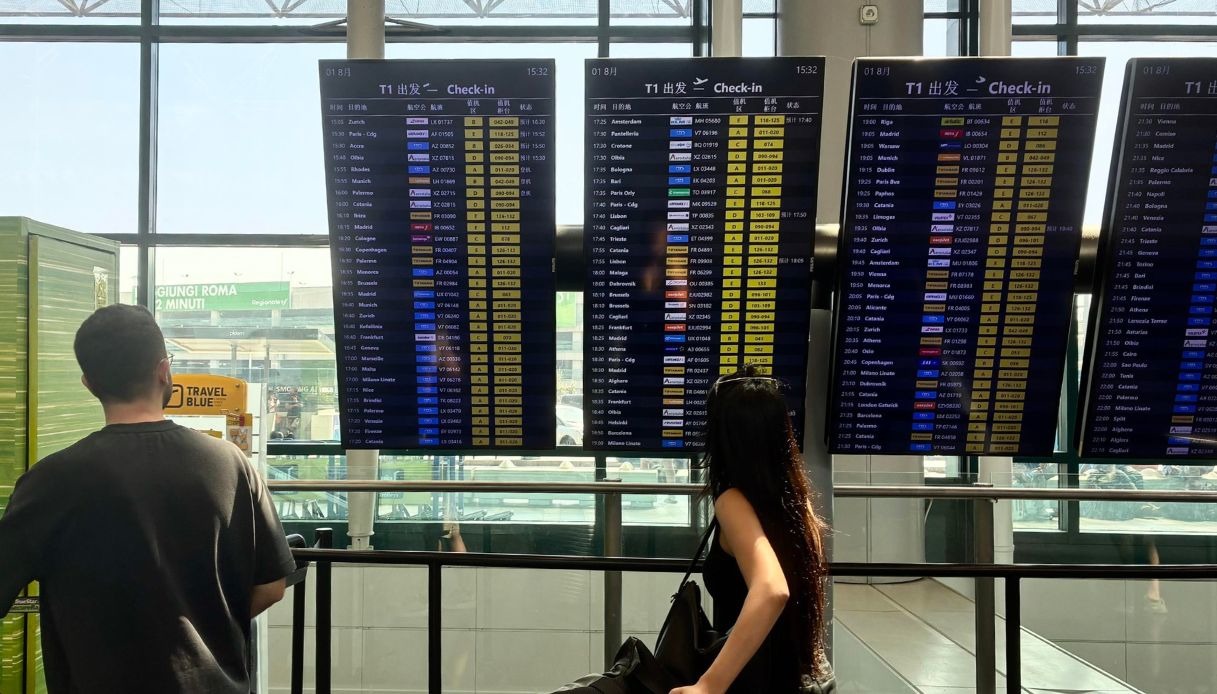
I migliori aeroporti per voli e collegamenti, premiati due italiani ai Routes World Awards 2026

Ai Routes World Awards 2026, assegnati a Francoforte, due aeroporti italiani si sono distinti sulla scena internazionale per la loro capacità di sviluppare rotte aeree e collegamenti con le principali destinazioni. I premi, in questo caso, sono stati assegnati tenendo conto della disponibilità di voli diretti e del numero di passeggeri in transito, ma anche valutando l’apertura verso nuove destinazioni e la collaborazione con le compagnie aeree per creare nuove opportunità di traffico.

I migliori aeroporti per voli e collegamenti nel 2026

Ai Routes World Awards 2026, Roma Fiumicino ha conquistato il titolo di vincitore assoluto e il primo posto nella categoria degli scali con oltre 30 milioni di passeggeri all’anno. A seguire si è posizionato l’aeroporto di Cagliari-Elmas, che ha ottenuto il riconoscimento nella fascia compresa tra 5 e 10 milioni di passeggeri.

Il premio per lo scalo romano arriva in una fase di espansione dei collegamenti, che nel 2025 ha registrato:

  • un traffico record di 51,3 milioni di passeggeri, con un incremento del 4% rispetto all’anno precedente;
  • 10,8 milioni di viaggiatori sulle rotte di lungo raggio.

Il programma di sviluppo della rete previsto per quest’anno, invece, comprende:

  • oltre 40 nuove rotte, più di 15 nuove destinazioni e l’ingresso di quattro nuove compagnie aeree;
  • 22 aeroporti del Nord America, con servizi che includono Seattle, operata da Alaska Airlines, e Houston, collegata da Ita Airways.

All’aeroporto di Cagliari il premio è andato soprattutto per il lavoro svolto per ampliare i collegamenti e rafforzare la connettività della Sardegna. L’offerta dello scalo sardo si è tradotta in un ampliamento che ha portato a:

  • lo sviluppo di 12 nuove rotte di linea per la stagione estiva 2026;
  • quattro nuovi collegamenti per l’inverno 2026-2027 e un aumento di frequenza su 45 rotte già esistenti.

Secondo i dati riportati in occasione dell’assegnazione dei premi, la capacità prevista per l’inverno 2026-2027 è di circa 2,2 milioni di posti, grazie soprattutto agli sforzi per ridurre le oscillazioni stagionali del traffico. La stagionalità rappresenta una delle principali sfide per l’economia turistica sarda. Durante l’estate, il richiamo delle spiagge e delle località costiere alimenta la domanda di voli e servizi ricettivi. Nei mesi autunnali e invernali, al contrario, la riduzione dei flussi può rendere più difficile mantenere un’offerta ampia e frequente.

Un’offerta più distribuita nel corso dell’anno può quindi aiutare le strutture ricettive a programmare aperture più lunghe, offrire maggiori opportunità di lavoro e rendere più sostenibili gli investimenti in ristorazione, trasporti ed esperienze turistiche.

Routes World Awards 2026, come vengono premiati gli aeroporti

La cerimonia dei Routes World Awards si è svolta il 22 ottobre 2026 a Francoforte, in Germania, nell’ambito di Routes World, appuntamento internazionale che riunisce aeroporti, compagnie aeree e organizzazioni turistiche per discutere le strategie di sviluppo delle reti aeree.

Per le categorie dedicate agli aeroporti e alle destinazioni, la valutazione coinvolge una giuria composta da esponenti del settore della pianificazione delle reti delle compagnie aeree. Per ottenere i riconoscimenti, tuttavia, ci si deve candidare, dopodiché le candidature vengono esaminate sulla base del contributo offerto allo sviluppo della connettività e dell’efficacia delle iniziative messe in campo per favorire nuovi collegamenti.

Non si tratta, quindi, di una semplice classifica degli aeroporti più grandi o più frequentati, né di una graduatoria basata esclusivamente sulla qualità dei servizi ai passeggeri. L’attenzione è rivolta alla capacità di:

  • costruire relazioni con i vettori;
  • individuare nuove opportunità commerciali;
  • rendere sostenibili le rotte nel tempo.

Il lavoro di sviluppo delle rotte comprende perciò analisi di mercato, negoziazioni commerciali, promozione territoriale e iniziative di marketing condivise.

  •  

Pressed on affordability at town hall, JD Vance says all the wrong things

With time running out in the election cycle, JD Vance participated in a primetime town hall on Fox News, which was largely unremarkable except for one unexpected exchange.

A local college student told the vice president that the right routinely tells young people to get married and have children but that conservatives have failed to acknowledge how financially difficult this is for many. She asked, “So my question is, how does the right, and yourself, expect us to start families young when the average price of a home in America now costs more than $415,000, which just feels out of reach for us?”

It’s worth emphasizing for context that the question came from a young woman who identified herself as the vice president of her university’s Turning Point USA chapter. That is, Vance wasn’t confronting a political opponent; the question came from someone inclined to agree with the Trump White House.

Almost immediately, the Ohio Republican demonstrated the kind of political instincts that have made him famous.

Q: How do you expect us to start families young when the average price of a home feels out of reach?JD VANCE: I want to point out that I've only gotten one question about Jon Husted's ass

— Aaron Rupar (@atrupar.com) 2026-10-30T01:28:44.964Z

“I want to point out that I think that I have been asked four or maybe five questions by my count,” the vice president began. “I have only been asked one question about [Republican Sen.] Jon Husted’s ass — and it was by [Fox News’] Jesse Watters.”

So, during a nationally televised event, a young conservative voter asked a sincere question about one of the most pressing issues facing her generation, and Vance’s first thought was to make a joke about a senator’s backside.

It’s impossible to say just how many young voters watching at home were amused by this clumsy attempt at humor, but it seems likely the number was small.

It only got worse when Vance actually tried to answer the question with some substance.

“I think we have to take stock of the fact that the reason why housing exploded in the United States of America is in part because we allowed 20 million illegal aliens into our country to buy homes that ought, by right, go to American citizens,” the vice president argued.

Except that’s absurd. Vance’s statistic is wildly inflated and totally at odds with actual data — the idea that 20 million undocumented immigrants have the resources to buy up American real estate is nonsensical. (Last fall, he similarly complained to Fox News about importing “more and more low-wage servants” from other countries. How “low-wage servants” can afford to purchase homes has never been clear.)

The vice president went on to say, “Another reason why housing got too expensive in this country is because we allowed homes to be bought up by Wall Street and foreign investors.”

Unlike the rest of his response, this actually made some sense, though it touched on a problem Vance neglected to mention: Congress approved a bipartisan housing bill earlier this year that was designed to address the very problem he referred to. President Donald Trump, however, refused to sign it as part of a tantrum over a voter suppression proposal that he wanted but couldn’t have. (The housing bill, thankfully, became law anyway.)

This exchange didn’t have to be so politically messy for the vice president, but his unerring political instincts won out in the end anyway.

The post Pressed on affordability at town hall, JD Vance says all the wrong things appeared first on MS NOW.

  •  

Prepare for Decade of Pain, Warns IFS

Britain must prepare for a decade of pain as the country faces the worst decade for household income on record after John Healey’s "tinkering" Budget, the Institute for Fiscal Studies has warned.

The post Prepare for Decade of Pain, Warns IFS appeared first on The Daily Sceptic.

  •  

Public sector an ‘afterthought’ to North Sea oil jobs, says Unison leader

Andrea Egan calls for same political focus on teachers, care sector and NHS and says Jackdaw decision ‘a serious misstep’

The leader of the UK’s biggest trade union has called for the same political focus to be given to NHS, education and care sector workers as there has been on those employed in North Sea oil and gas.

Andrea Egan, the general secretary of Unison, said too often public sector workers were treated as an “afterthought” by the government compared with the “massive political focus” on protecting jobs in the North Sea.

Continue reading...

© Photograph: Gary Calton/The Observer

© Photograph: Gary Calton/The Observer

© Photograph: Gary Calton/The Observer

  •  

Reduced winter tariff for electricity in effect from Nov 1

The two-zone winter reduced-rate tariff for electricity (formerly known as the “ night-time tariff”) will come into effect from Sunday, November 1, 2026, and will remain in force until March 31, 2027, the Hellenic Electricity Distribution Network Operator (DEDDIE) announced on Friday. Τhe hours for each zone are as follows: – Midday zone: 12 noon […]

The post Reduced winter tariff for electricity in effect from Nov 1 appeared first on Keep Talking Greece.

  •  

‘The Diary of a CEO’ says it’s getting tougher on health misinformation after criticism

NEW YORK, NEW YORK - OCTOBER 08: Steven Bartlett speaks onstage during Shark Tank Stars And Showrunner In Conversation: Season 18 Highlights Screening And Talkback at 92NY on October 08, 2026 in New York City. (Photo by Natasha Moustache/Getty Images)
Steven Bartlett is fact-checking "The Diary of a CEO" but leaving his interview style unchanged.

Natasha Moustache/Getty Images

  • Steven Bartlett's "Diary of a CEO" has been fact-checking health and science episodes following a BBC probe.
  • The show uses pop-ups to provide more context during the show, and research reports go deeper.
  • There are weaknesses to its approach: the reports are long and dense, while the pop-ups are limited to video.

The top producer of the hit podcast "The Diary of a CEO" says the show has raised its bar for accuracy, an effort that began after a BBC investigation found it had shared harmful health misinformation.

"We're being more rigorous than we have in the past," Hans Sahni, the executive producer for "DOAC," told Business Insider. "That bar gets higher and higher every day."

The BBC reported in late 2024 that 15 of 23 health-related episodes contained an average of 14 potentially harmful claims.

A core part of "DOAC's" accuracy effort is fact-checking its guests. The show began its own fact-checking about six months after the BBC report. The team runs every episode through an AI-assisted review using Claude, Gemini, and Consensus. It also hired an independent medical Ph.D. researcher to review its health and wellness episodes.

Sahni said the show is putting every new episode through this process, and has fact-checked 71 episodes with the Ph.D. researcher. That amounts to about 13% of the 540 long-form interviews in its YouTube catalog. Sahni said the team is exploring the idea of fact-checking previously published episodes.

"DOAC's" fact-checking effort shows how independent creators are acting more like traditional media companies as they grow their audiences and attract the interest of big advertisers, who want their ads to run in brand-safe environments. Health and wellness have become particularly fraught topics, as many creators — including major stars like Joe Rogan — have been criticized for not pushing back against fringe views espoused by some of their guests.

"DOAC" host Steven Bartlett has come under more scrutiny as his megaphone has grown. "DOAC" has about 21 million subscribers on YouTube and regularly ranks as the top business podcast on Spotify. Bartlett recently told Fortune he projects the show will make $60 million this year from sponsorships and other sources.

In the video version of "DOAC" on platforms like YouTube and Spotify, when contested or complex topics arise, the show displays temporary pop-ups called "DOAC Community Notes" to rebut a guest or provide additional context. These are the result of the internal team's review or collaboration between the researcher and the show's team, who make the final call on what to put on screen.

The decision is based on the stakes of the claim, how strongly it's challenged by scientific literature, and what context is useful to the viewer in the moment — with an emphasis on fewer, higher-value interruptions.

The audio version doesn't have community notes, but information shared by the guest is cut if the team determines it to be inaccurate. An extensive fact-checking research document is linked in the show notes.

Sahni said the show's guest-booking and research teams have also become more disciplined in evaluating potential guests.

LONDON, ENGLAND - JUNE 20: Andrew Huberman attends healf.HX26 Served by smoov at The Store Studios, 180 Strand on June 20, 2026 in London, England. (Photo by Jeff Spicer/Getty Images for smoov)
Andrew Huberman has been called out for promoting unapproved peptides.

Jeff Spicer/Getty Images for smoov

'DOAC's' approach has its limits

Angie Drobnic Holan, director of the International Fact-Checking Network, a Poynter project, applauded the show for making an effort to provide more accurate and contextual information.

"I would like to see more podcast hosts presenting information in context," she said. "The bigger the audience, the bigger the responsibility, especially when there's risk for harm."

Holan saw some limitations to "DOAC's" approach, though.

She said the sourcing on the Community Notes was unclear to viewers, as was who wrote the research briefings. She questioned whether the audience would read them, given that they're long and dense and don't present clear takeaways. The research documents often run upward of 80 pages. "DOAC" said it didn't have reliable user data on readership but was looking at getting that measurement.

Holan suggested that, overall, it's better to vet guests beforehand and have the interviewer fact-check the guest as they go.

Sahni said "DOAC" isn't a news program and doesn't present itself as such. At the same time, the show has a responsibility to the audience, he added.

Sahni said his team is working to improve the fact-checking process based on audience feedback and to expand its scope. For example, some viewers have said the pop-ups disappear too quickly or that there are too many of them.

The team uses Consensus, an AI research platform, in the fact-checking process and is exploring the use of its Consensus Meter, a visual feature, on-screen.

Figuring out how to present the same info on audio as on video without interrupting the listening experience is another hurdle. Right now, audio listeners can access the research document, but there's no audio equivalent of the on-screen pop-up.

NEW YORK, NY - FEBRUARY 25: Michael Breus attends the 2012 Health and Happiness Summit at Radio City Music Hall on February 25, 2012 in New York City. (Photo by Eugene Gologursky/WireImage)
Michael Breus is a prominent sleep researcher.

Helen Healey/NBC via Getty Images

Pop-ups challenged guests on drug and science claims

"DOAC" has had ample opportunity to put its fact-checking to work. Bartlett recently interviewed neuroscientist and podcaster Andrew Huberman, who's been called out for promoting unapproved treatments.

Throughout the interview, which has over 8 million views, occasional pop-ups challenge Huberman's medical claims, especially about peptides and weight-loss drugs.

Huberman said his sleep improved after he took the peptide pinealon. A 20-second pop-up appeared that read in part, "Evidence from human clinical studies remains limited."

Another pop-up read, in part: "Interest in peptides has surged, particularly for weight loss and skin health, but many marketed products are not FDA-approved and lack strong evidence from human clinical trials."

When Huberman calls the weight-loss drug Retatrutide "amazing" and says people lost about one-third of their body weight on it, a pop-up cautions that the drug remains under investigation and isn't FDA-approved.

In an episode with sleep specialist Michael Breus that has 13 million views, Breus said 75% of the reason for insomnia is anxiety and depression. The research doc said insomnia has multiple contributors.

When aging researcher David Sinclair recommended eating a Brazil nut a day for its selenium, a pop-up warned that excessive intake can cause toxicity.

"There's a tension between having a provocative guest and presenting the most accurate information we possibly can," Sahni said. "We're always going to lean toward being as accurate as we feel we can be. We're not journalists. None of us are and don't purport to be the news."

Read the original article on Business Insider

  •  

DHS Citizenship Agency Reverses Biden Giveaways to 2.2 Million Migrants

A little-known agency within the Department of Homeland Security (DHS) has ended a myriad legal giveaways to 2.2 million migrants welcomed by President Joe Biden.

The post DHS Citizenship Agency Reverses Biden Giveaways to 2.2 Million Migrants appeared first on Breitbart.

  •  

Crypto platform Binance confirms 'complex' $6.3 billion hack

Cryptocurrency platform Binance said Friday it was working to resolve a "complex attack" that affected around $6.3 billion in funds, in what is thought to be the biggest ever crypto heist.

The company—the world's largest crypto exchange by daily trading volumes—said investigations had "uncovered additional points of breach", contrary to initial findings that suggested the hack involved a single compromised laptop.

"This was a complex attack, and we are doing all we can in coordination with law enforcement to resolve it," Binance wrote on X.

Blockchain investigation firm TRM Labs said it had "high confidence" that the attack was orchestrated by a group of hackers affiliated with North Korea called TraderTraitor.

"Several features of this attack match earlier North Korea-linked heists," TRM said.

TraderTraitor is believed to be part of Lazarus Group -- which gained notoriety in 2014 when it was accused of hacking into Sony Pictures as revenge for "The Interview," a film that mocked North Korean leader Kim Jong Un.

Binance confirmed on its X account for Latin America that "the total estimated impact is around $6.3 billion."

That is four times the amount impacted in the biggest-ever cyberattack of its kind to date: $1.5 billion taken in February last year from the Bybit platform.

That heist was attributed at the time to North Korea-backed TraderTraitor.

Binance warned the $6.3 billion figure "may continue to increase as our teams work closely with law enforcement, issuers, blockchain intelligence firms and industry partners to trace and freeze additional assets."

It said around $3 billion in affected assets had been frozen.

Binance earlier posted a series of sometimes contradictory messages, insisting that "user funds are completely safe" but also saying it would "cover all losses.

Fund freeze

At about 0900 GMT Friday, Binance said it was on track to resume withdrawals in 45 hours, after announcing earlier that all deposits and withdrawals had been "temporarily suspended".

"Deposits remain unaffected," it said.

The company had said on X that initial investigation suggested the hack involved a compromised laptop belonging to a "DevOps engineer," allowing the unauthorized party to access a "service container" and execute unauthorized withdrawal transactions.

"We have found no evidence of any private key leaks from wallets," it said, promising to share a detailed technical analysis once investigations were complete.

But it said later that "subsequent investigation has uncovered additional points of breach."

Paolo Ardoino, the boss of Tether -- a company that issues a cryptocurrency known as USDT -- said his firm froze about $1.6 billion "related to a potential Binance exchange hack."

Jeremy Allaire, who runs cryptocurrency platform Circle, said his company had frozen more than $800 million in USDC.

USDT and USDC are both "stablecoins," or digital currencies whose value is linked to a traditional currency, the US dollar.

The US Department of Justice and the FBI did not immediately respond to requests for comment.

Crypto prices tumble

For several hours before Binance confirmed the attack, industry observers said hackers had managed to reach the platform.

The prices of most major cryptocurrencies fell on news of the cyberattack, except for the stablecoins, which by definition can only fluctuate within tight margins.

Bitcoin and Ethereum plunged nearly five percent and nearly six percent respectively on the news. BNB, native to Binance, tumbled nearly 10 percent.

The attack on Binance comes as many observers express worries that the ever-expanding capabilities of artificial intelligence (AI) models could compromise cryptography and IT security protocols.

  •  

MrBeast has an unusual legal 'expectation' for departing employees

Jimmy Donaldson, a.k.a. MrBeast
Jimmy Donaldson, a.k.a. MrBeast, has an expectation for departing employees that lawyers say goes beyond the norm.

Prodip Guha/Getty Images

  • MrBeast has an unusual expectation for ex-employees: Don't talk about MrBeast on social media — at all.
  • Labor lawyers said the language in a letter outlining obligations for departing employees was uncommonly broad.
  • A MrBeast rep said the language is meant to protect employees and the company from harassment.

MrBeast has an unusual expectation for departing employees: The world's top YouTuber doesn't want them to post about him — even if they're saying nice things.

Employees leaving the company of MrBeast, whose real name is Jimmy Donaldson, receive a letter outlining their obligations, including an "expectation" that they refrain from creating, commenting on, or engaging with social posts involving Donaldson, his company Beast Industries, or any of its employees. Business Insider viewed one such letter and confirmed it was the standard version used by the company.

The letter also states that the employee should not disclose nonpublic information about the company or make false or disparaging statements about it.

Three employment lawyers told Business Insider that the letter had a few uncommon features, pointing particularly to the references to social media.

"It does seem like an unusual burden to not be able to comment on social media," said V. James DeSimone, a California-based attorney. Plus, the letter doesn't offer any severance or other consideration in exchange, he added.

A Beast Industries spokesman said the social media language is intended to protect employees and the company from harassing behavior on social media.

Evan Fray-Witzer, of the firm Ciampa Fray-Witzer — who has experience working with creators — said the language in the MrBeast letter was broader than typical nondisparagement clauses he's seen. That's because it covers all comments, not just negative ones, and also extends to every post that references the company.

"If you were to read this literally, the person couldn't hit the 'like' button on a MrBeast post," Fray-Witzer said. "That's absurd."

Donaldson has been chasing YouTube fame since he was a teen, and the colossus he's built is the result of the tight creative control he exerts. He's known to obsess over his videos and his image and to kill projects he doesn't believe meet his standards.

Russell Berger of Offit Kurman said the language might be understandable in the context of a social media star's company, but thought the letter was unusually formal, long, and cold in tone.

"This is more of a putting-you-on-notice way of doing it," he said. "Mostly when people leave a job, they don't get a reminder of what they can and can't do."

Legal bark or bite?

Fray-Witzer said the company's motivation is understandable: It likely doesn't want former employees undermining its brand or profiting from MrBeast's content.

The 28-year-old creator, who has over 523 million YouTube subscribers, has been rapidly scaling up his company, which was valued at around $5 billion last year. The operation has grown to nearly 800 employees as it has expanded into areas like candy and financial services.

"Where it becomes more questionable and heavy-handed is the extent that it is being used simply to silence former employees from saying anything about MrBeast or the company," Fray-Witzer said of the letter.

The lawyers who spoke with Business Insider said the letter isn't a contract and is likely not enforceable.

DeSimone said, however, that if the employee previously signed an agreement saying they wouldn't comment about Beast Industries on social media, and then did so, the company could potentially have a basis for legal action.

It might be hard to get a judge to enforce the provision, however, and MrBeast would likely "have to prove some sort of damages," Fray-Witzer said.

Even if the language isn't enforceable, it could still have a chilling effect.

"The question for the employee is always, what's worth the juice here?" DeSimone said.

Read the original article on Business Insider
  •  

Disney, e.l.f. Beauty, and more, share their best creator-marketing moves

LOS ANGELES, CALIFORNIA - MARCH 23: Carter Kench attends the World Premiere of Disney+'s "Hannah Montana 20th Anniversary Special" at El Capitan Theatre on March 23, 2026 in Los Angeles, California. (Photo by Julian Hamilton/FilmMagic)
Disney has embraced TikTok's Live feature to do red-carpet interviews for premieres, featuring personalities like Carter Kench.

Julian Hamilton/Getty Images

  • Influencer marketers from Disney, the NFL, and more shared novel ways they're using platforms today.
  • They're embracing Substack for cultural cachet, Threads to experiment, and YouTube for entertainment.
  • Brands are also bringing creators in earlier, treating them more like creative partners.

Creators are jumping among an ever-wider mix of platforms and formats — and brands are scrambling to follow them.

We asked the most innovative marketers working with influencers which platforms and tactics have their attention right now — and why.

Marketers from Disney, e.l.f. Beauty, and others told us they're using platforms like TikTok to own the red carpet, Substack to align with tastemakers, and Threads to experiment.

"YouTube is a home for creators. TikTok is a great way to get discovery," said Ian Trombetta, the National Football League's senior vice president of global social, creator, and content marketing. "And then Instagram is another big one for us as it relates to discovery. Even platforms like X and Reddit have a really important role to play."

Beyond platforms, brands like Keurig Dr Pepper are also exploring ways to work directly with creators, involving them earlier in the campaign process.

"A major shift has been pivoting away from rented reach to true collaboration," said Samim Sadrzadeh, Disney's director of creator content and partnerships. "For a long time, the industry treated creators as ad placements. We think that significantly undersells the value they actually bring."

Substack, Threads, and more

YouTube and creators are taking over the living room, and marketers like e.l.f. Beauty and St. Jude's fundraising organization ALSAC are leaning in, not wanting to be left behind.

"We have a lot of plans around long-form content, and that's a great place to show up," said Patrick O'Keefe, e.l.f. Beauty's chief integrated marketing officer. "We've been on YouTube for years. We're now looking at it from the lens of entertainment."

Others, like Poppi and Rothy's, are embracing the newsletter platform Substack to partner with creators. For some creators, Substack has become a way for them to get more personal with their biggest fans. That helps Poppi plan collaborations, said Sophia Sesto, Poppi's vice president of culture.

Kemma Kefalas, Yahoo's senior director and head of Creative Lab
Under creator marketer Kemma Kefalas, Yahoo has leaned into Threads to try out new things.

Yahoo

Yahoo has found value in Meta's Threads as a way to try out ideas in a lower-key environment before putting them out on bigger platforms, especially if it's jumping on a cultural moment and isn't sure how the effort will go over. When Taylor Swift released "Patient Zero," Yahoo riffed on it with a Thread that tied the "Os" in its name to the song.

"I think it's a little less precious over there, and it feels like a fun place to kind of gut check certain things, see how they'll perform," said Kemma Kefalas, Yahoo's senior director and head of Creative Lab. "It's just been a nice kind of litmus test for us."

Disney has especially found success with TikTok's Live feature, finding it a customizable way to build excitement for premieres. For "Zootopia 2," it had the viral squirrel character Nibs interview cast on the red carpet, while internet personality Carter Kench played host for the "Hannah Montana 20th Anniversary Special."

"Those moments work because we treated the platform as a canvas for a new kind of storytelling that connects directly to audiences in real time," Sadrzadeh said.

Brands are going direct

Platforms may always be a necessary part of doing business with creators. But going direct has become a bigger buzzword as many brands seek to bypass platforms entirely.

Keurig Dr Pepper, for one, wouldn't typically hire a creator through a platform's marketplace, said Lindsay Burstein, senior director of integrated social and communications, using TikTok as an example.

"We would hire the creator, have them post on TikTok. Then we have the ability to use that content and distribute it across multiple channels, but slice it up in different ways that make sense for that channel."

Influencers spent a long time trying to convince marketers to take them seriously. This year, marketers are expected to spend $44 billion with creators, more than tripling in five years, per the Interactive Advertising Bureau.

As brands increasingly treat creators as long-term partners, they're engaging with them earlier in the marketing process.

Yahoo's approach is to find creators who are entertaining and figure out how to insert itself into their work, rather than vice versa, as it did with TV persona Kyle Cooke to promote its new Yahoo Weather app.

"We're working with them for the entertainment that they bring to people, and we'll Yahooify it," Kefalas said. "Our briefs are often loose in those regards. We're not doing a lot of 'talk to camera, promote products' kind of thing. We've gotten a lot of positive feedback from creators that they've loved that opportunity to just do what they do best."

Read the original article on Business Insider

  •  

Podcasters 'The Tiger Sisters' explain how to do a 4-factor 'friendship audit'

LOS ANGELES, CALIFORNIA - NOVEMBER 01: Cherie Brooke Luo and Jean Luo attend the Asian Hall of Fame Induction Ceremony at Biltmore Los Angeles on November 01, 2025 in Los Angeles, California. (Photo by Olivia Wong/Getty Images)
Cherie Luo and Jean Luo have branched out to more emotional topics on their show, "Tiger Sisters."

Olivia Wong/Getty Images

  • The Tiger Sisters shared advice on when to keep friendships and when to walk away.
  • Cherie and Jean Luo are applying their signature analytical approach to emotional topics.
  • They laid out four factors to consider in evaluating friendships.

The Tiger Sisters became top business podcasters by sharing their educational and career experience at Stanford, Goldman Sachs, and more. Now, the self-described "Silicon Valley and Wall Street big sisters" are applying their mindset to friendships.

"I think everyone privately has gone through a friendship breakup at some point in their life, whether it's passive or active," Cherie Luo said in an interview. "And it's something that doesn't get enough attention because when we think relationships, we mostly think the romantic breakup is the most traumatic."

In a three-part series on the subject this month, the hosts broke down how they audit relationships with pals and when they know it's time to break up with a friend.

The sisters, who just joined the Vox Media Podcast Network, started out in 2024 by sharing lessons from their school and work experiences and have since introduced more emotional content. It's a bet that their formula can extend to a broad array of topics and give them more staying power as they aim to grow into a larger media company.

"We did start Tiger Sisters with a very, very business-oriented approach," Jean Luo said. "It was more so our audience that kept asking us like, 'Well, what about how does this apply to friendships? Who are you guys dating? What's going on in your relationships, in your dating lives?'"

In the friendship episodes, the sisters took a data-driven approach, drawing on academic research and layering in their own experiences rather than just venting about breakups.

"I think it's kind of in our DNA of, 'How do we make sense of something that could potentially be very messy and emotional and bring a framework to help guide us through it?'" Cherie Luo said.

When to end a friendship

The sisters say people should consider four things when evaluating a friendship: who you are, where you are in your life, who the friend is, and how they'll fit into your life going forward.

"By providing this framework, it helps the listener and the Tiger fan take a step back from what is inherently an extremely emotional topic," Jean Luo said. "You can then decide if you want to go through an active or a passive dissolution."

Researchers have found that most friendship endings happen passively when people grow apart, Cherie Luo said. This leaves open the possibility that the friendship could be rekindled, whereas abrupt endings tend to be more acrimonious and permanent.

"It is less disruptive to a broader friend group," Jean added. "Friendships don't exist in a vacuum."

In the podcast, they also discussed alternatives to ending a friendship: distancing yourself or changing the role the friend occupies in your life.

They gave the example of a friend who was tired of always being canceled on by a pal. Rather than break up with them, they addressed the problem by double-booking them.

If you decide a friendship's run its course, you don't have to take the leap and break up with them immediately, the sisters said. It's important to take the rest of your life into account.

"Let's say you just had a baby, and you are starting a new job, and you are helping your parents with their health," Jean Luo said. "If there's a lot of things going on, maybe you actually don't need to address that friendship breakup right now. Even if the right decision is to end a friendship, there are a million different ways in which you can approach it."

Read the original article on Business Insider
  •  

Healey’s budget cuts mean Britain is likely to miss green heating targets

Ex-energy secretary Ed Miliband’s agenda appears undermined as money is diverted from renewables to defence

Britain is unlikely to hit its targets on green heating after the cuts announced by John Healey this week, experts have warned, as critics of Ed Miliband claim the former energy secretary’s green agenda is being dismantled.

The chancellor unveiled more than £3bn worth of cuts to the energy department’s budget this week, much of which will pay for higher defence spending.

Continue reading...

© Photograph: Justin Tallis/AFP/Getty Images

© Photograph: Justin Tallis/AFP/Getty Images

© Photograph: Justin Tallis/AFP/Getty Images

  •  

Inside the minds of successful business owners. 'I wake up hungry, and I will not stop.'

Tal Moore, cofounder of Popsmith, on a bed eating popcorn
Tal Moore is the cofounder of Popsmith.

Jason LeCras for BI

  • Entrepreneurship comes with risk and uncertainty. As one founder put it, "You have to be insane."
  • Two successful founders share the mindsets that helped them push through when failure felt possible.
  • They explain how anyone can develop the resilience and confidence to take entrepreneurial risks.

A traditional job typically comes with a regular paycheck and benefits — a measure of stability and predictability.

Entrepreneurship offers neither. It comes with risk and uncertainty. There is potential for a big payoff, but no guarantees.

Popsmith CEO Tal Moore put it bluntly: "You have to be insane to be an entrepreneur," he told Business Insider. "Because there's so much risk. There's so much turbulence."

He and his cofounder nearly ran out of money while building their high-end stovetop popcorn popper.

"I ended up selling $600,000 worth of my personal stock to keep us afloat," Moore said.

It was stressful, of course, but Moore felt he had to find a way through — not only because he had invested heavily in Popsmith, but because friends and family had, too.

"They bet on me. They bet on my brand," he said. "If you lose your own money, that's one thing. But there was just no f---ing way that I was going to lose my friends' and family's money."

Kyle Ray had a different source of motivation. In high school, one of his teachers told him he'd end up working at McDonald's.

Rather than feeling discouraged, Ray used the comment as fuel.

He never finished college, but he did turn a window-cleaning side hustle he started with $100 into a six-figure business, Geek Window Cleaning, which now serves hundreds of clients across multiple Texas cities.

Ray said he had doubts "all the time" that the business would work, but wanting to disprove that teacher meant adopting a failure-is-not-an-option mindset.

"I'm going to make this work," he decided. "I'm just going to figure it out."

Throwing "Hail Marys"

When Moore and his business partner had just two weeks of cash runway left, saving the business meant getting attention and moving product without spending much money.

"At this point, I had to throw some Hail Marys," Moore said.

His first idea, which he called "harebrained," was to send poppers directly to the CEOs of Williams-Sonoma and Crate & Barrel. He'd designed the product with those retailers in mind, but couldn't get their attention.

"I know my popper will sell on their shelves," he thought. "I just have to get it in their hands."

tal moore popsmith
Tal Moore is the cofounder of Popsmith.

Jason LeCras for BI

Moore bought the most upscale, high-quality paper he could find at Kinko's, handwrote notes to both CEOs, and "blind-shipped" poppers to them. Within two months, buying teams from both companies had reached out, he said.

Then came Oprah.

Moore had no idea how to get on Oprah's annual "Favorite Things" list — "it's just like a total black box," he said — until he spotted an opening on LinkedIn. A junior editor at Oprah Daily had posted about popcorn, so Moore sent her a cold message. She replied, requested a popper, and eventually helped get the product in front of Oprah.

An Oprah Daily editor told Moore that the team considers about 15,000 products each year before Oprah makes her final selections. In 2024, Popsmith made the cut.

After the list was announced, the company sold out of every popper within weeks. Popsmith went on to sell out three more times over the next five months.

As an entrepreneur, "there's a pressure and a will to win," Moore said. "There's an endless drive that just never goes away. I wake up hungry, and I will not stop."

Developing the entrepreneur mindset

Like Moore, Ray has a refusal-to-quit mentality. He views entrepreneurship as a highway without an off-ramp — no Plan B waiting at the next exit.

"If there is no exit, then there's just one path," he said. "And you just have to get through it."

That doesn't mean every business will succeed. In fact, many won't. But Ray believes entrepreneurs need to be willing to take risks, potentially look foolish, fail, and move on to the next idea if necessary.

Often, he said, fear of failure — and other people's judgment — is the real obstacle.

At the core of his mindset is a willingness to care less about both.

kyle ray
Kyle Ray is the founder of Geek Window Cleaning.

Courtesy of Kyle Ray

"If Geek fails now, I'm going to look stupid, but it's like, 'Okay, cool. What's next?' Like, I don't care," he said. "And the earlier you can develop that carelessness — the 'I don't care if I look stupid' or 'I can fall flat on my face. I am still going to go for it' — I think if you get to that point, anybody can go out and be an entrepreneur."

That mindset can be learned, he said. Like any other skill, from swinging a tennis racket to ballroom dancing, it takes time, consistent work, and patience. Ray recommends three steps:

1. Start with books. They're cheap — or free at the library. Ray's top picks include "Inner Excellence" and "Can't Hurt Me." Moore prefers biographies of entrepreneurs and business leaders, from Warren Buffett and Richard Branson to John D. Rockefeller.

2. Find someone who is already doing what you want to do at a high level. Then ask questions, Ray said: "What are you doing that I'm not? What am I doing that's preventing me from breaking through?"

3. Join a mastermind or hire a coach. Ray has multiple.

"When there's something I don't know, or I need to learn, I start to look for coaches," he said. "It's like a wormhole, right? If you can find somebody that knows something about where you want to be, they can help you collapse time and just jump forward to that spot."

Read the original article on Business Insider

  •  

High Prices Haunt Trump and the GOP on Eve of the Midterms

A backlash over high prices helped Republicans capture a majority in 2024. Now, it may be the source of the party’s own undoing.

© Doug Mills/The New York Times

President Trump at a campaign event on Tuesday in Lubbock, Texas, where he talked about the political forces that had propelled his return to office, including high prices.
  •  

The busiest day of the year for Uber and Lyft drivers is almost here

Cars line a brightly lit city street at night with passengers visible through a windshield.
Halloween was the busiest single day for ride-hailing companies in 2025, according to Gridwise.

Robert Gauthier/Los Angeles Times via Getty Images

  • Halloween is the busiest day for Uber and Lyft drivers.
  • Lyft's CEO called it "our biggest day" in 2025.
  • It can be a lucrative day for gig workers — if they can stand rowdy passengers.

The busiest day of the year for Uber and Lyft drivers is almost here.

While you might guess that New Year's Eve or St. Patrick's Day would draw the most rider demand as people go out partying, Halloween actually wins the prize for ride-hailing drivers in the US, according to ride volume data and comments from executives.

The culmination of spooky season is likely to be big again this year, with Halloween falling on a Saturday, giving people more time to party — and creating more demand for rides.

Last year, the most ride-hailing trips occurred on October 31, according to Gridwise, a data analytics company. Ride volumes were 23% higher than median rideshare volume for the year, adjusted for day of the week and quarterly seasonal variation, Gridwise said.

The next-busiest days were November 1 and July 3, the day before Independence Day. Ride-hailing volumes were about 20% above the median on each day, Gridwise said. The day after Halloween may be big because rides run late into the night.

Halloween kicks off the busiest season of the year for Uber and Lyft. Besides getting a ride home from Halloween parties, riders also request trips to the airport for flights home around Thanksgiving and Christmas.

Earlier this month, Uber offered some drivers hundreds of dollars in bonuses for driving more — a potential sign that the company needs more drivers working as ride demand ramps up.

For Lyft, Halloween 2025 was "our biggest day" and "our biggest week, and not by a little bit," CEO David Risher said a few days after Halloween 2025 on an earnings call last November.

A company spokesperson declined to say how many trips Lyft drivers completed on Halloween but said that it amounted to "millions of rides."

Uber, meanwhile, "hit a new record over Halloween weekend" in 2025, with about 130 million ride-hailing and delivery trips worth $2 billion, CEO Dara Khosrowshahi said on an earnings call last November.

While lucrative, working on Halloween also comes with risks for drivers.

Raymundo Rodriguez, who drives for Uber on the island of Oahu in Hawaii, said he started driving for the app around Halloween two years ago.

There were plenty of riders, he said, but some trips involved dealing with rowdy or drunk passengers. Costumes can also pose risks: One rider dressed as a stripper left glitter on the black leather seats of his car after she got out — a mess that Rodriguez said he had to clean up himself.

This year, Rodriguez said, he's planning to skip driving for the app and take his kids trick-or-treating.

"I don't want nobody throwing up in my car," he said.

Do you have a story idea about Uber? Contact this reporter at abitter@businessinsider.com or via encrypted messaging app Signal at 808-854-4501. Use a personal email address, a nonwork WiFi network, and a nonwork device; here's our guide to sharing information securely.

Read the original article on Business Insider

  •  
❌