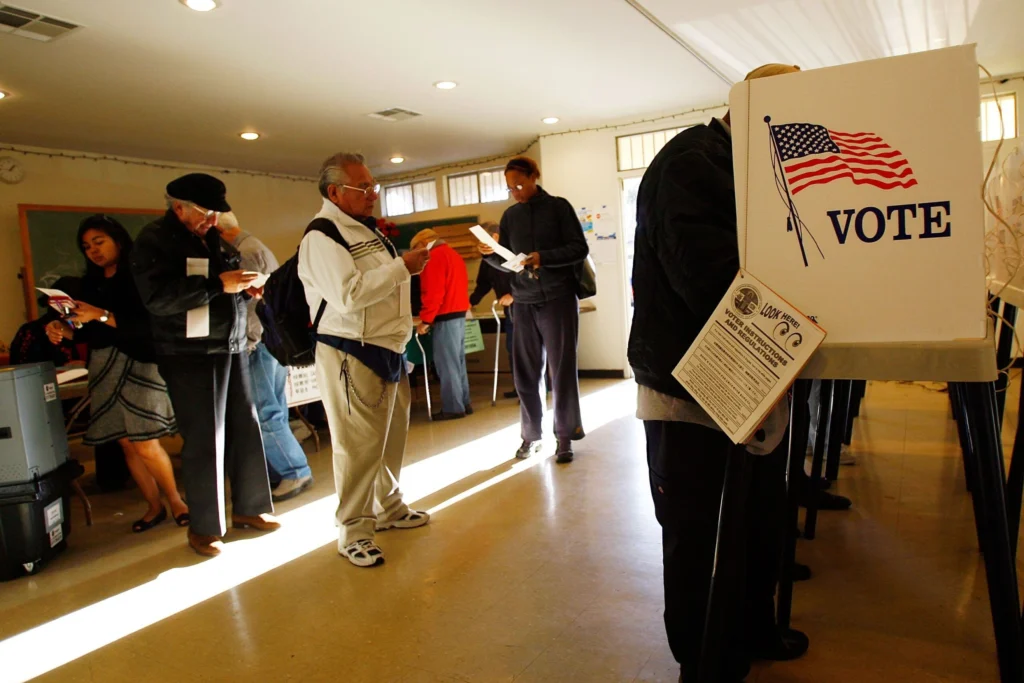
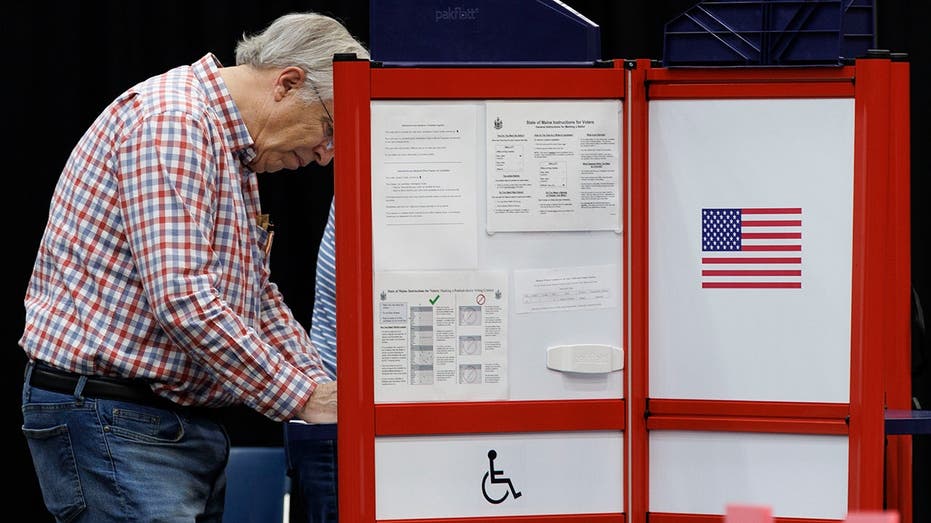
More than 5.2 million Latino voters have already cast their ballots early ahead of next Tuesday’s midterm elections in the United States. So far, this represents an 80% increase compared to 2022, according to data released by the organization Voto Latino.
An analysis by the platform TargetSmart shows that the more than 5.2 million early votes from Latinos stand in contrast to the 2.9 million recorded during the same period in the 2022 legislative elections. This figure makes the Hispanic electorate the most mobilized minority group, surpassing—for the first time—Black voters, who had traditionally held that position.
“We aren’t seeing a trickle. It’s the tsunami that Voto Latino has been predicting. Latino voters are turning out to vote early because they know exactly what is at stake: it’s not an abstract debate; it’s deeply personal,” stated María Teresa Kumar, president of Voto Latino, during a virtual conference.
Furthermore, the organization highlighted the growth in the Latino youth vote: 400,000 young people between the ages of 18 and 29 have already cast their ballots, compared to 259,000 who did so in the previous midterm elections.
This increase is particularly significant in states that are key to the battle for the Senate, such as Alaska, North Carolina, Florida, Georgia, Iowa, Maine, Ohio, and Texas. In these states, Latinos account for 15% of early votes, up from the 10% recorded in 2018 and 2022.
Ready? Set. Vote!
Early Voting ENDS TODAY, October 30 for: – Arizona – Georgia – Nevada – Texas
Early Voting ENDS on SATURDAY, October 31 for: – California – North Carolina – New Mexico – Virginia
Overall voter turnout has also increased. Four days before Election Day, more than 41.3 million early votes had been cast nationwide—up from nearly 33 million at the same point in 2022—representing an increase of over 25%.
According to a Voto Latino survey of 7,000 people, the rising cost of living is the primary concern for Hispanic voters. U.S. President Donald Trump’s immigration policy also ranks among the most critical issues.
Among those surveyed, 39% called for an investigation into abuses by U.S. Immigration and Customs Enforcement (ICE), 37% demanded a legal pathway to citizenship, and 36.1% requested an end to family detention.
“This president made a serious miscalculation in thinking that Latinos wouldn’t care about mass deportations. We warned that it would affect us all—regardless of legal status or criminal history—and now the community has taken matters into its own hands and is voting accordingly,” stated Kumar.
The tight race for control of the House of Representatives and the Senate has boosted voter turnout across various segments of society, while the Latino vote is solidifying as a decisive factor in the 2026 midterm elections.
Leo XIV has become the first pope to vote in a U.S. general election, casting a mail-in ballot in a contest that will decide America's future as the Trump era slowly comes to an end.
The history professor who inaccurately predicted former Vice President Kamala Harris (D) would beat President Donald Trump (R) in 2024 is predicting a major Democrat win in the midterm elections on Tuesday.
Tomorrow Together, a leftist PAC, is launching a $4 million ad campaign against four House Republicans in competitive districts, criticizing their support for a 2025 measure that would have blocked states from regulating AI.
Rep. Nancy Pelosi (D-CA) criticized Michigan Democrat U.S. Senate candidate Abdulrahman Mohamed El-Sayed, stating that his radical views on Israel were "more than concerning."
Pope Leo XIV has cast his ballot in the U.S. midterm elections while expressing his “belief in the right and the duty of citizens to participate in democratic processes,” the Holy See Press Office announced Friday.
A Republican member on the House Armed Services Committee told Fox News Digital ahead of the midterm elections that the Trump administration has a key decision to make on the future of the U.S.-Iran war as "continuing to do just enough not to lose, but not enough to win, is not OK."
Rep. Pat Harrigan, R-N.C., made the comments as Vice President JD Vance declared during a Fox News town hall on Thursday that he promises "Donald Trump is not going to let Iran become a forever war." Official and military sources also told Fox News this week that movements are being made in the Middle East to give the president options if he decides to resume strikes against Iran.
"I share my constituents and many Americans' perspective that I'm very, very frustrated that this war is not over. The way that ultimately this administration went about conducting the war, it needed to execute it and wrap it up in a very short period of time, and we are not there yet," said Harrigan, who is running for re-election in North Carolina's 10th Congressional District.
"That being said, Iran can't have a nuclear weapon. And so at the end of the day, I do believe that this was a war that was inevitable at some point, but the party that's in power and the administration that decided to pull the trigger on it is responsible for the outcome, and they're responsible for the outcome in a very short period of time. Otherwise, things get really, really difficult," Harrigan continued. "And I think we've been seeing that, both from a political perspective but also from a policy perspective."
"And so while the administration needs to wrap this up, we are not in a forever war, but we need to make sure that we're not... we keep the mission the same. We accomplish the mission. And we do what it takes to either win or come home," Harrigan added. "And that binary decision has to get made by this administration."
Harrigan told Fox News Digital that Trump "needs to involve Congress" if he chooses to renew military action against the Iranian regime.
"I think that that will long-term set the course for the country to be resolute in affirming and actually executing and accomplishing the objectives that exist. Because look, like it or not, Congress is responsible for the funding arm of the government. And if they run out of money to accomplish the objectives, then that is not good for our strategic interests," he said. "So, in my opinion, Congress and the White House need to be very closely involved in making the next set of decisions that exist for this conflict."
"And we do need to make sure, again, that we either do what it takes to actually win in Iran, or we need to take the three out of five objectives that we've accomplished and say that, you know what? We've largely accomplished our strategic objectives. We've got more work to do over the long-term that's going to require consistent and persistent over the horizon monitoring of their nuclear program. And we're going to have to mow the lawn every now and again, and everybody's got to realize that, and leave, right?" Harrigan continued, mentioning how the U.S. has prevented Iran from obtaining a nuclear weapon and eliminated Tehran's missile and drone production.
"But we've got to choose one of those two options because continuing to do just enough not to lose, but not enough to win, is not OK," he said. "It's not OK for the American people, it's not OK for our troops, it's not OK for geopolitical and economic stability. And it does not serve the long-term strategic interests of the United States. So it's time to choose."
Harrigan, a Green Beret and business entrepreneur, is running for re-election on Tuesday in North Carolina. He is facing off against Democrat challenger Ashley Bell, a physician associate, and Libertarian candidate Steve Feldman, who ran unsuccessfully for the seat two years ago.
As a current member of Congress, Harrigan told Fox News there is "no question" the Republican Party's House majority is at stake heading into Election Day.
"Whoever has 218 votes gets to chart the course of the direction of the House, the work that its committees do. And in particular, as it relates to the Trump administration, whether or not President Trump's going to get impeached," he added.
"What this boils down to is the future direction of the country. Are we going to be stuck looking backwards instead of actually looking forwards, dealing with the actual business of the county and the free world, or are we going to be stuck in some sort of a Democratically-led nightmare that is simply going to be obstructionist to the conservative principles and values that people voted for in 2024?" Harrigan asked. "That's what's on the line this election cycle."
The Senate’s No. 2 Republican believes that Senate Minority Leader Chuck Schumer, D-N.Y., had a hand in the alleged scheme unfolding in the Alaska Senate race.
Operatives for Rep. Mary Peltola’s Senate campaign, along with top aides in Senate Democrats’ campaign apparatus, the Democratic Senatorial Campaign Committee (DSCC), are alleged to have been involved in creating one of the stranger races this election cycle: finding and recruiting another candidate named Dan Sullivan to run against the incumbent Sen. Dan S. Sullivan, R-Alaska, according to reporting from The New York Times.
National Democrats have maintained they had no hand in the move, but Senate Majority Whip John Barrasso, R-Wyo., told Fox News Digital in an interview that he believes the campaign received help from the very top.
"I mean, this is criminal behavior to steal the Alaska Senate race, it's now been fully exposed," Barrasso said. "And there is proof that the Peltola campaign knew about it, and that Schumer schemed and colluded with them for over a year to try to search for and then coax a decoy of Dan Sullivan onto the ballot with a purpose only to deceive the voters."
Schumer’s office and Peltola's campaign did not respond to requests for comment from Fox News Digital.
The peculiar situation in Alaska has been ongoing for months and has sparked legal battles at the state and national levels, as well as condemnation from Republicans across the country, including Sen. Lisa Murkowski, R-Alaska.
Murkowski argued on X that "ballot-stacking should have no place in our electoral process."
"Alaskans deserve the honest truth from Mary and her campaign — what has been revealed is a pattern of lies and coverups and a culture of deception that belongs nowhere in our elections or among our elected officials," she said.
Much of the consternation over the matter is because of Alaska’s ranked-choice voting system, meaning that both candidates named Dan Sullivan, Peltola and Gerald Heikes will all appear on the same ballot.
Peltola weighed in on Thursday at an event in Juneau, Alaska, telling supporters she wanted to "clear the air."
"I knew nothing about any other candidates on the ballot except for me and the incumbent," Peltola said. "That is all I have ever known about. I am not interested in tricking voters. I know I can beat Dan Sullivan."
The point of the scheme was allegedly to sow confusion among voters as to which Sullivan was which in an attempt to give Peltola an edge. Barrasso said that while he was confident the incumbent Sullivan would win, the plan showed that the "Democratic campaign has secretly been making fun of Alaskan voters for being so easily tricked."
Ahead of the midterm elections, billionaire Elon Musk warned that a Democratic sweep of the White House and Congress in 2028 could spell the "end of democracy," outlining three moves he fears the party would make to cement its political power.
The stark warning comes as Musk pours money into Republican campaigns, arguing that maintaining GOP control of the Senate is essential to preventing what he described as a "permanent one-party state."
Musk outlined his three "biggest" concerns about Democrats gaining unified control of Washington, in an X post, warning that the party would move to grant statehood to Washington, D.C., and Puerto Rico, legalize immigrants living in the country illegally and expand the Supreme Court.
"My biggest concern is that if there is a clean sweep by Democrats of the House, Senate and Presidency in 2028," Musk wrote, listing three top scenarios he fears.
Musk argued that granting statehood to Washington, D.C., and Puerto Rico would help Democrats gain a strong Senate majority, while opening the borders and legalizing immigrants in the country illegally would help the party cement a lasting electoral advantage.
He also warned that Democrats would increase the number of Supreme Court justices to secure an immediate majority on the nation's highest court.
"This would result in America becoming a permanent one-party state and the end of democracy in any meaningful sense of the word," Musk wrote.
The Tesla and SpaceX CEO argued that Republicans need to hold at least 51 Senate seats following the 2028 elections to prevent those outcomes, making an urgent appeal to voters ahead of the midterms.
"That is why you should vote for Republican senators this election," Musk wrote. "Other reasons are irrelevant compared to this one."
The Senate is still a toss-up with six states to decide the majority, according to Fox News Power Rankings. The best outcome predicted for the Democrats is that their ceiling rises to 54 seats and for Republicans, they could see them retain control with up to 52 seats.
Musk's warning comes amid his financial involvement in Republican campaigns, with the billionaire directing significant resources toward helping GOP candidates win elections.
He contributed hundreds of millions of dollars to Republican political groups ahead of the November midterms. A representative for his America PAC confirmed to Fox News earlier this month that the billionaire had contributed $276 million to Republican super PACs and organizations over the previous three months.
That includes $158 million to the Senate Leadership Fund, a super PAC aligned with Senate Majority Leader John Thune, R-S.D., and $10 million to Lone Star Liberty PAC, which is backing Texas Republican Senate candidate Ken Paxton.
Former Secretary of State Hillary Clinton took aim at Musk's political spending, accusing the billionaire of attempting to use his fortune to influence the midterm elections in Republicans' favor.
"Elon Musk is flooding the midterms with money to help Trump," Clinton wrote on X earlier this week. "But even his millions may not be enough to counteract reality."
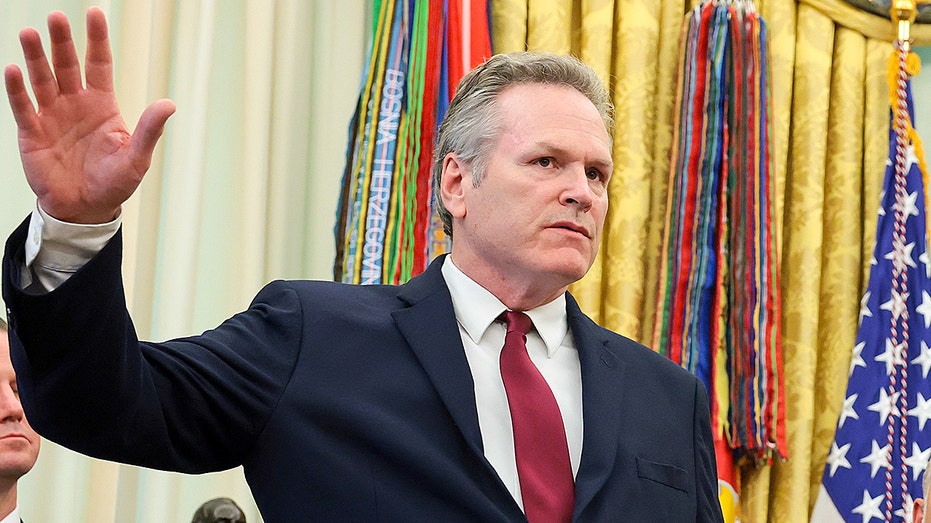
Alaska Gov. Mike Dunleavy warned that an alleged Democratic scheme to recruit a second "Dan Sullivan" into the state's pivotal Senate race exposed a deeper vulnerability in its election system, telling Fox News Digital in an exclusive interview that his administration is investigating newly surfaced evidence just days before the midterms.
Dunleavy said The New York Times uncovered details that state officials did not have when they initially challenged the second Sullivan's candidacy this past summer — including alleged involvement by operatives connected to Democratic nominee Mary Peltola.
The Republican argued Alaska's relatively new election system helped make the controversy possible, as state and federal authorities pursue separate investigations into potential wrongdoing.
"This would have never happened if we didn't have ranked-choice voting," Dunleavy told Fox News Digital. "If this was a historical primary, a primary that our fathers and grandfathers had, this individual [retired schoolteacher Dan Sullivan of Petersburg] would not have gotten out of the primary."
Dunleavy cited reporting that the Petersburg Sullivan initially denied having been recruited, but the Times found Peltola-connected operatives had worked to recruit spoilers named "Dan Sullivan" from around the state.
"We're compelled to do an investigation on behalf of the people of Alaska, because as they say in Alaska, which is a big fish state, if you can smell the fish way far from the dock, you've got a real problem," Dunleavy said.
"And so, this really does stink."
Alaska's election system advances the top four finishers from a nonpartisan primary to a general election in which voters rank candidates by preference. Dunleavy argued that traditional party primaries would have prevented the second Sullivan from reaching November's ballot.
"Our job as executives are to make sure that we can provide our people with an election that everyone could look at it and say that was done with integrity. And right now this cast, unfortunately, a pall over all of this," he said.
Dunleavy said the state's initial investigation in June after the Petersburg Sullivan surfaced ultimately led to the state Supreme Court, which allowed both Sullivans' names on the ballot, with Senator Sullivan marked "incumbent."
"Initially, when [Petersburg Sullivan] contacted the Division of Elections, he wanted his name listed as Daniel S. Sullivan. That's not his middle initial. That's the middle initial of our incumbent senator. His website looked very, very, very similar to our incumbent senator. And we went to court over this, and the Supreme Court of Alaska ruled that they were going to put his name on the ballot," he said.
"We knew there was a problem, but the courts had decided. And then of course, the article comes out in the Times and there's a whole list of issues that we were never privy to."
The new reporting identified contradictions in accounts of what transpired over the summer, including whether there was contact between Petersburg Sullivan and any campaigns.
"There's a lot more smoke and a lot of fishy smell after this article came out," he said.
In Alaska, elections are overseen by the lieutenant governor, not the governor, and Fox News Digital reached out to Lt. Gov. Nancy Dahlstrom for comment on whether or how her office is investigating.
"They're obviously shoulders deep now in an election with all the people and all the polls open here with early voting. The governor's office is in charge of making sure that there's execution of the laws. That's what this investigation is going to look at to see if there were any violations of law or if there was a civil violation as well," Dunleavy added.
Peltola's campaign has denied involvement with either Sullivan campaign. Peltola also dismissed the controversy as a distraction during a campaign appearance Wednesday, while the New York Times reported that operatives connected to her campaign participated in efforts to recruit potential spoiler candidates.
Fox News Digital reached out to Peltola for additional comment.
Former FEC Chair Hans von Spakovsky told Fox News Digital that something investigators should look at is whether individuals paid by Peltola or another political organization were providing any "in-kind" services to the Petersburg Sullivan.
"In-kind services are considered a contribution to a campaign. Failure to disclose such services is a violation of federal law. Also, if the fair market value of the services provided to the campaign exceeds the maximum contribution allowed to a federal candidate, that is also a violation of federal law. If this was knowingly and intentionally done, it moves from being a civil violation to a criminal violation of the law," von Spakovsky said.
Von Spakovsky pointed to an FEC case involving socialist Sen. Bernie Sanders' 2016 presidential campaign, which accepted campaign assistance from Australian Labor Party members whose travel expenses and stipends were paid by the foreign political organization.
With Election Day approaching, the governor said the investigation would continue for as long as necessary, warning that the alleged effort could foreshadow new attempts to manipulate elections through misleading candidacies and other tactics.
Fox News Digital's Hannah Brennan contributed to this report.
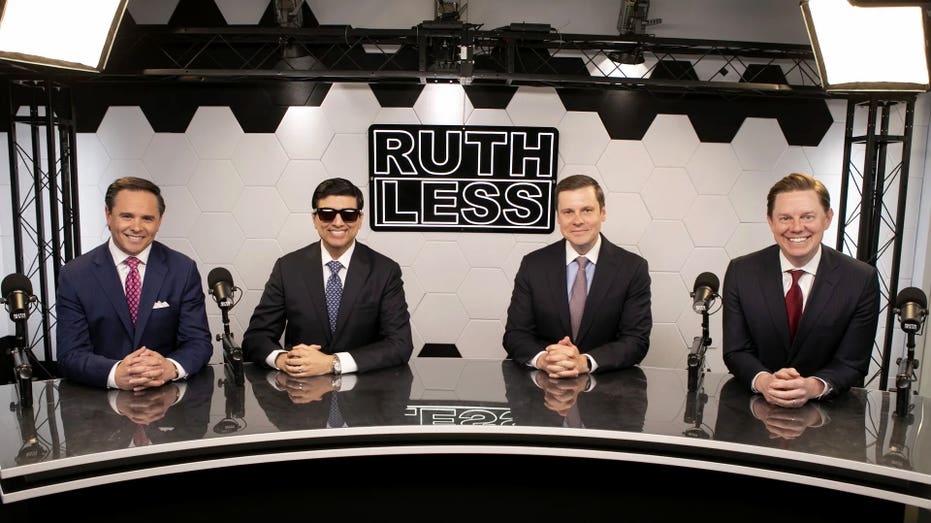
The "Ruthless Podcast" Fellas have some of the best political insights in the game, and we asked them what they'll be looking at ahead of Tuesday's critical midterms.
Control of the House and U.S. Senate are at stake as Democrats try to take back Congress after Republicans swept the White House and both chambers in 2024.
From what polls are or aren't reliable, to the races sparking the most interest, to what the media continues to get wrong in political coverage, the Fellas have your answers.
If you could only watch one race on election night, which is it, and what’s the first thing you check when the polls close?
Maine Senate. Susan Collins has an incredible ability to lose every poll and win every election, thus far. Will she be able to overcome the atmosphere of this election is a huge question. The first thing I check when polls close is early exits, which I find to be the most reliable and illuminating data on election night.
What’s the one number you trust more than the polls (early vote, turnout, special election overperformance, fundraising, something else), and what threshold would make you feel good or bad about your side?
EARLY EXIT numbers are the most trustworthy! Dems always talk about a red mirage followed by a blue wave on election nights. If early exits don't go Republicans' way, it will be a bad night.
What is the media overhyping going into the midterms, and what is it ignoring?
The media is overhyping Barack Obama as a candidate surrogate. He stumped for Hillary [Clinton], he stumped for Kamala [Harris], and they both lost. Obama has no coattails.
Which poll, pundit, or conventional wisdom do you not believe, and why?
I do not trust any polls. Early exits are the only reliable source of data.
If you could only watch one race on election night, which is it, and what’s the first thing you check when the polls close?
Ohio Senate. Watch returns in the 50 counties where President Trump outperformed Mitt Romney by 10 or more points.
What’s the one number you trust more than the polls (early vote, turnout, special election overperformance, fundraising, something else), and what threshold would make you feel good or bad about your side?
[Mike] Rogers' performance in Oakland County is a number to watch. And also his share of the vote in Michigan’s Seventh Congressional District. He could come out on top if he outperforms his 2024 vote totals in those areas.
What is the media overhyping going into the midterms, and what is it ignoring?
The media always overhypes late-breaking vibes and underreports multi-year, local level grassroots operations. Good candidates can overperform the environment with competent campaigns.
Which poll, pundit, or conventional wisdom do you not believe, and why?
Public polling is often less reliable than professional private surveys based on years of state and local level expertise. So I’m always skeptical of public polling. But the one thing they’ve captured accurately is the difficult environment Republican candidates are currently navigating.
If you could only watch one race on election night, which is it, and what’s the first thing you check when the polls close?
Michigan's Senate race. First thing we're checking is Abdul El-Sayed's support with Black voters in Wayne County.
What’s the one number you trust more than the polls (early vote, turnout, special election overperformance, fundraising, something else), and what threshold would make you feel good or bad about your side?
Early vote. Banking votes early makes you sweat election night less, and it lets you know where you're getting enthusiasm.
What is the media overhyping going into the midterms, and what is it ignoring?
The Florida Senate race. Angie Nixon is a DSA loon and every interview she gives is a disaster. The media hasn't really covered the ranked choice process in Maine and Alaska. It's possible it could take weeks for us to know who has the Senate Majority.
Which poll, pundit, or conventional wisdom do you not believe, and why?
The pollsters who were off by 10+ points in the Dem primaries in Wisconsin and Michigan and are now publishing general election polls.
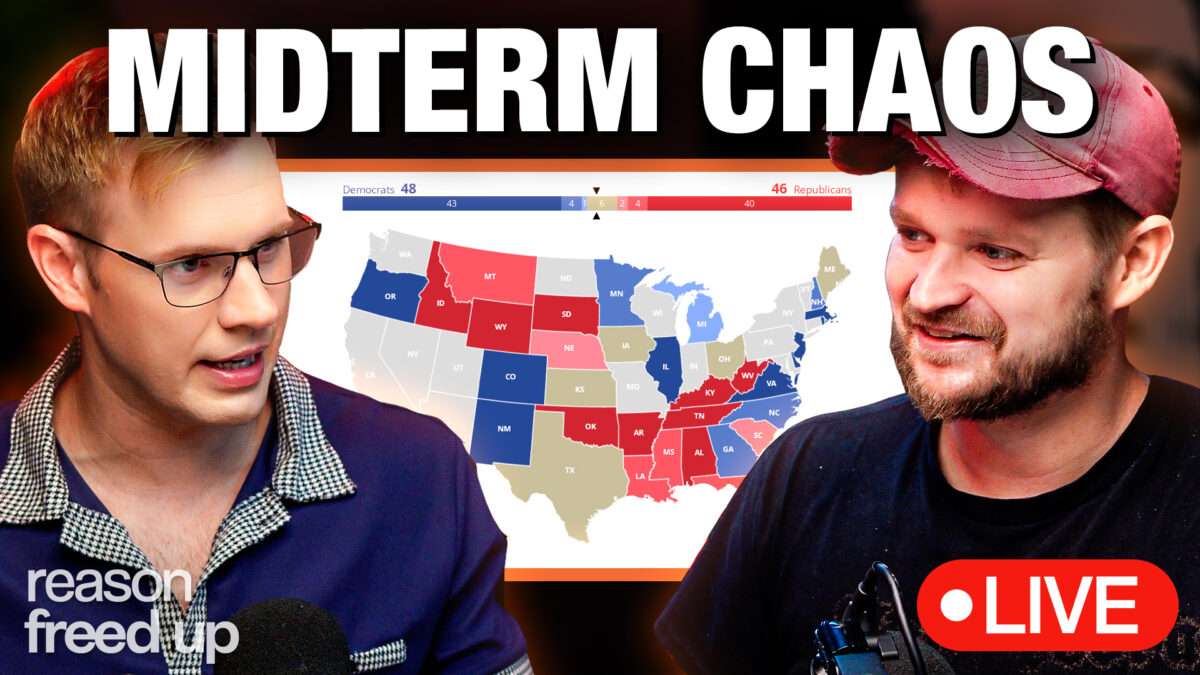
On election night, Tuesday, November 3, at 10 p.m. ET, Robby Soave and Christian Britschgi go live for Freed Up to react to the midterm results as they roll in. Expect the same smart, unserious, happily unhinged riffing Freed Up is known for, with plenty of roasting, a few real debates, and no shortage of jokes at the politicians' expense. Skip the doomscrolling and spend the night with two libertarians who'd rather laugh than panic.
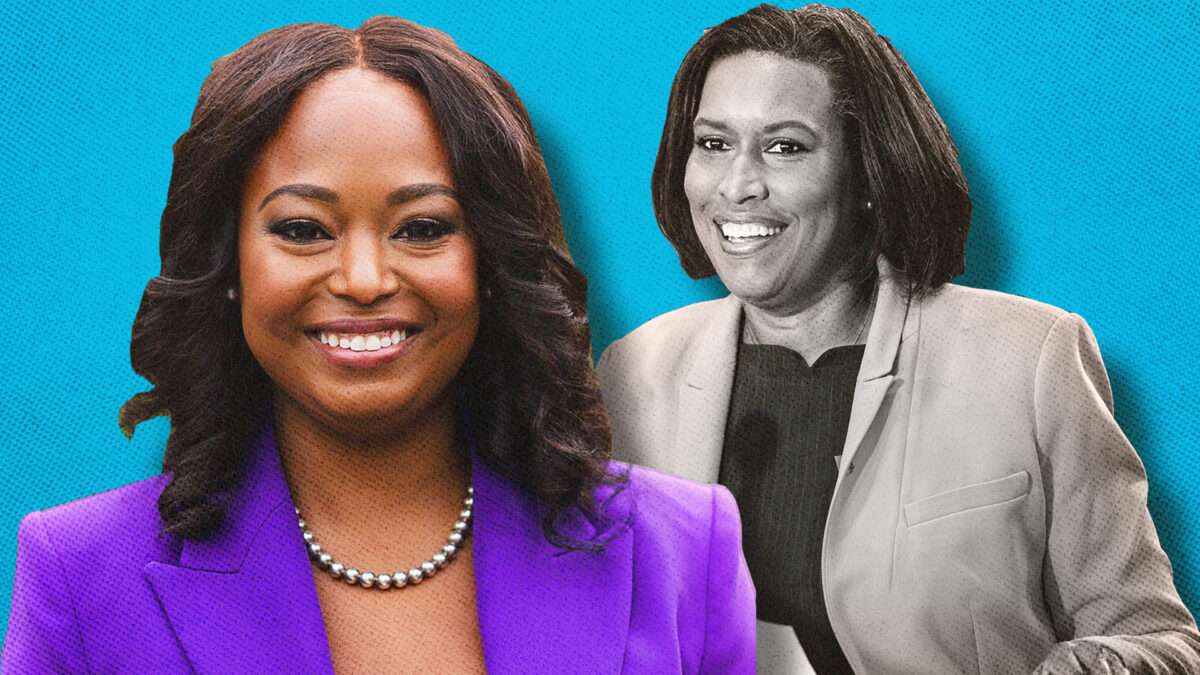
Early voting is still ongoing in Washington, D.C.'s elections, but everyone already knows who the winner of the mayoral race is going to be.
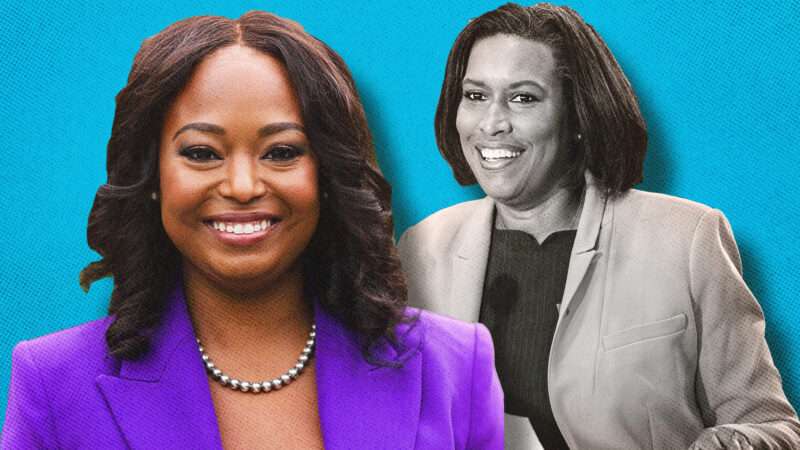
In June, Councilmember Janeese Lewis George won a commanding 54 percent of the vote in the Democratic primary. In one of the bluest cities in America, that all but assures she'll be the next mayor.
She will replace retiring three-term Mayor Muriel Bowser, who has developed a reputation for a go-along-to-get-along administration, neither a bold good-government reformer nor a progressive activist.
Her successor is more ambitious. Lewis George is a card-carrying member of the Democratic Socialists of America in the mold of New York City Mayor Zohran Mamdani (whose endorsement she sought). Her campaign platform called for more childcare subsidies, more housing subsidies, more rent control, more taxes, and, perhaps most importantly of all, a more confrontational approach to President Donald Trump.
For the past several months, District politicos have been furiously trying to read the tea leaves on what a Lewis George administration will look like in practice.
Will D.C.'s precarious fiscal situation and tense relationship with the Trump administration force her to moderate? Or will she stick to her ideological guns come hell or budget crisis and federal takeover of the city?
Budget Blues
When it comes to spending, Lewis George has the biggest ambitions and the least room to maneuver.
As D.C.'s Democratic mayoral primary was wrapping up, the District was also in the midst of a bloody fight over its FY 2027 budget.
Bowser had proposed some $450 million in cuts to bring the budget into balance as required by law. The D.C. Council, with Lewis George's enthusiastic support, rejected those cuts and filled the gap by tapping one-time revenues and the city's fiscal reserves.
Bowser let the budget bill become law without her signature in late June, warning in a letter that the council's rejection of her cuts would leave an $837 million fiscal cliff come the next budget cycle.
Lewis George, by now the presumptive mayor, clapped back with her own statement calling Bowser's proposed cuts "devastating" and "irresponsible."
In the run-up to the general election, she's promised to balance the budget and enact her new spending programs without having to raise taxes on working and middle-class residents.
This will allegedly be accomplished through "forensic" audits of government departments to identify inefficient spending.
As we learned with DOGE, however, the fraud, waste, and abuse fairly often fails to deliver the money needed to cover new permanent spending programs or tax cuts.
In this way, Lewis George's position is similar to that of fellow DSAer Mamdani in New York, who came into office with grand spending pledges, fiscal gaps to close, and only so much room and power to raise taxes.
Mamdani, at least, has a relatively friendly partner in the form of New York Gov. Kathy Hochul, who's assented to some new taxes and state aid to the city's budget.
Lewis George is likely to benefit from a Democratic takeover of Congress, which will be more likely to assent to local tax increases. But for her first two years in office, she'll still be left dealing with a Republican president who's proven remarkably willing to interfere with local D.C. policy.
The Trump Question
The most thankless task a D.C. mayor can have is appeasing a Republican president. In his second term, Trump has made this task more thankless still.
In August 2025, he surged federal law enforcement personnel and National Guard members onto D.C. city streets and placed the city's Metropolitan Police Department under federal control as part of a showy anti-crime crackdown in the District.
Under the Home Rule Act, which established D.C.'s elected municipal government, Trump was well within his rights to federalize MPD for a period of 30 days. But the president made a number of comments about how he might try to extend his control over the police department for longer still.
The move outraged the liberal city. Protests were held. Sandwiches were thrown. Stickers and yard signs demanding the feds back off appeared everywhere.
Bowser, whose control of MPD was being usurped, largely tried to calm everybody down. At a press conference on the day that Trump announced federalization of the police, she described the move as "unsettling and unprecedented."
But she also vowed to cooperate with the administration and even said that increased police presence in some areas could be a "positive."
Her "tenor will be appropriate for what I think will be appropriate for the District," she said at that August press conference.
If the goal was to avoid prolonged federal control of MPD, the mayor's tenor worked. After 30 days, the mayor regained control of the department.
But that even-handed approach was not what the city's left wanted to hear.
Lewis George called it an "outrageous action" and vowed to fight the "weaponization" of Home Rule.
In a Democratic primary in which voters were eager to vent their frustration at the new administration, this undoubtedly helped her.
In the days before the primary, Trump threatened an end to Home Rule if Lewis George won the election. "Residents said to me, 'If Trump doesn't like you, I love you,'" she told a reporter in response.
Here too, there remains an open question whether Lewis George will continue to play the role of Trump foil once in office. Fighting the administration at every turn would cause the new mayor a lot of headaches. It was also, to a large degree, what she was elected to do.
Thus far, Lewis George has been somewhat cryptic about what her posture toward the White House will be.
"I'm willing to work with this administration to the benefit of D.C. residents, and I'm willing to stand up to this administration when it comes to just that," she told Fox 5 in late October.
View From the Top
Mayor of D.C. is generally not a great job to have for a left-wing ideologue to have. You have to balance your budget. You can't print money. Taxpayers and capitalists can escape your redistributive schemes by moving a couple of metro stops away. We don't even have any agricultural land to collectivize.
Bowser, like her last couple of predecessors, understood that paying for a large city government required keeping economic growth up and keeping the occupant of the White House happy.
Neither will be an easy task for the next mayor.
The city's economy is already in a slump. Unemployment is up. Housing development is down. And Trump has threatened time and again to end D.C.'s Home Rule and run the federal government directly.
One would hardly choose a DSA member with a long list of expensive new programs to fund and an eagerness to "fight" as the ideal mayor for the moment.
A potentially telling moment came in October, when Lewis George called for delaying consideration of a bill that would have eventually allowed autonomous Waymo taxies onto city streets. The jobs of existing drivers were too important, she said.
People who are already nervous about a left-wing mayor saw in the announcement a signal that she would not bow to reality and sensibly moderate once in office.
For an already troubled city, that would spell more trouble ahead.
In any election cycle, it’s common for candidates, officials and party leaders to save their strongest message for what’s known as a “closing argument” — a phrase the political world borrows from trial lawyers. After months of speeches, debates, advertisements, interviews and countless interactions with voters, this is the final opportunity for political players to put their best foot forward and summarize why they deserve the public’s support.
Donald Trump has spent quite a bit of time on the campaign trail lately, and I’ve heard his closing message several times. And while I’m certain the president wants voters to know something as they cast their ballots, I’m not at all sure what that is.
Modern political history offers few examples of closing arguments that appear more out of touch, self-defeating, or downright bizarre than what Donald Trump has offered his fellow Republicans ahead of next week’s midterm elections.
The Democratic message, as articulated by Barack Obama among others, is relatively straightforward: Trump and Republicans took power and made things worse. A Democratic-led Congress can serve as a check on White House abuses, hold the corrupt accountable and push policies that would help get the country back on track.
Trump’s message is … harder to nail down.
After watching his final-week rallies and reading his social media messages, it’s clear that the president cares a great deal about Republican Sen. Jon Husted’s buttocks. And cognitive tests. And the oil industry’s profits. And golf courses in Washington, D.C. And his weird attempts to give artificial intelligence a new name.
It’s equally clear that Trump desperately wants Americans to hate Democratic Rep. Ilhan Omar and fear transgender Muslim immigrants who believe in communism, and who apparently want to take hamburgers away.
Does the Republican president have any policy priorities or a vision for the final two years of his term? Well, no, but he has a lot of thoughts about Bill Maher (the target of Trump’s single longest online post since launching his own social media platform), White House renovations and why it would be awesome if New Mexico changed its name.
“Many Republicans, and even some in Trump’s orbit, don’t quite get it,” The Atlantic’s Lemire added. “What has happened, they ask, to the instincts of the man who authored two of the most improbable victories in American political history?
“Trump’s superpower was his intuitive understanding of what motivated his supporters. Many Republicans privately tell me that he’s lost that feel. Trump now lives, they think, in a gilded bubble, palling around with billionaires, oblivious to — and, even worse, uncaring about — the problems facing so many voters,” he said.
There’s already ample speculation about whom the White House will blame if Democrats fare well next week. Whether Trump is prepared to acknowledge his own role in crisscrossing the nation, peddling weird absurdities that only he seems to care about, remains to be seen.
“With the DOJ bringing frivolous lawsuits against the states and election boards that are clearly an attempt to interfere with the election, can these attorneys be disbarred?” — Karen
Hi Karen,
Yes, they can be.
Lawyers have faced bar discipline stemming from their support of President Donald Trump’s failed effort to overturn the 2020 election he lost to Joe Biden. The final word on those disciplinary proceedings is still unfolding, including with John Eastman’s pending Supreme Court petition challenging his California disbarment. I mention that timing factor to underscore that these cases can take years to resolve.
With that in mind, there is an effort to sanction Justice Department lawyers who sued to intervene in Alaska’s U.S. Senate contest just ahead of Election Day. Their Oct. 22 complaint seeks to make a federal case out of the concern that GOP Sen. Dan S. Sullivan could lose a key race to Democratic challenger Mary Peltola, due to the presence on the ballot of Daniel J. Sullivan, whom the DOJ accused of running “with the intention of misleading supporters of Senator Sullivan into voting for him.”
The lawsuit, which attempts to block the state from certifying the results if the Republican incumbent loses, has been uniformly panned by election law experts. An amicus brief from University of California at Los Angeles law professor Richard Hasen collects quotes from scholars across the political spectrum who have called the Justice Department’s legal argument “one of the worst I have ever seen,” “completely meritless,” “scraping the bottom of the barrel,” a “desperation play” that has “zero basis in the law,” “one of the weakest lawsuits I’ve ever seen,” “uniquely embarrassing, likely filed only because Trump himself insisted on it” and “unconstitutional and unprecedented.”
Hasen, who directs the Safeguarding Democracy Project, said in his brief that the federal government’s “error-filled complaint seeks to derail Alaska’s normal and constitutionally protected processes for certifying election results, and it includes the preposterous argument that the preamble to a federal voter registration statute mentioning ‘integrity’ grants the federal government vast powers to interfere with state election certification processes (and who knows what else).”
A motion from a group led by the League of Women Voters argued that the judge presiding over the case, Obama appointee Sharon Gleason, should not only dismiss the “frivolous, election-eve lawsuit,” but also sanction the lawyers who brought it. The voting rights coalition said the court “would do American democracy and the rule of law a further service by considering Rule 11 sanctions against the attorneys who signed the Complaint in the name of the United States Department of Justice.” Rule 11 is the federal civil procedure rule that governs frivolous and dishonest court filings and sanctions for bringing them.
The DOJ’s complaint was signed by Stanley Woodward, a high-ranking government lawyer in Trump’s second term who has been pressing the president’s priorities in court and previously represented various Trump-aligned figures while in private practice, and Alaska-based prosecutor E. Bryan Wilson.
Woodward and Wilson filed an amended complaint on Thursday that cited this week’s reporting from The New York Times that said the Peltola campaign worked with people trying to recruit the other Sullivan to run. The new complaint does not quote the Times’ caveat that “Ballot-stacking tactics are common in politics and generally considered legal — and have been employed by both parties in Alaska.”
Whatever the political effect of the Times’ reporting, it doesn’t retroactively make the DOJ’s suit more legally meritorious, nor does it retroactively make the filing of that suit more ethical.
We don’t know yet how Gleason will rule (or what will happen on any appeal), or whether she will impose sanctions. Even if she does, that wouldn’t necessarily endanger the attorneys’ law licenses. Whether that happens is up to the state bars and courts where they are licensed.
Earlier this year, watchdog group Campaign for Accountability filed a bar complaint against Woodward in the District of Columbia, where he is licensed, asking the authorities there to investigate potential ethics violations over his involvement in the “anti-weaponization fund,” which the group said would compensate “the same January 6 defendants and Trump associates he previously represented as a private defense attorney.” Attorney General Todd Blanche said the DOJ wasn’t moving forward with the fund, but pardoned Jan. 6 defendants, including Woodward’s former clients, are still pressing compensation claims.
At a hearing Friday in the protracted litigation over the East Potomac golf course, with Woodward representing the government, the Washington, D.C., judge handling that contentious case reportedly began by reading the D.C. bar’s rule about candor to the court.
Keep in mind that disbarment is the most extreme form of attorney discipline. Other options range from reprimand to suspension. Again, whether any discipline comes from current events could take years to know.
Ninety years ago, on Oct. 31, 1936, Literary Digest, which had correctly forecast presidential election winners since 1916, predicted that Alf Landon would beat Franklin Delano Roosevelt in the upcoming election.
Roosevelt won handily. The Digest’s poll surveyed 10 million people via postcard, using telephone books and car registration lists for the information. Even though almost 2.4 million people responded — an impressive response rate — the misleading sample provided inaccurate results. Literary Digest folded shortly afterward.
Two years later, in 1938, Gallup started tracking presidential approval ratings. Even so, polls remained far from perfect. In 1948, the Chicago Daily Tribune’s embarrassing front-page declaration "Dewey Defeats Truman" stemmed in part from a misuse of polling. The paper relied on earlier polls that did not reflect the Election Day reality in making its prediction.
As the science of polling improved over time, campaign pros began to rely on pollsters. John F. Kennedy was the first president to be strongly associated with a polling firm, as he used Lou Harris and the Harris organization's polls in his 1960 campaign for president.
In the 1970s, we witnessed the rise of the celebrity pollsters: Pat Caddell for Jimmy Carter, Richard Wirthlin for Ronald Reagan, and Stan Greeberg and Dick Morris for Bill Clinton. These pollsters were successful but not infallible.
Caddell, for instance, was largely responsible for Carter's 1979 "Crisis of Confidence" speech. He misjudged the public mood, and Carter’s "malaise speech" became one of the most disastrous presidential speeches of all time.
Morris, for his part, had a tempestuous relationship with Bill Clinton. They once reportedly came to blows while Morris was advising Clinton during his time as governor of Arkansas.
Morris was initially on the outs and Greenberg in charge of polls when Clinton won the 1992 election. But Morris secretly came back and started advising Clinton after the Democrats lost control of Congress in the 1994 "Republican Revolution." Morris even had a code name — "Charlie" — to keep his identity secret from the more liberal White House staff, which resented Morris’ pushing of Clinton to the center.
Morris would poll everything, even where Clinton should go on vacation. When Clinton left office after two terms in 2000, he had survived the Monica Lewinsky scandal — despite polls showing that Americans strongly disapproved of Clinton's behavior. The most important number for Clinton was the Gallup approval rating. He left office at 66%, one of the highest outgoing figures in history.
21st-century presidents would be thrilled to get approval ratings anywhere near Clinton's final number. George W. Bush hit 86% after the 9/11 terror attacks, but that did not last. For the most part, the "low and steady" phenomenon has meant that presidents in this century have struggled to get about 50% approval.
Still, the polling mishaps have continued. In 2004, exit polls predicted a win for John Kerry over George W. Bush. Campaign adviser Bob Shrum even said to Kerry on Election Day, "Can I be the first to call you, Mr. President?" The exit polls were wrong, and Bush won a second term.
In 2012, Mitt Romney’s campaign wrongly thought it was headed for victory when its pollster made overly optimistic weighting assumptions. The turnout model incorrectly assumed that Barack Obama would not generate the same level of youth and minority turnout that he had in 2008.
Polling took another big hit in 2016, when pollsters confidently predicted that Hillary Clinton would defeat Donald Trump. She didn't, and the pollsters’ justification that they had the popular vote right but got the election result wrong did not help matters.
In our current midterm elections, we have seen a new wrinkle. Partisan polls overstated progressive support in the primaries, skewing the results and causing some candidates to drop out in the face of the inaccurate data. This latest mishap reinforces the lesson that polling often fails, although rarely in the same way twice.
While technology and the science of polling are much better today than in 1936, the improvements complicate matters further. While nearly everyone has a phone, they also have caller ID and don't answer calls from unfamiliar numbers. Response rates shrink, increasing the size of the "silent majority."
In this new environment, human modeling decisions ironically become more, not less, important. Polling errors come not from new techniques or technologies but from imperfect human decisions about how to deploy the new technologies. In making those decisions, pollsters can overreact to what went wrong beforehand. In this, pollsters are like generals, often fighting the last war.
In the end, polls are more accurate as snapshots of opinion rather than predictors of behavior, specifically, who will actually submit a ballot. This means that whatever the polls say, the public should be wary. To borrow from the Psalms, put not your trust in polls, and get out and vote.
Republicans are losing ground in a state where Democrats are seeking to retain Senate seats and win the governor’s race.
Less than a week before the midterm elections, polls predict that voters in Georgia are not leaning toward Republicans in a state that plays a decisive role in U.S. politics and gave Donald Trump a narrow victory in the 2024 presidential election.
“Republicans are disappointed. Trump promised he would lower prices, and obviously, it was a scam,” said David, a Democratic volunteer who goes door to door in neighborhoods across the city of Macon to make sure no progressive vote is lost.
Polls point to a likely victory for Sen. Jon Ossoff, who is seeking reelection against Republican Mike Collins and could even become a presidential candidate in 2028.
Democrats need to hold on to their seats in Georgia and Michigan and flip four Republican-held seats in swing states to win a Senate majority.
They are also hoping to make Keisha Lance Bottoms the first woman and first African American to serve as governor of Georgia, although polls show a dead heat with Republican Rick Jackson.
🇺🇸 Obama blasts Trump’s ‘chaos and cruelty’ ahead of US midterms
Former US president Barack Obama delivered scathing criticisms of current leader Donald Trump at a rally in Georgia to support Democratic candidates ahead of the November 3 midterm elections. pic.twitter.com/CyTKSsO8up
In Georgia, every vote counts. Trump defeated Harris in 2024 by 115,000 votes, while Joe Biden won in 2020 by just 12,000 votes, a margin Trump unsuccessfully challenged with allegations of fraud.
Few states embody the electoral pendulum as well as Georgia, where a population boom and decades of economic growth have transformed a Republican stronghold in the South into a state where either party can win.
While the Atlanta metropolitan area, home to Coca-Cola, CNN and Delta Air Lines, is a major source of Democratic votes, the state’s iconic peach orchards, by contrast, are turning Republican red.
💙 GEORGIA VOTE BLUE UPDATE:
With ONE day of early voting left, Democratic voters are still showing up strong, outpacing red counties relative to 2024!
Over 2.5 million ballots have been cast statewide—let’s keep expanding our lead! 🗳️✨
The birthplace of Martin Luther King Jr. and the cradle of the civil rights movement, Georgia also has an African American population of more than 30%, above the national average.
Mobilizing those voters was one of Obama’s goals when he chose Atlanta for his final major campaign rally last Wednesday. “Obama represents hope, faith and class. He is the best of the best; what we have now is garbage,” said Patricia, an African American voter who attended the event.
So far, voter turnout in the Southern state has already broken records, with more than 2.3 million people casting early ballots, surpassing the previous high set during the 2022 midterm elections.
Although early voting figures cannot predict the outcome, some indicators favor Democrats, with higher turnout in urban centers and more moderate participation in rural areas.
trump’s net approval across all 50 states w/ less than one week until midterms
(only 10 states rate the president net positively, and approval is underwater in most states with key races)
Aware of what is at stake, Trump has visited Georgia twice in two weeks, most recently last Saturday, when he announced a multibillion-dollar investment by Audi to build a plant that would bring thousands of jobs, according to him.
The economy dominates a campaign shaped by public frustration over the high cost of living and rising gasoline prices amid the war in Iran.
“Women voters in counties across the Atlanta metropolitan area tend to be decisive. Gasoline and food prices are the main issues,” political scientist Kerwin Swint said.
Obama has tapped into the frustration of Americans struggling to make ends meet with a viral joke that has angered Trump: He compared the White House’s gold decor to the tacky aesthetic of The Cheesecake Factory restaurants.
Outside his rally, a man was selling T-shirts depicting the White House transformed into one of those restaurants. He said they sold out in the blink of an eye. Tuesday will show whether that is a reflection of what will happen at the ballot box.
No significa nada si no tiene ese ritmo brasileño. Lo que está en juego no podría ser más alto: es una cuestión de vida o muerte. Así que los brasileños salieron a las calles —y a las casillas electorales— y lograron salir adelante.
No hicieron nada menos que domar a la Madre de Todas las Guerras Híbridas y derrotar, aunque fuera momentáneamente, a una coalición poderosa y tóxica que incluía toda la fuerza de la administración de la «Doctrina Donroe»; el tecnofeudalismo de Silicon Valley, especialmente impulsado por Meta; Wall Street y la Diosa del Mercado; los múltiples tentáculos de Zionism Inc.; las viejas élites reaccionarias —y sus medios de comunicación—; las nuevas élites ostentosas; la demencia evangélica; y, por último, pero no menos importante, una mediocre dinastía neofascista empeñada en convertir a Brasil en una neocolonia extractivista en beneficio de «La Voz de Su Amo».
El efecto —tranquilizador— es similar al de un himno de bossa nova de Antônio Carlos Jobim cantado por Frank Sinatra.
Sí, Brasil es demasiado grande —y demasiado indómito— para ser el patio trasero de nadie. Y qué giro tan radical, en lo que respecta a Lula personalmente: la geopolítica no ha visto un regreso como este desde la Batalla de Stalingrado.
Perdimos: así que la elección estuvo «amañada»
El día de las elecciones amaneció en un clima de gran tensión —pero con Flávio Bolsonaro aún con un 82 % de posibilidades de ganar, según Polymarket, los favoritos de la DARPA. Es como si el Estado profundo supiera el resultado de antemano —tal como en la primera ronda de votación—.
Sin embargo, al final Lula ganó por 4.4 millones de votos. No sin mucho drama. Justo antes de que cerraran las urnas, un juez de la Corte Suprema —quien anteriormente había sido el abogado personal de Lula durante el caso de corrupción «Lava Jato»— extendió el horario de votación en todo el país por dos horas.
El tribunal electoral debería haber tomado una decisión al respecto. No lo hizo porque otro juez de la Corte Suprema —nombrado por Bolsonaro— estaba demorando el proceso.
La prórroga fue vital, porque para entonces ya se había demostrado que los alcaldes bolsonaristas estaban obstaculizando deliberadamente el transporte público, especialmente los autobuses, en bastiones de Lula como Salvador, en Bahía: una táctica sacada directamente del manual de sabotaje oligárquico, utilizada para suprimir el voto popular.
El dato clave es que ambas campañas habían solicitado una extensión del horario de votación. Y eso desmiente por completo las afirmaciones de los imbéciles bolsonaristas y vinculados al movimiento MAGA de que la elección estuvo «amañada».
Como era de esperarse, Flávio Bolsonaro se niega a reconocer la derrota y quiere que se anule la elección. Eso no sucederá —según el mismo juez designado por Bolsonaro que, para empezar, estaba dando largas al asunto—.
En la segunda vuelta, Lula aumentó su total de votos en más de 10.1 millones, mientras que Bolsonaro solo obtuvo 3.6 millones más. A eso se suma algo casi improbable: hubo más de 1.8 millones menos (cursiva mía) votos nulos y nulos en comparación con la primera vuelta —y la abrumadora mayoría fue para Lula.
Varias razones explican el desempeño del «niño del regreso» —o del «abuelo»—. Empezando por una movilización popular masiva: la abstención bajó del 21,08 % al 19,21 %. Casi 3 millones de personas más acudieron a las urnas.
Lula amplió sus márgenes donde era fuerte —en el noreste— y redujo sus pérdidas en el acaudalado sureste.
La campaña de Lula llevó a cabo una importante autocorrección: en lugar de enfocarse en el pasado —los resultados concretos de su gobierno—, comenzó a hablar de la cruda realidad actual: la economía familiar; los enormes niveles de endeudamiento; el costo de vida; los salarios; e incluso presentó propuestas concretas para los próximos cuatro años.
La campaña de movilización digital fue digna de atención, con un arma letal desatada en WhatsApp: el canal «El Ejército de Lula», que pasó de unos 50 000 seguidores a la impresionante cifra de 10 millones en menos de tres semanas: una infantería digital de facto. Brasil es una de las naciones más conectadas del planeta.
Encabezada por el recién elegido diputado André Janones, la campaña demostró cómo Lula venció al hegemón tecno-feudalista Meta en su propio terreno: la estrategia será estudiada en los anales de la ciencia política por generaciones.
Y luego está la asombrosa incompetencia de Flávio Bolsonaro: una mezcla letal de arrogancia e ignorancia que simplemente no se podía vender como una alternativa moderada.
Apenas dos días antes de la segunda vuelta, durante el último y crucial debate, Bolsonaro, en vivo, frente a toda la nación y a millones de votantes indecisos, llamó a Lula«el de los nueve dedos», burlándose de su discapacidad física.
Lula preparó la respuesta en tiempo real como una cobra. Recordó cómo perdió su dedo meñique a los 19 años en una prensa de metal, víctima de la precariedad y la falta de seguridad que sufren millones de trabajadores en Brasil: «Algo muy diferente a ti, Bolsonaro, que nunca has trabajado».
Eso lo selló todo: el dedo meñique perdido como el símbolo definitivo de la dignidad frente al privilegio.
Esto se va a poner muy feo
Gobernar Brasil será una tarea sisífica para el cuarto mandato de Lula. El Senado (81 escaños) está controlado por la extrema derecha (48 escaños): una mayoría absoluta. En el Congreso, la extrema derecha cuenta con 303 escaños (muy por encima de la mayoría, que es de 257), el centro tiene 86 escaños y la izquierda solo 124. Cualquier reforma, presupuesto o ley se enfrentará a un muro de hierro.
Podría decirse que la mejor definición de Lula la ofreció en su momento el difunto y gran El Comandante, Fidel Castro:
Nunca fue un extremista de izquierda, ni alcanzó el estatus de revolucionario desde posiciones filosóficas, sino desde las de un trabajador de origen muy humilde y fe cristiana, que trabajó duro creando plusvalía para otros.
Lula, ahora en sus ochenta, parece haber recuperado esa chispa. No hay duda de que sabe muy bien cómo esta derrota masiva para Trump, el MAGA y la Doctrina Monroe lo obligará a movilizar todas sus fuerzas: para organizar a Brasil mientras contiene la furia descontrolada del Imperio.
Sean cuales sean los resultados de las elecciones intermedias de EE. UU. la próxima semana, Trump inevitablemente intensificará las sanciones y/o los aranceles contra Brasil y seguirá haciendo todo lo posible y lanzando operaciones sucias para desestabilizar al país.
La CIA y el Estado profundo están profundamente enredados en la realidad brasileña y son capaces de desatar un sinfín de trucos sucios.
Lula lo sabe: esto se pondrá muy feo.
En resumen, se podría decir que Lula personifica un Brasil católico, tradicional, lusófono, mestizo y progresista.
Esto entra en un choque frontal con el eje reaccionario, evangélico, neopentecostal y sionista angloamericano. Después de todo, los neopentecostales defienden la lunática teología del Fin de los Tiempos que dio forma al sionismo cristiano angloamericano.
Flávio Bolsonaro —como todos los miembros del clan— prometió trasladar la embajada de Brasil a Jerusalén; desestimó al BRICS calificándolo de «altamente ideológico»; y atacó la relación de Lula con Irán (también miembro del BRICS).
Flávio, un cascarón vacío, puede haber perdido unas elecciones. Sin embargo, la máquina infernal que lo respalda nunca se dará por vencida.
American-born Pope Leo XIV has become the first pope ever to vote in a U.S. election.
The Holy See Press Office confirmed to Fox News Digital on Friday that Leo, born Robert Francis Prevost and the first American-born pope in the Catholic Church's more than 2,000-year history, submitted a mail-in ballot in Illinois.
"Pope Leo XIV has exercised his right to vote as a United States citizen, whenever he was eligible to do so," the Holy See Press Office said. "The Holy See Press Office confirms that in keeping with this long-standing practice of civic participation, he has submitted his mail-in ballot in Chicago."
"The Holy Father has also confirmed that, during his years of residence in Peru he exercised his right to vote whenever he was eligible to do so," the press office added. "The Holy Father expresses his belief in the right and the duty of citizens to participate in democratic processes."
The Will County clerk’s office told the Chicago Sun-Times on Thursday that Leo requested a mail-in ballot on Oct. 3, while the Vatican separately confirmed that the pontiff had submitted his ballot.
"Robert Francis Prevost is on the list of individuals who requested a vote by mail ballot for the upcoming election," Kim Fladhammer, Will County clerk’s office chief of staff, told the Chicago Sun-Times.
Among the races on Illinois' ballot is the contest for governor, where incumbent Democrat J.B. Pritzker is seeking a third term against Republican Darren Bailey and independent candidate Collin Corbett.
The Will County clerk’s office and Pritzker's campaign each did not immediately respond to Fox News Digital's requests for comment.
"There is no such thing as an absentee ballot in Illinois law anymore. So anyone can vote by mail if they so choose. There is also a law called UOCAVA, The Uniformed and Overseas Citizens Absentee Voting Act that is mostly for the military, but it’s also for U.S. citizens who are overseas," Illinois State Board of Elections spokesman Matt Dietrich told the Chicago Sun-Times. "... Any Illinois registered voter can vote by mail."
"Until 2010, it was considered absentee, and you had to have an excuse," Dietrich added. "But that’s all gone away. So that’s obviously what he’s doing."
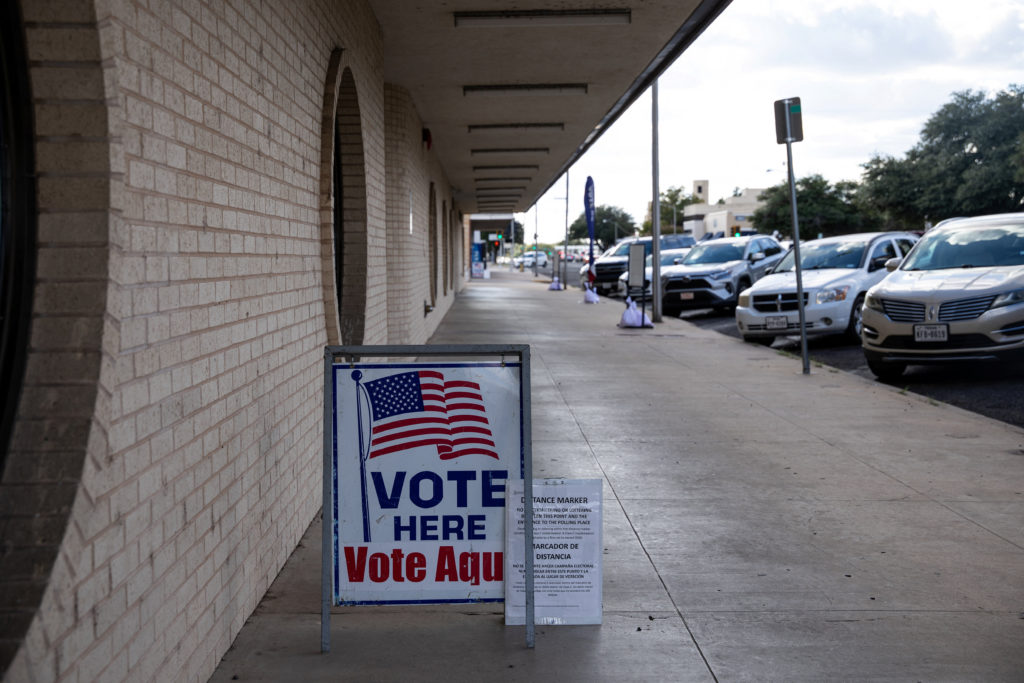
The surge is especially pronounced in Texas, where voters are deciding closely watched Senate, House and governor's races. More than 6.3 million Texans had voted early as of Wednesday, compared with 4.2 million at the same point four years ago, a 50% increase.

 Login