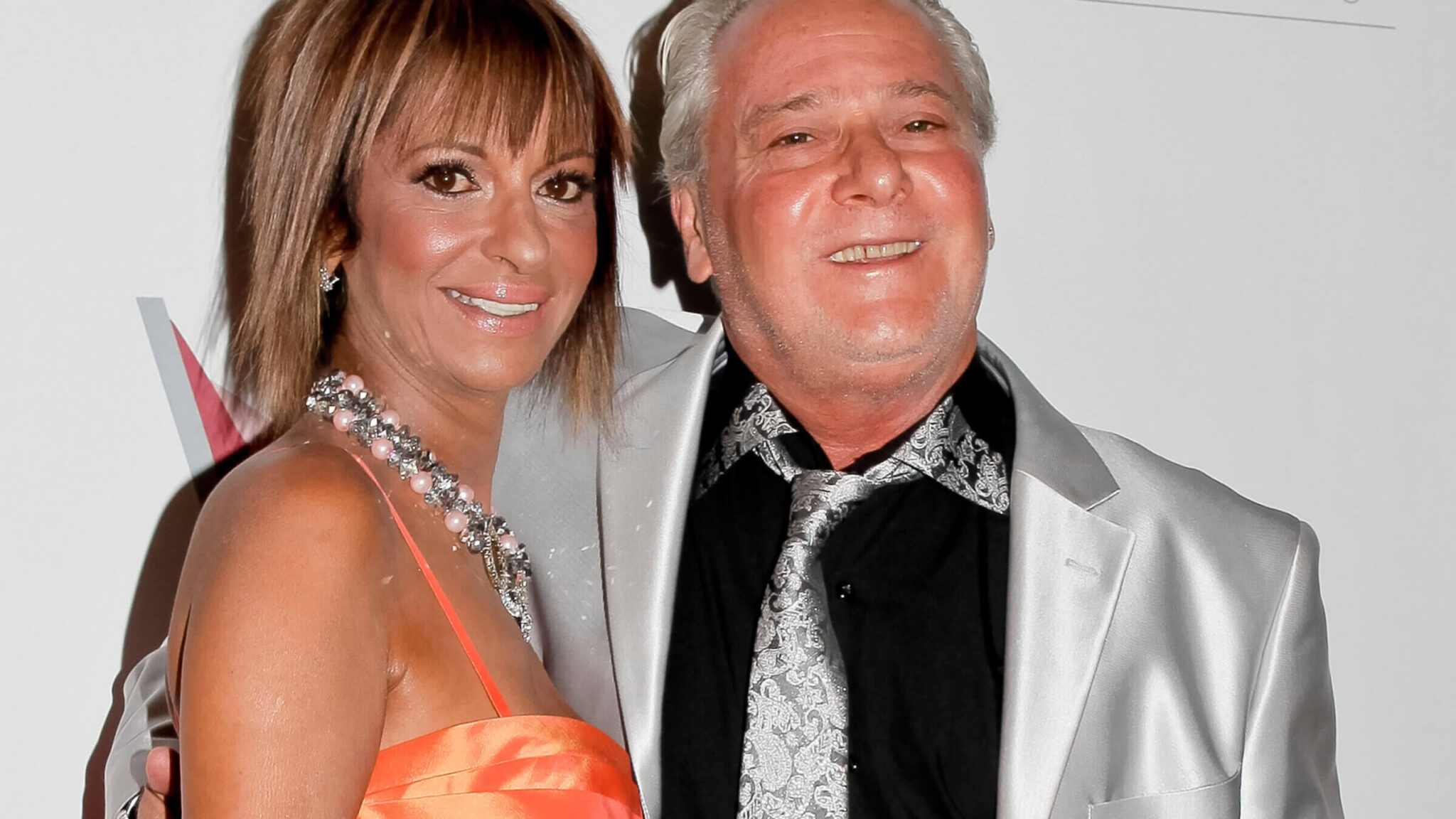
In a long career, she was best known for starring opposite Jane Curtin in “Kate & Allie,” a 1980s sitcom about two divorced women raising three children in New York City.
Susan Saint James in 2025. Kate McArdle, her character on “Kate & Allie,” was “a free spirit caught up in the radical movement” of the 1960s, a publicist said, while Allie (Jane Curtin) was a “traditionalist.”
Paul W.S. Anderson’s nightmarish 1997 space film starring Sam Neill became a pulpy horror classic after shocking viewers expecting a simple space adventure.
The king of ghosts lives in a haunted $4.3 million dollar mansion in the heart of New Orleans' French quarter. The dozens of paranormal tour guides who lead tourists through the neighborhood are sure to know of him and have an opinion of him. Lance Zaal is the most controversial man in America's booming ghost business, CEO of what competitors have dubbed "The Walmart of Ghost Tours."
Over the past half-decade, Zaal, 42, and his company, US Ghost Adventures, have opened ghost tours in more than 250 cities and towns, employing more than 1,000 guides, according to his company's website. He's also been buying up the country's haunted landmarks like it's the first trip around the Monopoly board — the Lizzie Borden House in Massachusetts, the Villisca Axe Murder House in Iowa, the McInteer Villa in Kansas, and two historic houses in Gettysburg, Pennsylvania. "Lance has said he wants to build an empire, and that's what he's doing," says Diane Student, who hosts the industry podcast History Goes Bump.
USGA also sells ghost detection gear through the brand Ghost Daddy — products with names like the Sinister Speaker, Medusa's Net, and Devil's Marble MK2. An Ultimate Ghost Hunt Kit For Two sells for $629.99. The whole operation has made Zaal wealthy enough to buy the Lalaurie Mansion, his primary residence, which stands on the site of an infamous slaveowner's torture chamber. Previous guests have reported unexplained moaning and groaning inside, along with the sudden, putrid smell of burning flesh, and, according to New Orleans tour guide Catie Santos, passing guides stand on the opposite side of the street because of the house's dark energy. On tours, Santos, who was briefly employed by Zaal as a content creator, also warns her guests "about the real life Marvel supervillain living in that house," she says.
The Lizzie Borden House in Fall River, Massachusetts, one of many haunted houses Zaal has bought up across the country.
Boston Globe/Getty Images
In assembling his dominion of the undead, Zaal has made a host of enemies among the living. I spoke with more than a dozen competitors and insiders in the industry who described him as "vindictive," "predatory," a "bully," and a "hemorrhoid." He has been accused of borrowing content from local tours, ripping off merchandise designs, redirecting negative reviews to competitors, misclassifying workers as contractors, and using names similar to local companies to confuse tourists. The allegations have resulted in a mounting pile of lawsuits against USGA. Zaal, who did not respond to repeated inquiries for this story, has consistently denied any predatory behavior and emphasizes his commitment to historic preservation.
When passing Zaal's mansion, Catie Santos warns tourists of "the real life Marvel supervillain living in that house," she says.
He has gone after his rivals, filing copyright and defamation suits and frequently threatening legal action. "This gang of competitors are the bullies. So desperate to restore their monopolies or do whatever they can to eliminate their competition," USGA wrote in the comments section of "Exposing US Ghost Adventures Corrupt and Unethical Business Practices Part 1," a recent video from the YouTube channel The Paranormal Engineer.
When Walmart surged through the country in the 1980s, it sparked fierce resistance from the mom and pop stores threatened by their expansion. Today, the rise of the Walmart of Ghost Tours has ignited a war in the ghost industry.
In the biography published on his website — which has a slapdash, early-2000s blog design — Zaal describes a hardscrabble childhood in Southern California. After his parents divorced when he was 6, he was often homeless, sometimes sleeping in the family van. He was bullied in school, he writes, and threw himself into little entrepreneurship projects like a lemonade stand, where he bumped his margins by charging extra for a "Lemon Special," which involved adding a Lemonhead candy to the drink. He says his youth was also marked by eerie experiences — mysterious footsteps, doors opening and closing without explanation — that inspired a lifelong fascination with the supernatural. "I've experienced odd things I can't explain," he said in a recent interview with Business Insider.
In Zaal's personal website, he describes a childhood marked by eerie experiences — mysterious footsteps, doors opening and closing without explanation.
Website of Lance Zaal
After 9/11, Zaal enlisted in the Marine Corps at age 17. He completed three tours, including two in Iraq, where he was stationed for a time at President Saddam Hussein's palace. Then he got an MBA at William and Mary, and worked briefly at Booz Allen Hamilton and Mythics Inc., until he was laid off in 2012. He set out on his own, developing a GPS-guided audio ghost tour app called ItourMobile. It was good timing. America was in the midst of a ghost renaissance.
In a 1978 Gallup poll, 11% of Americans said they believed in ghosts. By 2025, that number soared to 39%. Some attribute the trend to a decline in traditional religion, with non-religious people becoming more inclined to seek other supernatural answers to life's big questions. And as paranormal beliefs have risen, there has been an influx of people trying to profit from them. Reality TV shows "Ghost Hunters" and "Ghost Adventures" took off in the 2000s. By 2023, "dark tourism" — which ranges from the sites of atrocities to haunted houses — was valued at $32 billion and projected to reach $39 billion by the decade's end, according to Grand View Research.
Years after US Ghost Adventures took off, an interviewer at Authority Magazine asked Zaal what advice he wished he could give his younger self. "You're on your own," Zaal said, in a quote displayed under a photo of him in a vest, arms crossed, blue-steeling the camera. "You have no friends. The market is God."
Ting Rappa, an EMT and firefighter who runs an Orlando-based ghost tour called American Ghost Adventures met Zaal in 2015, when he was managing a tour called Colonial Ghosts in Williamsburg, Virginia. Zaal approached Rappa after she attended one of his tours with a proposal to team up. "He was a little off," Rappa says. Something about his energy made her apprehensive. "But he was a very intelligent person. I could tell he had a drive." Zaal said he would help finance her company in exchange for a share of the operation. But the deal didn't seem like an even partnership, so she turned him down.
You're on your own. You have no friends. The market is God.Lance Zaal
Three years later, she discovered that Zaal had a new name for his company that resembled hers: US Ghost Adventures. When she tried to trademark American Ghost Adventures years later, the application was denied because Zaal had registered his first. In 2024, she filed a suit asking for the USGA trademark to be cancelled, still working its way through the courts. "There's just no ethics to it," she says of Zaal's expansion. "Competition is good, but play nice. Right now, you're just being a big bully."
In the Authority Magazine story, Zaal was asked how he researches whether someone else has already had one of his ideas, a question that would become more significant as his business continued to grow.
"It's not relevant," Zaal said. "Who cares who else thought of an idea? This is fear at first thinking. What matters is creating a sustainable, strong business. Just because there are others in your market, doesn't mean you can't succeed in it, or even redefine it. What is important is ensuring you don't break the law, whether that be a trademark, patent, or whatever."
A ghost tour is a pretty simple business to set up. Most are walking tours through public spaces that require little overhead. At USGA, guides are generally contractors paid a flat rate of $40 to $50 per tour, plus tips, per its website. With a tour drawing dozens of customers paying $20 to $40 for a ticket, the money can quickly pile up.
Tour guide Leanna Foglia during an "Original Fells Point Ghost Walk" tour by Baltimore Ghost Tours, a rival of Zaal's Baltimore Ghost Tour.
Elizabeth Frantz for BI
USGA wasn't the only company to pursue ghost tours on a national scale — the rival Ghost City Tours operates 60 tours — but it was the most aggressive. During the pandemic in 2020, as other tour companies were shuttering, Zaal expanded to dozens of cities and towns, ready to put guides on the pavement once restrictions were lifted. That year, he unsuccessfully sued to reverse a COVID ban on walking tours in Massachusetts. By 2021, USGA had operations in 33 cities, each under a local name.
One of the first cities targeted was Baltimore, where Melissa Rowell had operated Baltimore Ghost Tours since 2001. Zaal came on her radar when she began receiving phone calls from irate customers. "We are trying to find out where this ghost tour is," one man complained in a voicemail shared with Business Insider. "Nobody's answering the goddamn phone … after we spent almost $100."
The man was looking for Zaal's new local affiliate of USGA, which had begun operating under the name Baltimore Ghosts. Rowell sent Zaal a letter asking him to change the name to something more distinct. Soon after, Rowell says, USGA started using the name Baltimore Ghost Tour in some materials. "Instead of trying to cause less confusion, they seemed to be trying to cause more," she says.
Rowell and Zaal have since been in a cold war, volleying terse emails and cease-and-desist letters. "I understand you actively collaborate with a confederation of other companies to disparage and damage both the company and my personal reputation," Zaal wrote Rowell in 2024. "Let us honor the spirit of Halloween this season and cease this animosity. There's enough customers for all of us."
Amy Lynwander (left) and Melissa Rowell, co-owners of Baltimore Ghost Tours, another of Zaal's rivals. "Let us honor the spirit of Halloween this season and cease this animosity," Zaal wrote to Rowell in 2024.
Elizabeth Frantz for BI
Rowell denies that she is part of a confederation, but local tour guides have collaborated in dealing with their ascendant rival. There's a private Facebook group where guides across the country share information about USGA. Mike Carter, a tour guide from Annapolis, Maryland, bought the domain name USAghostadventures.com to build a site that urged customers to choose local ghost tours instead of Zaal's outfit. (Zaal got the site taken down and sued Carter for defamation.) Some paranormal companies, like Central New York Ghost Hunters, have rejected partnerships with USGA out of solidarity with local guides.
In Austin, Texas, USGA was sued by the owners of a local Booze and Boos Tour after Zaal opened a Boos And Booze tour. In Savannah, Georgia, the national company Ghost City Tours, which operated a Dead of Night Tour, sued USGA for opening the Savannah Terrors Ultimate Dead of Night Haunted Ghost Tour. In Charlotte, North Carolina, the local Queen City Tours sued Zaal's Queen City Ghosts. USGA generally argues in court papers and public statements that the names are too generic to own. The Austin suit was settled in 2024; the latter two lawsuits are currently making their way through the courts.
USGA was sued by the owners of the Booze and Boos Tour after it opened a Boos And Booze tour; the Dead of Night Tour for opening the Savannah Terrors Ultimate Dead of Night Haunted Ghost Tour; and Queen City Tours for opening Queen City Ghosts.
In one instance, a guide alleges that Zaal uses these similar names to trick tourists into leaving negative reviews on his competitors' tours. Angela Taverniti, who runs Colonial Ghosts of Williamsburg, said a USGA customer, Samantha Butler, accidentally left a negative review on Taverniti's tour. When she pointed out the mixup, Butler pulled up the link she got from USGA asking her to review the tour and tested it. A screen recording Butler shared with Business Insider shows that when she submitted a four-star ranking, she was directed to the Google review page of the USGA tour she took. But when she submitted a two-star rating, she was directed to the Google page for Taverniti's tour. Spooky. Reviews are a big deal for tour operators. "98 percent of our business comes from Google," Taverniti tells me. "It's a game that you have to play constantly. And he knows how to play it."
Other paranormal guides say Zaal borrows the content of the tours along with the names. Laine Johnson, a former park ranger, spent the last decade developing a tour of the supernatural happenings in Durango, Colorado, drawing from firsthand accounts of locals, newspaper archives, and out-of-print books. When a new tour called Durango Ghosts set up shop there in early 2023, Johnson took it to check out the competition. She says she was startled that they followed her exact route and told the same stories, sometimes with the same phrasing.
Angela Taverniti, owner of Ghost Tour Williamsburg, claims that Zaal uses similar names to his competitors' tours to trick tourists into leaving negative reviews on their Google pages.
Elizabeth Frantz for BI
When she got home and did some research, she formulated a theory of what had happened. During the pandemic, she had uploaded her materials to a site called Junket, which allowed her to host virtual tours. Junket and Durango Ghosts were owned by Lance Zaal. Her content, she's convinced, had been snatched from the Junket website and co-opted by her new competitor.
USGA has meaningfully eaten into her bottom line, she says. "This is a really small town. It's ridiculous that there's now three ghost tours going here," she says.
By 2021, USGA purchased the crown jewel in its collection of haunted property, a three-story Greek Revival House in Fall River, Massachusetts, where Lizzie Borden was accused of axe-murdering her parents in 1892. It's famous for paranormal activity, and Zaal mentioned in an interview shortly after the purchase that he felt as if "someone, or something, was in the room with him," when he spent the night there alone.
This is a really small town. It's ridiculous that there's now three ghost tours going here.Laine Johnson, a ghost tour owner in Durango, Colorado
In 2023, a small cafe called Miss Lizzie's opened nearby, and Zaal sued, arguing that the name and logo — a blood-stained hatchet — infringed on his trademark. "She's a historical figure," cafe owner Joe Pereira counters. "I don't think anyone can own her." It was a strange reversal of the trademark suits that had been filed against him, and local competitors followed the case closely.
The next year, a judge sided with Pereira, saying the logos were substantially different. "Miss Lizzie's hatchet has a handle and smooth axe blade that spews blood," the judge wrote in his decision. "Ghost Adventures' hatchet is bereft of either handle or blood and features a notch halfway along the blade." But the lawsuit, which dragged on for years afterwards, has taken a financial toll on Pereira. Though a judge affirmed the initial ruling this month, Pereira was also ordered to pay $31,207 in legal fees after missing various filing deadlines.
Amid the acrimony, USGA has continued to grow. From 2019 to 2023, Zaal told Entrepreneur Magazine, USGA's revenue increased by 2,600%. To service the expansion, he contracted with writers and creators to develop tours and other content about new cities in the USGA empire.
Some guides, like Sabrina Velandry, a psychic medium who conducts tours for USGA in Salem, have had broadly positive experiences with the company. It's more professionalized than some of the local tours, she says. "It is corporate, but it's just really really well-run and organized." Others have butted heads with management, and two lawsuits have alleged misclassifying workers as independent contractors and failure to pay overtime wages. USGA has denied these claims, and one suit was settled while another is still in the courts.
In 2023, Ronald Murphy, a high school teacher outside of Pittsburgh, began picking up some extra work for USGA as an independent contractor, where he would crank out a new tour for $200, or make $40 for a 300 word blurb on the USGA website. All told, he says, he wrote tours for about 18 cities.
USGA sells ghost detection gear through the brand Ghost Daddy — products with names like the Sinister Speaker, Medusa's Net, and Devil's Marble MK2. An Ultimate Ghost Hunt Kit For Two sells for $629.99.
Elizabeth Frantz for BI
He says he wasn't given time for deep research and didn't like the idea of using content posted by competing local tours, so for a tour about Fort Worth, Texas, he decided to get creative. "I was going to simply make up the ghosts," he says. He thought the local Cowboy Museum was the sort of place that a ghost might frequent and wrote this fiction for the website: "Of course, no cowboy can hold a candle to The Duke himself, Mr. John Wayne. Visit the Texas Cowboy Hall of Fame where it's said the apparition of the 6 foot 4 actor has been seen admiring the cowboy memorabilia on display." The work eventually dried up. Today, USGA is recruiting an AI Creative Specialist, at $42,000 a year, "to draft, edit, and refine engaging tour scripts, website copy, and compelling marketing collateral." Even ghost jobs aren't safe from the AI revolution.
Trevor Foster didn't have much interest in ghost tours until he was ripped off, he tells me. He's a ceramics artist who specializes in dark pieces like bones, pistols, and mystical eyes. This January, he received a message informing him that USGA may have stolen one of his designs to sell on its Ghost Daddy website — an intricate skull-shaped mug with a handle like a curved bone. From initial casting to final glazing, it took Foster about about 100 hours to complete.
The skull on Ghost Daddy looked like one Foster designed in a slightly different color. Foster says the fact that it had the same sutures on the top — "almost like a fingerprint" — made it clear it was a ripoff. He also found that Zaal had recently purchased the same skull mug from him. "For someone to buy it and make a direct mold just seems kinda brazen," Foster says.
Foster sent a cease-and-desist letter, and Zaal responded that he planned to remove the item within six months. "My understanding in looking at your website is that you have your initials on the bottom (ours doesn't), each one is hand crafted and unique (ours are consistent and the same which is why yours looks better), ours is of a lighter color, and our logo is on the back," Zaal added. To Foster, it seemed Zaal was implying that replacing his initials with the USGA logo was enough to make the knockoff legal.
An Instagram video Foster posted went viral in the ghost tour community, and Zaal agreed in an email shared with Business Insider to discontinue the item immediately. He attributed the similar design to a mistake made by an overseas supplier who was given multiple examples to draw inspiration from. That wasn't good enough for Foster, who sued and settled with Zaal in September.
From 1978 to 2025, the share of Americans who said they believed in ghosts soared from 11% to 39%.
Elizabeth Frantz for BI
Foster was surprised to have found something of a community as a result of the whole debacle. After he'd posted about the situation, he was inundated with dozens of messages from people with their own grievances with US Ghost Adventures, commiserating with him. "It's just kind of incredible how many people they've angered," Foster says.
And — if you fall into the 39% of the country that believes in ghosts — you might believe that it isn't just corporeal beings that have been angered. This summer, a group of part-time ghost hunters visited Zaal's newly purchased McInteer Villa and set up K-2 meters, REM pods, and a ghost box.
But the group's leaders Dawn Lorenzen and Amy Osborn found the ghosts to be surprisingly uncommunicative. When they'd visited before Zaal's purchase, the ghost hunting had been good.
They Facetimed a medium to figure out what was going on. The ghosts were irritated, she told them, and it seemed to be related to the new ownership. "They made a circus of the place," the ghosts kept repeating, she said. "And now we are a spectacle."
From the viewpoint at the chapel of San Marcos, it looks like the work of an army of stonemasons. Two lines of pale limestone, almost vertical, run down a hillside and disappear into the green water of the Canelles reservoir. A half-ruined chapel peeks out between them. Nobody built those walls. They are the Roques […]
They're a common feature at US shopping malls: skincare kiosks staffed by charming Israeli salespeople. Some customers were hit with thousands of dollars in charges they never authorized and products they didn't want and can't return. Many victims were elderly, disabled or otherwise vulnerable
Russia has placed five foreign-owned businesses under compulsory administration, including Belgian manufacturer Ontex and French flooring group Tarkett. The latest seizures deepen the confrontation over sanctions, frozen Russian assets and the future of European investment in Russia.
Russian President Vladimir Putin has ordered the transfer of five Western-owned businesses into compulsory Russian management, extending a campaign of asset seizures targeting European companies that continued operating in Russia after the full-scale invasion of Ukraine.
The decree, signed on 15 October, affects businesses with combined annual revenues exceeding 53 billion roubles, approximately €530 million. They include French flooring manufacturer Tarkett, Belgian hygiene products group Ontex, German packaging producer Menshen, Kappa Rus and Eviosys Packaging Kuban, now linked to American group Sonoco.
Under Presidential Decree No. 738, operational control has been transferred to Centre Capital, a little-known Moscow company established in February 2026 with registered share capital of just 10,000 roubles.
The decision follows similar interventions against Nestlé, Auchan, FM Logistic and Metro in September. Together, the measures demonstrate how Moscow is using foreign-owned businesses as instruments of economic retaliation against countries supporting Ukraine.
Foreign businesses placed under Russian control
Centre Capital is headed by Marat Mirkhaydarov, a former senior official in Russia’s Zabaykalsky region who reportedly served with the Akhmat military formation during Russia’s war against Ukraine.
The scale of the companies placed under his management contrasts sharply with the financial standing of the administrator.
Tarkett’s Russian operations generated approximately 19.3 billion roubles in revenue during 2025, while Kappa Rus recorded 16.5 billion roubles and Ontex RU another 10.3 billion. Eviosys Packaging Kuban and Menshen Packaging CIS reported approximately 6.1 billion and 1.4 billion roubles respectively.
The decree does not formally transfer ownership of the companies to Centre Capital. It does, however, remove the foreign shareholders’ effective control over management, operations and commercial decisions.
For Belgian manufacturer Ontex, the consequences are immediate.
In an official statement issued on 16 October, the Aalst-based company confirmed that a government-appointed administrator had assumed operational control of its Russian subsidiary.
Ontex Russia employs approximately 350 people, operates a manufacturing facility in Noginsk and maintains a sales office in Moscow. The subsidiary accounts for around five per cent of the group’s total revenue and between seven and eight per cent of adjusted EBITDA.
The company said it was examining measures to protect its assets and maintain business continuity.
Tarkett likewise confirmed that it was losing effective control of its Russian operations.
A mechanism established in 2023
The legal framework for such interventions dates to April 2023, when Putin introduced Decree No. 302, allowing the Russian authorities to place assets associated with countries designated as unfriendly under temporary external management.
The appointed administrator can exercise extensive ownership-related powers, although the formal right to dispose of the assets remains excluded.
Crucially, the arrangement can be terminated only by presidential decision. There is no automatic deadline for returning operational control to the original owners.
Moscow maintains that the measures are reversible. Nevertheless, the loss of management authority raises questions about whether businesses could eventually be returned with their financial position, organisational structure and commercial value intact.
The Kremlin’s approach also serves domestic economic objectives. Keeping factories, retail networks and distribution facilities operating under Russian management helps preserve employment, production capacity and established supply chains.
At the same time, appointing Russian administrators allows the authorities to exercise greater influence over businesses originally developed through foreign capital, technology and expertise.
European companies caught in sanctions confrontation
Kremlin spokesman Dmitry Peskov has explicitly linked the seizures to the nationality of the affected companies and the policies of their governments.
He accused European states of participating in the unlawful seizure of Russian property through sanctions and financial restrictions.
Moscow’s argument centres partly on approximately €210 billion in Russian sovereign assets immobilised in the European Union, most of them held through Belgium-based securities depository Euroclear.
The European Union has used extraordinary revenues generated by those assets to support Ukraine, while further proposals involving the underlying funds remain subject to legal and political debate.
Belgium has been particularly concerned about potential financial exposure and legal claims. As EU Today reported in September, a Belgian Council of State judgment raised additional questions about the administrative procedures governing certain frozen assets.
Moscow’s treatment of European businesses adds another dimension to this confrontation. By retaining control over foreign-owned industrial and commercial assets, Russia possesses a means of exerting pressure on companies whose governments support sanctions and military assistance to Ukraine.
The implications are particularly serious for Western banks that still maintain substantial Russian operations.
Austria’s Raiffeisen Bank International and Italy’s UniCredit remain exposed to Russia through local subsidiaries. Any extension of compulsory administration to financial institutions could create additional difficulties involving deposits, capital and banking supervision.
The cost of remaining in Russia
The seizures also expose the financial risks faced by Western companies that delayed their withdrawal after February 2022.
Many initially sought to protect their investments, employees and commercial infrastructure. Others reduced operations but retained ownership, expecting that conditions might eventually permit an orderly sale or renewed business activity.
Russian restrictions have progressively complicated that calculation, requiring foreign investors from designated countries to accept substantial discounts on asset sales and obtain official approval for transactions.
Companies remaining in the country now face the additional possibility that the government will appoint administrators without their consent.
The consequences extend beyond the businesses immediately affected. Russia is establishing a precedent under which foreign investment can remain legally owned by its original shareholders while its economic benefits and operational management are placed beyond their control.
For European governments, the latest decree illustrates the increasing connection between commercial interests and geopolitical decisions.
The Kremlin has demonstrated that sanctions imposed over its invasion of Ukraine can be answered not only through diplomatic or financial measures, but also through direct intervention in European-owned businesses operating on Russian territory.
Any eventual negotiation over sanctions relief and the restoration of economic relations will consequently have to address the status of these assets, the rights of their original shareholders and the question of compensation.
Until then, Western companies remaining in Russia face an investment environment in which the ultimate authority over their businesses rests increasingly with the Kremlin rather than their shareholders.
Under Ramesses II, who ruled Egypt between 1279 and 1213 BC and is remembered as one of its most powerful pharaohs, the kingdom kept a chain of garrisons along its western frontier, watching for raids by Libyan tribes and, later, the loosely defined coalition of invaders known as the Sea Peoples. One of those tribes, […]
Before Rome existed, before Phoenician ships ever reached the western Mediterranean, and around the same time the first fortified villages of the Argaric culture were rising in southeastern Iberia, a farming community on a rocky ridge in inland Morocco was already digging a ditch and piling up earth. What they were defending against is still […]
In the German state of Brandenburg, barely a hundred meters (about 330 feet) from the border with Saxony-Anhalt, the Havel River curls around a low rise of land that locals call the Pilatsch. For generations, a local legend held that a knight named Pilatus lived there, ambushing boats on the river and locking captured boatmen […]
On May 29, 1108, an Almoravid army crushed the forces of Alfonso VI of León and Castile outside the town of Uclés. Among the dead was Sancho Alfónsez, the king’s only son and heir, a loss so severe that medieval chroniclers ranked it among the worst Christian defeats of the entire Reconquista — the centuries-long […]
Three decades have passed since the collection of gold jewelry appeared in the Šarkamen mausoleum, and now this Roman imperial complex has once again surprised the archaeological community with a discovery of equal significance. Inside the southwest corner tower of the fortified residential palace of the tetrarch Maximinus Daza, an imperial balneum has been located, […]
In the new print issue of Esses, a quarterly print magazine covering motorsports and the culture around it, Duncan Fyfe writes about the most bizarre Formula One video game ever made. Centered around Gerhard Berger, a former racing driver from Austria who competed in F1 from 1984 to 1997, Gerhard Berger’s Formula 1 Quiz is a quirky video game from 1993 that raises more questions than it asks. Fyfe digs into the mystery, investigating the quiz’s grammatically awkward questions and the game’s developer, Austria Soft, whose existence is questionable. (Esses subscription may be required—consider becoming a member.)
THE REAL QUIZ, it soon becomes clear, is not a test of one’s F1 knowledge, but figuring out what the game expects to hear. This only becomes more difficult, and even sinister. Question nine: FROM WHAT COUNTRY IS JEAN ALESI REALLY? The answer is not France, where Alesi was born and grew up, and under whose flag Alesi competed for over a decade. To progress in the quiz, the game forces one to submit that Alesi was born to Italian parents, and thus is “really” from Italy.
The game’s questions all have correct answers that cannot be submitted, and yet they are less difficult to answer than these ones: Who made this game? Why? And what was Gerhard Berger thinking?

 Login