
❌

Reading view

Drone Attack on a Camp in Amhara Leaves 16 Civilians Dead in Ethiopia

On Thursday, 16 civilians were killed and 22 injured following a drone attack on the Hyiq Jari 2 camp for internally displaced persons (IDPs) in the Amhara region of northern Ethiopia, according to residents and accounts gathered by the Ethiopian newspaper Addis Standard. The incident comes amid ongoing clashes between the federal army and rebel groups in the north of the country.

RELATED:

Ethiopian Army Allies Say They Have Reconquered a City After an Eritrean Incursion

The camp, located in the South Wollo administrative zone, was struck by as many as five drone attacks, occurring at intervals of approximately fifteen minutes. Witnesses reported that the explosions hit the site while the displaced people were inside their shelters.

“The drone attacked the camp at least five times, at fifteen-minute intervals, while the internally displaced people were inside their shelters. We never expected a drone to attack the camp,” one witness told Addis Standard.

The victims include children, women, and the elderly. The attack also resulted in the burning of around twenty dwellings, though these details have not been independently verified.

NEW COMMENTARY | Containing the New War in Northern Ethiopia

War has returned to northern Ethiopia, raising fears of a wider conflict involving Eritrea. In our EU Watch List, we explain how the EU can facilitate talks and prevent escalation.https://t.co/Q6hzxtsqGD pic.twitter.com/mGhDJVkh0A

— Crisis Group (@CrisisGroup) October 16, 2026

Humanitarian crisis

The camp houses more than 1,800 internally displaced people, who are facing a severe humanitarian crisis. Humanitarian organizations have significantly scaled back their assistance, limiting access to food, shelter, and medical care.

“We have neither shelter nor food. Perhaps the best thing to do is to go to the city and sleep on the streets, hoping that someone might take pity on us and help. We have no other choice right now,” said one of the displaced individuals.

Those affected also noted that regional authorities have failed to respond to their pleas for support. Neither the Ethiopian government nor the insurgent groups have commented on who was responsible for the attack. The violence is taking place as the Ethiopian Army battles rebel groups in the north of the country. On September 23, the Tigray People’s Liberation Front (TPLF) announced a defensive war from that region, following months of escalation and recurring drone strikes.

AMHARA FANO NATIONAL MOVEMENT
Foreign Affairs Department Urgent Call for International Action regarding Indiscriminate Aerial Attacks in Ethiopia pic.twitter.com/q2uBGl9EUj

— Amhara Fano National Movement – Foreign Affairs (@AFNM_FA) October 23, 2026

Since then, federal forces have made gains, particularly in Tigray, though fighting persists in other areas. An alliance of seven rebel and opposition groups—including the TPLF, the Amhara nationalist movement Fano, and the Oromo Liberation Army (OLA)—was recently formed with the stated goal of toppling the Ethiopian government.

Ethiopia has also accused Eritrea of ​​supporting the rebels and conducting incursions into its territory—an accusation that Asmara denies. This escalation has reignited fears of a new, large-scale war, similar to the 2020–2022 conflict between the TPLF and the federal government, which, according to the African Union, resulted in at least 600,000 deaths.
  •  

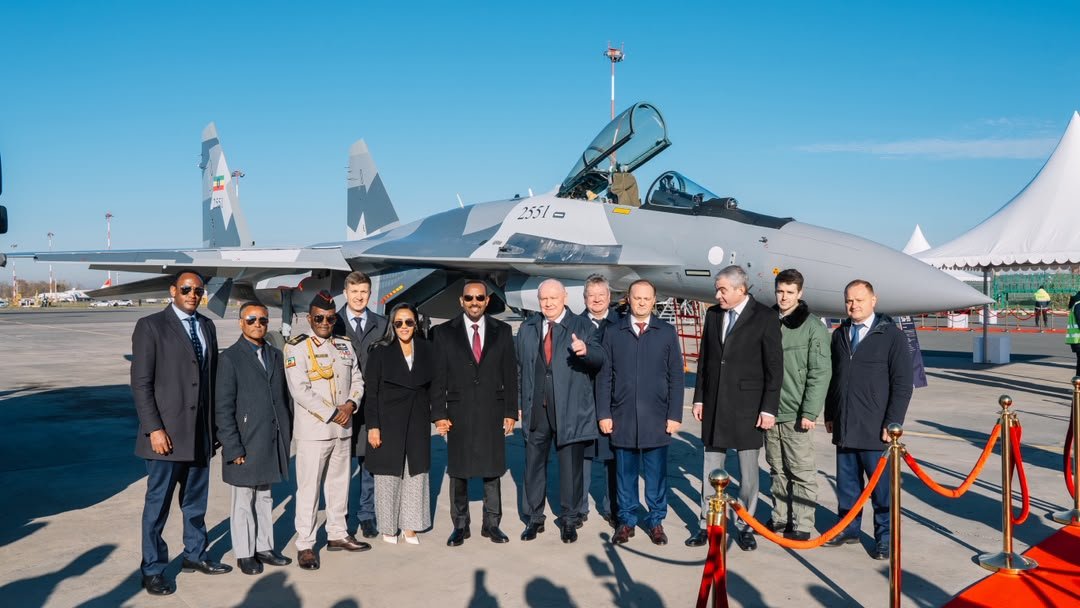
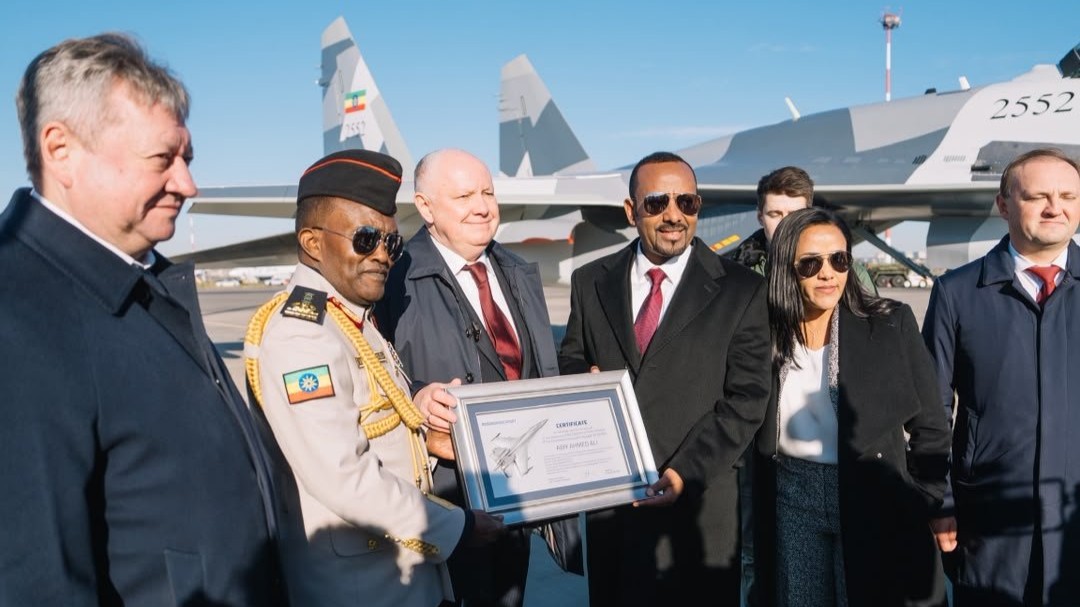
Ethiopia Receives 12 Russian Su-35s as S-400 Air Defenses Loom (Photos)

Click to see full-size image. (X)

Ethiopia has received its first 12 Russian-made Su-35 fighter jets and will acquire four batteries of S-400 long-range air defense systems, Prime Minister Abiy Ahmed announced on October 28, in a major expansion of the country’s aerial combat capabilities.

“Today, in accordance with our prior agreement with the Russian government, we have taken delivery of the first twelve Su-35 4++ Generation fighter jets,” Abiy wrote in a social media post.

He also thanked Russian President Vladimir Putin for facilitating the delivery a year ahead of schedule, describing the acquisition as a milestone in Ethiopia’s efforts to strengthen its national defense and deter potential aggression.

Click to see full-size image. (X)

Abiy made the announcement while arriving in Moscow for the Third Russia–Africa Summit, underscoring the growing military dimension of Ethiopia’s relationship with Russia.

The Su-35 is a twin-engine, multirole fighter designed for air superiority and precision-strike missions. It can reach speeds of Mach 2.25 and carry up to eight tons of weapons. Its radar can detect aerial targets at distances of up to 350 kilometers, track 30 targets simultaneously and engage up to eight, according to Russian manufacturer United Aircraft Corporation.

The 12 aircraft give Ethiopia a substantial upgrade in its ability to detect and engage aerial threats, conduct long-range combat missions and challenge opposing aircraft.

The planned S-400 acquisition would complement the fighters with ground-based protection against aircraft, drones, cruise missiles and certain ballistic missile threats. Depending on the interceptor used, the Russian system has an advertised engagement range of up to 400 kilometers. Abiy did not specify when the four batteries would be delivered.

The military buildup comes as Ethiopia faces renewed fighting in Tigray and worsening relations with Egypt over the Grand Ethiopian Renaissance Dam on the Blue Nile. The two countries exchanged diplomatic expulsions in October amid broader regional tensions, while Cairo continues to demand a binding agreement governing the dam’s operation.

_______________________________________________________________________________________________________________________

SouthFront: Analysis and Intelligence

NOW hosted at southfront.press

Previously, SouthFront: Analysis and Intelligence was at southfront.org.

The .org domain name had been blocked by the US (NATO) (https://southfront.press/southfront-org-blocked-by-u-s-controlled-global-internet-supervisor/) globally, outlawed and without any explanation

Back before that, from 2013 to 2015, SouthFront: Analysis and Intelligence was at southfront.com

SOUTHFRONT.PRESS

MORE ON THIS TOPIC:

The post Ethiopia Receives 12 Russian Su-35s as S-400 Air Defenses Loom (Photos) appeared first on South Front.

  •  

Homes Burned and 60 Christians Killed by Armed Attackers in Ethiopia

Two violent attacks by armed individuals — one on October 20 and another on October 24 — left 60 Christians dead and 20 homes burned to the ground in Ethiopia.

The post Homes Burned and 60 Christians Killed by Armed Attackers in Ethiopia appeared first on Breitbart.

  •  

A Bab al-Mandab Saga: From Assab to Perim; All Has a Base, None Has a Plan. Part II

The geopolitical aspects of Bab-al-Mandab extends way beyond any narrow view, both historically and contemporarily. So, before the next “maritime security initiative” arrives, ask the 4 main questions the brochure never answers Ethiopia lost its sea, Yemen’s highlands never accepted a master, and this month a Zaydi movement took the strait’s Arabian shore. Every capital […]
  •  

Tensions between Egypt and Ethiopia escalate, as fighting in Tigray intensifies

A new war of words has broken out between Egypt and Ethiopia over the Grand Ethiopian Renaissance Dam (GERD). It comes as renewed fighting in northern Ethiopia pulls the country’s long-running disputes with its neighbors back into the open.

Ethiopia’s government has blamed neighboring states for the escalating conflict in the north. The government has accused Eritrea, Sudan, and Egypt of backing armed opposition groups, raising fears that the conflict could expand regionally. Birhanu Jula, Ethiopia’s army chief, stated that the Tigray People’s Liberation Front has clearly needed outside support and supplies from Egypt, Sudan, and other foreign powers to sustain its campaign. 

Cairo rejected the claim. Foreign Ministry spokesman Nader Zaki said Egypt’s foreign policy rests on respect for the sovereignty, unity and territorial integrity of other states and on staying out of their internal affairs, adding that claims to the contrary had no basis in fact. 

Tension over Ethiopia minister’s remarks

The dispute quickly returned to the Nile. On Saturday, Ethiopia’s minister of Water and Energy, Habtamu Itefa, published a social media post, later deleted, comparing the GERD to Egypt’s Aswan High Dam. “Before criticizing Ethiopia, Egypt should explain why it built the Aswan High Dam without Ethiopian consent.”

Cairo responded the same day. A source at the Egyptian Ministry of Water Resources and Irrigation called the post “shameful” and said it reflected political confusion.

“Responding to such nonsense and the political confusion reflected in the post would be nothing more than a waste of time,” the source said. The source called the post “a desperate attempt to divert attention from the core dispute: Ethiopia’s continued unilateral actions over its illegal dam, which violate international law.”

Habtamu made the same argument. He said it was shameful to hear Egyptian politicians demand that Ethiopia obtain their consent for dams that do no significant harm, and argued that Egypt had not consulted Ethiopia when it built Aswan. He described Cairo’s insistence on prior consent as an outdated approach rooted in colonial-era arrangements. 

The $5 billion GERD sits on the Blue Nile, about 14 kilometers from the Sudanese border. It is 1.8 kilometers wide and 145 meters tall, with a design capacity of 5,150 megawatts. Prime Minister Abiy Ahmed inaugurated it on September 9, 2025. Egypt and Sudan, the downstream states, have long demanded a legally binding agreement on how it is filled and operated. The United States has also stepped back, in a January 2026 letter to President Abdel Fattah el-Sisi, US President Donald Trump offered to restart US-led mediation between Egypt and Ethiopia on Nile water-sharing. 

The El Alamein declaration

The leaders of Egypt, Sudan, Eritrea, and Somalia met in El Alamein and issued a joint declaration covering both the Red Sea and the Nile, and among other things. On the question of the Red Sea, the four states affirmed “the principle of freedom of navigation and that the governance of the Red Sea is the exclusive responsibility of the littoral states.” 

Regarding the Nile, the declaration emphasized “the importance of respecting international law regarding transboundary rivers including the Nile River particularly the principle of ‘no harm’ and the obligation to cooperate through prior notification, consultation, and consensus.” It also categorically rejected “any unilateral measures that harm the existing water uses of the two downstream Nile states.” The four countries pledged to keep strengthening “consultation and coordination among the four countries and other sisterly African nations.”

“Realities cannot be altered by political rhetoric”

Ethiopia issued its own statement in response to the El Alamein declaration, arguing, “Ethiopia is the source of the Abay River, commonly known as the Blue Nile. Virtually all of the Blue Nile originates in the Ethiopian highlands, and the Abay contributes about 85% of the Nile River’s total flow. Any discussion concerning the utilization and management of the Abay River should be informed by these fundamental realities.”

Insisting that, “Despite changes in political boundaries over time, Ethiopia remains closely connected to the Red Sea, with its nearest border lying barely 30 miles from the coast. Accordingly, any serious discussion of regional maritime affairs and security architecture must account for Ethiopia’s legitimate interests and its enduring connection to the Red Sea.”

It added, “These geographic and historical realities cannot be altered by political rhetoric, coercive measures, or acts of destabilization. Actions taken through proxies or acts of aggression will not change the facts on the ground, nor will they diminish Ethiopia’s legitimate interests, role, and responsibilities in the region.”

Reaffirming that it “stands ready to defend its sovereignty, territorial integrity, and core national interests,” Ethiopia urged regional actors to pursue “constructive dialogue, partnership, and adherence to the principles of good neighborliness rather than confrontation and zero-sum approaches.”

With fighting is spreading in Ethiopia’s north and rival blocs are forming along the Red Sea, the Nile dispute could be tied into a wider regional confrontation.

  •  

The Ethiopia–Tigray Crisis: The Fragile Peace That Failed to Hold

The Pretoria Agreement brought an end to Ethiopia’s devastating Tigray war—but not its underlying disputes. Four years later, renewed fighting and shifting armed alliances are threatening to reopen the conflict. The consequences could extend far beyond Tigray, destabilising the wider Horn of Africa. Ethiopia’s fragile post-Pretoria peace is rapidly unravelling as renewed fighting between federal […]
  •  

Why is Italy covering up the expulsion of its ambassador to Ethiopia

In August 2026, the Ethiopian government declared Sam Fabrizi, the Italian ambassador, persona non grata. Rome chose to remain silent. This incident is not merely a diplomatic incident, but a striking example of the new balance of power between Africa and the former colonial powers. It is significant that, on February 13, 2026, Giorgia Meloni […]
  •  
❌