Login

Lagarde’s Early Departure Opens Battle for Control of Europe’s Central Bank
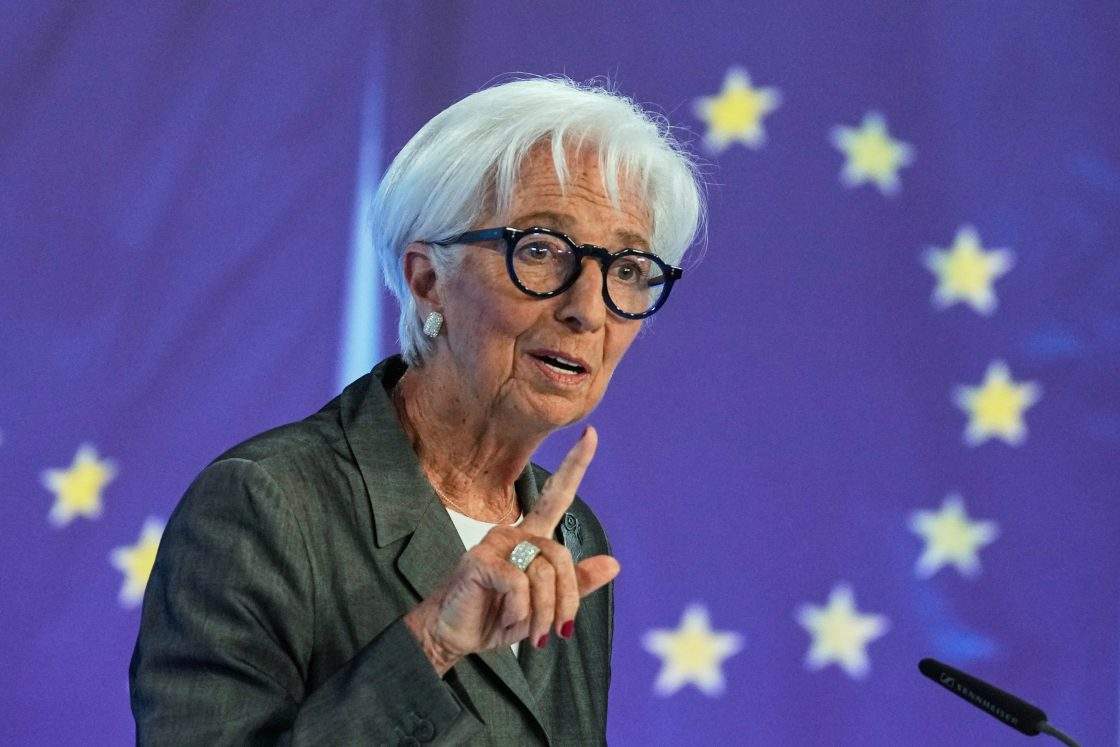
Christine Lagarde’s unexpected decision to leave the European Central Bank nine months ahead of schedule has triggered a politically sensitive succession process at a time when renewed inflation, rising borrowing costs and economic uncertainty are testing the eurozone’s monetary institutions.
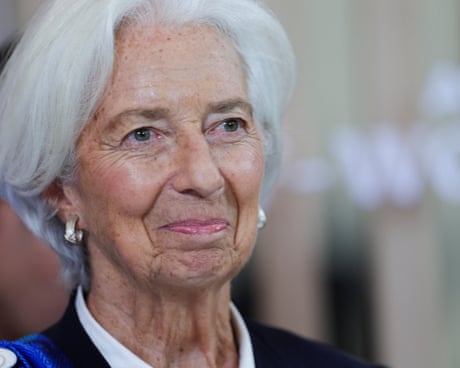
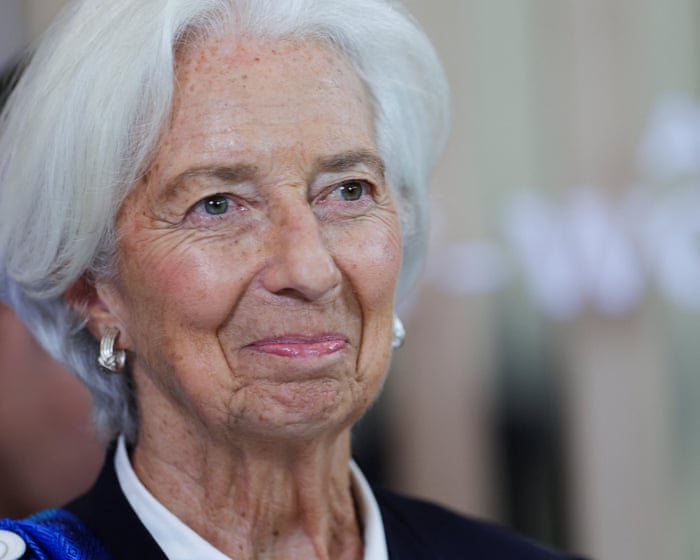
Christine Lagarde will step down as president of the European Central Bank (ECB) on 7th February 2027, bringing her tenure to an early conclusion and opening negotiations among European Union governments over one of the continent’s most influential economic appointments.
The announcement, made by the ECB on 29th October, came on the same day that its Governing Council decided to leave interest rates unchanged, despite renewed inflationary pressure linked to rising energy prices.
Lagarde, who has led the institution since November 2019, was originally expected to remain in office until October 2027. Her departure will therefore bring forward a succession contest that had already attracted considerable attention in European financial and political circles.
Speaking after the announcement, Lagarde explained that she wanted greater freedom to address matters beyond monetary policy, arguing that the restrictions associated with central bank leadership prevented her from contributing publicly to wider debates.
Her explanation leaves open questions about the political consequences of her departure, particularly as EU governments prepare for difficult negotiations over the institution’s future leadership.
A Succession Shaped by European Politics
Under Article 283 of the Treaty on the Functioning of the European Union, the ECB president is appointed by the European Council, acting by qualified majority following consultations with the European Parliament and the ECB’s Governing Council.
Although the process is formally governed by treaty provisions, appointments to the ECB’s Executive Board have historically involved negotiations among the eurozone’s largest economies.
Two former national central bank governors have emerged as prominent potential successors: Klaas Knot of the Netherlands and Pablo Hernández de Cos of Spain.
Both have substantial experience in monetary policy, although their possible candidacies remain subject to the political calculations of EU governments.
The timing is especially significant for France, which faces a presidential election in April 2027 against a background of domestic political instability and mounting concerns about public finances.
An appointment concluded before that election would be negotiated by the existing European leadership, potentially affecting the balance of influence over one of the eurozone’s principal institutions.
However, Lagarde has not publicly identified the French election as the reason for her departure.
The succession process will also coincide with other changes to the ECB’s Executive Board, increasing the importance of negotiations over the geographical and institutional balance of its leadership.
Inflation Returns to the Foreground
The leadership announcement coincided with a difficult monetary policy decision. On 29th October, the ECB maintained its deposit facility rate at 2.5 per cent, leaving the main refinancing and marginal lending rates at 2.65 and 2.90 per cent respectively.
Eurozone inflation reached 3.8 per cent in September, substantially above the ECB’s medium-term target of 2 per cent. Rising energy prices have complicated the institution’s position. Higher gas and oil costs threaten to increase consumer prices while simultaneously weakening industrial output and household purchasing power.
The ECB acknowledged that the energy shock could produce further inflationary pressures and reduce growth.
At the same time, tighter financial conditions across the eurozone have increased the risks associated with additional monetary tightening.
This leaves policymakers confronting a familiar but difficult problem: raising interest rates may restrain inflation, but it can also deepen economic weakness and increase borrowing costs for governments, businesses and households.
The next president will inherit these competing pressures rather than a settled monetary environment.
France Adds Another Complication
Financial developments in France have added urgency to the debate.
French government bond yields have risen sharply, with ten-year borrowing costs reaching levels not seen since 2002.
This reflects market concerns about the country’s fiscal position and political uncertainty, while raising wider questions about financial stability within the eurozone.
For the ECB, the challenge is particularly delicate.
Its mandate requires monetary policy to be directed towards price stability across the currency union. However, the economic consequences of higher interest rates differ considerably between member states.
Countries with elevated public debt face greater pressure from rising financing costs, while economies exposed to higher energy prices may experience weaker investment and industrial production.
The ECB possesses instruments intended to address disorderly financial-market conditions, but these do not eliminate the underlying fiscal and political differences between eurozone members.
The appointment of Lagarde’s successor will therefore take place against a backdrop of renewed debate about the relationship between monetary independence and national economic interests.
An Institution Facing a Different Europe
Lagarde’s presidency began before the pandemic, Russia’s full-scale invasion of Ukraine and the subsequent European energy crisis.
During her tenure, the ECB navigated emergency monetary interventions, unusually high inflation and substantial changes in interest rates.
Her successor will confront a different combination of challenges: renewed geopolitical disruption, economic competition with the United States and China, and growing demands for European investment in defence and industrial development.
These priorities are primarily the responsibility of governments, but they influence the economic conditions in which the central bank operates.
The immediate question is who will replace Lagarde. The more consequential question is how the next ECB president will manage monetary policy in a eurozone whose economic and political divisions are becoming increasingly difficult to separate.
For EU leaders, the succession is an opportunity to determine the institution’s leadership. For the ECB, it will be another test of its ability to maintain monetary independence while managing the consequences of Europe’s changing political economy.
The ECB faces an ugly choice as eurozone inflation hits 3.8pc