Dez empresárias algarvias participaram, a 27 e 28 de outubro, no 1.º Fórum de Empresárias da Eurorregião Alentejo-Algarve-Andaluzia (EURO AAA), em Sevilha, Espanha. A participação foi promovida pelo NERA – Associação Empresarial da Região do Algarve, no âmbito do projeto INTREPIDA pro, que pretende reforçar o empreendedorismo feminino e a cooperação transfronteiriça.
As participantes, provenientes dos concelhos de São Brás de Alportel, Faro, Tavira, Silves e Loulé, representam setores tão distintos como o artesanato, o design, a apicultura, a produção de aguardente de medronho, o turismo e o desenvolvimento pessoal.
Organizado pela Fundación Tres Culturas del Mediterráneo, entidade líder do projeto, o encontro combinou sessões de capacitação com momentos de networking, permitindo a partilha de experiências e o estabelecimento de contactos empresariais entre mulheres das três regiões.
A comunicação assertiva, a aplicação da inteligência artificial aos negócios, a marca pessoal e as estratégias de venda estiveram entre os temas abordados. Um dos destaques foi a sessão “A Arte e a Ciência de Vender”, dinamizada por Penélope Serrano Serradilla, que incidiu na identificação das necessidades dos clientes, na comunicação do valor dos produtos e serviços e na construção de relações comerciais de confiança.
O projeto prevê a realização de novas sessões em Portugal, dedicadas ao empreendedorismo feminino e à utilização de ferramentas de inteligência artificial em contexto empresarial. Estão também previstos mais três fóruns transfronteiriços para mulheres empresárias, que terão lugar em Cádis, na Andaluzia, em Évora, no Alentejo, e no Algarve, em local a definir.
O INTREPIDA pro é cofinanciado pelo Programa Interreg VI-A Espanha–Portugal (POCTEP) 2021-2027. A parceria é liderada pela Fundación Tres Culturas del Mediterráneo e integra o NERA – Associação Empresarial da Região do Algarve, o NERE – Núcleo Empresarial da Região de Évora, a Mancomunidad de Desarrollo Condado de Huelva e a Fundación Bahía de Cádiz para el Desarrollo Económico.
A month after the explosion in historical center of Athens, in Plaka, where 6 people were killed, the Fire Service Arson Crime Division identified three suspects: cooper-thieves who had cut off a pipe of natural gas, thus triggering the explosion on September 25.. Authorities issued arrests warrants against three men, aged 34, 37 and 55, […]
After missing out on the F-22 and F-35 fighter programs, the B-21 Raider next-generation bomber deal, and absorbing billions in losses on the fixed-price KC-46 Pegasus tanker development, Boeing’s Defense, Space, and Security division has rebounded strongly with a series of major contracts.
Amid this turnaround, Boeing reported its third-quarter results on October 27, with CEO Kelly Ortberg assuring investors that the dark days for the company’s defense unit are over.
In the first three quarters of 2026, Boeing’s defense sector brought in US$23 billion in revenue and US$710 million in earnings, up from US$379 million a year earlier, a healthy 87.3 percent increase.
Meanwhile, the company reported a record backlog of US$745 billion, more than five times its market capitalization of about US$132.36 billion. This also includes a backlog of over 6,300 commercial airplanes.
The backlog at Defense, Space & Security grew to a record US$101 billion, with 23 percent representing orders from customers outside the US.
Rising defense sales also helped Boeing narrow its third-quarter losses.
In fact, Boeing believes its Defense unit will continue to deliver healthy growth after massive multi-year contract wins over the last two years and its decision to shun risky contracts, such as the fixed-price contract for the KC-46 Pegasus tanker development, in which it has already lost billions of dollars.
“We are going to see higher growth out of our defense portfolio than maybe what we thought a year ago. I think we were thinking more in terms of low-single-digit revenue growth. Clearly, that’s going to be more towards the high – middle-single- digit or higher going forward,” Ortberg said.
Boeing’s Massive Contract Wins
CEO Ortberg highlighted the recent 737 certification and Boeing’s win in the competition to build the Navy’s sixth-generation F/A-XX fighter as the company’s two most important third-quarter highlights.
“Recent milestones, including certification of the 737-7 and 737-10 and selection to design and build the Navy’s sixth-generation fighter aircraft, are important steps as we continue building on our progress.”
In September, the U.S. Department of War (DoW) selected Boeing to develop the Navy’s next-generation F/A-XX fighter jets. The contract is valued at over US$20 billion for the full-scale development phase.
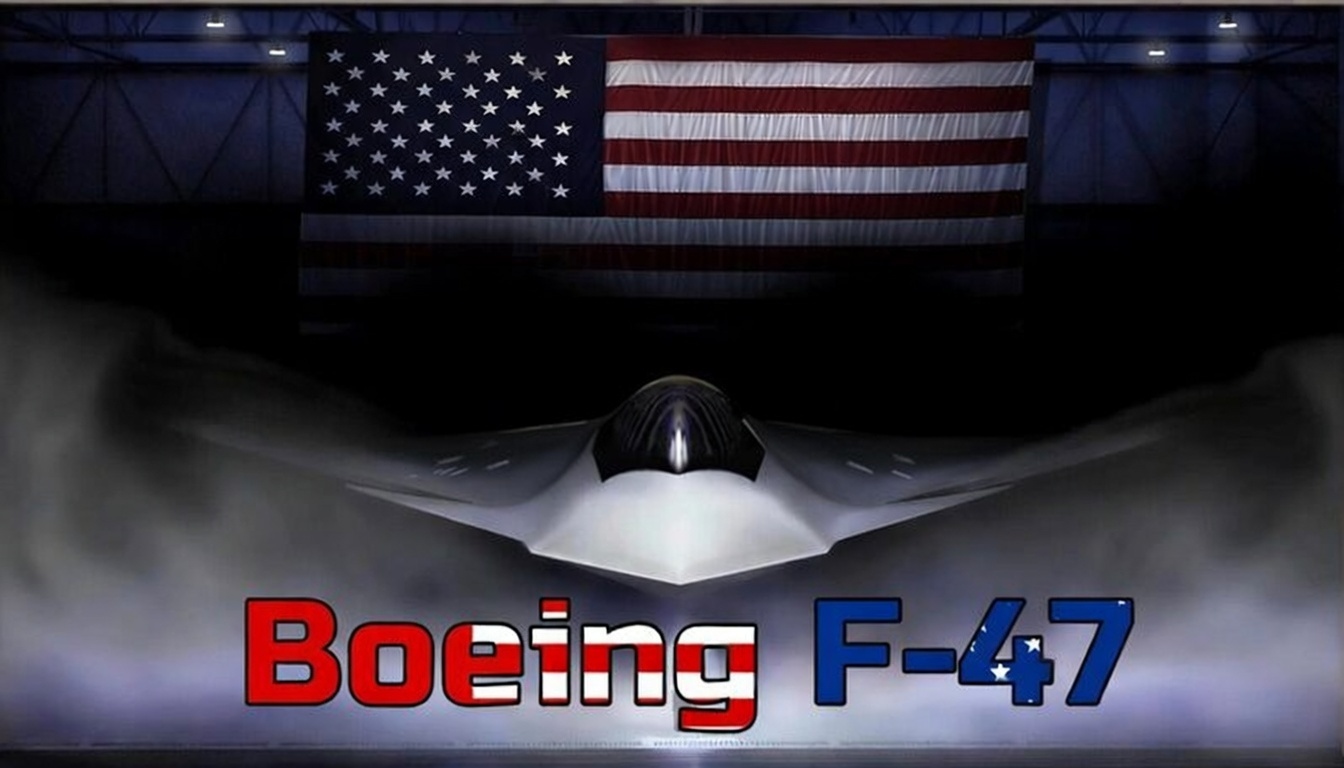
This was the second time in as many years that Boeing was selected to develop a sixth-generation aircraft. Earlier, in March 2025, the US awarded Boeing the NGAD contract, now called the F-47.
F-47: Image for Representation
Boeing is therefore building the sixth-generation fighter for both the US Air Force (USAF) and the US Navy.
This is a remarkable turnaround, as Boeing has no genuine experience in building a stealth aircraft.
In 2015, Boeing lost the contract to build the USAF’s next-generation bomber, the B-21 Raider, to Northrop Grumman.
Earlier, Boeing lost the contract to build both fifth-generation fighters to Lockheed Martin.
In 1991, the Pentagon selected Lockheed Martin as the prime contractor for the F-22 Raptor. Boeing, however, participated in the project and built the aircraft’s wings and tail sections.
In 2001, Boeing’s X-32 lost the Joint Strike Fighter (JSF) competition to Lockheed Martin’s X-35, which became the F-35. That was a winner-take-all program.
Boeing then went roughly 24 years without winning a new fighter design competition.
During those years, the 1997 merger with McDonnell Douglas kept Boeing’s defense and aerospace business alive.
The merger with McDonnell Douglas brought the F-15 Eagle and F/A-18 Hornet/Super Hornet lines. Boeing continued production, maintenance, and upgrades of these aircraft, originally designed and built by McDonnell Douglas.
Its lack of experience in stealth technology and its failure to design and build a new (clean-sheet) fighter in over three decades were major impediments to Boeing’s bid to design and develop sixth-generation fighters.
In fact, the USAF’s NGAD program was widely described as existential for Boeing’s future as a fighter designer and builder.
Boeing, however, came from behind and not only won the NGAD contract, but also cemented its lead by winning the Navy’s next-generation fighter, the F/A XX.
“We scored a generational win with the US Navy when they selected Boeing to design, build, and deliver its sixth-generation fighter jet, making Boeing the exclusive sixth-generation fighter company for both the US Air Force and the US Navy,” Ortberg said.
Boeing also won substantial F-15EX orders.
In September, the Air Force awarded Boeing a US$2.38 billion contract for 22 additional F-15EX Eagle II fighters. This brings the total F-15EXs under contract to 120.
“In the quarter, we also received a contract to manufacture 22 more F-15EX aircraft for the US Air Force. And this award brings the total number of aircraft under contract to 120, with the potential for additional upside as the F-15EX continues to demonstrate the value of its unmatched payload and range capability,” Ortberg said.
Notably, the Air Force has significantly raised its overall planned buy of F-15EX fighters, from earlier targets of around 129 to roughly 267 aircraft.
According to the US force structure plan 2035, submitted to Congress earlier this month, nearly 20 percent of the USAF’s combat-coded fleet could be F-15EXs by 2035.
F-15EX teamed with MQ-28 during Exercise Valiant Shield.
These new F-15EX orders would provide Boeing with stable cash flow for at least another decade.
Another major victory was new multi-year agreements for Patriot PAC-3 seeker production.
“Boeing received a seven-year contract to accelerate and eventually triple the PAC-3 Seeker production, supported by our early investments in facilities, workforce, and supply chain,” Ortberg said.
Besides, Boeing also saw growth in the MQ-25 Stingray aerial refueling drone and in the T-7A Red Hawk trainer program. Both programs have achieved Milestone C approval and moved into low-rate initial production.
Ortberg also stressed that all these programs are “being underwritten with the right contract type,” and the company has decided to avoid risky contracts, such as fixed-price contracts.
Boeing has lost more than US$7 billion on the KC-46A Pegasus fixed-price program.
The original firm-fixed-price development contract was valued at roughly US$4.9 billion. Boeing, however, has absorbed far more than that in overruns because, under the fixed-price terms, the company covers all costs above the agreed ceiling.
CEO Ortberg has repeatedly called it a “bad contract for the last decade.”
“The important part is all these programs are also being underwritten with the right contract type. So not only are
we booking more orders, we’re booking more orders that won’t result in some of the challenges we’ve had,” Ortberg said.
The F-47 contract is a cost-plus deal, Ortberg said. He declined to identify what type of contract Boeing signed for F/A-XX, but said it is “an appropriate contract type.”
Boeing has already decided to shun fixed-price contracts by 2022, when its newly appointed chief of the defense unit, Ted Colbert, announced the company would no longer bid on such contracts with the Pentagon.
The company also made major leadership changes as it worked its way back to recovery.
In July 2024, Boeing named Robert “Kelly” Ortberg to succeed Dave Calhoun as the company’s CEO.
Then, in September 2024, the company fired defense unit chief Colbert and replaced him with Stephen “Steve” Parker.
Two major labor strikes in 2024 and 2025 also impacted the company’s recovery.
However, strong defense sales and FAA certifications for the 737-7 and 737-10 aircraft have helped the company narrow its losses, build its backlog, and reassure investors of future growth potential.
“So the outlook is strong, our products are in strong demand, and the budget supports additional growth,” Ortberg said.
Sumit Ahlawat has over a decade of experience in news media. He has worked with Press Trust of India, Times Now, Zee News, Economic Times, and Microsoft News. He holds a Master’s Degree in International Media and Modern History from the University of Sheffield, UK.
He can be reached at ahlawat.sumit85 (at) gmail.com
Alcoutim recebe, a 20 de novembro, as 9.as Jornadas da Rede de Museus do Algarve (RMA), dedicadas ao tema “Arqueologia para Todos: Mediação e Comunicação do Património”. O encontro decorre a partir das 9h30, no Espaço Guadiana, e é organizado pela RMA em parceria com o Município de Alcoutim.
A iniciativa pretende debater os desafios da comunicação do património arqueológico e as formas de tornar o conhecimento científico mais acessível, inclusivo e compreensível para o público. Entre as questões em análise estão as ferramentas, as linguagens e as narrativas que permitem despertar o interesse pela arqueologia, bem como as estratégias para valorizar os sítios arqueológicos e os espaços museológicos.
A arqueologia permite conhecer a ocupação humana dos territórios ao longo do tempo, mas a transmissão desse conhecimento exige formas de comunicação capazes de aproximar a investigação das comunidades. Segundo a nota de imprensa, a mediação do património assume, neste contexto, um papel importante na criação de laços entre o passado e o presente, promovendo o “sentido de pertença identitária e de valorização da sua herança coletiva”.
As jornadas vão reunir especialistas e técnicos de várias instituições, num espaço de partilha de experiências, metodologias e boas práticas relacionadas com a comunicação e a divulgação da arqueologia.
A participação é gratuita, mediante inscrição até 13 de novembro, estando sujeita à disponibilidade de lugares. A ficha de inscrição está disponível em https://forms.gle/CfhB3GBkQiG2RRSi7.
Para mais informações, os interessados podem contactar a Unidade de Cultura, Património Cultural e Turismo da Câmara Municipal de Alcoutim, através dos números 281 540 545 ou 281 540 555, ou a organização, pelo endereço de correio eletrónico rede.museusdoalgarve@gmail.com.
“The Ninety Five Theses” — the common title to Martin Luther’s “Disputation on the Power and Efficacy of Indulgences” — is more widely associated with Luther’s name than anything else he wrote. Luther posted his theses on the castle door at Wittenberg on either October 31 or November 1, 1517. The disputation, which Luther announced... Continue Reading
Whatever we enjoy now will be far greater then. When marriage someday ends, we will agree that God has not subtracted anything, but only added. He has not divided us, but united us in an even deeper way. We will give thanks in that day that God, in His wisdom, determined that our marriages should... Continue Reading
“Immigration isn’t a right; it’s a privilege. It’s a privilege that illegal immigrants think they are entitled to. But America doesn’t owe anything to people born outside of the country—including me. However, if America changes the standards and ends my residency, it would be inconvenient—not unjust.” (Samuel Sey) Conservative Christian commentator and writer Samuel... Continue Reading
Our concern for a restoration of a proper ordering of loves should not diminish our love for the world; it is precisely because God loves the world that we may be confident in his concern for our nation, our towns, our churches, our families, and ourselves. Yet these responsibilities are not mutually exclusive. For... Continue Reading
All of us ought to approach our thrice holy God with humility and trepidation. The sixth commandment requires more than feeling sorry for the wounds we have made. It calls us to stop inflicting them, and to become, by God’s grace, a life giver instead of a life taker. The commandment “Do not murder”... Continue Reading
Rather than being content with digital and paper guides who cannot love us and whom we cannot imitate, we need spiritual fathers and mothers who love us and live in front of us. The Guides of Our Digital Corinth Last week I spoke with a young man who attends our young adult ministry. He... Continue Reading
We must never assume that every divorce followed the same path or that every blended family is marked by the same sins. Most of all, we must never treat blended families like second-class citizens. They will have unique circumstances, and the details of their journey will vary, but they serve the same God, believe the... Continue Reading
How is spiritual power released in a person’s life? By accepting the truth that God allows weakness for good in our lives, and by being willing to share about one’s weaknesses with others—instead of pretending that we are strong. The Lord spoke powerful words to the apostle Paul as he suffered with his painful... Continue Reading
“ I have learned and am learning to listen for the Lord in the common places, in the quiet spaces, on the turning pages of books that do not speak of him directly, but that still carry the hiss and crackle of a world where ‘Christ plays in a thousand places.’” I have often sought... Continue Reading
Last Wednesday, October 28, the United Nations General Assembly voted (for the thirty-fourth time) in favor of ending the economic and commercial embargo – which many refer to as a blockade – that the United States has unilaterally imposed on Cuba for more than sixty years.
With 130 votes in favor, 17 against, and 25 abstentions, the international community once again demanded that the United States end an embargo that has caused unimaginable hardship for the Cuban people and has slowed the Caribbean nation’s development.
One of the countries that voted against the embargo was South Africa, whose ambassador emphasized his concern about the negative consequences the Cuban people are suffering as a result of Washington’s decisions. He also called for Cuba to be removed from the list of countries that allegedly sponsor terrorism, a designation that prevents many companies from doing business on the island.
In recent years, the Cuban Ministry of Foreign Affairs has denounced that high-level US diplomats had pressured several of its partners to vote against such resolutions concerning the embargo on Cuba, under threat of serious consequences. The denunciation was repeated this year by Cuba’s top diplomat.
Despite these efforts, the overwhelming majority of countries once again called on the United States to end the embargo. Washington appeared to have successfully influenced only its closest allies (those fully aligned with its geopolitical ideology) to vote against it. Thus, among the countries that voted against the resolution are several signatories to “Shield of the Americas,” the new international military initiative led by Washington, to which several right-wing and far-right governments in Latin America have aligned themselves.
For its part, the UN news portal reported: “The Assembly expresses its concern that, after decades of votes and appeals, the measure remains in force and continues to negatively affect the Cuban population and Cuban nationals residing abroad, without the expectations of economic normalization having been met.”
A multimillion-dollar blockade
According to Cuban Foreign Minister Bruno Rodríguez, Cuba’s annual losses are estimated at about 8 billion dollars. The total economic losses since the embargo began amount to the astronomical figure of 178 billion dollars, which is a huge sum considering the relatively small size of a country with a population of 10 million.
Cuban Foreign Minister Bruno Rodríguez on October 28, showing a calculation of economic losses from the blockade since the UN debate began. Photo: Zoe Alexandra
In this regard, the US economic and trade embargo – the longest-lasting in recent modern history – has been denounced by Cuban authorities as a perverse mechanism employed by Washington to boycott, almost from its inception, the Cuban Revolution, which proclaimed itself anti-imperialist and socialist.
Added to this prolonged damage are the recent energy restrictions that Washington has imposed on Cuba. Since early 2026, when Washington targeted Venezuela (Cuba’s main energy partner), the possibility of sending oil to Cuba has been cut off by a unilateral US order; the United States warned it would increase tariffs on any country that sends crude oil to Cuba. Only one Russian tanker managed to navigate the waters and reach Cuba – a resource appreciated by Cubans but one that ran out quite quickly.
The Caribbean nation depends almost entirely on petroleum for generating electricity, production, trade, and providing hospital care to its population. Added to this are the difficulties in distributing water and meeting other basic needs of the Cuban people, who are the true victims of a new strategy aimed at overthrowing the revolutionary government.
In this regard, the support of the international community – the vast majority of which has called for an end to the embargo, considering it a measure that undermines the sovereignty and self-determination of the Cuban people – provides a platform to remind the world of the situation Cuba is facing.
Cuban President Miguel Díaz-Canel said on X: “Today at the UN, the international community’s overwhelming support for Cuba was evident in its condemnation of the blockade and the US government’s policy of maximum pressure. Most of the speakers, some representing regional blocs, were clear in their condemnation.”
He added: “It is a despicable act on the part of the empire’s representatives to claim they are defending collective punishment – which exacts a high human cost – against the Cuban people, in violation of human rights. It is a futile effort. They are not convincing, and they achieve nothing except through gangster-like coercion.”
Exchange of accusations between Havana and Washington
But the vote was not without controversy. During his address, the US representative to the UN, Mike Waltz, said that concentration camps existed in Cuba where “thousands of homosexuals, Christians, and Afro-Cubans” were allegedly detained.
In response to the statement, the Cuban delegation, visibly upset, began banging on the table and requested a “point of order.” When the Assembly president did not respond, Foreign Minister Rodríguez and the rest of the Cuban delegation approached the presiding officers and Waltz and demanded that he stop lying.
Cuban delegation calls for a point of order during US Ambassador to the UN Mike Waltz’s speech. Photo: Zoe Alexandra
Following the protests, the Assembly president gave the floor to Rodríguez, who said that Waltz was “blatantly lying” and that his “attitude is disgraceful.” He further stated: “Mr. Waltz is lying again, and I wish him a better future in other roles, but at the United Nations and on the Security Council, his performance leaves much to be desired … He is undermining the dignity of the Cuban people and the Cuban government.”
Um homem, com cerca de 76 anos sofreu ferimentos ligeiros após um despiste de uma mota na zona de Pousada da Cumieira, no concelho de Santa Marta de Penaguião. O homem era o condutor da mota.
A informação foi avançada por António Guedes, comandante dos Bombeiros Voluntários de Santa Marta de Penaguião, que adiantou que, quando os bombeiros chegaram ao local, o homem estava um pouco confuso e com algumas dores.
A vítima apresentava apenas ferimentos ligeiros e não havia, segundo a informação disponibilizada pelo comandante, indicações de lesões mais graves.
Segundo os dados da Proteção Civil, o alerta foi dado às 15h25 e estiveram no local sete operacionais e dois meios terrestres.
As circunstâncias, em que ocorreu o despiste são desconhecidas.
Michel Monteiro, presidente do conselho de administração, reconhece que os custos operacionais continuam a superar as receitas e que a redução dos abates dificulta a recuperação económica, obrigando os municípios de Mirandela e Vila Flor a continuar a financiar a atividade.
O Tribunal da Relação de Guimarães anulou a sentença do Tribunal de Bragança, que declarou a insolvência do matadouro industrial do Cachão. O tribunal considerou que, pela sua natureza intermunicipal, o matadouro não está sujeito ao regime comum de insolvência, devendo ser enquadrado na legislação específica do setor empresarial local.
O responsável considera que o acórdão de 15 de outubro era o desfecho expectável, tendo em conta a natureza intermunicipal da empresa. “O facto de termos esta independência, esta autonomia na gestão do matadouro, naturalmente, tranquiliza-nos”, afirma à VTM.
Apesar do alívio, Michel Monteiro sublinha que “os problemas mantêm-se na atualidade”. Os gastos operacionais, os fornecimentos externos e os custos comerciais continuam acima dos proveitos. “O núcleo central do negócio não é autossustentável”, admite, acrescentando que a atividade “continua a gerar valor negativo no seu dia a dia”.
Artigo exclusivo PREMIUM
Tenha acesso ilimitado a todos os conteúdos do site e à edição semanal em formato digital.
Durante o I Encontro de Jovens Agricultores, que decorreu em Macedo de Cavaleiros, o ministro afirmou que “abrimos, agora, mais um novo concurso com o objetivo de termos 200 novos agricultores, que terão um apoio disponível de 35 milhões de euros”.
Adiantou que esta linha terá “custos unitários e custos simplificados” e haverá “desburocratização”, nomeadamente no licenciamento dos recursos hídricos e na transmissão de explorações, sendo por isso, “muito mais rápido” o acesso ao apoio.
O governante deu exemplos de simplificação do processo, já que “existe a possibilidade de termos uma transmissão de uma exploração de uma forma mais simples e célere sem penalização da candidatura”.
Artigo exclusivo PREMIUM
Tenha acesso ilimitado a todos os conteúdos do site e à edição semanal em formato digital.
“It was worse than an earthquake,” says 21-year-old Greek man who survived the fatal collision of the two high speed trains in Spain. “The impact caught us while we were standing; we were traveling at 170 kilometers per hour, and we all fell onto one another,” Marios recalled speaking to Mega TV Live News magazine. […]
A dispute between Germany and Italy over natural gas storage has exposed tensions within the European Union’s energy market, as wholesale prices approach levels last recorded during the 2022 energy crisis and governments confront the prospect of another expensive winter.
Italy has accused Germany of contributing to the latest surge in European natural gas prices by delaying the replenishment of its underground storage facilities, reopening a debate about national energy policies and their consequences for the EU’s single market.
The dispute emerged on 29 October after the European benchmark gas price briefly exceeded €100 per megawatt hour the previous day, its highest level since December 2022.
Germany’s gas storage facilities were just 61.7 per cent full, compared with almost 91 per cent in Italy and an EU average of approximately 75 per cent.
The difference has become politically sensitive because European countries purchase gas in an interconnected market, meaning decisions taken by one major consumer can influence prices paid elsewhere.
Speaking at the Montel Italian Energy Day conference in Milan, Alessandro Noce, director general for energy markets and infrastructure at Italy’s Energy Ministry, criticised Germany’s approach to preparing for winter.
According to Reuters, Noce argued that Italy had spent €300 million securing additional gas reserves, only to face higher market prices as Germany attempted to replenish its comparatively depleted stocks.
He also questioned whether Germany had delayed purchases because of preparations to privatise energy companies involved in the storage process.
Germany’s Economy Ministry did not immediately respond to the criticism.
Germany’s Storage Decisions Under Scrutiny
The German government’s approach has attracted particular attention because of its role in the operations of Uniper and Securing Energy for Europe (SEFE).
Both companies became important components of Germany’s energy-security arrangements following the disruption of Russian gas supplies in 2022.
Plans concerning their future ownership have coincided with renewed questions about how Berlin balances commercial considerations against the need to maintain strategic reserves.
At the Milan conference, an energy analyst suggested that preparations for privatisation had contributed to delays in storage purchases.
That assessment has not been established as the definitive explanation for Germany’s comparatively low reserves.
Nevertheless, the resulting political dispute demonstrates the difficulties of managing energy security through a system in which national governments retain considerable discretion while their purchasing decisions affect a common market.
Europe’s Gas Market Faces Renewed Pressure
Europe’s latest price increase has several causes extending beyond German storage policies.
Disruptions to liquefied natural gas shipments associated with the conflict involving Iran have constrained supplies from the Middle East.
At the same time, European countries entered the summer storage-refilling period with unusually low reserves following the previous winter.
The EU Agency for the Cooperation of Energy Regulators (ACER) reported that underground gas storage was only 28 per cent full at the end of winter 2025–26.
By 21 October, that figure had risen to 75 per cent, still below historical levels.
In its latest gas-market monitoring report, ACER estimated that disruption linked to the Middle East conflict had added between €18 billion and €33 billion to Europe’s gas-import bill.
The agency also found that American liquefied natural gas accounted for roughly 30 per cent of EU gas supplies, reflecting Europe’s growing reliance on transatlantic energy imports.
Although this diversification has reduced dependence on Russian pipeline gas, it has also increased Europe’s exposure to international competition for LNG cargoes.
European buyers must compete with customers in Asia, particularly when colder weather or geopolitical disruptions increase demand.
EU Storage Rules Face a Test
The disagreement has implications for the European Union’s gas-storage framework.
Following the 2022 energy crisis, the EU introduced mandatory storage requirements intended to reduce the risk of supply shortages during winter.
The arrangements were subsequently extended until the end of 2027.
Under the revised rules, member states retain a 90 per cent storage-filling target but have greater flexibility over when and how it is achieved.
Countries may reach the target between 1 October and 1 December, rather than being bound to the previous 1 November deadline.
Further flexibility is available in difficult market conditions.
These provisions were designed partly to prevent governments from creating artificial demand peaks by purchasing gas simultaneously to meet rigid deadlines.
However, the present dispute suggests that delayed purchases can create another problem if several major consumers need additional supplies as winter approaches.
Germany’s current storage level does not, by itself, establish a breach of EU requirements. The applicable deadlines and permitted exemptions must also be considered.
Italy Seeks Greater Scope for Intervention
The Italian government has meanwhile been seeking permission from the European Commission to use public funds to reduce energy costs for households and businesses.
Rome’s concerns reflect the economic consequences of sustained high gas prices, particularly for industries dependent on energy-intensive manufacturing.
Italy faces a general election expected in 2027, adding a domestic political dimension to the debate over energy subsidies.
Noce warned that prices could rise to between €150 and €180 per megawatt hour if January brings particularly cold weather.
Such an outcome remains a scenario rather than a forecast.
Energy markets will also be influenced by developments in the Middle East, LNG deliveries, industrial demand and winter temperatures.
A European Problem Without a Single National Solution
Europe has expanded its LNG import infrastructure and diversified energy sources substantially since 2022.
However, the latest price increases demonstrate that greater import capacity does not necessarily insulate consumers from global supply disruptions.
The German–Italian dispute also exposes the limits of national energy planning within an integrated European market.
Germany’s storage policies affect its neighbours, just as decisions taken elsewhere influence the price German consumers pay.
The central question for Brussels is whether existing coordination arrangements provide sufficient incentives for governments to safeguard their own winter supplies without transferring additional costs to other member states.
With the heating season approaching, that issue is becoming an immediate economic concern rather than a theoretical dispute about European energy solidarity.
Trade unions representing workers at 113 ports across five continents are preparing coordinated industrial action on 30 October, protesting against the movement of military equipment through commercial shipping terminals. The mobilisation raises questions about international trade, defence logistics and the growing involvement of organised labour in geopolitical disputes.
Dockworkers’ unions in 22 countries and regions are preparing coordinated strikes and demonstrations on Friday, 30 October, in an international campaign opposing the use of civilian ports to transport weapons and other military supplies to conflict zones.
The mobilisation involves more than 25 trade unions representing workers at 113 ports, according to organisers, with planned actions extending across Europe, North Africa, Asia and the Americas.
Major shipping centres expected to participate include Hamburg, Genoa, Le Havre, Valencia, Algeciras and Piraeus, alongside Morocco’s Tangier Med and India’s Nhava Sheva.
The scale of actual disruption remains uncertain.
Some unions have announced 24-hour stoppages, while others intend to organise shorter walkouts, demonstrations or symbolic protests.
Organisers have suggested that the action could affect more than 40 per cent of Mediterranean cargo traffic and freight worth over $2 billion.
However, these figures represent estimates of potential disruption rather than confirmed losses or cargo volumes that will necessarily be immobilised.
A Campaign Extending Beyond Europe
The initiative originated among dockworkers’ organisations in Italy, France, Greece, Spain’s Basque Country, Turkey and Morocco.
It subsequently attracted support from unions in northern Europe and several countries outside the Mediterranean region.
Among the participating organisations are Germany’s ver.di, France’s CGT Ports et Docks, Ireland’s SIPTU and Denmark’s 3F.
Indian maritime unions have also declared their support, citing the effects of armed conflict on commercial shipping and the safety of seafarers.
The campaign follows an international declaration agreed in Istanbul in May 2026, when dockworkers’ representatives called for ports to remain outside military supply operations.
The organisers argue that commercial transport infrastructure is increasingly being used to facilitate the movement of weapons and equipment to active conflict zones.
Their demands extend beyond any single war, although opposition to arms deliveries connected with the conflict involving Israel and the Palestinians has featured prominently in earlier industrial action.
Italy at the Centre of the Mobilisation
Italy is expected to become one of the principal centres of Friday’s protests.
The Unione Sindacale di Base (USB) has called a nationwide general strike, with demonstrations planned in more than 40 cities.
Port workers are expected to participate in Genoa, Livorno, Trieste, Ravenna, Gioia Tauro and several other maritime centres.
Genoa has previously been associated with protests against the handling of military cargo, including shipments linked to Israel and American military facilities.
However, the port’s representatives have indicated that they expect only limited operational disruption from Friday’s action.
The distinction between planned participation and actual interruption of shipping is important.
Large ports operate through complex arrangements involving terminal operators, subcontractors, transport companies and different categories of employees.
Consequently, industrial action affecting one part of a port does not necessarily bring all commercial activity to a halt.
Greek Ferries Face Disruption
Greece is among the countries where the effects on passenger transport could be more immediate.
Dockworkers, engineers and seafarers’ unions have announced participation in the protests, with Greek ferry services expected to remain suspended for 24 hours.
At Piraeus, the country’s largest port, dockworkers have announced a three-hour stoppage.
Other Greek maritime unions intend to participate in longer strikes.
Disruption to ferry operations could affect travel between the Greek mainland and its islands, demonstrating how a campaign directed primarily against military cargo can also affect civilian transport.
The effects will depend on the precise participation of employees and the arrangements made by port and ferry operators.
Defence Logistics and Commercial Shipping
The planned mobilisation draws attention to the relationship between military supply chains and civilian maritime infrastructure.
Commercial ports are essential to international trade, but they may also handle military vehicles, ammunition, equipment and other cargo connected with defence operations.
NATO members and other states depend on commercial transport networks for certain aspects of military logistics.
Military equipment may be transported aboard commercial vessels or through terminals that also process ordinary goods.
The use of such facilities is not inherently unlawful, and arms shipments may be authorised under national and international export-control arrangements.
Nevertheless, dockworkers’ organisations argue that employees should have a greater role in determining whether ports are used to facilitate military operations.
This creates potential tensions between industrial rights, contractual obligations, national security priorities and government decisions concerning defence exports.
The implications are particularly significant in Europe, where governments are expanding defence production and seeking to strengthen military supply chains.
Any sustained disruption to port logistics could complicate the movement of equipment and components, although the consequences of Friday’s planned action cannot yet be established.
Europe’s Growing Defence Trade
The protest comes as European countries increase military spending and procurement in response to deteriorating security conditions.
According to the Stockholm International Peace Research Institute, Europe became the world’s largest arms-importing region over the 2021–2025 period.
The expansion of defence trade has increased the importance of transport infrastructure capable of handling military equipment.
It has also exposed disagreements over the political responsibilities of companies and workers involved in these supply chains.
For governments, the movement of defence equipment may form part of legitimate security commitments and international assistance programmes.
For participating unions, opposition to particular military shipments is presented as an extension of workers’ rights and their broader political objectives.
These competing positions are unlikely to be resolved through a single day of industrial action.
An Immediate Test for International Shipping
Friday’s mobilisation will provide an indication of how effectively unions can coordinate industrial action across different countries, legal systems and transport networks.
Its practical significance will depend on how many workers participate, which terminals suspend operations and whether shipping companies can maintain schedules through alternative arrangements.
The organisers have demonstrated their ability to coordinate protests across a geographically extensive network.
Whether that coordination translates into substantial disruption to international maritime trade remains to be seen.
For European governments and shipping operators, the immediate task will be to manage any interruption to commercial and passenger services.
The wider question is whether opposition to the use of civilian transport infrastructure for military logistics will become a recurring feature of industrial relations across Europe’s major ports.

 Login