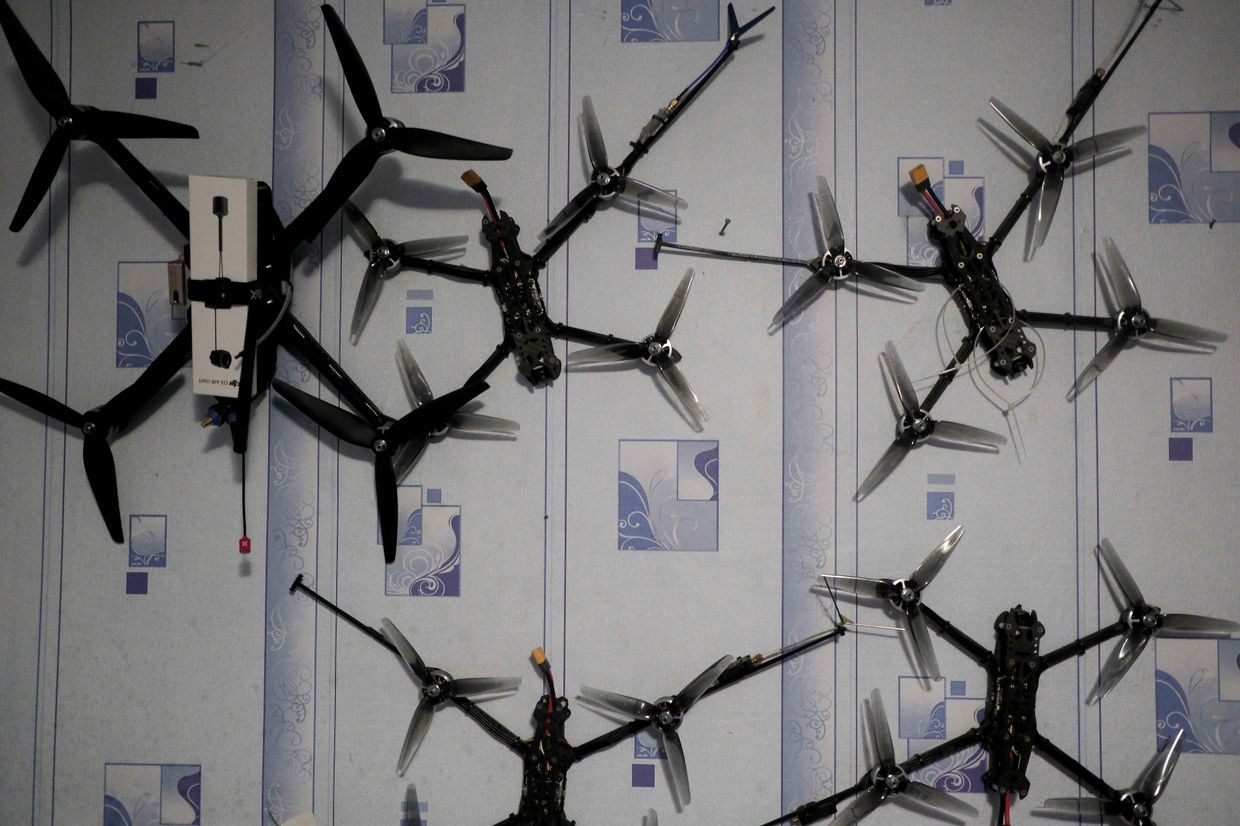
Ukrainian experts launch security index to help Europe tackle rising drone threat


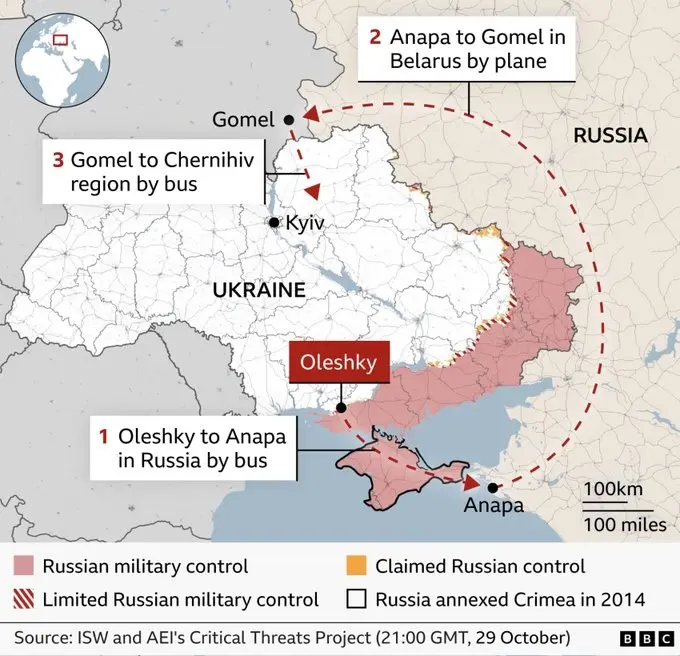
On Friday, Ukrainian legislator David Arakhamia, head of the ruling Servant of the People party, confirmed that the evacuation of residents from Oleshky—a frontline town in the Kherson region—is continuing while the ceasefire remains in effect.
RELATED:
Finland, Norway, and Russia Discuss the Ukraine Conflict
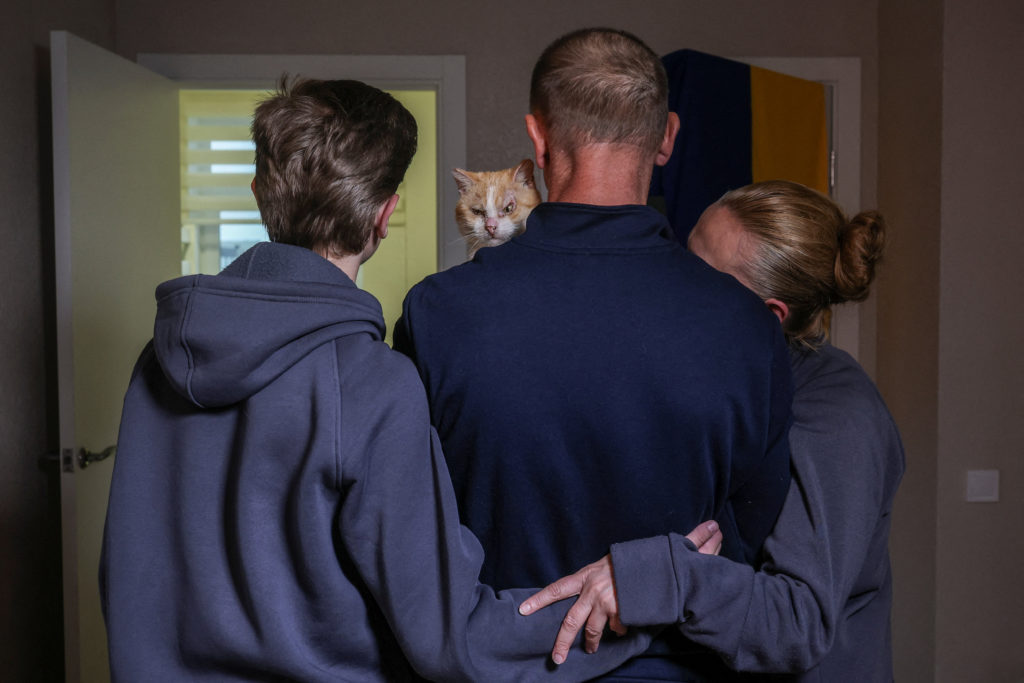
Al least “25 buses have been prepared to evacuate 750 residents, with more than 50 medical personnel and nine ambulances on standby and separate transport has also been arranged for pets,” Irish journalist Brian McDonald posted on social networks.
Earlier in the day, Ukrainian Prime Minister Sergii Koretskyi said that 527 people from Oleshky were expected to return to Ukrainian-controlled territory.
The evacuees would enter Ukraine from Belarus. Once in Ukraine, they will undergo medical examinations, receive initial medical care, and be provided with essential supplies and accommodation.

On Thursday, a Ukrainian delegation led by Parliament Commissioner for Human Rights Dmytro Lubinets departed for Oleshky on a humanitarian mission, which was made possible by an agreement with Russian Commissioner for Human Rights Yana Lantratova, with coordination of U.S. First Lady Melania Trump.
With about 2,000 people remaining at present, Oleshky lies on the left bank of the Dnieper River. The town has been under Russian control since February 2022 and is facing a humanitarian crisis, with shortages of food, medicine and other essential supplies amid continued fighting.
The humanitarian mission followed an agreement on a temporary ceasefire in the area to facilitate aid deliveries and civilian evacuations. The ceasefire is scheduled to remain in effect until 10:59 p.m. Moscow time on Nov. 1.
teleSUR/ JF
Source: Xinhua
Azerbaijan is prepared to increase natural gas supplies to the European Union, but further expansion will require investment in transport infrastructure and long-term commitments from European buyers, according to Elchin Amirbayov, Representative of the President of Azerbaijan on Special Assignments.
Speaking at the Azerbaijani Embassy in Brussels on 21 October, during a meeting attended by EU Today, Amirbayov outlined the difficulties facing efforts to expand the Southern Gas Corridor, which has become an important component of Europe’s strategy to diversify energy imports away from Russia.
“Today it’s fully booked already by all those contracts which we have concluded with all recipients of our gas,” Amirbayov said, referring to existing pipeline capacity.
He stressed that Azerbaijan possessed additional natural gas resources but that increasing deliveries depended on the availability of transportation infrastructure and commercially viable investment arrangements.
“As far as our capacity to provide them with gas is concerned, it is there because we have necessary resources. But what we need to be able to do that is also transportation infrastructure,” he explained.
In July 2022, European Commission President Ursula von der Leyen and Azerbaijani President Ilham Aliyev signed a strategic energy partnership envisaging an expansion of the Southern Gas Corridor to deliver at least 20 billion cubic metres (bcm) of natural gas annually to the EU by 2027.
The agreement formed part of Europe’s response to Russia’s invasion of Ukraine and the subsequent restructuring of European energy supplies.
According to the European Commission, Azerbaijan and its state energy company SOCAR supplied 12.5 bcm to EU member states in 2025, an increase of more than 50 per cent compared with 2021.
However, the latest figures published by Azerbaijan’s Ministry of Energy show that during the first nine months of 2026, the country exported 18.4 bcm worldwide, including 8.6 bcm to European destinations.
The figures underline the challenge of achieving the planned increase in deliveries without additional investment.
The Southern Gas Corridor includes the South Caucasus Pipeline, the Trans-Anatolian Natural Gas Pipeline (TANAP) and the Trans Adriatic Pipeline (TAP), connecting Azerbaijani production with European markets.
TAP completed an initial capacity expansion in early 2026, adding 1.2 bcm annually. Further expansion will depend on additional infrastructure and sufficient contractual demand.
As EU Today previously reported, Azerbaijan began supplying natural gas to Germany and Austria in January 2026, extending its presence in central European markets.
Amirbayov emphasised that additional gas infrastructure could not be developed without long-term commercial arrangements.
“Gas being different from oil, it has to be based on long-term contracts, on long-term expressed willingness,” he said.
He also raised the difficulties created by European restrictions on financing fossil-fuel infrastructure, suggesting that EU institutions and member states needed to reconcile their energy security requirements with existing investment policies.
The regulatory situation is complex. The European Investment Bank no longer finances new unabated fossil-fuel energy projects, including conventional gas infrastructure. However, the EU taxonomy framework permits certain gas-related activities under specific conditions.
Amirbayov said European countries had differing energy requirements and were at different stages of the transition away from fossil fuels. Those differences complicated agreement on the financing of additional gas supplies.
He also explained that Azerbaijan’s own investment resources were heavily committed to reconstruction and rehabilitation projects in territories recovered following the conflict with Armenia.
“We cannot do that job ourselves for the reasons I just explained,” he said, referring to the financial requirements of expanding export infrastructure.
Amirbayov acknowledged Azerbaijan’s own investment in renewable energy, including wind, solar and hydropower. He highlighted the Caspian Sea’s potential for offshore wind generation and described the country’s efforts to increase renewables in its domestic energy system.
Nevertheless, he questioned whether natural gas could be replaced by renewable sources within a short period.
“I don’t think it’s realistic,” he said when discussing the prospect of replacing natural gas within the next year or two.
His comments come as Brussels continues to balance its climate objectives with energy security requirements and the planned reduction of Russian gas imports.
Azerbaijan has increasingly positioned itself as an alternative supplier to European countries seeking to diversify their energy sources. However, Amirbayov made clear that further expansion would depend on decisions taken by European governments, financial institutions and energy companies.
“We are there, ready to assist,” he said, adding that further progress would require clear intentions and decisions from the European side.
The immediate question is whether European buyers and policymakers can establish sufficient contractual certainty and investment arrangements to support the additional pipeline capacity envisaged in the 2022 partnership.

Ukraine’s 3rd Army Corps launched a large assault involving 28 armed and explosive-laden unmanned ground vehicles in the Lyman direction in Donetsk region, but the Russian military repelled the attack and wiped out all the robotic platforms.
The assault involved three types of ground vehicles. Two vehicles were equipped with automatic grenade launchers, 18 carried rocket-propelled grenades, and eight were loaded with explosive charges for one-way kamikaze attacks.
Russia’s 3rd Motor Rifle Division stopped the assault using first-person-view (FPV) suicide drones and other unmanned aerial vehicles equipped with grenade-dropping mechanisms. It said all 28 ground robots were destroyed before they could accomplish their objectives.
The precise location and date of the failed drone assault were not disclosed by the division, which shared footage of the battle.
The operation highlights Ukraine’s expanding reliance on unmanned ground vehicles to compensate for a shortage of troops.
Rather than relying exclusively on conventional assault groups, Kyiv forces have increasingly experimented with remotely operated platforms carrying explosives and weapons to attack fortified positions.
However, the reported failure also illustrates the limitations of the technology. Despite deploying a relatively large number of armed ground vehicles in a coordinated assault, Kyiv forces were unable to overcome Russian defenses without direct human involvement on the battlefield.
The systems remain vulnerable to aerial surveillance and attack drones, which can intercept them before they reach their targets.
The Russian response also points to the growing adaptation of Russian drone units to the threat posed by armed ground robots.
_______________________________________________________________________________________________________________________
SouthFront: Analysis and Intelligence
NOW hosted at southfront.press
Previously, SouthFront: Analysis and Intelligence was at southfront.org.
The .org domain name had been blocked by the US (NATO) (https://southfront.press/southfront-org-blocked-by-u-s-controlled-global-internet-supervisor/) globally, outlawed and without any explanation
Back before that, from 2013 to 2015, SouthFront: Analysis and Intelligence was at southfront.com
The post Russian Drones Destroy 28 Ukrainian Armed Robots in Failed Assault on Lyman (Video) appeared first on South Front.


Destinus has completed 1,750 Ruta B1 cruise missiles and reached monthly output of nearly 300, the company said on 29 October, telling Reuters this exceeds Europe’s annual cruise-missile production before Russia’s full-scale invasion.
That gives a date for easing a shortage. A looming shortage of mini jet engines threatened to hold back Ukraine’s deep-strike drones, Reuters reported in April. Czech maker ZofiTech was then producing about 200 a month, nearly all for Ukraine, and expected demand to reach thousands within months. Both Ruta versions use the 1.5-kN engines Destinus is promising. Ukraine plans to build more jet drones and cruise missiles, so engine output next year will have to keep up, Defense Express notes.
Destinus CEO Mikhail Kokorich said the company already produces turbojets in the roughly 1.5-kilonewton class in series, supplying them both for its own missiles and to other manufacturers. The Ruta B1 runs on the company’s own T150 engine. In June, Destinus announced its 1,000th T150 and said the line was designed to sustain production of thousands of missile systems a year. The company has not disclosed its current engine output.
Meanwhile, Destinus said it has begun production of the larger Ruta Block 2, designed to carry a 250-kg payload more than 700 km. Unlike the roughly 300-km Block 1, Block 2 is designed to be stored, transported, and launched from the same container. A third version, Block 3, is planned with a 2,000-km range, with flight tests scheduled for 2027.
Ukrainian President Volodymyr Zelenskyy acknowledged the Ruta’s combat use in October 2025. Days later, he said Ukraine expected mass production of Ruta and Flamingo missiles by the end of that year. In June 2026, then-Defense Minister Mykhailo Fedorov said the Netherlands was ready to finance about 700 Rutas for Ukraine, without specifying the version.
At the same time, Kokorich said Europe’s problem is shifting from production to integration.
“To have sufficient deterrence, you need to have tens of thousands of missiles,” he said.
European customers, he added, still need to build the military units and logistics to operate missiles in such numbers. Those arsenals would also need storage, transport, maintenance, and targeting infrastructure, he said, and European militaries would need to rethink how they stockpile and deploy precision-strike weapons.
Kokorich said Destinus uses no Chinese components, unlike wartime production in Ukraine, and said access to Chinese suppliers would make manufacturing cheaper, faster, and easier.
Kokorich also argued that cheaper missiles with ranges under 1,000 km would make up most future demand. Separately, Destinus is working with Rheinmetall on cruise missiles and ammunition for multiple-launch rocket systems, including a planned European equivalent of the GMLRS rockets fired by HIMARS.
Un carro armato di cartone – con dei soldi finti e il volto di Giorgia Meloni – è stato dato alle fiamme dai manifestanti del corteo di Napoli contro il carovita e la politica del riarmo. “È un gesto simbolico“, dicono i promotori schierati proprio davanti all’ingresso dell’autostrada in via Reggia di Portici. Di fronte a loro le forze dell’ordine in assetto anti sommossa per impedire l’accesso all’autostrada. Alle spalle degli agenti anche quattro camionette blindate di polizia e carabinieri. Un gruppo di manifestanti sta continuando a percorrere via Reggia di Portici, andando in direzione dell’uscita dell’autostrada.
L'articolo Corteo a Napoli, bruciato un carro armato di cartone per protesta contro la spesa militare proviene da Il Fatto Quotidiano.


Foi a paixão pelo Douro Vinhateiro que levou Juan Viñas, empresário galego do setor hoteleiro e fundador do Grupo Carrís, a comprar uma quinta na região, em 2008, e dedicar-se à viticultura. Quase duas décadas depois, o projeto ganha escala internacional com a criação de uma empresa nos Estados Unidos para importar e distribuir os vinhos Socalcos da Carrís, que produz. A meta é ambiciosa: vender dois milhões de garrafas dentro de cinco anos e tornar-se o maior importador de vinho do Douro no mercado norte-americano.
Juan Viñas começou por ser um apreciador dos vinhos DOC Douro, “fascinado pela casta Touriga Nacional e pela qualidade dos vinhos” da região duriense, como relata enquanto prova uma das referências que já comercializa nos Estados Unidos e que estão à venda em restaurantes de Miami.
Foi em 2008 que comprou a Quinta da Balsa do Douro, na freguesia de Desejosa, em Tabuaço, com 15 hectares de vinha. Encontrou nos donos da vizinha Quinta da Carregosa, que já vai na quinta geração, o conhecimento de que precisava para levar o negócio a bom porto, com enologia de Jorge Alves. “É aqui que é feita a vinificação”, conta o empresário galego, que divide o tempo entre a Florida, onde reside, a quinta em Tabuaço e os hotéis no Porto e em Santiago de Compostela.
Queremos que o vinho do Douro multiplique a sua presença nos Estados Unidos.
A parceria estende-se também à rede de 140 pequenos viticultores da região duriense que, há vários anos, vendem uvas à Quinta da Carregosa, tanto para “benefício” como para a produção de vinho DOC Douro. “Esta vindima comprámos cerca de 800 mil quilogramas a esses 140 produtores que trabalham connosco há muitos anos”, conta Fernando Carregosa, um dos proprietários.
A aposta em novos mercados internacionais ganha particular relevância numa altura em que o Alto Douro Vinhateiro atravessa uma grave crise com muitos viticultores a enfrentarem dificuldades para escoar a produção. “É muito importante que haja projetos de valorização da uva para o mercado externo”, defende, corroborado por Juan Viñas: “Queremos que o vinho do Douro multiplique a sua presença nos Estados Unidos”.

O investidor considera que os vinhos do Douro têm margem para conquistar espaço naquele mercado, onde a Região Demarcada do Douro é sobretudo conhecida pelo vinho do Porto. A empresa já vende a restaurantes em Miami e está presente em estabelecimentos de referência, enquanto negoceia novas parcerias de distribuição, incluindo com grandes cadeias de retalho. “Vamos começar de fora para voltar para dentro”, resume Juan Viñas a estratégia de internacionalização dos vinhos Socalcos da Carrís.
Agora, o objetivo é reforçar a internacionalização da operação, com a mira apontada para os Estados Unidos, para onde antecipa comercializar cerca de 200 mil garrafas em 2027, duplicar a operação em 2028 e crescer para os dois milhões de vendas num horizonte de cinco anos. Brasil e Espanha estão também entre os mercados prioritários.
A empresa já tem licença de importação nos Estados Unidos e licenças de distribuição na Florida e no Texas. O objetivo é crescer para outros estados, como Geórgia, Nova Iorque e New Jersey, sem ficar inteiramente dependente de intermediários. “Fazemos desde a cepa, a uva até ao copo”, vinca Juan Viñas.
É muito importante que haja projetos de valorização da uva para o mercado externo.
O plano comercial prevê quatro referências centrais: dois vinhos Petit, orientados para as grandes superfícies, e dois Socalcos, destinados sobretudo à restauração.
O perfil dos vinhos tranquilos, frescos e elegantes, procura refletir as características da região, segundo o enólogo Jorge Alves, destacando os solos de xisto, uma particularidade da freguesia Desejosa.
Alargar o portefólio a outras regiões vinícolas portuguesas, como a dos Vinhos Verdes, também está em cima da mesa, devido ao seu “um perfil fresco e leve”, acrescenta Juan Viñas.
Por detrás da parceria deste projeto está uma filosofia que atravessa gerações na família Carregosa. Fernando recorda uma frase da bisavó que resume a forma como encaram o trabalho de cultivo nos socalcos do Douro: “É tudo com muito paixão. Mas também trabalhamos como galegos”.
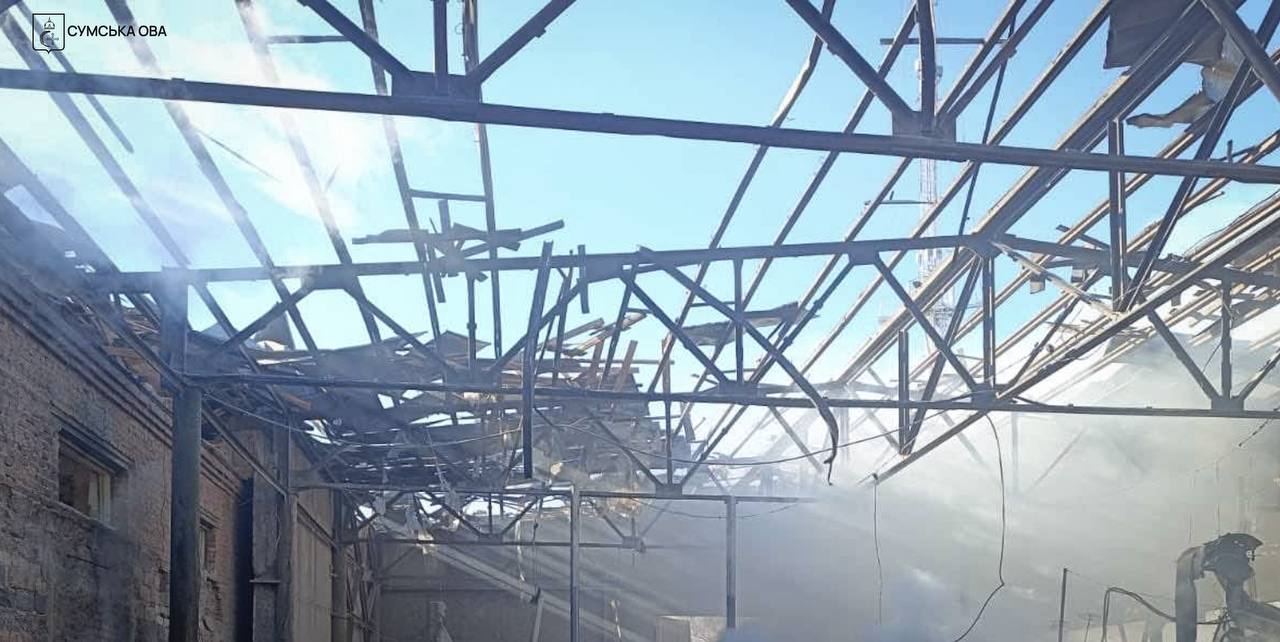
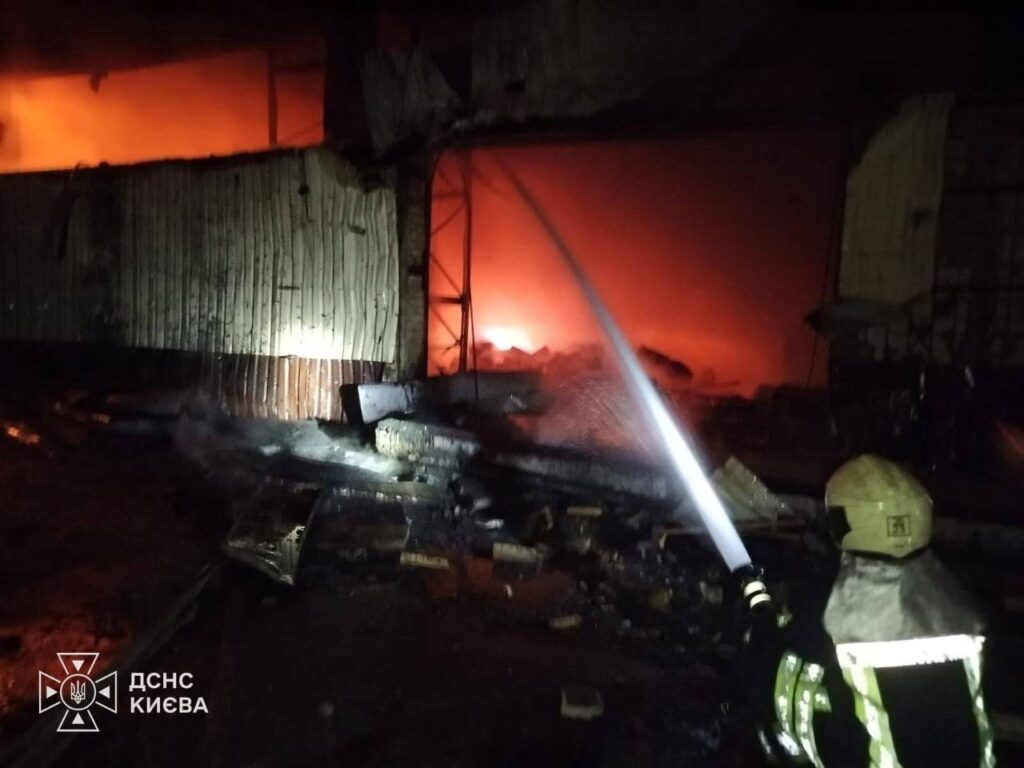
Russia attacked Kyiv with ballistic missiles late on 29 October, killing a man and injuring a 35-year-old woman, Kyiv city prosecutors said. The strikes damaged eight apartment blocks in Dniprovskyi district, a gas station, a restaurant, a dental clinic, warehouses, and cars. A warehouse building caught fire in Darnytskyi district, the city administration reported.
Overnight, Russia fired Iskander-M, S-400, and KN-23 ballistic missiles, four Kh-59/69 guided missiles, and 113 drones, 83 of them jet-powered, Ukraine's Air Force said. The attack mainly targeted Kyiv, Poltava, and Dnipropetrovsk oblasts. Air defenses downed three missiles and 96 drones, but strikes hit 17 locations.
Russia is waging its war on Ukraine's cities around the clock as winter approaches, striking homes, transport, and the power grid that keeps them running. On 29 October, including the late attack on Kyiv, Russian strikes killed at least 27 civilians and injured more than 140 across six regions, by EP's tally of regional authorities' reports. It was one of the deadliest days of the autumn. Most died in daylight, on a train platform in Dnipro, in an apartment block in Kremenchuk, in central Chernihiv, and under guided bombs in Izium.
A Russian strike on Dnipro left more than 350,000 customers in the city and nearby towns without power, Dnipropetrovsk Oblast's administration said shortly after midnight. Water pumping stations switched to backup power. By morning, engineers had restored electricity to most customers in the oblast, but more than 200,000 were still without power.
In Kyiv, equipment damaged in earlier strikes failed on the right bank, forcing emergency outages, the city administration said. Russia attacked an industrial plant in Poltava Oblast's Kremenchuk district overnight and again in the morning, with no casualties reported, the regional administration said.
In the morning, a Russian drone hit a shopping center in Kharkiv's Kyivskyi district, injuring four women, Kharkiv Oblast Governor Oleh Syniehubov said. In Chernihiv Oblast, Russian drones destroyed the house of culture in Mena late on 29 October, and in the morning a drone hit a house in Bobrovytsia and injured a woman, the regional administration said. In Chernihiv itself, 37 people sought medical help after the 29 October strike on the city center that killed two 15-year-old girls, Yana and Mariia.
A 40-year-old man wounded in the 29 October jet drone strike on Dnipro's railway station died in hospital, raising the toll to 15, the regional administration said. Eleven people remain in hospital. Dnipropetrovsk Oblast declared 30 October a day of mourning.
Poltava Oblast also mourns three people killed when a Russian drone hit an apartment block in Kremenchuk on 29 October. Another 32 were injured, six of them children, the regional administration said.
In Izium, Kharkiv Oblast, Russian guided bombs hit a five-story building on 29 October, killing four people and injuring 14, police reported. In Zaporizhzhia Oblast, Russian attacks killed two people in Bilenke and injured 23 across the region, 13 of them when Russia sent seven FPV drones at vehicles and public transport in Zaporizhzhia city, police said. EP reported the city faced a record number of such attacks.

A Russian FPV drone struck a social bus operated by the Proliska Humanitarian Mission in the frontline village of Bilenke, Zaporizhzhia Oblast, while it was carrying 23 passengers and a driver. The mission’s head, Yevhen Kaplin, reported the attack on Facebook on 29 October. In a comment to Ukrainska Pravda, he later gave slightly different details: 20 passengers and around 14:50.
Earlier that day, Russian attacks on Bilenke killed a 49-year-old man and wounded three other men, acting Zaporizhzhia Oblast head Mykhailo Semikin said. The village of Bilenke is likely to face the most difficult conditions in Zaporizhzhia Oblast this winter, then-head of the oblast Ivan Fedorov said in an interview with Ukrinform on 15 August. Russian forces use the village as a testing ground because the front line runs roughly across the river, he said.
Since the start of Russia’s full-scale invasion, this marks the 121st attack on the mission’s staff and volunteers while they were providing aid, as well as on its vehicles, offices, and warehouse infrastructure, Kaplin said.
The attack killed a female passenger born in 1952. The bus driver sustained serious injuries and was evacuated to a medical facility, Kaplin said. Another passenger, a man born in 1947, sustained multiple shrapnel wounds, while another woman suffered injuries from flying glass. The remaining passengers suffered acoustic barotrauma. Most of the people on board were elderly.
According to preliminary information, this was a drone that was lying in wait, Kaplin said. The attack took place at around 14:30 in the center of the village, on a section of road protected by an anti-drone net.
The bus was clearly marked with the humanitarian mission’s logo on the hood and roof, as well as the words “social bus,” Kaplin said.

National Police special units and military personnel evacuated the wounded, accompanied by aerial cover teams, due to the threat of further drone attacks.
Commercial transport operators no longer serve the village of Bilenke, but more than 1,600 people still live there.
As a result, residents had no way to reach the Oblast center to access essential services, or to buy food and medicine, Kaplin said. They also could not collect their pensions or winter aid payments from the state and humanitarian organizations.
The Proliska team launched the social bus at the request of regional and local authorities.
Russian drones also hit civilian transport in the Oblast capital several times on 29 October. The city came under a record number of FPV drone attacks that day, Semikin said, adding that Russia had changed its tactics and modified its drones.


"¡Este es el Titanic gay!". Con esta comparación resumía Javier Ambrossi la ambición de La bola negra, la película que ha terminado de consolidar a Los Javis en el panorama internacional. En un reportaje publicado en The Guardian, el periodista Ryan Gilbey se adentra en el universo de esta épica queer, una producción que combina la Guerra Civil española, el deseo y los prejuicios con un despliegue visual en el que tiene cabida una dimensión profundamente íntima.
Sus autores tenían claro que querían ir más allá de lo que se espera de una película de esta temática. "Estoy harto de que las películas LGBTQ+ sean de nicho", explica Ambrossi al diario británico. Su objetivo era hacer "la película de guerra más grande y gay de la historia", una declaración de intenciones que se traduce en una historia dividida en tres épocas: 1932, 1937 y 2017. Las distintas tramas, conectadas por un relato inacabado de Federico García Lorca, exploran el rechazo, la identidad y la memoria queer en España.
Los cineastas buscaban, así, desmarcarse del cliché, y probar con el más difícil todavía. "Mucha gente ha dicho que echaba de menos algo así. Quieren comprar palomitas y que les den una gran película como Titanic", señalaba Ambrossi durante la entrevista, cuando le venía a la mente el mejor titular para vender su propia película: "¡Este es el Titanic gay!".
El resultado, según describe Gilbey, es un collage maximalista que mezcla escenas de guerra con encuentros contemporáneos y un estilo visual exuberante. A ello se suman las apariciones de Penélope Cruz, con uniforme militar y peluca rubia, y Glenn Close, que interpreta a una estudiosa de Lorca y habla en español. Una combinación que aspira a recuperar la experiencia de las grandes películas concebidas para disfrutarse en pantalla grande.
Ese espíritu también explica la estrategia de distribución de La bola negra. Según cuenta The Guardian, sus directores insistieron en mantener una larga exhibición cinematográfica antes de cerrar la venta de los derechos para Estados Unidos a Netflix. La película permanecerá 47 días en los cines estadounidenses, un periodo récord para la plataforma.
El recorrido de la cinta también alimenta las expectativas de cara a los premios. Tras compartir el reconocimiento a mejor dirección en Cannes con Paweł Pawlikowski, Los Javis afrontan la temporada con una película que, según Gilbey, parte como una de las grandes aspirantes a los Óscar, con serias posibilidades de competir en categorías como mejor película y mejor dirección.
Entre sus posibles rivales figuran La Odisea, You Can See Everything (Puedes verlo todo) y Artificial, todavía pendiente de estreno, además de otros títulos que puedan sumarse a la carrera. Queda por ver si La bola negra logra convertir el entusiasmo internacional en una cosecha de nominaciones y premios.

El director Alexander Payne, ganador de dos premios Oscar por los guiones de Entre copas y Los descendientes, se enfrenta a una demanda por presunto plagio relacionada con Los que se quedan, la película protagonizada por Paul Giamatti que obtuvo cinco nominaciones a los premios Oscar. El guionista británico Simon Stephenson sostiene que la historia se basa en Frisco, un libreto suyo que nunca llegó a producirse.
La demanda, presentada este miércoles, también señala como responsables al guionista de la película, David Hemingson, al productor Mark Johnson, a Miramax, Focus Features y otras entidades empresariales. Stephenson ya había denunciado las supuestas similitudes ante el Sindicato de Guionistas de Estados Unidos (WGA) en 2024, pero la organización le comunicó que no podía resolver el conflicto y le recomendó acudir a un abogado.
Según la denuncia, existen 46 coincidencias argumentales entre ambos guiones. Frisco, escrito por Stephenson entre 2012 y 2013, sigue a un médico desanimado que trabaja en un hospital y debe hacerse cargo de una adolescente con una personalidad especialmente despierta. Durante un viaje a San Francisco, ambos estrechan su relación, hasta que el protagonista decide abandonar su empleo y emprender un recorrido por el país.
En Los que se quedan, un profesor malhumorado, interpretado por Giamatti, pasa las vacaciones navideñas en un internado junto a un alumno, al que da vida Dominic Sessa. La denuncia sostiene que las semejanzas entre ambas historias van mucho más allá de una premisa compartida y acusa a los demandados de trasladar elementos del libreto original con modificaciones superficiales.
"Los demandados construyeron su película utilizando Frisco como plano", afirma la demanda, que también sostiene que la estructura y distintos acontecimientos del guion de Stephenson se incorporaron a la película a través de las aportaciones de Payne al trabajo de Hemingson.
El conflicto no es nuevo. Según la documentación presentada, los agentes de Stephenson intentaron que Payne dirigiera Frisco en dos ocasiones: primero, en 2013, y después, en 2019, cuando se llegó a contemplar una posible producción de Netflix con Bob Odenkirk como protagonista. En ambas ocasiones, el cineasta habría descartado el proyecto. Cuando las acusaciones trascendieron en 2024, Payne las rechazó públicamente durante el Festival de Cine de Sarajevo, donde calificó la denuncia de "la mayor estupidez del mundo".
Stephenson, que ha trabajado en películas como Paddington 2, Luca y que ahora se ha encargado de escribir la secuela de Wonka, ya había defendido que las coincidencias entre los dos libretos no podían atribuirse a una casualidad. Inspirado en parte en sus experiencias como pediatra, su guion llegó a ocupar el tercer puesto de la Black List, el archivo con los mejores guiones de Hollywood todavía pendientes de producción.