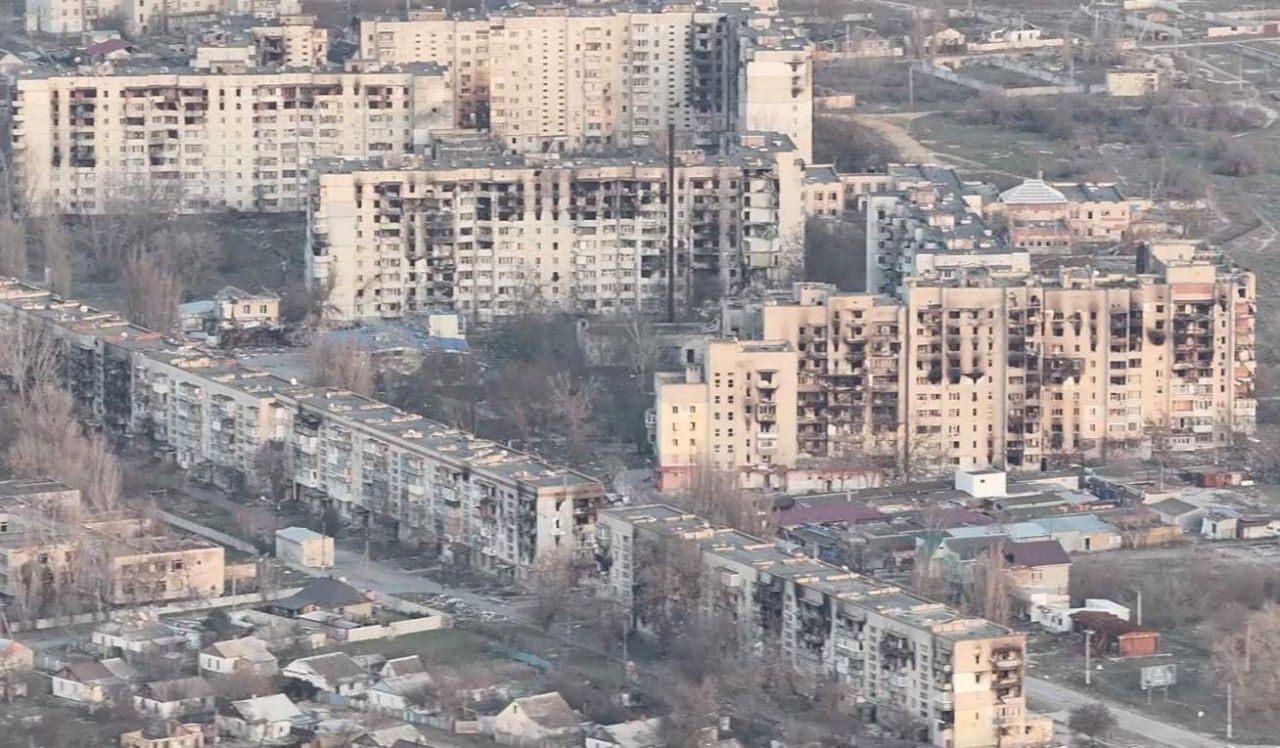
"Everyone who wishes to leave Oleshky will be given the opportunity to leave safely. At the same time, those who have decided to stay can stay and will receive all the necessary humanitarian support," Ukraine's Human Rights Ombudsman Dmytro Lubinets said.
Prime minister says room for manoeuvre was limited by geopolitical crises and Labour’s 2024 manifesto
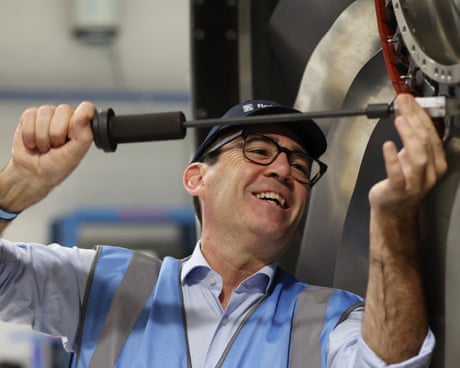
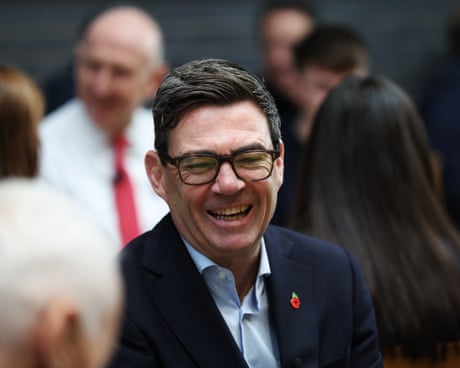
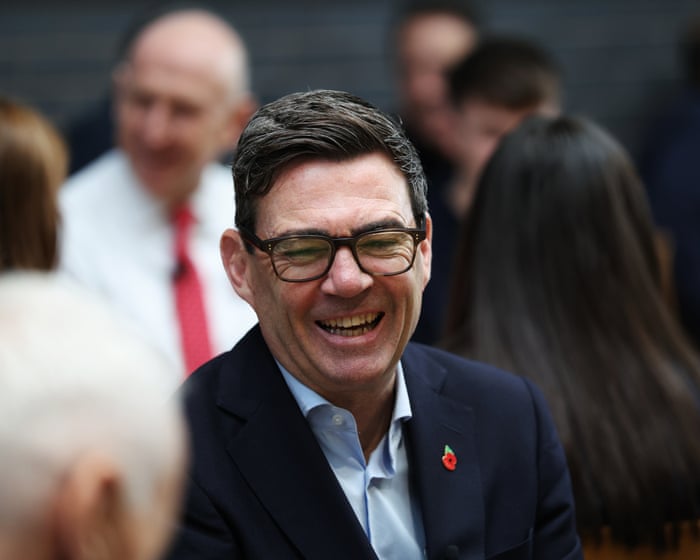
Andy Burnham has admitted his first budget as prime minister was not as radical as he would have liked because of the economic uncertainty facing the country.
He said he would have liked to have gone further with this week’s announcement – including with higher energy support payments – but felt hemmed in by external events such as the war in Iran, which has pushed up borrowing costs.
Manila, 30 oct (Prensa Latina) El Gobierno de Filipinas aseguró hoy estar preparado para afrontar posibles emergencias, incluidos desastres naturales y amenazas a la seguridad, ante las alertas internacionales sobre escenarios de crisis.
Halima Salman, 27, was convicted on Tuesday of joining the Islamic State and receiving military training in Syria, marking the first public conviction of a woman for joining ISIS by an American court. She now faces up to 10 years in prison.
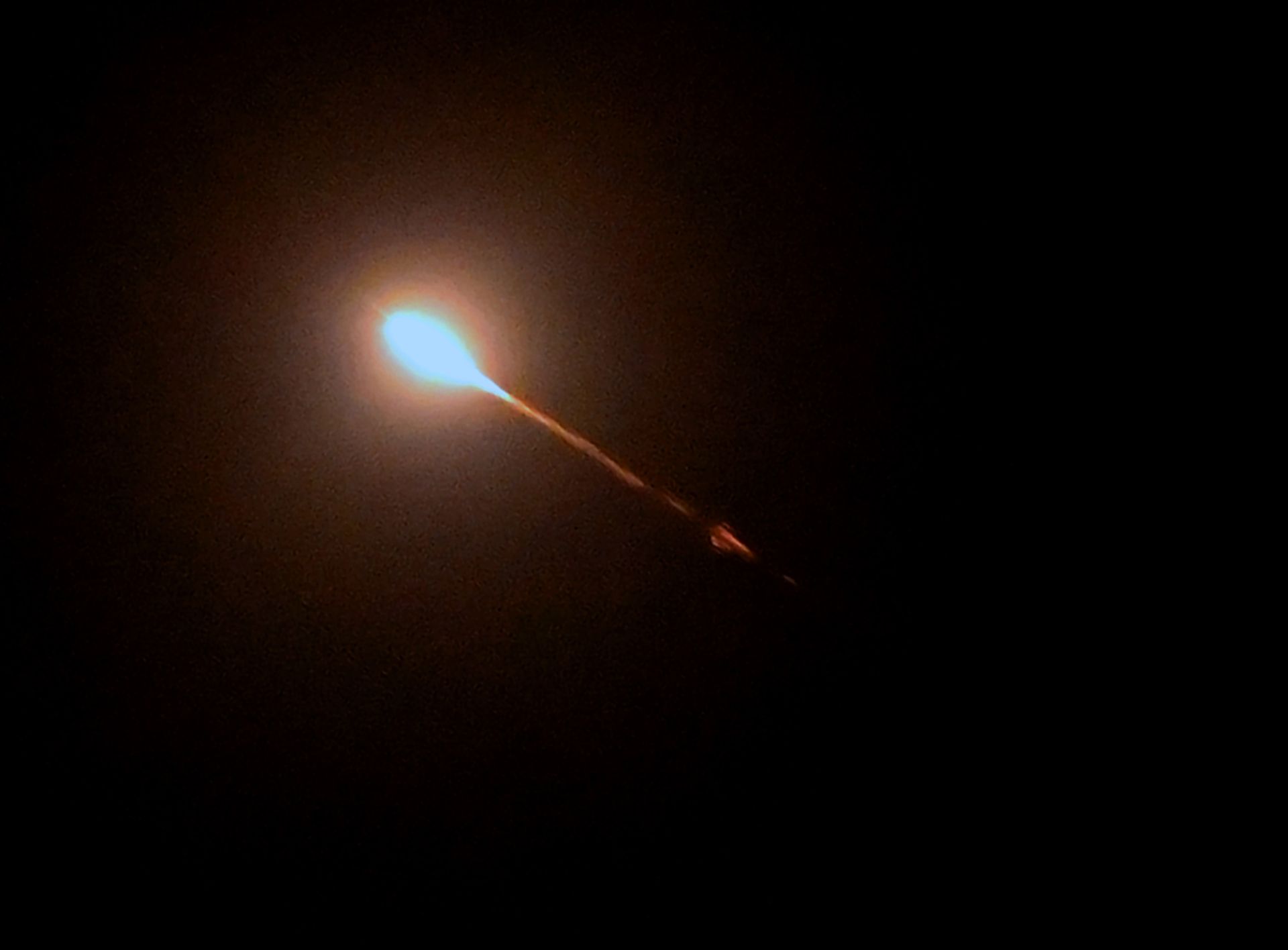
In Kyiv, multiple Russian ballistic missiles struck just after 10 p.m. local time. According to Kyiv Mayor Vitali Klitschko, warehouse buildings in the city's Darnitsky district were struck, starting fires.
US President Donald Trump said that Vice President JD Vance’s outreach to Iran was about helping the country get medical supplies, after US media reported Vance had written to Tehran’s top security official to revive peace talks.
Iran has received a letter from Vance but it has not responded to it yet, the country’s semi-official Tasnim news agency reported on Thursday, while adding that Tehran wants the US to meet its conditions and “any position that contradicts this framework is unacceptable.”
Also on Thursday, the US military’s senior officer overseeing the Middle East, Admiral Brad Cooper, met Trump at the White House to outline military options in Iran, the Wall Street Journal reported, citing US officials and other people with direct knowledge of the meeting.
Reuters could not immediately independently verify this report.
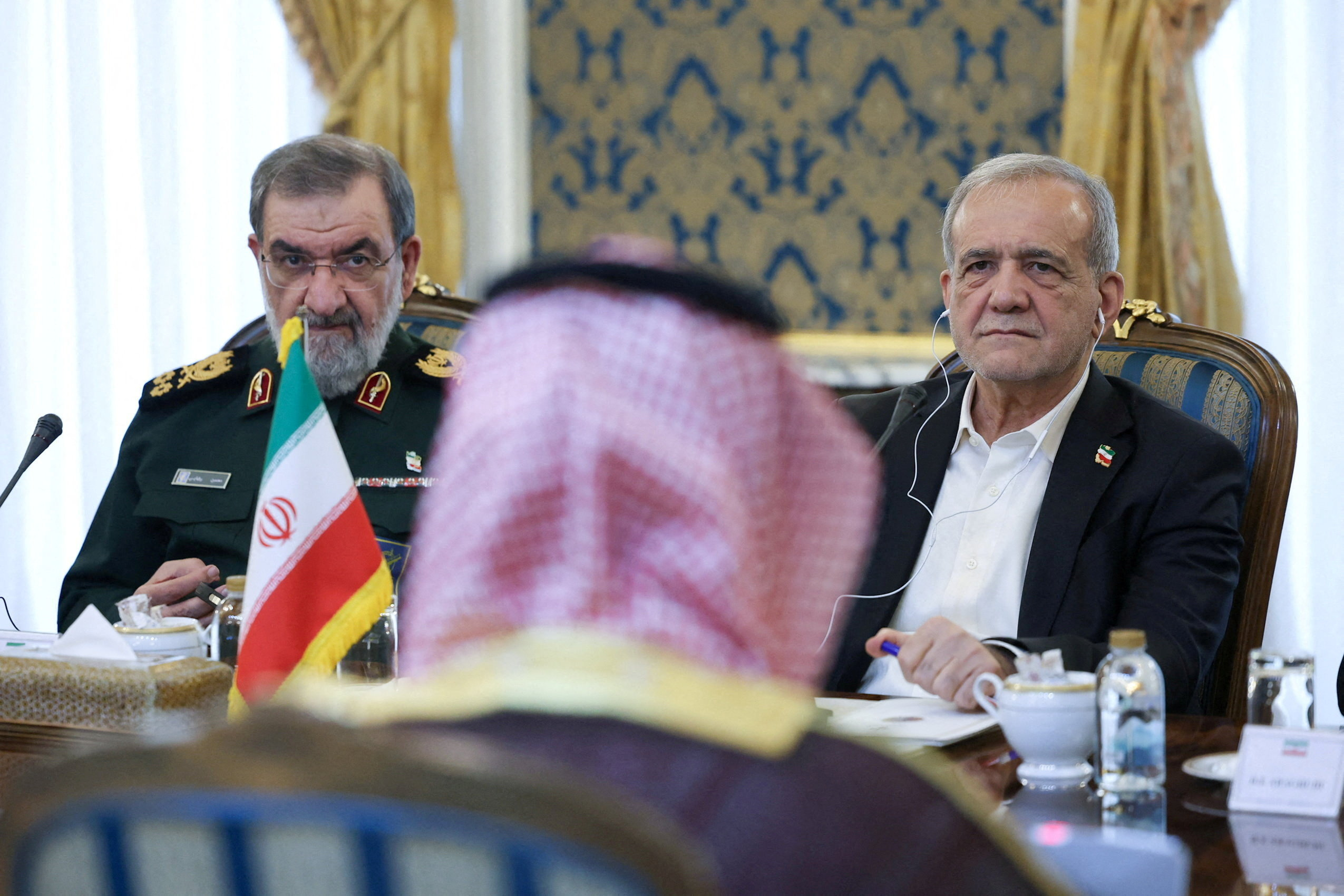
Vance sent the letter to Iranian Security Council chief Mohsen Rezaei in a bid to revive peace negotiations, the Wall Street Journal and the New York Times reported on Wednesday, citing US officials and people familiar with the matter. Reuters could not immediately verify the reports.
The Wall Street Journal reported that Vance sent the letter at Trump’s direction. When asked by reporters later on Wednesday if he directed Vance to reach out to Iran to restart peace negotiations, Trump said: “No.”
“What that is is they need help with medical supplies and various things. He (Vance) asked me what I thought. I said, if you want to do that, that’s okay. Basically, it’s getting supplies in to help people that are not well,” Trump told reporters.
Iran’s mission to the United Nations in New York did not immediately respond to a request for comment on the letter and Trump’s remark. Vance’s office did not immediately respond to a request for comment.
TEHRAN’S CONDITIONS
Iran’s parliament speaker said on Thursday that Tehran’s conditions had been repeatedly and clearly communicated to mediators and that progress can only be achieved if Iran’s seven conditions are met.
The “carrot-and-stick approach has no effect on Iran,” Mohammad Baqer Qalibaf added.
Conditions Iran says must be met before it will reopen the strategic Strait of Hormuz shipping route include, among other demands, lifting the US blockade on Iranian ports, lifting US sanctions on Iranian oil exports and ending hostilities on all regional fronts.
The United States and Israel launched a war against Iran at the end of February. The US has also since imposed a naval blockade on Iran to starve it of oil export revenue and escalated efforts to economically isolate Iran.
Iran has long blamed US sanctions for hindering civilian access to medical supplies.
In an August letter to the UN Security Council, Iran accused the US of intentionally depriving civilians “of access to food, medicines, medical equipment, energy and other necessities, with grave consequences for their rights to life, health, food and a decent standard of living.”
Qatari mediators presented Iran with a new draft deal on Sunday to end the war, but a senior Iranian official said Doha had only put forward unacceptable ideas that did not amount to an offer.
The war’s impact on global energy costs has also weighed on support for Republican candidates and hurt Trump’s approval ratings ahead of the US midterm elections that decide control of Congress. Trump’s Republican Party holds a narrow majority in both chambers of Congress.
Youth-led demonstrations across Europe are bringing together concerns about housing, education, employment and political accountability. Although the movements differ considerably between countries, their emergence reflects growing dissatisfaction among younger Europeans over economic prospects and their influence on political decisions.
A series of demonstrations involving young people across Europe has developed into a wider political phenomenon, as students and younger workers challenge governments over living costs, public services and their expectations for the future.
Protests have taken place in France, Belgium, Italy, Albania and several other countries, while a student-led movement in Serbia has achieved a particularly consequential political outcome.
In Serbia, nearly two years of demonstrations culminated in a parliamentary election victory for a student-backed political movement, ending the electoral dominance of President Aleksandar Vučić’s Serbian Progressive Party.
The outcome, reported by Reuters on 29 October, has given the movement a prospective parliamentary majority, although final certification of the election results remains outstanding.
Elsewhere, protesters have secured fewer immediate political concessions.
Nevertheless, their campaigns share a recurring concern: that conventional channels of political representation have failed to address problems affecting younger generations.
Economic Pressures Behind the Demonstrations
The grievances vary between countries, but housing affordability, insecure employment, education funding and living costs feature prominently.
Almost one-third identified economic conditions and job creation as a principal concern, while education also ranked prominently.
More recent figures illustrate the financial pressures confronting younger Europeans.
According to Eurostat data published in June 2026, 24.2 per cent of EU residents aged 15 to 29 were at risk of poverty or social exclusion in 2025.
That compares with 20.9 per cent for the population as a whole.
These figures do not establish that economic hardship is the cause of every protest. They do, however, provide context for the dissatisfaction expressed by participants.
Belgium’s Students Demand Better Education
In Brussels, demonstrations have focused partly on the condition of schools and the availability of educational resources.
Students have criticised deteriorating facilities, shortages of teachers and government decisions affecting education funding.
Nineteen-year-old student Maya Gourdel told Reuters that peaceful attempts to draw attention to these concerns had attracted little response from political leaders.
Her account reflects a wider frustration among demonstrators who believe that public attention has increased only after protests became more disruptive.
Belgium’s education system is organised primarily at community level, meaning decisions concerning funding, staffing and school infrastructure are divided among different authorities.
The demands of protesters consequently involve both national political debates and decisions taken by regional and community institutions.
France and Italy Face Wider Social Unrest
In France, demonstrations concerning the cost of living and public services have involved students alongside trade unions and other organisations.
Recent protests have also been accompanied by violence, including attacks on commercial premises and confrontations with police.
The involvement of younger demonstrators does not mean that every participant supports violent tactics.
Rather, the events illustrate how movements with economic and political grievances can encompass groups with different objectives and methods.
Italy has experienced similar tensions, particularly in Milan, where demonstrations against rising living costs have followed earlier episodes of unrest.
The Italian government has faced pressure over household expenditure, wages and the affordability of essential services.
These disputes have developed against a background of high energy prices and concerns about the broader economic outlook.
Albania’s Frustration With Political Institutions
In Albania, student-led protests have challenged Prime Minister Edi Rama’s government over alleged corruption, limited employment opportunities and education standards.
Demonstrations that began in Tirana have spread to other cities.
On 29 October, opposition lawmakers disrupted proceedings in parliament following weeks of protests and confrontations between demonstrators and police.
The government has offered measures intended to address economic concerns while condemning violence associated with the demonstrations.
For many younger Albanians, employment prospects are closely connected to the possibility of emigrating.
The perception that professional opportunities depend on political connections or personal networks has become another source of dissatisfaction.
However, the Albanian movement cannot be treated as identical to protests in EU member states, given the country’s different economic conditions and political institutions.
Serbia Shows the Political Potential of Student Movements
Serbia provides the most substantial example of youth-led protest translating into electoral change.
The movement emerged after the collapse of a railway station canopy in Novi Sad in November 2024, which killed 16 people and prompted allegations of corruption and negligence.
Students organised prolonged demonstrations demanding accountability and institutional reform.
Their campaign subsequently developed into an electoral challenge to the governing Serbian Progressive Party.
Preliminary results from the October 2026 parliamentary election indicate that the student-backed list has secured a majority of seats.
However, electoral certification and the formation of a new government remain incomplete.
The movement now faces a different challenge: converting protest demands into administrative decisions, legislation and economic policy.
Its success will be judged not only by the election result but also by its ability to govern.
A Generational Shift, But Not a Single Movement
It would be misleading to describe Europe’s demonstrations as a unified political campaign.
Participants have different objectives, national circumstances and ideological positions.
Some demand increased public expenditure, while others concentrate on corruption, political accountability or employment opportunities.
What connects them is a recurring concern about whether established institutions respond adequately to younger citizens.
The political consequences will depend on whether demonstrations produce lasting organisations, influence elections or secure changes in government policy.
Serbia suggests that student mobilisation can translate into substantial political change.
For governments elsewhere in Europe, the question is whether the grievances driving these movements can be addressed through existing political institutions before dissatisfaction generates further unrest.
Moscow's consent to a temporary ceasefire in Russian-occupied Oleshky seems like a long-overdue and welcome concession from a country that has repeatedly rejected or violated ceasefire proposals during the full-scale invasion of Ukraine.
So why is the Kremlin so on board with Oleshky? Experts, as well as information
A dispute between Germany and Italy over natural gas storage has exposed tensions within the European Union’s energy market, as wholesale prices approach levels last recorded during the 2022 energy crisis and governments confront the prospect of another expensive winter.
Italy has accused Germany of contributing to the latest surge in European natural gas prices by delaying the replenishment of its underground storage facilities, reopening a debate about national energy policies and their consequences for the EU’s single market.
The dispute emerged on 29 October after the European benchmark gas price briefly exceeded €100 per megawatt hour the previous day, its highest level since December 2022.
Germany’s gas storage facilities were just 61.7 per cent full, compared with almost 91 per cent in Italy and an EU average of approximately 75 per cent.
The difference has become politically sensitive because European countries purchase gas in an interconnected market, meaning decisions taken by one major consumer can influence prices paid elsewhere.
Speaking at the Montel Italian Energy Day conference in Milan, Alessandro Noce, director general for energy markets and infrastructure at Italy’s Energy Ministry, criticised Germany’s approach to preparing for winter.
According to Reuters, Noce argued that Italy had spent €300 million securing additional gas reserves, only to face higher market prices as Germany attempted to replenish its comparatively depleted stocks.
He also questioned whether Germany had delayed purchases because of preparations to privatise energy companies involved in the storage process.
Germany’s Economy Ministry did not immediately respond to the criticism.
Germany’s Storage Decisions Under Scrutiny
The German government’s approach has attracted particular attention because of its role in the operations of Uniper and Securing Energy for Europe (SEFE).
Both companies became important components of Germany’s energy-security arrangements following the disruption of Russian gas supplies in 2022.
Plans concerning their future ownership have coincided with renewed questions about how Berlin balances commercial considerations against the need to maintain strategic reserves.
At the Milan conference, an energy analyst suggested that preparations for privatisation had contributed to delays in storage purchases.
That assessment has not been established as the definitive explanation for Germany’s comparatively low reserves.
Nevertheless, the resulting political dispute demonstrates the difficulties of managing energy security through a system in which national governments retain considerable discretion while their purchasing decisions affect a common market.
Europe’s Gas Market Faces Renewed Pressure
Europe’s latest price increase has several causes extending beyond German storage policies.
Disruptions to liquefied natural gas shipments associated with the conflict involving Iran have constrained supplies from the Middle East.
At the same time, European countries entered the summer storage-refilling period with unusually low reserves following the previous winter.
The EU Agency for the Cooperation of Energy Regulators (ACER) reported that underground gas storage was only 28 per cent full at the end of winter 2025–26.
By 21 October, that figure had risen to 75 per cent, still below historical levels.
In its latest gas-market monitoring report, ACER estimated that disruption linked to the Middle East conflict had added between €18 billion and €33 billion to Europe’s gas-import bill.
The agency also found that American liquefied natural gas accounted for roughly 30 per cent of EU gas supplies, reflecting Europe’s growing reliance on transatlantic energy imports.
Although this diversification has reduced dependence on Russian pipeline gas, it has also increased Europe’s exposure to international competition for LNG cargoes.
European buyers must compete with customers in Asia, particularly when colder weather or geopolitical disruptions increase demand.
EU Storage Rules Face a Test
The disagreement has implications for the European Union’s gas-storage framework.
Following the 2022 energy crisis, the EU introduced mandatory storage requirements intended to reduce the risk of supply shortages during winter.
The arrangements were subsequently extended until the end of 2027.
Under the revised rules, member states retain a 90 per cent storage-filling target but have greater flexibility over when and how it is achieved.
Countries may reach the target between 1 October and 1 December, rather than being bound to the previous 1 November deadline.
Further flexibility is available in difficult market conditions.
These provisions were designed partly to prevent governments from creating artificial demand peaks by purchasing gas simultaneously to meet rigid deadlines.
However, the present dispute suggests that delayed purchases can create another problem if several major consumers need additional supplies as winter approaches.
Germany’s current storage level does not, by itself, establish a breach of EU requirements. The applicable deadlines and permitted exemptions must also be considered.
Italy Seeks Greater Scope for Intervention
The Italian government has meanwhile been seeking permission from the European Commission to use public funds to reduce energy costs for households and businesses.
Rome’s concerns reflect the economic consequences of sustained high gas prices, particularly for industries dependent on energy-intensive manufacturing.
Italy faces a general election expected in 2027, adding a domestic political dimension to the debate over energy subsidies.
Noce warned that prices could rise to between €150 and €180 per megawatt hour if January brings particularly cold weather.
Such an outcome remains a scenario rather than a forecast.
Energy markets will also be influenced by developments in the Middle East, LNG deliveries, industrial demand and winter temperatures.
A European Problem Without a Single National Solution
Europe has expanded its LNG import infrastructure and diversified energy sources substantially since 2022.
However, the latest price increases demonstrate that greater import capacity does not necessarily insulate consumers from global supply disruptions.
The German–Italian dispute also exposes the limits of national energy planning within an integrated European market.
Germany’s storage policies affect its neighbours, just as decisions taken elsewhere influence the price German consumers pay.
The central question for Brussels is whether existing coordination arrangements provide sufficient incentives for governments to safeguard their own winter supplies without transferring additional costs to other member states.
With the heating season approaching, that issue is becoming an immediate economic concern rather than a theoretical dispute about European energy solidarity.
So far, so good: political parties emerging from today’s hearings with President Seguro appear, in the main, to be ready to ‘do more’ to find solutions for the housing crisis/
La idea de un monitor hace 20 años y la que tenemos hoy en día ha cambiado mucho. Las pantallas han evolucionado mucho más allá de lo tradicionales, con fabricantes que buscan sacar la faceta más inmersiva de cada juego sin renunciar a la fluidez que exigen, sobre todo, los títulos más competitivos. Y en esa búsqueda de meter al jugador dentro de lo que sucede en su consola LG apuesta por llevar el formato ultrapanorámico a una nueva dimensión con el LG UltraGear 52G930B-B, un monitor que convierte sus dimensiones en una de sus principales señas de identidad.
Hablamos de una pantalla enorme de 51,6 pulgadas con resolución 5K2K, formato 21:9 y una curvatura de 1000R diseñada para envolver una mayor parte del campo de visión. Pero su tamaño, que puede llegar a ser tan negativo como positivo, no es el único argumento en cuanto a especificaciones. También alcanza unas cifras extraordinarias en tasa de refresco y tiempo de respuesta.
Más allá de otras cualidades técnicas, la gran incógnita está en cómo se comporta todo este conjunto fuera de la ficha técnica. Como decía, una pantalla de estas dimensiones puede transformar la forma de jugar y trabajar, pero también plantea preguntas sobre el espacio que necesita, la comodidad durante sesiones prolongadas y los recursos que exige mover tantos píxeles a 240 Hz. Por lo tanto, hay que comprobar si el LG UltraGear 52G930B-B es capaz de justificar su precio con su apuesta por el tamaño y las especificaciones.
Un diseño donde el tamaño despunta por encima de todo
Con solo sacar el monitor de la caja ya es suficiente para quedar impresionado con su curvatura y su tamaño
Para empezar con el análisis voy a decir algo bastante obvio, pero por mucho que conozcas el tamaño de la pantalla, es inevitable que lo primero que te llame la atención al sacar el LG UltraGear 52G930B-B de la caja sean sus dimensiones. Con 131 centímetros de longitud, resulta imposible que pase desapercibido en cualquier escritorio. Sin embargo, una vez pasa esa impresión semejante a ver la Torre Eiffel, hay que decir que empiezas a percibir la sensación de calidad del producto, acorde con la gama a la que pertenece, con materiales robustos y unos acabados que están a la altura de lo que cabe esperar.
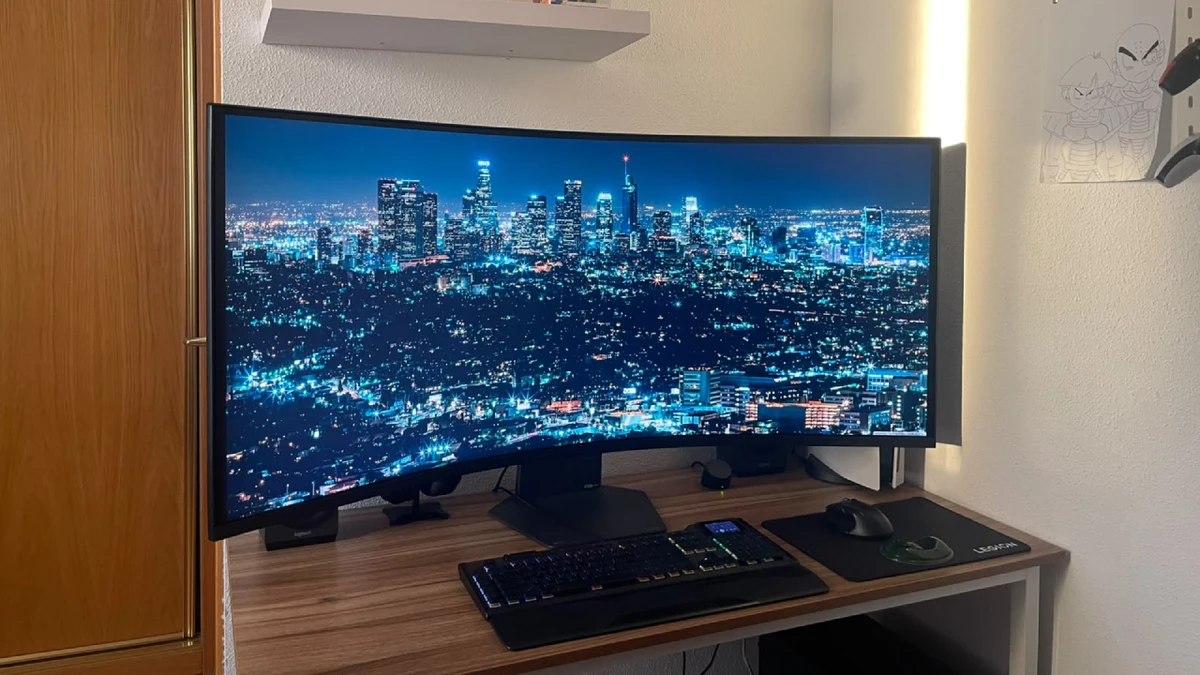
En el apartado estético, LG ha conseguido combinar dos estilos que no siempre encajan fácilmente. Mientras que la parte trasera incorpora iluminación LED para darle ese toque gaming que muchos usuarios buscan, el frontal apuesta por una apariencia mucho más sobria. Los marcos laterales y el superior son prácticamente inexistentes, lo que permite que la pantalla sea la auténtica protagonista. La parte inferior cuenta con un borde algo más visible, donde encontramos el logotipo de UltraGear, además de unos centímetros adicionales que también resultan útiles a la hora de sujetar el panel para moverlo.
La iluminación trasera del monitor le da el toque
La curvatura de 1000R es otro de los elementos que definen su diseño y, por supuesto, una característica que condiciona la experiencia desde el primer momento. Más adelante hablaré de ello en profundidad, pero tengo que reconocer que durante la primera hora se me hizo excesiva, especialmente por las dimensiones de la pantalla y por la distancia a la que uno suele estar de la pantalla cuando escribe en un teclado, pero no tardé demasiado en acostumbrarme. Una vez superado ese periodo inicial, la curvatura me ha resultado muy envolvente y natural, hasta el punto de adaptarme a ella sin mayores dificultades, especialmente en videojuegos.
En cuanto al soporte, digno de mención teniendo en cuenta el aparato que sujeta, LG ha conseguido una estructura sólida y estable que permite ajustar la altura, la inclinación y el giro del monitor. Eso sí, conviene tener en cuenta que el tamaño y el peso del conjunto hacen que montar la pantalla sobre esta base sea una tarea que roza lo heroico y para la que vas a necesitar sí o sí ayuda. No es precisamente un monitor que apetezca sostener durante muchos segundos mientras intentas encajar las piezas.
Teniendo en cuenta el tamaño del monitor, la base no me parece tan invasiva
Sus dimensiones también condicionan inevitablemente el espacio disponible. El 52G930B-B necesita un escritorio amplio para poder instalarse con comodidad. Es cierto que la propia curvatura de la pantalla te permite rescatar un trocito de mesa detrás de ella para colocar altavoces, cascos o algún mando, pero, a no ser que tengas una mesa enorme, tienes que tener claro que el monitor te va a robar casi todo el espacio.
Unos números que demuestran que este monitor es capaz de todo
Pasando ya a los números que explican la experiencia visual que pretende ofrecer el LG UltraGear 52G930B-B, la combinación por la que apuesta es la de su enorme superficie con una resolución que permite mantener un alto nivel de detalle. Su panel VA de 51,6 pulgadas alcanza los 5120 × 2160 píxeles, una resolución 5K2K que, junto a su formato ultrapanorámico 21:9, ofrece una imagen muy nítida.
Eso sí, y aunque haré inciso en esto más adelante no quiero esperar más para mencionarlo, hay que tener en cuenta que para sacarle partido a su resolución nativa y, especialmente, a sus 240 Hz, es necesario contar con un hardware suficientemente potente. Esto no impide disfrutar de una imagen de gran calidad con los dispositivos de menor nivel, pero sí quiero dejar claro que en muchos casos os vais a encontrar con algún tipo de limitación por vuestro equipo.
Desde el menú del propio monitor se pueden ajustar diferentes parámetros
Volviendo a sus cualidades, LG anuncia una cobertura del 95 % del espacio de color DCI-P3, una cifra que permite reproducir una amplia gama de colores y que encaja con las buenas sensaciones que he tenido al utilizar el monitor tanto para jugar como para consumir contenido multimedia. Unas impresiones en las que el contraste también tiene su parte de responsabilidad. El uso del panel VA permite alcanzar una relación de contraste nativa anunciada de 4000:1, superior a la habitual en muchos paneles IPS convencionales.
El monitor también cuenta con compatibilidad con HDR10 y certificación VESA DisplayHDR 600. Esta tecnología permite ampliar el rango entre las zonas más oscuras y las más luminosas de una imagen, con el objetivo de mostrar reflejos más intensos y conservar detalles en las sombras.
Un buen surtido de tecnologías y de opciones de conectividad
El monitor cuenta con todas las salidas necesarias para cualquier uso
En el apartado de conectividad, el LG UltraGear 52G930B-B llega bien equipado para un monitor de su categoría. Cuenta con dos puertos HDMI 2.1, DisplayPort 2.1 y una conexión USB-C capaz de suministrar hasta 90 W de potencia, una opción especialmente interesante para conectar un portátil y cargarlo al mismo tiempo.
En cuanto a las tecnologías gaming, sus 240 Hz y la compatibilidad con AMD FreeSync Premium prometen una experiencia fluida, pero te vuelvo a advertir que para valorar su rendimiento máximo necesitas contar con el hardware adecuado. Además, también incorpora altavoces de 10 W, que he probado y que cumplen para un uso básico que aprecio porque ofrecen una solución integrada sin necesidad de recurrir siempre a dispositivos externos.
Por último, los menús del monitor, a los que se acceden con un joystick que se encuentra como en la mayoría de modelos de la familia en la parte inferior de la pantalla, me han resultado intuitivos, algo que se agradece a la hora de ajustar sus diferentes opciones.
Las especificaciones respaldan una experiencia de élite
La curvatura del monitor te ofrece una experiencia completamente envolvente
Después de hablar de tantas cifras, llega el momento de comprobar qué aporta realmente el LG UltraGear 52G930B-B cuando nos sentamos delante de él para jugar, trabajar o disfrutar de contenido multimedia. Lo primordial es que cumple con su objetivo de hacer de cualquier experiencia algo mucho más inmersivo que un monitor convencional, especialmente en videojuegos, aunque tengo que reconocer que al principio cuesta un poco acostumbrarse. Curiosamente, ese periodo de adaptación me ha resultado más necesario para las tareas de trabajo que para jugar, donde la sensación de estar más cerca de la acción termina convirtiéndose en uno de sus principales atractivos.
También he podido comprobar cómo se comporta al conectarlo a una PS5, una experiencia que me ha sorprendido para bien. Como pasa siempre con los monitores ultrawide, la consola no aprovecha su resolución nativa, por lo que hay dos opciones: o estirar la imagen se estira para ocupar toda la superficie, lo que provoca cierta deformación, o asumir que vas a tener siempre dos barras negras en los lados. Yo generalmente me decanto por esta segunda, pero con este UltraGear lo cierto es que me ha dado la sensación de que en algunos juegos el resultado de ensanchar lo que se reproduce es especialmente positivo, hasta el punto de que la experiencia visual me ha parecido muy satisfactoria.
❮ ❯
Algo parecido sucede con las películas y las series que no cuentan con ese formato 21:9, la sensación de inmersión me ha parecido que puede llegar a superar a las pegas que puedas poner por la deformación típica, convirtiendo este monitor en una opción muy atractiva para disfrutar de contenido multimedia. Y si la fuente que estás reproduciendo soporta ese formato ya ni te cuento.
Cuando he usado el ordenador, el UltraGear 52G930B-B también me ha permitido combinar los videojuegos y el ocio con trabajo y navegación. Yo soy muy fan de tener dos pantallas en vez de una tan grande, pero lo cierto es que su enorme superficie resulta bastante cómoda para organizar varias ventanas y disponer de más espacio de trabajo. La mayor contra es que toda esa distancia hay que recorrerla con la mirada constantemente y, en mi caso, estando a menos de 70 centímetros, es algo que puede llegar a pesar después de muchas horas. No obstante, pese a ese mayor movimiento ocular, no he terminado mucho más cansado que cuando utilizo un monitor más pequeño y sin curvatura.
Aunque no sean dos pantallas, visualmente el resultado es muy parecido
En cuanto al rendimiento, la experiencia me ha resultado muy fluida, aunque hay que poner esta impresión en contexto. El monitor alcanza los 240 Hz, lo cual es muy destacable, pero hay muchos equipos que no son capaces de aprovechar toda esa frecuencia de actualización, por lo que no sería correcto pensar que esa cifra va a ser diferencial en todos los casos. Para disfrutar de todo su potencial hace falta un PC especialmente potente, capaz de mover los juegos a una resolución de 5120 × 2160 píxeles y mantener tasas de fotogramas elevadas. Es lógico pero también la principal limitación práctica de esta propuesta: no basta con invertir en un monitor de gama alta, sino que también hay que disponer del hardware necesario para sacarle partido.
El tamaño y el precio son otros dos factores que conviene tener en cuenta, aunque en mi opinión tienen menos peso a la hora de valorar el producto. Sus dimensiones obligan a contar con un escritorio adecuado, pero quien busca deliberadamente una pantalla de estas características probablemente ya sabe que cuenta con el hueco suficiente. En cuanto al precio pasa algo parecido, es elevado, sí, pero también responde a una combinación de tamaño, resolución y especificaciones que se aleja de lo que ofrecen los monitores de gama media.
LG UltraGear 52G930B-B
92 / 100
Pros
Imagen muy nítida con resolución 5K2K
Colores naturales, buen contraste y brillo suficiente para habitaciones iluminadas
Construcción robusta, diseño cuidado y soporte estable
Experiencia muy inmersiva gracias a sus 51,6 pulgadas y a la curvatura 1000R...
Contras
...aunque sus dimensiones exigen un escritorio amplio y la anchura de la pantalla obliga a mover bastante la mirada
Para aprovechar sus especificaciones hace falta un equipo muy potente
Valoración final del LG UltraGear 52G930B-B
El LG UltraGear 52G930B-B es de una calidad innegable, pero espacio y equipo son imprescindibles para disfrutarlo
Como es lógico en un producto de estas características, el LG UltraGear 52G930B-B es un monitor que por cualidades y especificaciones tiene todo para dejarte con la boca abierta, incluso cuando eres un escéptico de las pantallas panorámicas como yo. Después de probarlo me ha dejado claro que sus dimensiones descomunales son solo el cascarón y que su propuesta es más que interesante para quienes buscan llevar la inmersión un paso más allá, tanto al jugar como al disfrutar de películas o trabajar frente al ordenador.
Sus 51,6 pulgadas, la resolución 5K2K y la curvatura de 1000R forman un conjunto que me ha convencido especialmente por la experiencia visual que ofrece. La imagen es nítida, los colores son naturales y el contraste acompaña, mientras que el diseño y la construcción transmiten la calidad que cabe esperar de un producto de esta categoría.
Sin embargo, tiene como lastre la misma condición que todos los monitores de gama alta. Para aprovechar todo lo que ofrece, necesitas un equipo a la altura, y en este caso, con esas cifras de tasa de refresco y de resolución la exigencia para el hardware que se monte en este corcel es considerable. Ni siquiera en mi caso he podido exprimir todas sus posibilidades, por lo que sería injusto hablar de su rendimiento máximo cuando ni yo ni la mayoría de personas pueden "desbloquearlo". Eso sí, tampoco se puede considerar esto como un gran contra porque es algo inevitable y lógico cuando hablas de un producto de este calibre.
Lo que tampoco hay que olvidar es que estamos ante un monitor enorme, que exige espacio y una inversión considerable. No obstante, considero que también son dos inconvenientes asumibles para quien busca precisamente una pantalla de estas dimensiones y sabe lo que quiere conseguir con ella.
En definitiva, el LG UltraGear 52G930B-B me ha parecido un monitor excelente, especialmente por la inmersión que consigue ofrecer y por la calidad de imagen que acompaña a su enorme superficie. No es una compra para todo el mundo, ni tampoco un modelo que tenga sentido adquirir sin pensar antes en el equipo que lo acompañará. Pero si buscas una pantalla ultrapanorámica de gran formato y tienes el hardware necesario para aprovecharla, es una propuesta capaz de transformar tu forma de jugar y consumir contenido.
Un monitor de más de 130 cm me intimidaba un poco, pero el espacio que ocupa es directamente proporcional a la inmersión que ofrece. Análisis del LG UltraGear 52G930B-B
A dramatic reduction in opioid prescriptions and addiction and overdose deaths is being accomplished during the Trump administration, according to new analysis announced this week by Health and Human Services (HHS) Secretary Robert F. Kennedy Jr.
The trouncing of the far right provides a playbook for social and environmental movements in other countries facing elections, including the US, Spain and France
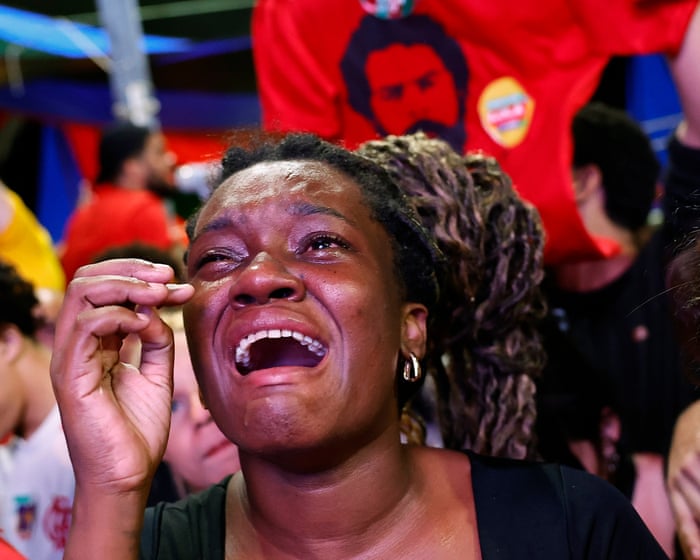
Thank you, Brazil, for demonstrating how the far right can be trounced while protection for the Amazon is strengthened. In a world where nature and democracy appeared to be bleeding out in tandem, voters and forest defenders in this global south powerhouse have shown it is possible to staunch the flow. This should provide much needed inspiration and, more practically, a playbook for social and environmental movements in other countries facing elections, including the US, Spain and France.
The astonishing comeback victory of Luiz Inácio Lula da Silva in Sunday’s presidential runoff against his extreme right challenger Flavío Bolsonaro has brought oceans of rapturous supporters on to the streets, while also thrilling conservationists, climate activists and social justice campaigners across the world.
The number of migrants living in Germany under temporary tolerated status has risen again after several years of decline, reaching 200,601 at the end of September, according to government figures.
More than 256,000 people were obliged to leave the country at the same point, with the large majority unable to be deported for practical or legal reasons.
People with a “Duldung” — a formal suspension of deportation — remain obliged to leave Germany but cannot currently be removed, for example because of missing travel documents, family ties, illness, or other obstacles. The status is always temporary and can be extended.
At the end of 2025, 190,974 of 232,067 people obliged to leave held such status. By the end of 2022 the figure had been about 248,000. Roughly 45,000 people received tolerated status for the first time in 2026, including about 13,460 minors. Only 402 people were recorded with a training-related “tolerated status” and 17 with an employment-related one, according to Welt newspaper.
The earlier drop was linked in part to the Opportunity Residence Law introduced by the previous coalition, which allowed some long-term residents with tolerated status a path toward more secure residence under conditions including self-sufficiency and language skills. That pathway has now expired for many, and lower recognition rates in asylum procedures have also been cited as contributing factors to the renewed rise.
CDU interior policy spokesman Alexander Throm has criticized the high share of tolerated cases.
“That four out of five people who are actually obliged to leave have a tolerated status is a scandal,” he said. “It is too easy to just stay here. The issuance of tolerated status by local foreigners’ authorities must be made significantly more difficult.”
Huge taxpayer burden
People with tolerated status are generally entitled to benefits under the Asylum Seekers’ Benefits Act, which covers basic needs, accommodation, and limited medical care. After 36 months, these can approach levels closer to regular social assistance under certain conditions.
In 2025, gross expenditures under the Asylum Seekers’ Benefits Act across Germany totaled about €6.16 billion, down from €6.72 billion the previous year.
As Remix News reported, government data shows that migration cost German taxpayers approximately €400 billion since 2026, with some estimates putting the sum much higher.
Long-term residents with tolerated status often remain on benefits for extended periods when they cannot secure employment or documents for return.
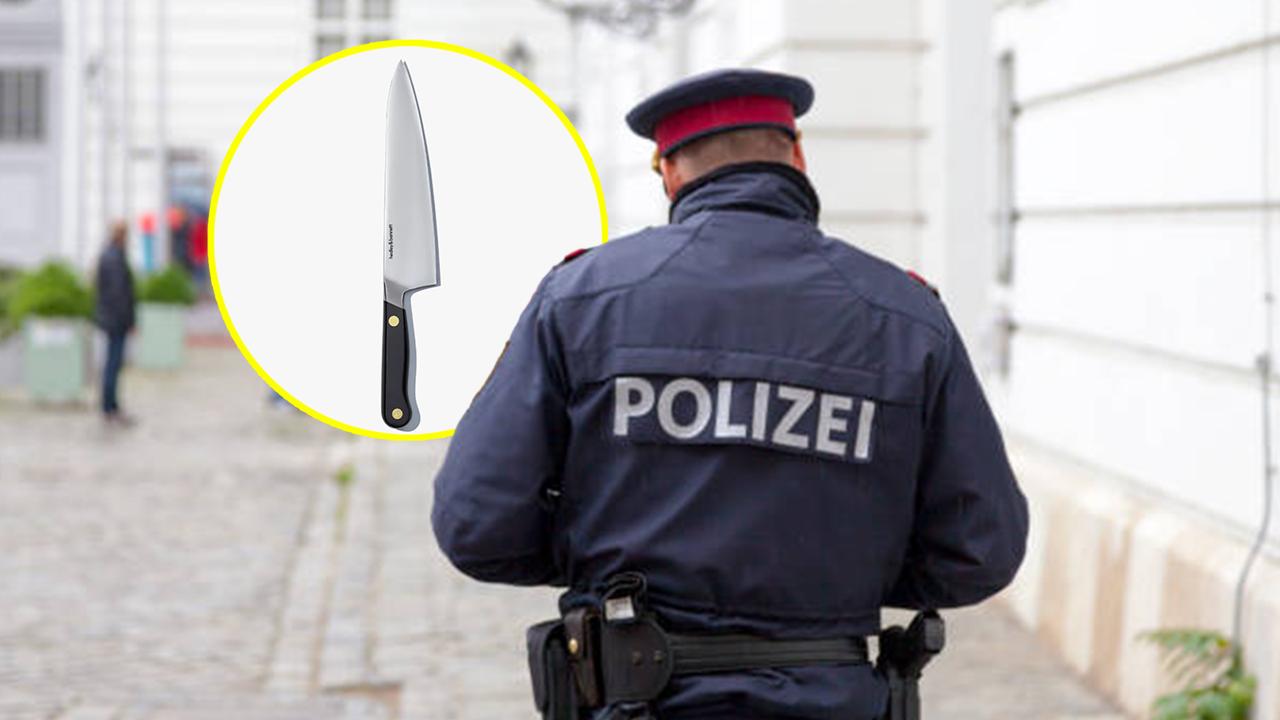
A 29-year-old Syrian national was arrested Tuesday after attacking an off-duty police officer with a kitchen knife in Vienna’s Ottakring district, according to police. The officer, who was finishing a jog, fought off the assailant in a struggle that left the knife blade broken.
The incident occurred around 2:45 p.m. on Oct. 27 in a driveway on Hasner Strasse.
“The officer was jogging around 2:45 p.m. and finished with stretching exercises in a driveway on Hasnerstraße. Out of the corner of his eye he observed the 29-year-old, who was approaching him rapidly. The officer also noticed the kitchen knife in his hand,” police spokeswoman Julia Schick said.
“The unknown man attacked the officer with the knife without saying a word. The 37-year-old defended himself vigorously and screamed for help. The blade broke multiple times because of the intensity of the struggle. This and the resistance meant the injuries were less severe than they otherwise would have been,” police said.
Passersby alerted by the cries caused the attacker to break off and flee on foot toward the Ottakring U-Bahn station. Emergency services treated the officer at the scene and transported him to a hospital, according to Wien ORF news outlet.
Police recovered the damaged kitchen knife and launched a search based on a detailed description and surveillance-camera images from a nearby building. Officers from the Wattgasse and Brunnengasse stations located the suspect shortly afterward in Wernhardtstraße and took him into custody.
The man, a Syrian citizen, confessed to the attack during questioning but offered no motive. “The Syrian citizen confessed to the act but did not comment on his motive. He appeared psychologically distressed during the interrogation,” police said. However, there is no report that the man suffers from mental illness.
The two men did not know each other, according to media reports.
On the order of the Vienna public prosecutor’s office, the suspect was placed in detention.
Arabs in Austria are creating UK-style grooming gangs targeting underage girls and turning them into sex slaves.
In many cases, the girls are ending up dead.
A psychiatrist who has worked with these underage prostitute victims says the girls give the same story: "They were approached at Salzburg Main Station by young men of Arabic origin."
They are recruited with drugs, hooked on them, and then forced to perform sex with clients while being filmed for blackmail material.
"Under severe drug influence, they would then often be sexually abused."
Girls as young as 12 are being targeted, and it is not just the city of Salzburg.
In 2025, 7 minors died from drug overdoses, just in the city of Vienna.
In recent weeks, three girls between ages 13 and 16, have suffered drug overdoses in the city of Innsbruck.
Most of these girls are recruited from rural Austrian towns, where there are still young White girls available to recruit.
The victims are then transported to bigger cities like Vienna, where they rent out apartments and sell the girls to Johns and gang r*ped by Arab men.
Some European diplomats in Seoul are weighing whether they can still trust South Korea as a like-minded partner if it grows closer to Russia, the Financial Times reported on 28 October, according to South Korea’s Financial News. One European diplomat also told the FT that Seoul wants to resume trade with Russia as soon as the war ends.
As Russia presses its war against Ukraine, Kyiv’s partners count on each other to keep up the pressure on Moscow. The doubts about South Korea now come from its European partners, not only from Kyiv. The report lands eight days after Seoul said it would withdraw about half its staff from Kyiv over a dispute about two North Korean prisoners of war.
An Arctic voyage, a new adviser, and signals from Moscow
According to the FT, European diplomats saw a South Korean pilot voyage along Russia’s Arctic sea route as a sign of a tilt toward Russia, since the voyage required extensive cooperation from Moscow.
Meanwhile, on 1 October, South Korean President Lee Jae-myung appointed Song Young-gil, a six-term lawmaker and former chair of parliament’s foreign affairs committee, as his special adviser on peace diplomacy. Song once served as a special envoy to Russia, the FT noted.
On 20 October, Russian Deputy Foreign Minister Andrei Rudenko said Seoul had signaled it wants to normalize relations but says full normalization can come only after a change in the geopolitical situation, which he said means the end of the war in Ukraine.
Fuel for Russia loaded at South Korean ports, but Seoul denies direct exports
The FT also cited reports of fuel shipments to Russia. A Guardian analysis published on 6 October found that more than 176,000 tons of fuel, mostly diesel, were loaded at South Korean ports in July and August. The fuel went onto seven tankers bound for Russia’s Far East, three of them under UK and EU sanctions. The Guardian said the trade does not appear to breach South Korean law.
On 8 October, South Korea’s foreign and trade ministries and customs service said no diesel, jet fuel, or gasoline had been exported to Russia through customs. They said they would examine the tankers’ routes and any divergence from their declared destinations before judging whether the law had been broken.
Ukraine’s sanctions commissioner Vladyslav Vlasiuk said the shipments helped Russia offset refinery losses caused by Ukrainian strikes. South Korea’s presidential office called the claim inaccurate and inappropriate, saying the key facts of the transactions had not been verified.
In a statement to the FT, South Korea’s Foreign Ministry said concerns in some quarters that the country was leaning too far toward Russia were not based on fact. It added that Seoul supports international efforts to end the war in Ukraine.
Seoul cuts its Kyiv embassy staff over the POW dispute
At the same time, relations with Ukraine have deteriorated over the transfer of two North Korean prisoners of war to South Korea, which Zelenskyy disclosed at the UN General Assembly in September. Seoul says the disclosure broke a confidentiality understanding. Dmytro Lytvyn, Zelenskyy’s communications adviser, wrote in a Facebook comment on 25 September that “there was no such agreement.”
On 20 October, Seoul said it would withdraw roughly half its diplomatic staff from Kyiv, citing Kyiv’s failure to take “positive steps” on the POW dispute and continued Russian airstrikes, Yonhap reported. A chargé d’affaires and all consular staff will stay.
Prime minister wrote to ministers saying he did not want them to ‘advocate for specific options or opine on the likely outcome of the process’
Selling nicotine-free vapes to children under the age of 18 has become illegal from today, the government has said.
Children were already banned from buying vapes containing nicotine. But, under the Tobacco and Vapes Act, shops across the UK will now be banned from selling nicotine-free vapes, and nicotine pouches, to children.
Vaping can be a way to help established adult smokers who are already addicted to nicotine from tobacco to swap to a less dangerous product. Vaping is considered safer than smoking, but that is a low bar. Vapes should therefore never be used by children or non-smokers.
Some children have already come to harm from bad reactions to vapes. The long-term health harms of vaping in today’s children will only become clear over time. They are however unlikely to be good; inhaling multiple, often heated, chemicals into the lungs may well do irreversible harm.
The Acampada Lisboa movement (Lisbon Camp) approved, at a public assembly last night, the holding of a new demonstration on Saturday between Marquês de Pombal and Rossio, followed by a
President António José Seguro is already deep into his series of hearings with political parties with seats in parliament this morning: the one item on the agenda being ‘social cohesion’,

 Login





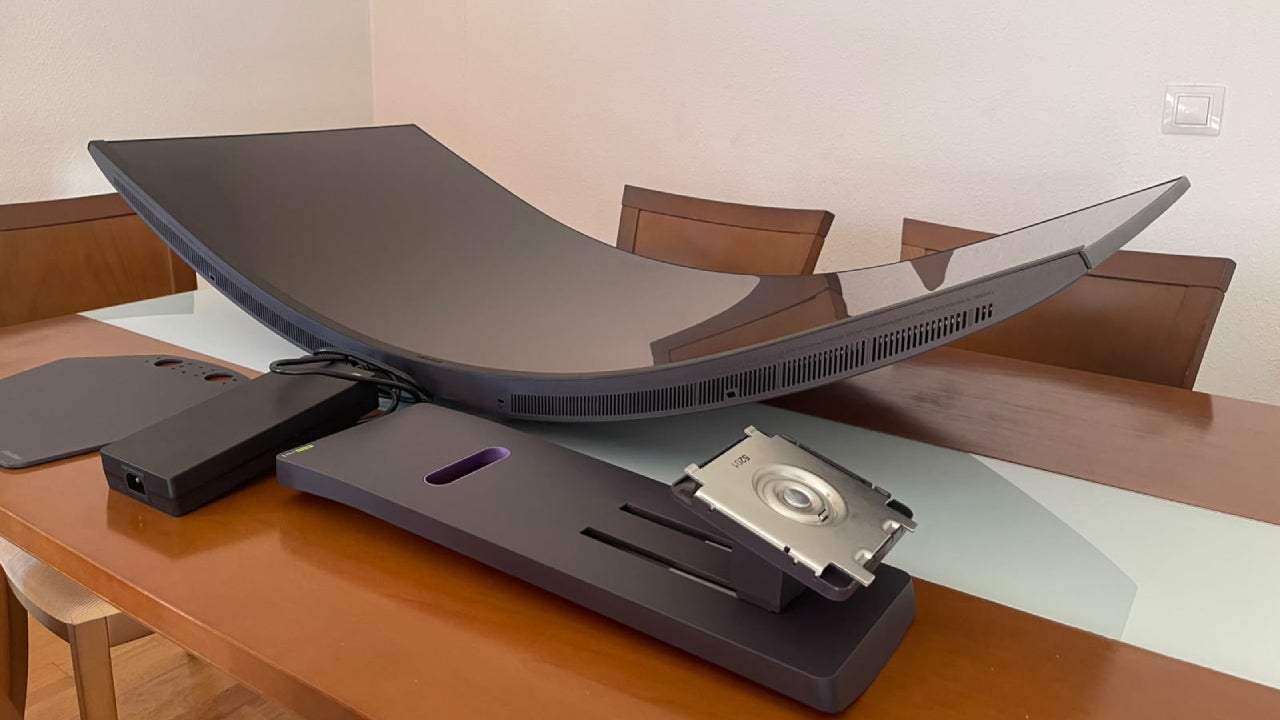 Con solo sacar el monitor de la caja ya es suficiente para quedar impresionado con su curvatura y su tamaño
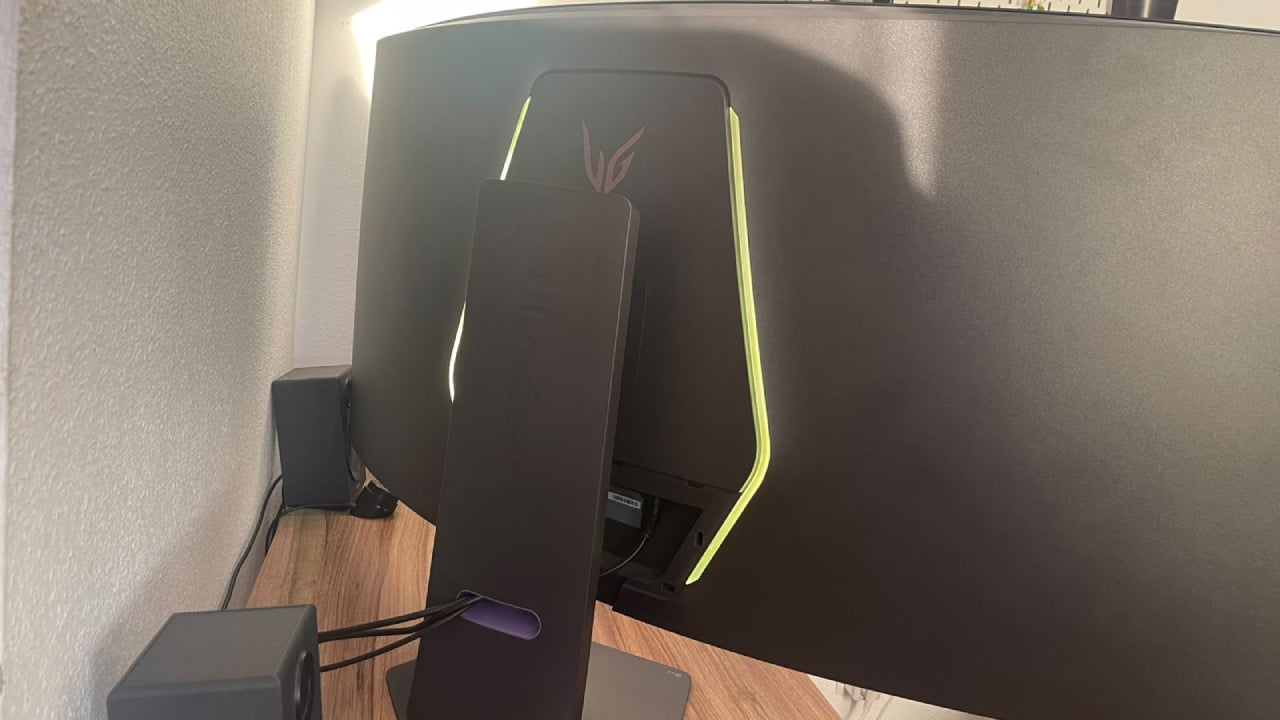 La iluminación trasera del monitor le da el toque
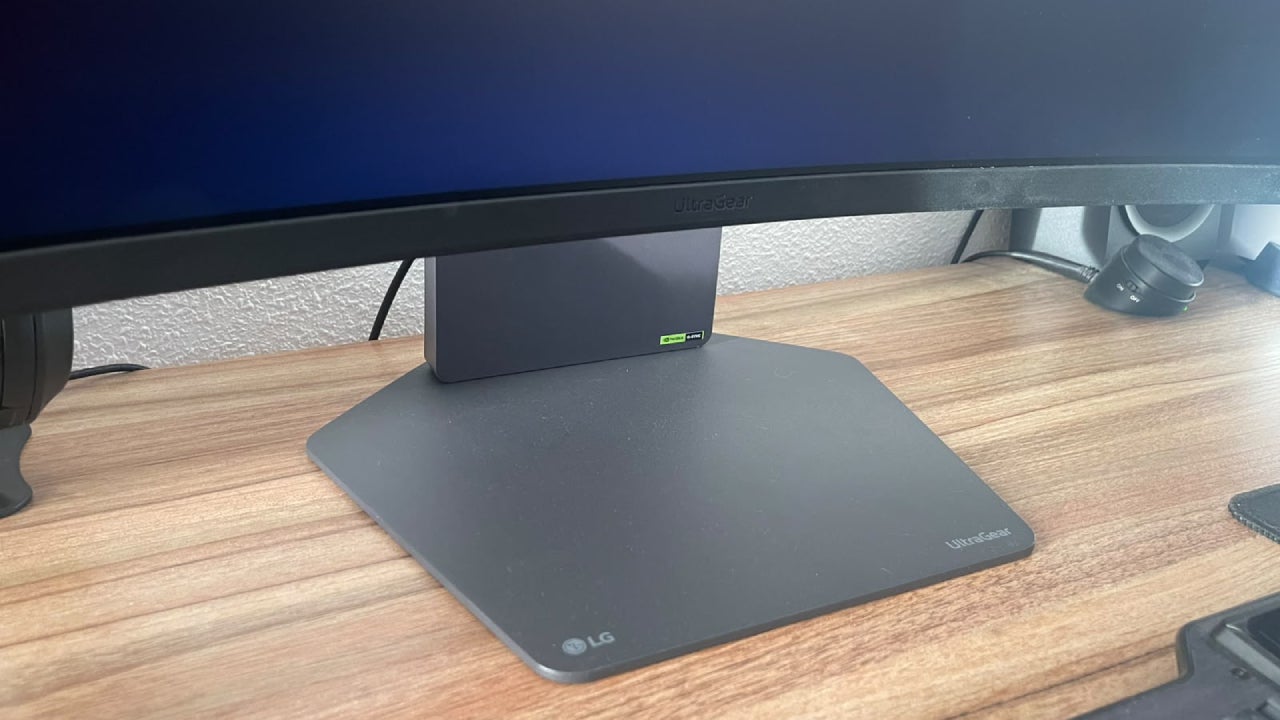 Teniendo en cuenta el tamaño del monitor, la base no me parece tan invasiva
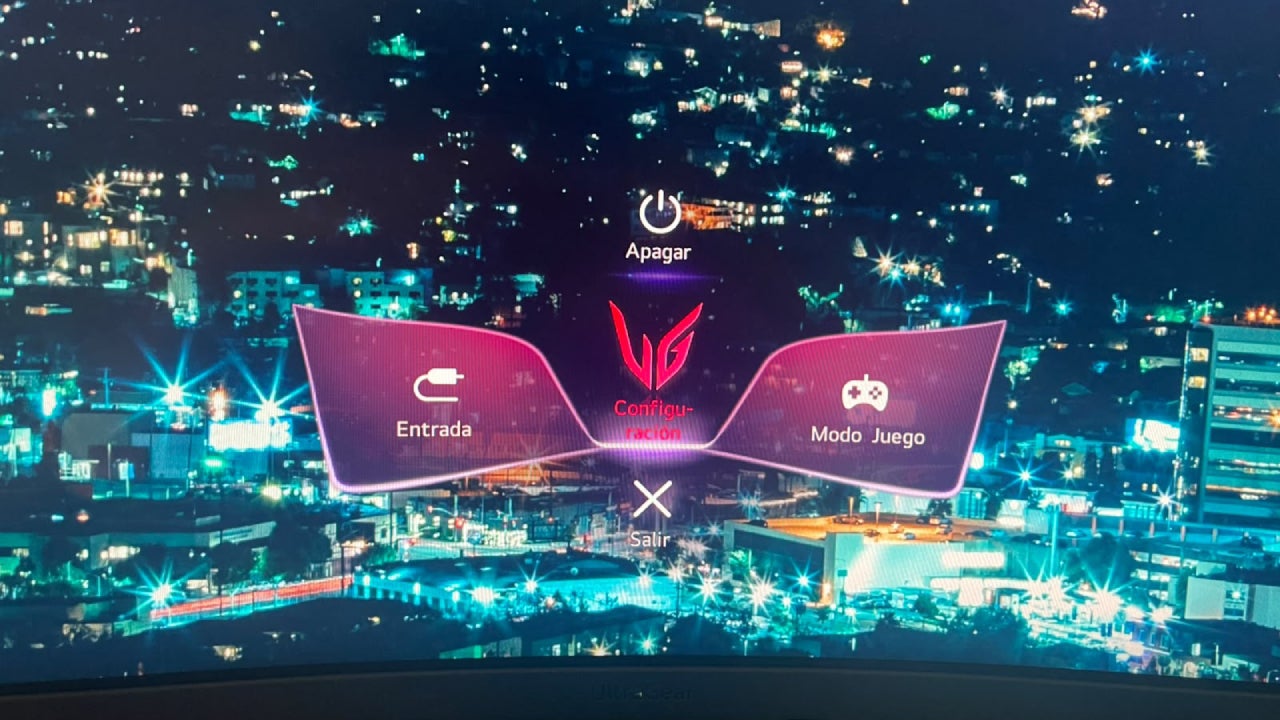 Desde el menú del propio monitor se pueden ajustar diferentes parámetros
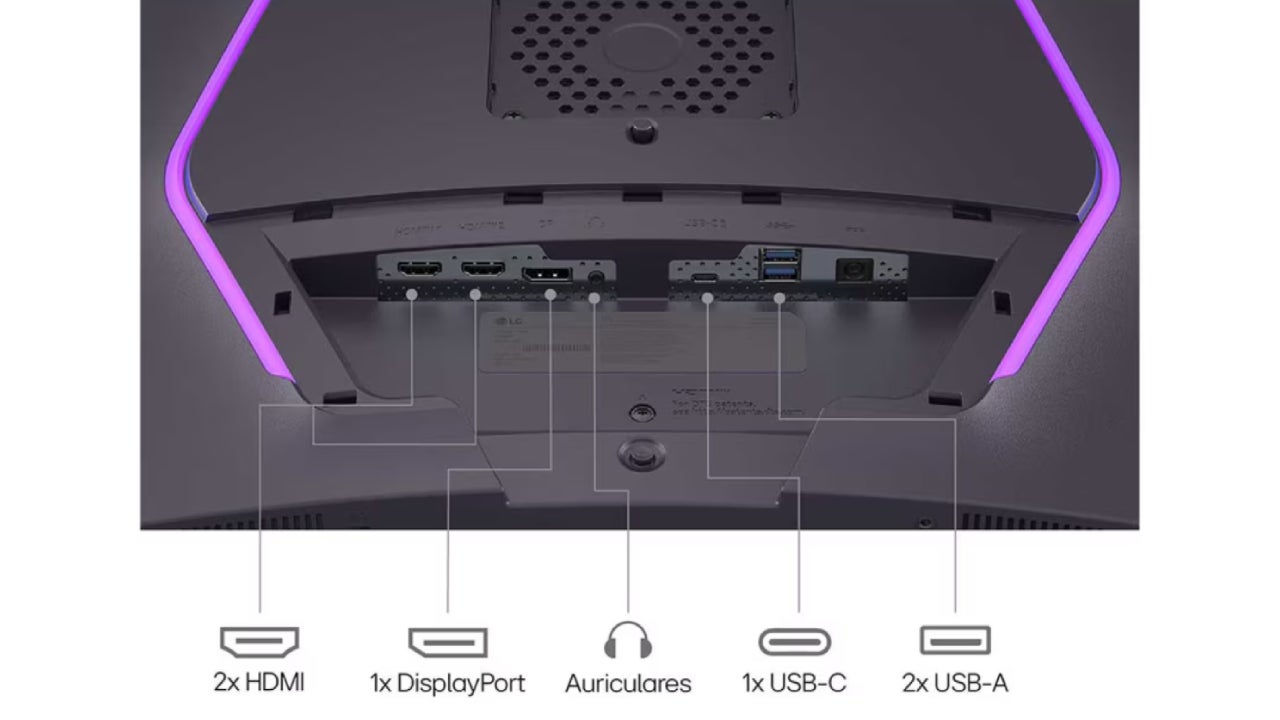 El monitor cuenta con todas las salidas necesarias para cualquier uso
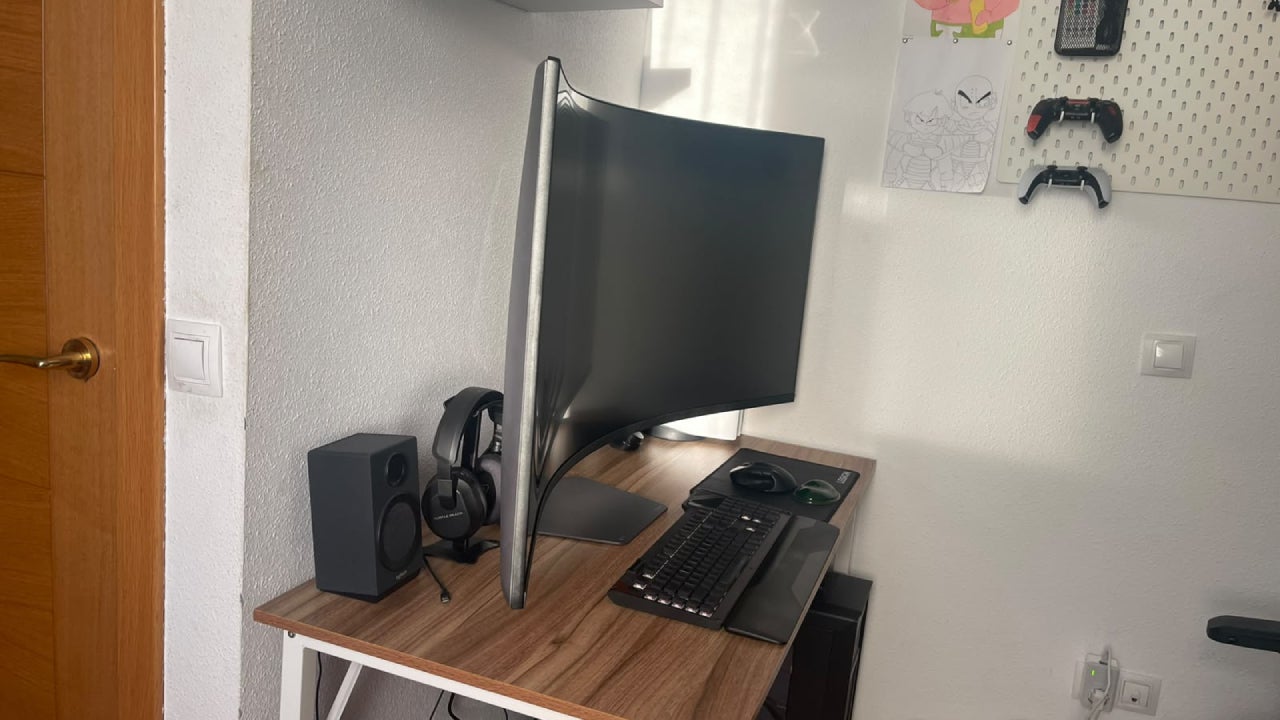 La curvatura del monitor te ofrece una experiencia completamente envolvente
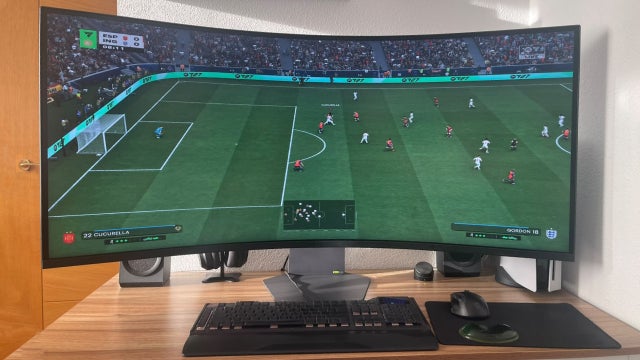
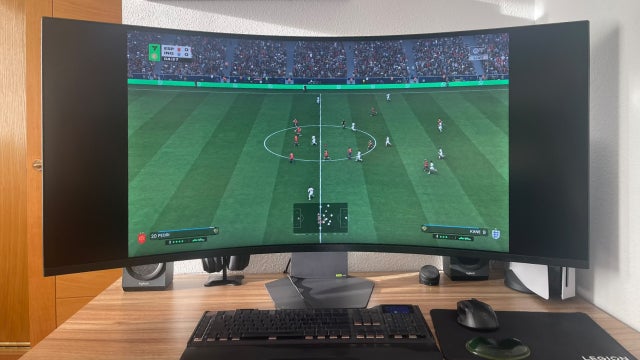
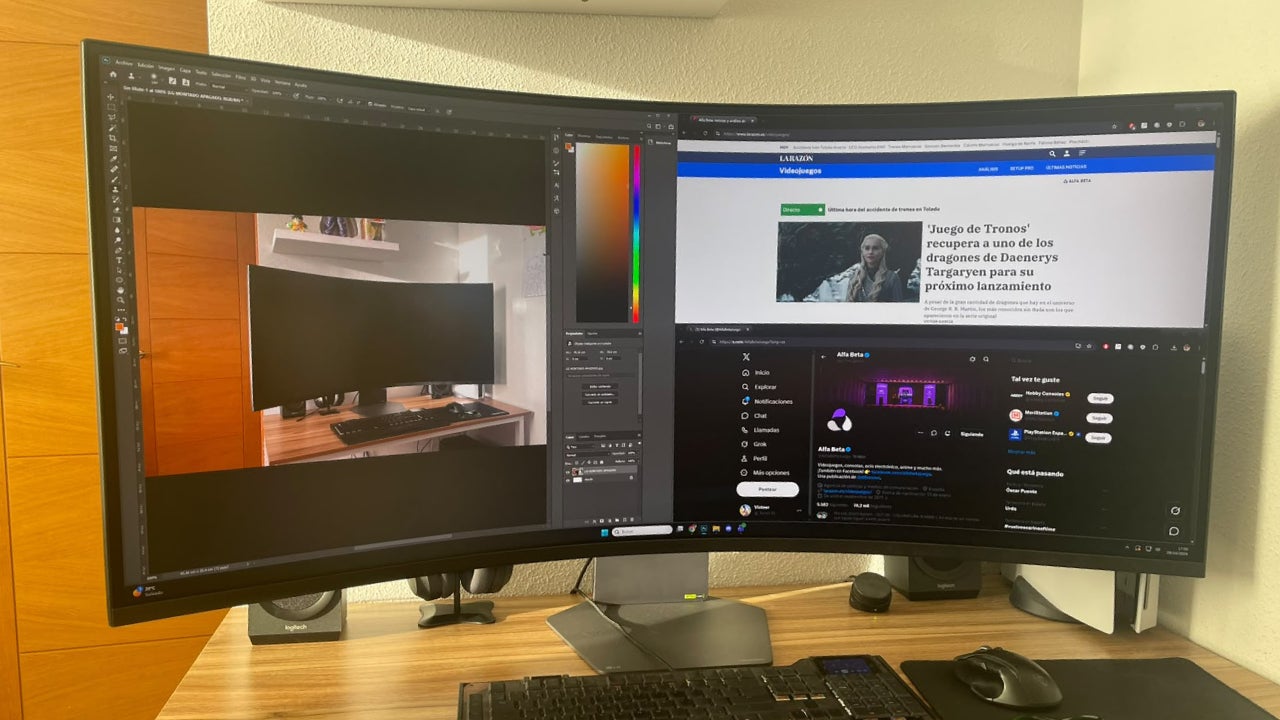 Aunque no sean dos pantallas, visualmente el resultado es muy parecido
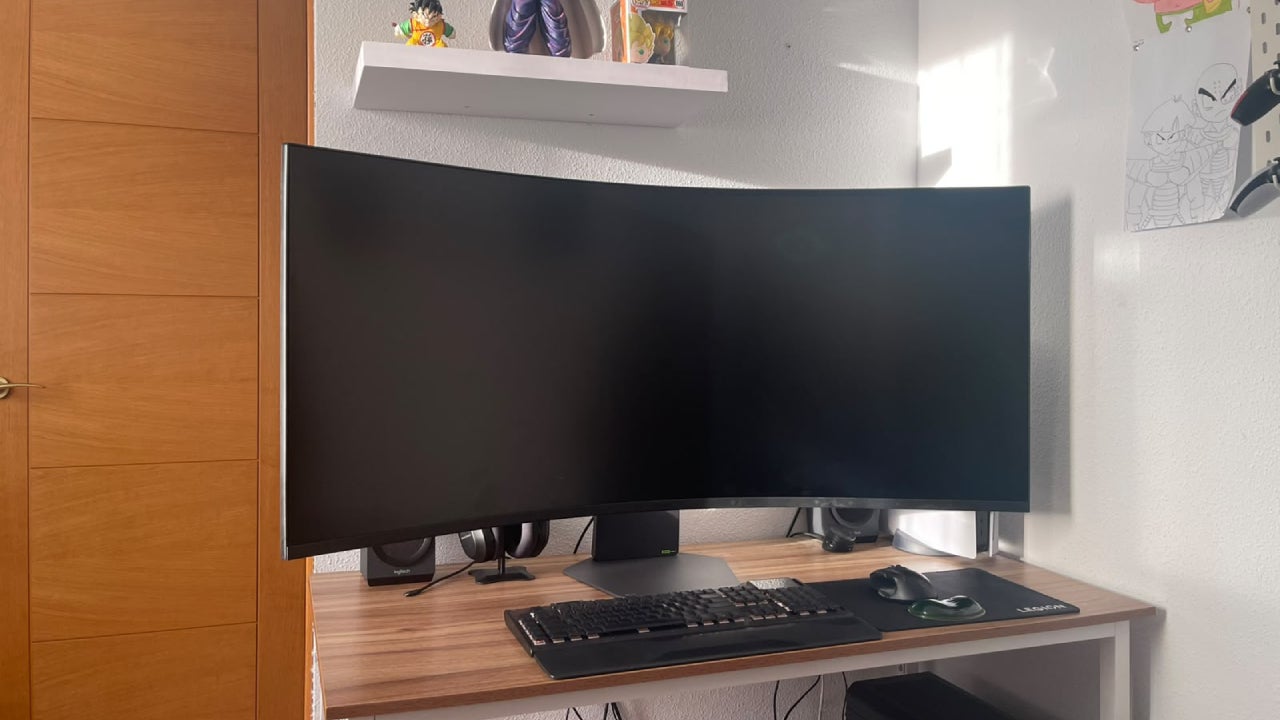 El LG UltraGear 52G930B-B es de una calidad innegable, pero espacio y equipo son imprescindibles para disfrutarlo


 Arabs in Austria are creating UK-style grooming gangs targeting underage girls and turning them into sex slaves.
In many cases, the girls are ending up dead.
A psychiatrist who has worked with these underage prostitute victims says the girls give the same story: "They were approached at Salzburg Main Station by young men of Arabic origin."
They are recruited with drugs, hooked on them, and then forced to perform sex with clients while being filmed for blackmail material.
"Under severe drug influence, they would then often be sexually abused."
Girls as young as 12 are being targeted, and it is not just the city of Salzburg.
 In 2025, 7 minors died from drug overdoses, just in the city of Vienna.