Leo Kim’s piece is an ambitious mix of race‑track reportage, personal reflection, and theory‑driven critique. It braids together one night at a small Indiana speedway, the rise and collapse of Anderson’s auto industry and unions, and an abstract meditation on tech, AI, and “speed.” It poses a compelling central question—whether every technology invents its own kind of disaster—but does demand close attention to follow its dense imagery.
The dust doesn’t bother me much. By this point in the night, the round-and-round whirling of cars, combined with the alchemical mixture of exhaust, burnt rubber, and patriotic beer, has lulled me into a Midwestern trance. It must be the flatness that makes this region such a perfect catalyst for this kind of delirium. When Baudrillard drove through the expanse of the US, he wrote about speed as an erasing force whose “only rule is to leave no trace behind.” He was right to sense speed as a primal impulse in this unfurling stretch of country. Movement in the Old World is slowed by its narrow roads, latticed cities, and contested borders; it struggles to overcome the glacial pace of History. Drive a hundred miles and you’re bound to run into something. Not so in the Midwest. Nothing here interrupts the flow. There are no mountains to break the wind, no densities of skyscrapers to bisect the sky, no ravines to stop the sprawl. Everything moves towards terminal velocity. It is a landscape built for vortices and accelerating feedback loops: for flows of capital, weather, ideology, and machinery to intersect and (r)evolve into novel forms.
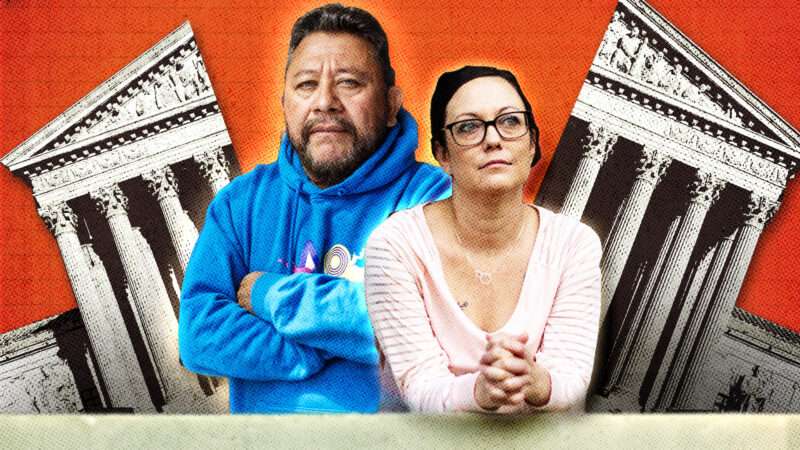
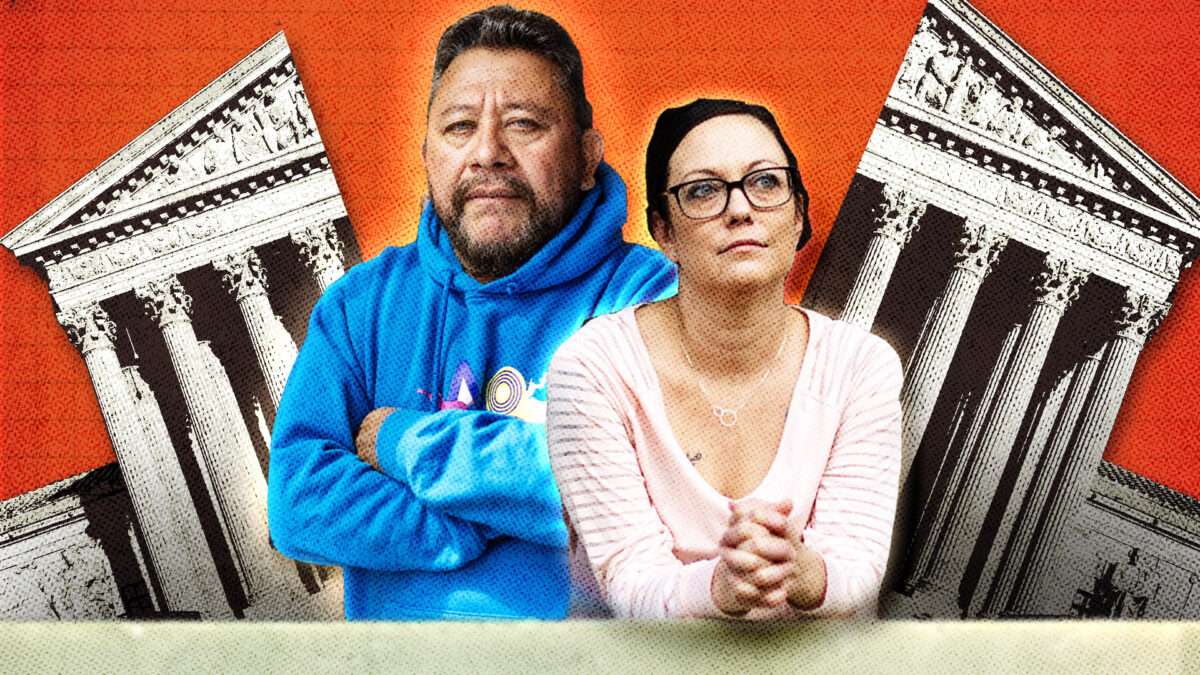
Is there an exception to the 5th Amendment's promise that government cannot take private property without "just compensation"? The Supreme Court declined to address that question this past Monday when it rejected a trio of petitions asking the justices to consider whether people should be compensated when law enforcement seizes or destroys their property.
Two of the cases concerned individuals who were not accused of a crime but whose property nevertheless became collateral damage as police pursued a suspect. In June 2022, police fired 30 tear gas canisters into Amy Hadley's home in South Bend, Indiana. Officers smashed windows, tore down security cameras, ransacked furniture, ripped down a panel and a fan, and punched holes in the walls as they searched for a fugitive named John Parnell Thomas, who had never been there. The police had erroneously concluded that Thomas accessed the internet via the IP address at Hadley's home. According to Hadley, the police caused at least $16,000 in damages, which insurance only partially covered.
About two months later, a SWAT team in Los Angeles arrived at Carlos Pena's North Hollywood printing business and destroyed it, along with his equipment inside, crippling his livelihood after a fugitive broke in and barricaded himself in the shop. (The suspect ultimately escaped.) Pena alleged approximately $60,000 in damages in his suit against the city, which declined to compensate him for his losses. His insurance also refused to step in—as is common in such cases, as policies often exclude damage caused by the government.
The third petition concerned Chicago drivers whose vehicles were seized by the city over modest unpaid parking tickets. Ryan O'Donnell's vehicle was impounded and sold for scrap because of about $524 in debt. Michael Goree's was seized and relinquished to the lienholder over a debt that did not belong to him; the $560 in unpaid tickets were for a different vehicle owned by his co-signer.
In all of these cases the lower courts' reasoning came from a similar place. Hadley, O'Donnell, and Goree's petitions were heard by the U.S. Court of Appeals for the 7th Circuit, which has adopted a categorical rule: Property destroyed in the exercise of "police power" is immune to claims under the Takings Clause, the U.S. Constitution's pledge that government cannot usurp private property without fairly compensating the owner. Pena's case went to the U.S. Court of Appeals for the 9th Circuit, where the judges have declined to issue such a sweeping exception but have instead ruled that governments are exempt from paying out claims when the police actions in question were "necessary."
In a statement, U.S. Supreme Court Justice Sonia Sotomayor, joined by Justice Neil Gorsuch, outlined the many inconsistencies between the circuits on the topic. "It is still an 'open question' whether these or any other approaches are consistent with this Court's precedents. Few of these decisions likewise explain the source of any such police-power exception to the Takings Clause—whether the common law, the Constitution, or elsewhere," she wrote. "Such questions thus continue to 'benefit from further percolation' in the lower courts before this Court chooses to intervene."
Sotomayor was quoting herself. In 2024, she released similar remarks in response to a petition from Texas woman Vicki Baker, whose house in McKinney had been hollowed by a SWAT team attempting to capture a fugitive. The high court declined to hear Baker's case, although she finally found relief under the Texas state constitution this year.
"It's possible that the Court sincerely doesn't think the lower courts have done enough thinking on this important but novel issue," Patrick Jaicomo, a senior attorney at the Institute for Justice who represented Hadley, tells me. "Still, we've brought them 5 cases from 5 circuits. How much more percolation is needed?…The Court is going to have to address this important issue, and it's not clear what another circuit decision or 6 might do to aid that consideration."
Though Sotomayor's statement ran in parallel to the one two years ago, its slightly sharper warning intimated that we may be inching closer to a resolution. "I again encourage courts considering this issue to take care," she wrote, "that due deference to state police powers does not eclipse constitutional rights."
O Ginásio Clube de Faro apresenta, no próximo sábado, dia 24 de outubro, pelas 18h00, um espetáculo dedicado à música e à dança indianas, aproveitando a passagem por Sevilha da cantora indiana Medha Basu. A iniciativa convida o público a descobrir sonoridades, ritmos e expressões artísticas de uma cultura milenar, através de uma experiência que […]

 Login