❌

Reading view

Prosecutors Suggest They May Seek Additional Comey Charges

At a hearing in federal court, prosecutors defended an unusual, 11th-hour criminal case accusing the former F.B.I. director of leaking classified information a decade ago.

© Monica Jorge for The New York Times

During President Trump’s second term, the Justice Department has pursued James B. Comey without pause.
  •  
  •  

Bolivia Opposition Calls for Probe Into Leaked Cerimedo Tapes

Bolivia opposition demands investigation into leaked Fernando Cerimedo recordings and alleged ties to Rodrigo Paz’s government.

Recordings allegedly linking Argentine political strategist Fernando Cerimedo to President Rodrigo Paz’s inner circle have yet to be authenticated.


Bolivia’s main parliamentary opposition force has called for an immediate prosecutorial investigation into leaked recordings allegedly linking Argentine political strategist Fernando Cerimedo to President Rodrigo Paz’s government, including one purportedly capturing a conversation with First Lady María Elena Urquidi.

RELATED: Bolivian VP Formally Accuses First Lady and Cerimedo of Influence Peddling

Lissa Claros, head of the Libre Alliance caucus in the lower house, called on prosecutors Wednesday to appoint a special team to establish the authenticity of the recordings, which have circulated in recent months, and clarify Cerimedo’s role in the administration.

“The recordings keep emerging every day, yet the Public Prosecutor’s Office has not issued a statement. Do they want the Cerimedo case to go unpunished? Bolivia needs to know what role Mr. Cerimedo played,” Claros said. “Was he the one running the state from the shadows, or not?”

Claros insisted that the investigation must be impartial and that everyone should be subject to scrutiny, including the president’s wife.

El agente argentino de la derecha latinoamericana Fernando Cerimedo era el "presidente en la sombra" de Bolivia: ponía y sacaba ministros a su antojo y todos los directores del Estado le respondían, reveló su exesposa Nadia Beller. 🇧🇴🗣️ #teleSUR #12Oct pic.twitter.com/1S11od16En

— teleSUR TV (@teleSURtv) October 12, 2026

Text ReadsArgentine agent of the Latin American right Fernando Cerimedo was the “shadow president” of Bolivia: he appointed and removed ministers at will, and all the state directors answered to him, revealed his ex-wife Nadia Beller. 🇧🇴🗣️

One of the recordings purportedly captures a conversation between Cerimedo and Urquidi about government affairs. Its authenticity has not been established through official forensic examinations.

The leaked material has fueled scrutiny of Cerimedo’s reported ties to Paz’s inner circle and his alleged influence within the executive branch. The allegations have also drawn on statements and recordings released by Cerimedo’s former partner, lawyer Nadia Beller, remarks by Vice President Edmand Lara, an opposition figure, and reports in local media.

Cerimedo has been held in pretrial detention in Bolivia since August following a shooting attack by hired gunmen targeting Beller. He faces formal charges of attempted femicide as the alleged intellectual author of the attack, as well as separate proceedings over alleged domestic and family violence against Beller and alleged illicit enrichment.

Cerimedo’s political activities across Latin America have also come under scrutiny. In Brazil, he promoted a false narrative of electoral fraud in 2022. In Argentina, he played a significant role in the digital strategy for Javier Milei’s 2023 presidential campaign.

His company was also linked to disinformation operations during Chile’s constitutional referendum campaign, in which the Rejection bloc opposed the proposed constitution. His reported political connections extend to Argentine politician Patricia Bullrich, Honduran politician Nasry Asfura and other right-wing figures in the region.

In Bolivia, Cerimedo reportedly joined Paz’s political circle as an adviser, a relationship now at the center of questions raised by the leaked recordings.

Libre’s call for a formal investigation comes as the recordings remain unauthenticated, leaving allegations about Cerimedo’s role in the government unresolved.

  •  

White House Has Tight Grip Over FBI in Pursuing Trump Targets, Agent Says

In court testimony, the agent outlined the willingness of Kash Patel, the F.B.I. director, to take orders from President Trump to investigate his perceived enemies.

© Alex Kent/The New York Times

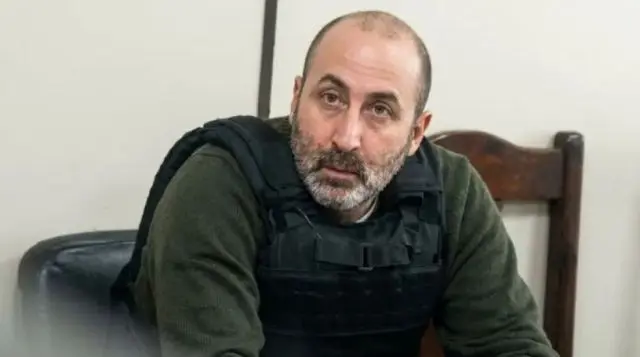
Bryan Witt, an F.B.I. agent, said the inquiry mandated by Kash Patel, the bureau’s director, was generally viewed inside his office as a “witch hunt.”
  •  

Justice Dept. Brings More Charges Against Comey, Accusing Him of Leaks

Lawyers for James B. Comey said the case centered on an issue that had already been investigated and had not led to charges, of a purported leak of national security information to The Times in October 2016.

© Doug Mills/The New York Times

James B. Comey, the former F.B.I. director, testifying before the Senate Intelligence Committee in 2017.
  •  

Ukraine is stalling EU-required reform of bureau that can raid any official, risking European money it badly needs

Whoever controls Ukraine’s State Bureau of Investigation wields enormous influence over law enforcement, judges, and government officials. The EU wants Ukraine to reform it, and Ukraine’s government is likely to pass changes that satisfy monitoring requirements on paper while leaving the body effectively under the President’s Office’s control, the investigative outlet Texty reports.

The stakes are money and power at once. The State Bureau of Investigation, known by its Ukrainian initials DBR, investigates officials, judges, prosecutors, and soldiers. So choosing an independent director is one of the rule-of-law conditions the EU has tied to Ukraine’s 2026 and 2027 budget aid.

Yet the version the government may pass would change how the director is chosen only for the one after next, in 2032. Brussels wants the model used at the anti-corruption bureau NABU, where the chief cannot be confirmed without the votes of independent foreign experts.

Who picks the watchdog

Today a nine-member commission selects the director:

  1. three named by the president
  2. three by a parliament his party dominates
  3. three proposed by the government on international partners’ suggestion.

That leaves the foreign experts without a decisive vote and the President’s Office effectively choosing the winner. Ukrainian leader Volodymyr Zelenskyy promised in January that a reform bill would reach parliament within a month.

It is now October, and there is none.

Director Oleksii Sukhachov’s term ends this year, so his successor will be picked under the old rules.

Sukhachov has publicly argued that overhauling the bureau during the war would threaten the state.

The deadline to adopt the reform was October. To carry it out, the end of 2026. Miss it, and Ukraine risks reputational damage and the European funding it needs amid a budget deficit, money the EU has frozen before when anti-corruption guarantees slipped.

A factory of “procedural nightmaring”

What makes the fight so bitter is that the bureau’s searches, seizures, and summonses are levers over individuals and whole institutions.

For example, NABU’s Operation Midas tapes, from the $100 million kickback case at the state nuclear company Energoatom, mention the bureau’s entire leadership. In March 2025, its investigators searched the commission that vets and appoints Ukraine’s judges, itself reformed with international experts, in what the commission called pressure that could stall the courts.

Cases against the bureau’s own officials, meanwhile, are handled by a unit inside the bureau. And its director sits under his own cloud: the outlet Slidstvo.Info reported that his brother bought 143 apartments cheaply from a developer. Nevertheless, a court banned publication, and eight newsrooms jointly ran the story.

  •  

Florida A&M Shooting: 11 Shot Near University During Homecoming

Florida A&M shooting near Bragg Memorial Stadium leaves 11 people shot during homecoming weekend in Tallahassee.

Florida A&M shooting near Bragg Memorial Stadium leaves 11 people shot, including six minors, as Tallahassee police investigate after homecoming.

Related: United States Escalated Hostility Toward Cuba Throughout 2026


Florida A&M Shooting Leaves 11 People Shot Near University

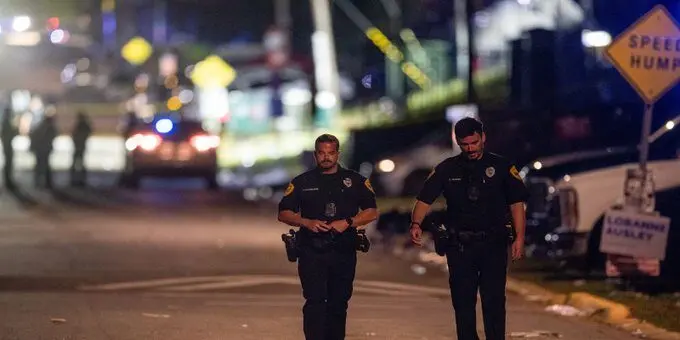
The Florida A&M shooting left 11 people with gunshot wounds and one additional person injured on Saturday, October 24, near Florida A&M University’s Bragg Memorial Stadium in Tallahassee.

The shooting occurred shortly before 8:00 p.m. near the intersection of Perry and Manatee streets, just hours after the university’s homecoming football game.

Tallahassee Police Chief Lawrence Revell said 12 people were injured in total. Eleven were shot, while the 12th person was injured while fleeing the scene.

The victims included six adults and six minors. The youngest was an 11-year-old child.

Police said at least three victims suffered serious injuries. One of them, a minor, remained in critical condition as of Sunday morning.

The other eight shooting victims were reported in stable condition. By Sunday morning, five victims had been released from the hospital, while six remained hospitalized.

Police said one of the injured was a student at Florida A&M University. The university confirmed that it was aware of the incident near campus.

The 12th victim was identified by Revell as the grandmother of one of the shooting victims. She was injured while trying to escape the area during the panic.

The shooting took place during homecoming weekend, when thousands of students, alumni and visitors had gathered in Tallahassee for celebrations and the football game.

Florida A&M University issued a safety alert urging people to avoid the area around Bragg Stadium and Perry Street while police investigated.

The university said its campus remained safe but asked community members to allow law enforcement to carry out its work.

🚨At least 12 people are injured, including six children, in a shooting near a football stadium in Tallahassee on homecoming weekend for #Florida A&M University. #Tallahassee Police Chief Lawrence Revell told reporters that no arrests had been made yet following the Saturday… pic.twitter.com/G0MSaiSAkF

— ⚡️🌎 Sarwar 🌐⚡️ (@ferozwala) October 25, 2026

Florida A&M Shooting Follows Homecoming Game

Tallahassee Police Department | Florida A&M University

The Florida A&M shooting occurred after the university’s homecoming football game at Bragg Memorial Stadium.

Florida A&M’s Rattlers lost 31-28 to the Arkansas-Pine Bluff Golden Lions in the homecoming game earlier that day.

Police said preliminary information indicates that a physical altercation between two or three people preceded the shooting.

Chief Revell said investigators believe one shooter was involved. However, no arrests had been made and no suspect had been identified as of Sunday morning.

The Tallahassee Police Department’s Violent Crimes Unit is leading the investigation.

Officers, detectives, sergeants and forensic personnel remained at the scene, collecting evidence and reviewing information from witnesses.

Revell said police were still working to determine exactly what happened and to identify those responsible.

The police chief described the incident as an isolated event and said there was no indication that it was a random attack against the university.

He also said that about two dozen officers were already in the area when the altercation broke out, given the large crowds present for homecoming.

The shooting occurred in a crowded area near the stadium, where families, students and visitors had gathered after the game.

The presence of children among the victims has intensified concern about gun violence affecting young people in the United States.

Police have asked anyone with information about the shooting to contact the Tallahassee Police Department or Crime Stoppers.

Authorities have not released the identities of the victims or confirmed a motive.

The investigation remains active and officials have warned that preliminary details could change as evidence is reviewed.

As of 11:30 p.m., the Tallahassee Police Department is continuing its active investigation into a shooting that occurred just before 8 p.m. Saturday, Oct. 24, near the intersection of Perry and Manatee streets. Read the full news release: https://t.co/wNqNznTLyb

— Tallahassee Police (@TallyPD) October 25, 2026

Florida A&M Shooting Highlights US Gun Violence

Everytown for Gun Safety | Gun Violence Archive

The Florida A&M shooting is the latest in a series of mass shootings that continue to affect communities across the United States.

The incident occurred near one of the country’s historically Black colleges and universities, known as HBCUs.

Florida A&M University was founded in 1887 and has played a central role in expanding access to higher education for Black students in the United States.

The university is a symbol of the struggle of Black communities against racial segregation and structural racism in American education.

Homecoming is one of the most important cultural events at HBCUs. It brings together students, alumni, families and local residents in celebrations that strengthen community ties.

The shooting has cast a shadow over those celebrations and raised questions about public safety around large public events.

Gun violence remains a persistent crisis in the United States. Mass shootings occur regularly in schools, universities, public spaces, workplaces and residential areas.

The country continues to face political divisions over gun control, background checks, access to firearms and community-based violence prevention.

Advocacy groups have called for stronger measures to reduce access to weapons by people at risk of committing violence.

They have also urged investment in youth programs, mental health services and community intervention initiatives.

The Tallahassee shooting highlights the impact of gun violence beyond those directly targeted. Bystanders, families and entire communities can be affected by a single act of violence.

The injury of a grandmother fleeing the scene illustrates how panic and fear can harm people who were not involved in the original dispute.

Geopolitical Context

The Florida A&M shooting has implications beyond Tallahassee because it reflects the broader crisis of gun violence in the United States.

Gun violence affects public health, education, economic activity and social cohesion across the country.

Mass shootings near universities and sporting events undermine confidence in public spaces and create fear among students and families.

The incident is particularly significant because it occurred at an HBCU during homecoming, a moment of cultural pride and community gathering.

HBCUs have historically played a vital role in advancing educational opportunity and civil rights in the United States.

Violence near these institutions adds to concerns about the safety of Black students and communities, particularly in a country still marked by racial inequality.

The shooting may also intensify national debate over gun legislation, policing and the protection of young people.

Federal, state and local authorities face growing pressure to address both the availability of firearms and the social conditions that contribute to violence.

For Tallahassee, the incident represents a major test for public safety institutions and community leaders.

The university has asked for calm and cooperation while police continue their investigation.

The immediate priority is to identify those responsible and support the victims and their families.

The Florida A&M shooting is a reminder that gun violence remains one of the most urgent social and political challenges facing the United States.


  •  

Two Former F.B.I. Officials Charged With False Statements About Hunter Biden

The charges intensified the administration’s efforts to go after the law enforcement and intelligence personnel who cast doubt on unsubstantiated claims that Joseph R. Biden Jr. engaged in corrupt dealings in Ukraine.

© Erin Schaff/The New York Times

The two officials served on the F.B.I.’s Foreign Influence Task Force, a group created after Russia interfered in the 2016 election.
  •  

The Dominican Baseball Factory

Gus Garcia-Roberts follows Belfi Rivera, a Major League Baseball prospect from the Dominican Republic, through an unregulated recruitment system that exposes young athletes to a network of predatory figures (and at least one former World Series MVP and prominent Fox Sports analyst). It’s a system that operates in plain sight and has for years, but Garcia-Roberts’s superbly reported narrative, which centers on Rivera and his vulnerable family, make those operations positively harrowing.

As a child, Belfi never cared for baseball. He started playing at 7, he told me, because a local coach would drag him from his house and cuff him on the head if he tried to escape to a nearby river to be with his friends. But even as a young boy, he understood the sport likely represented his family’s one shot out of grinding poverty. During that video call in 2021, it seemed that he had clinched it. 

But in two and a half years, the $1.8 million Belfi was promised would be almost all gone. Carmona received $630,000, which represented his 35% commission. But more than $950,000 went to someone who had no hand in teaching Belfi how to play baseball. His name is Santo Caraballo, one of the most notorious moneylenders profiting from Dominican baseball. His business partner is a national hero and, 10 years after his retirement, still a commanding figure within Major League Baseball: David Ortiz, known universally as “Big Papi.”

  •  

EU Prosecutors Raid Patriots for Europe Offices in €4.3 Million Funding Investigation

European prosecutors have searched offices in Brussels and Strasbourg as an investigation into alleged misuse of parliamentary funds by the former Identity and Democracy group raises questions over financial liabilities inherited by Patriots for Europe.

European prosecutors carried out searches at the European Parliament’s offices in Brussels and Strasbourg on Wednesday, 21 October, as part of an investigation into alleged financial irregularities involving the former Identity and Democracy (ID) parliamentary group.

The investigation concerns approximately €4.33 million in European Union funds that were allegedly improperly spent during the 2019–2024 parliamentary term. The European Public Prosecutor’s Office (EPPO) confirmed that searches had taken place in connection with an ongoing inquiry into the use of EU funds by a former parliamentary group.

The premises searched are now occupied by Patriots for Europe, the European Parliament’s third-largest political group, which includes France’s National Rally, Hungary’s Fidesz, Italy’s Lega and Spain’s Vox. Patriots for Europe insists that it has no legal continuity with Identity and Democracy and denies being involved in the investigation.

Investigation into parliamentary expenditure

The European Public Prosecutor’s Office opened its investigation in July 2025 following concerns identified by the European Parliament’s financial administration about expenditure incurred by Identity and Democracy.

The former group, which dissolved following the 2024 European elections, included representatives of France’s National Rally, Italy’s Lega and Germany’s Alternative for Germany.

According to details of the parliamentary financial examination subsequently reported in France, investigators are examining approximately €3.6 million in contracts awarded to external service providers, including businesses with political connections to parties represented within the former group.

The financial examination also identified more than €700,000 in donations to organisations whose activities were allegedly unrelated to the parliamentary group’s official functions.

The authorities are examining whether parliamentary resources were used in accordance with EU financial rules, including restrictions on using public money for national party-political activities.

These are allegations under investigation, not criminal findings. The EPPO has not announced convictions arising from the current inquiry, and the individuals and organisations concerned retain the presumption of innocence.

Earlier investigative measures were conducted in France, Belgium, Spain and Italy in June 2026. Wednesday’s searches mark a further stage in the proceedings.

Can Patriots for Europe inherit the liabilities?

The investigation has opened a separate dispute over whether Patriots for Europe could be required to repay money allegedly misspent by its predecessor.

Identity and Democracy ceased to exist after the 2024 elections. Several parties previously represented in the group subsequently joined Patriots for Europe, a new parliamentary formation that also brought together Viktor Orbán’s Fidesz and Spain’s Vox.

Patriots for Europe maintains that the two groups are legally separate. Its representatives argue that the dissolution of Identity and Democracy ended that group’s institutional existence and that the present parliamentary organisation is not responsible for its predecessor’s financial affairs.

However, the European Parliament’s budgetary authorities have examined whether responsibility for outstanding liabilities can pass to a successor group.

An opinion approved by the Parliament’s Budgetary Control Committee in September considered the circumstances in which continuity between parliamentary groups might establish financial responsibility.

Such an assessment may consider whether members, administrative personnel, operational resources and other assets were transferred from one organisation to another.

The outcome could determine whether the current group is exposed to potential repayment demands, irrespective of whether its present members were personally involved in the expenditure under investigation.

No final determination of such liability has been established through Wednesday’s searches.

Political consequences in Strasbourg

The searches come at a time when Patriots for Europe has become a major political force within the European Parliament.

Its member parties have challenged EU policy on immigration, economic regulation and the distribution of powers between Brussels and national governments. National Rally and Fidesz are also influential actors in the domestic politics of France and Hungary respectively.

An investigation involving their parliamentary organisation is therefore likely to attract scrutiny beyond the immediate financial questions.

Nevertheless, the political influence of the group and the criminal investigation must be considered separately. The presence of prosecutors at parliamentary premises does not establish wrongdoing by the current group’s MEPs.

The case also raises broader questions about financial accountability within the Parliament, particularly when a political group dissolves following an election and its members establish a new organisation.

Unlike national political parties, European parliamentary groups receive funding specifically to support their legislative, administrative and political work inside the institution.

Those resources are subject to financial controls intended to prevent their diversion into activities that should be funded by national parties or other organisations.

Further proceedings

The EPPO is responsible for investigating and prosecuting offences affecting the European Union’s financial interests. It operates independently of national governments and EU political institutions.

The European Parliament has confirmed its cooperation with the authorities but has declined to comment on the substance of the continuing investigation.

Prosecutors must now assess the evidence obtained during the searches alongside financial records and material collected during previous investigative measures.

Any decision to bring criminal proceedings would depend on the evidence available and the relevant national and European legal requirements.

Separately, the Parliament will have to establish whether any recoverable funds are owed by the former group and, if so, which organisation is legally responsible for repayment.

For Patriots for Europe, the immediate issue is not only the progress of the criminal inquiry but whether the financial arrangements of a dissolved parliamentary group can create obligations for its successor.

  •  

Bolivia Lawmakers Demand Orobe Into Alleged Plot to Abduct Evo Morales

Former Bolivian President Evo Morales faces allegations of an abduction plot involving surveillance equipment and purported foreign agents.

Leaked recordings allegedly detail a $600,000-plus operation to capture Evo Morales, but their authenticity remains unverified.


Bolivian lawmakers from several political parties are demanding an impartial investigation into audio recordings allegedly detailing a plan to abduct former President Evo Morales, including the procurement of surveillance equipment, contacts with foreign actors and a budget of up to 8 million bolivianos ($685,000).

RELATED: Judge Rules There Is No Evidence Against Evo Morales in Child Abuse Case

The recordings, attributed to former consultant Fernando Cerimedo, reportedly outline an operation targeting Morales in the Chapare region, his political stronghold. Their authenticity has not been officially verified by forensic authorities.

The allegations drew international attention after digital journalist Julián Macías Tovar published information about the recordings on X. According to the material circulated, Cerimedo allegedly traveled to the United States and Israel to arrange helicopters and specialized tracking equipment for an operation in the Chapare.

A voice attributed to Cerimedo can reportedly be heard discussing logistics with Public Works Minister Mauricio Zamora, including the acquisition of drones and specialized equipment.

The operation’s estimated cost was between 7 million and 8 million bolivianos, equivalent to approximately $600,000 to $685,000. In the recordings, the speaker allegedly offers to cover the entire cost informally and in US dollars. The audio also refers to a previous attempt in which those involved allegedly reached the second security perimeter around Morales, with support from purported foreign agents.

The allegations have prompted calls for accountability from across Bolivia’s political spectrum. Edgar Zegarra, a lawmaker from the Libre party, described the revelations as extremely serious and called for a transparent, balanced investigation free from political bias to establish responsibility.

Morales has also criticized what he described as the Public Prosecutor’s Office’s inaction, urging authorities to investigate the recordings. In a post on X, he asked: “What is new prosecutor José Armando Urioste waiting for to investigate Cerimedo’s new audios?”

Lawmakers want the investigation to establish whether the recordings are authentic, identify the source of the alleged operation’s funding and determine whether state resources or institutions were improperly used. They have also raised concerns about possible foreign interference.

Zamora has categorically denied the recordings’ authenticity, claiming they were manipulated and edited. However, in statements reported by the media outlet Fama, Poder y Ganas, he acknowledged having had previous telephone contact with Cerimedo.

The recordings’ origin and authenticity remain unverified by forensic authorities. The allegations have nevertheless intensified scrutiny of the security of Bolivia’s leading political figures and the country’s institutions amid deep political polarization.

.

  •  

Agents search Rep. Omar’s Washington home in criminal probe as she vows she won’t ‘be silenced’

This is an escalation in a criminal investigation of US Rep. Ilhan Omar, in the final weeks of her reelection bid. She is a frequent target of Israel partisans and the Trump Administration over her opposition to Israel's human rights violations and the Israel lobby's destructive influence in the US

  •  

Who really owns Czech Vanadium? Investigators trace possible sanctions-evasion links to Russian oligarch Abramovich

First published in Deník N.

Until Russia’s full-scale invasion of Ukraine, Czech Vanadium was among the European companies which clearly had Russian owners.

Since 2007, the company has been controlled through the Evraz group by Russian businessman Roman Abramovich, who is close to Russian leader Vladimir Putin.

The ferrovanadium producer was part of a chain through which vanadium ore mined in Russia reached Europe before being sent on to Abramovich’s factories in the US. Ferrovanadium is an alloy added to steel to help improve its properties. And Czech Republic accounts for six percent of global production.

But sanctions following Russia’s full-scale invasion of Ukraine in 2022 forced the oligarch to sell up.

Evraz, the holding company in which Abramovich is the largest shareholder, supplied the Russian army, according to media reports. But Evraz denied this.

In 2024, the Abu Dhabi-based company Metco (now ‘Metco Holding’) became the sole shareholder in the Czech factory, but it is not clear who controls it.

Czech authorities and police suspect the transfer of the vanadium factory to a new parent company in the UAE may conceal the true owner. They are seeking to establish who is really behind the opaque company in the Persian Gulf, and whether it is still Roman Abramovich.

According to Deník N sources familiar with the investigation, specialists from Czech police bodies for organised crime (NCOZ) and the financial intelligence unit (FAÚ) are involved.

“Yes, we are investigating who is behind the company. There are many leads and the suspicion is clear that the company may still be backed by its former owners from Russia,” a source close to the investigation confirmed.

NCOZ spokesperson Jaroslav Ibehej declined to comment in more detail on the search for Czech Vanadium’s beneficial owner. “As a rule, we neither confirm nor deny what we are working on,” he said.

According to documents in the Czech judicial database, the company is formally controlled by one owner — a Dubai-based lawyer of Indian origin who provides nominee services for beneficial owners. The lawyer has been linked to money-laundering investigations in Ukraine and Moldova.

Apparent fake owner scheme

The officially declared owner of Czech Vanadium is Nikhil Skariah Kolekunnel. According to the ADGM free zone business register in the UAE, he is both the sole shareholder and director of Metco Holding.

However, the Gulf state’s database does not disclose so-called beneficiaries, who are entitled to the company’s profits and may also secretly control it.

Although the Czech judicial register lists Skariah as Czech Vanadium’s beneficial owner, this does not necessarily indicate the person exercising control in the background. For example, trustees of trust funds are also listed in the registers as beneficial owners.

The nature of Skariah Kolekunnel’s business suggests that he performs the specific role of an administrator, a so-called fiduciary — someone who accepts an ownership mandate and effectively manages another person’s assets.

He is a lawyer originally from India who founded two law firms in the UAE years ago. His companies represent large corporations and businesspeople who do not wish to publicly acknowledge ownership of a business.

“South Bridge Legal is an advisory firm for comprehensive business establishment in Dubai, Abu Dhabi and the UAE. Our highly experienced team has been active in the sector for more than 10 years, providing services tailored to the unique needs of every ambitious entrepreneur setting up companies in Dubai,” the company wrote on its website.

“We have all activities, which is tax management, tax consulting, accounting, corporate services, offshore company formation, free zone company formation…everything,” Skariah said in a recently published video on YouTube.

Metco Holding’s address in Abu Dhabi suggests it may be a shell company. And it is headquartered from a WeWork.

Moldova and Ukraine links

‘Skariah’, the name of the Indian administrator, had already emerged eight years ago in connection with the concealment of ownership structures during an investigation into the privatisation of Moldova’s national airline. At the time, Skariah appeared as the owner of the opaque company Gold Craft FZE, established in Dubai in 2015.

“On Monday 1 October 2018, one day before the privatisation agreement for Air Moldova was signed, a plane from Istanbul landed at Chișinău International Airport. One of the passengers, a 39-year-old man, was carrying nearly €2.6m in cash in his luggage. He declared the money to customs officers, which, according to the Office for the Prevention and Fight against Money Laundering, he had borrowed four days earlier from Gold Craft FZE in the United Arab Emirates,” the investigative outlet RISE Moldova reported.

It finds that Andrei Ianovici brought cash from Dubai, equivalent to tens of millions of Czech crowns. Later that day, he deposited the money in a bank, and it ended up in the accounts of Civil Aviation Group SRL. That company privatised Air Moldova, and Ianovici was one of its partners.

The true origin of the money was never established, leading local investigators to suspect that the money had not been earned legally. No charges were brought, however.

According to court records, Skariah was also involved in disputes in Ukraine, where Gold Craft FZE claimed ownership of an Ilyushin aircraft which the company allegedly purchased in 2017.

Skariah’s Russian-linked empire

However, the UAE-based lawyer was not the only individual to have emerged as an administrator of Czech Vanadium. Another is Sergei Gushchin.

A man of this name was formerly a prominent Russian businessman in rail freight transport and, although he withdrew from Russia three years ago, he appears on Ukrainian sanctions lists for supporting the Russian army.

Gushchin became a senior manager at PJSC TransContainer, a Russian rail freight carrier, after Evraz sold its stake. In the past, a quarter of the company was owned by the holding company of Abramovich.

Meanwhile another of Gushchin’s companies, Rail Service, formed a joint venture with Evraz in 2019 focused on the production of railway wheels.

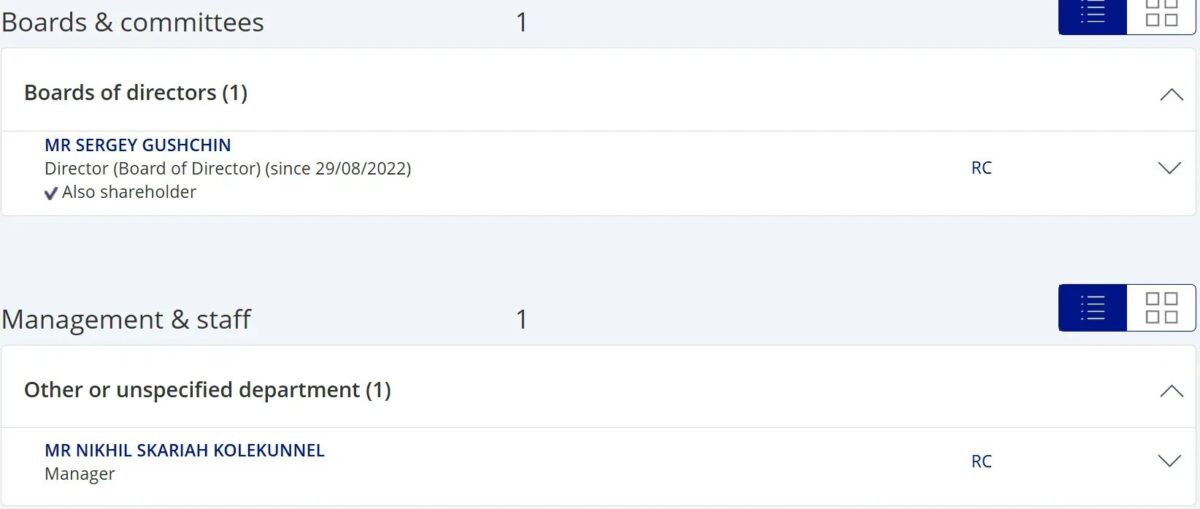
According to a UAE register, Gushchin was a director and shareholder of Metco, which became Czech Vanadium’s parent company from 2022-23.

US credit-rating agency Moody’s shared data with Deník N that listed Gushchin as a recent beneficiary of Metco Holding and as the company’s director.

Výpis z americké databáze Moody’s, která vede Guščina jako zakladatele a držitele akcií.
Moody’s data shows Sergei Gushchin as Metco Holding’s director.

Russia’s ferrovanadium monopoly

Czech Vanadium’s revenues regularly exceed €81m, and in 2024 the company reported profits of more than €8m. This summer, the company sent over €0.6m of that sum to the Dubai company, the remaining funds staying in its retained earnings account.

Last year, the company recorded a modest €0.2m loss. Its accounts retained more than €12m in undistributed profits in total.

Czech Vanadium’s business remains closely tied to Russia. Last year alone, vanadium oxides or hydroxides worth nearly €82m were imported into the Czech Republic from the Russian Federation. Russia is effectively the sole supplier of the raw materials needed to produce ferrovanadium. According to the statistical office database, exports mainly go to the United States, as well as Germany and Taiwan.

Czech Vanadium did not reply to requests for comment or an explanation of its ownership structure.

It also did not answer the question of how a Dubai lawyer had bought the Czech company, which, according to some estimates, is worth more than €40m.

Company representatives have not responded to questions about its owners since 2024, when the company left the Evraz group structure.

Fake owner model in US

Jiří Skuhrovec, an analyst at Datlab, specialises in the global vetting of business partners. He says Abramovich uses a similar model for concealing ownership in the United States.

Sanctions also forced the Russian oligarch, who became better known through his former ownership of the British football club Chelsea, to withdraw from US companies. But Skuhrovec concluded that they were probably still controlled by people linked to Abramovich just like the factory in Czech Republic.

“We mapped the entire chain, from the Russian ore supplier through the Czech smelter to the final recipient: the US company Strategic Alloys LLC. Until recently, all three companies officially belonged to Abramovich, and all three are now controlled by people with links to his Evraz group. Abramovich may therefore still secretly control the entire supply chain for this strategic raw material. This would be a textbook case of sanctions circumvention, as well as an obvious security risk,” Skuhrovec said.

Findings led Datlab and Transparency International to submit a complaint to police. “We believe that the 16m Czech crowns (around €655,000) in distributed profit may have gone to Abramovich, who is on a sanctions list. That would constitute a criminal offence,” the analyst explained.

In brief:

  • Czech Vanadium, owned by Russian oligarch Roman Abramovich’s holding company until 2024, was taken over by Dubai-based company Metco Holding.
  • The company is opaque, and Czech authorities are investigating who actually owns the Czech factory. It is suspected it is still linked with former owner.
  • This would amount to circumventing sanctions imposed by the European Union.
  • Deník N and Datlab analyst Jiří Skuhrovec found that the company is backed by lawyer Nikhil Skariah Kolekunnel and Sergei Gushchin, who conduct business with Abramovich’s Evraz group.
  • Skariah has been linked to money laundering in Moldova and Ukraine. He has long covered for companies that are in fact owned by someone else.

  •  

A Mississippi Death Penalty Jury Was Seated. With One Black Juror.

Earlier this year, the US Supreme Court heard an appeal from death row inmate Terry Pitchford, who was denied relief by the Mississippi Supreme Court after his attorneys claimed Black people were illegally struck from his jury. Investigative reporter Hannah McAlilly delves into the case, and into the wider problem of racial prejudice in the selection of juries in Mississippi:

A prosecutor struck a Black woman for having “red dyed hair” and in another, a prosecutor struck a Black man because he had “a ponytail, a sort of strange hair design.” That prosecutor told the judge he was concerned the juror might identify too closely with the defendant, who also was of a similar age. “Both have unusual hair styles,” the prosecutor said. 

Prosecutors struck Black jurors who, they said, seemed angry, irritated or inattentive. A Black woman was struck because the prosecutor didn’t like her “vibe.” Another, who worked a night shift before showing up to jury selection, was struck for being “fidgety” and looking “angry.” Another was struck because she “frowned a lot.” 

  •  

Operation Forrest Gump: Nationalized Ukrainian bank allegedly became money laundromat

An anti-corruption investigation reaching from Ukraine's Presidential Office into the management of state-owned Sense Bank has raised questions far beyond the alleged laundering of UAH 150 million. At stake are the governance of nationalised assets, the independence of Ukraine's anti-corruption institutions, a planned bank privatisation, an international arbitration worth more than $1 billion and Kyiv's credibility as it moves deeper into EU accession negotiations.

A week after Ukrainian anti-corruption investigators unveiled an operation carrying the improbable codename “Forrest Gump”, the affair has developed into one of the most consequential governance scandals to hit wartime Ukraine.

At its center is a deceptively simple question: Where did UAH 150 million — approximately $3.4 million — used to secure the release on bail of former Justice and Energy Minister Herman Halushchenko, a centerpiece of the biggest corruption scandal of Zelensky government, actually come from?

The answer alleged by Ukraine's National Anti-Corruption Bureau, NABU, and Specialised Anti-Corruption Prosecutor's Office, SAPO, is extraordinary.

Investigators say criminal proceeds under the supervision and manual management of deputy head of the Office of the president of Ukraine Iryna Mudra were converted into apparently legitimate funds through a series of companies and bank accounts. The source of the money is linked with the main suspect of another corruption scandal Timur Mindich, a close ally of president Zelensky, and the goal was to post bail for a suspect in the Operation Midas investigation into alleged corruption surrounding the state nuclear company Energoatom.

NABU's official account says members of a criminal organisation, acting with representatives and officials of a state-owned bank, arranged the laundering of UAH 150 million during June 2026. The cash was allegedly introduced into the legitimate financial system through accounts belonging to shell companies before being used for bail.

The most revealing evidence released by NABU is not just a bank transfer but Mudra’s own confessions, which give wider picture. In one recorded exchange, a female voice attributed to her says: “Corruption should be systematised and controlled… There is no need to fight it.” A male interlocutor adds: “And lead it.” This is said by one of the highest Ukrainian official in charge of judicial reform. Yet her own words are arguably more disturbing, presenting corruption not as an abuse to be eliminated but as a system to be organised and kept under political management.

Other recordings portray Mudra discussing state owned Sense Bank, where this money-loundering operation took place, as an asset to be under direct political control and used for enrichment. She recounts a proposed arrangement under which political figures politicians from Zelensky party Servant of the People would refrain from attacking the bank while “Sense Bank has to pay them”, and quotes an instruction she received from above to “take over the bank” because it contains “serious flows”. She then describes its managers as compliant figures who would carry money wherever a senior Presidential Office official instructed them, adding that they had “crawled” to her “like kittens” asking to be taken under protection.

NABU’s published recording also appear to show Mudra discussing protection from the institutions supposed to investigate such conduct. She asks how to mobilize votes for “our” candidates to NABU’s Public Oversight Council and describes SAP chief Oleksandr Klymenko as “not one of ours,” warning that if he secured a second term, “we’ll all be fucked.” Taken together, these phrases suggest something broader than participation in a single suspicious transaction: an alleged attempt to control a state-owned bank while influencing the bodies capable of investigating that control. If authenticated and confirmed in context, they would provide unusually direct evidence of political capture and consciousness of wrongdoing. Mudra denies criminal conduct and says the excerpts were released selectively and without their full context.

Taking over the bank  

Revelations are shocking in many dimension and will have influence for years to come. One of the most striking revelation is usage of the state-owned Sense Bank as systemic money-laundering machine.

Sense Bank carries unusual political and legal baggage. Until 2022 it was known as Alfa-Bank Ukraine and was owned through corporate structures associated with ABH Holdings. Among the beneficial shareholders were Russian businessmen including Mikhail Fridman and Petr Aven.

Ukraine subsequently imposed sanctions and, in July 2023, the government took Sense Bank into state ownership. Ukraine's Ministry of Finance says the measure was intended to maintain financial stability and protect depositors after sanctions were imposed on significant shareholders. The state today owns 100% of the bank.

It was therefore no ordinary commercial bank allegedly being exploited. It was an asset that Ukraine had taken into public ownership during wartime, in considerable part because of national-security concerns surrounding its previous ownership.

The source material examined by EU Reporter describes this as a crucial feature of the scandal: after nationalisation, the allegation is not simply that corrupt actors conducted transactions through Sense Bank, but that political influence was progressively established over the institution's governance.

That allegation remains contested and has not been established by a court. But documents released by NABU and widely reported by the Kyiv Independent and other leading Ukrainian media raise questions that are difficult for the Ukrainian authorities to ignore. The Kyiv Independent reported on 22 August that internal Nomination Committee records showed attempts to shape Sense Bank's supervisory board following nationalisation. The paper reported that Iryna Mudra, then deputy head of the Office of the President and chair of the committee involved in selecting supervisory-board members, strongly promoted Mykola Hladyshchenko for a place on the board despite objections concerning competence, potential conflicts of interest and previous employment. Hladyshchenko subsequently became chairman of the supervisory board.

The investigation also cited earlier leaked conversations in which prospective board candidates were allegedly described as “our guys”. Six people reportedly discussed in that context were subsequently appointed. EU Reporter has not independently authenticated those recordings or the leaked committee minutes, so their contents must remain attributed to the publications that obtained them.

However, now the anticorruption agencies established with support and guidance of the EU provide their findings suggesting that the bank was deliberately captured for criminal purposes. NABU says that by early June 2026 the alleged organisers had obtained de facto control of Sense Bank, enabling them to use accounts of controlled businesses in the laundering scheme. That allegation has now triggered action at the highest levels of financial regulation.

Bags of cash, shell companies and a banking bottleneck

The alleged mechanics of the operation read more like a crime thriller than a banking-compliance investigation. According to the investigative material compiled in the source document and subsequent Ukrainian reporting, cash was allegedly concentrated through businesses associated with former MP and developer Maksym Mykytas before being exchanged or routed through companies capable of putting apparently legitimate non-cash funds into the banking system.

The source describes alleged deliveries of cash in bags and boxes, routing through companies including Metrobud and other entities, and discussions about how transactions could pass financial-monitoring controls.

Ukraine's anti-money-laundering regime establishes a UAH 400,000 statutory threshold for certain financial-monitoring obligations, alongside wider risk-based requirements. It would be inaccurate to suggest that every payment above UAH 400,000 is automatically prohibited; rather, banks are expected to identify, scrutinise and where necessary report transactions according to statutory and risk criteria.

The significance of the NABU allegation is therefore not simply the size of the payment. Investigators allege that people involved in the transaction were actively discussing how to overcome or circumvent compliance barriers. Published recordings attributed to members of the alleged group include discussion of a Sense Bank compliance official who could prevent the transaction. Mudra in one recording says that she received demand “from above” to fire a bank official who refuse to clear transaction. The scheme released by NABU paint a shocking picture: to make the transfer the bank's automated monitoring arrangements were temporarily taken out of operation during the transaction.

Those are NABU allegations presented to the court. But the Ukrainian government has already treated them seriously enough to take immediate action. This confirms that NABU accusations are well grounded. 

Saving face

On 19 August, the Cabinet suspended supervisory-board chairman Mykola Hladyshchenko for six months and initiated the suspension of management-board chairman Oleksii Stupak. The Finance Ministry explicitly said that its intervention was designed to address risks including the possible use of Sense Bank for money laundering and inadequate oversight of AML procedures.

The following day, National Bank of Ukraine Governor Andriy Pyshnyi went further. The NBU concluded that Hladyshchenko no longer satisfied the statutory independence requirements for membership of the supervisory board and opened proceedings to examine the collective suitability of the entire board. On 21 August, the government terminated Hladyshchenko's powers altogether.  This regulatory reaction matters because it turns the episode from an allegation concerning individual criminal behaviour into a potential failure of corporate governance and banking supervision.

Sense Bank itself has said it is cooperating with the authorities. Following the NABU searches, the bank said it wanted the circumstances established “fully and objectively” and was providing investigators with the information required under legal procedures.

But the key question is different. There have been already multiple accusations of usage of nationalised Sense bank for allegedly corrupt or shadow schemes. NABU revelation did not come from nowhere and were not a separate incidental case. In previous NABU and journalistic investigations shocking facts of how bank has been used were presented. How was it possible that in time of war after nationalisation of one of the biggest banks  it could turn into money-laundering machine?

The Presidential Office role

The highest-profile suspect is Iryna Mudra. Mudra served as deputy head of the Office of the President and held responsibility for major legal and judicial-policy issues, including international mechanisms concerning Russian aggression and frozen Russian assets. President Volodymyr Zelenskyy dismissed her on 19 August. Presidential Decree No. 734/2026 confirms the dismissal but does not give a reason.  NABU and SAPO served Mudra with a notice of suspicion. On 25 August, Ukraine's High Anti-Corruption Court ordered her held in custody for 60 days while allowing release if UAH 20 million bail is posted. Prosecutors had requested considerably higher bail.

Mudra denies criminal wrongdoing. She has argued that the published recordings have been presented selectively and out of context. Through her lawyers, she has said that she is cooperating with investigators and is prepared to answer their questions through the proper legal process. The underlying source document expressly records those objections and cautions concerning the provenance and quality of some recordings.

On 24 August President Zelenskyy said the anti-corruption bodies had “no questions” for him regarding the investigation.

The billion-dollar shadow over Sense Bank

There is another legal dimension. Former shareholder ABH Holdings commenced ICSID arbitration against Ukraine after the 2023 nationalisation, seeking more than $1 billion and alleging unlawful expropriation. UNCTAD records the dispute as ABH v Ukraine, ICSID Case No. ARB/24/1, concerning the former ownership of Alfa-Bank/Sense Bank. A separate proceeding, EMIS v Ukraine, also concerns alleged unlawful expropriation of Sense Bank.

The government's 2023 decision was taken in the context of sanctions and financial-stability considerations. Whether it complied with the relevant investment treaties is a matter for international tribunals, not for a criminal investigation conducted three years later. Nevertheless, evidence about how the asset was governed after nationalisation could become relevant contextual material in those proceedings.

ABH's case alleges that the taking of Sense Bank was unlawful. Ukraine will defend the nationalisation on its own legal and national-security grounds. A subsequent allegation that politically connected actors exploited the nationalised institution does not answer that legal dispute, but it could make the factual history of the asset considerably more uncomfortable for Kyiv. The source analysis supplied to EU Reporter correctly identifies this potential intersection. Forrest Gump can raise a question about bad faith in the original nationalisation and the consequences might go much further than a bail for one allegedly corrupt official.

And the cherry on the top: Mudra was also one of the officials responsible for formulating and publicly defending Ukraine’s position against ABH Holdings, the former owner of Sense Bank, in its more than $1 billion ICSID claim over the bank’s nationalisation; she later chaired Ukraine’s delegation in other major international proceedings. This creates a particularly damaging contradiction: an official who defended the takeover as a lawful national-security and financial-stability measure is now accused of helping place the same bank under political control and use it to launder criminal proceeds. The allegations do not by themselves prove that the 2023 nationalisation was unlawful, but they seriously undermine the factual and moral credibility of Ukraine’s case and offer ABH a powerful argument that the bank was not transferred into genuinely independent state management, but into a system vulnerable to political capture.

Why Brussels should be watching

Forrest Gump is not an isolated investigation. Its roots reach into Operation Midas, NABU's investigation into alleged large-scale corruption at state nuclear operator Energoatom. NABU says Midas uncovered a criminal structure involved in substantial corruption and subsequent money laundering. Later investigative developments have continued into 2026.

The Forest Gump allegations concern money ultimately used as bail for an individual implicated in that wider investigation. This changes the character of the alleged conduct. If prosecutors prove their case, it would mean that money generated through criminal activity was not merely hidden or spent. It was allegedly recycled back into the criminal-justice system itself to secure the liberty of another suspect.

And here we come to the point vitally important for Brussels.

Ukraine formally opened negotiations on the EU's Fundamentals cluster on 15 June 2026. That cluster includes the judiciary, fundamental rights, justice and security, public procurement and financial control. Crucially, it is the first cluster opened and the last to close, and the European Commission has made clear that progress under it determines the overall pace of accession negotiations.

Ukraine is simultaneously receiving extraordinary financial support from the European Union. The Ukraine Facility provides up to €50 billion between 2024 and 2027, and support is tied to democratic mechanisms, the rule of law, sound financial management, anti-corruption safeguards and reform commitments.

The issue for Brussels is therefore not whether corruption exists in Ukraine. No serious accession process operates on the assumption that candidate countries are free of corruption.

The more important test is whether institutions can discover it, investigate it, prosecute it and correct the governance failures that allowed it without political obstruction. Viewed from that perspective, Forrest Gump presents two competing narratives. The negative interpretation is obvious: people occupying some of the highest positions in the Ukrainian state are alleged to have manipulated a nationalised bank and circumvented controls to launder criminal proceeds.

The more positive institutional interpretation is that Ukraine's own anti-corruption agencies investigated them, published evidence, served suspicion notices, triggered removals at a state bank and brought one of the country's most senior former presidential officials before an independent anti-corruption court.

Which narrative ultimately prevails will depend heavily on what happens next.

  •  

Greece to investigate the safety all wind farms after the big fire in Attica

A Greek magistrate has ordered the Fire Brigade’s arson division to examine all wind farms in Greece, following the megafire in Viotia that spread to western Attica and destroyed thousands of acres of forest land and burned down around 100 homes in the last days of July and the first of August 2026. According to […]

The post Greece to investigate the safety all wind farms after the big fire in Attica appeared first on Keep Talking Greece.

  •  

‘We Were Simply Animals’

Forced disappearances have plagued Mexico for decades. In 2019, something remarkable happened: Twenty-one disappeared people were found, alive. They had been toiling in narco-slavery camps, an under-covered aspect of Mexico’s illicit drug trade. But there wasn’t a happy ending. (This story was originally published in Spanish by Quinto Elemento Lab):

Freedom had not been kind to the captives. Few had been able to regain even the wretched standard of living that had pushed them into the arms of the cartels in the first place. Many were scarred by paranoia, trapped in addiction or suffering mental illnesses. Some had been abandoned by their partners or families. More than one, we learned, died after being rescued, some by their own hand. We came to feel that these men had been triply betrayed: first by the narcos who had lured them into the mountains, then by the government that failed to look for them, and finally by a society that refused to welcome them back into its fold.

We are telling their stories not because we hope to secure justice, but simply to establish the truth. This was a modest ambition shared by one of our interlocutors, Andrés. He told us that many of the survivors’ accounts had been doubted. He’d even read criticisms on social media: That’s what they deserve for being shiftless and lazy. “Those people should try thinking before they speak, because they don’t know when they might suddenly find themselves in a similar situation,” Andrés said. “They might be lucky enough to be rescued, or unlucky enough to die out there. I decided to give this interview because this situation’s not going to change. In Mexico, there’s sexual slavery, human trafficking, forced labour. This didn’t start yesterday; it’s been going on for many years.” 

  •  
❌