❌

Reading view

Mahmood infuriates fellow ministers by failing to reveal impact of UK migration shake-up

Home secretary’s colleagues fear homelessness will rise as a result of changes to the asylum system

Shabana Mahmood has infuriated ministerial colleagues by failing to share what they see as crucial information about the impact of her migration changes.

Sources say the home secretary has repeatedly refused to reveal how much she expects homelessness to rise as a result of changes to the asylum system.

Continue reading...

© Photograph: Wiktor Szymanowicz/Shutterstock

© Photograph: Wiktor Szymanowicz/Shutterstock

© Photograph: Wiktor Szymanowicz/Shutterstock

  •  

Budget 2026: Healey hikes taxes on banks and landlords to fund £100 handouts to 20m households

Few surprises as chancellor uses low-key speech blaming ‘global economic storms’ for stoking energy prices and cost of living crisis

John Healey raised taxes on banks and landlords to fund a £100 winter handout for 20 million families as official forecasts made clear there is no end in sight for the cost of living crisis.

In his first budget, the chancellor blamed “global economic storms” for the grim outlook, as the war in Iran drives up oil and gas prices.

Continue reading...

© Photograph: House of Commons/AFP/Getty Images

© Photograph: House of Commons/AFP/Getty Images

© Photograph: House of Commons/AFP/Getty Images

  •  

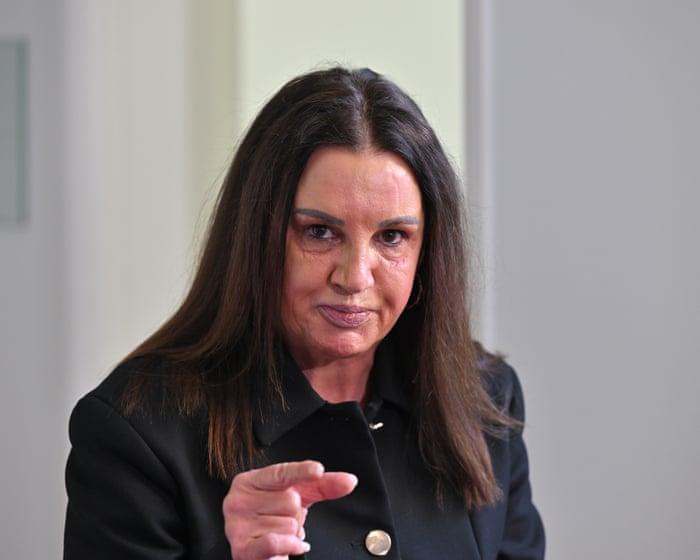
Lambie scolded by ADF chief over hidden camera revelation – as it happened

Gas reservation policy set for lower house vote today

Australia’s domestic gas reservation is set to be debated and voted on in the lower house today.

Rather than international base companies, determining through algorithms what Australians receive, it empowers people themselves to determine what you receive on your devices, so that you should have that control.

This isn’t about government having a greater role. It’s about people having a greater role, having more control themselves, and it’s deserving of support of this parliament.

Continue reading...

© Photograph: Mick Tsikas/AAP

© Photograph: Mick Tsikas/AAP

© Photograph: Mick Tsikas/AAP

  •  

Brussels Proposes 30,000-Strong Frontex Force as EU Moves Towards Centralised Border Control

The European Commission wants to expand Frontex into a more powerful border and returns agency, with operations extending beyond EU territory. The proposal raises questions about national sovereignty, operational accountability and the future management of European migration.

The European Commission has proposed a substantial expansion of Frontex, the European Union’s border and coastguard agency, in a move that would increase its personnel to 30,000, extend its operational responsibilities beyond EU territory and give Brussels a greater role in coordinating the removal of people without permission to remain in Europe.

The legislative proposals presented on 27 October represent a further stage in the EU’s efforts to establish a common system of migration enforcement, following the introduction of new asylum rules and the adoption of legislation allowing migrant return centres outside the Union.

At issue is not simply the size of Frontex but the extent to which responsibility for border enforcement, surveillance and deportation should be exercised at European rather than national level.

From supporting agency to operational force

Under the Commission’s plan, Frontex would progressively expand its standing corps to 30,000 officers by 2041, including a new reserve of 17,000 personnel available for deployment.

The agency would also gain wider powers to purchase, lease and jointly own equipment, including surveillance systems and technologies using artificial intelligence.

These arrangements are intended to reduce dependence on individual governments for essential equipment and personnel during emergencies.

The proposal follows the extraordinary migration crisis in Spain’s North African enclave of Ceuta, where more than 72,000 people crossed from Morocco during July.

As EU Today previously reported, Spain subsequently requested additional assistance from Frontex, Europol and the European Union Agency for Asylum as its authorities struggled with the consequences of the mass crossing.

The Commission argues that such incidents demonstrate the limitations of a system in which European assistance depends heavily on national requests, available personnel and sometimes lengthy coordination procedures.

A proposed Quick Reaction Force could deploy within 24 hours following an emergency request from a member state.

Deportations beyond European borders

The most consequential change concerns the agency’s proposed role in returns.

Frontex would receive responsibility for a new Return Coordination Centre, bringing together operational information and supporting the entire removal process, from identifying individuals and arranging voluntary departures to organising deportations and reintegration assistance.

More significantly, it could help conduct returns between two non-EU countries under agreements with the countries concerned.

This would allow European personnel to participate in removal operations that neither begin nor end on European territory.

The development follows the EU’s approval of new legislation permitting return hubs outside the bloc.

The Commission presents the two initiatives as complementary: national governments would retain responsibility for individual immigration decisions, while Frontex would increasingly provide the operational capacity needed to implement them.

The effectiveness of such arrangements would depend on cooperation with third countries, reliable identification procedures and compliance with international legal obligations.

Digital surveillance and accountability

The proposal would establish an Online Monitoring and Response Centre to examine publicly accessible social-media activity for indications of emerging border-security threats.

EU governments would also be required to communicate significant border developments through the EUROSUR information network within 24 hours.

The Commission considers these tools necessary to identify organised migrant movements and potential security incidents before they develop into emergencies.

However, the proposed expansion has also prompted questions about oversight.

According to details of the proposal reported on 27 October, the reform would narrow the responsibilities of Frontex’s internal fundamental-rights watchdog, with certain complaints referred to national authorities.

Dutch Green MEP Tineke Strik has warned that operations in third countries without sufficient oversight could undermine accountability and create uncertainty about the legal responsibilities of European personnel.

These concerns are particularly relevant when activities involve several jurisdictions and different national legal systems.

A European force with national responsibilities

The Commission has proposed allocating €11.8 billion to Frontex under the EU’s 2028–2034 financial framework, almost twice the allocation envisaged under the current seven-year budget.

That funding remains subject to negotiations.

The legislation must also receive approval from the European Parliament and the Council, where governments will determine how far they are prepared to extend the agency’s mandate.

For national capitals, the central question is whether a larger common force will strengthen their ability to manage migration or progressively transfer operational discretion to an EU institution.

For Brussels, the proposal reflects a different calculation: a common external border requires more than common legislation if national authorities remain responsible for providing most of the capacity.

The negotiations will determine whether Frontex remains principally a supporting agency or becomes the operational centre of a more integrated European border-management system.

  •  

Volunteer, 78, says Reform official likened her to Nazi collaborator for teaching asylum seekers English

Mair Godley claims Essex councillor Carl Johnson told her she was ‘facilitating the invasion’ by giving language lessons

A 78-year-old volunteer has claimed a Reform UK councillor accused her of “facilitating the invasion” and being akin to a Nazi collaborator during the second world war because she has helped asylum seekers learn English.

Mair Godley and her husband, Nick, 77, a former chair of Wethersfield parish council, live near the former Wethersfield military base in Essex, where the Home Office accommodates hundreds of asylum seekers.

Continue reading...

© Photograph: David Levene/The Guardian

© Photograph: David Levene/The Guardian

© Photograph: David Levene/The Guardian

  •  

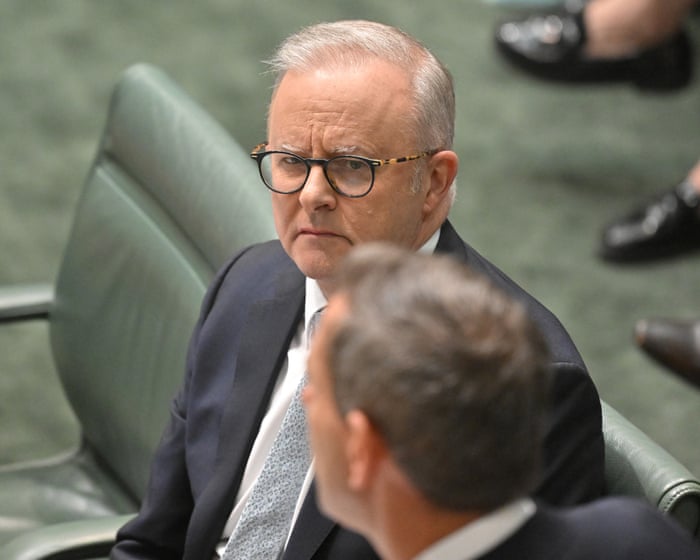
Coalition MP ejected from question time after swearing at PM – as it happened

Online hate is spilling into the real world, AFP warns

AFP Commissioner Krissy Barrett began her late-night appearance at the Senate estimates hearing noting “a heaviness that hangs across Australia” after the alleged attack on independent MP Helen Haines.

Lone actors are being motivated by a convergence of personal grievances, mental health vulnerabilities and ideological concerns …

What helped keep us safe in recent times, such as our geography, analogue systems and far away criminals, has been impacted by fully integrated technology, social media and artificial intelligence.

We hear about the devastating impacts of racism from communities every day. But many experiences go unreported or uncounted, and our systems often do not capture the full picture.

This is not about collecting more data to prove racism exists. We already know it does. It is about making inequality visible, holding institutions to account and giving communities greater agency over their data to drive real change.

Continue reading...

© Photograph: Mick Tsikas/AAP

© Photograph: Mick Tsikas/AAP

© Photograph: Mick Tsikas/AAP

  •  

No 10 plays down UK joining EU single market after Burnham suggests referendum would be needed – as it happened

The prime minister previously said that he wanted a debate on how Britain can establish a closer relationship

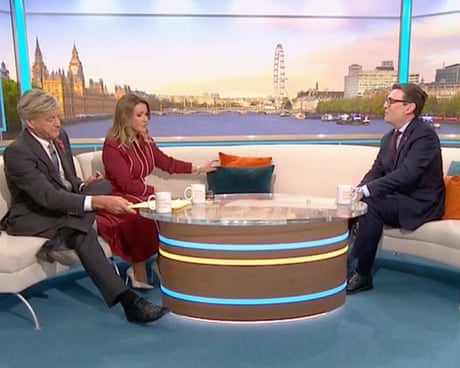
Speaking at his rough sleeping summit in Downing Street this morning, Andy Burnham expanded on the claim he made on Good Morning Britain about tackling rough sleeping being cheaper than ignoring the problem. (See 11.13am.)

He said:

We’ve also got to be conscious when we speak to the rest of the country, the taxpayers of this country, that actually to leave people sleeping rough has financial consequences. It doesn’t work for anybody and it doesn’t work for the public purse, because if you leave people in a position where they are in and out of A&E, and in and out of a hospital bed, that doesn’t make sense for anybody.

There is a rock-solid business case to do something to end homelessness, to put people on a path to recovery, so that they can contribute once again. And that should be the thinking that we take to this conversation.

Burnham is throwing another £432m at a problem he failed to solve in Greater Manchester. Under Labour, rough sleeping has hit record highs – yet their answer is always more taxpayers’ money and more empty promises.

[John] Healey must use his budget this week to cut taxes for working people, get the ballooning benefits bill under control, and stop pushing up energy prices.

John Healey is expected to confirm on Wednesday that the full state pension will rise by £489 to £13,036 – equivalent to 3.9%.

However, the rise will push about one million people on low incomes who rely on the state pension above the £12,570 personal allowance threshold, meaning they would be dragged into paying income tax.

Continue reading...

© Photograph: ITV

© Photograph: ITV

© Photograph: ITV

  •  

Brexit deal is not good enough for British public, says Andy Burnham

EU exit has damaged economy and failed to bring promised benefits, says PM, but he rules out big pre-election changes

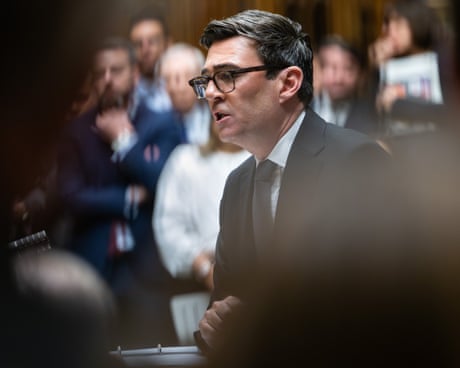
Brexit has not “played out” like it was promised to the public, has weakened the economy and the current deal is not good enough, Andy Burnham has said, while ruling out any major changes in the current parliament.

The prime minister said Britain had ended up with a “harder Brexit than was proposed in the referendum campaign” and it had not helped to control the small boats crisis. Backing the home secretary’s tougher immigration rules, he said Brexit had weakened the UK’s ability to control its borders as it could no longer send people back to Europe.

Continue reading...

© Photograph: House of Commons/PA

© Photograph: House of Commons/PA

© Photograph: House of Commons/PA

  •  

Shabana Mahmood to hold talks with EU over law enforcement cooperation

UK home secretary’s meeting comes after PM said he wanted to rejoin European law enforcement databases

The UK home secretary, Shabana Mahmood, will meet the EU’s home affairs commissioner on Monday for further talks just days after Andy Burnham said he wanted to rejoin European law enforcement databases from which the UK has been locked out of since Brexit.

According to the European Commission, they will discuss “migration, border management, law enforcement cooperation and counter-terrorism”, with the latest Frontex data published on Monday showing a 43% decline in small boats crossing the Channel.

Continue reading...

© Photograph: Marcin Nowak/Anadolu/Getty Images

© Photograph: Marcin Nowak/Anadolu/Getty Images

© Photograph: Marcin Nowak/Anadolu/Getty Images

  •  
❌